Blog

  • What to Wear for an Interview Plus-Size: 7 Outfits by Format

    What to Wear for an Interview Plus-Size: 7 Outfits by Format

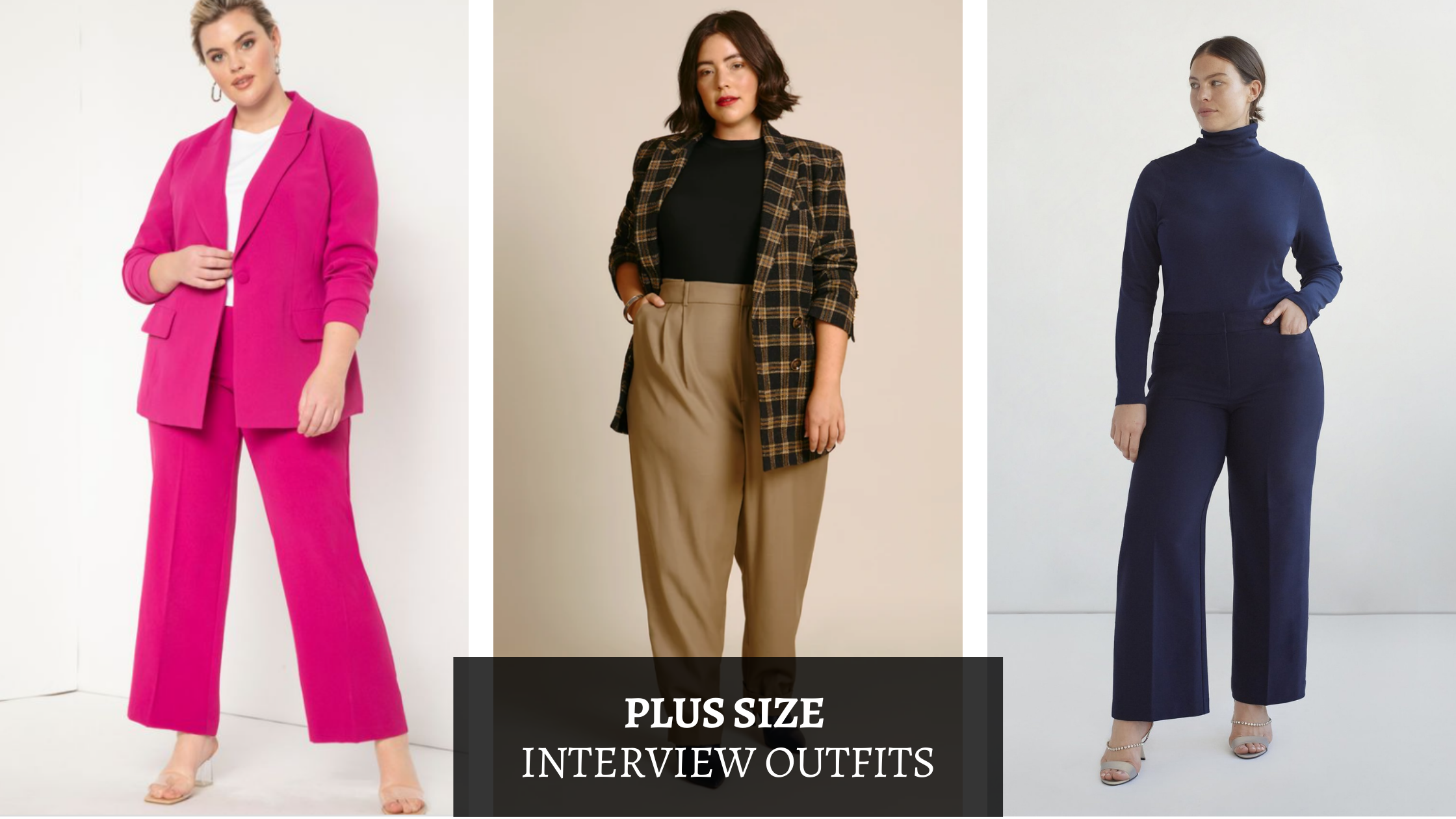
    Four plus-size women styled for different interview formats including Zoom, in-office, lunch, and executive

    After three years of covering interview dressing for plus-size readers – and a separate decade in editorial rooms watching how candidates get read in the hallway before they open their mouths – the question I get most is not “what should I wear” but “what should I wear for this specific format.” A Zoom first-round and a four-hour onsite panel are not the same outfit problem. Neither is the lunch interview, the second-round team meeting, or the final-round conversation with a CEO who has already decided you can do the job and is checking whether you read as someone they want at the table. Industry helps, but format dictates fabric, fit, and which pieces actually do the work.

    This breakdown moves through seven interview formats you will plausibly encounter between now and end of year. Each section names an anchor outfit, the specific pieces by retailer and price tier, and the styling note that separates a candidate who dressed for the format from one who dressed for “an interview, generally.” Prices are mid-2026 retail.

    What to consider before the format conversation

    Three variables sit above format and shape every outfit decision after them. The first is the visible self-presentation of the people already in the role. Pull the company’s LinkedIn, find three current employees at your target level, and look at the team page or any public talk footage. A team that shows up in soft knits and clean denim wants a different read than a team in structured suiting. Match the room, then add one degree of polish above it.

    The second is duration. A 30-minute Zoom needs to nail the camera frame from sternum up. A six-hour onsite panel needs to hold shape through three conference rooms, a building tour, and a coffee that gets spilled by hour four. Silk crepe and structured ponte both photograph well, but only one survives a full day in a fluorescent-lit room without bagging at the seat.

    The third is the camera test. Most plus-size interview dressing fails the camera test, not the in-person one. A pattern that reads subtle in the mirror photographs as visual noise under flat office light. A pastel that looks soft in daylight goes washed-out under fluorescents. Jewel tones and saturated darks photograph cleanly across lighting conditions. Photograph the outfit under your home overhead light before you wear it anywhere that matters.

    1. Phone screen – the comfort outfit that primes your voice

    Phone screens are the only interview format where what you wear does not directly affect the outcome. What it does affect is your posture, your breath, and the tone of voice that comes out of you. I have done phone screens in pajamas and they were worse interviews than the ones I did in tailored separates I did not need to wear. Get dressed for the call. Not formal, but deliberately.

    The anchor outfit: a fitted ponte knit top and a wide-leg trouser in a fabric with structure. The Universal Standard fitted ponte crewneck in black, around $98, paired with the Eloquii High-Rise Wide-Leg Trouser in charcoal, around $129, sized through 28. Sit at a desk, feet on the floor, both hands free for notes. The ponte does not constrict the diaphragm the way a stiff button-down does, which is the actual reason phone-screen outfits matter for plus-size candidates with full busts. Constriction at the rib cage shortens your breath, which compresses your speaking range. Wear something that lets you breathe deep enough to sound calm.

    2. Zoom or video first round – the sternum-up outfit

    The video interview is the format where plus-size candidates are most often misadvised. The standard advice is “dress as you would in person from the waist up,” which ignores the camera framing entirely. The camera sees from mid-chest to the top of your head. Everything from the bust up needs to photograph cleanly under whatever room light you have, and nothing below the rib cage matters except your posture.

    The anchor piece: the Universal Standard silk-blend blouse in sapphire or emerald, around $148, sized 00-40. A saturated jewel tone in a fabric with subtle sheen photographs as polished without picking up patterns or shadows that flatten under webcam compression. Pair with a fine gold chain that sits at the collarbone and small gold studs. Skip statement earrings on Zoom – they pull focus from your face. For the bottom half, wear whatever you can sit comfortably in for 45 minutes. Nobody is going to see it, but a too-tight waistband will make you shift, and the camera reads shifting as nervous.
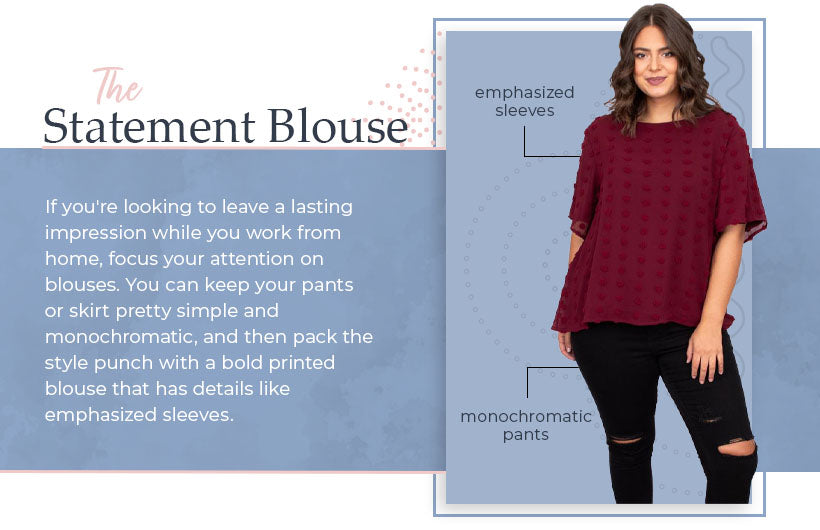
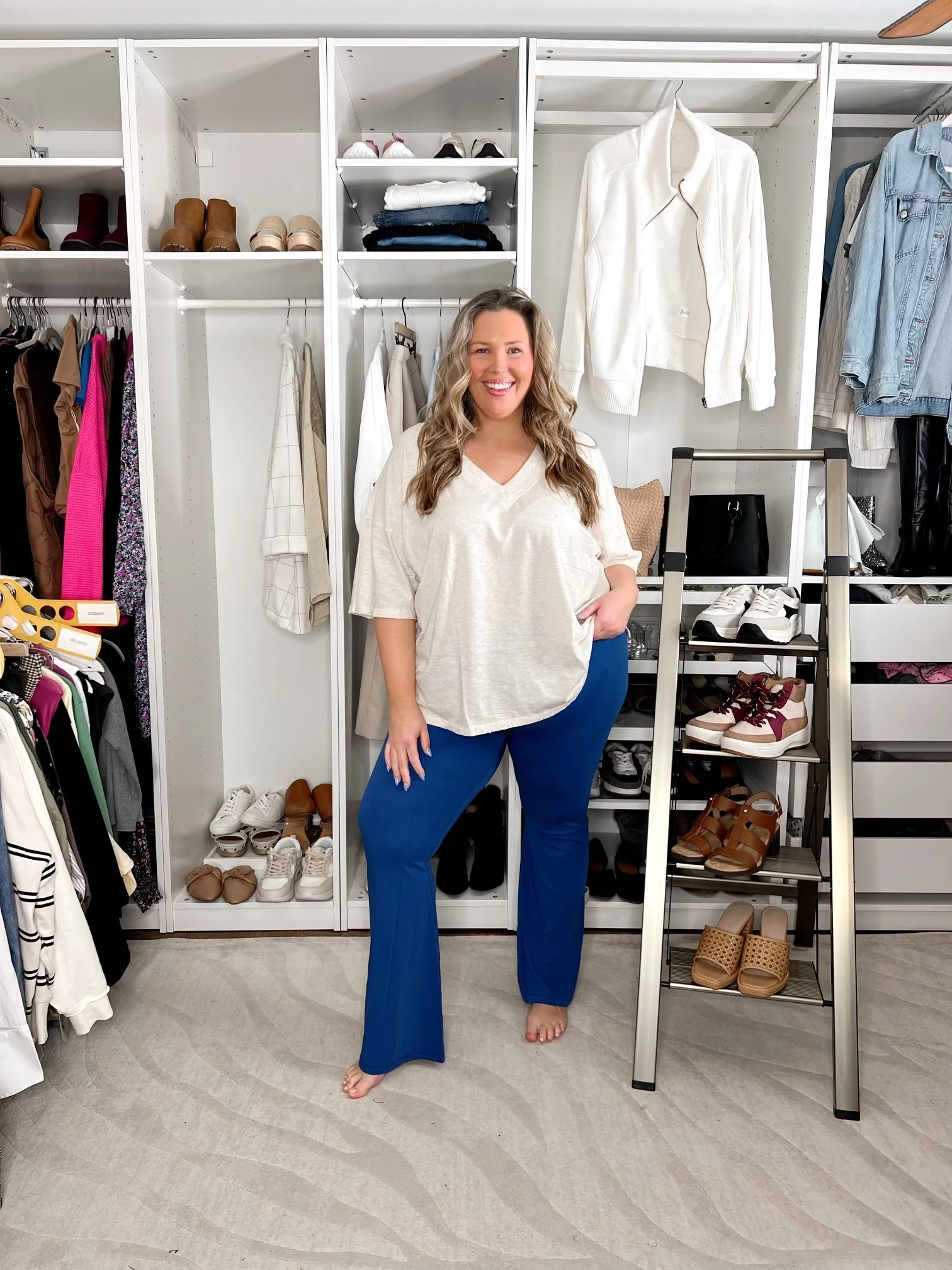
    Plus-size candidate in sapphire silk blouse styled for a Zoom video interview

    3. In-office single first round – the polished one-piece

    The 45-minute in-office first round is the most-common interview format in 2026, and it rewards the one-piece outfit decision. A dress carries the look on its own, removes the question of whether your separates read as cohesive, and lets you focus on the conversation instead of adjusting a tucked shell every time you sit down. For plus-size bodies, the right fabric is the entire game – a ponte knit or a structured crepe will sit cleanly through a 45-minute conversation, while a thin jersey will start to ride and bag almost immediately.

    The anchor piece: the Eloquii Ponte Knit Sheath Dress in burgundy or deep teal, around $109, sized through 28. The ponte fabric has a memory that holds shape across sitting, standing, and the building walk to the conference room. Layer with an unstructured blazer in cream or camel if the season calls for it. Pair with a closed-toe block-heel pump from Naturalizer in wide width , around $110, and a structured shoulder tote in black or cognac leather. The dress does the heavy lifting; the accessories stay quiet.
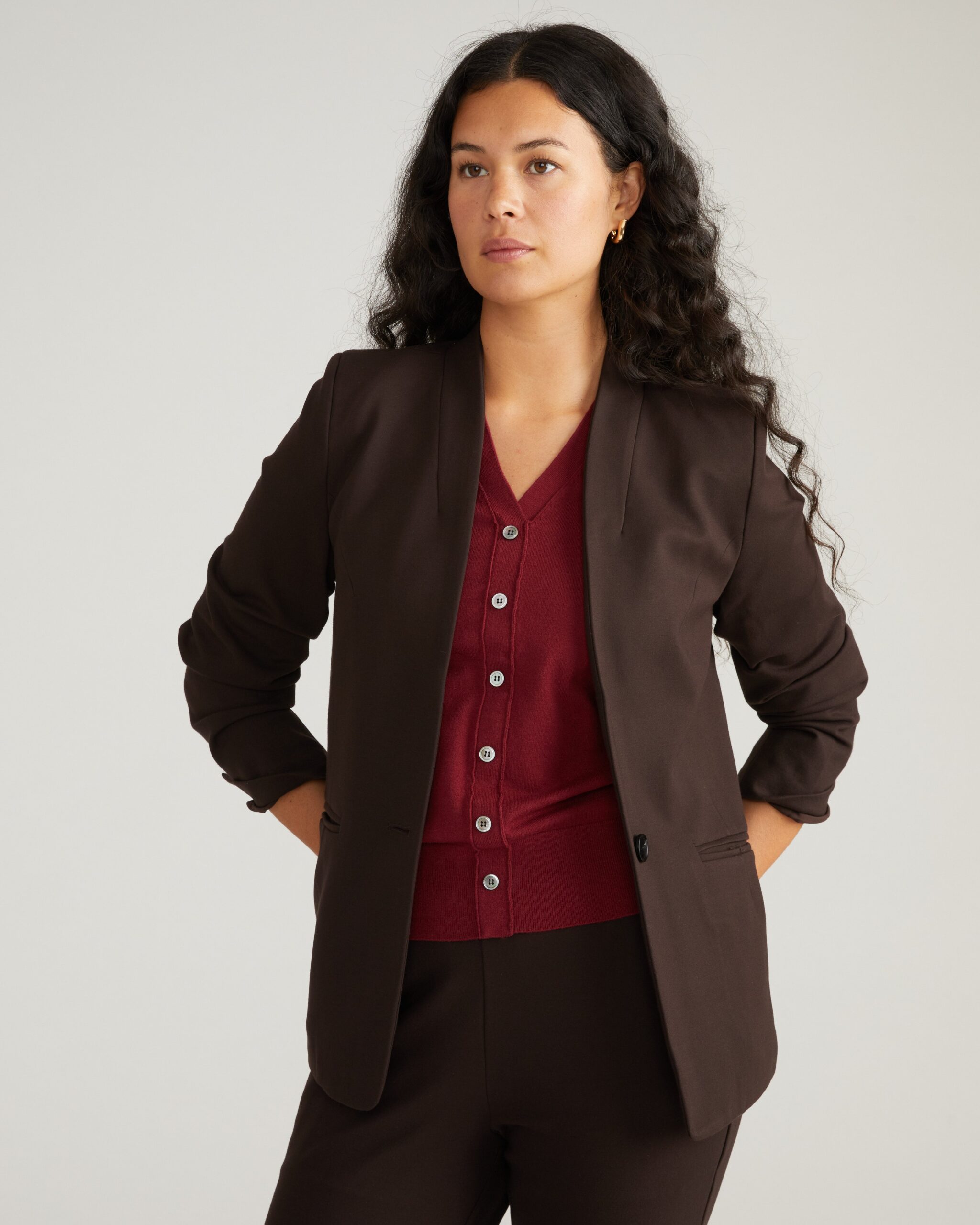
    Plus-size candidate in burgundy ponte sheath and camel blazer for in-office first round interview

    4. Full panel day – the all-day endurance outfit

    The four-to-six hour onsite panel is the format where most interview outfits fail. The fabric does not hold, the shoes start to ache by the second conference room, the layers that looked sharp in the morning go limp by lunch. The panel outfit is an engineering problem first and a styling problem second. Choose pieces that perform across temperature swings, three different rooms, the building tour, and the inevitable spilled water.

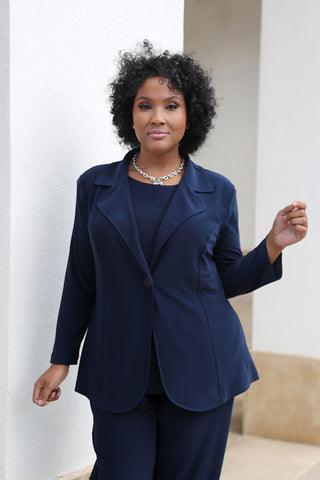
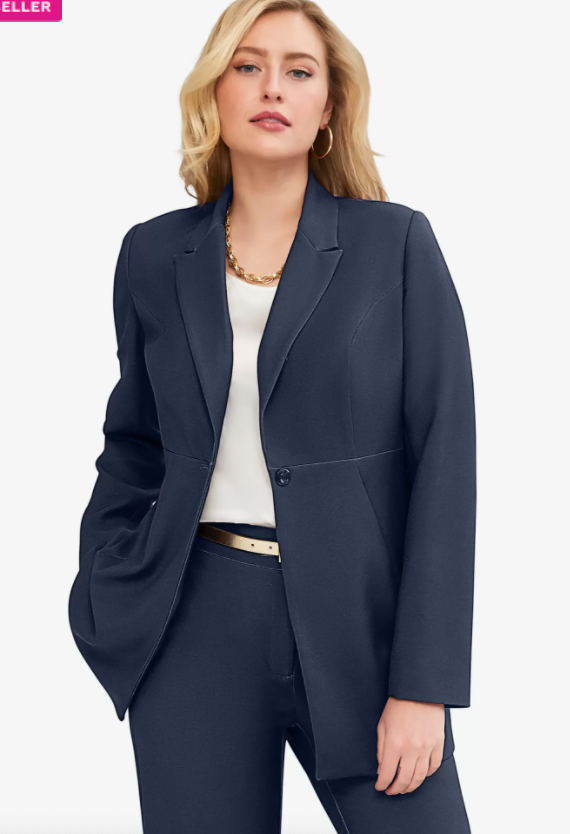
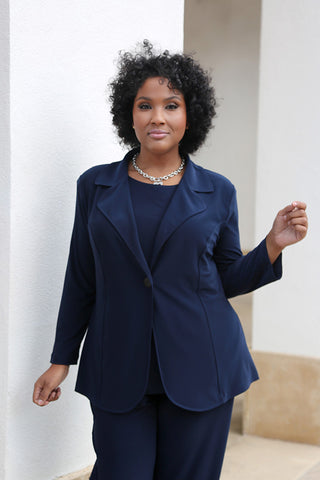
    The anchor pieces: the Universal Standard Stephanie Blazer in navy, around $180, paired with a matching wide-leg trouser around $128, both sized through 40. The shoulder construction sits cleanly without padding bulk, and the ponte-adjacent fabric handles a full day without going wrinkled at the elbow. Shell underneath: a fitted silk-blend in cream or pale blue, no pattern. Shoes: a low block-heel from Cole Haan in wide width , around $150, broken in over at least four short wears before the panel. Bag: a structured leather tote large enough for a laptop, water, a backup pair of tights, and a snack you will absolutely need by hour three. The whole look is built for stamina.
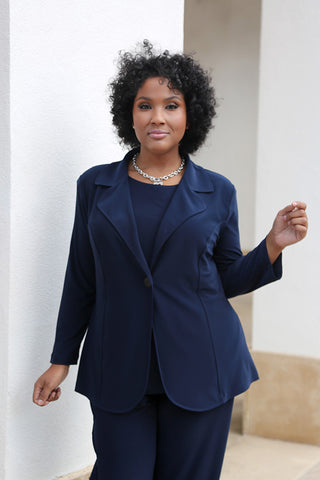
    Plus-size candidate in navy blazer and trousers for full panel day interview

    5. Lunch interview – the dress that handles a fork

    The lunch interview is the most-underrated trap in the format menu. You are eating in front of strangers who are evaluating you, often at a restaurant they chose specifically because the dining room is loud and you will need to lean in to be heard. The outfit needs to read polished, survive a soup spoon, and let you reach across a table without your blouse pulling at the bust. The wrong fabric here is any silk shell with a delicate hem and any white or cream piece anywhere within reach of marinara.

    The anchor piece: a knit twinset, which is the most-undervalued plus-size workwear piece of the last five years. The Universal Standard merino shell and cardigan set in oxblood or charcoal, around $200 for the pair, sized 00-40. The fine-gauge merino reads polished, sits cleanly across the bust without gaping, and forgives small spills in a way silk does not. Pair with a wide-leg trouser in dark wash from Eloquii in black , around $129. Shoes: closed-toe loafers from Cole Haan in wide width , around $160. Avoid open-toe styles at lunch – they read too casual against the formality of the meal itself.
    Plus-size candidate in oxblood merino twinset and black loafers for a lunch interview

    6. Second-round team meeting – the considered separates

    By the second round you have been told you can do the job and are being evaluated for fit with the team. The outfit should read as one degree more personal than your first-round outfit – still polished, but with a piece that suggests you have taste outside of the interview-uniform conversation. The room will often be more casual than the first round, especially if the team meeting is in their normal working space rather than a conference room. The move is tailored separates with one piece that does the personality work.

    The anchor pieces: the Eloquii High-Rise Wide-Leg Trouser in cream or oxblood , around $129, paired with a fine-gauge merino crewneck from Universal Standard in black , around $98. Add one considered outerwear piece – an unstructured trench in olive or camel for a daylight meeting, or a tailored ponte blazer for an indoor afternoon session. Shoes: a leather loafer or a low block-heel mule. Jewelry: one chunky gold ring, gold hoops no larger than a quarter, nothing on the neck. This is the outfit where you can wear something that signals you read fashion editorial, the way Karla Welch or Law Roach style their clients – not as costume, just as evidence that you have a point of view.

    7. Final-round executive interview – the quiet statement

    The final round with an executive is the only interview format where the outfit should explicitly announce that you understand the level of the conversation. The CEO or SVP across the table is meeting candidates who have already cleared the bar; the meeting is about whether they see you at their table. The dress code is one notch above the rest of the company’s daily uniform, and the silhouette should read as someone comfortable in their authority rather than reaching for it. For a plus-size body, the answer is a column-shaped dress or a tailored sheath in a saturated dark, with deliberate jewelry and the shoes you wear when you know you will be photographed.

    The anchor piece: a column sheath in a deep saturated tone – oxblood, sapphire, or charcoal. The Adrianna Papell tailored sheath in deep navy or oxblood, around $189, sized through 24W. Layer with a structured single-breasted blazer in the same color family or a contrasting cream. Shoes: a closed-toe pointed pump from Naturalizer in wide width , around $110. Jewelry: a single statement earring or one substantial cocktail ring, never both. Bag: a small structured top-handle in black or burgundy leather, no laptop tote at this stage. The look reads as decided.
    Plus-size candidate in navy sheath and cream blazer for a final-round executive interview

    Styling moves that apply across every format

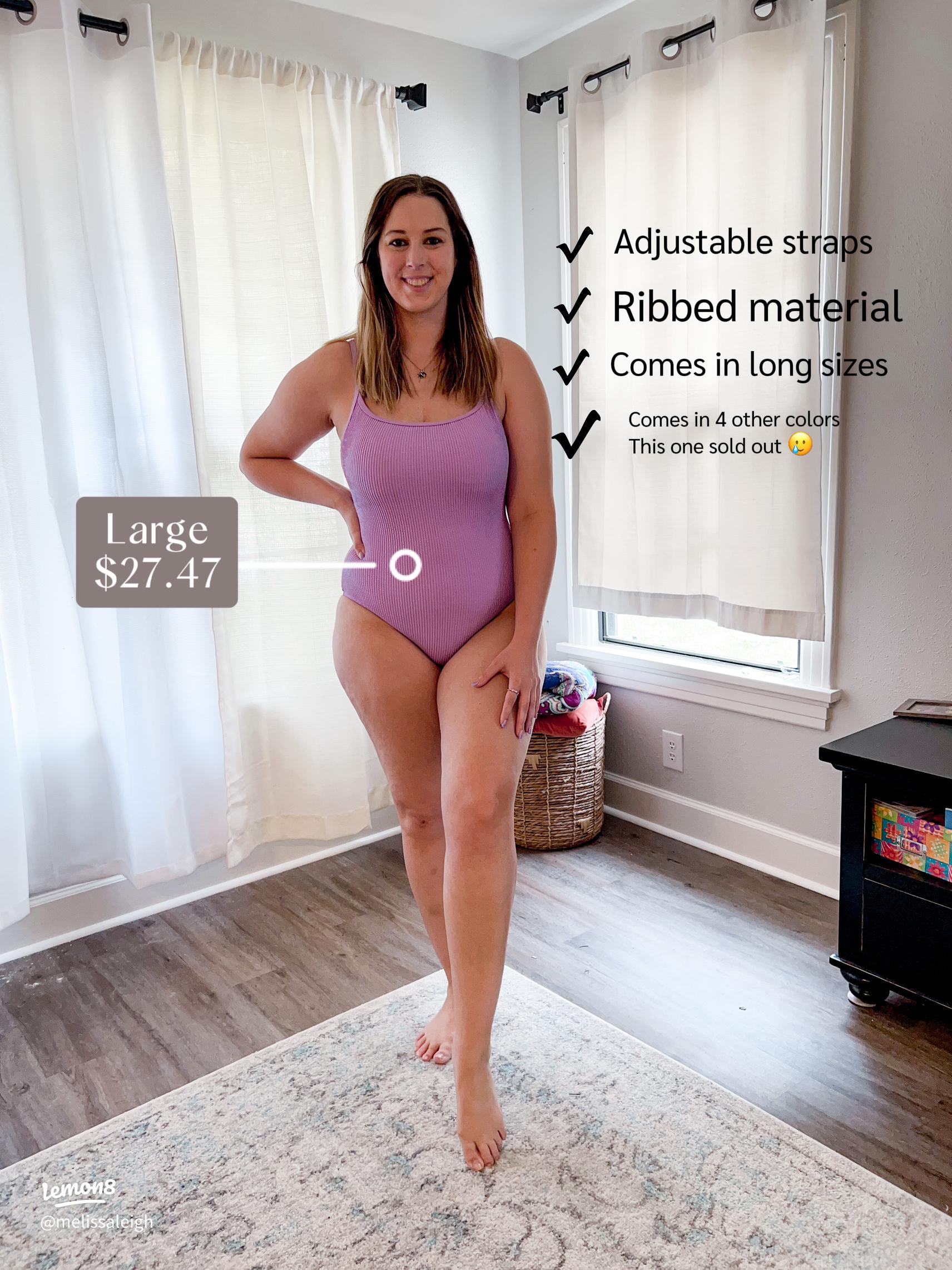
    Three rules hold regardless of the format you are dressing for. First, wear actual shapewear under any unlined dress or close-cut trouser. The Honeylove SuperPower Bodysuit at $98 or the Spanx Suit Yourself at $88 will both change how a sheath or a knit dress hangs across the torso. The investment is one piece that improves every interview outfit you own.

    Second, take the time to tailor at least the hem and the bust on any dress or jacket that will see more than one wear. A $25 to $40 alteration on a $129 trouser separates a look that reads like ready-to-wear from one that reads like off-the-rack. Find an alterations specialist who has worked with plus-size garments – the difference in how they handle a bust dart versus a generalist tailor is real.

    Third, break in any new shoe for at least four short wears before an interview day. The fastest way to undo a carefully built outfit is shoe pain in hour two that has you shifting your weight in every chair you sit in. Wear the shoes around your apartment, around the block, to a coffee shop. Save the interview for the fifth wear minimum.

    What to avoid in any interview format

    Anything brand-new at the bust. A fitted top you have never worn will pull, gape, or shift in ways you will not anticipate, and you will spend the interview adjusting instead of answering. Wear the top once before the day.

    Fragrance strong enough to register at three feet. Office interviews increasingly happen in small rooms with poor ventilation, and a fragrance the interviewer notices is a fragrance they will associate with you. Skip it or use a fraction of what you normally wear.

    Patterns that read as visual noise on camera. Small repeating geometric prints, busy florals, and any fine pinstripe go to moire under flat office light or webcam compression. Solid jewel tones and saturated darks photograph more cleanly across every interview setting.

    Shoes you are still breaking in. Any shoe with hot spots on day one will have you sitting wrong by the third room of a panel day. Break it in or wear something else.

    Shop the looks

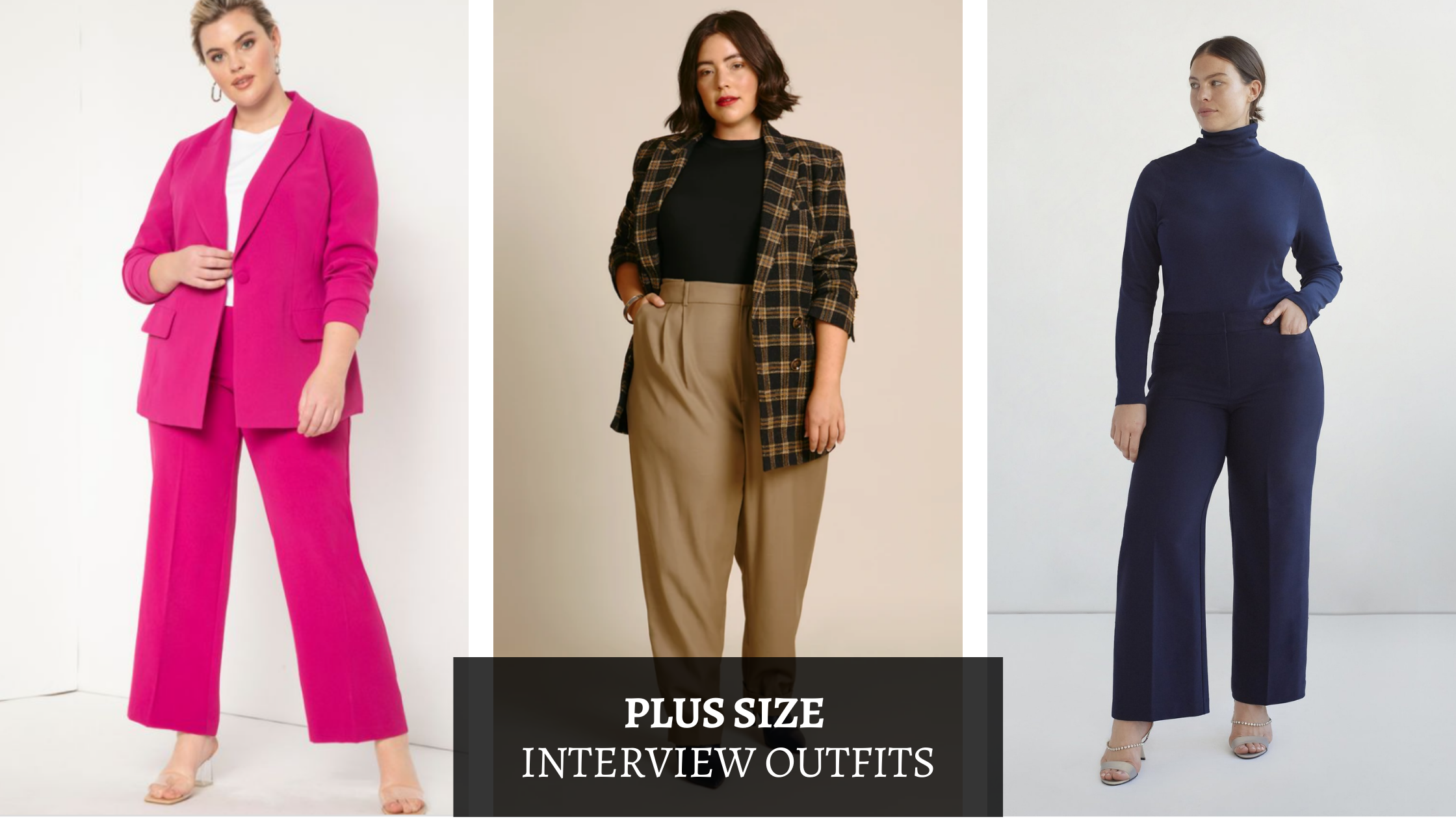
    The pieces in this guide cluster around three retailers – Universal Standard, Eloquii, and Nordstrom – because those are the brands carrying the strongest plus-size workwear runs in 2026. Universal Standard sizes 00 to 40 and runs the cleanest tailored separates; Eloquii sizes through 28 and runs the strongest dress and trouser construction; Nordstrom carries the third-party pieces (Naturalizer, Cole Haan, Adrianna Papell) that round out the shoe and dress assortment. If you are building an interview rotation, start with a navy blazer and trouser from Universal Standard, a burgundy ponte sheath from Eloquii, and a pointed pump from Naturalizer in wide width. Three pieces handle five of the seven formats above.

    Frequently asked questions

    Can I wear the same outfit to first and second round at the same company?

    Better not. The team often compares notes between rounds and the outfit gets remembered. Switch at least the shell, the jewelry, and the shoes between rounds. A burgundy sheath at first round becomes a cream wide-leg trouser plus knit shell for the second-round team meeting, and the look will read as a different point of view without requiring a second full outfit.

    What if my interview spans two days – panel day one, executive day two?

    Wear the navy suiting on panel day and the column sheath on executive day. The two looks read as a deliberate range without overlapping. If you can only bring one outfit, default to the navy blazer and trouser – it scales up with a sharper shell and pump for the executive meeting, down with a knit crewneck for the panel.

    Are tights mandatory in 2026?

    No, but they read more polished than bare legs in any in-office interview between October and April. Choose a sheer black or nude tight that matches your skin tone, not a heavy opaque, and bring a backup pair. A run in the first room with no replacement is the fastest interview-day disaster.
  • Adwoa Beauty’s Founder Story: How Julian Addo Built the Prestige Curl Brand

    Adwoa Beauty’s Founder Story: How Julian Addo Built the Prestige Curl Brand

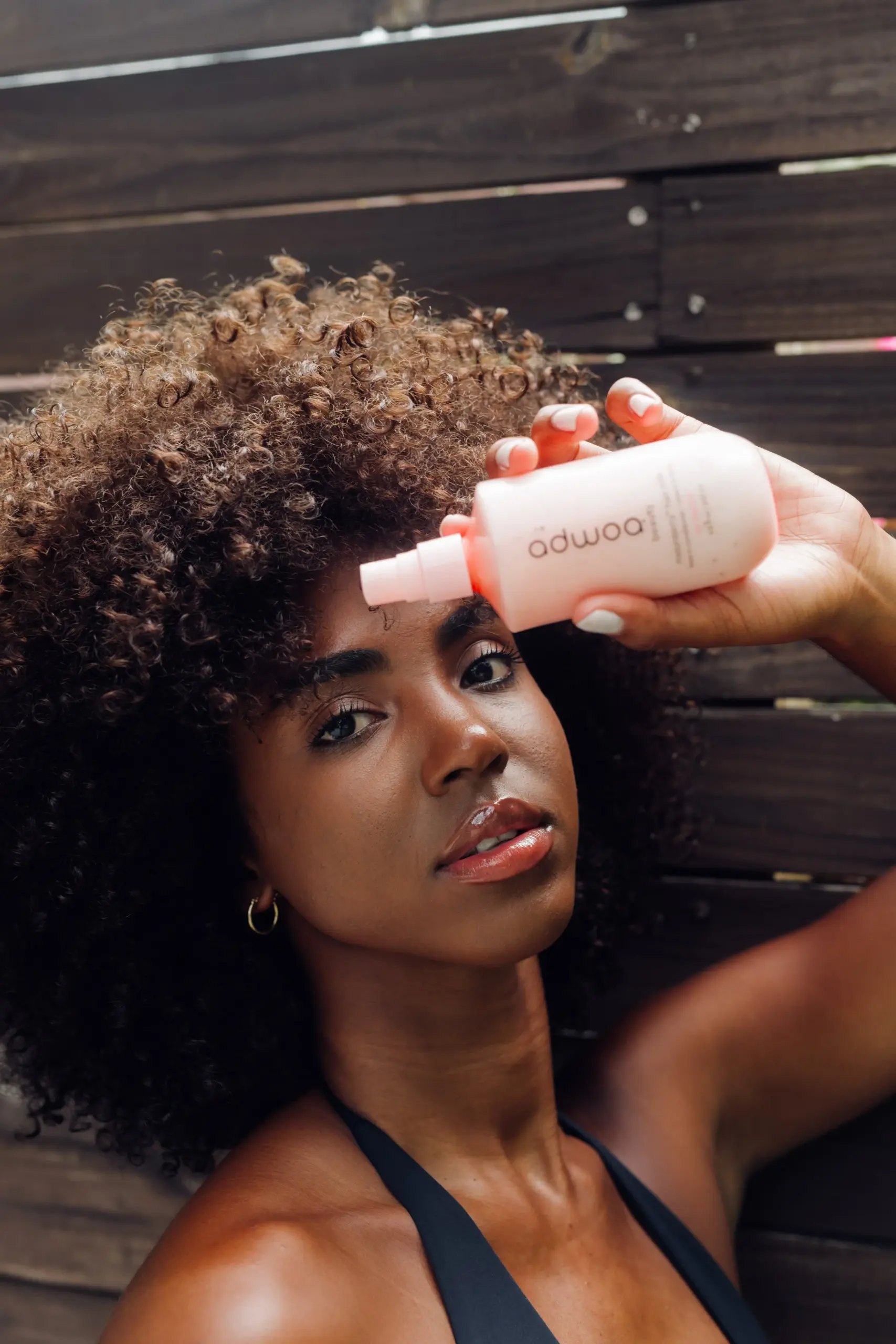
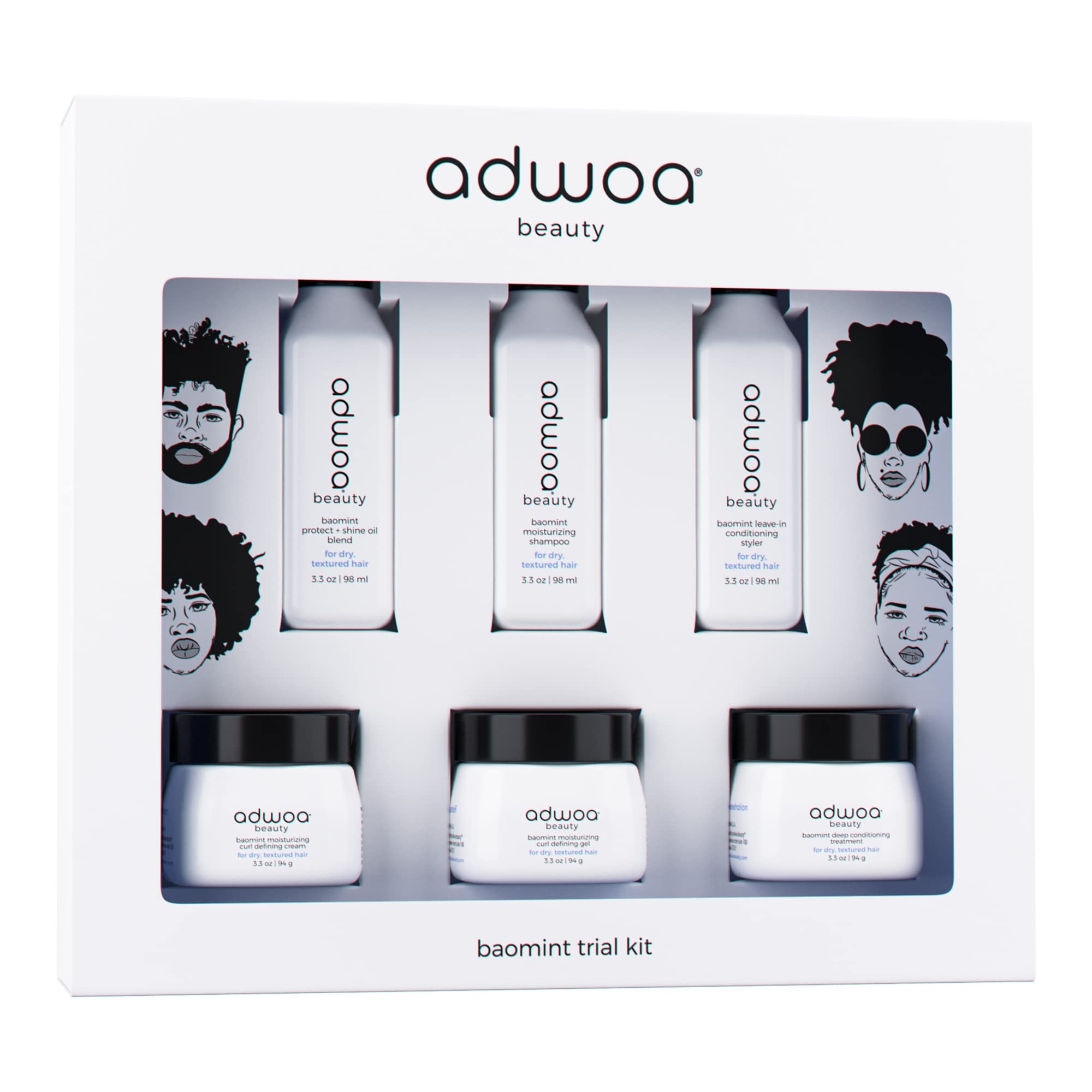
    Adwoa Beauty Baomint product lineup in editorial product photography

    Adwoa Beauty occupies a specific kind of shelf real estate at Sephora that most Black-founded hair brands have not historically reached. Walk into any flagship Sephora in 2026 and the brand sits in the curl-care wall, not in a partitioned multicultural section, with the signature minimalist packaging running at eye level alongside Briogeo, Bread, and Olaplex. That positioning is the point. Founded by Julian Addo in 2017, Adwoa Beauty arrived at the prestige tier from day one and refused to compete on price – a strategy that almost no other small Black-founded hair brand has been able to execute and survive. The fact that the brand is still on that shelf nine years later, in a category where most independent launches fold within three, is the story worth understanding.

    This piece is about how Addo built that. The founder background that produced the brand, the product range that has held the prestige positioning, where the brand earns the placement, and where there is still room. The textured-hair category right now has a small number of brands operating at the price tier above Cantu and below the dermatology-clinic skincare brands, and Adwoa is the brand most often cited as the prestige-tier reference point alongside Pattern. Worth knowing why.

    The founder before the brand

    Julian Addo is Ghanaian-American. She grew up in the DC area, went to the University of Maryland, and worked in finance and tech before pivoting into beauty. The professional background matters because Adwoa Beauty does not read like a brand built by someone who fell sideways into entrepreneurship – the pricing architecture, the retail-readiness, the formulation patience, all of it has the discipline of someone who spent a decade in operating roles before launching her own thing. Addo named the brand after her own first name in Ghanaian Twi tradition, where Adwoa is the name given to a girl born on a Monday.

    The origin story is the one a lot of Black-founded hair brands share but Addo’s version has a different texture. She had her own hair frustrations through her twenties, tried the mainstream natural-hair brands that existed in the mid-2010s, found the formulations either too heavy, too coating, or too generic for her specific texture, and started researching what actual ingredient-forward formulation would require. The version of the story she has told in press interviews emphasizes the years she spent working with chemists before launching – not the moment of inspiration, the slow back-end work of getting the formulations right.

    She launched the brand in 2017, direct-to-consumer first, then expanded into Sephora in 2018. That Sephora launch was the inflection point. At the time, the textured-hair shelf at Sephora was thin, and most of the credible Black-founded brands were sitting at Ulta or at mass retailers. Adwoa walking into Sephora at a $24-and-up price tier in 2018 was a positioning decision that signaled the brand was not going to play the volume game. Nine years on, that decision is still paying off.

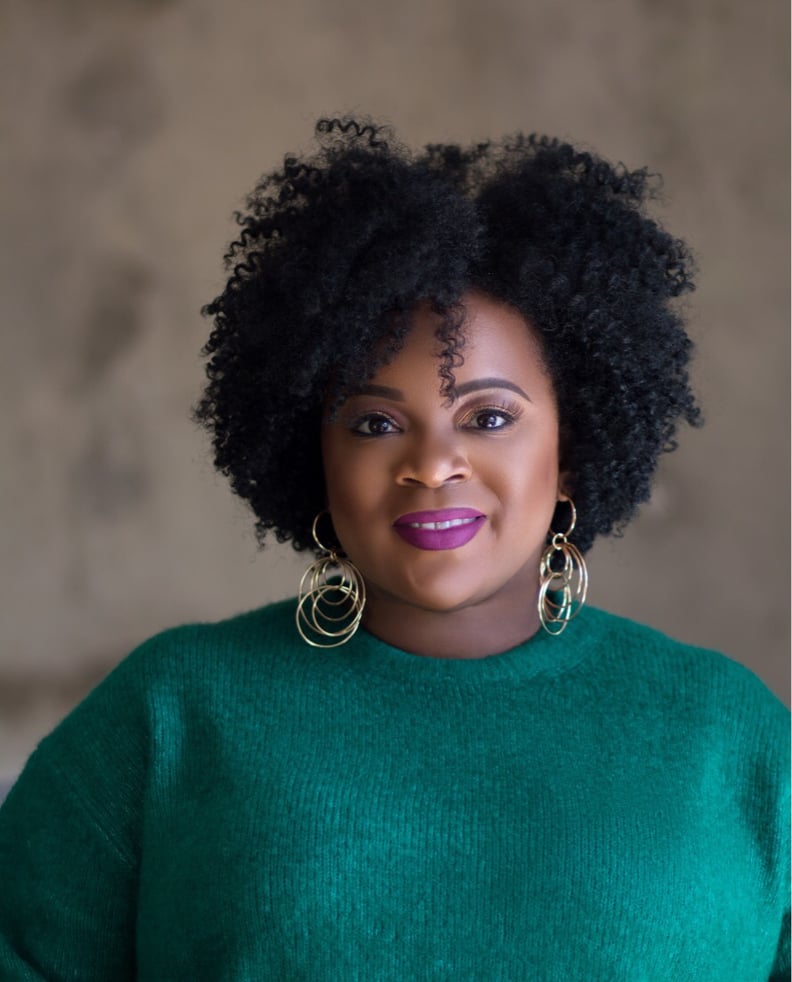
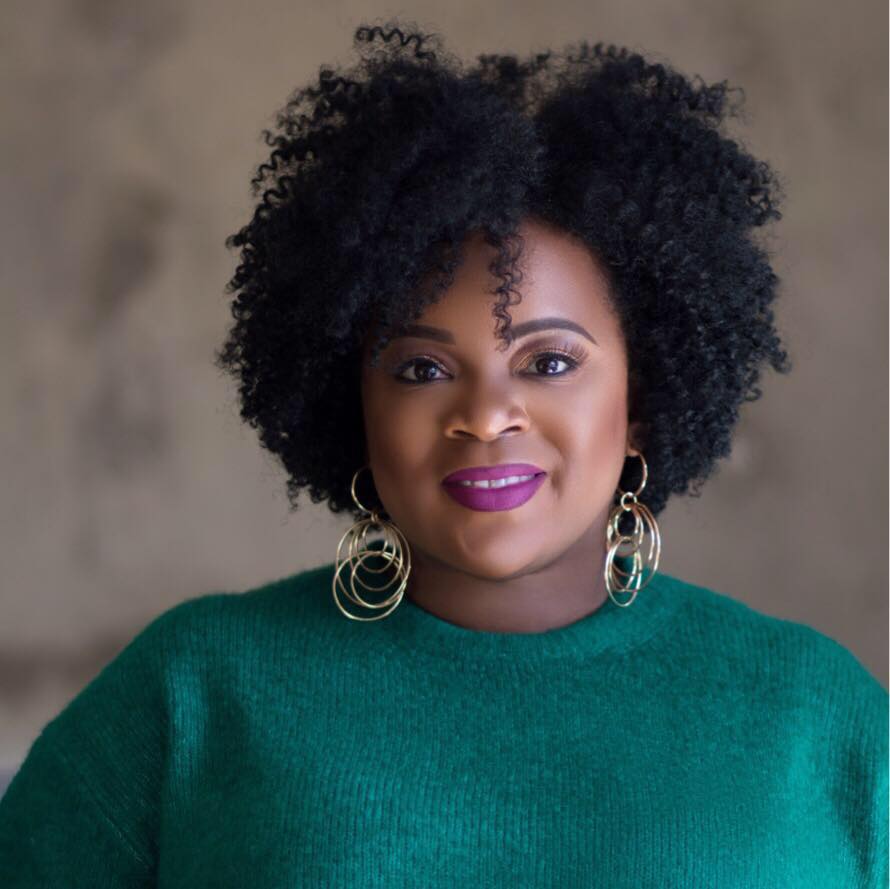
    Julian Addo, founder of Adwoa Beauty, in editorial portrait photography

    What the brand actually does

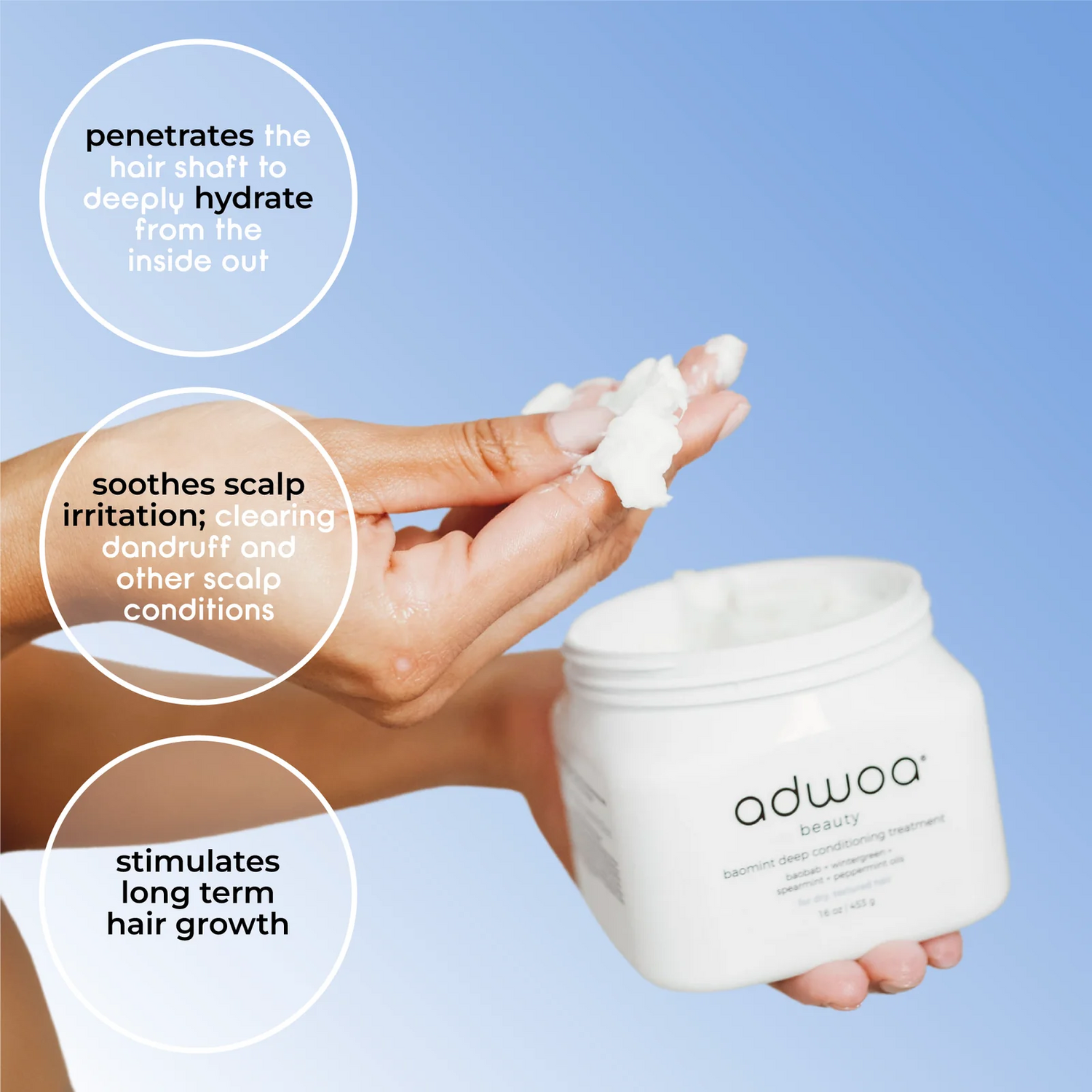
    Adwoa Beauty makes hair care for Type 3 and Type 4 curl patterns, with a particular concentration on the wash-day-and-refresh part of the routine. The core line is anchored by the Baomint family – leave-in conditioner, deep conditioner, clay-refresh spray, scalp cleanser – all built around a baobab and peppermint base. There are additional product families around protein treatment, styling cream, and oil, but Baomint is the line the brand is known for and the products most reviewers cite first.

    The price tier sits at $24 to $38 for most core products, which is at or slightly above Pattern Beauty and meaningfully above the mass-retailer Black-founded brands. SKU count is intentionally smaller than the major textured-hair brands – roughly fifteen products across the active lineup, versus Pattern’s thirty-plus. That smaller footprint is a strategic choice. Addo has said in interviews that the brand prioritizes formulation depth over line breadth, which translates into a more curated catalog and a longer lead time between new product launches.

    Distribution today: Sephora as the anchor retailer (in-store and Sephora.com), adwoabeauty.com direct, and a handful of independent specialty retailers. Not at Ulta, not at Target, not at any mass-grocery. That retail discipline is the operational version of the price discipline and it has kept the brand sitting in the prestige slot rather than getting absorbed into the general curl-care category.

    Where the brand gets it right

    The first thing Adwoa got right is the Baomint formulation itself. The Baomint Moisturizing Leave-In is the product that built the brand. The texture is lightweight enough to layer under a styler without piling, the slip is enough to detangle on damp hair, and the scent is the specific peppermint-forward note that has become the brand’s olfactory signature. Reviewers who try the leave-in and stay with the brand are usually staying because that one product earned its repurchase, and the rest of the line is built around the credibility of that single SKU.

    The second is the visual identity. The packaging is the cleanest in the category. Matte white tubes and bottles, sage-green accent type, no clutter, no oversold marketing copy on the front of the bottle. Most natural-hair brand packaging defaults to busy color-coding and aggressive front-of-label promises. Adwoa’s packaging looks like a Cuup bra box looks – confident enough not to shout. That matters at the prestige tier. When the product is sitting on a Sephora shelf next to a Briogeo bottle and a Bread Beauty Supply tube, the visual restraint reads as expensive and the brand earns the placement.

    The third is the founder presence without the founder dependency. Addo is centered in the brand’s narrative without being the entire face of every campaign. She does press, she does interviews, she shows up at Sephora events, but the brand does not require her in every photograph to feel coherent. That balance is structurally healthier than the celebrity-founded brands that collapse the moment the celebrity loses interest, and it is the reason Adwoa has the runway to keep growing without a personality-cult vulnerability.

    The fourth is the pace. Adwoa has launched roughly two to three new products per year over its nine-year run, which is well below the industry average and well below what most retailers pressure brands to do. The discipline of resisting the launch-something-every-quarter pressure has kept the line tight and the formulations meaningful rather than performative. The 2021 Blue Tansy Clay-Refresh Spray and the 2023 protein treatment are the two most-cited additions, and both filled real gaps rather than chasing trend ingredients.

    Where there is room

    Honest critique. The price is the price. At $26 for an 8 oz Baomint Leave-In, Adwoa is genuinely expensive for what is functionally a leave-in conditioner, and the value-per-ounce conversation is real. Cantu’s Sulfate-Free Cleansing Cream at $7 does not do the same thing the Adwoa Cleanser does, but the Mielle leave-in at $12 does most of what the Baomint leave-in does for shoppers who are not chasing the specific texture and scent profile. Adwoa’s argument is that the formulation difference is worth the premium, and for a lot of shoppers that argument lands. For others, the math does not.

    Distribution is the other open question. The Sephora-only retail strategy is what made the brand prestige, but it also means that shoppers in markets without a Sephora flagship are functionally locked out of in-store availability. The brand has not expanded into Ulta or any second mass-prestige retailer, and the direct-to-consumer site has had reported shipping and stock-out frustrations in peak seasons. For a brand asking $26 a bottle, the fulfillment experience needs to be consistent and it has not always been.

    And the line is still thinner than the routines of some Type 4 shoppers require. Adwoa skews toward the lighter end of the texture spectrum – the formulations are tuned more toward Type 3 and the looser end of Type 4 than toward the densest 4C textures. The Heavy or Extra-Rich category that Pattern has built out does not have a clear Adwoa equivalent, and Type 4C shoppers who try the brand sometimes leave because the products are not heavy enough for their density. The brand could go further into that part of the texture spectrum and has not yet.

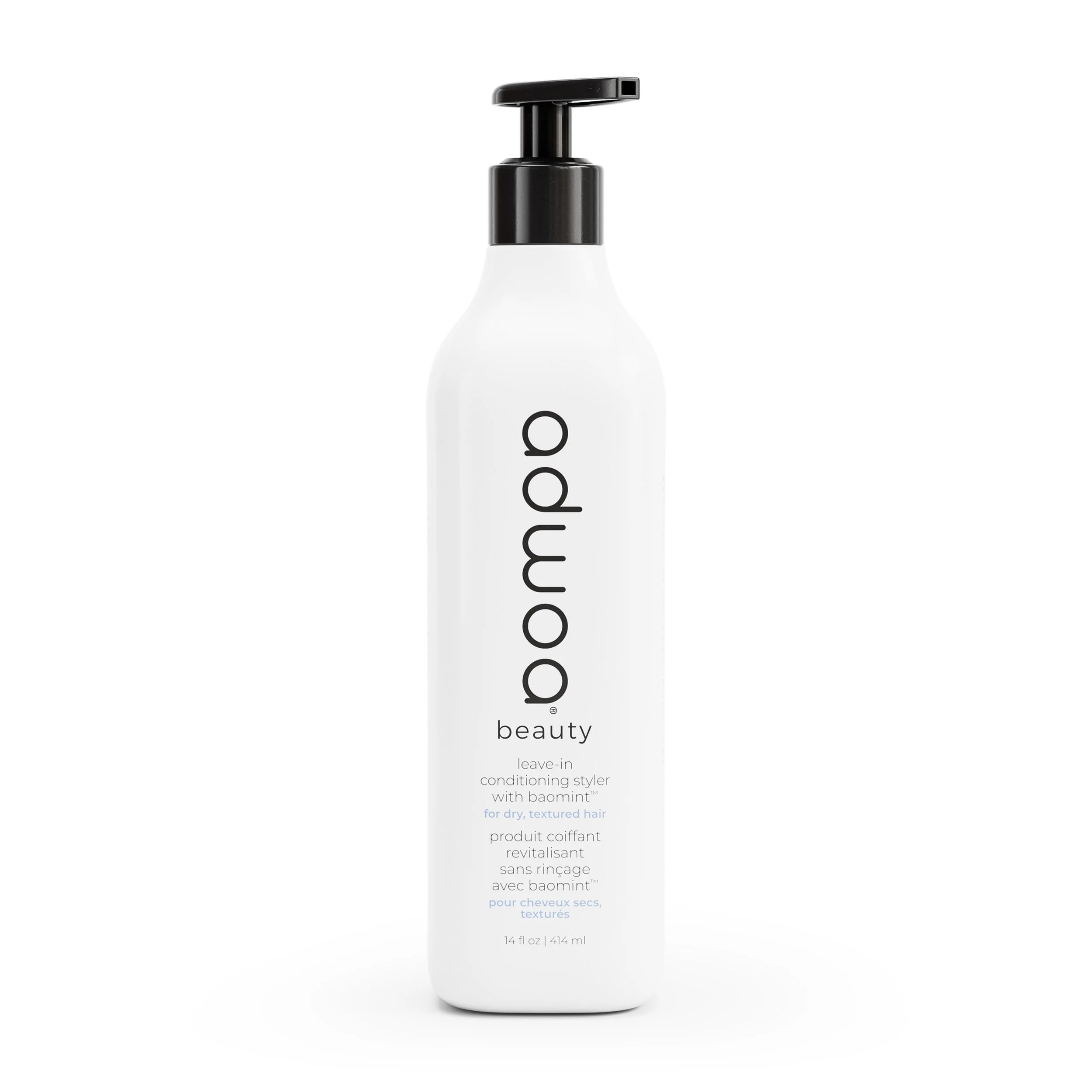
    Adwoa Beauty Baomint Moisturizing Leave-In product hero photograph

    How Adwoa fits in the category

    Adwoa does not exist in isolation, and the brand’s positioning makes more sense in contrast to the rest of the textured-hair prestige tier. Three reference points worth knowing.

    Pattern Beauty is the most direct comparison. Founded by Tracee Ellis Ross and launched at Ulta in 2019, Pattern occupies the same mid-to-prestige price tier with a broader SKU count and a wider distribution footprint. Pattern sits at Ulta and Sephora; Adwoa sits at Sephora only. Pattern has more than thirty products; Adwoa has roughly fifteen. The trade-off: Pattern is the brand to choose if you want a full system from a single line and the security of mass retail availability. Adwoa is the brand to choose if you want a curated, formulation-forward shorter list and you prioritize the specific Baomint texture profile.

    Bread Beauty Supply is the other prestige comparison. Founded by Maeva Heim in Australia and launched at Sephora in 2020, Bread sits at a similar price tier and a similar minimalist visual identity. The product range is narrower than Adwoa’s and the formulations are more focused on the wash-and-condition core of the routine. The trade-off: Bread is arguably the cleaner brand experience for shoppers who want a tight three-or-four-product routine. Adwoa is the more developed line if you want refresh products and treatments alongside the core wash.

    Mielle Organics is the volume comparison. Founded by Monique Rodriguez in 2014, Mielle sits at the mass-retail tier with broader distribution at Target, Walmart, and Sally Beauty. Most Mielle products are $11 to $18 – meaningfully below Adwoa. The trade-off: Mielle is the cost-effective choice with formulations that work for many shoppers. Adwoa is the precision choice for shoppers who want the formulation discipline and are willing to pay for it.

    What to buy from them

    If you are coming to Adwoa Beauty for the first time, the move is not to buy the full system. The line is curated enough that one or two pieces will give you a real read on whether the brand is going to fit your routine. Four products worth knowing about.

    The Adwoa Baomint Moisturizing Leave-In Conditioner at around $26 for 8 oz is the entry point. This is the product that built the brand and the product most shoppers stay for. Layers under a curl cream without piling, slip is real, and the peppermint-forward scent is the brand signature. If you only buy one Adwoa product, this is the one.

    The Adwoa Baomint Deep Conditioner at around $32 for 8 oz is the wash-day treatment. Heavier than the leave-in, slip is strong enough to detangle Type 3 and the looser Type 4 textures, and the deposit is meaningful without coating low-porosity strands. Worth the price if you do a weekly deep treatment as part of your routine.

    The Adwoa Blue Tansy Clay-Refresh Spray at around $30 is the day-two and day-three refresh product, and it is the brand’s most distinctive formulation. The clay base reactivates curl pattern without the dampness that water-only refresh sprays leave behind. Niche but loved by the shoppers who use it.

    The Adwoa Baomint Curl Defining Gel at around $26 is the styler that holds a wash-and-go without crunch on Types 3A through 4A. For denser 4B and 4C textures the gel reads as too light, but for the texture range it is designed for, the hold is consistent and the second-day pattern stays defined.

    And the Adwoa Baomint Scalp Cleanser at around $32 rounds out the wash routine. Cleans without stripping, the peppermint base reads as cooling on the scalp without being aggressive, and the formulation pairs well with the rest of the Baomint family. The fifth purchase if you have already committed to the system.

    Why this brand matters

    Adwoa Beauty is the case study for what a Black-founded hair brand at the prestige tier can look like when the operator has the patience to build slowly and the discipline to resist the volume-and-discount pressure that the category has historically forced on these brands. The textured-hair shelf at Sephora in 2017 was thin. The textured-hair shelf at Sephora in 2026 is not, and Adwoa is part of the reason. The category opened up because brands like Adwoa, Pattern, and Bread proved that the prestige tier could hold Black-founded hair, and the retailers expanded the shelf to make room.

    The lesson for the broader category is structural and worth naming. The brands that will keep winning in textured hair from here forward will not be the ones that try to be everything to every texture at every price point. They will be the ones that pick a position, hold it, build the formulation discipline to earn it, and refuse the pressure to dilute. Julian Addo picked a position in 2017 and has held it for nine years. The receipts are on the Sephora shelf. The Baomint Leave-In, 8 oz, around $26, and the only place it ships from with consistency is Sephora.

  • Athleta vs Girlfriend Collective: The Plus-Size Activewear Showdown

    Athleta vs Girlfriend Collective: The Plus-Size Activewear Showdown

    Athleta and Girlfriend Collective plus-size leggings arranged side by side on a neutral background

    The plus-size activewear category in 2026 has narrowed to two real options once you cross size 20, and the louder brand on social media is not the one that fits a curvy body better off the rack. Lululemon has technically extended its Y size range, but the cuts still favor straight figures. Old Navy Active and Fabletics swing affordable but inconsistent. That leaves two retailers actually engineering for plus shapes: Athleta, with its quietly committed plus-size program through size 26, and Girlfriend Collective, the sustainability-first newer entrant that goes up to 6XL and built its size range in from launch rather than as an extension. Both deserve their reputations. Neither deserves to be picked sight-unseen.

    Athleta sits inside Gap Inc. and has been building a plus assortment seriously since around 2019, when it added “Athleta Plus” as a dedicated line with separate fit models. Girlfriend Collective launched in 2016 with a recycled-plastic-bottle fabric story and a flat sizing chart that ran XXS to 6XL from day one – no separate plus line, just the same styles cut across the full range. The price tiers overlap. The fits do not. To compare these fairly I bought one comparable item from each brand in three categories – a compressive legging, a sports bra, and a tank – and wore each through the same routines for three months. Same body, same wash protocol, same wear count. Here is what the test produced.

    Quick verdict if you only have 30 seconds

    Girlfriend Collective wins for daily wear, fit consistency across sizes, and the bottom of the price range. Athleta wins for technical fabric performance, retail experience, and the wider range of cuts. If you want one brand for daily leggings and bras and you wear above size 20, get Girlfriend Collective. If you want a full activewear wardrobe with variety in cut, fabric, and styling, get Athleta. Worth it at both price tiers, for different reasons.

    What the two brands actually are

    Athleta is the activewear arm of Gap Inc., positioned as the premium-but-accessible option in the mall-tier activewear space. It runs sizes XXS to 3X and 1X to 3X in the Athleta Plus line, with a separate “tall” range. Stores have fitting rooms with plus-size mannequins and the floor staff in the plus-friendly locations have actually been trained on the difference between the standard and plus fits. Price range runs roughly $40 to $138 for leggings and $40 to $80 for bras, with frequent sales that bring popular pieces to the 25 to 40 percent off range. Fabric is heavy on recycled nylon-spandex blends and proprietary Powervita and Salutation technical fabrics.

    Girlfriend Collective is independent, Seattle-based, and built its identity on three claims: recycled materials (each legging uses roughly 25 plastic bottles of post-consumer recycled polyester), a flat size range XXS to 6XL, and a more sustainable supply chain. Retail presence is limited – the brand sells primarily direct-to-consumer through girlfriend.com with a small selectivity of stockists. Price range runs roughly $38 to $88 for leggings and $38 to $68 for bras, with sales less frequent but more substantive when they happen. Fabric is almost entirely recycled-polyester-spandex blends, which behaves differently than nylon-spandex – more on that below.

    The pieces I tested:

    • Athleta Elation 7/8 Tight, $89, size 1X (Athleta Plus)
    • Girlfriend Collective Compressive High-Rise Legging 7/8, $78, size 3XL
    • Athleta Ultimate Bra, $59, size 38DD
    • Girlfriend Collective Topanga Bra, $42, size 3XL
    • Athleta Conscious Crop Tank, $44, size 1X
    • Girlfriend Collective Dylan Tank, $48, size 3XL

    Side-by-side comparison

    Feature Athleta Girlfriend Collective
    Legging price tested $89 (Elation 7/8) $78 (Compressive High-Rise)
    Plus-size range 1X to 3X (about size 14-26) XXS to 6XL (about size 0-32)
    Fabric (leggings) Recycled nylon / spandex blend 79% recycled polyester / 21% spandex
    Compression Medium Medium-firm
    Retail presence 200+ stores plus online Online direct, limited stockists
    Return policy 60 days, worn returns accepted at store 30 days, unworn only, $7 return label

    Athleta: the technical-fabric retailer with the fitting room advantage

    Athleta has the deepest bench in the comparison. The Elation 7/8 Tight is one of three legging silhouettes the brand cuts specifically for the plus-size fit model – the others are the Salutation and the Ultimate – and the difference between Elation and standard Athleta leggings is visible in the gusset placement and the waistband structure. The waistband is wider, the rise is genuinely high, and the seam at the back curves rather than running straight, which matters on a body with hip-to-waist ratio because a straight seam pulls down at the lower back.

    What worked: the fabric. The Powervita blend Athleta uses on the Elation has a soft hand that does not feel like compression at all when you put it on, but holds the silhouette through 90 minutes of Pilates. Through the wash test, the fabric retained its recovery better than the Girlfriend pair – no bagging at the knee after 20 wears, no loss of compression at the waistband. The Athleta Ultimate Bra also outperformed the Girlfriend Topanga on lift for my 38DD chest. The cup construction has actual underbust banding rather than a single elastic band, which means the support is distributed rather than concentrated at one line. I wore the Ultimate Bra for treadmill walks at 4.0 mph for 45 minutes and the bounce was minimal.

    What did not work: the price ladder. $89 for a single pair of leggings is real money, and Athleta runs sales but the plus sizes routinely sell out of popular pieces before the markdown cycle hits. The Elation in 1X showed up in the 30 percent off email twice in three months, both times sold out within an hour of the email landing. The sizing also runs about half a size small in plus – I am normally a 1X in mass-market activewear and the Elation 1X is snug; the 2X would have been a more honest fit. The Conscious Crop Tank was the weakest piece tested – the recycled cotton blend pilled within 8 wears, and the fit through the bust was tighter than the size chart suggested.

    Buy it from the Athleta listing on Amazon if you want Prime shipping , though selection of plus sizes is more reliable through athleta.com directly. Returns at a physical Athleta store with the receipt are the smoothest in the comparison – I returned an unworn piece in 6 minutes flat.

    Plus-size woman wearing Athleta Elation legging and Ultimate Bra in matching black

    Girlfriend Collective: the sustainability-first brand that actually fits

    Girlfriend Collective’s strongest argument is consistency across sizes. The Compressive High-Rise Legging is cut from the same pattern at every size from XXS to 6XL, just scaled – which sounds obvious but is not how most activewear brands operate. Athleta’s plus line is a re-engineered fit; Girlfriend’s plus line is the same fit. The result is that customer reviews from a size 8 buyer and a size 28 buyer describe the same piece the same way, which is rare in this category and useful when you are sorting through reviews to decide a purchase.

    What worked: the price-to-quality. The Compressive at $78 has firmer compression than the Athleta Elation at $89, particularly through the waistband – the rise sits genuinely above the navel and stays there through a full workout without rolling. The fabric is matte, not shiny, which I prefer for daytime wear. The color range is the strongest in the comparison: about 30 colorways at any given time, including a rotation of seasonal limited drops in muted earth tones that I have not found at this price tier anywhere else. The Topanga Bra at $42 is the best dollar-for-dollar value in the test – low-impact only, not for running, but for Pilates and weight-training it provides enough support and the racerback strap design does not dig at the trap muscle the way a lot of low-impact bras do.

    What did not work: the fabric is recycled polyester, which means it does not breathe the way nylon does. For a high-intensity workout in a warm room, the Compressive holds heat noticeably more than the Athleta. I wore both for the same 75-minute Pilates class in a 78-degree studio and finished the Girlfriend pair visibly sweatier through the waistband. Durability was also weaker than Athleta over the three-month test – the Compressive showed pilling at the inner thigh after 22 wears, and the Topanga bra elastic had lost about 10 percent of its tension by wash 15. Cold wash and hang dry, in both cases, per the brand’s own instructions.

    The 30-day unworn-only return policy is the other real downside. You cannot test these in a real workout and return them if they do not work – if you take the tag off, you own them. The $7 return shipping fee on the return label is also a quiet markup that makes a try-and-return cycle expensive. Girlfriend Collective at Nordstrom is the workaround – Nordstrom carries a rotating selection of Girlfriend pieces with their standard free 60-day return policy, which means you can actually test the fit. Stock is inconsistent in the plus sizes, but when it is in stock, this is the smarter way to buy.

    Girlfriend Collective Compressive legging and Topanga Bra in moss green flat lay

    Where they overlap and where they differ

    Both brands solve the same core problem – activewear that fits a plus-size body without forcing a “tall and lean” silhouette onto a body that is not tall and lean. Both use the high waistband as a structural anchor. Both have committed to sustainability claims that hold up under scrutiny better than most of the category. Both run sales that make their price tier reasonable if you can wait for them.

    The differences land in three places. First, fabric philosophy. Athleta is nylon-spandex with proprietary technical blends, which breathes better and recovers shape better under wear. Girlfriend Collective is recycled polyester-spandex, which is the sustainability story but trades off breathability and long-term durability. Second, fit engineering. Athleta cuts a separate plus-size fit, which fits the curvier-than-average body well but means inconsistency between standard and plus lines. Girlfriend cuts one pattern across the range, which fits the plus-size body well if you fall within average proportional ratios and less well if you carry weight unusually (very narrow waist for hip size, for instance). Third, return policy. Athleta’s in-store return at 60 days with worn returns accepted is the most forgiving in the mainstream activewear category. Girlfriend’s 30-day unworn-only with a $7 fee is the most restrictive.

    Price is roughly comparable when you account for sales. The Athleta Elation hits $62 to $67 on sale (when in stock in plus). The Girlfriend Compressive hits $58 to $65 in the seasonal sales. Day one full price favors Girlfriend by about $11 a legging.

    Which one for which person

    If you wear above size 26, the choice is Girlfriend Collective by default – Athleta caps at 3X (roughly size 24-26). Girlfriend’s 6XL (roughly size 32) is the most genuinely inclusive size range in mainstream activewear in 2026, period. Get the Compressive High-Rise Legging as the daily piece and the Topanga Bra as the low-impact daily.

    If you do high-intensity workouts and breathability matters more than the sustainability claim, get Athleta. The Ultimate Bra for running or HIIT, the Elation or Salutation for the bottom half. Pay full price for the bra if you need the support and chase the legging on sale.

    If you want one brand for a full activewear wardrobe and you live near an Athleta store, Athleta is the easier shopping experience. Try in store, return in store, build a system. If you do not have an Athleta near you and are shopping online either way, Girlfriend’s flat-size-range consistency makes the online buy lower-risk on the legging side.

    If sustainability is a non-negotiable, Girlfriend is the more rigorous story. Recycled-bottle polyester, transparent supply chain reporting, B Corp certification since 2018. Athleta is also B Corp but the parent company Gap Inc. complicates the supply chain story.

    Skip both and go to a third option if: you wear above size 32 (look at Universal Standard’s activewear extensions or Torrid Activewear), you need a maximum-support running bra for a chest larger than 38DDD (Athleta and Girlfriend both top out below this support tier), or you want loungewear-leaning activewear at a lower price (Old Navy Active does this category better than either of these brands).

    Frequently asked questions

    Which brand has the better legging for everyday wear under tunics or longer tops?

    Girlfriend Collective Compressive High-Rise. The matte finish and the firmer compression hold a smoother silhouette through a full day of sitting and standing, and the waistband stays put without the rolling that hits some Athleta cuts after several hours.

    Do either of these work as athleisure for travel days?

    Both, but with different strengths. Athleta’s Elation pairs better with a structured top because the fabric reads more polished. Girlfriend’s Compressive in a neutral colorway looks more like a fashion legging than activewear, especially in the muted seasonal earth tones.

    How does sizing actually run between the two?

    Athleta runs about half a size small in plus – if you are between sizes, size up. Girlfriend Collective runs true to size at every size point through 6XL, which is unusual and verifiable across reviews. Their size chart is also the most accurate of the comparison to actual body measurements.

    Can you return Girlfriend Collective at Nordstrom if you bought it from Nordstrom?

    Yes, and this is the workaround. Nordstrom’s return policy applies to Girlfriend Collective pieces purchased through Nordstrom, which means free 60-day returns with worn returns accepted case-by-case. This is the cheat code for testing the brand without committing to the 30-day unworn-only direct policy.

    Final pick

    Girlfriend Collective for daily wear under size 26, Athleta for technical and full-support pieces, and the smart play is to own one Compressive High-Rise legging and one Ultimate Bra. The Girlfriend legging is the daily workhorse and outperforms the Athleta in compression at a lower price; the Athleta bra is the better engineered support garment and is worth the higher price for the high-impact context. Skip a full closet of either brand – the two together is the actual answer. Buy the Girlfriend Compressive through Nordstrom for the better return policy, and the Athleta Ultimate Bra on Amazon for fastest shipping. Worth it at both price tiers.

  • Adwoa Beauty Review for Plus-Size Women: An Editor’s Honest Take After Three Years

    Adwoa Beauty Review for Plus-Size Women: An Editor’s Honest Take After Three Years

    Adwoa Beauty Baomint shampoo, leave-in, and deep conditioner arranged on a cream linen flat lay

    After three years of covering this category as a reviews editor and eight years before that buying private-label and prestige hair lines for a Midwest department store chain, I have a low bar for being impressed by a new natural-hair brand and a high one for recommending one to a plus-size reader who has to factor more than ingredient lists into the decision. Adwoa Beauty has been in my shower since 2022. I have bought every product in the Baomint line at full retail, with receipts going back to a Sephora order I placed in November of that year. The brand has earned a spot in my rotation. It is not without real frustrations, and the plus-size-specific considerations almost no other reviewer talks about belong in the assessment.

    This review focuses on the three Baomint products that get repurchased most often by women I have helped shop the line for, with a deliberate eye on the questions plus-size women actually ask me when I recommend it: yield per bottle, ergonomics on shoulders that fatigue during long detangling sessions, and whether the price holds up next to Pattern Beauty, Mielle Organics, and Camille Rose.

    Quick verdict

    Rating: 4 out of 5. Worth it for Type 3 to 4 hair that needs deep slip and consistent moisture, especially if your wash day already runs 90 minutes and you want a leave-in that spreads instead of dragging. Best for: anyone doing their own protective styling, anyone with shoulder or upper-back fatigue who needs products that work in fewer passes, and anyone fed up with watery leave-ins that disappear before they coat the strand. Skip if: you have low-porosity 4C hair that rejects creamy leave-ins without heat, or you need a budget pick under $20. Primary recommendation: Adwoa Beauty Baomint Moisturizing Leave-in Conditioner at Sephora , $24 for 8 oz, 60-day return window.

    What Adwoa Beauty is and why the brand matters

    Adwoa Beauty was founded by Julian Addo, a Ghanaian-American entrepreneur who built the brand around her own salon experience and a frustration with curl products that either over-promised moisture or coated the hair without delivering it. The line launched in 2017 and grew through Sephora’s clean-beauty category before going wide at Ulta. The Baomint range is built on baobab oil, peppermint oil, and a moisturizing humectant base, with a tingly scalp feel the brand leans into as part of the experience.

    The clean-ingredient screen is real: no sulfates in the shampoo, no parabens, no silicones, no mineral oil. The pH sits in the slightly-acidic 4 to 5 range that helps seal a textured cuticle. The brand discloses its full ingredient list in plain English, not the buried-in-tiny-print style most prestige brands default to. I price products on margin and on ingredient quality, and Adwoa lands cleanly on both measures for the tier.

    My experience with the Baomint line

    I started with the Baomint Moisturizing Leave-in Conditioner on a Sunday in November 2022. I had been using Camille Rose Honey Hydrate as my default leave-in for two years and wanted to test whether the Adwoa hype was real or another influencer launch with eighteen months of TikTok runway. I bought the 8-oz bottle from Sephora at $24, used a Beauty Insider birthday discount, and got it in three days. First wash day, I parted my hair into six sections, applied two pumps per section to soaking-wet hair, and the slip was immediate. Detangling took twelve minutes instead of the twenty-five I usually budget. The peppermint tingle is real and lasts about ninety seconds, which I personally like and my mother actively hates.

    I kept it in the rotation through 2023, picked up the Baomint Deep Conditioning Hair Masque in February, and added the Baomint Moisture Plus Conditioning Shampoo in May. The leave-in is what kept me. The deep conditioner is good. The shampoo is fine. I want to be honest about that gap because the brand markets the line as a coordinated system and the products are not equally strong.

    For plus-size readers asking the specific questions: my shoulders cooperate with the leave-in pump in a way they did not with the squeeze tube on my old Camille Rose. I have rotator-cuff issues from a 2021 fall that make reaching back to the crown of my head tiring during long detangling sessions. The pump dispenses on one push, the formula spreads with three or four finger strokes per section, and I am not gripping a bottle and squeezing repeatedly. That is a small ergonomic detail that compounds over a 45-minute detangling window. I have recommended the line to two friends with chronic shoulder pain from years of doing their own protective styling and both reported the same observation in their first month.

    On yield: the 8-oz leave-in lasts me 6 to 7 weeks at one wash a week. The deep conditioner lasts about ten. The shampoo, thinnest of the three, lasts four to five. For the thick, dense, mid-back-length hair I am working with, that yield is competitive with Camille Rose and better than Pattern Beauty’s per-ounce price.

    Black woman with Type 4A natural hair applying Adwoa Beauty Baomint Moisturizing Leave-in Conditioner to a sectioned strand

    What works

    The leave-in is the standout. The slip is the best in this price tier, the formula does not flake or pill under a gel applied over it, and the moisture holds through day three of a wash-and-go in dry Chicago winter air. Most leave-ins in the $20 to $30 range lose hydration by day two on Type 4 hair in low humidity. The Baomint formula has a humectant blend that pulls and holds water more efficiently than the Camille Rose Honey Hydrate I had been using, and it does it without the heavy build I get from some prestige tier products.

    The deep conditioner does what a $32 masque should do. Fifteen minutes under a plastic cap, twenty under a hooded dryer if you want to push it, and the hair feels conditioned without being coated. I have used Briogeo Don’t Despair Repair in the same role for years and the Adwoa masque holds its own. Not a clear winner over Briogeo, not a loser either.

    The brand’s customer service is responsive. I had a leaky pump on a 2023 order, emailed support with a photo, and had a replacement on its way within forty-eight hours, no return required. That is the kind of operational tell that distinguishes a brand built for the long haul from one running on launch-mode marketing.

    What doesn’t work, honestly

    The shampoo is the weakest link. The lather is minimal, consistent with a sulfate-free formula, but the cleanse is also light. For anyone using oil-based scalp treatments, edge control, or buildup-prone leave-ins, the Baomint shampoo will not deep-clean in a single wash. I do a clarifying wash with a different product every third or fourth wash day, which is fine as a routine but should not be necessary at $26 for 8 oz.

    The peppermint tingle is divisive in a way the brand does not fully address. I enjoy it. Two of the four friends I have recommended the line to actively dislike it, one to the point of returning the product. If you are scalp-sensitive or you have a condition like seborrheic dermatitis or psoriasis, the peppermint oil can aggravate it. There is no peppermint-free version of the Baomint line. If the tingle is a hard no for you, Pattern Beauty is the safer alternative.

    The price is on the high side of mid-tier. At $24 for 8 oz of leave-in, you are paying $3 per ounce, more than Mielle Organics at $1.80 per ounce for the Pomegranate and Honey leave-in. The Adwoa product is a step ahead of Mielle for slip and longevity, but the price-to-performance gap is not a runaway win. If you are budgeting strictly, this is a stretch buy.

    Pump bottles run dry with product still in them. The 8-oz leave-in bottle stops pumping with roughly a half ounce left in the bottom. I have to unscrew the pump, scoop the remainder with a spatula, and decant it into a jar. At $24 a bottle, that is annoying.

    How it compares to Pattern Beauty, Mielle Organics, and Camille Rose

    I have used all three of these brands extensively, in some cases for years before Adwoa entered my rotation. Here is the honest side-by-side.

    Pattern Beauty Hydration Shampoo and Leave-In Conditioner. Pattern was founded by Tracee Ellis Ross and the formulations are excellent. The Pattern leave-in is slightly heavier than the Adwoa Baomint, which works better for high-density Type 4 hair that needs more weight to define, and the shampoo cleans more thoroughly than the Baomint shampoo. Price is comparable at $25 for the leave-in. If your hair is dense and protein-strong and you want a leave-in that doubles as a styler, Pattern is the answer. If you want a lighter leave-in that layers under a curl cream, Adwoa wins. Pattern Beauty Leave-In Conditioner at Ulta , with a 60-day return on opened products.

    Mielle Organics Pomegranate and Honey Leave-In Conditioner. Mielle is significantly cheaper, at around $11 for a 12-oz bottle, and it is a real workhorse for moisture. Where it loses to Adwoa: the slip is not as good for detangling, the scent is more polarizing (heavier on the honey-and-pomegranate fragrance), and the formula pills under some gels. Mielle is the answer if your budget is tight and you want a basic moisturizing leave-in that gets the job done. Adwoa is the upgrade if detangling time and product layering matter to your routine. Mielle Organics Pomegranate and Honey Leave-In at Amazon , 30-day standard return, 90 days on apparel-tagged categories.

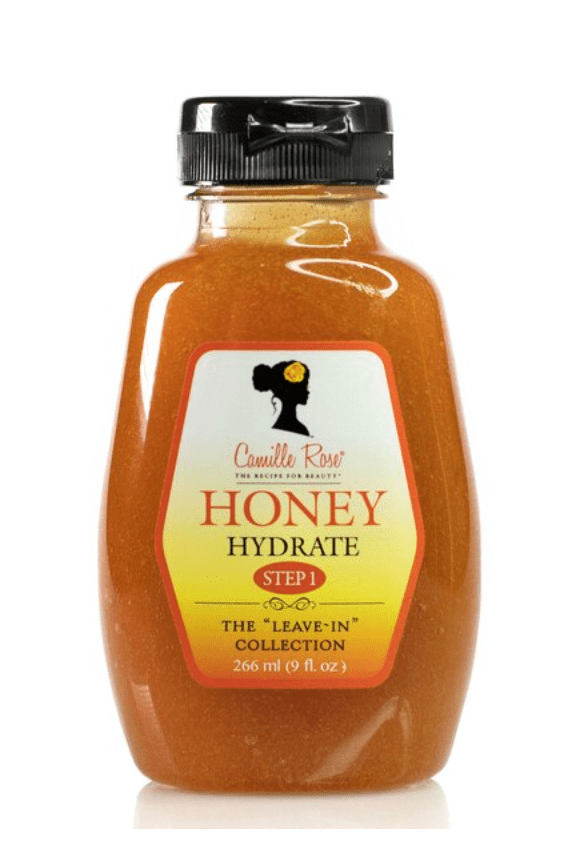
    Camille Rose Honey Hydrate Leave-In Conditioner. Camille Rose has been my long-term default for years and the Honey Hydrate is excellent for moisture retention on Type 4 hair. Where Adwoa pulled ahead: slip during wet detangling, longevity of moisture in dry winter air, and pump-bottle ergonomics. Camille Rose at $20 for 8 oz is a slightly better per-ounce price and the formula is heavier, which some readers will prefer. If you do not need the slip improvement and you like a richer leave-in feel, Camille Rose remains a strong pick. Camille Rose Honey Hydrate Leave-In at Target , 90-day return policy.

    Who should buy and who should skip

    Buy if you have Type 3B through Type 4B hair that needs reliable slip for detangling, you wash weekly or every other week, and you are willing to pay mid-tier prices for a clean-ingredient line. Buy if shoulder or arm fatigue during long wash days is a real factor for you, because the pump dispenser and the high-yield formula make a difference. Buy if you have already cycled through Mielle and Camille Rose and you want an upgrade in slip and moisture longevity without jumping to a prestige tier. Buy if you appreciate a peppermint-forward sensory experience and a clean ingredient list you do not have to magnifying-glass.

    Skip if you have low-porosity Type 4C hair that rejects creamy leave-ins without steam or heat assist, because the Baomint formula will sit on the strand instead of penetrating. Skip if you are scalp-sensitive or have seborrheic dermatitis, eczema, or psoriasis, because the peppermint oil is concentrated enough to aggravate those conditions. Skip if you are budget-shopping and need to keep wash-day product cost under $50 a month, because three Adwoa products will run you closer to $80.

    Four natural hair leave-in conditioners compared side by side: Adwoa Beauty Baomint, Pattern Beauty, Mielle Organics, and Camille Rose Honey Hydrate

    Where to buy and what to pay

    Adwoa Beauty is carried at Sephora, Ulta, Amazon, and the brand’s own site. Pricing is consistent across retailers: Baomint Moisturizing Leave-in Conditioner at $24 for 8 oz, Baomint Deep Conditioning Hair Masque at $32 for 8 oz, Baomint Moisture Plus Conditioning Shampoo at $26 for 8 oz. Sephora is my default because Beauty Insider points stack and the 60-day return policy covers full refunds on opened products if the brand does not work for your hair. Ulta sometimes bundles the masque with the leave-in during the 21 Days of Beauty event, which knocks the pair into the low-$40 range together. Amazon stocks the line but I would not start there because counterfeit risk on prestige hair brands is real and the return window is shorter.
    Frequently asked questions

    Is Adwoa Beauty good for plus-size women specifically?

    The plus-size relevance is not about formula, it is about ergonomics and product yield. The pump dispenser reduces strain during long detangling sessions, the high slip cuts detangling time, and the per-bottle yield holds up for mid-back-length thick hair. Those are the practical considerations that matter when your wash routine takes longer because your hair is denser or because shoulder fatigue is a factor. The formula itself works on any compatible curl type regardless of body size.

    Will it work on relaxed or color-treated hair?

    Yes. The Baomint Deep Conditioning Hair Masque is the strongest play for chemically processed hair because it delivers moisture without protein overload. The leave-in works fine on relaxed hair. The shampoo is gentle enough not to strip color. For heavily damaged hair, pair it with a separate bond-builder like Olaplex No. 3 or K18 because Adwoa does not market the Baomint line as a bond-repair system.

    Can I use the leave-in daily for refreshing?

    Yes, with a caveat. The formula is light enough to use for daily refreshing without buildup, but a half pump diluted in a spray bottle with water is more economical than dispensing a full pump every day. The 8-oz bottle will not last you the projected six weeks if you use a full pump for daily refreshing.

    Does the peppermint tingle hurt?

    It tingles, it does not hurt. For most people it is a pleasant cooling sensation that fades in about ninety seconds. For scalp-sensitive readers or anyone with active inflammation, the peppermint oil can aggravate the scalp. If you are not sure, do a patch test on a quarter-sized area before committing to a full wash.

    Final verdict

    Worth it for the leave-in. The Baomint Moisturizing Leave-in Conditioner earns its $24 price tag through slip, longevity, and a pump dispenser that genuinely matters for anyone managing wash-day fatigue. The deep conditioner is a solid second buy. The shampoo is the weakest part of the system and I would either skip it or buy it once to test. Start with one bottle of the Adwoa Beauty Baomint Leave-In at Sephora , give it three wash days, and decide from there. Worth it at $24.

  • Aerie Real Review for Plus Size: One Year, Sizes 18 and 20, Honest

    Aerie Real Review for Plus Size: One Year, Sizes 18 and 20, Honest

    Flat lay of Aerie Real plus-size bralette, leggings, lounge set, and one-piece swim on a cream linen background

    The brand with the loudest size-inclusive marketing in mass retail is not the one that fits plus bodies best, and after a year of buying Aerie Real pieces in sizes 18 and 20 with my own money, I can tell you exactly where Aerie earns the inclusivity reputation and exactly where the campaign images are doing more work than the patterns. The headline takeaway: the bralettes and the swim are genuinely worth the spend, the leggings are a near-miss that the cut sabotages, and the denim is a “size up and pray” situation that I would not buy again at full price. The marketing implies a tighter fit story than the racks deliver. That does not make the line bad. It makes it uneven, which is a more useful framing than “Aerie is so inclusive” or “Aerie is overhyped.”
    I bought my first Aerie Real bralette in early 2024 to replace a wired bra that had been digging into my ribs after a stress weight gain. I am 36, 5’7″, currently a 38DD on top and a size 20 on the bottom, and I have been a retail buyer in the Midwest for eight years, which is a long way of saying I read return-rate reports for a living. Aerie’s plus-size offering is better than most mass-retail attempts, which is why this review is going to be picky rather than dismissive.

    Quick verdict

    Rating: 3.5 out of 5 across the Real line. The bralettes, the swim, and the lounge sets earn the inclusive reputation. The leggings, denim, and structured tops do not. Best for: plus-size shoppers in the 14-20 range who want a soft, low-compression bra wardrobe and resort swim that fits without strangling the bust. Skip if: you are over a size 22 (the range thins out fast above 20), you need a true compression legging, or you want structured denim. Pricing: bralettes around $30 to $40, swim $60 to $90, leggings $35 to $50. See the where-to-buy section below for retailer links.

    What Aerie Real actually is and brand context

    Aerie is the lingerie and intimates arm of American Eagle Outfitters, launched as a separate brand in 2006 and rebuilt around the Aerie Real campaign in 2014, when the brand publicly committed to no retouching in their imagery. That decision predates most of its competitors by about five years and is the foundation of the brand’s plus-size credibility. Real Power is the workout sub-line. Real Me is the leggings and athleisure cut. OFFLINE by Aerie is the activewear extension. The swim line is its own seasonal category with extended sizing.

    The plus-size range officially runs to XXL, which is a translation that varies by style. On bralettes, XXL fits roughly a 38DD to 40DDD bust. On leggings and bottoms, XXL maps to a US size 18 to 20. On swim, XXL covers up to a 20 on most one-pieces and a 22 on some separates. The brand also runs an XXXL on select pieces, which is not a guarantee across the catalog. If you are above a size 22 consistently, Aerie’s range will frustrate you more than it serves you. That is a meaningful gap and one that Aerie has not closed in the ten years since the Real campaign launched.

    My experience over twelve months

    Twelve months in, I have bought eighteen Aerie pieces with my own card. That breaks down to six bralettes, three pairs of leggings, two lounge sets, four swim pieces, two pairs of jeans, and one cardigan. I returned four of those eighteen, a 22% return rate, slightly higher than my average for a brand I trust but lower than what I see at Old Navy or Shein Curve.

    The bralettes are where Aerie genuinely earns the inclusive reputation. The Real Sunnie bralette in XXL fits my 38DD bust without spillage at the underarm and without the hem rolling up under a t-shirt. Soft-cup, no-wire, light-lining. Not going to give you any structure for a fitted dress, but for working from home, sleeping, and layering under a sweatshirt, it is the most comfortable bra I own. I bought it in three colors at $30 each on sale (full price $40). Strap adjusters are plastic, fine but a tier below what you get at Torrid for $50.

    Three Aerie Real Sunnie bralettes in pink, oat, and olive stacked on linen

    The swim was the surprise. I ordered the high-cut one-piece in XXL last May and braced for the standard “plus-size swim ordered online” disappointment. It fit. The bust was lined enough that I did not need a separate bra under it. The leg cut was high but not aggressive. The fabric held up through about ten swims and twenty washes with no pilling. I paid $69 on sale (full price $89), competitive with Walmart’s Time and Tru one-pieces at $30 and a real step up in fabric weight and lining.

    The leggings are where I would slow you down. I bought the Real Me High Waisted Crossover Legging in XXL, returned it after wearing it twice. The waistband rolls down at the front crossover seam after ten minutes of wear no matter how high I pull it up. The standard Real Me High Waisted Legging in XXL was a better second attempt, kept it, wore it three days a week for six months. Does not roll, compression is light. For a real holding legging, this is not it. Compare against Old Navy’s PowerSoft High-Waisted Plus Leggings at around $35 and the Old Navy version is more compressive for less money. Aerie wins on cotton-blend feel. Old Navy wins on hold.

    The denim was the worst purchase of the year. The Aerie Curvy 90s Boyfriend Jean in size 18 short: waist gapped by two inches, rise was lower than the listing implied, back pocket placement made my torso look longer than it is. Returned within the 60-day window, refund clean. The one consistent thing I will praise across every Aerie purchase: the return policy is straightforward, refunds process in 5 to 7 days, and they accept worn returns if the tags are still on.
    Close-up detail of Aerie Real high-waisted legging waistband worn on a plus-size body

    What works

    The fabric quality on the soft-cup bralettes and the swim is genuinely better than the price point would suggest. Aerie uses a modal-cotton blend on most of the Real Sunnie and Real Me bralette range that holds shape after wash without the cheap polyester slickness I have felt on similar pieces at H and M or Shein Curve. After a year of weekly washing on cold, hung to dry, my three Sunnie bralettes still look like they did at month two.

    The bralette band runs true to size in the XL and XXL range. I have a 36 underbust and the XXL band sits at the correct rib position without riding up. The lining in the bust is enough to wear under a thin shirt without nipple show. Straps are wide enough to not cut into shoulders, which matters more once you cross into the DD-plus cup range.

    The swim sizing is real. The size chart matches the actual finished garment within an inch, which sounds basic but is not the norm in plus-size swim where chart inflation can run two to three inches off in the bust on some online-only brands. If the chart says the XXL bust is 44 inches, it is 44 inches.

    The lounge sets, specifically the Real Me cropped tee and joggers, are some of the most comfortable pieces I own. The cotton-modal blend feels almost like a soft-knit pajama but holds shape enough to wear to the grocery store. I bought two sets in oat and olive at around $65 per set on sale and they have held up better than my older J.Crew sweats from 2022.

    What doesn’t work

    The size range stops at XXL on most of the line, with sporadic XXXL on select bralettes and lounge pieces. If you are a 22 or above consistently, the brand will sell you on inclusivity in the campaign images and then leave you scrolling through filtered results that turn up empty. Torrid runs 10 to 30 in most cuts and Universal Standard goes to a 40, both of which let you build a full wardrobe. Aerie’s range is closer to “size-extended” than “true plus” once you get above a 20.

    The compression on the leggings is lighter than the marketing photography implies. The cotton-modal blend that feels great in lounge becomes a liability in an actual workout context. If you are buying these for spin class or strength training, you want something denser. The Real Power compression sub-line is closer to a real performance fabric but the size range is even narrower than the main Real Me leggings.

    The structured tops and woven blouses do not have a consistent plus-size pattern. I tried a poplin button-down in XXL last fall and the shoulders were cut for a smaller frame than the bust the size was scaled for. The knit tees and crops are fine. The wovens, I would not order online without the option to try in store.

    The denim grading is inconsistent across cuts. The Curvy 90s Boyfriend ran small in the rise and large in the waist. A friend at my size 20 reported the opposite on the Curvy Mom Jean. There is no reliable through-line on the denim, which means you are guessing on each style. At $80 a pair, that is a guess I would rather not make.

    How it compares to alternatives

    Side-by-side comparison of Aerie Real bralette, Torrid bralette, and Old Navy legging

    The plus-size casual-comfort category has real competition now, and Aerie Real is one option among several. Here is how I would price-position each:

    Torrid – sizes 10 to 30, bralettes around $40 to $55, jeans around $80 to $100. Torrid is the better answer if you are over a size 22 or if you need real structure in a bra. Their wired plunge bras at $50 are sturdier than anything in Aerie’s range. Torrid’s denim grading is more consistent across cuts. Where Aerie wins: softer fabric, lower-key colorways, and a less-styled aesthetic if you want neutrals and basics rather than the more fashion-forward Torrid look. Torrid bralettes here .

    Old Navy – sizes 14 to 30 in most plus cuts, leggings around $30 to $40, denim around $40 to $60. Old Navy is the better answer for the leggings specifically. The PowerSoft and Elevate compression lines hold better than Aerie’s Real Me at a lower price. Old Navy’s denim is also more reliable in grading, and the return policy is 45 days with the original receipt. Where Aerie wins: bralettes (Old Navy’s intimates range is thin) and swim quality.

    Universal Standard – sizes 00 to 40 across the entire catalog, leggings around $58, jeans around $98. Universal Standard is the answer if you are over a size 22 and want a true plus-size brand that does not run out of sizing above XXL. Their fabric weight is heavier across the board, the construction is more durable, and the return policy is 60 days with free returns. Where Aerie wins: price (Universal Standard runs significantly higher) and lower-key, lounge-oriented basics. If you can afford it and you wear a 22-plus, Universal Standard makes Aerie irrelevant. Universal Standard leggings here .

    Who should buy and who shouldn’t

    Buy Aerie Real if you are a 14 to 20 looking for a bralette wardrobe, a one-piece swim that actually fits, or a lounge set in soft cotton-modal that holds up to repeat washing. Buy if you want the no-retouch campaign aesthetic to match the kind of relaxed, unstructured pieces you wear on weekends. Buy if you live near a store and can try on the wovens and denim in person before committing.

    Skip if you are over a size 22 consistently, in which case the range will frustrate more than it serves. Skip if you need a true compression legging for athletic use, in which case Old Navy or a dedicated activewear brand will outperform. Skip if you need structured denim with reliable grading, because the cut-to-cut inconsistency in Aerie’s plus denim is a real problem. Skip if you want wired bras with serious shaping, because Aerie’s strength is the wire-free soft-cup category, not structured lift.

    Where to buy and current pricing

    Aerie pieces are sold direct through aerie.com and at American Eagle and Aerie stores. Selected pieces are available through Amazon’s Aerie storefront , the better option if you are a Prime member and want faster shipping or the 30-day Amazon return window. Direct from Aerie, returns are 60 days with receipt, free by mail or in store. Aerie runs frequent 30% to 40% off promotions on bralettes and seasonal swim. Bralettes go to about $30 on sale, leggings to $35, swim to $60, lounge sets to $50. Set a price alert and wait for the sale tier.

    Frequently asked questions

    Does Aerie’s XXL fit a true plus-size body?

    In bralettes and lounge, yes, up to about a 38DD bust and a size 20 bottom comfortably. In leggings, the XXL fits up to a size 20 with light compression. In swim, the XXL covers up to a 20 in most one-pieces with the size chart running true. Above a size 22, the line stops being a reliable fit story.

    How does Aerie compare to American Eagle for plus sizes?

    Aerie is the intimates and casual-comfort arm, American Eagle is the denim and structured-apparel arm of the same parent company. American Eagle’s plus-size denim has more cut variety and slightly more consistent grading. If you want jeans from this family of brands, the American Eagle plus line is the better starting point than the Aerie denim range.

    Is Aerie’s bralette as supportive as a wired bra?

    No. Bralettes by design are low-to-medium support and the Aerie Real range is in line with that. If you have a DD-plus bust and need lift for a fitted dress or a work outfit, you need a wired bra. Bralettes are for comfort, layering, and lounge wear.

    What is the actual return policy?

    Aerie direct: 60 days from purchase date, original tags on, receipt or order confirmation required. Free return shipping if you use the prepaid label. In-store returns are clean and fast. Worn returns are accepted within the window if the tags are still attached, which is more generous than most mass retailers.

    Final verdict

    Worth it for bralettes, swim, and lounge. Skip for compression leggings and denim. The campaign’s loudness on inclusivity is doing more work than the size range above a 22 supports, but within the 14 to 20 zone the brand serves, the pieces I named earn their spots in a real wardrobe. Buy the Real Sunnie bralette on Amazon first, wait for a 30% sale on the swim, and ignore the denim until they fix the grading. Worth it at $30 not $40.

  • Athleta Plus Review: 14 Months in Sizes 1X and 2X

    Athleta Plus Review: 14 Months in Sizes 1X and 2X

    Flat lay of Athleta Plus activewear pieces in 1X and 2X with measuring tape

    I ordered my first Athleta Plus piece on a Tuesday at 4:42pm during a Nordstrom 8.5% off promo that stacked on top of a $20 Note credit, which is the kind of detail I remember because I am a former retail buyer and we are wired this way. The piece was a 1X Salutation Stash Pocket II tight in dark heather grey, $108 before the stack, $89 and change after. I am 36, size 18 on the bottom and a 1X-2X on top depending on the brand, and I had spent the prior eighteen months trying to replace the Old Navy Active compression legging that had finally given up at the inner thigh. I have now bought ten more Athleta Plus pieces across fourteen months. This is what I learned, what I returned, and what I will not pay full price for again.

    I am writing this from a buyer’s lens, which means I track inseam, fabric content, retail vs sale price, and how a piece looks at month one vs month nine. I bought everything myself. Competitor brands named below are Old Navy Active, Girlfriend Collective, Lululemon’s Y-size range, and Beyond Yoga, all of which I have owned in the same size range during the same window.

    Quick verdict

    Rating: 4 out of 5. The bottoms are the reason to buy this brand, specifically the Salutation tight and the Brooklyn ankle pant. Tops are inconsistent in length and the Coaster Luxe tee runs short-torso. The size range stops at 3X (roughly size 22-24), which is the ceiling problem the brand still has not solved. Best for: sizes 14-22 who want a legging that outlasts an Old Navy Active by at least double, and who can catch the sales. Skip if: you wear above a 3X, you only need workout clothes for the gym (Old Navy Active does that for $25), or you refuse to pay over $80 for a legging. Where to buy: Salutation Stash Pocket II at Nordstrom , $108, with their free return policy as the safer first buy than ordering through Athleta direct.

    What Athleta Plus is and where it sits in the market

    Athleta is the activewear arm of Gap Inc., the same parent company that owns Old Navy and Banana Republic. It launched in 1998 as a women-only activewear catalog and has positioned itself as the slightly-more-sustainable alternative to Lululemon. Athleta Plus, the extended size range, launched in 2019 and runs 1X through 3X, which translates to roughly a size 16 through 24 depending on the piece. The brand is a B Corp and runs a recycled-polyester fabric program called Powervita.

    Where it sits in the market: above Old Navy Active on price and quality, below Lululemon on technical performance, roughly even with Beyond Yoga and Girlfriend Collective on price per piece. The Salutation tight at $108 puts it $20 below the Lululemon Align in plus sizes and roughly $40 above the Old Navy Active PowerSoft. The size range issue is real: Athleta Plus stops at 3X while Old Navy Active goes to 4X. If you wear above a 3X, Athleta is not a brand for you yet.

    My experience across fourteen months

    I bought the first Salutation tight in December 2024. I wore it twice a week, mostly to Pilates and to long walks along the lake, washed it cold in a mesh bag and hung it to dry every time. That pair is still in rotation in May 2026. The waistband has held its compression, the inseam stitching is intact, the dark heather has faded maybe one shade. By contrast, my last Old Navy Active PowerSoft in a similar wash rotation lasted about seven months before the inner thigh started pilling and the waistband relaxed past the point of staying up during anything more active than a walk to the mailbox.

    Over fourteen months I bought eleven pieces: the original Salutation in dark heather (kept), a Brooklyn ankle pant in black 1X (kept), a Coaster Luxe tee in oat 1X (returned, short torso), an All Day bra in 2X (kept), a second Salutation in cypress (kept), a Conscious Crop tank in dark navy (kept), a Brooklyn ankle pant in cypress (kept), a Polartec jacket in 2X (returned, shoulder off), a second Coaster Luxe in 2X (returned, still short), a Trekkie North jogger 1X (kept), and a Studio bra in 2X (kept). Eight kept, three returned – a 73% keep rate, which is high for me. My usual return rate on activewear is around 40%.

    The piece I wear most is the Brooklyn ankle pant in cypress. It is a structured pull-on pant in a four-way stretch ponte that looks like a dress pant from a normal distance and behaves like a legging at the waist. I wore it on a five-hour flight to Phoenix in November, slept in it on the plane, and arrived without the bagged-out knee creases that a real wool pant would have. At $99 it is the cheapest professional-but-actually-a-legging pant I have found in plus sizes.

    Close-up of the Salutation Stash Pocket II tight waistband and side pocket in 1X

    What works

    The Salutation tight is the best-engineered piece in the Athleta Plus lineup. The Powervita fabric (recycled polyester with elastane) is denser than Old Navy’s PowerSoft and lighter than Lululemon’s Luxtreme, with enough opacity at the seat that I do not have to do the squat test in a fitting room anymore. The high-rise sits at my actual high rise, not three inches below it like the Old Navy version did. The side pockets fit my iPhone 15 Pro without slipping. After fourteen months and roughly 80 wash cycles, the original pair has lost almost no compression.

    The Brooklyn ankle pant solves a problem I had been trying to solve since 2022 – how to wear something to client meetings that does not feel like restrictive pants but reads as actual pants. The ponte has enough structure to hold a side seam and enough stretch to sit through a 90-minute meeting without digging. The cypress is the closest thing to a true olive in the plus activewear category. I bought a second pair when the first proved out, which is the highest praise I give a piece of clothing.

    The return process is easy. Athleta direct gives 60 days for a full refund with a prepaid label and no restocking fee. Nordstrom carries the full plus assortment with their free no-time-limit return and lets me stack Notes promo savings on top of the same retail price for a 5-10% effective discount.

    The bras are better than expected. The All Day bra is the everyday wirefree bra I had been searching for, with enough support for a 38DD frame to walk and do light Pilates without bounce, and smooth enough seaming that it does not show under a fitted tee. The Studio bra is the medium-impact version, which I wear for reformer Pilates. Neither will replace a Wacoal or a Cuup for true running support, but for low-impact use they are well-cut.

    What does not work

    The size range ceiling is the brand’s biggest unresolved problem. Athleta Plus tops out at 3X, which is roughly a size 22-24 depending on the cut. Old Navy Active goes to 4X. If you wear above a 3X, this is not a brand that has built for you yet, and the marketing about inclusivity is contradicted by where the size run stops. Six years in, the lack of a 4X tier is a choice the brand keeps making.

    The tops are inconsistent in length and most run short in the torso. The Coaster Luxe tee is the worst offender – I tried it in both 1X and 2X and both rode up at the front hem when I lifted my arms. The Conscious Crop tank is fine, but it is explicitly a crop, so it does not solve the regular-tee problem. If you are long-torsoed in plus, expect to return half the tops you order.

    The fleece outerwear has a shoulder fit issue. The Polartec jacket I bought in 2X had a shoulder seam that sat half an inch inboard of my actual shoulder, which gave the whole jacket a pulled-in look at the upper arm. I returned it. The shoulders on the jackets are graded narrower than the body. Check the shoulder fit specifically before keeping one.

    Some pieces shrink. The Trekkie North jogger lost about an inch and a half of inseam after the first three washes, even on cold and hang dry. Wearable, but it now hits above my ankle bone instead of at it. Factor in roughly an inch of shrinkage on the cotton-blend pieces.

    The full retail prices are not justifiable without the sales. A $108 legging is in the same price tier as Lululemon, but the technical performance is not at Lululemon’s level for high-impact training. The brand runs 20-40% off three or four times a year plus end-of-season clearance on color discontinuations, and that is when the pieces become real value.

    Athleta Salutation tight compared to Old Navy Active and Girlfriend Collective leggings flat lay

    How it compares to alternatives

    The plus activewear category has matured. Three real alternatives, with honest takes on each:

    Old Navy Active PowerSoft – $25-45 for leggings, size range to 4X. The Old Navy Active PowerSoft is the right answer if you want a workout legging for under $30 and you do not need it to last more than a year. It is softer at the hand than Athleta’s Powervita but thinner, less compressive, and pills along the inner thigh by month seven. The size range is the win – 4X exists here in a way it does not at Athleta. Use Old Navy for the gym and the Salutation for everything else.

    Girlfriend Collective Compressive Legging – $88, size range to 6XL. The compression is real, the recycled-bottle fabric story is real, and the size range goes further than Athleta. The Compressive is thicker than the Salutation, which is good for higher-impact movement and less comfortable for all-day wear. The waistband sits straight across without contouring, which is less flattering on a curvy waist-to-hip ratio than the Salutation’s slight curve. Pick Girlfriend if you want compression and a 4X or above; pick Athleta if you wear 3X or below.

    Lululemon Align in Y-sizes – $98-128, sizes to Y6 (roughly a 20). The Align is the softest legging in the category and is designed for low-impact wear (yoga, walking, lounging) rather than the medium-impact range the Salutation handles. The Y-size range stops at 20, which excludes most plus shoppers above that. If you wear up to a 20 and you want the softest legging for low-impact use, the Align is it. For everything else, the Salutation is more versatile.

    Beyond Yoga Spacedye Caught in the Midi – $99, sizes to 4X. Spacedye fabric has a slight heathered texture and a substantial hand, compression is moderate, and the size range goes a step further than Athleta. The waistband sits softer than the Salutation, which is comfortable for lounging and less supportive for active wear. The closest Athleta-tier replacement in a true 4X.

    Who should buy and who should not

    Buy Athleta Plus if you wear between a size 14 and a size 22, you want activewear that doubles as light professional wear (the Brooklyn ankle pant especially), you can wait for the 20-40% off seasonal sales, and you do not mind returning roughly a third of what you order to find the pieces that work for your specific torso length and shoulder width. Buy if you have spent the last two years cycling through Old Navy Active and you are tired of replacing leggings every six months. Buy specifically the Salutation tight, the Brooklyn ankle pant, the All Day bra, and the Studio bra – those are the pieces I would buy again at full price.

    Skip Athleta Plus if you wear above a 3X. The size range still does not include you and there is no point pretending otherwise. Skip if you are looking for high-impact running gear – the bras and the leggings are not engineered for that and there are better options at Wacoal or Brooks for the running side. Skip if your activewear budget caps at $40 a legging, in which case Old Navy Active is the right floor for you and there is no shame in it. Skip the Coaster Luxe tee specifically if you are long-torsoed.

    Where to buy and current pricing

    Athleta sells direct at athleta.com (Athleta and Athleta Plus in one extended size run, which I respect as a UX choice). The full plus assortment is also at Nordstrom, where I buy most of my Athleta now because of the free no-time-limit return and the Note stack. The Salutation Stash Pocket II runs $108 and drops to $69-79 on sale two to three times a year. The Brooklyn ankle pant runs $99 and rarely goes deeper than 30% off. Buy through Nordstrom if you want the safer return window.

    Frequently asked questions

    Does Athleta Plus run true to size?

    True to size on bottoms, slightly small in the torso on tops. My size 18 fits the 1X Salutation tight without sizing up. For tops I usually go up to 2X to get torso length, though the Coaster Luxe still ran short even at 2X.

    Is Athleta Plus worth it over Old Navy Active?

    Yes for longevity, no for budget. The Salutation outlasts the Old Navy PowerSoft by roughly double (14+ months vs 7-8 months at the same wear frequency), so cost per wear is comparable over time. If you have $30 to spend, Old Navy. If you have $80-100 and want it to last, Athleta during a sale.

    How does the return process work?

    Athleta direct gives 60 days for a full refund with a prepaid label and no restocking fee. Nordstrom carries Athleta Plus with their free no-time-limit return, which is the safer first-buy if you are testing the brand.

    What is the size range and is it really plus-inclusive?

    1X to 3X, roughly a US 16 to 24. That includes mid-plus and excludes upper-plus. If you wear above a 3X, Athleta has not built for you yet. Girlfriend Collective and Beyond Yoga both go further.

    Final verdict

    Worth it at $79 not $108. The Salutation tight and the Brooklyn ankle pant are the reasons to buy this brand and the reasons I will replace mine when the current ones eventually wear out, which based on the 14-month track record will be a while. Skip the Coaster Luxe tee and the fleece outerwear until the fit grading at the shoulder and torso gets fixed. Buy the Salutation Stash Pocket II at Nordstrom during a Note event, give it six months on a cold-wash hang-dry rotation, and judge it then. Worth it.

  • The Best Moisturizers for Oily Skin Under $150 in 2026 – A Real Price Breakdown

    The Best Moisturizers for Oily Skin Under $150 in 2026 – A Real Price Breakdown

    Three oily-skin moisturizers grouped by price tier on a flat lay surface

    After tracking 38 oily-skin moisturizer prices across Sephora, Ulta, Target, Amazon, and brand direct sites over four months, plus wearing 12 of them for at least two weeks each, the under-$150 oily-skin moisturizer category is more confusing than it should be. There is a $16 jar at the drugstore that performs nearly identically to a $68 designer dupe. There is a $48 mid-range bottle that genuinely is worth the price. And there is a $145 luxury option that is mostly paying for the packaging. This guide gives you the real numbers, the real ingredient drivers, and the real save-or-splurge calls for oily skin specifically. I am NC45 with a combination-oily T-zone, so most of this comes from my own face. The pricing comes from receipts.

    The fast answer

    A solid oily-skin moisturizer in 2026 costs between $14 and $145 for a 1.7 oz jar or bottle, with the strongest value clustering at the $20-$48 mid-range. The drugstore tier ($14-$24) is genuinely competitive on formulation now and is where I send most of my friends first. The mid-range tier ($28-$68) is where you get the cleanest textures, the most reliable niacinamide percentages, and the gel-cream finishes that actually work under makeup. The premium tier ($75-$145) buys you elegant packaging, slightly better fragrance experiences, and a thinner emulsion, but rarely a meaningfully better acne-or-oil-control outcome. Realistic budget for an oily-skin moisturizer that performs: $20-$40. Premium splurge: $90-$145.

    What actually drives the price

    Moisturizer pricing in the oily-skin category is built on five cost levers, and most brands only talk about one of them in their marketing copy. Here is the full picture so you can read a $90 price tag and understand exactly what you are paying for.

    Active ingredient concentration

    The actives that actually matter for oily skin are niacinamide (2-10% for sebum control and pore appearance), salicylic acid (0.5-2% for chemical exfoliation), hyaluronic acid (a humectant that hydrates without adding oil), and zinc PCA. The Ordinary sells a 10% niacinamide serum for around $7. CeraVe’s PM Facial Moisturizing Lotion costs around $16. Paula’s Choice CLEAR Oil-Free Moisturizer with niacinamide and salicylic acid costs around $32. Drunk Elephant’s B-Hydra costs around $52. The active concentration is roughly comparable across these four products. You are paying for the carrier formulation, not for more active. This is the line item with the biggest markup variance and the one to scrutinize first.

    Texture and finish engineering

    Oily skin texture preferences split into gel, gel-cream, and lightweight lotion. Engineering a moisturizer to absorb in under 90 seconds without leaving a film is genuinely expensive R&D. The drugstore tier often has a slight tackiness that takes 5-8 minutes to fully sink in. The mid-range tier is where you get the 60-second absorption and the matte-but-hydrated finish. For me, NC45 with a T-zone that turns into a disco ball by 2pm, the texture difference between CeraVe and Tatcha Water Cream is real but not 4x real. Texture is a legitimate cost driver but one you can negotiate on if you do not mind waiting an extra five minutes after application.

    Fragrance and sensory experience

    This is the line item that creates the biggest price gap with the smallest functional benefit. Drugstore moisturizers are mostly fragrance-free or use minimal scent. Mid-range moisturizers introduce subtle natural fragrances. Premium moisturizers have an entire sensory ritual built in – the smell, the sound the pump makes, the weight of the jar in your hand. Within our under-$150 range, the sensory premium adds roughly $30-$60 to the price versus a comparable unscented mid-range option. If you have sensitive skin or if you genuinely do not care about smell, this is the line item to cut.

    Packaging and pump engineering

    Airless pumps cost more than jars. Glass costs more than plastic. Frosted glass with metallic accents costs more than clear glass. None of this affects how the moisturizer works on your face. Tatcha’s Water Cream uses a heavy frosted glass jar that contributes meaningfully to its $72 price for 1.7 oz. The same formula in a tube would likely sell at $48. Drunk Elephant uses airless pumps that protect their formulas from oxidation – a real benefit for vitamin C products, less critical for niacinamide moisturizers. Packaging is the most visible cost driver and the easiest one to justify cutting.

    Brand cachet and distribution

    The final line is pure marketing markup. A moisturizer sold at Sephora carries a distribution margin of around 40-50%. A moisturizer sold at the drugstore carries a much thinner margin. Drunk Elephant’s $52 B-Hydra is partly priced for the clean-beauty positioning. Tatcha’s $72 Water Cream is partly priced for the Japanese-luxury positioning. CeraVe’s $16 PM is partly priced for the dermatologist-recommendation positioning – the cheapest of the three because the positioning is also the lowest-margin. Drugstore is not a downgrade. It is the same product without the badge.

    Price tiers with examples

    Drugstore tier oily-skin moisturizer in a budget under 30 dollar price range

    Budget tier: $14-$24 for a full-size moisturizer. Brands to look at: CeraVe (PM Facial Moisturizing Lotion at around $16 is the most-recommended drugstore option for oily skin among dermatologists), La Roche-Posay (Effaclar Mat at around $22 is mattifying without being drying), Cetaphil (Daily Facial Moisturizer with niacinamide at around $14), and The Ordinary (Natural Moisturizing Factors at around $9 if you want absolute floor pricing). For me, CeraVe PM has been the lowest-fuss daily moisturizer I have used since 2021. It does not pill under foundation, it controls oil moderately well through about six hours of wear, and the niacinamide concentration is high enough to make a visible pore-appearance difference after about three weeks. The texture is the weakest part – it takes about 7 minutes to fully sink in, and I cannot apply it in a rush. CeraVe PM Facial Moisturizing Lotion is on Amazon Subscribe & Save and comes out to about $14 with the discount.

    Mid-range oily-skin moisturizer in the 30 to 70 dollar price tier

    Mid-range tier: $28-$68 for a full-size moisturizer. Brands: Paula’s Choice (CLEAR Oil-Free Moisturizer with niacinamide and salicylic acid at around $32), Glow Recipe (Watermelon Glow Niacinamide Dew Drops adjacent to their Plum Plump moisturizer at around $39), COSRX (Snail 96 Mucin Power Moisturizer at around $25 leans this direction even though it prices below), Drunk Elephant (B-Hydra Intensive Hydration Serum-Gel at around $52), and Tatcha (Water Cream at around $72 sits at the top of this tier). The Paula’s Choice CLEAR Oil-Free is the one I have rebought four times. For me, it is the best balance of niacinamide percentage, salicylic acid percentage, gel-lotion texture, and price in the category. It absorbs in about 90 seconds, it does not pill under SPF, and the salicylic acid keeps my T-zone clearer over time in a way the CeraVe alone does not. Paula’s Choice CLEAR Oil-Free Moisturizer is at Sephora and Ulta both. If you are deciding between this and Drunk Elephant B-Hydra, Paula’s Choice wins on functional outcome and Drunk Elephant wins on texture elegance. I keep both. I use Paula’s Choice four mornings a week.

    Premium oily-skin moisturizer in the 75 to 150 dollar premium tier

    Premium tier: $75-$145 for a full-size moisturizer. Brands: Tatcha (Dewy Skin Cream at around $72 sits at the bottom of this tier and is the most-justified premium price in the category), SkinCeuticals (Phyto Corrective Gel at around $82), Drunk Elephant (Protini Polypeptide Cream at around $68 leans premium), and Charlotte Tilbury (Magic Cream at around $100). At this tier you are paying for elegant packaging, refined texture, and sensory experience. The functional outcome for oily skin specifically is not better than the mid-range tier – it is comparable. I have used Tatcha Water Cream off and on for three years and the texture is the best in the category, but I cannot tell you the niacinamide is doing anything my Paula’s Choice is not doing. Tatcha Water Cream at Sephora is the most-recommended premium pick if you want to splurge on one item. Skip the rest of the brand’s range unless the sensory experience is the whole point.

    Where to save and where to splurge

    Save on the moisturizer itself. The CeraVe PM and Paula’s Choice CLEAR Oil-Free combo costs around $48 total and outperforms most $90+ single-product options for oily skin specifically. The drugstore tier is genuinely competitive in this category now, and the mid-range tier solves any remaining texture concerns.

    Save on fragrance. If you do not care about the smell, the unscented version of almost any moisturizer costs $10-$25 less and performs identically. La Roche-Posay’s fragrance-free range is roughly $5 cheaper per item than their scented equivalent.

    Splurge on sunscreen instead. The $40-$60 you save on a premium moisturizer is better spent on a quality SPF you will actually wear daily. A daily mineral or chemical sunscreen costs more than most oily-skin moisturizers and matters more for long-term skin outcomes. La Roche-Posay’s Anthelios sunscreens at around $36 are where I send the savings.

    Splurge on the active ingredient lineup if you can afford to. A $32 Paula’s Choice moisturizer plus a $9 The Ordinary niacinamide serum is a stronger oily-skin routine than a single $90 product trying to do everything. Layering order: water-based serum first, then moisturizer, then SPF. Save your money on the all-in-one premium pick. Spend it on the right combo of mid-range and budget actives.

    Frequently asked questions

    Why does oily skin even need a moisturizer?

    Skipping moisturizer when you have oily skin is one of the most common mistakes I see. Oily skin can still be dehydrated, and dehydrated skin produces MORE oil to compensate. A lightweight niacinamide-based moisturizer regulates sebum production over time. The goal is hydration without occlusion. A gel or gel-cream texture is the right call. A heavy cream is not.

    Is there a real difference between $16 CeraVe and $52 Drunk Elephant?

    There is a real texture difference and a real fragrance-and-packaging difference. The functional outcome on the skin is much closer than the price gap suggests. If you are buying based on outcome alone, CeraVe wins on value by a wide margin. If the daily ritual matters to you and you want a product that feels elegant to apply, the mid-range tier is where the texture jump is most noticeable. The jump from mid-range to premium is smaller than the jump from drugstore to mid-range.

    How long does a full-size oily-skin moisturizer actually last?

    For daily morning and evening application of a pea-sized amount, a 1.7 oz jar lasts roughly 3-4 months. That makes the real cost-per-month for a $16 CeraVe around $4-$5, and for a $72 Tatcha around $18-$24. The premium tier monthly cost is roughly 4x the drugstore tier – useful framing when you are deciding what to buy.

    What about acne-prone oily skin specifically?

    Look for non-comedogenic labeling and a salicylic acid component if breakouts are an ongoing issue. Paula’s Choice CLEAR Oil-Free in the mid-range tier and La Roche-Posay Effaclar Duo (around $35) in the slightly-above-drugstore tier are both formulated for acne-prone oily skin. CeraVe PM is non-comedogenic but does not include salicylic acid, so it is a maintenance moisturizer rather than an active treatment.

    The realistic number to budget

    For an oily-skin moisturizer that performs daily, looks reasonable on your counter, and does not require a second job, budget $20-$40. This number gets you either a strong drugstore pick like CeraVe PM at around $16 plus a budget serum, or a single mid-range pick like Paula’s Choice CLEAR Oil-Free at around $32 that handles the full job. Going above $75 buys texture refinement and packaging – real but optional benefits. Going below $14 is feasible with The Ordinary but requires more layering steps to match a full-formula option. The $32 sweet spot delivers a moisturizer that controls oil, hydrates without weight, plays well with SPF and foundation, and does not feel like a compromise. Save your money on the $145 luxury jar. Spend it on the SPF, the actives, and the foundation that actually meets your skin where it is.

  • Briogeo’s Dream Makers Founder Grant – What It Actually Does and Why the Brand Behind It Matters

    Briogeo’s Dream Makers Founder Grant – What It Actually Does and Why the Brand Behind It Matters

    Briogeo hair care product lineup arranged in editorial flat lay photography

    Briogeo occupies an unusual position on the Sephora hair wall in 2026. The brand has a clean-formulation pitch, clinical-looking white packaging, and a price tier that puts it firmly in the prestige column at $26 to $42 per core product. It also has something almost no other prestige hair brand can claim – a Black founder who built the company from a kitchen-counter experiment in 2013 to a Wella Company acquisition in 2022 without losing the original product DNA along the way. The Dream Makers Founder Grant is the program that sits at the intersection of those two facts: the brand’s commercial scale and its founder’s stated mission of pulling more BIPOC founders into the same room.

    This piece is about that grant program and the brand behind it – what the grant pays out, where Briogeo sits in the premium textured-hair category in 2026, and which products are worth the money. A grant program belongs in a brand profile rather than a press-release recap because Dream Makers is one of the only durable BIPOC beauty funding initiatives that has survived the post-2020 pullback in corporate diversity spending. Most of the grants announced in 2020 and 2021 have quietly shut down or stopped reporting recipients. Briogeo’s program is still writing checks.

    The founder story behind the grant

    Nancy Twine founded Briogeo in 2013 after leaving a finance career at Goldman Sachs. She has talked publicly about the kitchen-table moment when she realized that the natural-ingredient hair products her grandmother had made in West Virginia were essentially what the prestige beauty industry was starting to call clean beauty, except no one was making them for textured hair at the prestige tier. The category at the time was split between drugstore Black-hair brands and a small handful of indie textured-hair lines selling direct, with very little prestige-tier representation on Sephora shelves.

    Briogeo launched at Sephora in 2014, which is the boring-but-important distribution decision that set the rest of the trajectory. Sephora committed to stocking the line at launch, giving the brand visibility that most Black-founded hair brands could not access in 2014. Over the next eight years Twine grew Briogeo into a meaningful prestige-tier business. In 2022 the brand was acquired by Wella Company, the conglomerate that also owns Wella Professionals, Sebastian, and OPI. Twine stayed on as a brand leader through the acquisition, which is rarer than it sounds in beauty M and A.

    The Dream Makers Founder Grant was launched in 2020, two years before the Wella deal closed. Twine has been explicit in interviews that the grant was the program she wished had existed for her in 2013. The structure is simple: Briogeo writes cash grants directly to BIPOC beauty founders who are at the early-stage point in their business, plus mentorship from the Briogeo team and brand exposure through co-marketing. The amounts and recipient counts have varied year to year – generally a small cohort of founders each cycle receiving meaningful five-figure grants – and the program has continued after the Wella acquisition, which is the part that distinguishes it from a lot of brand-funded initiatives that quietly disappeared once an acquirer took over.

    Nancy Twine, founder of Briogeo, in editorial portrait photography

    The grant itself is structured around three pieces and the cash is only one of them. The first is the direct funding. The amounts are not at venture-capital scale – this is not a seed round substitute – but they are large enough to make a difference for an indie founder at the manufacturing, packaging, or first-retail stage. Recipients have used the money for first production runs, fulfillment infrastructure, and trademark and legal work that early-stage founders routinely defer.

    The second piece is mentorship. Briogeo’s team works with recipients on the operational pieces that are not taught anywhere – cost-of-goods modeling, retailer negotiation, distribution decisions, packaging vendor selection. A grant check spends down in a quarter. Operational knowledge stays with the founder for the life of the business.

    The third piece is brand exposure. Briogeo has used its own marketing channels to feature recipient brands in newsletters, social campaigns, and Sephora co-marketing moments. The exposure is not equivalent to a Sephora launch on its own, but for a founder who is still pre-retail, having an established prestige brand point its audience toward yours is a real lift. The reason the program has had staying power is structural – it is funded out of brand operations rather than as a corporate-foundation side project, which means it gets treated as part of how Briogeo does business rather than as a discretionary line that gets cut in tight quarters.

    What Briogeo as a brand actually makes

    The grant program does not exist independent of the brand, so the brand has to be evaluated on its own merits if you are going to buy any product to support the founder mission. Briogeo makes hair care across the curly, coily, color-treated, damaged, and scalp-care segments. The line is organized into named collections rather than as a scattered SKU list, which makes it easier to shop than most prestige hair brands.

    The major collections are Don’t Despair Repair (deep-conditioning and bond repair for damaged hair), Scalp Revival (scalp-care including the well-known charcoal scrub), Curl Charisma (a curly-hair-specific styling and conditioning system), Be Gentle Be Kind (lightweight cleansers and conditioners for fine or daily-wash hair), and Superfoods (a more recently launched everyday line). Pricing sits in the $26 to $42 range for most core products, with the deep treatments and scalp tools at the upper end and the everyday conditioners at the lower end.

    Distribution is primarily Sephora, with selected SKUs at Ulta and at Briogeo’s own site. The line is not at mass retail, which has kept the brand out of the discount-and-promo cycle that erodes pricing power at Target or Walmart. The Wella acquisition has so far not pushed Briogeo toward mass distribution, which is the right call – the prestige positioning is what sustains the formulation costs.

    Briogeo Don't Despair Repair Deep Conditioning Mask in close-up product photography

    Where the brand gets it right

    The first thing Briogeo gets right is the Don’t Despair Repair Deep Conditioning Mask. This product has earned its reputation. For low-porosity 4A hair like mine, the formulation actually penetrates rather than coating the strand, and the slip is heavy enough that I can detangle under the mask in the shower without losing strands. I have repurchased the 8 oz tub more times than I have repurchased any other prestige deep conditioner including the comparable Olaplex No. 8.

    The second is the Scalp Revival Charcoal Scalp Scrub. The granule size in this product is correct, which sounds like a small thing but matters – too fine and it does nothing, too coarse and it irritates the scalp. The Briogeo grit is in the right range and the charcoal pulls actual buildup off a low-porosity scalp that has been doing a lot of leave-in product layering. I use this every third or fourth wash and the difference in how my scalp feels is real.

    The third is formulation transparency. Briogeo discloses ingredients in plain language, names what each active is supposed to do, and does not hide behind proprietary-complex marketing as much as the prestige category as a whole does. For a category where most brands lean heavily on patented complexes with vague descriptions, this is a real differentiator.

    The fourth, and the reason this article exists, is the founder accountability piece. Briogeo is one of the few prestige hair brands where the founder’s stated mission has been translated into a recurring operational program rather than a one-time grant announcement. That follow-through is rare and it deserves to be named.

    Where there is room to push back

    Honest critique time, because no brand is above it. The Curl Charisma collection is the line I have the most reservations about. The styling cream and the leave-in are formulated for looser curl patterns – roughly Type 3A through 3C – and the slip and definition fall off noticeably for tighter Type 4 textures. For a brand whose founder has Type 4 hair and whose mission talks about underserved textured-hair shoppers, the styling line skews lighter than it should. Pattern Beauty’s Heavy line covers this gap better than Briogeo’s Curl Charisma does for 4B and 4C density. If you are shopping Briogeo for styling products on tightly coiled hair, the Don’t Despair Repair line is the part to buy. The Curl Charisma styling system is the part to skip.

    The pricing is the next issue. The Don’t Despair Repair mask at $42 for 8 oz is at the top of the prestige tier, and the value-per-ounce is not the strongest argument the brand has. The K18 Leave-In Molecular Repair Mask sits at a similar price tier and the Olaplex No. 8 is a few dollars cheaper for the same size. The formulations are different enough that the choice is not just price, but if you are deciding between Briogeo and the closest prestige competitors purely on cost, Briogeo is not the cheapest premium option.

    The Superfoods line, launched as the everyday entry point, has been the weakest part of the lineup. The shampoo and conditioner are pleasant but not differentiated from a half-dozen similarly priced prestige conditioners. If Superfoods is your entry point, you might come away wondering what the fuss is about. The fuss is about Don’t Despair Repair and Scalp Revival. Start there.

    How Briogeo compares to the rest of the prestige hair shelf

    Briogeo does not sit alone at the prestige tier and it helps to know the reference points. Three comparisons worth running before you commit.

    Olaplex is the most direct prestige competitor on bond repair. The No. 3 Hair Perfector at home and the No. 8 Bond Intense Moisture Mask are the closest functional analogs to Don’t Despair Repair. Olaplex is built around a single patented bond-building chemistry across the whole line, while Briogeo’s repair products use a broader formulation philosophy of multiple actives doing different jobs. Olaplex is the more focused tool for chemical damage from color and bleach. Briogeo is the broader weekly maintenance choice for general damage including heat, manipulation, and protective-style breakage. Both are worth knowing. Olaplex if you are bleaching, Briogeo if you are not.

    K18 is the newer prestige-tier comparison. The Leave-In Molecular Repair Mask is cross-shopped against Don’t Despair Repair. K18’s pitch is shorter contact time – 4 minutes versus 10 to 15 for most deep conditioners. The trade-off is that K18 runs more expensive per ounce and the results are sharper on protein-deficient hair than on moisture-deficient hair. If your damage is moisture loss, Briogeo’s mask is the right pick. If your damage is structural protein loss, K18 is the more targeted tool.

    Pattern Beauty is the comparison on the textured-hair-specific styling side, where Briogeo is weaker. Pattern’s Heavy line covers dense 4B and 4C styling needs more reliably than Curl Charisma, and Pattern’s prices are slightly lower across the styling range. For a routine where styling matters more than deep conditioning, Pattern is the smarter primary brand and Briogeo is the supplementary deep-treatment pick.

    Five best-selling Briogeo hair care products in editorial product grid

    What to buy from them

    Do not buy the full Briogeo system. The line is large enough that the smart play is to add the two or three products that are genuinely best-in-class and skip the rest. After five years of cycling Briogeo through my routine alongside other prestige hair brands, these are the products that have earned their permanent shelf space:

    The Don’t Despair Repair Deep Conditioning Mask at $42 for 8 oz is the standout. Once a week on a wash day, applied to clean wet hair, left on for 15 minutes under a plastic cap. For low-porosity hair the heat from the cap is what makes the formulation actually penetrate. This is the one product I would tell someone to buy if they were only going to try one Briogeo thing.

    The Scalp Revival Charcoal Scalp Scrub at $42 is the second product worth the price. Used every third wash, massaged into a damp scalp for about 90 seconds before rinsing, then followed by your regular shampoo. The difference in scalp feel for product-prone routines is genuine.

    The Don’t Despair Repair Shampoo at $28 is the third pick. It is gentle enough for a low-porosity routine that needs cleansing without stripping the moisture you spent the week layering in. Not the cheapest sulfate-free shampoo at this tier, but the one I have repurchased most consistently.

    The Scalp Revival Stimulating Therapy Massager at around $16 is the rare prestige tool that is worth the price. The bristle shape and the soft silicone tips make scalp work during the shampoo step easier than fingertips alone, especially on a low-porosity scalp that needs the manual stimulation to lift product residue.

    The Curl Charisma Coil Custard or the Leave-In at $28 is the one styling product from this line I will recommend – but only for Types 3A through 3C. For tighter 4-type textures the Pattern Beauty Heavy Conditioner is the better pick. Match the product to your texture, not to the brand loyalty.

    The bigger picture

    The Dream Makers Founder Grant is a small program in dollar terms relative to what BIPOC beauty founders actually need to build at scale. It is not going to solve the venture-capital gap or the retail-shelf-space gap on its own. What it does do is move money and operational knowledge to founders who would otherwise be locked out of both, and it has done that consistently across multiple cycles including through a corporate acquisition that could have ended the program. That consistency is the part that is worth paying attention to.

    The brand behind the grant makes some best-in-class products and some forgettable ones. The way to support the founder mission without overspending on the weakest parts of the line is to know which products to buy and which to skip. Buy Don’t Despair Repair. Buy Scalp Revival. Skip Superfoods unless you specifically need a lightweight everyday conditioner. Skip Curl Charisma if your hair is denser than 3C and buy Pattern Beauty’s Heavy line instead. The grant runs whether you buy the line or not. But if you are buying anyway, save your money on the wrong Briogeo products and spend it on the right ones.

  • What to Wear During a Job Interview: 6 Plus-Size Outfits by Industry

    What to Wear During a Job Interview: 6 Plus-Size Outfits by Industry

    Three plus-size women styled in different job interview outfits for different industries, editorial spread

    I bought my first real interview blazer in 2014 for an editorial assistant role I did not get, and it cost $312 at a sample sale that started at 7am on a Saturday in a SoHo loft with no air conditioning. The blazer was a size 18 navy single-breasted from a designer I will not name because the brand has since changed its sizing in ways that make it irrelevant. I wore it to six interviews over two years before I figured out something obvious – the blazer was doing about 30% of the work I thought it was doing, and the trouser, the shoes, the bag, and the choice not to wear a statement necklace were doing the other 70%. I have since interviewed for editor roles at five publications, sat on the hiring side for two of them, and helped enough friends piece together first-round outfits that I have a clear sense of what reads as “ready” in 2026 versus what reads as “tried.”

    This is the breakdown by industry, because the corporate-finance interview outfit that gets you taken seriously at a midtown bank is the same outfit that gets you read as overdressed at a creative agency in Brooklyn. Six industries, one anchor outfit each, with the pieces that actually do the work.

    What to consider before you pick the outfit

    Three things matter before fit, fabric, or color. The first is the company’s visible dress code. Pull up the company’s LinkedIn, find three employees at your level, and look at how they show up in their profile photos and in any team photos on the company site. If the head of marketing is in a soft cardigan and the engineering lead is in a hoodie, a wool suit will read as misread-the-room. If the people in the team photo are in tailored separates with structured shoulders, your knit dress will read as underdressed.

    The second is the format. A four-hour panel with five interviewers in conference rooms is a different physical experience than a 45-minute first-round in a single office. The panel outfit needs to handle sitting in three rooms, walking between them, and getting water spilled by hour three. The first-round outfit can prioritize one-impression polish over endurance.

    The third is the photograph. Most companies will photograph you at offer-day onboarding in whatever you wore to the final round, and many will put a candidate photo into a Slack channel before final-round decisions. The outfit you wear should photograph as cleanly in a fluorescent-lit conference room as it does in the mirror at home. Solid jewel tones, structured shoulders, and saturated darks photograph better than fussy patterns or pastels in flat office lighting.

    1. Corporate finance, law, or consulting – the tailored suit alternative

    Big-firm finance, law, and consulting still default to a matched suit in navy or charcoal for in-office interviews above analyst level. The plus-size version of this dress code is hardest to source because matched suiting in extended sizes is still thin on the ground in 2026, and the most-flattering version is almost never a literal matched two-piece. The move is a structured single-breasted blazer with a tailored wide-leg trouser in the same neutral but not necessarily the same exact fabric weight.

    The anchor piece: the Universal Standard Stephanie Blazer in navy , around $180, sized 00-40. The shoulder construction sits cleanly without padding bulk, and the single-button closure reads more updated than a two-button. Pair with the Universal Standard wide-leg trouser in matching navy , around $128, and a closed-toe pointed pump from Naturalizer in wide width , around $110. Shell underneath: a fitted silk or silk-blend in cream or pale blue, no pattern. Bag: a structured shoulder tote in black leather, large enough for a laptop.

    Plus-size candidate in navy tailored suit alternative for corporate finance interview

    2. Creative agency, editorial, or fashion – the considered separates

    Creative-industry interviews want to see taste, not compliance. Showing up in a matched corporate suit at a creative agency reads as not understanding the room. The move is tailored separates that read as considered without reading as costume – a structured trouser in an unexpected color or fabric, a silk shell or fine-knit top, a sculptural shoe, and one piece of jewelry that suggests you have personal style without competing with your face for the interviewer’s attention.

    The anchor piece: the Eloquii High-Rise Wide-Leg Trouser in cream or oxblood , around $129, sized through 28. Paired with a fine-gauge merino crewneck from Universal Standard in black , around $98. Shoes: a low block-heel mule or a leather loafer rather than a pump. Bag: a soft-structure shoulder bag, ideally in cognac or a deep oxblood. Jewelry: one chunky gold ring, gold hoops no larger than a quarter, nothing on the neck. The whole look reads as someone who knows what Karla Welch puts on her clients without trying to dress like a Karla Welch client.

    Plus-size candidate in oxblood trousers and black knit for creative agency interview

    3. Tech / product / engineering – the structured-casual outfit

    Tech interviews have one of the most-misread dress codes in 2026. The default at most major tech companies remains business casual, but the spread between Google headquarters and a Series B startup is wide, and the wrong read in either direction reads as not knowing the industry. The safe baseline is what I call structured-casual – a tailored piece on top, a relaxed piece on bottom, or vice versa, with one clearly considered element that signals intentionality.

    The anchor piece: a fitted ponte knit blazer in black or navy from Universal Standard , around $148, paired with a dark-wash straight-leg jean in a clean rinse from Universal Standard’s Seine line , around $98, sized through 40. Underneath: a fitted cotton tee in white or cream, no graphic. Shoes: white leather sneakers in good condition (not running shoes) or a low ankle boot. Bag: a soft leather backpack or a structured tote. The blazer plus dark denim is the formula that reads “I take this seriously” without reading “I do not understand that you wear hoodies here.”

    Plus-size candidate in ponte blazer and dark denim for tech interview

    4. Healthcare administration, education, or nonprofit – the knit dress

    Healthcare administration, school district leadership, and large nonprofit interviews share a dress-code lane that is more formal than tech but less corporate than finance. The anchor outfit is a knit sheath or fit-and-flare dress in a solid color, layered with a cardigan or unstructured blazer, with closed-toe heels and minimal jewelry. The format is forgiving across a long day of panels and reads as professional without reading as Wall Street.

    The anchor piece: the Eloquii Ponte Knit Sheath Dress in burgundy or deep teal , around $109, sized through 28. The ponte fabric holds shape through a full interview day without bagging at the seat after hour three. Layer with an unstructured cardigan in cream or camel from Universal Standard , around $128. Shoes: a closed-toe block-heel pump in nude or black, not pointed-toe, not stiletto. Jewelry: small pearl or gold studs, a thin chain, no statement pieces. Bag: a structured leather tote in black or cognac.

    Plus-size candidate in burgundy ponte sheath and camel cardigan for healthcare admin interview

    5. Series A or seed-stage startup – the polished founder-coded look

    Early-stage startup interviews sit in their own category. The hiring team has probably worked together in a kitchen for the last eight months and the office is somebody’s apartment in Williamsburg. Showing up in a suit reads as misunderstanding the stage of the company. Showing up in athleisure reads as not respecting the interview. The move is the founder-coded look – clean basics, one investment piece, immaculate grooming, nothing precious.

    The anchor piece: a high-rise straight-leg trouser in a soft fabric like crepe or wool-blend twill from Eloquii in black , around $109, paired with a fitted ribbed mock-neck in cream or rust from Abercrombie’s Curve Love line , around $50. Shoes: a clean low ankle boot or a leather loafer. Layer: a tailored wool coat or a long cardigan, depending on the season. Bag: a soft leather shoulder bag, not a backpack and not a tote. One leather watch, no other jewelry. The look reads as a person who would be comfortable in a pitch meeting with a partner at Sequoia or in a kitchen interview with the founder’s dog underfoot.

    Plus-size candidate in mock-neck and crepe trousers for early stage startup interview

    6. Remote / virtual first round – the on-camera outfit

    Virtual interviews changed the dressing math because the camera only sees from the chest up, but the rest of you matters for how you sit, how you move, and how you feel for the 45 minutes you are on Zoom. The mistake is dressing only the top half and showing up in pajama bottoms – it changes your posture, your energy, and your read on the camera in ways that are visible to a trained interviewer.

    The anchor piece on camera: a fitted silk or silk-blend blouse in a saturated solid color from Universal Standard in emerald or oxblood , around $98. Saturated jewel tones photograph better than pastels on most webcams and read as more confident in low-quality video compression. Underneath the desk: a pull-on ponte pant in the same color family, around $98, or a wide-leg trouser if you have one. Earrings: small gold or pearl studs that catch light without being noisy on a 720p webcam. Hair: pulled back if your hair has more visual texture than your face, down and styled if it does not. Background: solid wall behind you, no kitchen, no bedroom.

    Plus-size candidate in emerald silk shell for virtual job interview on Zoom

    Styling tips that apply across every interview type

    Three rules hold regardless of industry. The first: tailor everything. A $30 alteration on the blazer sleeves, the trouser hem, or the dress bodice will separate a $150 outfit from one that reads as $400. Find an alterations specialist with plus-size experience before you have an interview scheduled, not after. The good ones get busy and a same-week appointment is hard.

    The second: wear actual shapewear under any unlined piece. The Spanx Suit Yourself bodysuit at around $88 or the Honeylove SuperPower at around $98 will transform how a knit dress or a fitted shell hangs across a four-hour panel. Skip the cheap drugstore versions – they roll, bind, and read through the fabric in ways that distract more than they help. This is a one-time investment that improves every interview outfit you own.

    The third: break in the shoes. Do not wear new pumps to an interview. Even the Naturalizer wide-width pumps, which run kinder than most, need four to six short wears before they handle a full day. I learned this at an interview at a magazine I will not name when I limped into the fifth-floor walkup in shoes I had bought the day before. I did not get that job, and the shoes were part of the reason.

    What to avoid regardless of industry

    Anything labeled bodycon, anything in a fabric that wrinkles on contact (linen, low-grade silk, unstructured rayon), and any color that photographs as white in fluorescent office light – which includes pale blush, oyster, ivory, and cream-adjacent yellows. Test by photographing the outfit under your phone’s flash in a windowless bathroom.

    Statement jewelry that competes with your face. One pair of small studs, one ring, one watch. That is the upper limit. The interviewer needs to focus on your eyes, your mouth, and your hands. Anything else in their field of vision is friction.

    Perfume that announces you before you walk in. Skip it. The interviewer two doors down has migraine triggers and the HR coordinator who walks you out has allergies. Deodorant and clean hair are the right baseline. Save the perfume for the second-round dinner if there is one.

    Shop the looks

    The pieces in this guide cluster around three retailers – Universal Standard, Eloquii, and Nordstrom – because those carry the strongest size runs and the most reliable fit for plus-size professional wear in 2026. If you are building an interview rotation rather than dressing for a single role, start with one structured blazer and one pair of tailored trousers in a neutral, then build outward with knit dresses, shells, and shoes that work across multiple outfit combinations. The blazer is the highest-leverage purchase in the closet and the one most worth tailoring properly.

    Frequently asked questions

    What is the safest single outfit if I do not know the industry?

    A navy or charcoal single-breasted blazer over a fitted shell in cream or pale blue, paired with a matching or near-matching tailored trouser, a closed-toe pump in black or nude, and minimal jewelry. This reads as competent in finance, professional in healthcare, and acceptable in tech. It will read as slightly overdressed at a creative agency, but slightly overdressed is a safer error than slightly underdressed in any interview context.

    Can I wear pants instead of a dress to a corporate interview?

    Yes, and a tailored wide-leg or straight-leg trouser in a solid neutral often photographs better than a dress for plus-size bodies in conference-room lighting. The pant suit lost its “men’s clothing” connotation about fifteen years ago and currently reads as more updated than a sheath dress in most corporate environments. The exception is healthcare administration, where knit dresses still slightly dominate the dress code.

    How do I dress for a four-hour panel without looking wilted by hour three?

    Fabric choice does most of the work. A ponte knit, a wool-blend crepe, or a heavier silk-blend will hold shape through a full day. Avoid pure linen, low-grade rayon, and unlined cotton. Wear shapewear under unlined pieces. Bring a small spare item in your bag – a fresh pair of sheer hosiery, a roll-on antiperspirant, a lipstick – and use the bathroom between rooms two and three for a 90-second reset.

  • How to Find Your Bra Size – A Working Calculator That Fits Plus-Size Bodies

    How to Find Your Bra Size – A Working Calculator That Fits Plus-Size Bodies

    Plus-size woman being fitted for a bra in front of a mirror with a soft measuring tape, editorial fit-guide reference

    After three years of covering this category and watching every major lingerie brand build, buy, or buy out its own bra-size calculator, I can tell you that most of them give you a size that sells at their price point rather than a size that fits your body. The calculators at Victoria’s Secret, Aerie, and the budget Amazon-brand pages will round you into the band-and-cup combination they have the most inventory of, usually a 34B through 38DD, regardless of what the math says. The Curvy Couture, Cuup, and Bare Necessities calculators are the three I send people to first because they are built around the math, not the warehouse.

    This guide is the version of the conversation I have had with maybe forty friends and one patient bra fitter in a Brooklyn lingerie shop who told me my measuring technique was the problem, not my chest. Two numbers, one subtraction, one chart. By the end you will know your real band, your real cup, the sister sizes when one of those is off, and which retailers cut for the size the math gives you. Plus-size bras run 32 to 50 in the band and A to N in the cup at brands like Curvy Couture, Elomi, and Glamorise.

    The bra-size math that actually works (and the version that lies)

    The size on a bra tag is two pieces of information stitched together. The number is your band size, which is the circumference of your ribcage right under the bust. The letter is your cup size, which is the difference between your bust measurement at the fullest point and your band measurement. Every working calculator on the internet uses some version of this. The problem is that older calculators add four or five inches to the underbust measurement to “get to” the band size, and that math came from a 1930s sizing convention that assumed stiff, non-stretch fabric. The +4 rule is the single biggest reason most women are wearing a band two or three sizes too big and a cup two or three sizes too small.

    The version that works in 2026: measure your underbust, round to the nearest whole number, and that is your band size. No additions. Then measure your bust at the fullest point, subtract the band number, and use the differential to find your cup. One inch is A, two is B, three is C, four is D, five is DD, six is DDD, seven is G, eight is H, nine is I. The chart continues through K and beyond in specialty brands.

    This matters more for plus-size shoppers because the +4 rule produces especially bad results on bigger bodies. If your underbust is 40 inches and you add four, the calculator hands you a 44 band that sits low on the ribs and lets the weight of the bust fall onto the straps. A real 40 band is snug on the first hook, supportive without the straps, and the cups can grow into a 40H or 40I without crossing into specialty territory.

    How to take your two measurements without faking the numbers

    You need a soft cloth measuring tape. The hard contractor’s tape gives you garbage data because it does not curve around a body. A basic sewing tape works and costs under five dollars. Take measurements first thing in the morning before food and water bloat the numbers, while wearing an unpadded, non-push-up bra in roughly the correct band. If you do not own one, take the bust measurement braless. The band measurement does not need a bra.

    The underbust measurement is taken directly under the bust where a bra band would sit on your ribcage. Pull the tape level all the way around your back. Keep it parallel to the floor, not slanted up at the back or down at the front. Pull it firm but not tight, the tape should feel like a snug hug, not a corset. Exhale fully before you read the number. Most women hold their breath while measuring, which inflates the rib cage by an inch or more and produces a band size that is too big.

    The bust measurement is taken at the fullest point, usually right across the nipple line. Keep the tape parallel to the floor and stand straight without arching forward or hunching back. Wear a thin, lightly-lined T-shirt bra, not a push-up and not nothing. A push-up adds half a cup of false inches. Braless underestimates by a cup on most plus-size chests because the tissue settles toward the band when unsupported. Take both measurements three times and use the middle number, not the smallest. Write them down with the date and recheck every six months.

    Correct underbust measurement technique with a soft cloth tape parallel to the floor on a plus-size body

    Finding your true band size, and why the +4 rule is broken

    Take your underbust number and round to the nearest even number. Bra bands are sized in even numbers: 32, 34, 36, 38, 40, 42, 44, 46, 48, 50. If your underbust is 37, round up to 38. If it is 41, round up to 42. Some specialty brands carry odd-number bands (Curvy Couture in select styles, Cuup through their app fitting tool), but the vast majority of mainstream and plus-size lingerie is sized even.

    The +4 rule came from an era when bra bands were inelastic, and the four extra inches were structural compensation for the lack of stretch. Modern bras have a power-mesh elastic band that stretches three to four inches on its own, so adding four to the underbust measurement makes the band wildly oversized and forces the wearer to fasten on the tightest hook on day one. That is backward. A bra should fasten on the loosest hook when new and migrate inward to the middle and tight hooks as the elastic relaxes over six to twelve months of wear.

    If you have been wearing a 38C for years and the math says your band is a 36, do the test. Try the size up and the size down from the calculator result and judge by feel. The correct band sits flat across your back parallel to the floor, does not ride up when you raise your arms, and supports the weight of the bust without help from the straps. Two fingers should fit under the band, snug, with no real give beyond that. If you can slide four fingers under easily, the band is too big.

    Side-profile reference of a correctly fitted bra band sitting parallel to the floor on a plus-size body

    Finding your cup size with the bust-band differential

    Once your band is locked in, the cup is straightforward subtraction. Take your bust measurement and subtract your band measurement. The differential, in inches, maps directly to a cup letter. One inch is A, two is B, three is C, four is D, five is DD (also written E in UK sizing), six is DDD or F, seven is G, eight is H, nine is I, ten is J, eleven is K, twelve is L. The chart continues to N in specialty brands like Elomi and Curvy Couture.

    The cup letter is paired with the band number to make your full size. A four-inch differential on a 36 band is a 36D. A seven-inch differential on a 40 band is a 40G. The cup volume is keyed to the band: a 36D and a 38D are not the same cup volume because the 38D cup is cut wider to fit across a larger band. “I’m a D cup” is a meaningless statement without the band number attached.

    Differentials shift slightly between US and UK sizing. UK brands like Bravissimo, Panache, Curvy Kate, Freya, and Elomi use letters that go A, B, C, D, DD, E, F, FF, G, GG, H, HH, J, JJ, K – a doubled-letter pattern that US brands collapse. A US 36G is roughly equivalent to a UK 36F. The fitting calculators at Curvy Couture, ThirdLove, and Bare Necessities convert this when you input your differential. If your differential lands at exactly 4.5 inches, round up. A too-small cup overflows at the top and sides in a way that is uncomfortable and visible under clothing.

    Bra size differential chart mapping band and cup measurements to size, instructional illustration

    Sister sizes – how to swap when the band or cup is wrong

    Sister sizes are the most useful piece of bra knowledge most women have never been told. A sister size is a different band-and-cup combination with the same cup volume as your starting size. If your calculator result is a 38D but the 38 band feels too big, you can go down to a 36 band, but the 36D cup is too small for your bust, so you compensate by going up one cup letter to a 36DD. Same volume, different distribution.

    The pattern works both ways. If the calculator gives you a 36DD and the band is too tight, go up to a 38 band and down one cup letter to a 38D. Same volume, looser band. This matters because when a specific style only cuts certain sizes, sister-sizing lets you find a version that fits. Some Cuup styles run small in the band and large in the cup. Some Curvy Couture styles run the opposite. Knowing two adjacent sister sizes for your true size doubles the inventory you can actually shop.

    The limit is that you cannot move more than one band step in either direction without the cup width feeling off. A 36D and a 38C share cup volume in theory, but the 38C cup is wider and shallower, so the fit on the chest wall changes. If you have to move more than one band, you are in a different size altogether. Retailers that publish a clear sister-size chart on the product page – Bare Necessities through Amazon being the broadest example – are the ones worth shopping if you are between sizes.

    Sister size chart showing equivalent cup volumes across adjacent band sizes

    Five fitting-room mistakes that mean the size is wrong

    The fitting-room mirror catches every bra-size problem in under sixty seconds if you know what to look for. The same five mistakes tell you whether you need a band swap, a cup swap, or a sister-size adjustment.

    First, the back-band ride-up. Raise both arms overhead and lower them. If the band has migrated up your back, the band is too big. The band should stay parallel to the floor on the same plane as the underbust. Drop one band size and go up one cup.

    Second, the underwire dig or float. The wire should sit flat against your sternum in the center and follow the natural crease where the breast meets the ribcage on the sides. Wire digging into breast tissue at the side means the cup is too small. Wire floating away from the body in the front gore is the same diagnosis.

    Third, the cup overflow. A correctly fitted cup encloses the breast smoothly without spillover at the top, side, or bottom. The “quad-boob” look at the top is the classic too-small-cup signal. Spillover at the underarm is the same problem. Go up one cup letter, hold the band where it is, and check again.

    Fourth, the gore lift-off. The center gore between the cups should sit flat against your sternum, flush with the body. If it floats forward, the cup is too small for the projection of your bust and the gore is being pushed away. Try a larger cup or a deeper-cup brand. UK brands like Elomi cut deeper cups than most US brands and solve this for many shoppers.

    Fifth, the strap dig. If you are constantly adjusting the straps or they leave red marks on your shoulders, the band is doing none of the supportive work. The straps should carry roughly twenty percent of the support; the band the other eighty. Strap pain almost always means the band is too big. Tighter band, larger cup, straps relax.

    Close-up reference of cup overflow from a too-small bra size on a plus-size body

    What you actually need – tape, brands, return windows

    The tools list is short. A soft cloth measuring tape from Amazon for under five dollars. A notepad or Notes app entry where you keep your two measurements, your calculator result, and your actual size in each brand. A 38DDD in Curvy Couture might be a 38G in Elomi and a 38DD in Cuup – same volume, different sizing conventions.

    For plus-size shoppers, the brands worth knowing first are Curvy Couture (32 to 46, cups A to K, US sizing), Elomi (32 to 46, DD to N, UK sizing with deep cups for full-on-bottom shape), Glamorise (32 to 50, wireless and front-close options), Cuup (30 to 42, A to H, app-based fitting), and Wacoal (32 to 44, A to H, broadly available at Nordstrom). Curvy Couture at Nordstrom is the broadest starting point because Nordstrom takes returns on worn intimates within reason. Cuup and ThirdLove accept first-bra returns even on worn merchandise as part of their fit-guarantee programs.

    Frequently asked questions

    The calculator says I’m a band size two sizes smaller than I’ve been wearing. Is that right?

    Almost certainly yes. The +4 rule has been giving women too-big bands for thirty years. A correct band sits parallel to the floor across the back, does not ride up when you raise your arms, and supports the bust without the straps. If the new calculator size passes those tests, it is right and your old size was wrong. Going from a 40B to a 36DDD feels dramatic on paper but produces the same cup volume in a band that works.

    Should I trust the in-app fitting tools at Cuup, ThirdLove, and Aerie?

    Cuup’s is the most accurate because it uses the modern math and asks follow-ups about breast shape and projection. ThirdLove’s is decent but conservative on cup size. Aerie’s pushes you toward a smaller cup and larger band because their inventory is concentrated in the 32A through 38DD range. Above a 38D in the calculator, ignore Aerie and shop specialty instead.

    I’m between two cup sizes. Which way should I round?

    Always round up. A too-small cup overflows and looks wrong under clothing; a slightly-too-big cup wrinkles at the apex but is wearable. The right cup is the smallest size that fully contains the breast without spillover at the top, side, or bottom. At 4.5 inches of differential, round to a DD, not a D.

    How often should I remeasure?

    Every six months as a baseline, and after any weight shift of ten pounds or more, after pregnancy, after surgery, and any time a bra that used to fit suddenly does not. The remeasure takes five minutes and saves you from buying three bras in the wrong size.

    Final word

    Most bra-fit problems are not body problems, they are calculator problems and brand problems. Once you know your real underbust, your honest differential, and the brands that cut for that size, you stop buying six bras a year hoping one fits. You buy two or three from brands you have already calibrated against and wear them for two years. Once the math is done honestly, the shopping is easy.