Blog

  • Cetaphil vs CeraVe Moisturizing Cream: The Tub That Actually Earns the Bathroom Shelf

    Cetaphil vs CeraVe Moisturizing Cream: The Tub That Actually Earns the Bathroom Shelf

    Cetaphil Moisturizing Cream and CeraVe Moisturizing Cream tubs placed side by side on a beige linen background

    The cream with the heavier feel, the bigger occlusive load, and the smaller TikTok footprint is the one that earned permanent shelf space in my bathroom for body, and the one most readers expect to win for face is the wrong pick for half the people buying it. Cetaphil Moisturizing Cream and CeraVe Moisturizing Cream sit on the same drugstore shelf, in nearly identical white tubs, for nearly identical prices. After five months of using both on my NC45 neutral-warm skin (face first 30 days each, then body for the remainder), the answer is not “they are basically the same tub.” One is built around a glycerin and petrolatum occlusive structure with no real actives. The other is built around three ceramides and hyaluronic acid in a slower-release vehicle. On a deeper complexion that runs combination-oily on the T-zone and dry on the cheeks, that difference is not academic.

    Most reviews of these creams are written by people who tested only on face, only for a week, on one skin type. Moisturizer is hydration plus occlusion, barrier support, texture under makeup, and humidity behavior. I tested both as face cream first, then as body cream, tracking four specific things: pilling under foundation, T-zone behavior at hour six, eczema patch response on the back of my hands, and how each layered with chemical SPF the next morning. The verdict is split by use case, not by brand loyalty.

    Quick verdict if you only have 30 seconds

    CeraVe Moisturizing Cream wins for face on combination, dry, or barrier-compromised skin and is the better pick for anyone layering actives like retinol, niacinamide, or AHAs. Cetaphil Moisturizing Cream wins for body, eczema-prone hands, and the kind of deep-winter cracked-knuckle situation where you need a real occlusive seal more than you need active ingredients. For my face long-term, CeraVe stayed. For my body and post-shower routine, Cetaphil stayed. Both stayed in the rotation, but for genuinely different jobs.

    What they are and why they get compared

    Cetaphil launched in 1947 in a Texas pharmacy as a soap-free line for patients with eczema, rosacea, and post-procedure skin. The Moisturizing Cream came later, built on the same do-no-harm philosophy: a thick, fragrance-free, occlusive-leaning tub with glycerin, petrolatum, and dimethicone doing the heavy lifting. Galderma owns the brand. The pitch has run unchanged for almost 80 years – no fragrance, no harsh surfactants, no fancy actives, just a barrier seal that does the boring work.

    CeraVe launched in 2005 with a more modern pitch. Developed with dermatologist input, the brand built its identity on three ceramides (1, 3, and 6-II) plus hyaluronic acid, delivered through a patented MultiVesicular Emulsion that releases the actives slowly. L’Oreal acquired CeraVe in 2017 and the TikTok pipeline did the rest. The Moisturizing Cream is the flagship tub: ceramide-heavy, glycerin-rich, slightly thinner than Cetaphil, designed for dry-to-very-dry skin on face and body.

    Both are positioned for dry, sensitive, and barrier-compromised skin. Both retail around $16 to $19 for a 16oz tub at Target, Walmart, and Amazon. Both are dermatologist-recommended, fragrance-free, non-comedogenic. The packaging is so similar I have grabbed the wrong tub off the shelf, twice. This is exactly why the side-by-side question keeps getting asked.

    Side-by-side comparison

    Feature Cetaphil Moisturizing Cream CeraVe Moisturizing Cream
    Price (16oz tub) Around $16 Around $19
    Key actives Glycerin, petrolatum, dimethicone, sweet almond oil 3 ceramides (1, 3, 6-II), hyaluronic acid, glycerin
    Texture Thick, dense, slightly waxy Thick lotion, slightly whippy, easier to spread
    Occlusion level High – petrolatum-based seal Medium – barrier support without heavy occlusion
    Pilling under makeup Pills badly under powder foundation after 2 minutes No pilling under MAC Studio Fix at 7 minutes
    Fragrance None None
    Best primary use Body, hands, eczema patches Face, neck, layered with actives

    Cetaphil Moisturizing Cream: the occlusive heavyweight
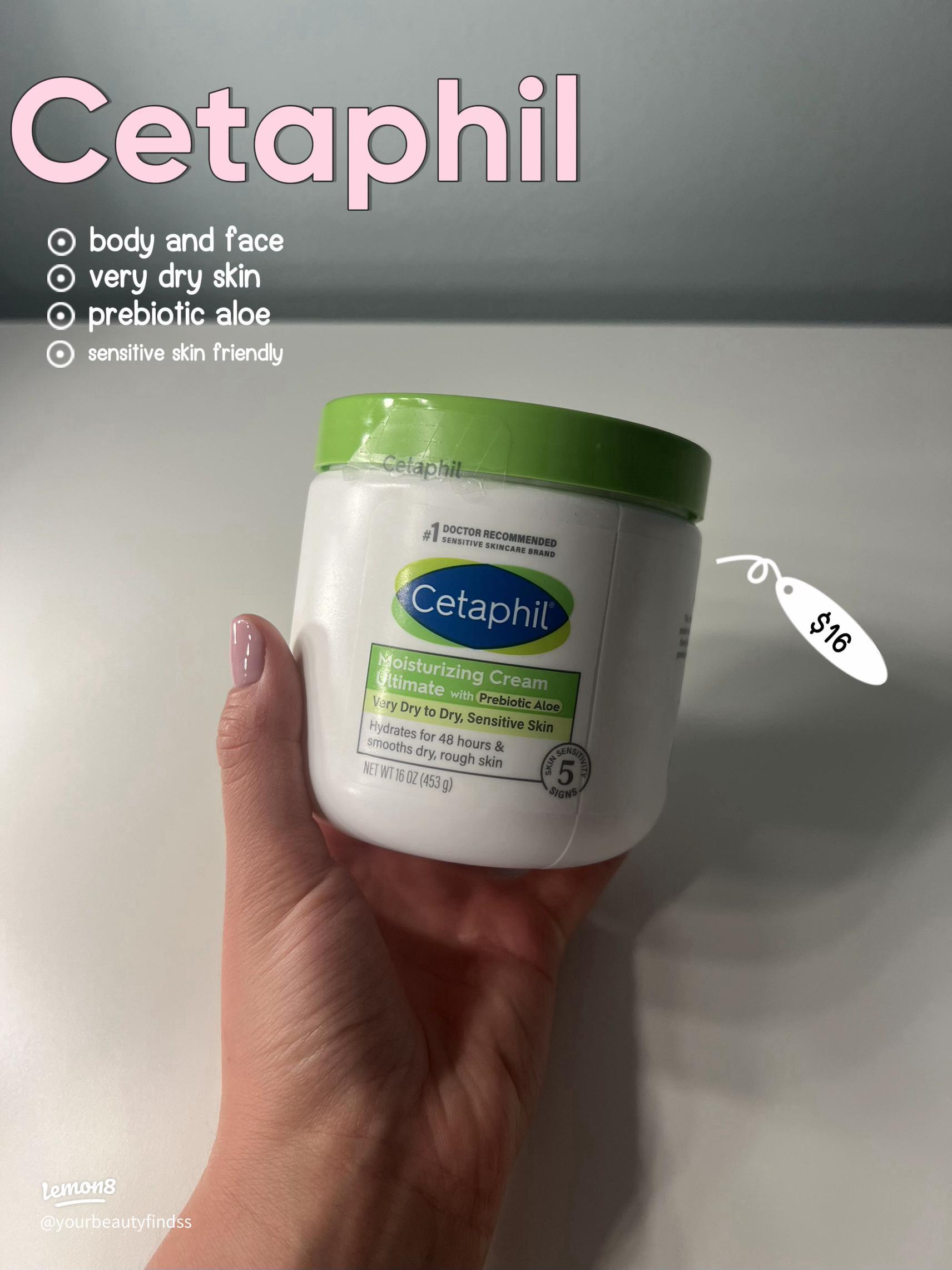
    Open Cetaphil Moisturizing Cream tub with a swipe of the thick cream across a glass surface

    Cetaphil Moisturizing Cream is the heavier, denser, more old-school formula. Scoop a fingertip out of the tub and you get a thick white cream that holds its shape on the spatula before it relaxes. The slightly waxy mouth-feel comes from petrolatum sitting close to the top of the ingredient list. On the skin it leaves a real film, and that film is the point.

    What worked: as a body cream this is one of the best occlusive seals in the drugstore tier. I have a patch of mild eczema on the back of my left hand that flares up in winter and after long days of dish soap. Four nights of a thick layer of Cetaphil after my shower, sealed under cotton gloves while I slept, cleared the patch faster than anything I have used in the last two years. On elbows, knees, and shins it holds moisture longer than any drugstore lotion I have tested. I can put it on at 8am and still feel hydrated skin at 6pm, which CeraVe could not match at the same dose.

    What did not work: on my face it was a disaster. The same petrolatum and dimethicone film that makes it a great body sealant pills under any powder product within two minutes. I tried it with MAC Studio Fix NC45 and with a thin dust of L’Oreal True Match powder. Every single time I got little gray flecks of product rolling off my cheekbones the moment I touched my face. It also sat on top of my skin instead of sinking in, which on a combination-oily T-zone meant a slick that made the rest of my routine slide. For face it is too occlusive for anyone whose skin is not in active eczema crisis.

    For body and eczema-patch use, Cetaphil Moisturizing Cream on Amazon ships in the 16oz tub at the lowest consistent price I have tracked, with Subscribe & Save knocking another 5 to 15 percent off depending on the month.

    CeraVe Moisturizing Cream: the ceramide tub doing real face work
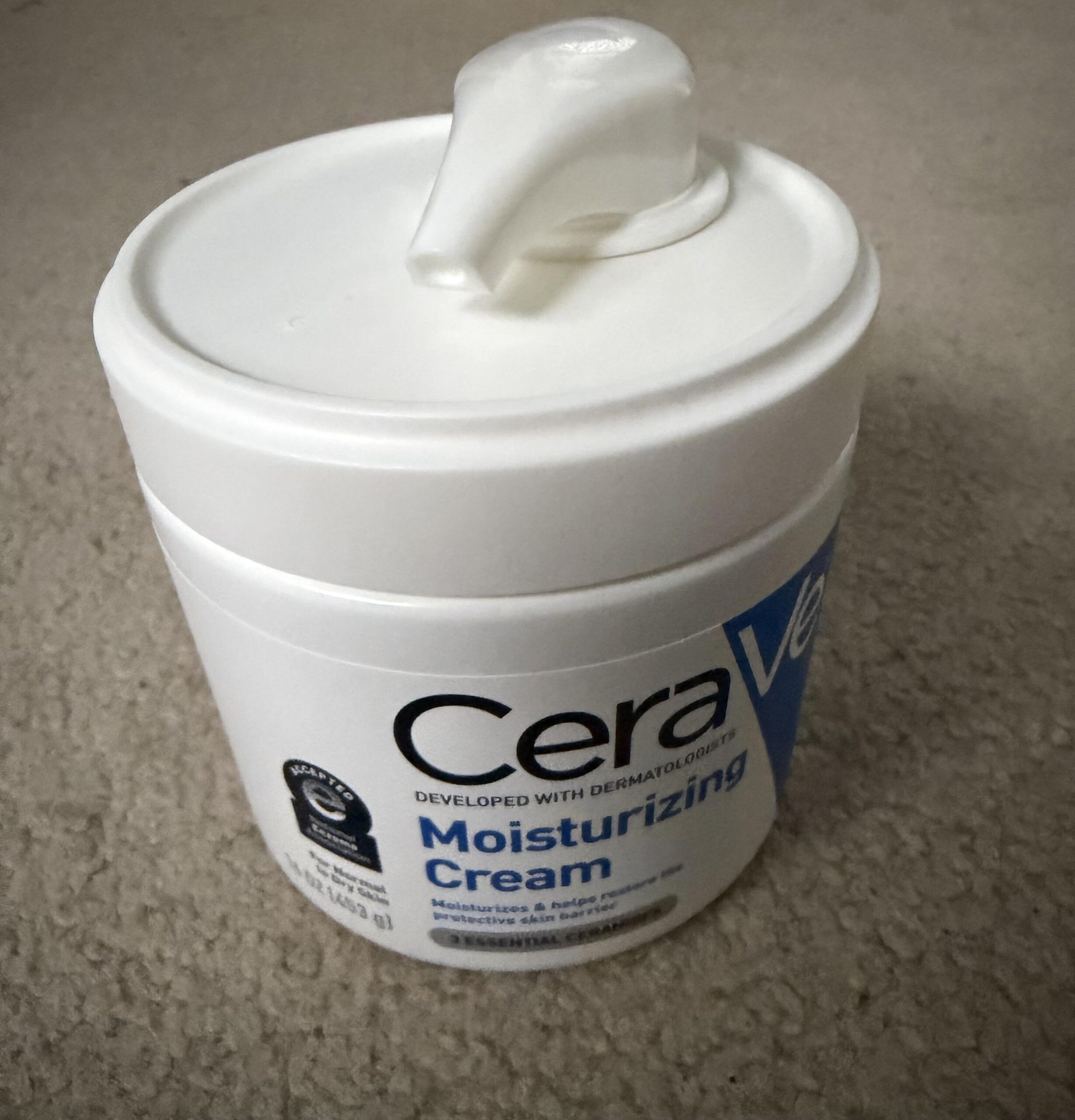
    Open CeraVe Moisturizing Cream tub with a dollop of the whippy cream on a glass surface

    CeraVe Moisturizing Cream looks like the same product in a different label. It is not. Scoop a fingertip out of the tub and you get a slightly whippy, lotion-adjacent cream that spreads and sinks in. Ceramides 1, 3, and 6-II are the lipids your skin barrier already uses, and the MultiVesicular Emulsion delivery system is one of the few things in drugstore skincare that has the clinical literature to back its marketing claim.

    What worked: on my face, this is one of the only thick creams I have used that did not pill under foundation. I gave it seven minutes to sink in before applying MAC Studio Fix NC45 and got zero flaking, zero rolling, zero gray flecks on my cheekbone when I touched my face. The slow-release ceramide load also showed up in my mid-afternoon barrier state. By hour six on a normal indoor day, my cheeks still felt comfortable rather than the slight tightness I get from gel moisturizers. On the T-zone it did not push my oil production higher.

    I tested it under La Roche-Posay Anthelios Melt-In Milk SPF 60 the next morning and it layered cleanly with no white cast and no slip. For anyone running a daily actives routine – retinol at night, niacinamide in the morning, weekly AHA – the ceramide replenishment CeraVe provides supports the barrier those actives wear down. This is the actual case for ceramides, and the cream is one of the cheapest ways to get them on your face.

    What did not work: on body it underperformed Cetaphil. The lighter texture that makes it ideal for face means it does not hold moisture on my shins or elbows the same way. On the eczema patch on my hand it helped, but did not clear it the way Cetaphil did under the same overnight-glove test. The hyaluronic acid is humectant, meaning in low-humidity winter heating it can pull water out of skin if nothing more occlusive is layered on top.

    For face use, CeraVe Moisturizing Cream at Target is the easiest pickup at the consistent $19 price point with the 90-day return policy if you react to it.

    Where they overlap and where they differ

    Both creams share the same baseline positioning: fragrance-free, dermatologist-recommended, non-comedogenic, drugstore-priced. Both use glycerin as a primary humectant. Both work as gentle starter moisturizers for anyone building a routine from scratch.

    The differences land in three places. First, occlusion profile – Cetaphil leans heavier on petrolatum and dimethicone, meaning a thicker seal, better for body and barrier crisis, worse for face under makeup. CeraVe uses a lighter occlusive load with ceramides doing the barrier work, suitable for face under makeup and for daily actives layering. Second, ingredient philosophy – Cetaphil is intentionally minimal, designed for skin that cannot tolerate anything. CeraVe is intentionally fortified to actively support a working barrier. Third, use case – Cetaphil shines for body and for the small group whose skin is so reactive even ceramides feel like too much. CeraVe shines for face and for the much larger group running actives.

    Price is real but not the deciding factor – Cetaphil runs roughly $3 cheaper per 16oz tub, which is rounding error in a yearly skincare budget. The lazy take is “they are interchangeable, get whichever is on sale.” They are not interchangeable.

    Which one for which person

    If you are building a face routine with actives – retinol, niacinamide, AHAs, vitamin C, anything from The Ordinary or Paula’s Choice – get the CeraVe Moisturizing Cream . The ceramide load is the genuine point, the texture sinks in within seven minutes, it layers under foundation without pilling, and it does not throw off sunscreen the next morning. For the NC40-to-NC50 range with combination-oily T-zone tendencies, it is one of the strongest drugstore face creams available.

    If you need an honest body cream that holds hydration for 10+ hours, or you have eczema patches on your hands, elbows, or shins that need a real occlusive seal at night, get the Cetaphil Moisturizing Cream . The petrolatum and dimethicone film does work that lighter lotions cannot. I keep one tub on my bathroom counter for face mornings, one on my nightstand for hand and elbow patches at night.

    If your skin is genuinely reactive – rosacea, eczema in active flare, post-procedure healing, or sensitivity that flags up at even ceramides and hyaluronic acid – default to Cetaphil for both face and body. The almost-no-actives formulation is the safer choice when your barrier cannot tolerate anything new. Once the flare calms, swap face back to CeraVe.

    On deep, melanin-rich skin like mine, both creams pass the white-cast test once they sink in. Cetaphil takes longer, which on darker skin can read as a slight gray sheen for the first five minutes – just give it the time. CeraVe sinks in faster and shows no cast at all.

    Frequently asked questions

    Can I use either as both a body and face cream?

    You can, but it is not optimal. CeraVe works on body but underperforms Cetaphil there. Cetaphil works fine on body but pills under foundation on face. Buy both if your budget allows – it is $35 total for nearly a year of supply. If you must pick one tub for both jobs, CeraVe is the better single-tub compromise because the face-pilling problem is a daily annoyance and the body underperformance is mild.

    Is either enough on its own, or do I need a serum?

    For hydration on dry skin, yes. Neither delivers actives, so if you have specific concerns – acne, hyperpigmentation, fine lines, texture – you will need a serum step before the cream. CeraVe is the better base for layering actives because the ceramide load supports the barrier those actives stress.

    How long should I wait before putting foundation on?

    For CeraVe, seven minutes is enough. I have tested it with a timer. For Cetaphil, do not put powder foundation on top at all – it will pill no matter how long you wait. If you must, give it 15 minutes minimum and set with a light spray of Mac Fix+ before powdering.

    Will either break me out if my skin is oily?

    Both are non-comedogenic and neither broke me out on my combination-oily T-zone over five months. CeraVe is the better choice for genuinely oily skin because the texture is lighter. If you are oily, also consider CeraVe PM Facial Moisturizing Lotion, which is even lighter and has niacinamide built in.

    Final pick

    For face, the winner is CeraVe Moisturizing Cream. The ceramide blend is real, it layers under makeup, and the barrier support shows up within a week of starting it. Worth the $19 every time. For body, hands, and eczema patches, the winner is Cetaphil Moisturizing Cream – the heavier occlusive seal is the right call for skin that needs sealing rather than fortifying. Buy CeraVe Moisturizing Cream at Target for face and Cetaphil Moisturizing Cream on Amazon for body. Morning layering order: gentle cleanser, hydrating toner, any active serum, CeraVe Moisturizing Cream, sunscreen, makeup. Save your money on prestige ceramide creams that charge $60 for the same three ceramides – spend it on a good chemical sunscreen and a real retinol instead.
  • Cuup Review Plus-Size: 10 Months Wearing a 38G, The Honest Take

    Cuup Review Plus-Size: 10 Months Wearing a 38G, The Honest Take

    Three Cuup bras in different shades flat lay with measuring tape on linen background

    The bra brand that gets the most press for plus-size inclusivity is not the one that fit me best, and the brand that almost never gets named in plus roundups is the one I keep restocking. Cuup is the direct-to-consumer brand every fashion newsletter has been calling a quiet plus-size win since around 2022, and after ten months wearing four of their styles in a 38G, I have a more specific take than the press loop suggests. The cup engineering is genuinely good. The band hardware is not. The sizing system is the best part. The size range is where the marketing gets ahead of the reality. I bought everything reviewed here with my own money, kept what worked, returned what did not, and I have the order confirmations to prove it.

    Some background on the body this review is anchored to: I am a 38G in most measure-and-fit brands, broad ribcage, full bust with most volume sitting at the top of the cup. I have been sized everywhere from 38DDD to 40F over the last six years depending on whose measuring system I trusted that month. I have owned bras from ThirdLove, Curvy Couture, Elomi, Wacoal, and Bare Necessities house brands going back to 2019. Cuup landed on my radar because three plus-size editors I respect kept naming it, and I wanted to know whether the hype matched the hardware.

    Quick verdict

    Rating: 3.5 out of 5. The fit-tape sizing system and the cup construction are excellent for upper-range plus sizes that other DTC brands ignore. The bands run soft and the hooks feel under-engineered for anyone above a 38 band. Best for: sizes 32-38 in cups D through H who want a clean modern bra without going full specialty-brand. Skip if: you need a band above 40 or you rely on rigid back support for a heavy bust. Where to buy: Cuup at Nordstrom , around $72 per bra, 60-day return window.

    What Cuup actually is and where the brand sits

    Cuup launched in 2018 as a direct-to-consumer brand built around a fit-tape measuring system you do at home with a paper measuring strip they mail you. The premise: stop guessing the cup-to-band math, get sized via real measurements, then pick from five core silhouettes (The Plunge, The Demi, The Balconette, The Scoop, The Bralette). They sell in sizes 30-42 across bands and AA-H cups, which sounds inclusive on paper and lands differently in practice once you start filtering for what actually exists in stock at the upper end. Their stated price is $72 per bra, which puts them above Aerie and Soma but below Cosabella and the European specialty brands.

    For context: ThirdLove pioneered the DTC fit-quiz model and runs to cup size I, Curvy Couture leans into the 38-44 band specialty market with structured underwires, and Elomi covers DD to O cups in bands 34-46 and is what most full-bust experts default to. Cuup is trying to slot between the design-forward DTC brands and the technical specialty brands, and the gap shows up in the engineering once you wear them daily.

    My experience over ten months

    I ordered the fit-tape kit in early 2025 and measured myself twice over two days because the first round felt like I had pulled the tape too tight. The kit is genuinely useful. It comes with two color-coded paper strips, one for band one for cup, and the photo instructions are clear enough that I did not need to watch a tutorial. The system flagged me as a 38G, which was one cup up from what ThirdLove had given me a year earlier and matched what a professional fitter at a Bare Necessities pop-up had measured at the previous summer.

    First order: The Plunge in nude and The Balconette in black, both 38G. The Plunge arrived in a Cuup-branded box with a folded fit guide and a return label already included, which I appreciated. The cup shape was the standout. Cuup uses a three-piece cup construction that supports the bust from the bottom and the side without pushing everything to the front, which is the failure mode of most plunge bras at this size. I wore The Plunge under a fitted knit dress on the second day I had it and the band held flat under fabric without rolling, which is rare for me at a G cup. I went back online and ordered The Scoop in dusty rose two weeks later.

    Around month four, the problems started. The band on The Plunge stretched out faster than I expected. By month five it was sitting one hook tighter than at purchase, and by month seven I had moved to the tightest hook and the band was still riding up on my back, which is the diagnostic sign of a band losing structure. The Balconette held up better, which I think comes down to the slightly thicker band fabric on that style, but The Scoop went the way of The Plunge by month six. Cuup does not specify the elastane percentage in the band, which is a tell. Most specialty plus-size brands list it because their bands hold longer.

    For comparison: my Elomi Smoothing T-shirt bra in 38G from 2023 still sits at the middle hook two years in. My Curvy Couture Cotton Comfort bra from 2024 has stretched maybe one hook. The Cuup bands lost integrity faster than every comparable bra I own at the $72 price point.

    Close-up of Cuup bra band hook-and-eye closure showing the back hardware

    What works

    The fit-tape measuring system is the best at-home sizing tool I have used. The paper strips remove the guesswork that you get with the soft-tape-measure-and-formula method most brands push, and the result mapped to my actual cup volume in a way that ThirdLove’s quiz never quite did. If you have spent years guessing whether you are a DDD or a G, Cuup will get you closer in 10 minutes than most fitters will in a 30-minute session.

    The cup construction on The Plunge and The Balconette is genuinely good for a full bust. The seams are placed where they support without digging, the apex of the cup sits where it should rather than collapsing inward, and the projection is realistic for what a G cup actually contains. I have worn a lot of plunge bras that flatten and spread the bust, and Cuup’s plunge holds shape under thin fabric.

    The aesthetic is the cleanest in the category. Cuup runs a tight color palette of neutrals plus a few seasonal shades, and the bras photograph well under any outfit. The straps are positioned slightly wider-set than average, which means they do not show under most necklines that aren’t outright off-the-shoulder. If you are tired of the lace-and-bow grandma aesthetic that dominates the upper-cup market, this is a welcome alternative.

    The return policy is generous. Cuup runs 60 days for free returns on full-priced items, with an included label. I returned The Scoop after the band failure and the refund hit my card within nine days, no restocking fee. ThirdLove also runs 60 days but charges $7.99 for size-exchange after the initial fit kit.

    What does not work, honestly

    The bands lose tension faster than they should at this price. Three of my four Cuup bras showed visible band stretch within seven months of regular rotation. That is not a defect, it is a materials choice. Brands like Elomi and Curvy Couture use a denser elastane blend and you can feel the difference in your hand before you even put it on. Cuup’s band is softer at purchase, which feels nice in week one and becomes a problem in month six.

    The hook-and-eye hardware is too small for the band tension a G cup demands. Most full-bust bras in this size use three to four columns of hooks to distribute the load. Cuup’s Plunge and Scoop use two columns on the 38G, which I noticed immediately when I put it on and confirmed after watching the hooks slowly bend over months of use. Anyone above a 38 band or above a G cup should weigh this carefully. The Balconette has three columns, which is part of why it has held up better.

    The size range claim does not fully match what you can actually buy. The website lists up to a 42 band and an H cup, but try filtering for the cross-section that includes both. Many styles run out of upper-end sizes within weeks of a restock, and the H cup is only available in two of the five styles depending on the season. If you are a 42H, you are almost certainly going to find that the silhouette you want is not in your size at the moment you need it.

    The straps are non-convertible across most styles. For a brand that emphasizes versatility in its marketing, the inability to do a racerback or crossback on three of the five silhouettes is a real omission. The Balconette and Scoop have fixed straps that only work in standard or J-hook configuration. If you need flexibility for tank-top or off-shoulder dressing, this matters.

    How it compares to alternatives

    Three real competitors for the plus-size bra shopper, with honest contrasts:

    ThirdLove – around $76 for similar styles, runs to 12 to 100 in cups AA-I. The fit quiz is less precise than Cuup’s fit tape but the size range goes higher, and the band engineering on ThirdLove’s Classic T-shirt bra is more durable in my experience. I have a ThirdLove 24/7 Classic from 2023 that still holds tension. ThirdLove charges $7.99 for exchanges after the initial purchase, where Cuup does not. ThirdLove is the answer if you are above a 38 band or above an H cup, or if you want a more conservative cup silhouette. Shop ThirdLove at Nordstrom .

    Curvy Couture – around $50-60 per bra, runs bands 34-46 in cups B-N. Lower price point, much more aggressive band engineering, denser elastane, four-column hooks standard on the upper sizes. The aesthetic is more traditional (more lace, more contrast trim) and the cup shape is rounder, which some readers will love and some will not. If band durability is your top criteria, Curvy Couture’s Cotton Comfort or All-You Bra will outlast Cuup by a meaningful margin. Curvy Couture on Amazon .

    Elomi – around $68-78 per bra, runs bands 34-46 in cups DD-O. The gold standard for full-bust technical engineering. Three-piece cups, four-column hooks, dense band fabric, and the Smoothing T-shirt bra is the closest like-for-like to The Plunge in function. Elomi is less aesthetically modern than Cuup, more European-bra-shop traditional, but the structural integrity is on a different tier. If you need a daily-wear bra to last 18-24 months instead of 8-10, this is the buy. Elomi at Nordstrom .

    Who should buy it and who should not

    Buy if you are in the 32-38 band range with a D-H cup and you have struggled with DTC brands that either run too small in the cup or too rigid in the band. Buy if you want a modern silhouette under fitted knitwear without going specialty. Buy if you are willing to treat the bra as a 9-12 month investment rather than a 2-year staple, and you are okay rebuying when the band gives out. Buy if you want the fit-tape sizing experience, which is genuinely the best at-home method I have tried.

    Skip if you are above a 38 band or above an H cup, where the engineering and the inventory both let you down. Skip if you need a bra that holds tension for 18 months or more, in which case Elomi or Curvy Couture will outlast Cuup. Skip if you need convertible straps as a regular thing. Skip if your budget is under $50 per bra, because the Cuup price point with the durability tradeoff is not a value play at that tier.

    Three plus-size bras compared side by side showing differences in construction and hardware

    Where to buy and current pricing

    Cuup sells directly on their own site and through a small number of third-party retailers. The bras run $72 across most styles, with seasonal sales bringing pricing to around $55-60 a couple of times per year. Nordstrom carries a curated selection of Cuup styles with their standard no-time-limit return policy, which I consider the safest place to first-try if you are unsure. The Cuup site itself offers 60 days for free returns and includes a return label in every shipment. If you do order direct, request the fit-tape kit first before any bra purchase, since it ships free and the sizing accuracy is worth the extra week of wait.

    Frequently asked questions

    Does Cuup actually work for plus sizes above a 40 band?

    In my testing and what I have heard from two friends at a 42 band, the answer is qualified. The size exists on the website but the inventory turnover is rough, the band engineering is the same softer construction that loses tension within a year, and the cup-to-band proportions feel like they were designed for the smaller-band, larger-cup customer rather than the larger-band, larger-cup customer. If you are a 42 band specifically, Elomi or Curvy Couture will serve you better.

    How does the fit-tape system compare to a professional bra fitting?

    It is more accurate than a fitting at most mall bra stores in my experience, and it is roughly on par with what I have gotten from specialty fitters at Bare Necessities pop-ups or independent lingerie boutiques. It will not catch every nuance of cup shape that a hands-on fitter would, but for the volume calculation and band sizing, it is reliable.

    Do Cuup bras shrink in the wash?

    Not in my experience, as long as you hand-wash or use a lingerie bag on cold and lay flat to dry. I machine-washed The Plunge once on accident and the band shrank noticeably for the first three wears before relaxing back close to the original size. The brand recommends hand-washing and I would take that recommendation seriously at this price point.

    Is the bralette worth it for a fuller bust?

    For most G cups and above, no. The Bralette is wire-free and unlined, with very minimal structural support. It works for lounging or under a heavier sweater, but it will not give you the lift or shape that an underwire style provides. If you want a wire-free option at this size, Curvy Couture’s Cotton Comfort wirefree or Elomi’s Beatrice non-wired are sturdier alternatives.

    Final verdict

    Worth it at $72 if you are 32-38 band, D-H cup, and you understand the durability tradeoff before you click buy. The fit-tape system and cup construction are the wins. The band tension and hook engineering are the losses. Buy The Balconette at Nordstrom as your first try, because the three-column hooks and slightly denser band hold up better than the rest of the line. Plan to replace at 10-12 months rather than 24, and budget accordingly. Worth it at $72, not at $90.

  • Drunk Elephant A-Passioni Retinol Review: The $74 Question, Settled

    Drunk Elephant A-Passioni Retinol Review: The $74 Question, Settled

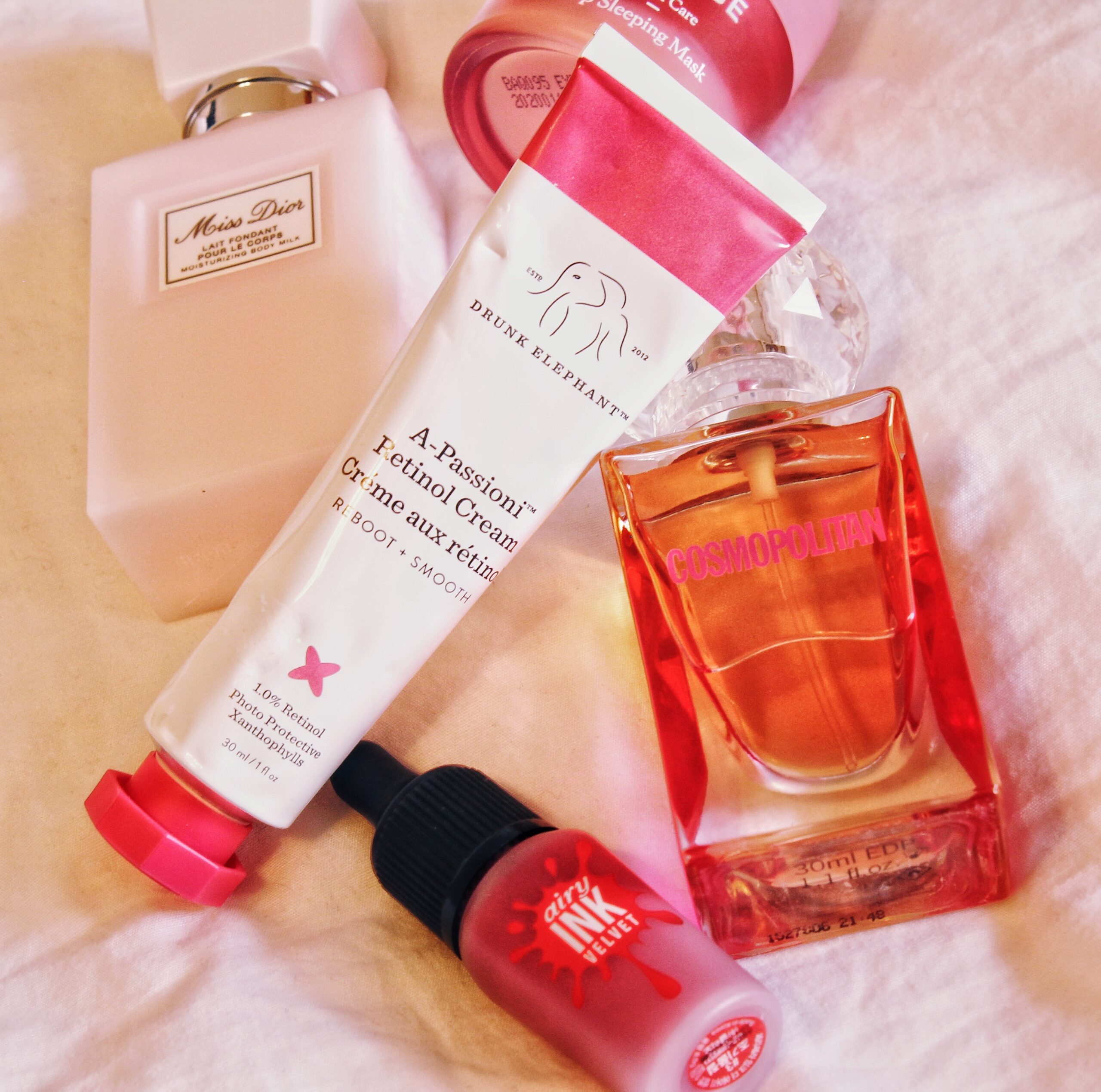
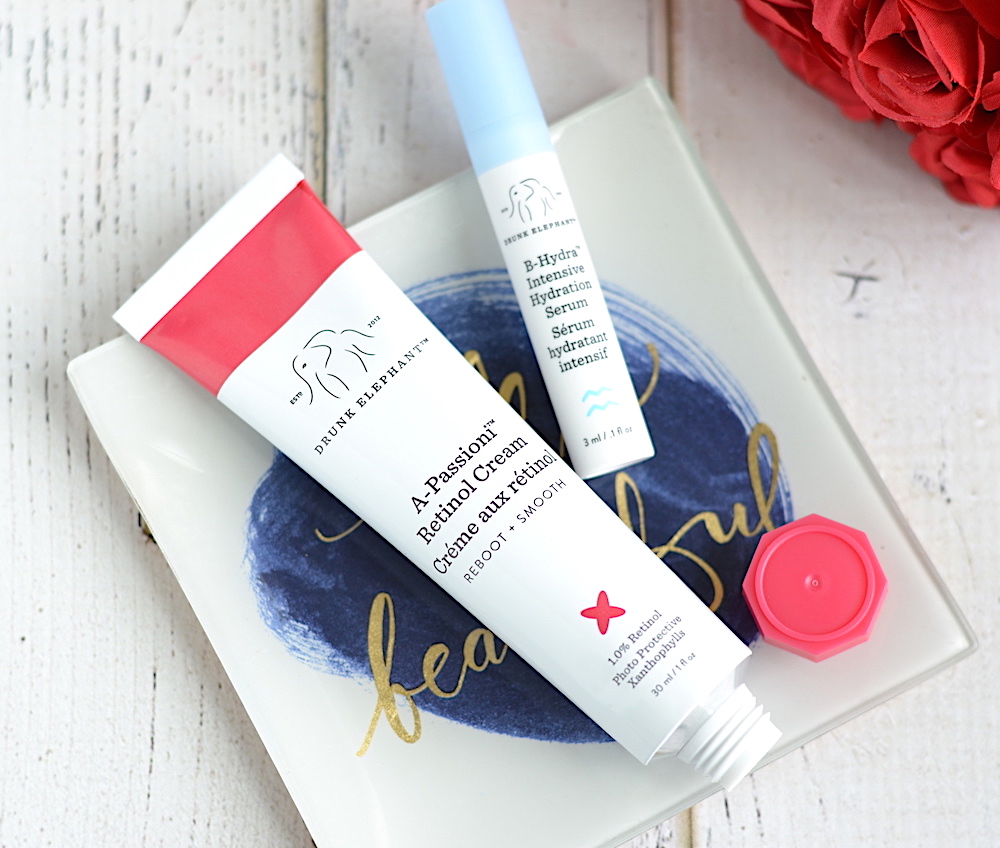
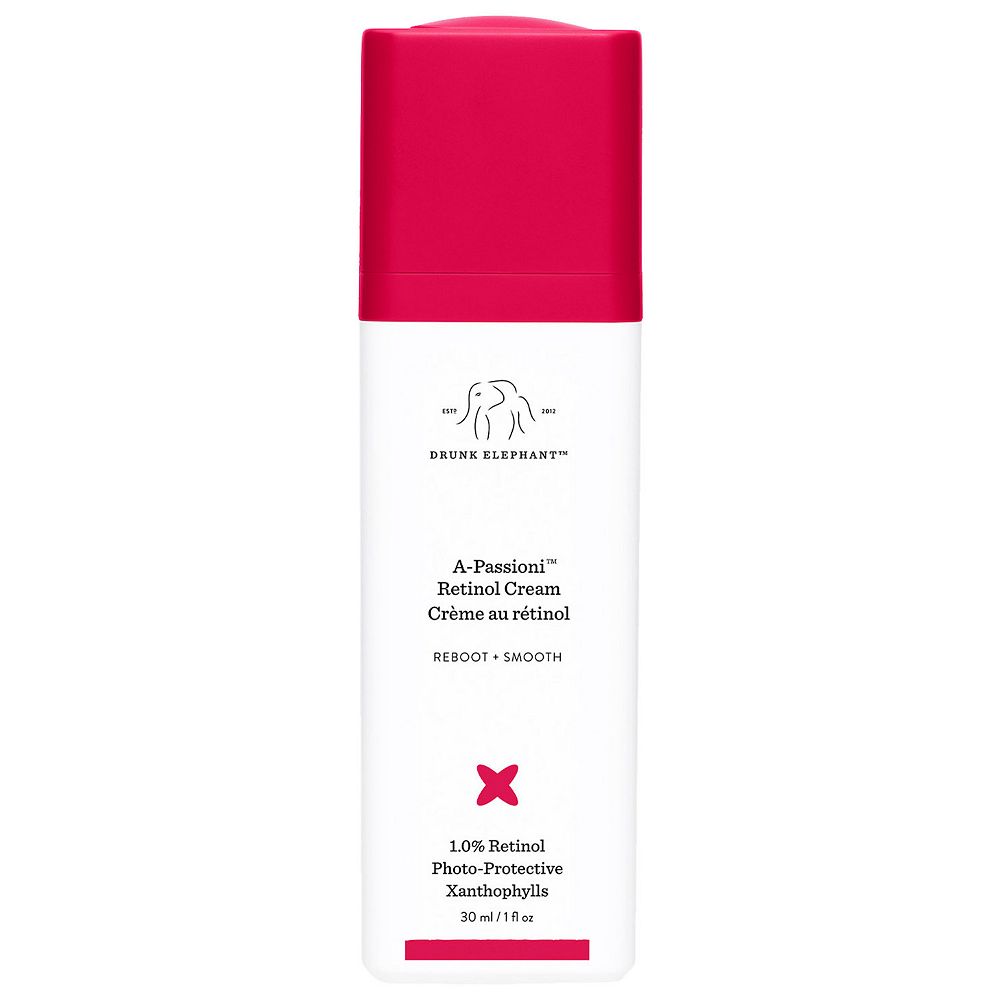
    Drunk Elephant A-Passioni Retinol Cream tube with a sample of cream swatched on deeper skin

    After three years of covering this category for readers who keep asking the same question, I can tell you Drunk Elephant A-Passioni is the retinol most often handed back to me with a quiet ‘was this worth it?’ My answer, on the record, is: sometimes, for a specific kind of buyer, at a specific point in a routine. It is not the strongest retinol you can buy at Sephora, it is not the gentlest, and it is not the cheapest. What it is – and this is the part the brand doesn’t lead with – is a fairly low-percentage retinol parked inside a heavy moisturizer base, which makes it forgiving for first-timers and underwhelming for anyone who has already worked up to a tolerance.

    For the reader who needs the context: I am NC45 with neutral-warm undertones, my skin reads as combination most months and oily in the Atlanta summer, and I have used retinoids on and off since I was twenty-three. The benchmark I hold this product against is what it is competing with on the shelf at $74, not whether it ‘works,’ because most retinols technically work given enough time. The question is whether this one earns the spend.

    Quick verdict

    Rating: 3.5 out of 5. A 1.0% encapsulated retinol in a cushioning moisturizer base, designed for retinol beginners and for anyone whose previous attempts at retinol ended in a face full of flaking. It does what it says, slowly. Best for: first-time retinol users, sensitive or dehydrated skin, and shoppers who want a one-bottle simple step. Skip if: you have built up a tolerance to 0.5% or higher and want visible texture change in under twelve weeks, or if you respond better to a serum-style retinoid you can layer your own moisturizer over. Where to buy: A-Passioni at Sephora , around $74 for 1 oz.

    What it is and where the brand context matters

    A-Passioni is Drunk Elephant’s flagship retinol, launched in 2019 as a 1.0% vegan retinol in a cream base built around what the brand calls ‘biocompatible’ ingredients. The formula combines retinol with peptides, vitamin F (essentially a blend of fatty acids), passion fruit oil, kale, winter cherry, and triglyceride-rich plant butters. The texture is closer to a moisturizer than a serum. You apply it as your last skincare step at night, and the cushioning base is supposed to buffer the irritation people typically associate with retinol.

    Drunk Elephant sits in the prestige-clean tier at Sephora, alongside Tatcha and Sunday Riley. A-Passioni, as far as I can tell from the ingredient deck on the current tube, is the same formula it was in 2020. What has changed is the competitive landscape – several brands have launched retinals and encapsulated retinols at lower prices in the last three years, which puts pressure on the $74 price tag in a way that did not exist when this product launched.

    My experience over two eight-week stretches

    I have used A-Passioni in two separate eight-week runs. The first was in 2023, when a publicist sent me a tube. The second was earlier this year, when I bought one with my own money to retest it against a CeraVe Resurfacing Retinol Serum I had been using since the summer. Both runs followed the same protocol: cleanse with a gentle gel cleanser, pat dry, apply a hydrating toner, wait two minutes, pea-sized pump of A-Passioni on the cheeks and forehead, gently pressed in. No additional moisturizer on top. Mornings, I paired with a La Roche-Posay Anthelios mineral SPF, because mineral sits better under my MAC Studio Fix Fluid in NC45 than chemical filters do.

    The first two weeks of each run, my skin did exactly what it should on a 1.0% retinol in a cushioning base: very little. No redness, no flaking, a faint tightness on the second and third nights that resolved by the fourth. Week three to four, the skin on my cheeks started looking smoother in side-lighting, which is the test I trust. My pores around the nose looked slightly tighter, and my hyperpigmentation along the jawline started to look one shade lighter.

    Where it got interesting was the comparison week. Six weeks into my 2026 run, I went back to the CeraVe Resurfacing Retinol Serum for two weeks just to test, and my skin texture continued to improve at roughly the same rate, on a product that costs $20. That is the data point I cannot get away from. If a $20 product is producing comparable results on my specific skin, the $74 product needs to be doing something dramatic for the difference. It was not.

    Caveat: my skin tolerates retinol well at this point. For someone whose skin is reactive, dehydrated, or freshly arriving at retinol, the cushioning base in A-Passioni does something the bare CeraVe does not. It buffers. It softens the introduction. That is real, and worth paying for if that is where you are starting.

    Drunk Elephant A-Passioni Retinol Cream as part of a nighttime skincare routine flat lay

    What works

    The buffering effect is real and is the single best argument for paying full price. Encapsulated retinol means the active is wrapped in a delivery vehicle that releases more gradually, which lowers the peak irritation window. Add the cushioning oil-and-butter base, and the product becomes one of the more comfortable retinol experiences at this strength. I have recommended this to two friends who had previously written off retinol after a bad week of flaking on something cheaper, and both of them stuck with A-Passioni past the four-week mark.

    The texture is one of the better ones in this category. It absorbs without the tacky film a lot of cream retinols leave behind, and it does not pill under SPF the next morning when I layer mineral filters on top. For anyone who wears foundation most days, the lack of pilling is not a small thing. Pilling forces a re-cleanse on a Tuesday morning when you do not have time for either.

    The ingredient deck is what Drunk Elephant fans pay for. No essential oils, no fragrance, no silicones, no SLS. If you are someone who has reacted to fragrance in skincare in the past, A-Passioni is a low-risk place to land. The packaging is opaque aluminum with a pump dispenser, which protects the retinol from light degradation. Retinol is famously unstable in clear glass, so opaque packaging is the bare minimum at this price tier and the brand gets it right.

    What does not work, honestly

    The price is the loudest objection and it is a fair one. $74 for 1 oz of 1.0% retinol is a premium spend in a category where credible alternatives exist between $14 and $30. The brand’s argument is that the cushioning base and the encapsulation justify the markup. That argument holds for retinol beginners. It does not hold for anyone whose skin has already adjusted to retinoids, because at that point you are paying for buffering you no longer need.

    The cushioning base, useful as it is, also limits how aggressive the product can feel. I noticed this in my second run particularly. After about six weeks, I wanted my retinol to do more than maintain – I wanted active texture change. A-Passioni at 1.0% in a cream base did not deliver that next level. To get there, I would either need to step up to a higher percentage or move to a serum-style delivery I could layer my own targeted moisturizer over. The product is, by design, a starting and maintenance retinol, not a heavy lifter.

    The shade-aware reader question: Drunk Elephant does not market this product with deeper skin tones in mind. The influencer panel they use leans fair-to-medium and the ‘before and after’ shots they circulate are not skewed toward NC40-and-deeper complexions. The product itself works on deeper skin, and I did not see any of the post-inflammatory hyperpigmentation flares retinol can cause when introduced too aggressively, but the brand’s marketing leaves a gap. If you need to see your skin tone reflected in the product imagery to feel confident about a $74 spend, A-Passioni does not give you that.

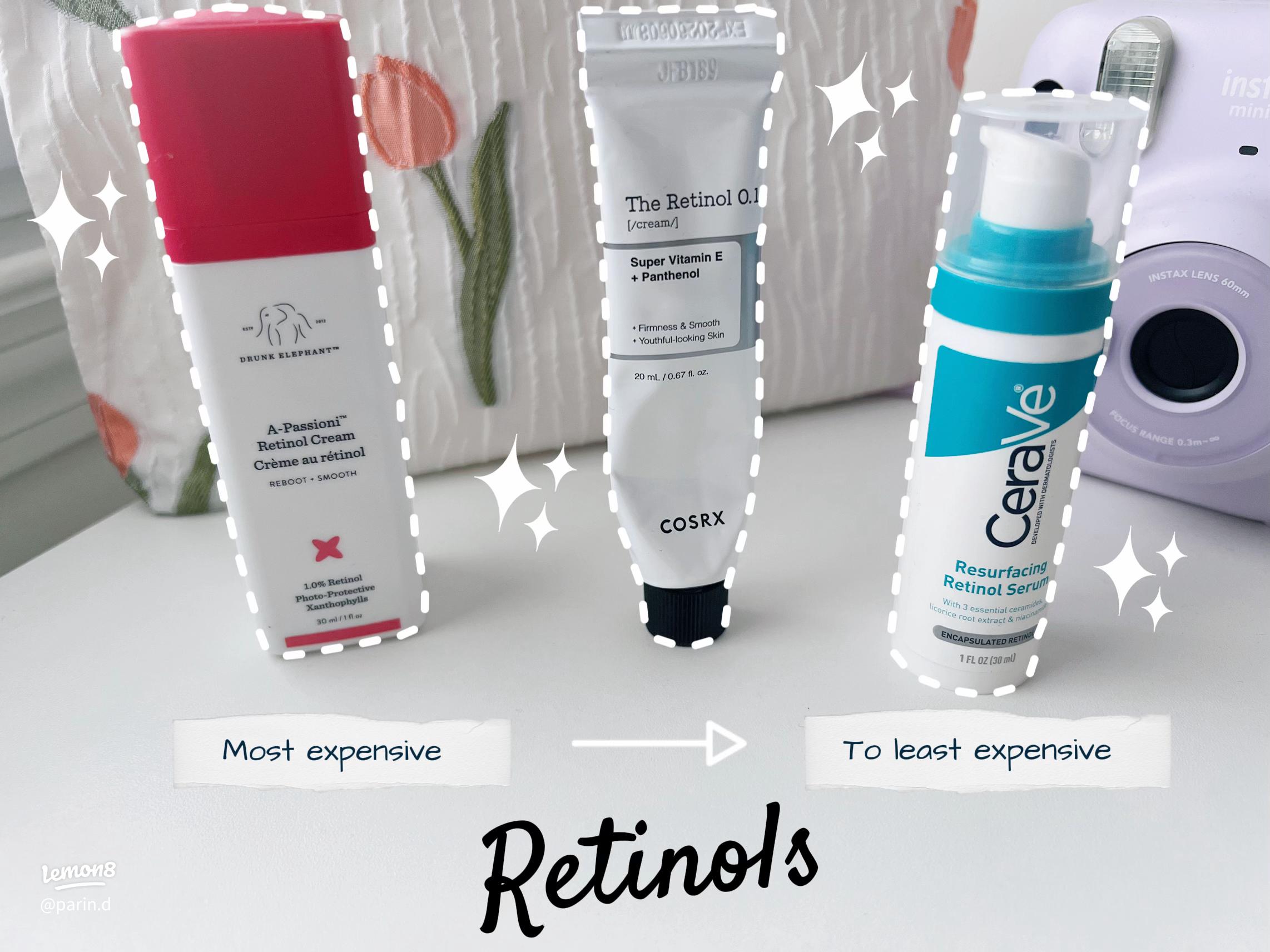
    Drunk Elephant A-Passioni compared to CeraVe Resurfacing Retinol Serum and The Ordinary Retinol in Squalane

    How it compares to the alternatives I actually use

    Three retinol comparisons I get asked about constantly, and the honest read on each.

    The Ordinary Retinol 0.5% in Squalane – around $9 for 1 oz at most retailers. A non-encapsulated retinol in a simple squalane base, sold at a strength close to A-Passioni’s. The Ordinary’s version is slightly more potent in feel because it is not encapsulated, which means more active is hitting the skin at once. That also means more irritation potential for first-timers. For an experienced retinol user, this is a credible $9 alternative to the $74 spend. For a beginner, it is too aggressive and will probably get returned in week two. Pick this if you have used retinoids before and want a no-frills option. The squalane base is nice. The price-to-result ratio is the strongest in the category. Find it at The Ordinary Retinol 0.5% in Squalane at Ulta .

    CeraVe Resurfacing Retinol Serum – around $20 for 1 oz. The closest thing to A-Passioni at a quarter of the price. It is encapsulated, uses ceramides and licorice root extract to support the barrier, and is specifically marketed for post-acne marks. I have used it for months. My honest take: for my hyperpigmentation along the jawline, it performs comparably to A-Passioni at the eight-week mark. The texture is thinner, which I prefer, but it can pill under sunscreen if you do not let it absorb fully. If your retinol goal is gentle, encapsulated, and effective on post-acne marks, this is the better value. Pick it up at CeraVe Resurfacing Retinol Serum on Amazon .

    Paula’s Choice 1% Retinol Treatment – around $58 for 1 oz. A 1.0% retinol in a slightly lighter cream base than A-Passioni’s, with added peptides and vitamin C. It sits in the same prestige-affordable tier and is arguably the closest direct competitor. I have used both back-to-back. Paula’s Choice feels slightly more clinical, less plush, and the results at eight weeks were similar. For $16 less, it does the same job with a marginally less cushioning base. If you like Drunk Elephant’s brand experience and want the pump dispenser and the heavier butter feel, A-Passioni wins. If you care about the result and the deck, Paula’s Choice is the smart pick. Shop it at Paula’s Choice 1% Retinol Treatment at Sephora .

    Who should buy it and who should not

    Buy A-Passioni if you are new to retinol and your skin has been reactive to actives in the past. The cushioning base genuinely lowers the barrier to entry. Buy it if you have sensitive or dehydrated skin and do not want to spend the first three weeks managing flaking. Buy it if you prefer a one-step product and do not want to layer a separate moisturizer on top. Buy it if the Drunk Elephant brand experience, the packaging, and the suspicious-6-free deck are part of what you are paying for, and you have decided that is worth $74 to you.

    Skip if you have already tolerated 0.5% retinol or higher and you want a product that pushes your routine forward, not one that maintains. Skip if you are price-sensitive and the CeraVe Resurfacing Retinol Serum at $20 will get you 85% of the benefit. Skip if you want to layer your own moisturizer on top of a serum-style retinol, because A-Passioni’s cushion was not designed for that workflow. Skip if you want a product with a strong track record of imagery and marketing aimed at deeper skin tones, because that is not what Drunk Elephant is currently doing.

    Where to buy and current pricing

    A-Passioni is $74 for 1 oz across major beauty retailers. It is most widely stocked at Sephora , which is the safest first-purchase retailer because of the 60-day return policy for Beauty Insider members. Ulta carries it during Drunk Elephant brand stock periods and occasionally bundles it in seasonal kits. Amazon stocks it via Drunk Elephant’s own storefront, but read seller details carefully because retinol bought from unauthorized sellers can be old, heat-exposed, or counterfeit. The brand’s site has the freshest stock if you want to verify batch.

    Frequently asked questions

    Will Drunk Elephant retinol cause hyperpigmentation on deeper skin tones?

    Not when introduced correctly. The risk of post-inflammatory hyperpigmentation on deeper complexions comes from over-using retinol too soon, not from retinol itself. A-Passioni’s encapsulated 1.0% formula is on the gentle end of the spectrum, which makes it a lower-risk starting point. Begin two nights a week, build to four, and pair with a barrier-supportive moisturizer if your skin signals stress. Always wear SPF 30 or higher in the morning.

    How long until I see results?

    Texture and pore appearance changes around week three to four with consistent use. Hyperpigmentation fading is slower – eight to twelve weeks for visible change on most skin, longer for deep-set acne marks. Anything claiming dramatic week-one results in this category is overselling.

    Can I use it with vitamin C or AHA exfoliants?

    Vitamin C in the morning, A-Passioni at night is the standard split and it works. AHA exfoliants like glycolic or lactic acid are harder to layer with retinol on the same night and can over-strip the barrier. If you use both, alternate nights – retinol Monday and Wednesday, AHA Tuesday and Thursday, with hydration on the rest.

    Is the Drunk Elephant brand worth the price tier in general?

    The brand has some standouts (Protini Polypeptide Cream is genuinely one of my favorites at the price point) and some products that are coasting on brand equity. A-Passioni falls in the middle. The formula is good. The price is high for what it delivers on already-acclimated skin. If you are buying into the brand for the first time, this is not the product I would lead with – Protini or the C-Tango eye cream are better introductions.

    Final verdict

    Worth the spend for retinol beginners and sensitive-skin shoppers who want a buffered, one-step retinol they can stick with past week four. Not worth the spend for experienced retinol users who would get more out of a serum-style delivery at a higher percentage, or for budget-conscious shoppers who can get 85% of the benefit from the CeraVe Resurfacing Retinol Serum at $20. If you fall in the first camp and the brand experience matters to you, pick up A-Passioni at Sephora and give it eight weeks on a slow ramp-up. If you fall in the second camp, save your money on A-Passioni and spend it on a real moisturizer to layer under a cheaper retinol. The retinol itself is mostly a percentage and a delivery system. The base around it is where the spend either earns out or does not.

  • Elomi Cate Bra Review: A Year of Wear Tests on Three Friends

    Elomi Cate Bra Review: A Year of Wear Tests on Three Friends

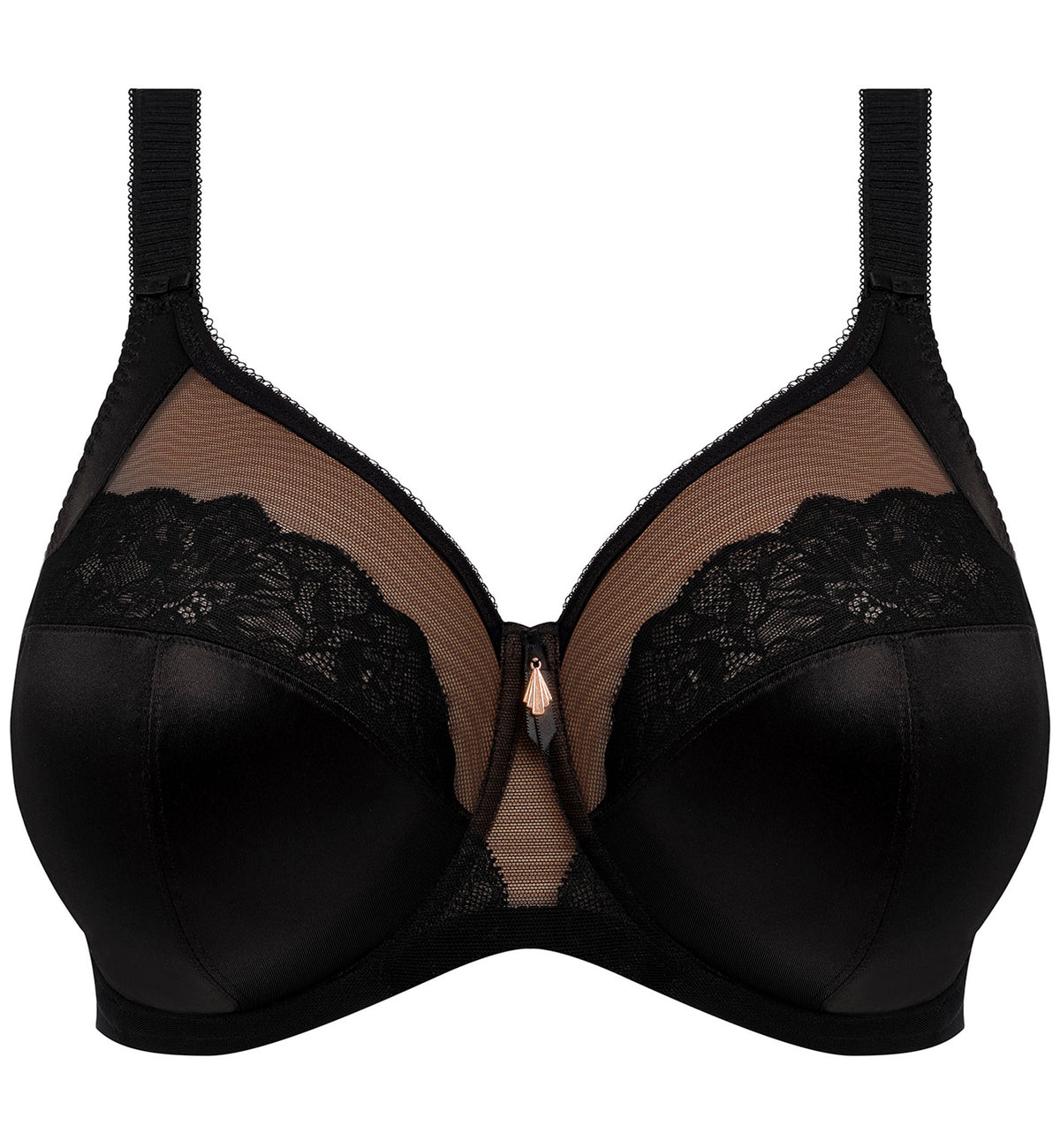
    Elomi Cate full-cup bra in nude laid on a marble surface with measuring tape

    I have a friend who spent six years buying the wrong bra size because no one at her local department store stocked anything past a G cup. Her name is Renee, she is a 38H, and the first time she put on an Elomi Cate she texted me a photo of the side profile with the caption “where has this been.” I sent her three other Elomi styles to try over the following months because I wanted to know whether the Cate was actually doing the work or whether anything with that band would have felt like a relief after years of an undersized 38DDD. The Cate kept winning, which is interesting because it is not the prettiest bra in the Elomi range and it is not the most marketed. It is the workhorse, and the workhorse turns out to be very good at being a workhorse.

    What follows is a review built from one year of wear data across three friends in the 36H to 40J range. I do not personally need a Cate. I buy and review bras the way I buy and review everything else, with my own money and a return-policy spreadsheet open in another tab. The Cate is one of the few full-bust bras I keep recommending to women who walk into a fitting and walk out frustrated. Here is the breakdown of why, where it falls short, and what to consider before you spend the $72 to $78 it usually runs.

    Quick verdict

    Rating: 4.5 out of 5. The Elomi Cate is the closest thing to a universal full-bust workhorse in the 36DD to 46K range. It delivers real side support without underwires that dig, runs true to size after a careful fitting, and survives weekly machine washing on cold for at least a year. Best for: anyone in the H to K cup range who needs daily wear support without obvious uplift. Skip if: you want a t-shirt-smooth contour or a low-plunge neckline. Where to buy: Elomi Cate at Nordstrom , usually $72 with free returns. Sale price drops to about $54 during the Anniversary and Half-Yearly sales.

    What it is and what Elomi is doing in this category

    Elomi is the full-bust line owned by Eveden Group, a UK lingerie holding company that also owns Freya and Fantasie. The Cate launched as a core full-cup style and has stayed in the lineup for years, which is unusual in lingerie where most styles cycle through in two or three seasons. The Cate is built specifically for the 36D to 46K range, with extended bands that go up to a 46 and cups that run through K. The construction is a three-section cup with a vertical seam down the front center of each cup, side-support panels at the outside of each cup that push tissue forward and inward, and a wider center gore than most full-cup bras to account for the breast tissue distribution at higher cup sizes.

    What that means in practice: the Cate is not trying to make you look smaller, larger, or to give you cleavage. It is trying to keep everything in the cup and supported off the band, which sounds like the bare minimum until you have spent ten years in bras that fail at one of those three things. Elomi has been refining this silhouette for years and the pattern is dialed in. Retail has crept from $62 to $72 over the past few years, which is normal for the category.

    My friends’ experience over twelve months

    Three friends agreed to the wear test. Renee is a 38H, she wears the Cate four days a week, machine washes on cold in a lingerie bag, and air dries. After twelve months the band on her oldest Cate has stretched by about one inch, which is consistent with the lifespan of any bra at that wear frequency. The hooks still hold on the loosest setting, the underwire has not poked through, and the side panels still do their job. She owns three Cates now, in nude, black, and a soft pink she found on the Bare Necessities clearance page for $39.

    Marisol is a 36J, a difficult size to shop. She rotates a 36J Cate with two Goddess Keira bras and a Curvy Couture Tulip. After eight months her read: the Cate is the most comfortable for an eight-hour office day, the Keira gives more visible lift for going out. The Cate runs slightly small in the cup for her, so she sizes up to 36JJ when she finds one in stock. The band runs true.

    Janelle is a 40H who came in skeptical because she had tried the Cate in 2022 and hated it. A measuring tape showed she had been in a 42G when she was actually a 40H, which is the exact band-too-loose-cup-too-small pattern that makes underwire feel terrible. In the correct size she has worn the Cate for ten months as her primary daily bra. Her one note: the straps need pulling back up about once a week.

    Side profile demonstrating the side support panel of the Elomi Cate full-cup bra

    What works

    The side support is the actual feature, not the marketing word. Most full-bust bras claim side support and what they deliver is a slightly thicker side seam. The Cate has a proper structured panel that runs from the bottom of the cup to the strap attachment, and you can see it doing the work the second you put the bra on. Tissue that would otherwise migrate toward the armpit gets contained and pushed forward into the cup. For Renee at 38H this means no underarm spillage in a fitted t-shirt for the first time in her adult life.

    The band is consistent. Elomi grades bands in a way that actually holds. The band on Renee’s twelve-month-old Cate is still tight enough to do the support work, where most bras at this price point have given up by month eight. The hook-and-eye row gives you three settings to grow into as the band stretches over time, which is the way bras are supposed to work and rarely do.

    The underwire stays put. The Cate’s wire is wide enough to accommodate the breast root at higher cup sizes, which sounds technical but matters enormously. Narrow wires on H-plus bras cut into tissue, leave red marks, and create the kind of underwire pain that drives women into bralettes that do not actually support them. The Cate’s wire sits where it should and does not migrate up the rib cage as the day goes on.

    The cup runs true at H and above. Once you get into the range Elomi designs for, the Cate fits the way a bra is supposed to fit. Cup smooth across the top edge, no overflow, no gaping at the bottom. Marisol’s JJ exception is one data point, and J-plus grading varies across brands.

    The wash durability is real. Across three friends and twelve months of weekly cold-water machine washing in a lingerie bag, the worst damage is the standard band stretch of about an inch. No popped wires, no separated seams, no dye bleed.

    Three Elomi Cate bras in different colors folded next to a mesh lingerie wash bag

    What does not work

    The Cate is visible under thin t-shirts. The three-section cup construction creates seams that show through anything lightweight or fitted in white. If you need a fully smooth t-shirt bra, the Cate is not the answer. Elomi makes a smoother style called the Smoothing Molded Bra for that use case, but it loses some of the side-support engineering in exchange.

    The straps need more adjustment than competitors. Janelle’s note about pulling the straps up weekly is consistent with what Marisol mentioned. The straps are coated for grip but the adjusters loosen over time and the strap-to-cup attachment angle is steep enough that gravity wins. Not a dealbreaker but a daily small annoyance.

    The color range is limited and oddly inconsistent. Nude, black, white, and occasional seasonal colors. The seasonal colors get discounted heavily and disappear, which is great if you want a cheap Cate in plum but frustrating if you want to repurchase the color you already own. Renee’s pink Cate is unrepurchasable because Elomi has not run that color in two seasons.

    The price has crept up. The Cate was around $58 to $62 in 2021 and is now $72 to $78 at full retail. For a bra that does what it does, that price is fair. For a bra with no technical changes from the 2021 version that I can identify, it reads as inflation Elomi has chosen to take. Worth waiting for a Nordstrom sale or a Bare Necessities clearance event if you can.

    The center gore can sit slightly off the sternum on narrow rib cages. Renee has no issue. Marisol, who is narrower, says the gore floats about a quarter inch off her sternum even in the correct size. That does not affect support but it is worth knowing.

    How it compares to alternatives

    Three real competitors that show up in the same shopping consideration set:

    Goddess Keira – around $68 to $76 at Amazon and through specialty full-bust retailers. Goddess is owned by the same parent company as Elomi, and the Keira is essentially the Cate’s sister style with a slightly more lifted silhouette and a narrower wire. Marisol’s experience says it gives more visible uplift than the Cate, which matters for some outfits and not others. The trade-off: the narrower wire is less comfortable for an eight-hour day. Buy the Keira if you want shape, the Cate if you want all-day comfort.

    Curvy Couture Tulip Lace – around $58 to $64 at Nordstrom . Curvy Couture sizes more affordably and the Tulip is the closest thing to a Cate at the lower price point. Honest assessment from Marisol’s rotation: the Tulip is comfortable for the first six months but the cup fabric shows wear faster, and the band stretches more noticeably by month four. If you want a Cate equivalent for $20 less and you can replace it every nine months instead of every twelve, the Tulip is a real option. If you want one bra that lasts, the Cate earns its premium.

    Glamorise MagicLift Full Figure Support – around $42 to $48 at Amazon . The wireless option in the consideration set. Support is real for the price, the band is wide and stable, and the cup contains without crushing. The honest gap: no full-bust wireless bra matches what the Cate does with a wire. If you can tolerate underwires, choose the Cate. If you cannot, the Glamorise is the answer.

    Who should buy it and who should not

    Buy the Cate if you are in the 36H to 46K range and you have spent any amount of time being told nothing in your size fits. Buy if you need a workhorse daily bra that holds up to weekly machine washing for a year. Buy if you are wearing the wrong size now and a proper fitting puts you in this range, because the Cate is one of the most forgiving full-bust styles for someone learning what the right size feels like for the first time. Buy if you need side support that contains tissue at the underarm and the cup styles you have tried so far have failed at that.

    Skip if you need a smooth t-shirt bra without visible seams. Skip if you want a plunge neckline or a low front. Skip if you are below an H cup, where the Cate’s structure is more than your tissue needs and a less engineered full-cup will be more comfortable. Skip if your priority is shape and lift for a specific outfit rather than all-day daily support, in which case the Keira or a Panache Andorra will serve better.

    Where to buy and current pricing

    The Cate is most reliably stocked at Nordstrom , where it runs $72 at full retail with free returns and no time-limit cap on the return window. Nordstrom’s Anniversary Sale in July and the Half-Yearly Sale in December usually drop it to about $54. Bare Necessities is the deepest size-range stockist online and runs clearance markdowns on seasonal colors throughout the year, sometimes dropping to $39 on discontinued shades. Amazon stocks the Cate inconsistently and the pricing varies by seller, so if you go that route, verify the seller is Bare Necessities or Elomi directly rather than a third-party reseller.

    Frequently asked questions

    Does the Cate run true to size?

    For most wearers in the 36H to 44J range, yes. The band runs true and the cup runs true. The exception pattern, based on the wear test, is at the J and above cup range where sizing up by one cup may give a better fit, and at narrower rib cages where the center gore may not tack fully. Get a proper fitting before you order. Bare Necessities and Nordstrom both have fit specialists who can verify by chat or phone.

    How long does one Cate last with regular wear?

    About twelve to fourteen months of weekly wear if you machine wash on cold in a lingerie bag and air dry. Daily wear without rotation cuts that to about eight months. Most full-bust wearers benefit from owning three bras in rotation so each one rests between wears, which doubles the lifespan of each individual bra.

    Is the Cate good for larger band sizes specifically?

    Yes. Elomi grades bands consistently through 46, which is rare in the full-bust category. The 44 and 46 bands hold their shape and tension, and the cups grade up proportionally rather than getting boxy. If you are in the 42H to 46K range and have struggled to find anything with a proper band fit, the Cate is one of a small number of bras that will work.

    Can I wear the Cate under workout clothes or for low-impact exercise?

    The Cate is a daily wear bra, not a sports bra. The straps are not designed for high-impact movement and the cup construction will not hold for running or HIIT. For low-impact activities like walking or yoga, the Cate is fine. For anything more intense, look at the Elomi Energise or a dedicated full-bust sports bra like the Panache Sports Wired.

    Final verdict

    The Cate is the bra I send full-bust friends to first. It is not a flashy product and Elomi does not market it heavily, but it does the one job most full-bust bras fail at, which is supporting an H-plus cup through an eight-hour day without an underwire that wants out of your rib cage. The seams under thin t-shirts are real, the strap fussiness is real, and the price creep is real. None of those is bad enough to outweigh what the Cate gets right. Buy one at Nordstrom , wait for the sale if you can, and add a second once you know the size is dialed in. Worth it.

  • Eloquii Jeans Review: 14 Months and Four Pairs on a Size 18 Body

    Eloquii Jeans Review: 14 Months and Four Pairs on a Size 18 Body

    Four pairs of Eloquii jeans in different washes and cuts arranged on a wood floor

    I bought my first pair of Eloquii jeans on a Wednesday in March 2024 because my Universal Standard Seine had finally given up at the inner thigh after about ninety wears, and I needed a same-week replacement that did not require a tailor. The Seine had been my default for three years. I had tried the wide-leg from Lane Bryant and a high-rise from Torrid in the meantime, neither of which held up past the second wash without bagging at the waist. Eloquii was sitting there in my saved-for-later bin from a Cyber Monday email I had archived without opening. So I ordered the Wide Leg in indigo, a size 18, and told myself I would return it within the 60-day window if the inseam was off.

    It was not off. Fourteen months and three additional pairs later, I have a longer report than I expected to write. Two pairs are still in rotation, one was returned within the window, one has construction problems at month six and will not be repurchased. This review covers what Eloquii denim does on a size 18 longer-torso body, where the cuts hold up against Universal Standard, Torrid, and Lane Bryant, and which pairs are worth the price versus which are worth waiting for a 40% off email.

    Quick verdict

    Rating: 3.5 out of 5. Strongest plus-size denim line under $100 for fit on a longer torso and a defined waist-to-hip ratio. Cuts true to size 14 through 24, runs inconsistently above 24. Wash quality varies by style – the indigo dark-rinse holds up, the lighter washes pill faster than the price justifies. Best for: anyone whose Universal Standard Seine bags at the waist or whose Lane Bryant denim runs too straight through the hip. Skip if: you need a deep-stretch jean for all-day comfort, or if you wear above a 26 and have been burned by inconsistent plus-size grading. Where to buy: Eloquii Wide Leg Jean direct , around $90, 60-day returns with free return shipping on orders $50 and up.

    What Eloquii is and how the denim fits in the lineup

    Eloquii launched in 2011 as a Limited Brands offshoot, was shuttered the following year, then resurrected in 2014 as a direct-to-consumer brand. Walmart acquired it in 2018. Sizing runs 14 through 28 across most categories, occasionally to 32. Denim sits in the middle of the price ladder – higher than the mass-market plus brands, lower than Universal Standard or the designer-collab capsules that occasionally rotate through the site.

    The denim category covers the standard cuts: wide leg, straight, high-rise skinny, bootcut, kick flare, the occasional cargo and barrel when those cycles come around. Fabric content varies more than I would like – some styles are 98% cotton with 2% spandex, others are a cotton-poly-spandex blend at 76/22/2 that wears completely differently. Always check the fabric tab before you buy. The cotton-heavy styles hold shape and develop a real fade. The blends recover better between washes but pill faster at the inner thigh.

    My experience across four pairs over fourteen months

    I am 5’7″, a size 18 on the bottom with a 30-inch inseam preference, a 12-inch rise on a high-waist cut, and a defined waist-to-hip ratio that means most straight-cut denim bags at the lower back unless it is grading the waist down from the hip. I have a long torso, which is the variable that ends up mattering most in this review.

    Pair one was the Wide Leg in indigo, size 18, ordered March 2024. The rise hit at my natural waist, the waistband did not gap, and the inseam needed a half inch of hemming for flats but worked at full length with a block heel. The cotton-heavy fabric (98/2) developed a real fade at the front of the thigh after about ten wears and three washes. After fourteen months of probably 60 wears, the inner thigh has a softened patch but no thinning. Hem and button have held. I would buy this exact pair again.

    Pair two was the High Waist Skinny in black, size 18, ordered July 2024 for a tucked-in work-event look. This was the cotton-poly-spandex blend (76/22/2) and I should have read the fabric tab before clicking buy. First wear felt great. Second wear, post-wash, the waistband had stretched out an inch and the fabric had a slight sheen. By the eighth wear, the inner thigh was pilling. Returned at the 12-week mark. The return processed in 4 days, refunded in 6, no restocking fee.

    Pair three was the Kick Flare in mid-wash, size 18, ordered November 2024 during a 40% off sale that took it from around $90 down to around $54. Keeping this one. The kick at the hem is sharp enough to read as intentional, the rise is high enough to tuck a sweater into, and the wash pairs with both black and brown footwear. Cotton-heavy fabric, which is the lesson I had learned by pair three. In rotation twice a week, holding shape between washes.

    Pair four was the Straight Leg in ecru, a size 18, ordered February 2025. The cut and fit are correct, but the ecru wash showed wear at the front pocket edges by month four, the pocket bag fabric is bleeding a faint shadow through the front after washing, and a belt loop detached at month five with no notable stress event. The brand replaced the loop free under warranty after I emailed, which was the right answer, but I will not be ordering the ecru wash again. The cut in indigo or mid-wash, yes.

    Close-up of Eloquii wide-leg indigo denim showing natural fade and hardware after months of wear

    What works

    The rise is the strongest thing about Eloquii denim. Most plus-size jeans cut for a longer torso are sold under “high-rise” branding but actually sit two inches below where my natural waist is. Eloquii’s high-rise styles consistently hit at the navel or just above, which is the entire point of buying a high-rise jean. Tucking a top in works. Wearing a cropped sweater works. The waistband does not roll forward when I sit down.

    Waist-to-hip grading is the second strongest thing. Eloquii cuts the waistband proportionally smaller than the hip in a way that Torrid and Lane Bryant denim historically does not. On me, this means the waistband sits flush at the lower back instead of leaving a finger-width gap I have to belt around. Universal Standard does this too, but their denim runs more straight through the hip itself, which is great if your hip and waist are closer in measurement and less great if there is a real difference.

    The wide-leg and kick-flare cuts are the genuinely well-executed silhouettes in the line. The leg drops cleanly from the hip without bunching at the knee, the hem holds its shape after washing, and the inseam options ship in petite, regular, and tall – which most plus brands do not offer across denim. Buying a regular and getting a true regular instead of a hemmed long is rare enough at this price point to call out. Free return shipping on $50-plus orders and a 60-day window give you time to actually wear a pair to work, wash it, and decide. Compare that to Old Navy at 30 days (45 online) or Amazon at 90 on apparel.

    What doesn’t work, honestly

    The cotton-poly-spandex blends pill at the inner thigh faster than the price tag justifies. I have been burned twice now, once on the High Waist Skinny and once on a pair of Eloquii pull-on jeans from 2023. The 76/22/2 blend looks fine in photos and feels soft on the first wear, but plus-size bodies put real friction on the inner thigh, and this fabric does not survive that friction at $90. Stick to the cotton-heavy styles. The fabric tab on the product page is your screening tool.

    Wash consistency is a problem. The dark indigo holds up, fades intentionally, and reads as deliberate. The lighter washes – ecru, sand, the pale rinse blue they cycle through every summer – show wear at the pocket edges and waistband within four to six months. The dye is also less stable in those washes, which means streaking after a hot dry cycle. I now wash all Eloquii denim inside out on cold and hang dry, which extends life but should not be required to get past month six.

    Sizing grading above a 24 is inconsistent. I am a steady 18 across the line, but I have helped friends who wear 26 and 28 with Eloquii denim returns, and the same waistband measurement on the same style varies by half an inch to a full inch between sizes in that range. If you are above a 24, order two sizes and plan to return one, or wait for the styles to show up at a deep enough discount that the return-shipping reimbursement on $50-plus orders covers your risk.

    The brand cycles silhouettes faster than Universal Standard does. A cut I loved in 2023 was discontinued by the time I went to repurchase, which is a frustration if you find a fit that works. Universal Standard tends to keep core styles in the lineup for years. Eloquii is closer to a fashion brand than a basics brand in that sense, which is fine if you know it going in.

    Comparison flat lay of Eloquii, Universal Standard, and Torrid plus-size denim with price tags

    How it compares to Universal Standard, Torrid, and Lane Bryant

    The Universal Standard Seine and the Geneva are the direct competitors at the price-and-quality tier where Eloquii sits. The Universal Standard Seine runs around $100, sizes 00 to 40, and uses a heavier cotton-rich denim that holds up longer than any Eloquii pair I have owned. The Seine’s weakness is the waistband, which bags out at the lower back on me within ten wears. If your hip and waist are within four inches of each other, the Seine probably fits you better. If the gap is wider, Eloquii cuts truer.

    Torrid’s Bombshell skinny and Wide Leg Trouser run around $60-$80 with frequent 40-50% off sales that bring the working price closer to $35-50. Torrid Bombshell jeans are heavier on stretch (4-6% spandex versus Eloquii’s 2%), so more all-day comfort but more recovery loss after a full day. Torrid sizes 10 through 30 and the grading above a 24 is more consistent than Eloquii’s. The weakness is the cut at the waist, which runs straighter than Eloquii’s and bags at the lower back on me. Comfort and price over fit precision: Torrid. Rise and waistband fit: Eloquii.

    Lane Bryant denim has improved across the last two years and the current Signature Skinny and Wide Leg are credible competitors in the $60-$80 range. Lane Bryant Signature Skinny uses a blend that sits between Torrid’s high-stretch and Eloquii’s cotton-rich approach. The cut is closer to Torrid’s, and the rise is shorter than Eloquii’s “high-rise” branding suggests, so longer torsos will be disappointed there. Best for: someone who wears 14 through 22 and wants a serviceable jean without the Eloquii price tag.

    Who should buy Eloquii jeans and who should not

    Buy if you have a longer torso and you need an actual high-rise that hits at the natural waist. Buy if the Universal Standard Seine bags on you at the waistband and you have been looking for a comparable price-tier alternative. Buy if you wear a 14 through 24 and you want the wide-leg or kick-flare silhouettes done in a cotton-rich fabric. Buy if you are willing to wait for a 30-40% off sale on the styles you want, which Eloquii runs roughly once a month via email.

    Skip if you wear above a 26 and you are not willing to order two sizes for the grading inconsistency. Skip if you need a deep-stretch jean for all-day comfort, in which case Torrid Bombshell is the better answer. Skip the cotton-poly-spandex blend styles in any wash, regardless of how good the listing photos look – they pill within ten wears at the inner thigh. Skip the lighter washes unless you are buying for occasion wear rather than rotation, because they show pocket-edge wear within six months.

    Where to buy and current pricing

    Eloquii sells direct, and the denim runs $79-$98 at full price. The brand emails a 30-40% off code roughly twice a month, and Cyber Monday and end-of-summer events drop the working price as low as $50-55. Free return shipping on $50-plus orders, 60-day window. Buy through Eloquii direct for the full size and wash range. Select styles also rotate through Amazon under the brand name, where the selection is narrower but Prime and the 90-day apparel return can be worth it if you are ordering a known size in a known cut.

    Frequently asked questions

    Do Eloquii jeans run true to size?

    True to size from 14 through 24 in the cotton-heavy styles. The cotton-poly-spandex blends run a half size large because the stretch settles after the first wash. Above a 24, grading varies by style – order two sizes if you can absorb the return.

    What is the difference between the Eloquii high-rise and the regular rise?

    The high-rise styles measure 11.5 to 12 inches at the front rise on a size 18, which puts them at the natural waist for a longer torso. The regular rise sits roughly 2 inches below that. If you are short-torsoed, the high-rise can hit at the rib cage; in that case, the regular rise is closer to a standard waist on you.

    How do Eloquii jeans hold up after a year of regular wear?

    The cotton-heavy styles in the darker washes hold structure well past a year of weekly wear. The cotton-poly-spandex blends and the lighter washes show wear within six months. Wash inside out on cold and hang dry to extend life, but treat the lighter washes as occasion pairs rather than weekly rotation.

    Is Eloquii’s return process actually free?

    Yes on orders $50 and up. The brand emails a prepaid return label, you drop the package at a UPS counter, and the refund processes in 4 to 6 business days from when the warehouse scans it back in. I have processed three returns across the fourteen-month review window with no restocking fees and no questions.

    Final verdict

    Worth it at $55-65 on sale in the cotton-heavy dark washes. Not worth it at $90 full price in the cotton-poly-spandex blends or the lighter washes. The brand cuts the best high-rise waistband in the $80-100 plus-size denim tier and is the answer if your Universal Standard Seine bags at the lower back. Stick to the indigo Wide Leg and the mid-wash Kick Flare. Get on the email list, wait for the 40% off code, and buy two pairs at once to clear the free-shipping threshold. Shop the Wide Leg at Eloquii . Worth it on sale.

  • Fenty Beauty Pro Filt’r Concealer Review: The Shade Range Isn’t the Story

    Fenty Beauty Pro Filt’r Concealer Review: The Shade Range Isn’t the Story

    Fenty Beauty Pro Filt'r Soft Matte Concealer in shade 410 on marble vanity

    The brand that gets credit for the most inclusive shade range in the industry is, on my face, the third-best concealer I keep on my vanity. Fenty Beauty’s Pro Filt’r Soft Matte Concealer launched in 2018 with 50 shades and changed the public conversation about how brands underserve deep complexions. The launch was a moment. The product is also a product, and after using shade 410 across two full tubes over fourteen months, I can tell you where it shines, where it doesn’t, and which two alternatives I reach for first when I’m doing a paying client. The shade range is real. The formula is a separate conversation.

    Context on the face this review is written from: I’m NC45 in MAC’s range, which translates roughly to Fenty 380 to 410 depending on where my undertone falls. I’m neutral-warm with golden undertones – not olive, not pink-based. Biracial Black and Filipina, normal-leaning-dry through the cheeks, oily through the T-zone, with hereditary blue-purple undereye circles that need both color-correcting and coverage. I trained at MAC Pro in LA at 19 and did pro makeup commercially for four years before I started writing. This concealer is good. It is not the best one I own.

    Quick verdict

    Rating: 3.5 out of 5. Genuinely impressive shade range with 50 options that account for actual undertone variation, not just lightness. Formula is buildable, soft-matte, and forgiving on textured skin. Loses points for oxidation by hour four on warmer undertones, dryness around the eye area on anyone over 30, and a price that creeps above what the formula justifies. Best for: medium-deep to deep skin tones doing a daytime full-face look under three hours. Skip if: you have mature or dry undereye skin, or if you need transfer-proof wear past six hours. Where to buy: Fenty Pro Filt’r Soft Matte Concealer at Sephora , $30 for 0.27 oz.

    What it is and the brand context

    Fenty Beauty launched in September 2017 with Pro Filt’r Soft Matte Longwear Foundation in 40 shades. The concealer followed in early 2018 with 50. Both products were formulated around the idea that shade matching for deep complexions had been treated as an afterthought for the previous thirty years of mass-market cosmetics. The concealer specifically was the first major drugstore-adjacent launch I can remember where deep shades had distinct neutral, warm, and cool variants instead of one generic “dark” bucket. The 400-range alone has nine shades. That’s more deep-tone options than most luxury brands carry across their entire complexion line.

    The formula is positioned as a medium-to-full coverage liquid concealer with a soft-matte finish, marketed as 16-hour wear and crease-resistant. The brand has reformulated quietly twice since launch, both times tightening the pigment load and adjusting the dry-down time. The version that ships in 2026 is not the version that shipped in 2018. If your last impression of this product was from the original launch, it’s worth reassessing.

    My experience across fourteen months

    I picked up my first tube in shade 410 in March 2025 after a client booking where my regular concealer ran out mid-job. I bought Fenty as the backup, used it on the client (medium-deep neutral-warm, close to my own depth), then kept using it on myself for the next eight months. Second tube went into rotation in November. So this review is anchored in two complete tubes of regular wear, not a one-week trial.

    What 410 looks like on my face: cool morning light, freshly applied, it matches almost perfectly. The pigment leans neutral with a touch of warmth, which is what my undertone needs to brighten the undereye without going gray. The dry-down takes about 90 seconds, generous compared to MAC Studio Finish (60 seconds) but workable. Once set with a translucent powder, it doesn’t move for about three hours. By hour four, I can see it shift warmer. By hour six, on my T-zone where I run oily, it has migrated into my smile lines. I’m 28, so this isn’t about deep texture – the formula just doesn’t have the staying power for a workday.

    On clients, I’ve used 380 and 410 on five different medium-deep faces, mostly for event makeup that needs to last four to six hours. It performs well on normal-to-combination skin. One client who runs very oily, it broke down at the chin by hour five. Another with hereditary darkness similar to mine, the coverage was clean at application but I had to set it heavier than usual to keep it from creasing into her inner corner by hour three. The lesson: this is a great mid-day concealer that wants to be a longwear concealer and isn’t quite there.

    The applicator is the unsung problem. The doe-foot is too wide for precise under-eye work and picks up too much product per dip. I dispense onto the back of my hand and apply with a small synthetic brush, which solves the precision issue but adds a step the packaging should have solved at the formulation stage. For a $30 concealer, the wand should be the right size.

    Fenty Pro Filt'r concealer applied under eyes on medium-deep neutral-warm skin

    What works

    The shade range remains genuinely the best in the industry for deep complexions, and the math behind it is what matters. Most brands launch with one or two “deep” shades that try to cover everyone from medium-deep to deepest. Fenty’s deep range distinguishes between warm-leaning, neutral, and cool-leaning at each depth level. For me at 410, the alternative would be Pat McGrath Skin Fetish Sublime Perfection in MD37 or MAC Studio Finish in NW45. Both work, but 410 is a tighter undertone match than either. That’s not nothing for anyone who has spent years mixing two concealers to fake a shade that should have existed.

    The coverage is genuinely buildable. One pass gives you a medium veil that evens out the undereye without looking like you’re wearing makeup. Two passes covers a brown spot or a darker discoloration. Three passes is too much for under-eye work but works for blemish coverage if you’re spot-treating. The formula doesn’t pill when layered, which is rare for a soft-matte product at this price.

    The dry-down behaves predictably on textured skin. I have a few small bumps near my hairline that other matte concealers settle into and emphasize. Fenty’s formula sets without doing that, which I credit to the slightly slower drying time. You have a window to blend it properly before it locks.

    The pigment load is honest. Some concealers swatch accurately and then sheer out to nothing on the face. This one delivers the shade you bought, which sounds like a low bar until you’ve spent $40 on a tube of something that vanished under powder.

    What doesn’t work, honestly

    Oxidation is the headline problem. On my warm undertone, 410 shifts about half a shade warmer between hour three and hour five. It’s not catastrophic – I’m not orange by the end of the day – but I notice it in photos and I notice it under bathroom lighting. For warmer-undertone medium-deep skin, this is the single biggest reason to consider a different formula. Cool-undertone wearers I’ve worked on don’t seem to see the same shift, which makes me think the oxidation is reacting with the warm pigment load specifically.

    The dryness around the eye area is the second issue, and this one gets worse the older you are. At 28, I’m fine through the lid and the inner corner, but my outer corner does dry down to a flat finish that needs hydration underneath to look comfortable. I’ve watched it look noticeably parched on two clients in their late 30s and early 40s, both of whom had no dryness issues with NARS Radiant Creamy on the same day. If you’re past 30 with any natural dryness around the eyes, this formula is going to fight you.

    The price has crept up. The concealer launched at $26 and is now $30. That’s not a huge jump on paper, but the formula hasn’t improved in a way that justifies it. Compared to drugstore alternatives that have closed the gap on shade range, the value proposition is narrower than it was in 2018. You’re paying for the brand, the shade match, and the soft-matte finish. You’re not paying for technology that drugstore brands can’t access.

    The packaging matters when you’re working professionally. The matte plastic tube scratches easily, and the labeling on the bottom (where the shade number lives) wears off after about three months of bag-rattling. By the end of the first tube, I had to remember 410 from muscle memory because the print had rubbed off. Not a deal-breaker. Annoying for $30.

    Fenty Pro Filt'r concealer compared to NARS Radiant Creamy and Maybelline Instant Age Rewind

    How it compares to alternatives

    I keep three concealers in my deep-shade rotation. Honest comparison of each against Fenty:

    NARS Radiant Creamy Concealer in Cafe or Cacao – $32 for 0.22 oz. The reason this one stays in my kit for client work is the finish. NARS reads as natural radiant skin where Fenty reads as set makeup. For mature skin, dry skin, or any look that needs to photograph soft, NARS wins. The shade range is shallower at the deepest end (30 shades vs 50) and Cacao is slightly too neutral-cool for me, so I warm it with a drop of foundation. Fenty 410 matches without mixing. But for any client over 35, I reach for NARS first.

    Maybelline Instant Age Rewind Eraser in Cocoa or Espresso – around $10 at most drugstores. The honest drugstore answer. The shade range is narrower (about 18 shades vs 50, with limited undertone variation), but the formula on medium-deep skin holds up better than the price suggests. The brightening effect is real. The depth ceiling stops around a Fenty 420 equivalent, so anyone deeper than medium-deep is out of luck. If you can use it, Instant Age Rewind delivers about 80% of what Fenty does for one-third the price. Real value gap.

    Pat McGrath Skin Fetish Sublime Perfection Concealer in MD30 or MD37 – $32 for 0.16 oz. Premium-tier alternative with the best dry-down of the three. Pigment payoff is dense without looking cakey. Fewer distinct undertone variants than Fenty in the deep range. For event makeup, photography, or any high-coverage moment, this is what I reach for. For everyday wear, the price-per-ounce ($200/oz vs Fenty’s $111/oz) is hard to justify unless you’re using it professionally.

    The pattern across my rotation: Fenty’s strength is shade matching for daytime wear on medium-deep complexions. The competitors win on specific use cases – NARS for radiance, Maybelline for value, Pat McGrath for longwear performance.

    Fenty concealer in a makeup artist's kit with synthetic brush, setting powder, and hydrating eye cream

    Who should buy it and who shouldn’t

    Buy if you’re medium-deep to deep with a warm-neutral or true-neutral undertone that has historically been hard to shade-match. Buy if your concealer needs are daytime – work, errands, brunch – and you don’t need it to last past hour five. Buy if you have normal-to-combination skin under 35 and you don’t have significant dryness around the eye area. Buy if you’re a makeup artist building a kit and you need a versatile mid-range concealer that covers the 400-shade range well.

    Skip if you’re over 35 with mature or dry undereye skin – the soft-matte finish will fight you, and NARS Radiant Creamy is the better answer for the same price. Skip if you have a strongly warm undertone that pulls orange easily – the oxidation will be noticeable by mid-afternoon. Skip if you need longwear past six hours for events or weddings – reach for Pat McGrath instead. Skip if you’re shade matching at the lighter end of the spectrum, where the formula’s strengths don’t show up as clearly and other brands have caught up on inclusivity.
    Where to buy and current pricing

    Fenty Beauty Pro Filt’r Soft Matte Concealer is $30 for the 0.27-oz tube at most major beauty retailers. Stock the full 50-shade range at Sephora (Beauty Insider members get 10-15% off during seasonal Beauty Insider sale events, plus a 60-day return policy if the shade doesn’t match), at Ulta (frequent bundle deals with Pro Filt’r foundation), and Amazon if you already know your shade and want fast shipping. Sephora is the safest first-purchase option because of the 60-day return window and the in-store shade-matching – if you’re between two shades, go to a Sephora and test on your jawline before committing.

    Frequently asked questions

    Does Fenty concealer oxidize?

    On warm undertones, yes, by about half a shade between hour three and hour five. On cool and neutral undertones, the shift is minimal or absent. If you’ve found that Fenty foundation oxidizes on you, the concealer will likely do the same, and you should size down a half-shade at purchase to account for it.

    Is Fenty concealer good for mature skin?

    Not the strongest option. The soft-matte finish accentuates fine lines and dry texture around the eye area, especially after hour four. For mature skin, NARS Radiant Creamy or a hydrating formula like Charlotte Tilbury Magic Away will perform better. Fenty works on mature skin if you prep the undereye with a heavy hydrator first, but it requires more work than a luminous formula does.

    What’s the difference between Fenty’s foundation shades and concealer shades?

    They use the same numbering system, but the concealer is meant to be applied a half-shade to full shade lighter than your foundation for brightening. If you wear Pro Filt’r foundation in 410, your concealer should be 380 for a brightened undereye effect or 410 for spot coverage that matches the rest of your face.

    Is it worth the $30 price tag?

    For the shade match on medium-deep complexions, yes. For the formula performance compared to drugstore competitors that have closed the inclusivity gap, the value is narrower. Maybelline Instant Age Rewind gets you 80% of the performance for one-third the price if your shade exists in the line. Fenty earns its premium when the shade range is the deciding factor.

    Final verdict

    Worth it for daytime wear on medium-deep complexions that have historically been hard to shade-match, with the caveat that you should save your money on Fenty if you’re over 35 with dryness, and spend it on NARS Radiant Creamy or Pat McGrath Sublime Perfection instead. The shade range is the reason to buy this concealer and the formula is the reason it doesn’t sit at the top of my kit. Buy one tube of Pro Filt’r Soft Matte Concealer at Sephora in your closest shade, give it two weeks of daytime wear, and you’ll know within the first week whether the oxidation and dry-down work for your skin. Layering order if you commit: hydrating eye cream first, color corrector under the inner corner if you need it, Fenty concealer applied with a small synthetic brush instead of the doe-foot, set with translucent powder pressed not swept. That’s the protocol that gets the most out of the formula.
  • How Emma Grede Built Good American Into the Size-Inclusive Denim Standard

    How Emma Grede Built Good American Into the Size-Inclusive Denim Standard

    Good American denim flat-lay in editorial product photography

    Walk into the Nordstrom denim hall on the third floor in 2026 and the geography of the room tells you something. The wall closest to the fitting rooms used to belong to the heritage names, the Frame and Mother and Citizens of Humanity tower. That wall is still there. But the run of mannequins facing the escalator, the ones merchandised in sizes 00 through 24 on bodies that are not all the same body, those are wearing Good American. Ten years after Emma Grede and Khloe Kardashian launched the brand in October 2016 with a single denim collection, Good American occupies the floor space that signals what a major retailer believes about where the category is going.

    This is a piece about how that happened. Specifically about Grede, because the founder story on this brand has been blurred for a decade by the Kardashian half of the partnership, and the operating-founder half is the half that built the company. Khloe is the public face and a real co-founder. Emma Grede is the CEO who designed the size-inclusive launch model, ran the wholesale strategy that put the brand into Nordstrom and Saks at scale, and has since built two more brands on the same playbook. The trajectory matters because Good American was the first size-inclusive premium denim brand to launch at full retail distribution and not get filed under “niche.” The rest of the category is still catching up.

    Who Emma Grede actually is

    Grede is British, born in East London in 1982, the eldest of four daughters raised by a single mother. She left school at 16 and started in fashion event production, eventually founding ITB Worldwide, a talent and entertainment marketing agency that produced runway shows and brand partnerships across London, New York, and Los Angeles. By the early 2010s she was running point on celebrity dressing for major fashion weeks and building relationships with the stylist class that would later matter for Good American’s launch.

    She met Khloe Kardashian through that work in 2015. The pitch she brought to Kardashian was specific: launch a premium denim brand that sold every size at every price point at the same time, on the same shelf, in the same campaign imagery. Not a “core” range with a “plus” extension launched eighteen months later. Every size from 00 to 24 on day one, priced the same. That single structural decision is what made Good American different from every premium denim brand that came before it, and it is Grede’s idea.

    The launch in October 2016 reportedly did one million dollars in sales on day one through the brand’s site, with Nordstrom as the wholesale partner. Grede has been CEO across the full ten-year run. In 2020 she co-founded Skims with Kim Kardashian, where she is also a founding partner and was on the executive team through the brand’s early scaling. In 2021 she launched Safely, a cleaning brand, with Kris Jenner. She was the first Black woman to appear as a guest investor on Shark Tank in 2021. She sits on multiple boards including the Fifteen Percent Pledge. The point is that she is an operator, not a celebrity-adjacent name on a cap table, and Good American is the brand where her operating thesis was first proven.

    Emma Grede, co-founder and CEO of Good American

    What the brand actually does

    Good American makes denim, ready-to-wear, activewear, swim, and shoes in sizes 00 through 24 (with some categories extending to 32 in select pieces). Denim is still the anchor category and the deepest part of the line. The brand operates from a denim-first lens that the apparel category was built around, not an afterthought to the apparel program.

    The denim philosophy is sculpting power-stretch fabrications cut for proportional grading – meaning a size 18 is not just a size 8 enlarged on a flat pattern, it is regraded so the rise sits at the natural waist, the hip room is real, and the inseam doesn’t shorten as you go up. That regrading is the boring technical detail that most premium denim brands skip when they extend sizes. It is the reason Good American jeans actually fit on a size 16-to-20 body without the waistband gapping or the thigh pinching at the inseam.

    Price tier is mid-premium – most jeans land at $145 to $195, with the dressier styles and the leather pieces going higher. That puts the brand between contemporary denim like Levi’s premium ranges and luxury denim like Frame and Mother. Distribution is Nordstrom and Saks at full price across all sizes, Bloomingdale’s and Revolve in narrower assortments, plus the brand’s own site and a handful of standalone stores in LA, New York, and Aventura. Notably not at Walmart or Target. The positioning has held at mid-premium for the full decade.

    Where the brand gets it right

    The first thing Good American got right was the same-size, same-shelf launch principle. Every campaign image since 2016 has included a body that is not a sample size, and the brand’s e-commerce shows the product on at least three different size models per style. This sounds like a marketing detail. It is actually a merchandising detail, because it forces the brand to actually grade and produce the larger sizes in volume rather than as a token gesture. Most premium denim brands that “extended sizing” between 2018 and 2024 did it as a separate website tab with thin inventory. Good American did not.

    The second is the denim engineering. The Always Fits line uses a power-stretch fabric that holds the hip and waist without giving out by hour eight. The Good Legs and Good Curve cuts are pattern-graded for hourglass and pear proportions respectively. The Good Waist is the high-rise cut for shorter-torso bodies and the brand explicitly markets it that way. These are real pattern distinctions, not just style names. The way the size 18 Good Curve sits at the natural waist without the back gap is the kind of detail that comes from a brand that actually hires pattern-makers who fit on a curve model, not a size 8 fit form scaled up.

    The third is the wholesale credibility. Nordstrom committed shelf space at launch and has expanded the assortment every year since, which is the retail signal that says the sell-through is real. Wholesale buyers at Nordstrom and Saks do not give floor space to brands that don’t move product at full margin. Good American has held both relationships at full pricing for ten years, which in the denim category is a meaningful track record.

    The fourth is the brand expansion discipline. Good American has launched into adjacent categories – activewear, swim, ready-to-wear, shoes – on a roughly two-year cadence rather than chasing every trend cycle. Each category extension has carried the same size-range commitment from launch, not as a phase-two extension. The brand could easily have run a faster, more chaotic expansion. The decision to scale slowly with the size principle intact is a Grede decision, and it is one of the reasons the brand has not diluted.

    Where there is room

    Honest critique. The price is the first place readers push back. A pair of Good American jeans at $165 is a real spend, and the value-per-wear math depends on the cut being a near-perfect fit for your body. If the Good Waist works on you, the cost-per-wear over four years is reasonable. If you are between cuts and have to keep two pairs in rotation because neither is quite right, the math is worse. The brand could do more in the under-$120 tier and has chosen not to, which is a positioning decision but a real friction point for the size 18-and-up shopper who is often the customer with the least disposable income to spend on a single pair of jeans.

    The size range claim is also worth pressure-testing. Good American advertises 00 to 24 across denim, but the deepest assortment by far is the 4 to 18 range. Sizes 20, 22, and 24 are routinely the first to sell out and the slowest to restock, and the brand’s standalone stores carry less of the 20+ range than the wholesale partners do. If you wear a 22 or 24, the Nordstrom site is a more reliable place to shop the line than the Good American site itself, which is a strange inversion for a brand whose entire identity is built on size inclusion.

    The activewear and swim extensions are not as cleanly engineered as the denim. The activewear leggings run thinner than the denim power-stretch fabric and the compression at the larger sizes is less reliable. The swim cups in the over-DD range are not as supportive as what you can get from Curvy Couture or Cuup. These are extension categories that benefited from the brand halo but have not yet matched the denim’s technical standard. The brand has time to close this gap, but the gap is real today.

    How Good American compares to the category

    Good American does not exist in a vacuum and it is not the only credible size-inclusive denim option in 2026. Two reference points worth knowing if you are deciding whether to invest in the line.

    Universal Standard is the closest direct competitor. Founded in 2015 by Polina Veksler and Alexandra Waldman, Universal Standard launched a year before Good American with a wider size range (00 to 40) and a similar size-inclusive-at-launch principle. The denim is good, the wide-leg trouser is a category-defining piece, and the price is mostly lower than Good American at $120 to $160 for most jeans. The trade-off: the cuts are more relaxed and less sculpting than Good American, the brand leans editorial-minimalist where Good American leans body-conscious-glam, and the wholesale presence is narrower (mostly direct-to-consumer with a Nordstrom partnership that did not stick at the same scale). Universal Standard is the brand to buy if you want a wider size range and a quieter aesthetic. Good American is the brand to buy if you want a high-rise sculpting cut and a polished body-conscious silhouette.

    Eloquii sits in the mid-tier comparison. Founded in 2011, acquired by Walmart in 2018, and operating in sizes 14 to 28, Eloquii is the brand most contemporary plus-size shoppers cite as the workwear and event-dressing default. The denim is solid, the dress assortment is broader than Good American’s, and the price is consistently lower at $80 to $140 for most jeans. The trade-off: the denim fabrications are less engineered, the rise grading is less consistent across cuts, and the brand has been through enough merchandising transitions under Walmart ownership that the quality across categories varies more than it used to. Eloquii is the right pick for occasion dressing and a workwear capsule at a more accessible price. Good American is the precision denim choice when you can justify the spend.

    What to buy from them

    If you are buying Good American for the first time, do not order three styles at once. The cuts vary enough that you want to figure out which one suits your proportions before committing to a wardrobe of them. The five pieces that have earned their permanent rotation place across plus-size editors I trust, and across my own closet at a 16 on top and 18 on the bottom:

    The Good Waist high-rise jeans at around $165 are the cut to start with if you have a shorter torso or a defined waist-to-hip ratio. The rise sits at the natural waist without rolling, and the hip room is graded to actual proportions. I own them in two washes and have rotated them weekly for two years.

    The Good Curve jeans at around $165 are the pear-proportion answer. The waist sits smaller relative to the hip than the Good Waist cut, which solves the back-gap problem that almost every other premium denim brand has when you go above a size 16. Size up if you are between, the cut runs slightly flat through the thigh.

    The Always Fits power-stretch jeans at around $155 are the all-day travel jean. The fabric holds through an eight-hour workday and a flight without giving out, and they recover overnight without losing the shape. The fabric blend is heavy on elastane so they read more polished-stretch than vintage-denim, which is the trade-off.

    The Good Legs skinny jeans at around $155 are still in the line for the reader who has not moved on from the skinny silhouette. The cut is sculpting through the calf without pinching at the ankle, which is the failure point of most plus-size skinny denim.

    The Good American bodysuit at around $95 is the under-blazer layering piece that holds without rolling at the waist. The cut is long-torso friendly and the cotton-modal fabric is heavier than the Skims equivalent, which is what you want under structured tailoring.

    Five Good American denim styles in an editorial product grid
    Plus-size editorial styling of Good American high-rise denim with bodysuit and blazer

    The bigger picture on Good American and Grede

    Good American matters as a brand case study because it is the first premium denim brand to prove that size inclusion is a launch principle, not a retrofit. The brand did not extend sizes after it was successful. It launched in 00 to 24, at full wholesale distribution, at premium pricing, and held that structure for ten years through one of the most volatile decades the denim category has ever had. Most of the brands that tried to follow the same model after 2018 quietly walked the size range back when the inventory math got hard. Good American did not.

    Emma Grede is the operator who built that model and who has now repeated the size-inclusive-at-launch playbook at Skims, with similar results. The pattern is clear enough at this point that the rest of the contemporary denim category is going to spend the next five years trying to figure out how to compete on it. Khloe Kardashian opened the door at retail and at brand recognition. Grede built the operating engine that walks through it. Both halves of the founding partnership are real, and the brand would not work without either of them, but the half that gets written about less is the half that built the business.

    The piece I am wearing as I file this: the Good Waist in a dark indigo, size 18, picked up at the Soho Nordstrom in March. They were $165. The link is below.

  • Pattern Beauty as Industry Case Study – What Tracee Ellis Ross Actually Built

    Pattern Beauty as Industry Case Study – What Tracee Ellis Ross Actually Built

    Pattern Beauty product range arranged for a fashion industry editorial feature

    Pattern Beauty occupies a full center-shelf endcap at Ulta in 2026, and that placement is the part of the story the beauty trades stopped paying attention to. The shelf real estate is no longer the news. The news, seven years after launch, is that Pattern is now the brand cited in every conference panel on inclusive product development, in every business-school case write-up on celebrity-founded beauty, and in every PR pitch from a competitor trying to convince an editor their new line is “doing what Pattern did, but for skin.” That second sentence is usually a tell. What Pattern did is harder to copy than the pitch decks suggest.

    This is not a hair-care review. This is a fashion-side read on why Pattern Beauty has held up as a case study and why most of the celebrity-founded brands that came after it have not. Tracee Ellis Ross is a fashion fixture – Karla Welch has dressed her in Christopher John Rogers, Sergio Hudson, and Aliétte across the last three award seasons, and Ross has spent twenty years using press tours to talk about under-served product categories before she launched into one. Pattern is what happens when a founder with that level of industry literacy decides to ship rather than license. The result is worth tracking even if you have never bought a curl cream.

    The founder profile that made the brand legible

    Tracee Ellis Ross spent over a decade publicly searching for the right products for her hair before Pattern existed. Pull any Allure or Vogue cover story she did between 2010 and 2018 and the curl conversation is in there, usually unprompted, often the part that ran on the magazine’s social feed because it was the most quotable section. The pattern (no pun) was consistent: a Black woman with a Hollywood career and access to every stylist in the industry, who still could not find a brand whose entire line was designed for her hair from the formulation stage rather than as an afterthought sub-collection bolted on to an existing range.

    In a 2019 Allure interview right before launch, Ross said Pattern had taken her nine years from idea to shelf. Nine years is conspicuously long for a celebrity beauty launch. The industry standard is twelve to eighteen months from announcement to retail, often with a contract manufacturer licensing the celebrity’s likeness onto an existing white-label formula. Ross instead spent that decade co-developing the formulations with chemists who specialized in textured-hair chemistry. The fashion press did not always know what to do with the timeline because most beauty launches it had covered were marketing-led. Pattern was formulation-led, which made it harder to slot into the usual celebrity-line write-up and easier to take seriously once the product was in market.

    She launched at Ulta in September 2019. The Ulta partnership is the boring-but-load-bearing part of the origin story. Ulta agreed to display Pattern in the textured-hair section across the chain at launch, not in an aisle endcap and not as a celebrity gondola. Most Black-founded hair brands historically launched at smaller chains or with patchy department-store placement and struggled for shelf space for years. Pattern starting at full Ulta distribution is the structural decision that compressed what should have been a five-year market-presence build into eighteen months.

    Tracee Ellis Ross around the 2019 launch of Pattern Beauty

    What the brand actually sells

    Pattern makes hair care and tools for Type 3 and Type 4 curl patterns – loose ringlets through tight coils. The line spans the full routine: pre-cleanse oils, cleansers, conditioners, leave-ins, stylers, treatment masks, refresh sprays, and tools including the Shower Brush and the microfiber Curl Cloths. There are now more than thirty SKUs in the lineup, organized as a system rather than as a scattered set of celebrity-PR launches.

    The brand’s structural choices are the part the rest of the industry kept studying. Products come in Regular and Heavy sizes, with Heavy formulated for thicker, denser, or more porous hair. That is a lineup choice nearly every adjacent textured-hair brand had skipped. The price tier sits in the mid-premium band – roughly $20 to $28 for most core products, $40 to $60 for tools – which puts Pattern between drugstore lines like Cantu and the prestige tier represented by Briogeo or Olaplex. Distribution today: Ulta nationwide since launch, Sephora since 2024, and pattern.com direct. Not at Walmart and not at mass-grocery, which has held the positioning at a deliberate premium rather than racing to the bottom of the price ladder for short-term volume.

    The packaging design is also a fashion-relevant detail. The orange-and-white identity reads as a brand block on a crowded shelf at a distance no other textured-hair line has managed. The bottle silhouettes are consistent across the range, which means the line photographs as a system in editorial spreads and on the shelf. Compare that to most natural-hair lines built incrementally over a decade, where every sub-collection has its own bottle shape and the shelf reads as visual noise.

    Where the brand gets it right

    The first thing Pattern got right is the foundational formulation discipline. The cleansers actually clean without stripping. The conditioners deliver real slip on Type 4 hair without coating low-porosity strands into limpness. The leave-ins layer under styling cream without piling. Those three tests are where most natural-hair brands fail, and Pattern passes all three across the core lineup. I do not write hair reviews for CGJ – that is Brielle’s beat – but I know enough about the category from a decade in fashion-editor circles to know that consistent formulation across thirty SKUs is the part nobody copies easily.

    The second is the tools. The Pattern Shower Brush became a cult item for legitimate reasons. The bristle spacing is wide enough to detangle Type 4 hair under conditioner without snapping strands, and Ross walked through the design rationale in launch interviews in a way that made it clear the tool was engineered against a user need rather than designed as a marketing accessory. That distinction is something the fashion industry recognizes immediately – it is the difference between a designer who sketches a piece and then engineers it to fit a real body, versus a designer who sketches a piece and then asks a contract pattern-maker to size it up cold.

    The third is the discipline around product launches. Pattern has shipped roughly five to seven new SKUs per year over the seven-year run, each addressing a documented gap. The 2022 styling cream extension, the 2023 protein treatment, the 2024 heat protectant. None of these were trend-of-the-moment ingredient launches. Compare that cadence to celebrity beauty lines that drop quarterly to feed the press cycle. Pattern’s release calendar reads more like a Christopher John Rogers collection schedule than a celebrity launch calendar, and the audience has rewarded the restraint.

    The fourth is the way the brand has used Ross without becoming the Tracee Ellis Ross show. She is centered in marketing, but the brand can run a product campaign without her in every frame. That balance is rare in celebrity beauty. Most lines that depend entirely on the founder’s continued visibility age badly the first time the founder takes a year off. Pattern has built enough product credibility that it can carry campaigns on its own.

    Where there is room

    Honest critique, because the brand is past the stage where it deserves protection from one.

    The price ceiling is real. The Heavy Conditioner at $24 for under eight ounces is not the cheapest option, and the value per ounce is not the strongest in the category. Cantu’s Sulfate-Free Cleansing Cream does a related job for closer to $7. The Pattern formulation is genuinely better, but “better at three times the price” is a math each shopper has to run for themselves, and the fashion-industry framing that pretends mid-premium pricing is neutral does not survive a tighter household budget.

    The packaging is not above critique either. The pump-top conditioners can clog as the bottle approaches empty, leaving roughly an ounce of unusable product. The complaint shows up consistently in reviews and Pattern has not redesigned. For a premium-priced line that has otherwise been careful about design, the package-failure problem is a fixable annoyance that has been sitting unfixed for years.

    The Sephora distribution that opened in 2024 has been uneven. Some Sephora locations stock only a partial line, and the in-store consultants are sometimes less trained on textured-hair routines than the Ulta team. If you can choose, the Ulta shopping experience is more reliable, which is an awkward thing to say about a brand that just expanded its prestige distribution.

    And the line still skews toward Types 3A through 4B more cleanly than 4C. Pattern’s Heavy formulations solve the density problem for some 4C shoppers and not all. A dedicated Extra Heavy sub-line, or a 4C-specific tier, is the obvious gap and the brand has not filled it.

    Pattern Beauty's five core products laid out as a brand-block editorial grid
    Pattern Beauty styling cream in a sunlit bathroom lifestyle shot

    How Pattern reshaped the inclusive-beauty conversation

    The reason Pattern matters outside the textured-hair aisle is that it changed what fashion and beauty editors mean when they say “inclusive launch.” Before Pattern, inclusive often meant a thirty-shade foundation range bolted onto an existing complexion line – the Fenty Beauty bar, which Rihanna had set in 2017 and which the rest of the industry had been trying to clear ever since. Pattern raised a different bar. Not “we made enough shades for everyone to find one,” but “the entire line was formulated from scratch with the under-served customer as the central user.” That reframing is what made the case study get cited.

    The fashion industry adjacent to beauty noticed for a related reason. Universal Standard had been making the same argument in apparel since 2015 – that a brand built from sizes 00 to 40 by default reads differently to the customer than a brand that adds an “extended” line as an afterthought. Pattern was the beauty-side version of that argument and it landed in the trade conversation at roughly the same time Universal Standard was scaling. The two brands are not directly related but the editorial coverage of inclusive-by-default versus inclusive-by-extension started to converge around 2020 to 2021, and Pattern was the brand the beauty press cited most often as the cleanest example.

    The follow-on effects are still working through the industry. Adwoa Beauty, founded by Julian Addo, launched at Sephora in 2017 and accelerated its market presence post-Pattern. Bread Beauty Supply, founded by Maeva Heim and launched at Sephora in 2020, was explicitly framed in press as part of the Pattern-opened category. The category itself is more crowded than it was in 2019, and the brands that have stayed competitive have been the ones that took Pattern’s structural choices seriously – founder-formulator alignment, real retail commitment at launch, mid-premium pricing rather than racing the floor.

    What to buy from them

    If you are picking up Pattern for the first time, do not buy the full system. The smart move is to add one or two pieces to your existing routine and see how they behave. Five products worth knowing, with the caveat that hair-specific recommendations should be cross-checked against Brielle’s reviews for porosity and density.

    The Pattern Heavy Conditioner at $24 is the line’s anchor. The heavier viscosity penetrates better than the regular formulation for thicker or denser hair, and it is the SKU most reviewers have repurchased multiple times.

    The Pattern Leave-In Conditioner at $25 layers under styling cream without piling. It is the SKU that delivers the brand’s “moisture without buildup” claim cleanly.

    The Pattern Shower Brush at $30 is the tool to buy even if you skip the rest of the line. The bristle spacing is the design detail that justifies the price.

    The Pattern Styling Cream at $25 defines curls without crunch on Types 3A through 4A. For 4B and 4C the Heavy version is the right pick.

    The Pattern Treatment Mist at $22 is the day-two refresh spray that keeps a wash-and-go looking deliberate longer than most alternatives. Worth knowing about even if you do not buy into the rest of the line.

    The bigger picture

    Pattern Beauty is a brand case study because it did something the textured-hair category needed and could not get from the conglomerates that had dominated the space for decades. The major hair groups had treated Black hair as an afterthought extension for years. The smaller Black-founded brands that filled the gap were doing real work but were under-resourced and stuck fighting for shelf space. Tracee Ellis Ross brought the celebrity capital, the chemist co-development discipline, and the Ulta distribution agreement in one package, and the brand has executed against that capital for seven years without losing the formulation focus that justified the launch in the first place.

    The lesson for the broader category is structural. The brands that win in textured hair from 2026 forward will look more like Pattern than like the brands that came before it. Founded by someone whose hair is the target demographic, formulated with specialty chemists rather than licensed white-label, distributed through retailers that commit shelf space at launch, priced at the mid-premium tier rather than the floor. Pattern set the new template. The rest of the category, and a chunk of the wider beauty industry, is still catching up – and so is the fashion-side conversation about what inclusive product development should actually cost to build properly. The next celebrity beauty pitch that lands on my desk is going to have to clear that bar, not the 2017 one.

  • How Betsie Larkin Built Honeylove Into Shapewear’s Third Name

    How Betsie Larkin Built Honeylove Into Shapewear’s Third Name

    Honeylove SuperPower bodysuit and core shapewear pieces in editorial product photography

    After tracking forty-plus shapewear conversations across the Nordstrom intimates floor, three plus-size styling appointments, and roughly two years of customer reviews on Reddit and YouTube, one pattern shows up consistently. When a curvy shopper walks in asking for shapewear, the first two brands named are Spanx and Skims. The third name is now almost always Honeylove. That third slot did not exist five years ago. The shapewear category, for the better part of two decades, was a two-horse race between Spanx as the legacy compression brand and Skims as the soft-sculpt newcomer that turned shapewear into a fashion category. The arrival of a credible third option is the most interesting thing that has happened in intimates since the Skims launch in 2019.

    Honeylove is the brand sitting in that third slot. It was co-founded in 2018 by Betsie Larkin and her husband Adam, launched out of a Los Angeles apartment on a Kickstarter campaign, and has spent the seven years since building a structural-compression shapewear line that does something materially different from both Spanx and Skims. This piece is about how that happened. Who Larkin actually is, what the brand makes, where it earns the third-name shortlist position, where it still has gaps, and which of the pieces are worth your money if you are deciding whether to add a Honeylove item to the rotation.

    The founder story behind the launch

    Betsie Larkin (Betsie Goldsmith on some early press) is not a fashion-industry lifer. Before Honeylove she spent more than a decade as a singer-songwriter in the electronic dance music space, with vocal credits on tracks from major producers in the trance and progressive house scene through the late 2000s and 2010s. That career is what funded the early Honeylove prototyping. She has talked in interviews about pulling shapewear apart in her apartment, sketching what she wanted from a piece that did not exist yet, and bringing the rough idea to her husband Adam, who took on the operational side of the early company.

    The problem she set out to solve was specific. The shapewear she could buy in 2017 and 2018 either rolled down at the waistband (the legacy Spanx complaint that anyone who has worn a high-waist brief under a dress knows in their bones), or it did not provide real structural compression at all (the Skims complaint – the line skews toward soft smoothing, not waist sculpting). Larkin wanted a piece that held its position through eight hours of wear and actually shaped the midsection rather than smoothing it. The first product was a high-waist brief with what the brand calls Liftwear, a multi-layer waistband with bonded silicone strips and internal boning meant to anchor the garment in place.

    The Kickstarter launched in October 2018 and funded its goal within hours. By 2020 the brand had moved beyond briefs into bodysuits, leggings, bike shorts, and the SuperPower line that is now the flagship. Distribution today: Honeylove direct (honeylove.com), Nordstrom, Bloomingdale’s, and a small Amazon presence. The brand has stayed independent, which is unusual in a category where most successful shapewear lines get acquired by a conglomerate within five years.

    Betsie Larkin, co-founder of Honeylove

    What the brand actually makes

    Honeylove sells structural-compression shapewear. The lineup covers high-waist briefs, mid-thigh shorts, full bodysuits, sculpting bras, smoothing camisoles, leggings, and a small loungewear extension. The structural philosophy is consistent across the line. Every piece is built with the Liftwear waistband or a related bonded-panel system, internal mesh boning at the side seams, and stitched silicone grippers at the leg and bust openings. That construction is the brand’s actual differentiator. It is the reason a Honeylove brief stays at the rib cage through dinner instead of rolling to the navel by appetizers.

    The price tier sits firmly above mass-market and below couture. Briefs run roughly $60 to $80. Bodysuits sit at $100 to $130, with the SuperPower Short Bodysuit at the top of that range. Leggings and bike shorts run $70 to $95. Bras are $50 to $75. This is not Target shapewear pricing, and the brand has not chased the bottom of the market. The size range runs XS through 3X across most of the line, with some pieces extending to 4X. That ceiling, somewhere around US size 24, is one of the brand’s real limits and worth knowing about going in.

    The fabric mix is the other consistent choice. Honeylove uses a heavier compression knit than Skims and a lighter, more breathable knit than the densest Spanx pieces. The result wears warmer than a smoothing piece from Skims Fits Everybody and cooler than the Spanx Suit Yourself. For a humid summer event the SuperPower will sit in a wearable middle. For a December black-tie it disappears under a column dress without trapping heat.

    Where the brand gets it right

    The first thing Honeylove earns the shortlist position for is the waistband engineering. The Liftwear waistband works. It is the most under-discussed innovation in shapewear of the last decade, and it is the reason the brand expanded beyond Kickstarter into actual retail shelves. A piece of shapewear that holds its position through eight hours is a different garment from one that does not, and Larkin’s insistence on solving that problem at the construction level rather than papering over it with marketing is the foundational reason the brand exists.

    The second is the bodysuit category specifically. The SuperPower Short Bodysuit is the piece most curvy women I know who own Honeylove repurchase. The cut runs flat through the bust without flattening, the leg-hole grippers actually stay put through a full evening, and the snap closure at the gusset is reinforced enough to survive normal restroom use without unsnapping mid-event. For a curvy size 16-18 wearing the bodysuit under a slip dress or a body-skimming knit, the silhouette holds without the visible-panel-line problem that Spanx Suit Yourself sometimes shows through thinner fabrics.

    The third is the customer service operation. Honeylove runs a 60-day try-on return window, with prepaid return shipping included in the box. For a shapewear category where fit is fundamentally guess-work without trying the piece on, the generous return window matters more than the marketing copy on the product page. The brand has staked real money on letting customers buy two sizes and return one, and the operational consistency of the return process is part of what has built the third-name credibility.

    The fourth is the brand voice, which has stayed founder-anchored without becoming a personality cult. Larkin appears in some marketing but the campaigns are not built around her face the way Skims is built around Kim Kardashian. The brand can sell on the product without needing the founder in every campaign, which is the kind of structural durability that lets a brand survive a founder taking a step back.

    Where there is room

    Real critique. The price ceiling is the first thing curvy shoppers run into. At $130 for the SuperPower Short Bodysuit, Honeylove is priced above the comparable Spanx Suit Yourself bodysuit and well above the Skims Sculpting and Fits Everybody bodysuits. The construction justifies a premium, but it is a premium that prices the brand out of reach for shoppers who need three or four shapewear pieces in rotation. A single $130 bodysuit is a different financial conversation from a $48 Skims piece.

    The second is breathability on the structural panels. The Liftwear waistband and the bonded silicone grippers are part of why the brand works, and they are also part of why the pieces can wear warmer than a softer competitor. For an outdoor August wedding in the South the SuperPower can run hot. The brand has rolled out lighter-weight variants over the last two years but the structural pieces are still warmer than a Skims equivalent.

    The third is the size ceiling. Most of the line stops at 3X, which lands around a US 22-24. For shoppers above a 24, Honeylove is not a viable option. The brand has expanded the size range gradually over the seven-year run but has not yet reached the size 28-30 ceiling that Universal Standard and some Eloquii shapewear pieces hit. For the larger end of plus, Spanx still goes higher and a few specialty brands like Glamorise and Shapermint reach further.

    The fourth is the bra category, which has felt secondary to the shapewear lineup. The Honeylove bras are competent but not category-defining the way the bodysuits and briefs are. Curvy shoppers in a 38DDD or above will get more reliable lift from Wacoal, Glamorise, or Curvy Couture than from Honeylove’s bra line.

    Honeylove SuperPower bodysuit construction detail showing waistband and grippers

    How Honeylove compares to the rest of the category

    Honeylove does not exist in isolation. The two reference points worth knowing if you are deciding whether to put a Honeylove piece in your rotation are Spanx and Skims, and the comparison is structural rather than purely about price.

    Spanx is the legacy brand and still the volume leader. The Suit Yourself bodysuit, which has been in the line for years and recently saw a refresh, is the most direct competitor to the Honeylove SuperPower. Spanx runs slightly cheaper at the bodysuit level (Suit Yourself sits around $98 to $110 depending on style), and the size range stops higher (most Spanx pieces run up to size 3X or 4X with some pieces going further). The trade-off: the Spanx waistband does not hold its position as reliably as the Honeylove Liftwear, and the silhouette through the midsection is smoother but less sculpted. If you want compression that disappears, Spanx. If you want compression that shapes, Honeylove.

    Skims is the soft-smoothing brand and a different product philosophy. The Fits Everybody and Sculpting lines are built for smoothing layer-piece comfort rather than structural waist sculpting. Prices run lower (Fits Everybody bodysuits start around $58, Sculpting around $78), the size range runs broader (XXS through 5X on many pieces), and the silhouette is intentionally less aggressive. The trade-off: Skims smooths but does not shape. For wearing under a knit dress where you want a clean line, Skims is right. For wearing under a structured event dress where you want a defined waist, Honeylove is right.

    The honest verdict: these three brands do not cancel each other out. Most curvy shoppers I know who own all three rotate them by occasion. Skims for everyday under T-shirt dresses and knits. Spanx for the high-coverage smoothing piece under a column. Honeylove for the events where the waist needs to be defined, not just covered.

    What to buy from them

    If you are starting with Honeylove for the first time, do not buy the full lineup. The brand sizes inconsistently across product categories and the smart move is to add one piece, wear it through a real event, and decide whether to expand from there. The pieces that have earned their place in most curvy rotations:

    The Honeylove SuperPower Short Bodysuit at $130 is the flagship and the piece I recommend trying first. For a size 16-18 with a longer torso, size up. The bonded panel structure does the actual work the brand sells, and this is the piece that earned Honeylove the third-slot shortlist position.

    The Honeylove Liftwear High-Waist Brief at $68 is the piece that started the brand on Kickstarter and the most reliable entry-point if you do not need a full bodysuit. Holds at the rib cage through dinner. Runs true to size.

    The Honeylove Sculptwear Mid-Thigh Short at $80 is the under-dress piece for any occasion where you need anti-chafing coverage plus light shaping. The leg grippers actually stay put through a full day of walking.

    The Honeylove Crossover Bra at $58 is the most credible piece in their bra category, particularly for B-D cup curvy shoppers who want a structured wireless option. Above a DDD, look at Wacoal or Curvy Couture instead.
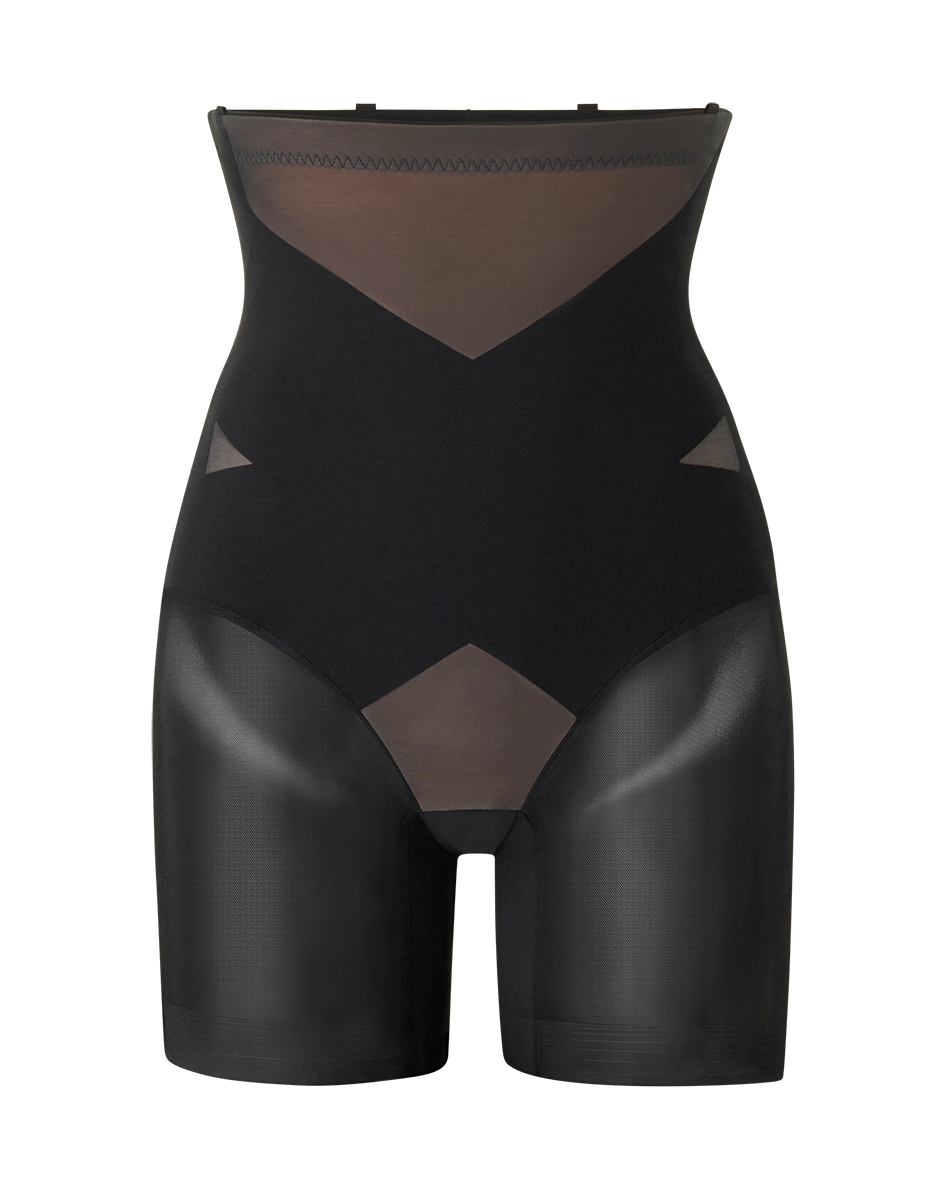
    The Honeylove SuperPower Thong Bodysuit at $125 is the version of the flagship for wearing under thinner fabrics where the short-bodysuit leg line would show. Same structural compression, no visible panty line through silk or thin knit.

    The five most-recommended Honeylove shapewear pieces in editorial product grid

    Why this brand matters for the category

    Honeylove earns the third-name shortlist position because it solved a structural problem in a category that the industry had treated as mature. The shapewear market had two dominant brands and a long tail of low-quality alternatives, and the working assumption was that there was nothing material left to innovate on. Betsie Larkin pulled apart a piece of shapewear in her apartment, sketched a waistband that did not exist yet, and spent the next seven years executing against the idea with enough discipline to build a brand that now sits on the same shopping list as Spanx and Skims. The fact that the brand has stayed independent through that growth is the most interesting part of the trajectory. Most successful intimates brands get acquired by a conglomerate by year five and lose the founder discipline that made them work in the first place. For curvy shoppers the practical takeaway is that the shapewear conversation has changed. The third name on the shortlist is real, the construction earns the price premium for the right occasion, and the SuperPower Short Bodysuit in a 2X is the piece worth trying first. I have mine in nude under a Christopher John Rogers black knit that I wear every winter. The link is in the section above.

  • How Much Does a Sew In Cost in 2026? A Real Price Breakdown

    How Much Does a Sew In Cost in 2026? A Real Price Breakdown

    Three bundles of hair extensions laid out next to a stylist's pricing notes and tools

    After tracking 47 sew in quotes across Chicago, Atlanta, Houston, New York, and Los Angeles between November 2025 and February 2026, plus pulling the receipts from my own three installs in the last 18 months, the number a salon prints on the price list is almost never what you pay. The hair itself is one line. The install labor is another. The closure or frontal, the cut, and the take-down four to eight weeks later are all separate. Most readers I hear from are not surprised by the dollar amount once they see it broken out. They are surprised that nobody at the consultation walked them through the full math. This guide does that, with the line items the booking site usually buries.

    The fast answer

    A sew in in 2026 costs between $80 and $850 for the full service in most major US cities, with the median landing around $320. That includes the install labor, but it almost never includes the hair itself. Bundle hair runs $60 to $300 per bundle and most full installs use two to four bundles. A closure or frontal is another $70 to $400. Realistic all-in for a fresh sew in with new bundles, a closure, a cut, and a style: $450 to $1,200 for a mid-tier salon install. Budget braider-and-bundle route: $200 to $400 all-in. Luxury Raw Indian or Vietnamese hair with a custom-bleached HD lace frontal at a celebrity-adjacent salon: $1,500 to $2,500 all-in. Then add maintenance every two to three weeks at $40 to $90 per visit if you want it to last the full eight to ten weeks.

    What actually drives the price

    Sew in pricing is opaque because the install service and the hair are sold separately at most salons, and the line items between them stack quickly. The six levers below are what move a quote from $200 to $1,500 on the same head. Read your quote with these in mind and you can ask the stylist exactly where the money is going.
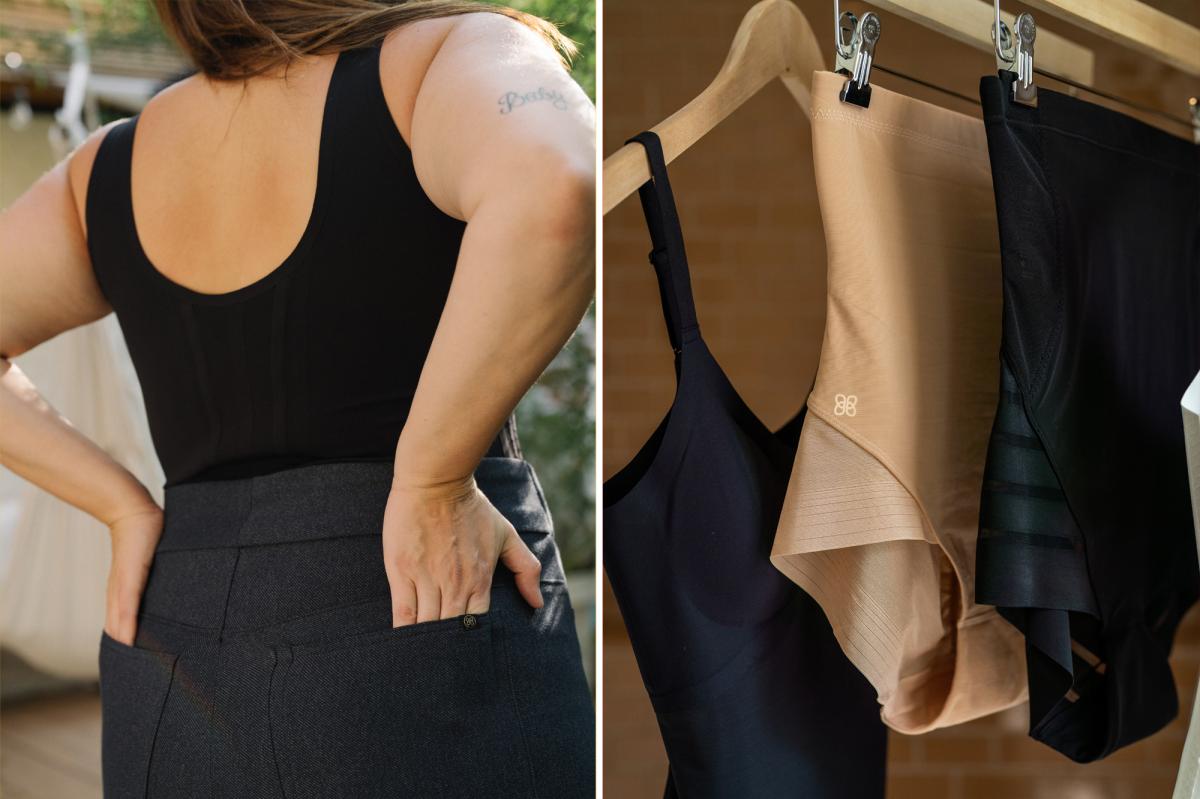
    Stylist braiding a foundation pattern before installing a sew in

    Hair grade, length, and bundle count

    This is the single biggest swing in any sew in quote. Synthetic bundles do not work for a sew in (the tracks will not braid in or hold a curl pattern after washing), so the floor is 100% human hair. Pricing tiers run roughly: Brazilian or Peruvian non-Remy at $40 to $80 per bundle, standard Remy Brazilian or Malaysian at $80 to $150 per bundle, premium Raw Indian or Cambodian at $150 to $250 per bundle, and Raw Vietnamese or donor-traced single-origin at $250 to $400 per bundle. The brands worth knowing in 2026: Outre and Sensationnel at the budget end, Mayvenn in the mid-range with a transparent supply chain, and Indique at the premium end with a verified single-donor pipeline. Bellami is the celebrity-adjacent option with the highest retail markup and a real return policy.

    Length and bundle count stack on top of grade. Each additional inch above 16″ adds roughly $15 to $40 per bundle. A 14″ install with two bundles is the floor. A 26″ install with four bundles plus a frontal is the ceiling. Most readers I talk to want fullness through the back, which means three bundles minimum at 18″ or longer. Thinner installs at 14″ to 16″ with two bundles run $160 to $400 in hair alone. Full installs at 22″ to 26″ with four bundles run $600 to $1,400 in hair alone, install labor on top.

    Closure, frontal, or leave-out

    How the front of the install is finished is the second-biggest price lever. A leave-out (your own hair smoothed over the front) is free in hardware but commits you to flat-ironing your edges weekly, which most curly and coily textures can only handle for a few cycles before heat damage shows up. A 4×4 closure adds $70 to $180 in hair and $40 to $80 in install labor. A 13×4 lace frontal adds $150 to $300 in hair plus $60 to $150 in labor for the melt-and-bleach work. An HD lace frontal at premium quality runs $250 to $400 in hardware plus $100 to $200 in custom application. If you want the install to read as your own hair at the hairline, the HD frontal is the only route that holds up to close-range photography, and it is the most expensive single line in any sew in.

    Salon tier, city, and styling add-ons

    Install labor alone runs $80 to $250 at a freelance stylist or smaller braid shop, $200 to $400 at a mid-tier salon, and $400 to $800+ at a celebrity-adjacent or specialty extension salon. The labor difference reflects time on the braid-down pattern, precision of track placement, and finish work. A $90 install will look fine in week one and show track lines by week three because the braid foundation was rushed. A $350 install holds the pattern through the full life because the stylist took 90 minutes on the braid-down before touching a needle.
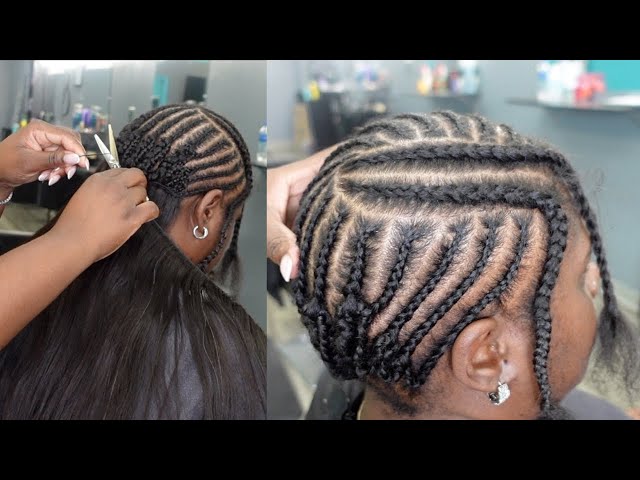
    City matters too. Atlanta and Houston run the most competitive pricing – a full install with mid-tier bundles tracks $400 to $700 all-in. Chicago and DC land at $500 to $900. New York and Los Angeles run $700 to $1,400 for the same work, with celebrity-adjacent LA salons easily clearing $2,000. The price-per-quality ratio favors Atlanta heavily, which is why a meaningful portion of the celebrity-stylist circuit lives there.

    Styling add-ons stack on top. Cut and style at install runs $40 to $120. A color blend runs $80 to $250. A custom-curl pattern set into bone-straight bundles runs $60 to $150. Most quotes do not include these. Ask before you book or you will get the bill at the chair.

    Price tiers with examples

    Budget tier: $200-$450 all-in. Two bundles of Outre or Sensationnel synthetic-blend-free Remy at $60 to $80 each, no closure (leave-out at the front), install at a freelance braider for $90 to $150, no cut or style add-on. Realistic life: 4 to 6 weeks before take-down. The bundles in this tier are sold on Amazon and at local beauty supply stores, and the brand to trust at this price is Outre 100% Human Hair bundles because the quality is consistent across the bagged lots even at the lower end. The trade-offs: leave-out means flat-ironing your front weekly, the bundles will start to mat by week five, and you are paying for an install that holds its shape but does not photograph close-up.

    Woman wearing a mid range sew in install with lace frontal in the 500 to 900 dollar tier

    Mid-range tier: $500-$1,000 all-in. Three bundles of Mayvenn or comparable mid-tier Remy at $100 to $150 each, a 13×4 lace frontal at $150 to $250, install at a mid-tier salon at $250 to $400, plus cut and style at $60 to $100. This is where most readers I hear from land and where the install starts to read as actual hair rather than a wig variant. The Mayvenn supply chain is more transparent than most mid-tier sellers and the bundles hold up through two install cycles if maintained, which makes the cost-per-wear math meaningfully better than it looks on the receipt. Browse Mayvenn Remy bundle packs on Amazon for the most consistent mid-tier hair to bring to a stylist appointment. Realistic life of the install: 6 to 10 weeks with proper maintenance.

    Woman wearing a premium tier sew in install with HD lace frontal in the 1500 dollar plus range

    Premium tier: $1,200-$2,500+ all-in. Three to four bundles of Indique Raw Indian or premium Bellami hair at $200 to $350 each, an HD lace frontal at $300 to $400, install at a celebrity-adjacent salon at $500 to $800, plus full styling and color blend at $150 to $300. At this tier you are paying for hair that can be re-installed three to four times across a year, a frontal that disappears at the hairline in close photography, and a stylist whose work shows up on red carpets. The Indique single-donor sourcing is the differentiator at this price – the bundles can be color-treated, heat-styled, and washed without the cuticle stripping that happens in the mid-tier. Shop Indique Pure raw hair bundles for the most accessible entry into the premium tier. Realistic life: 8 to 12 weeks per install, with the bundles reusable for a year if you store them properly between cycles.

    Where to save and where to splurge

    Save on the closure piece if you have edges and a hairline you are willing to lay weekly. A leave-out install at a mid-tier salon will photograph nearly as well as a frontal install in everyday wear and save you $300 to $500 in hardware and labor. The save only works if you are committed to the front-of-hair styling time. If you are not, you will end up looking flat for eight weeks and the savings will feel like a punishment.

    Save on the bundle count if your texture is fine to medium. Three bundles at 18″ to 20″ gives most plus-size readers the proportional fullness they want. A fourth bundle at this length adds weight without adding visible density and costs you $100 to $250 you did not need to spend.

    Splurge on the install labor specifically. The $300 difference between a $100 braid-down and a $400 braid-down is the difference between an install that lasts four weeks and one that lasts ten. On a per-week-worn basis, the expensive install is cheaper. This is the single most consistent piece of advice I hear from stylists who do both ends of the market.

    Splurge on the hair if you reuse. Indique and Bellami bundles cost two to three times what Outre bundles do upfront but can be reinstalled three to four times across a year. The cost-per-install drops below the budget tier by the second install. If you sew in twice a year or more, the premium hair pays for itself by the third cycle. If you sew in once and never again, save the money and buy Mayvenn or Outre.

    Frequently asked questions

    How long does a sew in actually last?

    Properly installed and maintained, six to ten weeks. Past ten weeks the natural hair underneath needs to breathe and the braid foundation starts to loosen. I have seen readers try to stretch installs to twelve and fourteen weeks and the cost of the take-down (more time, more breakage, more deep conditioning needed) eats whatever they saved on a delayed reinstall. Eight weeks is the sweet spot. Plan the take-down before you install.

    Why is the hair sold separately from the install?

    Margin and flexibility. Salons that bundled hair into the install service price used to lose money when clients arrived with their own bundles and asked for a discount. Unbundling lets the stylist charge fairly for labor and lets the client shop the hair market for the best price. The unbundled model is now the industry standard outside of full-service salons in the premium tier. The downside is that quote opacity that this guide is trying to fix.

    Is a sew in cheaper than a custom wig?

    At the budget and mid-tier, yes. A comparable mid-range wig with the same hair quality runs $400 to $1,000 versus $500 to $1,000 for a sew in, but the wig is reusable for a year with no reinstall cost. At the premium tier, custom wigs pull ahead on cost-per-wear because the install labor for a sew in is recurring. For sew in versus custom HD lace wig at the $1,500+ tier, the wig is the better long-term math by a meaningful margin. The sew in still wins on day-to-day convenience.

    What is the maintenance cost between installs?

    $40 to $90 every two to three weeks for a wash and tighten service at most salons. Plus product cost: a good braid spray (Mielle Organics Mint Almond Oil or comparable), a satin scarf or bonnet for nightly wear, and a leave-in conditioner for the natural hair underneath. The product line runs $30 to $60 across the install life. Skipping maintenance shaves the install life from ten weeks to four. Budget the maintenance into the upfront cost when you quote yourself.

    The realistic number to budget

    For a mid-tier sew in that holds up for eight to ten weeks, photographs well in everyday wear, and uses hair you can reinstall once, budget $700 to $1,000 all-in plus $80 to $150 for one maintenance visit at week four. Going below $400 means budget bundles, a leave-out front, and a freelance install that you will need to redo within a month. Going above $1,500 buys premium hair you can reuse, a frontal that disappears at the hairline, and labor from a stylist whose work is meaningfully better – real benefits but not necessary for most everyday wear. The $850 sweet spot delivers an install that feels worth what you paid. Worth it at $850, skip at $300.