Blog

  • Every Brand That Cut Plus Sizes Since 2020: The Receipts, With Dates

    Every Brand That Cut Plus Sizes Since 2020: The Receipts, With Dates

    Every brand in this record threw a party when it added plus sizes. A press release, a campaign with a genuinely diverse model lineup, a founder quote about how style has no size. Not one of them threw a party on the way out. The retreats happened in Instagram comment replies, in quietly edited size charts, in racks that migrated to the back wall of the store and then were not there at all. Reddit noticed every single time. The business press noticed some of the time. Nobody kept the list.

    So this is the list. Every documented plus-size cut since 2020, with dates, because the dates are the story. I spent six years inside a fashion publication watching how these launches get engineered, and I can tell you the press release for the expansion goes through four rounds of approvals. The retreat goes through legal and nobody else. If the brands won’t write the second press release, fine. I’ll write it for them, with receipts.

    Three honesty rules before the table, because a tracker is only worth keeping if you can trust every row. Confirmed cut means the brand said it or the business press documented it. Measured shrinkage means retail data or a live check of the brand’s own site shows the range contracting, announcement or not. Community-reported means the running record lives in Reddit threads and TikToks and has not been confirmed anywhere I’d cite, and I say so instead of rounding up. This page is a living record. When the next brand slides out the side door, and there will be a next one, it gets a row with a date next to it.

    The Master List: Every Documented Cut, Dated

    Sparse plus size clothing rack with clearance signage in a department store

    Brand What happened When Source type Status now (July 2026)
    Loft Ended extended sizing (had launched Feb 2018); announced only in an Instagram comment citing “business challenges”; size chart returned to 00-18 by fall March 2021 (effective fall 2021) Confirmed cut (brand statement + press) “Plus Shop All” page still live on loft.com with zero products (live check, July 2026)
    Old Navy BODEQUALITY launched Aug 20, 2021 (sizes 0-30, every style, every store, price parity); Gap Inc scaled it back in stores under a year later, keeping the range online May 2022 Confirmed cut (Gap Inc statements, Glossy, Fast Company) Plus assortment still shrinking: down 12% year over year (EDITED data via CNN, Apr 2026)
    Target No announcement ever; extended sizes on Target.com fell 37% in the year to March 2026 (30% of it in the final six months); individual stores removed plus sections entirely, one on camera Feb 2025 Measured Mar 2025 to Mar 2026 Measured shrinkage (EDITED retail data via CNN; viral store video) Ava & Viv alive online; in-store plus space varies by market; company line: “adjusts offerings to meet consumer demand”
    For Love & Lemons Launched extended sizing Aug 2019 (six styles, 1X-2X); range quietly disappeared with no statement Launch Aug 2019; gone by 2026 (no dated announcement exists) Measured shrinkage (dated launch + live site check) Brand’s own “curve styles” collection page returns zero products (live check, July 2026)
    Eloquii Walmart bought the plus-size leader in 2018 (reported ~$100M), then sold it to FullBeauty Brands for an undisclosed sum April 2023 Confirmed (CNBC, Fox Business) Still operating under FullBeauty; co-founder Julie Carnevale retained
    City Chic / Evans City Chic Collective sold the century-old UK plus brand Evans to AK Retail for GBP 8M (paid GBP 23.1M in 2020); Navabi ceased trading August 3, 2023 Confirmed (ASX announcement, trade press) Evans continues under AK Retail (UK); City Chic refocused on Australia, NZ, US
    City Chic / Avenue City Chic sold US plus brand Avenue to FullBeauty for USD 12M (paid AUD 24.4M in 2019) June 2024 (completed July 2024) Confirmed (company announcement, trade press) Avenue continues under FullBeauty
    Forever 21 Plus-size Instagram account deactivated summer 2024 (spotted by one of its own plus models); US operator filed Chapter 11 on March 17, 2025 and wound down all 354 remaining US stores Summer 2024; March 2025 Confirmed (CNN, Axios, NPR); IG deactivation observed US stores gone; brand name licensed on, online presence continues under new arrangements
    Torrid Announced up to 180 store closures, roughly 30% of its fleet, in a digital-first pivot; closed 151 locations by fiscal year end, ~30 more through mid-2026 June 2025 Confirmed (SEC filings, Retail Dive, Fashion Dive) Size range 10-30 unchanged; this is a store-count cut, not a size cut – filed here so the record is complete
    Athleta Joined extended sizing in 2019; shoppers report thinning options since Launch 2019; shrinkage reported 2025 Community-reported (launch is press-sourced; thinning is shopper reports) Extended sizes still sold online; depth disputed by shoppers
    Dolls Kill Customer petition in 2020 after best-sellers were discontinued in larger sizes; no policy statement ever made 2020 onward Community-reported (petition + social record only) Plus category still live on dollskill.com; range depth is the complaint, not existence
    Anthropologie (APlus) Launched March 15, 2019 (~120 styles, 16W-26W); industry reporting groups it with the rolled-back class of 2019 Launch March 2019; on watch Not filed as a cut – line verified live APlus still online at 16W-26W; watching assortment depth

    One brand you might expect here is missing on purpose. I went looking for evidence that Nordstrom cut its plus buying and could not source it to anything current, so it stays off the list. That’s the deal with this tracker: if I can’t date it and source it, it doesn’t get a row.

    Champagne on the Way In, a Side Door on the Way Out

    Fashion brand launch event with step and repeat backdrop and empty chairs

    Read the table top to bottom and one shape repeats. The launches were loud and the exits were procedural. Loft announced its expansion with lookbooks and influencer seeding; it announced the end in a comment reply, the retail equivalent of breaking up by text. Old Navy bought TV airtime for its launch; the retreat was a line item in an investor update. Target never even bothered with the second half. The rack just got smaller until a shopper filmed it.

    The industry-wide picture matches the anecdotes. Vogue Business, which audits runway size representation every season, counted plus-size looks at under half a percent of recent runways, roughly a third of what it measured just two seasons earlier. The retreat is not a rumor plus-size shoppers invented. It’s measurable everywhere anyone bothers to measure.

    Loft: An Era That Ended in an Instagram Comment
    Loft store front

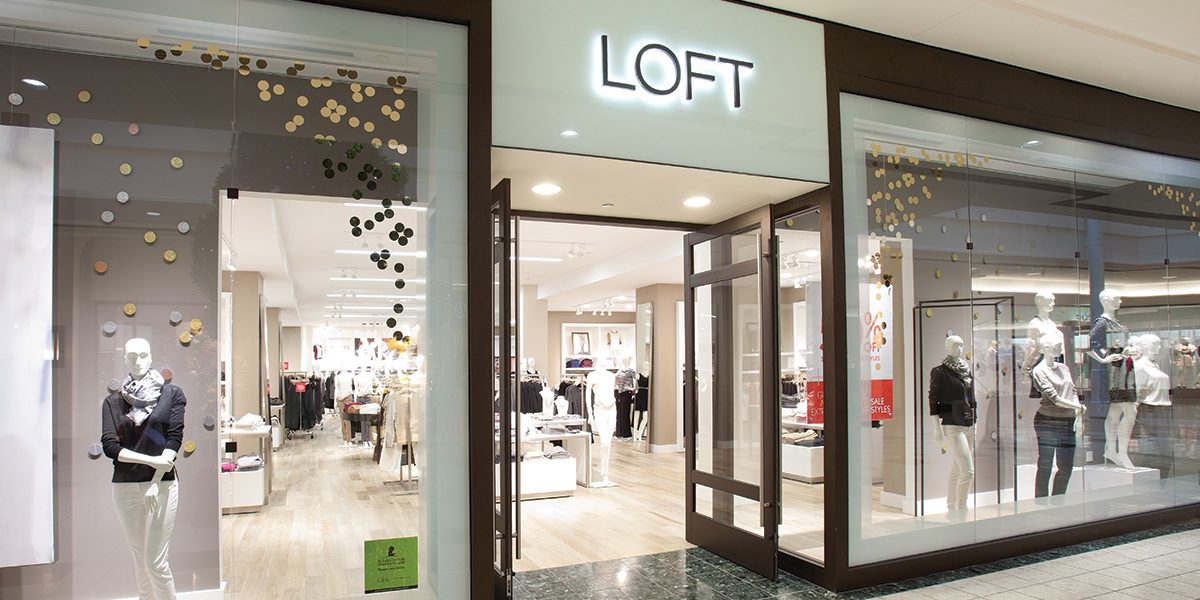
    Loft launched plus sizes in February 2018 to real excitement, because Loft is exactly the kind of accessible workwear brand the plus market had been begging for. Barely three years later, shoppers noticed the extended sizes dwindling online and asked what was going on. The answer arrived not in a press release but in the brand’s Instagram comments: “Due to continued business challenges from the last year, we have had to make some very difficult decisions, which has impacted our go-forward sizing.”

    That was it. That was the whole announcement. By fall the size chart stopped at an 18. CeCe Olisa, co-founder of theCURVYcon, called it “an unexpected rejection from a new friend,” which is the politest possible way to describe getting dumped in a comments section. Sarah Chiwaya, who started the #PlusSizePlease movement, pointed out the sharper problem: Loft never gave plus a real chance, stocking it in only a handful of stores and then citing weak performance from a range most customers never physically saw.

    Here’s the detail that made me put my coffee down while building this record. Loft.com still has a “Plus Shop All” page. I pulled it the first week of July 2026. The marketing copy is fully intact, including the line “Smile, we’ve got your size.” The number of products on that page is zero. Somebody decommissioned the inventory and nobody ever bothered to take down the sign.

    Old Navy: The Loudest Launch, the Fastest Walk-Back
    Old Navy store front
    Old Navy store interior with integrated size range on display racks

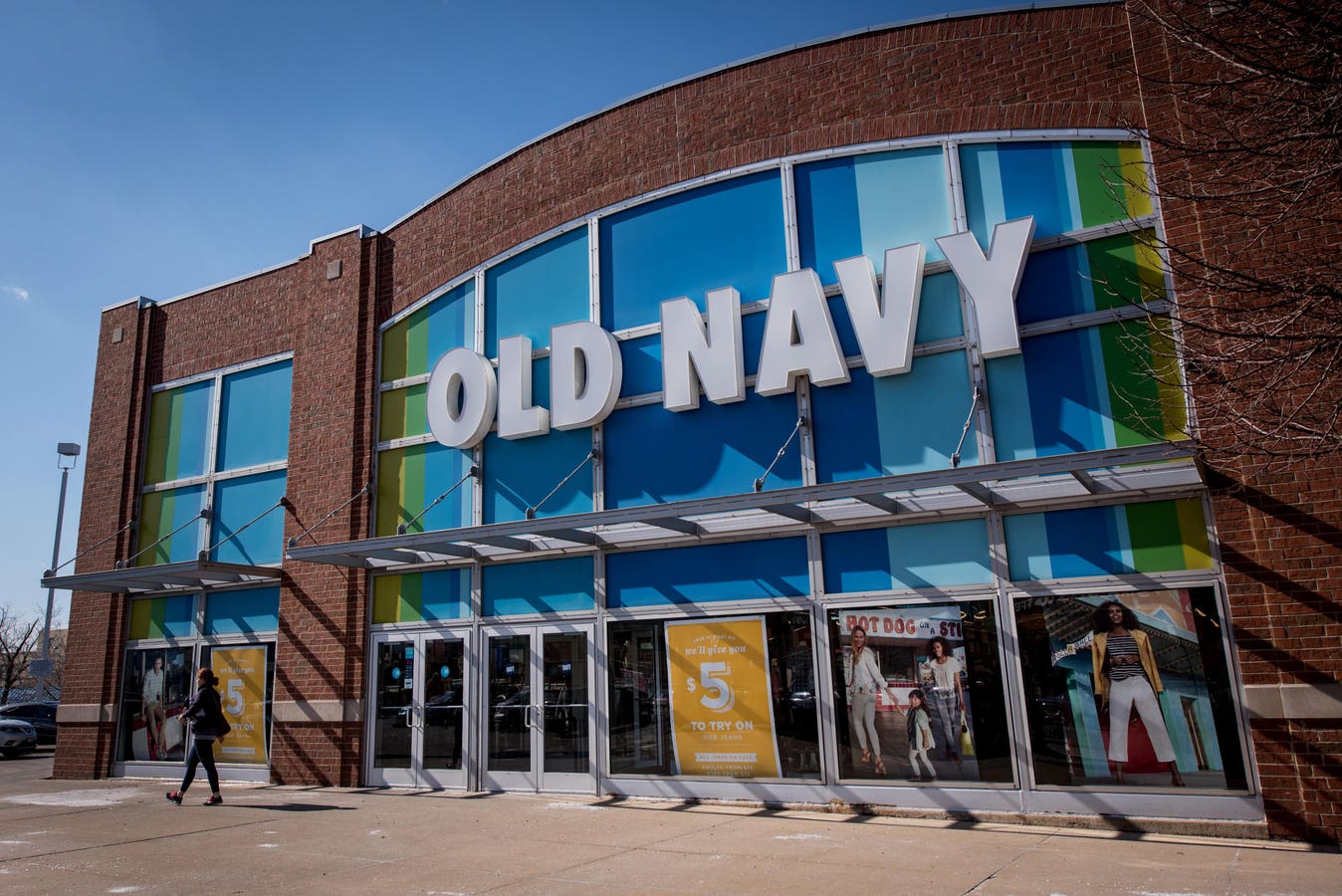
    I want to be fair to BODEQUALITY, because it was the biggest size-integration swing any mass retailer has ever taken and the design of it was genuinely right. Every women’s style in every size, merchandised together, at the same price, in every store, with mannequins in a range of bodies on the floor and Aidy Bryant fronting the campaign. Old Navy body-scanned hundreds of real women to rebuild its fit blocks instead of grading up a sample size and hoping. This was not a capsule collection with a hashtag. It was the whole store.

    It lasted under a year on the floor. In May 2022, Gap Inc told investors it had overplanned larger sizes, and the program was scaled back in stores while the full range stayed online. The CEO’s language was that they launched “too broadly and too quickly.” Translation from earnings-call to English: they stocked a decade’s worth of trust-building inventory into quarter one and panicked when a customer base they had ignored for years didn’t materialize in ninety days.

    The saddest part is the aftermath, because it validates every cynic. Retail data tracked Old Navy’s plus assortment still shrinking year over year as of spring 2026. The boldest experiment in the category didn’t just end. It’s still ending, quietly, four years later.

    Target: No Statement, Just a Measured Disappearance

    Target store front

    Target belongs in this record precisely because it never announced anything, which makes it the purest example of the retreat-in-silence pattern. Everything we know comes from outside the building. In February 2025, a store associate confirmed on camera, in a video that went massively viral, that her location had discontinued plus sizes altogether. Threads and Reddit filled with shoppers reporting the same shrinkage at their own stores, and the replies never settled anything because no two stores matched.

    Then the data arrived and settled it. Retail intelligence firm EDITED, in reporting CNN published in April 2026, measured extended sizes on Target’s site falling by more than a third in a single year, with the decline accelerating in the back half. Target’s entire public response is that it “adjusts offerings to meet consumer demand.” I did a full audit of what’s actually left of Ava & Viv, Target’s house plus brand, and the honest answer is the brand is alive online while the in-store experience dies market by market. No press release will ever tell you which your store is. The rack will.

    The Quiet Ones: For Love & Lemons, Dolls Kill, Athleta

    Laptop showing an online clothing collection page with no products found message

    For Love & Lemons is the cleanest small-brand case study I found, because both ends of it are verifiable. The launch is dated: extended sizing arrived in August 2019, a small handful of styles in the first two extended sizes, covered warmly by the style press. The end is checkable: the brand’s own curve collection page, still live on its site, returns no products at all as of my pull in July 2026. Between those two facts there is no statement, no interview, nothing. The lingerie brand that got a wave of “my plus-size heart is bursting” coverage on the way in never said a word on the way out. TikTok comments asking them to “produce plus sizes again” are the only public record.

    Dolls Kill I’m filing exactly as strongly as the evidence allows, which is: community-reported. There was a customer petition back in 2020 after best-selling pieces were discontinued in larger sizes, the brand made no policy change and no statement, and the complaint that persists across social media is depth of range, not existence, since a plus category is still live on their site today. If harder evidence surfaces, this entry gets upgraded and dated. That’s how a tracker should work.

    Athleta sits in the same tier. The 2019 launch of extended sizing is press-sourced. The thinning since is shopper testimony, including a running subreddit record, and I won’t dress testimony up as data. But when the same complaint shows up independently across a brand’s most loyal customers for over a year, it has earned a row with an honest label.

    And Anthropologie’s APlus, for the record, is not filed as a cut, because I checked and the line is still live in its original size range. Industry reporting groups it with the rolled-back class of 2019, so it’s on watch here. On watch is not guilty. The whole point of keeping receipts is knowing the difference.

    The Ownership Hot Potato: Eloquii, Avenue, Evans
    Eloquii plus size clothing display

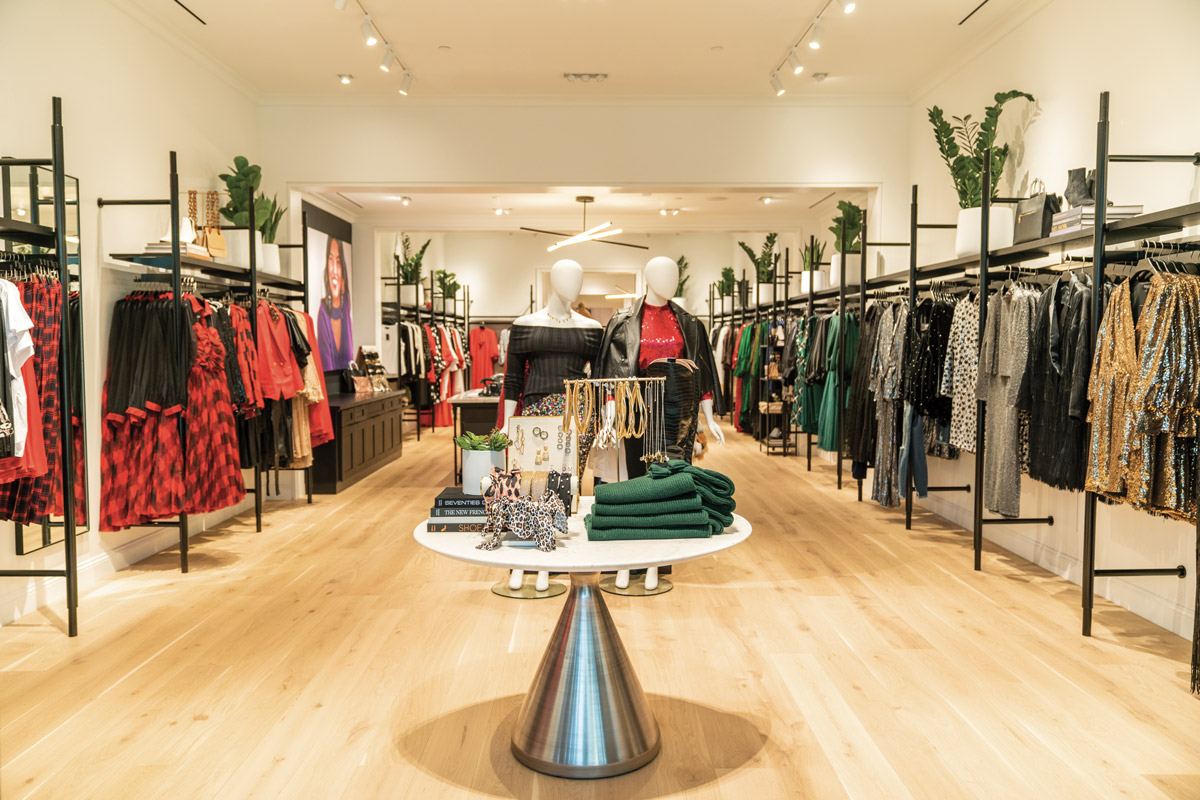
    Not every retreat looks like a shrinking rack. Some look like a term sheet. Walmart bought Eloquii in 2018 for a reported nine figures, back when every mass retailer wanted a piece of the plus market, and sold it in April 2023 for a price nobody would say out loud, which in M&A language tells you everything. Eloquii was the third direct-to-consumer brand Walmart offloaded that year. The strategy that acquired it had left the building.

    The Australian group City Chic Collective spent the same stretch unwinding its own empire. It sold Evans, the century-old British plus institution, in 2023 for roughly a third of what it had paid three years earlier, and shut down its Navabi operation along the way. Avenue, its American brand, went in 2024, also at a loss. Every one of those transactions was a generalist or a struggling conglomerate deciding plus wasn’t worth the balance-sheet space.

    Here’s the twist worth sitting with: the buyer, twice, was FullBeauty Brands, a company that does nothing but plus. Eloquii, Avenue, Catherines, Swimsuits For All, all under one roof now. You can read that as the market abandoning plus-size fashion, or you can read it as plus-size fashion consolidating into the hands of operators who actually want it. Both readings are true at once, and neither one required a press release.

    Torrid and Forever 21: Two Different Ways to Close a Door
    Torrid store front at a mall

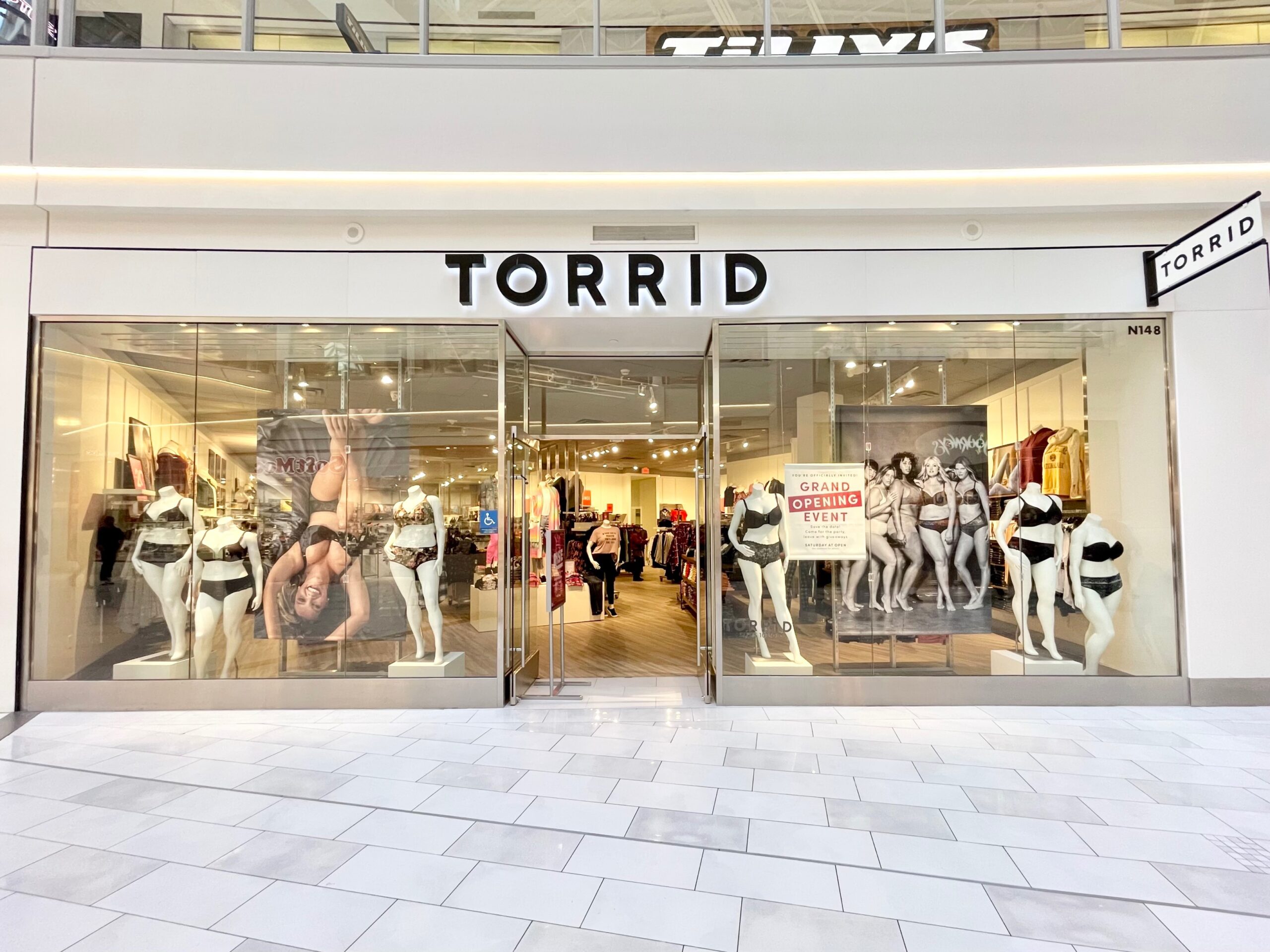
    Torrid is in the table because leaving it out would make this record look cooked, but it needs a precise label. In June 2025 the company announced it would close as many as a third of its stores, and by the end of its fiscal year it had shuttered more than a hundred and fifty locations, with a final batch closing through the following summer. That is a real contraction and it genuinely hurt shoppers in the towns where the mall Torrid was the only place to try on clothes in their size. But it is a lease story, not a size story. The size range survived intact and the business went digital-first. File it accurately or don’t file it at all.

    Forever 21 is the opposite case: total collapse that took the plus line down with everything else. The tell came early, though, and it’s the most on-pattern detail in this entire record. The brand’s dedicated plus-size Instagram account went dark in the summer of 2024, noticed not by the press but by a model who had worked those campaigns herself. The bankruptcy filing came the following March, and every remaining US store wound down. The plus account went quiet before the company did. Remember that sequencing. It’s the canary.

    Why Inclusivity Was First on the Chopping Block

    Line up the dates and the logic exposes itself. The launches cluster in the boom years of the body positivity movement, when brands were terrified of being the last one without a size-inclusive press release. The retreats begin the moment the pandemic’s supply chain chaos and the inventory glut that followed gave finance departments cover to cut anything labeled “test.” Plus lines were the newest lines, so they had the shortest sales history, so they were the easiest rows to delete in a spreadsheet. Nobody had to say the quiet part.

    The excuses come in three flavors and the experts have dismantled each one. “It didn’t sell” usually meant it wasn’t marketed: fashion consultant Megan Ixim, who is often the only plus-size person in the rooms where these calls get made, put it plainly: “Brands launched plus-size lines without investing in fit or marketing. Then they said, ‘It didn’t sell.’” “It costs more to make” ignores that you grade costs across the whole size run, the same way a shoe brand doesn’t charge by foot length. And the newest excuse, the GLP-1 wave, assumes a demographic is simply going to vanish. Comedian and activist Lauren Hope Krass has the cleanest rebuttal on record: “You don’t fix a bias by removing a demographic of people.”

    Because the demand never left. The majority of American women wear a size 14 or above, and the average American waistline corresponds to roughly a size 16. The customer these brands walked away from is not a niche. She is the statistical center of the market. That’s what makes this record read less like business strategy and more like an industry-wide flinch.

    The Brands Still Showing Up
    Universal Standard plus size clothing
    Plus size woman browsing a fully stocked clothing boutique rack

    A tracker that only keeps receipts on the guilty is just a grudge. These are the brands whose receipts run the other direction, dated the same way, and if you’re deciding where your money goes after reading all of the above, this is my shortlist.

    Brand The commitment, dated Status now
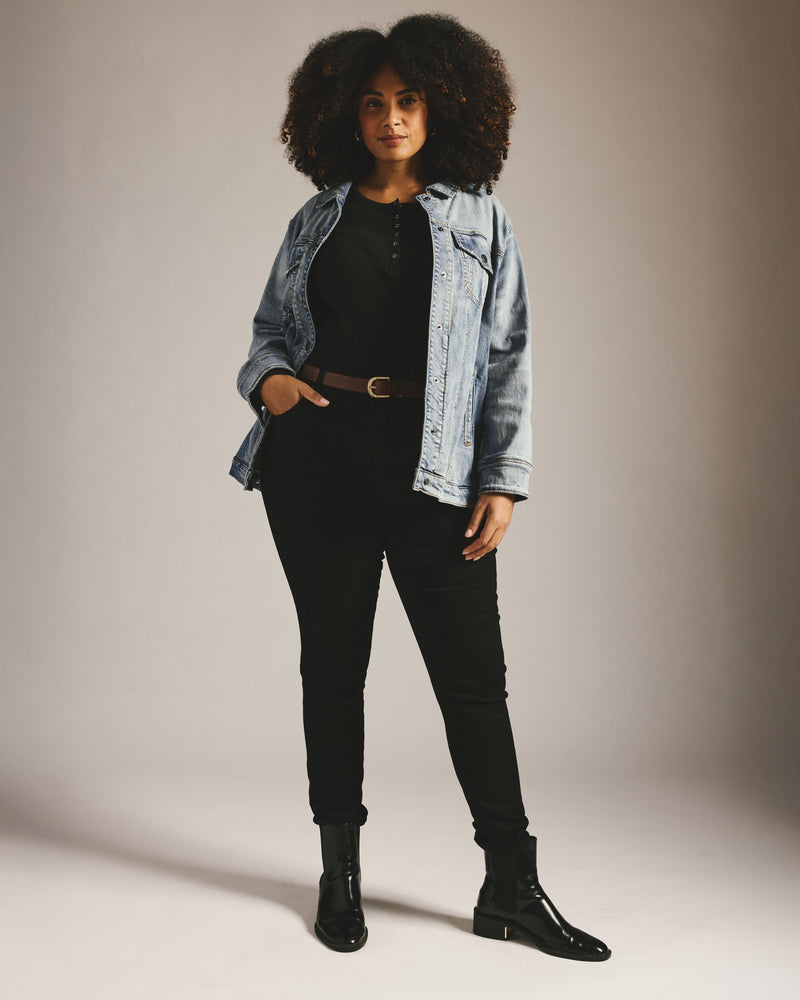
    Universal Standard Took its entire brand to sizes 00-40 in 2019 and never retreated Expanding: entered 20 Nordstrom stores in 2025 plus wholesale with Macy’s, Anthropologie, Nuuly
    Torrid (the clothing line) Sizes 10-30 through every phase of the store closures Digital-first; size run untouched
    Lane Bryant Extended Cacique bras to 50 bands and K cups; expanded sleep and lounge sizing; pushing into swim Expanding: entering Canada through 320 Walmart stores
    Ulla Popken Plus-size specialist by design, never a side project; US operation since 1993 Part of a group running roughly 600 stores worldwide
    Superfit Hero Went the opposite direction from everyone: dropped its smaller sizes entirely in November 2020 to serve L-7X only Still the only activewear brand built exclusively for plus athletes

    Universal Standard is the one I recommend most often and the one whose showroom I’ve actually stood in, and their whole thesis, that a size 36 deserves the same shopping experience as a size 6, has survived every industry mood swing since they said it. Torrid’s denim wall is still the widest fit range in mall-brand America even with fewer malls involved. Lane Bryant’s Cacique bras in the extended bands are solving a problem almost nobody else will touch. And on the specialist end, Ulla Popken has been quietly doing this since before inclusivity was a marketing word, while Superfit Hero’s leggings come from the only brand in this entire article that cut its straight sizes to serve us better. Reward the ones who stayed. It’s the only vote that gets counted.

    How to Spot the Next Retreat Before the Brand Admits It

    Every confirmed cut in this record telegraphed itself the same way, so consider this the early-warning checklist. The plus range goes online-only “based on customer demand,” which is how Old Navy’s floor retreat was framed. New drops start skipping the extended run while core sizes get everything, the For Love & Lemons pattern. The brand’s dedicated plus social account goes quiet, the Forever 21 canary. The size chart gets edited without a changelog, Loft’s move. And the clearance section starts overrepresenting extended sizes, which is what liquidating a size range looks like in real time. Two or more of those at your favorite brand? Screenshot the size chart. Apparently they’re historical documents now.

    The Empty “Plus Shop All” Page Says It All

    If this whole record had to shrink to a single image, it’s that Loft page: the banner still promising “Smile, we’ve got your size” above a shelf holding nothing. That’s the plus-size shopper’s experience of the last five years in one screenshot. The promise stayed up. The clothes left.

    This page doesn’t leave. New cuts get added with dates and sources as they’re confirmed, upgrades and corrections included, because the entire problem this article exists to fix is that nobody was writing the retreats down. The brands are betting on our short memory. Bookmark this and prove them wrong.
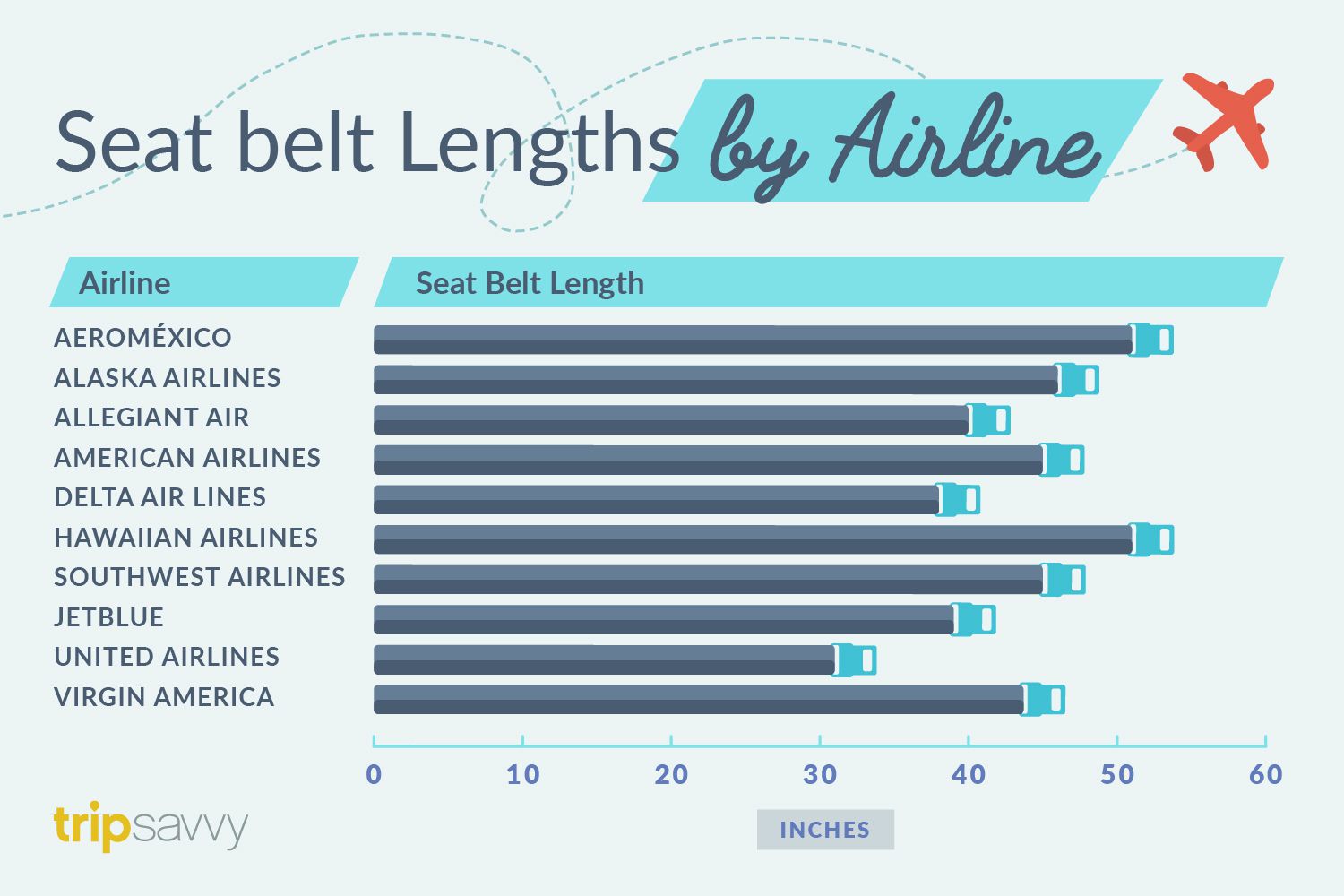
  • Airline Seatbelt Lengths, Compared: Will You Actually Need an Extender? (Every Major US Airline)

    Airline Seatbelt Lengths, Compared: Will You Actually Need an Extender? (Every Major US Airline)

    Your flight is a week out, and you’ve already boarded it a dozen times in your head. Not the takeoff – the ninety seconds before it. You’re in the window seat, bag stowed, and you reach for the two ends of the seatbelt and wait to find out what kind of flight this is going to be. Everyone around you is arguing about overhead bin space, and you’re doing quiet math with a strip of gray webbing. If that’s you, breathe. This is the article you’ve been trying to google at midnight, with the actual numbers in it.

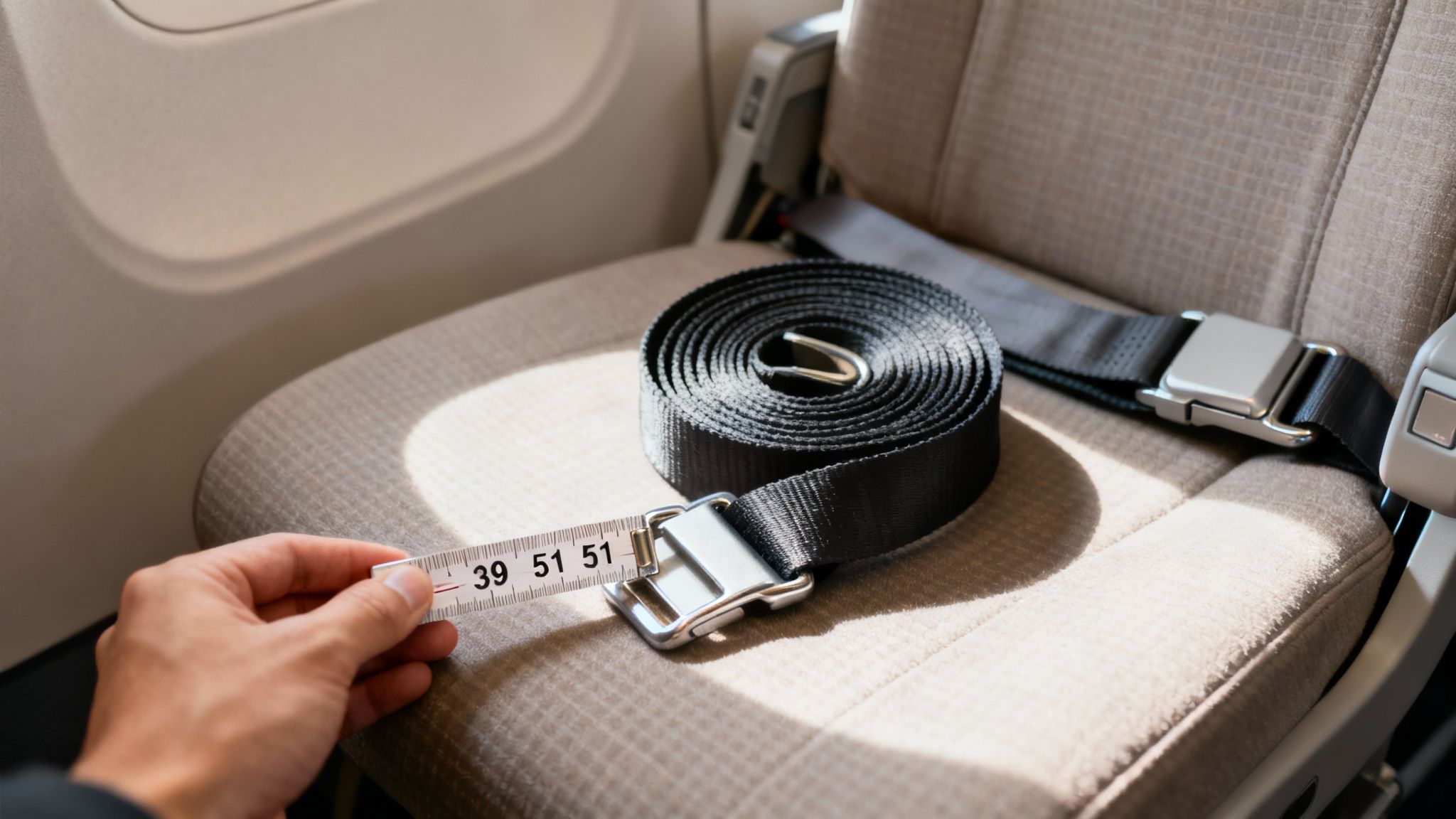
    I fly for a living in a plus-size body, and I’ve buckled into more airline seats than I can honestly count. On some carriers the belt closes with webbing to spare. On others I ask for the extender before I’ve finished stowing my bag, because I already know. The difference isn’t my body changing between Tuesday and Friday – it’s that seatbelt length is one of the least standardized, least published specs in all of commercial aviation.

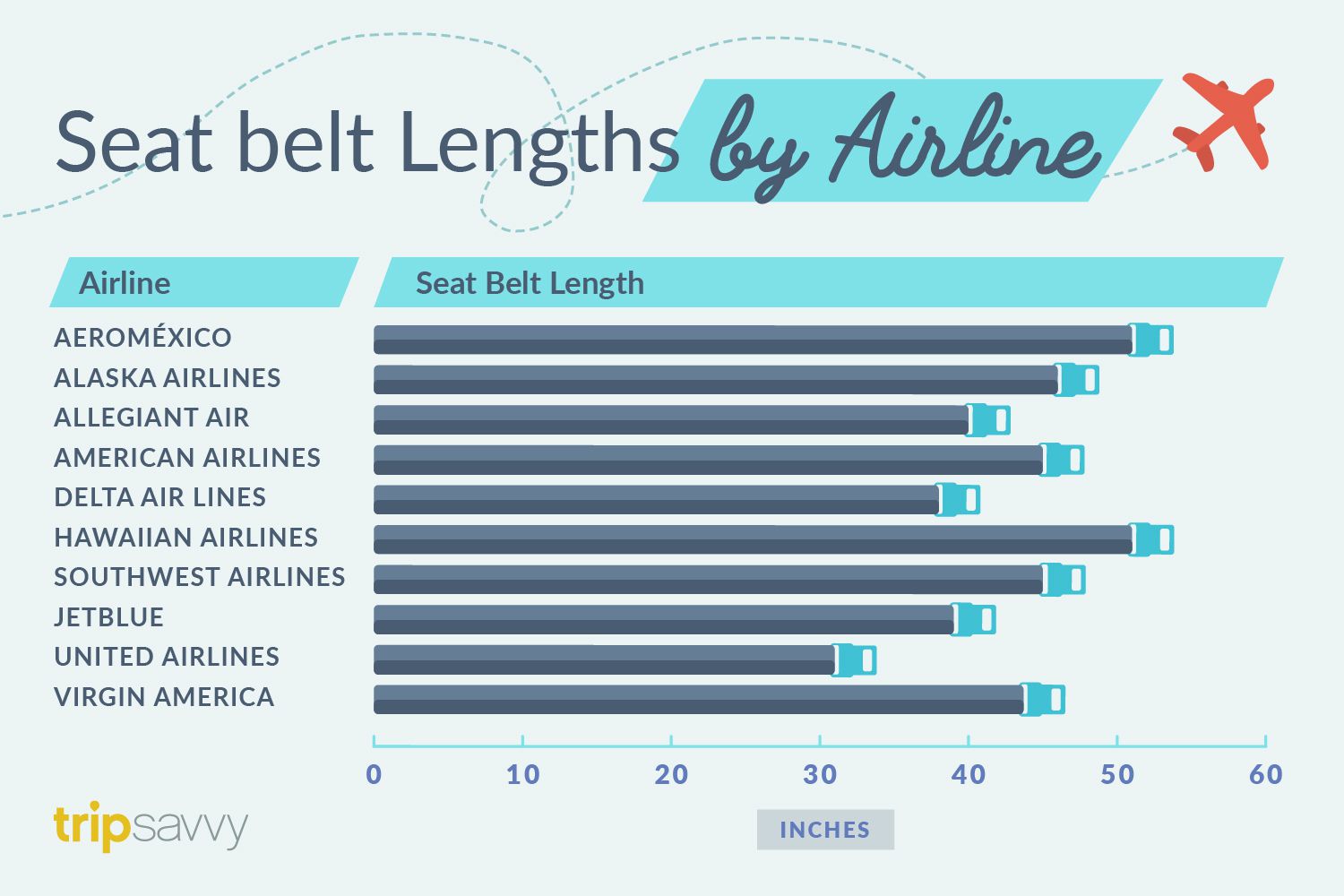
    So here’s the truth nobody puts at the top of these guides: not one major US airline publishes an official seatbelt length. Not one. Every length figure you’ve ever seen – including every figure in this article – is reported, compiled from flyers who measured, customer service agents who answered, and extender vendors who track this obsessively because it’s their whole business. What airlines DO publish is policy: whether extenders are free, where you can’t use one, and what happens if you need more room than one seat gives you. Those parts are official, and I’ve linked the receipts. Where a number is a report rather than a published spec, this article says so. That’s the deal.

    The Master Table: Every Major US Airline at a Glance

    The Master Table: Every Major US Airline at a Glance

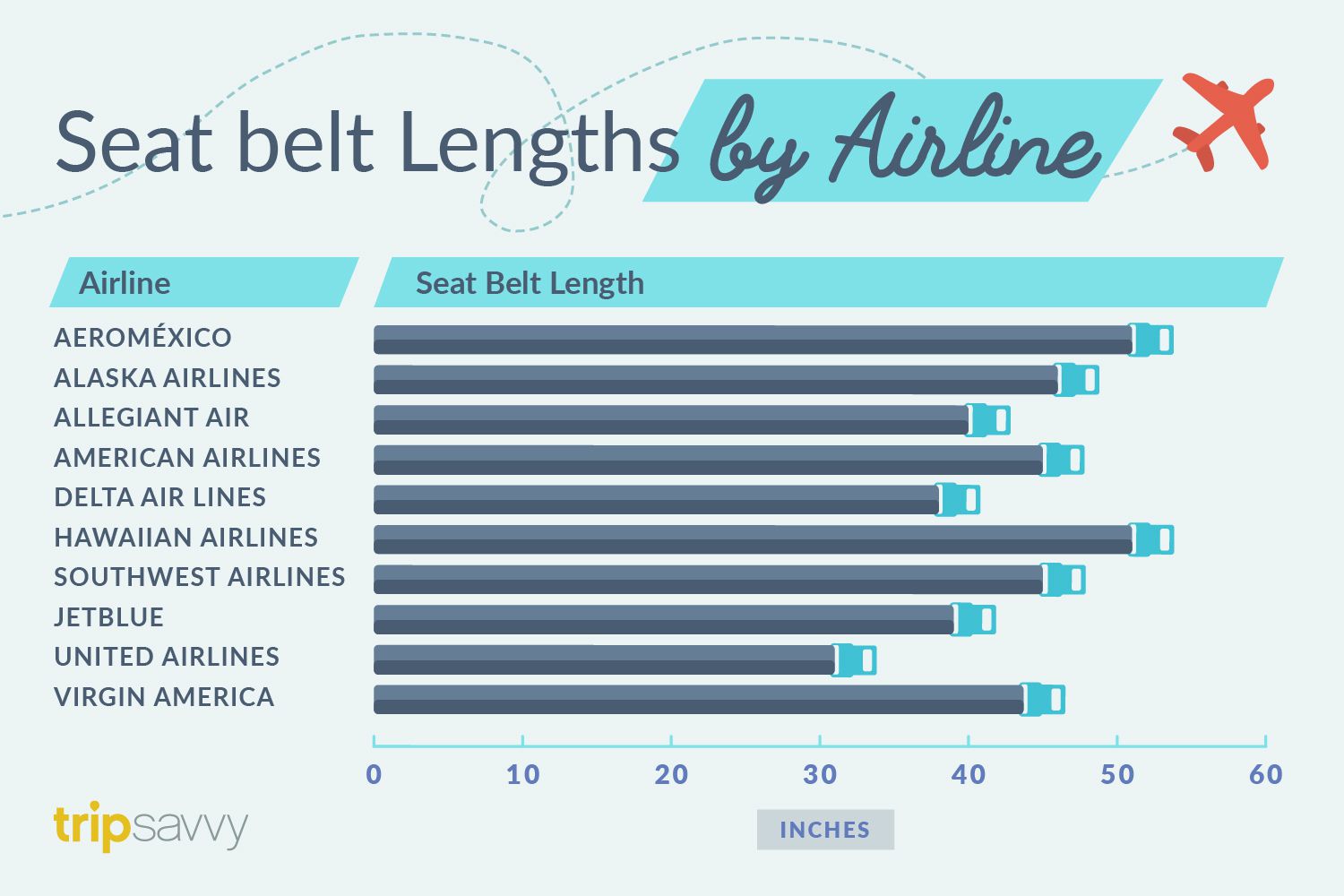
    This is the table I wish had existed the first time I stood at a gate rehearsing how to ask for an extender. Belt lengths are reported figures, not published specs, and belts genuinely vary within a single airline’s fleet depending on the aircraft, the seat position, and when the cabin was last refurbished. Treat the numbers as the center of a range, not a promise stitched into your specific seat.

    Airline Standard belt length (published/reported) Extender policy Seat width range (reported) Notes
    American ~45-47″ (reported, vendor-compiled; nothing official) Free onboard; AA states only its own extenders may be used (official) ~16.6-18.1″ Longest-reported belts of the big three
    Delta ~40-45″ (reported; varies Airbus vs Boeing) Free onboard; not permitted in exit rows (official) ~17.2-18.6″ A220 has the widest mainline economy seat in the US
    United ~39-43″ (reported; shortest-reported of the big three) Free onboard; official policy allows a maximum of one extender ~17-18″ Strictest written fit standard (see policy table)
    Southwest ~39″ (reported; vendor-compiled) Free onboard; unique buckle type on many aircraft ~17-17.8″ Only major with a second-seat refund AND free gate seats when space allows (as of mid-2026)
    Alaska ~46″ (reported) Free onboard, adds ~25″ per Alaska’s policy page; banned in exit rows (official) ~17-17.2″ (E175 regional jets ~18.25″) Second-seat refund if every flight departs with an open seat
    JetBlue ~45″ (reported) Free onboard; banned in exit rows (reported) ~17.8-18.6″ Widest average economy seats in the US
    Hawaiian ~51″ (reported; longest on this list) Free onboard; extender length reports conflict, so none stated here ~16.5-18″ Recommends pre-booking an extra seat by phone if needed
    Frontier ~39″ (vendor-reported; not published) Free onboard ~17.75-18″ Armrest position officially defines your seat’s space
    Allegiant ~33-40″ (reported; widest variation on this list) Free onboard; banned in exit rows (official) ~17.8″ Shortest reported belts here – assume you’ll want the extender
    Spirit ~42″ (reported, historical) Free onboard; extender users barred from inflatable-belt rows, including Big Front Seat rows (official, historical) ~17.75″ (Big Front Seat about 18.5″) Ceased operations May 2, 2026 – included for the record only

    Yes, Spirit is in the past tense. The airline shut down in May of 2026, which means every “flying Spirit as a plus-size passenger” thread you find is now a history document. I left the row in because people still search for it, and because its inflatable-belt rule – no extender users in the rows with airbag belts, which included the famous Big Front Seat – is a quirk worth remembering if a similar setup shows up elsewhere.

    How to Actually Read Those Numbers

    Two things before you screenshot that table and book anything.

    First: “reported” means reported. Flyers with soft tape measures, customer service agents on record, and extender vendors who compile compatibility charts are the sources here, because the airlines have collectively decided this is a spec you don’t get to know. The figures are consistent enough across sources that I trust them as a planning range – flyers consistently report United and Southwest on the short end and Hawaiian on the long end – but nobody can promise you the belt in your exact seat. A cabin refurbished last year and a cabin refurbished a decade ago can wear different belts on the same airline.

    Second: the belt is not the seat. A long belt in a narrow seat is a different flight from a short belt in a wide one. JetBlue runs both generous belts and the widest average economy cabins in the country, which is why it keeps winning the quiet word-of-mouth contest in plus-size travel groups. Alaska reportedly hands you a long belt in one of the narrowest seats on this list. Your hips and your waist are two separate negotiations, and the table’s last two columns exist so you can run both.

    Will YOU Need One? The Honest Rule of Thumb

    Will YOU Need One? The Honest Rule of Thumb

    Nobody can answer this from a table with perfect confidence, and anyone who claims otherwise is selling something. But here is the reading I give friends, based on the reported ranges and a lot of flights: the belt sits low, across your high hip and lower belly, not at your natural waist. So measure yourself seated – sitting down changes everything – with a soft tape measure across the widest point of your lap, roughly where a car’s lap belt lands.

    If that seated measurement comes in under about 40 inches, the reported figures say you’ll likely close the belt on every airline in the table, including the short-belt carriers. Between there and the mid-forties, you’re in the zone where it depends on the airline: probably fine on American, JetBlue, Alaska, or Hawaiian, and probably asking for the extender on United, Southwest, Frontier, and Allegiant. Above the longest reported belts, plan on the extender everywhere and let that be a logistics fact instead of a verdict on your body. The extender exists because airlines know their belts don’t fit everyone. Using one is not a failure. It’s equipment.

    And if you’re between sizes on the chart, do what I do: assume the shorter number. Being pleasantly surprised beats the alternative, and the ask costs you nothing.

    The Big Three: American, Delta, United

    The Big Three: American, Delta, United
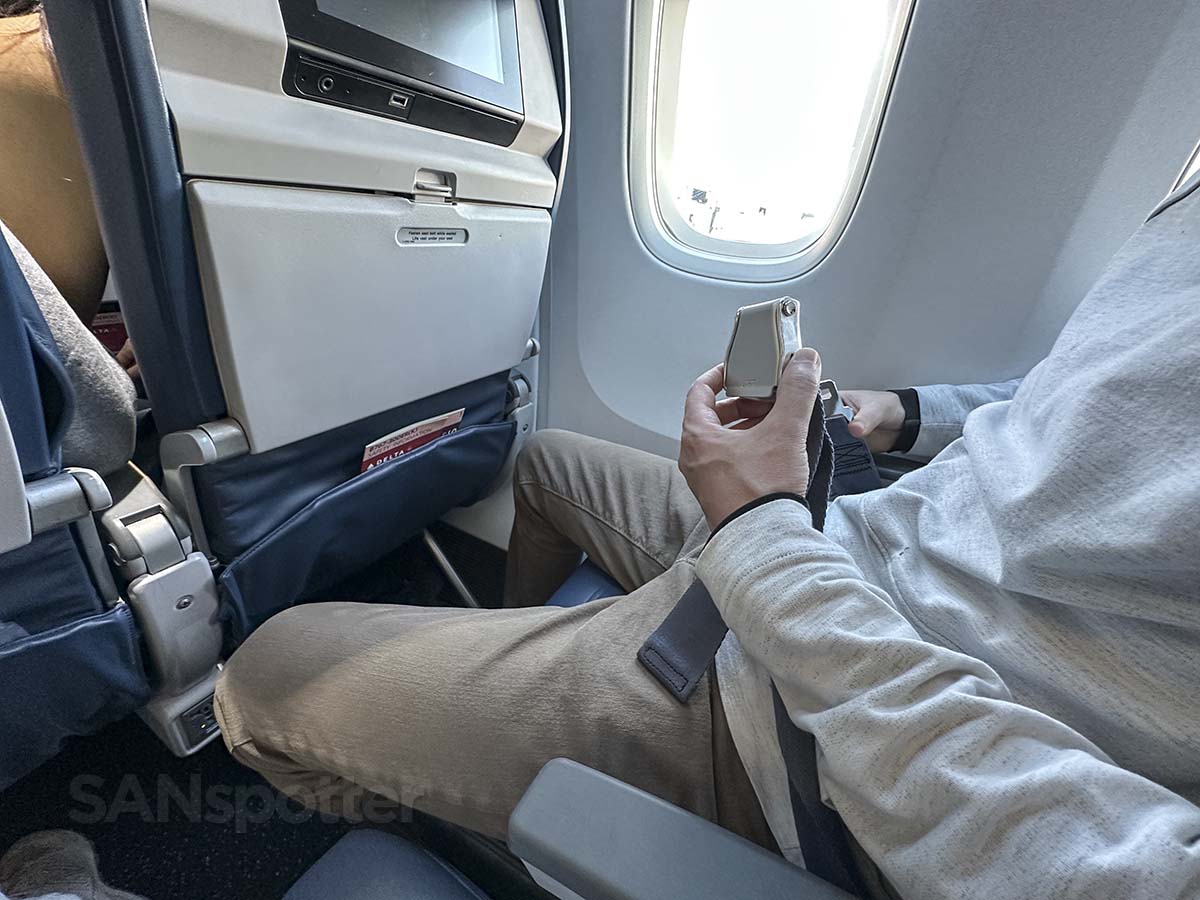
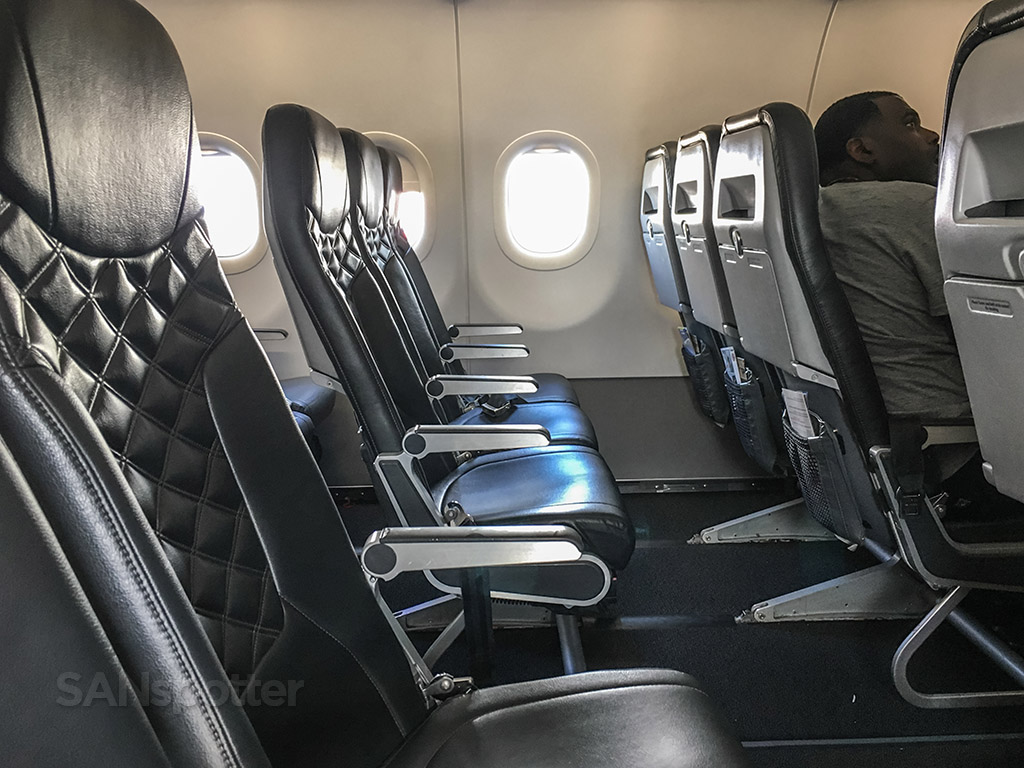
    Delta Airlines economy cabin seats with seatbelts visible

    American carries the longest-reported belts of the legacy carriers, and its official pages are refreshingly plain about the extender: ask a flight attendant or gate agent, and only American’s own extenders may be used. If you need more room than one seat, American wants you to call Reservations and book the extra seat in advance – they’ll guarantee two adjacent seats at the same fare. Show up without one and airport agents will look for two adjacent seats; if the flight can’t accommodate you, they’ll move you to one that can at your original price.

    Delta sits in the middle on reported belt length, and its fleet is where seat width gets interesting. The A220 is the widest mainline economy seat flying in the US right now, and Delta’s own aircraft pages publish the seat specs – one of the few places an airline hands you real numbers. Delta’s extra-seat policy is written softly: they “encourage” buying a second seat in advance if you’ll encroach on your neighbor or can’t keep the armrests down, and they reserve the right to reassign you or rebook you onto a later flight if the plane is full. The softness cuts both ways. It means flexibility on a half-empty flight and uncertainty on a packed one.

    United is the one to prepare for. Flyers consistently report its belts as the shortest of the big three, and its written policy is the strictest: you must be able to buckle with at most one extension, sit with the armrests down, and not significantly encroach on the seat next to you. Fail any of those and you’re buying a second seat or an upgrade, and their own policy language says they will not board you if you decline. I don’t say that to scare you – I say it so you book United with a plan instead of a hope. Ask for the extender early, or buy the second seat up front on the same reservation, where it prices at the same fare.

    Southwest: The Policy That Changed Twice in One Year

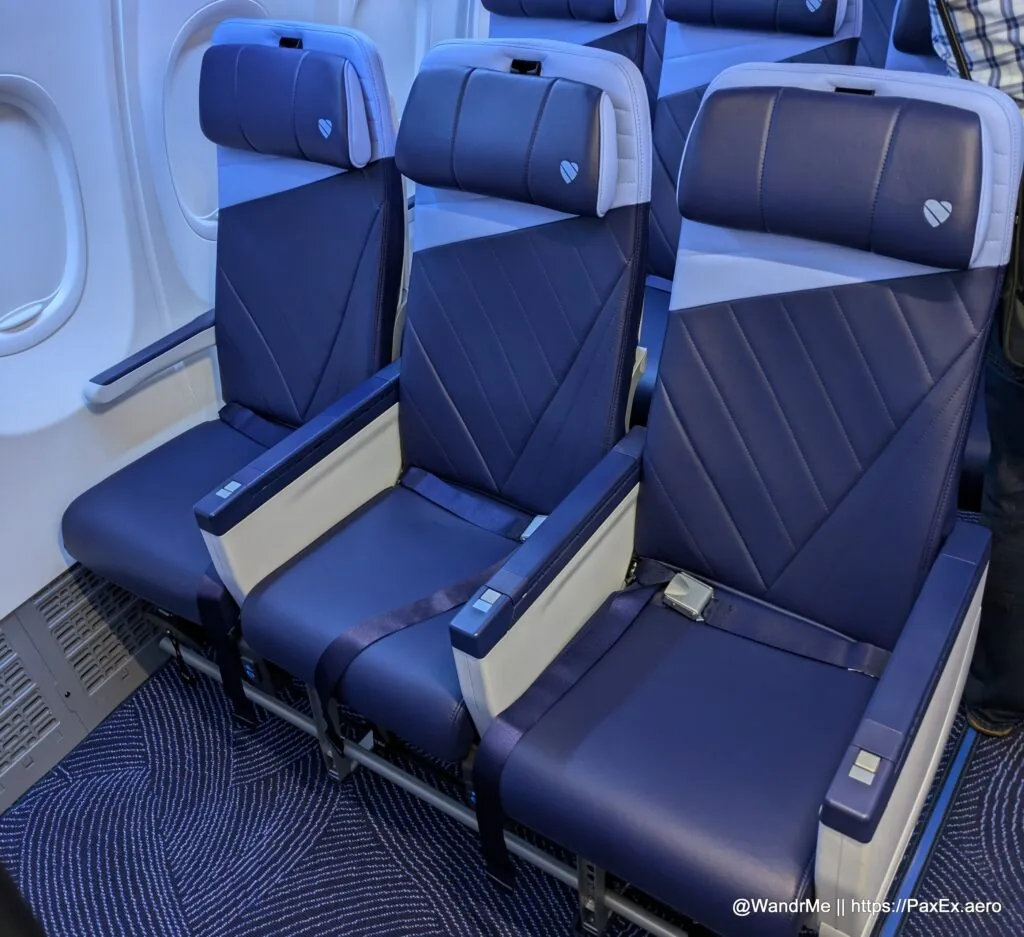
    Southwest Airlines aircraft cabin interior seats

    If you learned Southwest’s customer-of-size policy from an old blog post, unlearn it, because the ground moved twice recently. For years, Southwest was the gold standard: open seating, a free second seat arranged at the gate, no drama. When the airline switched to assigned seating at the end of January 2026, it tightened everything – you had to pre-purchase the second seat, and the refund came only after travel, only under conditions.

    Then came the partial walk-back. In May 2026, after sustained pushback, Southwest confirmed that gate agents can once again arrange a free second seat at the airport when two adjoining seats are available. If they aren’t available, you’re rebooked on a later flight. Pre-purchasing is still the airline’s strong preference, and the refund path still exists with its conditions attached – they’re in the policy table below, where conditions belong. As of this writing, that’s the live policy, and Southwest remains the only major US airline offering both a refund route and a free-at-the-gate route.

    One more Southwest quirk that matters if you’re thinking about extenders: many of its aircraft use a different buckle type than the rest of the US fleet, which is why “universal” extenders famously don’t fit there. More on that in the personal-extender section, because it’s exactly the kind of detail that Amazon listings bury.

    Alaska and Hawaiian: One Refund Policy, One Long Belt

    Alaska and Hawaiian: One Refund Policy, One Long Belt
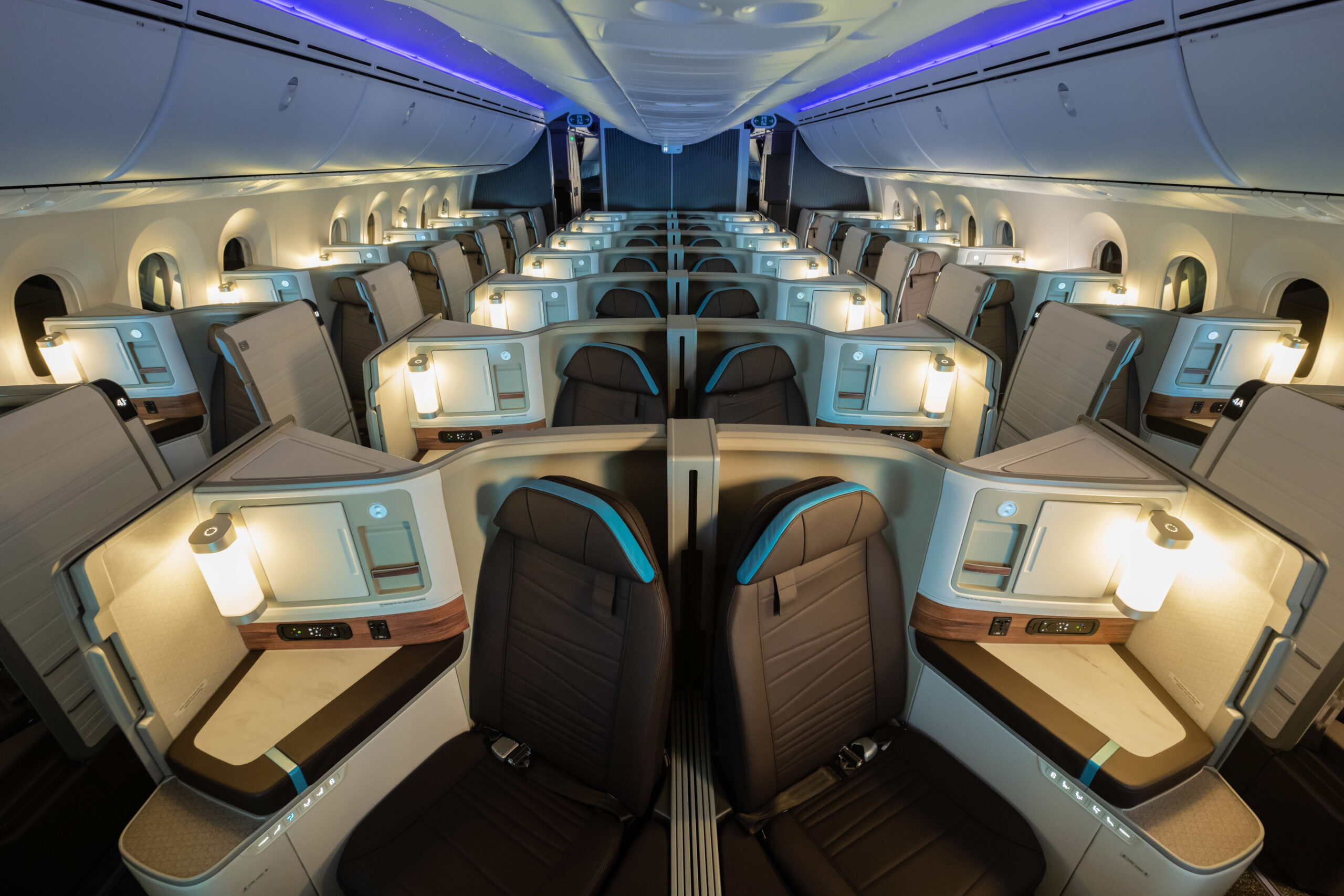
    Hawaiian Airlines cabin interior with rows of seats

    Alaska deserves more credit than it gets in plus-size travel threads. Its policy page is one of the clearest in the industry: extenders are free onboard, only carrier-provided ones may be used, they’re banned in exit rows, and – the headline – if you buy a second seat and every flight in your itinerary departs with at least one open seat, you get that second seat refunded. Alaska and Southwest are the only two majors offering a refund route. The trade-off is the hardware: Alaska’s mainline cabins are among the narrowest on this list, even though the belts themselves are reportedly generous.

    Hawaiian is the airline flyers consistently report as having the longest standard belts in the US sky – which makes a kind of sense for a carrier whose whole business is long flights where comfort complaints get loud. Its official guidance asks guests who need more room to pre-book an extra seat by phone, with each seat charged at the lowest available fare, and it does not offer a refund provision. One honesty note: reports on the length of Hawaiian’s onboard extender conflict with each other, so I’m not printing a number. And with Alaska and Hawaiian now under one corporate roof, I found no evidence the policies have merged as of this writing – treat them as separate airlines with separate rules until their pages say otherwise.

    JetBlue: The Width Play

    JetBlue Airways cabin showing wide economy seats

    JetBlue doesn’t publish a customer-of-size policy page the way Southwest and Alaska do, and the compiled reporting says the deal is simple: buy the second seat at booking if you need it, and don’t expect a refund. What JetBlue offers instead is hardware. Its cabins run the widest average economy seats in the country, its belts are reported at the generous end, and its Even More Space rows sell extra legroom if the seat itself isn’t your constraint. For a lot of plus-size flyers – me included, on the right aircraft – JetBlue is the flight where you don’t think about the belt at all, and that’s worth real money. If the fare difference is small, I book it on width alone.

    The Budget Carriers: Frontier and Allegiant, Eyes Open

    Frontier Airlines slimline cabin seats

    Frontier’s official policy is armrest-based and blunt: the lowered armrest defines the space you’ve purchased, and if you can’t fully lower both, they ask you to book two seats before travel through their support chat. Extra seats follow standard refund rules – no special customer-of-size refund. The belts are vendor-reported at the short end, the seats are slimline, and the fares are cheap for a reason. Frontier also sells an option that guarantees an empty middle seat next to you, which is a genuinely useful product for this exact situation, priced below buying a whole second fare on many routes.

    Allegiant is the one that surprises people. Its reported belt lengths are the shortest and most variable on this list – the range is wide enough that I’d tell any plus-size friend to simply assume the extender and ask early. The policy itself is more reasonable than the hardware: officially, needing an extender alone does NOT trigger a second-seat requirement. The armrest is the test. If it lowers, you fly in one seat, extender and all. Extenders are banned in exit rows, as everywhere. On these tightly packed leisure routes I also wear wide-calf compression socks, because a narrow seat you can’t shift around in for three hours is a circulation problem wearing a fare-sale costume.

    Extra Seats and Refunds: The Policy Table

    Policies are where the airlines actually publish things, so this table is mostly official language condensed. This is the part to check before you book, not at the gate.

    Airline Second-seat rule Refund after travel? Key conditions
    American Book the extra seat in advance via Reservations; adjacent seat guaranteed at the same fare No refund provision Day-of, agents look for two adjacent seats; rebooking at original price if the flight can’t accommodate
    Delta “Encouraged” in advance if you’ll encroach or armrests can’t go down No refund provision May reassign seats or rebook you on full flights; Basic Economy can’t be used for the extra seat
    United Required if you can’t buckle with one extender, armrests down, no encroachment No Same fare if bought at booking, day-of fare otherwise; boarding denied if you decline when required
    Southwest Pre-purchase encouraged; gate agents may arrange a free second seat when two adjoining seats are open (restored May 2026) Yes Request within 90 days of travel; flight departed with at least one open seat; both seats in the same fare class
    Alaska Buy a second seat if you can’t fit with both armrests down Yes Every flight in the itinerary departed with at least one open seat
    JetBlue Buy at booking (reported; no branded policy page) No (reported) Even More Space rows sold as the extra-room alternative
    Hawaiian Pre-booking by phone strongly recommended No refund provision If no alternative seating exists on a full flight, you may not be transported on it
    Frontier Book two seats before travel if both armrests can’t fully lower Standard refund rules only The lowered armrest officially defines each seat’s space; empty-middle-seat product sold separately
    Allegiant Second seat required only if the armrest can’t lower – the extender alone doesn’t trigger it No refund provision No extenders in exit rows

    How to Ask for an Extender Without Making It a Moment

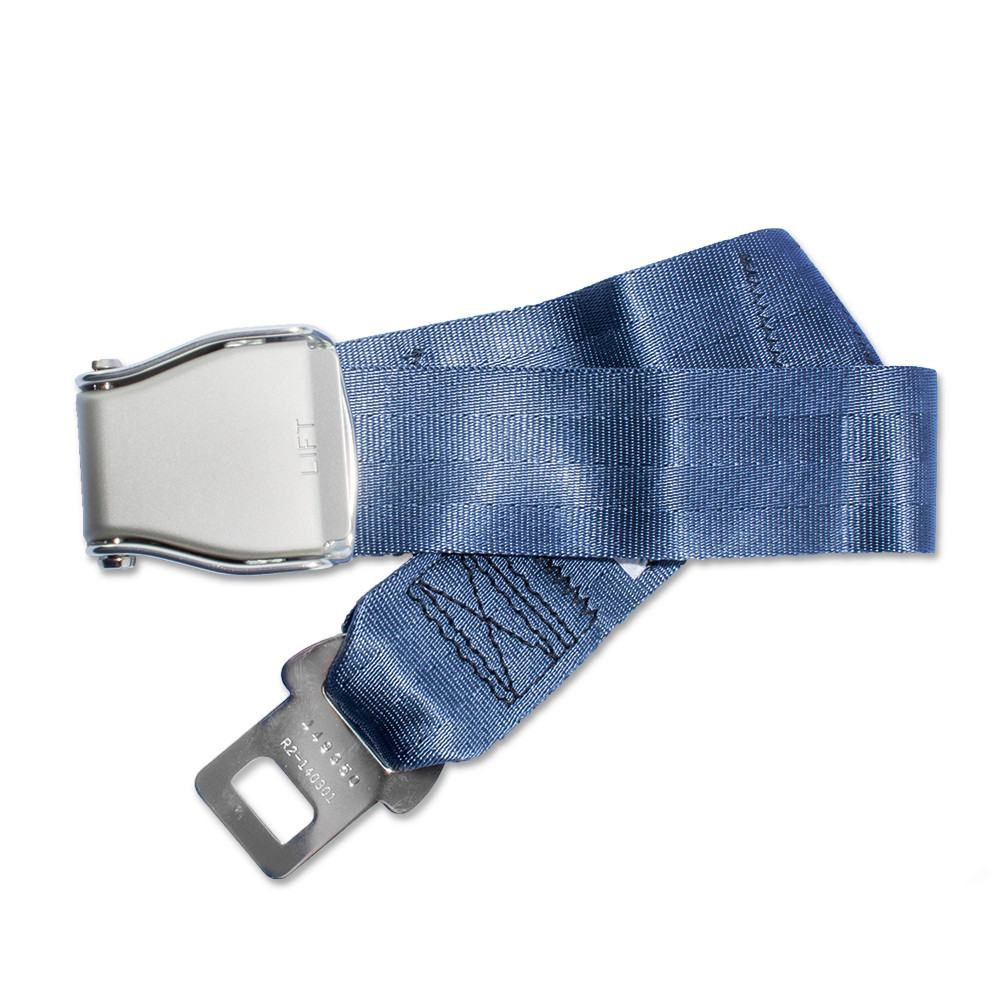
    Airplane seatbelt extender held next to a standard seatbelt buckle

    The ask is smaller than the dread. I promise. Here’s what actually works, from a lot of repetition: board, catch the eye of the flight attendant at the door or in the front galley, and say quietly, “Can I get a seatbelt extender at my seat? I’m in the window, row whatever.” That’s it. They hear this request every single day, multiple times a day, and the good ones – most of them – will bring it to you low and folded, without commentary, often before the aisle fills. Asking at the boarding door beats pressing the call button after everyone’s seated, purely because it’s more private, not because either is wrong.

    If even that feels like too much on a bad day, ask the gate agent before boarding and they’ll flag it to the crew. Some flyers hand the extender back before landing; you don’t have to – crews collect them after everyone deplanes. And if a flight attendant ever makes the ask feel heavy, that’s a them problem with an airline feedback form attached, not a you problem. You asked for standard safety equipment that exists because the airline’s own belt has limits. Full stop.

    Can You Just Bring Your Own? The FAA Answer, Honestly

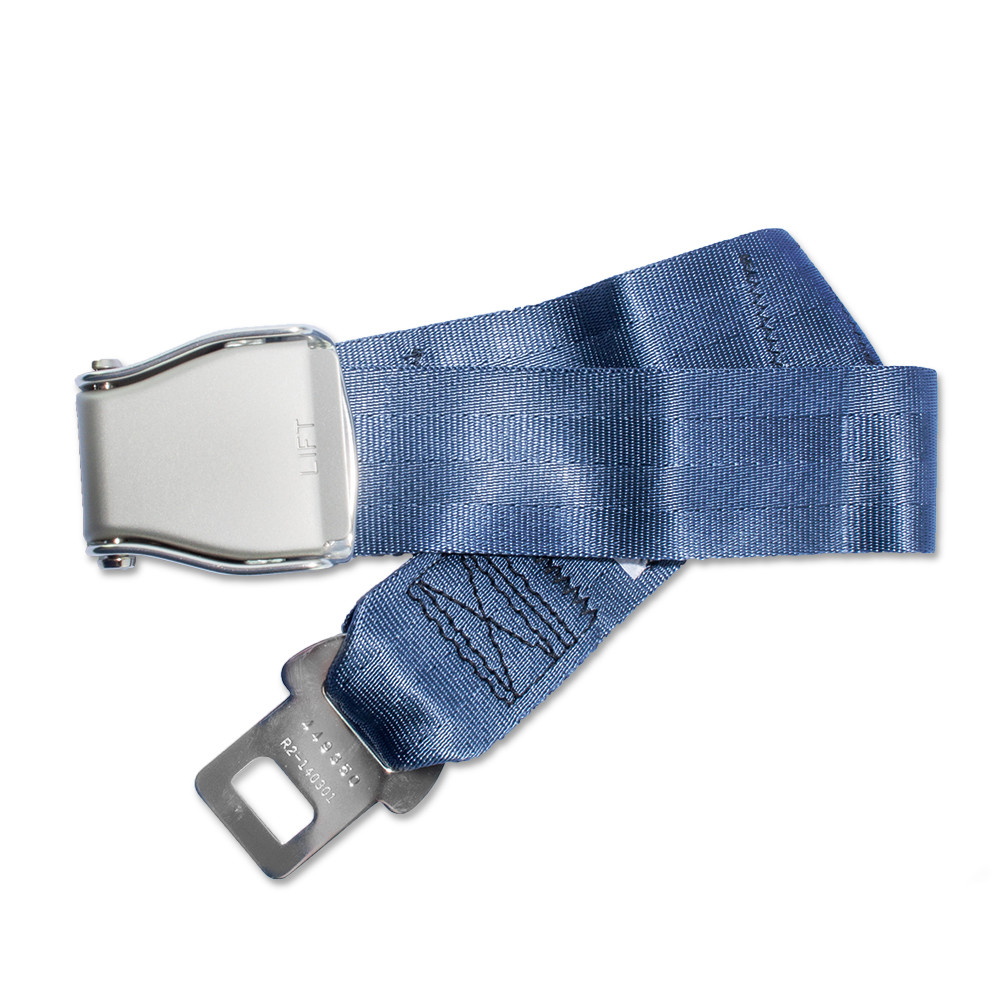
    Here’s where I’m going to be straighter with you than the Amazon listings are. The FAA put out guidance to airlines – InFO 12012, back in 2012 – saying passenger-provided seatbelt extenders “should not be permitted for use,” even when the label claims FAA approval or cites the right technical standard. The reasoning isn’t that your extender is junk; it’s that airline belts and extenders are inspected and maintained under each carrier’s FAA-accepted maintenance program, and yours isn’t. American says outright that only its own extenders can be used, Alaska’s policy page says the same, and consistent reporting says every major US carrier takes the same position. Even the extender vendors’ own education pages now admit the FAA doesn’t approve extenders for passengers to bring aboard. A flight attendant can require you to swap yours for the airline’s at any point, including right before takeoff, and that’s the exact scene you were trying to avoid.

    So why does a personal airplane seatbelt extender still make sense for some flyers? Peace of mind with a plan B attached. Some people buckle their own the moment they sit, quietly, and never hear a word about it – that happens constantly, and I won’t pretend otherwise. But you carry it knowing the rule is against you, and the honest play is to treat it as a backup while you request the airline’s version, not a replacement for asking. One label warning while you shop: the “E4 certified” badge plastered on most listings is an automotive-restraint mark, not an FAA aviation sign-off, no matter how official the seller makes it sound.

    Compatibility is the other trap. Most US carriers use the common buckle style that a standard Type A extender fits. Southwest is the famous exception – much of its fleet historically used a different buckle entirely, which is why vendors sell a separate Southwest-specific Type B extender – and per those same vendor compatibility charts, Southwest’s newer aircraft have shifted to standard buckles, so even the Type B isn’t a sure thing across their fleet anymore. All of that is vendor-compiled, none of it airline-published, and all of it is one more argument for the free extender that’s already on the plane and guaranteed to fit it.

    The Seat Itself: Width Is the Other Half of the Fight

    The belt gets the dread, but the seat walls are what you feel for the whole flight. If your hips are the pressure point more than your lap, the width column of the master table matters more than the belt column, and the pattern is simple: Delta’s and JetBlue’s Airbus cabins run widest, and the all-Boeing fleets at Southwest and Alaska run narrowest, with the budget carriers close behind. When two fares are close, I pick the aircraft, not the airline – the same carrier can fly you in its widest seat one leg and its narrowest the next, and seat-map sites will tell you which plane is on your route before you pay.

    Two comfort notes from the road. Armrests that lower fully are your legal definition of fitting on several carriers, so claim the armrest calculus early and confidently. And a firm slim travel seat cushion can save your tailbone on a long haul in a hard slimline seat – just know it adds height, not width, so it helps the sit, not the squeeze. I don’t bring one on anything under three hours; I don’t board a transcon without it.

    Your Week-Before-the-Flight Checklist

    Back to you at the imaginary gate, a week out. Here’s what I’d do between now and boarding, in order. Measure seated, across the lap, once – then stop measuring, because re-measuring nightly is dread exercise, not data collection. Check the master table against your airline and assume the short end of the reported range. If you’re near the line on United, Southwest, Frontier, or Allegiant, decide now that you’ll ask at the boarding door, and rehearse the one sentence until it’s boring. If you need the second seat, buy it on the same reservation this week – same-fare pricing rewards booking it together on the carriers that guarantee it – and if you’re on Southwest or Alaska, calendar the refund request for the day you land, since the money comes back only if you ask.

    And book the hardware when you can. Delta’s or JetBlue’s widest Airbus cabins when the fare is close, JetBlue when width is the whole question, Southwest or Alaska when the refund policy is doing the math for you. The belt question has an answer, it took a table to give it to you, and now you have the table. Fly.

  • Wedding Guest Dresses That Actually Come in a Size 26 and Up: Real Options by Dress Code

    Wedding Guest Dresses That Actually Come in a Size 26 and Up: Real Options by Dress Code

    I’ve read every major magazine’s version of the best plus size wedding guest dresses list, and I can tell you the exact paragraph where each one gives up. It’s never the writing. It’s the size run. The headline says plus, the model is beautiful, and then you tap through to the retailer and the selector stops at 3X, which most American brands cut as a 24. As if invitations stop arriving above that. As if nobody’s sister gets married, nobody’s college roommate throws a black tie reception, nobody above a certain measurement ever needs to stand in a garden holding a champagne flute looking better than the groom’s ex.

    The Knot’s roundup is the tidiest example of the pattern, so let’s name it. Of the picks with a published size range, more than half stop at a 24 or below, and several of the dresses on a plus size list are straight-size lines wearing a plus headline. PureWow plays the same game and at least has the decency to admit its Reformation picks cap at 3X. I used to sit in the meetings where these lists get assembled, and I can tell you exactly how it happens: the affiliate feed spits out whatever the mainstream retailers stock, nobody checks the selector, and the reader the list claimed to serve finds out at checkout. That’s not a service. That’s a slideshow.

    So this is the list those lists refuse to be. Every dress below was verified on the actual product page, at the size selector level, at the time I researched this. If a dress stopped where the magazines stop, it got cut, no matter how good the pleating was. I’ll also be straight with you about my own body, because that’s the house style here: I’m a 16 on top and an 18 on the bottom, so I haven’t worn these sizes. What I did instead is the thing the magazines won’t: I pulled the variant data, read the size charts against the brands’ own measurement tables, and threw out everything that flunked. One warning before we shop: extended sizes sell from the top of the chart down. If you see your size, move.

    First, the Decoder Ring: What Each Brand’s Ceiling Actually Means

    First, the Decoder Ring: What Each Brand's Ceiling Actually Means
    Torrid special occasion gown in extended plus sizes

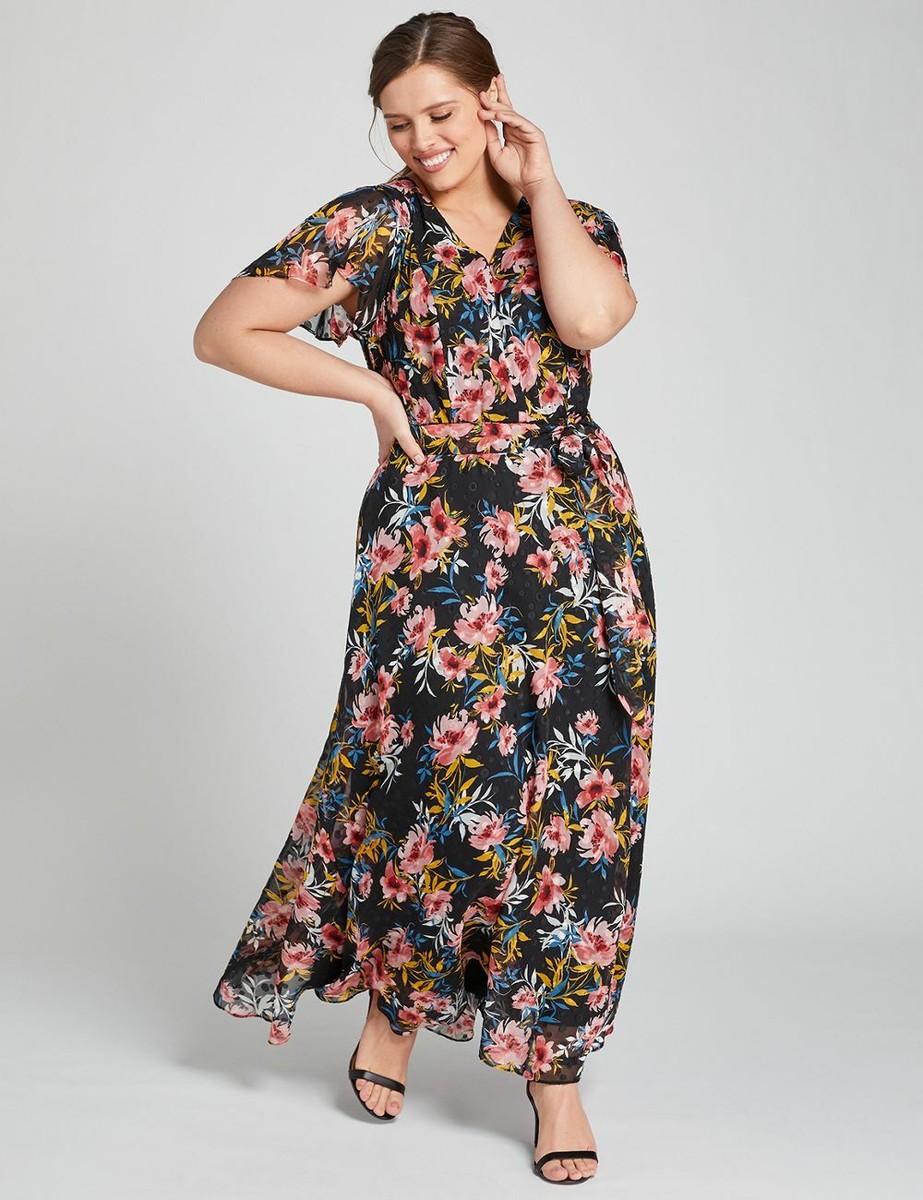
    Extended sizing is a mess of letter systems that don’t agree with each other, and half the frustration in those Reddit threads is women comparing a 4X from one brand to a 4X from another as if they’re the same garment. They’re not. Here’s the translation table for every brand that made this list, plus the one that famously didn’t.

    Brand Their sizing language Verified ceiling (US numeric) Notes
    Kiyonna 0X through 5X 30/32 (5X) Essentially the whole dress line, not select styles
    Torrid Sizes 00 to 6 (also shown as 10 to 30) 30 (size 6) Special occasion line consistently cut to 30
    Lane Bryant Numeric 12-28 plus doubled 10/12 to 38/40 38/40 on knits Woven occasion pieces mostly stop at 26/28
    Ulla Popken US US numeric, all sizes same price 32/34 in occasionwear Brand goes higher in basics than in gowns
    Eloquii Numeric 14-28 28 core, 32 on select styles Check each selector; the 30/32 extension is item by item
    Yours Clothing US US numeric (their US size = UK size minus 4) 28-32 practical in occasionwear Some sub-lines quietly stop at 20; verify per dress
    Ever-Pretty US numeric 26 in practice Banner says 16-30; sampled wedding styles all capped at 26
    POSESHE (Amazon) Letter plus sizes to 6X Roughly a 30 (6X) Deepest Amazon range found
    City Chic XS to XXL 24 (XXL). Excluded. Reputation says inclusive; the chart says 12-24, full stop

    Yes, City Chic is out. I know the brand reads as a plus destination, and its dresses are genuinely pretty, but the size chart is the size chart: XXL converts to a flat 24W. A brand whose entire identity is curves drawing its line exactly where this article begins is the whole problem in miniature, and I’m not padding a list with a dress you can’t zip.

    Black Tie: Floor Length, Lined, and Cut Past a 30

    Black Tie: Floor Length, Lined, and Cut Past a 30
    Ulla Popken floor length evening gown in plus size

    Formal is where the drought gets worst, because gowns are expensive to grade up and most brands don’t bother. Three houses did bother. Start with Ulla Popken’s Draped Silhouette Evening Gown, $179.95 in a mossy green or a proper red. The body is a poly blend with elastane so it moves like jersey rather than fighting you like taffeta, it’s fully lined, and the draped sash with jeweled clasps at the shoulder and waist does the work a stylist would charge you for. Short bell sleeves mean no shrug required. Ulla Popken’s occasion category filters run to a US 32/34, the deepest formal bench on this list, and every size costs the same, which should be unremarkable and somehow isn’t.

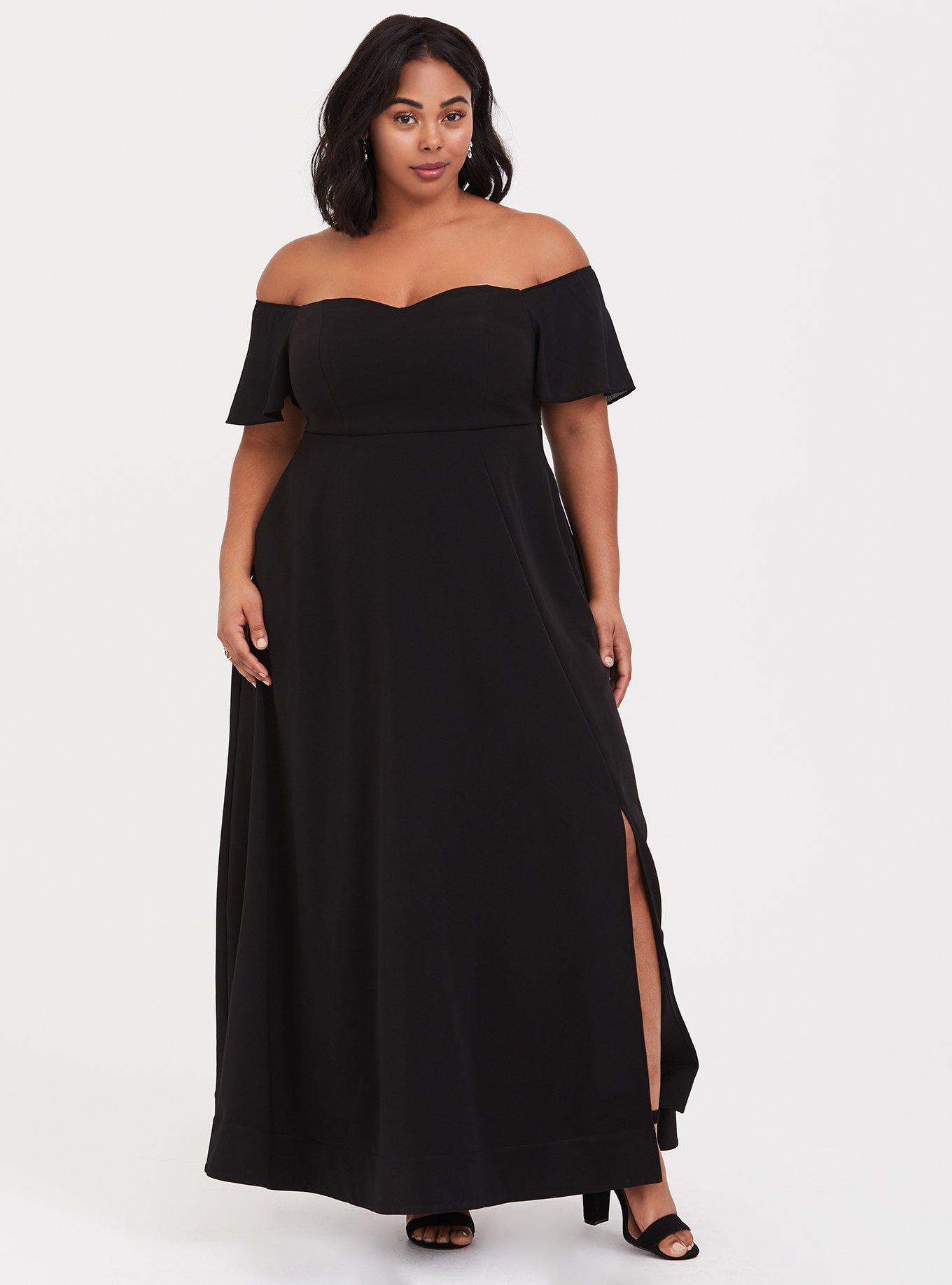
    If you want drama with a slit, Torrid’s Special Occasion line is cut from 10 to 30 across the board, and the Black Satin Off Shoulder Gown is the one I’d wear to an evening ceremony: off-the-shoulder sweetheart neckline, chiffon flutter at the arm, front slit, floor length. Satin is unforgiving of clingy underlayers, so plan your smoothing situation before the day, not in the hotel bathroom. One honesty note: Torrid’s site fought my verification tools, so the size run comes from their own listings rather than a live selector. Confirm your size is in stock before you commit shoes to it.

    The splurge is Kiyonna’s Luminous Sequin Lace Long Gown, $248, and here’s why it earns the price: Kiyonna cuts virtually its entire dress line to the top of its chart, which means the gown was patterned for a 30/32 body from the first sketch instead of stretched up from a sample size. Their sequin lace sits on a stretch base, so the gown pulls on and moves at a seated dinner. That’s the difference between a brand that grades up and a brand that designs for you.

    And because black tie shouldn’t require a payment plan, IN’VOLAND’s sequin V-neck dress on Amazon runs to a 26 in plus sizing at $29.99, and it’s fully lined, which at this price is nearly unheard of. Medium stretch, long sleeves, hits above the knee, so it reads black tie optional rather than gala. Reviewers call the fit true to size. For a winter evening reception where you want shine without babysitting a hem, this is the cheapest correct answer in the article.

    Cocktail: The Deepest Bench, If You Know Where the Selectors Go

    Cocktail: The Deepest Bench, If You Know Where the Selectors Go
    Kiyonna sequin lace cocktail dress in plus size

    Cocktail is where I’d send almost everyone, and it’s where the best-designed dress on this list lives. Kiyonna’s Mademoiselle Lace Cocktail Dress, $168, is their bestseller for a reason. The lace is a nylon-spandex stretch knit over a stretch lining, so the whole dress pulls on with no zipper to wrestle behind your back, and the scalloped edges finish the three-quarter sleeves and hem so it looks tailored, not stretchy. It comes in six colors, and I verified the selector myself: every size on the brand’s chart, all the way to the 5X top, sitting there like it’s normal. It should be normal.

    Eloquii is the interesting one, because its reputation says the line stops short of this article’s upper range, and that’s mostly true. Mostly. The Flutter-Sleeve Tulle Midi showed a live selector running all the way to a 32 when I checked, at $199.95 list with promos that regularly knock it down hard. Nylon tulle, fully lined, sweetheart neckline, tiered skirt, back zipper. It photographs like something Law Roach would put on a client and then deny was attainable.

    The catch is that Eloquii’s extension past its core range is item by item, so treat every Eloquii selector as a fact-check, not a promise. Their One-Shoulder Chiffon Ruffled Dress is the woven counterpoint: polyester chiffon, lined, a single puff sleeve with an elastic cuff, calf-length, and a selector confirmed through the top of their core chart at a 28. One-shoulder plus a side zipper means fit is less forgiving than knit, so measure against their chart rather than guessing off your usual number.

    Two more, opposite ends of the money spectrum. Nemidor’s long-sleeve ruched wrap dress on Amazon runs to a 26W on the dropdown, and ruching is the most underrated construction detail in occasionwear: the gathered fabric is doing intentional texture, so it never reads as cling. Poly knit, above the knee, usually lands under $50 depending on the color and the day.

    Meanwhile Yours Clothing’s magenta lace crochet midi, $110, was verified on their US site in a 26, and the crochet lace has more body than the flat stretch lace you see everywhere, so it holds an A-line without crumpling in a car seat.

    The quiet overachiever is Lane Bryant’s Sleeveless V-Neck Cutout Maxi, which I caught on sale at $65.98. Rayon-spandex jersey, lined through the front bodice, adjustable straps, and a selector that runs all the way to a 38/40. When I checked, only the very top size had sold out, which proves my earlier point about the chart selling from the top down. This is the single highest ceiling in the entire article, and it’s at the mall brand everyone forgot to check.

    Garden and Daytime: Chiffon, Prints, and Nothing That Traps Heat

    Garden and Daytime: Chiffon, Prints, and Nothing That Traps Heat
    Lane Bryant floral maxi dress for a garden wedding

    Daytime weddings want movement and airflow, and this is where the wrap dress earns its keep. Kiyonna’s Vienna Maxi, $138, is the one their own site markets as a wedding guest dress, and for once the marketing is right. Stretch jersey, V-neck, empire waist with an A-line skirt and side slits, flutter at the sleeve, full maxi length. The page states the range plainly, all the way to a 32. Empire waists are the friendliest silhouette in the garden category because the fit happens above the belly entirely and the skirt just falls.

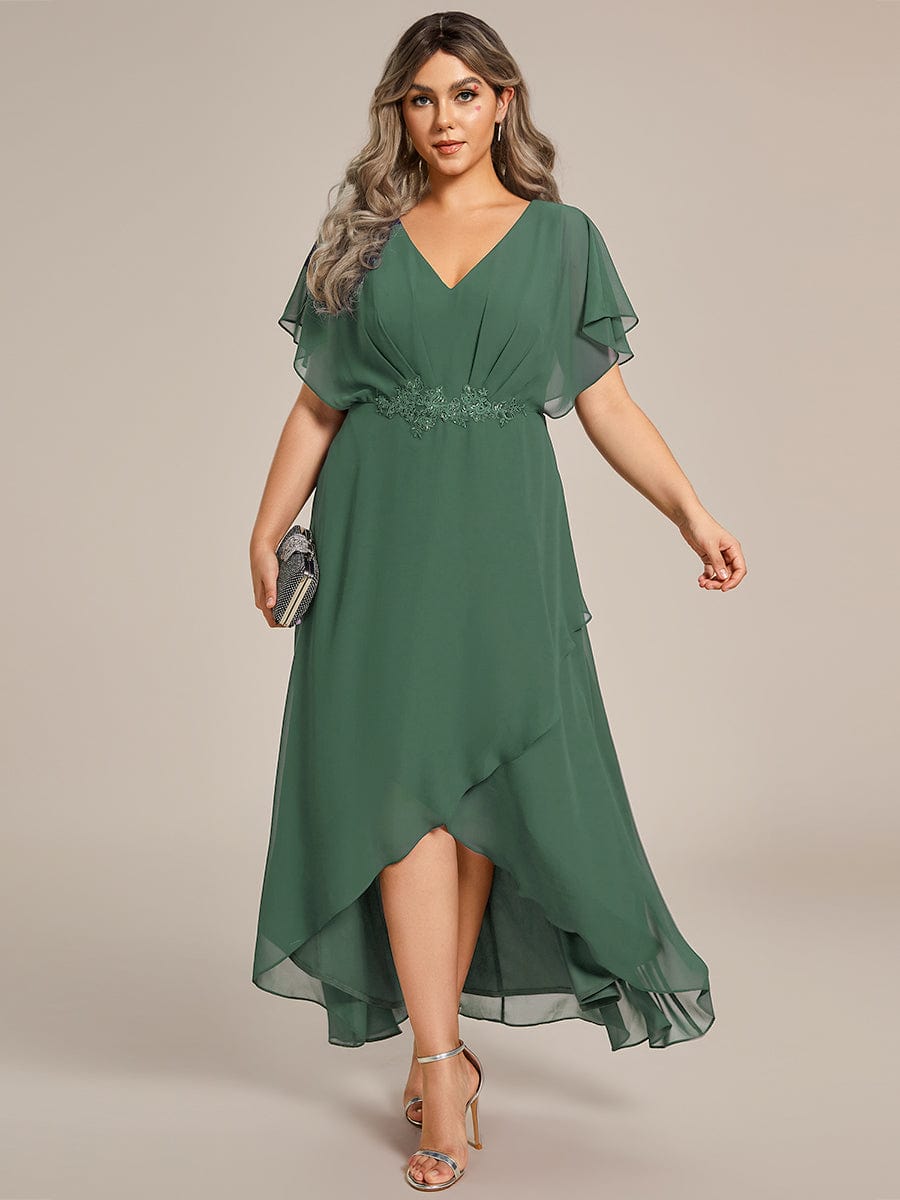
    If the invitation says garden party and you want chiffon that behaves, Ever-Pretty’s FAYE pleated chiffon midi is $78.99 with a pleated bodice, flutter sleeves, and a high-low hem that keeps grass off the back of the dress. Full disclosure on the brand, though, because this is where I got annoyed during research: Ever-Pretty’s banner advertises higher, but every wedding-guest style I pulled variant data on stopped at a 26. If that’s your exact size, they’re a genuinely good budget source. If you’re above it, the banner is writing checks the selectors don’t cash. Keep scrolling.

    Yours Clothing is the opposite story: a UK import whose US site quietly carries one of the deepest daytime benches anywhere, and both picks below were verified in a 26 on the live selectors. The green floral pleated maxi, $85, is exactly what a summer garden wedding wants on a body that runs hot: pleats give the skirt structure without lining layers.

    And the black polka dot wrap maxi was showing markdowns from its $95 list when I looked, in a poly-elastane stretch with a proper V-neck wrap front. One caution on this brand: a couple of their sequin sub-lines stopped at a US 20 despite the plus branding, so check the selector on anything I haven’t named by name.

    POSESHE’s empire-waist flowy midi is the daytime steal: $19.98 on Amazon, rayon-spandex knit, crew neck, long sleeves, pockets, and a size run that goes to 6X, the deepest I found anywhere on the platform. In the black or the darker florals it dresses up cleanly with metallic sandals and real earrings. It’s not trying to be a showpiece. It’s trying to be the dress you’re comfortable in from ceremony through cake, and at this price you can buy it in two colors and still spend less than one department store markdown.

    Beach and Destination: Pack It, Steam It Never

    Beach and Destination: Pack It, Steam It Never
    Ever-Pretty chiffon dress in plus size for a beach wedding

    Destination weddings punish structured dresses. Whatever you bring has to survive a suitcase, salt air, and a dance floor with sand on it, which means knits and crinkle-resistant chiffon only. POSESHE’s short-sleeve ruched wrap midi runs S through 5XL and Amazon literally titles it a wedding guest cocktail dress. Poly-spandex knit, V-neck, ruched through the body, midi length. It rolls into a packing cube and comes out wearable, which no woven dress on this list will do. It comes in a pile of colors; skip the white one, obviously, unless you’re the bride, in which case congratulations and buy two.

    For something with more sweep, Torrid’s chiffon high-low maxi has a surplice neckline and a gathered hem that stays out of the surf in front while keeping maxi drama in back. Same 10-to-30 cut as the rest of their occasion line, same caveat as their gown: verify your size in a browser, because their site wouldn’t let me read the selector directly. Surplice necklines are the beach move regardless of brand, by the way. They flatter without strapless hardware, and strapless plus humidity plus dancing is a physics experiment nobody should run at someone else’s wedding.

    Every Verified Dress, One Table

    Dress Dress code Price at research Verified size ceiling Construction notes
    Ulla Popken Draped Silhouette Evening Gown Black tie $179.95 Category to US 32/34 Poly-elastane, fully lined, bell sleeves, draped sash
    Torrid Black Satin Off Shoulder Gown Black tie Check listing Cut to 30 (size 6) Satin, off-shoulder, front slit, floor length
    Kiyonna Luminous Sequin Lace Long Gown Black tie $248 Line cut 0X-5X (30/32) Stretch sequin lace, pull-on
    IN’VOLAND Sequin V-Neck Dress Black tie optional $29.99 26 (plus sizing) Fully lined, medium stretch, long sleeve, above knee
    Kiyonna Mademoiselle Lace Cocktail Dress Cocktail $168 5X (30/32), selector verified Stretch lace + stretch lining, no zip, 3/4 sleeve
    Eloquii Flutter-Sleeve Tulle Midi Cocktail / formal $199.95 list, promos common 32, selector verified Nylon tulle, lined, back zip, sweetheart neck
    Eloquii One-Shoulder Chiffon Ruffled Dress Cocktail Not captured 28, selector verified Woven chiffon, lined, side zip, calf length
    Nemidor Ruched Wrap Dress Cocktail $25-50 typical 26W, dropdown verified Poly knit, long sleeve, ruched, above knee
    Yours London Lace Crochet Midi Cocktail $110 US 26 verified Structured crochet lace, A-line
    Lane Bryant V-Neck Cutout Maxi Cocktail / summer formal $65.98 sale 38/40, selector verified Rayon-spandex jersey, lined bodice, adjustable straps
    Kiyonna Vienna Maxi Garden / daytime $138 5X (12-32), stated on page Stretch jersey, empire waist, side slits, pull-on
    Ever-Pretty FAYE Pleated Chiffon Midi Garden / daytime $78.99 26 (variant data) Chiffon, lined, flutter sleeve, high-low hem
    Yours London Green Floral Pleated Maxi Garden / daytime $85 US 26 verified Pleated skirt, unlined airflow
    Yours London Polka Dot Wrap Maxi Garden / daytime $95 list, sale seen US 26-28, selector verified Poly-elastane stretch, wrap V-neck
    POSESHE Empire-Waist Flowy Midi Garden / daytime $19.98 6X, dropdown verified Rayon-spandex knit, pockets, long sleeve
    POSESHE Ruched Wrap Midi Beach / destination Check listing 5XL, dropdown verified Poly-spandex knit, packs without wrinkling
    Torrid Chiffon High-Low Maxi Beach / destination Check listing Cut to 30 (size 6) Surplice neck, gathered high-low hem

    The Ones That Flunked, Because You Deserve the Receipts

    Cutting brands is more useful than adding them, so here’s who failed the selector test and how. City Chic, as covered: a plus-branded house with a hard stop at a 24. Hanna Nikole sells a ruffled chiffon dress on Amazon that’s marketed by name as a wedding guest dress, and its dropdown ends at a 22 in plus sizing. That listing is the entire industry pattern in one product page: the words say you’re invited, the inventory says you’re not. Yours Clothing’s sequin sub-lines, as noted, stop well short of the rest of their own site. And Lane Bryant’s mesh occasion maxi, which would otherwise have made the formal section easily, had its largest size sold out in the colorway I checked, which is its own lesson: even when a brand cuts your size, it cuts fewer of them, and they go first.

    Notice what the failures have in common. None of them are honest failures of design; sequins and chiffon grade up the same way jersey does. They’re inventory decisions, made by people betting you won’t show up to buy. The brands in the table above took the other side of that bet, and the way this gets fixed is embarrassingly simple: the money goes where the sizes are.

    Where the Size Run Ends Is a Choice Someone Made

    Here’s what I want you to take from all of this, beyond the links. Every size chart is an editorial decision. When a magazine’s plus list stops at 3X, an editor chose the affiliate feed over the reader. When a curve brand stops its chart exactly where the need begins, a merchandiser chose a spreadsheet over a customer standing in front of a mirror with an invitation on the counter. And when Kiyonna patterns a gown to a 32 from the first sketch, or Lane Bryant grades a jersey maxi to the top of its chart and lets it sell out from the top down, those are choices too. Better ones.

    If you buy one dress from this article, make it the Mademoiselle in your size and the color that makes you feel like the best-dressed guest at the table, $168, pull-on, no zipper politics. If you buy two, add the POSESHE midi for twenty dollars and pockets. Everything above existed in a 26 or beyond on the day I checked, and the top sizes move first, so don’t sleep on it. The links are above.

  • Plus Size at Cedar Point: The Ride-by-Ride Fit Guide Nobody Wrote

    Plus Size at Cedar Point: The Ride-by-Ride Fit Guide Nobody Wrote

    There’s a metal chair bolted to a concrete pad outside the entrance of Steel Vengeance, and it might be the most emotionally loaded piece of furniture in Ohio. It’s a test seat: one exact replica of the ride’s seat, restraint and all, sitting in the open where the whole midway can watch you try it. For a lot of plus-size riders, that chair is the scariest thing in a park full of 200-foot drops. Not because of what it does. Because of what it might say, in public, with an audience holding funnel cakes.

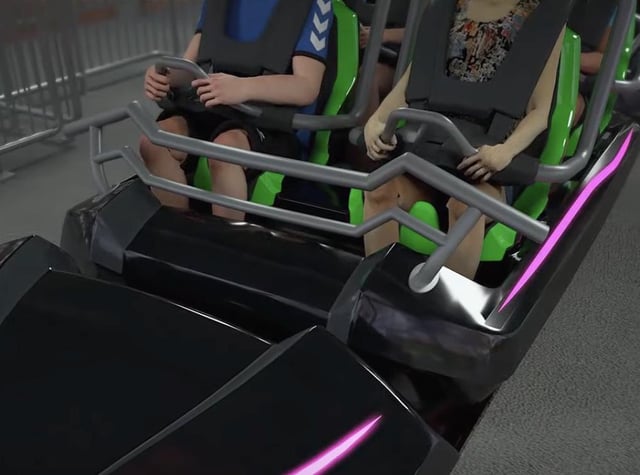
    I want to talk you out of that fear, because the test seat is not a judgment device. It’s the only honest piece of information Cedar Point will hand you all day. The park publishes no seat widths, no belt lengths, and no weight charts for its coasters. Its official line, straight from the accessibility page, is that “restrictions for guests of larger size (height or weight) are posted at certain rides,” and the ride pages for its newest coasters all carry the same sentence: due to the nature of the restraint, this ride may not accommodate guests of a larger size. That’s it. That’s the entire official spec. Everything else – which rides actually close, which rows have the longer belts, which restraint will pin your thighs – lives in forum threads, subreddit posts, and shaky phone videos, where plus-size riders have spent years quietly building the guide the park never wrote.

    So I did what I do for airline seatbelts: I compiled the record. PointBuzz threads that run four pages deep with people posting their exact stats and outcomes. CoasterBuzz’s crowdsourced map of the modified seats. The r/cedarpoint threads. The “Fat Guy Ride Testing” YouTube series that walks the park test seat by test seat. Where Cedar Point says something officially, I’ve marked it official. Where the source is a rider with a tape measure and a good memory, I’ve marked it rider-reported. Where the reports fight each other, I say so instead of picking a winner. I haven’t buckled into these trains myself; this is the community’s knowledge, organized so you can use it. One thing before the table: nobody, including the park, can promise you a yes or a no from a chart, because two people with identical stats carry weight differently and get different outcomes. What this guide can do is tell you where the fights happen, so nothing ambushes you on a platform.

    The Master Table: Every Coaster, One Honest Row

    The Master Table: Every Coaster, One Honest Row

    Verdicts come from the rider record, not from me and not from the park. “Try the test seat” is not a hedge; it’s the strategy the community itself converged on after years of platform heartbreak.

    Ride Test seat? Known tight points Rider-reported verdict
    Steel Vengeance Yes (rider-confirmed) Lap bar over thighs; belt catches if pulled fast; tightest restraint in the park by consensus Thigh-heavy bodies struggle most; some who fit report the test seat reading red anyway. Reports conflict at the same stats. Test seat, always.
    Millennium Force Yes (official) Short seatbelt across upper thighs and hips The classic heartbreaker. Belt fit depends on thighs, not waist. Riders reported newly shortened belts in spring 2026; treat all older “I fit” reports as suspect until that settles.
    Maverick Yes (official) Vest-style restraint; buckle can be blocked by a very large midsection; some report thigh stapling Repeatedly named the most plus-size-friendly big coaster. Riders denied everywhere else often ride Maverick.
    Top Thrill 2 Yes (official) Lap bar must firmly contact pelvis and thighs (official language) New trains since the Dragster era, so old TTD lore no longer applies. Thin record so far. Test seat.
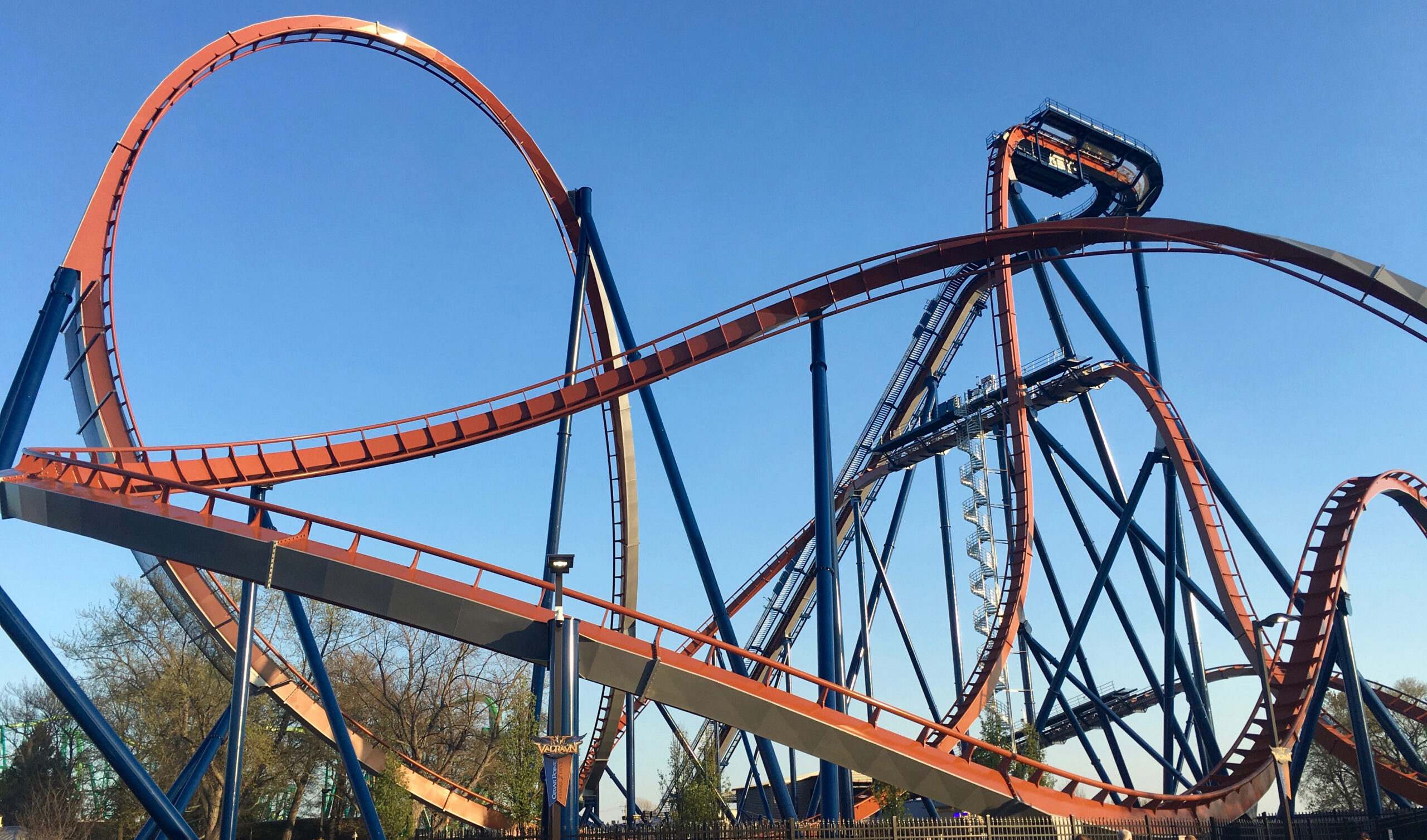
    Valravn Ask at entrance Shoulder harness plus belt; chest and shoulders Modified seats with red belts reported in every row. Riders report getting “stapled” but riding. One of the friendlier inverting coasters.
    GateKeeper Yes (rider-confirmed) Shallow seat; thighs, chest, shoulders; regular-row belts run short Go straight to row 4, the marked larger seats with red belts. Regular rows described as “1-for-5” odds by one regular. The largest riders report row 4 can still say no.
    Raptor Yes (official) Shoulder harness; chest and shoulder width Larger seats with double belts reported in row 4. Chest-heavy riders get booted here more than anywhere except MF. Ride op effort genuinely matters.
    Rougarou Ask at entrance Bucket seat pinches hips and thighs; shoulder bar itself is roomy Hips are the whole question. Double-belt larger seats reported in row 4.
    Magnum XL-200 Ask at entrance Short seatbelt; fixed low lap bar cramps long legs Most fit; the belt is the only gate. Tall riders with long legs call it painful, not tight.
    Gemini Ask at entrance Belt only; bench seats Consistently reported friendly. A reliable yes for most.
    Iron Dragon Ask at entrance Pull-down chest restraint, generous fit The most comfortable seat in the park, per multiple riders. Start your day here if nerves are loud.
    Blue Streak Ask at entrance Divided seats; short belt that snags while buckling; dividers sit off-center on some rows The sleeper rejection. Riders who fit steel giants report failing this wooden classic on hips alone.
    Corkscrew Ask at entrance Over-shoulder harness; chest and belly Snug but doable for many; the very largest riders report the harness will not lock.
    Cedar Creek Mine Ride Ask at entrance One shared lap bar per bench; short belt; no room for wide thighs beside the bar The park’s most deceptive no. It’s a family coaster that rejects more plus-size riders than half the giants. Cross your ankles and angle your knees if you try.
    Wild Mouse Ask at entrance Individual over-thigh lap bar Seats molded wider than older spinners by design; some larger builds still report a tight thigh bar. Mostly a yes.
    Siren’s Curse Yes (official) Vest harness with between-the-legs belt; chest contact required Too new for a deep record. Official pages carry the larger-guest warning and a test seat sits at the entrance. Report back.

    How to Read That Table Without Spiraling

    First, notice what actually gates each ride. It’s almost never weight as a number. It’s geometry: where the belt crosses you, where the bar lands, whether your hips let you slide fully back in a bucket seat. The community record is full of pairs of people with near-identical stats and opposite outcomes, including two men of the same weight where one rode Steel Vengeance comfortably and the other was turned away at the test seat. Nobody on a forum can tell you your answer, and neither can I. What the record can tell you is which body part each ride interrogates, and that’s genuinely useful: if you carry weight in your thighs, your hard rides are the lap-bar giants; if you carry it in your chest and shoulders, your hard rides are the harness coasters; if it’s your hips, watch the divided and bucket seats.

    Second, understand what the test seat is and isn’t. Riders have long sworn the test-seat belts run slightly shorter than the belts on the actual trains, and more than one has quoted a Cedar Point height checker saying that if the metal touches, you’ll likely be fine onboard. That would make the test seat a worst-case scenario, which is exactly what you want it to be. But in spring 2026, Millennium Force riders started reporting the reverse: passing the test seat, waiting through the line, and being denied on the platform. Both patterns are rider-reported, and they can’t both describe a well-calibrated system, which tells you the calibration is not something to bet an hour of queueing on. Use the test seat as strong evidence, not a contract.

    Steel Vengeance and Millennium Force: The Two That Decide Your Day

    Steel Vengeance and Millennium Force: The Two That Decide Your Day
    Steel Vengeance roller coaster at Cedar Point

    These are the rides people lose sleep over before a trip, so let’s be precise about both.

    Steel Vengeance runs a lap bar with a shin restraint and a seatbelt, and the consensus across every thread is the same: it is the tightest restraint at the Point, and it interrogates your thighs. The station has a screen showing a green or red light for every seat, and the veterans’ choreography is well documented: slide your butt all the way back, buckle before you bring the bar down, get as much of your midsection above the bar as you can, and bring it down with momentum rather than a slow press. The belt likes to catch if you yank it. Riders describe punching the bar down the last inch for the green light, and ride ops will give a firm push if you ask. Here’s the honest part: at the same height and weight, one rider reports “no trouble whatsoever” and another reports being turned away at the test seat. Distribution decides, not the scale. If your weight lives in your gut and chest, your odds are decent. If it lives in your thighs, take the test seat verdict seriously.

    Millennium Force is a different machine with a simpler gate: a plain lap bar and a famously short seatbelt that crosses your upper thighs, not your waist. For two decades the community advice was consistent – it’s a thigh ride, thin fabric helps, and a women’s size 20 rider described the belt as “just barely” closing. Then came the 2026 season. Riders who had fit for years began posting that they were suddenly turned away, with one reporting a ride attendant confirmed the belts had been shortened, and aggregated complaints included people with waists in the mid-thirties struggling to buckle. Cedar Point hadn’t publicly explained the change when those reports circulated. I can’t tell you where that lands by the time you visit. I can tell you the only rational play: treat every earlier MF fit report, including your own past rides, as unreliable, use the test seat the morning you’re there, and don’t let this one ride carry your whole trip’s emotional weight. It has broken enough hearts on that platform already.

    The B&M Secret: Marked Seats With Longer Belts

    The B&M Secret: Marked Seats With Longer Belts
    Raptor inverted roller coaster at Cedar Point

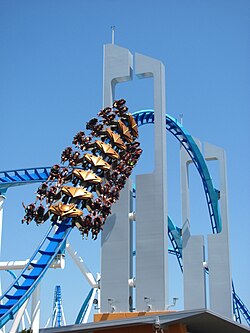
    Here’s the single most useful thing buried in the forums, the thing that should be on a sign at the front gate: the park’s four big inverting coasters from manufacturer B&M all have modified seats with longer belts, and the community has mapped them. Enthusiasts report double belts on row 4 of both Raptor and Rougarou, red belts on the same row of GateKeeper, and red-belt seats on Valravn spread across its rows. Riders say the accommodating rows are labeled on the station floor, and ride ops will point you to them if you ask. That one paragraph converts four intimidating coasters into four realistic ones.

    The nuance per ride: Valravn draws the warmest reports of the group, including from riders denied elsewhere who described being clamped in snugly but riding happily, twice. GateKeeper is the wild card; its regular seats sit shallow and its belts run short, and even the marked row has said no to riders at the biggest end of the record, so treat row 4 as a good chance rather than a promise. Raptor is where chest and shoulder width matters most, and the record is full of riders who fit one year and not the next, with outcomes that visibly depended on how hard the ride op was willing to work. Rougarou’s shoulder bar is roomy; its bucket seat is not, and wide hips are the sticking point. On all four, the ask is identical and painless: walk up, say “which row has the larger seats,” and let the crew seat you. They do this all day. You will not be the first, or the tenth.

    The Quiet Yeses

    The Quiet Yeses
    GateKeeper winged roller coaster at Cedar Point

    Maverick deserves its reputation as the plus-size ride of the park. Across years of threads, it’s the coaster that people who fit nothing else ride with room to spare, including a size 22/24 rider whose entire successful day was Maverick on repeat. Its vest restraint fits most bodies; the exceptions in the record are riders with very large midsections, where the buckle simply can’t reach around, and occasional complaints of the bar pinning thighs uncomfortably. It also has an official test seat, so you can confirm in thirty seconds.

    The old Arrow steel lineup is your comfort zone. Iron Dragon gets called the most comfortable seat at Cedar Point so consistently that I’d make it your first ride of the day on purpose: an easy, guaranteed win that resets your nervous system before you negotiate with the giants. Gemini’s bench seats and simple belts accommodate nearly everyone in the record. Magnum XL-200 fits most bodies through the belt, with one caveat that has nothing to do with width: its fixed lap bar sits low and close, and tall riders with long legs describe real pain rather than tightness, including one visitor who rode once and refused a second lap. Wild Mouse, the newer spinning coaster, was built with deliberately wider molded seats, though a few larger riders still report the individual thigh bar landing snug.

    The Sleeper Rejections

    The Sleeper Rejections
    Valravn dive coaster at Cedar Point

    Now the ambushes, because these hurt more than a Steel Vengeance no. Nobody cries over the park’s most extreme coaster turning them away; everybody remembers being rejected by the kiddie-adjacent one while their family watched.

    Blue Streak, the gentle wooden classic from 1964, fails plus-size riders constantly. The seats have dividers, the belts run short, and buckling requires a contortion where the belt snags mid-motion. Riders who cleared Millennium Force have failed Blue Streak on hip width alone. One regular’s tip from the record: the dividers aren’t mounted evenly, and on some trains the second-to-last row has an off-center divider that leaves one side noticeably wider. Cedar Creek Mine Ride is worse, because it looks like nothing. It’s a family mine train, and it runs one shared lap bar across each bench, which means the bar comes down to the largest rider and wide thighs have nowhere to go beside it. The record calls it “awful on the belly,” “hideously tight,” and a flat no for riders who fit half the big coasters. Riders who made it describe crossing their ankles and angling their knees to steal an inch. Corkscrew sits in between: an old-school shoulder harness that many plus-size riders squash into successfully and the largest riders report won’t click.

    The pattern is age and restraint design, not thrill level. Newer coasters were engineered with test seats and marked accommodations; the classics were built for 1969 bodies. Plan accordingly, and don’t let a wooden coaster’s rejection tell you anything about the steel ones.

    The New Generation: Top Thrill 2 and Siren’s Curse

    Top Thrill 2 launch coaster at Cedar Point

    Both of the park’s newest headliners carry the official larger-guest warning and an official test seat at the entrance, which is the modern template: no published dimensions, but at least an honest preview chair. Top Thrill 2 matters here for what it isn’t – it is not Top Thrill Dragster. The trains were replaced entirely when the ride was rebuilt, and the official language now requires the lap bar in firm contact with your pelvis and thighs. Every piece of Dragster fit lore, positive or negative, describes hardware that no longer exists. Siren’s Curse, the tilt coaster, uses a vest harness with a between-the-legs belt, and its plus-size record is still thin. If you ride either one, post your stats and outcome somewhere public afterward. That’s not a platitude; that community record is literally the only documentation that exists, and this article is built from people who bothered.

    How to Work the Day: Fabric, Timing, and Ride Ops

    Magnum XL-200 roller coaster at Cedar Point

    The community’s tactical consensus is remarkably consistent, so here it is as a plan rather than a scatter of tips.

    Wear the thinnest, stretchiest bottoms you own. This is the single most repeated finding in the entire record: riders report clearing belts in thin athletic shorts that they couldn’t close in cargo shorts or jeans, because structured fabric holds bulk exactly where the belt needs it to move. Several riders go further and wear compression shorts a size down under thin shorts or leggings, which does double duty at Cedar Point specifically: the same layer that helps a belt close is the layer that stops your inner thighs from grinding through eight hours of walking the longest midways in the country. If you skip the compression layer, at least throw an anti-chafe stick in your bag, because the peninsula is humid and the queues are long. Empty your pockets before every test seat; keys and a phone add real bulk exactly where the bar lands.

    Do your test seats first thing in the morning. This is borrowed straight from a veteran of the plus-size threads: at opening, the midways are empty, and you can walk the park and sit in every test seat that matters to you with no audience at all. Fifteen quiet minutes converts the whole day from a series of public auditions into a checklist. You’ll know your yes rides, your maybe rides, and your skip rides before the crowds arrive, and you’ll spend the rest of the day riding instead of rehearsing. Morning also happens to be when your body is at its smallest; riders consistently report fits getting harder late in the day after meals and heat swelling, so put your borderline rides early. A portable neck fan earns its bag space in those afternoon queues, and cushioned walking shoes matter more at this park than almost any other, because it’s enormous and you will lap it.

    Finally, let the ride ops help. Read any of these threads and you’ll notice something tender underneath the logistics: rider after rider goes out of their way to thank a crew member by shift and seat number for genuinely trying, for the firm push on the bar, for the quiet “lift your arms” that made a harness click. Getting a push is not a scene; it’s a normal part of loading a train, and the crews that work these platforms do it dozens of times a day. If a seat says no, the record’s etiquette is worth adopting: no arguing, walk to the next ride, and remember it’s a hardware measurement, not a character reading. And know the geography of a no before it happens: on most coasters you exit the platform the normal way, nobody announces anything, and the moment is smaller in real life than it is in your head at 2 a.m.

    Cedar Point is the first regional park in this series, because the search records show thousands of people asking this exact question into a void every summer. CGJ will be building the same ride-by-ride record for other regional parks, mined from the same community sources.

    Sixteen Verdicts Beat One Fear

    Here’s your itinerary, in the Zoe tradition of endings you can execute. Arrive at opening. Walk the empty midway and run your test seats: Steel Vengeance, Millennium Force, Maverick, and whichever of the new pair you’re eyeing. Ride Iron Dragon first for the easy win, then spend your morning on your borderline rides while your body and the belts are on best terms. Ask every B&M crew for the marked rows: row 4 on Raptor, GateKeeper, and Rougarou, red belts on Valravn. Save Gemini and Magnum for the afternoon, skip Blue Streak and the Mine Ride unless the test sit says otherwise, and file a report in one of the threads on your way home, because the next terrified person planning this trip will find your post the way you found this article. The test seat was never the enemy. It’s the one chair in the park that works for you.

  • The Best High-Waisted Tummy Control Jeans for Plus-Size Bodies

    The Best High-Waisted Tummy Control Jeans for Plus-Size Bodies

    High-waisted jeans with tummy control occupy an odd space in most wardrobes. They are the pair people reach for on the days they want to feel put together without thinking about it, and also the pair most likely to be quietly abandoned after a month because something about them was wrong. Usually it is one of three things: the rise was not actually high, the fabric had no recovery and bagged out by lunchtime, or the waistband dug in and rolled the moment anyone sat down. All three are avoidable, and none of them are about your size.

    The category is also badly served by labels. Almost every brand now prints tummy control on a hangtag, and the phrase means anything from a genuinely engineered inner panel to a slightly thicker waistband and some optimism. Learning to tell those apart takes about two minutes once you know what to look at, and it saves a great deal of money. Here is what actually creates a smooth, comfortable high-waisted jean, followed by the picks worth your time.

    What real tummy control looks like in denim

    Three features do the work. The first is a true high rise, which for most plus-size bodies means somewhere around eleven inches or more from crotch seam to waistband, high enough to sit above the softest part of the stomach rather than across the middle of it. Rise is the feature brands most often exaggerate, and a jean marketed as high-waisted that lands below your navel will create a ledge no matter how good the fabric is.

    The second is a proper inner panel, meaning a separate layer of power mesh or firm knit sewn inside the front, not just a doubled-over waistband facing pretending to be one. Turn the jeans inside out in the shop and look, because this takes seconds and settles the question completely. If there is no distinct panel you can see and feel, there is no meaningful control regardless of what the label says. The third is fabric recovery, meaning the denim’s ability to snap back rather than stretch out. Look for a blend with a few percent elastane plus recovery fibres, and be wary of very soft, very stretchy denim that feels wonderful for an hour and then holds the shape of whoever last sat in it.

    A pair of dark high-waisted jeans folded to show the inner waistband construction
    Turn them inside out. A genuine tummy-control jean has a distinct inner panel, not just a doubled waistband facing

    Fit at the waist and hip matters as much as any panel, because a jean that gapes at the back waist while gripping the front will roll regardless of construction. If you are fighting a persistent waist gap or thigh-to-waist ratio problem, our guide on how to find jeans that fit a curvy, plus-size body works through the tailoring and sizing side of that in detail.

    Best overall: the straight-leg high rise

    A high-rise straight leg in a firm, recovery-heavy denim is the most useful version of this jean, and the one that suits the widest range of bodies. The straight cut balances a fitted waist and hip without the visual weight of a wide leg, and because the denim needs enough structure to hold a straight line, the fabric tends to be substantial enough to actually smooth rather than cling. That combination is why this shape ages better through a day than a skinny in soft stretch denim.

    A well-made high-rise straight-leg jean with a tummy-control panel also solves the sitting problem that ruins so many pairs. Structured denim with good recovery does not fold at the waistband when you bend, which is the single most common complaint about high-waisted jeans and almost always a fabric failure rather than a size one. If you are replacing a pair that dug in and rolled, this shape and this fabric weight is the change to make.

    Best for a smooth line under fitted tops

    If your main aim is a clean silhouette under a tucked or close-fitting top, a high-rise skinny or slim jean with a wide bonded waistband and a full front panel is what you want. The advantage over the straight leg is that there is no extra fabric anywhere to break the line, so what you get is genuinely smooth from ribcage to ankle with nothing interrupting it. The trade is real though: skinny fits in stretch denim are the most prone to bagging at the knee and seat, so fabric quality matters more here than in any other shape. A mediocre denim that would pass unnoticed in a bootcut will look tired in a skinny by mid afternoon.

    A plus-size woman wearing high-waisted jeans with a tucked-in top
    For a clean line under a tucked top, a wide bonded waistband matters more than how tight the jean is

    Look specifically for a waistband that is wide and bonded rather than a narrow elasticated one, because width is what distributes pressure and stops the fold-over. A high-rise skinny with a wide contoured waistband in a denim with real recovery gives the smoothest result of any shape here. Just be honest with yourself about how you will wear them, because this is the shape that punishes a fabric compromise hardest.

    Best comfortable everyday pair

    Not every day calls for firm control, and there is a strong argument that the jean you reach for most often should prioritise comfort with light smoothing rather than maximum hold. A high-rise bootcut or relaxed straight in a mid-weight denim with a soft inner panel gives you shape without the constant sensation of being held, which is precisely what makes a pair wearable for twelve hours instead of four. The distinction matters because firm control has a time limit for most people, and a jean you take off at six is not really an everyday jean however good it looks at nine.

    This is also the most forgiving category to buy in, because the fit tolerances are wider and a slightly generous pair still looks intentional rather than baggy. A high-rise bootcut with a soft tummy panel is the pair to reach for on long days, travel, and anything involving a lot of sitting. Keeping one firm pair and one comfortable pair covers almost every situation better than owning three near-identical pairs that all do the same job adequately.

    Several pairs of high-waisted jeans in different washes folded on a shelf
    One firm pair and one comfortable pair covers more situations than three near-identical ones

    Comparing the shapes

    Each of these earns its place for a different reason, and the mistake most people make is expecting a single pair to do all three jobs at once. That expectation is why so many wardrobes contain one pair of high-waisted jeans that is almost right for everything and genuinely right for nothing. Here is how the three shapes compare on the factors that actually determine whether a pair stays in rotation or migrates to the back of a drawer.

    Shape Smoothing All-day comfort Best for
    High-rise straight Good Good Everyday, widest range of bodies
    High-rise skinny Highest Moderate Tucked and fitted tops
    High-rise bootcut Light Highest Long days, travel, sitting

    Sizing them so they stay put

    Buy for your hip and thigh, then deal with the waist separately, because denim can be taken in at the waist far more easily than it can be let out anywhere else. Sizing down to increase the squeeze is the mistake that causes almost every problem people blame on the design: an overstretched waistband loses its recovery and rolls faster, the panel stops sitting flat, and the front pockets gape open. A pair that fits properly at the hip and needs a small waist adjustment will outperform a smaller pair every time.

    Then run the sit test before you commit, ideally in the fitting room and definitely before removing tags at home. Sit down fully, stay there for a minute, then stand and look. If the waistband has folded over, dug in hard enough to leave a deep mark, or slid down at the back, the fabric lacks recovery or the rise is wrong for your torso. Neither is fixable, and it is far better to learn that in a shop than three weeks later. A good pair looks essentially the same after sitting as it did before.

    Quick answers to the questions everyone asks

    Do tummy control jeans actually work? Yes, when the control comes from a genuine inner panel of power mesh or firm knit combined with a true high rise and denim with real recovery. A thicker waistband alone does very little. Turn a pair inside out and look for a distinct sewn-in panel before believing the hangtag.

    What rise counts as high-waisted for a plus-size body? Roughly eleven inches or more from the crotch seam to the top of the waistband, though the real test is whether it sits above the softest part of your stomach rather than across it. Many jeans marketed as high-waisted sit below the navel and create a ledge instead of smoothing.

    Why do my high-waisted jeans roll down at the waist? Usually a fabric with poor recovery, a waistband that is too narrow, or a pair bought a size too small. A wide bonded waistband in denim with recovery fibres solves it. Sizing down to hold tighter reliably makes the rolling worse rather than better.

    What size tummy control jeans should I buy? Buy for your hip and thigh measurements and adjust the waist afterwards, since a waist can be taken in and a hip cannot be let out. If you are between sizes, take the larger one. A correctly sized pair smooths more than a tight pair, which stretches out and stops working.

    Are skinny or straight-leg better for tummy control? Straight-leg suits more bodies and usually comes in a firmer denim that holds its shape all day. Skinny gives the smoothest line under a fitted or tucked top but relies more heavily on fabric quality, so a poor stretch denim shows its weaknesses fastest in that shape.

    Buying one pair you will actually keep

    Skip the hangtag and check three things in order. Is the rise genuinely high enough to sit above the softest part of your stomach? Is there a real inner panel when you turn them inside out? Does the denim have recovery fibres rather than just stretch? A pair that passes all three will still be smoothing in six months, and a pair that fails any of them will be in the charity bag by then regardless of what it cost. Buy for your hip, adjust the waist, run the sit test, and you end up with jeans that do quietly what they promised instead of becoming another pair you meant to love.

  • Bra Fitting for Large Breasts: How to Get It Right

    Bra Fitting for Large Breasts: How to Get It Right

    Getting fitted for a bra when you have a large bust is a different exercise from getting fitted when you do not, and most general fitting advice quietly assumes you do not. The standard guidance tends to collapse the moment your cup size runs past a D. Measuring methods that work fine for smaller busts produce nonsense numbers on larger ones, the shops with the widest size range are rarely the ones on the high street, and the single most useful piece of information, which is that your band should be doing almost all the lifting, is usually mentioned in passing if at all.

    So this is fitting written the other way round, starting from a large bust rather than adapting to one. What the measurements actually mean, why sister sizing matters more the bigger you get, how to read a fit in the mirror, and which shapes hold up when there is real weight to support. It is worth saying plainly at the start: if bras have never felt right, that is a fit problem and a sizing-system problem, not a body problem.

    Why standard fitting advice breaks down on a larger bust

    Two things go wrong. The first is the old habit of adding four or five inches to your underbust measurement to find a band size, a rule invented for the stiff fabrics of decades ago. Applied to a modern bra it produces a band several sizes too big, which then rides up your back and hands all the support to the straps. That is where the shoulder grooves, the neck ache and the constant hoisting come from. Measure your underbust snugly and use that number, or the size immediately up if you land between, rather than adding anything to it.
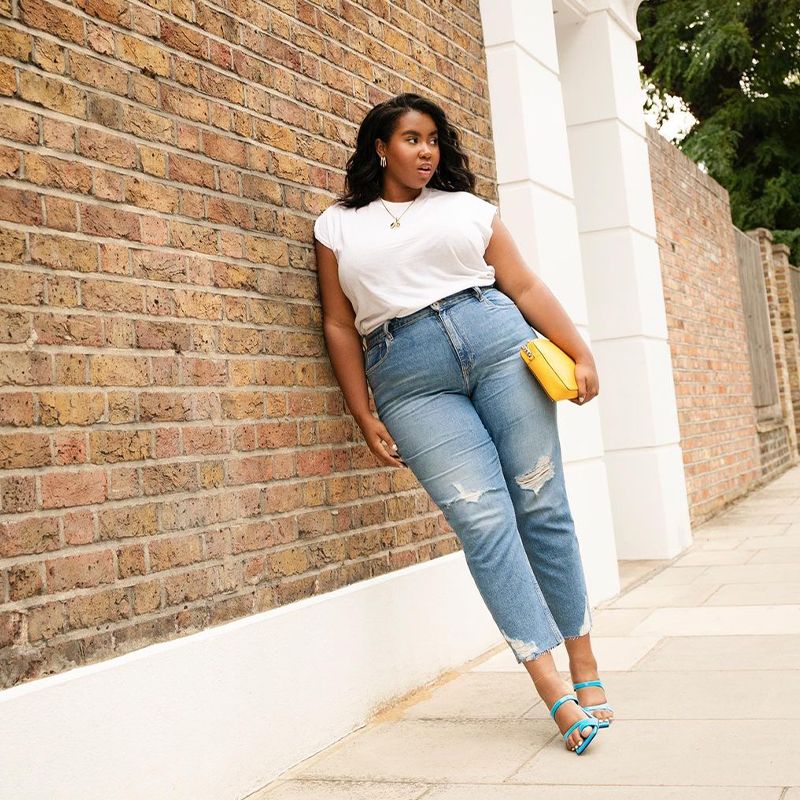
    The second problem is that most retailers simply stop stocking around a DD, so people get told they are that size because the shop has nothing beyond it. Cup volume grows fast, and the difference between a DD and a G is substantial. Being fitted from a limited range is how someone ends up in a band too loose and a cup too small at once, which is the single most common bad fit on a large bust. If you want the broader fundamentals of finding a bra that works, our full guide on how to find a bra that actually fits when you are plus-size covers the groundwork this article builds on.

    A soft tape measure resting on a folded supportive bra
    Measure your underbust snugly and use that number. The old habit of adding four inches produces a band several sizes too big

    The band does the work, not the straps

    This is the principle everything else follows from. A correctly fitted bra takes the large majority of its support from the band, and the straps only balance and position. If you loosen your straps completely and the bra still holds you up, the band is doing its job. If everything drops, the band is too big and no amount of strap tightening will fix it, because tightening straps only transfers weight onto your shoulders and pulls the band further up your back.

    A well-fitted band sits level all the way around, parallel with the floor, and should feel firm on the loosest hook when new. Bras stretch, so starting on the loosest hook gives you months of usable life as you move inward. You should be able to slide two fingers under it with some resistance and no more. If the back of your band is riding up toward your shoulder blades, that is the clearest possible signal to go down a band size, and because band and cup are linked you will need to go up a cup size at the same time to keep the volume you had.

    Sister sizing, and why it matters more here

    Cup letters are not fixed volumes. They describe the difference between your bust and your band, which means a 38D and a 36DD hold roughly the same amount, just on different band lengths. Moving down a band size and up a cup letter, or the reverse, keeps volume constant while changing the fit of the frame. That relationship is called sister sizing, and on a large bust it is the single most practical tool you have, because it lets you fix a band problem without losing cup volume.

    In practice this is how you solve the classic complaint of a band that rides up but cups that already feel full. You do not need a bigger everything. You need one band size down and one cup letter up, which usually feels dramatic when you read it and correct the moment you put it on. Keeping your two nearest sister sizes in mind also widens what you can buy considerably, which matters when stock in larger cups is limited and you are working with whatever a retailer actually has.

    Reading the fit in the mirror

    Do the checks in order, because each one depends on the last. Start with the band: level, firm, not riding up. Then the centre panel between the cups, which should sit flat against your breastbone. If it floats away from your body, the cups are too small and the tissue is pushing it off. That one check catches more bad fits than any other, and it is quick.

    A woman checking the fit of a supportive bra in a mirror
    If the centre panel does not sit flat against your breastbone, the cups are too small. That single check catches most bad fits

    Then the cup edges. Any spillage at the top or the underarm means more volume is needed, and so does the opposite problem of wrinkling or gaping fabric, which means less. Underwires should follow your natural crease and fully enclose the breast tissue, sitting on your ribcage rather than on breast tissue itself. Wires resting on tissue are the usual cause of that specific ache under the arm at the end of a long day. Finally, do a scoop and swoop: lean forward, reach into each cup and bring all the tissue from your underarm and back forward into it, then stand up and reassess. A great many bras that appear to fit badly are simply not filled properly.

    Styles that hold up when there is weight to support

    Construction matters more as bust size increases, and some shapes simply cannot deliver support at scale. Full-cup and balconette styles with side support panels, three-part cup construction and wider set straps all distribute weight far better than a plunge or a lightly lined triangle. Wider straps spread the load and stop the digging that thin straps cause once there is real weight above them. A well-built full-cup bra with side support panels from a brand that designs in larger cups rather than grading up from a C will fit the shape as well as the volume.

    Full-cup supportive bras with wide straps arranged on a light background
    Full-cup and balconette shapes with side support panels and wider straps distribute weight far better than a plunge

    Seamed cups are worth considering even though moulded ones look smoother under clothes, because seams shape and lift structurally while a moulded cup relies on the mould matching your shape exactly. For sport, the support requirement roughly doubles, and an encapsulation-style high-impact sports bra that supports each breast separately will always outperform a compression crop top that simply flattens. Compression styles are the most common reason people conclude that exercise is uncomfortable for them when the actual problem is the garment.

    Getting fitted without wasting a Saturday

    Go to a specialist rather than a department store if you possibly can, because a shop that stocks a genuinely deep size range has staff who fit those sizes daily. Wear an unpadded bra you can easily change out of, and be ready to try a spread of sizes rather than one, since cup shape varies enough between brands that your size is really a starting point rather than an answer. Expect to try several and do not read that as a bad sign.

    If you are fitting yourself at home, measure your underbust snugly and your bust at the fullest point while wearing a non-padded bra, take the difference to get a starting cup, then work through the mirror checks above and adjust using sister sizing. Order two or three sizes around your estimate, keep the one that passes every check, and return the rest. That is a far more reliable process than one measurement and one guess, particularly given how much sizing varies between labels.

    Quick answers to the questions everyone asks

    How should a bra fit if I have large breasts? The band should sit level and firm and carry most of the support, the centre panel should lie flat against your breastbone, the wires should enclose all breast tissue and rest on your ribcage, and there should be no spilling or gaping at the cup edges. Straps only balance, they should never carry the weight.

    Why does my bra band ride up my back? The band is too big, so the weight has shifted onto your straps and pulled the back upward. Go down a band size and up one cup letter to keep the same volume. Tightening the straps feels like a fix but makes the shoulder pain worse.

    What is sister sizing? Cup letters describe the difference between bust and band, not a fixed volume, so a 38D and a 36DD hold roughly the same. Moving down a band and up a cup keeps volume the same while tightening the frame. It is the quickest way to fix a loose band without losing cup room.

    Should I wear a wired or wire-free bra with a large bust? Either can work, but wires generally give more lift and separation at larger sizes, provided they sit on your ribcage and fully enclose the tissue. A well-constructed wire-free bra with side support panels and wide straps is a genuine alternative. Comfort tends to come from correct fit rather than from the wire itself.

    How often should I be refitted? Whenever your weight changes noticeably, after pregnancy, and otherwise roughly once a year, since bands stretch with wear. If you are wearing a bra on its tightest hook and it still feels loose, that bra is finished and it is time to remeasure rather than keep going.

    Fit is a system, not a size

    The most useful shift is to stop thinking of your bra size as a single fixed label you were assigned and start treating it as a working range. Your band size, your two nearest sister sizes and the specific shapes that suit you together make up a system, and once you know all three you can walk into any shop or open any website and evaluate what is in front of you rather than hoping a number works. Check the band first, the centre panel second, the cup edges third, and let those checks overrule whatever the tag says. Bras that fit a large bust properly do exist in far more sizes than most high streets suggest, and the discomfort that so many people accept as unavoidable is nearly always a fitting failure rather than an inevitability.

  • Sweat Rash Under the Breast: How to Treat It and Stop It Coming Back

    Sweat Rash Under the Breast: How to Treat It and Stop It Coming Back

    An under-breast rash is one of those problems almost nobody talks about and an enormous number of people deal with. Warm skin folded against warm skin, trapped moisture, a little friction, and within a day or two you have a red, stinging, sometimes itchy patch that catches every time you move. It has a proper medical name, intertrigo, and it is extremely common in anyone with larger breasts, simply because there is more skin in contact for longer. That is anatomy doing what anatomy does, not a hygiene failure, and treating it as a hygiene failure is the reason so many people scrub at it and make it worse.

    The good news is that uncomplicated intertrigo usually settles quickly once you break the moisture and friction cycle. The complication worth knowing about is that a damp skin fold is also an inviting place for yeast, and a rash that has tipped into a yeast overgrowth needs a different treatment. Below is how to tell those apart, what actually clears each one, how to stop it returning, and the specific signs that mean you should stop self-treating and get it looked at.

    What an under-breast rash actually is

    Intertrigo is inflammation caused by skin rubbing against skin in a warm, moist environment. It typically shows up as a red or reddish-brown patch that mirrors the fold itself, often symmetrical on both sides, and it can sting, burn or itch. The skin may feel raw or look slightly shiny, and in stubborn cases it can crack or weep a little. Heat, humidity, sweat, tight or non-breathable fabrics and prolonged contact all push it along, which is why it flares in summer, after exercise, and during long days in a bra that traps moisture rather than moving it away.

    Soft cotton and bamboo bra liners folded neatly on a light surface
    Breaking the moisture and friction cycle is the whole treatment. Everything else supports that

    The important thing to understand is the cycle. Moisture softens the skin barrier, friction damages the softened skin, damaged skin weeps slightly, and that moisture feeds the next round. Every effective treatment works by interrupting that loop at one point or another, which is why keeping the area genuinely dry does more than any cream can on its own. If your underlying issue is heavy sweating in that area rather than an active rash, our guide on how to stop boob sweat and under-breast sweat tackles the root cause and is worth reading alongside this.

    How to tell whether yeast has moved in

    This distinction changes what you should put on it, so it is worth a careful look before you treat. Plain intertrigo tends to be a fairly uniform red patch confined to where skin touches skin. A candidal, or yeast, overgrowth usually looks angrier and more defined: a brighter red patch with a clear scalloped border, often with small separate spots or pustules just beyond the main area. Those outlying spots, called satellite lesions, are the most useful single clue, because plain friction rash does not scatter like that. Yeast also tends to itch more intensely than it stings.

    Sign Friction rash Likely yeast Needs a doctor
    Shape Follows the fold Defined scalloped edge Spreading outward fast
    Outlying spots No Yes, satellite spots Pustules with pus
    Sensation Stings, burns Intense itch Severe or deep pain
    Other signs None Sometimes odour Fever, foul odour

    There is a third possibility worth naming, which is bacterial infection. That tends to bring genuine pain rather than itch, warmth, swelling, sometimes pus or a distinctly unpleasant smell, and redness that spreads beyond the fold. Bacterial infection is not something to treat with drugstore creams, and it is covered in the escalation section further down. If you are ever unsure which of the three you have, that uncertainty is itself a good reason to have someone qualified look at it rather than cycling through products.

    Treating it, step by step

    Start with cleansing, and be gentler than instinct suggests. Wash the area with lukewarm water and a mild, fragrance-free cleanser, then rinse properly so no residue sits in the fold. Skip antibacterial or heavily perfumed soaps, which strip an already compromised skin barrier and frequently make the stinging worse. Then dry the fold completely, which is the step most people rush and the one that matters most. Pat rather than rub, and if patting is not getting it properly dry, a hairdryer on its cool setting held at a distance works well and takes under a minute.

    Once the skin is genuinely dry, apply a barrier. A zinc oxide ointment is the standard choice because it physically separates the two skin surfaces and repels moisture rather than absorbing it. If you have identified likely yeast, an over-the-counter antifungal cream containing clotrimazole or miconazole is the appropriate treatment, applied thinly twice daily and continued for the full course on the packet even after it looks better, because stopping early is the most common reason yeast comes straight back. Do not reach for a steroid cream on its own, since steroids calm redness but can let a fungal infection flourish underneath.

    A soft cotton bra and a tube of barrier cream arranged on a bathroom shelf
    Dry the fold completely before any cream goes on. A barrier applied over damp skin traps the problem in

    Between treatments, keep the surfaces apart. A soft cotton or bamboo bra liner sits in the fold, absorbs moisture and stops skin touching skin, and it is probably the single most useful object you can own if this happens to you regularly. Change it whenever it feels damp rather than once a day. Giving the area genuine air time also helps more than people expect, so a stretch braless in a loose cotton top in the evening is doing real work, not nothing.

    Stopping it from coming back

    Prevention is mostly a fabric and fit problem. A supportive, well-fitting bra that actually holds breast tissue up and away reduces how much skin sits in contact, which is why a proper fit does more for recurrent intertrigo than any cream. Choose breathable materials, cotton or a technical moisture-wicking knit, over synthetics that hold sweat against you, and be honest about whether an underwire is sitting in the fold and adding friction. A breathable cotton-lined supportive bra in your correct size solves a surprising amount of this on its own.

    A selection of breathable cotton bras laid out on a bed
    A supportive, breathable, correctly fitted bra reduces how much skin sits in contact, which prevents more flares than any cream treats

    The rest is routine. Change out of a sweaty bra promptly rather than letting it dry on you, and never re-wear a damp one. Wash bras more often than feels necessary in hot weather, since old sweat and product residue irritate compromised skin. If you are prone to flares in summer, applying a barrier preventively on hot days is far easier than treating a rash after it appears. And if you notice it recurring constantly despite doing all of this, that pattern is worth mentioning to a doctor, because persistent skin-fold yeast can occasionally be a flag for undiagnosed diabetes or another underlying issue.

    When to stop self-treating and see a doctor

    Most uncomplicated cases improve noticeably within a few days and clear within one to two weeks of consistent care. Anything that does not follow that pattern deserves professional attention rather than another product. Book an appointment if the rash has not improved after about two weeks of proper treatment, if it is spreading beyond the fold, or if it keeps returning as soon as you stop treating it.

    Seek care promptly, rather than waiting, if you have pus or open sores, a foul odour, significant pain, a fever, or redness that is expanding and warm to the touch, since those suggest a bacterial infection that may need prescription treatment. The same urgency applies if you have diabetes, a weakened immune system, or are taking immunosuppressive medication, because skin-fold infections can escalate faster and are harder to clear. None of this is cause for alarm in the typical case, but knowing the line means you can treat confidently at home without wondering whether you are missing something.

    Common mistakes that make it worse

    A few well-intentioned habits actively prolong this. Scrubbing the area, using antibacterial or fragranced soap, and applying alcohol-based products all damage the skin barrier you are trying to rebuild. Cornstarch is a popular home remedy and a poor one when yeast is involved, because it can feed the overgrowth rather than starve it. Talc is best avoided too, both because of longstanding safety questions and because it cakes into damp folds and adds grit where you wanted smoothness.

    The other frequent error is applying cream to skin that is still damp, which seals moisture against the very surface you needed to dry out. And covering an active rash with a tight synthetic bra for a twelve-hour day undoes whatever the cream achieved that morning. Treatment and clothing have to work together, otherwise you spend weeks treating something that is being re-created daily.

    Quick answers to the questions everyone asks

    What causes a rash under the breast? Most often intertrigo, which is inflammation from skin rubbing against skin in a warm, damp fold. Sweat, heat, friction and non-breathable fabrics drive it. It is a common consequence of having larger breasts and more skin in contact, not a sign of poor hygiene.

    How do I get rid of an under-breast rash fast? Cleanse gently with a mild fragrance-free wash, dry the fold completely, then apply a zinc oxide barrier. Use a cotton liner to keep skin surfaces apart and change it when damp. If there are satellite spots and intense itch, use an antifungal cream instead.

    Is my under-breast rash a yeast infection? Likely if it is bright red with a clearly defined scalloped edge, itches intensely, and has small separate spots just outside the main patch. Plain friction rash follows the fold uniformly without those outlying spots. When unsure, get it looked at rather than guessing.

    Can I put powder under my breasts? A moisture-absorbing barrier helps, but skip talc and skip cornstarch, since cornstarch can feed a yeast overgrowth. A zinc oxide ointment or a purpose-made body powder is a better choice, and a fabric liner usually outperforms powder because it does not cake in the fold.

    How long should an under-breast rash take to clear? Uncomplicated cases usually improve within a few days and resolve in one to two weeks with consistent care. If yours has not improved after two weeks, keeps recurring, or shows pus, odour, fever or spreading redness, stop self-treating and see a doctor.

    Treating the fold, not just the rash

    The reason this problem recurs for so many people is that they treat the rash and ignore the conditions that produced it. Cream clears the current flare, then the same bra, the same fabric and the same trapped moisture rebuild it within a fortnight. The version that actually works treats both at once: settle the skin with gentle cleansing, thorough drying and the right barrier or antifungal, then change what happens in that fold day to day with a properly fitted breathable bra, a liner you swap when damp, and a bit of air in the evenings. Watch for the red flags, take them seriously when they appear, and this moves from a recurring misery to something you handle in a few days and mostly forget about.

    This article is general information, not medical advice. If your rash is painful, spreading, producing pus or not improving, please see a doctor or pharmacist.

  • The Best Tummy Control Swimsuits for a Plus-Size Body

    The Best Tummy Control Swimsuits for a Plus-Size Body

    Most tummy control swimsuits are sold on a promise borrowed from shapewear, which is that squeezing harder gives you a smoother stomach. In swimwear that logic mostly falls apart, and it falls apart the moment the fabric gets wet. Water changes how a suit behaves. Cheap fabric relaxes, thin linings go transparent and cling to every ripple, and a suit that looked smoothing in the changing room turns into something you are tugging at all afternoon. The suits that genuinely work do it through construction rather than compression, and once you can spot that construction, the whole category gets much easier to shop.

    What follows is a plus-size-first look at what actually creates a smooth midsection in a swimsuit, then the styles worth buying depending on what you are doing in the water. None of it is about hiding, and none of it assumes you owe anyone a flatter stomach. A swimsuit exists so you can get in the water. The best tummy control suit is simply the one you stop thinking about once you are in it, which is a much more useful standard than whatever the packaging claims. Judge every suit below on that: does it let you forget about it, or does it make you manage it all day?

    What creates tummy control in a swimsuit

    Four things do the real work, and a suit that has three of them will beat a suit that just calls itself slimming. The first is a full front lining, ideally power mesh, running the whole torso rather than a token panel behind the belly. The second is fabric weight, because a heavier knit with a high elastane content holds its shape wet, while a thin one surrenders. The third is ruching, which sounds decorative but is structural: gathered fabric across the midsection breaks up the light and disguises contour far more effectively than flat fabric pulled tight. The fourth is seam placement, specifically princess seams or side panels that shape the suit to a curve instead of relying on stretch alone.

    A plus-size woman in a ruched one-piece swimsuit standing confidently by a pool
    Ruching across the midsection disguises contour far more effectively than flat fabric pulled tight

    Notice what is missing from that list: aggressive compression. A swimsuit that relies on squeezing is the one that rolls at the leg opening, digs at the shoulder, and leaves you adjusting. Compression also fights you in water, where you want to move. If you want the fuller explanation of fit, coverage and cut across every swimsuit style, we walk through it in our guide on how to choose a plus-size swimsuit you feel good in. For this roundup, those four construction features are the checklist that separates the picks below from the disappointments.

    Best overall: the ruched one-piece

    If you buy one tummy control swimsuit, buy a ruched one-piece with a lined front. It is the most reliable performer in the category and it is not close. The ruching does the visual smoothing, the full lining does the physical smoothing, and because it is a single garment there is no waistband sitting on the softest part of your stomach waiting to roll. A well-made ruched tummy-control one-piece from a brand that actually cuts for plus sizes will fit at the bust, the torso and the hip together, which is the part cheap suits get wrong.
    The detail worth paying for here is torso length. Plus-size bodies are often longer through the torso, and a one-piece that is too short pulls down at the shoulders and up at the leg, which creates exactly the horizontal line across the stomach you were trying to avoid. Brands that offer a long-torso option are telling you they understand the fit problem. If you have ever felt like a one-piece was trying to fold you in half, torso length was almost certainly the culprit rather than your size.

    Best for actually swimming

    There is a real difference between a suit designed for photographs and a suit designed for swimming, and most tummy control marketing is aimed squarely at the former. If you plan to swim laps, play with your kids, or spend hours in and out of water, prioritise a heavier fabric, a racerback or wide-strap shoulder, and a lining that stays opaque when wet. Thin decorative straps fail under the weight of wet fabric, and that failure is what drags a neckline down.

    A plus-size woman swimming in a supportive dark one-piece swimsuit
    For real swimming, wide straps and a heavier fabric matter more than any slimming claim on the label

    An active tummy-control one-piece with wide straps gives you smoothing that survives movement, which is the only kind that matters if you are genuinely using the pool rather than sitting beside it. The trade is real and worth naming: you give up a little of the dramatic smoothing a heavily ruched suit delivers, and in exchange you get something that does not need rearranging every time you climb out of the water. For anyone who swims regularly that is not a compromise at all, because a suit you constantly adjust is a suit you eventually stop wearing. Comfort in motion is what determines whether it earns its place in the drawer.
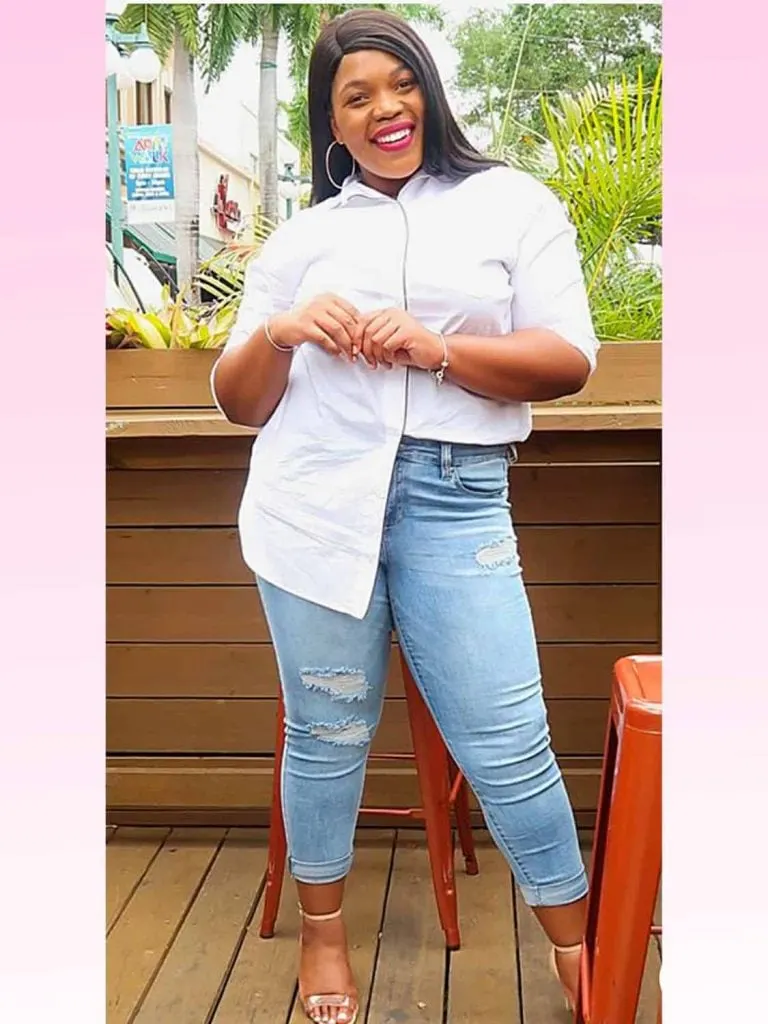
    Best two-piece option: the tankini

    Plenty of people want the bathroom convenience and the mix-and-match sizing of a two-piece without giving up midsection coverage, and that is exactly what a tankini is for. The catch is that a badly cut tankini rides up and creates a gap, which defeats the point entirely. The fix is length and grip: look for a top long enough to overlap the bottom by several inches even when you raise your arms, and a bottom with a wide, bonded waistband rather than a thin elastic edge.

    A plus-size woman wearing a long-line tankini top and swim bottoms
    A tankini only works if the top is long enough to overlap the bottom even when you raise your arms

    A long-line tankini with a lined front panel gives you close to one-piece smoothing with two-piece practicality, which is a genuinely good trade for a lot of people. The quiet advantage is split sizing. If your bust and your hips want different numbers, no single garment can serve both without compromising somewhere, and a tankini simply removes that problem instead of asking you to live with it. That alone sinks a lot of otherwise decent one-pieces, and it is the reason plenty of people who assumed they needed a one-piece end up preferring this.
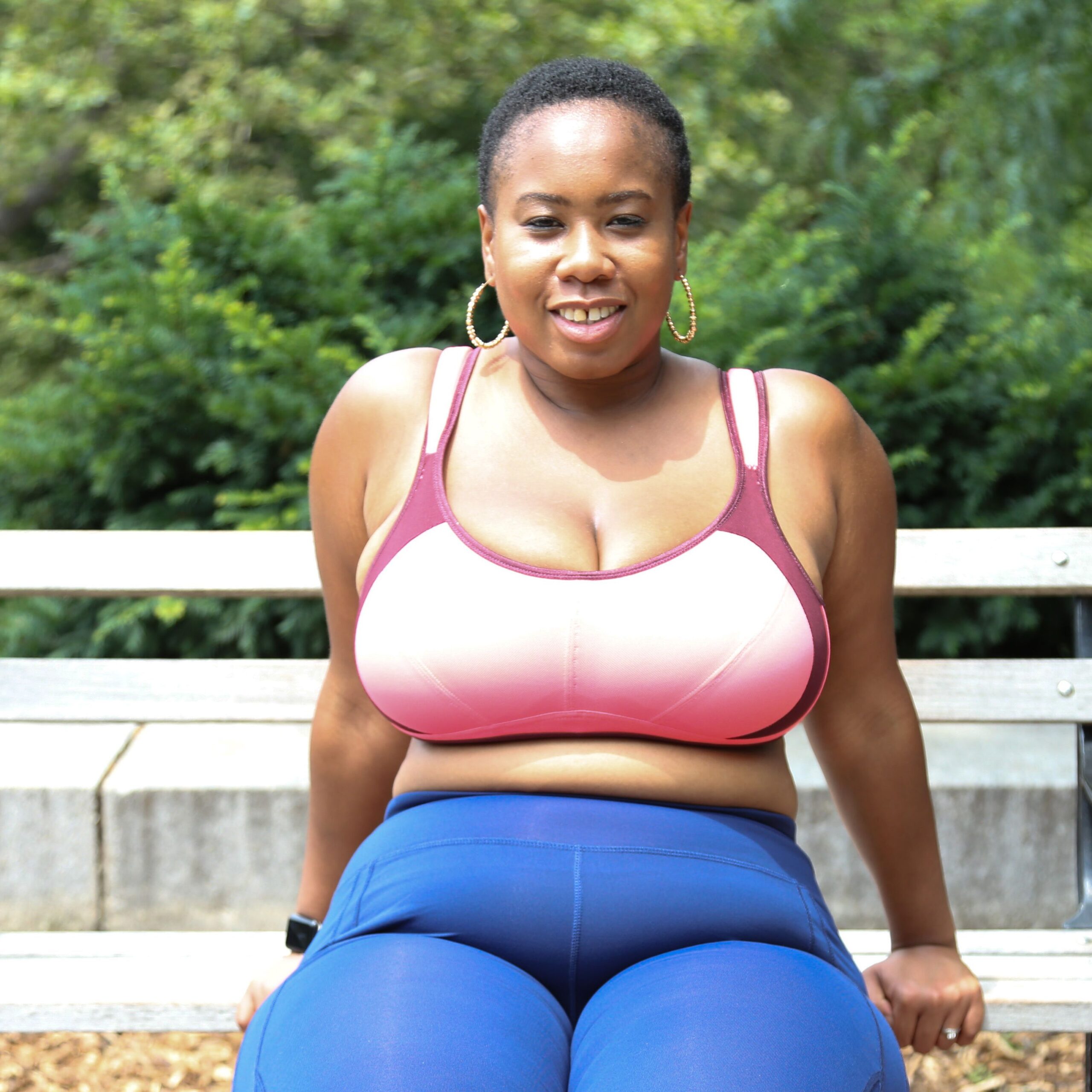
    Best high-waisted set

    The high-waisted two-piece has earned its popularity because it works on exactly the principle that makes tummy control effective anywhere: it starts below the fullest part of the stomach and extends well above the navel, so it cradles the whole area rather than cutting across the middle of it. A high-waisted bottom in a substantial fabric with a wide waistband smooths about as much as many one-pieces do, and it does it without inheriting any of the torso-length problems that make one-pieces so hit and miss. It is also the most forgiving style to shop for, because you are only judging fit on one half of your body at a time.

    A plus-size woman in a high-waisted two-piece swimsuit on a beach
    A high-waisted bottom starts below the fullest part of the stomach and extends above the navel, so it cradles instead of cutting

    Where people go wrong is buying a high-waisted bottom in a flimsy fabric, which folds over at the top edge the first time they sit down. Weight and waistband width are what prevent that, not a smaller size, and reaching for a smaller size is the instinct that makes it worse. A high-waisted swim bottom with a wide bonded waistband paired with whatever top you like gives you a genuinely flexible setup. It is also usually cheaper than replacing an entire one-piece when only half of it stopped working, which over a few seasons adds up to a real difference in what you spend.

    Comparing the styles at a glance

    Each of these does something the others cannot, so the honest answer to which one is best depends entirely on what you plan to do while wearing it. Anyone who tells you a single style wins outright is selling that style. Here is how they compare on the things that actually decide whether you keep wearing a suit or quietly retire it after one holiday.

    Style Smoothing Holds up while swimming Best for
    Ruched one-piece Highest Good All-round, most bodies
    Active one-piece Moderate Excellent Laps, kids, long days
    Long tankini Good Moderate Split sizing, bathroom ease
    High-waisted set Good Good Mixing sizes and tops

    Sizing it right, and what to skip

    Size to your largest measurement and adjust from there, because a suit that is too small stops smoothing and starts sectioning. This is the mistake that ruins more tummy control suits than any design flaw. Overstretched fabric goes thin and semi-transparent exactly where you wanted it dense, the leg openings cut in, and the lining loses its grip on the fabric above it. Going up a size very often looks smoother than going down one, which feels counterintuitive until you have seen it happen.

    Two things worth skipping. First, any suit whose only tummy control claim is a small tummy panel with no full lining, since that panel is doing almost nothing once the surrounding fabric relaxes in water. Second, thin ties at the shoulder or hip on a suit you intend to swim in, because wet fabric is heavy and those ties will not hold it. Do the honest test at home: put the suit on, sit down, raise both arms, and bend forward. If it stays put through all three, it will stay put at the pool.

    Quick answers to the questions everyone asks

    Do tummy control swimsuits actually work? Yes, when the control comes from a full power-mesh lining, ruching, a substantial fabric and shaped seams rather than from tight elastic. Suits relying on compression alone tend to roll and dig once wet. Construction is what holds up in water, not squeeze.

    What is the best tummy control swimsuit? For most plus-size bodies a ruched one-piece with a full front lining is the strongest all-round choice, because it smooths visually and physically with no waistband to roll. For swimming, choose an active one-piece with wide straps. For two-piece convenience, a long-line tankini.

    Is a one-piece or a two-piece better for tummy control? A one-piece usually smooths more because it has no horizontal break at the stomach. A high-waisted two-piece comes close and lets you buy your top and bottom in different sizes, which fits many bodies better than any single garment can.

    What size tummy control swimsuit should I buy? Buy for your largest measurement using the brand’s chart, then check torso length if you are choosing a one-piece. Sizing down to squeeze harder backfires: the fabric thins, the lining loses grip and the leg openings cut in. Sizing up usually looks smoother.

    Why does my swimsuit roll down at the waist? Almost always a thin waistband, a fabric too light to hold its shape, or a suit that is a size too small. A wide bonded waistband in a heavier knit solves it. On a one-piece, rolling at the leg is usually a torso-length problem rather than a width problem.

    Choosing yours without the guesswork

    Work backwards from what you will actually do in the suit. If it is mostly pools, holidays and photographs, the ruched one-piece is the safest money you can spend. If you swim properly, take the active suit and accept marginally less drama in exchange for something that never needs adjusting. If your bust and hips want different sizes, go two-piece and stop trying to force one number to fit both. Then check the four construction points, buy your measured size rather than a smaller one, and run the sit-reach-bend test at home before the tags come off. That is the whole method, and it turns a category built on vague promises into a straightforward purchase.

  • The Best Shapewear for Tummy Control That Actually Stays Put

    The Best Shapewear for Tummy Control That Actually Stays Put

    If you have ever bought shapewear that promised a smooth tummy and then spent the whole evening feeling it roll down under your dress, you already know the problem. Tummy control is the single most requested thing from shapewear, and it is also the thing the cheap stuff fails at most. The good news is that the pieces that genuinely hold your midsection smooth and stay put do exist, and once you know what separates them from the disappointments, choosing gets a lot easier. This is a plus-size-first roundup of the ones worth your money, plus exactly why each works.

    A quick promise before the picks: none of this is about squeezing yourself smaller or apologizing for your body. Tummy-control shapewear is a tool for a smooth line under a specific outfit when you want one, nothing more. It should make you forget you are wearing it, not count the minutes until you can take it off. Every piece below is chosen on that standard.

    What actually gives you tummy control

    Before the products, the thirty-second version of how this works, because it is what tells a good piece from a useless one. Real tummy control comes from three things working together. First, a firm front panel, often a double layer or a built-in power-mesh lining, that compresses the midsection evenly instead of just holding a thin band tight. Second, a high rise that comes up well above your belly button, so the smoothing starts below the softest part of your stomach and extends over it rather than cutting across the middle and creating a fresh ledge. Third, something that keeps the whole thing anchored, a mid-thigh short leg or a full bodysuit, so it cannot roll down the moment you sit.

    A piece that has all three smooths comfortably and lasts all day. A piece missing any of them, especially a low-cut brief with a thin waistband, will dig, roll, and disappoint no matter what the label claims. If you want the deeper breakdown of why shapewear rolls and how to stop it, we cover it in full in our guide on how to choose shapewear that stays put. For now, keep those three features in mind as you read the picks, because that is exactly what earned each one its place.

    A plus-size woman in high-waisted tummy-control shaping shorts looking comfortable
    The pieces that actually control the tummy share three features: a firm front panel, a high rise, and a leg or bodysuit that anchors them

    Best overall: high-waisted shaping shorts

    For most plus-size bodies, most of the time, a high-waisted shaping short is the answer, and it is where I tell people to start. The short leg is the secret to why it stays put, because it grips a long stretch of your thighs and gives the whole garment real anchor points below your midsection, so there is nothing to roll. Paired with a firm high-waisted front, you get smooth, even control from your ribs to mid-thigh with none of the sausage-roll effect that briefs are famous for. Torrid makes a genuinely well-cut high-waisted tummy-control short in extended sizes that sits smooth under almost anything, and it is the piece I reach for first under a fitted dress or a clingy skirt.

    The reason this style wins as an everyday pick is comfort. Because the compression is spread across a large surface rather than concentrated in one tight band, it holds firmly without cutting in, so you can actually wear it through a full workday or a long event. If you only buy one tummy-control piece, make it a high-waisted short in your true size, and you will reach for it far more than any other shaper you own.

    Best for a smooth line under a dress: a shaping bodysuit

    When you want the smoothest possible line under a bodycon dress or a slip, a one-piece shaping bodysuit is unbeatable, because it physically cannot separate into two pieces that migrate. There is no waistband to roll, since the tummy control is built into a single continuous garment that runs from bust to hip. That makes it the most reliable choice for the outfits where you cannot risk a single adjustment, like a wedding or a photo-heavy event.

    A plus-size woman smoothing a dress over a shaping bodysuit, looking confident
    A one-piece bodysuit gives the smoothest line under a dress because it has no waistband to roll

    Look for a bodysuit with a firm front panel and adjustable straps, and a gusset closure so you are not undressing completely for a bathroom trip. A well-made plus-size shaping bodysuit from a brand that designs for fuller busts and hips, rather than grading a straight-size pattern up, fits at the shoulder, the tummy, and the hip all at once, which is the difference between a bodysuit you love and one that pulls or digs. Spend a little more here, because the fit of a bodysuit is what makes or breaks it.

    Best for a lower-belly pooch: a high-rise brief with a silicone band

    If your main concern is specifically the lower belly, the fix is rise plus grip. You want a high-rise brief or short whose panel starts below the pooch and extends well above your belly button, cradling the whole area instead of pressing on the middle of it. The piece that fails here is the low-cut brief that sits right on the fullest part and rolls immediately. To keep a high-rise piece from sliding, look for a silicone grip strip along the inner waistband, which holds gently to your skin and is the single most effective anti-roll feature there is.

    Close-up of a silicone grip strip on the inside of a high-waisted shaper waistband
    A silicone grip strip along the inner waistband is what keeps a high-rise shaper from sliding down over the lower belly

    A high-waisted shaper with a silicone band targets the lower belly better than almost anything, because it combines the height that smooths the area with the grip that keeps it there. If you have tried tummy shapers before and given up because they always rolled down, this combination is very likely what you were missing.

    Best firm control for a special occasion

    Sometimes you want maximum smoothing for a few hours, and that is a legitimate want. For those occasions, a firm-control high-waisted piece with a reinforced double-layer front panel gives the most dramatic smooth without crossing into painful, as long as you buy your correct size rather than sizing down. Firm control should still pass the comfort test: an even, all-over hug you forget about, not a vice that makes it hard to breathe. If it is pinching or leaving deep marks, it is too small and will actually roll and dig more, not less.

    A firm-control high-waisted shaper in your true size is the move for an event where you want the most polished line and know you will be mostly standing and sitting rather than, say, dancing all night. For all-day everyday wear, step back down to the comfortable high-waisted short from the top of this list.

    A plus-size woman checking the fit of firm-control shapewear in a mirror
    Firm control should still feel like an even hug, not a vice. If it pinches or leaves deep marks, it is the wrong size

    How to choose and size yours

    With the styles sorted, the last thing that decides whether tummy-control shapewear works for you is size, and this is where most people go wrong. The instinct when a piece rolls or digs is to size down and squeeze harder. That makes both problems worse, because a too-small piece has less fabric touching your skin, so its edges bite in, and its overstretched waistband gives up and rolls faster. Buy for your actual measurements using the brand’s own size chart, not your dress size, and if you are between sizes, size up for better hold and comfort.

    Give a new piece an honest ten minutes on before you judge it. Good tummy-control shapewear feels like a firm, even, all-over hug that fades from your attention after a few minutes. If after ten minutes it is still pinching, riding up, or making you hold your breath, it is the wrong size or the wrong style for your body, and that is fixable information, not a verdict on you. Match the style to the outfit, the size to your measurements, and you will finally have shapewear that smooths and stays exactly where you put it.

    Quick answers to the questions everyone asks

    What is the best shapewear for tummy control? For most plus-size bodies, a high-waisted shaping short is the best all-around choice, because the short leg anchors it so it will not roll while a firm high-rise front smooths the whole midsection. For the smoothest line under a dress, a one-piece bodysuit wins. For a lower-belly pooch specifically, a high-rise brief with a silicone waistband.

    How do I stop tummy-control shapewear from rolling down? Choose a high-waisted style that sits well above your belly button, look for a silicone grip strip and a wide bonded waistband, and pick a short or bodysuit rather than a low brief. Most importantly, wear your true size, since a too-small piece rolls faster, not slower.

    Does tummy-control shapewear actually work? Yes, when it has a firm front panel, a genuine high rise, and an anchoring leg or bodysuit. It smooths and holds your midsection for a cleaner line under clothes. What it does not do is permanently change your shape, and it should never hurt. If a piece is not smoothing, it is almost always the wrong size or a style missing one of those three features.

    Is firmer shapewear better for tummy control? Not necessarily. Firmer control gives a more dramatic smooth for a few hours, which suits a special occasion, but for everyday wear a comfortable medium-control high-waisted short you can forget about all day is the better choice. Firmer is only better if it still passes the comfort test in your correct size.

    What size tummy-control shapewear should I buy? Buy to your actual waist and hip measurements using the brand’s size chart, not your clothing size, and size up if you are in between. Sizing down to squeeze harder backfires: it bites at the edges and rolls faster. The goal is smooth, even compression across a broad surface, which comes from the right size, not the smallest one.

    The short version

    If you want one everyday piece, get a high-waisted shaping short in your true size. If you want the smoothest line under a dress, get a bodysuit. If your worry is the lower belly, get a high-rise piece with a silicone band. In every case, check for a firm front panel, a real high rise, and something that anchors it, buy your measured size rather than sizing down, and give it ten honest minutes on. Do that, and tummy-control shapewear stops being a frustrating gamble and becomes a piece you actually trust.

  • How to Choose a Plus-Size Swimsuit You Feel Good In

    How to Choose a Plus-Size Swimsuit You Feel Good In

    For a lot of us, nothing triggers the wardrobe dread quite like swimsuit shopping. The harsh fitting-room light, the tiny hangers, the sense that the whole category was designed for someone else’s body. So we put it off, wear the same tired suit for another summer, or skip the pool entirely and miss the fun. I want to flip that script, because the truth is simpler and kinder than the anxiety suggests. A swimsuit’s job is to work for your body, not to force your body into working for it. Once you know which construction details actually do that work, you can shop for a suit you genuinely feel good in, and spend your summer in the water instead of in a cover-up on the sidelines.

    This is a guide to the features that matter, written for real plus-size bodies. Forget the lookbooks and the styling rules about what you are supposedly allowed to wear. We are going to talk about how a swimsuit is built, because that is what decides whether it holds you, supports you, and lets you move without a single nervous adjustment.

    Fit and construction beat silhouette every time

    Here is the reframe that changes everything, so I am putting it first. The most flattering plus-size swimsuit is not about a magic neckline or a slimming print, it is about how the suit is constructed. A well-built one-piece with a supportive lining and real bust structure will do more for your comfort and confidence than any clever pattern, because it holds you where you want to be held and moves with you everywhere else. When you stop shopping for a shape and start shopping for construction, the whole thing gets easier and the results get better.

    That means when you look at a suit, your first questions are about the inside, not the outside. Is there a supportive lining? How are the cups built? How wide are the straps and how much does the back cover? Those answers predict how you will feel wearing it far better than whether it has a ruffle or a wrap front. Style is the fun part and it comes last. Get the construction right and almost any silhouette you love becomes wearable.

    Tummy control, and what actually creates it

    Tummy control is one of the most searched features in plus-size swimwear, and it is worth knowing that it comes from three real construction elements rather than marketing language. The foundation is a power-mesh lining, a net-like inner layer sewn behind the front panel that gently compresses and supports your midsection while still stretching with your body. On top of that, ruching or shirring, which is gathered fabric across the front, skims over the tummy and disguises any lines while giving you room to breathe and move.

    Close-up of ruching and power-mesh lining on the front of a plus-size swimsuit
    Power-mesh lining plus ruching across the front is what actually delivers tummy control, not the print

    The third element is structured side panels, which shape and hold the sides of your torso so the whole midsection reads smooth rather than squeezed into one spot. When a suit combines all three, power mesh, ruching, and side structure, you get genuine, comfortable control that lasts all day at the beach. A suit that just calls itself slimming without any of these features is relying on the print, and the print alone will not hold anything. Read the description and look for those words specifically.

    Real support for a fuller bust

    If you are a D cup or above, bust support is not a nice extra, it is the difference between a suit you trust and one you spend the day tugging. Look for built-in structure, which means either underwire or molded cups. Underwire lifts and separates the way a good bra does, giving you shape and holding weight off your midsection. Molded cups give a smooth, supported shape and prevent show-through in cold water. Either is far better than a flat shelf bra, which offers almost nothing once you are actually swimming.

    A plus-size woman in a supportive underwire swimsuit with wide straps
    Underwire or molded cups plus wide straps and a full-coverage back distribute the weight instead of digging in

    Just as important is how the weight is carried. Wide straps, at least an inch, spread the load across your shoulders instead of concentrating it into thin lines that dig in and leave marks by the end of the day. A fuller-coverage back does the same job, anchoring the suit and stopping it riding up. For a larger bust these are non-negotiable, and the good news is that plenty of plus-size brands now build them in as standard, so you no longer have to choose between support and something you actually want to wear.

    Chafing and ride-up, the comfort details nobody mentions

    Two small miseries can ruin an otherwise great suit, and both are preventable. The first is a suit that rides up at the leg or the seat, which usually comes down to a cut that is too small or a leg opening with no grip, so sizing up or choosing a style with a fuller back solves it. The second is thigh chafing, that hot, raw rub you get when your thighs touch and you are walking around a pool deck all day, which has nothing to do with your suit choice and everything to do with skin against skin in the heat.

    If chafing is your reality, and for a lot of curvy women it is, a high-waisted two-piece with longer bottoms or a swim short adds coverage and a barrier between your thighs. It is the same principle we cover in depth in our guide on how to stop inner-thigh chafing, and the fixes there work just as well under a swimsuit. Do not let a solvable comfort issue keep you out of the water. A little planning around coverage and a barrier balm means you can walk the length of the beach without a second thought.

    Choosing your style by the coverage you want

    Now for the fun part, because once the construction is sorted, the silhouette is genuinely up to you and your comfort. A one-piece with power mesh and structured cups is the workhorse, the most supportive and secure option, and it comes in every neckline you could want. A tankini gives you one-piece coverage with the practicality of separate pieces, which is a gift if you want easy bathroom trips or a different size on top and bottom. A high-waisted two-piece offers tummy coverage with a fun, current look and pairs a supportive top with bottoms that sit where you want them.

    Three plus-size swimsuit styles side by side: one-piece, tankini, and high-waisted two-piece
    Once the construction is right, the silhouette is yours to choose based on the coverage you actually want

    Whatever style calls to you, buy it from a brand that builds these bodies in rather than grading a straight-size suit up a few sizes. Swimsuits For All and Torrid both design genuinely supportive plus-size swimwear, and a tummy-control one-piece with underwire from a brand that understands a fuller bust fits at the cup and the torso together. If you want the mix-and-match freedom, a supportive underwire tankini is endlessly practical, and for the current high-waisted look a high-waisted swim set gives you coverage and support in a two-piece you will actually reach for.

    Quick answers to the questions everyone asks

    What’s the best plus-size swimsuit for tummy control? One built with three things together: a power-mesh inner lining, ruching or shirring across the front, and structured side panels. Those create real, comfortable control that lasts all day. A suit that only calls itself slimming without those construction features is relying on the print, which holds nothing.

    What swimsuit works for a big bust? One with built-in underwire or molded cups for lift and shape, wide straps of at least an inch to spread the weight, and a fuller-coverage back to anchor it. Those features carry the weight properly instead of digging into your shoulders, and they matter far more than the neckline for a D cup or above.

    How do I stop a swimsuit chafing and riding up? For riding up, size up or choose a fuller-back cut with grippier leg openings. For thigh chafing, add a barrier with a high-waisted bottom, a swim short, or an anti-chafe balm, since the rub is skin on skin in the heat rather than a fault in the suit. Both are easily preventable with a little planning.

    Tankini, one-piece, or two-piece for a plus-size body? All three work, so choose by the coverage and convenience you want. A one-piece is the most supportive and secure, a tankini gives coverage plus easy bathroom trips and mixed sizing, and a high-waisted two-piece offers tummy coverage with a current look. Prioritize the construction first, then pick the silhouette you love.

    Are underwire swimsuits worth it? For a fuller bust, yes. Underwire lifts and supports the way a good bra does, holds weight off your midsection, and keeps its shape in the water. If you are smaller busted you may be perfectly comfortable in molded cups instead, but above a D cup, underwire or firm molded structure makes a real difference to your comfort and confidence.

    Your simple starting point

    This summer, shop the inside of the suit first. Before you fall for a color or a neckline, check for a power-mesh lining, real cup structure, wide straps, and a back that covers enough to stay put. Get those four things right and the silhouette is pure freedom, whatever makes you happy. Then plan around chafing if you need to, grab your barrier balm, and go get in the water. The suit is supposed to serve your day at the beach, and once it is built right, it quietly does exactly that while you forget you are even wearing it.