Blog

  • Road Trips and Rental Cars While Plus Size: Seatbelts, Seat Comfort and the Cars That Fit Best

    Road Trips and Rental Cars While Plus Size: Seatbelts, Seat Comfort and the Cars That Fit Best

    The moment that decides how a road trip feels usually happens in a parking lot, before anybody has turned a key. You drop into the driver’s seat of a car you have never sat in, reach across for the belt, and find out in about two seconds whether the next six hours are going to be pleasant or a slow negotiation with a buckle. Plus size travellers know that two seconds well. The good news, and it genuinely is good news, is that cars are a far more solvable problem than planes. Belts can be extended by the manufacturer, seats slide and tilt and recline, wheels telescope, and you get to choose the vehicle in the first place. This guide walks through the choices in the order you actually make them: the belt, the car, the rental counter, and then the long haul itself.

    Car seatbelt extenders exist, and that changes everything

    This is the single biggest difference between flying and driving. On a plane you are handed whatever the crew carries. In a car, most major manufacturers produce a seatbelt extender built specifically for their own buckles, and many of them will supply one to an owner on request, often through a dealership parts department or a customer care line. The process is usually a phone call or a form with your vehicle identification number, the seating position you need it for, and sometimes a signed acknowledgement. Availability, cost, and eligibility differ by brand, by model year, and by country, so treat every account you read online as a starting point rather than a promise. Call the manufacturer for the exact car you drive and ask them directly what they supply.
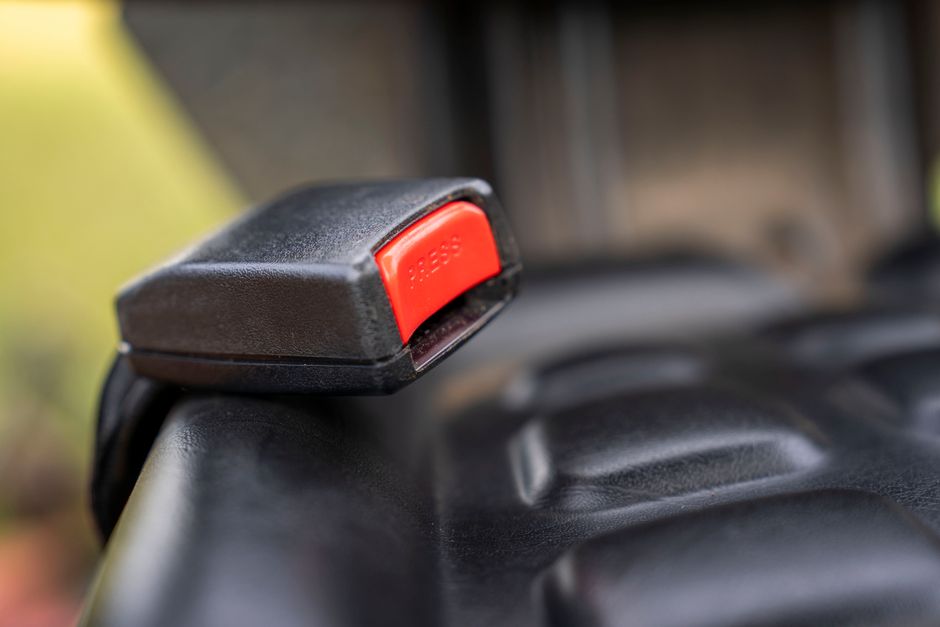
    Close view of a car seatbelt buckle and latch plate in a vehicle interior
    Buckle designs are brand specific, which is exactly why the manufacturer extender is the one worth chasing.

    Why the generic universal extender is the risky option

    Search for a car belt extender and you will find piles of cheap generic ones sold as universal. They are tempting, they arrive tomorrow, and they are the option safety engineers are most uneasy about. A seatbelt is a restraint system, not a strap: the buckle, the latch, the webbing, and the pretensioner are designed to work together, and inserting an unmatched part into that chain introduces a component nobody crash tested with your car. A generic extender may also fit loosely, add slack, or place the lap belt higher on the abdomen than intended, which changes how force is distributed in a collision. If you want an extender, ask the manufacturer first, ask a dealer second, and confirm with them that the part is approved for your exact vehicle and seat position before you rely on it.

    Vehicle types that genuinely run roomier

    Interior fit varies far more by body style than by badge. Deeply bolstered sport bucket seats, the kind with raised side wings meant to hold a driver in place through corners, are the most restrictive shape on the market, and they show up in coupes, hot hatches, and the sportier trims of otherwise ordinary cars. Flatter seat pans with low or no bolstering are the opposite, and they are common in trucks, larger SUVs, minivans, and base trims of full size sedans. Front bench seating has become rare, but where it still exists in full size pickups it removes the console entirely and gives you the widest seat in the mainstream market. Height helps too, since a taller cabin means less contortion getting in and out.

    The console, the door card, and thigh room

    Total seat width is only half the story, because what squeezes most people is not the cushion but the two walls beside it. A tall centre console with a padded armrest that runs forward toward the dash narrows the driver’s space at hip level, and modern cars have trended toward exactly that shape for storage. The door card does the same job on the other side. When you sit in a car for the first time, put your hands flat on both sides at hip height and notice where the pressure is. Then check thigh room separately: slide the seat back and see whether the cushion supports your thighs without the front edge digging in, and whether the steering column or a low dash pinches your right leg when you move to the accelerator.
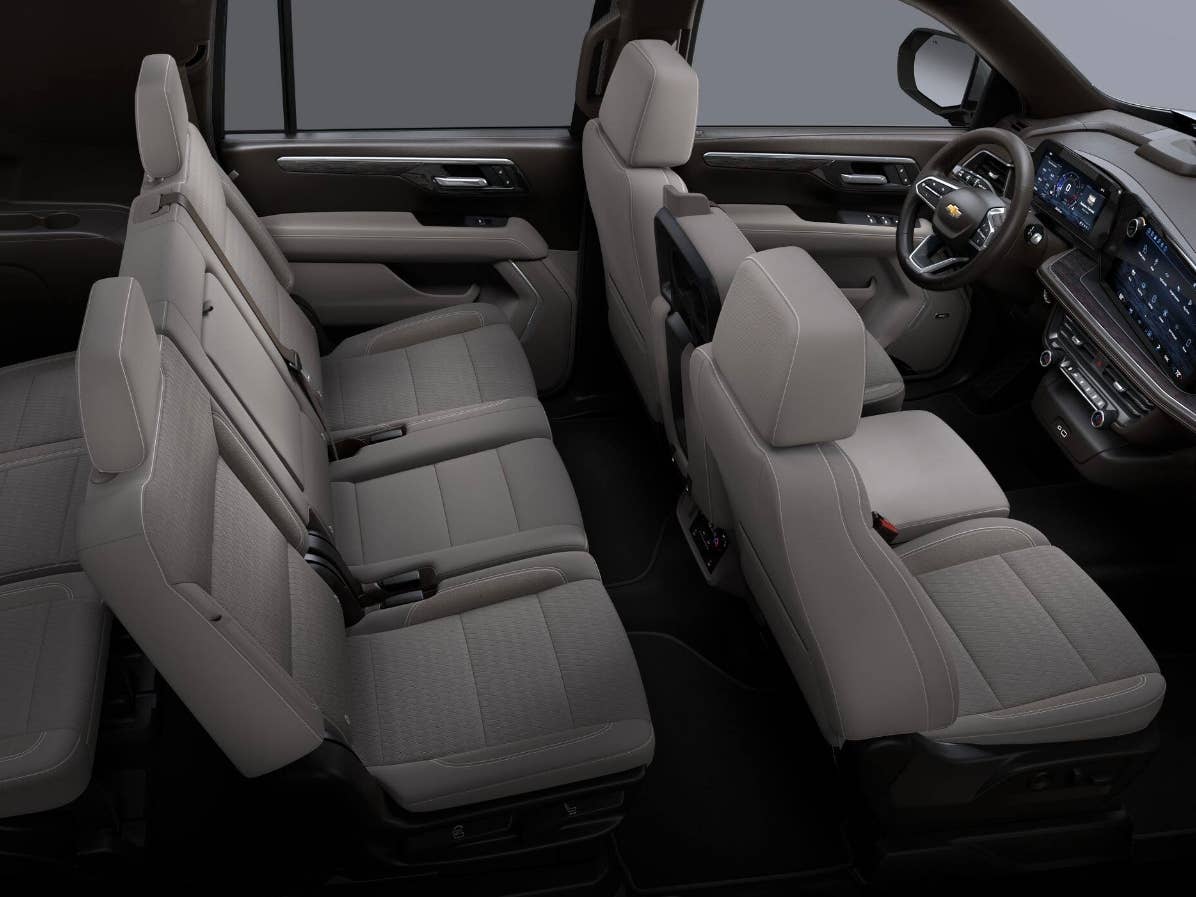
    Interior of an SUV showing wide front seats and a centre console between them
    Flat seat pans and a lower console do more for comfort than any badge on the tailgate.

    What to check in the lot, in order

    Whether you are renting, test driving, or borrowing a friend’s car, the same five checks take under two minutes and tell you everything. Do them before you load luggage, because moving to a different vehicle is easy at that point and awkward once the boot is full. The order matters: belt first, because it is the one thing you cannot work around, then the adjustments, then the details that only bite after three hours.

    Check How to do it What it tells you
    Seatbelt length Sit fully back, pull the belt across and buckle it Whether this car works at all, before anything else
    Seat travel Run the seat fully back and fully down How much headroom and thigh space you really have
    Steering wheel Telescope it out and tilt it up Whether you can reach the wheel without leaning forward
    Pedal reach Rest your foot on the accelerator with the seat back Whether you need the seat closer than is comfortable
    Console pressure Sit normally and notice both hips How the cabin will feel at hour three, not minute one

    Renting a car without the counter awkwardness

    Rental fleets are built around size classes, not models, so booking a class rather than hoping for a particular car is how you get a predictable result. Full size, standard SUV, and large SUV classes give you the flat seat pans and taller cabins described above far more reliably than compact or intermediate. Book the class you want rather than gambling on a free upgrade, since upgrades arrive when the branch is short of small cars and not when you need one. At the counter, a plain logistics sentence does the job: “I need a vehicle with a longer seatbelt and a wider seat, can you tell me which cars on the lot fit that?” You are describing a requirement, the same way somebody asks for a hand control, a tow bar, or a child seat.

    Test the belt before you sign the paperwork

    Agents will normally let you sit in a car before you accept it, and if the belt does not fasten you are entitled to ask for a different vehicle. Do it in the lot, with the door open, unhurried. If the first car does not work, say so plainly and ask what else is available in that class or the one above. Nobody at the desk needs a description of your body, and framing it as a vehicle problem rather than a personal one keeps the conversation short. Rental fleets almost never carry belt extenders, and staff are generally not permitted to fit aftermarket parts to a company car, so the honest answer is to change the vehicle rather than to hunt for an accessory. Ask when you book as well, since some branches will note the request on the reservation.

    Steering wheel clearance, telescoping columns, and adjustable pedals

    Belly to wheel clearance is the thing almost nobody writes about honestly, and it deserves a straight answer: it varies enormously between cars, and the adjustments that fix it are specific and worth hunting for. A telescoping column, which pulls the wheel toward you or pushes it away, is the most useful feature on the list, because it lets you move the wheel out of your lap without moving the seat forward. Tilt helps separately by lifting the rim. Power adjustable pedals, still available on some larger vehicles and trucks, solve the opposite problem by bringing the pedals to you so you can sit further back. When a car has all three, the driving position becomes genuinely adjustable rather than a compromise you absorb for six hours.

    Comfort over a long haul

    Once the car fits, comfort is mostly about pressure and time. Seat cushions are the cheapest upgrade available, and the ones worth having are firm rather than plush, wide enough that you are not perched on a narrow pad, and thin enough that they do not raise you into the roofline or change your relationship with the pedals. A wide memory foam car seat cushion spreads weight across the seat pan instead of concentrating it under your sit bones. Lumbar support is the other half. Built in lumbar adjusters are common in higher trims, and where they are missing a slim strap on lumbar cushion fills the gap behind your lower back without pushing you forward into the wheel.

    Open highway seen through a car windscreen on a long daytime drive
    Planning stops into the route is easier than deciding to stop when you already ache.

    Stops, movement, and circulation on the road

    Sitting still for hours is hard on everybody, and the standard road trip advice about breaking up a long drive applies to bigger bodies with no special caveats. Plan stops into the route rather than treating them as lost time: every ninety minutes to two hours, get out, walk for a few minutes, and move your ankles and shoulders before you get back in. Loosen anything that binds at the waist before a long stretch, keep water within reach, and dress in layers you can shed, since a warm cabin makes everything feel tighter. Compression socks are popular with long distance travellers and some people find them comfortable on drives, but circulation, swelling, and clot risk are medical questions, so ask your doctor about your own situation rather than taking a shopping list from a travel article.

    How the road compares to the air

    If you are choosing between flying and driving for a trip of five or six hours, the car wins on control almost every time. You pick the vehicle, you set the seat, you decide when to stop, and no stranger is assigned to the space beside you. The trade is time and fatigue, which planning absorbs reasonably well. Air travel runs on a different set of rules entirely, with crew supplied extenders, fixed seat widths, and airline specific policies you cannot adjust once you board, and we cover that ground in detail in our guide to airline seatbelt lengths and extenders. Knowing both sets of rules means you can pick the mode that suits the trip instead of defaulting to whichever one is cheapest that week.

    Quick answers to the questions everyone asks

    Can I get a seatbelt extender for my own car? Often yes. Many manufacturers make extenders matched to their own buckles and supply them to owners through a dealer parts desk or a customer care line, usually with your vehicle identification number. Terms, cost, and eligibility vary by brand and country, so call the manufacturer for your specific model and confirm what they offer.

    Are universal seatbelt extenders safe to use? They are the option safety specialists are most cautious about, because the buckle, webbing, and pretensioner are engineered as one system and a generic part was never tested with your car. It can also add slack or sit the lap belt too high. Ask the manufacturer for an approved extender instead.

    Which rental class should I book as a plus size driver? Full size, standard SUV, or large SUV, rather than compact or intermediate. Those classes reliably bring flatter seat pans, taller cabins, and more seat travel. Book the class deliberately instead of hoping for an upgrade, and ask the branch at booking which specific models they stock.

    Do rental companies provide seatbelt extenders? Generally not, and staff usually cannot fit aftermarket parts to a company vehicle. The workable answer is to test the belt in the lot before you accept the car and ask for a different vehicle if it does not fasten. Policies differ between companies, so ask when you reserve.

    What helps most with steering wheel clearance? A telescoping column, because it moves the wheel away from you without forcing the seat forward. Tilt adjustment adds a little more, and adjustable pedals on some larger vehicles let you sit further back entirely. Check all three during a test drive, since availability changes between trims and model years.

    The version of the trip where the car disappears

    A road trip goes well when you stop thinking about the vehicle by the end of the first hour. That happens when the belt fastened without a fight, the seat went back far enough, the wheel sits where your hands want it, and the stops are already marked on the route. None of that is luck, and none of it requires a special car. It requires two minutes in the lot, one honest sentence at a rental counter, and a phone call to a manufacturer if your own car needs a longer belt. Models change every year and interiors change with them, so check the actual car in front of you rather than trusting a spec sheet from three years ago. Then get on the road and pay attention to the view instead of the seat.
  • Skims vs Spanx on a Plus Size Body: Where Each Actually Wins

    Skims vs Spanx on a Plus Size Body: Where Each Actually Wins

    Before anything with a zip, there are usually two pieces sitting on the end of my bed. One is a Skims bodysuit that I know I can wear from morning until the taxi home without thinking about it once. The other is a Spanx short that I know will do a firmer job under a fitted dress and will also make itself known by hour six. Choosing between them takes longer than choosing the outfit, which tells you how badly the internet has explained the difference. Most comparisons treat these two as rivals selling the same thing at the same price. They are not. They are built on two genuinely different ideas about what shapewear is supposed to do to a body, and once you can name that difference, picking becomes fast.

    Two neutral shapewear pieces laid flat on a bed beside a folded dress
    Two different jobs, two different pieces. The mistake is expecting one to cover both.

    Two brands, two theories of the same problem

    Spanx grew out of hosiery, and the engineering instinct never left. The house style is compression: power mesh panels placed where the brand wants the silhouette to change, a firm knit that pulls inward, and construction that treats your midsection as something to be held. That heritage is why so many of the pieces have a definite front and back, a targeted panel across the tummy, and a fabric that snaps back hard when you stretch it. Skims came at it from the opposite direction. The pitch has always been soft sculpting plus a genuinely deep shade range, with buttery knits that smooth a line rather than reshape it, and sizing that runs to 4X or 5X on a lot of the core styles. One brand is trying to change your outline. The other is trying to make your outline read cleanly under fabric. Both are legitimate. They are just not interchangeable.

    How Skims runs at the top of its size range

    At the largest sizes, Skims behaves like the knit it is. The fabric has enormous stretch, so it will physically go on, and that is exactly where people get caught out. When a piece is being stretched near its limit, three things happen at once: the control drops off because the fabric has already spent its recovery, the colour goes slightly translucent across the fullest point, and the leg openings become the pressure line instead of the fabric doing the work evenly. On a longer torso, the sculpting bodysuits are the style most likely to disappoint, because the crotch seam is drafted for an average rise and a long torso pulls the whole garment down at the shoulders. The fix is boring but reliable. Size for your widest measurement rather than your usual clothing size, and if you are between sizes and want comfort, go up. If you want a firmer hold, Skims is not the piece that will give it to you no matter which size you buy.

    How Spanx runs at the top of its size range

    Spanx fails differently. Because the control comes from compression rather than drape, a size that is slightly too small does not just feel snug, it actively misbehaves. The waistband rolls down over the tummy and creates the exact ridge you bought it to avoid, and the thigh hem digs in and produces a visible band under a knit dress. The other thing worth knowing is where the panels stop. A lot of the high waist styles are drafted so the top edge lands at the natural waist or just under the bust, and on a long torso that top edge can end up sitting several inches lower than the picture suggests, leaving a soft section above it that the garment was meant to cover. Silicone grip strips help, and they help most when the band is sitting on a flat plane of skin rather than at the widest part of a curve. Sizing up in Spanx costs you more control than sizing up in Skims does, because in this brand the compression is the product.

    Fabric feel, and why it decides whether the thing stays on

    Try this in a shop if you can. Pinch a section of each, stretch it, and pay attention to how fast it comes back. The Skims knit feels dense and slightly cushioned, closer to a very good swimsuit fabric, and it returns at a soft, unhurried pace. The Spanx power mesh feels thinner and more elastic, cooler against skin, and it snaps. That single difference explains almost everything about how the two wear across a day. Soft, dense knit distributes pressure across a broad area, which is why it disappears from your attention. Snappy mesh concentrates pressure at edges and seams, which is why you feel a Spanx short at the hem and at the waistband long before you feel it anywhere else. Neither fabric is better in the abstract. One is designed to be forgotten and the other is designed to be felt working.

    Close view of two shapewear fabrics being stretched side by side
    Dense knit spreads pressure. Power mesh concentrates it at the edges.

    Skims and Spanx side by side

    What you are comparing Skims Spanx
    Core philosophy Soft sculpt and smoothing Structured compression
    Control level Light to moderate Moderate to firm
    Fabric character Dense, cushioned knit Thinner, snappier power mesh
    Comfort over a full day Strong, often forgettable Noticeable, especially at hems
    Shade range for deeper skin tones The brand’s signature strength Narrower, improving
    Extended sizing To 4X or 5X on many core styles Extended sizes offered, style dependent
    Most common complaint at the top of the range Loses grip, reads slightly sheer under tension Waistband rolls, hems dig in
    Best single use case Everyday smoothing under knits Event grade smoothing under structured fabric
    Price tier Premium Premium

    Where each one actually wins

    Skims wins the ordinary day, and the ordinary day is most days. A workday, a long flight, a wedding where you are on your feet from eleven in the morning, anything where the garment needs to survive sitting, eating, and a car journey without becoming the main character. It also wins whenever the outfit is a thin knit or a slippery fabric, because the smoothing job there is about removing texture rather than removing volume, and because the shade range means the piece genuinely vanishes under pale or thin cloth on deeper skin tones. If your problem is that your bra band shows through a jersey dress, the answer is soft sculpt, not compression. A smoothing bodysuit in your true measurement handles that better than anything firmer, and it does it without you spending the evening negotiating with a waistband.

    Spanx wins the short, high stakes window. Two hours of photographs. A fitted satin dress that shows every ripple because the fabric has no forgiveness in it. A tailored skirt where the outline needs to read as one clean line under a woven that will not stretch to accommodate anything. That is the job compression was built for, and nothing soft will match it. It also wins on targeted problems, because the panel placement is deliberate rather than uniform. If your priority is specifically the midsection, the category as a whole is worth understanding before you buy, and our guide to the best shapewear for tummy control goes deeper on panel placement than there is room for here. When the brief is genuinely event grade, a high waist compression short is the honest choice, with the honest cost attached.

    What the price tiers are really buying

    Both brands sit at the premium end of the category, and neither is trying to compete on cost. What the money buys is not the same thing in each case. With Skims you are paying for fabric quality and for a shade and size range that most of the market still has not matched, which is a real and specific value if you have spent years being offered one beige. With Spanx you are paying for pattern engineering: the panels are placed rather than sprinkled, and the seams are positioned to route tension somewhere useful. Cheaper alternatives exist in both directions and some of them are perfectly good, but the failure mode of cheap smoothing wear is thin fabric that rolls, and the failure mode of cheap compression wear is uniform squeezing with no thought about where the pressure goes.

    Plus size woman checking the line of a fitted dress in a mirror
    Match the piece to the fabric of the outfit, not to the occasion on the invitation.

    Which one for which outfit

    Use the fabric of the outfit as the decision rule, not the formality of the event. Slippery or thin fabric, meaning satin, silk, fine jersey, anything that shows texture, calls for soft sculpt, because compression under a slippery fabric creates edges and the fabric will report every one of them. Structured woven fabric with no stretch, meaning tailored trousers, a fitted sheath, a lined skirt, can take compression, because the outer fabric holds its own shape and hides the edges of what is underneath. A knit midi dress on a Tuesday is a Skims job. A satin bridesmaid dress is also a Skims job, which surprises people, and it is the reason so many event photos show a visible short hem. A structured suit for a presentation is where Spanx earns the money. If you own one piece from each brand and use that single rule, you will get it right most of the time.

    Fit rules that apply to both

    Two habits matter more than the brand name. First, sit down in it before you cut the tag. Standing still is a useless test, because every failure in shapewear happens when your body folds. Sit for a few minutes, stand back up, and look at whether the waistband has moved. Second, buy for your widest measurement rather than your usual dress size, then check where the edges land on your own torso. A garment described as high waist is high on the fit model, and where it lands on you is a fact you can only get by putting it on. A useful low cost habit is keeping a plain seamless smoothing slip in the drawer for the outfits where you want the line cleaned up and want nothing gripping you at all.

    Quick answers to the questions everyone asks

    Is Skims or Spanx better for a plus size body? Neither, because they do different jobs. Skims is better for all day comfort and for smoothing texture under knits and thin fabrics. Spanx is better for a firmer hold across a short window under structured fabric. Most people who wear shapewear regularly end up owning one of each rather than choosing.

    Does Skims actually hold anything in? The sculpting lines give light to moderate control, which is enough to smooth a line and not enough to change your outline. If you are expecting the pull of a compression garment you will be disappointed. Judge it on whether the fabric of your dress lies flat, which is the job it was designed for.

    Why does my shapewear roll down at the waist? Almost always because it is too small, or because the top edge is landing on the fullest part of your midsection instead of above or below it. Sizing up usually fixes it. If it does not, you need a longer style that reaches the ribcage rather than stopping at the widest point.

    Should I size up in shapewear? Size for your largest measurement, then use the fit of the edges to decide. Sizing up in a soft sculpt piece costs very little control and buys real comfort. Sizing up in a compression piece costs noticeably more control, because compression is the whole mechanism, so only do it if the correct size genuinely hurts.

    Can I wear shapewear all day? Soft sculpt pieces, yes, most people wear them like ordinary underwear. Firm compression is a different question. If it leaves deep marks, restricts a full breath, or makes eating uncomfortable, it is too tight for a full day, and that is a sizing signal rather than something to push through.

    What sits in my drawer now

    Two pieces, in the shades that actually match my skin, and no ambition to own more. The soft sculpt bodysuit lives at the front because it gets worn most weeks, under jersey dresses and under anything I need to stop thinking about by nine in the morning. The compression short sits behind it and comes out a handful of times a year, for the outfits made of fabric that forgives nothing. Both fit. Neither one is doing a job it was not built for, and that, more than any brand loyalty, is the whole trick. Buy for the fabric you are putting over it, size for the measurement you actually have, and let the rest of the marketing wash past.

  • Shein Curve, Honestly Reviewed: What’s Actually Worth Ordering and What to Leave in the Cart

    Shein Curve, Honestly Reviewed: What’s Actually Worth Ordering and What to Leave in the Cart

    Ask ten plus size women about Shein Curve and you will get ten different answers, and the strange part is that all of them are probably true. One woman swears her 4X tops fit better than anything she has found in a mall. Another has a drawer of pieces that arrived in the same size and fit like three different sizes. Both experiences are real, and once you understand why, the whole brand stops feeling like a gamble and starts feeling like a system you can play. Shein Curve is not one clothing line with one fit philosophy. It is a marketplace of hundreds of suppliers pushed through a single checkout, and shopping it well means treating every product page as its own separate brand.

    Plus size woman unpacking a parcel of clothing at home
    The unboxing is the real fitting room, which is why ordering strategy matters more here than brand loyalty.

    What Shein Curve actually offers

    Shein Curve is the extended size arm of the wider Shein catalogue, and its main selling point is range rather than refinement. The size span typically runs from roughly 0XL or 1X up through 4X and 5X depending on the item, with some suppliers grading further and others stopping early without much warning. Category coverage is unusually wide for the price tier, taking in denim, dresses, swim, occasionwear, workwear, loungewear, outerwear and accessories, and the assortment turns over constantly. That churn is both the appeal and the problem. A style that fits you perfectly may not exist in three months, and the piece that replaces it under a nearly identical photo may have been made by an entirely different factory to entirely different measurements.

    Why the sizing swings so wildly between items

    This is the single fact that changes how you shop here. Shein does not manufacture most of what it sells. It aggregates from a large network of independent suppliers, and each supplier grades its own patterns. So a 3X blouse from one workshop and a 3X blouse from another can differ meaningfully in bust, shoulder and length, even when both sit in the same section of the site under the same size label. There is no house block enforcing consistency the way there is at a vertically integrated retailer. That is why the “runs small” and “runs big” reviews on the same brand contradict each other so violently. They are not describing Shein. They are describing two different manufacturers who happen to share a storefront.

    The practical consequence is that your letter size is close to meaningless as a predictor. What actually predicts fit is the measurement chart attached to that specific listing, which is usually published as flat garment or body measurements in centimetres and inches. Two listings sitting side by side in your cart can carry charts that differ by several inches at the bust for the same nominal size. Reading each one individually feels tedious the first few times and then becomes automatic, and it is the difference between a keep rate that hovers around a third and one that gets comfortably past half. Everything else in this review is downstream of that habit.

    How to shop it defensively

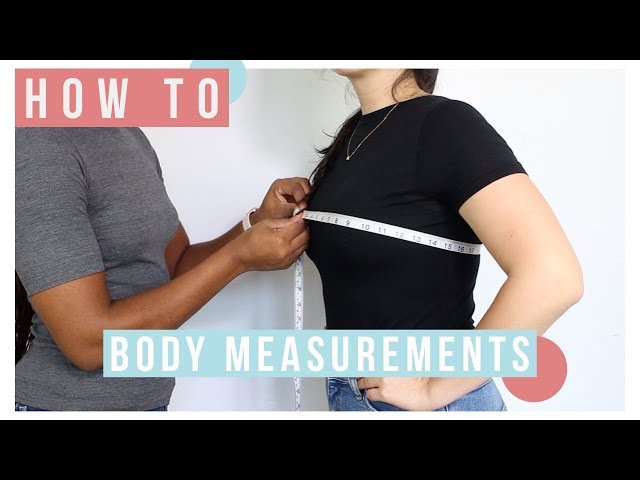
    Start with your own numbers. Measure bust at the fullest point, waist at the narrowest, hip at the widest, and write those three figures somewhere you can reach them from your phone. Then treat each product page as a fresh negotiation. Open the size guide on that listing, not the general one in the site footer, and match your measurements against the chart rather than picking the size you usually wear. When you land between sizes, go up on anything woven, structured or with sleeves, and stay true on anything with genuine four way stretch. A soft flexible body tape measure costs almost nothing and pays for itself on the first avoided return.

    The second defensive habit is reading customer photos before customer text. Shein listings carry buyer uploaded images, and many reviewers list their own height, weight and size ordered. Filter for reviewers whose measurements sit near yours and ignore the rest, because a photo from someone two sizes below you tells you nothing useful about how the shoulders will land on you. Pay particular attention to any picture where the fabric looks different from the studio shot, since that is usually the honest one. Volume of reviews matters less than the presence of several photographed reviews from bodies shaped like yours, and a listing with no buyer photos at all deserves more caution than its star rating suggests.

    Basics and casual knits: the safest part of the cart

    Simple knit pieces are where the model works best. Ribbed tanks, jersey tees, knit midi dresses without a waist seam, leggings, joggers and soft cardigans all forgive grading errors, because stretch absorbs the difference between what the chart promised and what turned up. Elastic waist trousers and oversized shirts styled as layers behave the same way. These items are also the cheapest to be wrong about, since a knit top that arrives roomier than expected reads as relaxed rather than as a mistake. Shoppers who report high satisfaction with Shein Curve are overwhelmingly buying in this lane, whether or not they realise it, and shoppers who report disaster are usually buying outside it.

    Where casual still goes wrong is sleeve and bicep width, a chronic weak point across cheap plus grading, and total body length, which often assumes a shorter torso than many plus bodies actually have. If you are long through the middle, add mental inches to every top and expect crop where the photo showed regular length. Sleeveless and short sleeve styles sidestep the arm problem entirely, which is one reason tanks perform so consistently well here while long sleeve tops disappoint. When a listing does publish a sleeve or arm opening measurement, take it seriously, because that number is the one most likely to decide whether the piece gets worn or quietly retired.

    Folded ribbed knit tops and leggings stacked on a bed
    Stretch knits absorb grading errors, which is why the basics lane produces the fewest regrets.

    Structured pieces and swim: where the risk lives

    Structure is unforgiving, and this is exactly where the multiple supplier problem bites hardest. Blazers, tailored trousers, button front shirts, corset style tops, anything boned or lined, and anything with a fitted waist seam all depend on precise grading through the shoulder, bust apex and waist placement. Cheap patterns scaled up from a straight size sample tend to widen everything uniformly instead of adjusting where a plus body actually differs, so you end up with a jacket that fits at the bust and swims at the shoulder, or a shirt that buttons at the waist and gapes at the chest. If you order structured pieces here, order them expecting to visit a tailor, and price the alteration in before you decide it was a bargain.

    Swim deserves its own warning. Torso length is the dimension that decides whether a one piece is comfortable or whether it drags at the shoulders all day, and it is the dimension almost never published on a size chart. Bust support at larger cup volumes is generally minimal, with removable pads standing in for real underwire construction, and the linings are often thin enough to be revealing when wet. Bikini separates and tankini tops are the lower risk way in, because they let you size the top and bottom independently and remove torso length from the equation entirely. A one piece ordered blind is one of the most likely things in the entire catalogue to end up unworn.

    The fabric weight lottery

    Photographs flatten fabric, and Shein photography is professionally lit in a way that makes thin polyester look substantial. The composition line on the listing is your only real signal, and it is worth learning to read. Anything listed as woven polyester will usually feel lighter and slicker in hand than the picture implied, while cotton blends, ribbed knits, corduroy and denim with a stated weight tend to arrive closer to expectation. Linen blends are the most variable of all, sometimes lovely and sometimes stiff enough to hold a crease you did not ask for.

    Opacity is the specific failure that surprises people most. Light coloured woven tops, white or pastel knits and pale trousers frequently turn out semi sheer under daylight or a phone flash, which is a different problem for plus shoppers than it is for anyone else because there is simply more surface area for it to show on. Ordering pale colours is the highest variance decision in the cart. Darker shades hide fabric thinness, hold their colour through more washes, and rarely produce the moment where you realise in a car park photo that the garment was never going to be opaque. Keeping a smoothing plus size shaping slip in the drawer rescues a surprising number of otherwise unwearable light coloured dresses.

    Category by category, at a glance

    Category Fit read Main risk Verdict
    Ribbed tanks and jersey tees Close to chart, forgiving Short body length Order freely
    Knit dresses without a waist seam Forgiving through the middle Hem shorter than pictured Strong bet
    Leggings and joggers Usually true when stretch is real Thin fabric on pale colours Buy in dark shades
    Denim and rigid trousers Varies sharply by supplier Waist gap, rise too short Chart only, expect misses
    Button front shirts Bust gaping, tight bicep Poor upper body grading Size up or skip
    Blazers and tailored pieces Shoulder rarely lands right Straight size pattern scaled up Only with a tailor budget
    Swim, one piece Torso length unpredictable Shoulder drag, thin lining Highest risk in the cart
    Swim, separates Sizeable independently Limited bust support Safer way into swim
    Occasion and corset styles Fitted waist placement off Boning digs, zip strain Try only if returnable
    Outerwear and oversized layers Generous, easy wins Sleeve length short Reliable value

    Returns, shipping and the friction nobody mentions in the haul videos

    The low prices come with a slower and more manual after sale process than most people expect. Delivery timelines are longer than domestic retailers because much of the stock ships internationally, and a large multi item order can arrive split across several parcels over several days, which makes it easy to lose track of what you actually received. Returns run through the app rather than a shop counter, they typically require initiating within a set window, and depending on your region and order value the return postage may come out of your refund. Certain categories, swimwear and intimates in particular, are frequently excluded from returns altogether for hygiene reasons.

    None of that is unusual for the tier, but it changes the maths, because a cheap item you cannot return is not cheap. Experienced shoppers keep orders small and thematic instead of ordering a giant haul, photograph everything on arrival before the tags come off, and check the returnability note on each listing before adding to cart rather than after the parcel lands. If converting between plus brands is what actually trips you up, our Torrid, Lane Bryant and Eloquii size conversion chart gives you a reference point to translate from a brand whose fit you already trust.

    Woman checking a garment size label and measuring tape at home
    Measuring against the listing chart rather than the letter size is the habit that changes your keep rate.

    The fast fashion question, answered without a lecture

    It would be dishonest to review this brand without naming the obvious. Ultra fast fashion runs on enormous volume, compressed production timelines, heavy synthetic use and supply chains that are difficult to audit, and Shein has drawn sustained criticism and regulatory attention over labour conditions, chemical safety and design copying. Those concerns are legitimate and worth knowing about. What is also true is that plus size clothing has been priced and stocked as a luxury for decades, and a lot of women shop here because the alternatives either do not carry their size or cost triple. Telling someone on a tight budget to simply buy better is advice that ignores who is actually being served.

    So the honest position sits in the middle. Buy fewer pieces and buy them deliberately, favour the categories that last, wear what you order hard instead of treating a haul as entertainment, and use secondhand and end of season sales where mid tier brands genuinely compete on price. That approach reduces the volume problem without pretending that everyone has the same options or the same budget. It also happens to produce a better wardrobe, because deliberate buying and durable categories are the same decision viewed from two angles. Nobody needs a stranger’s approval to dress themselves affordably, and nobody needs to pretend the criticism is invented either.

    Quick answers to the questions everyone asks

    Does Shein Curve run small? Often, but not reliably enough to build a rule around. Because different suppliers make different items, one 3X can fit close to a mainstream 3X while another sits closer to a 2X. Ignore the letter and match your bust, waist and hip measurements against the chart published on that specific listing every single time.

    What is the safest thing to order first? Stretch knit basics in dark colours. Ribbed tanks, jersey tees, knit dresses with no waist seam and leggings all forgive grading errors and hide fabric thinness. They give you a low cost read on how the brand behaves on your body before you risk anything structured, pale or expensive.

    Can I return items that do not fit? Usually yes, within a set window initiated through the app, though swimwear and intimates are commonly excluded and return postage may be deducted depending on your region. Check the returns note on each product page before adding to cart, because the terms are not identical across every category.

    How long does delivery actually take? Longer than a domestic retailer, and large orders frequently arrive split across multiple parcels on different days. Plan around that rather than ordering for a specific event date. If you need something for a fixed occasion, order well ahead or buy it somewhere with a firm delivery promise.

    Is the quality worth the price? In the basics lane, generally yes, because stretch knits are cheap to make well. In structured pieces, swim and pale woven fabrics, frequently no. The composition line is a better quality predictor than the star rating, so favour cotton blends, ribbed knits and stated fabric weights over unlabelled lightweight polyester at any price.

    What survives in my wardrobe six months later

    The test that matters is not how a haul looks on day one, it is what is still hanging up half a year on. In my own wardrobe the survivors from this brand are boringly predictable: ribbed tanks in black and chocolate that I have replaced twice, two knit dresses with no waist seam that get worn to death every summer, and an oversized shirt I use as a layer over everything. The casualties are equally predictable. A blazer whose shoulders never sat right, a white top that turned out to be transparent, and a one piece swimsuit that pulled at the shoulders from the first wear. Shop the lane that works, read every chart, keep the orders small, and Shein Curve stops being a lottery and starts being a tool.

  • Cruising While Plus Size: Cabins, Dining Chairs, Tenders and Excursions, Honestly

    Cruising While Plus Size: Cabins, Dining Chairs, Tenders and Excursions, Honestly

    Cruising is one of the better vacations available to a plus size body, and almost nobody says so out loud. You unpack once. There is no walking three miles a day through a foreign city in the heat with a suitcase. The food comes to you, the bed is the same bed every night, and the ship handles the logistics while you handle the deck chair. That is a good deal. It is also a vacation with a specific set of physical pinch points nobody warns you about until you are standing in front of them, which is what this guide is for. Everything here varies by cruise line, by ship and by year. A fifteen year old vessel and a new one from the same company differ enormously in cabin layout, chair design and deck space. Nothing below is a promise, and where a number matters I will tell you to find the current one rather than invent it for you.

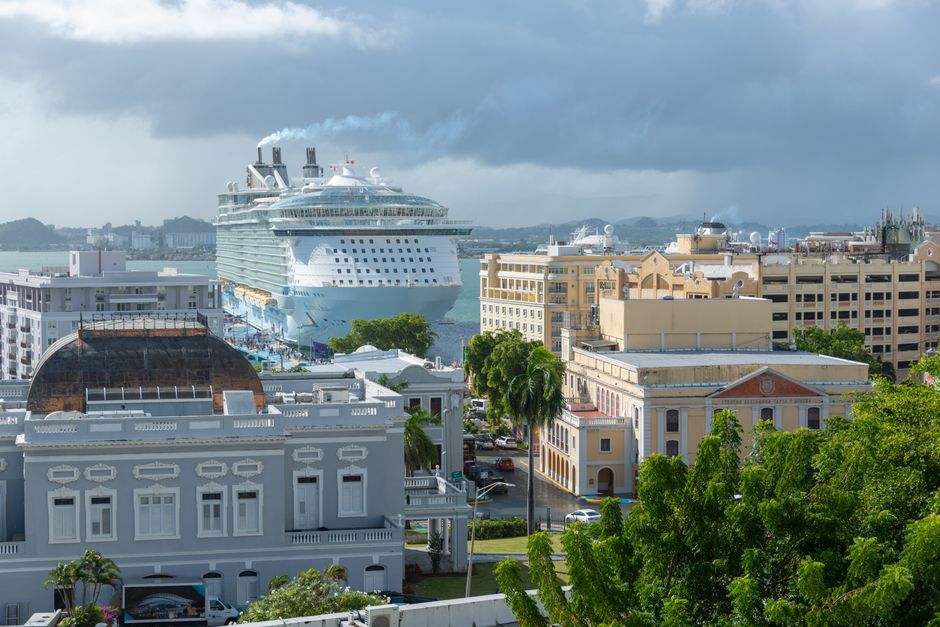
    Large modern cruise ship docked in a sunny Caribbean port
    Newer and larger ships tend to have roomier cabins and more deck space per passenger.

    The cabin is smaller than the photos suggest

    Cruise line photography is shot with wide lenses and staged with the door open, which makes a standard interior cabin look like a hotel room. It is not. A standard cabin is a compact, cleverly engineered space where the bed, the desk, the wardrobe and the walkway all negotiate for the same square footage. The walkway between the bed and the built in desk is often the tightest part, and on older ships it is genuinely narrow. This is the thing most worth researching before you book, because it shapes every morning of the trip.

    The practical fixes are simple once you know to ask. Request that the beds be configured as a single queen rather than two twins if you are travelling as a couple, since the split configuration eats floor space with an extra walkway. Ask your steward on day one to remove the extra chair or ottoman if you are not using it, which they usually do without blinking. And if you are choosing between two cabins at similar prices, square footage on the deck plan beats every marketing adjective in the brochure.

    Bathrooms, showers and the tub question

    Standard cruise bathrooms are the tightest space on the ship, and there is no polite way around that. They are typically a compact module with a toilet, a small sink and a shower, and on many ships the shower is a narrow stall with a curved door or a curtain. Turning around comfortably inside one is the complaint you will hear most from plus size cruisers, and it is a fair one. Here is what actually helps. Bathtubs, where they exist, are usually found in suites and some balcony categories, and a tub shower combination is often reported as easier to use than a narrow stall because you have more standing width even if the step in is higher. Curtains are generally more forgiving than rigid curved doors. Cabin category descriptions will tell you which you are getting on most lines, and if they do not, phone agents can check. Ask before you book, because a cabin change once you are aboard depends entirely on whether the sailing has space.

    Dining room chairs and the armrest problem

    Main dining rooms tend to be furnished with upholstered chairs, and a meaningful number of ships use chairs with fixed wooden arms. For a lot of plus size guests that is the single most uncomfortable moment of an otherwise lovely trip, and it arrives on night one when you are dressed up and hungry and least prepared for it. The solution is unglamorous and it works. Contact the ship in advance through the line’s special requests or accessibility desk, or speak to the maître d’ on embarkation day, and ask that your table be set with armless chairs. Most ships carry both styles and staff handle this request regularly. Asking quietly on day one, before dinner service starts, means the chair is simply there every night and nobody makes a production of it. The specialty restaurants, the buffet and most casual venues typically use armless seating anyway, so if you would rather skip the conversation entirely, those rooms are always open to you.

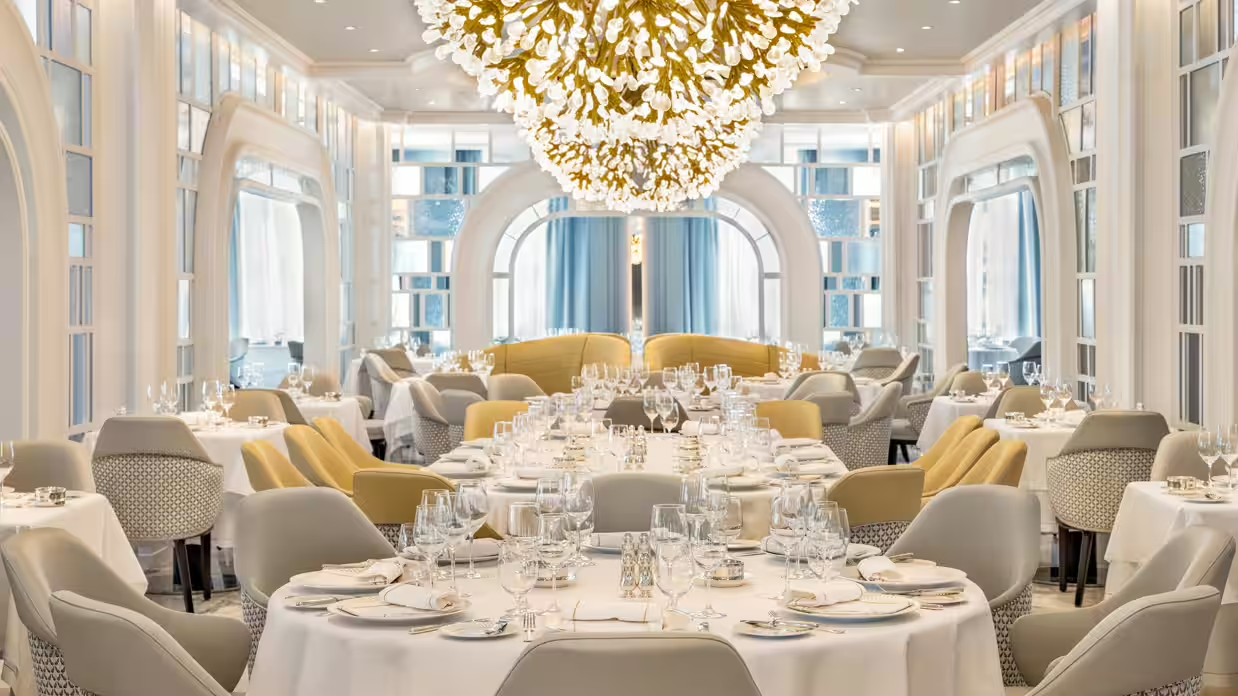
    Elegant cruise ship main dining room set with upholstered chairs and white linens
    Ask for armless chairs on embarkation day and they will simply be there each evening.

    Pool decks, loungers and finding a seat that works

    Deck loungers are usually a lightweight frame with slatted or mesh surfaces, and they vary a lot in width and sturdiness across ships. If one feels unstable, do not fight it. Look instead for the padded double loungers, the cabana style seating and the fixed built in benches most modern ships install around the adult pool areas and along the promenade. Those tend to be the most substantial furniture on the open decks, and on port days they are frequently free.

    The other underused option is the shaded seating in the outdoor bar areas, which is usually proper chairs with proper frames rather than loungers. Sun loungers are not the only way to enjoy a sea day, and honestly a padded chair in the shade with a book and a drink is the better version of that afternoon anyway. Heat is the real enemy on a Caribbean itinerary, and a compact rechargeable handheld fan earns its luggage space several times over on a still afternoon in port.

    Tenders, gangways and getting ashore

    Some ports have a pier the ship ties up to, and some do not. When a ship anchors offshore, you reach land on a tender, which is a small boat that runs between the ship and the shore. Tendering involves stepping from a moving platform into a moving boat with a crew member steadying you, then sitting on a bench in a compact cabin for the ride. Crews do this hundreds of times a week, but it is a real physical transition and worth knowing in advance rather than discovering at eight in the morning.

    A few things smooth it. Tenders run on the calmest sea state available and crews will hold the boat for you, so take the step at your own pace and take the offered hand. Wear shoes with grip rather than flip flops. If mobility or balance is a concern, tell guest services the night before, since many ships have procedures for assisted tendering and some advise skipping a tender port in rough conditions. Itineraries list which ports are tender ports, so weight that when choosing a sailing. A cruise with mostly docked ports is a different trip from one with three tender days.

    Excursions and the limits that do get posted

    This is the area where you must check rather than guess. Adventure excursions frequently carry posted participant requirements, and they are set by the local operator rather than by the cruise line. Zip lines, parasailing, horseback riding, ATV tours, snorkel and dive activities, catamaran trips and some water park slides commonly publish weight or size requirements tied to harness ratings, saddle limits or equipment capacity. Those numbers are real, usually printed in the excursion description on the booking page, and they differ from operator to operator and island to island.

    So read the excursion listing all the way to the bottom before booking, and if the requirement is not stated, email the line and ask them to confirm with the operator. Doing this from home is a two minute administrative task. Doing it on the dock in front of a group is a bad morning. Plenty of excursions carry no such requirements at all, including most walking tours, beach days, catamaran cruises, food and cultural tours and city sightseeing. There is a full vacation in that category alone.

    What tends to work better, and why

    Choice Generally roomier Generally tighter Worth checking
    Ship age Newer builds Older or smaller vessels Cabin square footage on the deck plan
    Cabin category Balcony and suite categories Standard interior and oceanview Bed configuration options
    Bathroom type Tub and shower combination Narrow standalone shower stall Curtain versus rigid curved door
    Dining venue Buffet and specialty restaurants Main dining room with armed chairs Armless chair request at embarkation
    Port type Docked ports Tender ports Itinerary notes on tendering
    Excursion type Beach, walking and boat tours Harness and saddle based activities Posted operator requirements

    One category deserves a direct word. Accessible cabins are genuinely spacious, with wide doors, roll in showers and turning room, and they are frequently the first thing suggested to plus size cruisers online. Please leave them for guests with mobility needs who cannot sail without them. Supply is small and most lines allocate them with documentation. If you have a qualifying mobility need, book one and use it without apology. If you simply want more room, a balcony cabin on a newer ship gets you most of the way there without taking a wheelchair user’s only option.

    Formal night, and dressing for it without dread

    Most lines now run one or two dressier evenings per week, and the standard has relaxed considerably. Formal on a modern mainstream ship usually means a nice dress, a jumpsuit, or dress trousers with a good top. Floor length gowns appear, and so do cocktail dresses, and so do people in a smart shirt eating at the buffet in perfect happiness. Nobody at your table is grading you. Pack for the ship’s climate control rather than the destination, because dining rooms run cold and outdoor decks run humid on the same evening. A wrap or a light structured jacket bridges both. Choose fabrics that travel, because cabin closets are narrow. And build the outfit around a shoe you can walk a long ship in, since dinner, the show and the bar can be a quarter mile apart across three decks. Comfort photographs better than compromise.

    Plus size woman in a bright dress standing at a cruise ship railing at sunset
    Formal night on most mainstream lines has relaxed a great deal, and nobody at your table is grading you.

    The buffet, and the food shame you do not owe anyone

    Let us say this plainly, because the internet will not. You paid the same fare as every other passenger on that ship, and that fare includes the food. All of it. The buffet, the dining room, the room service, the pizza at eleven at night, the second dessert. There is no separate plus size pricing tier and there is no quota attached to your ticket. A person watching what you put on your plate has confused a vacation with a moral exam.

    The reason to mention it at all is that a lot of plus size travellers report policing themselves on cruises, eating less than they want in public rooms, or skipping the buffet entirely in favour of the cabin. That is a tax nobody should pay on a holiday they saved for. Take the plate. Go back for more if you want more. Eat the thing you actually want rather than the thing that looks acceptable. If a stranger has an opinion, that opinion is a fact about them and it costs you nothing to leave it with them.

    Getting to the ship and booking smarter

    Most cruises begin with a flight, and airline seating is a tighter, less generous environment than anything you will meet on the ship. If that leg of the trip is the part you dread, our guide to airline seatbelt lengths and extenders covers what to expect carrier by carrier and how to ask for what you need without the anxiety spiral. Fly in the day before sailing where you can afford it, which removes the entire category of missed embarkation stress and gives you a night to recover.

    On the booking itself, three habits pay off. Look at actual deck plans rather than category names, because square footage is the real currency. Read recent reviews rather than old ones, since ships get refurbished and furniture gets replaced. And make your requests early through the line’s special requests desk instead of on the day, because a request logged weeks out is a note on your booking, while the same request made at the maître d’ stand during dinner rush is an interruption. Same request, wildly different experience.

    Quick answers to the questions everyone asks

    Are there weight limits to board a cruise ship? No cruise line publishes a passenger weight limit for boarding. Where limits appear, they are attached to specific equipment such as excursion harnesses, tender operations in rough conditions, or certain onboard activities like rock walls, ropes courses and water slides. Those are posted at the activity and vary by ship, so check the signage or the excursion listing.

    Will the bathrobe in my cabin fit? Standard cabin robes run small on many lines and are frequently one size. Some lines stock larger sizes on request through your cabin steward and some do not, so ask on day one rather than assuming. Packing your own lightweight robe is a reliable workaround and takes almost no luggage space compared with the alternative.

    Are the ship’s spa and gym worth using? Yes, and they are usually far emptier than the pool deck. Loungers in the thermal suite tend to be substantial fixed furniture rather than folding frames. Gym equipment on newer ships is standard commercial gear with typical manufacturer ratings. If you want a quiet corner of the ship, sea day mornings in the spa are the best kept secret aboard.

    Can I request a table without armed chairs in advance? Yes. Contact the line’s special requests or accessibility desk when you book, and follow up with the maître d’ on embarkation day. Most ships carry both armed and armless chairs and swapping one at your assigned table is routine. Doing it before the first dinner service means it is simply handled for the whole sailing.

    Which cruise lines are best for plus size guests? There is no single answer, because it depends far more on the specific ship than the brand on the funnel. As a general rule the newest and largest ships in any mainstream fleet offer more cabin square footage, more deck space per passenger and more varied seating. Compare individual ships within a line rather than lines against each other.

    Ten thousand square miles of ocean and a chair with your name on it

    The reason cruising suits plus size travellers so well is that it removes the parts of travel that punish a bigger body. There is no dragging luggage up four flights of stairs to a rental. There is no eight mile walking day. There is a room that follows you around the Caribbean, a chair you can claim for the afternoon, and food that arrives without you having to find it. The pinch points are real and they are also, almost all of them, solvable with one email and one quiet conversation on embarkation day. So make the requests. Read the deck plan. Check the excursion listing. Then close the laptop, get on the ship, and take up exactly as much space as you take up, because you booked the same voyage as everyone else on that gangway and the ocean does not have a size chart.

  • Plus Size at Six Flags: The Ride Fit Guide for Every Park in the Chain

    Plus Size at Six Flags: The Ride Fit Guide for Every Park in the Chain

    Ask the internet whether a plus size body fits on Six Flags rides and you get two useless answers. One says everything is fine and you are overthinking it. The other says nothing fits and you should stay home. Neither is written by someone who understands that Six Flags is not one park. It is a chain spread across the country, each location stocked with a different mix of coasters bought in different decades from different manufacturers. The question is never really “does Six Flags fit me.” It is “does this restraint, on this ride model, at this park, fit the way my body is shaped.” That is the question this guide answers.

    Everything below reflects what guests consistently report, not official policy. Six Flags publishes rider safety information park by park, and those pages change. Restraints get retrofitted during off season refurbishment. A coaster that was famously punishing one year can be noticeably kinder the next, and occasionally the reverse, because seats and trains get swapped, rebuilt and reupholstered in ways the marketing never mentions. Nothing here is a promise about a specific ride on a specific day. Treat it as a map of the terrain, then verify at the park with your own body on the day you actually go.

    Wide view of a Six Flags midway with a steel roller coaster rising behind the treeline
    Every park in the chain has its own coaster mix, which is why one visit tells you almost nothing about the next.

    Why Six Flags is harder to generalize than a single park

    Parks built as one coherent project tend to have a house style. The rides came from a shorter list of vendors, the seats share a design language, and if you fit one you have a decent shot at the rest. Six Flags does not work that way. The chain grew by acquisition and by decades of buying whatever thrill machine was winning that year, so a single park can hold a 1970s steel looper, a 1990s inverted coaster, a wooden ride retracked into a steel hybrid and a modern hypercoaster, all within a ten minute walk. Those four rides do not restrain you the same way, do not measure the same point on your body, and do not fail you for the same reasons. Advice starting with “at Six Flags you should” is already too broad to help.

    This also means a guest report needs a park name and a date attached before it is worth anything to you. Two parks in the chain can run the same coaster model with different seat batches, different padding wear, and different crew habits about how hard they push. A rider who fit comfortably on one installation may find a sister ride in another state tighter, and both of them are telling the truth. When you read a forum post, look for the park name and the year. Without both, you are reading a rumor.

    Restraint types matter more than the park name

    The single most useful mental shift is to stop thinking about ride names and start thinking about what the ride puts across your body. There are only a handful of restraint families, and each one has a different failure point for plus size riders. Once you can spot the family from the queue, you can predict most of your day before you ever climb in. It is a skill that takes about ten minutes to learn and then serves you at every amusement park you visit for the rest of your life, which is a good return on ten minutes.

    Lap bars come down across the thighs and lower belly. On older rides they are a shared bar across a bench, often forgiving, and on modern hypercoasters an individual T shaped bar with a padded post between the legs. That T bar is the one guests talk about most, because it is generous for chest and shoulders but unforgiving for anyone who carries weight low. Over the shoulder harnesses, the hard plastic kind on many loopers and inverted coasters, do the opposite. They come down over your chest and clip low, so bust size and torso depth decide the outcome while your legs are largely irrelevant. Vest restraints, the softer padded harnesses on newer wing and dive style coasters, sit closer to the body and are generally reported as friendlier, though they still need to click to a set position.

    Close view of an over the shoulder roller coaster harness in an empty train
    Over the shoulder harnesses measure chest depth, not weight, which is why they surprise people in both directions.

    Know your proportions, not just your size

    Two women who wear the same dress size can have completely different days at the same park. This is the part almost no guide says plainly. A rider who carries weight in the hips, thighs and rear often sails through shoulder harness rides and struggles with T bar lap restraints. A rider with a large bust and a broad ribcage often finds lap bar hypercoasters easy and shoulder harnesses tight. Belly is its own category, because on T bar rides the bar travels down past your midsection to reach the locking notch, and depth from front to back matters far more than any number on a scale.

    So before you plan, take stock honestly and without judgment. Where does your body take up the most front to back space when you sit down? That is the dimension restraints care about. Hip circumference barely matters on a coaster; depth through your middle matters enormously. Knowing this turns the whole day from a series of coin flips into something closer to a plan, because you can walk up to a queue, look at the restraint, and make a reasonable guess about your odds before you invest an hour of waiting.

    Restraint styles and what they actually measure

    Restraint style Where you see it What it measures Plus size reputation
    Shared bench lap bar Older wooden and classic steel coasters Thigh and lap height Often the most forgiving in the park
    Individual T bar lap restraint Modern hypercoasters and airtime machines Belly and upper thigh depth Generous up top, strict through the middle
    Hard over the shoulder harness Loopers, inverted and older launch coasters Chest and shoulder depth The classic problem restraint for busty riders
    Soft vest harness Newer wing, dive and family thrill models Torso depth, snug at the chest Frequently reported as the friendliest of the harness types
    Seatbelt plus lap bar combination Flat rides, spinners, some water rides Waist circumference Varies wildly; belts are the usual sticking point

    Read that table as a set of tendencies and nothing firmer. Any ride can be retrofitted, and manufacturers revise seat designs mid production run, which is how two trains on the same track end up feeling different. What it does reliably is tell you which part of your body is about to be tested, and that alone saves you from the misery of waiting ninety minutes in the sun to find out. It also gives you language for ride crews, who answer a precise question about a locking position far better than a vague one about whether you will fit.

    The test seat is the entire strategy

    Most Six Flags parks place a sample seat near the entrance of the bigger coasters, usually just outside the queue where anyone can use it without commitment. Use them. Use all of them, early, before the park fills up and before you have committed to any line. The whole point of a test seat is to move the moment of truth from a crowded loading platform, with a train full of strangers waiting behind you, to a quiet spot on the midway where nobody is watching and absolutely nothing is at stake.

    A few practical notes on doing it well. Sit the way you would actually ride, all the way back rather than perched forward. Pull the restraint down yourself and look for the click, then check whether the ride requires a specific locking position rather than any engagement. Some rides mark the required notch with a stripe or a number. If you reach that mark comfortably and breathe normally, you are in good shape. If you reach it only by holding your breath and bracing, that is a no, because the ride runs rougher than the test seat.

    Do the circuit first thing in the morning. It takes about twenty minutes to walk the park and check five or six sample seats, and it converts the rest of the day from anxiety into logistics. You will know your list, which queues are worth an hour, and which ones to walk past without a second guess. Then you spend the remaining eight hours enjoying the park you paid to enter, which is the only reason any of this exists.

    Modified seats, and the honest limits of them

    Several coasters in the chain include one or two modified seats per train, sometimes called big boy seats in enthusiast slang, with a shallower belt or a restraint that locks at a slightly different position. Where they exist, they are usually in the front or back row and often unmarked, which means asking is the only way to find them. Crews generally know which row it is and will point you there without fuss if you ask quietly at the station entrance. There is no shame in it. You are asking an operational question about equipment, the same as asking which line is for the front row.

    The limit worth being honest about is that modified seats are not on every ride, are usually a small number per train, and can be occupied or out of service. Plan for them as a bonus rather than a foundation. If a modified seat opens a ride for you, wonderful, and it is worth asking whether the same row exists on other coasters in that park. If the train running that day does not have one available, you still have the rest of your list intact, which is exactly why the morning test seat circuit matters so much.

    Six Flags coasters run tighter than the dark ride parks

    If your reference point for theme parks is the Disney or Universal style of experience, with boats, trackless dark rides and bench seating that accommodates almost everyone, Six Flags will feel like a different sport. That is not a criticism of either. It is a design consequence. Thrill coasters pull real forces, and the restraints are engineered with tighter tolerances because the rider is being held against much stronger loads. A ride that inverts you needs to hold you in a way that a slow moving dark ride simply does not.

    The practical translation is to arrive with a different plan. At a dark ride park you can wander and ride whatever the day brings. At a Six Flags park, wandering is how plus size guests end up having a bad afternoon. Front load the reconnaissance, build a list you trust, then be spontaneous within it. If you want a fuller walkthrough of how this reconnaissance approach plays out at a single large park with a similar coaster heavy lineup, our Cedar Point ride fit guide works through the same method ride by ride.

    Plus size woman smiling in line at an amusement park on a bright summer day
    Doing the test seat circuit early turns the rest of the day into a plan instead of a gamble.

    Small things that make the day better

    Wear something you can sit down in hard. Stiff waistbands and rigid jeans work against you on lap bar rides, because they add depth exactly where the restraint needs to travel. Softer, flatter waistbands and stretch fabrics give you a genuine advantage that has nothing to do with your size. Long, hot days in a park also mean friction, and a pair of anti chafing slip shorts under a dress or skirt is the difference between a great evening and limping to the car at four in the afternoon.

    Bring a small crossbody bag rather than a backpack, since many coasters require bags in lockers and a smaller one is faster to stow. Hydrate more than feels necessary. Plan a real sit down break mid afternoon rather than pushing through, because fatigue makes everything harder including the physical act of settling into a seat. And go with people who make the day easy. The right company turns a restraint that does not close into a shrug and a walk to the next ride.

    Quick answers to the questions everyone asks

    Are there published weight or size limits at Six Flags? Individual parks publish rider safety guidance, and some rides carry specific advisories about body size or proportions, but the chain does not run on a single published number that applies everywhere. Requirements are written around whether the restraint reaches its locking position on you. Check the park’s accessibility pages close to your visit date, since they get revised.

    Will a ride operator make me get off in front of everyone? It happens, and it is genuinely uncomfortable, which is exactly why the test seat circuit is worth twenty minutes of your morning. Crews are usually matter of fact rather than unkind about it. If it happens, they typically pause the dispatch and you walk out through the station exit. It passes faster than the dread suggests.

    Which restraint type should I try first if I am nervous? Older shared bench lap bar coasters are generally the gentlest introduction, and many parks in the chain have at least one classic wooden coaster running that style. They accommodate a wider range of body shapes than modern T bar hypercoasters or hard shoulder harness loopers, and they build confidence for the work ahead.

    Do restraints really change after refurbishment? Yes, and this is why old forum posts mislead people constantly. Parks retrofit seats, replace worn padding, swap trains between installations and occasionally install new restraint hardware entirely during the off season. A report from several years ago describes a ride that may no longer exist in that configuration. Always weight recent reports far more heavily than old ones.

    Is it worth buying a season pass if I am unsure about fit? Many plus size guests find a season pass takes the pressure off, because a single day visit makes every ride feel like a referendum. When you can come back next month, an unavailable ride becomes trivial rather than a wasted ticket. Consider a single visit first to survey the park, then decide.

    The park owes you a good day either way

    Here is the thing worth carrying into the parking lot. A restraint that does not close is a piece of machinery meeting a body it was not engineered around. It is a specification, not a verdict, and it says nothing about whether you belong in that park. You paid the same admission as everyone else on that midway, and the funnel cake, the shade, the water rides, the shows, the ridiculous games and the whole day out belong to you exactly as much as they belong to anyone.

    Do the reconnaissance because it makes the day smoother, not because you need to earn your place on the midway. Know your proportions, read the restraints before you read the ride names, use every test seat you pass, ask the crews about modified rows without apologising for the question, and then let the plan fade into the background where it belongs. What is left is the loud, sunburnt, overpriced, screaming, genuinely wonderful day you came for, and it was always yours to have. That is the whole assignment.

  • Spanx vs Shapermint vs Honeylove: Which Shapewear Is Actually Worth It on a Plus-Size Body

    Spanx vs Shapermint vs Honeylove: Which Shapewear Is Actually Worth It on a Plus-Size Body

    Every plus-size woman I know has the same drawer. One piece that rolled down by the appetizer course, one that left welts, one that technically fit but made sitting a full-body project, and maybe one good one she rewears until the seams go. Shapewear marketing does not help, because the models are almost never built like the people buying it, and the size chart usually stops right where the interesting questions start. So this is the comparison I wish existed: three brands everyone asks about, judged on what actually matters above a 2X, which is whether the thing stays put, whether it comes in your size in the style you want, and whether the price matches what you get.

    What “worth it” means when you wear a 3X

    Straight-size shapewear reviews grade on smoothing. On a plus-size body the bar is different, because more fabric surface means more chances for something to fail. The three failure modes that decide everything are roll-down at the waistband, ride-up at the thigh, and the shoulder strap or bust panel giving out and letting the whole garment migrate south. A piece that solves all three is worth real money even if it does nothing clever. A piece that smooths beautifully in a fitting room mirror and then bunches under your ribs after twenty minutes of sitting is worth nothing at any price. So the questions I take into a comparison are these: how wide is the band, is there silicone where the garment meets skin, is there any structure holding the top edge up, and does the size range go far enough that you are not buying the largest size in the chart and hoping.

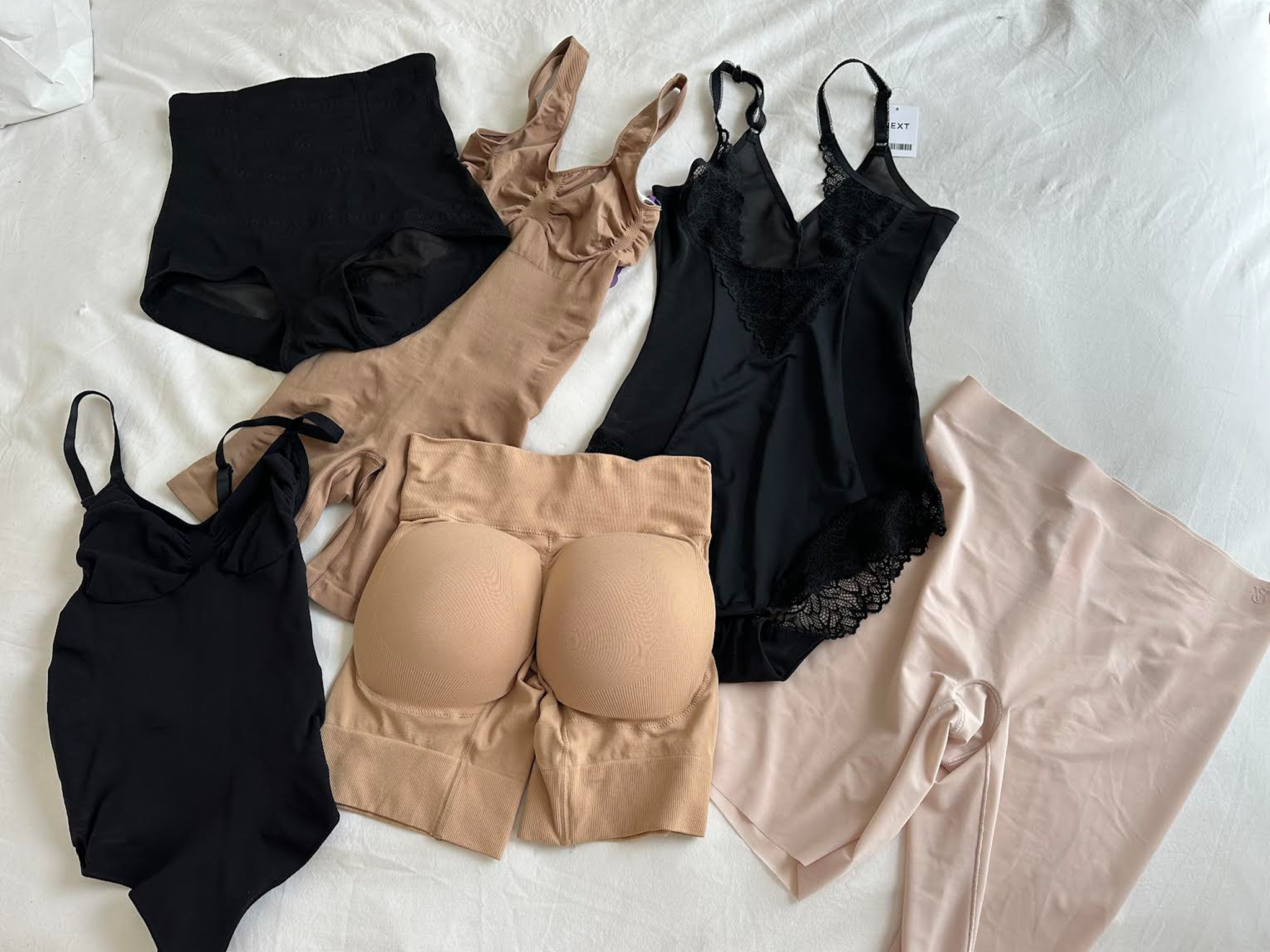
    Assorted shapewear pieces in nude and black laid flat on a bed
    Three brands, three philosophies: legacy smoothing, budget access, and engineered structure.

    Spanx: the premium benchmark with a ceiling

    Spanx invented the category as we know it, and the fit engineering shows in the pieces that work. The mid-thigh shorts and the classic bodysuits are cut cleanly, the fabric recovers well after washing, and the smoothing is genuinely invisible under thin knits, which is the hardest test in shapewear. The brand also has the widest style catalogue by a distance, so if you need something specific, a high-waisted brief, an open-bust bodysuit, a slip that works under a wedding guest dress, Spanx probably makes it. Where it disappoints plus-size shoppers is the size ceiling. The range on many core styles tops out well below where the plus market actually lives, and coverage above 3X depends heavily on which style you want rather than being consistent across the line. Sizing also runs firm, so the largest available size on a body near the top of the chart can feel punishing rather than supportive. If your size is in range, Spanx mid-thigh shorts remain the reference point everything else is measured against.

    Shapermint: the widest reach at the lowest entry point

    Shapermint’s whole proposition is access. The size range extends further up than either of the other two on most core styles, the price sits in budget territory, and the brand leans hard into everyday wear rather than special occasions. That combination matters more than shapewear snobs admit, because a lot of women need a functional high-waisted brief for work five days a week, not an engineering marvel for one gala. The empire-waist camis and the high-waisted shorts are the pieces people repurchase, and they do the basic job: light to moderate smoothing, soft against skin, no drama. Where it disappoints is durability and control level. Fabric recovery fades faster than premium pieces, so a heavily worn garment can go slack within a season, and the compression is genuinely lighter than the marketing photos suggest. Do not buy it expecting the flattening you see in the before-and-after imagery. Buy it expecting a comfortable, forgiving layer at a price where owning three is realistic, and start with a high-waisted shaping short.

    Woman adjusting the wide waistband of high-waisted shaping shorts
    A wide waistband that sits above the natural waist is what stops the mid-body roll-down.

    Honeylove: built to stay put, priced accordingly

    Honeylove built its reputation on solving the migration problem, and the construction reflects it. Flexible boning through the torso keeps the garment from folding in on itself when you sit, silicone grip lines sit where the fabric meets skin, and the bodysuits use real bra engineering at the bust instead of a stretchy shelf that collapses under a full chest. For a plus-size body, that structure is the difference between shapewear you forget about and shapewear you excuse yourself to fix. The sculptwear bodysuits and the thigh-length shorts are the standouts. Where it disappoints is price and range. This is premium pricing, the size ceiling is better than Spanx on some styles and no better on others, and the boning that solves migration can read as too structured if you want something soft and barely-there. There is also a learning curve to getting into the bodysuits, which is not a flaw but is worth knowing before you order for an event three days out. A Honeylove sculptwear bodysuit is the piece to try if nothing has ever stayed where you put it.

    The comparison at a glance

    Factor Spanx Shapermint Honeylove
    Price tier Premium Budget Premium
    Size range reality Strong through the low plus sizes, thins out above 3X and varies by style Goes furthest up the chart on core styles, most consistent across the line Mid to upper plus on many styles, better than Spanx on some, no better on others
    Compression style Firm, traditional smoothing Light to moderate, comfort-led Moderate to firm with structural support rather than pure squeeze
    Staying-put construction Wide bands, silicone on some styles, minimal boning Wide bands, limited grip elements Flexible boning, silicone grip lines, engineered bust
    Best use case Invisible smoothing under thin fabrics, widest style catalogue Everyday wear, building a rotation without overspending All-day events where nothing can shift, fuller busts
    Where it disappoints Size ceiling and unforgiving fit at the top of the chart Fabric recovery fades, lighter control than advertised Price, and structure can feel like too much for casual wear

    Compression levels, decoded

    Brands use light, medium, and firm without agreeing on what any of them mean, so translate by construction instead. Light control is a single layer of stretch knit with no seaming through the panel: it removes texture from a bra line or a waistband and does nothing else. Medium control adds a second bonded layer or a power mesh panel across the stomach, which is where most people actually want to land for a workday. Firm control means multiple bonded layers, contour seaming, and often a hook or zip closure, and it will change your silhouette at the cost of how long you can comfortably wear it. On a plus-size body, jumping straight to firm is the most common mistake, because firm compression across a larger surface has to go somewhere, and it usually goes up over the top edge or down onto your thighs. Start a size honest and a compression level lower than your instinct.

    Staying-put construction: what to look for on the product page

    You can predict most of a garment’s behaviour from the photos if you know what to hunt for. Look for a waistband at least two inches wide, ideally sitting at or above the natural waist, because narrow elastic is what rolls. Look for silicone: a dotted or wavy line printed on the inside of the leg opening and the top edge is the single most reliable anti-migration feature there is. Look for flat, bonded seams rather than stitched ones, which reduces the ridge that shows through jersey. On bodysuits, look for actual cups or an underwire rather than a shelf panel, because on a fuller bust an unstructured top hangs the entire garment’s weight off your shoulders and drags it down. And check the gusset: a snap closure that requires full undressing is a real quality-of-life issue on a long day out. If you want the deeper breakdown by body concern rather than by brand, our guide to the best shapewear for tummy control goes style by style.

    Close-up of silicone grip lines on the inside hem of shapewear
    Silicone grip lines on the inside hem are the most reliable predictor that a piece will not ride up.

    Sizing when your measurements land between charts

    Almost every plus-size shapewear chart uses a bust, waist, and hip combination that assumes those three numbers move together, and plenty of bodies do not work that way. When your waist says one size and your hips say another, size to the larger measurement, always. Undersizing does not increase smoothing, it just relocates fabric and creates the shelf everyone hates. If a brand publishes weight ranges alongside measurements, treat the measurements as the real guide and the weight as noise, because two people at identical weights can be shaped completely differently. For bodysuits, torso length is the hidden variable nobody lists: if you are long through the body, a bodysuit sized to your hips can still pull uncomfortably at the crotch, and separates will serve you better than a one-piece. Buy one piece from a brand before you buy three, wear it for a full day at home, and only then commit.

    Quick answers to the questions everyone asks

    Which of the three goes highest in size? Shapermint reaches furthest up the chart on its core styles and stays most consistent across the line, which is why it is usually the answer for anyone above a 3X. Spanx and Honeylove both vary style by style, so check the specific product’s chart rather than trusting the brand’s overall reputation for range.

    Is shapewear safe to wear all day? Moderate compression worn over a normal day is fine for most people. Firm compression for many hours can cause numbness, reflux, or genuine discomfort, especially through the stomach. The practical rule is that anything making you shallow-breathe, adjust constantly, or dread sitting down is too tight, regardless of what the size chart claims.

    Why does my shapewear roll down under my belly? Almost always a waistband problem rather than a size problem. Narrow elastic sitting at the fullest part of the stomach has nowhere to grip, so it folds. Switch to a piece with a band at least two inches wide that sits above the natural waist, ideally with silicone printed along the top edge.

    Bodysuit or separates? Bodysuits give the smoothest line with no midsection seam, which matters under clingy fabrics. Separates win on bathroom logistics, on long torsos where a one-piece pulls uncomfortably, and when you only need control in one zone. If you are buying your first structured piece, separates are the more forgiving experiment.

    How do I wash it so it lasts? Hand wash in cool water with a gentle detergent, or use a mesh bag on a delicate cycle, and skip fabric softener entirely because it coats the elastane and kills recovery. Never put shapewear in a dryer. Heat is what turns a well-fitting piece into a slack one within a season.

    Picking one good piece instead of a full drawer

    If you are starting from nothing, the honest allocation is one everyday piece and one occasion piece, not a wardrobe. Shapermint covers the everyday slot without much financial risk, and it is the right place to figure out what compression level you actually tolerate. Honeylove earns the occasion slot when staying put is non-negotiable and your bust needs real support. Spanx sits between them, unbeatable under thin fabric when your size is genuinely in range and frustrating when it is not. What none of them do is make a body acceptable, and any brand suggesting otherwise deserves less of your money. Shapewear is a styling tool, the same as a good bra or a well-hemmed trouser, and the piece worth keeping is simply the one you stop noticing an hour after you put it on.

  • Old Navy Plus Sizes, Honestly Reviewed: What Runs True, What Runs Small, and What to Skip

    Old Navy Plus Sizes, Honestly Reviewed: What Runs True, What Runs Small, and What to Skip

    There is a rack just outside the fitting rooms at my nearest Old Navy where shoppers hang the things that did not work, and it tells you almost everything about the brand’s plus range. On any given afternoon it is stacked with woven dresses and structured button downs, while the jeans and the joggers are already back in someone’s cart. That split is the honest summary of shopping plus size here. Some categories are genuinely reliable at a price that lets you take a chance. Others feel like they were graded up from a straight size sample without anyone checking what happens across a bust, a belly, or a hip. Knowing which is which is the difference between a haul you keep and a return label you resent.

    Plus size shopper browsing a rack of denim in a bright clothing store
    The plus section rewards shoppers who know which categories to trust before they get to the register.

    What Old Navy’s plus range actually covers

    Old Navy sits in the mass market tier, which means the plus offering is built around volume basics rather than statement pieces. Women’s plus is typically listed from 1X through 4X in letter sizing, with numeric equivalents running up into the 20s and 30s depending on the category, and the brand has advertised a full 0 through 30 span on core styles. Denim carries the widest numeric grading and the most fit variations, from wide leg to straight to the pull on styles. Tops, dresses, and activewear are usually letter sized, which is a coarser system and part of why fit is less predictable there. The women’s plus assortment is where the brand puts its real energy, and where the quality gap between categories shows up most clearly.

    The Bodequality launch and the scale back that followed

    In 2021 Old Navy launched Bodequality, an initiative that promised every women’s style in every size, with sizes 0 through 30 and XS through 4X carried at the same price and merchandised together instead of exiled to a back corner. For a lot of plus shoppers it was the first time a mainstream chain treated the range as default rather than an afterthought, and the goodwill was real. What followed was less inspiring. Within a couple of years the in store presence shrank noticeably at many locations, with extended sizes consolidated or pushed largely online while straight sizes kept the floor space. Shoppers noticed immediately, and the frustration was loud, because the promise had been about walking into a store and finding your size on the same rack as everyone else’s. The clothes did not get worse. The access did.

    That history matters when you shop the brand now. The design and grading improvements that came out of the Bodequality work are still visible in the fit of the denim and the better knits, which is why those categories tend to hold up. What you lost is the ability to try things on casually. Treat the current experience as an online first brand with a store that occasionally cooperates, and your expectations line up much better with reality. It also explains why the online reviews skew more positive than the word of mouth does, since the people who order deliberately from measurements have a better time than the people who drove over hoping to browse.

    Jeans: the category that earns the most trust

    Denim is where Old Navy’s plus sizing is most defensible. Shoppers broadly report that the numeric waist runs close to a true measured waist rather than a vanity size, so pulling your actual tape measurement and matching it to the size chart is a reasonable first move. The higher rise fits are the safer bet, because they sit above the softest part of the midsection instead of rolling down over it, and the rigid or high recovery denims hold their shape through a full day far better than the very stretchy versions. The recurring complaint is waist gap on curvier hip to waist ratios, which is a grading issue rather than a sizing one, and it hits the straight and wide leg cuts hardest. If you already know your denim quirks, our guide on how to find jeans that fit when you are plus size and curvy saves you a lot of trial and error before you ever open a cart.

    Where the denim disappoints is the very stretchy jeggings and pull on styles. They feel great in the first hour and then loosen through the knee and seat, which reads as a size up by dinner. If you want denim that still looks intentional at the end of a long day, stay with the styles that name a firmer fabric on the tag, and treat anything described as super soft or ultra stretch as a lounge purchase rather than a workwear one. Shoppers who want to compare cuts across the plus range often start with the brand’s high rise plus size jeans and work outward from there.

    Tees, tanks, and knit tops: where the price shows

    The basic tees are the most bought and the most complained about item in the plus assortment, and both reactions are earned. Fit wise they are generally true to letter size with a generous body and a slightly short overall length, which is the usual tell that a pattern was scaled from a straight size block without adding vertical room. If you are long through the torso, or you want a tee that stays put when you raise your arms, sizing up one letter is the common workaround. Fabric is the real limitation. The lightweight jersey is thin enough that a darker bra reads through a white or pastel tee, and after several wash cycles the hem can twist and the neckline can relax. At this price point that is a fair trade for some people and a dealbreaker for others.

    Folded stack of colorful cotton t-shirts on a wooden surface
    Basic tees are the volume driver of the plus range, and the place where thin fabric shows up first.

    The heavier knit tops are a different story. Ribbed styles, waffle knits, and the thicker cotton slub tees hold their shape, skim rather than cling, and survive the laundry far better than the featherweight jersey. They cost more within the same store, which is exactly the point, and the gap between the cheapest tee and the mid tier one is small enough that it is rarely worth saving. When people say Old Navy plus tops are hit or miss, they are usually comparing a heavy rib to a paper thin basic and blaming the sizing for what is really a fabric weight difference.

    Activewear: better than expected, with one caveat

    Activewear is quietly one of the strongest plus categories here. The high rise leggings in the compression style hold through squats and stairs without rolling, the waistbands are wide enough to sit flat instead of digging, and the inseam options mean shorter and taller shoppers are not both stuck with one length. Shoppers consistently report that the leggings run true to letter size or very slightly small, so ordering your usual size is a reasonable default and sizing up is the fix if you prefer less compression. Sports bras are the caveat. Support at larger cup volumes is limited, the sizing is letter based rather than band and cup, and the pullover construction gets difficult past a certain bust size. Buy the bottoms with confidence and treat the bras as a low stakes experiment.

    Dresses and jumpsuits: the riskiest add to cart

    This is the category that fills the reject rack. Woven dresses, shirt dresses, and anything with a defined waist seam are where plus grading tends to break down, because the waist placement is set for a straight size proportion and lands high on a longer torso or a fuller midsection. Jumpsuits amplify the same problem, since a rise that is even slightly short pulls the whole garment out of line and there is no adjusting your way out of it. Button front styles add gaping at the bust. The dresses that do work are the unstructured ones: knit swing dresses, tiered woven styles with no waist seam, and anything cut as a shift. Those forgive proportion differences instead of fighting them. If you want a dress you can order without measuring twice, the plus size knit swing dresses are the low risk pick.

    Category by category, at a glance

    Category Fit read Quality at the price Verdict
    Jeans, high rise and rigid Close to measured waist, size to your tape Good, holds shape Buy with confidence
    Jeans, jeggings and pull on True at first, loosens through wear Under premium, stretches out Skip unless you size down
    Basic lightweight tees Generous body, short length Thin, short lifespan Buy dark colors only
    Ribbed and heavier knit tops True to letter size Noticeably better fabric Best value in tops
    Leggings and activewear bottoms True to slightly small Strong for the tier Buy with confidence
    Sports bras Letter sized, limited cup range Light support Low stakes only
    Structured and waist seam dresses Waist sits high, bust gaping Inconsistent Try in store or skip
    Knit swing and shift dresses Forgiving, true to size Decent Safe online order
    Woven button front shirts Gaping at bust, short body Stiff, wrinkles fast Skip

    The online only problem and how to work around it

    The most common complaint about Old Navy plus is not the clothes. It is driving to a store, finding two racks of extended sizes in a corner, and being told the rest is online. Store assortments vary wildly by location, and the sizes carried on the floor skew toward the lower end of the plus range, which leaves 3X and 4X shoppers with almost nothing to try. There are workarounds that help. Check inventory by store on the site before you go rather than after. Use in store pickup to order the pieces you want to try, then use the fitting room as a fitting room and hand back what fails at the counter. If your local store is genuinely thin, find out which nearby location carries the deeper assortment, because the difference between two stores in the same metro area can be dramatic.

    Woman comparing two garments in a fitting room mirror
    Ordering for in store pickup turns an online only range back into something you can try before committing.

    Returns, exchanges, and keeping your cart honest

    Because so much of the plus range is ordered blind, the return process becomes part of the product. Old Navy accepts in store returns for online orders, which is the single most useful thing about the brand for plus shoppers, since it removes the mailing step that makes so many people keep things they dislike. Keep the packing slip, keep tags on until you have worn the piece around the house for an hour, and process returns as a batch rather than one at a time. The other habit worth building is ordering two sizes of anything structured and one size of anything knit. That sounds wasteful, and it is cheaper than the alternative, which is a closet full of near misses you tell yourself you will alter. Sale and clearance items can carry different return terms, so read the line at checkout before you assume a final markdown is returnable.

    Quick answers to the questions everyone asks

    Does Old Navy plus size run big or small? It depends on the category rather than the brand. Denim tends to run close to a true measured waist, leggings run true to slightly small, and basic tees run generous through the body but short in length. Structured woven pieces are the least predictable, with the waist seam often landing higher than expected on longer torsos.

    Is Old Navy plus still sold in stores? Some of it is, but the in store assortment shrank after the initial Bodequality rollout and now varies heavily by location. Many stores carry a limited selection weighted toward 1X and 2X, with the deeper range available online. Checking store inventory on the site before driving over saves a wasted trip.

    What is the best thing to buy from the plus range? High rise denim and activewear bottoms are the two categories shoppers report the most consistent satisfaction with. Both use fabrics with real recovery, both have generous size grading, and both are cut with the midsection in mind rather than scaled up from a smaller pattern.

    How is the fabric quality at this price? Mixed, and predictably so. The lightweight jersey tees are thin and lose shape after repeated washing, while ribbed knits, denim, and performance fabrics hold up genuinely well. Reading the fabric description before adding to cart is a better quality filter than reading the reviews.

    Can I return online plus orders to a store? Yes, in store returns for online orders are accepted, which is one of the strongest reasons to shop here rather than a mail only retailer. Bring the packing slip, keep the tags attached, and check the terms on any clearance item, since final markdowns can carry different conditions.

    What earns a permanent spot in my rotation

    My own closet answers this question more honestly than any list. The Old Navy pieces that survive rotation after rotation are the high rise jeans, two pairs of compression leggings, and a stack of ribbed tanks I keep replacing in the same color. The pieces that quietly disappeared were the thin white tees, a button front shirt that never sat right across the bust, and a waist seam dress I kept meaning to have taken in. That is a fair result for a mass market brand, and it is a better result than the internet gives Old Navy credit for. Shop the categories that are actually built for a plus body, order for store pickup so you can try before you commit, and let the reject rack be somebody else’s problem.

  • Southwest’s Customer of Size Policy, Explained: How It Actually Works at the Airport

    Southwest’s Customer of Size Policy, Explained: How It Actually Works at the Airport

    There is a specific kind of insomnia that shows up the night before a flight, and it has nothing to do with turbulence. It is the mental rehearsal: which seat, which row, whether the armrest goes down, what your face will do if the person beside you sighs. If you have run that loop, you already know why Southwest’s Customer of Size policy gets talked about the way it does. It is the one major American airline policy that puts the situation in writing, gives you a route to a second seat, and refunds that seat after you fly. That combination is rare enough that it shapes where a lot of plus-size travelers book. Here is how the policy has worked in practice, how to use it without a scene, and what to double check before you buy.

    What the Customer of Size policy actually is

    The short version is that Southwest recognizes some passengers need more than one seat, and it treats that as a booking question rather than a character question. As described on the airline’s recent policy pages, a customer who needs extra space can travel with a second seat, and there are two paths to it. You can purchase the additional seat when you book and request a refund for it after your trip, or you can go to the ticket counter on the day of travel and request the extra seat there. The refund route is the part people find surprising, because it means the second seat functions as a placeholder rather than a penalty. Airline policies do change, and Southwest has publicly reworked large parts of its seating and boarding model in recent years, so treat everything here as the shape of the policy and confirm the current wording on Southwest’s official Customer of Size page before you book.

    Airline ticket counter agent helping a traveler check in at the airport
    The ticket counter, not the gate, is the calmest place to handle an extra seat request.

    How to book the extra seat before you fly

    Booking ahead is the version I recommend to anyone who can float the cost for a few weeks, because it removes every variable except the refund paperwork. You reserve two seats for yourself in a single itinerary, either through the extra seat option on the website or by calling reservations if the online path is not behaving. Both seats sit under your name, which is what stops the system from selling the second one out from under you when the flight fills. After you travel, you request the refund for the extra seat, and it goes back to the original form of payment. Two practical notes: keep your confirmation number and the receipt for the second seat somewhere you can find it in a hurry, and if you are connecting, check that the extra seat is attached to every leg and not just the first one. That second detail is the one that bites people.

    The armrest test, and why it is not a verdict on you

    The benchmark Southwest has traditionally pointed to is simple: whether you can lower both armrests on either side of your seat. If they will not come down, you need the extra seat. It is a crude measure. Armrest widths vary between aircraft types, some rows have fixed exit-row armrests, and a person’s shape does not distribute itself neatly between two plastic arms. But the test has one real virtue, which is that it is objective and physical rather than a stranger’s opinion of your body. Use it as a logistics tool. Sit in a dining chair with arms, or measure your hips at the widest point while seated, and compare that to the seat width published for the aircraft you are flying. If the numbers are close, book the extra seat and let yourself have the flight instead of spending three hours holding your arms in.

    Row of economy airplane seats with armrests raised
    Armrest width varies by aircraft, so the same body can pass on one plane and not another.

    Asking at the counter: scripts that keep it short

    The gate is loud, rushed, and public. The ticket counter is none of those things, so handle this there if you possibly can, ideally as your first stop after you arrive at the airport. What you want is a Customer Service Agent, a normal transaction voice, and a sentence that names the policy so nobody has to guess what you are asking for.

    Try this if you are requesting the seat on the day: “Hi, I’m a Customer of Size and I’d like to request an extra seat for flight 1482 to Denver.” If you already bought the second seat: “I purchased an extra seat under my reservation. Can you confirm both seats are showing and give me the extra seat document?” If the agent looks blank, stay flat and factual: “Could you take a look at the Customer of Size policy? If it isn’t coming up on your end, I’m happy to wait for a supervisor.” You do not owe an explanation, a joke to defuse it, or an apology. Most agents handle this dozens of times a month and will move faster than you expect.

    What happens when the flight is full

    This is the scenario worth planning around, and it is exactly why the advance purchase matters. When you have already bought the second seat, it is yours, full flight or not, because it was sold to you. When you request the seat at the counter on a day when the aircraft is genuinely full, the airline has historically worked to accommodate the request another way, which can mean a seat on a later flight without an additional charge. That is a fine outcome if you built slack into your travel day and a miserable one if you are connecting to a cruise. So the calculus is simple. Flying at a busy hour, on a holiday weekend, or on a route you cannot afford to miss? Buy the extra seat in advance. Midweek, off-peak, flexible arrival? Requesting at the counter is a reasonable risk. Either way, confirm the current procedure with Southwest before you rely on it.

    How other US airlines compare in spirit

    Southwest stands out less for the second seat itself than for the refund and for saying the quiet part in plain language on a public page. Most other large US carriers address passengers who need extra space inside the conditions of carriage or a general seating section, and the usual expectation is that you buy the second seat and keep the cost. Some carriers have offered refund or credit routes at various points, and a few will move you to an empty adjacent seat at crew discretion when the cabin allows. That discretion is the problem: a policy that depends on which crew you get is not a policy you can plan around. Before booking any non-Southwest itinerary, search the airline’s own site for its passengers of size language, screenshot it, and carry the screenshot. Third-party summaries, this one included, go stale the moment an airline updates a page.

    Traveler checking a boarding pass on a phone in an airport departure lounge
    Screenshot the airline’s own policy page and keep it on your phone before you leave home.

    Small things that make the flight itself easier

    Once the seat question is settled, the rest is comfort logistics. Wear something with a soft waistband that does not dig when you sit for hours, and pack a light layer, because cabins run cold and shivering makes everything ache. Anti-chafe protection is worth applying before you leave the house rather than in an airport bathroom, and a travel-size anti-chafe balm stick fits in a personal item without setting off any liquid rules. Hydrate more than feels necessary. If seatbelt length is on your mind, that is a separate and very solvable problem, and our guide to airline seatbelt lengths and extenders covers which carriers run short, how to ask for a cabin extender, and why crew-issued ones are the only ones you should count on. A memory foam travel neck pillow earns its space on anything over two hours.

    Open carry-on bag packed with travel comfort essentials
    Anti-chafe balm, a soft layer, and a real neck pillow do more for a long flight than any seat hack.

    Quick answers to the questions everyone asks

    Do I have to prove I need the extra seat? No documentation is involved. The reference point is the armrest test, and in practice agents process the request as a booking transaction. You are not asked for weight, measurements, or a medical note. If someone pushes for that, politely ask for a supervisor and reference the policy by name, because that is not part of it.

    Will the refund happen automatically? Historically the refund for the extra seat has been requested after travel rather than issued on its own, so plan to submit it and keep your receipt. Processing takes time, often a couple of weeks, and it returns to your original payment method. Set a calendar reminder for the week after your trip so it does not quietly slip.

    What if I bought the extra seat and then only needed one? Nothing bad happens. The empty seat travels with you, and the refund process is the same. Some people book two seats for the first flight of a season, discover the armrests close comfortably on that aircraft, and adjust later. Treat the extra seat as cheap insurance rather than a permanent classification.

    Does an extra seat affect boarding or where I sit? Southwest has historically given customers of size a preboarding path so you can settle before the aisle fills, which is genuinely the best part of the whole arrangement. Since the airline has been reworking its boarding and seating structure, confirm the current process when you check in rather than assuming last year’s experience still applies.

    Is this policy the same on every route and aircraft? The policy is airline-wide, but the physical seats are not. Seat width differs between aircraft types and even between rows on the same plane, so a body that clears the armrests on one aircraft can be tight on another. Check the seat map and aircraft type when you book, especially on regional or older equipment.

    Booking the seat you need is logistics, not a confession

    The thing nobody tells you about using this policy is how boring it feels once you have done it once. You say a sentence at a counter, an agent types for forty seconds, and then you get on a plane with room for your own body. The dread beforehand is almost always larger than the transaction. Southwest built the clearest version of this in the US market, and the smart move is to use it while confirming the details yourself, because the page you read today is the only version that governs the flight you are actually taking. Pull up the official Customer of Size policy, screenshot it, buy the seat, and spend the flight looking out the window instead of doing arithmetic about armrests.

  • Plus Size at Universal Orlando: The Ride-by-Ride Fit Guide (Including Epic Universe)

    Plus Size at Universal Orlando: The Ride-by-Ride Fit Guide (Including Epic Universe)

    Universal Orlando is where the plus-size theme park conversation gets serious. Not because the resort is hostile, and not because the staff are unkind, but because the engineering is simply less forgiving than what you find across town. Universal built its reputation on aggressive thrill rides with tight, body-hugging restraints: vest harnesses, motorbike saddles, over-the-shoulder clamps, individual lap bars that have to make firm contact. Those restraints exist because of what the rides do. They also mean that a larger body will meet an actual boundary here in a way it usually will not at Disney, and pretending otherwise would be doing you a disservice on the day you are standing in a queue.

    The flip side, and it is a genuinely important one, is that Universal is unusually upfront about this. Test seats sit at the front of nearly every ride where fit is a question, in plain sight, before you spend an hour in line. The resort’s official guest material acknowledges that certain attractions may not accommodate guests of larger size and points you toward those seats. That is more honesty than most parks offer, and it changes the strategy completely. At Universal you are not gambling. You are checking, in about sixty seconds, at a chair bolted to the pavement outside the entrance. Learn to use those chairs without embarrassment and this resort goes from terrifying to entirely plannable.

    What is verified here, and what is not

    Universal does not publish seat widths, belt lengths, or weight limits for its attractions, so nothing in this guide is an official measurement and I am not going to invent one. What follows comes from the guest record: plus-size travel forums, coaster communities, and riders who post their measurements alongside their outcomes. All of it is framed as guest-reported and as of recent reports, because restraints get quietly modified during refurbishments and a ride that fit you two seasons ago may not fit you now, or may suddenly fit better. The test seat on the morning of your visit outranks every sentence on this page. Treat this as a map of where the friction lives, not a promise about your specific body.

    Roller coaster test seat bolted to pavement outside a ride entrance
    At Universal the test seat is the whole strategy, and it sits in the open before you commit to a queue.

    The restraint types that decide your day

    Fit outcomes are geometry, not weight, and Universal’s catalog spans nearly every restraint type in existence. Over-the-shoulder harnesses, the kind that clamp down onto your collarbones, gate on chest depth and shoulder breadth, which is why some very large riders clear them easily and some smaller broad-chested riders do not. Vest restraints ask a similar question with slightly more give. Individual lap bars gate on how much abdomen sits above the bar’s path, and they are unforgiving when the bar is also required to make firm contact for a sensor to read green. Straddle-style motorbike seats ask about thighs, belly clearance, and the ability to lean forward. Bench seating with a shared bar, which covers most of Universal’s dark rides, is the friendly end of the spectrum and rarely comes up at all.

    Sort yourself by where you carry your weight and you can predict most of your day. If your chest and shoulders are the biggest part of you, the harness coasters are your hard rides. If it is your thighs and belly, the lap-bar coasters and the motorbike seats are. If it is your hips, watch for molded bucket seating. This is the same reasoning that drives our plus-size Cedar Point ride fit guide, and if you have already worked out your Cedar Point answers, they transfer surprisingly well as a rough baseline for Universal’s comparable restraint types.

    The ride-by-ride table

    I have left out the many attractions where the seating is a bench, a boat, or a theater chair and fit essentially never comes up, because listing every ride you will comfortably board would be a very long way of saying “most of them.” What follows are the attractions the guest record actually argues about, with the restraint type named so you can match it against your own body rather than someone else’s dress size. Verdicts are guest-reported and hedged deliberately.

    Attraction Restraint type Test seat reported Guest-reported verdict
    The Incredible Hulk Coaster Over-the-shoulder harness Yes, at the entrance Chest and shoulders decide this one. Long the resort’s most famous plus-size heartbreak. Broad-chested riders are turned away more often than heavy-set riders with narrower shoulders.
    Jurassic World VelociCoaster Individual lap bar with belt Yes, at the entrance Widely described as the tightest restraint at Universal Orlando. The bar has to make firm contact across the thighs and lower abdomen. Guests report the test seat here is essential rather than optional.
    Hagrid’s Magical Creatures Motorbike Adventure Straddle motorbike seat or sidecar seat Yes, both seat types at the entrance Two different fits on one ride. The sidecar is consistently reported as the more accommodating option, and you can request it. Test both seats outside before choosing.
    Hollywood Rip Ride Rockit Lap bar in a stadium-style seat Yes, at the entrance Tight for larger midsections by most reports. The bar has to seat firmly. Another one where the test seat answers the question in seconds.
    Harry Potter and the Forbidden Journey Bench seat with lap restraint on a robotic arm Yes, at the entrance The famous one. After early complaints the ride was fitted with modified seats offering more room, and a test seat sits out front. Many guests who cannot ride the coasters ride this happily.
    Harry Potter and the Escape from Gringotts Lap bar in a bench-style car Yes, reported at the entrance Generally reported as accommodating, with the lap bar as the only variable. A reliable yes for most plus-size guests.
    Revenge of the Mummy Lap bar, bench seating Ask at the entrance Reported as comfortable for most. Bench geometry does the heavy lifting.
    Doctor Doom’s Fearfall Over-the-shoulder harness Ask at the entrance Another chest and shoulder question. Reports are mixed, and the harness has to seat fully before the tower will launch.
    The Amazing Adventures of Spider-Man, Transformers Bench with shared lap bar No Consistently reported as roomy. Two of the best rides at the resort and two of the easiest fits.
    Jurassic Park River Adventure, Popeye raft ride, Dudley Do-Right Bench or raft seating with lap bar or belt No Water rides with generous bench seating. Reported as reliably comfortable.
    Simulator rides in enclosed cabins Cabin bench with lap bar No The sleeper discomfort. Small enclosed cabins can feel cramped for larger bodies even when the restraint closes without difficulty.
    E.T. Adventure Bicycle-style bench No An old ride with narrow shared bench seating. Reported as snug, and one of the more surprising tight spots for a gentle family attraction.

    The big three: Hulk, VelociCoaster, and Hagrid’s

    These are the rides people rearrange whole trips around, so let me be precise about what each one is actually asking. The Incredible Hulk Coaster runs an over-the-shoulder harness, which means the restraint has to travel down over your chest and lock. Guests report outcomes here that seem to contradict each other until you notice the pattern: it is not about total size but about chest depth and shoulder width, so a heavy-set rider who carries weight low can clear it while a broader-framed rider cannot. Guests have long reported that certain rows carry restraints with a slightly more generous range, so it is worth asking the crew whether a particular row is the one to try. The test seat at the entrance is where you settle it.

    VelociCoaster earns its reputation as the tightest fit on property. Its individual lap bar has to press firmly across the thighs and lower abdomen, and the ride will not dispatch until every restraint reads as properly seated, so there is no charming your way past it. Riders who fit report the same choreography that works everywhere: slide all the way back before the bar comes down, get as much of your midsection above the bar path as you can, empty your pockets first, and bring the bar down with momentum rather than a slow squeeze. Hagrid’s is the friendliest surprise of the three, because it is really two rides in one train. The motorbike saddle asks you to straddle and lean, which suits some bodies and not others regardless of weight, while the sidecar is a conventional seat that a great many plus-size guests report riding comfortably. Both test seats sit outside. Try both, then tell the crew which one you want.

    Steel roller coaster track curving above a theme park walkway
    Universal’s thrill rides use tighter restraints by design, which is exactly why the test seats exist.

    Epic Universe: what the early record says

    Epic Universe is the newest park at the resort, and the plus-size record on it is still thin, so I want to be honest about the limits of what anyone can tell you right now. What is clear from the layout is encouraging: a large share of the park’s headline attractions are trackless dark rides with bench-style seating, including the Ministry of Magic attraction in the Wizarding World area and the Monsters ride in Dark Universe. Trackless bench vehicles are among the most accommodating designs in the industry, and early guest reports reflect that. The park’s thrill coasters are where the questions concentrate.

    The dueling coaster in the central Celestial Park area uses lap-bar restraints and has a test seat reported at the entrance, and the spinning coaster in Dark Universe uses individual lap bars in small cars, which is the configuration most likely to feel tight for larger thighs and midsections. In Super Nintendo World, the Mario Kart attraction adds a variable that exists nowhere else on property: an augmented reality visor worn over your head. Guests with larger heads, thick hair, or glasses have reported fussing with the fit, which is worth knowing so it does not catch you off guard, though it is a comfort issue rather than a hard restriction. The family coasters in the dragon-themed land use conventional lap bars and are reported as broadly accommodating. Since this park is new enough that guest experience is still accumulating, please use the test seats and please share your own measurements and outcomes afterward, because that record is the only documentation any of us will ever get.

    Trackless dark ride vehicle with a wide padded bench seat
    Trackless dark rides with bench seating are the most accommodating design in the industry, and Epic Universe leans on them heavily.

    Using the test seats, and asking for the seat that fits

    The plan that works at Universal is simple and it takes fifteen minutes. Arrive at opening, when the walkways are empty and there is no audience whatsoever, and walk your test seats before you queue for anything. Do VelociCoaster, Hulk, Rip Ride Rockit, Hagrid’s in both configurations, and Forbidden Journey. By the time the crowds arrive you will have a definitive list of your yes rides, your maybe rides, and your skip rides, and the entire emotional weight of the day will already be behind you. Morning is also when your body is at its smallest, before Florida heat and a day of eating have done their work, so borderline rides genuinely go better early.

    When you do ask for an accommodation, keep the script short and unapologetic, because the crews handle this constantly and they need nothing from you but the question. “Which row has the most room?” and “Can I have the sidecar?” are both complete sentences that will get you routed correctly. On Forbidden Journey the modified seats are a standard part of how the ride operates, and requesting one is as unremarkable as asking for the front row. Test seats and onboard restraints are not always perfectly matched, and riders at parks everywhere report mismatches in both directions, so treat a comfortable test seat as strong evidence rather than a guarantee, and treat a test seat that will not close as an answer worth believing.

    If a restraint will not close

    The imagined version of this moment is always worse than the real one. A team member tries the restraint, may ask you to shift back or lift your arms, will often give it a firmer push, and if it still will not lock they will tell you quietly and point you to the exit walkway. There is no announcement and no held train, and it takes seconds. Nobody in the queue is paying attention. Walk out, take a breath, and go ride Spider-Man, which is better than most of the coasters anyway.

    You can improve your odds before you get on the platform, and the advice is remarkably consistent across the guest record. Wear the thinnest, stretchiest bottoms you own, because structured denim holds bulk exactly where a bar or belt needs clearance and guests routinely report clearing restraints in athletic shorts that they could not close in jeans. Empty your pockets completely, since a phone at the hip sits precisely where a lap bar lands. Slide fully back in the seat before anything comes down, which is the single most common fixable reason a bar stops early. And if a crew member offers a push, say yes, because that is a normal part of loading a train and they do it dozens of times per shift.

    Heat, distance, and the rest of the day

    Fit is only half of what makes a Universal trip good or miserable. The rest is Orlando in the heat, across a resort where the walking between Islands of Adventure, Universal Studios, CityWalk, and Epic Universe adds up faster than people expect. Inner-thigh chafing is the most common complaint in plus-size trip reports and it is almost entirely preventable if you handle it before you leave the hotel rather than after the skin is already raw. A slip short under a dress, or an anti-chafe balm applied in the morning, is the difference between day three being fun and day three being spent limping back to the hotel by lunchtime. Reapply at the midday break rather than waiting for the sting, since once skin is raw nothing you put on it helps much until the next morning.

    Beyond that, keep it simple. Thin moisture-wicking bottoms do double duty, helping restraints close and keeping you from marinating in the humidity, and a pair of broken-in wide-fit cushioned sneakers matters more than any other packing decision, because blisters end park days faster than heat does. Build an indoor show into the middle of every afternoon on purpose rather than as a rescue plan, because the resort has plenty of them and they cost you nothing but time you were going to spend sweating in a queue anyway. Drink more water than feels necessary, and eat before you get irritable, since heat exhaustion and low blood sugar together will end a park day faster than any restraint ever will.

    Quick answers to the questions everyone asks

    Which Universal Orlando ride is hardest for plus-size guests? Guest reports consistently point to Jurassic World VelociCoaster, whose individual lap bar must press firmly across the thighs and lower abdomen before the ride will dispatch. The Incredible Hulk Coaster runs a close second for broad-chested riders, since its over-the-shoulder harness gates on chest depth rather than overall weight. Both have test seats at the entrance.

    Does Universal have test seats? Yes, and they are the resort’s best feature for larger guests. Test seats sit at or near the entrance of most attractions where fit is likely to be a question, including the major coasters, Hagrid’s in both seat configurations, and Forbidden Journey. Universal’s own guest material directs riders toward them, so using one is entirely expected.

    Can I ride Hagrid’s if the motorbike seat does not work for me? Very likely yes. Hagrid’s trains alternate between motorbike saddles and sidecar seats, and the sidecar is a conventional seat that plus-size guests report riding comfortably far more often than the saddle. Test both seats outside the entrance, then tell the crew which one you need when you board.

    Is Epic Universe more accommodating than the older parks? The early guest record suggests its trackless dark rides with bench seating are very accommodating, while its coasters use the same kinds of lap-bar restraints that create friction elsewhere. The park is new enough that the plus-size record is still forming, so use the test seats rather than relying on anyone’s summary, including this one.

    Are there weight limits posted at Universal? Universal does not publish seat dimensions or weight limits for its rides. What it does publish is guidance acknowledging that some attractions may not accommodate guests of larger size, along with signage at attraction entrances. Fit is determined by restraint geometry and where your body carries weight, not by a number on any chart.

    Sixty seconds at a test seat beats a whole trip of dread

    Here is the itinerary, in the order I would run it. Get to the gates at opening and spend your first quarter hour walking test seats instead of queuing: VelociCoaster, Hulk, Rip Ride Rockit, both Hagrid’s configurations, Forbidden Journey. Ask for the sidecar, ask which row has the most room, and let the crews route you, because that is literally their job and they will not blink. Ride your confirmed yeses while the morning is cool and your body is at its most cooperative. Fill the afternoon with Spider-Man, Gringotts, the water rides, and the trackless dark rides at Epic Universe, all of which were built around benches and will never ask you a question. Then post your stats and your outcomes somewhere public on the way home, because the next nervous person planning this trip is going to search for exactly what you know, and right now the community record is the only guide that exists.

  • Plus Size at Walt Disney World: The Ride-by-Ride Fit Guide

    Plus Size at Walt Disney World: The Ride-by-Ride Fit Guide

    If you have spent any time in plus-size travel forums, you already know the specific dread I am talking about. It is not the drop. It is the loading platform: the moment a lap bar stops moving, or a seatbelt runs out of webbing, and a cast member has to decide something about your body in front of a train full of strangers. People plan entire Walt Disney World trips around that fear, and some skip the parks altogether because of it. So let me give you the honest headline right at the top, before the table, before the tips, before anything else. Walt Disney World is, across its four parks and dozens of attractions, one of the most accommodating major theme park destinations in the world for larger bodies, and the rides where fit genuinely comes up can be counted on one hand.

    That is the useful finding, and it is worth sitting with, because it runs against the way most of us have learned to brace for public seating. Disney’s ride catalog leans heavily on boats, trackless vehicles, benches, omnimover pods, and simple lap bars. Those restraint types are structurally forgiving: a bench with a shared bar has nowhere near the tolerance problem of a molded bucket seat with a short belt. The handful of attractions that do use tighter restraints tend to be the newest and the most thrill-forward ones, and most of those have a test seat parked outside precisely so nobody has to find out the hard way. That is the shape of the day. Now here is the part where I get specific, and also where I get careful.

    What this guide can and cannot promise you

    Disney does not publish seat widths, belt lengths, or weight limits for its attractions. It never has. What it publishes are transfer and mobility requirements in its accessibility guides, plus warning signage posted at the entrances of certain thrill attractions. That means everything in this guide about actual fit comes from the guest record: forum threads, plus-size travel communities, and video reports from riders who share their measurements and their outcomes. I am framing all of it as guest-reported, as of recent reports, and I want you to hold it loosely, because restraints get changed during refurbishments without announcement, and a ride that was friendly two seasons ago can quietly stop being friendly. Please treat the test seat on the day of your visit as the only authoritative answer, and treat this page as a map of where the questions live.

    Empty roller coaster train sitting in a theme park loading station
    The loading platform is where the anxiety lives, so the goal is to know your answers before you ever reach one.

    Restraint types, and what each one is actually asking of your body

    Almost every fit outcome at any park comes down to restraint geometry rather than the number on a scale, so learning to read a restraint on sight is the single most transferable skill in this article. Bench seating with a shared lap bar is the most forgiving arrangement there is, because the bar descends until it contacts the largest person in the row and then stops. Individual lap bars are the next tier down: the bar has to land on your thighs, so the question becomes how much midsection sits above the bar path. Seatbelts are pure circumference, and they gate on hips and upper thighs rather than waist, which is why people are so often surprised by which belt refuses them. Vest and over-the-shoulder harnesses ask about chest and shoulder depth, an entirely different measurement.

    Sort yourself by where you carry weight and the map gets clearer immediately. Thigh-heavy bodies meet friction at individual lap bars and short belts. Chest-heavy and broad-shouldered bodies meet it at vests and shoulder harnesses. Wide hips meet it at molded bucket seats and divided benches. Belly-forward bodies meet it wherever a bar has to travel down and inward across the abdomen. It is the same logic that decides whether an airplane belt closes, which is why I always tell people to sort their airline situation before the trip too, using our guide to airline seatbelt lengths and extenders. Same math, different upholstery, and the flight comes first anyway.

    The ride-by-ride table for the attractions where fit comes up

    I have deliberately left out the dozens of attractions where the restraint is a bench, a boat hull, or nothing at all, because listing every ride you will comfortably fit would be a very long way of saying “most of them.” These are the ones the guest record actually discusses, with the restraint type named so you can match it against your own body rather than against somebody else’s stats. Verdicts are guest-reported and hedged on purpose, and the test seat column reflects what visitors describe finding rather than an official inventory that Disney has published anywhere.

    Attraction Restraint type Test seat reported Guest-reported verdict
    Avatar Flight of Passage Straddle-style banshee seat with back and calf restraints Yes, near the entrance and queue Widely described as the tightest fit at Walt Disney World. The back restraint has to make contact and the calf restraints close on the lower legs, so thighs, calves, and belly all matter. Sit in the test seat first, every time.
    TRON Lightcycle / Run Motorbike-style over-the-back restraint Yes, a test vehicle at the entrance The lean-forward posture is the hurdle, not width. Disney also runs alternate vehicles with a conventional seat and lap bar for guests who cannot use the bike, which makes this ride far more accessible than it looks.
    Guardians of the Galaxy: Cosmic Rewind Vest-style restraint Yes, reported at the entrance area A chest and shoulder question rather than a hip one. Many larger guests report riding comfortably. Broad-chested riders should use the test seat.
    Rock ‘n’ Roller Coaster Lap bar plus seatbelt Ask at the entrance The seatbelt is the gate, not the bar. Guest reports skew positive, with the occasional snug buckle for the largest riders.
    Expedition Everest Lap bar plus seatbelt Ask at the entrance Similar story to Rock ‘n’ Roller Coaster. Belt across the upper thighs is the deciding factor. Generally reported as a yes.
    Seven Dwarfs Mine Train Individual lap bar in swaying cars Ask at the entrance The sleeper. It looks like a family coaster and it is, but the small cars and individual bar are reported snug across the belly for some larger guests.
    Space Mountain Lap bar in single-file rockets Ask at the entrance Narrow, deep, single-file seating. Reported as a squeeze for wide hips and shoulders more than a hard no. Comfort is the real issue here.
    Slinky Dog Dash Individual lap bar Ask at the entrance Individual seats with a bar over the thighs. Mostly reported as accommodating, occasionally described as tight.
    Mission: SPACE Over-shoulder harness plus belt in a small capsule Ask at the entrance The capsule is close-quarters by design. Chest depth and claustrophobia both come up in guest reports more than width does.
    Test Track Seatbelt in a car-style seat Ask at the entrance Generally reported as comfortable, with a belt that runs longer than most.
    Kali River Rapids Raft bench with seatbelt Ask at the entrance Bench seating around a circular raft, with a belt. Reported as usually fine, occasionally snug depending on where you land in the raft.
    Millennium Falcon: Smugglers Run Cockpit seat with seatbelt Ask at the entrance Close quarters in the cockpit rather than a restraint problem. Most guests report no trouble buckling.
    Tomorrowland Speedway and Astro Orbiter Small vehicle seats, lap bar or belt No Two of the most reliably awkward seats in Magic Kingdom, and both are gentle attractions. Small cockpits, not thrill restraints.
    Big Thunder Mountain, Tiana’s Bayou Adventure, Pirates, Haunted Mansion, dark rides and boats Bench, log, boat, or omnimover with a shared bar or no restraint No The bulk of the resort. Overwhelmingly reported as comfortable for plus-size guests. This is why Disney earns its reputation.

    The rides plus-size guests actually plan around

    Flight of Passage is the one that comes up in every thread, and it deserves the attention because it is a genuinely different restraint from anything else on property. You straddle a seat like a motorcycle, lean forward into a chest pad, and a back restraint presses in behind you while restraints close over your calves. That means it can be gated by any of three separate measurements, and a body that clears lap bars everywhere else can still meet a wall here. The good news is that the test seat is easy to find and cast members are used to guests using it. If you are anxious about one single ride at Walt Disney World, statistically it is this one, and you can settle the question in under a minute on your first morning.

    TRON is the second name that comes up, and the story there is more encouraging than the marketing images suggest. The headline vehicle is a lightcycle you lean forward onto, which suits some bodies and not others regardless of size, since it is as much about back flexibility and belly clearance as circumference. Disney runs alternate vehicles with a conventional seat and lap bar, and asking for one is a normal, unremarkable request that cast members handle constantly. Guardians of the Galaxy sits third on the worry list, and its vest restraint is broadly reported as generous, which surprises people who see the word “vest” and assume the worst. Chest depth is the only real variable.

    Theme park guests walking through a busy park entrance plaza in daylight
    Walking the park at opening lets you clear your test seats before the midways fill up.

    Using a test seat without making it a moment

    Here is the reframe I wish someone had handed me years ago: a test seat is not an audition and it is not a scale. It is the only piece of hard information the park will give you all day, and it costs nothing to use. Nobody queues behind you to watch, cast members do not comment, and half the people who sit in them are ten-year-olds messing around. Go at rope drop when the walkways are empty, work through the test seats that matter to you, and you will have converted an entire day of anticipatory dread into a checklist you finished before your first coffee. Guests consistently report that fits get harder later in the day, after meals and after Florida heat has done its swelling work, so morning is also when your odds are best.

    One caveat worth carrying: test seats and the actual ride vehicles are not always calibrated identically, and riders at parks everywhere report both directions of mismatch. A test seat that closes comfortably is strong evidence, not a signed contract, and a test seat that will not close is worth believing rather than arguing with. If a test seat is borderline, ask a cast member directly whether the onboard restraints run the same. They answer that question routinely and they will tell you the truth.

    Modified rows, alternate vehicles, and how to ask for them

    Disney’s accommodations for larger bodies are less about labeled “big seats” than at some regional coaster parks and more about alternate vehicles and flexible seating placement. TRON’s conventional-seat vehicles are the clearest example. Beyond that, cast members at boat and log attractions will often seat you in a row with more clearance if you ask, and on shared-bench rides you can request not to share a bench, which solves the two-adults-plus-a-bar geometry problem entirely. On raft rides, where you sit in the circle affects how much room you get. None of these requests require explanation, documentation, or apology. The script is four words long: “Which seat fits best?” Say it at the entrance rather than at the vehicle, where the crew has time to actually route you instead of having to sort it out with a loaded ride waiting behind you.

    Boat ride vehicle with wide bench seating moving through a dark ride
    Boats, benches and omnimover pods make up most of the resort, and they rarely ask your body anything at all.

    If a restraint will not close

    Let me walk you through the actual mechanics, because the imagined version is always worse than the real one. On most attractions the check happens quickly and quietly. A cast member will try the restraint, may ask you to shift back or lift your arms, will often give the bar a firmer push, and if it still will not lock they will tell you plainly and direct you to the exit. There is no announcement, no held train, no crowd reaction. It takes seconds. Disney also trains its crews carefully on this, and guest reports about the tone of these moments at Walt Disney World are notably kinder than at many other parks. Walk out, breathe, and go ride something else. It is a hardware measurement, not a verdict on you.

    A few things genuinely improve your odds before you get there. Wear thin, stretchy bottoms rather than structured denim or cargo shorts, because rigid fabric holds bulk exactly where a belt needs to travel. Empty your pockets before you sit down, since a phone and keys occupy real estate right where a bar lands. Slide fully back in the seat before the restraint comes down, since not being all the way back is the most common reason a bar stops early. And buckle before lowering the bar when the ride uses both, because doing it in the other order traps the webbing.

    Working a Florida park day in a bigger body

    Fit is only half of what makes or breaks a plus-size Disney trip. The other half is stamina in heat and humidity that can be genuinely punishing, across a resort where nine to twelve miles of walking in a day is ordinary. Thigh chafing is the single most common trip-ruining complaint in the plus-size Disney community, and it is almost entirely preventable with a slip short or an anti-chafe balm applied before you leave the hotel rather than after the damage starts. Plan a midday indoor break as a scheduled item rather than a fallback, because the air-conditioned shows at Epcot and Animal Kingdom exist and they are free real estate.

    Two pieces of gear earn their weight in your bag. A cooling towel you can soak at any water fountain does more for afternoon misery than anything else you can carry, and cushioned wide-fit walking shoes broken in before the trip matter more here than almost anywhere, because the distances are relentless and blisters end days faster than heat does. If you want the coaster-park version of this exercise afterward, our plus-size Cedar Point ride fit guide covers a park where the restraints are far less forgiving and the test seats carry far more weight.

    Quick answers to the questions everyone asks

    Does Walt Disney World have weight limits on rides? Disney does not publish weight limits or seat dimensions for its attractions, and there is no posted number you can measure yourself against. What exists is warning signage at certain thrill attractions and test seats at the newest ones. Fit is determined by restraint geometry and where you carry weight, not by a threshold on a chart.

    Which Disney ride is hardest for plus-size guests? By a wide margin, guest reports point to Avatar Flight of Passage at Animal Kingdom. Its straddle seat, chest pad, back restraint, and calf restraints create several separate points where a larger body can be gated. Use the test seat near the entrance before you invest queue time, and treat it as the honest preview it is.

    Are there test seats at Walt Disney World? Yes, at the attractions where fit is most likely to be an issue. Flight of Passage, TRON Lightcycle / Run, and Guardians of the Galaxy: Cosmic Rewind are the ones guests most consistently report finding test seats or test vehicles at. Elsewhere, ask a cast member at the entrance and they will tell you what is available.

    Can I ride TRON if the lightcycle does not work for my body? Yes. Disney operates alternate vehicles on TRON with a conventional seat and a lap bar instead of the lean-forward motorbike posture. Ask at the attraction entrance rather than at the load platform. It is a routine request that cast members handle every single day, and it requires no explanation from you.

    What should I wear to give myself the best chance? Thin, stretchy bottoms such as athletic shorts or leggings, rather than denim or anything with structured pockets. Empty everything out of your pockets before you sit, since bulk at the hip is exactly where lap bars and belts need clearance. Add a slip short or anti-chafe balm underneath for the walking, not the riding.

    Four maybes and a park full of yeses

    Here is your plan, compressed into something you can execute on day one. Arrive at opening, walk to the test seats that matter for your body, and clear them before the crowds arrive: Flight of Passage first, then TRON, then Guardians if chest fit is your variable. Ask “which seat fits best” at the entrance of anything that makes you uneasy, and let the crew route you. Save Seven Dwarfs Mine Train, Space Mountain, and the little Tomorrowland cockpits for a moment when you are not already tender, since those are comfort questions rather than hard nos. Then spend the rest of your trip on the enormous majority of Walt Disney World that was designed around benches, boats, and shared bars, and never asks your body a single question. That is not a consolation prize. That is most of the resort, and it has been waiting for you the whole time.