Blog

  • Best Edge Controls for Natural Hair in 2026 – Sleek Edges Without Flaking or Breakage

    Best Edge Controls for Natural Hair in 2026 – Sleek Edges Without Flaking or Breakage

    There are few things in the natural hair world as satisfying as perfectly laid edges. When your baby hairs are sleek, smooth, and holding their pattern without a single flake in sight, the entire look comes together in a way that feels polished, intentional, and absolutely gorgeous. But finding the right edge control to achieve that look without damaging your delicate hairline is a journey that many naturals know all too well.

    The wrong edge control can leave you with white flakes by midday, a crusty, stiff feel that looks unnatural, or worse, it can contribute to traction alopecia around your hairline from harsh chemicals and excessive pulling. The right edge control, on the other hand, gives you a smooth, flexible hold that lasts all day, conditions your edges while keeping them in place, and washes out easily without buildup.

    In 2026, the edge control market has expanded with formulas that are more sophisticated than ever. Brands are infusing their products with nourishing ingredients like biotin, castor oil, and shea butter that actively strengthen your hairline while providing hold. We have researched and compared the best options available right now to help you find the perfect edge control for your hair type, your hold preferences, and your budget.

    Edge Control Basics: What It Is and Why It Matters
    Edge Control Basics: What It Is and Why It Matters

    Edge control is a styling product specifically designed to smooth and lay down the shorter hairs around your hairline, often called baby hairs or edges. Unlike regular gel, edge control is typically thicker in consistency, with a wax-like or pomade-like texture that provides more targeted hold for small, delicate hairs.

    Your edges are some of the most fragile hairs on your head. They sit along the hairline where the skin is thinner and the hair follicles are more susceptible to damage from tension, manipulation, and harsh products. This is why choosing an edge control that provides hold without compromising hair health is so important. A product that grips too aggressively or contains drying alcohols can contribute to thinning around your hairline over time, which defeats the entire purpose of styling your edges in the first place.

    The best edge controls achieve a balance between hold and flexibility. They keep your baby hairs in place through humidity, sweat, and daily activity while still allowing the hairs to move naturally. They do not flake as the product dries, they do not leave a white or ashy residue, and they wash out completely with regular shampooing.

    What to Look for in a Quality Edge Control
    What to Look for in a Quality Edge Control

    Hold Level
    Hold Level

    Edge controls range from light to extreme hold. Your ideal hold level depends on your hair texture and how long you need your edges to last. Fine or loosely textured hair often does well with a light to medium hold. Coarser, kinkier textures like 4B and 4C typically need a firm to extreme hold to keep edges laid throughout the day. Consider your activity level too. If you are sweating through workouts or commuting through humid weather, you need a stronger hold than someone working in an air-conditioned office.

    Ingredients to Seek
    Ingredients to Seek

    Look for edge controls that contain nourishing ingredients alongside their hold agents. Castor oil promotes healthy hair growth and adds shine. Biotin strengthens the hair shaft. Shea butter and mango seed butter condition and moisturize. Aloe vera soothes the scalp and provides light hold without stiffness. Argan oil adds shine and helps prevent breakage. These ingredients transform your edge control from a purely cosmetic product into a hairline-strengthening treatment.

    Ingredients to Avoid

    Ingredients to Avoid

    Short-chain alcohols like alcohol denatured, isopropyl alcohol, and SD alcohol dry out your hair and contribute to breakage over time. Heavy mineral oils can clog follicles along your hairline, potentially contributing to thinning. Excessive fragrance can irritate the delicate skin at your hairline. While no single ingredient is necessarily harmful in small amounts, products heavy in these ingredients are best avoided for regular use on your fragile edges.

    Texture and Consistency

    Texture and Consistency

    Edge controls come in several textures: gel-like, wax-like, pomade-like, and cream-based. Gel-like formulas tend to dry harder and provide more defined, sleek styles. Wax-like and pomade-like formulas offer more flexibility and a softer, more natural finish. Cream-based formulas are the lightest and work well for everyday, more subtle edge styling. Your preference depends on the look you are going for and how your hair responds to different textures.

    Our Top Edge Control Picks for 2026

    Our Top Edge Control Picks for 2026

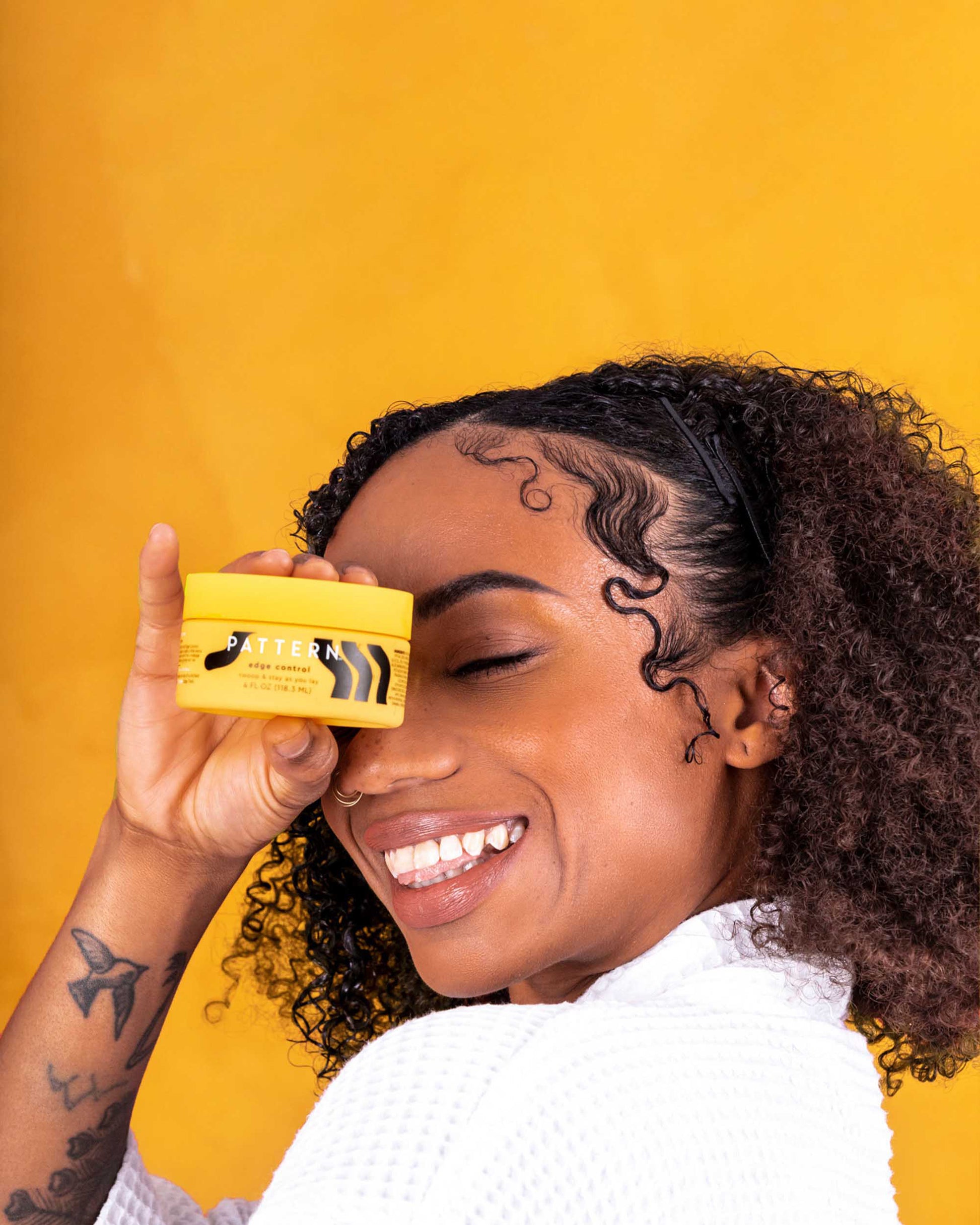
    Best Overall: Pattern Beauty Edge Control
    Best Overall: Pattern Beauty Edge Control

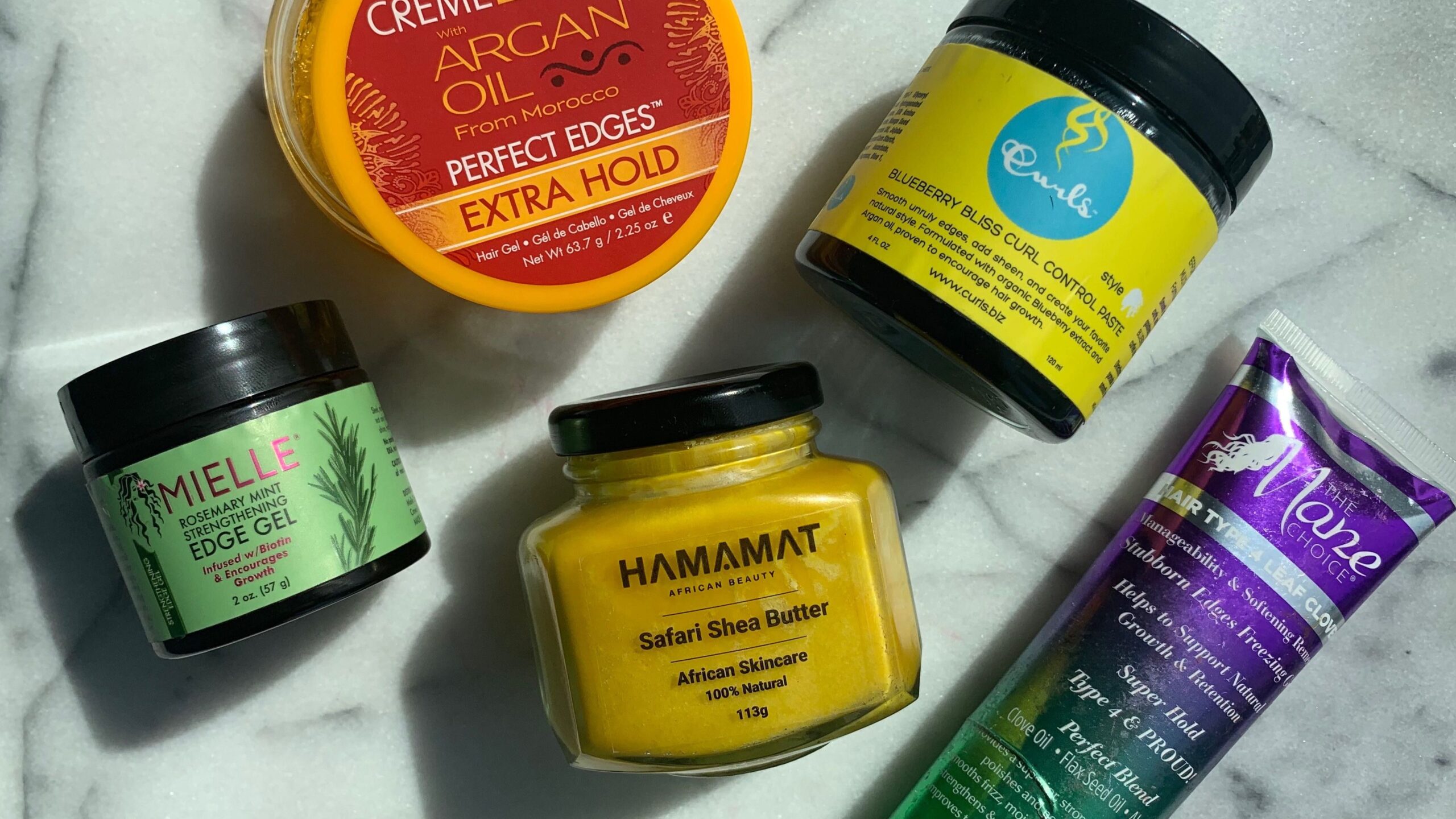
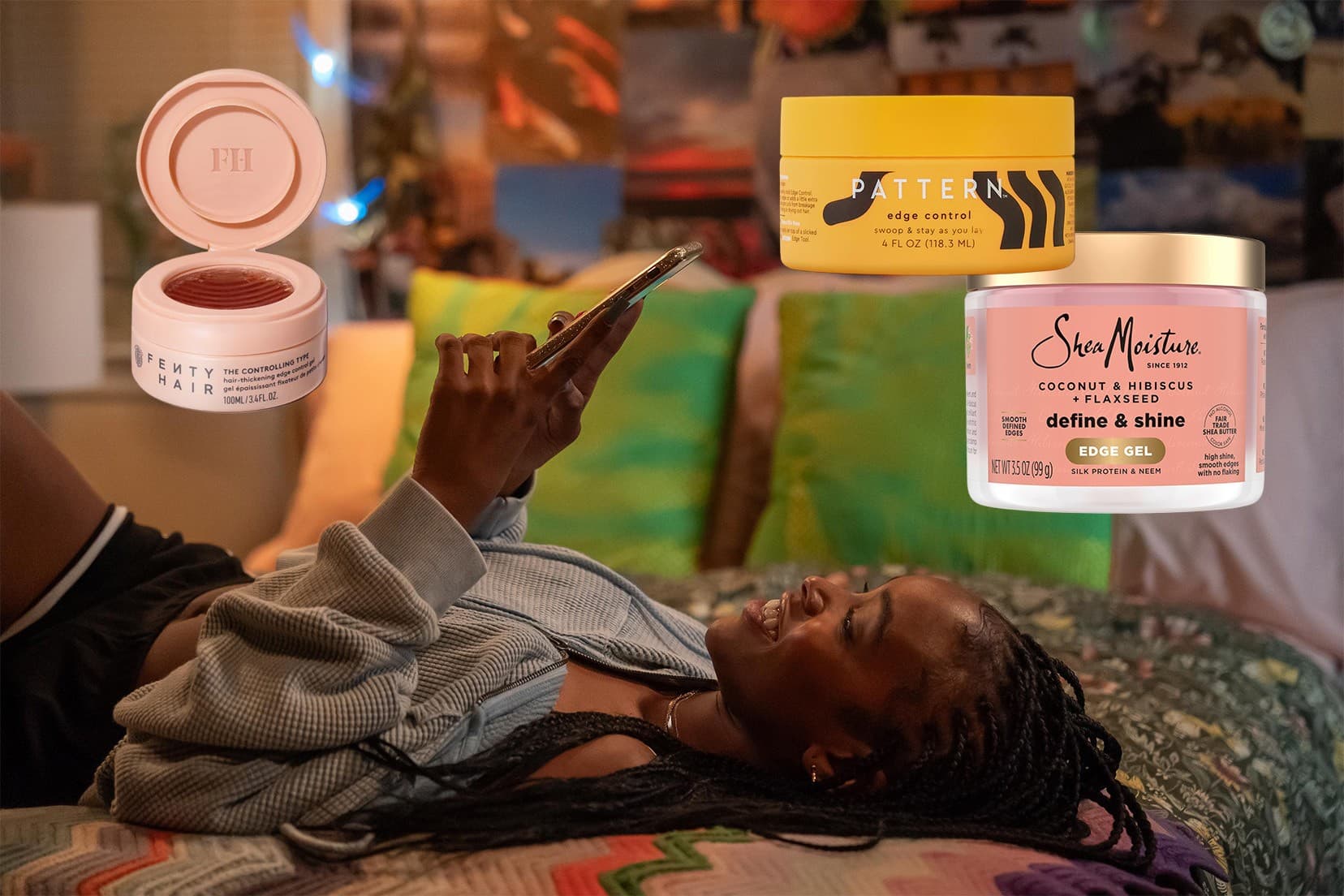
    Pattern Beauty’s edge control gel has become a standout in 2026 for delivering strong, sleek hold without flaking. Infused with beeswax and mango seed butter, it works to strengthen and condition your hair while keeping baby hairs in place. The formula provides a flexible hold that does not turn crispy or leave residue, and it washes out easily. The scent is subtle and pleasant, and the jar packaging makes it easy to control how much product you pick up.

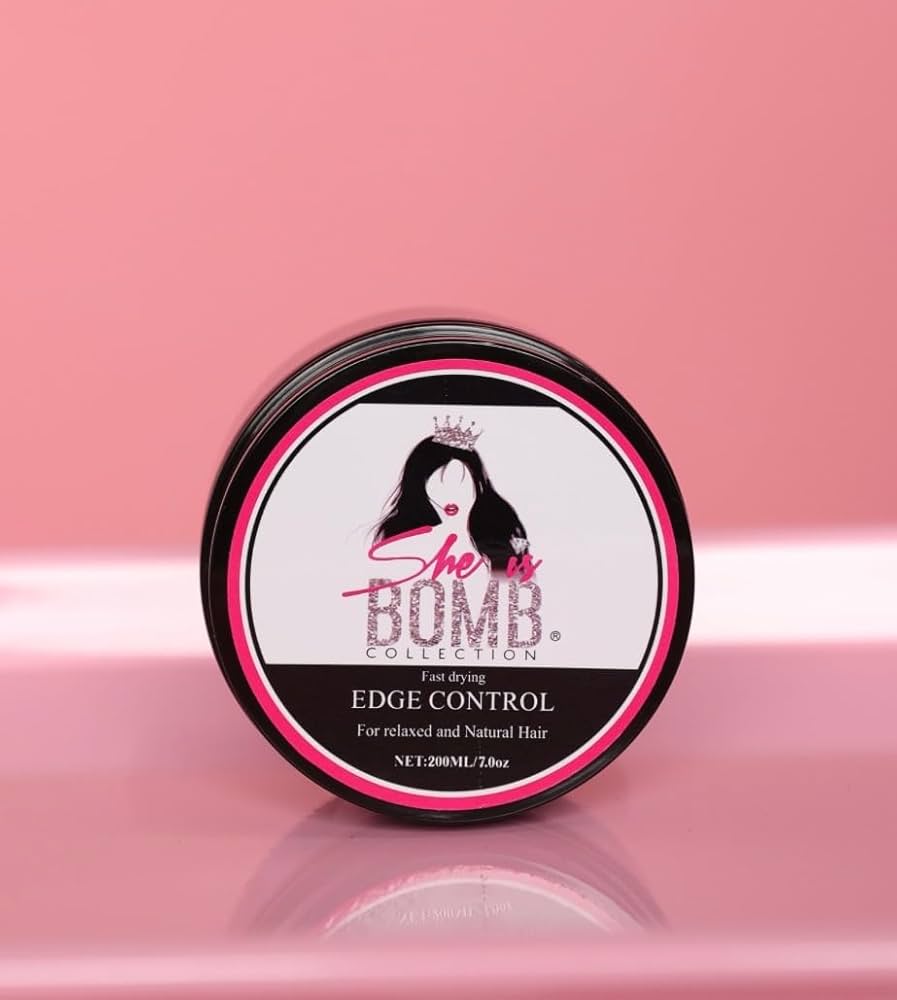
    Best for Extreme Hold: She Is Bomb Collection Edge Control
    Best for Extreme Hold: She Is Bomb Collection Edge Control

    When you need edges that will not budge through anything, She Is Bomb delivers the strongest hold in the game without the flaking that usually accompanies ultra-strong formulas. This edge control has developed a massive following among women with 4C hair who need their edges to last through long workdays, outdoor events, and sweaty workouts. The hold is genuinely all-day, and the formula does not leave the white or ashy residue that many strong-hold products are known for.

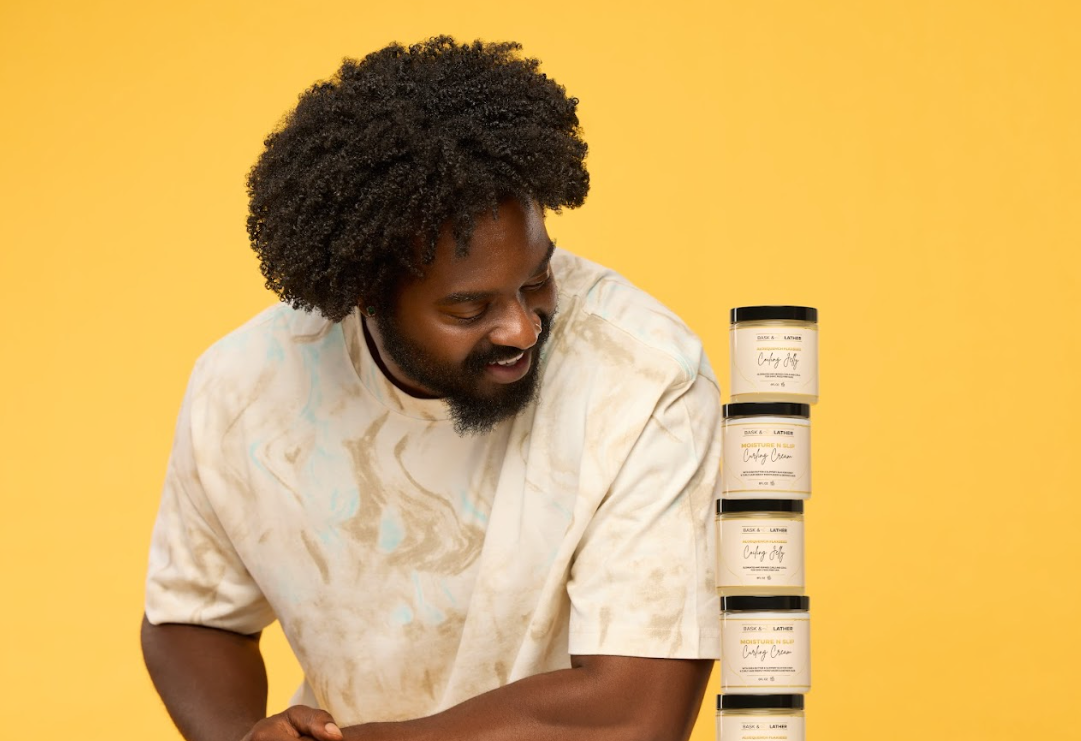
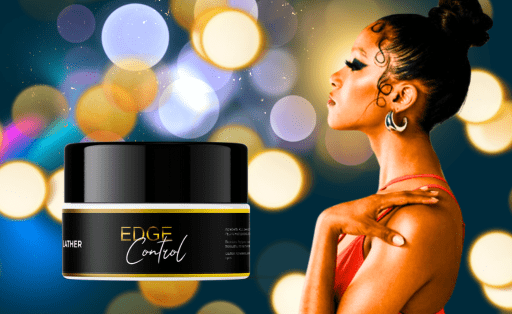
    Best for Moisture: Bask and Lather Edge Cream
    Best for Moisture: Bask and Lather Edge Cream

    If your edges are dry and delicate, Bask and Lather’s edge cream balances moisture and control beautifully. The cream-based formula conditions your hairline while providing a medium hold that looks natural and feels soft to the touch. This is the edge control for women who want their edges styled but not stiff, with a finish that looks like your baby hairs are naturally behaved rather than gelled into submission.

    Best Budget Option: EBIN New York 24 Hour Edge Tamer
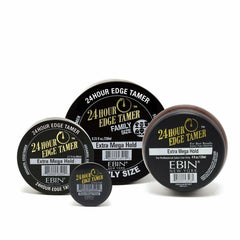
    Best Budget Option: EBIN New York 24 Hour Edge Tamer

    At under ten dollars, EBIN’s 24 Hour Edge Tamer offers impressive hold for its price point. Available in multiple formulas including extra mega hold for the thickest hair textures, this edge control has been a staple in the natural hair community for years. The hold is strong and long-lasting, though some formulas can flake slightly in very dry conditions. For the price, it is an excellent option for daily use.

    Best Clean Formula: Design Essentials Sleek MAX Edge Control
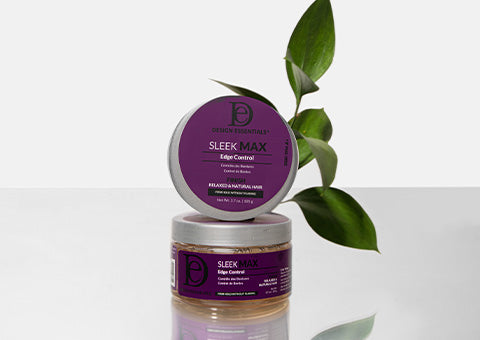
    Best Clean Formula: Design Essentials Sleek MAX Edge Control

    Design Essentials Sleek MAX is a versatile maximum hold gel infused with ingredients that help retain moisture and maintain hold. The formula is free from many common irritants and works on all hair types and textures. It is particularly popular among women who want a salon-quality edge control without questionable ingredients, and its availability at major retailers makes it easy to find.

    Best for Fine or Thin Edges: Creme of Nature Perfect Edges

    If your edges are fine, thin, or recovering from damage, Creme of Nature Perfect Edges offers a light-to-medium hold that does not weigh down delicate hairs. Enriched with argan oil, it provides a smooth finish without pulling or stressing fragile strands. This is the edge control for women who need to baby their hairline while still achieving a polished look.

    Best Edge Control by Hair Type
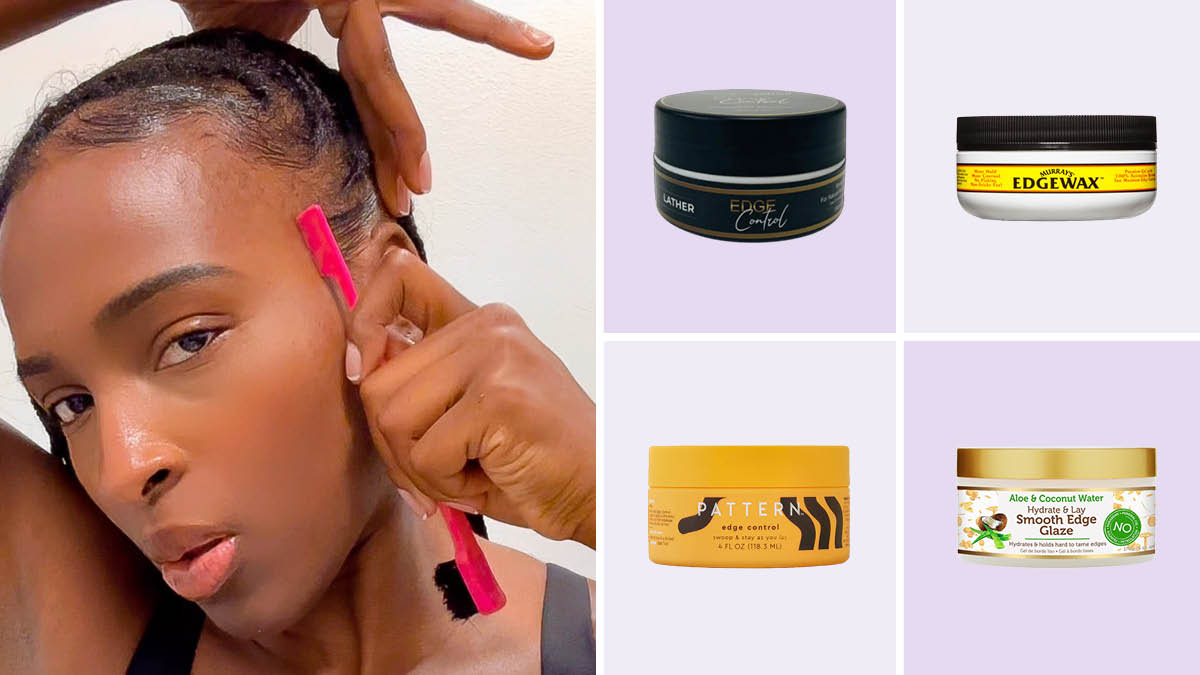
    Best Edge Control by Hair Type

    For 3A to 3C Hair

    For 3A to 3C Hair

    Looser curl patterns typically need a lighter hold because the hair texture is naturally smoother and easier to lay flat. A gel-based edge control with light-to-medium hold works best, providing definition without excess product. Cream-based edge controls also work beautifully on these textures, creating a natural-looking smooth finish that does not look overly styled. Avoid extreme-hold products on looser textures, as they can look and feel heavy.

    For 4A Hair
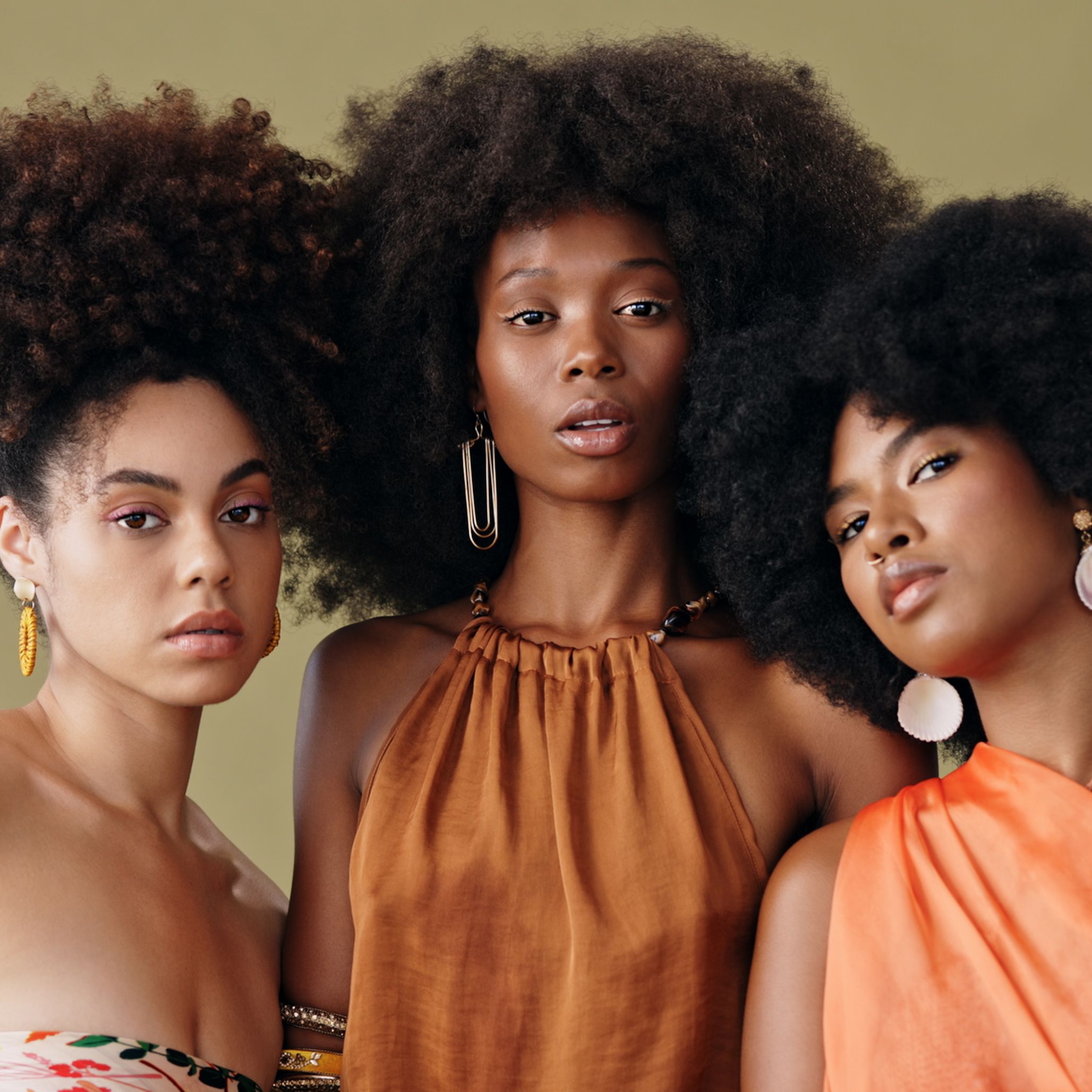
    For 4A Hair

    Type 4A hair has a defined, tightly coiled pattern that responds well to medium-to-firm hold edge controls. The coils lay down smoothly with the right product, and a gel-based formula provides enough grip to keep them in place through the day. Look for edge controls with added moisture to keep 4A hair from drying out and reverting.

    For 4B Hair

    For 4B Hair

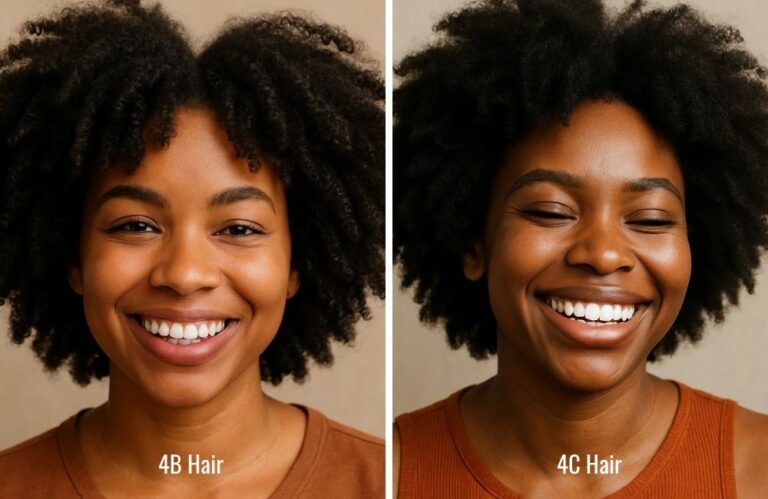
    The Z-shaped pattern of 4B hair makes it more challenging to lay edges flat, requiring a firm hold edge control with some wax-based structure. Products that combine gel and wax properties work best on this texture, providing the grip needed to flatten the kink while maintaining a smooth, non-flaky finish. Applying to damp hair rather than dry hair helps 4B edges lay more smoothly.

    For 4C Hair

    For 4C Hair

    The tightest coil pattern demands the strongest hold. For 4C edges, look for extreme-hold formulas that specifically mention 4C hair on their packaging. Layering a light cream or oil on your edges before applying the edge control helps prevent dryness and breakage from the strong-hold formula. She Is Bomb and EBIN Extra Mega Hold are particularly effective on 4C edges.

    How to Apply Edge Control Like a Pro

    Prep Your Edges
    Prep Your Edges

    Start with clean, slightly damp edges. If your hair is dry, mist your edges lightly with water or a leave-in conditioner spray. Applying edge control to slightly damp hair helps the product distribute evenly and provides better hold than applying to completely dry hair. For the smoothest results, gently brush your edges in the direction you want them to lay before applying product.

    Apply in Small Amounts

    Apply in Small Amounts

    The biggest mistake people make with edge control is using too much product. Start with a small amount, roughly the size of a pea for your entire hairline. You can always add more, but too much product leads to buildup, flaking, and stiff, unnatural-looking edges. Use your fingertip or a small brush to pick up a thin layer of product and distribute it along your hairline in sections.

    Use the Right Tool

    Use the Right Tool

    An edge brush, specifically a soft-bristle brush with a pointed handle, is the essential tool for laying edges. The soft bristles smooth hairs into place without pulling, while the pointed handle helps create defined patterns and swirls. A clean toothbrush works in a pinch, but a dedicated edge brush gives you more control and a smoother finish.

    Style and Set

    Style and Set

    Once you have applied the product and brushed your edges into place, wrap them with a satin or silk scarf for ten to fifteen minutes. This setting step is what creates the sleek, molded finish that lasts all day. The scarf presses the hairs flat against your skin while the product dries, resulting in a much smoother finish than air-drying alone. When you remove the scarf, your edges should be perfectly laid and set.

    Essential Tools for Perfect Edges

    Essential Tools for Perfect Edges

    Edge Brushes
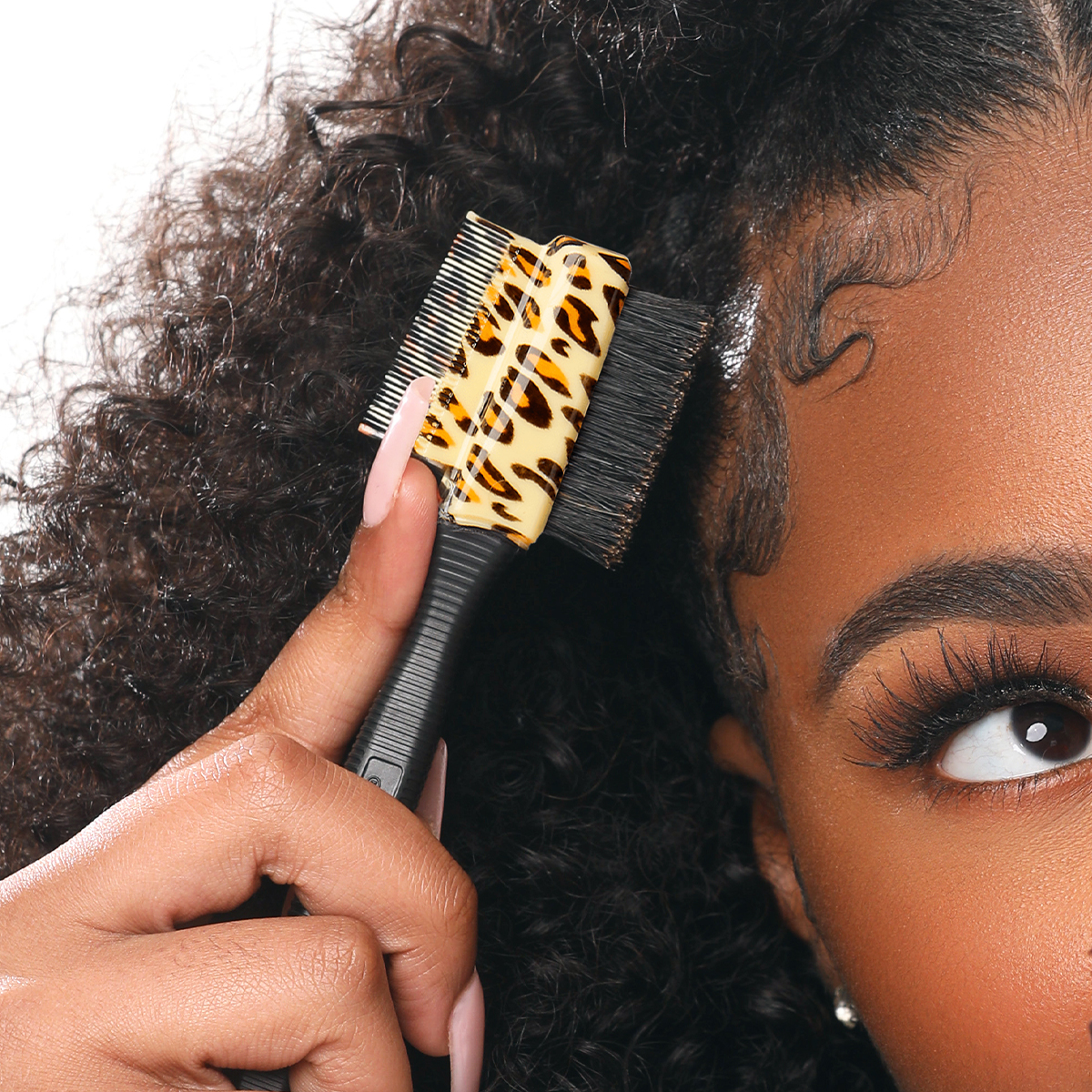
    Edge Brushes

    A quality edge brush with soft bristles is non-negotiable. Look for one with a comfortable grip and bristles that are firm enough to smooth but soft enough to avoid pulling. Many edge brushes come with a dual-ended design featuring a brush on one end and a comb or pointed tip on the other, which gives you versatility for different styling techniques.

    Edge Scarves and Wraps
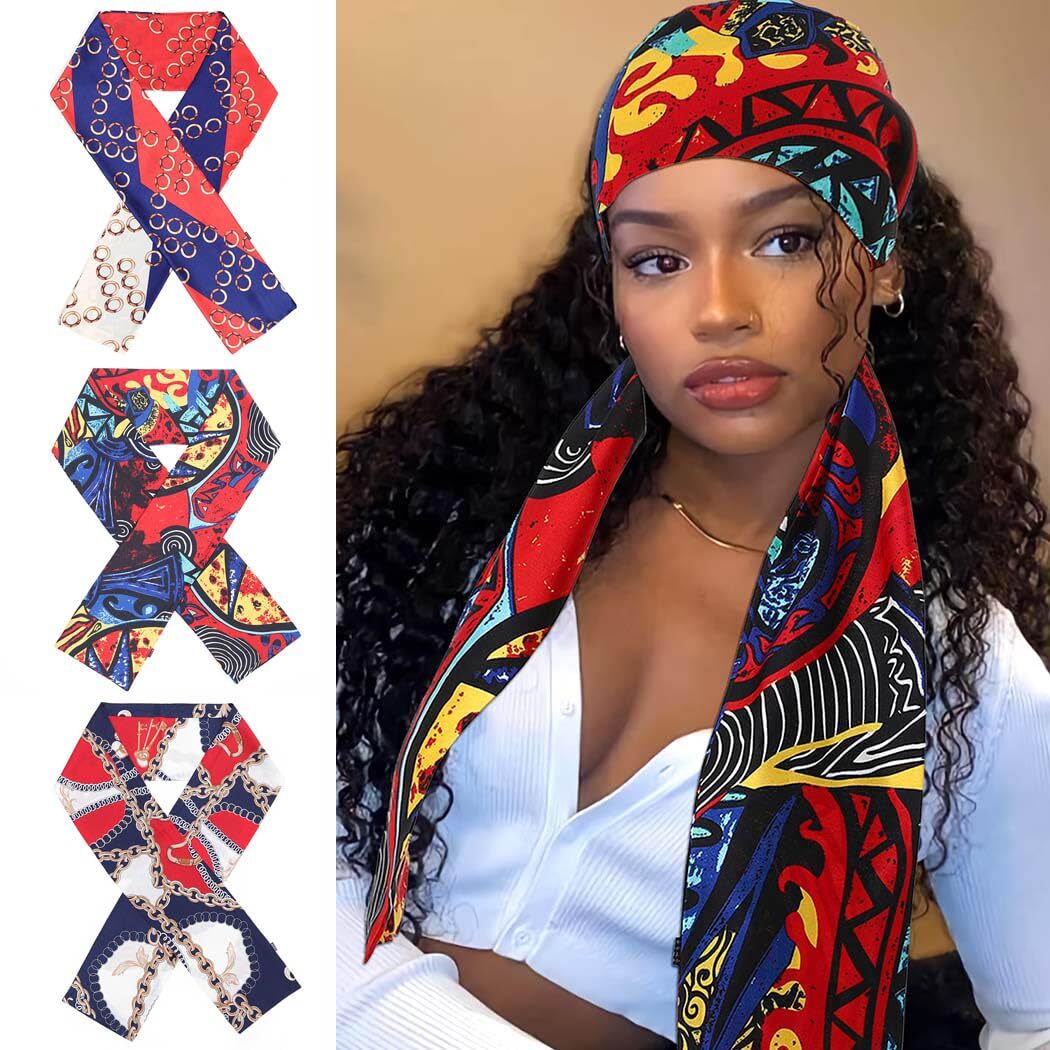
    Edge Scarves and Wraps

    A satin or silk edge scarf, sometimes called an edge band or edge wrap, is a narrow strip of fabric designed specifically to set your edges after styling. Unlike a full head scarf, an edge scarf targets just the hairline area, making it convenient to wear while you finish the rest of your styling routine or go about your morning tasks.

    Rat Tail Comb
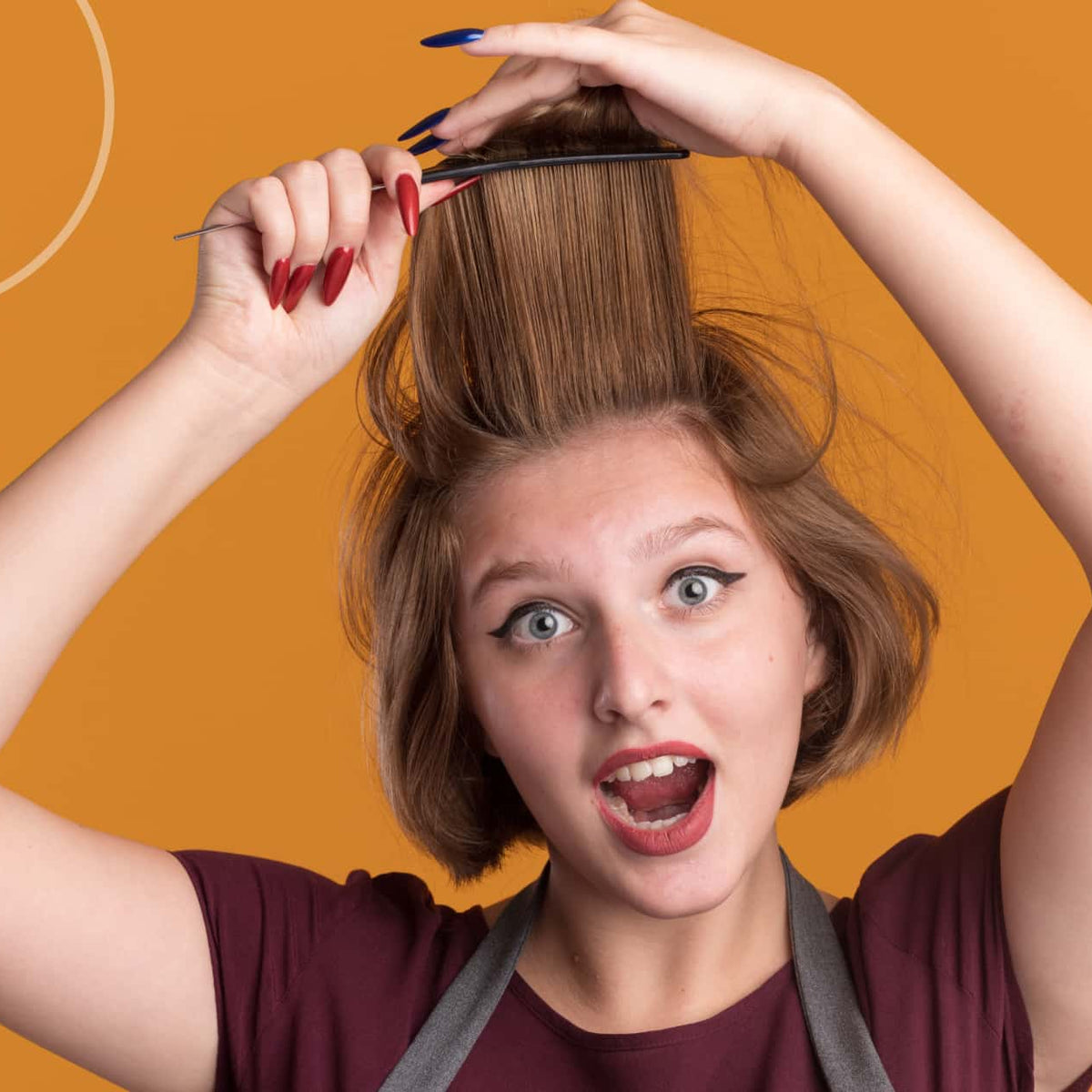
    Rat Tail Comb

    The pointed end of a rat tail comb helps you create precise parts and detailed edge patterns. It is particularly useful for creating swirl designs and for separating individual baby hairs that you want to style in specific directions.

    Spray Bottle

    Spray Bottle

    A small spray bottle filled with water or a water-based leave-in conditioner helps you dampen your edges before applying product. The fine mist provides just enough moisture for product application without soaking your hair or disrupting the rest of your style.

    Protecting Your Edges From Damage
    Protecting Your Edges From Damage

    All the edge control in the world means nothing if your edges are thinning or receding. Here is how to keep your hairline healthy while still enjoying styled edges.

    Give Your Edges a Break

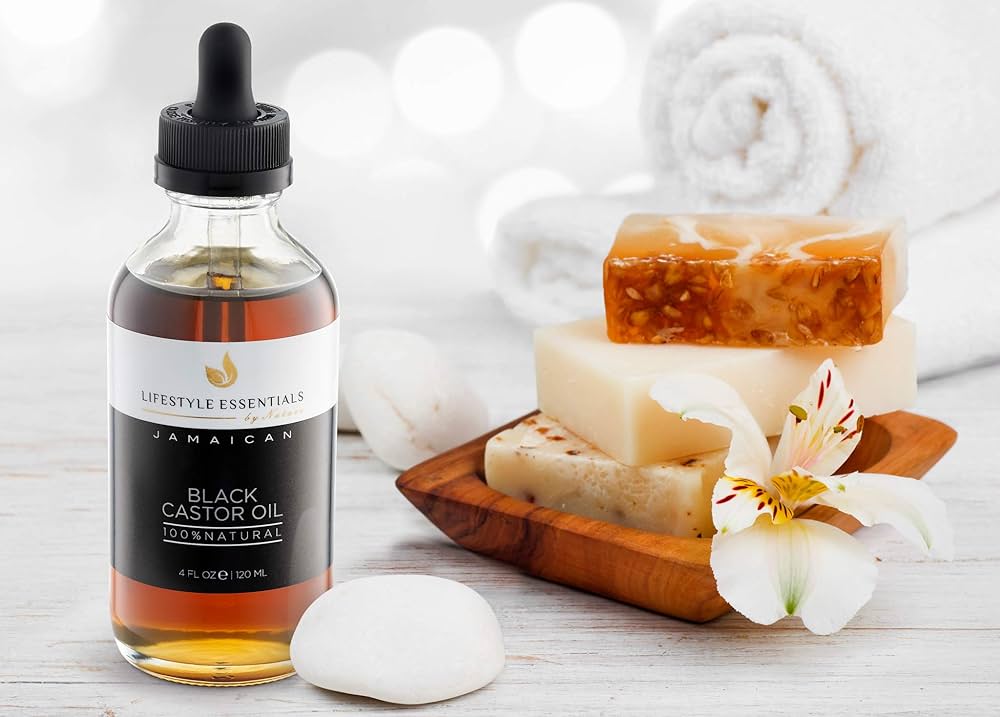
    Do not style your edges every single day. Give your hairline at least two to three days per week without any edge control product. On these rest days, apply a nourishing oil like Jamaican Black Castor Oil to your hairline to promote strength and growth. This recovery time allows your follicles to rest and reduces the cumulative stress of daily product application and manipulation.

    Be Gentle During Removal

    Be Gentle During Removal

    Never yank or pull at styled edges to remove them. Instead, dampen your edges with water or a gentle cleanser and allow the product to soften before gently brushing or combing it out. Using warm water helps dissolve most edge control formulas more quickly. Forcing removal of dried product is one of the fastest ways to damage your hairline.

    Avoid Excessive Tension

    Avoid Excessive Tension

    Styles that pull tightly on your edges, combined with strong-hold edge control, create a recipe for traction alopecia. If you wear protective styles like braids or ponytails, ensure they are not pulling at your hairline. Your edges should be styled, not stressed. If you notice soreness, bumps, or thinning along your hairline, ease up on both the tension of your styles and the frequency of your edge control use.

    Keep Your Hairline Moisturized

    Keep Your Hairline Moisturized

    Dry edges break more easily than moisturized ones. Incorporate a lightweight oil or serum into your nightly routine, gently massaging it along your hairline. This nightly moisture treatment keeps your edges flexible and resilient, making them easier to style and less likely to snap during manipulation.

    Popular Edge Styles to Try

    Popular Edge Styles to Try

    The Classic Swoop

    The Classic Swoop

    The most popular edge style is the simple swoop, where baby hairs are brushed in a gentle curve across the forehead or along the temples. This style works on every face shape and hair texture and creates a polished, classic look that never goes out of fashion.

    The S-Wave

    The S-Wave

    For a more decorative look, create S-shaped waves with your baby hairs along your hairline. This style requires a bit more product and precision but creates an eye-catching detail that elevates any updo or pulled-back style. Use the pointed end of your rat tail comb to guide the waves into shape.

    The Natural Brush-Back
    The Natural Brush-Back

    For a softer, more natural look, simply smooth your edges back in the direction of your hairstyle without creating any specific pattern. This style works well for everyday wear and requires the least amount of product and time.

    The Temple Tamer

    The Temple Tamer

    Focus your edge styling just on the temples and sideburn area, leaving the front hairline natural. This targeted approach creates a clean, polished look at the sides while keeping the front soft and natural. It is a great option for women with thinner edges at the temples who want to create the appearance of fullness.

    Key Takeaways

    • Pattern Beauty and She Is Bomb lead the edge control market in 2026 for hold, flexibility, and no-flake performance.
    • Choose your edge control based on your hair type: lighter holds for type 3 hair, extreme holds for 4C hair.
    • Apply edge control to slightly damp hair in small amounts and set with a satin scarf for the sleekest results.
    • Protect your hairline by giving your edges rest days, being gentle during product removal, and moisturizing nightly.
    • Avoid edge controls with drying alcohols, heavy mineral oils, and excessive fragrance that can damage delicate edges.
    • Look for nourishing ingredients like castor oil, biotin, and shea butter that strengthen your hairline while providing hold.
    • Invest in a quality edge brush and satin edge scarf as essential tools for professional-looking results at home.

    Frequently Asked Questions

    Why does my edge control flake?

    Flaking happens for several reasons. You may be using too much product, which dries into visible white residue. The formula may not be compatible with other products in your hair, creating a reaction that causes flaking. Applying to completely dry hair rather than slightly damp hair can also cause flaking because the product does not distribute evenly. Try using less product, applying to damp edges, and ensuring your other hair products do not conflict with your edge control formula.

    How often should I apply edge control?

    For hair health, aim for no more than four to five days per week of edge control use, giving your hairline at least two rest days. On the days you use it, one application in the morning should last the entire day if you are using the right product for your hair type. Avoid reapplying throughout the day, as layering product on top of dried product leads to buildup and flaking.

    Can edge control cause hair loss?

    The edge control product itself is unlikely to cause hair loss when used correctly. However, the combination of strong-hold products with tight hairstyles and aggressive brushing can contribute to traction alopecia, which is hair loss caused by repeated tension on the hair follicles. Use gentle techniques, avoid excessive tension, and give your edges regular rest to prevent this. If you notice thinning, reduce your edge control use and consult a dermatologist or trichologist.

    What is the best edge control for humid weather?
    What is the best edge control for humid weather?

    In humid conditions, you need an edge control with a strong hold and humidity-resistant formula. She Is Bomb and EBIN Extra Mega Hold perform well in humidity because their formulas resist moisture absorption that causes edges to revert. Layering a light gel over your edge control after setting with a scarf can add an extra layer of humidity protection. Avoid cream-based edge controls in humid weather, as they tend to lose hold faster.
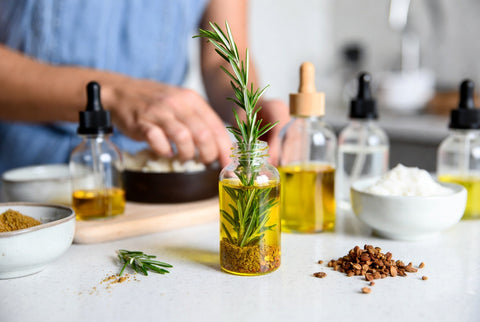
  • 5 DIY Hair Growth Oil Recipes for Natural Hair – Homemade Blends That Boost Length

    5 DIY Hair Growth Oil Recipes for Natural Hair – Homemade Blends That Boost Length

    Why DIY Hair Growth Oils Work So Well for Natural Hair

    Why DIY Hair Growth Oils Work So Well for Natural Hair

    There is something deeply satisfying about mixing up your own hair growth oil, knowing exactly what goes into it and trusting that every single ingredient is there for a purpose. In a world where commercial hair products often come with ingredient lists longer than a grocery receipt, making your own growth oil puts you back in control of what goes on your scalp and strands. And the best part? These homemade blends are not just cheaper than store-bought alternatives – they are often more effective because you can customize them to address your specific hair needs.

    Natural hair thrives on oils. The coily and kinky texture patterns of type 3 and type 4 hair make it harder for the natural sebum produced by your scalp to travel down the entire length of each strand. This is why natural hair tends to feel drier than straight hair and why regular oiling is such an essential part of any natural hair care routine. When you add growth-stimulating ingredients to your oil blends, you are nourishing your hair and encouraging new growth at the same time.

    Science backs up what the natural hair community has known for generations. Studies have shown that certain essential oils like rosemary and peppermint can increase blood circulation to the scalp, stimulate hair follicles, and even rival the effects of minoxidil – the active ingredient in many commercial hair growth products. A 2015 study published in SKINmed Journal found that rosemary oil was as effective as 2% minoxidil for treating androgenetic alopecia after six months of use. When you combine these proven essential oils with nourishing carrier oils, you create blends that feed your hair from root to tip.

    The five recipes in this article are specifically formulated for natural hair. Each one targets different aspects of hair growth – from scalp stimulation and follicle activation to strengthening and moisture retention. You do not need to make all five. Read through them, see which one addresses your biggest hair concern, and start there. You can always experiment with the others once you see how your hair responds to your first blend.

    Understanding Carrier Oils vs Essential Oils

    Understanding Carrier Oils vs Essential Oils

    Before we dive into the recipes, let us cover an important foundation. There are two categories of oils used in these blends, and understanding the difference is crucial for both safety and effectiveness.

    Carrier Oils

    Carrier Oils

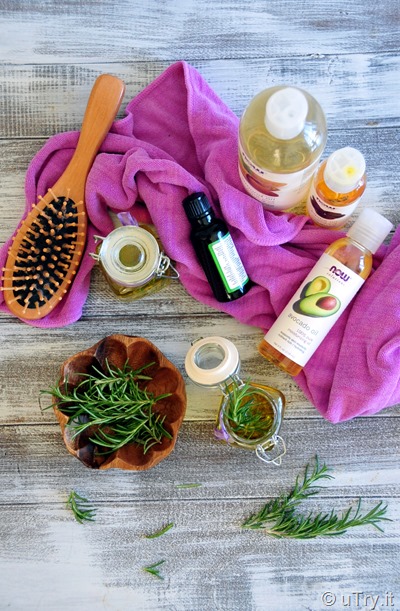
    Carrier oils are the base of any hair oil blend. They are gentle, nourishing oils that can be applied directly to your skin and hair without dilution. Common carrier oils for hair growth include castor oil, jojoba oil, coconut oil, sweet almond oil, argan oil, and grapeseed oil. Each carrier oil has unique properties – castor oil is thick and deeply moisturizing, jojoba oil closely mimics the natural sebum your scalp produces, and coconut oil penetrates the hair shaft to reduce protein loss.

    For the best results, always choose cold-pressed, unrefined versions of your carrier oils. Cold-pressed oils retain more of their natural nutrients and beneficial compounds because they have not been exposed to high heat during processing. Look for organic cold-pressed castor oil like Sky Organics on Amazon which is hexane-free and comes in a convenient dark glass bottle that protects the oil from light degradation.

    Essential Oils

    Essential Oils

    Essential oils are highly concentrated plant extracts that carry potent therapeutic properties. They should never be applied directly to your skin or scalp without being diluted in a carrier oil first, as they can cause irritation or even chemical burns at full strength. In hair growth blends, essential oils are the active ingredients that do the heavy lifting – stimulating blood flow, fighting scalp infections, reducing inflammation, and activating hair follicles.

    A safe dilution ratio for scalp application is generally 2-3% essential oil to carrier oil. This translates to about 12 to 18 drops of essential oil per ounce of carrier oil. Some essential oils, like tea tree and peppermint, are more potent and should be used at the lower end of this range, especially when you are first starting out.

    A Note on Patch Testing

    A Note on Patch Testing

    Before using any new oil blend on your entire scalp, always do a patch test first. Apply a small amount of the blended oil to the inside of your wrist or behind your ear, wait 24 hours, and check for any signs of irritation like redness, itching, or swelling. If you experience any reaction, do not use that particular blend. Essential oils are natural but powerful, and individual sensitivities vary.

    Recipe 1 – The Rosemary and Castor Oil Growth Powerhouse

    Recipe 1 - The Rosemary and Castor Oil Growth Powerhouse

    This is our number one recommended blend for anyone starting their DIY hair oil journey. Rosemary essential oil is the undisputed champion of hair growth essential oils, and when paired with the intense moisturizing power of castor oil, you get a blend that stimulates growth while keeping your strands deeply nourished.

    Ingredients

    Ingredients

    You will need 2 tablespoons of Jamaican black castor oil, 2 tablespoons of jojoba oil, 1 tablespoon of sweet almond oil, 15 drops of rosemary essential oil, and 5 drops of lavender essential oil. The jojoba and almond oils lighten the thick consistency of the castor oil, making the blend easier to apply, while lavender adds calming properties and has been shown to promote hair growth in its own right.

    How to Make It

    How to Make It

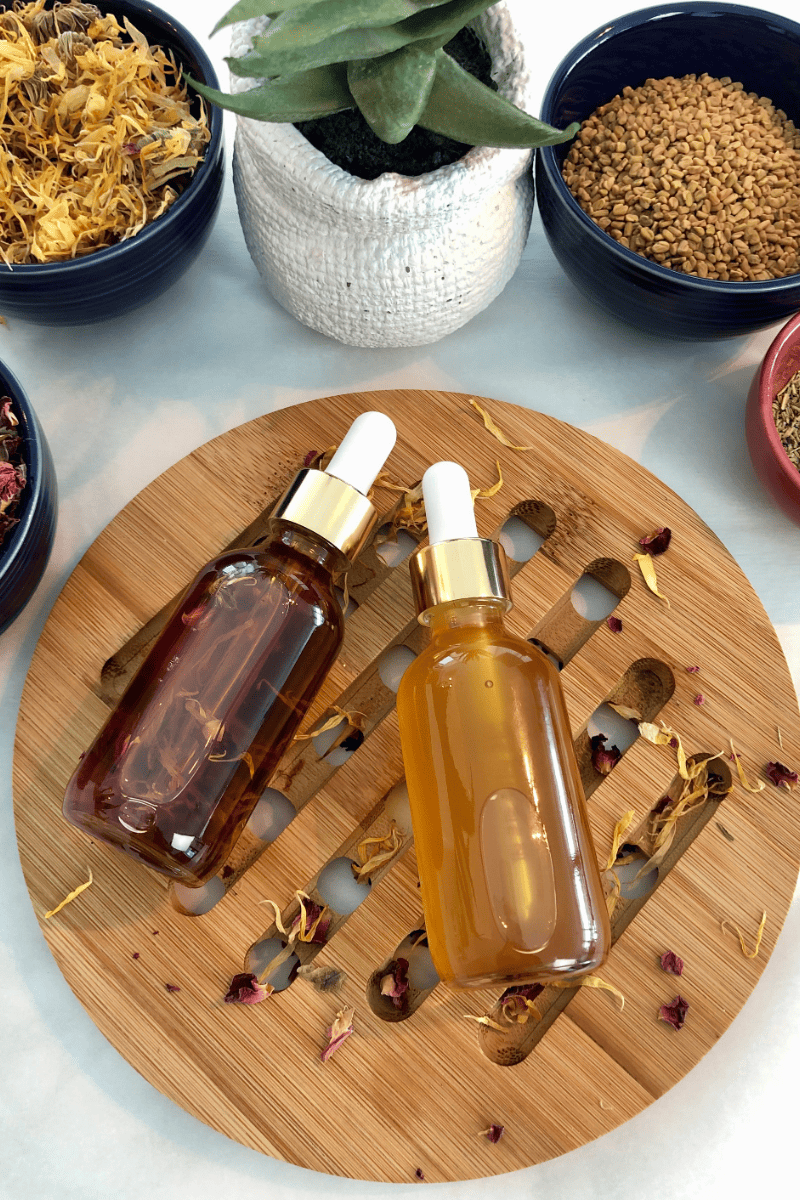
    Combine all the carrier oils in a clean, dark glass bottle. Dark glass protects the oils from light, which can degrade their beneficial properties over time. Add the rosemary and lavender essential oil drops, cap the bottle tightly, and shake well to combine everything thoroughly. Let the blend sit for at least 24 hours before first use so the essential oils fully integrate with the carriers. Store at room temperature away from direct sunlight, and your blend will stay potent for up to six months.

    Why This Blend Works

    Rosemary essential oil increases blood circulation to the scalp, which delivers more nutrients and oxygen to your hair follicles. This stimulation encourages follicles that may have become dormant to start producing hair again. Jamaican black castor oil is rich in ricinoleic acid, which has anti-inflammatory properties and helps to strengthen the hair shaft. Together, they create a powerful one-two punch for hair growth. The Plant Therapy Rosemary Essential Oil from Amazon is a wonderful therapeutic-grade option that is affordable and widely trusted.

    Recipe 2 – The Peppermint Scalp Stimulator

    Recipe 2 - The Peppermint Scalp Stimulator

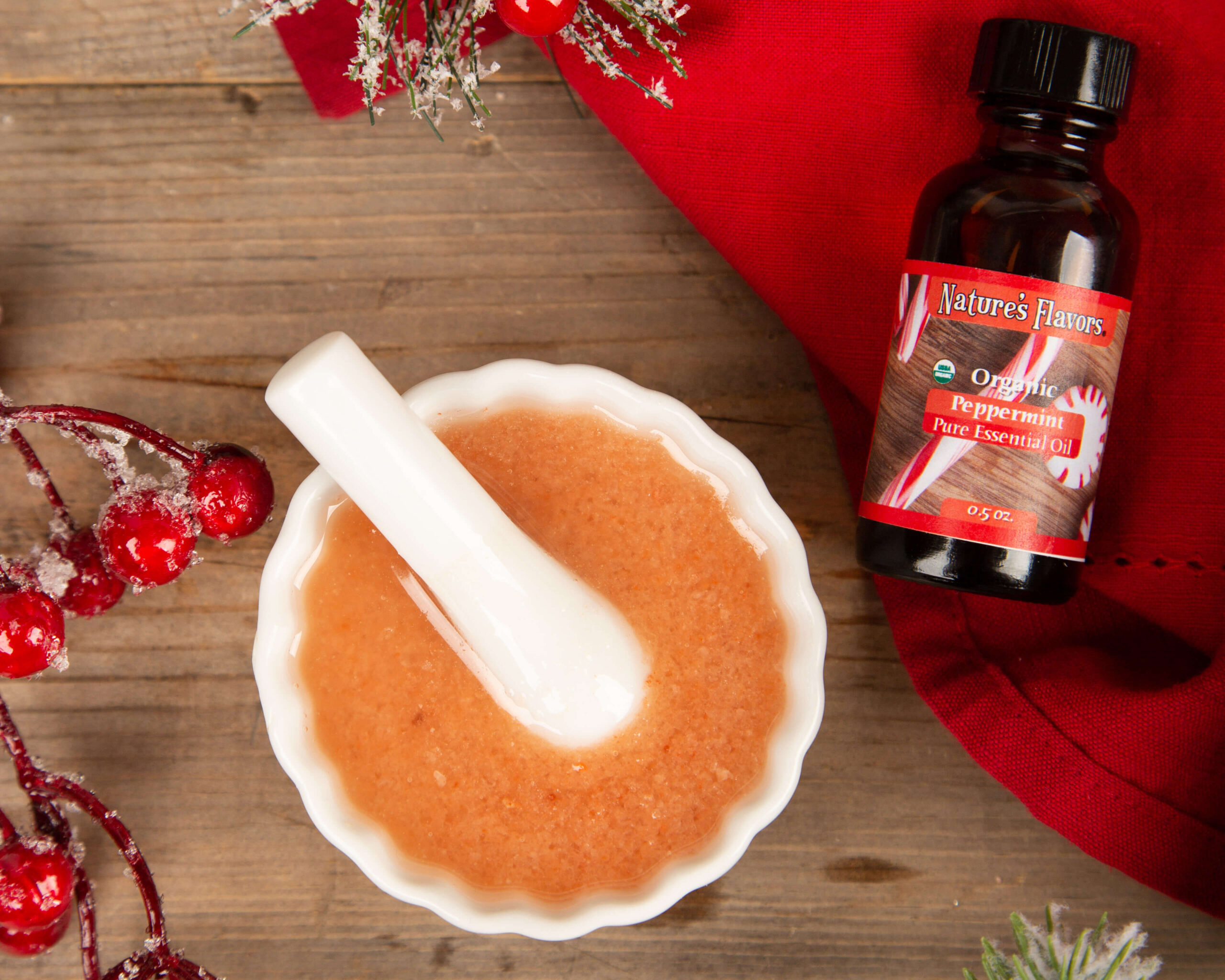
    If you love that tingly, refreshing feeling on your scalp, this blend is going to be your new favorite. Peppermint oil is a powerhouse for scalp stimulation, and research has shown it can actually increase the number of hair follicles, follicle depth, and overall hair growth when applied topically.

    Ingredients

    Ingredients

    Gather 2 tablespoons of grapeseed oil, 2 tablespoons of jojoba oil, 1 tablespoon of coconut oil (melted), 10 drops of peppermint essential oil, 5 drops of eucalyptus essential oil, and 5 drops of rosemary essential oil. Grapeseed oil is lightweight and rich in vitamin E, making it an excellent base that will not weigh your hair down.

    How to Make It

    How to Make It

    If your coconut oil is solid, gently warm it until it liquefies – you can do this by placing the jar in a bowl of warm water for a few minutes. Combine all three carrier oils in your glass bottle, then add the essential oils. Shake well and let it sit overnight. This blend has a wonderfully invigorating scent that makes scalp massage feel like a spa experience.

    Why This Blend Works

    A 2014 study published in Toxicological Research found that peppermint oil significantly increased dermal thickness, follicle number, and follicle depth in mice, outperforming even minoxidil. The menthol in peppermint oil creates a cooling sensation that indicates increased blood flow to the area. This rush of blood brings nutrients directly to your hair follicles, creating an optimal environment for new growth. Eucalyptus oil adds additional circulation benefits and has antimicrobial properties that keep your scalp healthy and free from infection.

    Recipe 3 – The Ayurvedic Hair Growth Elixir

    Recipe 3 - The Ayurvedic Hair Growth Elixir

    Ayurvedic hair care practices have been used for thousands of years in South Asia, and for excellent reason – they work. This blend incorporates traditional Ayurvedic ingredients that have stood the test of time for promoting thick, long, healthy hair.

    Ingredients

    Ingredients

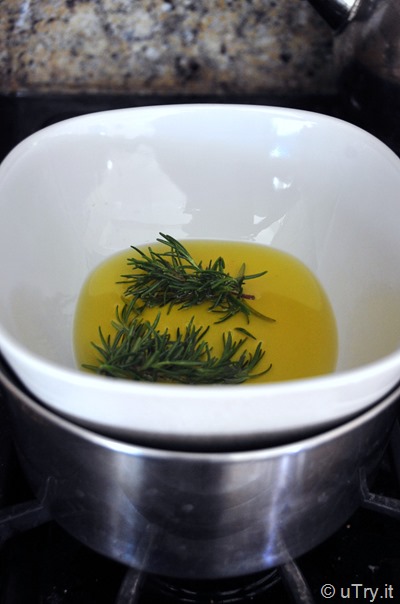
    You will need 3 tablespoons of sesame oil, 2 tablespoons of coconut oil, 1 tablespoon of amla (Indian gooseberry) oil, 1 tablespoon of brahmi oil, and 10 drops of rosemary essential oil. If you cannot find amla and brahmi oils pre-made, you can infuse them yourself by simmering dried amla and brahmi powder in coconut oil on very low heat for several hours, then straining.

    How to Make It

    How to Make It

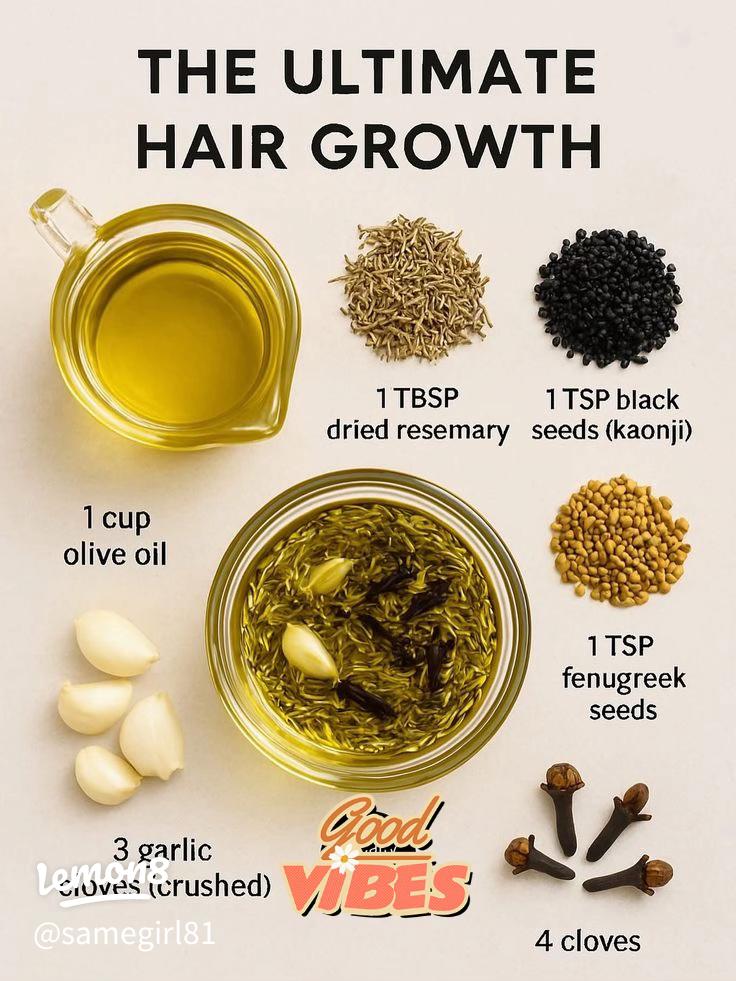
    Warm the sesame oil and coconut oil together gently until the coconut oil is fully liquid. Add the amla and brahmi oils, then the rosemary essential oil drops. Mix thoroughly and pour into your dark glass bottle. For an enhanced version, you can also add a pinch of dried fenugreek seeds directly to the bottle and let them infuse for a week before using – fenugreek is rich in proteins and nicotinic acid, both of which strengthen hair and prevent breakage.

    Why This Blend Works

    Amla oil is incredibly rich in vitamin C and antioxidants that strengthen hair follicles and prevent premature graying. Brahmi oil nourishes the roots and has been used for centuries to thicken hair and reduce hair loss. Sesame oil, the traditional base oil in Ayurvedic hair treatments, penetrates deeply into the scalp and has natural antibacterial properties. Together, these ingredients create a deeply nourishing blend that addresses hair growth from multiple angles. You can find quality organic amla oil for hair growth on Amazon from several trusted Ayurvedic brands.

    Recipe 4 – The Tea Tree and Jojoba Scalp Healer

    Recipe 4 - The Tea Tree and Jojoba Scalp Healer

    This blend is specifically designed for anyone dealing with scalp issues that may be hindering hair growth – things like dandruff, flakiness, product buildup, or fungal infections. A healthy scalp is the foundation of healthy hair growth, and sometimes the best thing you can do for length is to heal your scalp first.

    Ingredients

    Ingredients

    You will need 3 tablespoons of jojoba oil, 1 tablespoon of argan oil, 1 tablespoon of hemp seed oil, 10 drops of tea tree essential oil, 5 drops of lavender essential oil, and 5 drops of cedarwood essential oil. Jojoba oil is the star carrier here because its molecular structure is the closest to human sebum, making it incredibly effective at balancing your scalp’s natural oil production.

    How to Make It

    How to Make It

    Combine all carrier oils in your glass bottle and add the essential oils. Shake vigorously and allow the blend to sit for 24 hours before first use. This blend has a clean, herbal scent that is pleasant without being overpowering. If you find the tea tree scent too strong, reduce it to 7 drops and increase the lavender to 8 drops.

    Why This Blend Works

    Tea tree oil is one of nature’s most powerful antimicrobial and antifungal agents. It effectively combats the fungus that causes dandruff, clears clogged follicles, and reduces scalp inflammation – all of which can significantly impede hair growth. Cedarwood essential oil has been shown to stimulate the hair follicles by increasing circulation, and it also has antifungal properties that complement the tea tree oil. Lavender rounds out the blend with its calming, healing properties and pleasant scent. The 100% Organic Cold-Pressed Jojoba Oil from The Ordinary at Ulta is an excellent affordable option for the base of this blend.

    Recipe 5 – The Black Seed and Argan Strengthening Oil

    Recipe 5 - The Black Seed and Argan Strengthening Oil

    This final recipe focuses on strengthening your existing hair to prevent breakage, because retention is just as important as growth. You can grow all the new hair in the world, but if your ends are breaking off at the same rate, you will never see length. This blend fortifies your strands from the inside out.

    Ingredients

    Ingredients

    Gather 2 tablespoons of black seed oil (also called black cumin seed oil or Nigella sativa oil), 2 tablespoons of argan oil, 1 tablespoon of avocado oil, 8 drops of ylang ylang essential oil, and 7 drops of clary sage essential oil. Black seed oil has been called the remedy for everything except death in traditional Middle Eastern medicine, and its benefits for hair are remarkable.

    How to Make It

    How to Make It

    Black seed oil has a distinctive, strong scent that some people find overpowering. The argan and avocado oils help to mellow it out, and the ylang ylang adds a sweet floral note that balances the overall fragrance. Combine all carrier oils, add the essential oils, shake well, and let it sit for 24 hours. If the scent is still too strong for your preference, you can add 3 to 5 drops of vanilla essential oil, which pairs beautifully with the other ingredients.

    Why This Blend Works

    Black seed oil contains thymoquinone, a powerful antioxidant and anti-inflammatory compound that has been shown to reduce hair loss and promote hair regrowth. It is also rich in fatty acids that nourish and strengthen the hair shaft. Argan oil, often called liquid gold, is packed with vitamin E and essential fatty acids that increase hair’s elasticity – meaning your strands can stretch and bend without breaking. Avocado oil penetrates the hair shaft to moisturize from within, and ylang ylang essential oil has been traditionally used to stimulate hair growth while adding beautiful shine.

    How to Use Your DIY Hair Growth Oils for Best Results

    How to Use Your DIY Hair Growth Oils for Best Results

    Having a great oil blend is only half the equation – how you apply it matters just as much. Here are the application methods that will maximize the growth-boosting benefits of your homemade oils.

    The Scalp Massage Method

    The Scalp Massage Method

    This is the most common and effective application method. Apply your oil blend directly to your scalp using an applicator bottle or your fingertips. Then, using your fingertips – never your nails – massage your scalp in small circular motions for at least five minutes. Cover your entire scalp, paying extra attention to areas where you want to see the most growth, like your edges, crown, and nape. Scalp massage alone has been shown to increase hair thickness by stretching the cells of hair follicles, and when you add growth-stimulating oils to the mix, the benefits multiply.

    The Hot Oil Treatment Method

    The Hot Oil Treatment Method

    For a more intensive treatment, warm your oil blend gently by placing the bottle in a bowl of hot water for a few minutes. Test the temperature on your wrist before applying – it should be comfortably warm, never hot. Apply the warm oil to your scalp and hair, then cover with a plastic cap and a warm towel. The heat opens your hair cuticles and scalp pores, allowing the oils to penetrate more deeply. Leave it on for at least 30 minutes, or for maximum benefits, leave it on overnight and wash it out in the morning.

    How Often to Apply

    For best results, apply your growth oil two to three times per week. Consistency is key – you will not see dramatic results after one application, but after four to six weeks of regular use, many people notice reduced shedding, stronger hair, and new growth along their hairline and throughout their scalp. Take photos at the start of your journey so you can track your progress over time.

    Storage and Shelf Life

    Storage and Shelf Life

    Store all your blends in dark glass bottles at room temperature, away from direct sunlight and heat. Amber or cobalt blue bottles are ideal because they filter out light that can degrade the oils. Most homemade oil blends will stay potent for three to six months. If your oil starts to smell rancid or changes color significantly, it is time to make a fresh batch. Always label your bottles with the date you made the blend and the recipe name so you can keep track.

    Making your own hair growth oils is one of the most empowering things you can do for your natural hair journey. You know exactly what is going into your blend, you can customize it for your specific needs, and you are tapping into centuries of traditional knowledge backed by modern science. Whether you start with the rosemary powerhouse, the peppermint stimulator, or any of the other recipes, your natural hair is going to thank you. Give your chosen blend at least six weeks of consistent use, and we are confident you will be amazed by the results.

    Key Takeaways

    • DIY hair growth oils let you control exactly what goes on your scalp while being more affordable and often more effective than commercial alternatives.
    • Essential oils like rosemary and peppermint have scientific backing for their ability to stimulate hair follicles and promote growth, rivaling commercial products like minoxidil.
    • Always dilute essential oils in carrier oils before applying to your scalp, and do a patch test with any new blend to check for sensitivities.
    • Consistency is more important than which recipe you choose – apply your growth oil two to three times per week for at least six weeks to see noticeable results.
    • Scalp massage is a critical part of the application process, as it increases blood flow to the follicles and helps the oils penetrate more effectively.

    Frequently Asked Questions

    Can I use these oil blends on relaxed or color-treated hair?

    Yes, these oil blends are safe for relaxed and color-treated hair. In fact, hair that has been chemically processed often benefits even more from regular oiling because the treatments can strip natural moisture. Just be aware that some essential oils, particularly tea tree, can be drying if overused, so start with the rosemary and castor oil blend or the black seed and argan blend for chemically treated hair.

    How long before I see results from using DIY hair growth oils?

    Most people begin to notice reduced shedding and stronger hair within four to six weeks of consistent use. Visible new growth typically becomes noticeable after two to three months. Hair grows an average of half an inch per month, so give your oil blend at least three months before making a final judgment on its effectiveness. Taking monthly progress photos helps you see the gradual changes that might not be obvious day to day.

    Can I mix different recipes together?

    While you technically can combine elements from different recipes, we recommend starting with one complete recipe and using it consistently for at least a month before making changes. This way, you can accurately assess what is working for your hair. If you do want to customize, keep the total essential oil concentration at or below 3% of the total blend to avoid scalp irritation.

    Are these oils safe to use during pregnancy?

    Are these oils safe to use during pregnancy?

    Some essential oils are not recommended during pregnancy, including rosemary, peppermint, and clary sage. If you are pregnant or nursing, consult with your healthcare provider before using any essential oil blends. You can still benefit from applying carrier oils like jojoba and coconut oil to your scalp and hair without adding essential oils during this time.

    Will these oils make my hair greasy?

    Will these oils make my hair greasy?

    If you use the right amount, these oils should not make your hair look greasy. Start with a small amount – about a teaspoon for a full scalp application – and add more only if needed. Focus the oil on your scalp rather than saturating your hair strands. Lighter carrier oils like grapeseed and jojoba absorb more quickly and leave less residue than heavier oils like castor oil.

  • Deep Conditioning for Natural Hair – How Often, Best Products, and DIY Recipes

    Deep Conditioning for Natural Hair – How Often, Best Products, and DIY Recipes

    Why Deep Conditioning Is Non-Negotiable for Natural Hair

    If there is one step in your natural hair routine that you should never skip, it is deep conditioning. Regular conditioner is fine for daily or weekly use, but it only coats the outside of the hair shaft, providing temporary softness and detangling ease. Deep conditioning goes further – it penetrates the hair cuticle to deliver moisture, protein, and nutrients deep into the cortex of each strand, repairing damage from the inside out and building strength that lasts between wash days.

    Natural hair, especially type 4 hair, has a unique structure that makes deep conditioning particularly important. The tight coil pattern creates multiple points along each strand where the cuticle can lift and become damaged. These lifted cuticle layers allow moisture to escape easily, which is why natural hair tends toward dryness. Deep conditioning temporarily smooths and seals these cuticle layers, improving moisture retention, reducing friction-based breakage, and giving your curls and coils that soft, bouncy, well-hydrated feel we all love.

    Think of deep conditioning as feeding your hair. Just as your body needs regular nourishing meals to function at its best, your hair needs regular deep conditioning treatments to stay strong, elastic, and resilient. Without it, natural hair gradually becomes dry, brittle, and prone to breakage – no matter how great your other products and techniques are. Deep conditioning is the foundation that makes everything else in your routine work better.

    How Often Should You Deep Condition

    The ideal deep conditioning frequency depends on your hair’s current condition, porosity, and how you style it. Here are general guidelines to help you find your sweet spot.

    Every Wash Day – For Most Natural Hair

    Every Wash Day - For Most Natural Hair

    If you wash your hair weekly or biweekly, deep conditioning every wash day is a solid baseline. This ensures your hair gets a consistent boost of moisture and strength with each wash cycle. For most people with type 3C to 4C hair, this frequency keeps their hair in optimal condition without overdoing it.

    Twice a Week – For Severely Dry or Damaged Hair

    Twice a Week - For Severely Dry or Damaged Hair

    If your hair is extremely dry, has heat damage, chemical damage, or excessive breakage, you may benefit from deep conditioning twice a week until the condition improves. This intensive approach provides rapid repair and moisture infusion. Once your hair’s condition improves – usually after four to six weeks of intensive treatment – you can reduce to once a week.

    Every Other Week – For Healthy, Low-Porosity Hair

    Every Other Week - For Healthy, Low-Porosity Hair

    If your hair is already in good condition and you have low porosity hair that does not absorb products easily, deep conditioning every other week may be sufficient. Low porosity hair’s tightly sealed cuticle means it retains moisture better than high porosity hair, so it does not need as frequent replenishment. Over-conditioning low porosity hair can actually lead to buildup and limp, mushy-feeling strands.

    Moisture vs Protein Deep Conditioners – Knowing What Your Hair Needs

    Not all deep conditioners are created equal, and understanding the difference between moisture and protein treatments is crucial for getting the results you want.

    Moisture Deep Conditioners

    Moisture Deep Conditioners

    Moisture-focused deep conditioners are designed to hydrate and soften your hair. They contain humectants like glycerin and honey that attract and hold water, emollients like shea butter and oils that seal moisture in, and hydrating ingredients like aloe vera and coconut milk. Your hair needs a moisture treatment when it feels dry, rough, stiff, or lacks elasticity. If a strand of hair snaps immediately when stretched instead of bouncing back, it is crying out for moisture.

    Protein Deep Conditioners

    Protein Deep Conditioners

    Protein treatments repair and strengthen the hair shaft by filling in gaps in the hair’s protein structure – the keratin that makes up the bulk of each strand. They contain ingredients like hydrolyzed keratin, silk protein, wheat protein, or collagen. Your hair needs protein when it feels limp, mushy, overly stretchy, or is breaking easily despite being moisturized. If a strand stretches excessively before breaking rather than bouncing back, it needs protein.

    The Protein-Moisture Balance

    The Protein-Moisture Balance

    Healthy hair requires a balance of both protein and moisture. Too much protein without enough moisture makes hair hard, dry, and brittle. Too much moisture without enough protein makes hair weak, limp, and prone to stretching and snapping. Most people do well with a moisture-focused deep conditioner as their primary treatment and a protein treatment every four to six weeks. Adjust this ratio based on how your hair responds – learning to read what your hair needs is one of the most valuable skills in your natural hair journey.

    The Best Deep Conditioners for Natural Hair in 2026

    The Best Deep Conditioners for Natural Hair in 2026

    Best Moisture Deep Conditioner

    Best Moisture Deep Conditioner

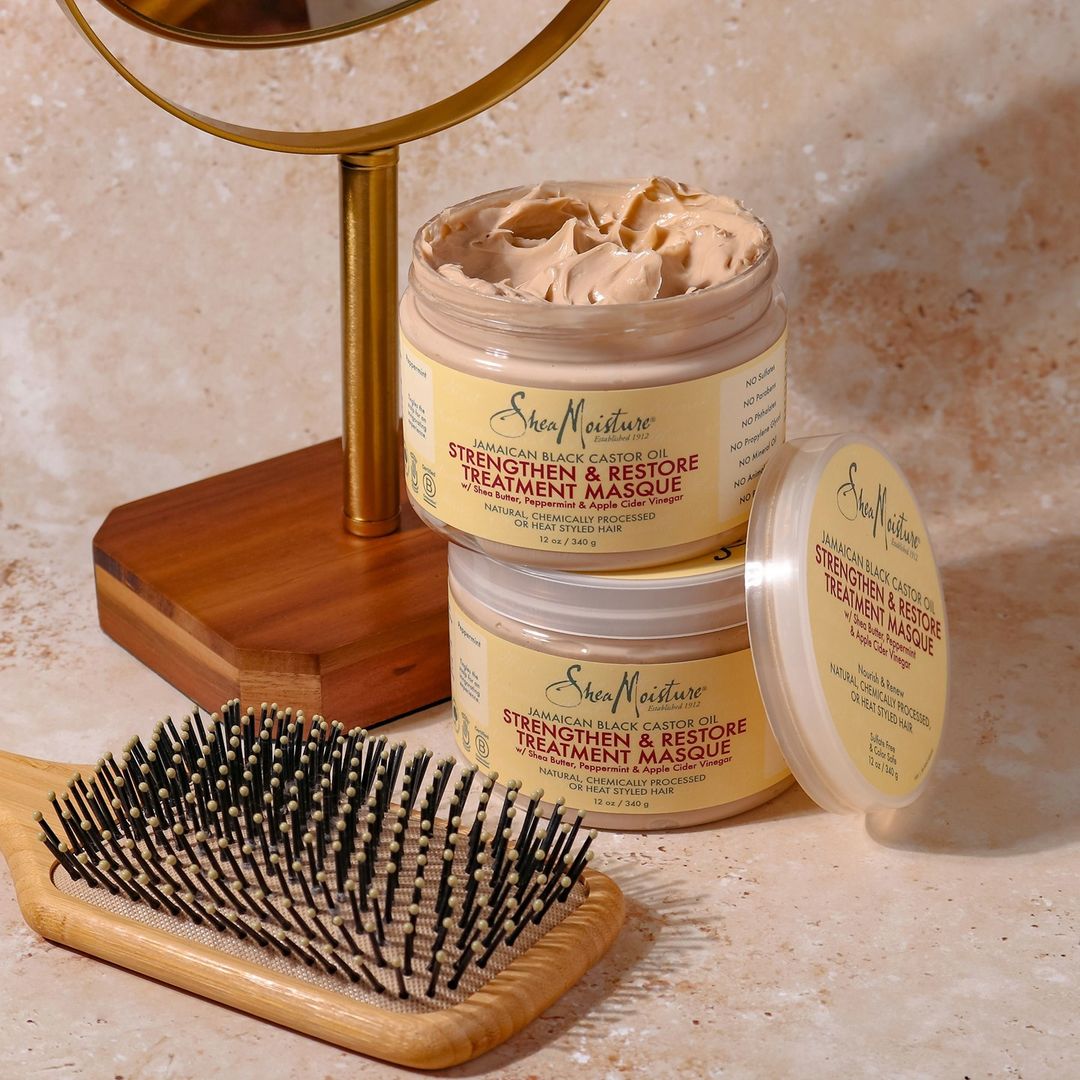
    The SheaMoisture Manuka Honey and Mafura Oil Intensive Hydration Hair Masque from Ulta remains a top choice for moisture-starved natural hair. This rich masque contains manuka honey for deep hydration, mafura oil for sealing, and baobab oil for strengthening. It transforms dry, brittle hair into soft, pliable curls after just one treatment. It is also affordable enough to use as your regular wash day deep conditioner without breaking the bank.

    Best Protein Treatment

    Best Protein Treatment

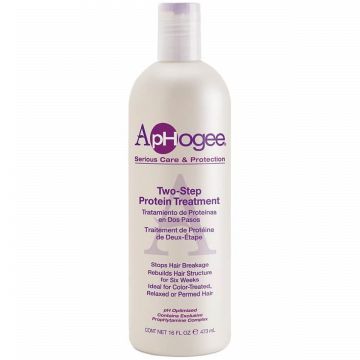
    The Aphogee Two-Step Protein Treatment from Amazon is the gold standard for protein repair. This professional-grade treatment rebuilds damaged hair bonds and significantly reduces breakage. It is an intensive treatment – your hair will feel very hard while it is on, which is normal – but after the accompanying balancing conditioner, your strands will feel noticeably stronger and more resilient. Use this every six to eight weeks or as needed when your hair shows signs of protein deficiency.

    Best Balanced Deep Conditioner

    Best Balanced Deep Conditioner

    For a deep conditioner that provides both moisture and light protein, the Mielle Organics Babassu Oil and Mint Deep Conditioner from Amazon is excellent. It contains babassu oil for moisture and amino acids for gentle protein support. The mint provides a pleasant tingling sensation and stimulates the scalp. This is a great all-around deep conditioner for maintenance between more targeted moisture or protein treatments.

    5 DIY Deep Conditioner Recipes You Can Make at Home

    5 DIY Deep Conditioner Recipes You Can Make at Home

    You do not always need to buy commercial deep conditioners – some of the most effective treatments can be made from ingredients in your kitchen. These DIY recipes are simple, affordable, and genuinely effective.

    Recipe 1 – The Honey and Olive Oil Moisture Bomb

    Recipe 1 - The Honey and Olive Oil Moisture Bomb

    Mix together half a cup of olive oil, a quarter cup of raw honey, and two tablespoons of coconut milk. Honey is a natural humectant that draws moisture to your hair, olive oil penetrates the hair shaft for deep conditioning, and coconut milk adds protein and fats. Apply to freshly washed hair, cover with a plastic cap, and leave on for 30 to 45 minutes before rinsing thoroughly.

    Recipe 2 – The Avocado and Banana Strength Builder

    Recipe 2 - The Avocado and Banana Strength Builder

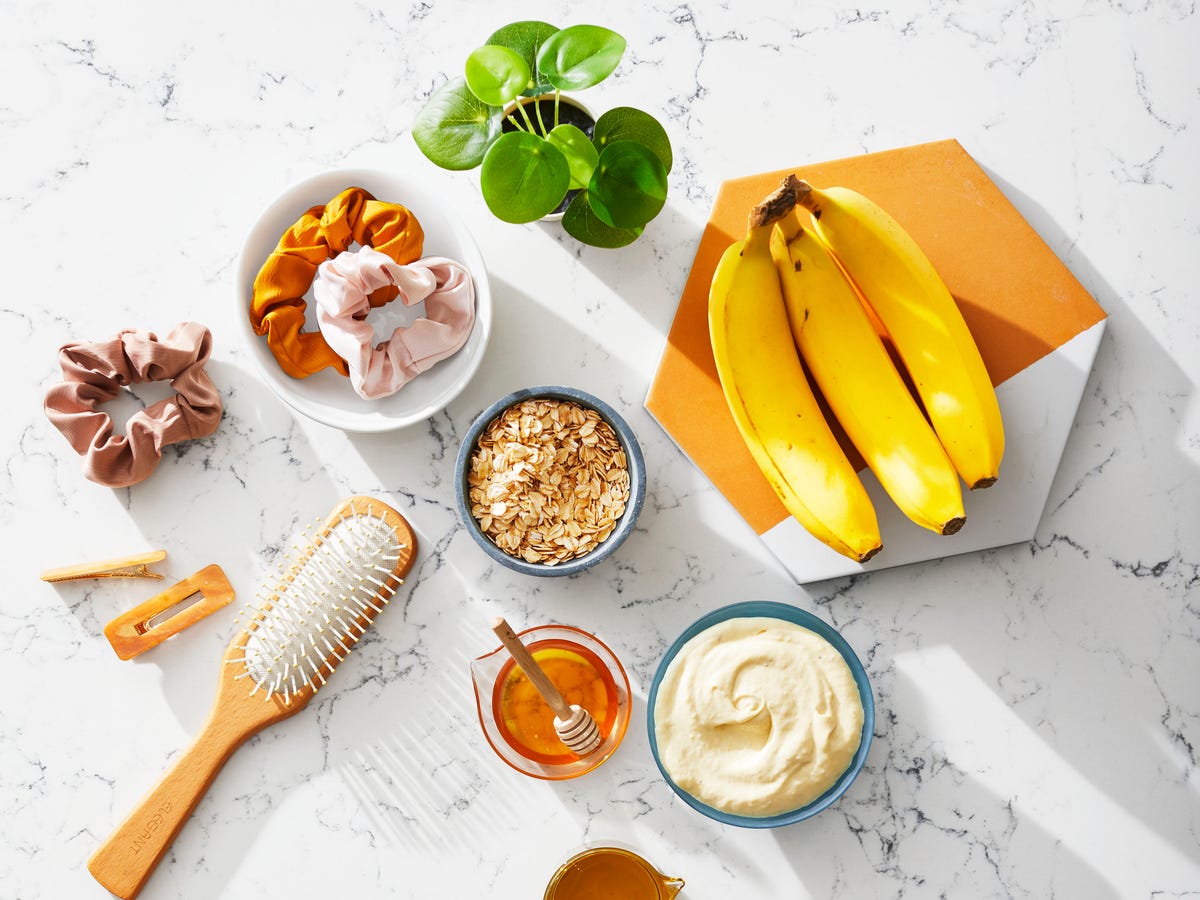
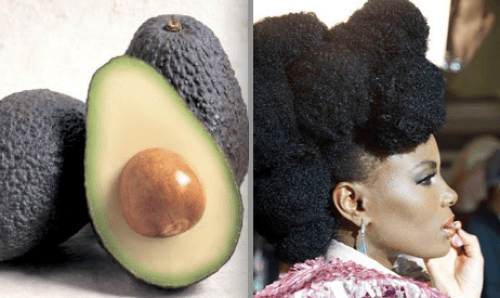
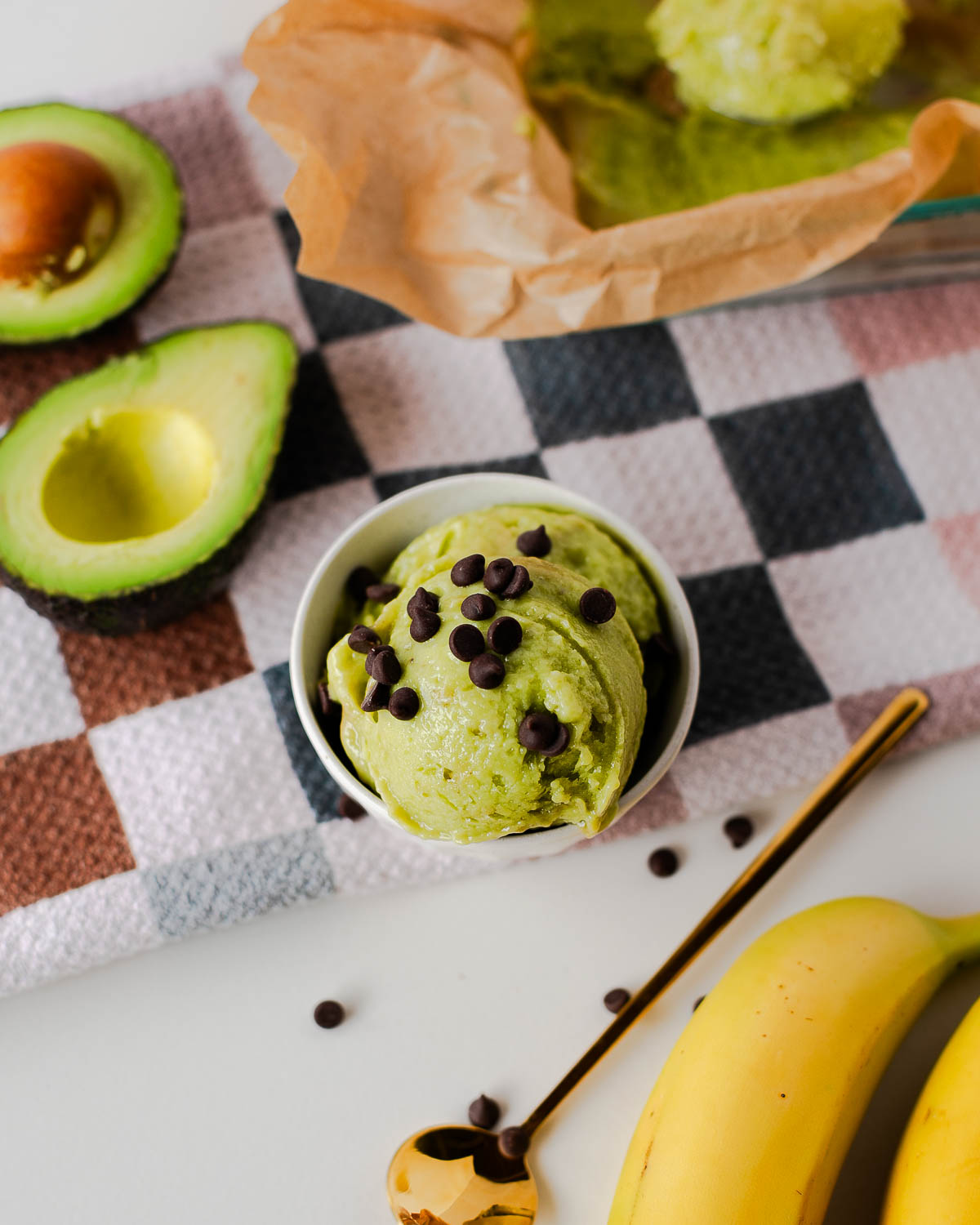
    Blend one ripe avocado, one ripe banana, two tablespoons of olive oil, and one tablespoon of honey until completely smooth – no chunks, as they will be nearly impossible to rinse out of curly hair. Avocado is rich in vitamins A, B, D, and E and contains natural oils that penetrate the hair shaft. Banana is loaded with potassium, natural oils, and vitamins that help soften and improve manageability. Leave on for 20 to 30 minutes under a plastic cap.

    Recipe 3 – The Egg and Mayonnaise Protein Treatment

    Recipe 3 - The Egg and Mayonnaise Protein Treatment

    Combine one whole egg with half a cup of full-fat mayonnaise and one tablespoon of olive oil. The egg provides protein directly to repair damage, while mayonnaise – which contains eggs, oil, and vinegar – acts as a rich conditioner. This is an excellent DIY protein treatment for hair that feels weak and mushy. Apply to damp hair, leave on for 20 minutes under a plastic cap, and rinse with cool water – warm water will cook the egg in your hair, and no one wants that experience.

    Recipe 4 – The Coconut Milk and Honey Hydrator

    Recipe 4 - The Coconut Milk and Honey Hydrator

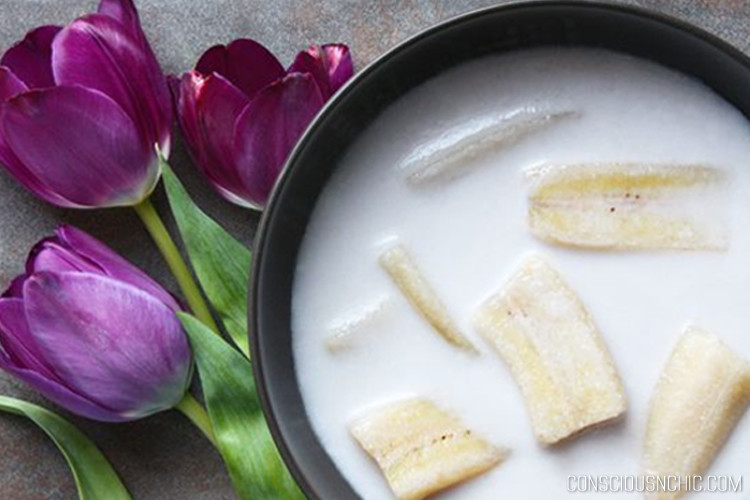
    Mix one can of full-fat coconut milk with three tablespoons of raw honey and one tablespoon of coconut oil. This ultra-hydrating treatment is perfect for very dry hair that needs an intense moisture boost. The coconut milk provides lauric acid, which has a high affinity for hair protein and actually penetrates the hair shaft. Apply generously, cover, and leave on for 30 minutes to an hour for maximum absorption.

    Recipe 5 – The Yogurt and Honey Smoothing Treatment

    Recipe 5 - The Yogurt and Honey Smoothing Treatment

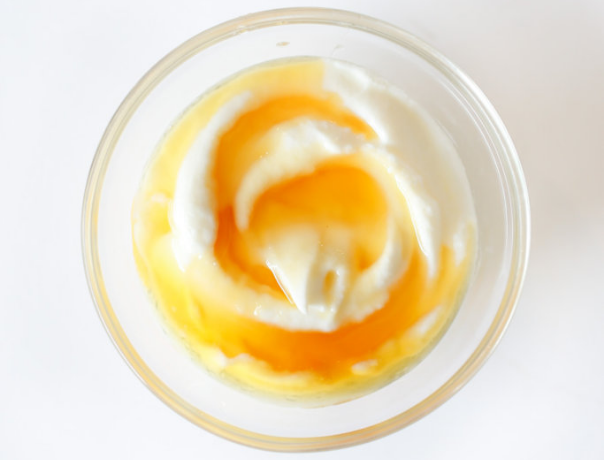
    Combine half a cup of plain full-fat yogurt with two tablespoons of honey and one tablespoon of apple cider vinegar. Yogurt contains lactic acid that gently removes buildup while its proteins strengthen the hair. The apple cider vinegar helps smooth and seal the cuticle, adding shine and reducing frizz. This treatment is particularly good for high porosity hair that struggles to keep its cuticle layer sealed. Leave on for 20 minutes and rinse thoroughly.

    How to Deep Condition for Maximum Results

    How to Deep Condition for Maximum Results

    The technique you use when deep conditioning matters as much as the product itself. Here is how to get the absolute most out of every treatment.

    Start with Clean Hair

    Start with Clean Hair

    Always deep condition after shampooing, not before. Shampooing opens the hair cuticle and removes product buildup, allowing the deep conditioner to penetrate more effectively. If you apply deep conditioner to dirty hair, the buildup acts as a barrier that prevents the treatment from doing its job.

    Section Your Hair

    Section Your Hair

    Work the deep conditioner through your hair in sections to ensure complete, even coverage. On thick natural hair, applying product randomly means some sections get saturated while others barely get any. Use four to eight sections depending on your hair density, and make sure every strand in each section is coated from root to tip.

    Use Heat for Better Penetration

    Use Heat for Better Penetration

    Heat opens the hair cuticle further, allowing the deep conditioner to penetrate more deeply. Cover your treated hair with a plastic cap and then apply heat using one of these methods – sit under a hooded dryer for 15 to 30 minutes, wrap a warm towel around your head, use a thermal heating cap, or simply let your body heat warm the cap naturally for a longer period. Even without external heat, the plastic cap traps your body heat and creates a greenhouse effect that improves absorption.

    Timing Matters

    Timing Matters

    Most deep conditioners need 15 to 30 minutes to work effectively. Leaving them on longer is not always better – some conditioners, especially protein treatments, can actually over-process your hair if left on too long, leading to hard, brittle strands. Follow the instructions on your product, or for DIY treatments, stick to the times recommended in the recipes above. Moisture-only treatments are more forgiving with timing and can generally be left on longer without negative effects.

    Rinse with Cool Water

    Rinse with Cool Water

    After your treatment time is up, rinse with cool or lukewarm water rather than hot. Cool water helps seal the cuticle, locking in the moisture and nutrients you just spent time putting in. Hot water opens the cuticle and can allow some of that goodness to escape. The cool rinse also adds shine by creating a smoother cuticle surface that reflects light.

    Deep conditioning is the backbone of healthy natural hair care. It is not a luxury or an occasional treat – it is a consistent practice that keeps your curls and coils strong, moisturized, and resilient against the daily challenges they face. Whether you choose a store-bought product or whip up a DIY treatment in your kitchen, the act of regularly nourishing your hair with deep conditioning sets you up for success in every other area of your hair care routine. Your natural hair deserves this love, and you deserve the gorgeous, healthy results that come from giving it.

    Key Takeaways

    • Deep conditioning penetrates the hair shaft to deliver moisture and strength from within, unlike regular conditioner which only coats the outside of the strand.
    • Most natural hair types benefit from deep conditioning every wash day – typically once a week or biweekly – with adjustments based on your hair’s current condition and porosity.
    • Understanding whether your hair needs moisture or protein is crucial – too much of either without the other creates its own set of problems.
    • DIY deep conditioners made from kitchen ingredients like honey, avocado, eggs, and yogurt can be just as effective as commercial products at a fraction of the cost.
    • Using heat during deep conditioning, working in sections, and rinsing with cool water are techniques that significantly improve the effectiveness of every treatment.

    Frequently Asked Questions

    Can I leave deep conditioner in my hair overnight?

    Moisture-based deep conditioners can generally be left in overnight without issues – in fact, the extended time can improve results for very dry hair. However, protein treatments should never be left on longer than recommended, as over-processing can make hair hard and brittle. If you do an overnight deep conditioning session, cover your hair with a plastic cap and a satin bonnet to protect your pillowcase and create a warm, humid environment for maximum absorption.

    What happens if I skip deep conditioning?

    What happens if I skip deep conditioning?

    Over time, skipping deep conditioning leads to progressively drier, weaker hair that is more prone to breakage, tangling, and dullness. Your regular conditioner can maintain day-to-day softness, but it cannot provide the deep repair and nourishment that keeps your strands strong and elastic. Think of it like only drinking water but never eating – hydration alone is not enough to sustain optimal health.

    Can I deep condition too often?

    Yes, though it depends on the type of deep conditioner. Over-conditioning with moisture can lead to hygral fatigue – a condition where the hair cuticle becomes fatigued from swelling and contracting too frequently with water absorption. This makes hair feel mushy and limp. Over-conditioning with protein makes hair hard and brittle. For most people, once a week for moisture and once every four to six weeks for protein is the right balance.

    Should I deep condition before or after a protein treatment?

    Always follow a protein treatment with a moisturizing deep conditioner. Protein treatments strengthen the hair but can leave it feeling hard and stiff. A moisture-based deep conditioner applied after the protein treatment restores softness and flexibility, giving you the best of both worlds – strong yet supple hair. Many protein treatments, like the Aphogee Two-Step, come with a specific moisturizing conditioner designed to be used immediately after the protein step.

  • Crochet Hairstyles for 2026 – Quick, Affordable, and Gorgeous Protective Styles to Try

    Crochet Hairstyles for 2026 – Quick, Affordable, and Gorgeous Protective Styles to Try

    Why Crochet Hairstyles Are the Best Kept Secret in Protective Styling

    If you have never tried crochet hairstyles before, you are about to discover one of the most game-changing techniques in the natural hair world. Crochet braids – or crochet hair, as they are more broadly called now since the technique is not limited to braided styles – offer an unbeatable combination of speed, affordability, and versatility that other protective styles simply cannot match. While box braids might take six to ten hours and cost upward of $200 at a salon, a gorgeous crochet style can be installed in under two hours for a fraction of the price.

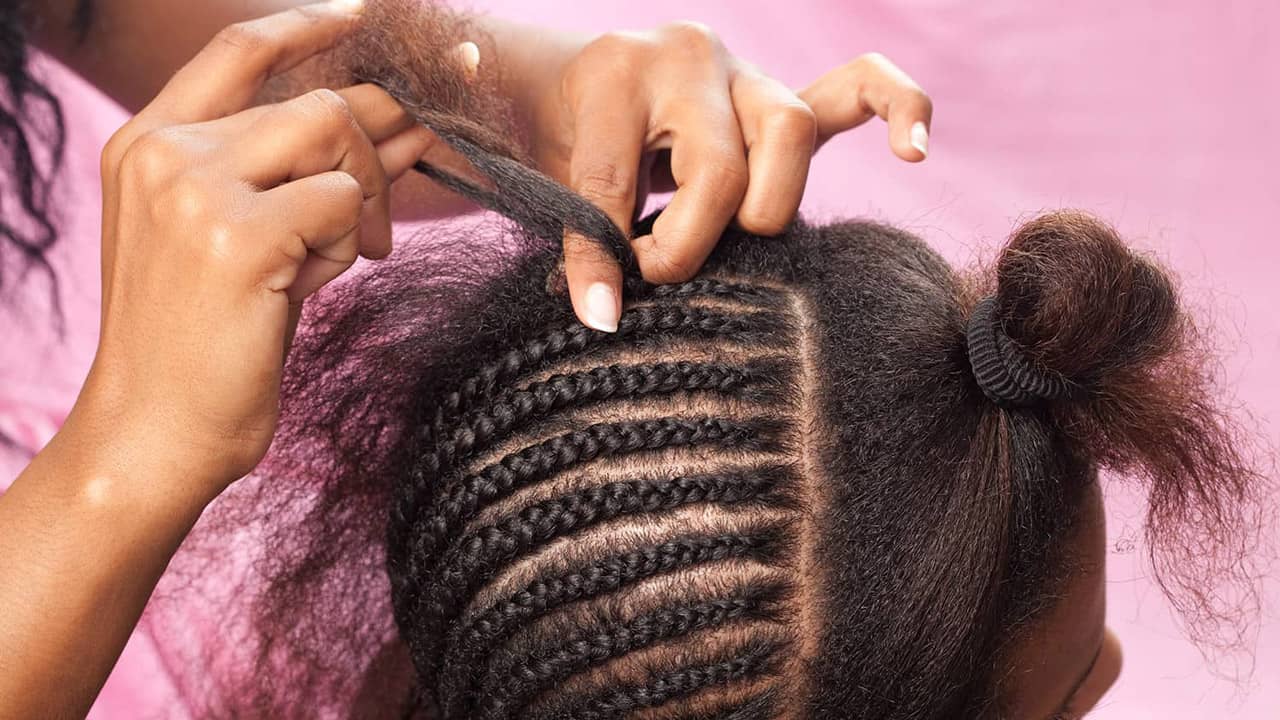
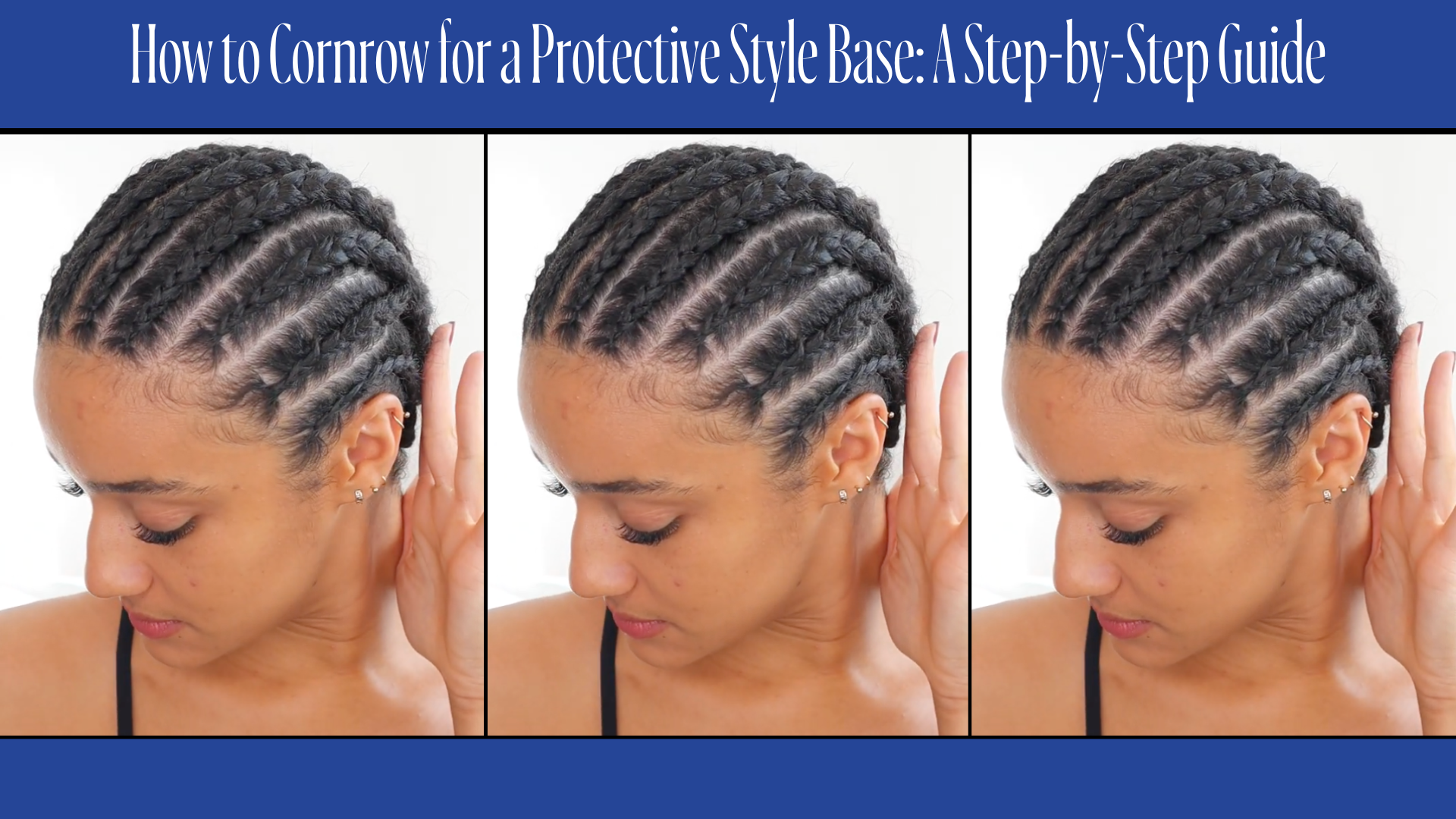
    The concept is beautifully simple. Your natural hair is braided into cornrows as a base, and then pre-made hair extensions are looped through those cornrows using a special crochet needle – also called a latch hook. Because the extension hair comes pre-curled, pre-twisted, or pre-locked, you skip all the time-consuming styling that traditional braids and twists require. The result is a protective style that looks salon-quality but takes dramatically less time and money to achieve.

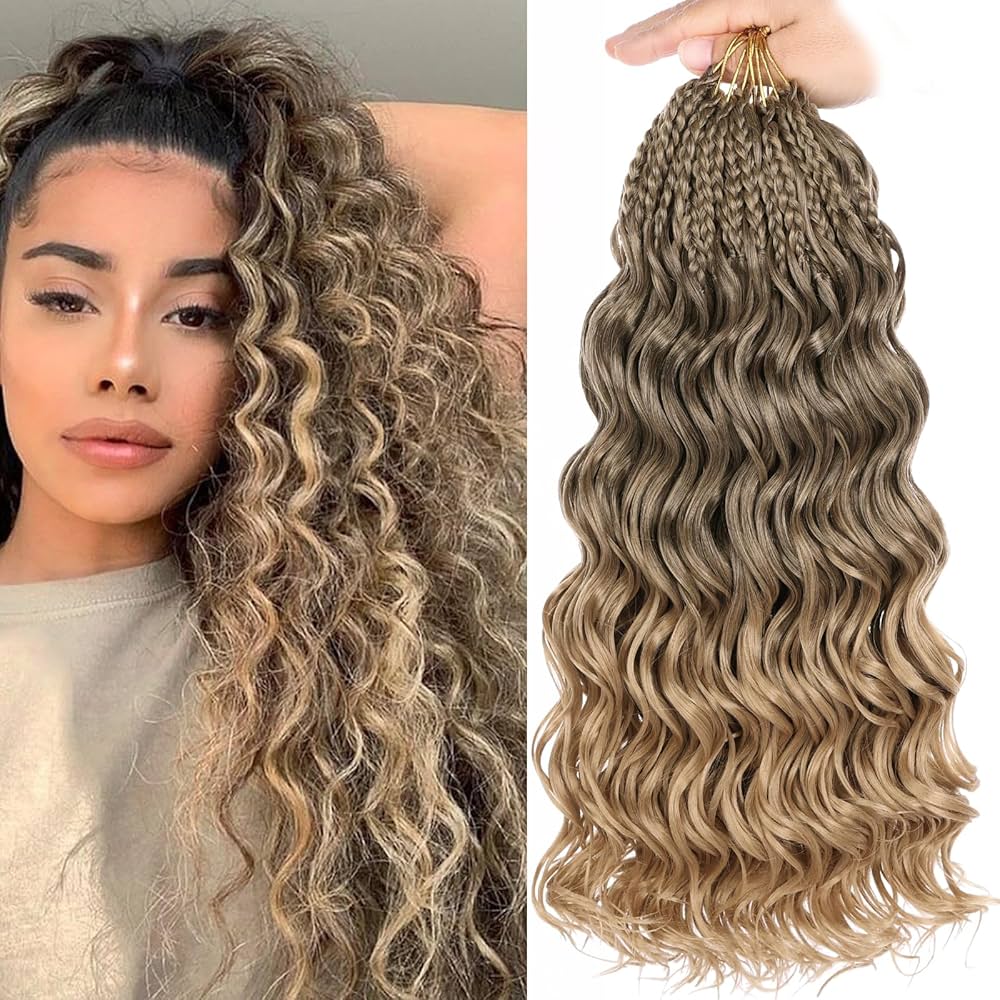
    In 2026, the crochet hair market has absolutely exploded with options. You can get crochet hair that looks like passion twists, Marley twists, faux locs, goddess braids, loose curls, straight blowouts, and everything in between. The quality has improved tremendously too – many crochet hair brands now produce extensions that look incredibly natural and can fool even the most trained eye. Whether you want a look that is sleek and polished or wild and free, there is a crochet style for you.

    What makes crochet styles particularly special for our community is their accessibility. You do not need to spend hours in a salon chair. You do not need a professional stylist – though they are certainly an option. With a little practice and patience, you can install crochet hair yourself at home, on your own schedule, and customize it exactly the way you want. That level of independence and creativity is empowering, and it saves you a significant amount of money over time.

    How Crochet Hair Installation Works

    Understanding the installation process will help you appreciate why crochet is so quick and versatile, and it will prepare you if you decide to try it at home.

    Step 1 – Create Your Cornrow Base

    Step 1 - Create Your Cornrow Base

    The foundation of any crochet style is a solid cornrow base. Your natural hair is braided into cornrows that follow a specific pattern depending on the look you want. For most styles, straight-back cornrows work perfectly. For styles with a side part, you will adjust your cornrow pattern to accommodate the part. The cornrows should be flat, secure, and not too tight – remember, this is a protective style, so protecting your edges and scalp is a priority.

    If you struggle with cornrowing your own hair, you have options. You can ask a friend or family member to help, visit a salon just for the cornrow base – which is much cheaper than paying for a full install – or use a crochet braiding tool kit from Amazon that includes braiding clips and sectioning tools to make self-braiding easier.

    Step 2 – Loop the Hair

    Step 2 - Loop the Hair

    Once your cornrows are done, the fun begins. Thread your crochet needle under a cornrow, hook the pre-looped extension hair onto the needle, and pull it through. The hair creates a loop on one side of the cornrow, and you pull the ends of the hair through that loop to secure it. That is it – one crochet stitch done. Repeat this process all over your head, spacing the loops evenly for consistent fullness.

    Step 3 – Style and Customize

    Step 3 - Style and Customize

    After all the hair is installed, you can cut, shape, and style it to your liking. Many people cut the hair to create layers, face-framing pieces, or a specific shape. If you are going for a curly look, separate the curls and fluff them for more volume. For a more polished look, smooth and define the curls with a light mousse or curl cream.

    The Best Crochet Hairstyles Trending in 2026

    The Best Crochet Hairstyles Trending in 2026

    Let us explore the specific styles that are dominating the crochet scene this year. Each of these can be achieved in under three hours and looks absolutely incredible.

    Crochet Faux Locs

    Crochet Faux Locs

    Faux locs continue to be one of the most requested crochet styles, and in 2026, the variety is better than ever. You can get crochet faux locs in every size from micro to jumbo, in straight or wavy textures, and in every color imaginable. The beauty of crochet faux locs compared to traditionally wrapped faux locs is the time savings – what might take eight to twelve hours with the wrapping method takes just one to two hours with crochet. Goddess faux locs with loose curly sections throughout are especially popular this year and give a gorgeous bohemian look.

    Crochet Passion Twists

    Yes, you can absolutely achieve passion twists using the crochet method, and many people actually prefer it over the traditional twisting method. Crochet passion twists install faster and the pre-made twists often have more consistent curl definition throughout. The pre-looped passion twist crochet hair packs on Amazon come ready to install with no additional prep work needed. Just loop, pull, and go.

    Crochet Marley Hair for Twist Outs and Updos

    Crochet Marley Hair for Twist Outs and Updos

    Marley hair is one of the most versatile crochet textures because it mimics the look of natural Afro-textured hair. You can wear it as is for a beautiful textured Afro look, twist it for twist-outs, braid it, or put it up in updos. Marley crochet hair is also the go-to for creating faux hawk styles and high puff ponytails. The texture blends seamlessly with type 4 natural hair, which makes it one of the most natural-looking crochet options available.

    Crochet Loose Wave Curls

    Crochet Loose Wave Curls

    For a more glamorous, flowing look, crochet loose wave curls give you that fresh-from-the-salon blowout and curl set vibe. This style is perfect for special occasions – weddings, date nights, birthday celebrations – but is also easy enough to wear daily. The curls are bouncy and voluminous right out of the pack, and with a little styling, they look absolutely luxurious. Choose between deep waves, ocean waves, or romantic spirals depending on the mood you want to create.

    Crochet Bob

    Crochet Bob

    Short crochet styles are having a major moment. A crochet bob – whether curly, wavy, or straight – is chic, low-maintenance, and incredibly flattering. The shorter length means you need fewer packs of hair, the installation is faster, and the style is lighter and more comfortable than longer options. Crochet bobs in curly textures are particularly popular in 2026 because they frame the face beautifully and have a youthful, playful energy.

    Crochet Butterfly Locs

    Crochet Butterfly Locs

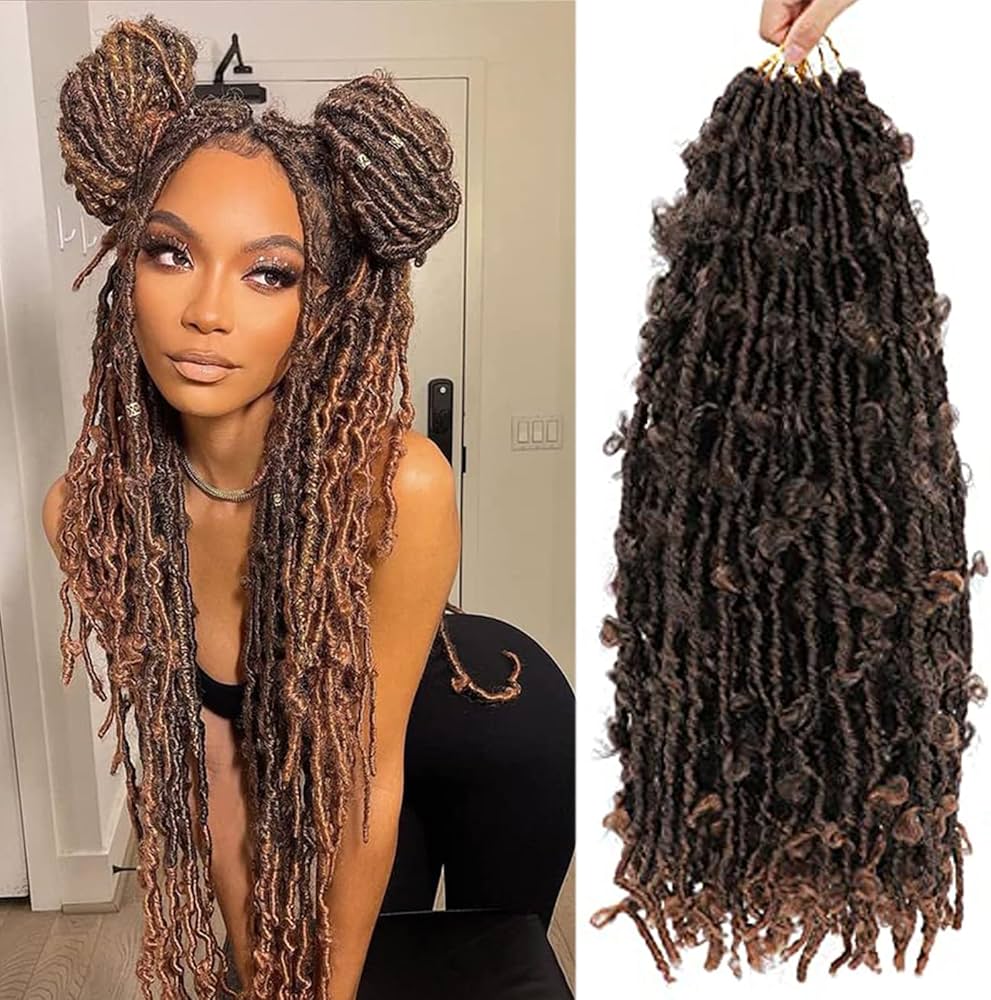
    Butterfly locs are a style that has taken the natural hair community by storm, and the crochet version makes them accessible to everyone. These locs have a distinctive distressed, messy texture with loops and curls popping out along the length, giving them that butterfly wing effect. They look effortlessly cool and artistic, and the crochet method makes them incredibly easy to install. Pre-made crochet butterfly locs are available at most beauty supply stores and online.

    Crochet Senegalese Twists

    Crochet Senegalese Twists

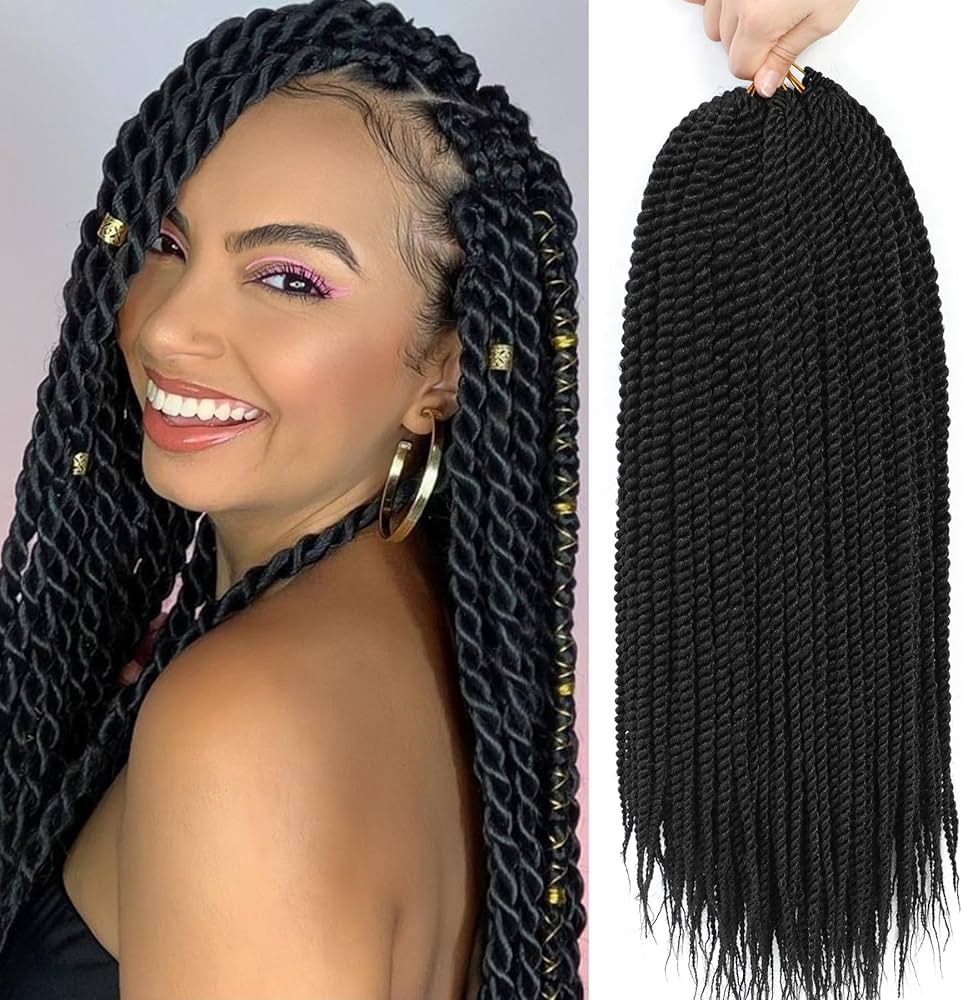
    Senegalese twists have always been a classic protective style, and the crochet version gives you the same sleek, rope-like twists in a fraction of the time. These twists are smooth, uniform, and polished, making them perfect for professional settings. They come in various sizes and lengths, and many brands now offer pre-twisted crochet Senegalese hair that looks virtually identical to hand-twisted extensions.

    Crochet Spring Twists

    Spring twists have a tighter, bouncier curl pattern than passion twists, giving them a lively, springy texture that is absolutely adorable. They are lightweight, fun, and perfect for warmer weather. Crochet spring twists install quickly and have a natural look that works for both casual and dressy occasions. The bouncy texture adds volume without heaviness, making them one of the most comfortable crochet styles to wear long-term.

    How to Choose the Right Crochet Hair for Your Style

    With so many options available, choosing the right crochet hair can feel overwhelming. Here are the factors to consider when making your selection.

    Synthetic vs Human Hair

    Synthetic vs Human Hair

    Most crochet hair is synthetic, which is perfectly fine for the vast majority of styles. Synthetic crochet hair is more affordable, comes pre-styled so it holds its texture without effort, and is available in an endless variety of colors and textures. The downside is that most synthetic hair cannot tolerate heat, so you cannot straighten or curl it with hot tools. If versatility is important to you and you want to change the style with heat tools, invest in human hair crochet extensions, which cost more but offer maximum styling flexibility.

    Pre-looped vs Bulk Hair

    Pre-looped vs Bulk Hair

    Pre-looped crochet hair comes ready to install – each piece has a loop at one end that slides easily onto your crochet needle. This is the most beginner-friendly option and what we recommend for your first crochet install. Bulk hair does not have pre-made loops, so you need to create the loop yourself during installation. Bulk hair gives you more control over the thickness of each section but requires more skill and takes longer to install.

    How Many Packs Do You Need

    How Many Packs Do You Need

    The number of packs you need depends on the style, length, and how full you want the final look. As a general guide, most crochet styles require four to eight packs of hair. Shorter bob styles might need only three to four packs, while very long or very full styles could need up to ten. Always buy one extra pack just in case – leftover hair can be saved for touch-ups or your next install. The multi-pack value bundles on Amazon often offer significant savings compared to buying individual packs.

    Maintaining Your Crochet Hairstyle for Maximum Longevity

    Maintaining Your Crochet Hairstyle for Maximum Longevity

    A well-maintained crochet style can last four to eight weeks, giving you an incredible return on your time and money investment. Here is how to keep your crochet hair looking fresh for as long as possible.

    Nightly Protection

    Nightly Protection

    Just like with any protective style, protecting your crochet hair at night is essential. Wrap your hair in a large satin bonnet designed for voluminous styles or loosely tie a satin scarf around your hair. This prevents the crochet hair from rubbing against your pillowcase, which causes frizz and tangles. For very voluminous styles, you can gently gather the hair on top of your head in a loose pineapple before covering it.

    Scalp Care

    Scalp Care

    Your scalp still needs attention even when it is covered by crochet hair. Use a lightweight scalp oil every few days to prevent dryness and itchiness. You can apply it directly to your cornrows through the crochet hair using an applicator bottle with a narrow tip. If your scalp gets itchy between washes, a diluted witch hazel spray can provide relief without disturbing your style.

    Washing Your Crochet Hair

    Washing Your Crochet Hair

    You can wash most crochet styles, but you need to be gentle to avoid tangling or matting the hair. Dilute your shampoo in water and apply it to your scalp with an applicator bottle, then massage gently. Let the soapy water run through the crochet hair without rubbing it. Rinse thoroughly and gently squeeze out excess water. Allow it to air dry completely – using a blow dryer can cause synthetic hair to frizz or even melt at high temperatures.

    Refreshing the Style

    Refreshing the Style

    If your crochet curls start to lose their definition after a couple of weeks, you can refresh them easily. For curly crochet styles, wrap individual sections around flexi rods or perm rods overnight to restore the curl pattern. For twist and loc styles, smooth any frizz with a light gel or mousse and re-separate any sections that have merged together. These simple refresh techniques can extend the life of your style by an additional two to three weeks.

    DIY Crochet Install Tips for Beginners

    DIY Crochet Install Tips for Beginners

    Ready to try installing crochet hair yourself? Here are the tips that will set you up for success on your first attempt.

    Start Simple

    Start Simple

    For your first crochet install, choose a style that is forgiving – curly or wavy textures are much more forgiving than straight or sleek styles because the texture hides any imperfections in your installation. Crochet curls or passion twists are excellent first-time choices because they look great even if your spacing is not perfectly even.

    Watch Tutorials First

    Watch Tutorials First

    Before you start, watch at least two or three video tutorials all the way through. Pay attention to how they section the hair, how many loops they put in each section, and how they handle the edges and hairline areas. Different creators have different techniques, and watching multiple approaches helps you understand the process from various angles.

    Take Your Time with the Cornrow Base

    Take Your Time with the Cornrow Base

    The cornrow base is the most important part of the entire install. If your cornrows are neat, flat, and secure, the rest of the process is easy. If the cornrows are bumpy, loose, or uneven, your final style will reflect that. Spend the time to get your base right, even if it means the overall process takes a bit longer. If cornrowing is not your strong suit, consider having someone else do just the base and then finishing the crochet part yourself.

    Do Not Overcrowd

    Do Not Overcrowd

    One of the most common beginner mistakes is putting too many loops of hair in each section, resulting in a bulky, heavy style. Start with fewer loops than you think you need – you can always add more. A good rule of thumb is two to three loops per cornrow section for most styles. Space them evenly and check your progress in the mirror regularly to make sure the fullness looks balanced on all sides of your head.

    Blend the Hairline

    Blend the Hairline

    The area around your hairline and part is where crochet styles are most likely to look obviously installed. To create a natural-looking hairline, use thinner sections of hair at the front and gradually increase the fullness as you move toward the back. Some people leave a small section of their natural hair out at the front and blend it with the crochet hair for an even more seamless transition. Apply a small amount of Edge Booster pomade from Ulta to lay your edges beautifully against the crochet style.

    Crochet hairstyles truly are one of the best gifts the natural hair community has embraced. They give you salon-level beauty on a DIY budget, protect your natural hair while you rock stunning looks, and take a fraction of the time that other protective styles require. Whether you are a crochet veteran looking for fresh inspiration or a complete beginner ready to try your first install, 2026 offers more gorgeous crochet options than ever before. Pick your style, grab your supplies, and get ready to fall in love with your next look.

    Key Takeaways

    • Crochet hairstyles install in one to three hours – significantly faster than traditional braids or twists – and cost a fraction of the price of salon-installed protective styles.
    • The variety of crochet hair available in 2026 is incredible, including options for faux locs, passion twists, loose curls, Senegalese twists, butterfly locs, bobs, and much more.
    • A solid cornrow base is the most important element of a great crochet install – take your time getting it right and everything else falls into place.
    • Proper maintenance including nightly satin bonnet use, regular scalp care, and gentle washing can extend the life of your crochet style to four to eight weeks.
    • Crochet styles are beginner-friendly and can be installed at home with minimal tools – just a crochet needle, some hair clips, and your chosen crochet hair.

    Frequently Asked Questions

    Does crochet hair damage your natural hair?

    Does crochet hair damage your natural hair?

    When installed correctly, crochet hair is one of the least damaging protective styles available. The crochet technique does not put excessive tension on individual strands the way tight braiding or twisting can. The main potential for damage comes from the cornrow base being too tight, so always make sure your cornrows are secure but comfortable. Also, do not leave your crochet style in for longer than eight weeks, as prolonged wear can lead to matting and tangling of your natural hair underneath.

    Can I swim with crochet hair?

    You can swim with crochet hair, but take precautions to minimize damage. Wet the hair with fresh water before entering a pool or the ocean, which helps prevent the hair from absorbing as much chlorine or salt water. After swimming, rinse your crochet hair thoroughly with fresh water and allow it to air dry. Keep in mind that some synthetic crochet hair textures can become frizzy or tangled after prolonged exposure to water, so you may need to refresh your style after swimming.

    How do I prevent crochet hair from looking bulky or unnatural?

    The key to avoiding bulk is using fewer loops per section and spacing them strategically. Focus on creating fullness at the crown and sides while using lighter amounts around the hairline and perimeter. After installation, cut and shape the hair to create a natural silhouette – most crochet styles benefit from trimming and customization after they are fully installed. Choosing the right texture for your desired look also matters – lighter, wavier textures tend to look less bulky than very tight or coily textures.

    What is the best crochet hair brand for beginners?

    What is the best crochet hair brand for beginners?

    FreeTress, Sensationnel, and Outre are three popular brands that consistently produce high-quality crochet hair at affordable prices. FreeTress Water Wave and Sensationnel Lulutress are particularly popular for passion twists and loose curly looks. For faux locs, the Bobbi Boss Nu Locs line is a fan favorite. All of these brands offer pre-looped options that make installation straightforward for beginners.

  • Best Products for 4B Hair in 2026 – Moisturizers, Creams, and Oils for Defined Curls

    Best Products for 4B Hair in 2026 – Moisturizers, Creams, and Oils for Defined Curls

    Type 4B hair occupies a unique space in the natural hair world. It is not as loosely coiled as 4A, and it is not as tightly packed as 4C. It sits in the middle with its signature Z-shaped pattern, where strands bend at sharp angles rather than forming round coils. This distinctive pattern gives 4B hair incredible volume and density, but it also creates specific care challenges that many mainstream products simply do not address.

    Finding the right products for 4B hair can feel like a never-ending experiment. Products that work beautifully on 4A hair might be too light. Products designed for 4C hair might be too heavy. 4B hair needs its own sweet spot: enough moisture to keep the Z-bends flexible and hydrated, enough hold to define the curl pattern without crunch, and enough oil to seal without weigh-down. It is a balance, and once you find it, everything changes.

    This guide is dedicated entirely to 4B hair. Every product recommendation, every technique, and every piece of advice is specific to the unique needs of your Z-pattern coils. We have researched and compiled the best products available in 2026 across every category, from cleansers to sealants, to help you build a routine that keeps your 4B hair moisturized, defined, and thriving.

    Understanding 4B Hair: What Makes It Unique

    Understanding 4B Hair: What Makes It Unique

    Before you can choose the right products, you need to understand what makes 4B hair different from other type 4 textures.

    The Z-Pattern

    The Z-Pattern

    While 4A hair forms clearly defined S-shaped coils and 4C hair has a very tight, less defined coil pattern, 4B hair bends at sharp angles in a Z or zigzag pattern. These sharp bends create more fragile points along the hair strand compared to the gradual curves of looser textures. Each bend is a potential breakage point, which is why gentle handling and consistent moisture are non-negotiable for 4B hair health.

    Shrinkage

    Shrinkage

    4B hair experiences significant shrinkage, typically appearing 50 to 75 percent shorter than its actual length when dry. This is a natural characteristic of the tight Z-pattern and is not something that needs to be fixed. Understanding shrinkage helps you set realistic expectations for how your hair will look in different styles and conditions, and it helps you appreciate the true length and growth you are achieving even when it does not look as long as it actually is.

    Density and Volume

    Density and Volume

    4B hair tends to be dense, with many strands packed closely together. This density creates gorgeous volume but also means that products need to penetrate through thick sections to reach every strand. Surface application is rarely sufficient for 4B hair, which is why sectioning during product application is so important.

    Moisture Retention

    Moisture Retention

    Like all type 4 textures, 4B hair struggles with moisture retention. The Z-bends in each strand create points where the cuticle lifts, allowing moisture to escape. Combined with the difficulty of sebum distribution through tight patterns, 4B hair requires regular, intentional moisture application to stay hydrated and flexible.

    Essential Product Categories for 4B Hair

    Essential Product Categories for 4B Hair

    A complete 4B hair care routine includes products from six categories, each serving a specific purpose in maintaining moisture, strength, and definition.

    Cleansers remove buildup without stripping natural moisture. Deep conditioners provide intensive moisture and protein treatments. Leave-in conditioners maintain daily hydration. Styling creams define curls and provide hold. Oils seal moisture and add shine. Gels provide additional definition and hold for specific styles. Not every wash day requires all six categories, but having quality options in each ensures you can address whatever your hair needs at any given time.

    Best Shampoos and Cleansers for 4B Hair

    Best Shampoos and Cleansers for 4B Hair

    Best Sulfate-Free Shampoo: As I Am Coconut CoWash

    Best Sulfate-Free Shampoo: As I Am Coconut CoWash

    As I Am Coconut CoWash is a cleansing conditioner that removes buildup without the stripping effect of traditional shampoo. For 4B hair that tends toward dryness, co-washing between shampoo sessions helps maintain moisture while keeping the scalp clean. The coconut and tangerine formula has a pleasant scent and provides enough slip for gentle detangling during the wash process.

    Best Clarifying Shampoo: Kinky-Curly Come Clean Shampoo

    Best Clarifying Shampoo: Kinky-Curly Come Clean Shampoo

    Even with regular co-washing, 4B hair needs periodic clarifying to remove buildup from leave-ins, oils, and creams. Kinky-Curly Come Clean provides a thorough cleanse without harsh sulfates, using mandarin orange extract and sea kelp to purify the hair and scalp. Use this once a month to reset your hair and improve product absorption.

    Best Moisturizing Shampoo: Carol’s Daughter Black Vanilla Moisture and Shine Shampoo

    For regular wash days, Carol’s Daughter Black Vanilla shampoo cleanses while adding moisture back into 4B strands. The sulfate-free formula lathers gently and leaves hair feeling soft rather than stripped. The vanilla and sweet almond oil formula also smells incredible, making wash day a genuinely pleasant experience.

    Best Deep Conditioners and Treatments

    Best Deep Conditioners and Treatments

    Best Moisture Treatment: Mielle Organics Babassu Oil and Mint Deep Conditioner

    Mielle’s Babassu Oil and Mint deep conditioner provides intense hydration with a cooling mint sensation that feels refreshing on the scalp. For 4B hair that is chronically dry, this deep conditioner penetrates the tight Z-pattern to deliver moisture deep into the strand. Use with a heat cap for 20 to 30 minutes for maximum absorption.

    Best Protein Treatment: Aphogee Two-Step Protein Treatment

    Best Protein Treatment: Aphogee Two-Step Protein Treatment

    When your 4B hair feels mushy, overly elastic, or breaks easily when stretched, it needs protein. Aphogee’s Two-Step treatment is the gold standard for rebuilding protein bonds in damaged hair. Use this treatment every six to eight weeks to maintain the moisture-protein balance that keeps 4B hair strong and resilient. Follow with a moisturizing deep conditioner to prevent protein overload.

    Best Hot Oil Treatment: Jamaican Mango and Lime Black Castor Oil

    A warm oil treatment once a month provides deep nourishment for 4B strands. Jamaican Black Castor Oil is particularly beneficial for 4B hair because it strengthens the shaft, promotes growth, and seals moisture effectively. Warm the oil slightly, apply to damp hair in sections, cover with a plastic cap, and leave on for 30 minutes before shampooing.

    Best Leave-In Conditioners and Moisturizers

    Best Leave-In Conditioners and Moisturizers

    Best Leave-In: SheaMoisture Coconut and Hibiscus Curl and Shine Conditioner

    Best Leave-In: SheaMoisture Coconut and Hibiscus Curl and Shine Conditioner

    This SheaMoisture leave-in provides excellent moisture and slip for 4B hair. The coconut oil and silk protein formula strengthens while hydrating, and the consistency is light enough to absorb without weighing down your coils. Apply to soaking wet hair in sections and follow with your preferred sealant for best results.

    Best Daily Moisturizer: Oyin Handmade Hair Dew

    Best Daily Moisturizer: Oyin Handmade Hair Dew

    For mid-week moisture refreshing, Oyin Handmade Hair Dew is a lightweight daily moisturizer that rehydrates 4B hair without buildup. The water-based formula penetrates quickly and can be applied to dry hair with a light misting of water. Use this between wash days when your hair starts feeling dry to extend your moisture from wash day.

    Best Cream Moisturizer: Karen’s Body Beautiful Sweet Ambrosia Leave-In Conditioner

    Best Cream Moisturizer: Karen's Body Beautiful Sweet Ambrosia Leave-In Conditioner

    This cream-based leave-in conditioner provides lasting moisture with a formula that was designed specifically for textured hair. The sweet ambrosia scent is light and pleasant, and the cream absorbs without leaving a heavy residue. It works particularly well on 4B hair because it provides enough moisture for the sharp Z-bends without weighing down the overall texture.

    Best Styling Creams for Curl Definition

    Best Styling Creams for Curl Definition

    Best for Twist-Outs: SheaMoisture Coconut and Hibiscus Curl Enhancing Smoothie

    Best for Twist-Outs: SheaMoisture Coconut and Hibiscus Curl Enhancing Smoothie

    The SheaMoisture Curl Enhancing Smoothie is a classic for 4B twist-outs and braid-outs. The thick, creamy formula coats each strand with moisture and defines the Z-pattern into visible curls when used with twisting or braiding techniques. Apply a generous amount to each twist section for maximum definition and hold that lasts several days.

    Best for Wash-and-Go: Ecostyler Olive Oil Gel

    Best for Wash-and-Go: Ecostyler Olive Oil Gel

    While not a cream, Ecostyler gel is essential for 4B women who want defined curls from a wash-and-go. Apply over your leave-in conditioner using the praying hands method or shingling technique for maximum curl clumping and definition. The olive oil formula provides hold without flaking, and the curl definition improves as you experiment with application amount and technique.

    Best Butter-Based Styler: Cantu Shea Butter for Natural Hair Coconut Curling Cream

    For a softer, less defined look, Cantu’s Coconut Curling Cream provides moisture and light definition with a touchably soft finish. This is the styling cream for women who want their 4B curls to look and feel soft and natural rather than defined and set. It works well for second-day refresh styles and for achieving a fluffy, voluminous look.

    Best Oils for Sealing and Growth

    Best Oils for Sealing and Growth

    Best Sealing Oil: Jojoba Oil

    Best Sealing Oil: Jojoba Oil

    Jojoba oil is the closest natural oil to the sebum your scalp produces, making it an ideal sealant for 4B hair. It absorbs well without feeling greasy, provides a natural shine, and does not clog pores or follicles. Use a few drops after your leave-in conditioner to seal moisture into each section. Pure cold-pressed jojoba oil is affordable and widely available.

    Best for Growth: Jamaican Black Castor Oil

    Best for Growth: Jamaican Black Castor Oil

    Jamaican Black Castor Oil has been used for generations to promote hair growth and thickness. For 4B hair, apply a small amount to your scalp twice a week, massaging in circular motions to stimulate blood flow to the follicles. The thick consistency also makes it an excellent sealant for ends, which are the oldest and driest part of your hair.

    Best Lightweight Oil: Grapeseed Oil

    Best Lightweight Oil: Grapeseed Oil

    For 4B hair that gets weighed down by heavier oils, grapeseed oil provides moisture-sealing benefits with a feather-light consistency. It is rich in vitamin E and linoleic acid, which strengthen the hair strand and reduce breakage. Grapeseed oil is particularly good for fine 4B hair that needs sealing without heaviness.

    Best Multi-Purpose Oil: Argan Oil

    Best Multi-Purpose Oil: Argan Oil

    Argan oil works as a sealant, a shine enhancer, and a heat protectant all in one. Its medium weight works well on most 4B hair densities, and its high vitamin E content nourishes the hair shaft. A small amount applied to styled hair adds shine and helps combat frizz for a polished finish.

    The LOC Method Customized for 4B Hair

    The LOC Method Customized for 4B Hair

    The LOC method, which stands for Liquid, Oil, Cream, is a layered moisture approach that works exceptionally well for 4B hair. Here is how to customize it for your specific texture.

    Step One: Liquid

    Step One: Liquid

    Start with soaking wet hair or heavily mist dry hair with water. Water is the foundation of moisture for 4B hair. Some women add a small amount of leave-in conditioner to their spray bottle for added hydration in this step. Ensure every section is thoroughly dampened.

    Step Two: Oil

    Step Two: Oil

    Apply a light-to-medium weight oil to each section. For 4B hair, jojoba or sweet almond oil works well in this step. The oil begins sealing the water into the hair shaft. Use a few drops per section and distribute with your fingers or a wide-tooth comb.

    Step Three: Cream

    Follow with a cream-based leave-in conditioner or styling cream. The cream provides an additional moisture barrier over the oil and water, locking everything in. For 4B hair, the cream also helps define the Z-pattern into visible curls when combined with a styling technique like twisting or braiding.

    Why This Order Works for 4B

    The LOC order is particularly effective for 4B hair because the oil goes on early, sealing water before it can evaporate from the sharp Z-bends. The cream then locks in both the water and oil, creating multiple layers of moisture protection. Many 4B naturals find that this order keeps their hair moisturized one to two days longer than the LCO method.

    Styling Tips for 4B Curl Definition

    Shingling

    Shingling

    Shingling is the technique of applying product to small sections of hair while smoothing each strand between your fingers. For 4B hair, this technique is the most effective way to achieve defined curls from a wash-and-go. It is time-consuming, but the definition it creates is unmatched. Apply gel over your leave-in and oil, then shingle each small section from root to tip.

    Finger Coiling

    Finger Coiling

    For even more defined curls, wrap small sections of product-coated 4B hair around your finger from root to tip. This creates uniform coils that are more defined than what 4B hair typically achieves on its own. While incredibly time-intensive, the results can last five to seven days with proper nighttime protection.

    Twist-Outs

    Twist-Outs

    The twist-out is the classic 4B styling technique that combines curl definition with volume. Apply your styling cream generously to each section, two-strand twist from root to tip, and allow to dry completely before unraveling. The key to a great 4B twist-out is using enough product, making your twist sections small enough for your desired definition level, and allowing the twists to dry completely before taking them down.

    Key Takeaways

    • 4B hair has a unique Z-shaped pattern that requires specific products for moisture, definition, and gentle care.
    • The LOC method (Liquid, Oil, Cream) works particularly well for 4B hair to maximize moisture retention.
    • SheaMoisture, Mielle Organics, and Carol’s Daughter offer some of the best products for 4B hair in 2026.
    • Jojoba oil is the ideal sealing oil for 4B hair because it mimics natural sebum and absorbs without heaviness.
    • Clarify monthly to remove buildup that blocks product absorption and moisture penetration.
    • Twist-outs, shingling, and finger coiling are the most effective styling techniques for 4B curl definition.
    • Always apply products to wet or damp hair in sections to ensure every strand receives moisture and product.

    Frequently Asked Questions

    What is the difference between 4B and 4C hair?

    What is the difference between 4B and 4C hair?

    4B hair has a distinct Z-shaped or zigzag pattern with sharp angles between bends. 4C hair has an even tighter coil pattern that may appear to have no defined curl pattern when dry. 4B hair typically shows more visible curl definition than 4C hair when products are applied, and the Z-pattern creates a slightly different texture and volume profile. Many people have a mix of both types across different areas of their head.

    How often should I wash 4B hair?

    Most 4B naturals do well washing once a week or every ten days. Washing too frequently strips the natural oils that 4B hair desperately needs, while waiting too long leads to buildup that blocks moisture absorption. A co-wash mid-week can help refresh moisture without the full shampooing process. Adjust your wash frequency based on your scalp health, product buildup, and how quickly your hair feels dry.

    Why does my 4B hair shrink so much?

    Why does my 4B hair shrink so much?

    Shrinkage is a natural characteristic of the tight Z-pattern. Each sharp bend in the strand causes the hair to compact on itself, appearing much shorter than its stretched length. 4B hair commonly shrinks 50 to 75 percent. Shrinkage is actually a sign of healthy, elastic hair. While stretch methods like banding, twisting, and braiding can elongate your hair for certain styles, embracing shrinkage as part of your hair’s natural beauty is the healthiest mindset.

    Can I do a wash-and-go with 4B hair?

    Yes, though wash-and-go results on 4B hair typically look different from results on looser curl types. For the best definition, use the shingling technique with a strong-hold gel over your leave-in conditioner and oil. Make your sections very small for maximum definition. 4B wash-and-go styles tend to have a more fluffy, voluminous appearance than the uniform curl clumps that looser textures achieve, and that look is beautiful in its own right.

  • Best Leave-In Conditioners for 4C Hair in 2026 – Moisture That Lasts All Day

    Best Leave-In Conditioners for 4C Hair in 2026 – Moisture That Lasts All Day

    If you have 4C hair, you already know the struggle. You spend time carefully moisturizing your coils on wash day, and by day two or three, your hair feels dry again. It is like your curls are in a constant state of thirst, no matter how much product you apply. The frustration is real, and it is not your fault. The tight coil pattern of 4C hair creates unique moisture challenges that require targeted solutions.

    The right leave-in conditioner can change everything. It sits on your hair between washes, continuously delivering hydration, softness, and slip that makes your coils more manageable and less prone to breakage. But not just any leave-in will do. 4C hair demands formulas that penetrate the hair shaft rather than sitting on top, that lock moisture in for days rather than hours, and that provide enough slip to reduce the tangles and knots that lead to breakage during styling.

    In 2026, brands have become smarter about formulating for 4C hair specifically. We are seeing leave-in conditioners designed by chemists who understand 4C hair at a molecular level, with ingredients chosen for their ability to penetrate tight coil patterns and create lasting moisture barriers. This guide covers the best options available right now, along with application techniques that maximize moisture retention between wash days.

    Why 4C Hair Needs Specialized Moisture

    Why 4C Hair Needs Specialized Moisture

    Understanding why 4C hair loses moisture so quickly helps you choose better products and develop better habits. Several structural factors contribute to the chronic dryness that 4C naturals experience.

    The Coil Structure

    The Coil Structure

    4C hair has the tightest coil pattern of any hair type, with each strand forming tiny, densely packed Z-shaped or S-shaped coils. Each bend in the coil is a point where the cuticle layer lifts slightly, creating opportunities for moisture to escape. The more bends per inch of hair, the more moisture escape points exist. This is why 4C hair loses moisture faster than looser curl patterns with fewer bends.

    Sebum Distribution

    Sebum Distribution

    Your scalp produces sebum, a natural oil that moisturizes and protects the hair shaft. In straight hair, sebum travels easily from the scalp down the hair shaft. In 4C hair, the tight coils prevent sebum from traveling past the first inch or two of hair. This means that the majority of your hair length receives no natural moisture from your scalp, relying entirely on the products you apply for hydration.

    Porosity Factors

    Porosity Factors

    Many 4C hair types have high porosity, meaning the cuticle layer has gaps that allow moisture to enter easily but also escape quickly. Others have low porosity, where the cuticle layer is so tightly sealed that moisture has difficulty penetrating in the first place. Both porosity types benefit from leave-in conditioners, but the ideal formula and application method differ based on your specific porosity level.

    What Makes a Great Leave-In for 4C Hair

    What Makes a Great Leave-In for 4C Hair

    Penetrating Moisture

    Penetrating Moisture

    The best leave-in conditioners for 4C hair contain humectants and penetrating moisturizers that actually enter the hair shaft rather than just coating the surface. Water is the ultimate moisturizer, which is why the best leave-ins are water-based, with water as the first ingredient. Glycerin, honey, and aloe vera are humectants that draw moisture from the environment into your hair, providing ongoing hydration between applications.

    Sealing Ability

    Sealing Ability

    Moisture that enters the hair needs to be sealed in. The best leave-ins contain a combination of humectants to attract moisture and emollients like natural oils and butters to seal the cuticle and prevent moisture loss. This dual action is what creates all-day hydration rather than a few hours of softness followed by dryness.

    Slip and Detangling

    Slip and Detangling

    4C hair is prone to tangling, and manipulation during detangling is one of the leading causes of breakage. A leave-in conditioner with excellent slip reduces friction between strands, making detangling easier and less damaging. Look for leave-ins that make your comb or fingers glide through your coils rather than snagging and pulling.

    Lightweight Formula

    Lightweight Formula

    4C hair benefits from moisture, but heavy products can weigh down coils and cause buildup that actually blocks further moisture absorption. The best leave-in conditioners are lightweight enough to absorb into the hair without leaving a heavy, greasy coating. If your hair feels coated rather than moisturized after applying a leave-in, the formula may be too heavy for your specific hair needs.

    Top Leave-In Conditioner Picks for 2026

    Top Leave-In Conditioner Picks for 2026

    Best Overall: SheaMoisture Manuka Honey and Yogurt Hydrate and Repair Leave-In

    SheaMoisture’s Manuka Honey and Yogurt leave-in consistently ranks as the best overall option for 4C hair due to its balance of moisture, slip, and affordability. The formula is super nourishing and glides through natural 4C hair with ease, providing immediate softness and manageability. Manuka honey is a powerful humectant that draws moisture to the hair, while yogurt protein strengthens the strand. At around $12, it offers premium performance at a drugstore price.

    Best for Intense Hydration: 4C ONLY Too Soft Leave-In Conditioner

    Best for Intense Hydration: 4C ONLY Too Soft Leave-In Conditioner

    Designed specifically for 4C hair by a Black chemist, the 4C ONLY Too Soft Leave-In delivers 72-plus hours of moisture retention. This is not a marketing claim you hear and ignore. Users consistently report that their hair still feels soft and moisturized two to three days after application, which is remarkable for 4C hair. The formula was developed specifically for the molecular structure of 4C strands, and that targeted approach shows in the results.

    Best for Definition: Briogeo Curl Charisma Leave-In Creme

    Best for Definition: Briogeo Curl Charisma Leave-In Creme

    Briogeo’s Curl Charisma combines rice amino acids, avocado oil, and quinoa extract to help coils stay hydrated while maintaining their shape. If you want your 4C curls to be defined and clumped rather than just moisturized, this leave-in provides the structure and moisture balance needed for visible curl definition on tighter patterns.

    Best Budget Option: tgin Butter Cream Daily Moisturizer

    Best Budget Option: tgin Butter Cream Daily Moisturizer

    tgin’s Butter Cream Daily Moisturizer is one of the best leave-in conditioners for making 4C hair easily manageable at an accessible price point. The rich, buttery formula provides intense moisture without feeling heavy, and it works well as both a wash-day leave-in and a mid-week refresher. At around $14, it is an excellent value for the moisture it delivers.

    Best for Low Porosity: Kinky-Curly Knot Today

    Best for Low Porosity: Kinky-Curly Knot Today

    Low-porosity 4C hair needs a lightweight leave-in that does not sit on the surface and cause buildup. Kinky-Curly Knot Today is a liquid-based formula that provides exceptional slip and detangling power without heavy oils or butters. Its lightweight consistency allows it to be absorbed by low-porosity hair that rejects heavier products. The organic slippery elm and marshmallow root extracts provide slip that makes detangling nearly effortless.

    Best for High Porosity: Camille Rose Naturals Curl Love Moisture Milk

    High-porosity 4C hair absorbs moisture quickly but loses it just as fast. Camille Rose’s Curl Love Moisture Milk provides rich hydration with sealing ingredients that slow moisture loss from porous strands. Rice milk, macadamia nut oil, and honey work together to penetrate, moisturize, and seal, creating a moisture barrier that lasts longer on high-porosity hair.

    Key Ingredients That Actually Work for 4C Hair

    Key Ingredients That Actually Work for 4C Hair

    Humectants

    Humectants

    Glycerin is the most common and effective humectant in leave-in conditioners. It draws water from the environment into your hair, providing ongoing moisture. Honey and aloe vera are natural humectants that also provide conditioning benefits. In very dry climates, humectants can sometimes draw moisture out of your hair instead of in, so monitor how your hair responds in different weather conditions.

    Emollients

    Emollients

    Shea butter, mango butter, and cocoa butter soften the hair and create a barrier that slows moisture loss. In leave-in conditioners, these butters are typically in smaller concentrations than in styling creams or deep conditioners, providing moisture-sealing benefits without weighing down the hair.

    Oils

    Oils

    Coconut oil, olive oil, avocado oil, and jojoba oil each offer different benefits for 4C hair. Coconut oil is one of the few oils that can actually penetrate the hair shaft, making it a true moisturizer rather than just a sealant. Jojoba oil closely mimics the natural sebum your scalp produces, making it an excellent all-purpose hair oil. Avocado oil is rich in fatty acids that nourish and strengthen the hair strand.

    Proteins

    Proteins

    Hydrolyzed proteins like keratin, silk, and wheat fill in gaps in damaged cuticles and strengthen the hair strand. For 4C hair that experiences breakage, a leave-in with protein can improve strength and reduce shedding. However, too much protein can make 4C hair feel stiff and dry, so balance is important. If your hair feels hard or brittle after using a protein-rich leave-in, switch to a moisture-focused formula.

    Application Methods for Maximum Moisture Retention

    Application Methods for Maximum Moisture Retention

    Apply to Soaking Wet Hair

    Apply to Soaking Wet Hair

    The single most effective technique for 4C moisture retention is applying your leave-in conditioner to hair that is soaking wet, not just damp. Water is the primary moisturizer, and your leave-in conditioner’s job is to lock that water in. When you apply to dripping wet hair, you are trapping maximum water within the hair shaft before sealing it with the leave-in’s emollients and oils.

    Section and Distribute

    Section and Distribute

    4C hair is dense, and product applied to the surface rarely reaches the interior layers. Section your hair into at least eight to twelve sections and apply your leave-in to each section individually, working the product from roots to ends with your fingers or a wide-tooth comb. This ensures that every strand receives moisture, not just the outermost layer.

    The Praying Hands Method

    The Praying Hands Method

    Place a section of hair between your palms with product on your hands and smooth downward in a praying motion. This technique distributes product evenly along the hair shaft while encouraging coils to clump together, reducing tangles and improving definition. Repeat for each section until all of your hair is covered.

    Seal Immediately

    Seal Immediately

    After applying your leave-in, follow immediately with a sealing oil or butter. This locks the water and leave-in conditioner inside the hair shaft by coating the outer layer of the strand. Without sealing, the moisture from your leave-in begins evaporating almost immediately, especially in dry environments.

    The LOC and LCO Methods Explained

    The LOC and LCO Methods Explained

    LOC Method: Liquid, Oil, Cream

    LOC Method: Liquid, Oil, Cream

    The LOC method involves applying products in a specific order: liquid (water or a water-based product), oil, then cream. The liquid hydrates, the oil seals, and the cream provides an additional moisture barrier. This method works particularly well for high-porosity 4C hair because the oil layer goes on before the cream, creating an earlier seal that prevents moisture from escaping through porous cuticles.

    LCO Method: Liquid, Cream, Oil

    LCO Method: Liquid, Cream, Oil

    The LCO method reverses the order of oil and cream: liquid, cream, then oil. This method works better for low-porosity 4C hair because the cream helps the liquid absorb into resistant cuticles, and the oil goes on last as the final seal. For low-porosity hair, placing a heavier oil directly after the liquid can actually block the liquid from absorbing fully.

    Which Method Is Right for You

    Which Method Is Right for You

    The honest answer is that you need to experiment. Try each method for a few wash cycles and observe which keeps your hair moisturized longer. Many 4C naturals find that one method works during certain seasons and the other works better when humidity and temperature change. There is no single correct answer, only what works for your specific hair.

    Common Moisture Mistakes 4C Naturals Make

    Common Moisture Mistakes 4C Naturals Make

    Using Too Much Product

    Using Too Much Product

    More product does not equal more moisture. Excessive product creates buildup that actually blocks moisture from reaching your hair on subsequent applications. A moderate amount of leave-in thoroughly distributed is more effective than a heavy application concentrated on the surface.

    Skipping Water

    Skipping Water

    Products cannot moisturize without water. If you apply leave-in conditioner to completely dry hair without dampening it first, the leave-in has nothing to seal in. Always start with water, whether from your shower, a spray bottle, or a water-based product, and then follow with your leave-in and sealant.

    Never Clarifying

    Never Clarifying

    Product buildup from leave-ins, oils, and creams accumulates over time and creates a barrier that prevents future moisture absorption. Use a clarifying shampoo once a month to remove buildup and give your hair a clean slate for moisture absorption. You will notice that your products work significantly better on freshly clarified hair.

    Ignoring Your Scalp

    A dry, unhealthy scalp produces hair that is inherently drier and weaker. While leave-in conditioners are designed for the hair shaft, do not neglect your scalp health. A lightweight scalp oil massaged into your scalp regularly promotes healthy follicles and creates a better foundation for moisturized hair growth.

    Building a Complete 4C Moisture Routine

    Building a Complete 4C Moisture Routine

    Wash Day

    Wash Day

    Start with a gentle sulfate-free shampoo or co-wash. Follow with a deep conditioner left on for 15 to 30 minutes under a heat cap for maximum penetration. Rinse, then apply your leave-in conditioner to soaking wet hair in sections. Seal with your preferred oil or cream, then style as desired. This comprehensive wash day routine sets the foundation for moisture that lasts between washes.

    Mid-Week Refresh

    Around day three or four, when your hair starts feeling dry, spritz each section with water or a water-based refresher spray. Apply a small amount of leave-in conditioner to any particularly dry areas, then seal again with a light oil. This refresh extends the moisture from your wash day and keeps your style looking fresh.

    Nightly Protection

    Nightly Protection

    Sleep on a satin or silk pillowcase and wear a satin bonnet or scarf. Cotton pillowcases absorb moisture from your hair overnight, undoing the hydration work you did during the day. Satin and silk allow your hair to retain its moisture and reduce friction that causes tangles and breakage.

    Key Takeaways

    • 4C hair loses moisture faster than other textures due to its tight coil pattern and limited natural sebum distribution.
    • SheaMoisture Manuka Honey and 4C ONLY Too Soft lead the 2026 market for effective 4C leave-in conditioners.
    • Always apply leave-in conditioner to soaking wet hair in sections for maximum moisture penetration and retention.
    • The LOC method works best for high-porosity 4C hair, while the LCO method suits low-porosity 4C hair.
    • Key ingredients to look for include glycerin, honey, aloe vera for moisture, and shea butter, coconut oil for sealing.
    • Clarify monthly to remove product buildup that blocks moisture absorption.
    • Sleep on satin or silk to prevent overnight moisture loss and reduce friction breakage.

    Frequently Asked Questions

    How often should I apply leave-in conditioner to 4C hair?

    Apply a thorough application on wash day and lighter refresh applications mid-week as needed, typically every three to four days. Avoid daily heavy applications, which can cause buildup. The goal is to maintain the moisture from your wash day rather than starting from scratch every day. If your hair feels dry daily, your wash day moisture routine may need adjustment rather than more product between washes.

    Can I use leave-in conditioner on dry 4C hair?

    You can, but it is more effective when applied to damp or wet hair. If applying to dry hair as a refresh, mist the section with water first, then apply a small amount of leave-in and seal with oil. Applying leave-in to completely dry hair without water means the product sits on top of the strand rather than helping moisture penetrate into it.

    What is the difference between a leave-in conditioner and a deep conditioner?

    A deep conditioner is a treatment you apply to wet hair, leave on for 15 to 30 minutes, and then rinse out. It provides intense moisture and repair during that treatment window. A leave-in conditioner is applied to wet hair and stays in the hair, providing ongoing moisture and protection between wash days. Both are important for 4C hair health, and they serve different purposes in your routine. Use a deep conditioner on wash day and a leave-in after rinsing it out.

    My hair still feels dry even with leave-in conditioner. What am I doing wrong?

    Several factors could be at play. You may not be applying to wet enough hair, reducing the moisture available to seal in. You may not be sealing with an oil or cream after your leave-in, allowing moisture to escape. Your hair may have buildup that is blocking product absorption, requiring a clarifying wash. Or your leave-in formula may not be right for your porosity type. Experiment with different products, always apply to soaking wet hair, seal immediately, and clarify monthly to address the most common causes of persistent dryness.

  • Best Affordable Retinol Products at the Drugstore – Start Anti-Aging Without Breaking the Bank

    Best Affordable Retinol Products at the Drugstore – Start Anti-Aging Without Breaking the Bank

    Retinol is the gold standard of anti-aging skincare. Dermatologists have been recommending it for decades because it genuinely works. It speeds up cell turnover, boosts collagen production, fades dark spots, smooths fine lines, and improves overall skin texture. No other over-the-counter ingredient has this much scientific evidence backing its effectiveness.

    But here is the secret the luxury skincare industry does not want you to know: the most affordable retinol products at your local drugstore contain the same active ingredient as the hundred-dollar serums at Sephora. A retinol molecule is a retinol molecule. Your skin cannot tell the difference between a seven-dollar product and a seventy-dollar one. What matters is the concentration, the delivery system, and how you use it.

    We have tested every major drugstore retinol product available in 2026 to find the ones that deliver real results at real-world prices. Whether you are a retinol beginner or a seasoned user looking to save money, this guide has your perfect match.

    Retinol 101 – What It Is and Why It Works

    Retinol is a form of vitamin A that communicates with skin cells, essentially telling them to behave like younger, healthier cells. It works at a cellular level to accelerate the skin’s natural renewal process. In younger skin, cells turn over approximately every twenty-eight days. As we age, this process slows dramatically. Retinol speeds it back up, bringing fresh, new cells to the surface faster.

    This accelerated turnover is what produces the visible anti-aging results. Fresh surface cells look smoother, brighter, and more even-toned than old, damaged cells. Meanwhile, retinol stimulates collagen and elastin production in the deeper layers of skin, which firms and plumps from within. Over time, this combination of surface renewal and deep structural support reduces the appearance of fine lines, wrinkles, and age spots.

    The reason retinol is so effective compared to other anti-aging ingredients is that it works on multiple pathways simultaneously. Most ingredients target one aspect of aging. Retinol targets several at once, making it the most comprehensive single ingredient for anti-aging.

    Types of Retinol and What They Mean

    Types of Retinol and What They Mean

    Retinol

    Retinol

    The most common form in drugstore products. It is converted to retinoic acid by your skin through a two-step process, which means it is gentler than prescription retinoids but also takes longer to produce results. Concentrations typically range from 0.025 percent to 1 percent in over-the-counter products.

    Retinaldehyde

    Retinaldehyde

    One step closer to retinoic acid than retinol, requiring only one conversion step. This means it works faster while still being available without prescription. It is less irritating than retinoic acid but more potent than standard retinol. Less common in drugstore products but available from some brands.

    Retinyl Palmitate and Retinyl Acetate

    Retinyl Palmitate and Retinyl Acetate

    The gentlest forms of vitamin A, requiring three conversion steps to become active retinoic acid. These are found in many moisturizers and eye creams marketed for sensitive skin. They are the least irritating but also the least potent. Good for introducing your skin to retinoids but unlikely to produce dramatic results.

    Encapsulated Retinol

    Encapsulated Retinol

    Retinol wrapped in a protective capsule that releases it gradually. This slow release reduces irritation while maintaining effectiveness. CeraVe uses this technology in their retinol products, making them among the most tolerable drugstore options.

    Best Drugstore Retinol for Beginners

    Best Drugstore Retinol for Beginners

    CeraVe Retinol Serum – Approximately Seventeen Dollars

    CeraVe Retinol Serum - Approximately Seventeen Dollars

    CeraVe Retinol Serum is our top pick for retinol beginners. The encapsulated retinol releases gradually, minimizing the irritation that scares many first-time users away from retinol entirely. The formula includes niacinamide for calming, hyaluronic acid for hydration, and ceramides for barrier support. This is the retinol equivalent of training wheels, effective enough to produce results but gentle enough to keep irritation at bay.

    This product won a Shop TODAY Beauty Award as best budget anti-aging serum, and dermatologists frequently recommend it as a starting point for patients new to retinol. At seventeen dollars, it costs a fraction of premium retinol serums that use the same encapsulated technology.

    The Ordinary Retinol 0.2% in Squalane – Approximately Six Dollars

    The Ordinary Retinol 0.2% in Squalane - Approximately Six Dollars

    The Ordinary Retinol 0.2% in Squalane at just six dollars is the most affordable retinol product you can buy. The low 0.2 percent concentration is perfect for beginners, and the squalane base provides moisture that helps offset the drying effect of retinol. Start with this two to three nights per week and increase as tolerated.

    Neutrogena Rapid Wrinkle Repair Retinol Serum – Approximately Twenty Dollars

    Neutrogena Rapid Wrinkle Repair Retinol Serum - Approximately Twenty Dollars

    Neutrogena’s retinol technology has been refined over years of development. This serum uses accelerated retinol SA to deliver results while minimizing irritation. It is lightweight, absorbs quickly, and layers well under moisturizer. The brand’s long history with retinol gives confidence in the formulation.

    Best Drugstore Retinol for Intermediate Users

    Best Drugstore Retinol for Intermediate Users

    RoC Retinol Correxion Line Smoothing Serum Capsules – Approximately Sixteen Dollars

    RoC Retinol Correxion Capsules are brilliant in their design. Each capsule contains a single application of fresh retinol serum, meaning the formula stays potent until the moment you use it. Retinol degrades with air and light exposure, so traditional bottles gradually lose potency after opening. These capsules solve that problem completely.

    RoC has decades of retinol expertise and their formulations are clinically proven. The capsule delivery also eliminates the guesswork of dosing. One capsule, one application, the perfect amount every time. At sixteen dollars for a month’s supply, the value is excellent.

    The Ordinary Retinol 0.5% in Squalane – Approximately Seven Dollars

    The Ordinary Retinol 0.5% in Squalane - Approximately Seven Dollars

    Once your skin has adapted to the 0.2 percent concentration, stepping up to 0.5 percent provides increased anti-aging benefits. The squalane base remains moisturizing and the formula is stable thanks to the oil-based delivery. At seven dollars, moving up in concentration barely increases your investment.

    Best Drugstore Retinol for Advanced Users

    Best Drugstore Retinol for Advanced Users

    Neutrogena Rapid Wrinkle Repair Retinol Pro+ 0.5% Power Serum – Approximately Twenty-Five Dollars

    This is Neutrogena’s most potent retinol offering at 0.5 percent pure retinol. For experienced retinol users whose skin has built tolerance, this serum delivers visible wrinkle improvement in as little as two weeks. The formula is designed for maximum efficacy, which means it is not suitable for beginners but is exactly what advanced users need.

    The Ordinary Retinol 1% in Squalane – Approximately Eight Dollars

    The Ordinary Retinol 1% in Squalane - Approximately Eight Dollars

    The highest concentration in The Ordinary’s retinol line. At one percent, this is among the most potent over-the-counter retinol products available anywhere, at a price that makes luxury brands look absurd. Only use this if your skin has been successfully tolerating lower concentrations for several months.

    RoC Retinol Correxion Max Hydration Cream – Approximately Twenty Dollars

    RoC Retinol Correxion Max Hydration Cream - Approximately Twenty Dollars

    This combines retinol with hyaluronic acid in a rich cream format. It is ideal for experienced retinol users with dry skin who want anti-aging and hydration in one product. The cream format provides a more comfortable experience than serums for those with drier skin types.

    Best Drugstore Retinol for Sensitive Skin

    Best Drugstore Retinol for Sensitive Skin

    Sensitive skin does not mean you cannot use retinol. It means you need the right formulation and approach.

    CeraVe Retinol Serum remains the best option for sensitive skin because the encapsulated delivery minimizes irritation while the ceramides support the skin barrier. Many sensitive-skin users who could not tolerate other retinol products find CeraVe’s version manageable.

    Another approach for sensitive skin is retinol sandwiching. Apply moisturizer first, then your retinol, then another layer of moisturizer. The moisturizer layers buffer the retinol and reduce direct contact with the skin, which dramatically decreases irritation without eliminating effectiveness.

    How to Start Using Retinol Without Irritation

    How to Start Using Retinol Without Irritation

    The most common mistake with retinol is doing too much too soon. Your skin needs time to adapt. Here is the proven approach.

    Week one and two: Apply retinol one night per week. Use a pea-sized amount on dry skin after cleansing. Follow with moisturizer. This gives your skin a gentle introduction.

    Week three and four: Increase to two nights per week. Monitor for redness, peeling, or irritation. If these occur, stay at this frequency longer before increasing.

    Month two: Increase to three nights per week if your skin is tolerating well. Continue to follow with moisturizer.

    Month three and beyond: Gradually work up to every other night and eventually nightly use as tolerated. Some people never need or want to use retinol every night, and that is perfectly fine. Even two to three times per week produces real results.

    Always apply sunscreen during the day when using retinol, as retinol increases sun sensitivity. This is non-negotiable.

    Common Retinol Mistakes That Waste Your Money

    Using Too Much Product

    Using Too Much Product

    A pea-sized amount is sufficient for your entire face. Using more does not produce faster results. It only produces more irritation. Your skin can only absorb a certain amount of retinol at a time, so excess product sits on the surface and causes unnecessary irritation.

    Applying to Wet Skin

    Applying to Wet Skin

    Retinol absorbs more rapidly on damp skin, which increases irritation risk. Always apply to completely dry skin. Wait at least five minutes after washing your face before applying retinol.

    Mixing With Harsh Actives

    Mixing With Harsh Actives

    Do not use retinol on the same night as AHA or BHA exfoliants, vitamin C at high concentrations, or benzoyl peroxide. These combinations can overwhelm your skin and cause significant irritation. Use these products on alternate nights instead.

    Giving Up Too Soon

    Giving Up Too Soon

    Retinol takes time to work. Initial results like brightness and smoother texture may appear in two to four weeks. Wrinkle reduction and significant collagen building take three to six months. If you quit after three weeks because you do not see dramatic changes, you are abandoning the process before it has a chance to work.

    Storing Products Incorrectly

    Storing Products Incorrectly

    Retinol degrades with exposure to light, air, and heat. Store your retinol products in a cool, dark place. Choose products in opaque, airtight packaging rather than clear bottles with dropper applicators, which expose the formula to air and light every time you use them. This is another advantage of RoC’s capsule format.

    How to Layer Retinol With Other Products

    How to Layer Retinol With Other Products

    The correct evening layering order when using retinol is cleanser, then any water-based serums like hyaluronic acid, then retinol on dry skin, then moisturizer. This sandwich approach ensures your retinol is delivered effectively while maintaining hydration and barrier health.

    For your morning routine when using retinol at night, use a gentle cleanser, followed by a vitamin C serum for antioxidant protection, followed by moisturizer, followed by sunscreen. The vitamin C in the morning and retinol at night give you round-the-clock anti-aging coverage.

    The most important layering rule is always to finish with sunscreen in the morning. Retinol increases photosensitivity, and unprotected sun exposure after retinol use can cause more damage than if you were not using retinol at all. SPF 30 or higher, every single day, is mandatory.

    Key Takeaways

    • Retinol is the most scientifically proven over-the-counter anti-aging ingredient, and effective products are available at the drugstore starting at just six dollars.
    • CeraVe Retinol Serum at seventeen dollars is the best starting point for beginners thanks to its encapsulated delivery and skin-barrier supporting ingredients.
    • RoC’s single-dose capsules solve the potency degradation problem that affects all bottled retinol products, keeping each application fresh and effective.
    • The Ordinary’s retinol line offers the most affordable path from beginner to advanced use, with products ranging from six to eight dollars at concentrations from 0.2 to 1 percent.
    • Start slowly with once-weekly application and gradually increase frequency over two to three months to avoid irritation.
    • Daily sunscreen is mandatory when using retinol. Skipping SPF while using retinol can cause more harm than not using retinol at all.
    • Retinol results take time. Expect initial brightness in two to four weeks and significant wrinkle improvement in three to six months.

    Frequently Asked Questions

    Can I use retinol if I have acne-prone skin?

    Yes, and retinol can actually help with acne. It speeds cell turnover, which helps prevent clogged pores. You may experience a temporary purging period in the first few weeks where existing clogs come to the surface faster, but this typically resolves within four to six weeks. Start with a low concentration and be patient through the adjustment period.

    Is retinol safe during pregnancy?

    Is retinol safe during pregnancy?

    No. Retinol and all retinoids should be avoided during pregnancy and breastfeeding. High doses of vitamin A have been linked to birth defects. If you are pregnant, planning to become pregnant, or breastfeeding, switch to pregnancy-safe alternatives like bakuchiol, which provides some similar benefits without the risks.

    What is the difference between retinol and prescription tretinoin?

    What is the difference between retinol and prescription tretinoin?

    Tretinoin is the active form of retinoic acid and works directly on skin cells without conversion. It is more potent and produces faster results but also causes more irritation and requires a prescription. Retinol needs to be converted to retinoic acid by your skin, which makes it gentler but slower. For many people, drugstore retinol provides sufficient results without the prescription hassle and cost.

    Can I use retinol around my eyes?

    Yes, but carefully. The skin around the eyes is thinner and more sensitive. Use only a tiny amount and apply it to the orbital bone area rather than directly to the eyelids or directly under the lash line. If you experience irritation, reduce frequency or switch to a lower concentration specifically for the eye area.

  • Alpha Arbutin vs Hydroquinone – Which Is Safer for Fading Dark Spots on Melanin Skin

    Alpha Arbutin vs Hydroquinone – Which Is Safer for Fading Dark Spots on Melanin Skin

    When it comes to fading dark spots on melanin-rich skin, two ingredients dominate the conversation: alpha arbutin and hydroquinone. They are chemically related – alpha arbutin is actually a derivative of hydroquinone – but they behave very differently on your skin. One is available over the counter and considered safe for long-term use. The other is the most potent topical brightening agent available but carries risks that are particularly concerning for darker skin tones. Understanding the alpha arbutin vs hydroquinone debate is essential for anyone with melanin skin who wants to fade hyperpigmentation effectively and safely.

    This article breaks down everything you need to know about both ingredients: how they work, their effectiveness, their safety profiles, and – most importantly – which one is the better choice for melanin-rich skin. We will also cover how to use each ingredient correctly and explore alternatives that might work even better for your specific concerns. Because when it comes to your beautiful melanin skin, making an informed choice is not just about getting results – it is about protecting the skin you are in.

    Understanding How Both Ingredients Work

    Understanding How Both Ingredients Work

    Both alpha arbutin and hydroquinone target the same enzyme – tyrosinase – which is responsible for melanin production in your skin. By inhibiting tyrosinase, both ingredients reduce the amount of melanin your melanocytes produce, gradually fading dark spots and evening out your skin tone. However, the way each ingredient interacts with tyrosinase, the strength of that interaction, and the potential side effects differ significantly.

    The Tyrosinase Connection

    The Tyrosinase Connection

    Tyrosinase is the key enzyme in the melanin synthesis pathway. It catalyzes the conversion of the amino acid tyrosine into melanin through a series of chemical reactions. When tyrosinase is inhibited, less melanin is produced, and over time, the existing pigmented cells are naturally shed and replaced by less pigmented ones. Both alpha arbutin and hydroquinone inhibit tyrosinase, but hydroquinone also has additional mechanisms that make it more potent – and potentially more problematic.

    The Chemical Relationship

    The Chemical Relationship

    Alpha arbutin is a glucoside of hydroquinone, meaning it has a glucose molecule attached to the hydroquinone structure. This glucose attachment is what makes alpha arbutin safer – it prevents the hydroquinone from being released all at once. Instead, the glucose is slowly cleaved off by enzymes in your skin, releasing small, controlled amounts of hydroquinone right at the site of melanin production. Think of alpha arbutin as a slow-release version of hydroquinone, providing the brightening benefits with significantly less risk.

    Alpha Arbutin – The Gentle Brightener

    Alpha Arbutin - The Gentle Brightener

    How Alpha Arbutin Works

    How Alpha Arbutin Works

    Alpha arbutin inhibits tyrosinase by competing with the enzyme’s natural substrate, preventing it from producing melanin as efficiently. Because the active hydroquinone component is released gradually and in small amounts, alpha arbutin provides consistent, gentle melanin inhibition without the peaks and valleys that can cause irritation and uneven results.

    Effectiveness

    Effectiveness

    Clinical studies have demonstrated that alpha arbutin at 1 to 2 percent concentration can significantly reduce hyperpigmentation with consistent use over eight to twelve weeks. While it works more slowly than hydroquinone, the results are steady and sustainable. Alpha arbutin is particularly effective for post-inflammatory hyperpigmentation and mild to moderate sun spots.

    The The Ordinary Alpha Arbutin 2% + HA is the most popular and affordable alpha arbutin product on the market, delivering the optimal 2 percent concentration in a lightweight, hydrating serum format.

    Safety Profile

    Safety Profile

    Alpha arbutin has an excellent safety profile that makes it particularly appealing for melanin-rich skin. It does not cause the cytotoxicity (cell damage) that hydroquinone can cause at higher concentrations. It does not cause ochronosis, the paradoxical darkening that is hydroquinone’s most feared side effect. It is not photo-sensitizing, meaning it does not increase your sun sensitivity. And it can be used continuously without the need for cycling on and off.

    Advantages for Melanin Skin

    Advantages for Melanin Skin

    For people with melanin-rich skin, alpha arbutin’s gentle, controlled mechanism is a major advantage. Melanin-rich skin has more reactive melanocytes that can respond to irritation by producing even more melanin – the exact opposite of what you want from a brightening treatment. Alpha arbutin’s non-irritating nature means there is virtually no risk of triggering post-inflammatory hyperpigmentation from the treatment itself. It targets excess melanin production without affecting your skin’s normal, healthy melanin levels.

    Hydroquinone – The Powerful But Controversial Choice

    Hydroquinone - The Powerful But Controversial Choice

    How Hydroquinone Works

    How Hydroquinone Works

    Hydroquinone inhibits tyrosinase more powerfully than alpha arbutin because it interacts with the enzyme directly, without the slow-release mechanism. It also has additional mechanisms: it can damage melanocytes directly, reduce the number of melanosomes, and increase the degradation of melanin. These additional mechanisms are what make it more potent, but they are also what make it more risky.

    Effectiveness

    Effectiveness

    There is no question that hydroquinone is the most potent topical brightening agent available. At 2 percent (over-the-counter) and 4 percent (prescription), it can produce visible fading of dark spots in as little as four to six weeks. For severe or stubborn hyperpigmentation, including deep melasma, hydroquinone often produces results that other ingredients cannot match in the same timeframe.

    Safety Concerns

    Safety Concerns

    Hydroquinone’s safety profile is where the alpha arbutin vs hydroquinone comparison gets complicated. The most serious risk is ochronosis, a condition where the skin develops a blue-black discoloration that is extremely difficult to treat. Ochronosis occurs with prolonged, continuous use, typically at higher concentrations, and is more common in people with darker skin tones. This risk is why hydroquinone should only be used in cycles of eight to twelve weeks at a time, with breaks in between.

    Hydroquinone can also cause irritant contact dermatitis (redness, stinging, peeling), rebound hyperpigmentation when discontinued, and increased sun sensitivity. For melanin-rich skin, the irritation risk is particularly concerning because irritation can trigger more hyperpigmentation – creating a frustrating cycle where the treatment makes the problem worse.

    Regulatory Status

    Regulatory Status

    The safety concerns around hydroquinone have led to regulatory action in many countries. It is banned in the European Union, Japan, and Australia for use in cosmetics. In the United States, over-the-counter hydroquinone at 2 percent was recently removed from OTC shelves and now requires a prescription at any concentration following FDA regulatory changes. These regulatory decisions reflect the medical community’s growing consensus that hydroquinone requires careful medical supervision.

    Head-to-Head Comparison for Melanin Skin

    Head-to-Head Comparison for Melanin Skin

    Speed of Results

    Speed of Results

    Hydroquinone produces faster visible results, typically within four to eight weeks. Alpha arbutin works more gradually, with noticeable results usually appearing at eight to twelve weeks. However, speed is not everything – the sustainability and safety of those results matter just as much, especially for melanin skin where treatment complications can create new problems.

    Long-Term Safety

    Long-Term Safety

    Alpha arbutin wins decisively on long-term safety. It can be used indefinitely without cycling, with no risk of ochronosis or rebound hyperpigmentation. Hydroquinone requires careful cycling (eight to twelve weeks on, at least four weeks off) and carries the risk of ochronosis with prolonged use. For melanin-rich skin, where hyperpigmentation is an ongoing concern that requires long-term management, alpha arbutin’s safety for continuous use is a significant advantage.

    Risk of Worsening Hyperpigmentation

    Risk of Worsening Hyperpigmentation

    Alpha arbutin has virtually no risk of triggering new hyperpigmentation because it does not cause irritation or inflammation. Hydroquinone can cause irritant dermatitis that triggers post-inflammatory hyperpigmentation, especially on sensitive melanin-rich skin. There is also the risk of rebound hyperpigmentation when hydroquinone is stopped, where dark spots return darker than before.

    Ease of Use

    Ease of Use

    Alpha arbutin is simpler to use. Apply it morning and evening, no cycling required, no special monitoring needed. Hydroquinone requires more careful management – use for limited periods, take mandatory breaks, monitor for signs of ochronosis, and coordinate with a dermatologist.

    Cost and Accessibility

    Cost and Accessibility

    Alpha arbutin is widely available over the counter at affordable prices. The Ordinary’s 2 percent serum costs under ten dollars and lasts several months. Hydroquinone now requires a prescription in the US, adding the cost of a dermatologist visit, and prescription formulations can be significantly more expensive.

    The Verdict for Melanin Skin

    The Verdict for Melanin Skin

    For the vast majority of people with melanin-rich skin, alpha arbutin is the better choice. It provides effective, safe brightening with none of the risks that make hydroquinone problematic for darker skin tones. Hydroquinone should be reserved for severe, treatment-resistant hyperpigmentation and used only under direct dermatologist supervision, in short cycles, with careful monitoring.

    How to Use Alpha Arbutin Safely and Effectively

    How to Use Alpha Arbutin Safely and Effectively

    Concentration and Frequency

    Concentration and Frequency

    Alpha arbutin at 2 percent is the standard effective concentration. Apply it twice daily – morning and evening – after cleansing and toning but before moisturizer. There is no need to build up gradually or cycle on and off. You can start using it daily from day one.

    Best Combinations

    Best Combinations

    Alpha arbutin works even better when combined with other brightening ingredients that work through different mechanisms. Pair it with vitamin C in the morning for enhanced tyrosinase inhibition plus antioxidant protection. Pair it with niacinamide for the added benefit of melanin transfer prevention. Use it alongside retinol at night for accelerated cell turnover that helps pigmented cells shed faster.
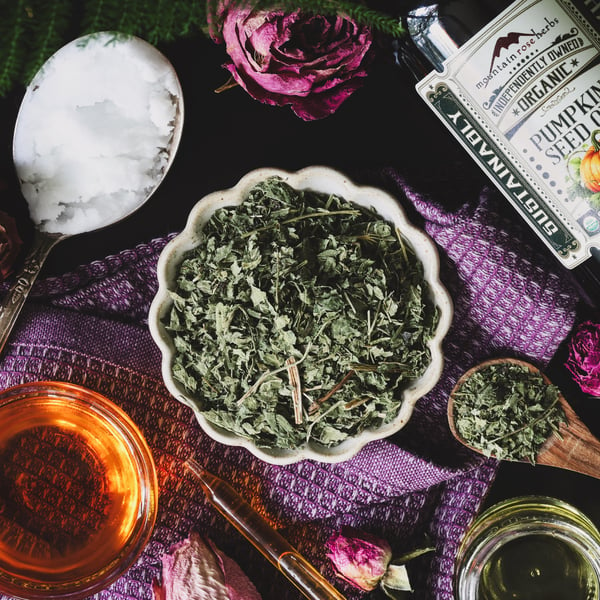
    A powerhouse morning routine might include vitamin C serum, followed by The Ordinary Alpha Arbutin 2% + HA , followed by a CeraVe PM Moisturizing Lotion with niacinamide, and finished with sunscreen. This multi-pathway approach attacks hyperpigmentation from several angles simultaneously.

    Patience Is Key

    Patience Is Key

    Give alpha arbutin at least eight to twelve weeks of consistent daily use before judging results. Take progress photos in the same lighting every two weeks to track changes that may be too gradual to notice in the mirror. Many people see significant improvement by the three-month mark, with continued improvement over six to twelve months.

    If You Choose Hydroquinone – How to Use It Safely

    If You Choose Hydroquinone - How to Use It Safely

    Work With a Dermatologist

    Work With a Dermatologist

    If your hyperpigmentation is severe enough that you and your dermatologist decide hydroquinone is warranted, always use it under medical supervision. Your dermatologist can prescribe the appropriate concentration, monitor for side effects, and adjust your treatment plan as needed.

    Cycle Properly

    Cycle Properly

    Never use hydroquinone continuously. The standard protocol is eight to twelve weeks of use followed by at least four weeks off. During the off period, switch to other brightening ingredients like alpha arbutin, niacinamide, or azelaic acid to maintain your results without the risks of continuous hydroquinone use.

    Protect From Sun

    Protect From Sun

    Hydroquinone increases your skin’s sensitivity to UV radiation, making daily broad-spectrum sunscreen with SPF 30 or higher absolutely essential. UV exposure while using hydroquinone can worsen hyperpigmentation and increase the risk of ochronosis. Wear sunscreen religiously and reapply every two hours when outdoors.

    Watch for Warning Signs

    Watch for Warning Signs

    Discontinue hydroquinone immediately and see your dermatologist if you notice any bluish, grayish, or paradoxical darkening of the treated areas. These could be early signs of ochronosis. Also stop use if you experience severe irritation, blistering, or widespread redness. These signs indicate that the product is damaging rather than treating your skin.

    Alternative Brightening Ingredients to Consider

    Alternative Brightening Ingredients to Consider

    The alpha arbutin vs hydroquinone debate does not exist in a vacuum. Several other ingredients effectively fade dark spots on melanin skin with excellent safety profiles.

    Tranexamic Acid

    Tranexamic Acid

    Tranexamic acid is emerging as one of the most effective alternatives to hydroquinone, with studies showing comparable results for melasma without the associated risks. It works through a different mechanism than arbutin or hydroquinone, targeting the inflammatory pathways that trigger melanin production. It is gentle, safe for long-term use, and effective on all skin tones.

    Azelaic Acid

    Azelaic Acid

    Azelaic acid at 15 to 20 percent matches hydroquinone’s effectiveness for melasma in clinical studies. It selectively targets abnormal melanocytes, has anti-inflammatory and antimicrobial properties, and is pregnancy-safe. It is available over the counter at 10 percent and by prescription at higher concentrations.

    Vitamin C

    Vitamin C

    L-ascorbic acid at 10 to 20 percent provides effective tyrosinase inhibition plus potent antioxidant protection. While not as fast-acting as hydroquinone, it is safe for long-term use and provides additional anti-aging benefits. It pairs beautifully with alpha arbutin for enhanced results.

    Kojic Acid

    Kojic Acid

    Kojic acid is a natural tyrosinase inhibitor derived from fungi. At 1 to 4 percent, it provides effective brightening, though it can be sensitizing for some skin types. It is often combined with other brightening ingredients in formulations designed for hyperpigmentation treatment.

    The Multi-Ingredient Approach

    The Multi-Ingredient Approach

    The most effective strategy for fading dark spots on melanin skin without hydroquinone is combining multiple gentler ingredients that work through different mechanisms. A routine incorporating alpha arbutin, vitamin C, niacinamide, and tranexamic acid – each targeting melanin production through a different pathway – can produce results comparable to hydroquinone without any of the associated risks. Add consistent sunscreen and patience, and you have a powerful, safe, long-term hyperpigmentation management strategy.

    Key Takeaways

    • Alpha arbutin is a safer derivative of hydroquinone that provides effective brightening through slow, controlled release without the risks associated with its parent compound.
    • Hydroquinone is more potent and faster-acting but carries risks of ochronosis, rebound hyperpigmentation, and irritation that are particularly concerning for melanin-rich skin.
    • For the majority of people with dark skin, alpha arbutin is the better choice because it provides effective, safe, long-term brightening with virtually no side effects.
    • Hydroquinone should be reserved for severe cases under dermatologist supervision, used in cycles of eight to twelve weeks maximum.
    • Combining alpha arbutin with other brightening ingredients like vitamin C, niacinamide, and tranexamic acid can produce results comparable to hydroquinone without the risks.
    • Daily sunscreen is essential regardless of which brightening ingredient you choose, as UV exposure is the primary trigger for melanin production.

    Frequently Asked Questions

    Can I use alpha arbutin and hydroquinone together?

    This is generally not recommended because both ingredients target the same enzyme (tyrosinase), and combining them increases the risk of irritation without proportionally increasing effectiveness. If you are using hydroquinone under dermatologist supervision, you can switch to alpha arbutin during your hydroquinone break periods to maintain results. But using both simultaneously is unlikely to provide additional benefits and may increase side effect risk.

    Is alpha arbutin the same thing as beta arbutin?

    Is alpha arbutin the same thing as beta arbutin?

    No, they are different forms of arbutin. Alpha arbutin is significantly more effective and stable than beta arbutin. Alpha arbutin has a stronger binding affinity for tyrosinase and releases its active component more consistently. When shopping for arbutin products, make sure the label specifically says “alpha arbutin” rather than just “arbutin,” which might be the less effective beta form.

    How long should I use alpha arbutin before trying hydroquinone?

    Give alpha arbutin at least three to six months of consistent, daily use before concluding it is not working well enough. Many people give up too early because they are comparing alpha arbutin’s gradual results to hydroquinone’s faster timeline. If after six months of alpha arbutin combined with vitamin C, niacinamide, and consistent sunscreen you have not seen satisfactory improvement, then a consultation with a dermatologist about prescription options may be warranted.

    Will alpha arbutin lighten my overall skin tone?

    Will alpha arbutin lighten my overall skin tone?

    No. Like azelaic acid, alpha arbutin preferentially targets areas where melanin is being overproduced – the dark spots and patches of hyperpigmentation. It does not significantly affect your normal melanin levels or lighten your overall skin tone. It helps dark spots fade to match the surrounding skin, creating a more even complexion at your natural skin color.

    Is hydroquinone safe for short-term use on dark skin?

    Is hydroquinone safe for short-term use on dark skin?

    When used under dermatologist supervision at appropriate concentrations (2 to 4 percent) for limited periods (eight to twelve weeks), hydroquinone can be used relatively safely on dark skin. The key safeguards are: never exceeding 4 percent concentration, never using it continuously for more than twelve weeks, always wearing sunscreen, and monitoring carefully for any signs of irritation or paradoxical darkening. However, the availability of safer alternatives like alpha arbutin, tranexamic acid, and azelaic acid means hydroquinone is no longer the automatic first choice it once was.

  • Best Concealers for Dark Circles on Dark Skin – Color Correcting Tips That Work

    Best Concealers for Dark Circles on Dark Skin – Color Correcting Tips That Work

    By the Curvy Girl Journal Team |

    Why Dark Circles on Dark Skin Need a Different Approach

    Why Dark Circles on Dark Skin Need a Different Approach

    If you have ever applied a concealer marketed for dark circles only to end up looking ashy, gray, or like you have two white patches under your eyes, you are not alone. The majority of concealer advice, shade recommendations, and product formulations were developed with lighter skin tones in mind. When those same principles are applied to melanin-rich skin, the results range from ineffective to actively unflattering.

    Dark circles on dark skin are different. The hyperpigmentation tends to run deeper, with undertones that skew brown, purple, and gray rather than the blue that dominates on lighter skin. This means the color correction approach needs to be more saturated, the concealer shades need to be warmer, and the application technique needs to account for the way product sits on melanin-rich skin, which has different texture and oil production patterns.

    This guide covers everything you need to know: the color theory behind color correcting on dark skin, the specific products that actually work, the step-by-step application technique that prevents creasing and ashiness, and the common mistakes that trip up even experienced makeup users. By the end, you will have a clear, actionable system for concealing dark circles that looks natural, lasts all day, and actually enhances your beautiful melanin-rich complexion.

    Color Correcting 101 for Dark Skin

    Color Correcting 101 for Dark Skin

    Understanding Color Theory for Deeper Complexions

    Understanding Color Theory for Deeper Complexions

    Color correcting works on the principle that opposite colors on the color wheel cancel each other out. For dark circles on dark skin, the colors you are neutralizing are brown, purple, and deep gray. The correctors that cancel these tones are peach, orange, and red, with the specific shade depending on how deep your skin tone is.

    Here is the critical rule that most mainstream beauty advice gets wrong: the deeper your skin, the more saturated your color corrector needs to be. A light peach that works on medium skin will do nothing on deep skin. You need actual orange or even reddish-orange tones to effectively neutralize the depth of pigmentation. This is not a mistake; it is correct color theory applied to deeper skin tones.

    Matching Your Corrector to Your Skin Depth

    Matching Your Corrector to Your Skin Depth

    For medium-dark skin tones, a saturated peach corrector will effectively neutralize most under-eye darkness. For dark to deep skin tones, you need an orange corrector. For very deep skin tones, a red-orange or even a true warm red corrector provides the pigmentation intensity needed to cancel out the deepest hyperpigmentation. If your corrector looks too light or too pastel against your under-eye, it is not saturated enough for your depth.

    Why You Need Both a Corrector and a Concealer

    On dark skin, concealer alone cannot effectively address dark circles because the pigmentation is too deep to cover in a single layer. A color corrector neutralizes the dark tones first, creating a more even base. Then the concealer goes on top to match the area to the rest of your face. This two-step approach is what makeup artists use on dark skin tones, and it is the key to natural-looking, effective coverage.

    Best Color Correctors for Dark Skin

    Best Color Correctors for Dark Skin

    1. Live Tinted Hueguard Color Corrector ($28)

    1. Live Tinted Hueguard Color Corrector ($28)

    Live Tinted was literally created to solve color correction challenges on melanin-rich skin. Their Hueguard formula adapts to your skin tone, providing neutralizing correction without the chalky aftermath that plagues so many correctors on dark skin. The creamy, blendable formula sits beautifully under concealer without creasing or separating throughout the day.

    The shade range is specifically calibrated for deeper skin tones, avoiding the too-light, too-pastel problem that makes many correctors useless on dark skin. The formula also contains skincare ingredients that treat the under-eye area while correcting, including caffeine to reduce puffiness and vitamin C to gradually brighten the area over time.

    Shop Live Tinted Hueguard Color Corrector ($28)

    2. L.A. Girl Pro Concealer in Orange ($5)

    2. L.A. Girl Pro Concealer in Orange ($5)

    The L.A. Girl Pro Concealer in orange is one of the most recommended products in the entire dark skin beauty community, and at $5 it is also one of the most accessible. The orange shade is perfectly saturated to neutralize dark circles on medium-deep to deep skin tones. The liquid formula blends easily and provides a smooth base for concealer without being too thick or cakey.

    Professional makeup artists working on dark skin frequently carry this product in their kits because it works consistently across different depths. The applicator tip allows for precise placement in the under-eye area. For $5, this is the must-try product for anyone beginning their color correction journey on dark skin.

    Shop L.A. Girl Pro Concealer in Orange ($5)

    3. NYX Professional Makeup Color Correcting Palette ($14)

    3. NYX Professional Makeup Color Correcting Palette ($14)

    The NYX color correcting palette includes multiple shades in one compact, allowing you to customize your correction by mixing and matching. For dark skin, the orange and peach pans are the most useful, and the included green can address any redness or hyperpigmentation around the nose and chin. The cream formula blends smoothly and works well under both liquid and powder concealer.

    Having multiple correcting shades in one palette is particularly useful because your under-eye darkness can vary throughout the month due to sleep, stress, and hormonal changes. On days when the circles are deeper, use a more saturated orange. On lighter days, a peach tone suffices. The palette format gives you flexibility without buying multiple individual products.

    Shop NYX Color Correcting Palette ($14)

    Best Concealers for Dark Skin Tones

    Best Concealers for Dark Skin Tones

    4. Fenty Beauty Pro Filt’r Concealer ($30)

    4. Fenty Beauty Pro Filt'r Concealer ($30)

    With 50 shades that include multiple options for every depth and undertone, Fenty Beauty’s Pro Filt’r Concealer is the gold standard for concealer shade matching on dark skin. The creamy, soft matte formula builds from medium to full coverage while feeling light on the skin. It does not settle into fine lines, crease heavily, or oxidize throughout the day, which are common issues with concealers on deeper skin.

    The shade range specifically includes warm, cool, and neutral undertones within the deep shade range, so you are not forced to choose between a shade that is technically the right depth but has completely wrong undertones. The formula lasts up to 12 hours and resists the midday fading that can reveal corrected dark circles. This is the concealer that makeup artists reach for first on dark skin.

    Shop Fenty Beauty Pro Filt’r Concealer ($30)

    5. NARS Radiant Creamy Concealer ($32)

    5. NARS Radiant Creamy Concealer ($32)

    The NARS Radiant Creamy Concealer has been a bestseller for over a decade because it delivers consistently impressive results across all skin tones. The medium-to-full coverage formula has a natural finish that avoids both the matte flatness and the overly dewy slip that can be problematic under the eyes. The built-in skincare ingredients hydrate the delicate under-eye area.

    With 30 shades spanning the full spectrum of skin tones, the deep shade range includes warm, cool, and neutral options. The concealer has excellent staying power without setting powder, though a light dusting of translucent powder extends wear even further. The doe-foot applicator deposits the right amount of product for the under-eye area without over-application.

    Shop NARS Radiant Creamy Concealer ($32)

    6. Maybelline Instant Age Rewind Concealer ($12)

    6. Maybelline Instant Age Rewind Concealer ($12)

    If Fenty and NARS represent the prestige tier, Maybelline Instant Age Rewind is the drugstore champion. The sponge-tip applicator provides easy, precise application, and the lightweight formula delivers medium coverage that can be built up. The shade range has expanded significantly and now includes multiple deep shades with warm undertones that work on dark skin.

    The formula contains goji berry and haloxyl to address dark circles from within while providing immediate cosmetic coverage. At $12, it offers remarkable performance for the price. The only caveat is that the sponge applicator can harbor bacteria and should be cleaned regularly. Many women prefer to dab the product onto a clean brush or beauty sponge rather than applying directly from the applicator.

    Shop Maybelline Instant Age Rewind Concealer ($12)

    7. Too Faced Born This Way Super Coverage Concealer ($33)

    7. Too Faced Born This Way Super Coverage Concealer ($33)

    For the darkest circles that need maximum coverage, Too Faced Born This Way Super Coverage delivers. This full-coverage concealer provides significant pigment in a single layer, which means less layering and less risk of a heavy, cakey finish. The coconut water and alpine rose ingredients keep the formula hydrated and comfortable throughout the day.

    The shade range includes deep shades with accurate undertones, and the formula resists oxidation, which is critical for dark skin tones where a shade shift can make the concealer look orange or ashy within hours. The paddle applicator allows for controlled placement, and the formula sets to a natural satin finish without settling into creases.

    Shop Too Faced Born This Way Concealer ($33)

    Step-by-Step Application Guide

    Step-by-Step Application Guide

    Step 1: Prep the Under-Eye Area

    Step 1: Prep the Under-Eye Area

    Apply a hydrating eye cream or primer to the under-eye area and let it absorb for two to three minutes. This creates a smooth, moisturized canvas that prevents concealer from clinging to dry patches or settling into fine lines. A caffeine-based eye cream also reduces puffiness, creating a flatter surface for product application.

    Step 2: Apply Color Corrector

    Step 2: Apply Color Corrector

    Using a small brush or your ring finger, apply a thin layer of orange or peach corrector directly to the darkest areas under your eye. Typically this is the inner corner where the dark circle is deepest. Use the smallest amount possible; you are neutralizing, not covering. Blend gently with your ring finger, which applies the lightest pressure and the most warmth for smooth blending.

    Step 3: Let the Corrector Set

    Step 3: Let the Corrector Set

    Allow the corrector to set for 30 to 60 seconds before applying concealer. This prevents the two products from mixing and diluting each other. While you wait, you can work on other areas of your makeup like foundation, brows, or eyes.

    Step 4: Apply Concealer

    Step 4: Apply Concealer

    Apply concealer in an inverted triangle shape under the eye, with the base along the lower lash line and the point reaching toward the cheek. This shape brightens the entire under-eye area and creates a lifted effect. Use a damp beauty sponge to blend, pressing and patting rather than rubbing. Patting builds coverage without disturbing the corrector underneath.

    Step 5: Set with Powder (Optional)

    Step 5: Set with Powder (Optional)

    If your under-eye tends to crease, lightly set the concealer with a finely milled translucent or setting powder using a small fluffy brush. Use the lightest possible hand, as too much powder will look chalky on dark skin. Banana powder or warm-toned setting powders are better choices than pure white translucent powders, which can create an ashy cast on deeper complexions.

    Common Mistakes to Avoid

    Common Mistakes to Avoid

    Using a Concealer That Is Too Light

    Using a Concealer That Is Too Light

    The instinct to “brighten” the under-eye with a shade that is two to three levels lighter than your skin tone creates a reverse raccoon effect on dark skin. Your concealer should be no more than one shade lighter than your skin tone. On dark skin, the brightening effect comes from neutralizing the dark tones, not from using a dramatically lighter product.

    Skipping Color Correction

    Skipping Color Correction

    On dark skin with significant under-eye hyperpigmentation, concealer alone will never fully mask the darkness. Skipping the color correction step means you have to layer on more concealer to compensate, which leads to a thick, cakey finish that creases and looks unnatural. The corrector does the heavy lifting so the concealer can finish the job with a lighter touch.

    Using White Translucent Powder to Set

    Using White Translucent Powder to Set

    Pure white translucent powder creates a visible ashy cast on dark skin, especially in flash photography. Choose a setting powder with a yellow or warm undertone, or use a banana powder specifically designed for medium to deep skin tones. Ben Nye Banana Luxury Powder and Sacha Buttercup Powder are both excellent options for dark skin.

    Rubbing Instead of Patting

    Rubbing Instead of Patting

    Rubbing your concealer moves the product around and creates streaks. Patting with a damp beauty sponge presses the product into the skin for seamless, even coverage. This technique is especially important when layering corrector and concealer, as rubbing will disturb the corrector layer and reduce its effectiveness.

    Long-Term Solutions for Dark Circles

    Long-Term Solutions for Dark Circles

    Skincare Ingredients That Actually Help

    Skincare Ingredients That Actually Help

    While concealer addresses the cosmetic appearance of dark circles, certain skincare ingredients can reduce the actual pigmentation over time. Eye creams containing caffeine, niacinamide, and vitamin E have been shown in studies to decrease periocular hyperpigmentation. Vitamin C brightens the under-eye area, and retinol increases cell turnover to fade dark spots.

    Start with a caffeine-based eye cream for immediate depuffing and gradual brightening, and consider adding a retinol eye cream two to three times per week for long-term improvement. Always apply these products at night and use sunscreen during the day to prevent further darkening.

    Lifestyle Factors

    Lifestyle Factors

    Adequate sleep, proper hydration, and limiting salt intake all reduce the appearance of under-eye darkness and puffiness. Sleeping with your head slightly elevated prevents fluid pooling under the eyes. A cold compress or chilled spoons applied for five minutes in the morning can reduce morning puffiness and temporarily brighten the area.

    When to See a Dermatologist

    When to See a Dermatologist

    If your dark circles are severe, do not respond to topical treatments, or have suddenly worsened, consult a dermatologist who specializes in skin of color. They can assess whether the darkness is caused by hyperpigmentation, thin skin revealing blood vessels, allergies, or other medical factors, and recommend professional treatments like chemical peels, laser therapy, or prescription-strength brightening agents.

    Key Takeaways

    • Dark circles on dark skin require a two-step approach: color correcting first, then concealing, for natural-looking coverage.
    • The deeper your skin tone, the more saturated your color corrector needs to be. Deep skin needs orange; very deep skin needs red-orange.
    • Fenty Beauty Pro Filt’r and NARS Radiant Creamy are the top prestige concealers for dark skin. L.A. Girl Pro Concealer in Orange is the unbeatable drugstore corrector at $5.
    • Your concealer should be no more than one shade lighter than your skin tone to avoid an ashy or reverse-raccoon effect.
    • Always set with warm-toned or banana powder, never pure white translucent powder, to avoid ashiness.
    • Pat your products instead of rubbing for seamless, crease-free coverage that lasts all day.

    Frequently Asked Questions

    Do I need a color corrector or just a better concealer?

    If your dark circles are moderate to severe, you need both. Color corrector neutralizes the dark tones that concealer alone cannot mask. If your dark circles are very mild, a full-coverage concealer in the right shade might suffice, but for most women with melanin-rich skin and noticeable dark circles, the corrector step is what makes the difference between adequate and flawless coverage.

    Why does my concealer look gray or ashy after a few hours?

    This typically happens because the concealer shade has cool undertones that oxidize on your skin. Choose concealers with warm undertones, and look for formulas that specifically resist oxidation. Setting with a warm-toned powder helps maintain the correct color throughout the day. Also ensure your concealer is not too light for your skin tone, as lighter shades tend to look gray as they wear.

    Can I use my lipstick as a color corrector?

    In a pinch, a warm red or orange lipstick can work as a color corrector under the eyes. However, lipstick formulas are designed for the lips and may be too heavy, waxy, or drying for the delicate under-eye area. Dedicated color correctors have thinner, more blendable textures and often include skincare ingredients that benefit the under-eye area. Lipstick is a temporary hack, not a long-term solution.

    How do I prevent concealer from creasing under my eyes?

    Start with a hydrating eye cream as your base. Use a thin layer of corrector and a thin layer of concealer rather than thick applications of either. Set with a light dusting of finely milled powder, and bake for one to two minutes maximum before brushing away excess. Avoid over-powdering, which creates a dry, cakey texture that is more prone to cracking and creasing throughout the day.

  • How to File Almond Shaped Nails at Home – A Beginner’s Guide to the Most Flattering Shape

    How to File Almond Shaped Nails at Home – A Beginner’s Guide to the Most Flattering Shape

    Why Almond Shaped Nails Are Universally Flattering

    Why Almond Shaped Nails Are Universally Flattering

    There is a reason why nail technicians across the world consistently recommend almond shaped nails when clients ask for the most flattering option – this shape has an almost magical ability to make every hand look elegant, every finger look longer, and every nail bed look more proportional. If you have been wondering how to file almond shaped nails at home, you are about to learn the technique behind one of the most universally loved nail shapes in beauty.

    Almond shaped nails get their name from the humble almond nut. Like an almond, these nails are wider at the base, taper gradually along the sides, and come to a softly rounded peak at the tip. There are no sharp edges, no dramatic points, and no harsh angles. Everything about this shape is smooth, natural, and graceful.

    What makes almond nails so universally flattering is the way they create visual length without looking extreme. The tapered sides create a narrowing optical illusion that makes wide nail beds look slimmer, short fingers look longer, and hands look more delicate overall. But unlike stiletto or coffin shapes that can look dramatic or high-maintenance, almond nails feel approachable and elegant in a way that works for literally any occasion – from a job interview to a wedding to a lazy weekend brunch.

    The popularity of almond shaped nails for beginners has exploded in recent years, and for good reason. This shape is more forgiving than it might seem – unlike perfectly square or perfectly round nails where asymmetry is immediately obvious, the organic taper of an almond shape naturally masks minor imperfections in your filing. That makes it an ideal shape for anyone learning to file their own nails at home.

    Almond vs Other Nail Shapes – Understanding the Difference

    Almond vs Other Nail Shapes - Understanding the Difference

    Before you start filing, it helps to understand exactly how almond nails differ from other popular shapes. This clarity will help you avoid accidentally filing into a different shape.

    Almond vs Oval

    Almond vs Oval

    These two shapes are the most commonly confused, and the difference is subtle but important. Oval nails have a symmetrical, evenly rounded tip – like the shape of an egg. Almond nails taper more dramatically toward the tip, creating a slightly narrower, more pointed peak. Think of it this way: oval nails are wider at the tip than almond nails, but narrower than round nails. The almond shape is like a slightly more dramatic version of an oval.

    Almond vs Stiletto

    Stiletto nails take the almond taper to an extreme, coming to a sharp, dramatic point. Where almond nails have a softly rounded peak, stiletto nails have a true point. If you are filing almond nails and notice they are getting very pointy, you have gone too far into stiletto territory. The fix is simple – gently round off the sharp tip until it feels soft and smooth.

    Almond vs Coffin

    Almond vs Coffin

    Coffin nails start with a similar taper to almond but then have the tip filed flat, creating a squared-off edge. Almond nails never have a flat tip – the peak is always softly rounded. If you are going for almond, resist the urge to file the tip straight across.

    Almond vs Round

    Almond vs Round

    Round nails follow the natural curve of the cuticle and do not narrow at the sides at all. The sides of round nails remain parallel before rounding off at the tip. Almond nails, by contrast, begin to taper noticeably about one-third of the way up from the base, creating that distinctive narrowing silhouette. The taper is what distinguishes almond from round and gives almond its elongating effect.

    What You Need Before You Start Filing

    What You Need Before You Start Filing

    Having the right tools makes a significant difference in your results when filing almond shaped nails at home. Here is what you need and why each item matters.

    A Quality Nail File

    A Quality Nail File

    This is not the time for a metal nail file from the dollar store. For natural nails, you want a glass (crystal) file or a fine-grit emery board (180-240 grit). Glass files create the smoothest edge with the least damage to the nail plate. They also last essentially forever and can be sanitized easily. A high-quality glass nail file set is a small investment that makes a huge difference in the quality and health of your filing results.

    Avoid coarse-grit files (under 150 grit) on natural nails. These are designed for acrylics and gel extensions and will shred and weaken natural nail plates.

    A Nail Buffer

    A Nail Buffer

    After shaping, a buffer smooths out any roughness along the filed edges and gives the nail surface a gentle polish. A four-sided buffer that goes from coarse to ultra-fine is ideal. You will use it after filing to refine the shape and smooth the nail’s edge.

    Cuticle Care Tools

    Cuticle Care Tools

    Push back your cuticles gently before filing. This gives you a clear view of your nail bed and helps you file symmetrically. A rubber-tipped cuticle pusher is gentler than a metal one and reduces the risk of damaging the delicate cuticle tissue. Apply cuticle oil before pushing to soften the cuticle.

    Good Lighting

    Good Lighting

    This might sound obvious, but many people file their nails in dim lighting and then wonder why the shape looks uneven in daylight. Sit near a window or use a bright desk lamp so you can clearly see the angles and symmetry of your filing.

    A Reference Image

    A Reference Image

    Save a photo of your ideal almond shape on your phone and keep it visible while you file. Having a reference to glance at helps you maintain the right taper and prevents you from over-filing.

    Step-by-Step Guide to Filing Almond Shaped Nails

    Step-by-Step Guide to Filing Almond Shaped Nails

    Follow these steps carefully and you will have beautiful almond shaped nails that look professionally done. Take your time – rushing is the enemy of a good shape.

    Step 1 – Start With the Right Length

    Step 1 - Start With the Right Length

    Your nails need to extend past the fingertip by at least a few millimeters for almond shape to work. If your nails are currently very short, you might need to grow them out. Clip any nails that are significantly longer than the others to create a roughly even starting length across all fingers.

    Step 2 – File the Sides First

    Step 2 - File the Sides First

    This is the most important step and the one most beginners get wrong. Hold your file at a slight angle against one side of the nail, starting about one-third of the way up from the cuticle. File in one direction only – from the side of the nail toward the center tip. Do not saw back and forth, as this weakens the nail edge and creates an uneven finish.

    Repeat on the other side, matching the angle as closely as possible. Step back frequently and look at the nail straight-on to check that both sides are tapering evenly. Symmetry between the two sides is what makes almond nails look polished and professional.

    Step 3 – Shape the Tip

    Step 3 - Shape the Tip

    Once both sides taper evenly, gently round the tip. You want a soft, rounded peak – not a sharp point. File from each side toward the center of the tip with gentle, short strokes. The tip should look like the end of an actual almond – gently pointed but never sharp enough to scratch.

    Step 4 – Refine and Smooth

    Step 4 - Refine and Smooth

    Look at each nail from multiple angles – straight on, from the side, and from above. Make small adjustments to even out any asymmetry. Then use your buffer to gently smooth the filed edges. This removes any tiny rough spots that could catch on fabric or snag.

    Step 5 – Repeat on All Nails

    Step 5 - Repeat on All Nails

    File each nail individually, checking symmetry as you go. Try to match the taper angle and length across all ten nails. It is helpful to do one hand completely, then match the other hand to it rather than alternating.

    Step 6 – Hydrate

    After filing, apply cuticle oil around each nail and massage it in gently. Filing can be drying, and the oil helps seal and protect the freshly filed nail edges. A cuticle oil pen makes this quick and mess-free.

    How Long Do Your Nails Need to Be

    One of the most common questions about almond shaped nails is how long they need to be. The short answer: longer than you might think, but not as long as you might fear.

    For a true almond shape, your nails need to extend past your fingertip by at least 3-5 millimeters. This length provides enough free edge for the taper to develop gradually without making the nail look too narrow or fragile at the tip. If you try to file almond shape into very short nails, you will either lose the tapered effect entirely or end up with nails that are too narrow and prone to breaking.

    That said, there is a modified version called a “short almond” that works on nails with just 1-2 millimeters of free edge. The taper is more subtle, and the tip is rounder than a classic almond, but it still gives that flattering narrowing effect. It is a great compromise if you prefer shorter nails or if your nails are still growing out.

    If you are growing your nails for almond shape, be patient and protect them during the growing-out phase. Keep nails polished with a strengthening base coat to prevent breakage, and be gentle with your hands during daily activities. Wearing gloves for household chores, opening cans with utensils instead of your nails, and keeping nails hydrated all help maintain length while they grow.

    For those who want instant length, press-on nails and extensions in almond shape skip the growing phase entirely. We will cover those later in this article.

    Common Filing Mistakes That Ruin Almond Shape

    Common Filing Mistakes That Ruin Almond Shape

    Knowing what not to do is just as important as knowing the correct technique. Here are the most common mistakes that turn a potentially perfect almond shape into something else entirely.

    Filing Too Aggressively on the Sides

    Filing Too Aggressively on the Sides

    The number one mistake is removing too much material from the sides too quickly. You can always file more, but you cannot add nail back. Start conservatively and gradually increase the taper. Check your progress frequently. If the sides look too narrow, you have taken off too much and will need to let that nail grow out before trying again.

    Sawing Back and Forth

    Filing in both directions creates micro-tears in the nail plate that weaken the edge and can lead to peeling and breakage. Always file in one direction – from the side toward the center. Lift the file and return to the starting point for each stroke.
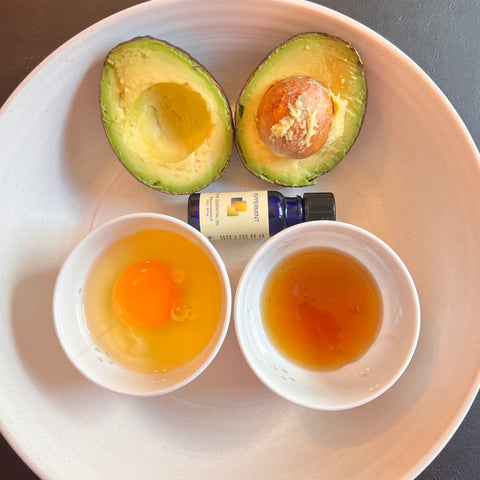
    Making the Tip Too Pointy

    Making the Tip Too Pointy

    It is surprisingly easy to turn almond nails into stiletto nails by over-filing the tip. The almond shape should have a soft, rounded peak – not a sharp point. If you go too pointy, gently round the tip by filing small strokes across it from each side. Think “soft mountain” rather than “sharp peak.”

    Asymmetric Sides

    Asymmetric Sides

    If one side of the nail tapers more than the other, the nail will look crooked and unbalanced. To avoid this, count your file strokes on each side and try to match them. After every few strokes, look at the nail straight-on to compare both sides.

    Not Matching Across All Nails

    Not Matching Across All Nails

    A common issue is having each nail in a slightly different version of almond. Take the time to compare your nails against each other as you work. Hold your hands together and look at corresponding nails side by side. Matching the shape across all ten nails is what makes the manicure look professional.

    Maintaining Your Almond Shape Between Manicures

    Maintaining Your Almond Shape Between Manicures

    Once you have filed your perfect almond shape, you want to keep it looking good for as long as possible.

    File Lightly Every Few Days

    File Lightly Every Few Days

    As your nails grow, they grow straight out – which means the almond taper gradually becomes less defined. A few gentle strokes with your file every three to four days keeps the taper looking fresh without requiring a full reshaping session.

    Keep Nails Hydrated

    Keep Nails Hydrated

    Dry, brittle nails are more prone to breaking and chipping, which can ruin your carefully filed shape in an instant. Apply cuticle oil at least once daily – before bed is ideal because the oil has all night to absorb and condition. A CND Solar Oil is a professional favorite that strengthens and hydrates both the nail plate and surrounding skin.

    Protect Your Tips

    Protect Your Tips

    Almond nails have a narrower tip than square or round nails, which means the tip is the most vulnerable point. Be mindful of how you use your hands – avoid using your nails as tools to open packages, peel stickers, or scratch at things. These habits put direct pressure on the tip and are the leading cause of breakage in almond-shaped nails.

    Keep a File Handy

    Keep a File Handy

    If you catch a small snag or chip early, you can often file it out before it becomes a full break. Keep a nail file in your purse, your desk, and your bathroom so you can address minor issues immediately.

    Best Colors and Designs for Almond Nails

    Best Colors and Designs for Almond Nails

    The almond shape is incredibly versatile when it comes to color and design choices. Its elegant silhouette flatters virtually every style, but some combinations are particularly stunning.

    Nude and Neutral Tones

    Nude and Neutral Tones

    The almond shape was practically designed for nude and neutral polish. The natural-looking shape combined with a “your nails but better” color creates the ultimate elegant, effortless look. Choose a nude shade that matches your skin tone or is one shade lighter for the most flattering effect.

    Deep Reds and Burgundies

    Deep Reds and Burgundies

    Classic red on almond nails is one of the most timeless, glamorous combinations in beauty. The tapered shape adds sophistication that a square or round shape does not quite achieve. Deep burgundy, wine, and oxblood shades look especially luxurious during fall and winter.
    French Tips

    French Tips

    The French manicure on almond shaped nails is an elevated classic. The almond shape makes the white tip look more graceful than it does on square nails. For a modern twist, try colored French tips in soft pink, lavender, or sage green.

    Nail Art

    Nail Art

    The elongated surface area of almond nails provides an excellent canvas for nail art. The shape particularly suits designs that follow the taper – vine-like florals, ombre fades, or a single accent gemstone at the tip. A floral nail art sticker set can give you salon-quality designs without freehand painting skills.

    Strengthening Tips for Natural Almond Nails

    Strengthening Tips for Natural Almond Nails

    Because almond nails taper to a narrower tip, they can be slightly more fragile than wider shapes. Here is how to keep your natural almond nails strong and break-resistant.

    Use a Strengthening Base Coat

    Use a Strengthening Base Coat

    Before applying any color, always apply a strengthening base coat. Formulas containing keratin, biotin, or calcium help reinforce the nail plate and provide extra protection against breakage. This is especially important at the tapered tips where the nail is thinnest.

    Consider Biotin Supplements

    Consider Biotin Supplements

    Biotin (vitamin B7) is one of the most well-researched supplements for nail strength. Studies show that 2.5-5mg daily can improve nail thickness and reduce breakage. Results typically become visible after three to six months. Always check with your healthcare provider before starting any supplement.

    Stay Hydrated Inside and Out

    Stay Hydrated Inside and Out

    Nails that are dehydrated are brittle nails. Drink plenty of water throughout the day to support nail health from the inside. On the outside, apply cuticle oil regularly and consider wearing gloves when using cleaning products.

    Avoid Harsh Chemicals

    Avoid Harsh Chemicals

    Acetone-based nail polish remover is effective but harsh. Switch to an acetone-free remover for routine polish changes and save pure acetone only for removing gel or acrylics. The gentler formula preserves more of the nail’s natural moisture.

    Give Your Nails Breaks

    Give Your Nails Breaks

    If you wear polish constantly, give your nails a week off every month or so. During this break, apply a nail strengthening treatment and generous amounts of cuticle oil. This allows your nails to rehydrate and recover from any stress caused by polish and remover.
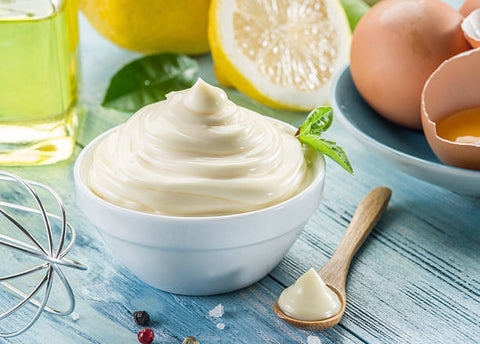
    Almond Nails With Extensions and Press-Ons

    Almond Nails With Extensions and Press-Ons

    If your natural nails are too short for almond shape or if you struggle with breakage, extensions and press-on nails offer fantastic alternatives.
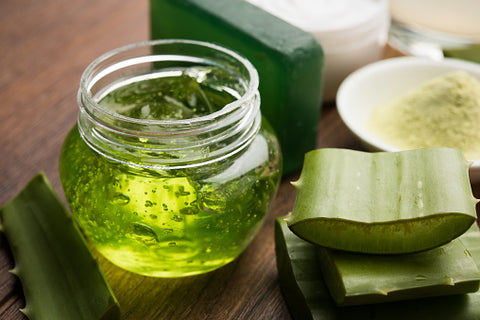
    Press-On Nails

    Press-On Nails

    Press-on nails have come a long way from the chunky, obviously fake versions of the past. Modern press-ons come in almond shape pre-made, and many look remarkably realistic. They are incredibly easy to apply – most take under 15 minutes for a full set. Look for press-ons that come in multiple sizes for the best fit. A good almond-shaped press-on nail set can last 1-2 weeks with proper application and gives you a salon-worthy look at a fraction of the price.

    Gel Extensions

    Gel Extensions

    Gel extensions, also called soft gel tips, are a popular salon option for adding length while maintaining a natural look. Your nail technician will apply pre-shaped gel tips in almond shape and then blend them seamlessly with your natural nail. Gel extensions are lighter and more flexible than acrylics, which many people find more comfortable.

    Acrylic Extensions

    Acrylic Extensions

    Acrylic remains the gold standard for durability and longevity. A skilled nail technician can sculpt perfect almond shapes from acrylic that last 2-3 weeks before needing a fill. Acrylics are slightly heavier than gel but offer unmatched strength, making them ideal if you are hard on your hands.

    Whatever method you choose, almond shape consistently ranks as one of the most requested shapes at salons worldwide. Its timeless elegance, universal flattery, and moderate length make it the perfect balance between practical and glamorous. Whether you achieve it through natural nail filing, press-ons, or professional extensions, almond nails are always a good idea.

    Key Takeaways

    • Almond shaped nails are universally flattering because they create a tapered silhouette that elongates fingers and slims the nail bed
    • Always file in one direction from the side toward the center to prevent nail damage and achieve the smoothest edge
    • Nails need at least 3-5mm of free edge past the fingertip for a true almond shape, but a modified short almond works on shorter nails
    • The most common mistake is over-filing the sides or making the tip too pointy – check symmetry frequently and remember soft mountain not sharp peak
    • Maintenance is simple – a few light filing strokes every few days plus daily cuticle oil keeps almond nails looking freshly shaped
    • Press-on nails and salon extensions are excellent alternatives if your natural nails are too short or fragile

    Frequently Asked Questions

    Are almond shaped nails hard to maintain?

    Are almond shaped nails hard to maintain?

    Not at all. Almond nails actually require less precise maintenance than square or coffin shapes because the organic taper is more forgiving. A few gentle filing strokes every few days keeps the shape looking fresh. The tapered tip is slightly more fragile than wider shapes, so being mindful about not using your nails as tools helps prevent breakage.

    Can almond nails work on wide nail beds?

    Can almond nails work on wide nail beds?

    Absolutely – and in fact, almond shape is often recommended specifically for wider nail beds. The tapering sides create a narrowing optical illusion that makes the nail bed appear slimmer and more proportional. Many people with wider nail beds find that almond shape transforms the look of their hands more dramatically than any other shape.

    Is almond shape stronger or weaker than other shapes?

    Is almond shape stronger or weaker than other shapes?

    Almond falls in the middle of the strength spectrum. It is stronger than stiletto, coffin, and lipstick shapes because it has no sharp points or flat edges that concentrate stress. However, it is slightly less strong than round or squoval shapes because the tapered tip is narrower. For most people, almond nails hold up just fine. A strengthening base coat adds extra protection if needed.
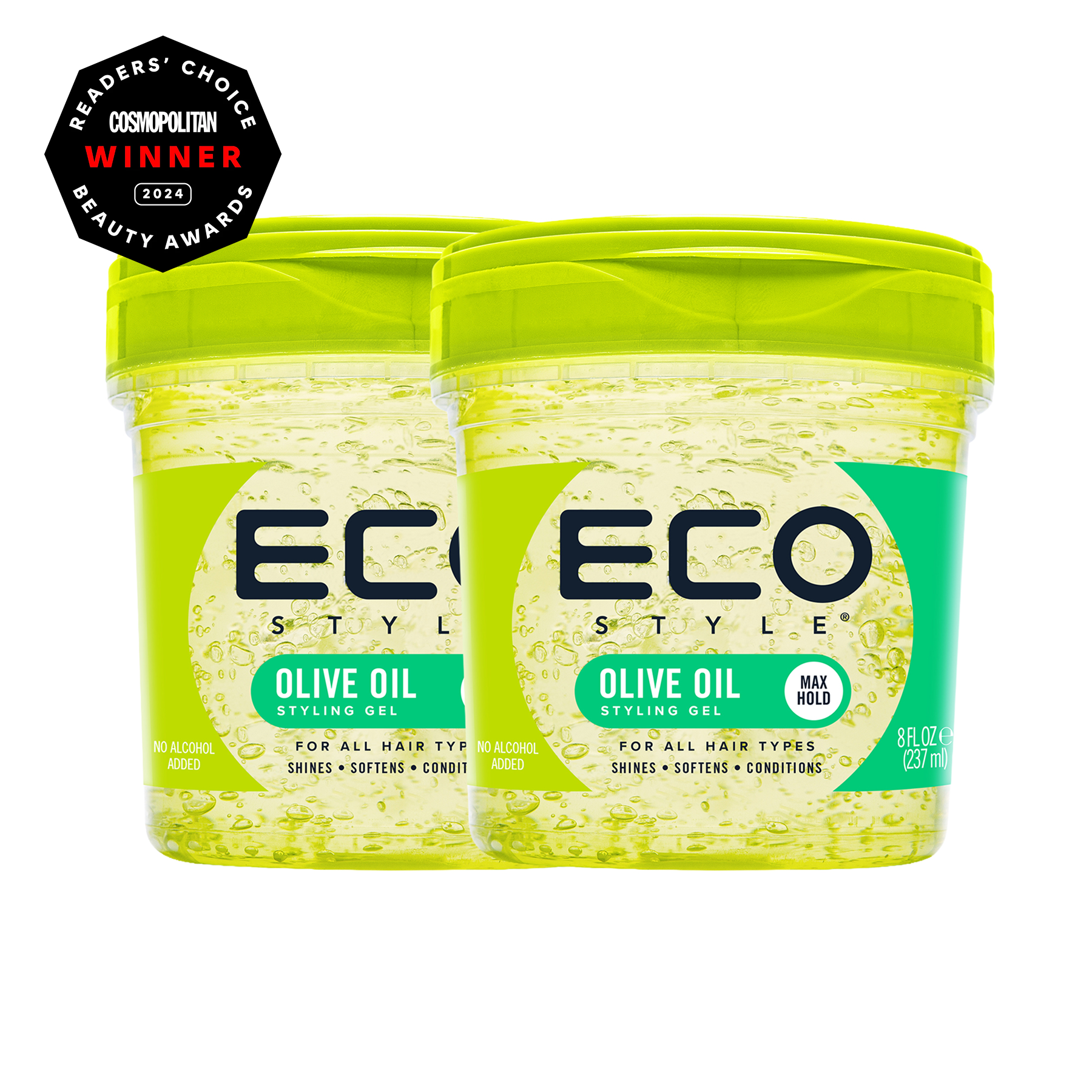
    How do I file almond nails on my dominant hand?

    This is a universal struggle. Some tips: rest both hands on a flat surface to stabilize them, file more slowly with your non-dominant hand, and check your progress more frequently. You can also try holding the file still and moving your nail against it. Some people choose to do accent art only on their non-dominant hand and keep the other in a solid color.
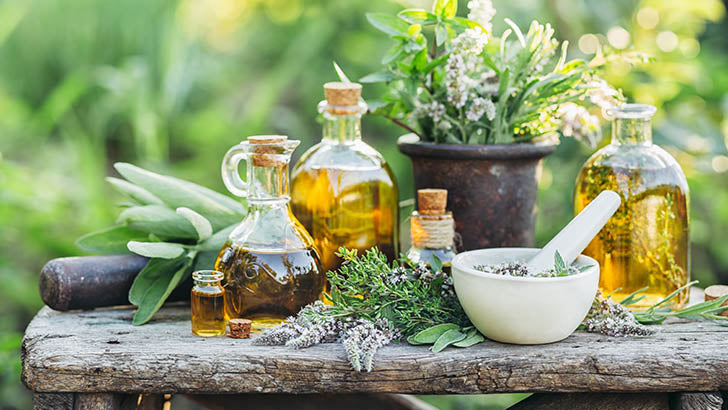
    Can I change my current nail shape to almond without cutting shorter?

    It depends on your current shape and length. If you currently have square nails, you can usually transition to almond by filing the corners and sides into a taper without losing much length. The transition is easiest from oval to almond since the shapes are closely related. File gradually over two to three sessions rather than trying to completely change the shape in one sitting.