Author: Kira Morales

  • What Your Gut Is Trying to Tell You: The Signals Past IBS

    What Your Gut Is Trying to Tell You: The Signals Past IBS

    By 3 p.m. her jeans wouldn’t button. She’d eaten a salad with grilled chicken at 12:30, drunk a glass of sparkling water, taken one bite of a coworker’s birthday cake out of politeness, and now the waistband she’d snapped shut at breakfast was leaving a red welt across her stomach. She was 38, healthy by every external measure, and quietly furious that nobody could tell her why her gut had decided, at some point in the last two years, that food was the enemy. Her gastroenterologist had ordered the usual panel, told her the labs were fine, and suggested she try to manage her stress. She left the office wondering if “fine” was just the medical word for “we didn’t look hard enough.”

    Her story is one of the most common stories in women’s health, and it almost never gets named correctly. The gut isn’t just a digestive tube. It’s an endocrine organ, an immune organ, and a neurological organ, with more nerve endings than the spinal cord and a microbial population that outweighs the human cells it lives among. When that system goes sideways, the signals can show up almost anywhere in the body except where most clinicians are looking. The list below is the one a smart functional gastroenterologist would walk through. None of these signals are normal. All of them are treatable.

    The Bristol Stool Chart Belongs in Every Bathroom

    The Bristol Stool Chart Belongs in Every Bathroom

    Before the symptoms get exotic, the single most useful gut diagnostic in the world is something a woman can do, alone, in 90 seconds, every morning. The Bristol Stool Chart, developed at the Bristol Royal Infirmary in 1997 and now used in clinical research across the globe, classifies stool into seven types. Type 1 is hard pebbles. Type 2 is a lumpy sausage. Type 3 is a sausage with cracks. Type 4 is a smooth, soft sausage. Type 5 is soft blobs with clear edges. Type 6 is mushy with ragged edges. Type 7 is liquid.

    Healthy stool, the kind that signals a well-fed microbiome and an unhurried transit time, sits at Type 3 or Type 4. Type 1 and Type 2 mean constipation, slow transit, and often not enough fiber or water. Type 5 through 7 mean inflammation, food intolerance, dysbiosis, or in some cases an infection that nobody has thought to look for. Dr. Robynne Chutkan, an integrative gastroenterologist and author of Gutbliss , has spent two decades arguing that the chart belongs on the back of every bathroom door. The data she has on her own patients is striking. Women who track their type for two weeks come back with a clearer picture of what is wrong than most lab panels can produce.

    Chronic Bloating Is Not a Personality Trait

    Chronic Bloating Is Not a Personality Trait

    Bloating that arrives within an hour of eating, sits like a balloon under the ribs, and resolves overnight only to come back the next afternoon is one of the most under-investigated symptoms in primary care. Women hear, again and again, that bloating is just a normal part of being a woman, especially after 35. It is not. Chronic daily bloating points to one of three things in most cases: a bacterial overgrowth in the small intestine called SIBO, a yeast overgrowth in the gut, or a food intolerance the body has not been screened for.

    The perimenopause overlap is the part that gets missed. Falling progesterone slows gut motility, which lets bacteria sit longer in the small intestine, which feeds the overgrowth that drives the bloat. Estrogen volatility further inflames the gut lining. A woman who never had digestive trouble in her twenties can find herself, at 40, bloated every afternoon and unable to figure out which food triggered it because all of them seem to. Dr. Mary Claire Haver has flagged this perimenopausal gut shift as one of the most consistent patterns she sees in clinic, and it is almost never on a standard gastroenterology workup.

    Morning Fatigue Versus Afternoon Fatigue

    Morning Fatigue Versus Afternoon Fatigue

    Where the fatigue lives on the clock is a clue. Fatigue that is heaviest in the morning, the kind that makes a 7 a.m. alarm feel cruel even after eight hours in bed, tends to point upstream of the gut, toward the adrenals, the thyroid, or sleep architecture. Fatigue that lands like a brick at 2 or 3 in the afternoon, the kind that arrives an hour or two after lunch and feels almost narcotic, points downstream into digestion. The food is not being processed cleanly. The blood sugar is spiking and crashing, or the gut is mounting an inflammatory response to something on the plate.

    The pattern matters because the fix is different. Morning fatigue responds to cortisol support and a protein-rich breakfast within an hour of waking. Afternoon fatigue responds to a structured elimination diet, a fiber audit, and in some cases a SIBO workup. Dr. Will Bulsiewicz, a board-certified gastroenterologist and author of Fiber Fueled , frames the afternoon crash as the most reliable gut signal a woman can track without any equipment. If lunch consistently produces a slump within two hours, the gut is the system to examine.

    Brain Fog After Eating
    Brain Fog After Eating

    The gut-brain axis is no longer a wellness slogan. It is a documented neurological reality, with the vagus nerve running a direct line between the two organs and the gut microbiome producing roughly 90 percent of the body’s serotonin and a meaningful share of its dopamine. When the gut is inflamed, the brain hears about it within minutes. The clinical name is postprandial cognitive impairment, and it shows up as the kind of foggy, slow, slightly disoriented feeling that arrives 30 to 90 minutes after a meal and makes it hard to write a coherent email.

    Dr. Mark Hyman, founder of the Cleveland Clinic Center for Functional Medicine, has spent years arguing that brain fog after meals is one of the clearest signals of food intolerance and gut inflammation that a woman can self-track. The mechanism is straightforward. Inflammatory cytokines released in the gut cross into circulation, the blood-brain barrier becomes more permeable under inflammation, and the brain registers the chemical noise as a slow, muddy cognition. The food driving it is almost always gluten, dairy, eggs, soy, corn, or sugar, and almost always one a woman is eating daily without thinking.

    Sudden Food Intolerances After Years of Tolerance
    Sudden Food Intolerances After Years of Tolerance

    The gut a woman has at 25 is not the gut she has at 40. Foods that produced no symptoms for a decade can begin, seemingly overnight, to produce bloating, fatigue, congestion, or skin reactions. This is not a sign that the body has become “weak.” It is a sign that the gut lining has lost some of its integrity, that the immune system at the gut wall has become reactive, or that the microbial population has shifted in a way that no longer tolerates what it used to tolerate.

    The most common late-onset intolerances are dairy, gluten, and eggs, in that order. Dr. Robynne Chutkan describes a typical case as a woman in her late thirties who can no longer drink her morning coffee with cream without feeling congested, foggy, and bloated by noon. The fix is rarely permanent abstention. It is a 30-day elimination, a strategic reintroduction, and a parallel effort to repair the gut lining so that tolerance can be rebuilt. Skipping the repair step is the part that turns a temporary sensitivity into a lifelong restriction.

    Recurring Adult Acne That Tracks With the Gut

    Recurring Adult Acne That Tracks With the Gut

    Acne in the thirties and forties is almost never a skincare problem. The face is a mirror of the gut, and adult acne, especially around the jawline and chin, correlates tightly with three gut-driven inputs: dysbiosis in the gut microbiome, food intolerances that drive systemic inflammation, and hormonal shifts that the liver and gut are no longer clearing efficiently. Dermatologists who treat with topicals alone often fail their adult patients for exactly this reason. The trigger is two organs away from the breakout.

    The pattern to watch for is acne that flares 24 to 72 hours after a specific food, that clusters around the cycle, or that improves dramatically during a structured elimination diet. Dairy is the most frequent culprit, with studies in the Journal of the American Academy of Dermatology consistently linking dairy consumption to adult acne severity. Sugar and refined carbohydrates spike insulin, which drives androgens, which drives sebum production. A 30-day elimination of dairy and added sugar is, for many women, more effective than a topical retinoid prescription.

    The 30-Day Elimination Protocol
    The 30-Day Elimination Protocol

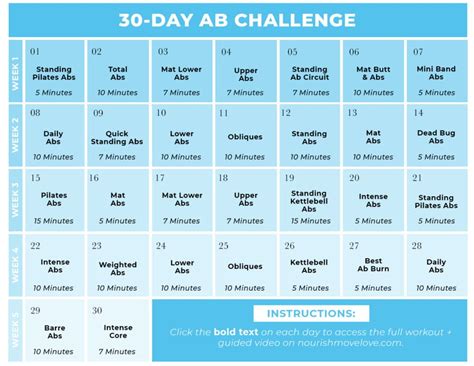
    The single most powerful diagnostic tool a woman can run on her own gut is a structured elimination diet. The protocol is unglamorous and works. For 30 days, remove dairy, gluten, and eggs completely. Read every label. Watch for hidden gluten in soy sauce and salad dressing, and hidden dairy in protein bars and processed foods. At the end of 30 days, reintroduce one food at a time, in larger-than-normal amounts for two consecutive days, and then return to the elimination diet for 72 hours while tracking symptoms.

    The reintroduction is the diagnostic part. A clean reintroduction means no return of bloating, fatigue, brain fog, congestion, joint pain, or acne. A reactive reintroduction means symptoms surface within 72 hours, and the food can be filed as a known trigger. Many women discover that one of the three is fine and another is the entire problem. The clarity from a single 30-day cycle is often greater than the clarity from a year of guessing. A simple tracking journal, even something like a basic food and symptom journal , makes the pattern visible in a way memory alone cannot.

    The Fiber Audit, 30 Grams a Day From Real Food
    The Fiber Audit, 30 Grams a Day From Real Food

    The average American adult eats 15 grams of fiber a day. The figure the gut microbiome actually needs to thrive sits at 30 grams or higher, and Dr. Will Bulsiewicz has built a career on the data showing that fiber diversity matters as much as fiber quantity. His American Gut Project research, published in mSystems , found that people who ate 30 or more different plant foods a week had a measurably more diverse and resilient microbiome than people who ate 10 or fewer, regardless of whether they identified as vegetarian or omnivore.

    A fiber audit is a one-week exercise. Track every plant food eaten, by name, for seven days. Count beans, lentils, nuts, seeds, whole grains, vegetables, fruits, herbs, and spices. The number that comes back is usually startling. Most women land between 12 and 18. The fix is to add, not subtract: a daily smoothie with three plants, a soup with five plants, a salad with seven plants, a stir-fry with six plants. Fiber from real food, not from a powdered supplement, is the input that feeds beneficial bacteria and produces the short-chain fatty acids that heal the gut lining.

    Fermented Foods Earn Their Place
    Fermented Foods Earn Their Place

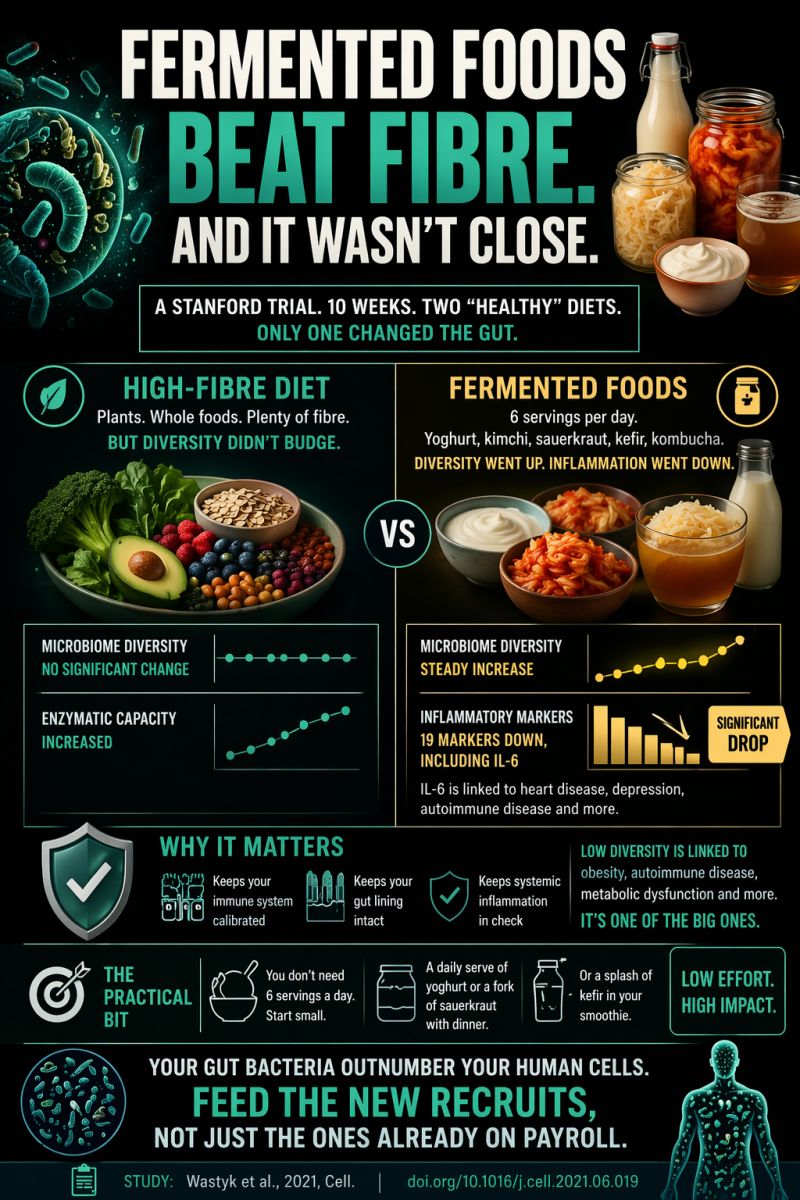
    A daily serving of fermented food is one of the most evidence-backed gut interventions in nutritional science. A Stanford study published in Cell in 2021 followed two groups of adults for ten weeks, one eating six servings of fermented food a day and one eating a high-fiber diet. The fermented food group showed a significant increase in microbial diversity and a measurable decrease in 19 inflammatory markers. The high-fiber group showed benefits too, but the speed and breadth of the fermented food group surprised the researchers.

    The fermented foods that matter are the ones with live cultures: kimchi, sauerkraut, kefir, yogurt with live active cultures, miso, and tempeh. Kombucha is fine but lower in beneficial bacteria than the others. A reasonable daily target is two tablespoons of kimchi or sauerkraut at lunch and a small glass of plain kefir in the morning. The fermented food has to be refrigerated and unpasteurized, which means the shelf-stable jar of “sauerkraut” in the canned goods aisle does almost nothing. The refrigerated section is the only one that counts.

    Probiotic Strain Matters More Than Brand

    Probiotic Strain Matters More Than Brand

    The probiotic aisle is a marketing landscape, not a clinical one. Brand names and CFU counts dominate the labels, while the actual strain, which is the part that determines what the probiotic does, is buried in small print. A probiotic is only as useful as the strain inside it, and the strain has to match the condition being treated.

    For irritable bowel symptoms with bloating and altered stool, the evidence points to Lactobacillus rhamnosus GG and Bifidobacterium infantis 35624, the latter studied extensively in the American Journal of Gastroenterology . For traveler’s diarrhea and antibiotic-associated diarrhea, Saccharomyces boulardii has the strongest data and is technically a beneficial yeast rather than a bacterium. For women with recurrent yeast or urinary tract infections, Lactobacillus reuteri RC-14 and Lactobacillus rhamnosus GR-1 have specific clinical research behind them. Generic “multi-strain” probiotics with 50 billion CFU and no named strains are usually a waste of money. A strain-specific option like Florastor with Saccharomyces boulardii is one example of a clinically targeted product. The principle holds across the category: read for the strain, not the marketing.

    Bone Broth and the Gut Lining

    Bone Broth and the Gut Lining

    The gut lining is a single layer of cells, one cell thick, with tight junctions holding them together. When those junctions loosen, a condition increasingly recognized in research literature as increased intestinal permeability, partially digested food and bacterial byproducts cross into circulation and drive the systemic inflammation that shows up as fatigue, brain fog, joint pain, and skin issues. Repairing the lining is not optional. It is the foundation of any gut protocol.

    Bone broth, made from bones simmered for 12 to 24 hours, delivers collagen, glutamine, glycine, and proline, the building blocks the gut lining uses to repair itself. A daily cup, taken in the morning or as a between-meal sip, supports that repair. Glutamine in particular is the preferred fuel for the cells that line the small intestine. For women who do not have time to simmer a stockpot for 24 hours, a clean powdered version such as a grass-fed bone broth protein powder delivers the same amino acid profile. The repair window is six to twelve weeks of consistent intake, paired with the elimination of the foods that were inflaming the lining in the first place.

    When to Push for a SIBO Breath Test or a GI-MAP
    When to Push for a SIBO Breath Test or a GI-MAP

    If a 30-day elimination, a fiber audit, daily fermented foods, a targeted probiotic, and a gut-lining repair protocol have not resolved the symptoms after three months, the next step is testing. The two tests worth knowing about by name are the SIBO lactulose breath test and the GI-MAP stool test, neither of which is part of a standard gastroenterology workup.

    The SIBO breath test measures hydrogen and methane gases produced by bacteria in the small intestine after a sugar challenge. Elevated hydrogen at 90 minutes points to bacterial overgrowth that drives bloating, while elevated methane points to a slower-transit variant linked to constipation. The GI-MAP is a DNA-based stool test that maps the gut microbiome, screens for pathogens like H. pylori and parasites, and measures markers of inflammation and digestive function. A standard gastroenterologist will rarely order either one. A functional medicine practitioner, a naturopath with gastrointestinal training, or an integrative GI like Dr. Chutkan will. The cost is real, often between 300 and 500 dollars out of pocket, and the diagnostic clarity is often worth it after months of guesswork.

    The Bigger Picture
    The Bigger Picture

    The gut is the system that connects everything else. It feeds the immune system, regulates the brain, processes the hormones, and decides which nutrients the rest of the body gets to use. When it goes sideways, the symptoms scatter so widely that no single specialist sees the pattern. The dermatologist treats the acne. The neurologist looks at the brain fog. The endocrinologist looks at the fatigue. The gastroenterologist looks at the bloating. Nobody adds it up.

    The woman who couldn’t button her jeans at 3 p.m. eventually ran the protocol. Thirty days off dairy, gluten, and eggs. A daily fiber count that climbed from 14 grams to 32. A small jar of kimchi in the fridge that she dipped into at lunch. A strain-specific probiotic with Bifidobacterium infantis. A cup of bone broth in the morning. By week three, the afternoon bloat had thinned. By week six, the brain fog was gone. By week ten, she reintroduced eggs cleanly, found dairy was the entire problem, and rebuilt her routine around that single piece of information. None of it required a prescription. All of it required a clinician, even a self-appointed one, willing to ask the right questions of a system that had been quietly trying to communicate for years. That kind of clinician sometimes shows up in a white coat, and sometimes shows up in your own bathroom on a Tuesday morning with a notebook.

  • The Supplement Stack Doctors Actually Recommend for Women in Their 30s and 40s

    The Supplement Stack Doctors Actually Recommend for Women in Their 30s and 40s

    The Costco supplement aisle is 84 feet long. I measured it. It starts with collagen at hip height and ends with a magnesium pyramid taller than I am, with a “Women’s Wellness” section in the middle full of biotin gummies, sea moss powder, and a $48 “hormonal balance” tincture with no clinical research behind it. I was 37, my energy had been off for six months, and I walked out with $211 in supplements and almost none of what my doctor would later tell me I actually needed.

    This list is the corrective. It is what three credentialed women’s-health physicians, Dr. Stacy Sims, Dr. Mary Claire Haver, and Dr. Casey Means, point women between 30 and 49 toward for the standard complaints of this decade: tired in the afternoon, not sleeping well, slower recovery, a body composition that has stopped bouncing back. Nobody takes all eight at once. The point is matching what you take to what you are actually short on.

    What to look for before you buy a single bottle

    What to look for before you buy a single bottle

    The FDA does not verify that what is on the label is in the capsule. The marks that mean something are USP Verified, NSF Certified for Sport, and ConsumerLab tested. “Doctor-formulated,” “clean,” and “natural” mean nothing. Form matters too. Magnesium oxide absorbs at four percent. Glycinate at 40 percent. Iron sulfate causes stomach pain in a third of users. Iron bisglycinate in five. Iron and vitamin D both have ceilings above which they harm, and the only way to dose them right is bloodwork first.

    1. Vitamin D3 with K2, the foundational hormone

    1. Vitamin D3 with K2, the foundational hormone

    Vitamin D is a steroid hormone, not a vitamin, and almost every cell has a receptor for it. The Endocrine Society estimates 41 percent of American adults are deficient, with rates closer to 80 percent in Black women, who synthesize it more slowly because melanin filters the UVB rays involved. Above the 37th parallel, which runs through northern California, Virginia, and Kentucky, the sun is too low from October through March for skin to make any meaningful amount. Low vitamin D correlates with depression, worse insulin sensitivity, weaker immune response, and accelerated bone loss in perimenopause. Dr. Stacy Sims has been emphatic that vitamin D is the supplement she would never have a female athlete skip.

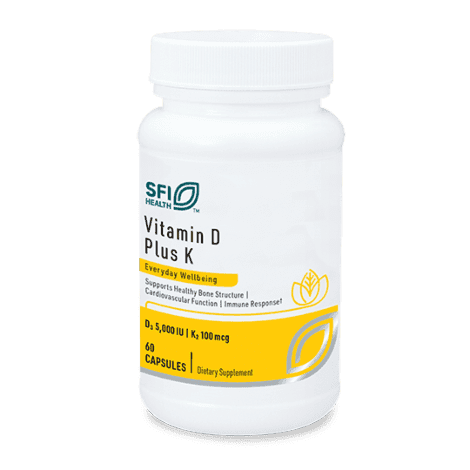
    The research-supported dose is 1,000 to 4,000 IU daily, with the right number determined by a 25-hydroxyvitamin D blood test. The target range most functional practitioners use is 50 to 70 ng/mL. K2 directs the calcium D pulls into circulation toward bones rather than soft tissue. Nordic Naturals Vitamin D3 + K2 covers both at a dose adjustable to bloodwork. Around $20 for three months.

    2. Magnesium glycinate, the sleep and anxiety lever

    2. Magnesium glycinate, the sleep and anxiety lever

    Magnesium is involved in over 300 enzymatic reactions, including GABA production, which calms the nervous system before sleep. NHANES data shows 48 percent of Americans fall short of the daily intake, and the gap widens in women over 30 because caffeine, alcohol, and chronic stress all accelerate excretion. Symptoms of deficiency overlap exactly with the perimenopausal short list: poor sleep, night cramps, afternoon anxiety, worsening PMS. Dr. Mary Claire Haver lists magnesium glycinate as one of the three supplements she takes herself and recommends to almost every patient in the 35 to 55 window.

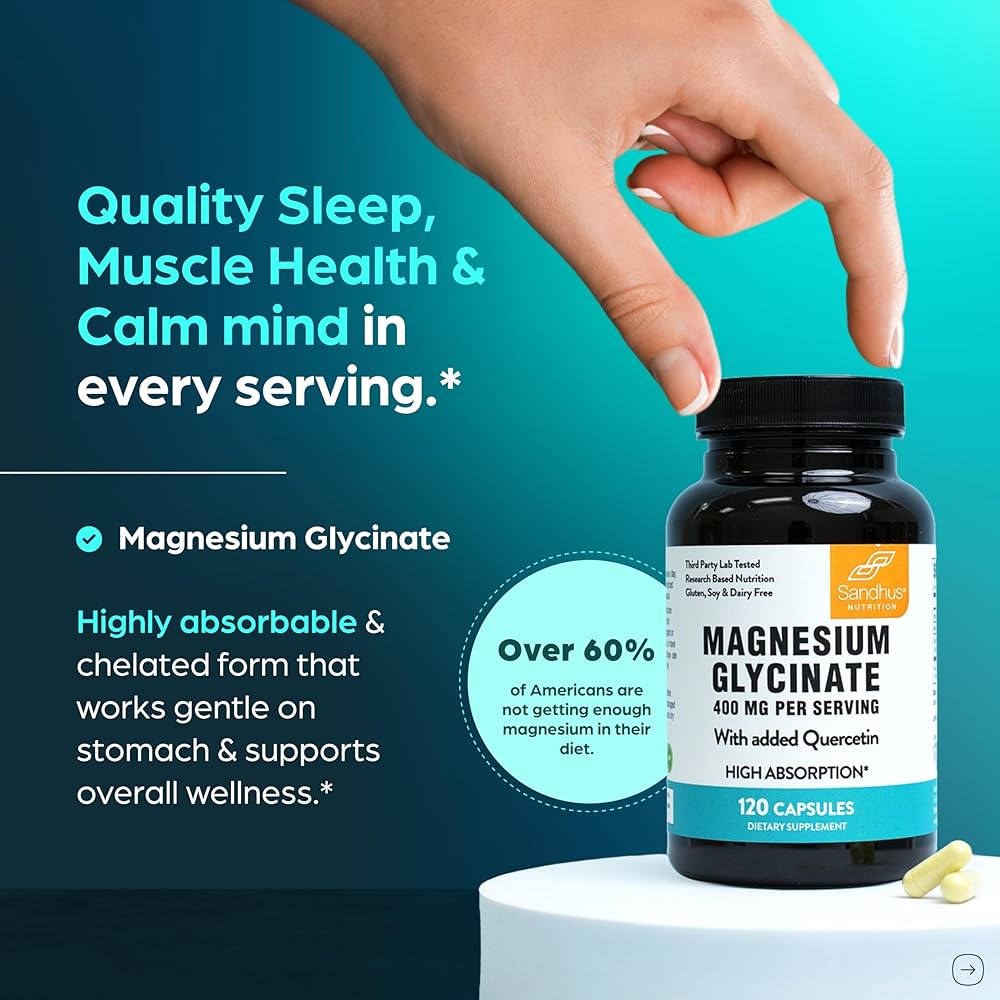
    Form matters more here than in any other category. Oxide is poorly absorbed and acts as a laxative. Citrate is better but loose-stool prone. Glycinate, the chelated form bound to glycine, absorbs well and crosses into the brain. Standard dose is 400 mg of elemental magnesium, taken about an hour before bed. Pure Encapsulations Magnesium Glycinate is third-party tested. Sleep improves within five to seven nights. Anxiety relief, particularly the late-afternoon chest-tightening kind, takes two to three weeks.

    3. Omega-3 EPA and DHA, the inflammation governor

    3. Omega-3 EPA and DHA, the inflammation governor

    Omega-3s are the strongest evidence-backed intervention for chronic inflammation, which underlies almost every age-related condition women in their 30s and 40s start hearing about. The Western diet, heavy on seed oils, runs an omega-6 to omega-3 ratio of roughly 20:1. The target is closer to 4:1. Clinical evidence covers cardiovascular outcomes, postpartum depression, perimenopausal mood, joint inflammation, and midlife cognitive function. Dr. Casey Means has written that omega-3 supplementation is the single intervention with the broadest documented benefit across the systems most likely to show strain in a woman’s late 30s.

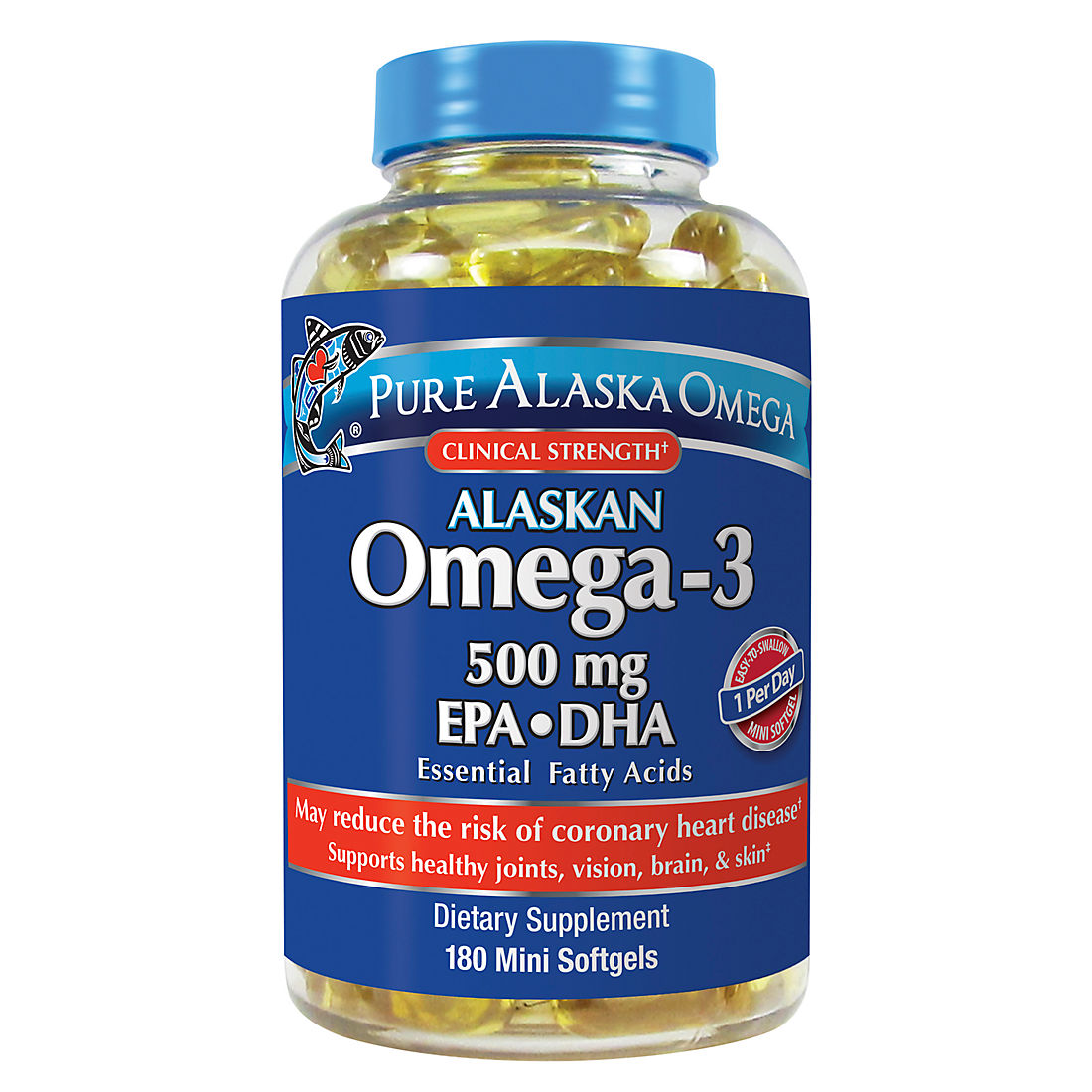
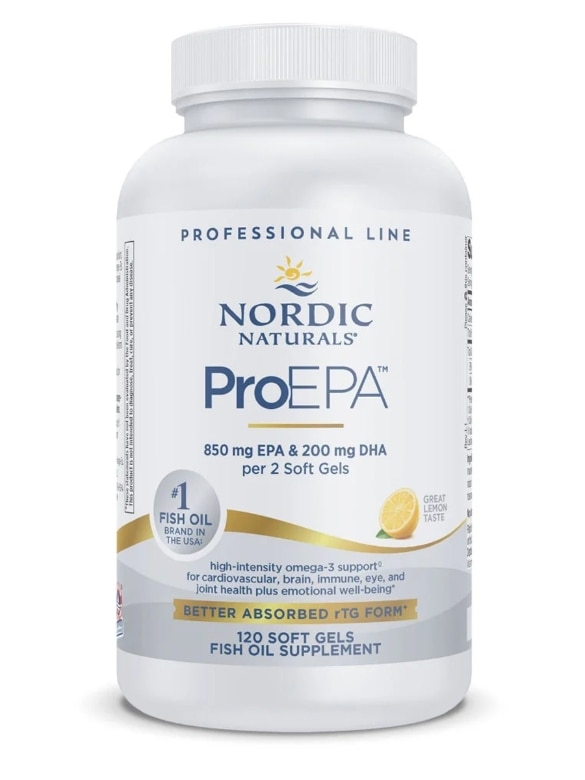
    The dose that hits clinical threshold is 2,000 mg of combined EPA and DHA per day, meaningfully higher than what most generic fish oil capsules deliver. A “1,000 mg fish oil capsule” often contains only 300 mg of actual EPA plus DHA. Nordic Naturals Ultimate Omega publishes oxidation values, which matter because rancid fish oil is worse than no fish oil. The capsule should not smell fishy when you bite into it.

    4. Iron bisglycinate, only if your ferritin is low

    4. Iron bisglycinate, only if your ferritin is low

    Iron is the supplement most likely to be taken by women who do not need it and skipped by women who do. The standard hemoglobin test only catches iron deficiency once it has progressed to anemia. The earlier marker, ferritin, which measures stored iron, is the test that flags the problem in time. A ferritin level under 30 ng/mL is considered low even inside the “normal” reference range, and the symptoms overlap perfectly with the catch-all complaints of this decade: persistent fatigue, hair shedding, exercise intolerance, restless legs. Dr. Stacy Sims has pointed out that female athletes run ferritin deficient at four to five times the rate of male athletes, and the deficiency tanks performance long before it shows up on a standard panel.

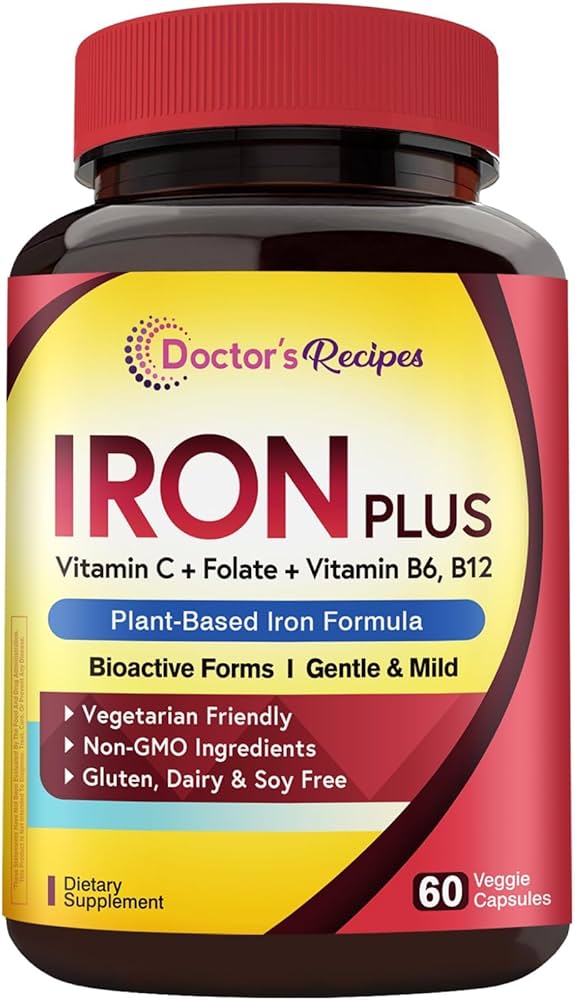
    The rule: do not supplement iron without a ferritin test. Iron has a ceiling above which it contributes to oxidative stress and, in hemochromatosis carriers, organ damage. If the test shows ferritin under 30, the typical protocol is 25 to 50 mg of elemental iron in the bisglycinate form, on an empty stomach with vitamin C, no closer than two hours to coffee, tea, or calcium. Thorne Iron Bisglycinate causes a fraction of the stomach upset of the sulfate form. Recheck at three months.

    5. Methylated B-complex, especially for MTHFR carriers

    5. Methylated B-complex, especially for MTHFR carriers

    Roughly 30 to 40 percent of the population carries a variant of the MTHFR gene that reduces the body’s ability to convert standard folic acid into the active form, methylfolate. The same enzyme system processes B12 into methylcobalamin and B6 into pyridoxal-5-phosphate. Carriers who supplement with the generic, unmethylated forms in almost every drugstore B-complex may absorb a fraction of what is on the label. Downstream effects include elevated homocysteine, lower mood, brain fog, and a higher pregnancy risk of neural-tube defects. Dr. Casey Means and a growing number of functional-medicine physicians now default to methylated forms across the board.

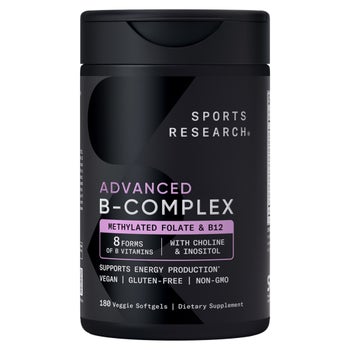
    The practical position: methylated forms are safe for non-carriers and meaningfully better for carriers, so defaulting to a methylated complex covers the bet. Thorne Basic B Complex uses the active forms of folate, B12, and B6 in clinically reasonable doses. Take it in the morning. The wired feeling at bedtime is common and resolves the moment the dose shifts to breakfast.

    6. Creatine, five grams a day, for women too

    6. Creatine, five grams a day, for women too

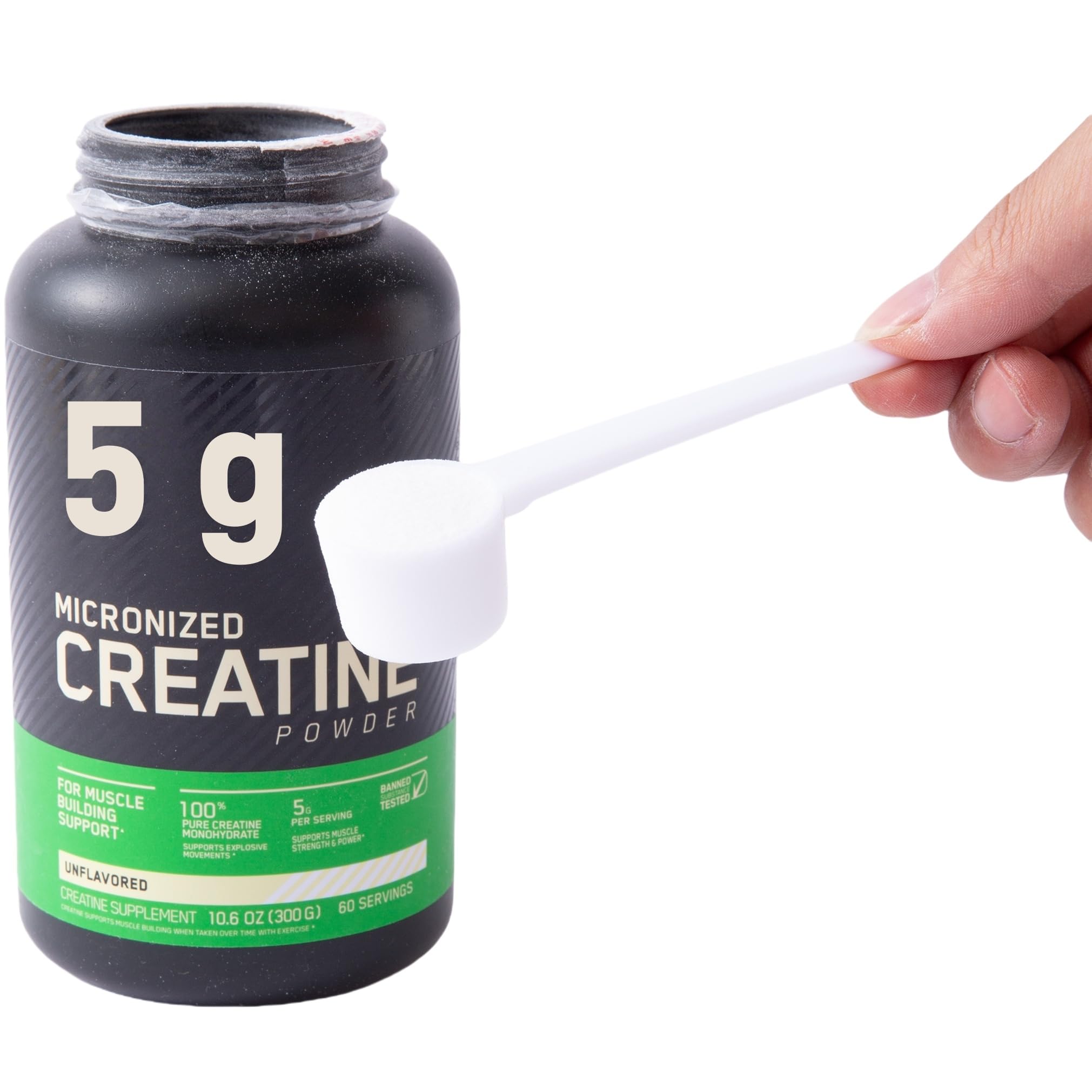
    Creatine is the most heavily researched performance supplement in existence, with more than 500 peer-reviewed studies, and for two decades the marketing made it sound like a substance only male bodybuilders should use. The research on women says something different. Five grams of creatine monohydrate per day improves lean muscle, strength, recovery, and, crucially, cognitive function, especially under sleep deprivation, which is the resting state of most mothers and women carrying a high workload.

    Dr. Stacy Sims has been one of the loudest voices repositioning creatine as a women’s-health supplement. Her argument is that women have lower baseline creatine stores than men and benefit more, not less, from supplementation. Studies on sleep-deprived adults show meaningful gains in working memory and reaction time. For a perimenopausal woman whose sleep architecture has stopped delivering the deep stages, creatine is closer to a nootropic than a gym supplement.

    Monohydrate is the form studied in essentially every trial. Thorne Creatine Monohydrate is third-party tested. Five grams per day, mixed in water or a smoothie. No loading, no cycling. The water-retention concern refers to intramuscular water, which is metabolically active and tied to muscle growth, not bloat.

    7. Protein, from food first, then whey if you need it

    7. Protein, from food first, then whey if you need it

    The current evidence on lean-mass maintenance in women over 30 supports an intake of roughly one gram of protein per pound of body weight per day, which for a 150-pound woman is 150 grams. The average American woman in this range eats closer to 60. The gap matters because lean muscle mass is the strongest single predictor of metabolic health and functional independence in the later decades. Dr. Mary Claire Haver and Dr. Stacy Sims have both argued that standard guidance has chronically under-recommended protein, leaving a generation of women dieting their way into sarcopenia.

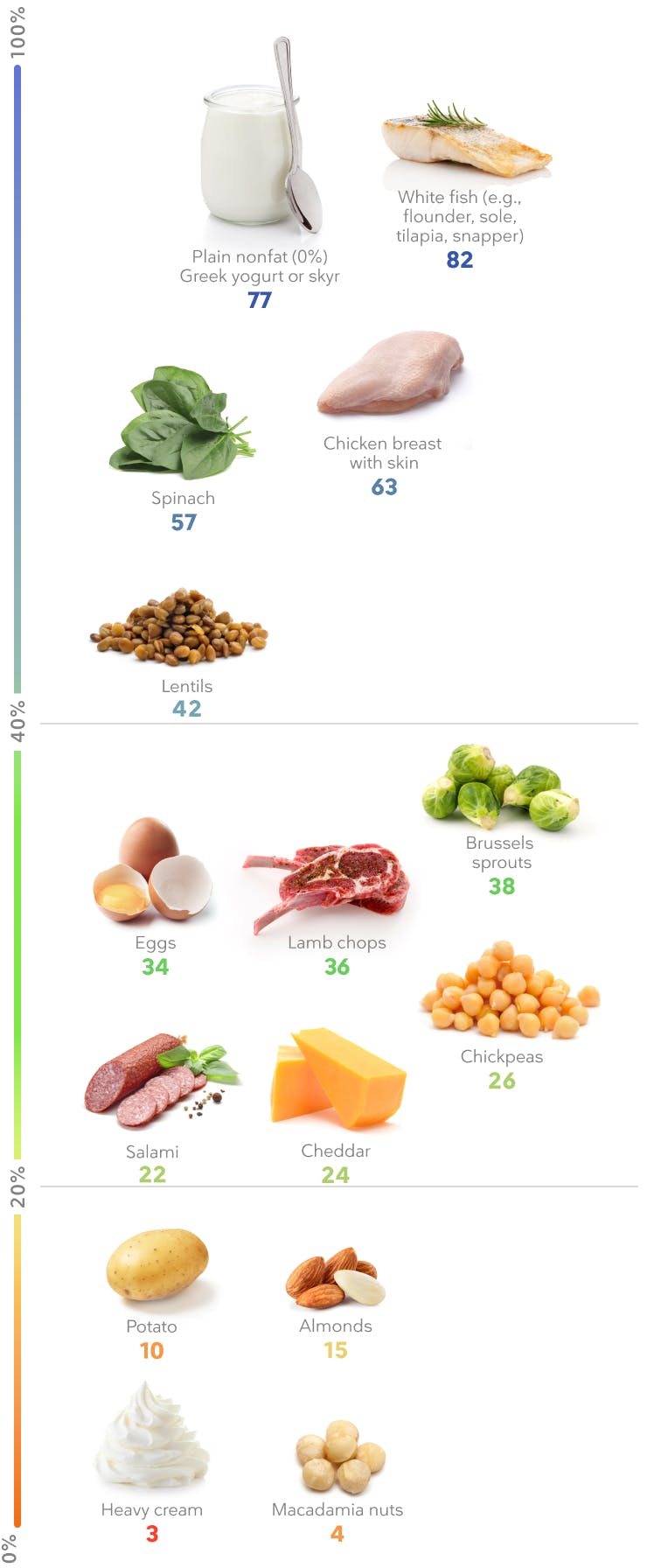
    Food first: eggs, chicken thighs, salmon, Greek yogurt, cottage cheese, lentils, tofu, and ground turkey before any powder. A scoop of whey isolate covers the gap when food cannot. Buy isolate, not concentrate, because the lactose is stripped and absorption is faster. Naked Whey Isolate is clean and additive-free.

    8. A real probiotic, with strains that have been studied

    8. A real probiotic, with strains that have been studied

    Most generic probiotics list “30 billion CFU” on the front of the bottle without naming the actual strains inside, and the strain is what determines whether the product does anything. Lactobacillus rhamnosus GG has the strongest evidence base in women. Lactobacillus reuteri RC-14 and Lactobacillus rhamnosus GR-1, the strain pair developed by Dr. Gregor Reid, have specific evidence for urinary tract and vaginal microbiome health, which becomes a more frequent concern in the perimenopausal years. Dr. Casey Means has written that the meaningful question is not whether to take a probiotic but which one, and the answer comes from the strain table on the back, not the marketing on the front.

    Klaire Labs Ther-Biotic Complete lists every strain on the label and is one of the few brands tested for CFU count at expiration rather than manufacture. One caution: a probiotic is not a substitute for fiber. The bacteria you take in capsules cannot colonize a gut starved of the fermentable fiber they feed on.

    The skip list: four supplements with weaker evidence than the marketing suggests

    The skip list: four supplements with weaker evidence than the marketing suggests

    Four product categories show up in almost every Instagram “wellness stack” and none carry the evidence the price tag implies. Collagen powder is the first. Studies show modest skin-elasticity gains at doses around 10 grams a day, but the body breaks collagen into the same amino acids it would extract from any complete protein. Hitting your protein target delivers the same building blocks at a fraction of the cost.

    Apple cider vinegar gummies are second. The original research was on liquid vinegar’s acetic acid content. The gummies contain too little to replicate the effect, and many brands add sugar that cancels what was left. Anything labeled “detox” is third. The liver and kidneys handle that continuously, and no over-the-counter supplement has been shown to enhance the process in a person with normally functioning organs. Megadose biotin is fourth. The 5,000 to 10,000 mcg doses in “hair, skin, and nails” gummies are far above what the body can use, and the excess interferes with thyroid panels and cardiac troponin assays, causing misdiagnoses every year. Hair loss is almost always tied to ferritin, thyroid, or stress, none of which biotin addresses.

    At a glance: who needs what

    At a glance: who needs what

    The foundational stack for a woman in her 30s eating a reasonably varied diet, strength training twice a week, and living above the 37th parallel is vitamin D3 with K2, magnesium glycinate, and omega-3 EPA and DHA. That is the floor. Add creatine if you train hard. Add a methylated B-complex if energy and mood feel off despite the basics. Add iron only if ferritin testing shows you below 30 ng/mL. Add whey if you cannot hit protein targets from food. Add a strain-specific probiotic during or after antibiotics, or if urogenital health is a concern.

    How to choose between them if you can only do three

    How to choose between them if you can only do three

    If the budget allows three, the answer for almost every woman in her 30s and 40s is vitamin D3 with K2, magnesium glycinate, and omega-3 EPA and DHA. Those three sit upstream of the systems most likely to show strain in this decade and are the supplements all three of the physicians cited would prioritize first. If the budget allows five, add creatine and a methylated B-complex.

    Frequently asked questions

    How long until I notice anything? Magnesium glycinate often improves sleep within five to seven nights. Omega-3s take six to eight weeks to shift the body’s fatty-acid ratio measurably. Vitamin D needs three months at the right dose to move blood levels. Iron, if you are deficient, can feel transformative within four to six weeks.

    Can I take all of these together? Mostly yes, but timing matters. Iron should not be taken within two hours of calcium, coffee, or tea. Methylated B vitamins are best in the morning. Magnesium is best in the evening. Vitamin D and omega-3s absorb best with a meal containing fat.

    What about a prenatal or general multivitamin instead? A high-quality women’s multivitamin is a reasonable shortcut for some B vitamins and trace minerals, but most under-dose vitamin D, contain the unmethylated forms, and skip magnesium entirely. Not wrong, just rarely complete.

    How do I know if I have MTHFR? A 23andMe panel reports it in the raw data. The practical answer is that you may not need to know. Methylated B vitamins are safe for non-carriers and better for carriers, so defaulting to the methylated forms covers both cases.

    The bottom line: build from bloodwork, not from a podcast

    The bottom line: build from bloodwork, not from a podcast

    If there is a single pick from the list above, it is vitamin D3 with K2. It sits upstream of bone, mood, immune, and metabolic systems in ways no other single supplement does, deficiency rates in this country are absurd, and the cost of the right dose is under $10 a month. Nordic Naturals Vitamin D3 + K2 , paired with a 25-hydroxyvitamin D blood test at the start and again at six months, is the closest thing to a no-regrets foundation in the supplement aisle.

    The broader point is that supplements are a tool, not an identity. The women I know with the most resilient health in this decade are not the ones with the most colorful pill organizers. They are the ones who ran their bloodwork, identified the two or three gaps that actually applied to them, and held the targeted protocol long enough to see results. Everyone else is buying Costco supplements and hoping. The aisle is 84 feet long for a reason. Most of it is not for you.

  • Plus-Size-Friendly Guide to Pregnancy Fitness: What’s Safe and What Feels Good

    Plus-Size-Friendly Guide to Pregnancy Fitness: What’s Safe and What Feels Good

    A plus-size pregnant woman walking on a residential sidewalk in soft late-afternoon light, one hand resting under the belly

    Imani left her OB’s office in March 2025 with a printout that said “moderate exercise recommended” across the top in 12-point Arial, and not one other word of guidance underneath. She was 33, a size 22, 19 weeks along, and had never been to a gym in her life. The nurse who handed her the page smiled the way people smile when they have already moved on to the next chart. Imani sat in the parking lot trying to figure out what “moderate” was supposed to mean in a body that had spent thirty-three years not exercising. She typed “pregnancy workout plus size” into her phone and got six minutes of videos with size-6 women in Beyond Yoga sets. She put the phone face-down. This article is the version of the conversation her OB did not have time for.

    The harder question underneath Imani’s printout is not “what is moderate.” It is what does pregnancy fitness even look like in a plus-size body when the prenatal yoga class is full of women in their first pair of $108 leggings, when the only modifications the instructor knows are for a B cup, and when the medical advice you get assumes you already know how to read your own effort. The honest answer is that it looks different than what social media sells, and it is more doable than most plus-size women have been told.

    What ACOG actually says

    What ACOG actually says

    The American College of Obstetricians and Gynecologists published Committee Opinion 804 in April 2020 and reaffirmed it in 2023. The recommendation is 150 minutes per week of moderate-intensity aerobic activity for healthy pregnancies, and it explicitly includes pregnancies categorized as obese by BMI. Exercise during pregnancy lowers the risk of gestational diabetes, hypertensive disorders, preterm birth, cesarean delivery, and excessive weight gain. The risks of not exercising are higher than the risks of exercising for almost every pregnant person without a specific contraindication.

    ACOG also clears light-to-moderate resistance training in the same document, and the same Committee Opinion confirms strength training with progressive load is safe for healthy pregnancies. Dr. Heather Irobunda, the NYC-based OB-GYN who serves as Peloton’s maternal health advisor, has made the point in interviews that the average pregnant patient gets less guidance about exercise than about car-seat installation.

    Practically, 150 minutes breaks down to 30 minutes five days a week, or 22 minutes seven days a week, or three 50-minute walks. Shape matters less than the total.

    The “moderate” question, and why heart rate is a bad answer

    For two decades the standard answer was “keep your heart rate under 140.” ACOG retired that guidance, and Committee Opinion 804 spells out why: pregnancy raises baseline resting heart rate by 10 to 20 beats per minute, and the elevation is not uniform across people or trimesters. A 140 cap is meaningless if your resting heart rate has already moved from 70 to 88. The number does not map to effort the way it does outside pregnancy.

    The two replacements ACOG recommends are the talk test and the Borg rating of perceived exertion. The talk test is simpler. Moderate intensity is the pace at which you can speak in full sentences but not sing. If you cannot finish a sentence without a breath, you have crossed into vigorous. If you can sing, you are below moderate. The Borg scale ACOG uses is 0-to-10, with moderate at 5 to 6. Five is “I notice I am breathing.” Six is “I notice I am working, but I could keep this up for a while.”

    Dr. Sarah Ellis Duvall, a physical therapist who founded Core Exercise Solutions, teaches the talk test as the single most useful tool a pregnant beginner has, because it self-calibrates to fitness level. A walk that feels moderate for a marathoner is a saunter; the same walk for a size-22 first-time exerciser at 19 weeks is a real workout. Both are correct.

    A plus-size pregnant woman walking on a treadmill in a community gym, water bottle on the console

    What’s safe: the actual list

    What's safe: the actual list

    ACOG’s safe list for healthy pregnancies, including patients with higher BMIs and patients new to exercise, is shorter than the internet suggests. Walking is the top of the list. Swimming and water aerobics are the gentlest on joints and the hardest to overheat in, both of which matter more at a higher weight. Stationary cycling is recommended specifically because it removes the fall risk that comes with center-of-gravity changes. Prenatal yoga and prenatal Pilates are cleared, with a note about avoiding any pose flat on the back after the first trimester. Light-to-moderate strength training is cleared. Low-impact aerobics including modified dance and step classes are cleared.

    What ACOG warns against: contact sports (basketball, soccer, ice hockey) because of abdominal trauma risk. High-fall-risk activities (downhill skiing, surfing, off-road cycling, gymnastics, horseback riding). Scuba diving at any depth, because the fetus is not protected against decompression sickness. Hot yoga and hot Pilates because of overheating risk, especially in the first trimester. Exercise at altitude above 6,000 feet if you are not acclimatized. And any supine exercise after about week 16, because the weight of the uterus on the inferior vena cava reduces blood return to the heart and can drop your blood pressure.

    A 2022 study in Obstetrics & Gynecology on exercise interventions in pregnancies categorized as obese found that supervised moderate exercise reduced gestational diabetes by roughly 30 percent versus no-intervention controls, with adverse events essentially identical between groups. The harm comes from inactivity, not activity.

    Trimester by trimester

    Trimester by trimester

    The first trimester, weeks 1 through 13, is the maintain-baseline window. If you were walking before pregnancy, keep walking. If you were not, start small and stay there, because first-trimester fatigue and nausea are not the time to launch a program. Twenty minutes of walking, three times a week, is an adequate floor. Hydration matters more than usual because plasma volume is expanding, and overheating is the biggest first-trimester risk, especially in the first six weeks when neural tube development is most temperature-sensitive.

    The second trimester, weeks 14 through 27, is the peak window. Energy returns. Nausea lifts. The belly is showing but has not yet redistributed the center of gravity enough to make most movement awkward. This is when the bulk of the 150 weekly minutes gets earned, and the window for adding light strength work. Brittany Robles, an OB-GYN who founded the Postpartum Trainer Academy, calls weeks 14 through 24 “the golden window,” and her clinical position is that women who use this window to build strength have measurably easier third trimesters and shorter labors.

    The third trimester, weeks 28 through delivery, is the focus-shifts window. Aerobic minutes do not go away, but they slow down. The work moves toward pelvic floor coordination, posture, and mechanical preparation for labor. Walking becomes shorter and more frequent, three 10-minute walks instead of one 30. Strength work moves to bodyweight or very light load with an emphasis on hip mobility and breath. Diastasis-recti screening becomes important, and any exercise that domes the abdomen forward is dropped. The third-trimester goal is not to add fitness. It is to preserve what you built in the second.

    Five prenatal-safe strength moves

    Five prenatal-safe strength moves

    These five are the ones Dr. Sarah Ellis Duvall and Brittany Robles teach across body sizes, and they require either no equipment or a resistance band and a pair of light dumbbells.

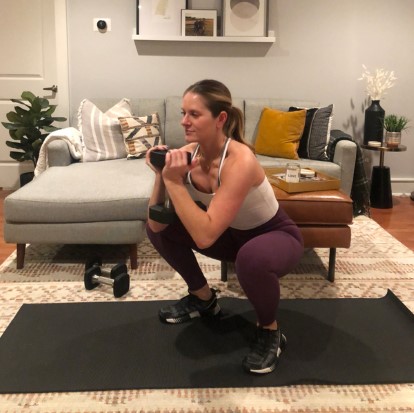
    Goblet squat to a chair. Stand in front of a sturdy chair, feet a little wider than shoulder width, toes turned slightly out. Hold a 5-to-10 pound dumbbell at chest height with both hands. Sit back to the chair as if you are about to land on it, tap the seat, and stand back up. Three sets of 8 to 10. This trains the mechanics of getting up and down from the toilet at 38 weeks, which is not a joke.

    Wall push-up. Stand an arm’s length from a wall, hands at shoulder height, slightly wider than the shoulders. Lower the chest in a controlled count of three, then press back. Three sets of 10. The wall version protects the abdomen and the wrists.

    Bird dog with breath. On hands and knees, hands under shoulders. Extend the right arm and the left leg, exhale as you reach, hold for two seconds, return. Switch sides. Three sets of 8 per side. You are training the deep core to coordinate with the diaphragm, the foundation of safe lifting later.

    Glute bridge. On your back, knees bent, feet flat. One of the few supine exercises that stays safe past week 16, because the duration is short and you can elevate the upper back on a pillow wedge. Press through the heels, lift the hips to a line from knees to shoulders, lower with control. Three sets of 12. Trains the posterior chain that carries a 30-to-40-pound load shift over nine months.

    Side-lying clamshell. Lie on one side, knees bent at 90 degrees, hips stacked. Keeping the feet together, open the top knee like a clamshell. Three sets of 15 per side. Targets the glute medius, the muscle that keeps the pelvis level when you walk and the one that gives out first when pregnancy hip pain starts.

    Four mobility flows that actually help

    Four mobility flows that actually help

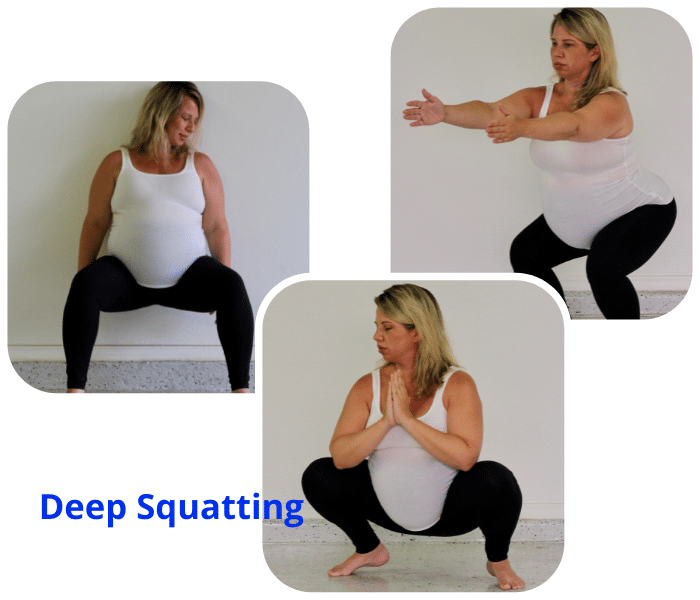
    Mobility is where prenatal yoga earns its place, and it does not require a $30 class. Cat-cow, five slow rounds twice a day, keeps the lumbar spine from locking up. Deep squat hold with hands in prayer at the chest, 30 seconds building to 90, opens the hips for the position the pelvis needs for delivery. Pigeon variation with the front leg low and the back leg straight, two minutes per side, counters the sciatic nerve compression that arrives in trimester three. Child’s pose with knees wide, 90 seconds at a time, decompresses the low back. Glo’s prenatal series teaches these in 10-minute blocks.

    The pelvic floor coordination piece nobody explains

    The pelvic floor is a hammock of muscles from the pubic bone to the tailbone, and it is the part of pregnancy fitness that gets ignored or reduced to “do your Kegels.” The actual work is teaching the pelvic floor to coordinate with the diaphragm, not just to contract.

    The breath cue, in plain language: when you inhale, the diaphragm drops, the belly expands gently, and the pelvic floor releases downward. When you exhale, the diaphragm lifts, the belly draws gently in, and the pelvic floor lifts. Every breath is a small coordination rep. “Just do Kegels” is bad advice because it teaches the floor to contract but not to release, and a pelvic floor that cannot release does not push a baby out efficiently. The Bloom Method, founded by Brooke Cates, is the diastasis-friendly program built around this coordination piece.

    Homework: three rounds of five connected breaths, twice a day, with one hand on the belly and one hand low on the pelvis. Feel the rise on the inhale and the lift on the exhale. It is more useful than any single thing on this list.

    A plus-size pregnant woman in a deep squat hold on a yoga mat at home, sunlight through the window
    A plus-size pregnant woman doing a goblet squat to a chair at home, holding a small dumbbell

    Gear that actually fits

    Gear that actually fits

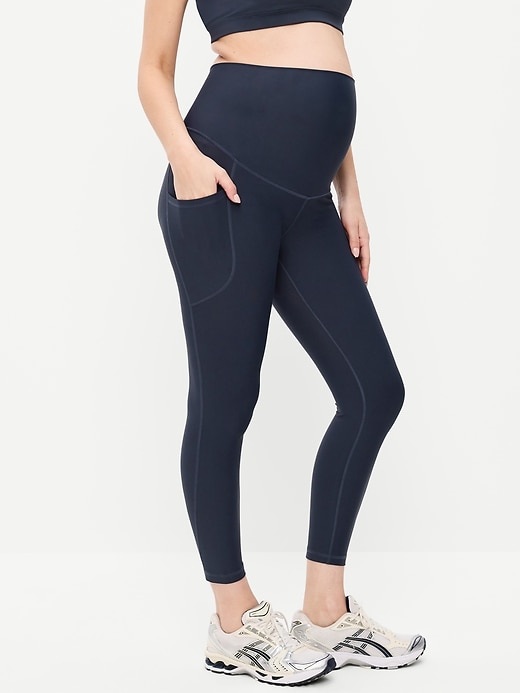
    The activewear problem at a size 22 is real. Most maternity activewear stops at XL, about a size 16. Old Navy Active Maternity goes to 4X and runs honest to size; the high-waist Powersoft maternity leggings are $35 and hold the belly without binding. Beyond Yoga Maternity Spacedye goes to 3X, the leggings are $99 and worth it for the second half because the fabric does not lose its recovery. Belly Bandit makes a belly support band that extends the comfortable walking window into the third trimester; the Upsie Belly model goes to 3X. Kindred Bravely makes maternity sports bras to 2X and a band size of 48, the only realistic option for women starting with a DDD or larger.

    Shoes matter more than they sound like they should. Foot width increases in pregnancy because relaxin loosens the ligaments of the feet too, and a shoe that fit at week 10 will not at week 30. A wide-toe-box walking shoe with real arch support is the most-used piece of equipment on this list; the Brooks Ghost in a wide width is the most-recommended option in plus-size prenatal forums.

    Apps and programs worth the money

    Apps and programs worth the money

    Expecting and Empowered,

    built by a perinatal-fitness team including a pelvic floor PT, costs about $20 a month and gives a week-by-week strength and cardio program. Plus-size modifications are not advertised but are built in, because the programming is based on stage of pregnancy rather than fitness level. The Bloom Method, mentioned above, is the diastasis-friendly choice. Glo has a prenatal yoga library with instructors who cue plus-size modifications, including Jacqui Bonwell, whose sequences are built for bodies that need wider stances and propped belly space. None of these will solve the fact that prenatal yoga in person is often a size-6 environment. They will let you do the work at home in a wide T-shirt that fits.

    Red flags to stop immediately

    Red flags to stop immediately

    Stop and call your provider today if any of these happen during or after exercise: vaginal bleeding, fluid leaking that is not urine, regular painful contractions before 37 weeks, dizziness or feeling like you are going to pass out, headache that does not lift, chest pain, calf pain or swelling on one side only, decreased fetal movement after 24 weeks, or muscle weakness that affects balance. These are ACOG’s listed warning signs from Committee Opinion 804. The list is short on purpose. Everything else – breathlessness, leg burn, the need to sit for five minutes – is information about pacing.

    Two more practical signals that come up consistently in prenatal-fitness PT and OB-GYN guidance: if your urine is darker than pale yellow during or after a workout, you’re underhydrated and need 16 ounces before the next session. If you’re losing weight in the second or third trimester while exercising, you’re doing too much or eating too little, and that needs a provider conversation.

    What this is actually for

    What this is actually for

    The conversation Imani’s OB did not have time for would not have ended with a heart-rate zone or a list of YouTube channels. It would have ended with the part buried under every prenatal article that uses the word “bounce back.” Fitness during pregnancy in a plus-size body is not about preventing weight gain. It is not about staying snatched. It is about giving your hips, your pelvic floor, and your low back the practice they need to carry a 30-to-40-pound load shift over nine months and then deliver a human being out of your body. The goal is a body that can walk for 30 minutes at 38 weeks without crying. A body that can squat to pick up a dropped pacifier at week 41. A pelvic floor that knows how to release when the work begins. That is the assignment. The 150 minutes a week is the math of how you get there.

  • What Happened When I Stopped Wearing Black for 30 Days at Size 18

    What Happened When I Stopped Wearing Black for 30 Days at Size 18

    On a Friday in May 2024, I stood in my closet in Decatur and counted thirty-one black tops. I counted them twice because the first number felt wrong, but it was right. Thirty-one. A black scoop-neck from Target. Three nearly identical black tunics from Old Navy, bought across three separate Augusts. A black wrap top with sleeves long enough to cover the soft part above my elbow. A black peplum top, two black turtlenecks, a black mock-neck, a black v-neck with the tag still on it from 2022. I laid them on the bed in rows, the way you lay out evidence.

    Then I started writing dates on a notepad. When I had bought each one. What had been happening in my life that month. I didn’t have to guess on most of them because I remembered. The peplum was August 2020, three weeks after a Zoom meeting where I caught my own face in the gallery view and turned the camera off for the rest of the year. The wrap top was January 2022, the week after my OBGYN said my weight in front of my then four-year-old. The turtlenecks were both purchased in November, different years, both after Thanksgiving photos. The mock-neck was bought the day I cancelled a beach trip with my college friends.

    Not one of those thirty-one black tops had been purchased in joy. Not one of them had been bought because I saw it and thought, that’s pretty, I want to wear that. Every single one had been bought during what I can only call a shrinking moment. A moment of body shame so specific I could date it. That night I pulled a Rubbermaid bin from under the bed, dumped every black top inside, slid it back, and gave myself thirty days.

    The 31 black tops

    31 black blouses tops closet hanging stack overwhelming visual

    I am a size 18. I have been a size 18 for most of the last six years, and a size 16 before that, and a size 14 before that, and so on backward through my twenties. The numbers matter less than the trajectory, and the trajectory is up. I’m thirty-four, I’m a mother of two, and I’ve spent roughly twenty years buying clothes that I hoped would let me move through the world without comment.

    What I noticed when I laid the thirty-one black tops on the bed was not the quantity. The quantity was embarrassing but it wasn’t the revelation. The revelation was that every single one was a slightly different attempt at the same trick. Long enough to hide the hip dip. Loose enough to skim the stomach. High enough at the neck to draw the eye up. Sleeves long enough to cover the part of my upper arm I called, in my private vocabulary, the bad part. Thirty-one variations on one assignment: make her smaller, make her quieter, make her less.

    I had been telling myself for years that I just preferred black. That it was sophisticated. That it was easy. That it went with everything. Aubrey Gordon, who writes and podcasts about fat liberation and whose book You Just Need to Lose Weight I had been chewing on for months, has a line about how the stories we tell about our bodies are often stories about other people’s comfort. I had been telling myself a style story when I was actually telling myself a survival story.

    A pile of folded black tops in a clear plastic storage bin on a bedroom floor

    The decision

    The rule I gave myself was simple and a little stupid, which is how most useful rules start. For thirty days, no black tops. Black pants were fine. Black shoes, black bags, black sweaters in a pinch. But anything that touched the upper half of my body and pulled my eye toward concealment was off limits. The bin went under the bed. The closet, when I slid the hangers around, suddenly looked like it belonged to someone else. There was a coral linen shirt I had bought in 2023 and never worn. There was a cobalt blue blouse from a swap with my sister. There was the emerald green wrap dress my mother had given me for my birthday and that I had thanked her for and never put on.

    I didn’t tell Marcus, my husband, for the first five days. I am still a little annoyed with myself about that, because Marcus is the kind of husband who notices when I am doing something hard, and he would have made it easier. But I think I didn’t tell him because I knew the first sentence I would have to say out loud was, I have thirty-one black tops and I bought every one of them because I hate my body. And I wasn’t ready to say that on a Friday night, with Jada and Marcus Jr still up watching cartoons, in the kitchen of a house I love.

    Week 1: The body-image inventory

    plus-size Black woman cobalt blue top school drop-off morning

    The first morning I reached for the cobalt blue blouse and felt my chest tighten. I want to be honest about this. It was not freeing. It was not liberating. It felt like I was walking out of the house with my underwear showing. I drove the kids to school in cobalt blue and gripped the steering wheel hard enough that my hands ached at the first light. I thought, every person at drop-off is going to look at me. I thought, every person at drop-off is going to think she should not be wearing that color at her size.

    What actually happened was that one of the other moms, Yolanda, whom I have known for three years and who has never once commented on my clothes, walked over and said, that color is beautiful on you. And I said thank you and walked to my car and sat in it for a minute before I drove away. Dr. Renee Engeln, the Northwestern psychologist who wrote Beauty Sick , has a body of research on what she calls beauty sickness, the cognitive load women carry around how they look. Her argument, more or less, is that the brain real estate we spend worrying about being seen is brain real estate we are not spending on anything else. I had not understood that line viscerally until I sat in my car in the parking lot at Coralwood and realized I had used up an entire morning’s worth of mental energy on a blouse.

    Day four was the vermilion top. It was a top I had bought on clearance in 2021, kept the tag on, and never worn. It was the kind of red that does not apologize. I wore it to run errands. I was in the Trader Joe’s parking lot, loading groceries into the back of the car, when I caught my reflection in the window and did not recognize myself for half a second. There was a woman in a vermilion top putting frozen pad thai into a reusable bag. She looked, and I am picking this word carefully, present. She looked like she was in her life. I had not seen myself look like that in a long time. I sat in the driver’s seat and cried for a minute, and then I went home and made dinner.

    A woman in a bright red top reflected in a parked car window holding grocery bags

    Week 2: What other women said

    The second week is when other people started talking. My friend Denise, who I have known since college and who notices everything, called me on a Tuesday and asked, are you okay. Not in a worried way. In a curious way. She said, you look different, you have looked different the last three times I have seen you, did something happen. I told her about the bin. She was quiet for a long moment. Then she said, Kira, I have a bin too. She did not elaborate. She did not have to.

    A colleague at work asked which brand the emerald green dress was, and where I had bought it. I told her my mother had given it to me two years ago and I had never worn it. The look on her face was complicated. She said, that’s a long time to wait. I think she meant the dress. I think she also meant something else. I have thought about her face a lot since then.

    On Saturday I drove to a boutique on the square in Decatur, one I had walked past for years without going in because I assumed they did not carry my size. The saleswoman, a Black woman around my mother’s age named Cheryl, watched me drift through the racks for about ninety seconds before she walked over and started pulling things off hangers. She pulled a marigold blouse. She pulled a fuchsia wrap top. She pulled a rust-colored kimono and a poppy red shirt dress. She held them all up against me without asking, and she said, you have been hiding from these colors, and they have been waiting for you. I tried on every single one. I bought three. I left the shop in the marigold blouse with my bin of returnees in a paper bag and sat in my car again and thought about how many years I had walked past that store.

    Mariel Buque, the psychologist who wrote Break the Cycle , writes about how intergenerational shame around bodies, especially in Black women, gets passed down through small daily rituals. The clothes our mothers told us to wear so we would not draw attention. The way we were taught to enter rooms. The colors that were considered safe. I am not putting my mother in the dock for the bin under my bed. My mother, in fact, is the one who bought me the emerald green dress. But somewhere along the way I picked up the lesson that visibility was dangerous, and I had been dressing accordingly for two decades.

    Week 3: The bigger thing

    plus-size Black woman emerald green dress confident colorful wardrobe

    By the third week the wardrobe had stopped being the subject. The wardrobe was the symptom. The thing the wardrobe had been managing was something else, and I had to look at it whether I wanted to or not.

    I have a habit, when I walk into a room of people I do not know, of finding the corner. I get a drink. I check my phone. I make myself useful by helping the host. I have called this introversion for years, and some of it is. But some of it, I had to admit by week three, was the same daily small permission I had been writing on every black top: permission to be smaller, permission to take up less air, permission to not be looked at. Tara Mohr, in Playing Big , talks about the inner critic that tells women to keep their hands down in the meeting, to not apply for the job, to defer to the louder voice in the room. The voice in my closet was the same voice in those rooms. It had just been wearing different clothes.

    The thirty days had not been about color. The thirty days had been a diagnostic. The wardrobe was showing me, in a way I could count and weigh, how often I had agreed to be less. Thirty-one times in four years, just in the form of one specific category of garment. That was not the full count. That was a fraction of the count. The full count, if I let myself look at it, included the parties I left early, the conversations I exited, the photos I deleted, the meals I rearranged on my plate, the times I had said no to things I wanted because saying yes would have meant being seen wanting them.

    What came back to the rotation

    minimal closet curated color story oxblood cream emerald visible

    On day thirty-one I pulled the Rubbermaid bin out from under the bed and sat on the floor and went through every black top one at a time. Not all of them were going. Some of them were going to stay. The question I asked each one was the question I am still asking my closet now: did I buy this because I wanted it, or because I wanted to disappear.

    Four stayed. A black silk blouse my sister gave me for my thirty-fifth birthday, which I had bought nothing to match because I had been afraid of the silk. A black turtleneck I genuinely love in winter under a camel coat. A black sleeveless top that fits me beautifully and that I bought after trying on six other things that did not. A black cardigan with pearl buttons that belonged to my grandmother. Those four had passed the test. Those four had earned the rotation.

    The other twenty-seven went to ThredUp. I priced them honestly, I sent them in the bag, and a few weeks later I had a credit of $340. I want to be very clear that I did not spend the $340 on a celebratory shopping spree, because the entire point of the experiment was that I no longer trust shopping sprees to fix anything. I spent $180 of it on two pieces from Cheryl’s shop in Decatur, a rust silk camisole and a deep teal blouse, both of which I have worn many times. I put the other $160 toward my first real therapy session with a new therapist whose practice focuses on body image work in Black women. That felt right. The money had been earned by my old hiding. It went toward not hiding anymore.

    An open closet with colorful blouses in marigold rust teal and emerald hanging next to a black blazer

    What the 30 days didn’t fix

    This is the part I want to be most careful about, because the easy version of this essay is the one where the woman in the bin story walks out the other side fixed, and I am not. I want to tell you that putting the black tops away made me love my body, and it did not. I want to tell you that I no longer feel a stab when I see a photo of myself, and that would also not be true. The wardrobe had been a symptom. Putting the symptom in a Rubbermaid bin under the bed did not cure the underlying thing. It just made the underlying thing visible enough that I could not pretend anymore.

    The therapist I started seeing pointed out, very kindly, on our second session, that the wardrobe experiment had been brilliant for one reason and dangerous for another. The brilliant part was that it had given me an external evidence trail. I could not gaslight myself about the thirty-one tops. They existed. I could count them. The dangerous part was that focusing on the wardrobe could become its own form of avoidance, a way of doing surface work and calling it deep work. The closet had been the symptom. The therapy was where the cause lived. I am still going. I will probably be going for a while.

    There are days, I will tell you, when I still reach for one of the four black tops that stayed in the rotation. There are days when I want the quiet. There are days when I am tired or when something hard is happening and I want one less thing to manage, and I put on the black silk blouse and I move through the day. The difference, and I think this is the only honest difference, is that now I know what I am doing. Now I am choosing the quiet on purpose. Now it is not the only option in the closet.

    The final scene

    It is a Friday in late May 2025 as I write this, a year almost exactly from the Friday I counted the thirty-one black tops. I am sitting at the kitchen table in Decatur in a marigold blouse, the same one Cheryl pulled off the rack and held up against me, and I just walked past my open closet on the way to get coffee. There is a rust silk camisole on a hanger. There is the emerald green wrap dress my mother gave me. There is the cobalt blue blouse from my sister. There is a fuchsia wrap top, a coral linen shirt, a poppy red shirt dress, and the four black tops that earned their place. The Rubbermaid bin is gone. I gave it to my neighbor for storing her kids’ winter hats.

    The question I ask every garment now, before it comes home with me, is the question I should have been asking for twenty years. Am I buying this because I want it, or because I want to disappear. Most of the time, now, the answer is the first one. Sometimes it is still the second one, and on those days I put the garment back. The closet is not the work. The closet is just the place where I can see the work, hung up in rows where I can count it.

    A kitchen table with a coffee mug and a notebook with a woman in marigold blouse writing
  • How to Dress Confidently for Your Body Right Now – Not the Body You’re Working Toward

    How to Dress Confidently for Your Body Right Now – Not the Body You’re Working Toward

    A plus-size woman sorting clothing into three piles on her bed during a closet purge, lit by warm lamplight

    On a Friday night in November 2024, I emptied my closet onto the bed and made three piles. KEEP on the left. DONATE in the middle. And, on the right, the pile I’d been quietly making my whole adult life without ever naming it out loud: WHEN I’M SMALLER. Two pairs of high-waisted jeans that fit for about six wearings across three years. A silk slip dress from a 2022 sample sale with the tag still attached. Three blazers in a size 14 from a year I had not been a 14. A vintage cotton shirtdress I’d told myself I would wear “after a good summer.” The WHEN I’M SMALLER pile was the biggest of the three by a noticeable margin, and that night I added up what was in it. The number came to roughly $1,840 of clothing, almost all of it in good condition, almost none of it ever worn out of the apartment, waiting for a future body that, after a decade of weight cycling, was statistically unlikely to arrive on the schedule I’d promised it.

    I dragged the WHEN I’M SMALLER pile into the DONATE pile that night. I did not photograph it, did not post about it, did not do any of the things that turn a private decision into content. I just sat on the floor next to a forty-gallon bag of clothing I had been emotionally storing for years and admitted, out loud and only to myself, that I had spent close to two thousand dollars dressing a stranger. This article is what I wrote down in the weeks after that. It is not a love-your-body essay and it is not a manifesto. It is a working editor’s notes on how to actually get dressed in the body you have on a given Tuesday, when the body you have is also the body you are most ambivalent about.

    The WHEN I’M SMALLER closet and what it actually costs

    Most plus-size women I know have a version of the WHEN I’M SMALLER section, even if they don’t call it that. It lives at the back of the closet behind the things they actually wear. It lives in the bottom drawer of the dresser. It lives in a single bin in the storage unit labeled “summer” or “going out” or simply nothing at all. The pieces in it are usually nicer than the pieces in active rotation, because the WHEN I’M SMALLER closet is where the aspirational dollars went. The jeans cost more. The dress cost more. The blazer cost more. Future-thinner-you was always going to deserve nicer things than current-you, which is its own quiet form of self-punishment dressed up as planning.

    The 2024 NPD apparel return data, which tracks the resale and return behavior of US clothing buyers, put a number on this in a way that landed hard for me. The average plus-size woman in the US wastes between $1,200 and $2,000 a year on aspirational sizes, meaning clothing purchased in a size below her current measurements and either never worn, worn once or twice, or returned past the window. That figure tracks separately from regular fashion spending. It is purely the tax on dressing for a future body. Over a decade of adult dressing, that is somewhere between $12,000 and $20,000 of unworn clothing.

    There is a psychological cost on top of the dollar cost, and it is the part most personal finance writers miss. Every time you open the closet and see a row of pieces that do not currently fit you, the closet itself becomes a quiet referendum on your body. You did not set out to give yourself a daily verdict. You set out to buy a dress. But the cumulative effect of standing in front of fifteen garments that disagree with your measurements is a slow erosion of the assumption that your body is allowed to take up space in the room you are standing in. I noticed it most on the mornings I was already running late, when the closet should have been a tool and was instead a closing argument.

    The fashion psychologist Tara McGoldrick has written about this as the “aspirational closet effect,” and her clinical work suggests that the daily exposure to ill-fitting aspirational clothing measurably correlates with lower body satisfaction scores over a six-month window, independent of any actual weight change. The closet is not neutral. The closet is talking to you. The WHEN I’M SMALLER pile is the loudest voice in it.

    Hands folding a silk slip dress with the retail tag still attached on a cream-colored surface

    Why “you can always lose weight” is not the assignment

    Why

    The reflex response to everything I’ve just written is “well, you could always lose the weight.” I want to be precise about why that response, well-intended or not, misses the assignment of this article.

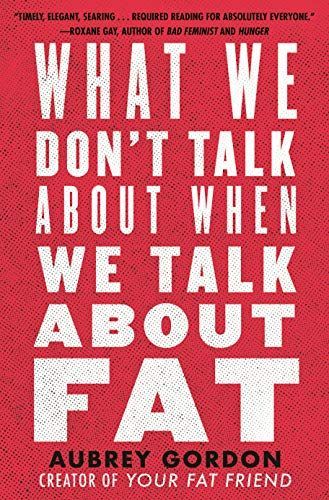
    Aubrey Gordon writes in What We Don’t Talk About When We Talk About Fat that fewer than five percent of people who intentionally lose a significant amount of weight maintain that loss over five years. The number is from long-running NIH-funded meta-analyses and it is not in serious dispute among researchers, only among the diet industry that depends on you not knowing it. Roxane Gay, in Hunger , writes about the specific cruelty of organizing your life and your wardrobe around a body that has not arrived and may not arrive: “I knew I should be losing weight. I did not lose weight. I lived in the body I had while pretending to live in the body I wanted.”

    What both writers point at, and what I want to put plainly here, is that the question of whether you eventually change your body is not the same question as what you are going to wear this Saturday. They are separate questions on separate timelines and they need separate budgets. The WHEN I’M SMALLER closet conflates them. It says: I will not dress this body well because dressing it well is a betrayal of the body I am supposed to want. That is a confusion of categories. You can be actively working on something – your relationship to food, to movement, to medication, to medical care – and also wear clothing that fits you today. The two are not in moral competition. One is health behavior on a multi-year arc. The other is what you put on your legs Saturday at four p.m.

    The 2025 Nordstrom plus-size customer study, which surveyed roughly 4,800 customers wearing sizes 14 through 32, found that 71 percent of respondents owned more than ten items they could not currently wear, and 58 percent reported feeling “worse” or “much worse” about their bodies after closet exposure to those items. The same study found that customers who had done a deliberate audit and removed aspirational sizing reported significantly higher outfit satisfaction within ninety days. The intervention was the audit. The variable that changed was not body size. It was what they were looking at every morning.

    The five-question audit

    The five-question audit

    Here is the audit I ran on my own closet that November and have since run with friends, with coaching clients, and with my mother-in-law. Pull out one piece at a time, and ask five questions in this order.

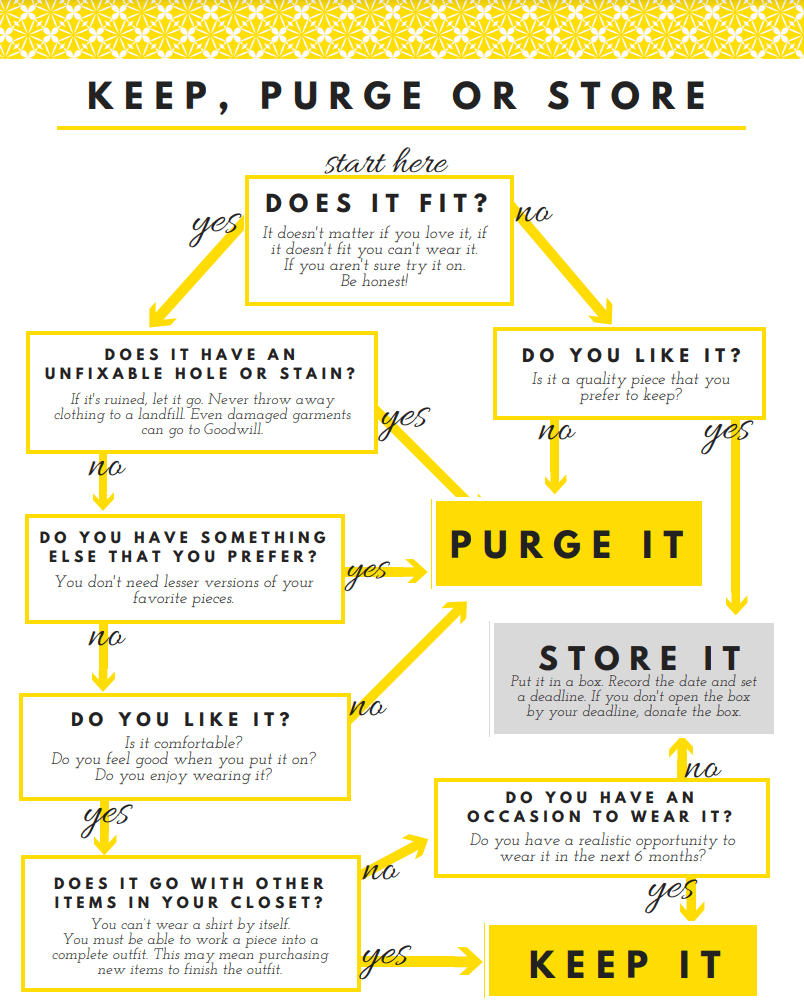
    1. Have you worn it in the last twelve months? Not “have you owned it.” Not “have you tried it on.” Have you worn it out of the apartment to do a thing in the world. Wedding, dinner, errand, work. Twelve months is the full cycle. If a piece has not made it onto your body for an outside event in a full year, it has had its chance.

    2. Does it currently fit? Not “does it zip with effort.” Not “did it fit at the sample sale.” Does it fit your body, today, in a way you would willingly leave the house in. The honest answer here is usually obvious within five seconds of trying it on.

    3. Did you buy it for a fantasy event? The gala that did not happen. The vacation that got cancelled. The job interview at the company you decided not to apply to. The date that turned into a different relationship. Fantasy-event clothing accumulates faster than you think and is among the easiest to release because the event is no longer on the calendar.

    4. Does putting it on make you feel like you owe it something? This is the most important question and the one most people skip. There is a category of clothing that, when you put it on, makes you feel indebted – to the price you paid, to the person who gave it to you, to the body you used to have, to the body you said you would have. The garment becomes a reminder of a debt rather than a tool you reach for. Debt clothing is not clothing. It is a guilt artifact wearing a hanger.

    5. Would you buy it new at this size today? Imagine walking into the store this week and seeing the piece, in your current size, at its original price. Would you buy it. If the answer is no, the only reason it is in your closet is sunk cost, and sunk cost is the worst possible reason to dress your body in the morning.

    Any piece that fails two or more of these questions goes in the cut pile. I do not negotiate with the cut pile. The cut pile is final, and the relief on the other side of it is real and measurable. My November audit cut 47 pieces. I did not miss a single one. I have not been able to recall, six months later, what most of them were.

    What to do with the clothes you cut

    Three buckets. Decide before you start so the cut pile does not move into a bag in the hallway and stay there for another year.

    For the everyday pieces in decent condition – the tees, the trousers, the dresses under $80 retail, the casual jackets – donate directly to a women’s shelter or your local YWCA. Call ahead. Most shelters have specific intake windows and specific size needs, and plus-size donations are notoriously underrepresented at shelter clothing closets. The pieces you have been letting hang unworn are very likely to be the most-needed pieces on the rack the moment they arrive. Bowery Mission, Sanctuary for Families, Win NYC, and Dress for Success all run intake programs that take plus-size clothing seriously. Your city has the equivalent.

    For the higher-value pieces – silk, leather, structured outerwear, anything originally over $80 with the label intact – list on ThredUp or Poshmark. ThredUp’s “Clean Out Kit” handles the photography and listing if you would rather not, at the cost of a lower payout. Poshmark pays better and is faster, but you list and ship yourself. I have personally recovered close to $600 across the two platforms from a single audit pile, which is not nothing, and went directly into a small fund for one well-fitting current-size hero piece.

    For the sentimental and the family-adjacent – the dress from a friend’s wedding, the blazer your sister has admired for years, the piece a niece would actually wear – hand it off in person. Do not mail. Do not “ship when you get around to it.” Walk the bag over, hand it across the table, watch it leave the building. The reason this matters is that mailed pieces become a project, and projects sit in a corner, and the corner becomes a smaller version of the original problem.

    A plus-size woman wearing a wide-leg trouser and a tucked white tee standing in a sunlit modern apartment

    Eight silhouettes that work on most plus-size bodies right now

    Eight silhouettes that work on most plus-size bodies right now

    The mistake that ruined most of my twenties was shopping by item instead of by silhouette. I would see a great pair of skinny jeans on a friend and buy the same skinny jeans for myself, then be confused when the same garment read entirely differently on my body. Silhouette is not item. Silhouette is the overall shape the outfit creates from across a room. Here are the eight that consistently work for plus-size bodies in 2026, drawn from my own rotation and from years of dressing friends.

    The wide-leg pant + tucked tee. A flat-front, full-length wide-leg trouser with a tucked or half-tucked fitted tee creates a vertical line that reads as long and intentional. The fitted top establishes the waist, the wide leg balances the hips, and the proportion is automatic. Universal Standard, Eloquii, and Old Navy’s plus extension all have versions under $80.

    The column dress. A floor-skimming or midi dress in a single color that runs uninterrupted from shoulder to ankle. No belt, no contrast. The column is the oldest cheat code in plus-size styling because it does the work of a long unbroken vertical without requiring any styling moves on your part.

    The structured shoulder + soft body. A blazer or jacket with a real, defined shoulder seam paired with something softer underneath – a slip skirt, a jersey dress, a relaxed trouser. The shoulder gives the eye a clean anchor at the top and lets the rest of the outfit fall in a way that flatters without trying.

    The blazer and bike-short. An oversized blazer over a fitted bike short with a clean shoe is the most underrated plus-size silhouette of the last three years. It works because the blazer covers the zones most plus-size women report being most self-conscious about while the bike short defines the leg line. Lizzo, Paloma Elsesser, and Ashley Graham have all worked variations of this look. It is a real outfit.

    The bias slip with a t-shirt over. A bias-cut slip dress with a soft cotton tee layered over it. The slip provides the drape and the leg line, the tee adds a casual upper register that makes the slip wearable in daylight without feeling like lingerie escaped the bedroom.

    The layered tank set. Two thin tanks worn together, one slightly longer than the other, with a wide trouser or a denim. The double layer gives shape to the torso without compression, and the proportion of fitted top to wide bottom does the rest.

    The wrap dress in the right rayon-blend. The wrap dress has been oversold and undertailored for thirty years, but a real wrap dress in a rayon-blend with weight to it – not a synthetic stretch – is one of the most reliable silhouettes there is for a body with curves. The key is the fabric. Pure polyester wraps cling badly. Rayon with some give holds the shape.

    The oversized button-down + cigarette pant. A men’s-cut or relaxed cotton shirt half-tucked into a slim cropped trouser, with a sleek shoe. This is the silhouette I wear most often in editorial contexts because it reads as quietly serious without reading as hiding. The cigarette pant defines the calf and ankle. The shirt does everything else.

    You do not need all eight. You need three that you genuinely like, repeated in slightly different colors and fabrics, and the dressing question on most mornings disappears.

    The bra question

    The bra question

    I am putting this in its own section because it matters more than the rest of it combined. The number of women I have styled who are wearing the wrong bra size is somewhere north of 80 percent, and the number who have not had a real professional fitting in five years or more is higher than that. The wrong bra changes the silhouette of every single outfit above it. You can do all eight of the silhouettes above and still look subtly off if the foundation underneath them is in the wrong cup.

    Your wedding-day cup size is not your current cup size. Your post-pregnancy cup size is not your current cup size. Your cup size from before you started or stopped a medication that affected your hormones is not your current cup size. Cup sizes shift with weight, with age, with menstrual cycle, with hormonal contraception, with motherhood, with peri-menopause. The body you have today has the bra size you have today, and it is almost certainly different from the bra size on your most recent purchase.

    Two places in the US do this fitting properly and at no charge. Nordstrom’s lingerie department will fit you in cup sizes from A through K, the consultation is free, and you are under no obligation to buy. Ask for an experienced fitter and tell them your goal is calibration, not purchase. The other is Town Shop on the Upper West Side of Manhattan, which has been doing professional bra fittings since 1888 and is the gold standard. A Town Shop fitting is twenty minutes, no appointment, no charge unless you buy. Both options will measure you correctly using the band-first method rather than the volumetric guessing most lingerie boutiques default to.

    Once you know your real current size, the next thing every outfit above sits on top of changes. Tops drape differently. Dresses fall differently. Blazers close differently. The single highest-return styling move available to most plus-size women is not a new blazer or a new dress. It is a properly fitted bra in two colors that they replace every nine to twelve months.

    Shopping rules for the body you have

    Shopping rules for the body you have

    Three rules. They are not negotiable for me and I would not write this article if I weren’t willing to put them in writing.

    Try on before you buy. Sizing across plus-size retailers is wildly inconsistent. A 16 at Old Navy is not a 16 at Eloquii is not a 16 at Universal Standard is not a 16 at vintage. Online sizing charts are starting points, not finishing lines. If you cannot try on, buy from a retailer with a no-questions return policy and return what does not work the day it arrives, not in three weeks.

    Do not buy anything for an event that is more than three months out. Your body in three months is unknown. Your mood in three months is unknown. Whether the event happens in the format you currently imagine is unknown. Anything you buy for an event further than ninety days from now is, statistically, more likely than not to either not fit or not feel right by the time the event arrives. Buy event clothing in the window you are actually about to live through.

    Rent for the gala. Anything that requires a price tag higher than $200 for a single event – the black-tie wedding, the gala, the work awards night, the cousin’s destination wedding in Tulum – rent it. Rent the Runway, Nuuly, Armoire, and Vivrelle all carry sizes through 24 reliably and some carry through 28. The math is not even close. A $1,200 dress worn once is $1,200 per wear. A $90 rental of a $1,200 dress worn once is $90 per wear and gets shipped back the next morning.

    The body-neutral language reframe

    The body-neutral language reframe

    The language you use about your body in your own head is part of what gets dressed when you get dressed, even if no one else can hear it. McGoldrick’s clinical work, published across several papers and her 2024 book on fashion psychology, includes a deceptively small intervention that has held up consistently across her client samples: try, for one week, replacing the phrase “my body” with the phrase “this body.”

    The substitution sounds trivial and produces a result that is not. “My body” implies ownership, judgment, a verdict you have already rendered. “This body” is descriptive. It is the body that is here. It does not require you to feel any particular way about it. It just acknowledges that it exists and that it is, today, the one getting dressed. McGoldrick’s clients reported, on average, a measurable drop in clothing-related anxiety after one full week of consistent use of “this body” instead of “my body” in their internal narration.

    I do not love every “love your body” message in the wellness aisle and I am not asking you to either. Body positivity, as a movement, has produced both real progress and a layer of forced cheerfulness that some of us have never quite been able to perform. The body-neutral move is different. It does not ask you to love anything. It asks you to stop running a continuous quiet trial. “This body needs a bra that fits. This body is cold today. This body wants the wide trouser, not the skinny.” That is a livable internal voice. The other one is exhausting.

    What to keep buying secondhand vs new in 2026

    What to keep buying secondhand vs new in 2026

    Plus-size secondhand has gotten significantly better in the last three years and remains the place where the value math is most favorable, but not for every category. Here is the split I use, and recommend.

    Buy secondhand: outerwear (coats hold up for decades and the resale market is full of barely-worn plus-size coats), denim (washed-in denim wears better than new denim and saves the most money), blazers (especially structured tailored pieces that are expensive new), bags, leather, dresses for one-off occasions you nonetheless want to own. ThredUp’s plus-size category, Poshmark, The RealReal for designer, and your local consignment if it actually stocks above a 16.

    Buy new: bras (always, fit drift and band stretch make secondhand bras a false economy), underwear, swimwear (the structure and elastane degrade), shapewear, athletic wear with technical fabrics, white shirts you intend to wear weekly, and the foundational pieces in your eight silhouettes. The reason to buy these new is that they are the daily-rotation pieces. The cost-per-wear math actually favors new on anything you will wear more than thirty times.

    The split saves real money over a year. My current personal mix is about 60 percent secondhand by item count and roughly 30 percent secondhand by dollar spend, and the wardrobe is the most useful one I have ever owned at any size.

    What to wear tomorrow

    What to wear tomorrow

    The wardrobe you build for the body you are working toward is a wardrobe you are not wearing. That is the entire argument of this article in one sentence. Every Saturday it sits in the closet is a Saturday you showed up in clothing chosen for a stranger. Every dinner you ate in the second-best outfit because the best outfit was reserved for the smaller version of you is a dinner the smaller version did not actually attend. The body in the mirror today is the body that gets dressed first. The other one, if she arrives, can wait her turn.

    Tomorrow, before you do anything else, pull out a wide-leg pant in your current size, a fitted tee in your current size, and the most comfortable shoe in the rotation. Tuck the tee halfway. Add the third piece you reach for most often – a longline blazer, a soft duster, an open shirt. Look in the mirror once, take one piece of jewelry off if there are more than two, and leave the house. That is the outfit. It cost you nothing this morning, it took ninety seconds, and it was built for the body that walked into the closet, not the one you keep telling yourself is on the way.

  • Plus-Size Fitness: What to Wear for Pilates and Barre Classes (A Size 22 Wellness Mentor’s Reformer-Tested Guide)

    Plus-Size Fitness: What to Wear for Pilates and Barre Classes (A Size 22 Wellness Mentor’s Reformer-Tested Guide)

    The reformer at the Club Pilates studio I attend in Decatur, Georgia is calibrated to a one-spring resistance for the footwork series, which is the first ten minutes of a beginner class, and the studio’s standard temperature on a Tuesday evening in February 2026 is cool enough that you feel it on your shoulders before you start moving. I am a size 22. I am lying supine on the carriage, my feet on the foot bar in heels-together, toes-apart Pilates V, and I have already failed at four pieces of my wardrobe in the first six minutes of the class. The leggings, a pair of Old Navy PowerSoft 7/8 high-rise in a heather charcoal that I had bought in size XXL the previous week at the Edgewood Retail District store, have started a slow migration along the inner thigh seam from the moment Mariel cued the first footwork rep. The seam is now tracking inward toward the center of my body with every single press of the carriage out, and by rep eight on a set of ten, the seam has rotated nearly an inch off true. The cropped tank top I had paired with it, a Nike Pro Indy crop in a size 2X that I had assumed would stay put on a Pilates mat, has ridden up to expose three inches of my mid-belly to a ceiling fan I had not noticed before. The Aerie Offline sports bra underneath, a 38DD that the website had assured me would handle “low to medium impact,” is fine on bounce-control because there is no bounce in Pilates, but the band is rolling at the underbust because I am lying on it and my own weight is pressing the elastic out of true. And the grip socks I had grabbed from a clearance bin at TJ Maxx, a no-name brand whose calf circumference cannot accommodate a size 22 lower leg, are biting into my calves so hard that the indentation will still be there four hours later when I am washing my face for bed. Four wardrobe failures. One reformer class. Six minutes in. This is the article I wish someone had written for me before that Tuesday.

    Club Pilates Decatur Georgia reformer studio interior 2026

    I have been writing about plus-size wellness for seven years, and I have spent the last fourteen months attending Pilates and Barre classes twice a week at three different studios across metro Atlanta as part of a personal mobility project that started after a Cooper Clinic functional movement screen flagged a thoracic rotation deficit. I am not a certified instructor. I am a wellness mentor and an essayist, and I am also a working consumer who has spent more on activewear in the last fourteen months than I have ever spent in a comparable window on any other category of clothing. What I have learned is that the activewear industry has gotten meaningfully better at plus-size cardio gear in the last five years, and meaningfully worse at acknowledging that Pilates and Barre are not cardio. The fabric science, the seam engineering, and the elastic placement that work for a thirty-minute interval class on a Peloton bike at size 22 are not the fabric science, seam engineering, and elastic placement that work for a fifty-minute reformer class where you are inverted, supine, and side-lying for at least sixty percent of the session. This piece is the long version of what I have learned. It is meant for the size 14, 18, 22, 26 woman who has been told to “just wear what you’d wear to the gym” by a sales associate who has never done a side-lying leg series on a reformer in a body that ends in a 47-inch hip.

    Pilates and Barre body mechanics, and what fabric and seam engineering they actually demand

    The structural difference between Pilates, Barre, and cardio is not subtle, and it has direct implications for what your clothes need to do. Cardio modalities involve repetitive impact, sustained heart rate elevation above seventy percent of max, and a body that is largely upright or hinged forward at the hip. The activewear demands are bounce control, moisture management, and a waistband that will not slide during sustained vertical motion. Pilates and Barre are structurally different. Joseph Pilates, who developed the method in the 1920s and named it “Contrology” before his students began calling it by his surname, built the system around six original principles: concentration, control, centering, flow, precision, and breath. The modern Pilates instructor Brooke Siler, who trained directly under Romana Kryzanowska at the original Pilates studio on Eighth Avenue in Manhattan and who wrote “The Pilates Body” in 2000, has talked extensively about how those six principles translate to slow, controlled, gravity-against movement that prioritizes connective tissue and deep stabilizers over the gross movers that cardio targets.

    What this means for your clothes is specific. Slow, controlled movement against gravity puts your body in positions you do not occupy during cardio. You are supine for footwork, prone for swan and pulling straps, side-lying for the side leg series, and inverted in short spinal articulations during the short spine massage and the jackknife. In every one of these positions, your clothing is being pressed into your body by your own weight against a vinyl or leather carriage surface, and the fabric is not asked to wick sweat (because you are not sweating heavily, by design) but is asked to stay in place while gravity tries to relocate it. The forces are pressure forces and slow shear forces, not impact forces. The fabric science that handles those forces is heavier knit, denser stitching, and seam placement that does not cross the contact zones between your body and the equipment.

    Dr. Stacy Sims, the New Zealand-based exercise physiologist whose book ROAR (first published 2016, revised edition January 2024) is one of the most-cited texts in women-specific sports science, has spent the last decade arguing that women’s connective tissue responds differently to slow, controlled strength work than to high-impact cardio, and that recovery and adaptation windows shift across the menstrual cycle. Sims summarizes the work on her own platform and in the revised edition of ROAR. The relevance for plus-size bodies is the slow eccentric loading Pilates and Barre deliver: the connective tissue around hips, knees, and the lumbar spine is being asked to bear a body it’s already been bearing for years, without the impact spikes that higher-load modalities introduce. The clothing implication is downstream of the science. If you are going to be doing this work for the long haul, and the science says you should be, then the clothes need to be engineered for the actual mechanics, not the marketing version of fitness mechanics.

    The structural problem the rest of this guide turns on is that the standard activewear seam is engineered for a body whose thighs don’t touch, where the inner-thigh seam never experiences friction during movement. At size 22, where the inner thighs are in continuous contact, that seam is being shear-loaded with every rep. A flatlock seam designed for cardio breaks down within minutes. The plus-size Pilates wardrobe needs a different seam strategy entirely. Either the seam moves (gusset construction), or the seam goes away (seamless knit), or the seam is reinforced (bonded seam tape over the inner thigh). I’ll get to the brands that solve this and the brands that pretend to.

    plus size woman supine on Pilates reformer footwork position

    The four wardrobe failures specific to plus-size Pilates

    The four failures I experienced in my first Club Pilates class are not random. They are predictable, they are common, and they map to four distinct engineering problems that the activewear industry has not solved at scale. The first failure is inner-thigh seam migration, which I have already named. The second failure is what I am going to call “top creep,” which is the phenomenon where any top that is not engineered for a supine or inverted position will travel up your torso the moment you go horizontal. A cropped tank that sits perfectly at the natural waist when you are standing in front of a mirror in the studio lobby will be at your bra band within six reps of footwork. A standard-length tee will be at your sternum. The structural reason is that the friction between your back and the carriage vinyl is greater than the friction between the fabric and your front, and Newton does the rest.

    The third failure is sports bra band rotation under body weight. A bra that fits correctly when you are vertical is fitting against gravity that runs from your shoulders to your hips. Lie down, and the gravity vector runs from your sternum to your spine. The band is now being pressed laterally rather than vertically, and a bra that is engineered for impact (with a wide elastic underband and a high front gore) will rotate out of true because the underband is now bearing weight it was not designed to bear. The fourth failure is the grip sock calf cutoff, which is a flat sizing failure rather than an engineering failure. The grip sock industry, until very recently, sized its products on a straight-size lower leg, and the calf circumference of a plus-size woman frequently exceeds the upper band tolerance of the standard sock. The sock either cuts off circulation, rolls down to mid-calf and bunches, or rips at the heel within three wears.

    Knowing the four failures is the first half of solving them. The second half is knowing which brands have actually addressed them, which brands have launched plus-size lines that did not address them, and which brands are using “extended sizing” as a marketing veneer over a straight-size pattern block. I am going to walk through tops, bottoms, sports bras, and grip socks one category at a time, with specific SKUs and specific 2026 prices, and I am going to flag where the brand has solved the problem at the engineering level versus where the brand has solved it on the website.

    plus size leggings inner thigh seam construction close up

    Tops: the cropped versus tunic-length debate at size 22

    The top creep problem has two structurally different solutions, and the plus-size Pilates community is split on which one to use. Solution one is the cropped or fitted tank that is engineered with a band of silicone gripper at the hem to anchor it to the body, the same construction that strapless bras use to stay up. Solution two is the tunic-length top with enough length below the natural hip that even significant upward travel still leaves the torso covered. Both solutions have advocates, and both have brands that execute them correctly at size 22.

    Beyond Yoga Plus is the brand that has executed the gripper-hem cropped tank the most reliably in plus sizes. The Spacedye Lift Your Spirits Cropped Tank in sizes 1X through 4X at $66 in 2026 has a silicone gripper band at the hem and the Spacedye fabric (87 percent polyester, 13 percent spandex) has enough body to lie flat against the torso without bunching. I own this tank in three colors, and it is the only cropped style I will wear to a reformer class. The Beyond Yoga Plus Spacedye Cropped Long-Sleeve at $88 is the cool-weather version of the same engineering choice. Athleta Plus has been pushing the Salutation Mesh Tank at $54 in sizes 1X through 3X as its Pilates-marketed top, and the Salutation Stash Pocket II Crop at $59, but neither has the gripper hem, and both will creep on a supine series. The Salutation Elation cross-back tank, currently $64 in plus, holds its position better because the cross-back construction anchors it to the bra band rather than to the torso, but the bra band itself has to be the right bra for that to work, which I will get to in the sports bra section.

    The tunic-length solution is where Universal Standard Movement and Superfit Hero make their case. Universal Standard launched its Movement line in 2022 specifically for low-impact training, and the Movement Tunic in sizes 4XS through 4XL at $98 in 2026 is cut to fall four inches below the natural hip with a curved hem that does not ride up because there is too much fabric below the contact zone for upward travel to expose any midsection. The fabric is a 76 percent recycled polyester, 24 percent elastane blend that is heavy enough to drape without clinging, and the cut is wide enough across the shoulder that it does not pull at the front when you press into footwork. Superfit Hero, the Los Angeles-based brand founded by Micki Krimmel in 2015 and size-inclusive from launch (sizes L through 7XL across most of the line), makes the Body Confidence Tank at $66 with a length that hits at the high hip and a side-shirred construction that lets the fabric move with the torso without traveling upward. Superfit Hero is also the brand in this review whose fit model for the larger sizes is actually a larger-sized woman, not a smaller size graded up, and the difference is visible in the way the armhole sits.

    Old Navy Plus Activewear deserves a mention here as the budget option. The PowerSoft Cropped Tank at $24.99 in sizes 1X through 4X has gripper-adjacent construction (a thicker elastic band at the hem, not silicone, but functional) and the PowerSoft Tunic Tank at $26.99 is a workable budget version of the Universal Standard piece at a quarter of the price. Old Navy’s fabric will not last as long, the elastic at the hem will lose its grip after roughly twenty washes, and the fit model is a straight-size graded up rather than a plus-size patterned, but if you are starting Pilates and are not sure you will stick with it, the Old Navy tunic tank is a defensible starting point. I would not recommend it as a long-term solution, but I would recommend it over the wrong tank from a more expensive brand.

    Beyond Yoga Plus Spacedye Lift Your Spirits cropped tank navy

    Bottoms: leggings versus capri versus shorts, and the inner-thigh seam reality

    The inner-thigh seam is the single most consequential engineering choice in plus-size Pilates bottoms. The brands that have addressed it have done so in one of three ways, and the brands that have not addressed it should not be in your Pilates drawer regardless of how comfortable they feel during a standing fitting in the dressing room.

    Beyond Yoga Plus uses what the brand calls “no-show seaming” on the Spacedye High-Waisted Midi Legging in sizes 1X through 4X at $97. The construction is a gusset seam at the crotch that distributes the seam load across four panels rather than concentrating it at a single inner-thigh seam, and the inner-thigh itself is essentially seamless, with the fabric panels joined behind the leg rather than at the inner thigh. I have done a fifty-minute reformer class in these leggings, including the side-lying series and a full short spine, and the seam stays where it is supposed to stay. The fabric content is 87 percent polyester, 13 percent spandex, which is the same as the Spacedye tank, and the body of the fabric is heavy enough that it does not show sweat marks (which matter less in Pilates than in cardio, but still matter).

    Athleta Plus’s Salutation Stash Pocket II Tight at $98 in sizes 1X through 3X has a standard four-needle flatlock inner-thigh seam, and it is the seam that fails for me at size 22 with predictable consistency. The fabric is the brand’s Powervita, a 79 percent recycled nylon, 21 percent Lycra blend, and the fabric itself is excellent. The seam is the problem. I have bought this legging twice on the assumption that maybe my first pair was a defect, and the seam has migrated on me in both pairs. I do not recommend the Salutation Stash for Pilates at size 22. I recommend it for walking and for upright Barre work, where the seam load is different.

    Universal Standard Movement’s Form 73 Legging at $98 in sizes 4XS through 4XL is the brand’s Pilates-specific bottom, and it uses a bonded seam construction on the inner thigh, which is the third engineering solution. The seam is heat-bonded rather than stitched, which eliminates the friction edge that a stitched seam creates. The fabric is a 75 percent nylon, 25 percent elastane blend with the brand’s proprietary Form 73 compression. I have worn these for three months of weekly reformer classes, and the bonded seam has not failed. The legging itself runs longer in the inseam than the Beyond Yoga version (about a 28-inch inseam at the 3X versus 26.5 inches at Beyond Yoga’s 3X), which is something to factor in if you are shorter than 5’6″.

    Senita Athletics’s Lux High-Waisted Legging at $59 in sizes XS through 3X is the moderate-price option. The construction uses a curved center-back seam that splits the inner thigh into two shorter seam segments, which reduces the shear load on any single seam point. It is not as elegant a solution as Beyond Yoga’s gusset or Universal Standard’s bonded seam, but it works at the price point. Senita’s plus sizing tops out at 3X, which limits the brand’s usefulness for size 26 and above. Superfit Hero’s Power Move Legging at $94 in sizes XS through 7XL uses a gusset construction similar to Beyond Yoga’s, and the 7XL pattern is actually drafted for that size rather than graded up, which is the brand’s structural differentiator.

    On the capri-versus-legging-versus-shorts question, I am firmly on the side of the full-length legging for Pilates, and I am on the side of the capri for Barre. The reason is the contact surface. In Pilates, your lower leg is in contact with the reformer carriage during prone work, and a capri that ends mid-calf will expose your skin to the carriage vinyl, which is not comfortable when the vinyl is cold. In Barre, you are vertical the entire class, and a capri keeps the calf cool during the static-hold work where the lower leg is doing the most. The Beyond Yoga Plus Spacedye Midi Legging is the right product for reformer Pilates. The Old Navy PowerSoft Cropped Pant at $39.99 in sizes 1X through 4X is a workable capri for Barre. I would not wear shorts to either, but that is a personal preference about how my own body interacts with a vinyl surface, not a categorical recommendation. Some plus-size practitioners I know swear by Athleta’s Salutation Stash Pocket II Bike Short at $54, and the bike short does avoid the inner-thigh seam migration problem because the seam is so short. If you are heat-sensitive in a studio environment, that is a real consideration.

    Spanx Booty Boost Active Leggings at $98 are the look-versus-function debate in physical form. The shaping panels in the legging deliver a visibly smoother silhouette in the studio mirror, which is a real benefit for some women’s confidence in a public class. The shaping panels also constrict the abdomen in a way that interferes with the diaphragmatic breathing that Brooke Siler and every other working Pilates teacher will tell you is the foundation of the method. You cannot breathe into your low back through a shaping panel. You can breathe into your chest, which is the wrong breath for Pilates. I have worn the Booty Boost to Barre, which is a more upright modality with less emphasis on lateral rib expansion, and they are fine. I will not wear them to a reformer class. The function loss is too high for the look gain.

    Universal Standard Movement Form 73 legging bonded seam plus size

    Sports bras for Pilates and Barre: low-impact engineering at H cup

    The plus-size sports bra category is the most over-promised and under-delivered segment of the activewear industry, and the Pilates and Barre-specific subset of that category is the most difficult problem within the difficult problem. The reason is that low-impact engineering for cup sizes above DD has been treated by the industry as a secondary concern to bounce control for high-impact modalities, and the bras that get marketed as “low-impact” in plus sizes are largely high-impact bras with the marketing copy changed.

    The structural issue, as I described in the section on the four failures, is that a bra engineered for vertical impact is not engineered for the lateral and supine pressure that Pilates puts on the underband. At an H cup, which is where my own bra sizing lives, the underband is doing roughly seventy percent of the work of holding the breast tissue in place. The cups are doing twenty-five percent and the straps are doing five. If the underband rotates because your body weight is pressing it against the reformer carriage, the bra has failed regardless of how well the cup is engineered.

    The bra I have landed on after eight months of trial is the Knix Catalyst Sports Bra in sizes 32C through 42H at $98 in 2026. The Catalyst uses what Knix calls a “smooth profile” underband, which is a wider, softer elastic than the standard sports bra underband, and the band is designed to compress laterally without rotating because the elastic tension is distributed across a larger surface area. I have worn the Catalyst through full reformer sessions including supine, prone, and side-lying work, and the band stays in position. The cup is encapsulation rather than compression, which matters at H because compression bras at large cup sizes flatten the tissue in a way that is uncomfortable during the prone work where you are lying directly on the chest.

    For practitioners at smaller cup sizes (DD through F), the Beyond Yoga Plus Spacedye Lift Your Spirits Bra at $66 in sizes 1X through 4X is a workable Pilates bra. The construction is a long-line racerback with a wide elastic underband, and the lift is moderate rather than high. The Spacedye fabric carries through from the tank and the legging, which makes for a coordinated set if you care about that. The Athleta Plus Ultimate Bra at $69 in sizes 34D through 44E is the brand’s most-purchased plus bra, and it is engineered for medium-impact rather than low-impact, but the underband construction holds up reasonably well in supine work. I would not recommend it for cup sizes above F.

    The bra I would actively recommend against for Pilates and Barre at any plus size is the Aerie Offline Real Me High Neck Sports Bra. The Real Me is excellent for yoga and for walking, and the fabric is soft against the skin, but the underband is engineered for low-tension compression rather than for lateral stability. It rotates on a supine series. It rotates on a side-lying series. The Aerie Offline Real Me is the bra I was wearing during the Club Pilates Decatur class I opened this article with, and it is part of the reason that class became the prompt for this entire piece. The Nike Pro Indy at $50 in plus sizes 1X through 3X has the same engineering profile, and the same problem.

    Andrea Speir, the Los Angeles-based Pilates instructor who runs Speir Pilates, has talked publicly about how the bra question is the one her larger-cup clients ask most often, and her general recommendation aligns with what worked for me: an encapsulation bra with a smooth, wide underband. The European option many plus-cup women point to is the Anita Active Momentum (model 5544), available in sizes that go well into the H-cup range and stocked through Bare Necessities. The Anita underband is wider than the Knix, and the fit at H is structurally similar. That’s the bra I’d recommend if the Knix is sold out in your size.

    Knix Catalyst plus size sports bra wide underband neutral

    Grip socks: the two brands that fit plus calves

    The grip sock problem is the most-overlooked of the plus-size Pilates wardrobe problems, and it has the cleanest solution. There are two brands that have meaningfully addressed plus calf circumference in 2026, and there are roughly a dozen brands that have not.

    ToeSox, founded in 2004, is the brand whose Bellarina grip sock (half-toe and full-toe variants) is the legacy product, priced around $20-22 a pair. The construction uses a softer, wider rib at the cuff than most clearance-aisle grip socks, and the silicone grip pattern on the sole catches a reformer carriage and a foot loop cleanly. The half-toe construction (the toes are exposed) is the choice for hot studios. The Full-Toe version is the choice for cooler studios. I own both. I wear the Bellarina Full-Toe to every reformer class. ToeSox’s plus-friendly fit isn’t called out as a separate “Plus” line on the site, but the wider rib at the cuff is the reason this fits where the no-name brands cut off.

    Tavi (Tavi Noir / Tavi Active), founded as a sister brand to ToeSox under the same parent group, makes the Emma high-crew grip sock at around $24 a pair, with the Emma running the highest up the calf of any grip sock I’ve tested. The cuff sits at mid-calf rather than lower calf, the elastic is softer than the ToeSox version, and the grip pattern catches the reformer carriage cleanly in side-lying work where the foot is in contact with the foot bar at an angle. Tavi’s sizing officially runs through size L. I’m a 15-inch calf at the cuff line, and the Emma fits me without binding.

    The brands I would not buy for plus calves include Pointe Studio (calf cuff binds at over 14 inches), Lululemon (the brand does not make grip socks in plus sizing at all), and any of the no-name brands at TJ Maxx, Marshalls, and Ross. The clearance bin is not where the plus-size Pilates wardrobe gets built. I learned that the slow way.

    ToeSox Bellarina grip socks plus calf size Pilates reformer

    The reformer-class specific reality: springs, foot loops, neck pad

    The reformer is the piece of Pilates equipment that introduces wardrobe constraints that the mat work does not. There are three contact points on a reformer that interact with what you are wearing: the spring system at the head of the carriage, the foot loops or straps at the front, and the neck pad at the back of the carriage. Each one has implications for your wardrobe.

    The springs are not a direct contact point with your body in a standard class, but the spring tension and the spring sound are sensory elements that affect how you experience the class, and a wardrobe that pulls your attention away from the movement makes the spring cues harder to follow. If your leggings are migrating, your tank is creeping, and your bra is rotating, you are spending mental energy on your clothes that should be going to the breath and the spring transition. This is the case for spending money on the right gear rather than getting by with the wrong gear. The cognitive load of bad gear is real, and Joseph Pilates’ first principle is concentration. Concentration is harder when your wardrobe is broken.

    The foot loops are the more direct contact point. In the long spine massage, the jackknife, and several of the spring-supported leg series, your foot is in a leather or canvas loop, and the friction between the loop and your foot determines how stable the position is. Grip socks help here, because the silicone on the sole catches the inside of the loop in a way that bare feet on a sweaty carriage does not. The Bellarina Full-Toe and the Emma High Crew both perform this function well. A standard athletic sock does not. A bare foot is fine in a warm studio for the experienced practitioner, but is a stability risk for the beginner.

    The neck pad is the contact point that affects what you wear at the top. In the supine series, your head and upper back are resting on a small leather or vinyl pad at the head of the carriage, and the top of your sports bra band, the back of your top, and the back of your head are all in contact with that surface. A top with a hood, a high collar, or a thick neckline (like a turtleneck Spacedye long-sleeve I tried once) will bunch under the neck pad and pull your head out of alignment for the duration of the supine work. The recommendation is a top with a low scoop neck at the back, no hood, and no collar. The Beyond Yoga Plus Spacedye Cropped Tank, the Universal Standard Movement Tunic, and the Superfit Hero Body Confidence Tank all meet this requirement. The Athleta Salutation Elation cross-back tank also meets it, and the cross-back construction actually performs better against the neck pad than a standard scoop because there is no fabric on the upper back to bunch.

    Pilates reformer foot loops springs neck pad detail

    What I wear now versus month one: the four-piece capsule

    Fourteen months into this project, my Pilates and Barre wardrobe has consolidated into a four-piece capsule that I rotate across two complete sets. The capsule is built around the four engineering solutions I have walked through, and it is meant for a Tuesday-Thursday class schedule with a wash on Friday.

    The bottom is the Beyond Yoga Plus Spacedye High-Waisted Midi Legging at $97, in black and in a heather charcoal. I own two pair, I wash them on cold, I hang them to dry, and the gusset seam has not failed at the inner thigh in eight months of weekly wear. The top is the Beyond Yoga Plus Spacedye Lift Your Spirits Cropped Tank at $66, in three colors. The gripper hem holds against top creep, the back is a low scoop that does not interact with the neck pad, and the fabric coordinates with the legging if I care about that on a given Tuesday. The bra is the Knix Catalyst Sports Bra at $98, in two colors. The wide underband holds against lateral rotation, the encapsulation cups are comfortable on prone work, and the bra has survived roughly eighty washes without losing structure. The socks are the ToeSox Bellarina Full-Toe Grip Sock at $22, in three pairs in rotation. The plus calf cuff fits, the grip pattern catches the carriage and the foot loop reliably, and the half-toe option is in the drawer for the rare warm-studio class.

    The total replacement cost of the four-piece capsule at one set is $283. At two sets, it is $548 plus an extra pair of grip socks. That is not a small number, and I am not pretending it is. It is also a meaningful step down from what I spent in the first six months of this project on Athleta Salutation pieces, Aerie Offline bras, Old Navy PowerSoft leggings, and the clearance-bin grip socks that started this whole problem. I bought roughly eleven pieces in those first six months at a total spend of about $640, and I now wear three of those eleven pieces, none of them to a reformer class. The cost of getting it wrong is higher than the cost of getting it right. The cost of getting it right is the cost of buying once.

    Ragen Chastain, the size acceptance writer and athlete who has been documenting her own plus-size fitness practice publicly since 2007 and whose newsletter Weight and Healthcare is read across the size-acceptance and athletic-fat communities, has written explicitly about the way the industry has tried to monetize the wardrobe failure cycle, where each new “plus extension” capsule from a major brand is sold as the solution to the failures of the previous capsule. Chastain’s argument, which I largely agree with, is that the structural fix has to come from brands like Universal Standard, Superfit Hero, and Beyond Yoga that have built their plus pattern blocks from a plus model rather than from a graded-up straight size. The cycle breaks when the engineering is correct from the start. The cycle does not break by sizing up.

    plus size Pilates four piece capsule wardrobe flat lay 2026

    The observation I want to close on is the one that took me fourteen months and roughly $1,200 in activewear to arrive at, and it is the observation that almost no one in the plus-size fitness conversation is making out loud. The reason plus-size women need different fabric and seam engineering for Pilates and Barre than for cardio is not a comfort question, and it is not a vanity question, and it is not a question of bounce control. It is a question of what the modality is actually doing. Cardio asks your body to move fast against itself, and the wardrobe demands of cardio are about managing the speed and the impact and the moisture that come out of that. Pilates and Barre ask your body to move slow against gravity, and the wardrobe demands of those modalities are about managing the pressure of your own body weight against equipment surfaces, and the shear of your own thighs against each other, and the lateral rotation of your own bra band under your own torso. Those are different problems. They require different solutions. The industry has solved the cardio problems for plus sizes at a B-minus level. It has barely begun to solve the Pilates and Barre problems, and the brands that have are not the brands that market themselves the loudest. The seam that holds is not the seam that gets the campaign. The bra that does not rotate is not the bra at the front of the website. The grip sock that fits a 15-inch calf is in a sub-category page three clicks deep on a brand most non-Pilates people have never heard of. The work of finding the right Pilates wardrobe at size 22 is, in 2026, still meaningfully harder than the work of doing the Pilates itself. That is the observation. That is what I would tell the version of myself who walked into Club Pilates Decatur in February 2026 with the wrong leggings, the wrong tank, the wrong bra, and the wrong socks, if I could send her a single piece of information ahead of her first class. The clothes are not an afterthought to the practice. For a plus-size body, in a Pilates studio, the clothes are part of the practice.

  • How to Find Plus-Size Friendly Primary Care and OB-GYNs (US Directory and Scripts)

    How to Find Plus-Size Friendly Primary Care and OB-GYNs (US Directory and Scripts)

    A plus-size woman sitting on an exam table in an Atlanta medical office in fall afternoon light

    It was a Wednesday afternoon in October 2024, the kind of late-fall Atlanta day where the air had finally cooled and the dogwood outside the office window had started to turn copper, and I was sitting on the paper-covered exam table at a primary care office in Brookhaven trying to describe what had been happening to my chest. Palpitations. Three or four times a week. Sometimes when I was sitting on the couch, not climbing stairs, not even reaching for a glass of water. I had written notes in my phone for two weeks before this appointment so I could be exact about it. The new patient form had asked me to rate my symptom severity on a one-to-ten scale and I had circled six and added a sentence in the margin. The doctor walked in, looked at the intake sheet, looked at me, and the first complete sentence he said to me was about my BMI. The second sentence was that we should “address that first before chasing anything else.” The third sentence was “lose twenty pounds and see if the palpitations resolve.” He had not listened to my heart. He had not asked when the palpitations started. He had not asked about my family history of arrhythmia, which is significant and which I had written on the form. I walked out of that office twenty-three minutes after I walked in, sat in my car in the parking deck, opened the Notes app, and wrote one sentence at the top of a fresh page. “I am building the list differently now.”

    That list is the reason this article exists. What I did between October 2024 and the spring of 2025 was systematically rebuild how I found doctors. I stopped using insurance portals as my starting point. I stopped relying on word-of-mouth from women whose bodies looked nothing like mine. I built a process, with directories that actually exist, scripts that actually work in an exam room, and a set of rules for when to stay and when to leave. I have walked maybe two dozen plus-size women through this process in the year since, and the framework is durable enough now that I want to put it in print. If you have ever been told your symptom is your weight before the doctor heard the symptom, this is for you. If you have ever postponed a Pap smear or a thyroid check because the appointment itself is the thing you are most afraid of, this is for you. If you have a daughter, a sister, a wife who has told you the doctor’s office is the place she dreads more than any other room in her life, hand her this. The work of finding a doctor who will treat you as a person before they treat you as a body mass index is real work, and it is doable, and you do not have to invent the playbook from scratch.

    The medical-fatphobia research (named studies, real numbers)

    The first thing to understand is that what happened in that Brookhaven exam room is not a one-off. It is a measurable, replicated pattern in the peer-reviewed literature, and the literature is now substantial enough that it cannot be dismissed as anecdote. Sean Phelan and colleagues published a 2015 review in Obesity Reviews titled “Impact of weight bias and stigma on quality of care and outcomes for patients with obesity” that pulled together the evidence on what providers actually do when they see a fat patient. The pattern across studies is consistent. Providers spend less time with higher-weight patients. They build less rapport. They are less likely to refer for further diagnostic testing. They attribute symptoms to weight at a higher rate, and they do this before completing the standard differential diagnosis a thinner patient would receive. That is not a moral failing of individual doctors. It is a systemic pattern visible in the data.

    The Phelan paper matters because it gave clinicians the citation they needed to start talking about this internally. The earlier work that opened the door is Angelina Sutin and Antonio Terracciano’s 2013 paper in

    PLOS One

    , “Perceived weight discrimination and obesity,” which followed a cohort of more than six thousand adults across two waves of the Health and Retirement Study and found that experiencing weight discrimination was associated with a meaningfully higher risk of remaining at higher weight, controlling for all the variables you’d expect. The takeaway, which the authors stated plainly, is that the stigma itself does not produce the behavioral change clinicians were assuming it produced. The stigma produces avoidance. Of doctors. Of gyms. Of food eaten in public. Of the very behaviors the stigma is theoretically supposed to incentivize. The intervention does not work, the intervention causes harm, and the data has been clear about this for over a decade.

    Aubrey Gordon, in her 2020 book “What We Don’t Talk About When We Talk About Fat,” compiles the lived-experience side of this with a level of citation most popular books in this space do not bother with. Her chapter on healthcare is the one I have given as a printed photocopy to more women than any other piece of writing on this topic. Gordon names the specific mechanism. The fat patient walks in with a symptom. The doctor sees the body before they hear the symptom. The symptom gets recoded as a weight issue, which means the symptom does not get investigated, which means the actual underlying condition – the gallstones, the thyroid, the cardiac, the endometriosis – goes undiagnosed for months or years longer than it would in a thinner patient. Gordon names women who died from delayed diagnoses where the chart, in retrospect, showed the relevant symptom flagged at multiple visits and dismissed as weight. The book is not theoretical. The book has names in it.

    Dr. Joshua Wolrich, an NHS surgeon in the UK whose 2021 book “Food Isn’t Medicine” is the most accessible introduction to the actual evidence on weight and health that I have found, makes the medical case from inside the profession. Wolrich’s argument is that the equation of weight with health is bad science, that BMI was never designed as a clinical diagnostic tool (Adolphe Quetelet developed it in the 1830s as a population-level statistical measure, not an individual one), and that the practice of using BMI as a gatekeeping mechanism for further investigation is one of the more damaging legacies of twentieth-century medicine. He is not an outlier. He is a working surgeon writing what the data already shows. The reason his book matters for plus-size women is that he gives you the citations to hand a skeptical doctor. The conversation in the exam room goes differently when you can cite Wolrich citing the underlying meta-analyses than when you are arguing from feeling.

    Dr. Sand Chang, an Oakland-based psychologist who has worked with Stanford counseling services and Kaiser Permanente Transgender Services and is one of the most cited voices in HAES-aligned mental health care, has done the work of connecting medical fatphobia to its compound effects on patients who are also queer, trans, disabled, or fat at the intersection of multiple marginalizations. Chang’s clinical writing and conference work through HAES-aligned channels and the Association for Size Diversity and Health makes the case that the experience of being a fat patient isn’t separable from the other axes a patient is being read along. The trans plus-size patient does not experience medical fatphobia and transphobia as two separate events. They experience a single compound exposure that doubles or triples the rate of substandard care. I will return to this in a dedicated section because it deserves more than a sentence.

    The research, in aggregate, gives you three things you can bring into an exam room. First, you can name the pattern. The dismissal of your symptom as a weight issue is not personal, it is documented, and it is wrong. Second, you can cite the work. Phelan 2015 and Sutin 2014 are the two names to remember if you ever need to push back with a doctor who claims this is “just political.” Third, you can stop blaming yourself for the avoidance. If you have postponed appointments for months or years because of how doctors have treated you, that is a documented response to a documented pattern. The avoidance is not your weakness. It is your nervous system telling you the room was not safe.

    The 4 directories that actually work

    The directory question is the one I get asked most often, and the honest answer is that no single directory covers every zip code in the United States. What works is using four of them together, cross-referencing, and accepting that for many people the first usable name is going to be a telehealth provider until a local option opens up. The four I trust enough to send women to are below, in the order I would use them.

    A laptop open to a HAES practitioner directory on a kitchen table with coffee and a notebook

    The first is the Association for Size Diversity and Health (ASDAH) Health At Every Size practitioner list. ASDAH is the organization that holds the HAES framework, and their directory is the closest thing to a vetted national list of providers who have signed onto the principles. The principles themselves are public on the ASDAH site and worth reading in full before you start the search, because they tell you what a HAES-aligned provider is committing to. The list itself is searchable by state and by specialty. The limitation is that it covers practitioners who have actively opted in, which means a doctor in your zip code who practices weight-inclusive medicine but has not signed up will not appear. Use it as a floor, not a ceiling. The web address moves periodically, so I will say only that searching “ASDAH HAES practitioner directory” will get you there.

    The second is the Center for Body Trust provider directory (formerly Be Nourished), run out of Portland by Hilary Kinavey, a licensed professional counselor, and Dana Sturtevant, a registered dietitian, who together built the Body Trust framework starting in 2005. Their directory leans heavier on therapists and dietitians than on MDs, but their listings are higher-vetted than ASDAH’s because providers go through a Body Trust certification process before they appear. If you are looking for a HAES-aligned therapist or RD in addition to an MD, Be Nourished is the better starting point. For OB-GYN and PCP specifically, you will still need to cross-reference with ASDAH or Plus Size Birth.

    The third is the Plus Size Birth provider list, curated by Jen McLellan, who has been doing public-facing plus-size pregnancy and birth work since 2013. McLellan’s directory is the most operationally useful one I know of if you are pregnant, trying to conceive, or in active OB-GYN care. The reason is that she screens for specific behaviors. Does the provider use weight-inclusive language in their intake. Do they have appropriately sized blood pressure cuffs and exam gowns. Do they refuse to weigh you on request without making it a fight. The screening criteria are listed on her site. Even if you do not find a provider in your zip code, McLellan’s site is worth reading for the questionnaire she uses to evaluate them, which you can adapt for your own search.

    The fourth is the curated reading work of Sonalee Rashatwar, the licensed clinical social worker and sex therapist known publicly as The Fat Sex Therapist. Rashatwar’s referral lists are not a formal directory in the same way the others are. They are recommendations across her published work and her social presence, often pointing to specific named providers in specific cities. The reason her network is useful is that she works at the intersection of fat liberation, queer health, and trauma-informed care, and the providers she points to have usually been vetted through that triple filter. If you are queer, fat, and have a trauma history with medical care, Rashatwar’s named referrals are often the first place a usable doctor surfaces. Her work also explicitly addresses the South Asian and broader diaspora plus-size community, which most other directories do not.

    Two honorable mentions that I use as cross-reference layers. The Body Positive Therapist Directory, maintained by Connie Sobczak and Elizabeth Scott’s Body Positive organization, is mental-health-focused but worth searching if you want a therapist who will not pathologize your body. And the Size Friendly Care lists curated by various HAES-aligned advocates – including some of Rashatwar’s network – circulate in fat-liberation spaces and occasionally surface specific providers who do not appear in the formal directories. Search for them, but verify everything. A name on an informal list is a lead, not a credential.

    How to vet a doctor before the first visit (questionnaire)

    How to vet a doctor before the first visit (questionnaire)

    The directories give you names. They do not tell you, before you walk in, whether the office itself will treat you well. The vetting work happens between finding the name and booking the appointment, and it is the step most women I work with skip because it feels confrontational. It is not confrontational. It is administrative. You are gathering information that any consumer of any service is entitled to gather. The phone call to the front desk before you book is the first filter, and a good one.

    The call sounds like this. “Hi, I am considering becoming a patient and I have a few questions before I book. Do you have a weight-inclusive or HAES-aligned approach to care. Do you have blood pressure cuffs sized for larger arms and exam gowns sized over 2X. Is it possible to decline being weighed at visits when weight is not clinically necessary for the appointment.” Three questions. Each one tells you something. The pause before the answer tells you almost as much as the answer. A front desk that has heard the questions before will have a clean reply. A front desk that has not will get defensive or confused. Both are data.
    The deeper vetting happens through the office’s online presence. Look at the provider’s bio for language clues. Words like “weight management,” “obesity medicine,” and “weight loss counseling” in the practice description are flags. Not always disqualifying, but flags. Words like “body diversity,” “weight-inclusive,” “HAES,” “intuitive eating,” or “non-diet approach” are positive signals. If the practice has a patient portal you can preview, check whether the intake forms ask for weight as a first-line data point or whether they ask about it contextually. The forms are written before you walk in, and they tell you what the practice considers central.

    Reviews are useful but read them with a filter. Plus-size women leave reviews using a specific vocabulary that other patients do not. If you see reviews mentioning “the doctor actually listened,” “did not blame my weight,” “took my pain seriously,” those are usually from plus-size or chronic-pain patients who have learned to signal this carefully. Conversely, reviews celebrating a doctor for being “honest about my weight” or “telling it like it is” are usually a warning. The vocabulary tells you who the practice serves well.

    The final pre-visit step, which I now do for every new provider, is sending a pre-visit email. I will give you the template in the next section. The purpose of the email is to surface the obvious flags before you have invested the copay and the time. If the provider’s response is gracious, the appointment is likely to go well. If the response is dismissive or defensive, you have saved yourself a wasted visit. Some providers will not respond at all, which is its own answer.

    The pre-visit email template (copy-paste version)

    Here is the email I send. You can copy it verbatim, change the specifics, and adapt the symptom to whatever you are actually coming in for. It runs about one paragraph because longer emails do not get read by front-desk staff and shorter emails do not surface the actual information you need.

    A close-up of a phone with a draft email to a doctor's office in soft window light

    Subject line: New patient inquiry, [your name], approach to weight-inclusive care

    “Hello, my name is [first and last] and I am considering Dr. [last name] as my new primary care provider [or OB-GYN]. Before booking, I wanted to share a few things about how I prefer to engage with care. I follow a weight-inclusive approach to my own health, and I have had past experiences where symptoms were attributed to my weight before being investigated, which led to delayed diagnoses. I would prefer not to be weighed at appointments unless weight is clinically necessary for the specific issue being addressed, and I would like any weight-related conversation to be patient-initiated rather than provider-initiated. The reason I am coming in is [specific symptom or screening, in one sentence]. Can you let me know whether this approach is one Dr. [name] is comfortable with, and whether the practice has appropriately sized blood pressure cuffs and gowns. I appreciate your time and look forward to hearing back.”

    That is it. Three pieces of information conveyed. Your approach. Your specific symptom. Your operational needs. The email does the work of filtering before the appointment. I have sent this email maybe forty times over the last fifteen months. About a third of practices respond warmly and the appointment proceeds. About a third respond non-committally, which I read as a yellow flag and either skip or proceed with low expectations. About a third do not respond at all, which I now treat as a hard no. The ones who do not respond before the visit do not respond well during the visit either. The correlation is high enough that I trust it.

    The 4-sentence opener for the exam room

    The 4-sentence opener for the exam room

    The pre-visit email is the asynchronous layer. The 4-sentence opener is the live exam-room layer, and it is the single most important script in this article. The opener is what you say after the provider walks in, after the small talk about the weather, after they ask “so what brings you in today.” The reason it is four sentences and not three or five is that four is the length that fits inside the average attention span of a doctor in a fifteen-minute slot. Three is too short to convey context. Five gets interrupted. Four is the sweet spot.

    The opener: “I want to start by naming that I take a weight-inclusive approach to my own health, and I would prefer that we not discuss my weight today unless it is clinically necessary for the issue I am here about. The issue I am here about is [specific symptom, with a duration and a frequency]. Here is what I have noticed and what I have already tried [one sentence of context]. What I am hoping for from this visit is [specific diagnostic or referral ask].” Four sentences. Memorize them. Practice them in the car before you walk in. The reason to memorize is that the moment a doctor sits down and looks at your chart is the moment your nervous system is most likely to go quiet on you. Having the sentences pre-loaded means you do not have to compose under pressure.

    The opener works for two reasons. First, it sets the frame of the visit before the provider sets it for you. Most exam-room dynamics are determined in the first sixty seconds by who establishes the agenda. If the doctor’s first move is to comment on your weight, the rest of the visit is spent recovering from that. If your first move is to name your approach, the visit proceeds on the terms you set. Second, the opener gives the provider a specific ask. Doctors are problem-solvers under time pressure. If you hand them a defined problem and a defined hoped-for outcome, they have something to work on. If you hand them only a symptom, the path of least resistance for an overworked clinician is to default to the BMI conversation because it is fast.

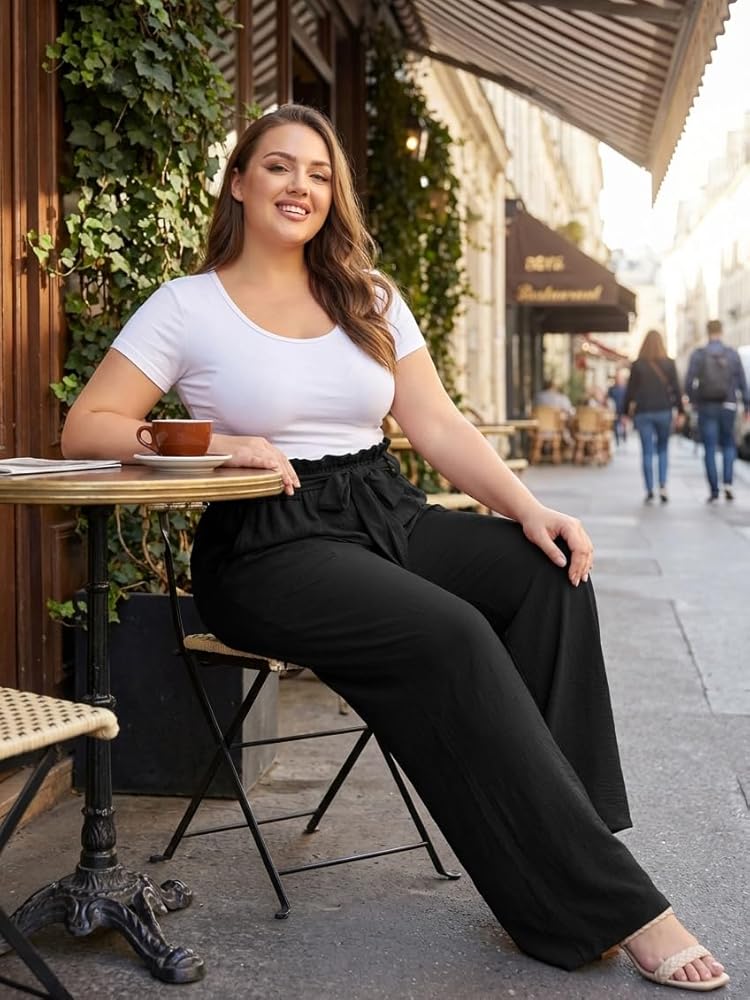
    The opener fails in two ways. It fails if you deliver it apologetically, because the apology signals that you do not believe you are entitled to the request, and providers read that. Deliver it the same way you would tell a mechanic which sound the car has been making. Matter-of-fact. The opener also fails if you do not have the specific symptom ready. “I just have not been feeling well” is not a symptom. “Palpitations three to four times a week, lasting under a minute, often when seated, started in early September” is a symptom. The specificity is the leverage.

    The BMI-pushback script (specific phrasing)

    The BMI-pushback script (specific phrasing)

    Even with the email and the opener, you are still going to hit the BMI conversation in some appointments. Not all. But enough that you need a script for it. The pushback script has three layers, and you use them in escalating order based on how the provider responds.

    Layer one, when the provider first mentions BMI or weight in a context unrelated to your symptom. “I appreciate that you are bringing this up, and I want to circle back to the specific issue I came in for. Can we address [your symptom] first, and if weight is clinically relevant to that diagnosis, we can return to it after.” That sentence does three things. It does not deny the provider’s framing. It redirects to your agenda. And it concedes that weight could become relevant, which keeps you from sounding evasive. Most providers, hearing that, will accept the redirect.

    Layer two, when the provider insists that weight must be addressed first or attributes your symptom directly to weight without diagnostic workup. “I hear that this is your assessment. Can you tell me what diagnostic steps you would take if I presented with these same symptoms at a lower weight, and can we proceed with those steps now, since the symptoms are what I am here to address.” That sentence is the most powerful one in this article. It does not argue about whether weight matters. It asks the provider to name the differential diagnosis they would run for a thinner patient. Most providers, when asked this directly, cannot defend giving you a different workup than they would give a thinner patient with the same presentation. The question makes the disparity visible.

    Layer three, when the provider refuses to proceed with diagnostic workup and continues to insist on weight loss as the primary intervention. “I am going to ask you to note in my chart that I requested [specific diagnostic test or referral] and that you declined to order it. I would like a copy of that note for my records.” The chart note request is the legal lever. Once you say it, the provider has to either order the test, document the refusal, or both. Documented refusals show up later if you escalate to a complaint or pursue a malpractice review, and the provider knows that. In my experience, layer three is needed in maybe one out of five appointments where layers one and two failed. The other four times, layer two is enough.

    When to demand a referral (specific symptoms)

    When to demand a referral (specific symptoms)

    There are specific symptoms where the default diagnostic workup is well-established in the literature and the failure to perform it on a higher-weight patient is documented enough that you should not accept dismissal. I will name the ones I see most often, with the referral or test you should be asking for.

    Heart palpitations, chest pain, or unexplained shortness of breath should produce an EKG at minimum and a referral to cardiology or a Holter monitor if symptoms persist. The dismissal pattern here is to attribute these to anxiety, deconditioning, or weight. The standard of care, irrespective of body size, is to rule out arrhythmia and structural cardiac issues first. If your provider declines to order an EKG for cardiac symptoms, that is a layer-three pushback moment.

    Pelvic pain, heavy bleeding, painful sex, or irregular cycles should produce a pelvic exam, a transvaginal ultrasound, and a referral to OB-GYN if your PCP is not equipped to evaluate. The dismissal pattern is to attribute these to hormones, weight, or stress without imaging. The standard of care includes ruling out fibroids, endometriosis, ovarian cysts, polycystic ovary syndrome, and adenomyosis. None of those diagnoses correlate with weight in a way that lets a clinician skip the imaging.

    Joint pain, especially knee or hip pain in someone under fifty, should produce imaging and a referral to orthopedics or rheumatology if persistent. The dismissal pattern is “lose weight and see if it helps.” The standard of care includes ruling out osteoarthritis, autoimmune arthritis, and bursitis with appropriate imaging. Weight loss may eventually be part of a treatment plan after diagnosis, but it is not the diagnosis.

    Fatigue, especially when accompanied by hair loss, cold intolerance, weight changes, or mood changes, should produce a complete thyroid panel including TSH, free T4, free T3, and thyroid antibodies. The dismissal pattern is to order TSH alone and call it a workup. A complete panel is what catches subclinical hypothyroidism and Hashimoto’s, both of which are commonly missed in plus-size women because the TSH-only screen does not surface them.

    Headaches that change in pattern, frequency, or severity, especially with visual changes, should produce a neurological exam at minimum and imaging if the exam is abnormal. The dismissal pattern is to attribute these to dehydration, stress, or screen time. The standard of care includes ruling out idiopathic intracranial hypertension, which is actually overrepresented in higher-weight women and gets missed because providers attribute the headaches to weight without performing the exam that would surface the actual diagnosis.

    The rule across all of these is the same. The diagnostic workup for the symptom does not change because of your body size. If the workup is being skipped, the workup is being skipped, and the failure to perform it is the deviation from standard of care, not the request to perform it.

    When to fire your doctor (the 3-strike rule)

    A plus-size woman sitting in her car in a parking deck reviewing notes on her phone after a medical appointment

    The decision to leave a provider should not be made in the heat of one bad appointment. Most of us, when we have a bad visit, either over-react and burn the relationship or under-react and stay for years past when we should have left. The framework that has worked for me and the women I mentor is the 3-strike rule. Three documented incidents, of specific types, are the threshold for switching providers. Fewer than three means you give feedback and stay. Three or more means you go.

    Strike one is any single instance of the provider attributing a symptom to weight before performing the standard diagnostic workup for that symptom. One instance is forgivable as a bad day, a missed cue, or a provider who responds when corrected. After the appointment, you write the follow-up letter (template in the next section), and you note in your records that you have documented the incident. If the provider acknowledges and corrects, strike one stands but does not escalate.

    Strike two is a second instance of the same pattern, after the first has been raised. Two instances signal that the first was not a bad day but a default mode. At this point, you should already be researching alternatives and you should not invest in further attempts to coach the provider through it. Your job is not to train your doctor. Your job is to receive competent care.

    Strike three is any instance where the dismissal results in delayed diagnosis or actual harm. If a symptom you flagged was dismissed as weight, and the symptom turned out to be a real underlying condition that was diagnosed later by a different provider, that is an automatic exit, regardless of strike count. You do not stay at a provider who has missed a diagnosis on you, even if they apologize.

    The other auto-exit triggers, separate from the three-strike count, are any moment where the provider raises their voice at you, lectures you about food intake without your invitation, refuses to order a test you specifically requested without documenting the refusal, or makes any comment that crosses from clinical assessment into personal judgment of your character or self-worth. Any of those is a single-incident exit. You do not need to count to three.

    The mechanics of leaving are simple. You request your medical records be transferred to your next provider, you send a brief written note thanking the practice and asking for closure of your file, and you do not engage in a debate about why you are leaving. If they ask for feedback in an exit survey, give it. If they do not, you owe them nothing. The energy you would spend on the exit conversation is energy you need for the search for the next provider, and the next provider is what matters.

    Insurance and HAES providers: navigating coverage

    Insurance and HAES providers: navigating coverage

    The hardest practical part of all of this is that HAES-aligned providers are not evenly distributed across insurance networks. Many of them, especially the ones who have built their practice around this framework intentionally, are out of network for at least some major insurers, and some of them have moved to cash-pay or direct primary care models specifically to opt out of the volume-driven incentives that produce rushed appointments. The result is that you may find a doctor who is right for you and discover that your insurance does not cover them, or covers them at a higher coinsurance.

    The options here are real but limited. First, use your insurance’s out-of-network benefit if you have one. Most PPO plans cover out-of-network providers at a reduced rate, and the difference between in-network and out-of-network may be smaller than the cost of staying with a provider who is missing diagnoses on you. Calculate it. The math sometimes surprises people.

    Second, look at the practice’s payment structure. Some HAES-aligned PCPs run direct primary care models with a flat monthly fee, often between fifty and two hundred dollars a month, which includes unlimited visits and basic labs. If your usage is heavier than average – which it often is for women managing thyroid, PCOS, or autoimmune conditions – the math can favor direct primary care over conventional insurance plus copays. The direct primary care provider is also more likely to spend thirty minutes with you on a visit rather than fifteen, because their incentive structure rewards relationship rather than volume.

    Third, if you are limited to in-network providers by financial necessity, do the directory work inside your network. Most insurers’ provider search tools let you filter by specialty and read provider bios. Look for the same language signals – weight-inclusive, body diversity, HAES, intuitive eating – in the bios of in-network providers. They are rarer but they exist. Cross-reference any candidate against ASDAH or the other directories to see if they are also listed there.


    Fourth, telehealth has changed the math significantly. HAES-aligned providers offering telehealth across multiple states means that geographic isolation is less of a barrier than it was even three years ago. Dr. Lesley Williams, a board-certified family medicine physician at Mayo Clinic Arizona and a Certified Eating Disorder Specialist who has been one of the most public HAES-aligned MDs in the country, is one example of a clinician building care around weight-inclusive principles. Practices like hers are part of the network I point women to when they can’t find a local option. The first visit can be telehealth, and many of the diagnostic conversations can happen there even if certain follow-ups require an in-person visit eventually.

    The follow-up letter template (when care goes wrong)

    The follow-up letter template (when care goes wrong)

    When a visit goes badly, the follow-up letter is the tool you reach for. The letter has three functions. It documents the incident in writing, which creates a paper trail. It gives the provider a chance to respond, which sometimes produces an apology and a corrected approach. And it preserves your own clarity about what happened, which is harder than it sounds because the memory of a bad appointment tends to soften within a day or two and you start to question whether it was really that bad. The letter is your present self telling your future self what was said.

    Here is the template. Send it within seventy-two hours of the visit while the details are fresh, by patient portal message if your provider has one or by certified mail if they do not.

    “Dear Dr. [last name], I am writing to document my visit on [date] and share some feedback. During the appointment, I came in to address [specific symptom]. The interaction included [specific quoted statement or specific behavior, as exact as you can remember]. This raised concerns for me because [the standard of care for this symptom is X, or you had previously requested weight not be the first lens, or the symptom was not investigated]. I would like to request [what you want now, whether that is the diagnostic test that was skipped, a referral, a note in your chart, or simply an acknowledgment]. I am sharing this directly with you rather than escalating to a complaint because I would prefer to give you the opportunity to address it. Thank you for your time.”

    That letter, sent without anger and with specific details, produces one of three outcomes. The provider apologizes and corrects, which has happened to me three times out of maybe a dozen letters sent. The provider responds defensively or not at all, which tells you the exit decision is the right one. Or the practice’s office manager intervenes and the situation gets routed to a different provider within the practice, which is sometimes a workable outcome if you like the practice but not the specific doctor. All three outcomes are useful information.

    If the dismissal resulted in actual harm – a missed diagnosis, a delayed referral that allowed a condition to worsen, a refusal that violated standard of care – the next step beyond the letter is a formal complaint to your state medical board. The threshold for this is higher and you should generally consult with a patient advocate or a malpractice attorney before filing. Most state medical boards have online complaint forms. The board’s response is usually slow, but the documentation persists, and patterns of complaint against a single provider do eventually surface in board action.

    The trans plus medical-fatphobia compound issue

    I want to spend the time this section deserves, because the trans plus-size patient navigating American healthcare is exposed to a compound of biases that no single section in any general article on healthcare access can fully address, and the assumption that the strategies above translate directly is wrong in important ways. I am writing this section as a cis woman who has done the listening work and consulted with trans collaborators on the specifics, but I would direct anyone who lives at this intersection to Dr. Sand Chang’s writing and to the trans-led healthcare collectives that have built more specific resources than I can offer in a paragraph.

    The compound is this. A trans patient walks into a medical setting and may already be navigating misgendering, inappropriate questions about transition status that are unrelated to the visit, refusal of providers to use chosen names, gatekeeping around gender-affirming care, and the structural problem that many electronic medical record systems still do not gracefully accommodate any gender other than M or F. A plus-size trans patient walks into the same setting carrying all of that, plus the medical-fatphobia stack documented in the research section above. The two biases interact rather than add. A provider who is dismissive of trans patients is statistically more likely to also be dismissive of fat patients, because both biases come from the same authoritarian framing of bodies as needing to be brought into compliance with norms.

    The practical strategies for trans plus-size patients include, in addition to the general scripts above, the use of trans-specific directories like the GLMA (Health Professionals Advancing LGBTQ+ Equality) provider directory, the OutCare Health directory, and the regional networks maintained by groups like the National Center for Transgender Equality. These directories overlap only partially with HAES directories, which means the work of finding a provider who is competent across both axes often requires cross-referencing multiple lists and accepting that the candidate pool is smaller. Telehealth, again, expands the pool meaningfully.

    The exam-room scripts also need adaptation. The 4-sentence opener for a trans plus-size patient might add a fifth sentence on chosen name and pronouns, delivered as part of the same framing, so that the provider hears the full set of expectations at once rather than piecemeal. The BMI-pushback script remains the same, but the trans patient should be prepared for providers to attempt to gatekeep gender-affirming care behind weight loss requirements, which has been documented as a pattern in surgical practices in particular. The response to that gatekeeping is the same as the response to any other inappropriate use of weight as a barrier. You ask the provider to name the standard of care for a cis patient with the same presentation, and you ask them to apply it.

    The compounding effect is also psychological. The exposure to layered dismissal is more depleting than the exposure to a single layer, and the avoidance behaviors documented in the Sutin research are correspondingly more pronounced. Trans plus-size patients I have spoken with describe going years without primary care because the prospect of running the full gauntlet for a routine annual is not worth the symptom-level risk. That is not a failure of self-care. It is a rational response to a hostile environment, and the solution is structural, which means the patient needs allies in the system who will do some of the navigation work for them. A trans-competent and HAES-aligned PCP is one of those allies. Finding one is a project. Worth it.

    The 3-move checklist for this week

    The 3-move checklist for this week

    Reading this article and not doing anything with it is the most common outcome and I want to interrupt that. The work I am asking for this week is small. Three moves. None of them require a referral, an appointment, or money. All of them are things you can do from your phone in the next seven days. If you do these three things this week, you will be measurably closer to the doctor relationship you actually need than you were yesterday. Do not skip them.

    Move one. Open a browser, search for “ASDAH HAES practitioner directory,” filter by your state, and download or screenshot the list of any providers in your zip code or within driving distance. If there are no providers in your state, do the same with the Plus Size Birth provider list and the Be Nourished directory. Add any names you find to a single document or note on your phone. Title the note “My Doctor List.” This list is the asset you are building. It is going to grow over time.

    Move two. Open a new note and write the 4-sentence pre-visit opener for yourself, with your name, the symptom or screening you would bring to a first visit, and your specific hoped-for outcome. Memorize it. Practice saying it out loud in your car or in the shower until it sounds natural. The reason to do this when you are not in distress is so that you have it ready when you are.

    Move three. Schedule the second-opinion appointment. If you have a current provider who has dismissed a symptom, fired you in spirit if not in writing, or made you dread the exam room, schedule a consultation with one of the new names on your list. It does not need to be a transfer of care yet. It is a consultation. You are gathering information. The appointment itself is the move. Booking it is the practice of believing that you are entitled to better care than you have been getting.

    That is the assignment. Three moves. Within seven days. The list, the script, the appointment. You do not have to fix the entire American medical system this week. You have to do the three small things that put you in motion. The motion is the win. The Brookhaven exam room I started this article with is the floor. I built up from it by doing exactly these three things, in that order, in November of 2024. By the spring of 2025 I had a new PCP, a new OB-GYN, a referral to cardiology that produced an actual diagnosis for the palpitations (benign premature ventricular contractions, monitored, not weight-related), and a relationship with care that I no longer dread. That is what is on the other side of this. Go build the list.

  • Ozempic vs Mounjaro for Type 2 Diabetes: A Plain-English Comparison

    Ozempic vs Mounjaro for Type 2 Diabetes: A Plain-English Comparison

    Two injectable pen-style medications shown side by side on a cream background for comparison

    After three years of reading GLP-1 literature, talking to friends on these drugs, and watching the conversation around them turn into a marketing circus, the most useful thing I can do is set the comparison out plainly. Ozempic and Mounjaro are both FDA-approved injectable medications for type 2 diabetes, and that is the lane this piece stays in. I am not your doctor. I am not a doctor at all. I am a wellness writer who has watched four women in my life try to make this decision while their endocrinologists were running 15 minute appointments, and I have read enough prescribing information to lay the comparison out in a way that does not require a pharmacology degree. The goal is not to pick a winner for you. It is to help you walk into the appointment with the right questions.

    Both drugs sit inside a class of medications that has changed how type 2 diabetes is treated over the last decade. Ozempic, made by Novo Nordisk, contains semaglutide and was approved by the FDA in 2017. Mounjaro, made by Eli Lilly, contains tirzepatide and was approved in 2022. They are both weekly injections. They both lower blood sugar. They both tend to reduce appetite as a side effect, which is the part of the story that pulled them onto magazine covers. But they are not the same drug, they do not work through identical mechanisms, and the side effect profiles, the cost picture, and the long-term data are different enough that the choice between them actually matters.

    Quick verdict if you have 30 seconds

    For type 2 diabetes specifically, Mounjaro (tirzepatide) shows somewhat stronger A1C reduction and weight loss in the head-to-head trial that compared the two, but it is the newer drug with less long-term safety data. Ozempic (semaglutide) has more years of real-world use behind it, a broader prescribing history, and the cardiovascular outcomes data that made it a default in many endocrinology practices. The right pick depends on your A1C target, your insurance coverage, your tolerance for gastrointestinal side effects, and your doctor’s read on your full health picture. Talk to your endocrinologist. Do not order either of these from an internet pharmacy that is not legitimate.

    What these drugs are and how they actually work

    Ozempic is semaglutide, a GLP-1 receptor agonist. GLP-1 is a hormone your gut releases after a meal, and it does several things – it tells your pancreas to release insulin, it slows down how fast food moves out of your stomach, and it signals fullness to your brain. Semaglutide is a synthetic version of that hormone that lasts long enough to be injected once a week. For someone with type 2 diabetes, the net effect is lower blood sugar after meals, more stable fasting glucose, and often a reduction in appetite that leads to some weight loss as a secondary benefit.

    Mounjaro is tirzepatide, which targets the same GLP-1 receptor but also activates a second receptor called GIP. GIP is another gut hormone that plays a role in insulin secretion and fat metabolism. The dual-action design is the whole pitch behind Mounjaro – by hitting two receptors instead of one, it appears to produce a bigger drop in blood sugar and body weight in clinical trials than GLP-1-only drugs. Both drugs are administered through a pen injector, once a week, with dose escalation over several months to let the body adjust.

    Worth naming the obvious: both have also been pulled into the weight-loss conversation through their sister formulations – Wegovy is semaglutide marketed for weight loss, Zepbound is tirzepatide marketed for weight loss. This piece is about the diabetes versions specifically. If you are interested in either drug for weight management without type 2 diabetes, that is a separate conversation with a separate prescriber pathway.

    Side-by-side comparison

    Feature Ozempic (semaglutide) Mounjaro (tirzepatide)
    Manufacturer Novo Nordisk Eli Lilly
    FDA approval for type 2 diabetes 2017 2022
    Drug class GLP-1 receptor agonist Dual GIP/GLP-1 receptor agonist
    Administration Once-weekly subcutaneous injection Once-weekly subcutaneous injection
    Typical dose range 0.25 mg to 2 mg weekly 2.5 mg to 15 mg weekly
    Typical A1C reduction in trials Around 1.5 to 1.8 percentage points Around 1.9 to 2.4 percentage points
    Cardiovascular outcomes data Yes, established in SUSTAIN-6 trial Trial ongoing as of 2026
    List price without insurance Around $1,000 per month Around $1,000 to $1,100 per month

    Ozempic: the one with the longer track record

    Unbranded weekly injection pen on a wooden desk with a medication tracking card

    Ozempic has been in widespread use for type 2 diabetes since 2017, which means nearly a decade of real-world prescribing data, post-marketing safety surveillance, and outcomes research back it up. For an endocrinologist deciding what to start a newly diagnosed patient on, that history matters. It is the more conservative pick in the sense that fewer surprises tend to show up after a drug has been in the population at scale for years.

    The cardiovascular data is one of the strongest pieces of the Ozempic case. The SUSTAIN-6 trial showed that semaglutide reduced the risk of major cardiovascular events in adults with type 2 diabetes who had cardiovascular disease or were at high risk for it. That kind of outcomes data, not just blood sugar numbers but actual heart attack and stroke reduction, is part of why semaglutide became a default in many practices. If you have type 2 diabetes plus existing heart disease, this is a factor your doctor will weigh.

    A1C reduction in the trials sits in the range of 1.5 to 1.8 percentage points depending on dose. Weight loss as a secondary benefit averages somewhere in the 10 to 15 pound range over roughly a year of use, with wide individual variation. The most common side effects are gastrointestinal – nausea, occasional vomiting, constipation, diarrhea – and they are most pronounced during the dose escalation phase. Most people who tolerate the drug long-term find the GI side effects fade after the first two to three months.

    The real-world downside that does not show up in trial data: shortages. Because of off-label weight-loss demand, semaglutide supply has been intermittently constrained, which means even diabetic patients have sometimes had trouble filling prescriptions. Ask your pharmacy about current availability before you commit to a plan. For broader context on adjusting to a chronic diagnosis, Lori Gottlieb’s Maybe You Should Talk to Someone is the book I keep recommending to women navigating new medical news.

    Mounjaro: the newer drug with stronger trial numbers

    An injection pen beside an open notebook with handwritten dosing notes

    Mounjaro entered the market in 2022 with clinical trial data that turned heads. The SURPASS series of trials showed A1C reductions in the 1.9 to 2.4 percentage point range depending on dose, which is meaningfully larger than what GLP-1-only drugs had been delivering. The weight loss numbers were also larger, with patients on the higher doses losing 15 to 20 percent of starting body weight in some studies. For someone with high A1C numbers that have not come down with metformin and lifestyle changes alone, the bigger reduction can be the difference between staying on oral medications and adding insulin.

    The mechanism is the part that makes researchers cautiously optimistic. GIP activation, in combination with GLP-1 activation, appears to produce metabolic effects that GLP-1 alone does not. Research is underway looking at whether tirzepatide may have benefits for sleep apnea, fatty liver disease, and cardiovascular outcomes in non-diabetic populations, but as of 2026 the cardiovascular outcomes trial in diabetic patients is still ongoing. That is the asterisk – we do not yet have the same heart-attack-and-stroke reduction evidence for Mounjaro that we have for Ozempic.

    Side effects look broadly similar to Ozempic, with some patients reporting more pronounced GI symptoms during dose escalation. The dosing schedule starts at 2.5 mg and can be titrated up to 15 mg over months, with increases happening no more often than every four weeks to allow the body to adjust. The titration is not a small consideration – moving from 2.5 mg to 15 mg is a six-month-plus process for most people who reach the top dose. Cost runs roughly $1,000 a month at list price, with actual out-of-pocket depending on insurance, manufacturer savings card eligibility, and whether your plan has tirzepatide on its type 2 diabetes formulary. If you want a journal to track dosing, meals, blood sugar, and side effects week to week, a basic dot-grid notebook from a brand like Leuchtturm1917 is what my therapist friend recommends for this kind of self-tracking.

    Where they overlap and where they differ

    Both drugs are weekly pen injections, both work through gut-hormone signaling, both reduce blood sugar, both tend to reduce appetite, and both carry warnings about pancreatitis, gallbladder problems, and a boxed warning related to thyroid C-cell tumors based on rodent studies. Both require dose escalation over months. Both produce GI side effects, especially in the first weeks. Both are expensive without insurance. Both have been targets of supply shortages because of off-label weight-loss demand. The overlap is substantial.

    Where they differ comes down to four things. First, the magnitude of the effect – Mounjaro produces larger reductions in both A1C and body weight in head-to-head comparisons, with SURPASS-2 showing tirzepatide outperforming semaglutide on both measures. Second, years of safety data – Ozempic has more, full stop. Third, cardiovascular outcomes evidence – established for semaglutide, still being researched for tirzepatide. Fourth, the insurance and access landscape – which one your plan covers can be the deciding factor regardless of clinical merits, and that is worth checking before you and your doctor settle on a plan.

    Which one for which person

    If your A1C is moderately high (in the 7 to 8.5 range) and you have existing cardiovascular disease or risk factors, Ozempic is the option with the cardiovascular outcomes data behind it. For someone with a relatively simple type 2 diabetes picture and an endocrinologist who wants to start with the more conservatively-evidenced option, this is the path many practices default to.

    If your A1C is significantly high (above 8.5) and you have not gotten the reduction you need from metformin, lifestyle, or a previous GLP-1, Mounjaro’s larger A1C-lowering effect is the case for trying it. If your doctor’s read is that you need a bigger drop to get to target and avoid moving to insulin, the stronger trial data on tirzepatide is the argument for the newer drug.

    If insurance is the practical constraint – and for most people it is – check your formulary first. Some plans cover one and not the other, some require step therapy through metformin and a sulfonylurea first, some have prior authorization requirements that take weeks to clear. The Eli Lilly and Novo Nordisk savings programs each cover commercially-insured patients under specific conditions, and your endocrinologist’s office often has the most current information. For tracking appointments, glucose readings, and questions for your next visit, a dedicated medical journal like a health tracking notebook is genuinely useful, especially for the first six months when you are learning your body’s response.

    If you are weighing either drug primarily for weight loss without type 2 diabetes, the right conversation is about Wegovy or Zepbound with a doctor who specializes in obesity medicine, not Ozempic or Mounjaro off-label. The dosing, the insurance coverage, and the prescribing pathway are different.

    Frequently asked questions

    How long does it take to see results from either drug?

    Blood sugar improvements often start within the first two to four weeks at the starting dose, though full A1C reduction takes about three months to show up on a lab draw. Weight changes typically begin within the first month or two and continue gradually over a year, with most of the loss in the first six to nine months. These drugs work on a slow curve, not a dramatic week-over-week one.

    What happens if you stop taking them?

    Blood sugar typically rises back toward pre-treatment levels, and weight that was lost during treatment often comes back over the following year for many patients. These are treatments meant for long-term management of a chronic condition. Talk to your doctor before stopping for any reason other than a medical emergency.

    Are the side effects actually as bad as the headlines suggest?

    The most common side effects (nausea, occasional vomiting, constipation, diarrhea) affect a significant minority of users, are most pronounced during dose escalation, and tend to improve over the first two to three months. Serious side effects (pancreatitis, gallbladder issues, severe GI symptoms requiring hospitalization) are uncommon but real. Both drugs are contraindicated for people with a personal or family history of medullary thyroid carcinoma.

    Can you switch from Ozempic to Mounjaro or vice versa?

    Yes, with a doctor’s guidance. The transition is usually handled by stopping one drug and starting the other at the lowest dose, then titrating up over weeks or months. Some patients switch because of side effects, some because of insurance changes, some because A1C is not responding on the first drug. It is not a decision to make on your own based on a TikTok video.

    Final pick

    I am not picking a winner here in the way I would for shapewear or skincare, because this is a prescription medication for a chronic disease and the right pick depends on your specific picture in a way a single recommendation cannot capture. What I will say: if I were sitting with a friend asking me which one to ask her endocrinologist about first, my read of the evidence as of 2026 is that Ozempic is the safer default for someone with a longer time horizon and moderate A1C, and Mounjaro is the stronger option for someone with high A1C who needs a bigger reduction and whose insurance covers it. Either one is a real conversation worth having with a doctor who knows your full health picture. Bring the trial data, bring your A1C history, bring your insurance card, and bring the questions you actually have. This isn’t going to fix you, but it might help on a Tuesday. For the journal to take to the appointment, something simple and durable is all you need.

  • 30 Mental Health Journal Prompts to Process Your Feelings and Find Clarity

    30 Mental Health Journal Prompts to Process Your Feelings and Find Clarity

    There are moments when your head feels so full that you cannot think straight. When emotions pile on top of each other until you cannot tell whether you are angry or sad or scared or all three at once. When you know something is bothering you but you cannot quite name it, and it just sits there in your chest like a weight you cannot put down.

    These are the moments when mental health journal prompts can genuinely change things. Not because writing in a journal is magic – it is not – but because the act of putting your inner world into words forces your brain to slow down, organize, and make sense of what it is experiencing. It takes the swirling chaos of feelings and pins them to the page, where you can look at them clearly and figure out what they actually mean.

    If you have tried journaling before and found yourself staring at a blank page with no idea where to start, these prompts are for you. If you have never journaled and are curious about it, these prompts are for you too. And if you journal regularly but feel like you have been stuck in surface-level territory, these mental health journal prompts will take you deeper in the best possible way.

    Cozy journaling setup with tea and candle for mental health reflection

    Why Journaling Is One of the Best Things You Can Do for Your Mental Health

    Before we dive into the prompts, let us talk about why journaling is so effective for mental health. Because understanding the “why” will help you stick with the practice even on days when you do not feel like writing.

    Research consistently shows that expressive writing – the kind where you write honestly about your thoughts and feelings – has measurable benefits for both mental and physical health. A landmark study by psychologist James Pennebaker found that people who wrote about emotionally significant events for just 15 to 20 minutes a day showed improvements in immune function, reduced blood pressure, fewer doctor visits, and better emotional wellbeing. Those results have been replicated dozens of times across different populations.

    Here is what happens in your brain when you journal. Writing about emotions engages your prefrontal cortex, the rational, planning part of your brain. This naturally reduces activity in your amygdala, the fear and emotion center. In other words, the simple act of writing about your feelings helps your brain shift from reactive mode to reflective mode. You move from “I am drowning in this feeling” to “I am looking at this feeling and trying to understand it.”

    Journaling also creates what psychologists call “cognitive defusion” – the ability to see your thoughts as thoughts rather than as absolute truths. When you write “I feel like I am not good enough,” you start to notice that it is a feeling, not a fact. That tiny shift in perspective can be enormously freeing.

    For women navigating body image challenges, societal pressures, relationship stress, career uncertainty, or any of the countless things that weigh on us, journaling offers a private, judgment-free space to be completely honest. You do not have to filter yourself. You do not have to worry about someone else’s reaction. You can just be real.

    And that is exactly what these mental health journal prompts are designed to help you do. A good guided mental health journal with prompts already included can make getting started even easier.

    How to Use These Mental Health Journal Prompts

    How to Use These Mental Health Journal Prompts

    You do not need to work through all 30 prompts in order. In fact, I would encourage you not to. Instead, browse through the list and pick the one that speaks to you in this moment. The one that makes your stomach tighten a little or your eyes widen or your heart say “yes, that one.” That is your prompt for today.

    Setting Up Your Journaling Space

    Setting Up Your Journaling Space

    You do not need anything fancy to journal. A notebook and a pen will do. But if creating a cozy, inviting space helps you show up to the practice, go for it. Light a candle. Make a cup of tea. Put on soft music. Wrap yourself in something comfortable. Creating a small ritual around journaling signals to your brain that this is a special, sacred time for you.

    Some people prefer typing on a laptop or phone, and that is perfectly fine. The benefits come from the process of expressing yourself in words, regardless of the medium. However, research does suggest that handwriting may engage slightly different brain processes and can feel more therapeutic for some people. Experiment and see what works for you.

    Ground Rules for Your Journal

    Ground Rules for Your Journal

    There are no wrong answers. Seriously. This is not a test. Write in full sentences or fragments. Write neatly or in a complete mess. Write three lines or three pages. The only “rule” is honesty. Be as honest with yourself as you can. No one else will read this unless you choose to share it.

    If a prompt brings up big emotions, that is actually a sign that it is working. Let yourself feel. Cry if you need to. Put the journal down and take a break if you need to. Then come back when you are ready. You are in control of this process.

    Try to write for at least 10 to 15 minutes per prompt. Give yourself time to get past the surface-level answers and into the deeper stuff. The most important insights often come after the first wave of obvious responses, when you push yourself to keep going and see what else is there.

    Prompts for Processing Difficult Emotions (1 through 10)

    Prompts for Processing Difficult Emotions (1 through 10)

    These mental health journal prompts are designed to help you sit with and process the emotions that are hardest to face. They are not about fixing anything – they are about understanding and being with what is.

    Prompt 1 – What emotion have I been avoiding lately, and what might happen if I let myself feel it fully?

    We all have emotions we try to push away – anger, grief, jealousy, fear. This prompt invites you to name the one you have been sidestepping and explore what it might be trying to tell you. Often, the emotions we avoid the most carry the most important messages. Anger might be telling you that a boundary has been crossed. Grief might be telling you that something mattered deeply. Give yourself permission to go there.

    Prompt 2 – Write about a time recently when you felt truly hurt. What happened, and what did you need in that moment that you did not get?

    This prompt helps you identify unmet needs – one of the most important skills for emotional health. When we are hurt, we often focus on what the other person did wrong. But underneath the hurt is always a need that was not met – a need for respect, for safety, for understanding, for love. Naming that need is the first step toward being able to ask for it or give it to yourself.

    Prompt 3 – If my body could talk right now, what would it say to me?

    Our bodies hold emotions that our minds have not processed yet. Tension in your shoulders, a knot in your stomach, heaviness in your chest – these are all your body’s way of communicating. This prompt invites you to listen. And for those of us with complicated body relationships, it can be a powerful way to start seeing your body as an ally rather than an adversary.

    Prompt 4 – What am I most ashamed of right now, and what would I say to a friend who was carrying this same shame?

    Shame thrives in secrecy and silence. Writing about it – even just for your own eyes – breaks that cycle. And the second part of this prompt, where you imagine offering compassion to a friend with the same shame, helps you access kindness for yourself that might otherwise feel out of reach.

    Prompt 5 – Write a letter to the version of yourself who was going through the hardest time in your life. What does she need to hear?

    This prompt can be deeply emotional, so approach it with care. Writing to your past self from the safety of the present allows you to process old pain with the wisdom and compassion you have now. You can acknowledge what was hard, validate the feelings, and offer the comfort that nobody else provided at the time.

    Prompt 6 – What is one thing I am angry about that I have not allowed myself to express?

    Women are often socialized to suppress anger, to be “nice” and “agreeable.” But unexpressed anger does not disappear – it turns inward and becomes depression, anxiety, or physical symptoms. Give your anger a voice on the page. You do not have to act on it. You just need to let it exist.

    Prompt 7 – What story am I telling myself about my current situation, and is it the whole truth?

    We all construct narratives about our lives, and those narratives shape how we feel. “I am stuck.” “Nothing ever works out for me.” “I always mess things up.” This prompt invites you to examine your current narrative and ask whether it is a fact or a story. What evidence supports it? What evidence contradicts it? Is there a more complete, more compassionate story available?

    Prompt 8 – What loss am I still grieving, even if it happened a long time ago?

    Grief does not follow a timeline. You might still be mourning a relationship, a dream, a version of yourself, or a life you thought you would have. This prompt gives you permission to grieve on your own schedule, without judgment. There is no expiration date on loss.

    Prompt 9 – Write about something you feel guilty about. Then write about what you would need to forgive yourself.

    Guilt can be useful when it motivates us to repair harm. But chronic guilt – the kind that just loops and loops without resolution – is corrosive. This prompt helps you distinguish between guilt that has served its purpose and guilt that has overstayed its welcome. And it begins the process of self-forgiveness, which is one of the most healing things you can do.

    Prompt 10 – How am I really doing right now? Not the version I tell other people, but the real answer.

    Sometimes the most powerful journal prompt is the simplest one. Most of us have a rehearsed answer for “how are you?” This prompt asks you to drop the script and tell the truth, even if the truth is messy or contradictory or hard to put into words. Let yourself be seen, even if you are the only one watching.

    Abstract illustration of emotions flowing from a journal representing therapeutic writing

    Prompts for Reducing Anxiety and Finding Calm (11 through 20)

    Prompts for Reducing Anxiety and Finding Calm (11 through 20)

    These mental health journal prompts specifically target anxiety – the racing thoughts, the what-ifs, the constant feeling that something bad is about to happen. Writing is one of the most effective tools for anxiety because it forces your spinning mind to slow down and deal with one thought at a time.

    Prompt 11 – List everything that is currently worrying you, no matter how small or irrational it seems.

    A brain dump. Get it all out. Every worry, every concern, every nagging thought. When anxious thoughts are swirling in your head, they feel infinite and unmanageable. When they are on paper, you can actually see that there are a finite number of them – and some of them are probably not as big as they felt when they were competing for space in your mind.

    Prompt 12 – For each worry on your list, write down whether it is something you can control, something you can influence, or something that is completely outside your control.

    This follow-up to Prompt 11 is incredibly clarifying. When you sort your worries into these three categories, you quickly see where your energy is best spent – and where you are burning energy on things you cannot change. For the things outside your control, practice the mantra: “I release what I cannot control.”

    Prompt 13 – What is the worst case scenario I am afraid of, and what would I actually do if it happened?

    Anxiety often keeps us stuck in vague, formless dread. This prompt forces you to get specific. And here is what usually happens: when you actually think through the worst case scenario, you realize that you would survive it. You would cope. It would be hard, but you would find a way. That realization is incredibly calming.

    Prompt 14 – Write about a time when you were anxious about something that turned out fine.

    Your brain has a negativity bias – it remembers the times things went wrong and forgets the countless times your anxiety was unfounded. This prompt pushes back against that bias. Remind yourself of your track record. How many times has the thing you worried about never actually happened? Probably more times than you can count.

    Prompt 15 – What would today look like if I were not anxious? Describe it in detail.

    This prompt is a gentle visualization exercise. Imagine your day without the weight of anxiety. What would you do differently? How would you move through the world? What would you try? What would you enjoy? This is not about wishing your anxiety away – it is about connecting with the life that exists underneath it, the life that is still possible and waiting for you.

    Prompt 16 – What am I really afraid of underneath this anxiety?

    Anxiety is often a surface emotion that is masking something deeper – fear of rejection, fear of failure, fear of not being enough, fear of being seen. This prompt asks you to dig beneath the anxiety and see what is really driving it. When you name the core fear, it loses some of its power.

    Prompt 17 – List five things I can see, four things I can touch, three things I can hear, two things I can smell, and one thing I can taste right now.

    This is the classic 5-4-3-2-1 grounding technique, adapted for journaling. Writing it down instead of just thinking it adds an extra layer of grounding because you are engaging your motor system and your visual processing. Use this prompt when anxiety is spiking and you need to come back to the present moment quickly.

    Prompt 18 – What is one kind thing I can do for myself in the next hour?

    When anxiety feels overwhelming, the idea of feeling better eventually can seem impossible. But the next hour? You can do something about the next hour. Maybe it is making a cup of tea, stepping outside for five minutes, putting on your favorite playlist, or changing into comfortable clothes. This prompt brings your focus from the terrifying future to the manageable present. Changing into something cozy like a super soft lounge jogger set can genuinely help shift your nervous system.

    Prompt 19 – Write about someone who makes you feel safe. What is it about them that creates that feeling?

    Thinking about safety when you are anxious might seem counterintuitive, but it actually activates your attachment system, which is the body’s natural antidote to the threat system. Write in detail about this person – how they look at you, how they speak to you, what they do that makes you feel held. You can carry this image with you as an internal resource for anxious moments.

    Prompt 20 – What would I tell my anxious thoughts if they were a scared child?

    This reframe is beautiful and effective. Your anxious thoughts are not your enemy – they are a part of you that is trying to protect you, just doing it in a way that is not helpful anymore. If those thoughts were a scared child, you would not yell at them or try to silence them. You would get down on their level, acknowledge their fear, and gently reassure them. Try that approach in your journal.

    Prompts for Building Self-Awareness and Clarity (21 through 30)

    Prompts for Building Self-Awareness and Clarity (21 through 30)

    These mental health journal prompts are about understanding yourself better – your patterns, your values, your dreams, and your needs. They are less about processing pain and more about building a clear, honest relationship with who you are.

    Prompt 21 – What does my ideal ordinary day look like, from morning to night?

    Not your dream vacation or your fantasy life – your ideal regular Tuesday. What time do you wake up? What do you eat? How do you spend your time? Who are you with? This prompt reveals what you actually value, not what you think you should value. And it can show you which parts of your current routine are aligned with your true self and which parts are not.

    Prompt 22 – What am I tolerating in my life that I should not be?

    We all have things we put up with – the friend who drains our energy, the cluttered space we walk past every day, the job that does not value us, the clothes that do not fit right. This prompt asks you to get honest about what you are tolerating and consider what it would take to change it. Sometimes just naming a toleration is the first step to eliminating it.

    Prompt 23 – When do I feel most like myself? What am I doing, and who am I with?

    This prompt helps you identify the conditions under which you thrive. When you know what makes you feel most alive and authentic, you can deliberately create more of those conditions in your life. It is like reverse-engineering happiness.

    Prompt 24 – What is a belief I held five years ago that I no longer believe? What changed?

    This prompt is a powerful reminder that you are always growing and evolving. The beliefs that feel so solid and permanent right now may shift dramatically in the next few years. This awareness can make you hold your current beliefs a little more lightly and be more open to change.

    Prompt 25 – What boundary do I need to set that I have been avoiding?

    Boundaries are one of the most important tools for mental health, and they are also one of the hardest things to implement. This prompt gives you space to identify a needed boundary and explore what is stopping you from setting it. Is it fear of conflict? Fear of rejection? People-pleasing? Understanding the obstacle is the first step to overcoming it.

    Prompt 26 – Write about a compliment you received that you had trouble accepting. Why was it hard to believe?

    The compliments we deflect often reveal our deepest insecurities. If someone said you were beautiful and you immediately thought “they are just being nice,” that tells you something about what you believe about your appearance. This prompt invites you to explore why certain positive messages do not land and what it would take to let them in.

    Prompt 27 – What would change in my life if I truly believed I was enough, exactly as I am right now?

    This is a big one. Really sit with it. If the voice that says “not good enough, not thin enough, not smart enough, not successful enough” went completely quiet – what would be different? What would you stop doing? What would you start doing? How would you walk through the world? This prompt gives you a glimpse of the freedom that is possible when you release the need for external validation.

    Prompt 28 – List three things you are proud of that have nothing to do with how you look or what you have accomplished.

    We are so conditioned to measure our worth by appearance and achievement that we forget all the other things that make us valuable. Your kindness. Your ability to make people laugh. Your resilience. Your curiosity. The way you love. This prompt reconnects you with the parts of yourself that have nothing to do with productivity or beauty standards.

    Prompt 29 – What does my inner critic sound like, and whose voice is it really?

    Your inner critic did not come out of nowhere. It is usually a composite of critical voices from your past – a parent, a teacher, a bully, a culture. When you identify whose voice your inner critic is actually using, you realize that it is not your truth. It is someone else’s judgment that you internalized. And that means you have the power to give it back.

    Prompt 30 – Write a letter to your future self, one year from now. What do you hope she knows, feels, and believes?

    This final prompt is about hope and intention. It is a way to set a compass heading for your inner life. What emotional growth do you hope for? What beliefs do you hope to have released? What relationship do you hope to have with yourself? Write it as a love letter to the woman you are becoming. And then put it somewhere safe and read it in a year.

    Plus-size woman journaling peacefully at a window desk during golden hour

    Tips for Making Journaling a Sustainable Habit

    Tips for Making Journaling a Sustainable Habit

    Having 30 beautiful mental health journal prompts is wonderful, but they only work if you actually use them. Here are some tips for making journaling a lasting part of your self-care routine.

    Choose a Consistent Time

    Choose a Consistent Time

    Journaling works best when it becomes a habit, and habits need consistency. Pick a time that works for your life – first thing in the morning, during your lunch break, or before bed are all popular choices. Morning journaling can set a positive tone for the day. Evening journaling can help you process what happened and release the day before sleep. There is no best time – just the time that you will actually do it.

    Lower the Bar

    Lower the Bar

    If writing for 15 minutes feels like too much, write for five. If five minutes feels like too much, write for two. If opening your journal feels like too much, just set it on the table and look at it. Seriously. The hardest part is starting. Once you begin, you will usually write more than you planned. But even on the days when you write one sentence, you showed up. That counts.

    Invest in Tools You Love

    You are more likely to journal if you enjoy the physical experience of it. A beautiful leather journal that feels good in your hands, a pen that writes smoothly, a cozy spot that feels like yours – these things matter more than you might think. They transform journaling from a chore into a ritual.

    Do Not Reread Right Away

    Do Not Reread Right Away

    Some journal entries are for processing, not for rereading. If you wrote something raw and emotional, let it sit. You can come back to it in a week or a month with fresh eyes and new perspective. Or you can never read it again. The healing happened in the writing itself.

    Mix It Up

    Mix It Up

    You do not have to answer a deep mental health journal prompt every single day. Some days, a simple gratitude list is perfect. Some days, doodling is what you need. Some days, writing an angry rant is the right medicine. Let your journal be a flexible, living thing that adapts to what you need in the moment.

    Consider a Digital Option Too

    Consider a Digital Option Too

    If you travel a lot or want your journal always accessible, consider keeping a digital journal on your phone or tablet alongside a physical one. Apps designed for therapeutic journaling can offer additional features like mood tracking and pattern recognition that add another layer to your practice. A tablet with a stylus can give you the handwriting experience digitally.

    There is also something powerful about looking back at old journal entries months or years later. You see patterns you could not see in the moment. You see growth you did not realize was happening. You see that the things that felt like the end of the world were actually the beginning of something new. Your journal becomes a record of your resilience, and that is an incredibly valuable thing to have.

    Whatever prompt you choose today, remember this: there is no wrong way to journal. Messy is fine. Repetitive is fine. Contradictory is fine. Your journal is a mirror of your inner world, and inner worlds are complex, beautiful, and always changing. Give yourself permission to put it all on the page – the light stuff and the heavy stuff, the clarity and the confusion, the hope and the fear. It all belongs there. And so do you.

    Beautiful flat-lay of journaling supplies for a mental health practice

    Key Takeaways

    • Journaling activates your prefrontal cortex and reduces amygdala activity, helping your brain shift from reactive to reflective mode – making it one of the most effective tools for mental health.
    • You do not need to answer all 30 prompts in order – pick the one that resonates with you right now and write for at least 10 to 15 minutes to get past surface-level answers.
    • The prompts are organized into three categories: processing difficult emotions, reducing anxiety, and building self-awareness – so you can choose based on what you need most.
    • Making journaling sustainable is about lowering the bar, choosing a consistent time, and investing in tools you actually enjoy using.
    • There is no wrong way to journal – messy, repetitive, and contradictory entries are all part of the process and equally valuable for your mental health.

    Frequently Asked Questions

    How often should I use mental health journal prompts?

    There is no strict rule, but research suggests that journaling three to four times per week provides significant mental health benefits. Daily journaling can be wonderful if it works for your schedule, but even once or twice a week is valuable. The most important thing is consistency over time rather than frequency. A shorter, regular practice is more beneficial than long, sporadic sessions. Listen to your needs and adjust accordingly.

    What if journaling brings up really intense emotions that feel overwhelming?

    It is completely normal for deep journal prompts to bring up strong emotions. If you feel overwhelmed, put down the pen and use a grounding technique – focus on your senses, take slow deep breaths, or step outside for fresh air. You can always come back to the prompt later. If journaling consistently triggers intense distress, consider working with a therapist who can help you process these emotions in a supported environment. Journaling can complement therapy beautifully but is not a replacement for professional support when needed.

    Should I keep my journal private or share it with someone?

    Your journal should be private by default. The power of journaling comes from the freedom to be completely honest without filtering yourself for an audience. When you know no one else will read it, you give yourself permission to write things you might not say out loud. That said, you might occasionally choose to share a specific entry with a therapist, partner, or trusted friend if it helps you communicate something important. The key is that sharing should always be your choice, never an obligation.

    Can journaling replace therapy for mental health?

    Can journaling replace therapy for mental health?

    Journaling is a wonderful self-care tool, but it is not a substitute for professional mental health treatment when that is needed. Think of journaling as one tool in your mental health toolkit – it works beautifully alongside therapy, medication, social support, and other interventions. If you are experiencing persistent anxiety, depression, trauma symptoms, or any mental health concern that is interfering with your daily life, please reach out to a mental health professional. Journaling can enhance your therapeutic work, but it should not be your only resource during serious mental health challenges.

  • The 30-Day Walking for Weight Loss Plan That Actually Gets Results

    The 30-Day Walking for Weight Loss Plan That Actually Gets Results

    Why Walking Is the Most Underrated Weight Loss Tool

    Why Walking Is the Most Underrated Weight Loss Tool

    The 30-day walking for weight loss plan you are about to follow is not a flashy fitness trend or an extreme challenge designed for people who already work out five days a week. This is a progressive, realistic plan built specifically for plus-size women who want to start moving more, feel stronger, and see real changes in their bodies and energy levels. Walking is the exercise that actually sticks, and this plan is designed to prove it.

    Here is why walking deserves more respect than it gets. Research published in the Journal of Exercise Nutrition and Biochemistry found that women who walked 50 to 70 minutes three times per week for 12 weeks reduced their body fat, waist circumference, and BMI significantly. Another study in the British Journal of Sports Medicine showed that brisk walking produces comparable fat loss results to running when the energy expenditure is matched. You do not need to run to lose weight. You need to walk consistently and progressively.

    Walking has several advantages over more intense forms of exercise, especially for plus-size women. It is low impact, meaning less stress on your joints, knees, and back. It does not require gym equipment or a membership. It can be done anywhere – your neighborhood, a park, a shopping mall, a treadmill at home. And perhaps most importantly, it does not leave you so exhausted and sore that you dread doing it again tomorrow. Sustainability is the secret ingredient in any weight loss plan, and walking is the most sustainable exercise on the planet.

    The plan ahead gradually increases your walking time, pace, and intensity over four weeks. You will start where you are – not where someone else thinks you should be – and build from there. Every day has a specific goal, but every day also has built-in flexibility because real life does not pause for a fitness plan. If you miss a day, you pick up where you left off. No guilt, no starting over, no quitting.

    Plus-size woman walking confidently on scenic outdoor path in morning light

    Before You Start – Setting Yourself Up for Success

    Check in With Your Body

    Check in With Your Body

    If you have been mostly sedentary, have joint issues, or have any health conditions that might be affected by increased physical activity, talk to your doctor before starting. This is not about getting permission to move your body – your body is yours and you are allowed to move it. It is about making sure you have any information you need to move safely and comfortably. If you have knee issues, your doctor might suggest a knee brace. If you have plantar fasciitis, you might need specific shoes. This information helps, not hinders.

    Get Your Baseline

    Get Your Baseline

    Before day one, go for a walk at your normal comfortable pace and time how long you can walk before you feel like you need to stop or slow down significantly. This is your baseline. Maybe it is 10 minutes. Maybe it is 25 minutes. Maybe it is 5 minutes. Whatever it is, that number is your starting point and there is absolutely nothing wrong with it. Write it down. You are going to be amazed by how much that number changes over 30 days.

    Choose Your Walking Route

    Choose Your Walking Route

    Pick two to three routes near your home or workplace. Having options prevents boredom and gives you choices based on weather, time, and energy levels. A flat neighborhood loop is perfect for easy days. A route with some gentle hills adds natural intensity for harder days. An indoor option – a mall, a big box store, a treadmill – gives you a backup for bad weather days. Knowing your routes in advance removes one more decision from your daily routine, which makes it easier to just go.

    Schedule Your Walks

    Schedule Your Walks

    Put your walks on your calendar like appointments. Research consistently shows that people who schedule their workouts are significantly more likely to complete them than people who try to fit them in when they have time. Morning walkers tend to be the most consistent because they get it done before the day’s demands pile up, but the best time to walk is whatever time you will actually do it. If that is your lunch break, after dinner, or during your kid’s soccer practice, that is perfect.

    Track Your Progress

    Track Your Progress

    You need a way to track your walks. A simple notebook works. A step counter on your phone works. A fitness tracker works. The method does not matter as much as the habit of recording what you did. Tracking creates accountability, shows your progress over time, and gives you concrete evidence that you are changing even on days when the scale does not move.

    Walking preparation essentials flat lay with shoes, water bottle, tracker, and notebook

    Week 1 – Building Your Foundation (Days 1 through 7)

    Week 1 - Building Your Foundation (Days 1 through 7)

    The goal of week one is simple – build the habit. You are not trying to break records or push limits. You are teaching your body and brain that walking is now a regular part of your routine. Consistency matters more than intensity this week.

    Day 1 – Your Starting Walk

    Day 1 - Your Starting Walk

    Walk for 15 minutes at a comfortable, conversational pace. This means you could hold a full conversation with someone without getting winded. If 15 minutes feels like too much, walk for whatever your baseline time was and work up from there. If 15 minutes feels easy, resist the urge to do more. You are building a habit, not proving anything.

    Day 2 – Same Pace, Same Time

    Day 2 - Same Pace, Same Time

    Walk for 15 minutes again at the same comfortable pace. Same route or a different one. Notice how your body feels compared to yesterday. Some people feel a little stiff after day one. That is completely normal and typically resolves within the first few minutes of walking.

    Day 3 – Add Five Minutes

    Day 3 - Add Five Minutes

    Walk for 20 minutes at a comfortable pace. This small increase is enough to challenge you slightly without feeling overwhelming. If you need to slow down during the last five minutes, slow down. Finishing the walk matters more than maintaining a specific speed.

    Day 4 – Rest or Light Movement

    Day 4 - Rest or Light Movement

    Rest days are part of the plan, not a break from the plan. Your muscles repair and strengthen during rest. Today, you can take a complete rest day or do some gentle stretching, a slow stroll around your neighborhood, or some light housework. Listen to your body.

    Day 5 – 20 Minutes With Purpose

    Walk for 20 minutes, but this time, focus on your posture. Stand tall with your shoulders back and down, engage your core by gently pulling your belly button toward your spine, and swing your arms naturally. Good posture while walking increases calorie burn, reduces back pain, and strengthens your core without any extra effort.

    Day 6 – 20 Minutes Exploring

    Day 6 - 20 Minutes Exploring

    Walk for 20 minutes on a different route than you have been using. A new route keeps your brain engaged, makes the walk feel shorter, and prevents the boredom that kills walking plans. If possible, find a route with some natural beauty – a park, a tree-lined street, a path near water.

    Day 7 – Your First Longer Walk

    Day 7 - Your First Longer Walk

    Walk for 25 minutes at your comfortable pace. This is ten minutes more than day one, which is a meaningful increase. Pay attention to how you feel at minute 25 compared to how you felt at minute 15 on day one. You are already building endurance.

    Week 1 Summary

    Week 1 Summary

    Total walking days: 6 (with 1 rest day). Total walking time: approximately 115 minutes. Average daily walk: about 19 minutes. You have established the habit, built a small amount of endurance, and proven to yourself that you can do this consistently. That is a massive win.

    Week 2 – Increasing Duration and Pace (Days 8 through 14)

    Week two builds on your foundation by gradually increasing both how long and how fast you walk. You are ready for more, and your body is adapting. This week introduces the concept of pace variation, which is one of the most effective tools for increasing calorie burn during walks.

    Day 8 – 25 Minutes With a Speed Check

    Walk for 25 minutes. During the middle ten minutes, pick up your pace slightly. You should still be able to talk, but you might need to pause between sentences to breathe. This slightly faster pace is often called a brisk walk, and it is where the real calorie burning happens. Slow back down for the last five minutes as a cool-down.

    Day 9 – 25 Minutes Steady

    Walk for 25 minutes at a steady, moderate pace. Not your slowest, not your fastest, just a consistent moderate effort. Focus on keeping your stride even and your breathing rhythmic. Consistency of effort teaches your cardiovascular system to work more efficiently.

    Day 10 – 30 Minutes With Intervals

    Day 10 - 30 Minutes With Intervals

    Walk for 30 minutes. After a five-minute warm-up at an easy pace, alternate between two minutes of brisk walking and two minutes of comfortable walking. Repeat this pattern until you reach the 25-minute mark, then cool down with five minutes of easy walking. These intervals boost your heart rate and increase calorie burn without requiring sustained high-intensity effort.

    Day 11 – Rest or Gentle Movement

    Day 11 - Rest or Gentle Movement

    Your second rest day of the plan. Use it wisely. Gentle stretching, foam rolling, or a slow walk of 10 minutes or less is fine. Your body needs this recovery time especially as you start increasing intensity.

    Day 12 – 30 Minutes Steady Brisk

    Day 12 - 30 Minutes Steady Brisk

    Walk for 30 minutes at a brisk pace for the entire walk (after a brief warm-up). Brisk walking typically means 3 to 3.5 miles per hour, but do not worry about exact speed. The talk test is your best guide – you can talk but you would rather not sing. This is the pace that research links most strongly to weight loss and cardiovascular improvement.

    Day 13 – 30 Minutes With Hills

    Day 13 - 30 Minutes With Hills

    Walk for 30 minutes on a route that includes some incline. Hills naturally increase your effort level, engage your glutes and hamstrings more than flat walking, and boost calorie burn significantly. If you do not have hills nearby, use a treadmill with a 2 to 4 percent incline, or find a parking garage and walk the ramps. Slow your pace on the uphills as needed. The incline is doing the work.

    Day 14 – 35 Minutes at Your Choice

    Day 14 - 35 Minutes at Your Choice

    Walk for 35 minutes. You choose the pace and the route. This is about building your longest walk yet while also giving you ownership of the process. Some people prefer a steady moderate pace. Others prefer intervals. Some want hills. Choose what felt best this week and do more of it.

    Week 2 Summary

    Week 2 Summary

    Total walking days: 6 (with 1 rest day). Total walking time: approximately 175 minutes. Average daily walk: about 29 minutes. You have increased your walking time by over 50 percent from week one and introduced pace variation and incline. Your cardiovascular fitness is noticeably improving.

    Plus-size woman walking briskly through rolling hills during golden hour

    Week 3 – Adding Intensity and Variety (Days 15 through 21)

    By week three, you are a walker. The habit is forming, your endurance has grown, and your body is ready for more challenge. This week introduces longer walks, more structured intervals, and some strength elements that amplify your results.

    Day 15 – 35 Minutes With Power Intervals

    Day 15 - 35 Minutes With Power Intervals

    Walk for 35 minutes. After a five-minute warm-up, do one minute of your fastest sustainable walking pace followed by two minutes of moderate recovery pace. Repeat this pattern for 25 minutes, then cool down for five minutes. These power intervals are where significant calorie burn happens because your heart rate spikes during the fast portions and stays elevated during recovery.

    Day 16 – 35 Minutes Steady With Arm Movement

    Day 16 - 35 Minutes Steady With Arm Movement

    Walk for 35 minutes at a brisk, steady pace. Add intentional arm movement – pump your arms in a controlled, 90-degree angle motion as you walk. This turns your walk into a full-body exercise by engaging your upper body, core, and increasing your overall calorie burn by 5 to 10 percent. It also naturally increases your walking speed without feeling like you are pushing harder with your legs.

    Day 17 – 40 Minutes Easy Pace

    Walk for 40 minutes at a comfortable, easy pace. This is a recovery-paced walk with a longer duration. The purpose is to build endurance and burn calories through duration rather than intensity. Put on a podcast, call a friend, or just enjoy being outside. Not every walk needs to be hard to be effective.

    Day 18 – Rest Day

    Day 18 - Rest Day

    Full rest or very gentle activity. At this point in the program, rest days are essential for preventing overuse injuries and allowing your muscles, joints, and connective tissue to adapt to the increased demands you are placing on them. Use this day to stretch, take a bath, or do some gentle yoga.

    Day 19 – 35 Minutes With Walking Lunges

    Day 19 - 35 Minutes With Walking Lunges

    Walk for 35 minutes at a brisk pace. At the 10-minute mark and again at the 20-minute mark, stop and do 10 walking lunges (5 per leg). If lunges are uncomfortable for your knees, substitute 30 seconds of marching in place with high knees. Adding these brief strength bursts to your walk increases muscle engagement and boosts your metabolic rate for hours after your walk ends.

    Day 20 – 40 Minutes With Hills

    Day 20 - 40 Minutes With Hills

    Walk for 40 minutes on your hilliest available route. By now, hills that felt challenging in week two should feel more manageable. Push yourself to maintain a brisker pace on the inclines than you did last week. Your legs are stronger, your heart is more efficient, and you can handle more.

    Day 21 – 45 Minutes at Your Pace

    Day 21 - 45 Minutes at Your Pace

    Walk for 45 minutes. This is your longest walk yet and a milestone worth celebrating. Choose your pace and route based on how your body feels. If you are energized, make it a brisk, challenging walk. If you are tired from the week, keep it moderate and steady. Either way, 45 minutes of walking is an incredible achievement and a major jump from where you started.

    Week 3 Summary

    Week 3 Summary

    Total walking days: 6 (with 1 rest day). Total walking time: approximately 230 minutes. Average daily walk: about 38 minutes. You are now walking nearly double your week-one average and incorporating intensity techniques that significantly boost calorie burn. Most people notice tangible changes in their energy levels, sleep quality, and how their clothes fit by this point.

    Week 4 – Pushing Your Limits (Days 22 through 30)

    Week 4 - Pushing Your Limits (Days 22 through 30)

    The final week is nine days instead of seven, giving you a full 30-day experience. This week challenges you with your longest walks, your most structured intervals, and culminates in a walk that would have seemed impossible on day one. You are ready for this.

    Day 22 – 40 Minutes Power Walk

    Day 22 - 40 Minutes Power Walk

    Walk for 40 minutes at the briskest pace you can sustain for the full duration. This is not a sprint. This is your fastest comfortable walking pace maintained consistently. Focus on posture, arm swing, and heel-to-toe foot placement. A sustained power walk at this duration burns significant calories and builds serious cardiovascular endurance.

    Day 23 – 40 Minutes Pyramid Intervals

    Day 23 - 40 Minutes Pyramid Intervals

    Walk for 40 minutes using pyramid intervals. After a five-minute warm-up, walk fast for one minute, recover for one minute, walk fast for two minutes, recover for one minute, walk fast for three minutes, recover for two minutes, then work back down – fast for two minutes, recover for one minute, fast for one minute, recover for one minute. Repeat the pyramid if time allows, then cool down. Pyramids prevent boredom and push your cardiovascular system in a progressive, manageable way.

    Day 24 – 45 Minutes Steady

    Day 24 - 45 Minutes Steady

    Walk for 45 minutes at a moderate to brisk pace. This is a workhorse walk – not your hardest, not your easiest, just solid consistent effort. These steady-state walks are the backbone of any walking program and are responsible for the majority of your cumulative calorie burn over 30 days.

    Day 25 – Rest Day

    Your final scheduled rest day. You have earned it. Stretch, foam roll, hydrate, and mentally prepare for the final push. Look back at your tracking log and appreciate how far you have come. Your day-one baseline probably feels laughable now, and that is exactly the point.

    Day 26 – 45 Minutes With Strength Stops

    Walk for 45 minutes at a brisk pace. At the 15 and 30-minute marks, stop and do a mini strength circuit: 10 squats, 10 calf raises, and a 20-second wall sit (use a bench, tree, or wall). These strength additions build the muscles that support your walking form and increase your resting metabolic rate, meaning you burn more calories even when you are not walking.

    Day 27 – 50 Minutes Easy Exploration

    Day 27 - 50 Minutes Easy Exploration

    Walk for 50 minutes at an easy, enjoyable pace on a route you have never tried before or rarely use. A new environment stimulates your brain, makes the time fly, and reminds you that walking is not just exercise – it is a way to explore and enjoy the world around you. This is your longest walk yet, and the easy pace makes it achievable and pleasant.

    Day 28 – 45 Minutes With Maximum Intervals

    Day 28 - 45 Minutes With Maximum Intervals

    Walk for 45 minutes. After a five-minute warm-up, alternate between 90 seconds of your absolute fastest walking pace and 90 seconds of recovery. This 1:1 interval ratio is demanding and incredibly effective for calorie burn and cardiovascular improvement. Continue this pattern for 35 minutes, then cool down for five minutes. Your fastest walking pace by day 28 is significantly faster than your fastest pace on day 10, which shows real fitness improvement.

    Day 29 – 50 Minutes Moderate Steady

    Day 29 - 50 Minutes Moderate Steady

    Walk for 50 minutes at a moderate, steady pace. This walk is about endurance and reflection. Think about how far you have come, how much stronger you feel, and what you want your walking practice to look like going forward. This is not the end of your walking journey – it is the foundation for everything that comes next.

    Day 30 – Your Celebration Walk (60 Minutes)

    Day 30 - Your Celebration Walk (60 Minutes)

    Walk for 60 minutes. One full hour. Choose your favorite route, your favorite pace, and your favorite playlist or podcast. This walk is a celebration of 30 days of commitment, consistency, and growth. Four weeks ago, you walked for 15 minutes. Today, you are walking for a full hour. That transformation is extraordinary, and it happened because you showed up day after day.

    Week 4 Summary

    Week 4 Summary

    Total walking days: 8 (with 1 rest day). Total walking time: approximately 410 minutes (6 hours and 50 minutes). Average daily walk: about 51 minutes. You are now a strong, consistent walker who can comfortably walk for an hour. Your cardiovascular fitness, endurance, and calorie-burning capacity have transformed.

    Joyful plus-size woman celebrating on walking path with arms raised triumphantly

    Essential Gear for Comfortable Walking

    Essential Gear for Comfortable Walking

    Walking Shoes

    Walking Shoes

    Your shoes are the single most important investment for a walking program. For plus-size walkers, proper footwear is even more critical because your feet support more weight with every step. Look for shoes with ample cushioning (especially in the heel and forefoot), a wide toe box that does not squeeze your toes, sturdy arch support, and a sole that provides good shock absorption.

    The Nike Air Monarch IV is a classic walking shoe that comes in wide and extra-wide widths with excellent cushioning. For women who need maximum support, the Brooks Addiction Walker 2 is a podiatrist-recommended walking shoe available in wide widths that provides exceptional stability and motion control.

    Replace your walking shoes every 300 to 500 miles, or roughly every three to six months of regular walking. Worn-out shoes lose their cushioning and support, which leads to foot, knee, and hip pain. If you notice aches that were not there before, your shoes might be the culprit.

    Moisture-Wicking Clothing

    Moisture-Wicking Clothing

    Cotton absorbs sweat and stays wet, which causes chafing, discomfort, and temperature regulation problems. Moisture-wicking fabrics pull sweat away from your skin and dry quickly, keeping you comfortable during longer walks. The plus-size moisture-wicking walking sets on Amazon are affordable and come in sizes up to 5X.

    Anti-Chafe Products

    Anti-Chafe Products

    Thigh chafing is real, it is painful, and it can derail your walking plan faster than anything else. Prevention is simple. Apply an anti-chafe balm or cream to your inner thighs, under your arms, and anywhere skin rubs together before every walk. Products like Body Glide or Megababe Thigh Rescue create a invisible barrier that prevents friction. Some walkers also wear bike shorts or slip shorts under their walking clothes for additional protection.

    A Supportive Sports Bra

    A Supportive Sports Bra

    Walking creates repetitive motion that can be uncomfortable without proper breast support, especially for larger cup sizes. A high-impact sports bra is not necessary for walking – a medium-support encapsulation bra that separates and supports each breast individually tends to be more comfortable than a compression style. The All in Motion sports bras at Target offer excellent support in extended sizes at an accessible price point.

    A Water Bottle

    A Water Bottle

    Hydration during walks longer than 20 minutes matters, especially in warm weather. A handheld water bottle or a waist-mounted hydration belt keeps water accessible without interrupting your stride. Aim for 8 ounces of water every 20 minutes during your walk, and more in heat or humidity.

    Nutrition Tips to Maximize Your Walking Results

    Fuel Before Your Walk

    Fuel Before Your Walk

    Walking on a completely empty stomach can leave you lightheaded and low-energy, while walking on a full stomach causes cramps and discomfort. The sweet spot is a small snack 30 to 60 minutes before your walk – something with simple carbohydrates and a little protein. A banana with a tablespoon of peanut butter, a small handful of trail mix, or a piece of toast with avocado gives you enough energy to power through your walk without weighing you down.

    Recover After Your Walk

    Recover After Your Walk

    Eat a balanced meal or snack within an hour of finishing your walk. This helps your muscles recover and prevents the ravenous hunger that leads to overeating later. Include protein (to repair muscles), complex carbohydrates (to replenish energy stores), and some healthy fat (to keep you satisfied). A Greek yogurt parfait with fruit and granola, a turkey and avocado wrap, or a smoothie with protein powder, banana, and spinach are all excellent post-walk options.

    Focus on Whole Foods

    Focus on Whole Foods

    You do not need to follow a strict diet to see results from your walking plan. Focus on eating more whole, minimally processed foods – vegetables, fruits, lean proteins, whole grains, and healthy fats – and less of the processed, high-sugar, high-sodium foods that make up the modern diet. Small, sustainable nutrition improvements paired with consistent walking produce better long-term results than any crash diet.

    Stay Hydrated All Day

    Stay Hydrated All Day

    Hydration affects everything from your energy levels to your appetite to your walking performance. Aim for half your body weight in ounces of water per day, plus additional water during and after your walks. If plain water bores you, add sliced fruit, cucumber, or a splash of lemon juice. Herbal teas count toward your water intake too.

    Do Not Eat Back All Your Calories

    One common mistake is using exercise as an excuse to eat significantly more. Walking burns real calories – a 200-pound woman walking briskly for 45 minutes burns approximately 300 to 350 calories. But that does not mean you should add 350 calories to your daily intake. A small post-walk snack is fine. Rewarding every walk with a large treat undermines your calorie deficit and stalls weight loss. This is not about deprivation – it is about awareness.

    Healthy post-walk recovery foods arranged on table with smoothie bowl and fresh fruits

    Troubleshooting Common Walking Challenges

    Troubleshooting Common Walking Challenges

    Shin Splints

    Shin Splints

    Pain along the front of your lower leg during or after walking is usually shin splints, caused by doing too much too soon, worn-out shoes, or walking on hard surfaces. Treatment includes rest, ice for 15 minutes several times a day, and stretching your calves. Prevention means increasing your walking time gradually (this plan is designed with that in mind), wearing proper shoes, and walking on softer surfaces like tracks or trails when possible.

    Knee Pain

    Knee Pain

    If your knees hurt during or after walking, check your shoes first – worn-out or unsupportive shoes are the most common culprit. Second, check your walking form – taking too-long strides puts extra stress on your knees. Shorter, quicker steps are easier on your joints. Third, consider your route – constant downhill walking is harder on knees than flat or uphill walking. If knee pain persists, a knee support sleeve can provide compression and stability during walks.

    Boredom

    Boredom

    Walking the same route at the same time every day gets monotonous. Combat boredom by rotating routes, listening to podcasts, audiobooks, or music, walking with a friend or family member, joining a walking group, or using a walking app that gamifies your routes. Some walkers track their cumulative miles and plot them on a virtual journey – like walking the equivalent distance from one city to another.

    Weather

    Weather

    Bad weather is the most common excuse for skipping walks. Have an indoor backup plan ready at all times. A treadmill, a large store or mall, an indoor track, or even walking in place at home while watching TV are all valid alternatives. You do not lose progress because you walked indoors instead of outdoors. You lose progress by not walking at all.

    Time Constraints

    Time Constraints

    On days when you genuinely cannot fit in the full walk, do a shorter version rather than skipping entirely. Even a 10-minute walk maintains your habit and provides real health benefits. Research shows that three 10-minute walks throughout the day provide similar health benefits to one continuous 30-minute walk. Split your walk into morning, lunch, and evening segments if that is what fits your schedule.

    Lack of Motivation

    Lack of Motivation

    Motivation is unreliable. It comes and goes depending on your mood, energy, sleep, and stress levels. Do not depend on motivation – depend on routine. Set out your walking clothes the night before. Put your shoes by the door. Tell someone your walking plan so they can check in on you. On the days you least want to walk, commit to just five minutes. Most of the time, once you start, you will keep going.

    What Happens After Day 30

    What Happens After Day 30

    What You Can Expect to Have Achieved

    What You Can Expect to Have Achieved

    After 30 days of consistent walking, most people experience measurable changes. These typically include weight loss of 3 to 8 pounds (depending on starting weight and nutrition), reduced waist circumference, improved cardiovascular endurance, better sleep quality, higher daily energy levels, improved mood and reduced stress, and better blood pressure and blood sugar numbers. Your body has adapted to regular movement, and it now expects and craves it.

    Keep the Momentum Going

    Day 30 is not a finish line – it is a launching pad. You have built a walking habit, and now you get to decide what to do with it. You have several options for continuing your progress. You can repeat the plan with increased baseline times, starting at 25 minutes instead of 15 and scaling up from there. You can maintain your week-four walking schedule as your regular routine, walking 45 to 60 minutes most days. You can add other forms of exercise alongside your walking, like strength training, swimming, or yoga. Or you can train for a specific goal, like a 5K walk, a charity walk event, or hitting 10,000 steps daily.

    Beyond the Scale

    Weight loss may have been your initial motivation, and that is completely valid. But after 30 days, many women discover that the non-scale benefits of walking are even more valuable. The mental clarity, the stress relief, the quiet time with your own thoughts, the sense of accomplishment, the physical strength, the improved sleep – these benefits last long after you reach any number on the scale. Walking changes your body, but it also changes your relationship with movement. And that relationship is worth more than any number.

    The fitness trackers with plus-size bands on Amazon can help you track your continued progress beyond the 30-day plan, monitoring steps, distance, heart rate, and calories burned throughout the day.

    Key Takeaways

    • Walking is one of the most effective and sustainable forms of exercise for weight loss, especially for plus-size women, because it is low impact, free, accessible, and produces real results when done consistently.
    • This 30-day plan progressively builds from 15-minute walks to 60-minute walks, gradually increasing duration, pace, and intensity so your body adapts without injury or burnout.
    • Proper gear – especially supportive walking shoes and moisture-wicking clothing – prevents pain, chafing, and discomfort that can derail your progress.
    • Rest days are built into the plan because recovery is when your body gets stronger, and skipping rest leads to overuse injuries.
    • Small, sustainable nutrition changes paired with consistent walking produce better long-term results than any extreme diet.
    • After 30 days, most women experience 3 to 8 pounds of weight loss plus significant improvements in energy, sleep, mood, and cardiovascular fitness.
    • Day 30 is a launching pad, not a finish line – use the habit you have built to keep walking, add new exercises, or train for specific goals.

    Frequently Asked Questions

    How many calories does walking burn for a plus-size woman?

    How many calories does walking burn for a plus-size woman?

    Calorie burn depends on your weight, walking speed, terrain, and duration. As a general estimate, a 200-pound woman walking at a brisk pace (3.5 mph) burns approximately 350 to 400 calories per hour. A 250-pound woman burns approximately 430 to 480 calories per hour at the same pace. Heavier bodies burn more calories during the same activity because they are moving more mass. Walking on hills or at faster speeds increases these numbers further. Over the course of this 30-day plan, total calorie burn from walking alone is approximately 7,000 to 12,000 calories, which translates to 2 to 3.5 pounds of fat loss from walking alone before accounting for any nutritional changes.

    Can I walk every day or do I need rest days?

    You can walk every day if your body feels good, but scheduled rest days are included in this plan for important reasons. Rest allows your muscles, joints, and connective tissue to recover and adapt. Without rest, you risk overuse injuries like shin splints, plantar fasciitis, and joint inflammation that could sideline you for weeks. If you feel great on rest days and want to move, keep it light – a gentle 10-minute stroll, some stretching, or easy yoga. Save your full-effort walks for the scheduled walking days.

    Is walking enough for weight loss or do I need to diet too?

    Is walking enough for weight loss or do I need to diet too?

    Walking alone can produce weight loss, especially if you were previously sedentary, because it creates a calorie deficit through increased activity. However, combining walking with mindful eating produces significantly better results. You do not need to follow a strict diet. Focus on eating more whole foods, watching portion sizes, staying hydrated, and reducing highly processed snacks and sugary drinks. The combination of regular walking and moderate nutritional improvements is the most sustainable and effective approach to lasting weight loss.

    What if I miss a few days during the 30-day plan?

    Missing days does not mean you failed or need to start over. Life happens – illness, bad weather, family emergencies, exhausting work days. If you miss one day, simply do that day’s walk tomorrow and shift the plan by one day. If you miss several days, go back to the last day you completed and pick up from there. The plan is designed to be flexible. Completing it in 35 or 40 calendar days still gives you the same progressive benefit as completing it in exactly 30. Consistency over time matters far more than perfection.

    Should I walk on a treadmill or outside?

    Both are effective. Outdoor walking offers natural terrain variation, fresh air, sunlight (which helps vitamin D production and mood), and changing scenery that reduces boredom. Treadmill walking offers climate control, consistent surfaces, precise speed and incline control, and convenience. The best choice is whichever one you will do consistently. Many successful walkers use both – outdoor walks when the weather cooperates and treadmill walks when it does not. If you primarily use a treadmill, set the incline to at least 1 percent to simulate the natural resistance of outdoor walking.