Tag: Trend Sourced

  • Statins and Muscle Pain – What Women Need to Know Before Starting Cholesterol Medication

    Statins and Muscle Pain – What Women Need to Know Before Starting Cholesterol Medication

    The bottle sits on the kitchen counter, still sealed, next to the coffee mug. Your doctor handed you the prescription a week ago, and you have been circling it ever since. A friend swears her statin gave her aches she never had before. A relative says hers has been quietly working for years and she barely notices it. Somewhere in the middle of those two stories is your own body, your own numbers, and a decision that deserves more than a rushed five minutes in a doctor’s office. If that bottle is sitting on your counter too, this is for you.

    This is general educational information, not medical advice. Nothing here replaces a real conversation with your own doctor or pharmacist, who knows your history, your medications, and your numbers. Think of what follows as a way to walk into that conversation feeling informed rather than anxious, so you can ask better questions and make a choice that fits your life.

    Why Doctors Reach for Statins in the First Place

    Why Doctors Reach for Statins in the First Place

    Cholesterol is not the villain it gets painted as. Your body actually needs it to build cells and make certain hormones. The trouble starts when there is too much of one kind, low-density lipoprotein, often shortened to LDL and nicknamed the “bad” cholesterol. According to the Cleveland Clinic, LDL earns that label because it builds up inside artery walls, narrowing the space blood needs to move through. Over years, that buildup raises the risk of a heart attack or stroke.

    Statins work upstream of all that. As Mayo Clinic explains, they block an enzyme the liver uses to make cholesterol, which prompts the liver to pull more cholesterol out of the bloodstream. Some statins can lower LDL by half or more. The common names you may recognize include atorvastatin, rosuvastatin, simvastatin, pravastatin, lovastatin, fluvastatin, and pitavastatin. Lowering LDL is not the whole point, though. The real goal is reducing the chance of the events nobody wants, the heart attack and the stroke. Large bodies of research show that lowering LDL with these medications meaningfully cuts cardiovascular risk, and that benefit shows up in both women and men.

    That last point matters more than it sounds. For a long time, heart disease was framed as a man’s problem, which left a lot of women under-screened and under-treated. The truth is that heart disease is a leading cause of death in women, and the protective effect of lowering cholesterol applies to women too. Research summarized in reviews of lipid-lowering therapy notes that while the exact size of the LDL drop can differ somewhat between women and men, the reduction in cardiovascular risk is comparable. A statin is not a men’s medication that women happen to take. It is a tool that works for both.

    The Midlife Shift That Changes the Conversation

    The Midlife Shift That Changes the Conversation

    Here is something that does not get talked about nearly enough at the gynecologist’s office. Cholesterol often changes during the menopause transition. The American Heart Association and Cleveland Clinic both note that as estrogen declines, LDL, triglycerides, and total cholesterol tend to rise, while the protective HDL, the “good” cholesterol, may dip. Before menopause, higher estrogen levels appear to offer women some protection, which is part of why heart disease tends to show up later in women than in men.

    What this means in practice is that a woman who has spent decades with reassuringly low cholesterol numbers can be genuinely surprised when, sometime in her forties or fifties, those numbers climb without any obvious change in how she eats or moves. It is not a personal failing. It is biology shifting underneath you. This is also why a statin conversation often lands in exactly this season of life, when a lot is already changing and the last thing you want is one more thing to worry about. Understanding why the number went up can take some of the sting out of the recommendation. Your body is not betraying you. It is doing what bodies do at this stage, and the medication is one response among several.

    What Statin-Associated Muscle Symptoms Actually Are
    What Statin-Associated Muscle Symptoms Actually Are

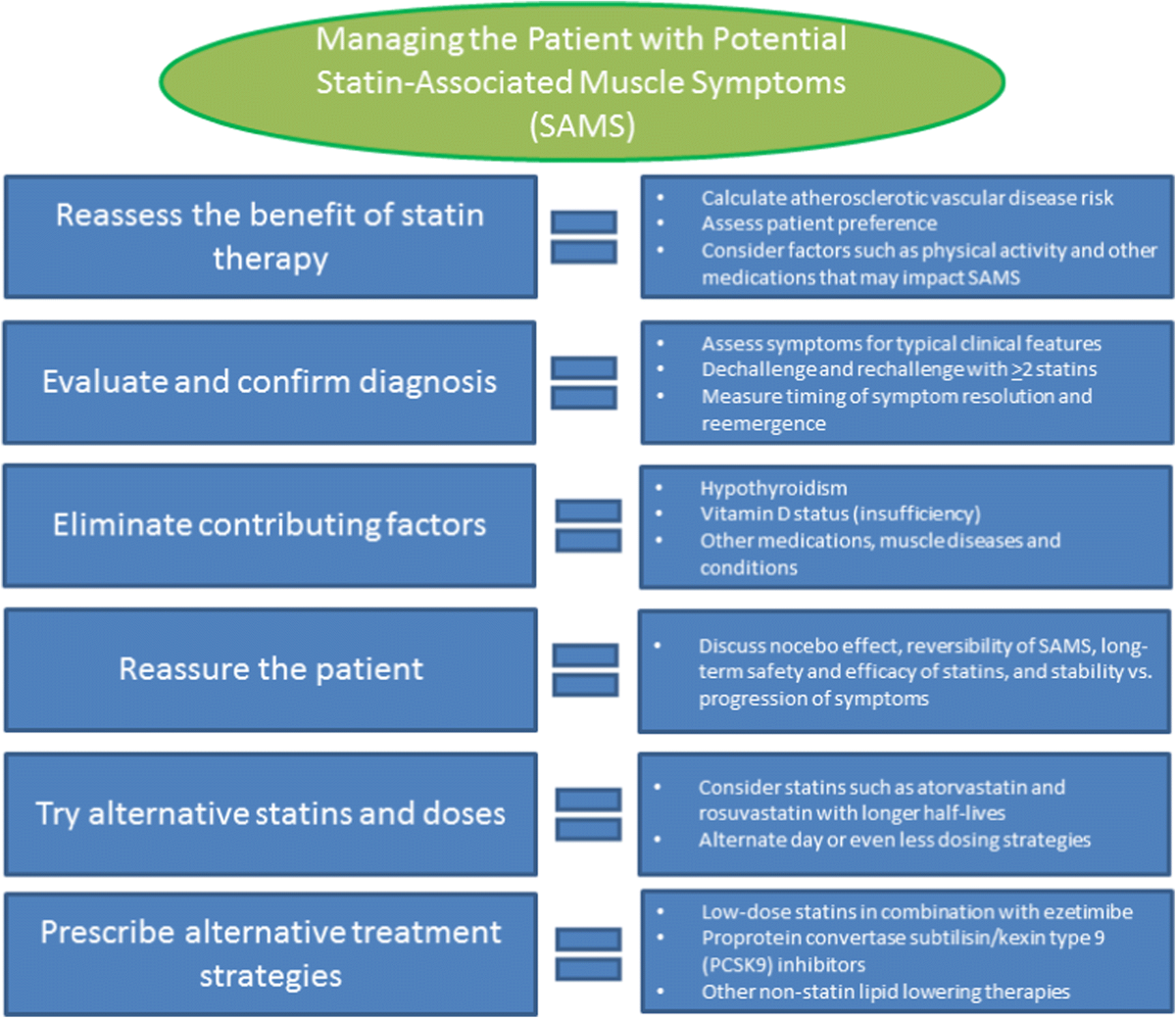
    Now to the worry that probably sent you searching in the first place. The muscle aches. Clinicians have a name for this whole category: statin-associated muscle symptoms, sometimes abbreviated SAMS. It covers a wide spectrum, and lumping the whole spectrum together is where a lot of fear comes from.

    At the mild and by far most common end, people describe soreness, tenderness, tiredness, or weakness in the muscles. Mayo Clinic notes this can feel like anything from minor discomfort to something annoying enough to interfere with daily activities. It often shows up in larger muscle groups like the thighs, shoulders, or back, and it tends to affect both sides of the body rather than one isolated spot.

    At the far, rare end of the spectrum sits a serious condition called rhabdomyolysis, in which muscle tissue breaks down and releases substances that can harm the kidneys. It is the scenario that headlines love and that quietly terrifies people. It is also genuinely rare. Mayo Clinic puts it plainly: only a few cases of rhabdomyolysis occur per million people taking statins, and it tends to happen when statins are combined with certain interacting medications or taken at high doses. The signs of something serious are worth knowing, not to scare you but to give you a clear line: severe muscle pain, dark or cola-colored urine, or extreme weakness are reasons to call your doctor promptly rather than wait. Knowing that line exists is what lets you relax about the everyday twinges that are not it.

    The Nocebo Effect, and Why It Is Good News

    The Nocebo Effect, and Why It Is Good News

    This next part is one of the most useful and least-known pieces of the whole picture. When researchers run carefully blinded trials, the kind where neither the patient nor the doctor knows who is getting the real statin and who is getting a placebo sugar pill, something striking happens. The rate of muscle symptoms in the statin group often looks remarkably similar to the rate in the placebo group. People taking a pill with no active medication report muscle aches at rates close to those taking the real thing.

    This is the nocebo effect. It is the flip side of the placebo effect. Where a placebo can make people feel better because they expect to, a nocebo can make people feel worse because they expect a side effect. Mayo Clinic states that the real risk of developing muscle pain specifically from a statin is about 5 percent or less compared with a placebo, and that one of the strongest predictors of whether someone reports muscle aches is simply whether they read about that side effect beforehand. Researchers writing in The Lancet and related work have described how a large share of reported statin muscle symptoms may trace back to expectation rather than the drug itself, a phenomenon some have nicknamed the “drucebo” effect.

    It would be easy to hear this as “your pain is in your head,” and that is absolutely not the point. Pain is real whether its source is the drug, anxiety, ordinary aging, a tough workout, or some combination. The genuinely empowering takeaway is different and gentler. A lot of the muscle pain people fear when starting a statin is not destiny. If you begin treatment without bracing for misery, you may simply do fine. And if symptoms do appear, the picture is rarely as grim or as fixed as the internet suggests. That knowledge is a quiet form of protection.

    Why Women, Especially Over 40, Deserve a Closer Look

    Why Women, Especially Over 40, Deserve a Closer Look

    Statins are not one-size-fits-all, and a few factors stack up in ways that are worth naming directly for women. Mayo Clinic lists being female and having a smaller body frame among the risk factors that can raise the odds of statin side effects. Other factors on that list include taking the highest dose of a given statin, taking more than one cholesterol-lowering drug at once, being older, having kidney or liver disease, having an underactive thyroid, or drinking heavily.

    Several of those intersect with women’s lives in midlife and beyond. Thyroid conditions, for instance, are more common in women, and an underactive thyroid that has not been well managed can itself cause muscle aches and can raise the risk of statin-related muscle symptoms. A smaller body frame can mean a standard dose lands differently. Kidney function naturally shifts with age. None of this means a woman should avoid statins. It means the starting dose, the specific statin chosen, and the other medications already in your cabinet all deserve a thoughtful look rather than an autopilot prescription.

    Drug interactions belong at the center of that look. Certain medications raise statin levels in the body and, with them, the chance of muscle trouble. Mayo Clinic names examples including some heart-rhythm drugs, certain antibiotics and antifungals, some HIV treatments, particular immune-suppressing drugs, and another cholesterol medication called gemfibrozil. Even grapefruit and grapefruit juice can interfere with how some statins are broken down, which is why your pharmacist may ask about it. The practical move is simple. Make sure whoever prescribes your statin has a complete, current list of everything you take, including supplements, because that list is one of the biggest levers for keeping you comfortable and safe.

    How to Have the Conversation Without Losing Your Nerve

    A good appointment is one you have prepared for, and you do not need a medical degree to prepare well. Bring your real questions and your real history, and treat the visit as a two-way decision rather than a verdict handed down to you.

    A few questions tend to open up the most useful discussion. You might ask what your actual cardiovascular risk looks like and how much a statin is expected to lower it, so the benefit feels concrete rather than abstract. You can ask which statin and which dose your doctor recommends and why, since some statins are more prone to muscle complaints at higher doses than others. It is fair to ask whether starting low and adjusting makes sense for you, and whether an every-other-day approach is ever appropriate for your situation. Ask what specifically should prompt a call, so you leave with a clear sense of normal versus worrisome. And hand over that full medication and supplement list so interactions can be checked before you ever swallow the first pill.

    If you start a statin and muscle symptoms do show up, there is a real menu of options, and stopping cold on your own is not the recommended first move. Mayo Clinic describes approaches a clinician might consider, such as a short, supervised pause to see whether the aches truly track with the medication, switching to a different statin, lowering the dose, or pairing a lower statin dose with another cholesterol-lowering medicine. Sometimes the aches turn out to be ordinary midlife stiffness or a new exercise routine rather than the pill at all, and a planned pause is how you find out. The point is that there is almost always a next adjustment to try.

    Why Stopping On Your Own Is the One Move to Avoid

    If you remember a single sentence from all of this, make it this one. Do not stop a prescribed statin on your own without talking to your doctor or pharmacist first. The reasoning is straightforward and worth sitting with. High cholesterol does not announce itself. It causes no symptoms while it quietly raises your risk of a heart attack or stroke, which means the medication can feel pointless precisely because it is working invisibly. Walking away from it because of an ache trades a manageable, often addressable discomfort for a real and silent cardiovascular risk.

    The honest, balanced picture is that statins carry genuine benefits and, for some people, genuine side effects, and the two have to be weighed together rather than one at a time. For most people, the protection against heart attack and stroke outweighs the risks, and serious side effects are very rare. For the smaller number who do struggle with muscle symptoms, the answer is rarely “give up” and almost always “adjust.” Both of those paths run through your doctor, not around them.

    So here is where the bottle on the counter goes. Pick it up, and bring it and your questions to someone who can see your whole picture. You are allowed to want both things at once: a heart that is protected for the decades ahead, and a body that feels like yours day to day. Those goals are not in conflict, and you do not have to choose between staying quiet and stopping cold. The middle path, the informed conversation, is the one that keeps both your heart and your comfort on the table. That conversation is yours to start, and you are more ready for it now than you were when that bottle first arrived.
  • The Best Amazon Fashion Finds for Curvy Women in 2026 – Editor-Tested Picks Under $50

    The Best Amazon Fashion Finds for Curvy Women in 2026 – Editor-Tested Picks Under $50

    The search bar fills with hope every time. You type “plus size wrap dress,” hit enter, and a wall of thumbnails floods the screen. Some look gorgeous on the model. A few have 12,000 reviews and a 4.5-star average. Others have stock photos that clearly never met a real body, sizing charts that contradict the product title, and that one review with a photo that tells you everything the listing tried to hide. Twenty minutes later, the cart has three maybes in it and the brain has quietly given up. Sound familiar?

    Shopping Amazon as a curvy woman is its own skill set. The platform is enormous, the brands are endless, and the quality swings wildly from “this is now my favorite piece” to “this is a costume of a dress.” But once you learn how to read it, Amazon becomes one of the most genuinely useful places to build a wardrobe that fits, feels good, and does not cost a fortune. Plenty of legitimately good plus-friendly pieces live there, usually well under $50, and they are worth knowing about by name.

    This is a map of where the real finds are, organized by category, with honest guidance on how to shop so the maybes in your cart turn into keepers.

    How to Actually Shop Amazon for a Curvy Body

    How to Actually Shop Amazon for a Curvy Body

    A few habits change everything, and they take seconds once they become automatic.

    Start with the left-hand size filter, not the search bar alone. After you search, scroll down the left rail and check the boxes for your size – 1X, 2X, 3X, and up, or the numeric plus equivalents. This strips out the listings that only go to an XL pretending to be roomy, and it surfaces brands actually building for your range. Amazon’s own size filters are reliable in a way the product titles are not.

    Read the size chart on every single listing, every time. Amazon brands do not share one universal chart. A 2X from one seller can run a full size off from a 2X elsewhere. Look for the chart with real measurements (bust, waist, hip in inches), grab a soft tape measure, and compare against a garment you already own and love. This one step prevents most returns.

    Mine the reviews like a detective, and sort by photos. Reviews with customer images are gold because you see the piece on bodies shaped like yours, not on a sample-size model. Search the review text for the words “runs small,” “runs large,” “true to size,” “stretch,” and “sheer.” If three different people say it runs small, believe them and size up. If reviewers mention a body type near yours and say it fit well, that is the closest thing to a fitting room you will get online.

    Favor fabrics with give. Anything listed as containing spandex, elastane, or a jersey or ponte knit will move with you and forgive day-to-day fluctuation. Woven fabrics with zero stretch are less forgiving and demand a more exact measurement match.

    Here is a quick checklist to keep handy while you scroll:

    • Filter by your exact size in the left rail before browsing.
    • Open the size chart and compare to your own measurements in inches.
    • Sort reviews by photos and look for bodies like yours.
    • Scan review text for “runs small,” “sheer,” and “true to size.”
    • Check the fabric content for stretch (spandex, elastane, jersey, ponte).
    • Confirm the return window so a wrong fit costs you nothing but a trip to the drop-off.

    With that toolkit in hand, the categories below become much easier to shop well.

    The Best Dress Finds

    The Best Dress Finds

    Dresses are where Amazon quietly shines for curvy shoppers, because so many of the strongest sellers build genuinely extended ranges.

    BTFBM has become a go-to name for a reason. The brand specializes in wrap dresses, smocked midi dresses, and floral pieces that photograph beautifully and tend to land in the $30 to $45 range. Reviewers consistently describe the fabric as soft and lightweight with a comfortable drape, and many report the cuts run true to size across the plus range. A faux-wrap with a tie waist is the kind of piece that works for a wedding guest moment, a date, or a dressed-up workday, and you can usually find one here for less than you would spend on lunch and parking downtown.

    The Drop, Amazon’s own in-house fashion label, is worth searching by name. It builds limited-run collections with a real commitment to size inclusivity, with many styles spanning an unusually wide range from extra-small all the way up through the higher X sizes. Think elevated basics, slip dresses, and trend-forward midi styles with a slightly more designer sensibility than the average Amazon listing. Prices often sit right around or just under $50, and the size range alone makes it one of the most curvy-considerate corners of the whole platform.

    For everyday jersey dresses, Daily Ritual (an Amazon brand) makes soft, pull-on knit styles in a dedicated plus range, including sleeveless gathered dresses and easy V-neck shapes that go up through generous sizes. These are the dresses you reach for on a Tuesday because they feel like a T-shirt and look put together. And ANRABESS, a highly rated seller with a deep plus selection, leans into relaxed, drapey silhouettes – tiered maxi dresses, batwing-sleeve styles, and easy linen-look pieces – usually in the $30 to $40 neighborhood.

    When you are choosing among them, let the reviews settle ties. Two similar wrap dresses at a similar price are not equal if one has hundreds of photo reviews from happy curvy shoppers and the other has none.

    Wide-Leg Trousers and Denim

    Wide-Leg Trousers and Denim

    The right pair of trousers can carry a whole wardrobe, and Amazon has quietly gotten good at curvy-friendly bottoms.

    For trousers, Amazon Essentials makes a linen-blend drawstring wide-leg pant that is available in plus sizes, with a pull-on elastic waistband and drawcord that skips the zipper-and-button fight entirely. Wide-leg, breathable, and easy to dress up or down, these usually sit comfortably under $40 and are the kind of thing you will want in two colors once you find your size. The brand also makes a stretchy ponte cropped wide-leg pull-on style if you prefer a more structured, dressier fabric that still moves.

    Denim is the category people fear most online, and it is exactly where measuring pays off. Signature by Levi Strauss and Co. Gold Label offers women’s jeans available in plus sizes, in stretch-denim cuts including modern straight, pull-on shaping skinny, and a heritage wide-leg. The stretch in the Simply Stretch denim is what makes these forgiving, so they hug curves without bagging out at the knee by mid-afternoon. They are an affordable entry point to a trusted denim name, frequently landing in the $30s. Reviews here are split, as they are with most denim, so read them carefully: some shoppers love the stretch and high-rise comfort, others find the lighter-weight denim too thin for their taste. That is useful to know before you click, not after.

    With jeans more than anything, ignore the title size and trust the measurement chart plus the review consensus. Denim sizing is chaos across every brand on earth, and Amazon is no exception.

    Tops and Bodysuits

    Tops and Bodysuits

    Tops are the easy win – the category where a $20 find can genuinely earn a spot in heavy rotation.

    Made By Johnny is a reliable name for soft, drapey tops, tunics, and basics in extended sizes, often in rayon-spandex blends with a bit of stretch and flow. These run inexpensive, frequently in the $15 to $25 band, which makes them low-risk experiments when you want to try a neckline or sleeve you have not worn before. Daily Ritual again earns a mention here for its plus jersey tanks, tees, and tunics that go up through generous sizes and wear like the softest things you own. Buy one, and you will understand why people buy three.

    For tops with a bit more polish, ANRABESS carries relaxed blouses and oversized knit sweaters that reviewers describe as soft and cozy rather than scratchy, and the brand’s plus range runs deep. A drapey blouse over wide-leg trousers is an entire outfit, assembled for well under $50 total.

    Bodysuits deserve a clear-eyed note. They can be a clean foundation under blazers, skirts, and jeans, and they stop the untucking shuffle all day. If you want light smoothing, shaping bodysuits from brands like SHAPERIN are available on Amazon in extended sizes. Treat shaping as an option, never an obligation. A bodysuit should feel like a comfortable second skin, not a corset you are counting down to remove. Read reviews specifically for comfort and the bathroom-closure design, size up if the chart sits between two options, and skip anything that reviewers describe as cutting in.

    Swimwear and Vacation Pieces

    Swimwear and Vacation Pieces

    Swimwear is where good size inclusivity matters most, because the alternative is a season of skipping the pool, and absolutely no one deserves that.

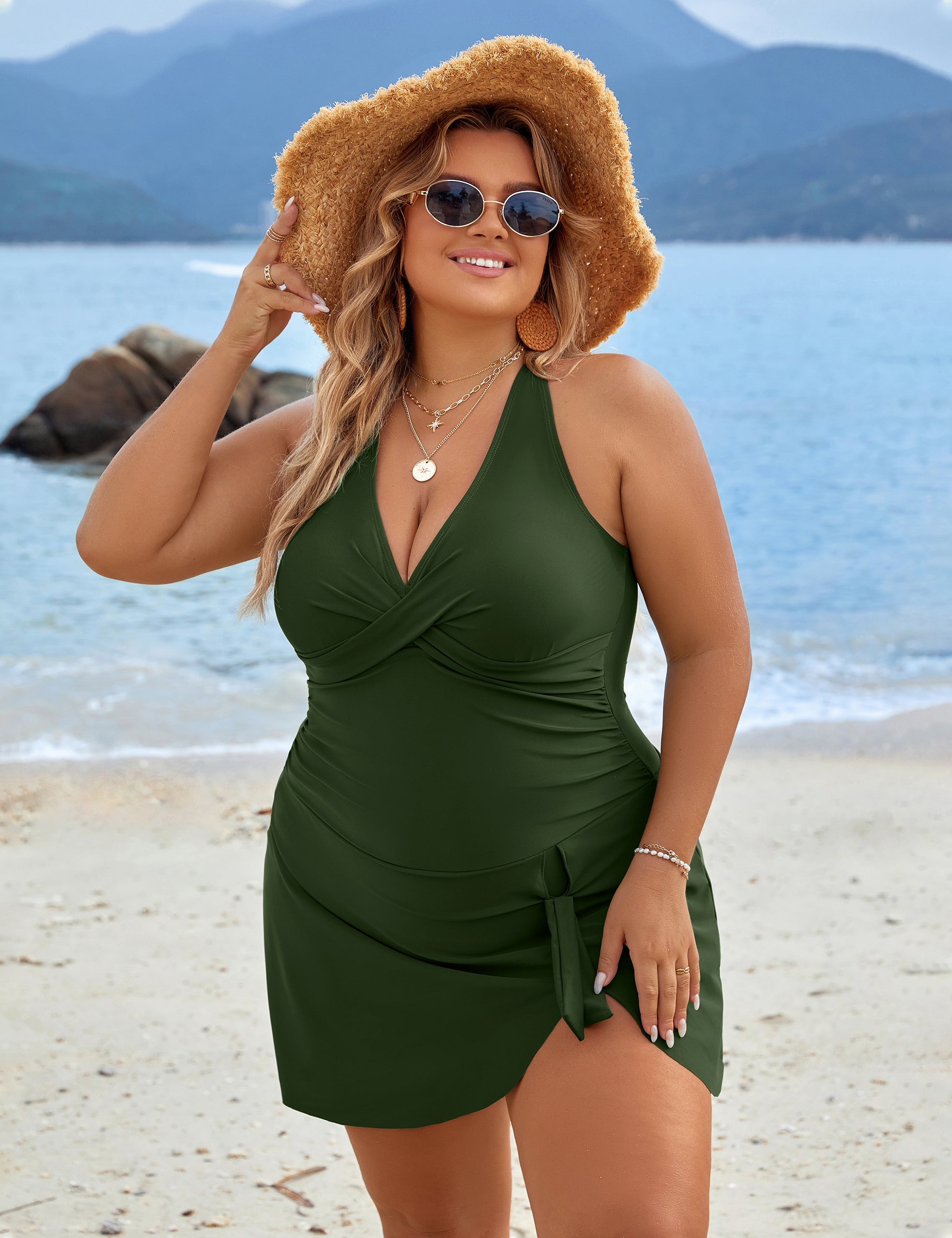
    Hanna Nikole is the name to know here. The brand specializes in plus-size swimwear and makes one-pieces, tankinis, swimdresses, and skirted styles in a genuinely extended size range. Reviewers (across Amazon and other retailers carrying the brand) describe the suits as well made, true to size, and notably supportive for fuller busts, which is the exact gap most swimwear leaves wide open. Many styles include adjustable straps and built-in bust support, and prices tend to sit in the affordable swimwear band rather than the eye-watering boutique one.

    When you shop swim, the review photos matter more than anywhere else on this list. Look for images on bodies near your shape, check that reviewers confirm the bust support actually holds, and read for any mention of the lining being thin or the color running sheer when wet. A tankini is the most versatile vacation buy because the separate top and bottom let you size each half independently – a real advantage when your top and bottom are not the same number, which is true for a great many of us.

    Round out a vacation capsule with an easy ANRABESS linen-look maxi as a beach cover-up that doubles as a dinner dress, and a pair of the Amazon Essentials drawstring wide-leg pants for the flight, and you have packed light without packing boring.

    Layering and Outerwear

    The pieces that pull an outfit together are often the ones people forget to shop for online, and they are some of the most reliable finds.

    An oversized knit cardigan or duster is the workhorse of a curvy wardrobe, layering over everything and adding shape without compression. ANRABESS makes open-front cardigans and longline knits that reviewers repeatedly call soft and cozy, and they tend to be forgiving by design because the open front skips the fit math entirely. A long cardigan over a Daily Ritual tank and Levi’s denim is a complete, comfortable, genuinely good-looking outfit, head to toe, for well under $80.

    For structure, Amazon Essentials makes everyday blazers and jackets in plus sizes that work as the third piece over a bodysuit or tee. A blazer in a fabric with a little stretch reads polished for work or an event without feeling like armor. When you shop outerwear, the shoulder and bust measurements matter more than the overall size label, since a jacket that fits the shoulders but not the bust will pull, and one that fits the bust but drowns the shoulders will look borrowed. Check both numbers against the chart.

    Layering pieces are also where you can take more chances, because an open cardigan or a relaxed blazer forgives a slightly imperfect fit in a way a fitted dress never will. This is the safe place to experiment with a color or texture you have been curious about.

    An Honest Note on Fit and Returns

    Here is the truth no product listing will tell you: even with perfect research, some pieces will not work, and that is normal, not a failure on your part or your body’s. Fabric behaves differently in person. A cut that flatters one curvy shape sits differently on another, because “curvy” is not one body – it is hundreds of beautiful proportions, and no single garment serves all of them.

    So lean on the system Amazon gives you. Confirm the return window before buying, keep the tags on until you have tried a piece with the shoes and bra you would actually wear it with, and send back anything that does not feel right without a second thought. A garment that pinches, gaps, or makes you fuss is not earning its keep, no matter how good the price was. Returns are part of online shopping, not a verdict.

    And calibrate your expectations to the price. A $25 dress will feel like a $25 dress in the hand. That is completely fine when the cut is good and the fit is right. Knowing what a piece is – an affordable, cheerful, well-fitting find rather than an heirloom – is what keeps Amazon shopping satisfying instead of disappointing.

    Your curvy Amazon starting lineup

    Pick one category you actually need right now and shop it properly, rather than filling a cart across all six. If your everyday rotation is thin, start with a Daily Ritual jersey dress and an ANRABESS cardigan. If you have an event, search The Drop and BTFBM for something under $50. If summer is coming, go straight to Hanna Nikole and order two tankini tops in different sizes so you can keep the one that fits and return the other.

    Filter by your size, read the chart against your own measurements, sort the reviews by photos, and trust what curvy shoppers before you have already learned the hard way. The pieces are out there, they fit, and they cost far less than the fitting-room frustration you have been putting up with. Add one good thing to the cart today, measure twice, and let the right find come to you.

  • Dolly Parton’s Unapologetic Style Philosophy and What Every Woman Can Learn From It

    Dolly Parton’s Unapologetic Style Philosophy and What Every Woman Can Learn From It

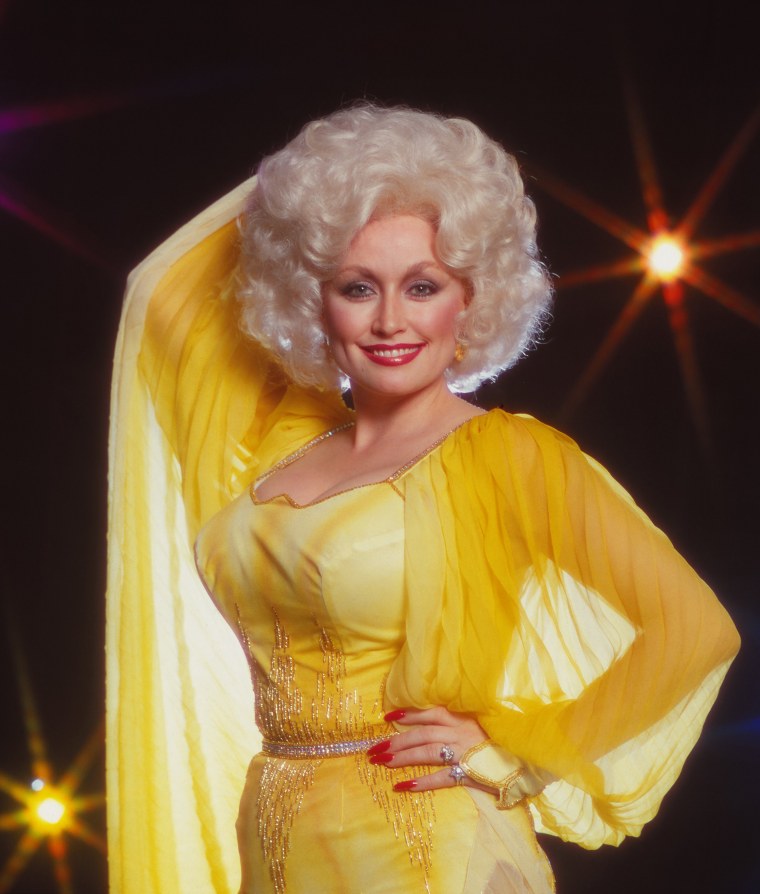
    Picture a small girl in the hills outside Sevierville, Tennessee, watching a woman walk down the main street of town. The locals called this woman the town tramp. They said cruel things. But the child saw something else entirely. As Dolly Parton would later tell it, “They called her trash, but to me she was absolutely beautiful.” The woman wore colorful patchwork skirts and pretty blouses, showed a little cleavage, kept red nails and red lipstick and piled-up blond hair and high heels. To a poor kid raised in a one-room cabin with eleven siblings and no running water, that woman was not a cautionary tale. She was a vision. And in that moment, a style philosophy was quietly born that would carry one of the most beloved women in the world across more than six decades of public life without ever once apologizing for how she looked.

    That little girl grew up to become a country music legend, a businesswoman, a philanthropist, and a fashion icon whose look has never gone out of style because it was never chasing style in the first place. The lesson buried in her story is one that every woman, of every size, every age, and every budget, can borrow for herself. You do not have to wait for permission to be the most fully realized version of you. Dolly never did.

    The Town Tramp, Mae West, and the Permission to Shine

    The Town Tramp, Mae West, and the Permission to Shine

    Most fashion icons borrow from designers. Dolly borrowed from a woman her whole town looked down on, and she has never hidden it. That choice tells you everything about how she sees self-expression. She did not absorb the message that bold was bad, that loud was vulgar, that a woman who took up space and asked to be looked at had done something shameful. She decided, as a child, that the woman everyone mocked had it exactly right.

    Alongside that local muse, Parton has cited Mae West and Marilyn Monroe as inspirations, women known for owning their glamour and their bodies in eras that often punished women for both. Pulling the thread together, Dolly has summed up her north star simply: “I wanted anything colorful, anything sparkly. I just wanted to shine.” There is no hedging in that sentence. No “I hope it’s not too much.” No shrinking. Just a clear, joyful want.

    That is the first thing every woman can take from her. So many of us dress defensively. We choose the outfit least likely to draw comment, the neutral that disappears, the silhouette that hides rather than the one that delights us. Dolly flipped the question. Instead of asking what will keep me safe from judgment, she asked what makes me feel alive. The answer was rhinestones, and she chased it for sixty years. You are allowed to want to shine. You do not need a special occasion or a smaller dress size to deserve it.

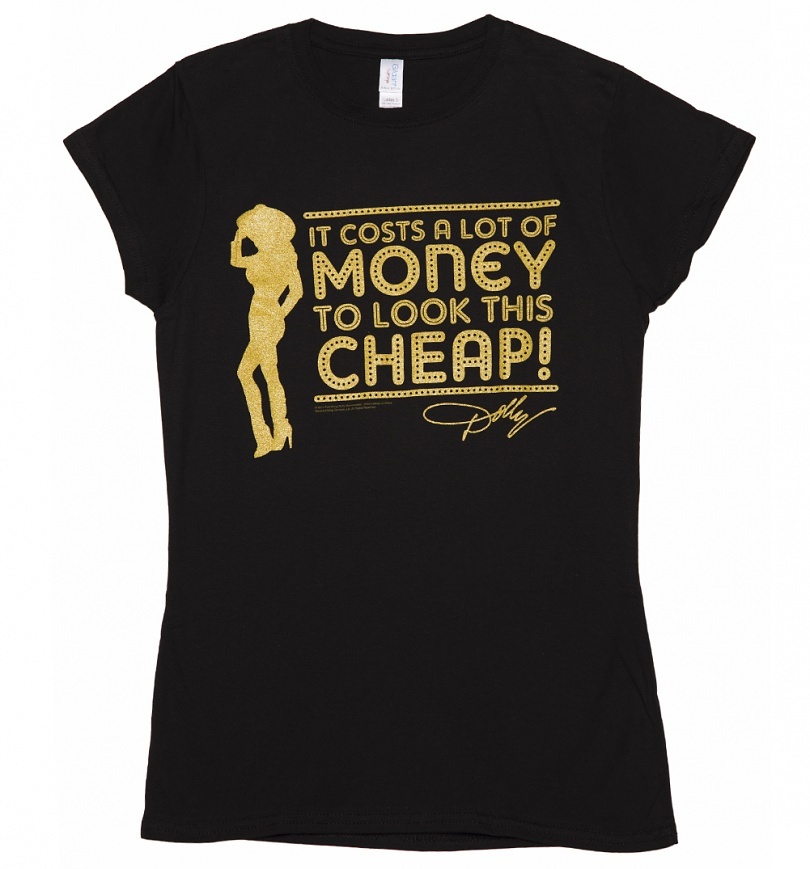
    “It Costs a Lot of Money to Look This Cheap”

    No single line captures Dolly’s relationship with her own image better than the one she has repeated, with a wink, for decades: “It costs a lot of money to look this cheap.” It is funny, and it is meant to be. But sit with it and it becomes something close to a manifesto.

    What she is doing in that sentence is taking a word that has been thrown at women like a stone, cheap, and wearing it like a tiara. She is refusing to be insulted. She has said plainly, even into her late seventies, “I want to look cheap. That’s my look. I want to look a little bit, you know, trashy.” She named the thing other people meant as criticism, claimed it on purpose, and made it the whole point. You cannot wound someone with a word they have already chosen for themselves.

    There is real power in that move for the rest of us. Maybe the word that gets used against you is not “cheap.” Maybe it is “too much,” or “extra,” or “trying too hard,” or one of the coded ones women hear about their bodies. Dolly’s answer is to look at the label, decide whether it actually describes something you love, and if it does, to pin it on with pride. The judgment loses its grip the moment you stop flinching from it. She turned a put-down into a brand, and that brand outlasted every critic who ever sneered.

    It helps to remember that the people doing the sneering rarely have a better life to offer in exchange. They are not handing you a happier way to be. They are only asking you to be smaller and quieter so that you take up less of their attention. Dolly worked that out early and never paid the toll. She let the comments wash past her and kept her energy for the things that actually mattered to her, the songs, the businesses, the people she loved. Choosing what gets to bother you is its own kind of freedom, and she has guarded hers fiercely for a lifetime.
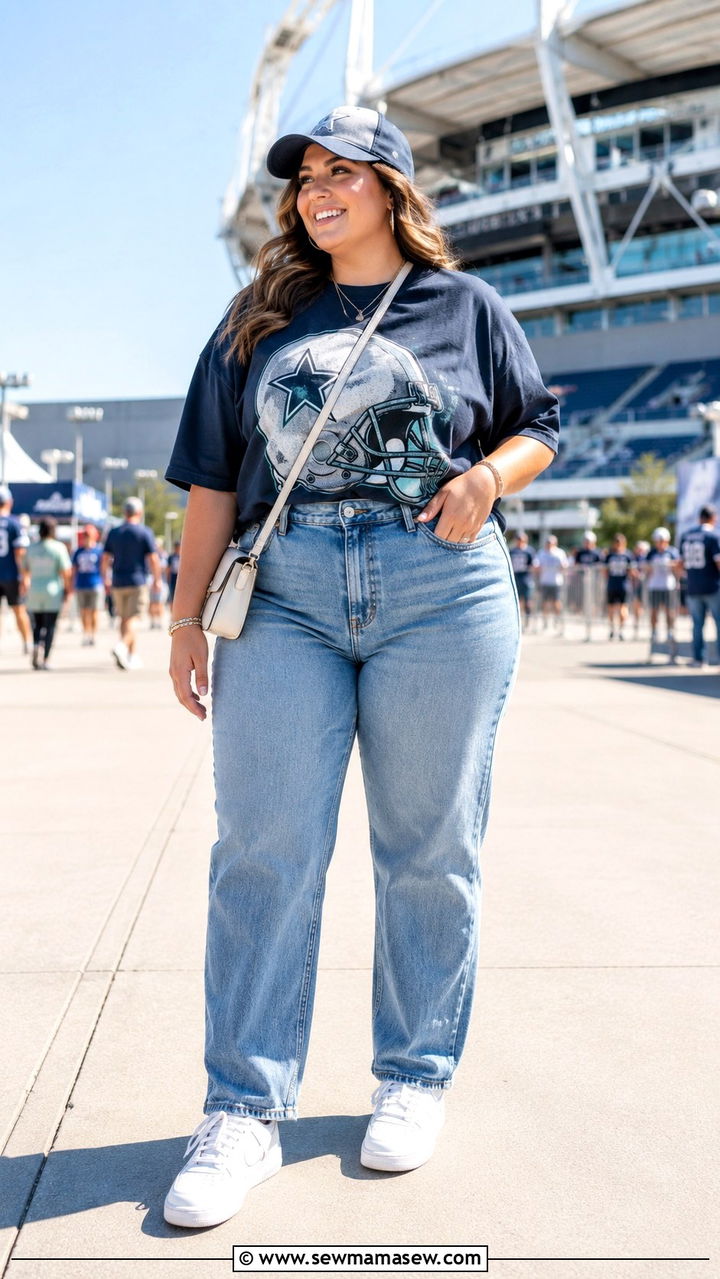
    The Wigs, the Nails, the Rhinestones: A Costume You Choose on Purpose

    People sometimes assume Dolly’s elaborate look is about insecurity, about hiding. The truth is more practical and more freeing. She has been candid that the wigs began for a simple reason: “I started wearing wigs because I quickly realized that bleaching and teasing my hair every day would cause breakage and not look good.” What started as a fix became a signature. The wigs are not a mask. They are a tool, and she uses them the way a painter uses a favorite brush.

    That is the part worth lingering on. Dolly treats her appearance as a costume in the best sense of the word, a deliberate, crafted, controllable thing she builds to present the person she wants to be. The sky-high hair, the manicured nails, the sequins and crystal beading and statement gowns are not accidents she stumbled into. They are decisions. Every single one. And because they are decisions, they belong to her completely. Nobody handed her this look. She designed it.

    For everyday women, the translation is liberating. You do not have to be born photogenic or naturally striking to have a signature. You get to assemble one. The red lip you reach for on hard days. The earrings that make you feel like yourself. The print you love even though a magazine once said women over forty or above a size sixteen should avoid it. These are your rhinestones. Dolly’s genius was never that she was effortlessly beautiful. It was that she understood beauty as something you can author, and then she sat down and wrote her own.

    Confidence That Does Not Bend for Age or Size

    Confidence That Does Not Bend for Age or Size

    Here is the quiet revolution inside Dolly Parton’s whole career. She has never adjusted her self-presentation to satisfy anyone else’s timeline. The fashion world tells women, relentlessly, that there is a window. Be bold while you are young and thin, then graduate to tasteful restraint, then disappear gracefully. Dolly ignored every word of it. In her late seventies she was still chasing sparkle as hungrily as she did at twenty-five, still saying out loud that she wanted to look a little trashy, still piling her hair as high as ever.

    Part of what protects her is a refusal to be diminished by mockery. Her response to one of the oldest insults aimed at women like her is a masterclass in self-possession: “I’m not offended by dumb blonde jokes because I know I’m not dumb. I also know I’m not blonde.” She lets the joke land on someone else. She knows who she is, so the teasing cannot reach the real her.

    That sense of self did not come from a flattering mirror. It came from clarity. And that clarity is available at any age and any size. The woman who decides she will keep dressing for joy at sixty, at seventy, at eighty is not refusing to age. She is refusing to accept that aging means surrendering her delight in herself. The woman who buys the bright dress at a size twenty-two is not “getting away with” anything. She is doing exactly what Dolly did. She is dressing for the person she actually is, not the smaller, quieter person the world keeps suggesting she should become.

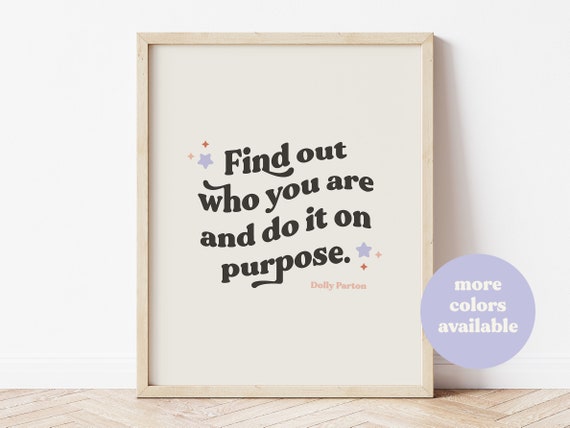
    Find Out Who You Are and Do It on Purpose

    Find Out Who You Are and Do It on Purpose

    If you stripped Dolly Parton’s entire philosophy down to one instruction, it would be the line she has given as advice more than almost any other: “Find out who you are and do it on purpose.” Six words, and they hold the whole thing.

    Notice the two halves. First, find out who you are. That is the work most people skip. It means getting honest about what you actually love rather than what you have been told to love, what makes you feel powerful rather than what photographs as acceptable, what feels like home on your body rather than what the rules approve. Dolly did this work as a child in the hills and never undid it. By the time she was performing on Knoxville radio and television before she was even a teenager, she already knew the answer.

    Then, the harder half: do it on purpose. Not by accident. Not when you feel brave enough. On purpose, every day, as a practice. Dolly has done this with extraordinary consistency, building a body of work that includes some of the most recorded songs in history, a beloved theme park, and a childhood literacy program, Dolly Parton’s Imagination Library, that has mailed well over a hundred million free books to children. Her estimated fortune, often placed in the hundreds of millions, is real, but it has never been the point. The point was always the doing-it-on-purpose, the daily decision to be unmistakably herself in a business that would have happily smoothed her into something more conventional.

    She also understood that doing it on purpose includes the hard days. “If you want the rainbow,” she has said, “you gotta put up with the rain.” The boldness was not the absence of difficulty. It was a choice she kept making through the difficulty.

    How to Borrow a Little Dolly for Yourself

    How to Borrow a Little Dolly for Yourself

    You do not need a wig wall or a recording contract to live by this. The philosophy scales down to a single closet. Start by noticing the pieces you reach past because someone once told you they were not “for you.” Pull one out. Wear it on a Tuesday for no reason. That small act of dressing for your own pleasure rather than other people’s comfort is the entire Dolly method in miniature.

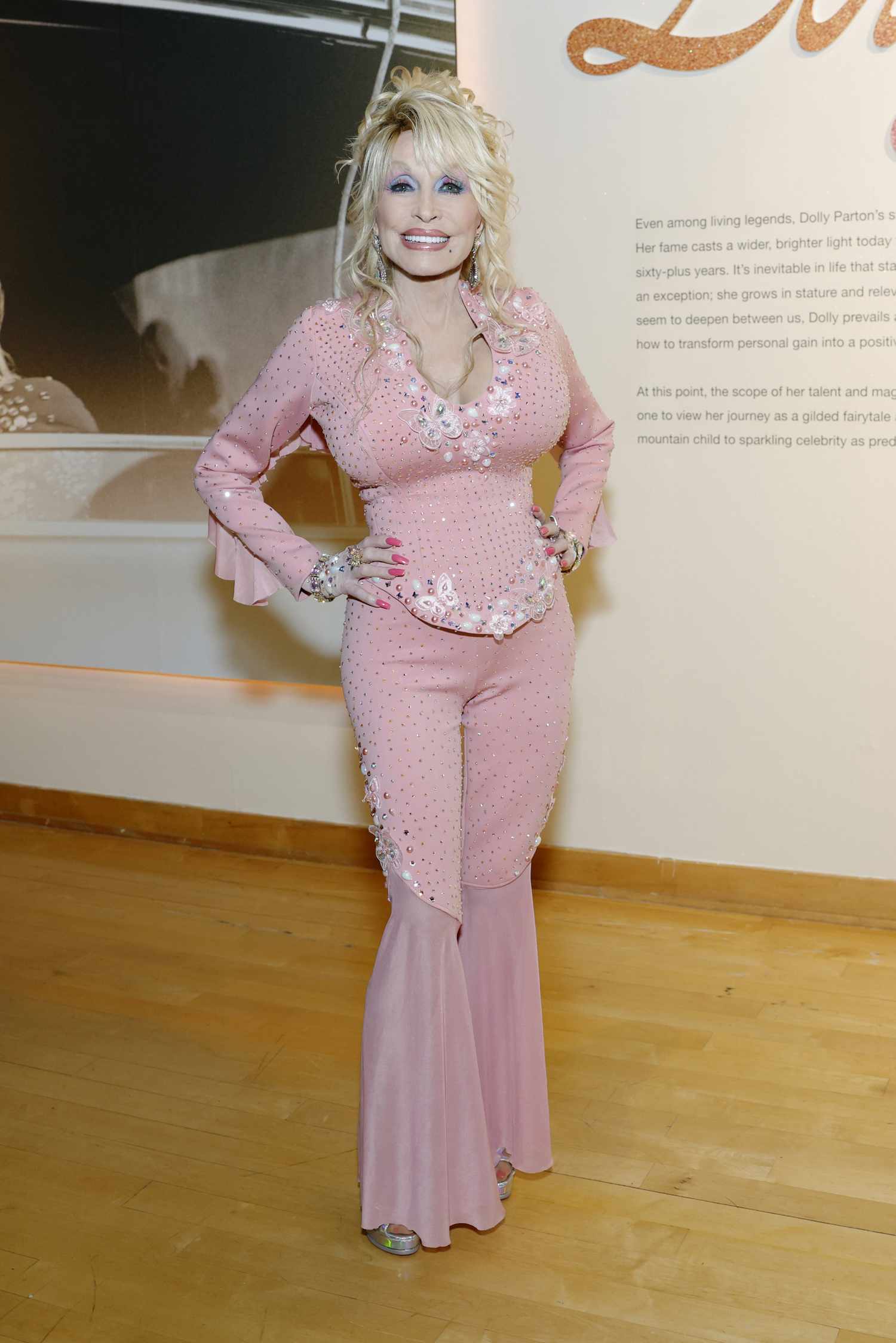
    The good news in 2026 is that the bold, body-confident woman has more places to shop than ever, and the rhinestones come in every size. Brands like Universal Standard build genuinely elegant, expressive pieces across an extended size range. Eloquent and joyful options come from Eloquii, which has long treated plus-size dressing as a chance for drama rather than apology. Torrid leans into exactly the kind of fun, flirty, unmistakable style Dolly would recognize, and the denim-and-confidence world of Good American keeps widening its range too. Vintage and resale racks are another rich hunting ground, full of the sparkle and color Dolly herself learned to love before any of these labels existed. The brand matters far less than the spirit. Buy the thing that makes you feel like the most-you version of you, and then, crucially, actually wear it.

    And when the doubts creep in, the ones that whisper that you are too old or too big or too loud for this, remember that the most copied, most adored, most enduring style icon of her generation built her entire look on a woman her whole town called trash, claimed the word “cheap” as a compliment, and never once dimmed herself to make other people comfortable. Dolly Parton is not beloved despite her boldness. She is beloved because of it. The sequins were never the secret. The decision to wear them on purpose, every single day, regardless of who was watching, is the part you get to keep.

  • Caitlin Clark’s Style Playbook – How to Wear Athleisure Off the Court at Every Size

    Caitlin Clark’s Style Playbook – How to Wear Athleisure Off the Court at Every Size

    The Tunnel Walk That Started a Thousand Group Chats

    The Tunnel Walk That Started a Thousand Group Chats

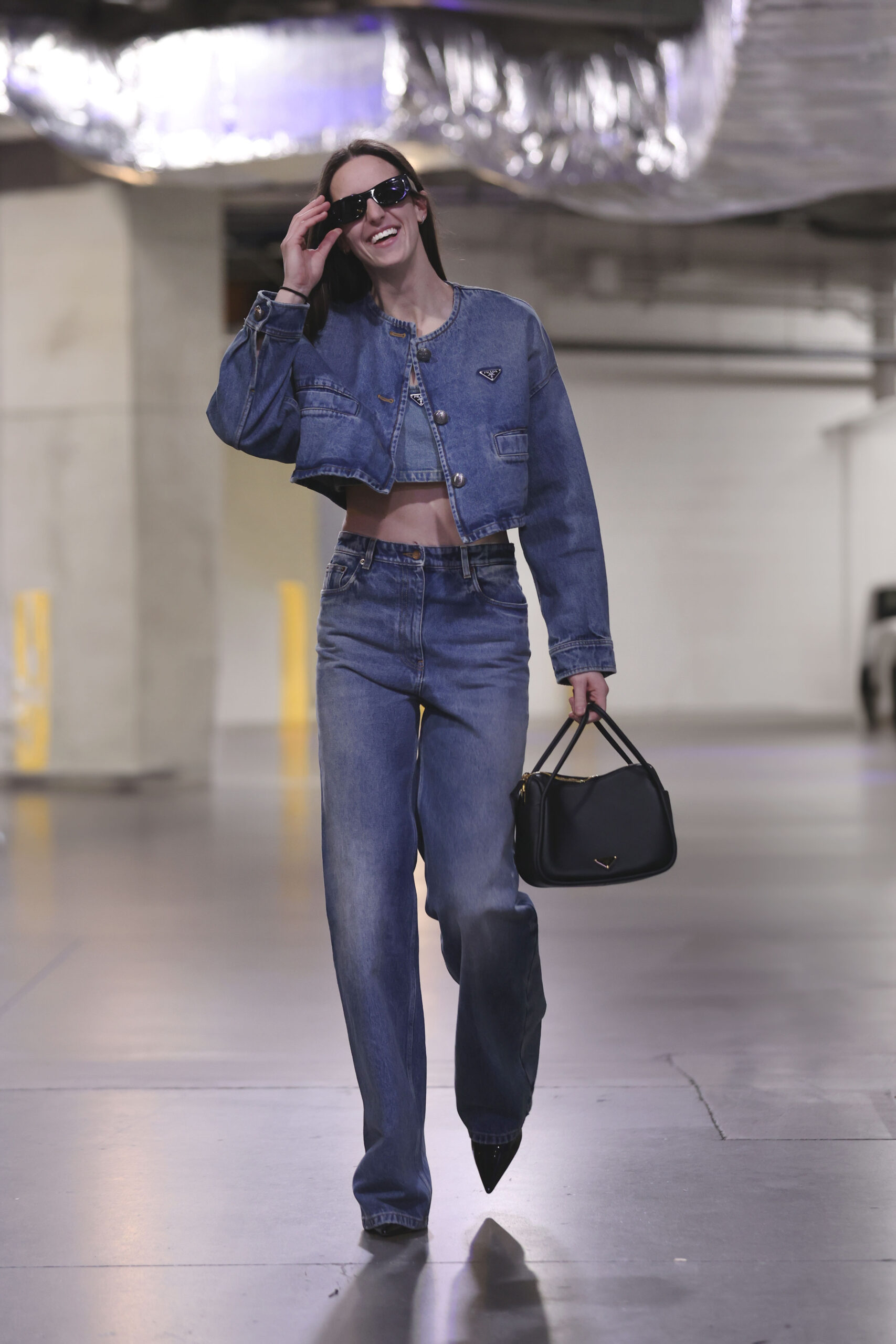
    Picture the corridor outside an Indiana Fever locker room, phones up, cameras clicking, and a tall point guard strolling through in a semi-sheer black suit with cropped trousers. No jersey yet, no sneakers laced for the game, just tailoring that reads “all business” before a single shot goes up. That walk – the WNBA tunnel – has quietly become one of the most-watched runways in sports, and Caitlin Clark has turned it into appointment viewing. One night she is in a Zac Posen-designed GapStudio trench, skort, and cropped shirt finished with granite-gray Prada slingbacks. Another she is in a brown pinstriped blazer over an oversized denim-effect button-down and matching jeans. The looks change. The formula underneath stays the same, and that formula is something any of us can borrow.

    Here is the part worth sitting with: the through-line in Clark’s style is not a designer label or a sample-size body. It is restraint, fit, and a handful of pieces that work hard. That is athleisure thinking dressed up, and it scales beautifully to a size 22 just as it does to a size 2. The blazer does not know your dress size. Neither does a clean white sneaker or a matching set in a color you love. So let’s pull her playbook apart and rebuild it for curvy and plus-size bodies, with real brands and real fits, because elevated comfort belongs to every one of us.

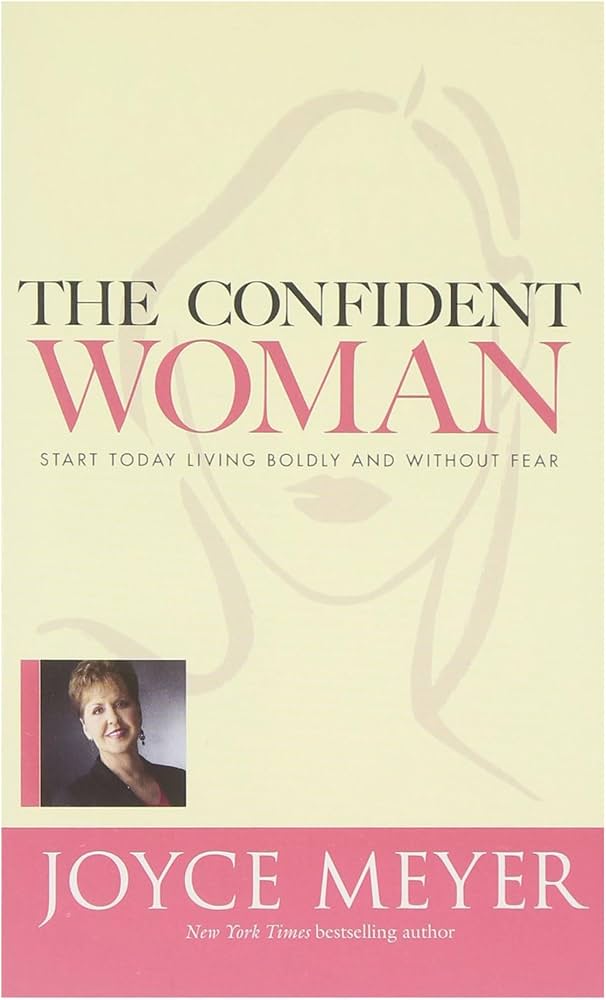
    Who She Is, and the Signature Underneath the Hype

    Who She Is, and the Signature Underneath the Hype

    Caitlin Clark plays point guard for the Indiana Fever in the WNBA and arrived in the league as one of the most hyped rookies in its history. A two-time All-Star, she became known first for logo-range three-pointers and second, almost as fast, for what she wore walking into the arena. In April 2024 she signed an eight-year Nike signature sneaker deal reported at roughly 28 million dollars, a figure that made headlines as one of the biggest of its kind for a women’s basketball player. Nike unveiled her signature logo and an apparel collection in 2025, and her first signature shoe, the Nike Caitlin 1, is set to launch on October 1, 2026, priced around 140 dollars for adult sizing in North America. The shoe carries her interlocking CC logo and a new upper Nike calls Opticast.

    Her fashion signature is easier to describe than to copy, which is exactly why it is worth studying. At the 2024 WNBA Draft she became the first player the league had ever seen dressed head to toe by Prada, in white satin and rhinestone mesh with black slingbacks. Since then her tunnel look has settled into something more wearable: minimalist, sporty, and elevated. Think tailored trousers, crisp white tops, beige trench coats, and the occasional sharp suit, with sneakers or a clean heel depending on the night. Nothing fussy. Nothing loud for the sake of it. The clothes are good, they fit, and they let her move. That last word – move – is the whole point of athleisure, and it is the bridge from her wardrobe to ours.

    The Elevated-Basics Formula

    The Elevated-Basics Formula

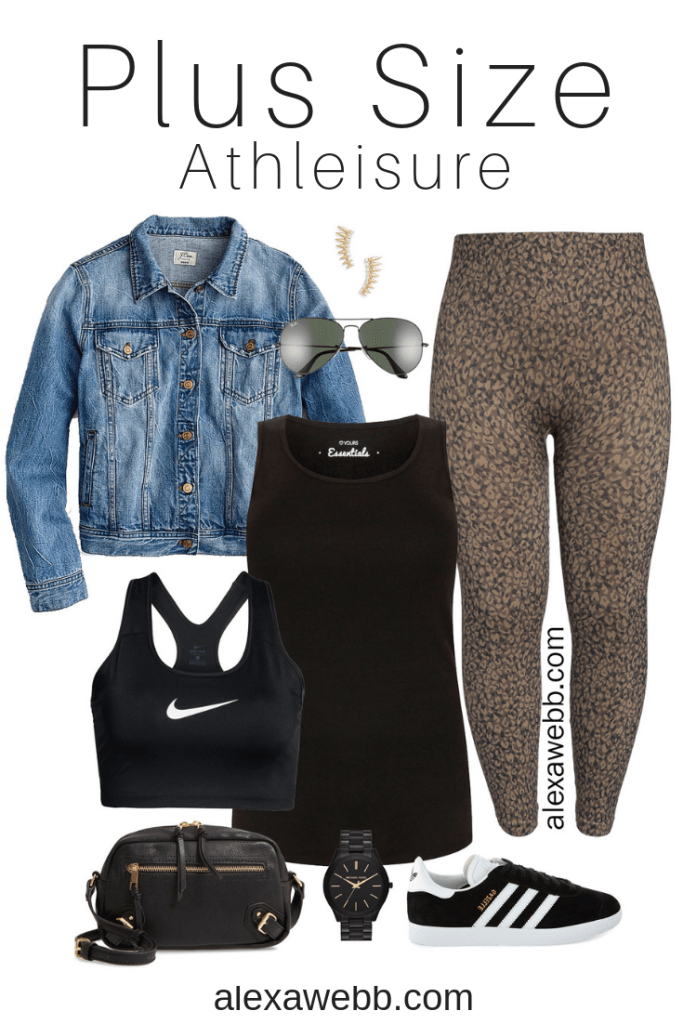
    Strip Clark’s look down to its bones and you get a short list: one structured piece, one soft piece, one clean shoe, and a fit that skims rather than swallows. That is the elevated-basics formula, and it is forgiving in the best way. The structured piece gives a look its spine – a blazer, a trench, a tailored trouser. The soft piece keeps it comfortable and human – a ribbed tank, a good legging, a relaxed tee. The clean shoe ties the room together. Get those three right and you can look pulled together in under five minutes.

    For curvy and plus-size bodies, the formula needs one extra rule that thin frames can ignore: fabric has to hold its shape. Thin, clingy jersey reads cheap on every body, but on a fuller figure it also tends to grab and ride. Reach instead for compressive, structured knits with a touch of recovery, the kind that smooth without squeezing the breath out of you. A ponte legging holds a leg line better than a flimsy one. A ribbed tank in a heavier weight sits flat instead of rolling at the hem. Universal Standard, which runs sizes 00 to 40, built much of its reputation on exactly this idea, fabric engineered to drape rather than cling, and its athleisure pieces carry that same logic. The basics are only as good as the cloth they are cut from, so spend your attention there before you spend it on logos.

    Color does quiet work here too. Clark leans on a tight palette – black, white, brown, beige, the occasional denim blue – and that restraint is what makes cheap and expensive pieces read as one outfit. A neutral base lets you mix a 20-dollar tank with a heavier blazer and have the eye see a single intentional look rather than a pile of separates. Pick two or three colors you genuinely love against your skin, buy your basics in those, and watch how much easier getting dressed becomes.

    Matching Sets and the Monochrome Move

    Matching Sets and the Monochrome Move

    If there is one trick that does the most work for the least effort, it is the matching set. A coordinated top and bottom in the same fabric and shade creates one long, uninterrupted line from shoulder to ankle, and a long line is endlessly flattering on a curvy frame because it gives the eye somewhere smooth to travel. This is the monochrome move, and it is everywhere in Clark’s elevated-casual rotation for good reason. Same color, top to bottom, instantly reads as deliberate.

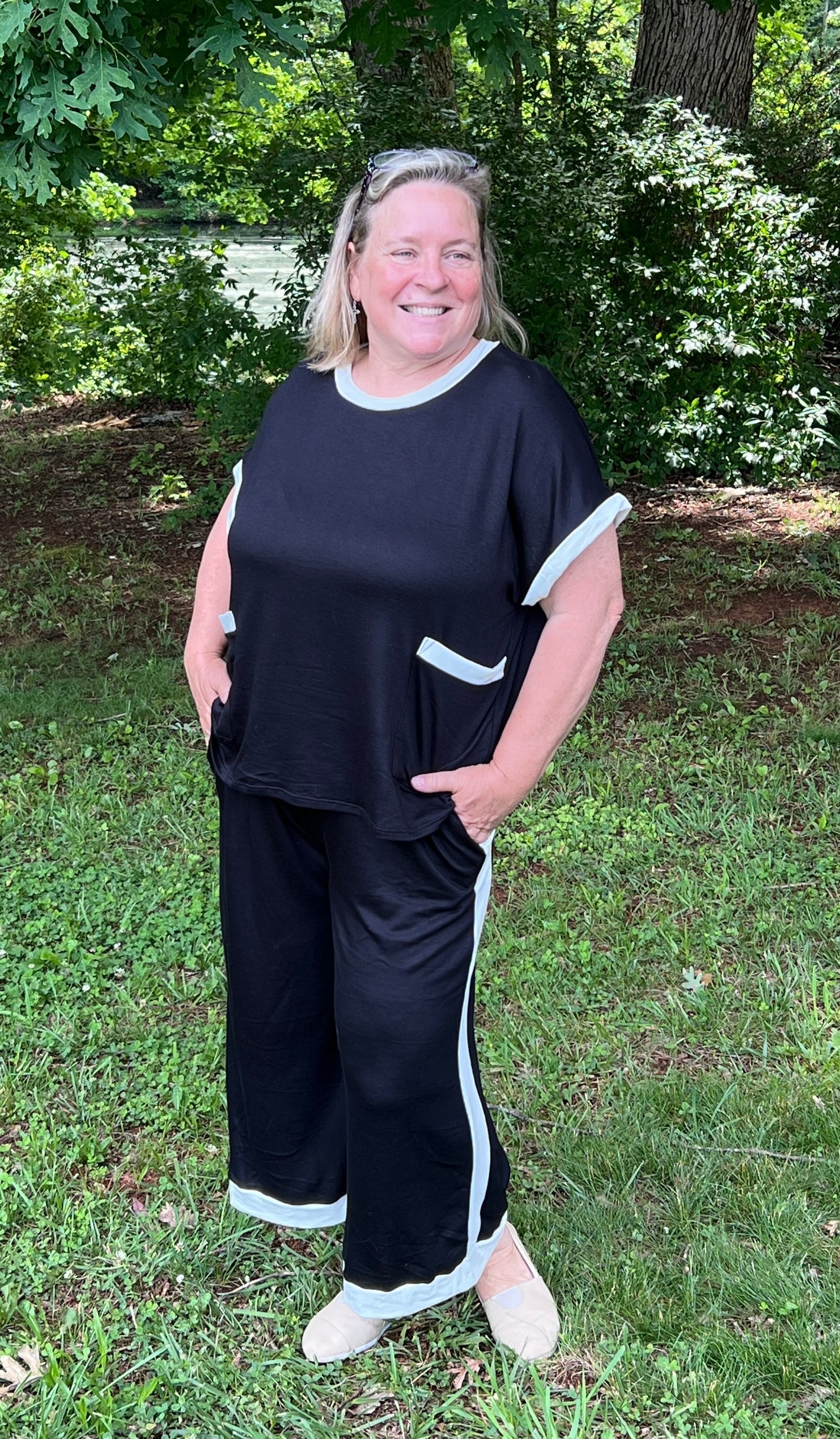
    The plus-size sweet spot is a set in a mid-weight knit – a cropped or hip-length top with a high-rise legging or wide-leg pant in the identical tone. High-rise matters more on a fuller midsection than almost any other detail, because a waistband that sits at or above the navel stays put through movement and gives a smooth foundation for whatever goes on top. Girlfriend Collective, which offers sizing up to 6XL, has become a go-to for tonal sets in earthy, grown-up colors, and its compressive fabric is the structured kind that holds rather than clings. Old Navy Active is the budget-friendly counterpart, with extended sizing and frequent restocks of basic matching pieces in neutrals you can layer for years.

    Two small adjustments make a set feel styled rather than slept-in. First, vary the texture even when you keep the color – a ribbed top with a smooth-knit pant in the same shade gives subtle depth that a flat head-to-toe match misses. Second, break the monochrome with one hardware moment, a gold hoop, a structured bag, a watch. That single point of contrast is the difference between looking like you are running errands and looking like Clark walking a tunnel. The set does the heavy lifting. You just have to point the eye where you want it.

    The Blazer-Over-Athleisure Move, and Dressing It Up

    The Blazer-Over-Athleisure Move, and Dressing It Up

    This is the move that quietly defines Clark’s whole approach, and it is the most useful one to steal: put structure on top of softness. A blazer over a tank and legging set takes an outfit from the gym to a dinner reservation without a single uncomfortable garment in the mix. The blazer’s shoulder and lapel do the formal talking. The athleisure underneath keeps you breathing. Clark wears tailored jackets over relaxed pieces constantly, and the contrast – sharp over soft – is what makes the look feel intentional instead of lazy.

    For curvy and plus-size bodies, the blazer is where fit precision pays off most. Look for a jacket that closes comfortably across the bust without straining the button, or skip the closure entirely and wear it open, which elongates the torso and frames the body in two flattering vertical lines. A single-button or one-button stance hits at a more forgiving point than a high three-button. Length is personal, but a blazer that grazes mid-hip or just below tends to balance a fuller bottom half better than a cropped cut. Universal Standard and a growing number of mainstream brands now cut blazers in genuinely extended ranges, and a well-fitting jacket in black, camel, or pinstripe will outwork almost anything else in a wardrobe.

    Dressing the whole thing up is mostly about swapping two items. Trade the legging for a tailored trouser or a ponte pant with a pressed line, and trade the sneaker for a clean loafer, a slingback, or a low block heel. Keep the soft top underneath – that is the comfort secret nobody can see. Athleta, which carries plus sizing up to 3X and is built around movement, makes trousers and ponte pieces that pass for tailoring while moving like sweatpants, which is exactly the sleight of hand this look depends on. The blazer makes it serious. The hidden softness keeps it kind to your body through a long day.

    Sneakers, and the Art of Finishing

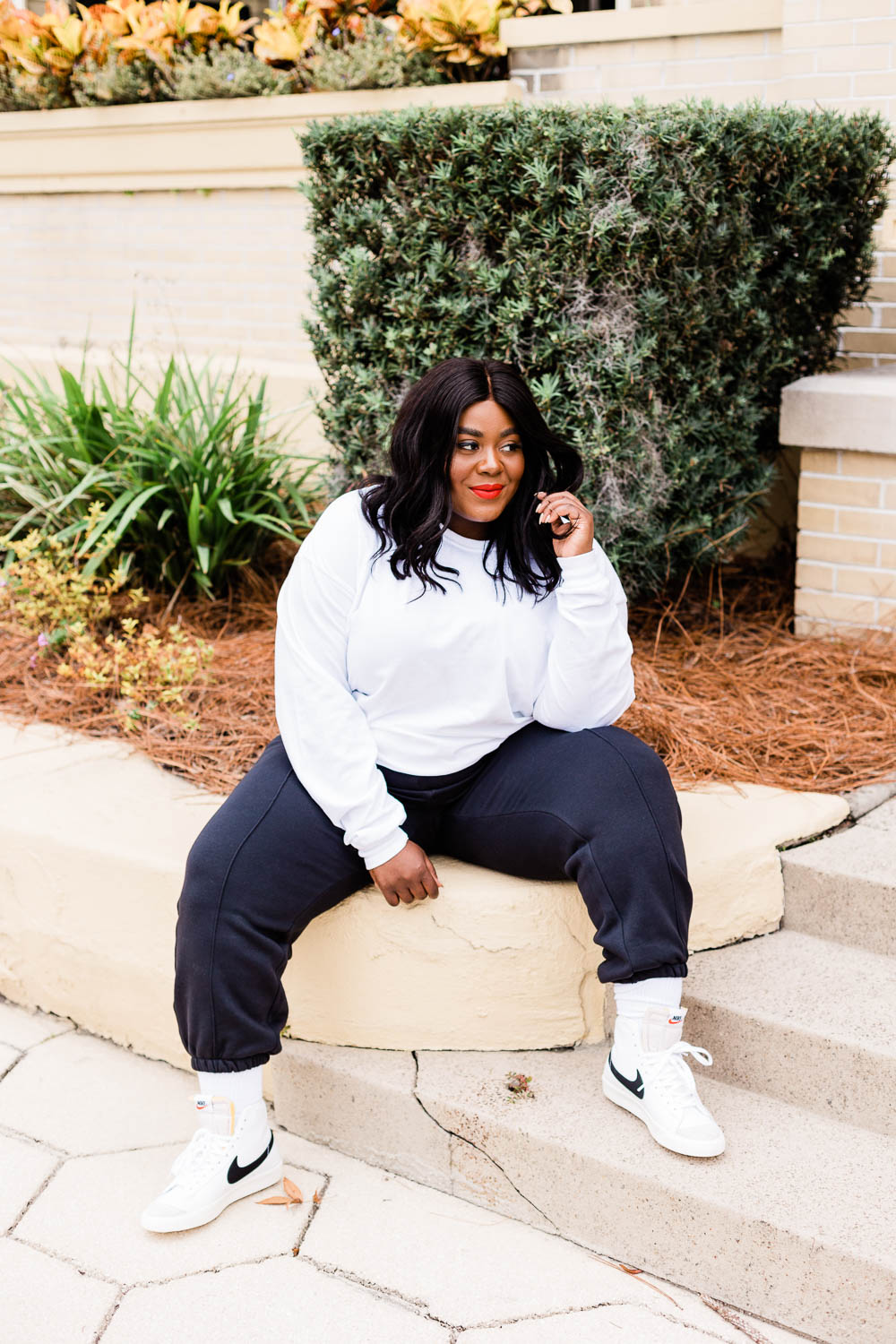
    A look lives or dies at the shoes, and Clark’s footwear choices are a study in matching the finish to the moment. For her own sport she has the Nike Caitlin 1 arriving in fall 2026, a signature performance shoe in bright racer blue with her CC logo, around 140 dollars. Off the court, though, the lesson is broader than any single sneaker: a clean, simple shoe finishes elevated athleisure better than a busy one. A low-profile white leather sneaker, the kind with minimal branding and a tidy sole, reads polished with a matching set or under a trench. It is the off-duty equivalent of a fresh white shirt.

    When the night calls for more, the finishing move is to swap, not to overhaul. Keep the set or the blazer-and-trouser base exactly as it is, and trade the sneaker for a heel or a sleek flat. A pointed slingback like the Prada style Clark favors lengthens the leg, and on a curvy frame that vertical lift balances proportion beautifully. If heels are not your comfort zone, a pointed loafer or a low block heel gives most of the same elongating effect with all of the stability. The garments can stay casual as long as the shoe makes the case for the occasion, which is why one good going-out shoe stretches a whole athleisure wardrobe so far.

    Accessories close the loop. Clark keeps hers spare – a watch, a fine chain, a structured bag – and that discipline is worth copying because too many competing pieces undo the clean line you worked to build. A single statement earring, a bag with a defined shape, sunglasses that suit your face. Pick one or two, not five. The finishing touches should whisper the last word, not shout over everything else you are wearing.

    Where to Shop Plus-Size Athleisure That Actually Holds Up

    The good news for curvy and plus-size shoppers is that the brands worth knowing are real, established, and easier to find than they were even a few years ago. Universal Standard is the anchor for inclusive fit, running sizes 00 to 40 with fabric engineered to smooth rather than cling, and its athleisure pieces share that structured-knit philosophy. Girlfriend Collective, sized up to 6XL, owns the tonal-set lane with compressive, sustainably made leggings and matching tops in grown-up colors. Athleta, built for movement and B-Corp certified, carries plus sizing up to 3X across leggings, trousers, and the ponte pieces that pass for tailoring.

    For range and price, a few names round out the kit. Nike’s dedicated plus-size line runs roughly 0X to 4X and is cut and tested specifically for curvier bodies rather than simply sized up from a straight-size pattern, which shows in how the leggings and sports bras sit through movement. Fabletics offers sizes from XXS to 4X with sports bras built across multiple cup and support levels, useful for fuller busts that standard compression bras flatten or fail. Beyond Yoga has long championed inclusive sizing with buttery, drapey fabrics that suit a softer, slower kind of athleisure. And Old Navy Active remains the value pick, with extended sizing and constant restocks of neutral basics you can buy in multiples without guilt.

    A practical way to spend: build the base in budget basics from Old Navy or a Nike plus staple, invest the real money in the structured hero pieces – the blazer, one excellent matching set, one ponte trouser – from Universal Standard, Girlfriend Collective, or Athleta, and let those anchors carry the cheaper layers. Sizing runs differently brand to brand, so order your usual size and one above when a fit chart looks unfamiliar, and judge a legging by whether it holds a squat without rolling at the waist. Comfort and structure are not opposites. The brands above prove it, and they prove it across the full range of bodies, not a narrow slice of them.

    A Look You Can Build This Weekend

    Open a drawer and start with what is already there. A high-rise legging that holds its shape, a ribbed tank in a color you reach for, a blazer that closes without strain or hangs open and easy, and the cleanest pair of white sneakers you own. Layer them in that order, neutral on neutral, structure over softness, and you are standing in Caitlin Clark’s elevated-basics formula without spending a dollar. Add a watch and a structured bag. Trade the sneaker for a slingback when the evening asks for it. Tonight that outfit walks you into a dinner; tomorrow the same pieces, relaced and unbuttoned, carry you through errands and a coffee that runs long. The tunnel walk was never about the labels. It was about a body moving comfortably through a room, dressed with intention, and that walk is yours to take at any size you happen to be.

  • Chris Evert’s Cancer Journey – What Her Ovarian Cancer Diagnosis Taught Women About Listening to Their Bodies

    Chris Evert’s Cancer Journey – What Her Ovarian Cancer Diagnosis Taught Women About Listening to Their Bodies

    A phone call landed in the Evert family in late 2021 that would change the course of one of tennis’s most decorated careers, though it had nothing to do with a trophy or a comeback. Years after her younger sister Jeanne died of ovarian cancer, the laboratory that had studied Jeanne’s case reclassified a genetic finding. A variant once filed away as uncertain was now understood to be meaningful. That single update, passed from a sister who was gone to a sister who was still here, set in motion a chain of decisions that an 18-time Grand Slam champion has since spent years asking other women to learn from.

    This article shares general educational information about ovarian cancer awareness and self-advocacy. It is not medical advice, and it cannot replace a conversation with your own doctor. If you have symptoms, a family history that worries you, or questions about screening, please bring them to a qualified healthcare provider who knows your full history. With that grounding in place, the story of how one of the most disciplined athletes of her generation came to a diagnosis is worth sitting with, because the lessons in it belong to everyone.

    A Diagnosis That Started With a Sister’s Story

    A Diagnosis That Started With a Sister's Story

    Chris Evert publicly shared her ovarian cancer diagnosis in January 2022, writing about it in her own words for ESPN. The path to that announcement is the part worth holding onto. Her sister, Jeanne Evert Dubin, herself a former professional tennis player, had been diagnosed with ovarian cancer and died of the disease in February 2020. As Evert has explained publicly, it was genetic information drawn from Jeanne’s case that later pointed the rest of the family toward testing.

    Evert underwent genetic testing and learned she carried a pathogenic variant in the BRCA1 gene, a finding linked to a higher risk of ovarian and breast cancers. Acting on that knowledge, she chose to have a preventive hysterectomy in December 2021. She did not have symptoms. She felt well. The surgery was a precaution rooted in what her genes and her family history were telling her. When the pathology came back after surgery, doctors had found malignant cells, and she was diagnosed with stage 1C ovarian cancer, an early stage that is far less common to catch than the advanced disease most women are diagnosed with.

    In her own public account, Evert has been direct about what that timing meant. The cancer was found early because she went looking, prompted by her sister’s experience and a genetic result, not because a routine test flagged it. That distinction sits at the center of everything ovarian cancer awareness tries to teach. There was no scan on a calendar that caught this. There was a family story, a willingness to investigate it, and a decision to act.

    Why Ovarian Cancer Is So Hard to Catch Early

    Why Ovarian Cancer Is So Hard to Catch Early

    Ovarian cancer carries a difficult reputation, and the reasons are worth understanding clearly rather than fearfully. The biggest challenge is that there is no reliable routine screening test for ovarian cancer in women at average risk. This is not an oversight or a gap waiting to be filled next year. Major medical bodies, including the American College of Obstetricians and Gynecologists and the U.S. Preventive Services Task Force, currently recommend against routine screening of women who are at average risk and have no symptoms.

    That guidance can feel counterintuitive, especially in a culture that treats screening as universally good. The reasoning, as these organizations explain, is that the available tools, such as transvaginal ultrasound and the CA-125 blood test, have not been shown to lower the number of deaths from ovarian cancer when used broadly on women without symptoms or elevated risk. Instead, they tend to produce false alarms that lead to additional testing and surgeries that turn out not to be needed. A test that creates more harm than benefit is not a test worth recommending for everyone, and that honesty matters.

    This is precisely why personal awareness carries so much weight with ovarian cancer. The Pap test, a familiar part of many women’s routine care, screens for cervical cancer and does not detect ovarian cancer. That surprises a lot of people. A normal Pap result is reassuring about the cervix, but it says nothing about the ovaries or fallopian tubes. Understanding what your regular care does and does not cover is part of being an informed patient, and it is one of the quiet, practical takeaways inside Evert’s very public story.

    The Symptoms Worth Knowing – And the Pattern That Matters

    The Symptoms Worth Knowing - And the Pattern That Matters

    If routine screening is not the answer for most women, paying attention to your own body becomes far more important. The American Cancer Society describes a recognizable cluster of symptoms most associated with ovarian cancer: bloating, pelvic or abdominal pain, difficulty eating or feeling full quickly, and urinary symptoms such as urgency or needing to go more often.

    Read that list and you will probably recognize sensations you have felt at some point. That is exactly the problem, and it is also the reason the medical guidance focuses less on the symptoms themselves and more on their pattern. According to the American Cancer Society, what raises concern is when these symptoms are new, persistent, and a clear change from what is normal for you, occurring more frequently or more intensely than usual. As a general guide, the organization notes that symptoms appearing more than roughly a dozen times in a month warrant a conversation with a doctor, and persistent urinary urgency or frequency lasting more than a few weeks should be reported promptly.

    The point is not to turn every bloated afternoon into a crisis. Most of the time, these sensations come from something ordinary and benign. The point is to notice change and to honor it instead of explaining it away. Women are practiced at minimizing their own discomfort, at being busy, at assuming it will pass. The pattern that matters here is the body saying something consistently, over weeks, in a way it did not before. That is the signal to make the appointment, describe what you are noticing plainly, and ask to be taken seriously. Knowing the symptoms is step one. Trusting yourself enough to act on a pattern is the harder, more important step.

    Family History and the Role of BRCA Genes

    Family History and the Role of BRCA Genes

    The thread that connected Jeanne’s case to Chris’s survival was genetic, and this is where Evert’s advocacy has been most pointed. Some ovarian cancers are tied to inherited gene changes, the most well known being mutations in the BRCA1 and BRCA2 genes. These same genes are widely discussed in connection with breast cancer, but they meaningfully raise ovarian cancer risk as well. A woman who inherits a harmful BRCA variant carries a substantially higher lifetime risk than a woman in the general population, which is why this information can be genuinely life-changing rather than merely interesting.

    These variants run in families, and that is the crucial practical detail. A parent who carries a BRCA mutation has a roughly fifty percent chance of passing it to each child. A diagnosis in one relative, the way Jeanne’s became, can be the first clue that others in the family share the same elevated risk and do not yet know it. This is why family history is not a box to tick once and forget. It is living information that can shift as relatives are diagnosed, as genetic findings are reclassified, and as you learn more about the people whose biology you share.

    Knowing your family history means more than knowing that “cancer runs in the family.” It helps to know which cancers, in which relatives, at what ages, and on which side. Ovarian, breast, and certain other cancers in close relatives can all be relevant. If your history raises questions, the appropriate next step is usually not to demand a screening test, but to ask your doctor whether a referral to genetic counseling makes sense. Evert reached her own diagnosis through exactly this kind of cascade, one family member’s information illuminating the path for another.

    Genetic Counseling, Screening for Higher Risk, and Talking to Your Doctor

    Genetic Counseling, Screening for Higher Risk, and Talking to Your Doctor

    Genetic counseling deserves more attention than it usually gets, because people often imagine it as a single blood test with a yes-or-no answer. It is more thoughtful than that. A genetic counselor reviews your personal and family history, helps you understand what testing can and cannot tell you, walks through the implications of a result for you and your relatives, and helps you weigh decisions without pressure. Testing is a choice, and counseling exists to make that choice an informed one rather than a frightened one.

    For women found to be at high risk, such as those who carry a BRCA1 or BRCA2 mutation, the calculus around monitoring changes. While routine ovarian cancer screening is not recommended for average-risk women, women at high risk may be offered periodic monitoring and a range of risk-reducing options, which can include preventive surgery of the kind Evert chose. These are deeply personal decisions made in partnership with specialists who can weigh a woman’s age, family plans, risk level, and values. There is no single right answer that applies to everyone, which is exactly why these conversations belong in a doctor’s office and not in a search bar.

    For everyone else, the most useful tool remains an honest, ongoing relationship with a healthcare provider. That means describing symptoms accurately, mentioning family history even when no one asks, and asking direct questions: Given my history, is genetic counseling something I should consider? Is what I am feeling worth investigating? Self-advocacy is not about being difficult or anxious. It is about being a full participant in your own care, which is the role Evert has used her platform to encourage women to claim.

    What Chris Evert Keeps Choosing to Make Public

    The most striking thing about Evert’s involvement is that she did not have to share any of it. A retired champion is entitled to private medical care and a quiet life. She has instead spoken openly across more than one recurrence, having been diagnosed again after her first treatment, continuing to talk candidly each time about stepping back from commitments to focus on her health while staying, in her own framing, optimistic. Throughout, her message to other women has stayed consistent with what she wrote when she first went public: be your own advocate, know your family’s history, stay aware of your body, follow your instincts, and do not assume a worrying sign will simply pass.

    That message lands with particular force because of who is delivering it. Evert built her career on noticing small things, on discipline, on paying attention. The same attentiveness she once brought to an opponent’s footwork she now asks women to bring to their own bodies and their own family stories. It reframes self-advocacy not as worry or vanity but as a skill, a learnable habit of attention that any woman can practice. Her openness about a genetic finding, a preventive surgery, and an early diagnosis turns a private medical history into a kind of public service, the sort that may quietly send a woman to ask her aunt how old she was when she was diagnosed, or to finally mention that persistent bloating at her next appointment.

    If there is one thing to carry from her example, it is that the most powerful health tool available to most women is not a machine or a lab result. It is knowing your own story, knowing your family’s, and being willing to speak up before you can prove anything is wrong. Evert acted on a sister’s legacy and a piece of information she could easily have set aside, and that choice is the heart of what she keeps asking of the women who hear her.

    This is a sensitive health topic, and if anything here has left you concerned about your own health or your family’s history, please reach out to a doctor or qualified healthcare professional who can guide you with care.

  • The Gilmore Girls Style Guide – How to Dress Like Lorelai and Rory in 2026

    The Gilmore Girls Style Guide – How to Dress Like Lorelai and Rory in 2026

    Picture a Connecticut town square just after the first real cold snap, the gazebo strung with fairy lights, a paper cup of diner coffee warming your hands, leaves the color of cinnamon and rust scuffing across the cobblestones. That is the feeling so many of us chase every autumn, and it has a name now: Stars Hollow fall. The fictional New England town at the heart of the long-running mother-and-daughter dramedy keeps pulling new viewers back to streaming each September, and with every fresh wave of fans comes a fresh hunger to dress the part. The good news for curvy women is that this particular aesthetic was never about a body type. It is about texture, layering, coziness, and a little bit of personality, and all of that translates beautifully to a fuller figure when you know which pieces to reach for.

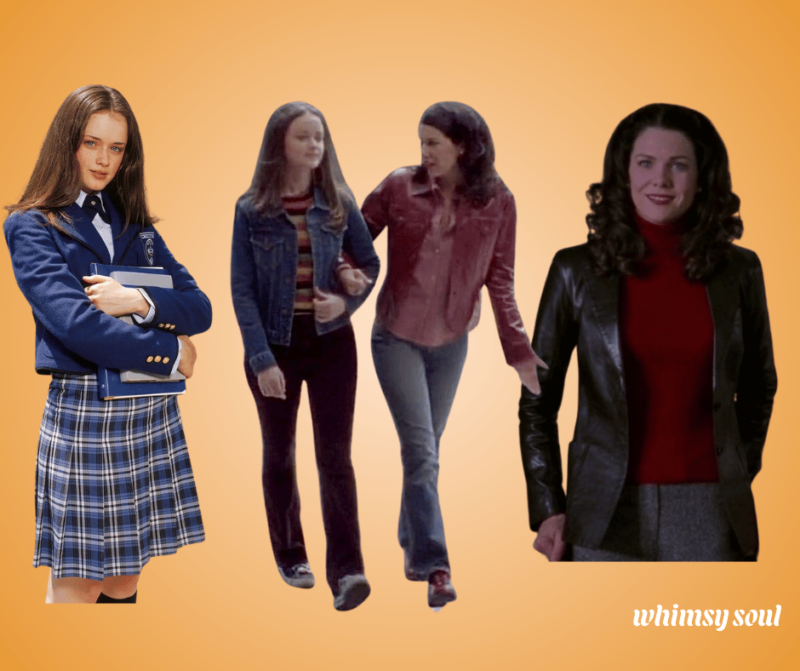
    The show first aired in the fall of 2000 and followed Lorelai Gilmore and her daughter Rory, a pair so close they finished each other’s pop-culture references. Their wardrobes told you almost everything about them before they opened their mouths. Lorelai was the bold one, all clashing prints and graphic tees and color worn without apology. Rory leaned preppy and bookish, layering soft sweaters and pleated skirts like a permanent first day of school. Two very different style stories, one shared closet of New England warmth. Here is how to borrow from both, in sizes that actually fit.

    What “Stars Hollow Fall” Actually Means for Your Closet

    Before the shopping starts, it helps to name what we are really after, because the aesthetic is more about mood than any single garment. Stars Hollow style is layered, lived-in, and a little eclectic. It is a cable-knit sweater you could imagine wearing to a town meeting, a trench thrown over jeans for a coffee run, a scarf wound twice around the neck because the air finally bit back. Nothing looks brand new or fussed over. Everything looks like it has a story.

    That matters for curvy dressing because the temptation with autumn layering is to pile on volume until the silhouette disappears. The Gilmore approach is the opposite. Each layer is intentional, and there is almost always a defined waist, a structured shoulder, or a deliberate proportion holding the look together. Think of the cozy pieces as the comfort and the structured pieces as the frame. When you balance the two, you get warmth without bulk, which is exactly the sweet spot for a fuller figure heading into the colder months.

    The color story is autumnal but not restrictive. Camel, oatmeal, forest green, burgundy, navy, charcoal, and plenty of plaid. Lorelai pushes brighter and bolder, Rory stays softer and more muted, and you can land anywhere along that spectrum depending on the day and your mood.

    Channeling Lorelai – Bold Prints and Edgy-Feminine Layering

    Channeling Lorelai - Bold Prints and Edgy-Feminine Layering

    Lorelai never met a print she could not commit to. Her wardrobe ran on color, pattern, and a slightly rock-and-roll edge that kept her from ever reading too sweet. To borrow her energy, you want pieces with personality, and you want to wear them like you are not asking permission.

    Start with a statement knit. A bold Fair Isle sweater, a sweater with an unexpected color block, or a chunky cardigan in a rich jewel tone all capture her refusal to fade into the background. Torrid is a reliable place to begin here because its knitwear is cut with curves in mind, so a chunky cable does not swallow you whole. For something a little sleeker, Eloquii leans trend-forward and often carries the kind of statement sweater that does the heavy lifting for an entire outfit. Pair either with a straight-leg or slim bootcut jean and you have already nailed the foundation.

    Then add the edge. Lorelai loved a leather or moto jacket thrown over something feminine, and that contrast is the whole point. A faux-leather moto from Lane Bryant or ASOS Curve over a floral midi dress or a graphic tee gives you the tough-meets-pretty tension she wore so well. Lane Bryant in particular has spent years perfecting outerwear that actually fits across the shoulders and bust, which is usually where curvy women get let down by jackets cut for a straight frame.

    Do not be afraid of prints layered on prints, because that was peak Lorelai. A plaid blazer over a striped tee, an animal-print scarf with a polka-dot blouse, a patterned cardigan over a solid slip dress. The trick that keeps it from tipping into chaos is anchoring the chaos with one solid, structured piece, usually the bottom half or the outermost layer. Universal Standard is your friend for those anchoring basics, since its tailored pants and clean column dresses run an unusually wide size range and give your busier pieces something calm to sit against.

    For shoes, Lorelai often went a touch more grown-up than Rory, reaching for a heeled boot or a pointed flat. A sturdy ankle boot with a block heel keeps you comfortable on cobblestones, real or imagined, and elongates the leg under a midi hem. Finish with a small structured bag rather than a slouchy tote, because that one modern detail is what pulls a Y2K-leaning look firmly into 2026.

    Channeling Rory – Preppy Schoolgirl Layers Done Cozy

    Channeling Rory - Preppy Schoolgirl Layers Done Cozy

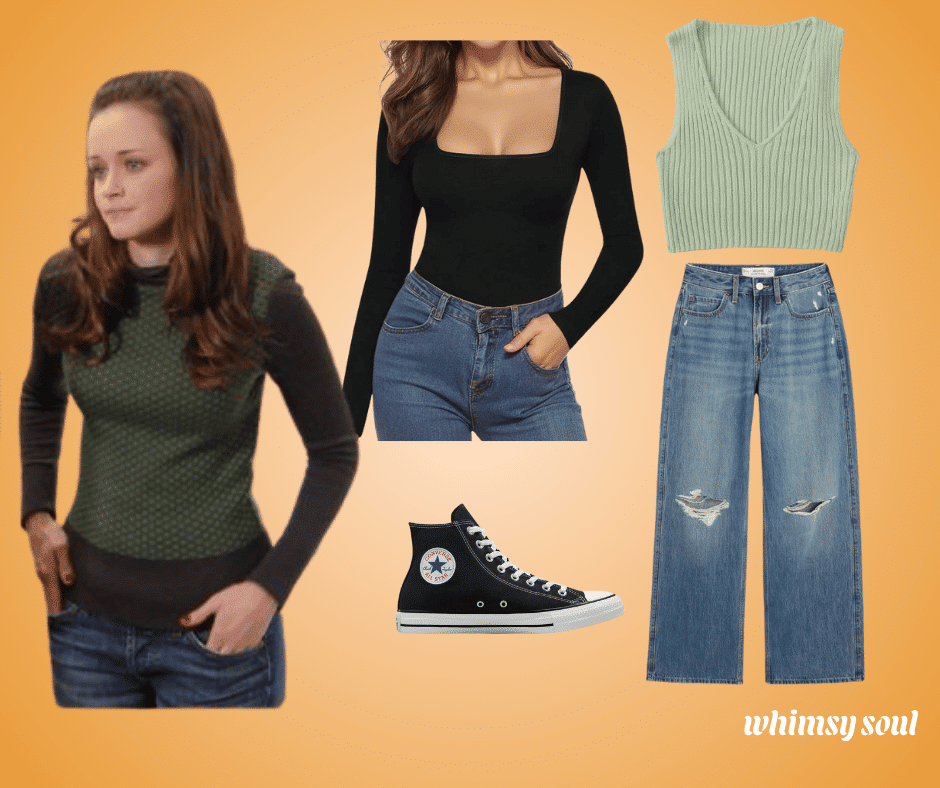
    Rory’s style was the quieter sister, but quiet does not mean boring. Hers was the look of someone who reads paperbacks at the diner counter and means it: soft sweaters, pleated skirts, button-downs, blazers, and a near-endless rotation of cardigans. It tipped gently toward what people now call dark academia, all tweed and tights and library-light layering, without ever feeling like a costume.

    The cornerstone of a Rory look is the layered top half. Start with a crisp button-down, then add a fine-gauge sweater or a cardigan over it, letting the collar peek out. That single move, a collar emerging from a knit, is the most reliably preppy thing you can do, and it works on every body. Madewell‘s plus-size range carries beautifully cut button-downs and elevated basics that hold their shape across the bust, so the collar lies flat instead of gaping, which is the small detail that makes or breaks the look.

    For the cardigan itself, you have options up and down the price spectrum. Old Navy keeps a steady stream of affordable cropped and waist-length cardigans in its extended sizes, which is ideal because Rory’s cardigans usually hit at or just below the natural waist rather than swallowing the hips. A waist-length knit is genuinely flattering on a curvy frame, defining the smallest part of the torso instead of erasing it. For a richer, more textured version, Anthropologie‘s plus assortment leans into the cozy academic feel with cable knits, marled wool, and the occasional unexpected button.

    Below the waist, Rory loved a pleated skirt over tights, and this is one of the most curve-friendly silhouettes in the whole guide. A pleated A-line skims the hips, the pleats add gentle movement, and opaque tights in burgundy, forest, or charcoal pull the whole thing into fall. Eloquii and Torrid both cut pleated and A-line skirts that sit at the natural waist and fall cleanly, which is what you want. If a skirt is not your speed, the look translates straight to a pair of dark, slightly cropped trousers with the same layered top half.

    For outerwear, Rory reached for structured layers more than statement ones. A classic trench, a wool peacoat, or a sherpa-lined denim jacket all live firmly in her world. A peacoat in navy or camel is one of the best investments a curvy wardrobe can make, because the double-breasted front and defined waist seam do real work for the silhouette. Universal Standard and Lane Bryant both carry coats engineered for fuller busts, with darting and button placement that closes properly instead of straining. Finish Rory style with ballet flats or low canvas sneakers, a leather satchel, and a thin headband, and you are ready for a town meeting or a college lecture, whichever Stars Hollow throws at you.

    The Pieces That Do the Heavy Lifting

    The Pieces That Do the Heavy Lifting

    If you strip both characters down to their essentials, a handful of garments keep reappearing, and those are the ones worth your investment. Build around these and the rest falls into place.

    The chunky knit is non-negotiable. One genuinely good cable-knit or Fair Isle sweater, in a color you love, will carry an entire season of outfits. Look for a knit that is substantial but not stiff, with ribbing at the cuff and hem to give it shape, because shapeless chunky knits are where curvy figures get lost. The plaid layer comes next, whether that is a plaid flannel shirt worn open like a jacket, a plaid blazer, or a plaid scarf, since nothing says New England autumn faster than a good check pattern. Then the coat, your trench or peacoat, the single most photographed item in any Stars Hollow look and the piece that ties a whole outfit together the moment you step outside.

    Underneath it all, you want reliable basics that layer without bulk: a few fitted long-sleeve tees and turtlenecks, a crisp button-down, and a pair of opaque tights. These are the unsung heroes, the pieces that let everything else sit correctly. Universal Standard and Madewell plus both excel at exactly this kind of foundational layer, the smooth, fitted base that keeps a four-layer outfit from looking like four layers. And do not skip the accessories, because a wound scarf, a structured bag, and a pair of practical-but-pretty boots are what separate a costume from a wardrobe you will actually wear.

    Making It Yours Across Sizes and Real Life

    Making It Yours Across Sizes and Real Life

    The single most freeing thing about this aesthetic is that it was built on comfort. Lorelai and Rory were written as women who ate, who ran late, who lived in their clothes, and that ethos is a gift for anyone who has ever felt squeezed by trend dressing. You do not need to be cold or constricted to look the part. You need warmth, texture, and a point of view.

    Fit is where the whole thing lives or dies, so let proportion guide you rather than rules about what curvy women supposedly cannot wear. A defined waist almost always reads as Gilmore, whether you create it with a belted coat, a waist-length cardigan, a tucked sweater, or a skirt that sits at your natural middle. Length is your other lever, since a midi skirt, a knee-length coat, and a cropped knit play differently on every body, and the only way to know your best proportions is to try the silhouette and trust the mirror over the size chart.

    Mix the two sisters freely, because almost nobody is pure Lorelai or pure Rory. Most of us want Rory’s cozy cardigan with Lorelai’s bold scarf, or Lorelai’s moto jacket softened by Rory’s pleated skirt. That blend is where personal style actually lives, and it is also where the look stops feeling like cosplay and starts feeling like you. The brands worth bookmarking for the long haul span the whole budget range, from Old Navy and ASOS Curve for affordable trend pieces, to Torrid and Eloquii for curve-cut statement items, to Universal Standard, Madewell plus, Anthropologie, and Lane Bryant for the structured investment layers that anchor everything.

    Build it slowly. One great coat this month, a chunky knit the next, a pleated skirt when you spot the right one. Stars Hollow style was never about a single shopping spree, and it photographs best when it looks gathered over time rather than bought in a single click.

    Your Town Square Is Wherever You Pour the Coffee

    Your Town Square Is Wherever You Pour the Coffee

    There is no gazebo in your neighborhood, probably, and the diner down the street does not have a surly owner in a backwards cap. None of that matters. The whole appeal of dressing like Lorelai and Rory is that the look meets you in your actual life: the school drop-off, the grocery run, the coffee you carry to your car with both hands because it is finally cold enough to need them. A camel peacoat over a burgundy cable knit reads exactly as warm and exactly as put-together in a real parking lot as it does on a backlot in Burbank. The clothes do the same job either way, which is to make a chilly ordinary morning feel like a scene worth being in. Put on the knit, wind the scarf twice, pour the coffee, and the autumn you have been watching on your screen is already on your shoulders.

  • How to Style a Sports Jersey as a Curvy Woman – Game Day Looks That Go Beyond the Bleachers

    How to Style a Sports Jersey as a Curvy Woman – Game Day Looks That Go Beyond the Bleachers

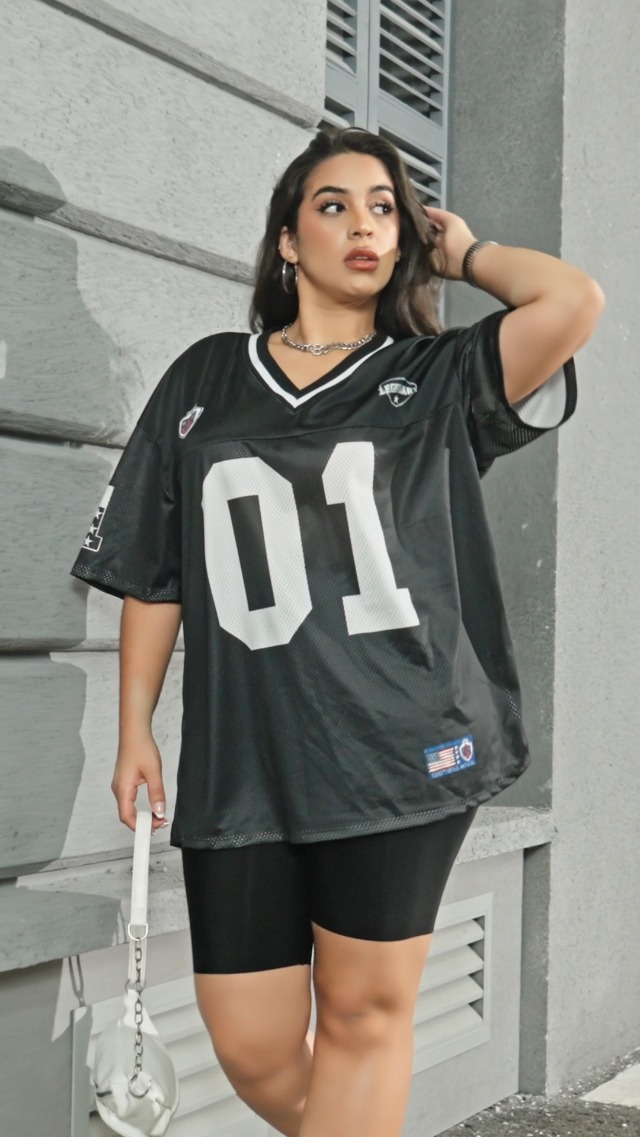
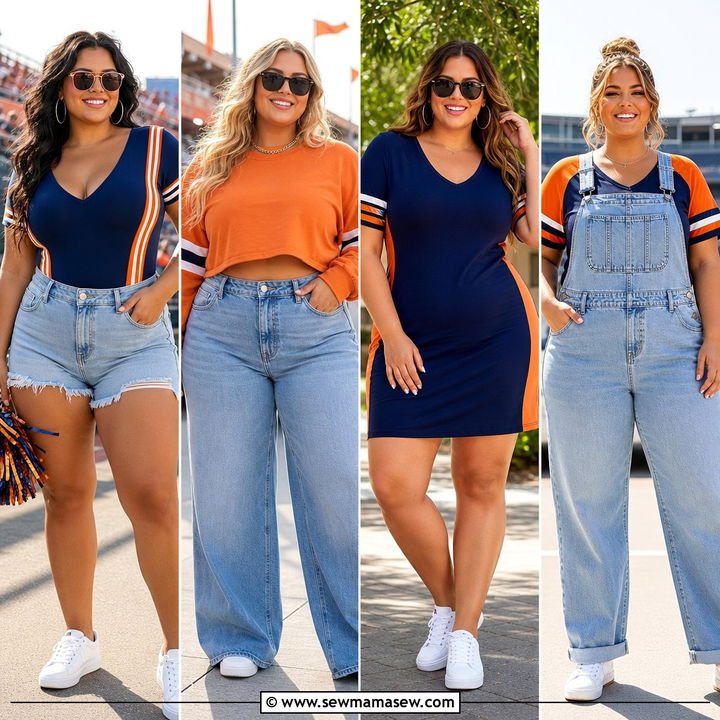
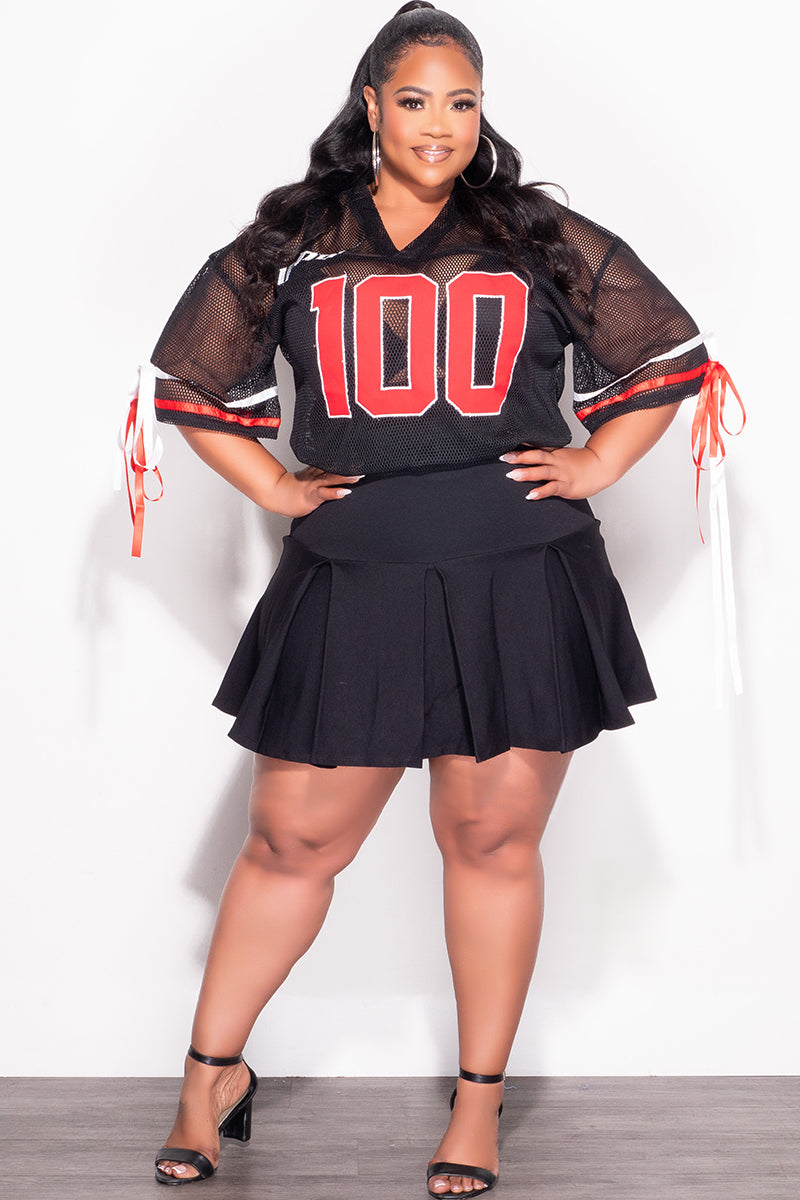
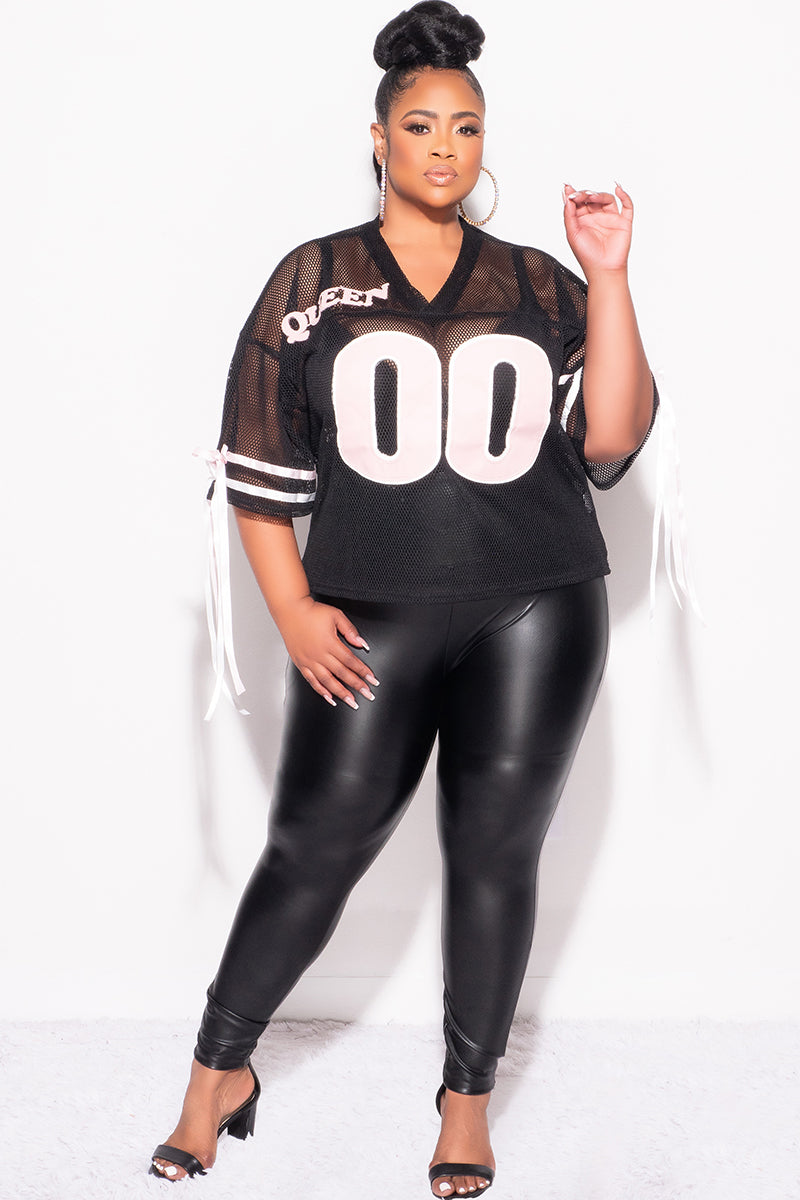
    Few pieces in a closet pull double duty quite like a sports jersey. One minute it is the most comfortable thing you own, the next it is the centerpiece of an outfit that turns heads on the way to brunch. The trick that nobody tells you is that a jersey was never meant to be a baggy afterthought thrown on over leggings on a Sunday. Worn with a little intention, that mesh top becomes a styling tool that flatters curves, shows off personality, and reads as fashion rather than fan gear. The catch for fuller-figured women has always been fit, because most jerseys are cut for a flat, straight frame and stop being fun the second the hem rides up over your hips or the armholes gape at your bust. Solve the fit, and everything else falls into place.

    This is a love letter to the jersey, and a practical map for wearing one when you have curves to dress around rather than hide. Whether you are heading to a stadium, a watch party, or a night out where the only sport involved is dancing, the same garment can carry you through all of it.

    Getting the Jersey Fit Right at Your Size

    The single biggest decision happens before you ever think about shoes or accessories, and it comes down to oversized versus fitted. Both can look incredible on a curvy body, but they do completely different things. An oversized jersey skims over the midsection and creates a relaxed, streetwear silhouette, which is brilliant when you want comfort and an effortless vibe. A more fitted jersey, often a women’s cut, hugs the waist and shows off an hourglass shape, which reads dressier and more deliberate. Neither is more correct than the other. The mistake is wearing an oversized jersey by accident because the fitted version was not available in your size, then feeling swallowed up by fabric.

    Sizing is where a little homework pays off. Traditional jerseys sold in men’s or unisex cuts run boxy and short in the body, which means the hem can hit at an awkward spot on the hip and the chest can pull tight while the waist balloons. Women’s plus jerseys, by contrast, are increasingly cut with a longer torso and a touch more room through the bust and hip. Fanatics now carries officially licensed women’s plus jerseys in roughly 1X through 4X across the NFL, NBA, and other leagues, and Nike offers women’s plus styling in about 1X through 3X. Specialty retailers like Women’s Plus Size Sports stock licensed jerseys, tees, and hoodies in 1X to 4X for women who want a true women’s fit rather than a scaled-up men’s tee.

    A few fit habits make the difference. If you are between a fitted and an oversized look, size up one from your usual jersey size for the relaxed drape, or stay true to size for a women’s cut that nips in. Check the shoulder seam, because on a flattering jersey it should sit close to where your actual shoulder ends rather than halfway down your arm. Watch the armhole depth too, since deep cut sleeves on a tank-style basketball jersey can expose more side body than you want, easily fixed by layering a fitted tee or bodysuit underneath. And remember that mesh is unforgiving about what shows through, so the right base layer is doing real work, not just adding warmth.

    Length is the other quiet variable that decides whether a jersey works for your shape. A football-style jersey tends to run longer through the body, which makes it ideal for the dress-and-belt looks coming up, while a basketball tank typically hits higher and pairs better with a high-rise bottom. When you are shopping online and cannot try anything on, the size chart is your best friend, because women’s plus jerseys usually publish bust, waist, and hip measurements rather than a vague S-M-L-XL guess. Measure yourself once, write the numbers down, and match them against the chart instead of trusting the label, since a 2X at one brand can fit like a 1X at another. If the bust measurement is the part of you that needs the most room, size to that and let a tailor take in the waist later for pennies, which is the single most underused trick for getting a jersey to look custom on a curvy frame.

    The Going-Out Formulas That Change Everything

    The Going-Out Formulas That Change Everything

    Here is where the jersey stops being loungewear and starts being an outfit. The formulas below take roughly five minutes each and rely on pieces most curvy women already own.

    The jersey plus slip skirt is the quiet showstopper. Take an oversized basketball or football jersey, half-tuck the front into a satin or bias-cut slip skirt, and let the contrast do the talking. Sporty mesh against liquid-shine fabric is a study in opposites that looks expensive and intentional. A midi-length slip skirt elongates the leg and skims over the hip and thigh, which is exactly what you want, and the half-tuck defines a waist without squeezing it. Finish with a heeled mule or a pointed boot and the look goes straight from casual to dinner. Slip skirts in curve-friendly lengths run roughly 30 to 60 dollars at Fashion Nova Curve, ASOS Curve, and similar retailers.

    The jersey as a dress is the trend everyone is leaning into right now, and it was practically invented for curvy frames. A genuinely oversized jersey, especially a longline football style, can be worn as a mini dress with nothing but a pair of bike shorts or seamless shorts underneath for coverage. Cinch a belt at the natural waist to turn that straight tube of fabric into an hourglass, or leave it loose and belt-free for a relaxed off-duty model look. The jersey dress trend has exploded enough that retailers now sell purpose-built basketball jersey dresses with the longer length baked in, available through Fashion Nova Curve and across Amazon in plus sizing, usually in the 25 to 50 dollar range. If you are going the DIY route with an actual jersey, look for one long enough to clear mid-thigh when you raise your arms, because the bleacher-seat test matters.

    The knotted jersey plus jeans is the formula for anyone who finds a full tuck fussy. Pull on your favorite high-rise curve jeans, then take the excess hem of an oversized jersey and tie a loose knot at one hip or dead center at the front. The knot creates a defined point at the smallest part of your waist and lets the rest of the fabric fall away over the hips, which is endlessly flattering. Straight-leg or wide-leg jeans balance the volume up top, while a bootcut keeps things classic. This one walks the line between game day and going out so well that you can wear it to the stadium and then to drinks without changing a thing.

    The jersey plus bike shorts deserves its own mention because it is the easiest entry point of all. An oversized jersey over coordinating bike shorts is comfort dressing at its sharpest, and when the shorts peek out just below the hem, the proportions read as deliberate athleisure rather than accidental. Add a structured tote and clean white sneakers and you have an outfit that works for errands, a casual watch party, or a low-key date.

    There is one more formula worth keeping in your back pocket, and it is the jersey plus tailored trousers. Pairing something sporty with something sharp is one of the oldest tricks in fashion for a reason, because the tension between the two registers as intentional styling rather than a single-mood outfit. A half-tucked jersey over wide-leg trousers, whether in a neutral or a bold color that echoes the team, takes the look somewhere a little more grown and a little more office-adjacent without losing the fun. Slide your feet into a loafer or a low heel and you have an outfit that could go to a creative workplace, a gallery opening, or a daytime event where you still want the comfort of a jersey but the polish of real pants. For a curvy frame, the high-rise trouser hits at the natural waist and lengthens the leg, while the relaxed jersey on top balances the proportions beautifully.

    Game Day Comfort Looks That Still Look Good

    Game Day Comfort Looks That Still Look Good

    Sometimes the assignment really is sitting in a stadium for three hours, and comfort has to win without surrendering style entirely. The good news is that the relaxed formulas above translate beautifully to a full day on the bleachers.

    Lead with the jersey plus leggings or bike shorts foundation, because you want full range of motion to jump up when your team scores. Opt for a thicker, supportive legging in black or your team color, and choose a jersey with enough length to cover the hip and seat comfortably when you sit. Layering is your friend in a stadium, where the temperature swings from blazing sun to evening chill. A cropped denim or utility jacket thrown over an oversized jersey adds structure to the silhouette and a layer you can tie around your waist later. A long-sleeve fitted top under a sleeveless basketball jersey works the same magic, adding warmth and turning a tank into a complete outfit.

    For footwear, this is the day to let sneakers shine. A clean pair of chunky trainers or retro court shoes ties the whole sporty story together and, crucially, carries you across a packed parking lot and up a flight of concrete steps without complaint. Throw a crossbody bag over the look so your hands stay free for snacks and cheering, and you are set for the whole game with nothing to fuss over.

    Tailgating deserves its own small adjustment, since you are often standing, walking, and socializing for hours before you ever take a seat. This is where the knotted-jersey-plus-jeans formula earns its keep, because denim handles a long day better than thin leggings and the knot keeps the silhouette sharp in every group photo. A bucket hat or a baseball cap in the team colors does double duty as sun protection and an accessory, and a denim or canvas jacket tied at the waist gives you a layer for when the floodlights come on and the temperature drops. The whole point of a game-day look is that it should disappear from your mind the moment you put it on, leaving you free to actually enjoy the day, and a jersey that fits well does exactly that. Comfort and looking pulled together are not opposites here. The same outfit that lets you leap out of your seat is the one that photographs well in the concourse afterward.

    Accessories, Shoes, and the Finishing Details

    Accessories, Shoes, and the Finishing Details

    The styling secret that separates a fan in a jersey from a woman wearing a jersey as fashion almost always lives in the accessories. Because the jersey itself is bold and graphic, the pieces around it should either lean into that energy or deliberately dress it up.

    Jewelry does heavy lifting. Layered gold chains against a mesh jersey create a hip-hop-inspired contrast that feels intentional and confident, while chunky hoop earrings add polish without competing with the jersey’s print. Sunglasses, a sleek cap, or a silk headscarf can shift the whole mood from sporty to fashion editorial in seconds. A bold lip is one of the fastest ways to signal that you dressed up rather than dressed down, and a swipe of red or deep berry against a sporty top is the kind of contrast that stops people in their tracks. Nails matter more than people think too, since a fresh manicure peeking out as you adjust a chain or hold a drink quietly upgrades the whole picture.

    Shoes set the entire tone. Sneakers keep things grounded and casual, perfect for day and game day. Heeled mules, strappy sandals, or a pointed-toe boot instantly elevate the same jersey for night, and the contrast between athletic fabric and a dressy shoe is the engine of the whole look. A knee-high boot under a jersey dress is a particularly strong move for fall and winter, adding leg-lengthening lines that flatter a curvy frame. A structured handbag, even a small one, signals that the outfit was styled rather than thrown together. And do not underestimate a good belt, since a single waist-cinching belt over an oversized jersey or jersey dress can redefine your silhouette more dramatically than any other accessory in the mix.

    Where to Buy Plus-Size Jerseys

    Where to Buy Plus-Size Jerseys

    Finding a jersey that actually fits used to be the hardest part of this whole exercise, but the landscape has improved a great deal. Fanatics is the most reliable starting point for officially licensed gear, carrying women’s plus jerseys in roughly 1X through 4X across the NFL, NBA, MLB, and more, with prices generally ranging from about 70 dollars for replica styles up to 130 dollars and beyond for authentic versions. Nike offers women’s plus jerseys and sportswear in about 1X through 3X, available on Nike.com and through retailers like Dick’s Sporting Goods.

    Official team stores are worth a direct look, since many now stock women’s and extended sizes that do not always surface elsewhere, and specialty retailers like Women’s Plus Size Sports focus entirely on licensed gear in 1X to 4X, which takes the guesswork out of fit. For the fashion-forward jersey-dress and street-style versions rather than strictly licensed team gear, ASOS Curve and Fashion Nova Curve are strong picks. Fashion Nova Curve carries plus sizing in roughly 1X through 3X with trend-driven jersey dresses and sporty separates usually landing in the 25 to 50 dollar range, while ASOS Curve stocks football tops, kits, and sporty pieces across a deep size range. Between licensed retailers for authenticity and fashion retailers for the trend pieces, there is no longer a real excuse for being shut out of the jersey look at any size.

    Owning It With Confidence

    The jersey is one of those rare garments that asks you to take up space, and that is exactly why it suits a body-positive wardrobe so well. There is an old, tired idea that bold, graphic, body-skimming pieces are off-limits above a certain size, that curvy women should shrink into dark colors and apologetic silhouettes. A jersey laughs at all of that. It is loud, it is proud, it celebrates a team, and worn with intention it celebrates the woman inside it just as much.

    Confidence in a jersey is mostly about ownership. The half-tuck, the belt, the knot, the deliberate shoe choice all signal that you styled this on purpose and you know it looks good, and that energy reads louder than any number on a size tag. Curvy bodies bring something to a jersey that a straight frame cannot, since the same mesh that hangs flat on a hanger comes alive over real curves. Lean into that instead of fighting it. Wear the team you actually love rather than the one you think photographs well, because authentic enthusiasm is its own kind of style. And give yourself permission to take up the space the jersey was designed to fill.

    Body positivity here is not a slogan stitched onto the look. It is the practical decision to buy the size that fits your real body rather than the one you wish you wore, to choose the silhouette that makes you feel powerful rather than the one a trend chart approves of, and to walk into the room like the outfit was made for you. Because once the fit is right, it genuinely was.

    The Bottom Line

    The Bottom Line

    Pull the jersey out of the back of the closet this weekend and try one formula before you decide it is just for the couch. Belt an oversized one into a dress, knot another over your favorite jeans, or layer a fitted version under a denim jacket for the next game. Pair whichever you reach for with a shoe that surprises it, a chain or a hoop that finishes it, and a posture that says you meant every bit of it. The jersey has been waiting in there for a real outfit, and your curves are exactly what it needed to come to life.

  • Betrayal, Boundaries, and Moving On – What Reality TV Scandals Teach Us About Self-Worth in Relationships

    Betrayal, Boundaries, and Moving On – What Reality TV Scandals Teach Us About Self-Worth in Relationships

    Picture the exact moment a phone lights up on the counter and something inside you already knows the message is not meant for your eyes. Maybe it is a name that appears too often, a tone that has cooled, a story that does not quite add up. That small lurch in the stomach is one of the most human experiences there is, and millions of women have lived some version of it without ever sharing the details out loud. What makes betrayal so disorienting is not only the act itself but the way it rearranges everything you thought you understood about your own judgment. The work of putting yourself back together afterward is quieter than the heartbreak, but it is where the real story lives.

    There is a reason a televised relationship scandal can grip an entire culture for months. We are not just watching gossip unfold. We are watching a familiar wound play out on a stage big enough to finally feel seen, and somewhere in that spectacle we recognize a piece of our own history.

    Why a Reality TV Scandal Hit So Many Women So Hard

    Why a Reality TV Scandal Hit So Many Women So Hard

    In the spring of 2023, a long-running Bravo series called Vanderpump Rules became the center of a cultural moment that fans nicknamed “Scandoval.” The basic, widely reported facts were simple enough: Tom Sandoval, who had been in a nine-year relationship with castmate Ariana Madix, was revealed to have had an affair with another castmate, Rachel Leviss. The news broke publicly in March of that year, and the fallout played out across the show, social media, and seemingly every group chat in the country. People who had never watched a single episode suddenly knew the names and the outline of what happened.

    The fascination was never really about three reality television personalities most viewers would never meet. It was about the shape of the story. A long partnership, a hidden betrayal, a discovery that turned out to be far bigger than the first clue suggested. That is a shape countless women already carry in their own memory, and seeing it acted out by strangers gave a lot of people permission to feel things they had quietly filed away. When something private and painful suddenly becomes a shared cultural reference, it can be strangely validating to realize you were never the only one.

    What stood out most, and what kept the conversation going long after the initial shock, was the public response of the partner who had been wronged. Rather than disappearing or shrinking, she was widely praised for carrying herself with composure, humor, and a refusal to define herself by someone else’s choices. That arc, more than the scandal itself, is the part worth holding onto. It modeled something useful: that the most compelling response to betrayal is not revenge and not collapse, but a steady return to your own life.

    Betrayal Is a Wound to Your Story, Not a Verdict on Your Worth

    The cruelest trick betrayal plays is convincing you that the problem was you. In the first raw weeks, the mind becomes a prosecutor, building a case out of every perceived flaw. If only you had been more attentive, more interesting, more forgiving, thinner, calmer, easier. This is one of the most common and most damaging responses, and it is worth naming clearly so you can refuse it. Someone else’s decision to deceive you is information about their character and their choices in that season of their life. It is not a scorecard of your value as a partner or a person.

    Holding that distinction is harder than it sounds, because shame is sticky and self-blame can feel oddly comforting. If the breakdown was your fault, then at least it was something you controlled, and control feels safer than helplessness. The healthier and more accurate frame is also the more uncomfortable one: another adult made a choice that broke an agreement, and you did not cause that choice by being imperfect. Every relationship has friction and unmet needs. None of those ordinary realities require deception as a response. People who want to leave a relationship can say so, openly and honestly, and the ones who choose secrecy instead are revealing how they handle hard conversations.

    When you separate the wound from the verdict, something shifts. You can grieve the relationship and the future you imagined without dragging your entire sense of self into the grave with it. You can acknowledge real mistakes you may have made as a partner, because everyone makes them, while still refusing to accept the story that those mistakes earned you betrayal. That is the line that protects your self-worth, and learning to hold it is one of the most important things a woman can do for herself.

    Reading the Signs Without Living in Fear

    Reading the Signs Without Living in Fear

    Once trust has been broken, it is tempting to swing toward hypervigilance and treat every future partner as a suspect. That instinct is understandable, but it tends to cost you peace without actually keeping you safe. A more grounded approach is to learn the difference between ordinary relationship imperfection and genuine warning signs, so you can trust your discernment instead of your anxiety. Healthy partners are not flawless. They are simply consistent, accountable, and willing to repair when something goes wrong.

    A few patterns deserve quiet attention because they tend to show up before bigger breaches. Watch for someone who is allergic to accountability and reframes every conflict so they end up the victim. Notice consistent gaps between words and actions, the kind where promises evaporate the moment they become inconvenient. Pay attention to a partner who makes you feel unreasonable for asking simple, fair questions, or who treats your need for honesty as an attack. Notice secrecy that has no real explanation, and notice the slow erosion of your confidence when you are around them.

    The point of learning these signs is not to build a case against love. It is to give your intuition language so you stop talking yourself out of what you already sense. Many women look back after a betrayal and realize the early signals were there, but they overrode their own instincts because they wanted the relationship to work or feared being seen as difficult. You are allowed to take a pattern seriously the first time, not the fifth. Trusting yourself early is not paranoia. It is self-respect translated into attention.

    Boundaries as Self-Respect Made Visible

    Boundaries as Self-Respect Made Visible

    Boundaries get talked about so often that the word has nearly lost its meaning, but at its core a boundary is simply a clear statement of what you will and will not accept, backed by what you will actually do. It is not a punishment aimed at another person and it is not an ultimatum designed to control them. A boundary is a fence around your own well-being, and the most important part is the follow-through. A limit you announce but never enforce is just a wish, and the people who tend to cross lines learn very quickly which lines are real.

    Setting boundaries after betrayal can feel foreign, especially for women who were raised to be accommodating and to read keeping the peace as a virtue. It helps to start small and specific. You might decide you will not accept being lied to about whereabouts, or that you will not stay in conversations that turn into blame, or that you need a certain kind of transparency to even consider rebuilding. The healthiest boundaries are stated calmly, without a speech and without apology, and they describe your own actions rather than demanding the other person change. You are not negotiating their behavior. You are defining your own response to it.

    There is a particular kind of strength in realizing that boundaries are not walls that keep love out. They are the structure that makes real intimacy possible, because trust grows in relationships where both people know the limits are honored. When you hold a boundary and the sky does not fall, you teach yourself that your needs are not too much and that you can survive someone’s disappointment. That lesson radiates outward into friendships, family, work, and every future relationship. Boundaries are simply self-respect made visible, and they are a skill any woman can build with practice rather than a personality trait you either have or lack.

    Rebuilding Self-Worth From the Inside Out

    Rebuilding Self-Worth From the Inside Out

    In the aftermath of a betrayal, a lot of women instinctively look outward for proof that they are still desirable, still worthy, still enough. A flurry of attention can feel like medicine, but it is usually a loan rather than a cure, because worth that depends on someone else’s gaze can be revoked the moment that gaze wanders. The more durable work happens inside, in the slow rebuilding of a relationship with yourself that does not require anyone’s approval to stay standing. This is unglamorous, daily work, and it is also where lasting confidence actually comes from.

    Start by returning to the parts of your life that belong only to you. The friendships that predate the relationship, the hobbies you let slide, the body that carried you through it all and deserves care rather than criticism. Body positivity matters enormously here, because betrayal so often gets tangled up with cruel stories about appearance, and reclaiming a kind relationship with your own body is part of reclaiming your worth. Move because it feels good, dress in what makes you feel like yourself, and refuse the lie that your value was ever measured in dress sizes or anyone’s wandering eyes. Your body is not the reason you were betrayed, and it is not on trial.

    Then practice noticing your own reliability. Keep small promises to yourself and let them accumulate into evidence that you can be trusted, which is often the trust that was most badly shaken. Speak to yourself the way you would speak to a beloved friend who had just been through the same thing, with patience rather than contempt. Self-worth rebuilt this way is sturdier than the kind that comes from external validation, because you are the one who built it and you are the one who gets to keep it. No future partner has to grant you permission to feel whole.

    Letting a Support System Carry What You Cannot

    Letting a Support System Carry What You Cannot

    There is a stubborn myth that healing should be done privately and that needing other people is a sign of weakness. The opposite is true. Isolation is where betrayal does its deepest damage, replaying the same loops with no outside voice to interrupt them. A support system is not a luxury reserved for people who are falling apart. It is a basic part of how humans recover from anything hard, and reaching for it is a sign of wisdom rather than fragility. The women who move through betrayal best are almost never the ones who white-knuckle it alone.

    Your circle does not have to be large to be powerful. It might be two friends who answer the phone at odd hours, a sister who reminds you who you were before, a community of women who have walked the same road and can tell you honestly that it gets lighter. It might also include a professional, and there is no shame in that. Talking to a licensed therapist or counselor can give you tools and perspective that even the most loving friend cannot, and seeking that kind of support is a strong, ordinary thing to do when you have the means and the need. Choosing the right people matters, because the goal is not an audience for your pain but companions for your recovery.

    Lean on the ones who help you stand taller rather than the ones who only want to keep the outrage burning. Anger has its season and it is valid, but a support system worth having eventually points you back toward your own life rather than keeping you camped in the wreckage of someone else’s choices. Let the people who love you carry the weight you cannot lift on your own. That is what they are there for, and accepting their help is part of believing you are worth helping.

    You Are Already the Author of What Happens Next

    Here is what the most memorable response to that very public scandal quietly demonstrated, and what every woman can take from it without ever watching a single episode. The person who chose deception got to decide one chapter of the story. They did not get to decide the whole book. The most powerful move after betrayal is not a clever revenge or a perfect comeback for an audience. It is the unglamorous, daily decision to keep living a full life on your own terms, to laugh again, to take up space, to trust your own judgment and protect your own peace.

    Self-worth is not something you have to win back from the person who damaged it, because they never actually owned it in the first place. It was always yours, even in the weeks when it felt buried under shame and confusion. You reclaim it by drawing clear boundaries, by tending the relationships that nourish you, by treating your body and your spirit with respect, and by refusing the story that says someone else’s choices defined your value. Those are not grand gestures. They are small, repeatable acts that add up to a life that belongs entirely to you. You are not waiting for the next chapter to be handed to you. You are already holding the pen.

  • Elizabeth Banks at 50-Plus: Her Approach to Aging Confidently, Style Evolution, and Beauty Without Apology

    Elizabeth Banks at 50-Plus: Her Approach to Aging Confidently, Style Evolution, and Beauty Without Apology

    “The most powerful I have ever felt.” That is how one of Hollywood’s busiest women described her own life in the days before she turned 50, and it lands differently coming from an industry that has spent a century telling women their value drops the moment a candle gets added to the cake. Power, not panic. Confidence, not a countdown. It is a small phrase, but it rewrites a very old script – the one that says a woman should treat each birthday as something to survive rather than something to claim. Born in February 1974, the actress, producer, and director who built that phrase into a personal philosophy offers a working model of what it looks like to grow older on your own terms, in public, without flinching.

    A Working Woman at 52, and Why That Matters

    A Working Woman at 52, and Why That Matters

    There is a version of Hollywood success that depends on staying frozen in time, and then there is the version that keeps moving. The second one is harder, riskier, and far more interesting to watch. At 52, the woman best known to millions as Effie Trinket in “The Hunger Games” films and as the deadpan a cappella commentator in the “Pitch Perfect” series is not coasting on past roles. She has spent the last decade quietly rearranging what her career even is.

    Her directing resume tells that story plainly. She made her feature directorial debut with “Pitch Perfect 2” in 2015, and that film’s opening weekend set a record for a first-time director. She went on to direct “Charlie’s Angels” in 2019 and the horror-comedy “Cocaine Bear” in 2023. She runs Brownstone Productions, the company she co-founded in 2002 with her husband, Max Handelman, which gives her ownership over what gets made rather than only what she is cast in. In 2024 she starred in “Skincare,” a satirical thriller about a Los Angeles aesthetician unraveling in an industry built on the promise of staying young forever – a role she has openly said hit close to home.

    Why does any of this matter to a reader who has never set foot on a film set? Because it is proof of a principle that applies far beyond Hollywood: a woman’s most productive, most authoritative, most expansive years do not have an expiration date stamped on them. The story of someone widening her ambitions in her late 40s and into her 50s is a quiet argument against the idea that life narrows as it goes. For every reader who has been told the door is closing, here is someone walking through a wider one.

    Aging on Her Own Terms

    Aging on Her Own Terms

    Speaking to Yahoo Life just before her 50th birthday, she did not offer the usual celebrity script about “embracing” age as if it were a chore. She mapped it. “In your 20s, you’re in the process of letting go of your childhood and your dependence on other people, like your parents and your bosses,” she explained. “I think in your 30s, many people make really big life decisions that have huge consequences.” The 40s, she said, are when “you really do start to settle in.” It is a generous way of looking at a life: each decade doing its own quiet work, none of them a decline.

    What stands out is her refusal to let outside noise set the terms. “I’m aging in the public eye,” she told the outlet. “And so I just can’t allow everybody’s opinions or ideas about what I am or I’m not doing to infect me. I just have to do what makes the most sense for me, what feels right to me and what gives me the confidence to go out there.” She put the lesson even more bluntly: when it comes to aging in Hollywood, “you can’t win.” The math is rigged. Do nothing and you are letting yourself go. Do something and you are vain or insecure. Her response is to stop playing a game she cannot win and start playing one she can – the one where she decides what feels good and what does not.

    That same clarity showed up in how she talked about the film “Skincare.” She has described relating to its central character, a woman working in a field “that prizes beauty and youth and what’s new above all else,” and to a broader cultural anxiety she sees taking hold. “We’re losing sight of the privilege and wisdom of aging,” she said in press interviews around the film, “in a time when our billionaires are going to sleep in, like, oxygen chambers or something.” Calling aging a privilege and a source of wisdom, rather than a problem to be solved, is the whole posture in a single sentence.

    Style Evolution and Dressing With Confidence at Any Age

    Style Evolution and Dressing With Confidence at Any Age

    Style is where a woman’s relationship with her own age becomes visible, and it is also where so many get talked out of joy. There are unspoken rules everywhere about what is “appropriate” past a certain birthday – hemlines that supposedly should drop, colors that should mute, sparkle that should be handed off to someone younger. None of those rules were written by anyone who has your best interests at heart.

    The more honest approach, and the one modeled by women who carry their age well, is that confidence is the actual garment. Everything else hangs off it. A red-carpet veteran who has spent decades being photographed learns this the hard way and then the freeing way: the looks that land are not the ones chasing the youngest trend in the room, they are the ones that fit the woman wearing them. Style maturing is not the same as style shrinking. It is editing. It is knowing which silhouettes make you stand taller, which colors wake up your face, which pieces you reach for because they feel like you and not like a costume borrowed from a decade you have already lived through.

    For readers of every size, this is the part worth carrying home. Dressing with confidence has never been about a number on a tag or a number on a birth certificate. A body that has carried you through real life deserves clothes that celebrate it now, in this season, not clothes purchased as a hostage payment to some future “after.” The woman who dresses for the body and the age she actually has – rather than the one a magazine insists she should be chasing – is the one who walks into the room looking like she belongs there. Because she does.

    Beauty Without Apology

    Beauty Without Apology

    The pressure to erase every sign of a life lived is louder now than it has ever been, and she has named the machinery behind it directly. So much of the modern panic about aging, she has noted, is amplified online, where “everything can be filtered and everybody can be Botoxed, and everything can be filled.” The comparison is no longer against the woman next door. It is against a face that does not exist, assembled from filters and edits, presented as the new baseline. That is a fight nobody can win, because the opponent is fiction.

    Her own stance refuses both extremes. She has been candid that she has not had cosmetic procedures so far, while also refusing to moralize about anyone who chooses differently. “I’m trying not to be judgmental of myself, of anything that I would do at any point from here on out, because I’ve never been this old before,” she has said. That is the part worth underlining. Beauty without apology does not mean drawing a hard line and judging the women on the other side of it. It means dropping the judgment entirely – of yourself first, and of everyone else by extension. There is no virtue in the procedure and no virtue in skipping it. The only thing that matters is whether the choice is yours, made for your reasons.

    She has also reframed beauty as something that starts on the inside, describing her skin as “an external reflection of my internal wellness,” and has been open that her self-esteem and her mental health are connected. When she stops moving her body or getting outside, she has said, her mental health slips and “your self-esteem goes with it.” It is a refreshingly unglamorous truth from someone in a glamorous business: the glow people chase in a bottle often has more to do with sleep, sunlight, movement, and feeling like yourself than with anything you can buy. Her stated beauty routine is almost comically simple – “Wash your face, do the routine, pay attention to yourself.” The apology she has dropped is the one so many women carry without noticing: the quiet sense that the way they naturally look is a thing to be fixed.

    Women, Ambition, and Reinvention

    Women, Ambition, and Reinvention

    Reinvention is the throughline of her last decade, and it is the part that translates most directly to a reader’s own life. She did not stay in the lane she was handed. She stepped behind the camera. She built a company. She took on a dark, strange film about the very anxieties the industry tried to sell her. The point is not that everyone should direct a movie. The point is that ambition does not have a curfew, and reinvention is not a young woman’s exclusive privilege.

    She has framed this season as a kind of liberation. “I’m trying to break out of anyone’s expectations of me, even my own,” she said of her 50s. “I’m trying to surprise myself.” Breaking out of your own expectations is the harder half of that sentence. Other people’s opinions are loud, but the script we have written for ourselves – the one that says it is too late, that this is just who I am now, that the big swings belong to the past – is often the one that holds us in place. Choosing to surprise yourself at 50, at 60, at any age, is a refusal to let that script have the final word.

    There is also something pointed in how she talks about getting older as an accumulation rather than a loss. Age, she has said, gave her “the resources now to really focus on what I want to be doing and time with my family and work that matters to me.” Knowing who you are and what you want is not a consolation prize for losing your youth. For many women it is the actual prize, the thing the younger years were quietly working toward the whole time. The clarity that lets you say no to what does not serve you and yes to what does tends to arrive on a schedule, and that schedule rewards the years.

    How Readers Can Apply It

    None of this requires a film career, a stylist, or a red carpet. The principles scale down to an ordinary Tuesday.

    Start by auditing whose voice is in your head when you look in the mirror. If the standard you are measuring against is a filtered, edited, impossible face, you are losing a race against fiction. Name that, and the pressure loosens its grip. The goal is not to compare better; it is to stop comparing against a ghost.

    Make the judgment optional – toward yourself and toward other women. Whether you color your hair or let it go silver, whether you book the appointment or skip it, the only honest test is whether the choice is yours and whether it makes you feel more like yourself. Extend that same grace to the next woman, and you starve the whole comparison economy of its fuel.

    Dress for the body and the age you have right now. Not the one from a decade ago, not the one a catalog insists you should be working toward. Pull the pieces that make you stand taller. Retire the rules about what is “appropriate” for your age or your size, because those rules were never built for your joy. Confidence reads from across a room long before anyone clocks the cut of your blazer.

    Tend the inside as deliberately as the outside. Sleep, sunlight, movement, and the people who ground you do more for how you carry yourself than any serum on the shelf. And let ambition stay on the table. If there is a thing you have been telling yourself it is too late to start, treat that sentence as the thing to question, not the thing to obey.

    The Last Word

    She washes her face. She does the routine. She pays attention to herself, and she pays as little attention as she can manage to the people lining up to tell her what a woman her age should and should not be doing. She directs the films she wants to direct, runs the company she built, raises her two sons alongside her husband, and describes this stretch of her life as the most powerful she has ever felt. That is the whole blueprint, and there is nothing exclusive about it. A woman who decides her age is hers to define, her body is hers to dress, and her face is hers to wear without apology has everything she needs to walk into the room standing tall. The candles on the cake were never the problem. They are just light.

  • Country Concert Style Guide – The Best Festival Outfits for Curvy Women at CMA Fest and Beyond

    Country Concert Style Guide – The Best Festival Outfits for Curvy Women at CMA Fest and Beyond

    Broadway is one long ribbon of neon and steel guitar, the sidewalks packed shoulder to shoulder, and the Nashville heat sits on the back of your neck like a wool blanket someone forgot to take off. Somewhere down the block a cover band is murdering a Tim McGraw song in the best possible way, and you are sweating through your first outfit of the day at noon with eight hours of music still ahead. This is CMA Fest, the four-day country takeover that turns downtown Nashville into a wall of denim and rhinestones every June, and it is one of the most joyfully overdressed, undersupervised style playgrounds a curvy woman can wander into. The whole city becomes a runway, and nobody is checking your size tag at the door.

    The trick to looking incredible at a country festival has almost nothing to do with squeezing into the smallest thing you own. It has everything to do with building outfits that move, breathe, and hold up through a day that runs from a humid morning honky-tonk crawl to a sweaty night under the stadium lights. Curvy bodies have specific needs at events like this, and the women who look the most effortless are usually the ones who planned for chafe, sunburn, and aching feet before they ever picked a hat. What follows is a full styling map for CMA Fest and any outdoor country or summer music festival you point yourself at, built around real brands that actually carry your size and real solutions that keep you dancing instead of hiding in the shade.

    The Denim Foundation That Does the Heavy Lifting

    The Denim Foundation That Does the Heavy Lifting

    Country style starts and ends with denim, so this is where your money and your fit obsession should go first. A great pair of jeans or shorts is the spine of every outfit you will build, and a bad pair will sabotage even the cutest top. For full-length jeans, Wrangler is the obvious heritage move, and their women’s range now runs well into extended sizing with that authentic Western cut that reads instantly country. A high-rise bootcut in a medium wash hits the exact note you want, long enough to break over a boot, structured enough to tuck a shirt into without bunching at the waist.

    When you want denim that hugs and holds, Lane Bryant and Torrid both build curve-specific jeans with real attention to the waist gap that plagues so many of us. Torrid in particular cuts for a defined waist and fuller hip, which means fewer gaping back pockets and more of that smooth line down the leg. Universal Standard deserves a spot in this conversation too, especially if you lean toward a cleaner, more elevated festival look rather than full rodeo, because their denim runs in an enormous size range and the fabric recovers beautifully after a long day of sitting on bleachers and dancing on cobblestones.

    For daytime heat, shorts are the smarter call, and this is where you need to be honest with yourself about chafe. A mid-length denim short that sits closer to your fingertips than your hip crease will save your inner thighs from a brutal end to the night. Maurices carries flattering curvy denim shorts with enough length and enough stretch to dance in, and Fashion Nova Curve runs a deep bench of trendier cutoffs if you want a more revealing, going-out energy for the night shows. Whatever brand you choose, buy the length that lets you raise your arms, sit on a curb, and two-step without a single tug, because at a festival you will be doing all three within the same hour.

    Sundresses and Rompers for the Days the Heat Wins

    Sundresses and Rompers for the Days the Heat Wins

    There are days at CMA Fest when the humidity simply wins, and on those days a flowy sundress is the most intelligent thing in your suitcase. A dress skips the waistband pressure entirely, lets air move where it needs to, and photographs like a dream against a backdrop of string lights and skyline. The silhouettes that flatter curvy frames most reliably are the ones that define the smallest part of your torso and then release into movement: a smocked or elastic bodice that gives without squeezing, a tiered or A-line skirt that skims the hip rather than clinging to it, and a hemline that lands wherever you feel most confident.

    Torrid and Lane Bryant both produce sundresses cut specifically for fuller busts, which matters enormously, because a dress that fits your hips but gaps at the chest will read as ill-fitting in every photo. Look for adjustable straps, a little built-in shelf support, and necklines that frame rather than flatten. A tiered prairie dress in a soft floral or a gingham check leans fully into country charm, while a solid bodycon midi from Fashion Nova Curve brings a sexier, night-out attitude that pairs perfectly with boots and a denim jacket thrown over the shoulders once the sun drops.

    Rompers and jumpsuits are the underrated heroes here for anyone who wants the ease of a dress without the worry of a breeze. A wide-leg jumpsuit in a breathable cotton or linen blend handles a full festival day with grace, and the one-and-done nature of it means you spend zero mental energy on coordinating pieces when you are three iced teas deep and just want to get to the stage. The only real rule with rompers is to verify the rise and the torso length before the big day, since a too-short torso is the classic curvy romper trap. Order early, try it on at home, and do a full sit-and-squat test before you commit.

    Western Boots Built for Twelve-Hour Days

    Western Boots Built for Twelve-Hour Days

    Footwear is where festival dreams go to die, and it is the single most important investment on this entire list. You will be on your feet for ten or twelve hours, much of it standing on concrete and cobblestone, and the cute pointed-toe boots that feel fine in the store at minute three will become instruments of torture by hour six. Boot Barn is the destination here, both online and in their stores, because they carry the widest range of genuine Western boots and, critically, they stock wider widths and roomier calf options that so many curvy women need and so few retailers offer.

    When you shop, prioritize a broad or rounded toe box over a sharp point, a stacked heel under two inches rather than a tall one, and a leather or quality synthetic that has some give. Brands like Ariat, widely available through Boot Barn, build boots with actual athletic-style footbeds designed for people who work and walk all day, which is exactly the engineering you want under you at a festival. Break them in for at least two weeks before you travel, wearing them around the house in thick socks to mold the leather to your foot. A boot that is perfectly broken in is the difference between dancing through the encore and limping back to your hotel at nine.

    If full boots feel like too much heat for a daytime show, a Western-inspired ankle bootie or even a clean white sneaker dressed up with the rest of your outfit is a completely legitimate move. Nobody at a country festival is judging your commitment by the height of your boot shaft. Comfort reads as confidence, and confidence is the whole look. Pack moleskin or blister patches in your bag regardless of how broken in your boots are, because a single hot spot can end a great day early.

    Fringe, Hats, and the Accessories That Make It Country

    Fringe, Hats, and the Accessories That Make It Country

    This is the fun part, the layer where a simple jeans-and-tee base transforms into a full festival statement. Fringe is the shorthand for Western glamour, and a little goes a long way. A fringed crossbody bag, a fringed kimono or vest thrown over a tank, or a fringed jacket draped on your shoulders for the night shows adds movement and drama without adding heat. Curvy women sometimes get told to avoid anything with extra visual texture, which is nonsense. Fringe that hangs from a strong vertical line, like an open vest or a long duster, actually elongates the frame and looks spectacular in motion under stage lights.

    A hat is the crown of the whole outfit, and it does double duty as serious sun protection across a long Nashville afternoon. Charlie 1 Horse, a heritage Western hat maker carried by Boot Barn, makes felt and straw styles with real personality, from clean classic shapes to embellished show-stoppers with conchos and feathers. For summer heat, a straw or palm-leaf hat breathes far better than felt and keeps your face shaded through the worst of the midday glare. Make sure the band fits comfortably without pinching, since you will wear it for hours, and consider a stampede string or chin cord if you plan to be anywhere near a breeze or a mosh of dancing fans.

    Round the look out with the small stuff that signals country without trying too hard. A turquoise statement necklace or a stack of beaded bracelets, a wide tooled-leather belt that cinches a dress at the waist, oversized sunglasses, and a bandana knotted at the throat or tied around a bag handle all earn their place. The goal is two or three intentional accents, not the entire jewelry box at once. Pick the pieces that make you feel like the main character and leave the rest at home, because anything you wear all day needs to be something you will not want to peel off by sundown.

    The Comfort Layer Nobody Photographs but Everybody Needs

    The Comfort Layer Nobody Photographs but Everybody Needs

    Here is the unglamorous truth that separates a great festival day from a miserable one: the gear you cannot see matters more than the gear you can. Anti-chafing shorts are non-negotiable for curvy bodies in summer heat, and they belong under every dress, skirt, and romper you pack. A pair of smooth, breathable thigh bands or full slip shorts in a moisture-wicking fabric prevents the raw, burning chafe that ends so many festival days prematurely. Torrid, Lane Bryant, and plenty of dedicated brands make slip shorts cut for fuller thighs, and many curvy women swear by anti-chafe balm sticks as a backup layer for the hottest days.

    Support is the other invisible essential. A great bra under a long festival day does more for your comfort and your silhouette than any top you own. Look for a supportive, full-coverage style with wide straps and a band that actually holds, ideally in a moisture-wicking fabric, since you will sweat and you want something that dries rather than chafes. A convertible bra earns its keep when your dress has an unexpected neckline. Lane Bryant’s Cacique line is a reliable starting point for curvy bra fit, with a real range of band and cup sizes built for all-day wear rather than a quick photo.

    Then there is the bag, which should be small, secure, and hands-free. A crossbody in a clear or compact style that meets stadium bag policy saves you the heartbreak of being turned away at the gate, and the hands-free design lets you dance, eat, and hold a drink without juggling. Inside it, pack the real festival survival kit: sunscreen you will actually reapply, a refillable water bottle if the venue allows it, blister patches, your anti-chafe stick, a portable charger, and a thin packable layer for when the temperature finally drops after dark. None of this shows up in your photos. All of it determines whether you make it to the headliner glowing or wrecked.

    Building One Bag for Four Days of Music

    A multi-day festival like CMA Fest rewards a smart capsule far more than an overstuffed suitcase. The women who look pulled together across all four days are not the ones who packed twelve complete outfits; they are the ones who packed a tight set of pieces that remix endlessly. Start with two pairs of denim, one full-length and one short, in washes that go with everything. Add two or three tops that range from a simple fitted tank to a tied gingham shirt to a slightly dressier night top. Bring two dresses for the heat-wins days, one playful and one a touch more elevated.

    From there it is all about the layering and accent pieces that change the whole story. One denim jacket and one fringed vest or kimono can restyle every base outfit you own and double as warmth for the cooler night shows. One excellent broken-in pair of boots and one comfortable sneaker or bootie cover your feet for the entire run. One hat, two or three jewelry moments, a belt, and a bandana stretch across all four days without anyone clocking the repeats, because in a crowd of ninety-thousand-plus fans, nobody remembers what you wore on Thursday by the time Sunday rolls around.

    The same capsule logic travels anywhere you take it. Swap the Nashville skyline for a desert country stage, a Texas dancehall weekend, or a hometown summer fair, and the formula holds: durable denim that fits your real waist, a couple of breathable dresses for the brutal afternoons, boots you have actually walked in, and a handful of fringe-and-turquoise accents that make the whole thing sing. You are dressed for ten hours of music, you are protected from the sun and the chafe, your feet are not betraying you, and you look exactly like a woman who knows she belongs front and center. Pour the iced tea, find your spot near the stage, and let the steel guitar do the rest.