Tag: Trend Sourced

  • Sophie Cunningham and the New Language of Confidence in Women’s Basketball

    Sophie Cunningham and the New Language of Confidence in Women’s Basketball

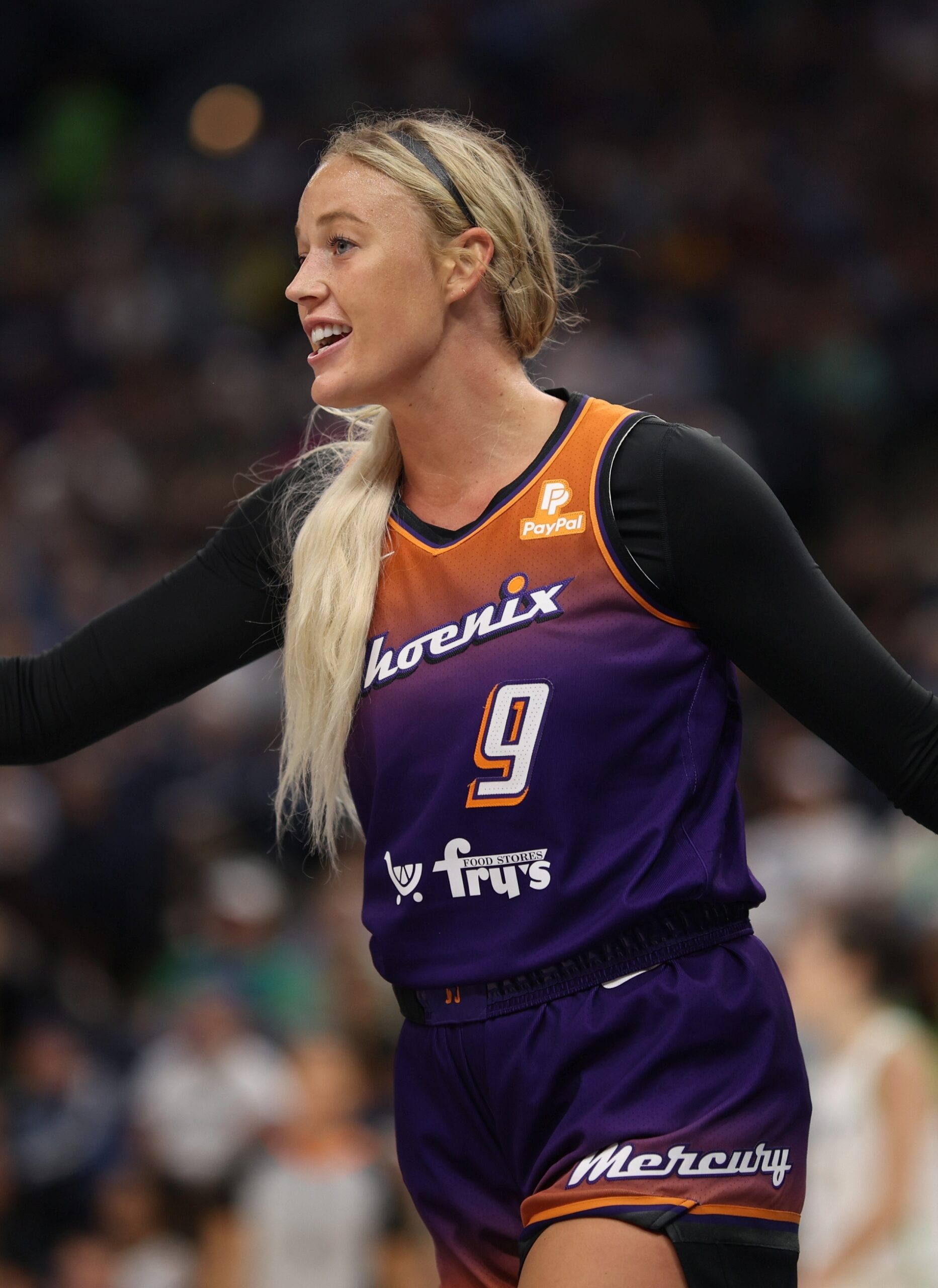
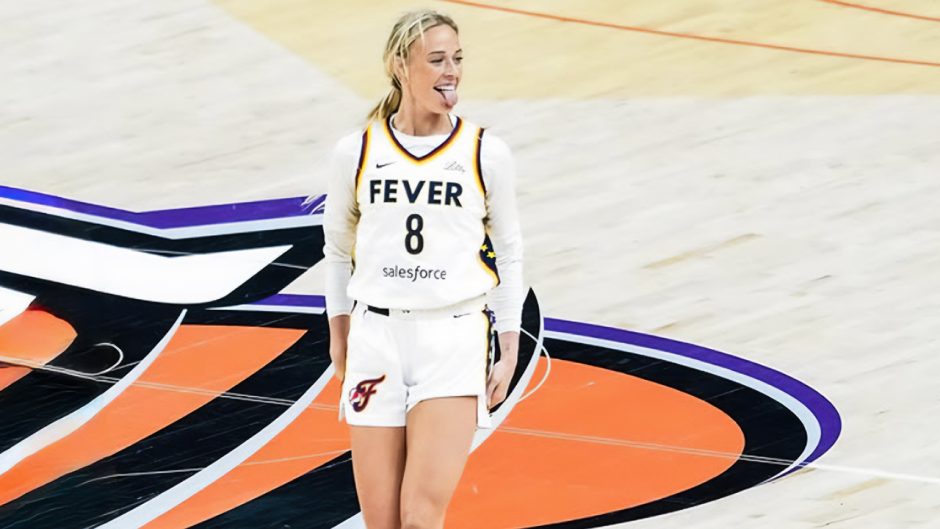
    Twenty-two seconds is not a long time. It is barely the length of a held breath, a song’s bridge, the gap between a free throw and the next play. But when a Phoenix arena camera locked onto a Fever guard standing dead still, finger raised, gaze fixed across the court at a former teammate, those twenty-two seconds turned into one of the most replayed moments of the 2025 WNBA season. The internet did what the internet does. The clip looped, captions multiplied, and a player already known for her edge became, almost overnight, a meme that millions of people recognized on sight.

    The woman at the center of all that noise is Sophie Cunningham, and the more interesting story is not the staredown itself. It is what she has done with the attention since: turned a reputation for fearlessness on the court into a broader, louder conversation about presence, self-expression, and what it looks like when a woman in sport decides she has nothing to shrink for.

    The staredown, aimed at her former Phoenix teammate DeWanna Bonner, was not even the first time Cunningham had become a viral character that season. By the time the clip spread, she had already been crowned an unlikely folk hero by a swelling fan base, the kind of player whose name trends for reasons that have little to do with a stat line. That is a strange and telling thing to happen to a role player. It usually happens to scorers and superstars. It happened to her because of who she is, not what she averages, and the distinction is the whole point of her story.

    A Black Belt at Six and a Football Helmet by Sixteen
    A Black Belt at Six and a Football Helmet by Sixteen

    Cunningham was born in Columbia, Missouri, in August 1996, into a family that took athletics seriously enough that both her parents had been student athletes at the University of Missouri. The competitiveness was not a phase she grew into. It was the water she swam in from the start.

    The detail that captures her best comes from childhood. By the age of six, she had earned a black belt in taekwondo, trained by her own parents, who reportedly first gave her lessons as something of a joke. The joke did not last. By high school at Rock Bridge in Columbia, she was starring in basketball and volleyball, and when the football team lost its kicker to a torn ACL, she pulled on a helmet and went two for four on field goal attempts. A girl kicking field goals for the boys’ varsity squad in the mid-2010s was not a stunt. It was simply Cunningham seeing a gap and stepping into it.

    That instinct, the willingness to occupy a space nobody had reserved for her, is the throughline of everything that came later. It is also why “confidence” is the wrong word for what she has. Confidence implies a performance, a posture you put on. What Cunningham seems to carry is something steadier and older, the assumption that she belongs wherever she stands.

    From Missouri’s All-Time Scorer to the League’s Most Talked-About Role Player
    From Missouri's All-Time Scorer to the League's Most Talked-About Role Player

    The numbers from her college years are not small. Across 129 career starts for the Missouri Tigers, Cunningham averaged 17.0 points, 5.4 rebounds, and 3.0 assists a game, finishing as a cornerstone of the program and a three-time first-team All-SEC selection. When the 2019 WNBA Draft arrived, the Phoenix Mercury selected her with the 13th overall pick, the first choice of the second round, making her the highest-drafted player in Missouri program history at the time.

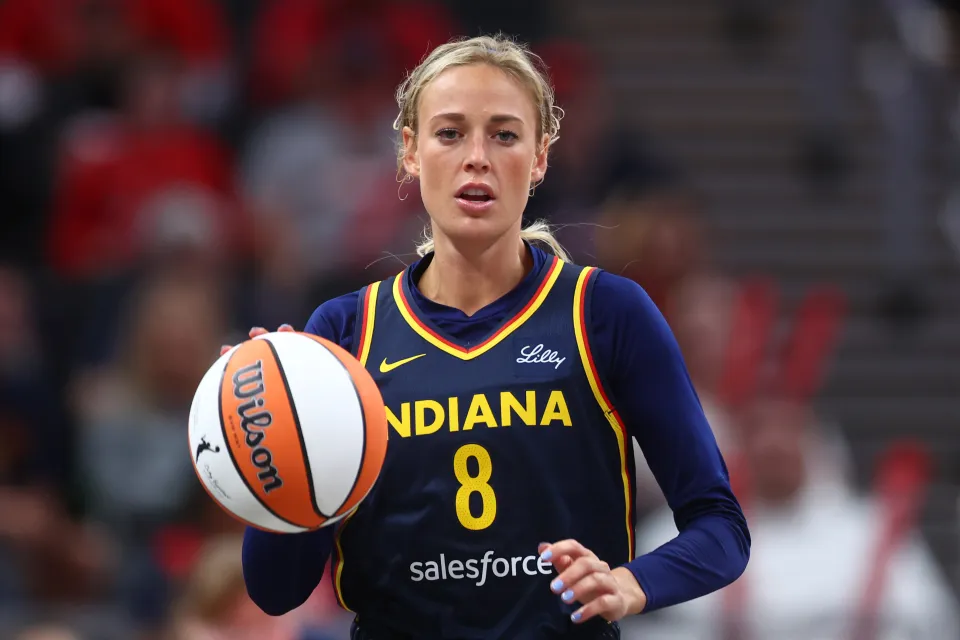
    For six seasons in Phoenix, she built a reputation as a tough, capable guard with a reliable outside shot and a refusal to back down from anyone. Her best statistical year came in 2022, when she averaged 12.6 points across 28 games. Then, on the last day of January 2025, a four-team trade sent her to the Indiana Fever, the franchise that had become the center of gravity for the entire league. Landing in Indiana put her on the brightest stage women’s basketball had to offer, alongside a young roster the whole country was suddenly watching, and she did not waste the spotlight by playing small.

    Her first season in Indiana was, by the raw numbers, a solid supporting role. Through 30 regular-season games she averaged 8.6 points, 3.5 rebounds, and a steal a night while shooting better than 43 percent from three-point range. The season ended early and painfully. In mid-August, a tangle in the paint left her with a torn MCL in her right knee, and the Fever ruled her out for the rest of the campaign. She confirmed the injury herself, on her own podcast, with the flat honesty that has become her signature. The Fever still captured the 2025 Commissioner’s Cup, and in April 2026 the franchise re-signed her, a vote of confidence in a player whose value to the locker room had outgrown her box score.

    Why “Enforcer” Became a Compliment
    Why

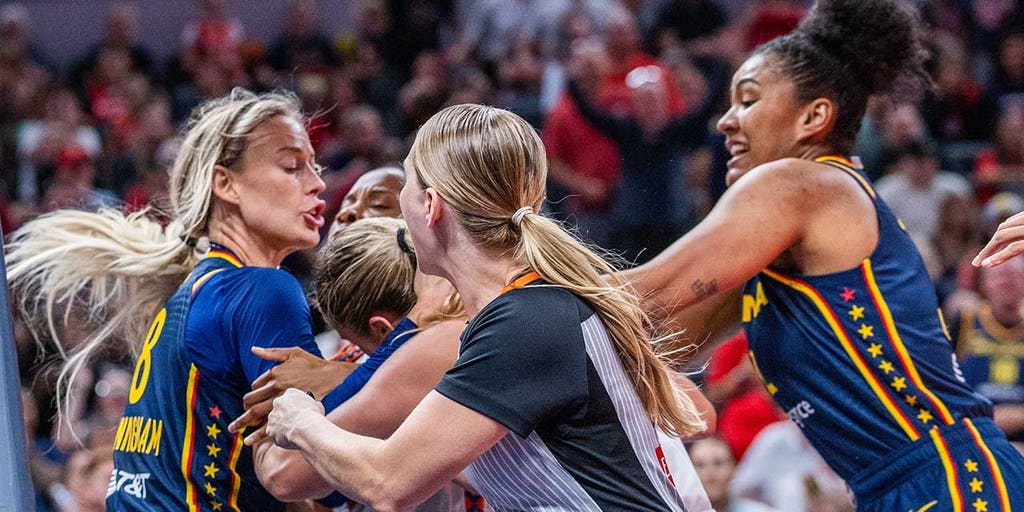
    The label that follows Cunningham now is “enforcer,” and it stuck for a reason. During a June 2025 game against the Connecticut Sun, she was ejected after grabbing an opposing player and pulling her to the ground, retaliation for a poke to the eye that her teammate Caitlin Clark had absorbed earlier in the game. The clip went everywhere. To one set of fans, she was a hothead. To a far larger set, she was the teammate everyone wants, the one who notices when you are being targeted and decides, without a meeting or a memo, to do something about it.

    She has been candid about the frustration underneath it, arguing publicly that officials do too little to protect star players from rough treatment. You can debate the on-court ethics of how she expresses that. What is harder to argue with is the conviction. She is not performing toughness for a camera. She is reacting, in real time, to a sense of fairness she clearly takes personally.

    For a body-positive lens, the enforcer reputation matters more than it might seem. Women in sport are constantly managed into smallness, told to be gracious, to absorb, to not make a scene. Cunningham makes scenes. She takes up room, physically and emotionally, and the audience that has rallied around her is responding to permission as much as to basketball. Watching a woman refuse to be diminished, and watching the world reward her for it instead of punishing her, is its own quiet form of liberation.

    And the world did reward her. In the weeks after the viral incidents, her following climbed, her name attached itself to brand deals, and her podcast became a destination rather than a side project. There is something worth sitting with there. A woman was loudest and most unapologetic, took up the most space and gave the least ground, and the result was not exile but expansion. The market that so often tells women to soften themselves looked at Cunningham doing the opposite and leaned in. That feedback loop, where boldness is met with belonging rather than backlash, is exactly the kind of shift body-positive culture has been arguing for, playing out in real time on a very public court.

    The Same Athlete in a Swimsuit Spread and a Broadcast Booth

    The Same Athlete in a Swimsuit Spread and a Broadcast Booth

    Here is where Cunningham’s story gets genuinely useful for anyone thinking about self-image. The woman who throws her body into a scrum to protect a teammate is the same woman who, in 2026, made her Sports Illustrated Swimsuit debut, photographed at a Florida resort as one of a small group of athletes featured that year. She announced the shoot, by her own account, on the same day she revealed she was stepping into a WNBA broadcasting role.

    Think about how much that single day carried. A swimsuit feature, long coded as the most traditionally objectifying corner of sports media, and a broadcasting job, which is about authority and voice, announced together by the same person without apology or contradiction. Cunningham did not present one as the “real” her and the other as a compromise. She let both be true at once.

    That refusal to split herself is the body-positive heart of the whole thing. The old script said a woman athlete had to choose a single legible identity. Be the serious competitor or be the glamour figure. Be respected or be desired. Cunningham, with a 6-foot-1 frame built for boxing out under the rim and a comfort in front of a camera that comes from years of analyst work, simply declines the choice. Her body is a tool on the court, a canvas in a photo shoot, and a non-issue in the booth, and she treats all three contexts as equally hers to occupy.

    What keeps this from reading as mere brand management is the consistency of the person underneath. The same woman who credits her steadiness to her faith, who earned a black belt before she could spell taekwondo, who kicked field goals because the team needed a kicker, is the one stepping in front of a swimsuit camera. There is no rebrand, no reinvention, no careful repositioning. It is one continuous self, comfortable in a sports bra under the rim and comfortable in front of a lens, because the comfort was never about the outfit. It was about a relationship with her own body that she appears to have settled a long time ago.

    What the WNBA’s Boom Is Really Selling

    What the WNBA's Boom Is Really Selling

    None of this is happening in a vacuum. The league around Cunningham has been on a tear. The 2025 WNBA season was the most-viewed full season ever on ESPN networks, averaging 1.2 million viewers, while attendance jumped roughly 34 percent year over year to more than three million fans. Those numbers are not just about wins and losses. They reflect a cultural shift in what audiences want from women’s sports, which is to say, more of the whole person.

    For decades, the visibility problem for women’s basketball was framed as a marketing failure. The newer, truer read is that the league was being asked to apologize for the very things that make it compelling. Players have bodies that do extraordinary things and personalities that do not fit neatly into a highlight package. The current boom has coincided, not accidentally, with athletes being allowed to be loud, stylish, funny, opinionated, and physically imposing all at once.

    Cunningham is a near-perfect case study because she is not the league’s leading scorer or its biggest name. She is a role player who became a phenomenon through sheer force of personality, more than 1.5 million Instagram followers, a co-hosted podcast called “Show Me Something,” endorsement deals, and a willingness to be fully visible. The lesson for any reader who has ever been told to tone it down is hard to miss. You do not have to be the best in the room to be the most yourself in it, and being the most yourself is frequently what people remember.

    What Watching Her Actually Teaches the Rest of Us

    Strip away the memes and the swimsuit headlines, and what is left is a fairly radical model of self-acceptance, demonstrated rather than preached. Cunningham, who is openly Christian and has credited her on-court confidence to her faith, does not talk in the polished language of a body-positivity campaign. She just lives in a way that quietly dismantles the rules so many women absorb without ever agreeing to them.

    The rules say: make yourself smaller so others feel comfortable. She makes herself bigger when a teammate needs protecting. The rules say: pick a lane, athlete or beauty, serious or fun. She drives down the middle of all of them. The rules say: a woman’s body in a competitive sport should be efficient and invisible, while a woman’s body in a magazine should be decorative and silent. She lets her body be powerful in one frame and celebrated in the next and refuses to rank the two.

    What women’s basketball is teaching, through players like her, is that confidence in a body is not a feeling you wait to arrive. It is a set of choices you make about how much space to take, how loudly to speak, and how many versions of yourself you are willing to show on the same afternoon. Cunningham keeps choosing the bolder option, and a growing audience keeps choosing to watch. The next time you catch yourself shrinking out of habit, picture twenty-two seconds, a raised finger, and a woman who decided the moment was hers. Then borrow a little of that, and stand exactly where you are.
  • Lizzo at the BET Awards 2026 – How She Owns Every Room and How You Can Too

    Lizzo at the BET Awards 2026 – How She Owns Every Room and How You Can Too

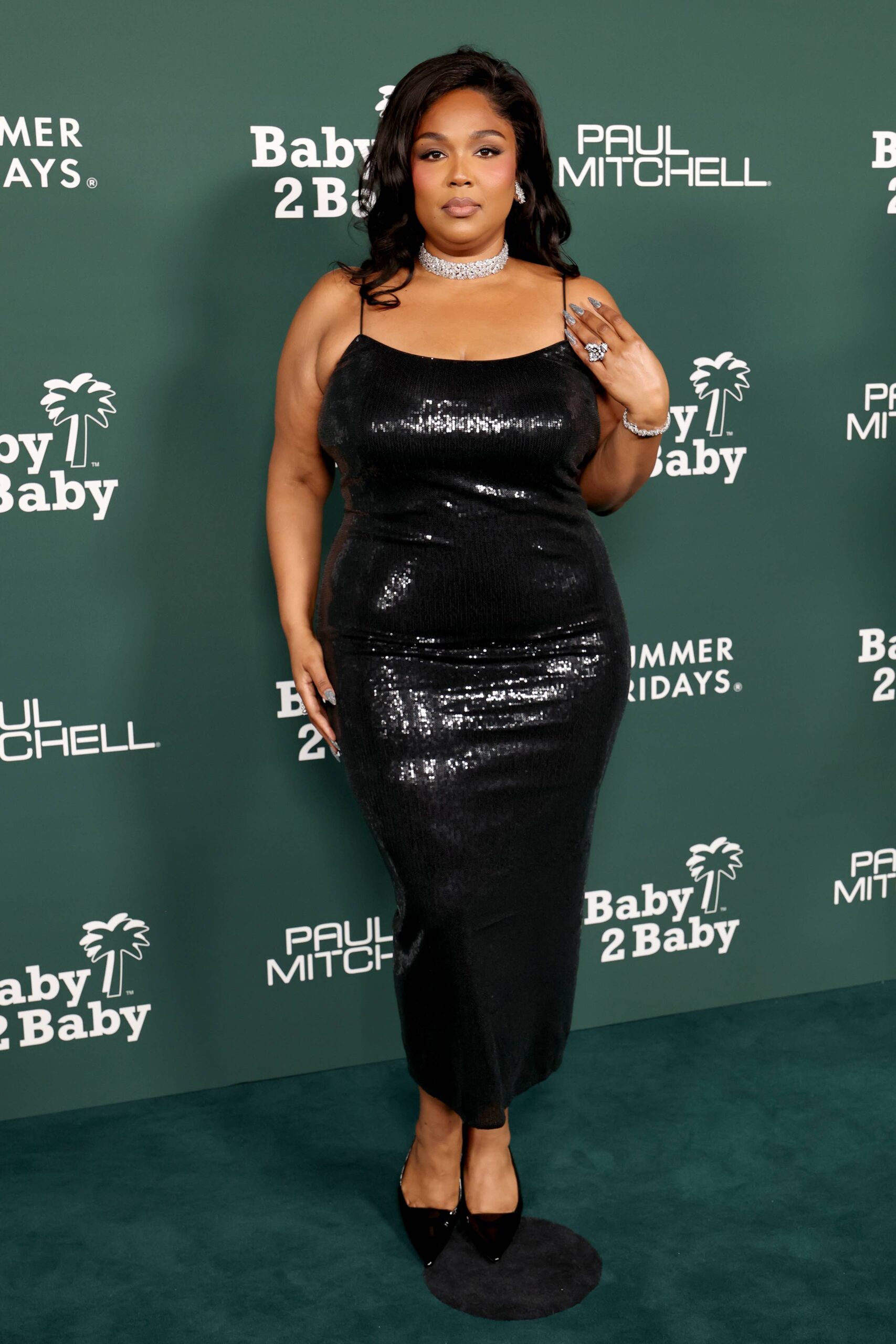
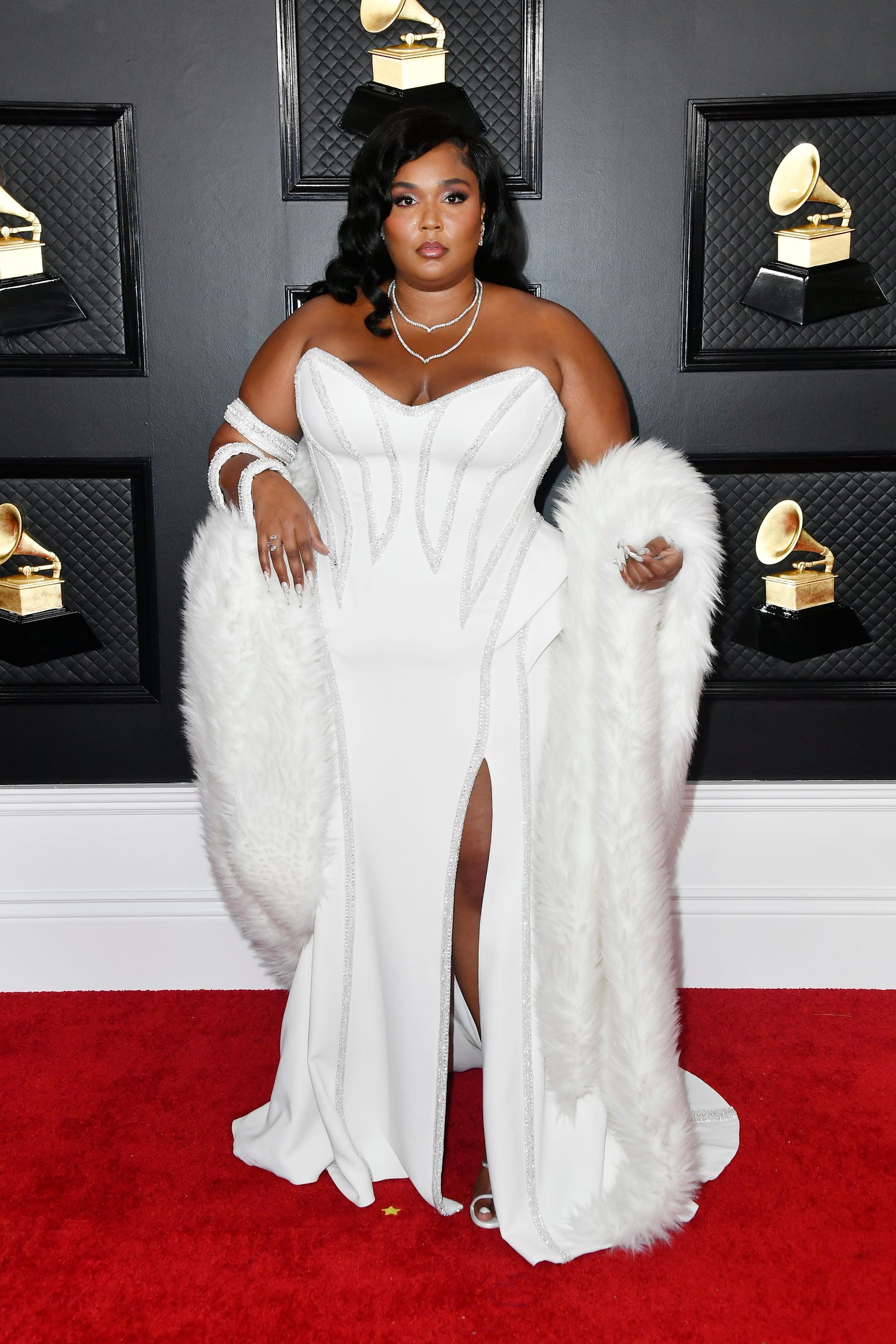
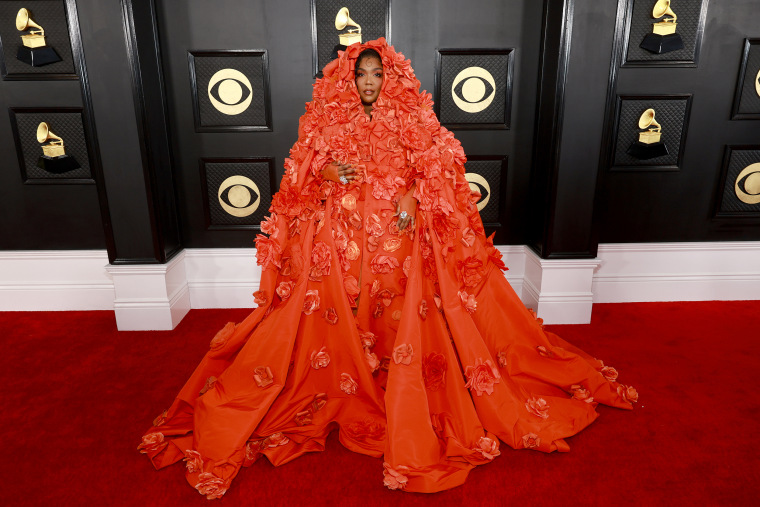
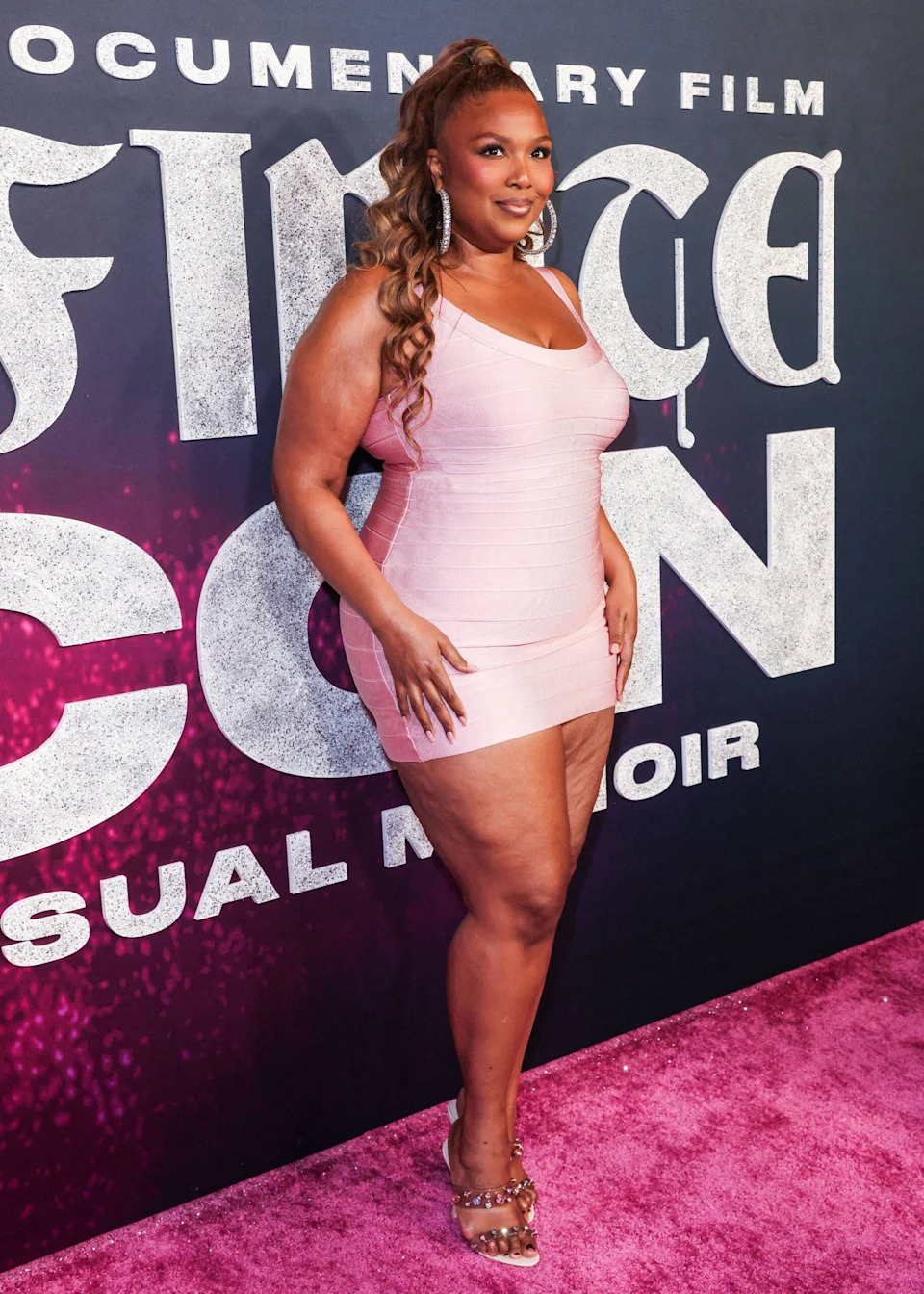
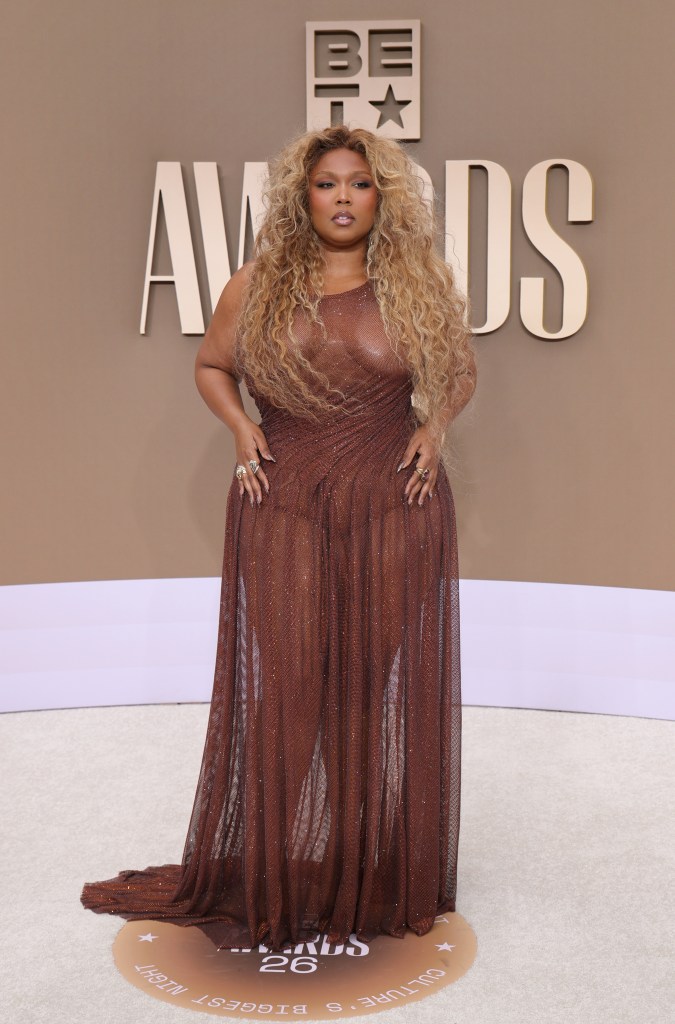
    The flashbulbs were already firing when she stepped onto the carpet at the Peacock Theater, and something shifted in the crowd. Photographers leaned in. Reporters stopped mid-sentence. For a few seconds, the noise of a packed Los Angeles awards night narrowed down to one woman, one shimmering brown gown, and a smile that said she knew exactly where she stood. Lizzo did not walk that carpet hoping to be noticed. She walked it knowing she would be, and that quiet certainty is the part worth studying long after the photos stop trending.

    The 2026 BET Awards gave us no shortage of fashion to talk about. Teyana Taylor swept in fresh off her Icon of the Year honor, Janet Jackson traded the gown for tailored cool, and Coco Jones brought a jolt of scarlet to the proceedings. But Lizzo’s appearance stood apart, not because the dress was louder than anyone else’s, but because of how completely she inhabited it. There is a lesson in that for every curvy woman who has ever stood in front of a closet wondering whether she has the right to take up space in a room. Spoiler: you always did. Let’s break down how she does it, and how you can borrow the blueprint for your own life.

    What Lizzo Actually Wore on the Carpet

    What Lizzo Actually Wore on the Carpet

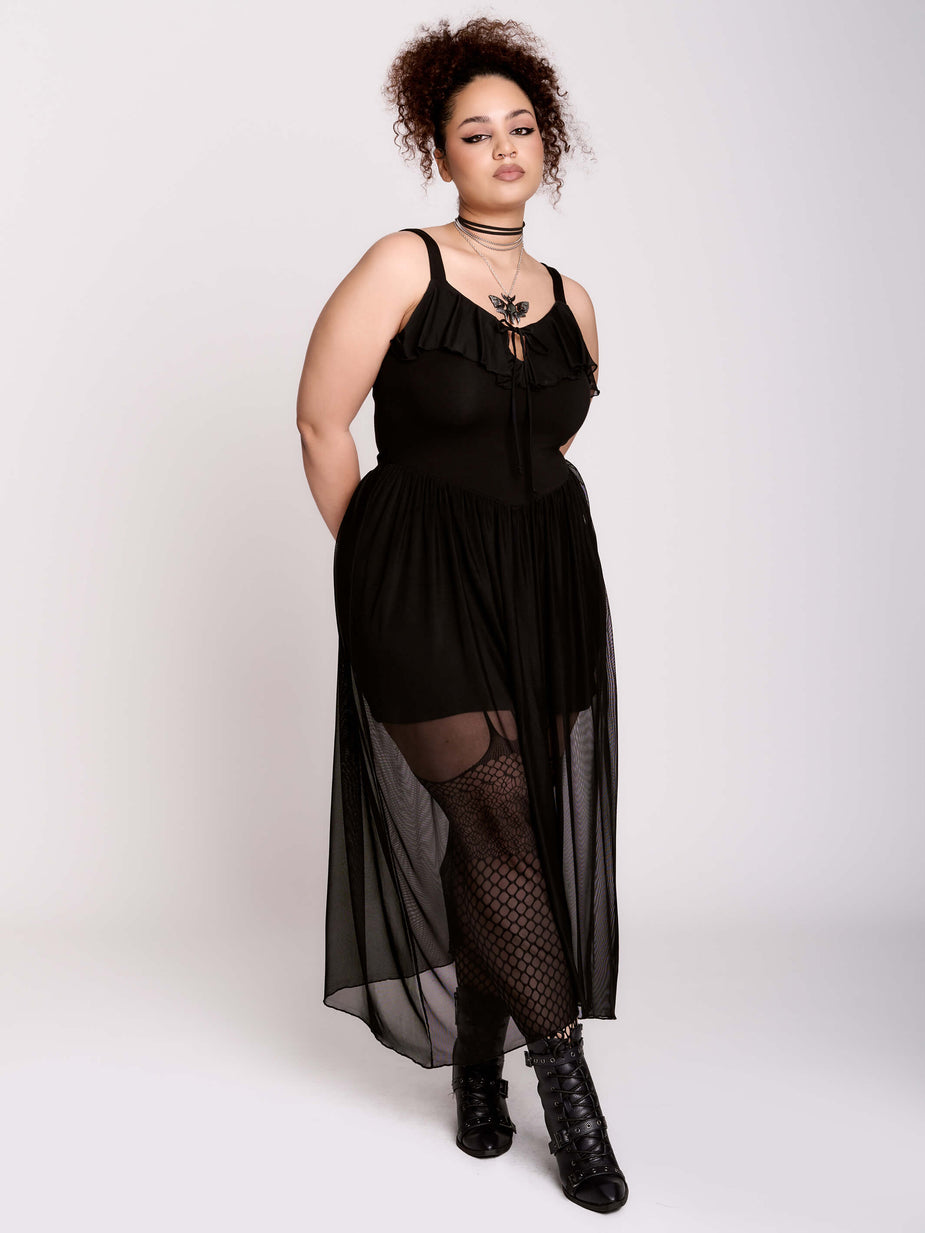
    Let’s start with the facts, because the look itself is worth lingering on. Lizzo arrived in a shimmering brown gown built from sheer panels that skimmed all the way to the floor. The fabric caught the light with a subtle sparkle, the kind that reads as expensive rather than flashy, and the silhouette hugged her frame closely while ruched, gathered detailing gave the whole thing a sculptural texture. She kept the rest deliberately uncluttered: closed-toe heels, statement earrings that grazed her shoulders, and a stack of sparkling rings doing the heavy lifting on accessories.

    Her beauty look matched the energy. Think smoky eyes, glowing skin, and a soft nude lip, with her signature curls worn loose and voluminous around her shoulders in a honey-blonde wave. Nothing fought for attention. Every element pointed in the same direction.

    A quick, honest note on attribution. Several outlets covered the look the morning after, and reporting on the exact designer was not fully consistent across sources, so we are choosing to celebrate the gown itself rather than stake a claim on a name that was not uniformly confirmed. What matters more than the label on the inside seam is the thinking behind the styling, and that is the part you can actually take home and use.

    The Confidence Comes First, the Clothes Come Second

    The Confidence Comes First, the Clothes Come Second

    Here is the thing most red-carpet breakdowns get backwards. They treat the outfit as the source of the confidence, as if the right gown could be poured over anyone and produce that same glow. It does not work that way, and Lizzo is living proof. A sheer gown is not a forgiving garment. It does not hide, it does not distract, it does not offer you a comfortable place to fold your arms and disappear. To wear it the way she wore it, you have to decide first that you are allowed to be seen.

    That decision is the real outfit. The fabric is just the delivery system.

    Lizzo has spent her entire public life making that decision out loud, often when it was the least convenient thing to do. She built a career on the idea that joy is not something you earn by shrinking, and that a body is not a problem to be solved before the fun is allowed to start. So when she steps onto a carpet, the posture, the eye contact with the cameras, the way she lets a hip rest into the pose rather than bracing against it, all of that telegraphs ownership. The gown is gorgeous. But you would still feel the gravity of her presence if the lights cut out.

    For the rest of us, the takeaway is freeing. You do not have to wait for the perfect dress, the perfect mood, or the perfect anything before you let yourself walk into a room like you belong there. The order of operations is the opposite of what the magazines sold us. You walk in owning it first, and the clothes simply get to come along for the ride.

    Why Sheer and Sculptural Works on a Curvy Frame

    Why Sheer and Sculptural Works on a Curvy Frame

    Sheer dressing tends to make people nervous, and curvy women are often told, in a hundred polite and not-so-polite ways, that it is not for them. That advice is wrong, and Lizzo’s gown is a clean demonstration of why. The reason her look landed has less to do with daring and more to do with construction. Understanding that construction is how you translate a celebrity moment into something wearable for a Tuesday.

    Notice three things working together. First, the ruching. Gathered fabric does something genuinely useful for curves: it adds visual texture and movement, and it follows the body’s lines instead of fighting them. Ruched panels at the waist and neckline draw the eye along the natural shape rather than flattening everything into a smooth, unforgiving sheath. If you have ever felt that a plain bodycon dress reads as too clingy, ruching is often the fix you were missing.

    Second, the strategic placement of sheer against opaque. A well-built sheer gown is rarely transparent everywhere. It places the see-through panels where they create drama and keeps structure where the body wants support. That balance is what separates a look that feels intentional from one that feels like a dare.
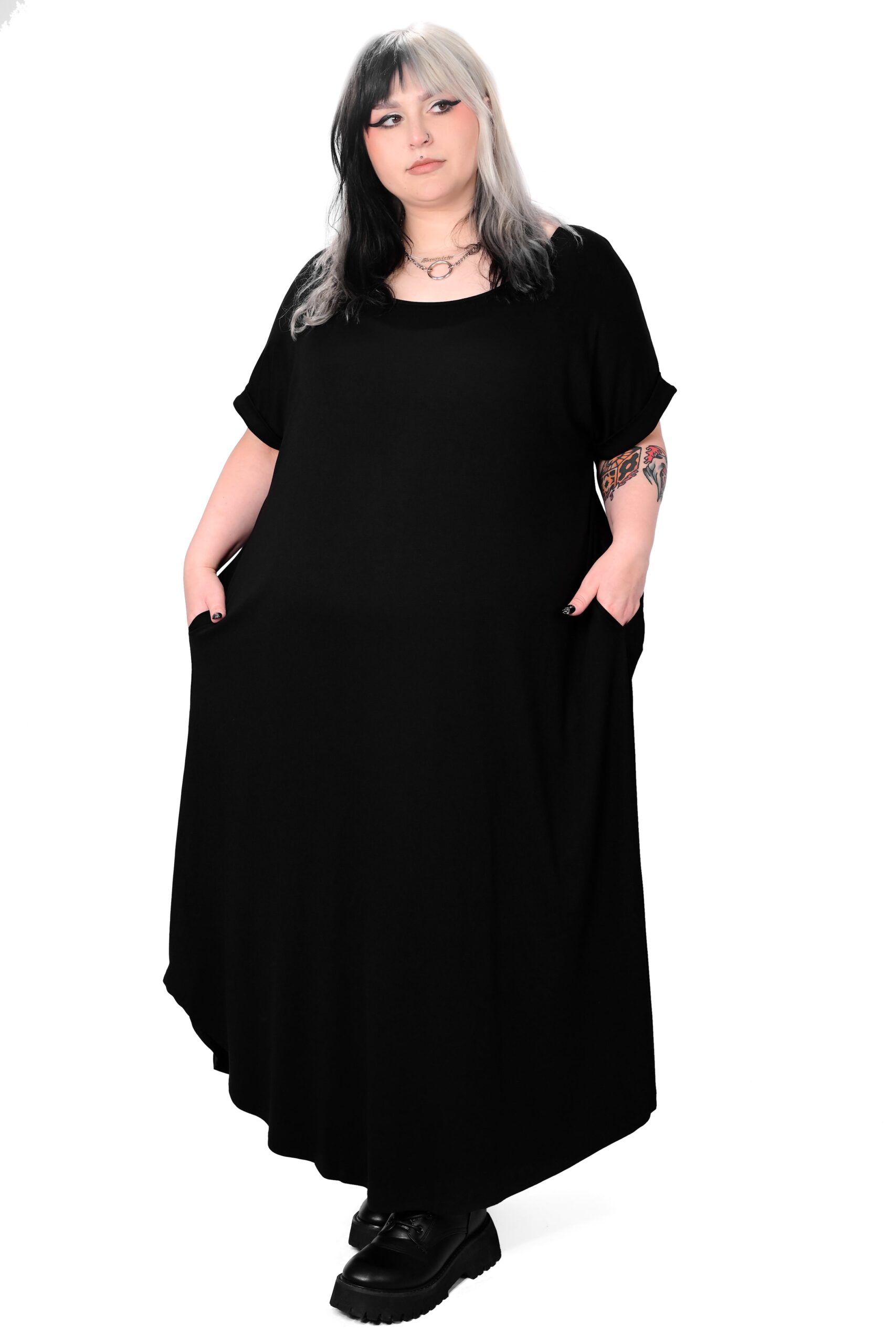
    Third, the tonal styling. A single warm brown, repeated from gown to skin to accessories, creates one long unbroken line. That continuity is quietly flattering and, more importantly, quietly powerful, because it reads as a complete thought rather than a collection of pieces. You can recreate that monochrome effect at any size and any budget, and it works every single time.

    Build the Look in Your Own Closet, at Your Own Price

    Build the Look in Your Own Closet, at Your Own Price

    You will not be borrowing a custom gown from a stylist’s rack, and you do not need to. The size-inclusive market in 2026 is the strongest it has ever been, and the elements that made Lizzo’s look sing are all available to you. Here is how to assemble the spirit of it without pretending you are headed to the Peacock Theater.

    Start with the silhouette. For a ruched, body-skimming dress in the same family, Torrid and Eloquii both carry occasion pieces with gathered detailing through the waist, and they cut them for real curves rather than grading up a straight-size pattern and hoping. Fashion Nova Curve is your friend when you want the drama of a sheer or mesh-paneled gown without committing serious money, and it leans into exactly the kind of bold, going-out energy this look lives in. Expect those trend-forward pieces to land at the more affordable end, often in the rough neighborhood of a nice dinner out, though prices shift constantly and you should treat any figure as a moving estimate rather than gospel.

    For something more elevated and built to last, Universal Standard specializes in clean, sculptural lines and genuinely inclusive sizing, and its pieces photograph beautifully because the construction is doing real work. Lane Bryant rounds out the lineup as the dependable place for a structured occasion dress that holds its shape all night.

    Then there is the foundation, and this is where it gets fun, because Lizzo built a whole brand on it. Her shapewear line Yitty makes pieces designed to smooth and support without the medieval discomfort of older shapewear, and the philosophy behind it is exactly the one we are talking about: support that helps you feel like yourself, not support that punishes you into a different shape. If a sheer or close-fitting gown makes you want a little extra confidence underneath, this is a body-positive place to start.

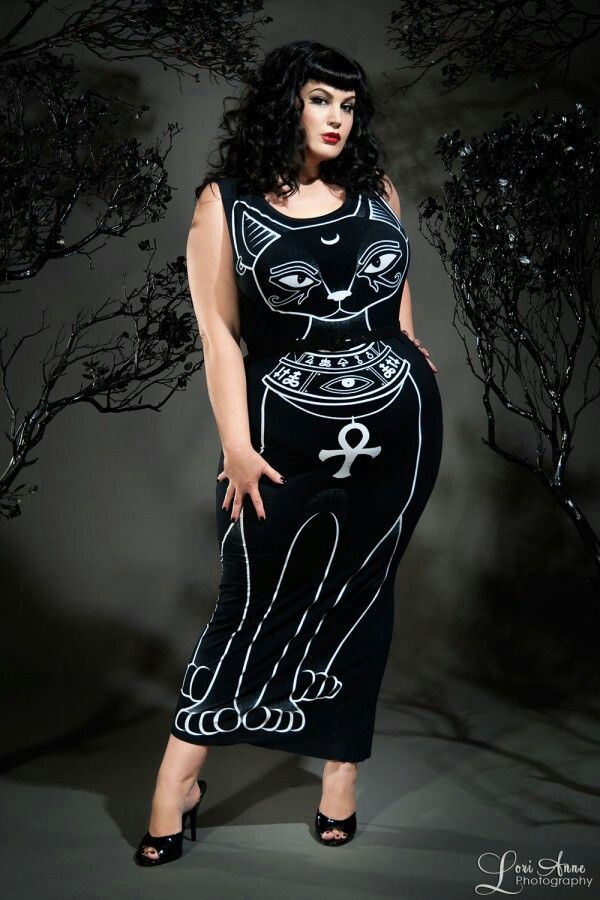
    Finish the way she did. Let the dress be the headline, then add shoulder-grazing earrings and a few rings with some shine, and stop there. The discipline of stopping is half the elegance.
    The Posture Lesson Nobody Sells You

    The Posture Lesson Nobody Sells You

    You can buy the dress. You cannot buy the way she stands in it, but you can absolutely practice it, and that practice is more transformative than any wardrobe upgrade.
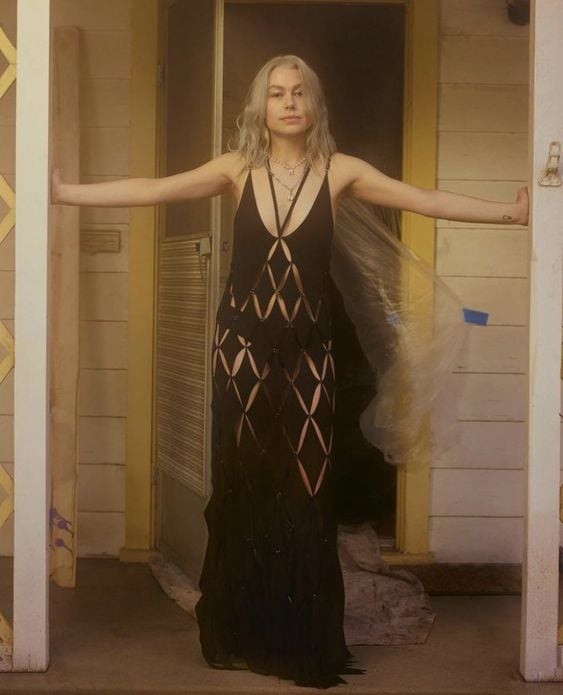
    Watch how confident women carry themselves on a carpet and you will notice a handful of repeatable habits. The shoulders drop back and down rather than creeping up toward the ears. The chin stays level, neither tucked in apology nor jutted in defense. The weight settles into the hips and lets the body take a relaxed, slightly asymmetrical line instead of standing at rigid attention. And crucially, the eyes meet the lens. They do not scan the floor for an exit.

    None of that requires a stylist. It requires a mirror and a little stubbornness. Try it the next time you are dressed up with somewhere to be. Roll the shoulders back, breathe out, let one hip carry your weight, and look straight ahead. It feels theatrical for about four seconds, and then it starts to feel like simply standing up in your own life. The reason it works is that posture and feeling run on a two-way street. Standing like you own the room actually makes you feel more like you do, which makes the next room easier, and the one after that easier still.

    Lizzo did not arrive at the BET Awards having figured this out overnight. She arrived having practiced taking up space for years, in front of crowds far less friendly than a room full of people who came to celebrate her. The carpet is just the highlight reel. The work happened in a thousand ordinary moments where she decided not to make herself smaller.

    Make It Yours, Not a Costume

    There is a trap in celebrity style inspiration, and it is worth naming so you can step around it. The trap is treating a famous look as a costume to copy detail for detail, then feeling like a fraud because you are not Lizzo and your Tuesday is not a televised awards show. That is the wrong assignment entirely.

    The point was never to become her. The point is to notice what she understands and apply it to a life that is fully yours. She understands that a curvy body is not a thing to be styled around or apologized for, but the whole gorgeous foundation the outfit gets to sit on. She understands that the boldest accessory in any room is a woman who has decided she is not going to dim herself. She understands that confidence is a practice, not a personality trait you are either born with or stuck without.

    So take the parts that fit your real life. Maybe that means finally buying the close-fitting dress you have been admiring from a safe distance, in a fabric and a brand cut for your actual body. Maybe it means a single tonal outfit in a color that makes you feel expensive. Maybe it is nothing more than walking into your next gathering with your shoulders back and your chin level, wearing whatever you already own, having quietly decided beforehand that you get to be seen tonight. Any of those is the assignment done correctly.

    Walking In Like the Room Was Built for You

    The thing about a red carpet is that it is mostly an agreement. Everyone in the room has agreed to treat that strip of fabric as a place where presence matters, where you are allowed to be looked at, where showing up fully is the entire point. There is no rule that says the agreement only applies in Los Angeles in front of cameras. You can make that agreement with yourself in a grocery store parking lot, at a friend’s birthday dinner, at your own front door on a slow Sunday.

    Lizzo’s gown at the 2026 BET Awards will fade from the news cycle the way every carpet look eventually does. What will not fade, if you let it land, is the reminder underneath it: the woman makes the dress glow, not the other way around. You already have the only thing that cannot be bought, ordered, or shipped, and that is the right to walk into your life like you were always meant to be there. The dress is optional. Buy it if you want it. But the room was yours the second you decided it was.

  • Costco’s Viral Waffle Cone Bar Cake – Everything You Need to Know Plus DIY-Inspired Recipes

    Costco’s Viral Waffle Cone Bar Cake – Everything You Need to Know Plus DIY-Inspired Recipes

    Somewhere right now, a woman is standing in the Costco bakery aisle with a phone in one hand and a cart she swore would only hold paper towels and rotisserie chicken. She leans in, reads the label twice, and quietly tips a long pink-and-cream box on top of the bulk almonds. She did not come for cake. She is leaving with cake. This is how it goes with the Kirkland Signature Waffle Cone Bar Cake, the bakery drop that turned a routine warehouse run into an event and lit up dessert corners of social media in summer 2026.

    If you have not seen the videos yet, picture the nostalgia of a sugar cone melting in the sun, rebuilt as a sliceable sheet cake big enough to feed a backyard. That single idea is doing a lot of work. It is the kind of treat that makes you want to gather people, and for a body-positive table where dessert is a joy and not a negotiation, that is exactly the energy we are here for. Let us walk through what this cake actually is, why it spread so fast, and how to recreate the whole vibe in your own kitchen when the cake is sold out or simply not near you.

    What the Waffle Cone Bar Cake Actually Is

    What the Waffle Cone Bar Cake Actually Is

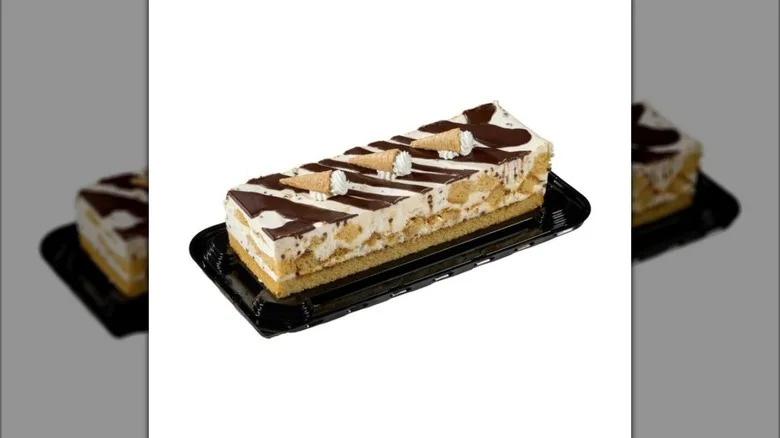
    Strip away the hype and you are looking at a generously layered sheet-style dessert that borrows its entire personality from a classic ice cream waffle cone. According to coverage from outlets including Parade, Tasting Table, and The Daily Meal, the cake is built from spongy layers of waffle-cone-flavored cake, a crunchy waffle cone crumble worked through the middle, and a heavy, creamy filling that does the work of standing in for soft serve. The top gets a swirl of chocolate and caramel, then it is finished with three mini chocolate-filled waffle cones perched on top like the dessert is wearing a little crown.

    It carries the item number 2056615 and lands in Costco’s bakery case at roughly 40 ounces, billed as around a 12-serving cake. The flavor that everyone keeps trying to describe comes down to what a waffle cone tastes like in the first place: vanilla, caramelized sugar, a little toasty butteriness, the warm edge of something baked until golden. Put that into a soft sponge and it reads as comfort food the second it hits your tongue.

    The detail reviewers keep circling back to is texture. Early shoppers reported that the waffle cone pieces hold their crunch better than you would expect from something sitting in a creamy filling, which is the make-or-break for a treat like this. Nobody wants a soggy cone. The fact that it stays snappy is half the reason people are obsessed.

    Why It Went Viral

    Why It Went Viral

    Costco cakes have a built-in fan base, but this one caught a particular wave. A Costco-spotting account on Instagram known as costcohotfinds was among the first to surface the cake, and that post took off in a way that bakery items rarely do, racking up thousands of likes, hundreds of comments, and tens of thousands of shares. Once one account makes a find look irresistible, the algorithm does the rest, and suddenly every dessert lover on your feed is asking which warehouse has it in stock.

    The comments tell the story better than any marketing copy could. Shoppers called it next level. One person wrote that it tastes just like ice cream, no joke. Another simply said it was SO good. People started saying they wanted to buy two at a time, which at a warehouse store is both a joke and a genuine plan. There is also a quieter thread of feedback worth naming honestly: some shoppers wished the bakery used cleaner ingredients, a fair point that comes up with a lot of large-format grocery desserts. Naming that out loud is part of why the DIY versions below matter, because making it yourself means you decide what goes in.

    The other engine behind the buzz is scarcity. Reporting suggests the cake has been showing up in select locations rather than nationwide, with early sightings clustered in states like Pennsylvania, North Carolina, and Ohio, and it appeared to sell out online quickly. It also reads as a seasonal, summer-leaning release rather than a permanent fixture. Limited availability plus a treat that photographs beautifully is a recipe for exactly this kind of frenzy. When something feels like it might vanish, everyone wants it more. And because the cake leans so hard on a shared childhood memory, the videos do double duty: they sell the dessert and they sell a feeling, that first lick of soft serve on a hot day when you were small enough that summer felt endless. A treat that delivers both flavor and nostalgia in one slice is exactly the kind of thing people tag three friends under and screenshot for the next shopping list.

    What to Know Before You Buy

    What to Know Before You Buy

    A few grounded notes so your trip is a win and not a letdown.

    Price first. Several outlets and a warehouse-tracking listing have reported the cake at approximately $18.99, though pricing can shift by region and over time, so treat that as a ballpark rather than a promise. For something that serves around a dozen people, that still lands in the friendly range for feeding a crowd.

    Availability second. Because it has been turning up in select stores, call ahead or check a Costco-finds account for your area before you drive across town. Bakery stock moves fast on a viral item, and a quick call to the bakery counter can save you a sad empty-handed walk back to the car.

    Serving third. This is a rich cake. The creamy filling and the chocolate-caramel swirl mean a little goes a long way, so those 12 servings are real servings, not slivers. It holds up best cold, straight from the fridge, which also keeps that signature crunch intact. If you are bringing it to a summer party, keep it chilled until the last possible moment.

    And one gentle reminder for our table specifically: this is a treat, and treats are allowed to just be delicious. You do not owe anyone an explanation for buying a fun cake. Slice it, share it, enjoy the nostalgia, and let it be uncomplicated.

    A DIY Waffle Cone Layer Cake You Can Make at Home

    A DIY Waffle Cone Layer Cake You Can Make at Home

    Maybe the cake is sold out. Maybe the nearest Costco is a haul. Maybe you simply want to control what goes into it. Good news: the whole concept is recreatable with grocery-store basics, no special partnerships or hard-to-find products required. Here is a workable home version that captures the spirit – toasty waffle cone flavor, creamy filling, crunch in every bite.

    What you will need:

    • 1 boxed yellow or vanilla cake mix, plus the eggs, oil, and water it calls for (or your favorite from-scratch vanilla cake recipe)
    • 1 teaspoon vanilla extract, plus an extra splash for the frosting
    • 4 to 6 store-bought waffle cones or sugar cones
    • 2 cups heavy whipping cream
    • 1/2 cup powdered sugar
    • 1 jar caramel sauce
    • 1 jar chocolate fudge or ganache-style sauce
    • A handful of mini ice cream cones for the top, if you can find them

    How to bring it together:

    1. Make the cake batter per your recipe, then stir the vanilla extract into the batter. For an extra layer of waffle cone character, crush two cones into fine crumbs and fold a few tablespoons into the batter before baking. Bake in two round pans or one rectangular pan and cool completely.
    2. While it bakes, make the filling. Whip the cold heavy cream with the powdered sugar and a splash of vanilla until it holds firm peaks. This is your stand-in for that creamy soft-serve layer.
    3. Crush the remaining cones into a mix of fine crumbs and bigger crunchy shards. Keep them separate from the wet ingredients until the last minute so they stay crisp.
    4. Slice the cooled cake into layers. Spread the whipped cream filling between layers and sprinkle the cone crumble over each layer of cream as you stack.
    5. Finish the top with a generous drizzle of caramel and chocolate sauce, swirled together with the tip of a knife. Scatter the remaining cone shards over the top, and crown it with a few mini cones if you have them.
    6. Chill at least an hour before serving so it slices cleanly and the crunch holds. Add the final crumble right before it goes to the table.

    The trick that makes or breaks the homemade version is the same one that made the original go viral: keep the crunchy elements dry and add them late. Stirred-in crumbs soften; crumbs added at the last moment stay snappy.

    No-Bake and Lighter Riffs on the Same Idea

    No-Bake and Lighter Riffs on the Same Idea

    Not every summer day is a turn-on-the-oven day, and not every craving needs a full layer cake. The beauty of the waffle cone concept is how flexible it is, so here are a few easier paths to the same flavor.

    Waffle cone icebox cake. Layer graham crackers or thin vanilla wafers with the same sweetened whipped cream and cone crumble in a loaf pan or baking dish, then refrigerate overnight. The cookies soften into cake-like layers while the cone bits stay crunchy. Drizzle caramel and chocolate on top before serving. Zero baking, and it slices beautifully.

    Single-serve trifle jars. Spoon cubed vanilla cake (store-bought pound cake works great), whipped cream, cone crumble, and a swirl of caramel and chocolate into small glasses or mason jars. These are perfect for a cookout because everyone gets their own, and they look like a million dollars for almost no effort. They also let people choose their own portion, which is a small kindness at any gathering.

    A lighter take. If you want some of the joy with a little less richness, swap part of the whipped cream for whipped Greek yogurt sweetened with a touch of honey, and lean on fresh sliced strawberries or peaches between the layers. You keep the waffle cone crunch and the summer feeling while lightening the load. This is not about shrinking the treat or apologizing for it, just offering a version that might sit better on a hot day or fit a different mood.

    Make-it-yours add-ins. A handful of mini chocolate chips, a spoonful of crushed toffee, a few fresh raspberries, or a dusting of flaky sea salt over the caramel all play beautifully with the toasty cone base. This is the part where you stop following anyone’s recipe and start making it yours. Half the fun of a viral dessert is the remix, and nobody is keeping score on whether your version matches the box on the shelf.

    Bringing the Whole Vibe to Your Table

    Here is the real reason a sheet cake shaped like a melted ice cream cone became the dessert of the summer: it gives people permission to gather. A 12-serving cake is not a thing you make for one quiet evening. It is a thing you make because the cousins are coming over, because it is somebody’s half-birthday, because the weather finally turned and everyone is outside until the streetlights come on.

    So lean into that. Set the cake out where people can see it and circle back for seconds. Put a stack of small plates next to it and let folks cut their own slice as big or as small as they want. Pour iced coffee or cold brew alongside it, because the caramel-and-cone flavor practically begs for it. If kids are around, let them be the ones to place the mini cones on top, because that is the kind of small job that turns a regular afternoon into a memory.

    Whether you snag the real Kirkland Signature version on a lucky warehouse run or build your own from a boxed mix and a box of cones, the point lands the same way. Dessert is one of the most generous things we make for the people we love. A cake this happy, this nostalgic, and this unbothered by being over the top deserves a table full of people who are equally unbothered about reaching for a second slice. Set it down, hand out the forks, and let summer do the rest.

  • Lauryn Hill’s Timeless Style – How the Icon’s Fashion Philosophy Inspires Confident Dressing for Women of Every Size

    Lauryn Hill’s Timeless Style – How the Icon’s Fashion Philosophy Inspires Confident Dressing for Women of Every Size

    Picture a stage in the late nineties, the lights low and gold, and a woman walking out in a slouchy denim jacket, a headwrap the color of marigolds, and a stack of bangles that caught the light every time she lifted the mic. She did not flinch. She did not tug at her clothes or check whether anyone approved. She just stood there, fully herself, and the whole room leaned in. That image of Lauryn Hill has outlived a hundred fashion cycles, and it still has something to teach anyone who has ever stood in front of a closet wondering whether they are allowed to take up space.

    What made her style land was never the price of a single piece. It was the posture behind it. Lauryn dressed like someone who had decided, in advance, that she belonged in every room she entered. For curvy women who have spent years being handed rules about what to hide and what to minimize, that decision is the whole lesson. Her look was an argument, made in fabric, that you get to define your own silhouette. Here is how to translate that argument into a wardrobe that works on a real body, with real brands you can actually find in your size.

    The Headwrap as a Crown, Not a Cover-Up

    The Headwrap as a Crown, Not a Cover-Up

    Start at the top, because Lauryn always did. Her headwraps and turbans, often in saturated golds, rusts, and deep greens, became as much a part of her signature as her voice. She wore her locs with the same ease, refusing the era’s pressure to straighten, shrink, or apologize for natural Black hair. Reporting on her style consistently points to those colorful headwraps, the oversized sunglasses, and the natural texture as the core of the look, and to the way it celebrated heritage at a moment when the industry rewarded the opposite.

    For a curvy woman, the headwrap is one of the most generous styling tools there is, because it has nothing to do with body size at all. It draws the eye upward, frames the face, and adds height and drama without a single concern about waistlines or proportions. A wrapped head reads as intention. It says you put yourself together on purpose.

    You do not need anything fancy to begin. A length of cotton or a soft jersey scarf will do, and there are endless free tutorials for the basic turban fold and the higher, sculptural top-knot wrap Lauryn favored. If you want pieces made for the job, look for pre-tied turbans and wide head scarves, which turn up regularly at Torrid and across the accessory aisles of Old Navy and ASOS. Estimate ten to thirty dollars for a good wrap, often less if you raid a fabric remnant bin. Choose a color that makes your skin glow rather than one that simply matches your outfit. The goal is not coordination. It is presence.

    If a full head wrap feels like a leap, ease into it. A wide scarf tied as a thick headband still nods to the look while leaving your hair out, and a simple knotted top-of-the-head wrap takes about thirty seconds once you have done it twice. The fabric you choose changes everything. Cotton holds a crisp, sculptural fold, jersey gives a softer slouch, and a printed silk or satin adds the kind of sheen that catches light on camera, which is exactly why Lauryn’s wraps photographed so beautifully under stage lights. Keep two or three in colors you reach for again and again, and the whole ritual stops feeling like an occasion and starts feeling like the easiest five-star upgrade in your closet.

    Denim That Slouches With Intention

    Denim That Slouches With Intention

    If the headwrap was the crown, denim was the backbone. During the Fugees years especially, Lauryn leaned into the relaxed, hip-hop-rooted uniform of the moment, baggy jeans, denim jackets, crop tops, and sneakers, worn loose and easy rather than tight and trying. Her denim never looked like it was working hard to flatter. It looked like it was simply along for the ride.

    This is where curvy women have been sold a long, exhausting lie, that loose clothing makes you look bigger and only tight clothing is allowed to be flattering. Lauryn’s whole denim language argues the opposite. A relaxed jean with a defined waist, a slouchy jacket with the sleeves pushed up, a piece of denim that skims instead of squeezing, all of it reads as confidence precisely because it is not straining. The trick is one point of structure. Let the jeans be roomy, but pick a high rise that sits at your natural waist. Let the jacket be oversized, but make sure the shoulder seam lands somewhere close to your actual shoulder so it drapes rather than droops.

    For the foundation pieces, Old Navy is a quietly excellent starting point, with extended sizing across its denim and a rotating cast of relaxed and wide-leg cuts at friendly prices, often in the thirty to fifty dollar range. Universal Standard built much of its reputation on denim engineered to fit the same way from extra-extra-small to 4X, so a slouchy-but-structured jean holds its shape across the size run. Lane Bryant is reliable for the classic denim jacket in a generous cut, the kind you can layer over a fitted top exactly the way Lauryn layered hers. Buy the jacket a touch big on purpose. The ease is the point.

    Menswear Tailoring, Borrowed and Reclaimed

    Menswear Tailoring, Borrowed and Reclaimed

    One of the most quietly radical things about Lauryn’s style was how often she reached for menswear shapes, the oversized blazer, the military-cut jacket, the strong shoulder, and wore them with a femininity that needed no softening. Style writers describe her blend of androgyny and ease as central to the look, a deliberate refusal of the hyper-glam, hyper-sexualized template handed to women artists of her era. She took the structure of a man’s wardrobe and made it entirely her own.

    This is a gift for curvy dressing, because a well-cut blazer is architecture. It creates a clean vertical line, defines the shoulder, and gives a fuller frame a sense of deliberate shape without any squeezing involved. An oversized blazer over a simple tee and those slouchy jeans is the entire Lauryn formula in one outfit, casual on the bottom, commanding on top. The detail that separates a great blazer from a sloppy one is the shoulder seam and the sleeve length. The seam should sit near your own shoulder, and the sleeve should break at your wrist bone, even if you plan to push it up.

    Eloquii is the standout here, with structured blazers cut specifically for curves through size 28 and beyond, including the longline and boyfriend shapes that echo Lauryn’s menswear leaning. Universal Standard does a clean, modern blazer in stretch-woven fabrics that move with you and hold their line. For the more relaxed, military-jacket end of her wardrobe, ASOS Curve and Torrid both keep utility and field jackets in steady rotation. Plan on roughly sixty to a hundred and thirty dollars for a blazer that will anchor outfits for years, and treat it as a true investment piece rather than a trend buy.

    When you wear it, resist the urge to button it shut over your fullest point. A blazer left open creates two long vertical lines down the front of your body, which reads as elongating and relaxed, while a single low button cinches just enough to suggest a waist without pulling. Roll or push the sleeves to show a wrist and a few of those stacked bangles, exactly the way Lauryn let her layers talk to each other. That small move turns a borrowed-from-the-boys shape into something unmistakably yours.

    The Maxi Skirt and the Long, Unbroken Line

    The Maxi Skirt and the Long, Unbroken Line

    Alongside the denim and tailoring, Lauryn loved length. Flowing maxi skirts, long dresses, and bohemian prints turned up constantly, often layered with her headwraps and stacked jewelry into something that felt both grounded and free. Fashion writers credit her, fairly, as an early champion of the maxi skirt long before it cycled back into every season’s lineup.

    For curvy women, the maxi is one of the most flattering and most comfortable silhouettes in existence, and it has nothing to do with hiding. A long skirt that falls in a clean column creates an uninterrupted vertical line from waist to floor, and the eye travels the whole length of it rather than stopping at a hemline. It also moves beautifully, which is half of why Lauryn’s looks always read as effortless. The fabric did some of the work. Choose a maxi with a defined waistband or pair it with a tucked or cropped top, so you keep a sense of shape rather than letting the length swallow you. A little waist definition plus a lot of flowing length is the balance that makes the whole thing sing.

    Torrid carries maxi skirts in jersey, denim, and printed fabrics across its full size range, and its waistbands tend to be genuinely comfortable for all-day wear. Lane Bryant leans into the soft, drapey maxi that pairs perfectly with a fitted bodysuit. ASOS Curve is the place for the bohemian, printed end of the spectrum, the kind of pattern-rich skirt that nods to Lauryn’s Afrocentric and Caribbean-inflected palette. Expect somewhere around thirty-five to seventy dollars for a maxi that becomes a warm-weather staple. Add a wide belt at the waist if you want to push the silhouette even closer to her layered, intentional look.

    Stacked Jewelry and the Art of More

    Stacked Jewelry and the Art of More

    Lauryn never dressed quietly when it came to accessories. Bold, stacked jewelry was a constant, hoops, layered chains, rings, and bangles piled with the confidence of someone who saw ornament as celebration rather than excess. Coverage of her style repeatedly notes the stacked jewelry and color-pop accents as essential to the energy of the whole look.

    Here is where curvy women are often told, again, to hold back, to choose “delicate” pieces, to avoid anything that might “draw attention.” Lauryn’s jewelry philosophy throws that out. Accessories are the easiest, most affordable way to inject personality into an outfit, and they fit every body identically. A stack of gold bangles, a pair of substantial hoops, a few layered chains over a plain tee, and suddenly the simplest outfit has a point of view. Scale matters more than quantity. One genuinely bold piece, a thick cuff or oversized hoop, often does more than five timid ones.

    You can build this look almost anywhere. Old Navy and ASOS both carry inexpensive hoop and bangle sets that let you experiment without much commitment, often under twenty dollars for a small stack. If you want pieces with more heft, vintage and resale shops are a goldmine for the chunky gold-tone jewelry that defines the era, frequently for a few dollars apiece. Mix metals if you like, layer lengths so the chains do not tangle into one clump, and let the jewelry be loud. Restraint was never the assignment.

    Dressing From the Inside Out, the Lauryn Way

    Strip away the headwraps and the blazers and the bangles, and what remains is the actual engine of Lauryn Hill’s style, a refusal to ask permission. Every choice she made pointed the same direction. She wore her natural hair when the industry wanted it altered. She reached for menswear when women were expected to be soft and small. She let denim slouch and skirts flow on her own terms, and she stacked her jewelry like she had something to celebrate, because she did. The clothes were the visible part. The conviction underneath was the real signature, and conviction has no size.

    That is the part you can borrow today, no matter what the tag inside your collar reads. Build a few anchor pieces, a relaxed high-rise jean, a structured blazer, a maxi that moves, a denim jacket cut with room. Crown it with a headwrap in a color that makes you glow. Pile on jewelry that feels like a small act of joy. Then do the one thing that made Lauryn unforgettable, which costs nothing and fits everyone. Walk in like you already belong, because you do. The mirror is not a courtroom and your body is not on trial. Get dressed for the woman you actually are, turn the volume up, and let the room lean in.

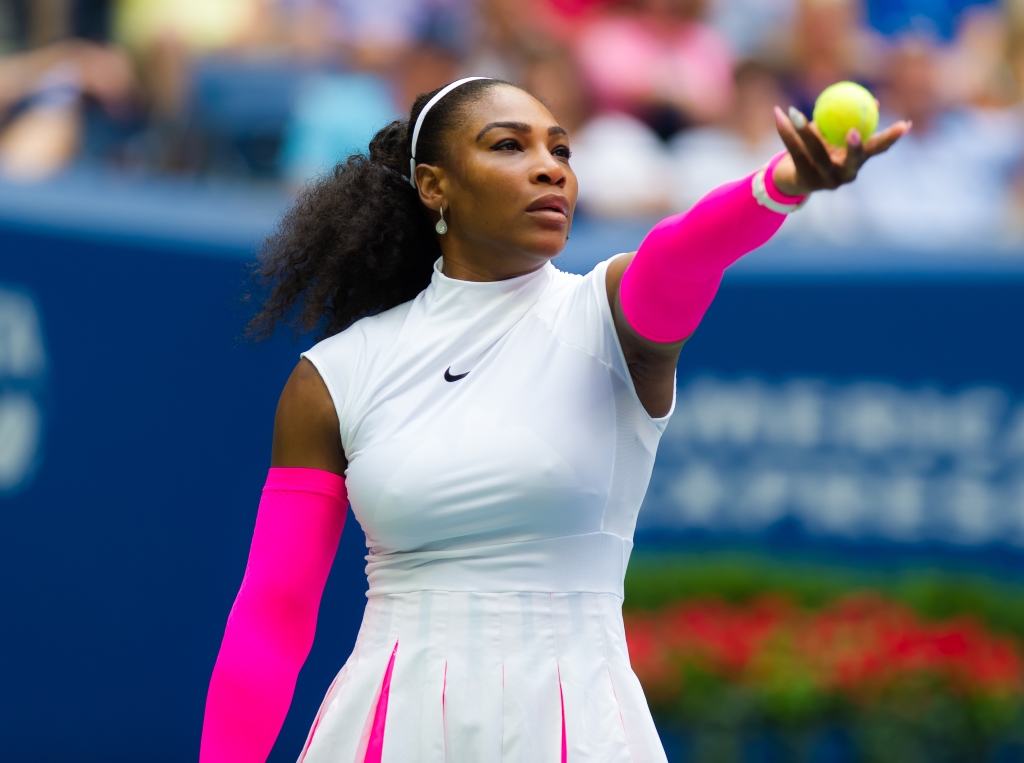
  • Serena Williams and the Long Walk to Loving Her Curves – How the GOAT Turned Scrutiny Into Self-Love

    Serena Williams and the Long Walk to Loving Her Curves – How the GOAT Turned Scrutiny Into Self-Love

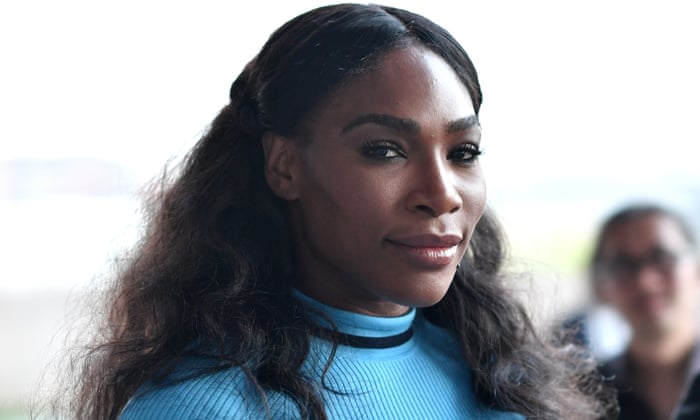
    Picture a teenager stepping onto a tennis court in front of cameras that had already decided what a champion was supposed to look like. The crowd expected a certain silhouette. What arrived instead was a young Black girl with a powerful frame, a small waist, and shoulders built for greatness. Decades later, that same woman would hold 23 Grand Slam singles titles and a far rarer trophy: the unshakable peace of someone who finally stopped asking permission to live in her own body. Her path from being picked apart to being fully at home in her skin is one of the most quietly radical stories in modern sport, and it has lessons for every woman who has ever stood in front of a mirror and heard someone else’s voice instead of her own.

    The Body That Refused to Apologize

    The Body That Refused to Apologize

    From the earliest days of her career, the conversation around Serena Williams was rarely just about her serve or her footwork. It drifted, again and again, to her physique. She was told she was too muscular. She was told she was too strong. She was compared, cruelly, to men. In her own blunt recollection of those years, she described the strange logic of the criticism: “The general consensus was that I was a big fat cow. They were used to seeing women that didn’t have a figure, and I was a black woman with a figure, and that doesn’t make you bad. It just makes you a girl with a butt and a small waist.”

    Read that again, because the matter-of-factness is the point. She was not describing a flaw. She was describing a body that simply did not fit the narrow template the world had prepared. The problem was never her curves. The problem was a culture that had decided strength and softness could not live in the same woman at once.

    What makes her story resonate on a body-positive site like this one is that the scrutiny she faced was not abstract. It was constant, public, and tangled up with race and gender in ways that made it sharper. Yet she kept showing up. She kept winning. And slowly, she began to do something far harder than winning a final: she started to talk back, on her own terms, in her own voice.

    That refusal to shrink is worth dwelling on, because most of us never get to practice it under floodlights. The pressure to make our bodies smaller, quieter, or more conventional usually plays out in private, in the clothes we avoid and the photos we delete. Serena had no such privacy. Her negotiation with her own image happened in front of millions, which means the confidence she eventually wore was tested in public and held up anyway.

    When Strength Becomes the Insult

    When Strength Becomes the Insult

    There is a particular sting in being mocked for the very thing that makes you exceptional. Serena’s body was not a liability she overcame. It was the engine of her dominance. The same power that drew sneers was the power that flattened opponents and rewrote the record books. Naming that contradiction out loud became part of how she reclaimed her image.

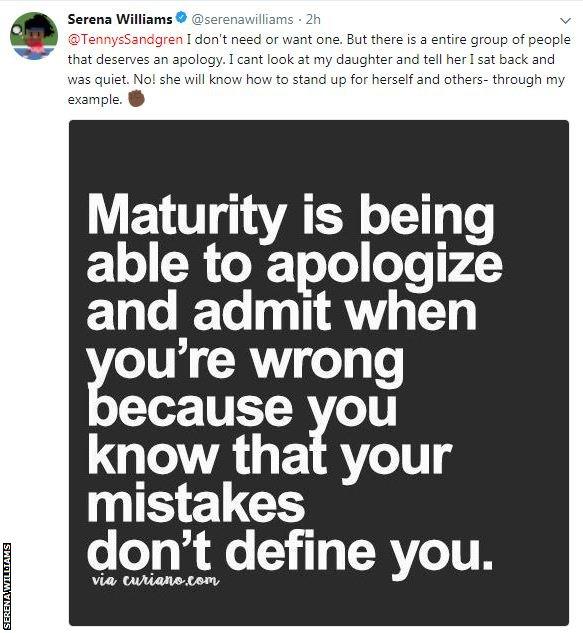
    In an open letter she shared publicly, written to her own mother and posted online in 2017 shortly after she became a mother herself, she addressed the years of insults directly. “I’ve been called man because I appeared outwardly strong,” she wrote. She went on to confront the ugliest accusations head-on, including the suggestion that she did not belong in women’s sport. Her answer cut through all of it: “No, I just work hard and I was born with this badass body and proud of it.”

    That line deserves a moment. “Born with this badass body and proud of it.” There is no hedging in it, no request for approval, no quiet hope that the critics might come around. It is a woman claiming her physical self as a fact and a gift in the same breath. For readers who have spent years apologizing for taking up space, for being curvier or stronger or simply more visible than the world prefers, that sentence is a small revolution you can carry in your pocket.

    She wrote that letter to thank her mother for modeling grace under fire. But she also turned it outward, into a statement about every body that gets policed for not matching a magazine cover.

    A Letter That Became a Mirror for Millions

    A Letter That Became a Mirror for Millions

    The letter to her mother did something a trophy never could. It moved the conversation from individual achievement to collective belonging. Serena used her own scrutinized body as proof that womanhood comes in more than one shape, and she said so plainly: “I am proud we were able to show them what some women look like. We don’t all look the same. We are curvy, strong, muscular, tall, small, just to name a few, and all the same: we are women and proud!”

    That is the heart of body positivity stated by one of the most recognizable athletes alive. Not a single ideal to chase, but a roster of real forms, all equally valid, all equally women. When she lists curvy and strong and muscular alongside tall and small, she is dismantling the idea that there is one correct way to occupy a female body. She is the proof and the messenger at once.

    What is striking is who she was writing for. She was not only defending herself. She was thinking about the next girl. In a separate interview, she made that mission explicit: “I’m not asking you to like my body. I’m just asking you to let me be me. Because I’m going to influence a girl who does look like me, and I want her to feel good about herself.”

    There is enormous generosity in that framing. She was not chasing universal approval, which is a trap that never closes. She was protecting the confidence of a younger version of herself, the one watching from a couch somewhere, wondering if a body like hers could ever be celebrated. The answer she modeled was yes, loudly and without conditions.

    Choosing Self-Love as a Daily Practice

    Choosing Self-Love as a Daily Practice

    It would be easy to assume that someone with Serena’s accolades arrived at confidence automatically, as if trophies inoculate you against doubt. Her own words suggest otherwise. The peace she found was a choice she made repeatedly, an inward turn she had to practice rather than a gift she was handed.

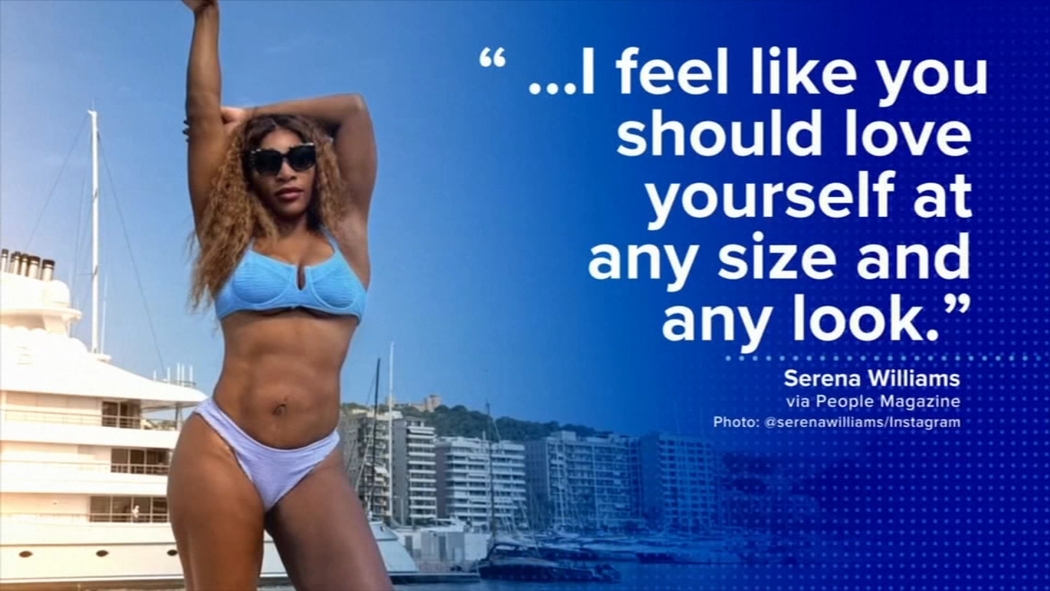
    Reflecting on the years of negative noise, she described the shift in clear terms: she was “constantly told I was too muscular, or I wasn’t pretty enough to be a tennis player,” and she “learned to ignore the negativity and look inwards to truly love myself.” The key word there is learned. Self-love, in her telling, is a skill, not a personality trait you either have or lack. She continued: “I realized I was in control of my feelings and focused on rising above the negative chatter and the unrealistic societal ideals placed on me. I love who I am. I love my body, my skin, my confidence and I fully embrace everything about me.”

    For anyone who has ever felt that loving their body is a destination they keep failing to reach, her framing offers relief. She did not wake up immune to criticism. She decided, again and again, where to place her attention. She located the control she actually had, which was over her own response, and she let the rest fall away.

    That sense of agency runs through another of her reflections. People had been talking about her body, she noted, for a very long time, but she refused to let their verdict become her own. “What matters most is how I feel about me,” she said, “because that’s what’s going to permeate the room I’m sitting in.” It is a beautifully practical idea. The energy you bring into a space starts with the relationship you have with yourself, not with the opinions trailing behind you.

    There is also something freeing in how she defines beauty for herself rather than borrowing the definition. Asked over the years to soften her look or her game, she kept returning to a simple position of ownership. In one widely shared reflection she summed it up with almost defiant ease: “I am who I am. I love who I am.” Five short words, repeated, doing the work of a thousand affirmations. It is not a claim that she is better than anyone else. It is a refusal to be measured against a yardstick she never agreed to.

    The Power of Showing Up Unretouched

    The Power of Showing Up Unretouched

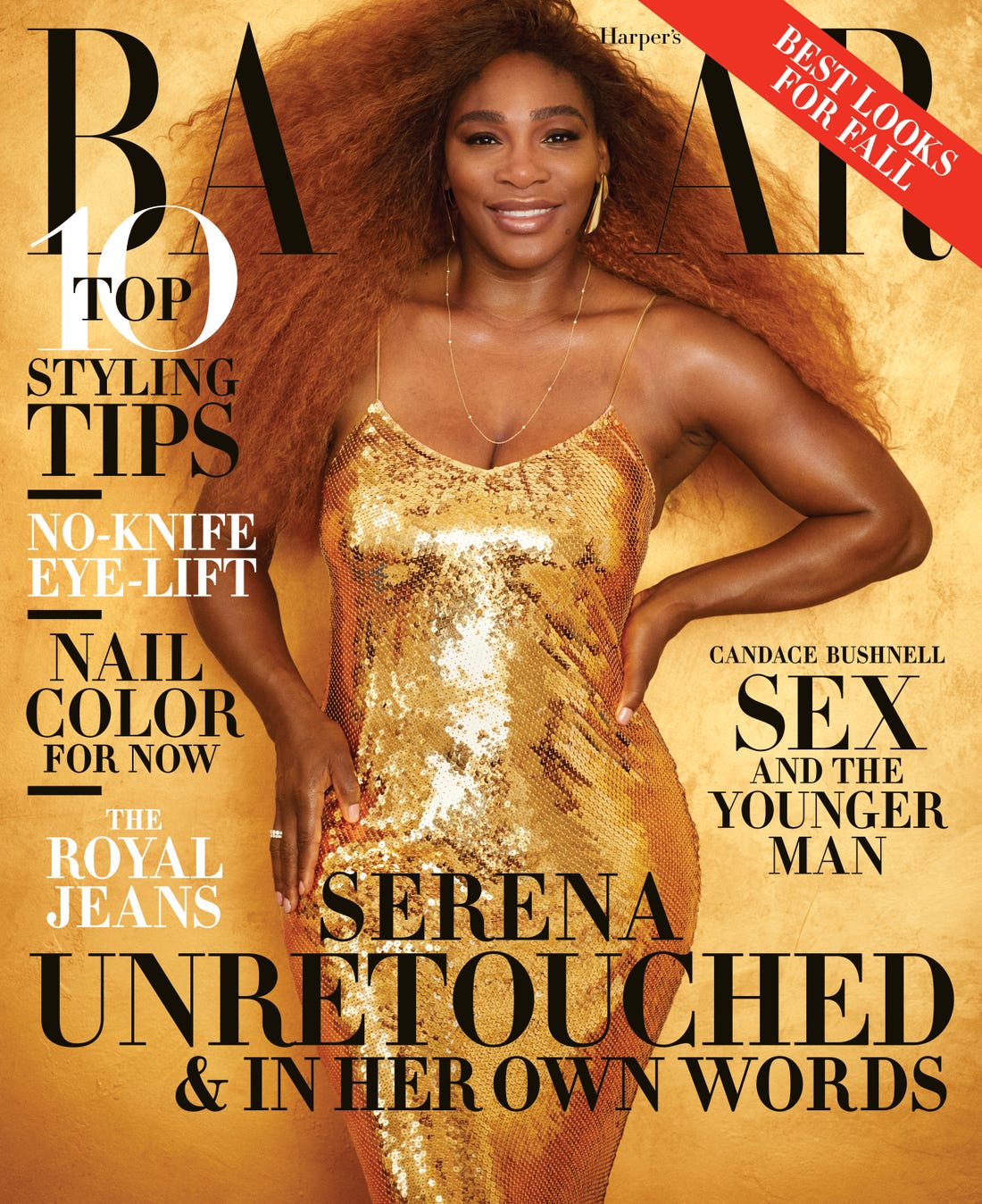
    Confidence that stays private is one thing. Serena took hers public in deliberate ways, and few moments captured that better than her 2019 Harper’s Bazaar cover. She appeared in unretouched photographs, her muscular frame on full display, for an issue built around celebrating women in their most authentic state. The choice to go unedited, at the height of filtered, airbrushed perfection, was its own quiet argument: this body, exactly as it is, is worthy of the cover.

    That willingness to be seen completely is part of why she became such a meaningful figure beyond tennis. She did not present a softened, more palatable version of herself to make the world comfortable. She offered the real thing, the strong arms and the curves and the visible muscle, and let the celebration follow. For readers who have hidden in oversized clothes or untagged themselves from photos, the image of a global icon posing proudly without retouching lands as both permission and dare.

    Her self-love also never lived in isolation from her circumstances. She has been candid that the road was steeper because of who she is, acknowledging that she had “been treated unfairly,” had been “disrespected by my male colleagues,” and had at the most painful moments “been the subject of racist remarks on and off the tennis court.” Naming that does not contradict the celebration. It deepens it. The confidence she built was hard-won precisely because she built it against real resistance, which is what makes it usable for the rest of us. She is not telling anyone that the world will be fair. She is showing that you can love yourself fiercely even when it is not.

    Carrying Her Lessons Off the Court

    When Serena announced in 2022 that she was stepping away from professional tennis, she framed it not as an ending but as a turn toward other things that mattered to her, including her family and her venture firm, Serena Ventures. Through that firm she has poured energy into backing companies led by women and people of color, the same communities so often overlooked, after learning how little venture funding reaches women founders. The throughline is hard to miss. The woman who insisted there is more than one way to be a champion now invests in the founders who get told they do not fit the mold.

    That is the most useful thing about her body confidence journey: it was never only about a body. It was about authority over your own story. The lessons translate cleanly off the court and into ordinary life. Loving your body can be a learned practice rather than a lucky accident. The strength that draws criticism is often the very thing worth protecting. The girl who looks like you is watching, which is reason enough to speak kindly about yourself out loud. And the way you feel about yourself really does permeate every room you enter, long before anyone hears your resume.

    Serena Williams did not wait for the world to declare her beautiful before she decided she was. She claimed her curves, her muscle, her skin, and her confidence as her own, then handed the blueprint to anyone willing to use it. The next time a mirror tries to speak in a borrowed, critical voice, borrow hers instead. Born with this body. Proud of it. Let that be the first and last word.

  • Best Dressed at the BET Awards 2026 – The Bold Looks Every Curvy Woman Should Steal

    Best Dressed at the BET Awards 2026 – The Bold Looks Every Curvy Woman Should Steal

    The flashbulbs were still warming up outside the Peacock Theatre in Los Angeles when the first gowns started arriving, and within an hour the carpet had turned into the kind of fashion conversation that lasts long after the trophies are handed out. The 2026 BET Awards, held on June 28 with Druski hosting, gave us a carpet thick with texture, color, and the sort of fearless silhouettes that make you want to clear out your closet and start again. This was the year BET added a Fashion Vanguard Award to the program, a nod to how seriously this night now takes its style, and the dressers showed up ready for the assignment.

    What makes a BET Awards carpet different from the buttoned-up award shows is the permission it grants. Bright color is not a risk here, it is the baseline. Sculptural shapes, high shine, deep cutouts, and old-school glamour all share the same frame. For curvy women who have spent years being told to “balance” and “minimize,” that energy is a gift. The looks that landed hardest in 2026 were not about hiding anything. They were about deciding what you want people to notice and then turning the volume all the way up. Here is how to take that confidence home, with real pieces you can actually find in your size.

    The Sculptural Gown That Commands a Room

    The Sculptural Gown That Commands a Room

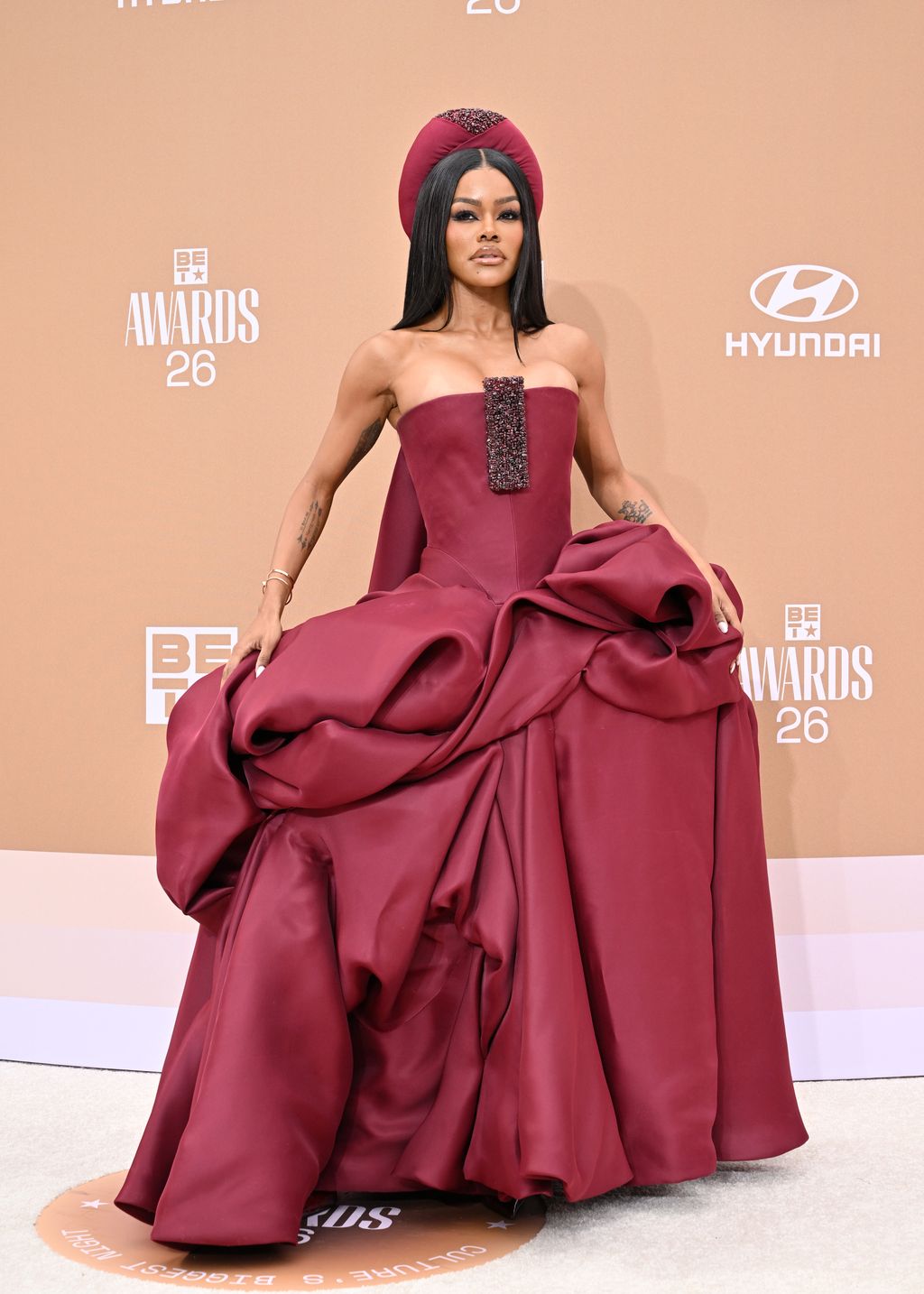
    A few of the night’s most photographed looks leaned into architecture rather than softness. Teyana Taylor, who was honored with the Fashion Vanguard Award, arrived in a deep burgundy Stephane Rolland couture gown built from oversized, almost sculptural ruffles, finished with a matching headpiece. It was the kind of dress that makes the room rearrange itself around the person wearing it.

    You do not need a couture atelier to chase that feeling. The trick with a sculptural look is structure – a gown or jumpsuit with built-in shaping, a defined waist, and one dramatic detail that does the talking. Curvy bodies actually carry architectural shapes beautifully, because there is more form for the fabric to play against. A ruffle on a fuller hip reads as intention, not accident.

    Look to Eloquii for the gown end of this, since their occasion line regularly runs sculptural one-shoulder and draped silhouettes through size 28 and beyond. Universal Standard is the place for clean, structured columns in stretch fabrics that hold their shape without squeezing, and their sizing runs from extra-extra-small all the way to 4X under one design. If you want the drama without the floor-length commitment, a structured peplum or a gown with a built-in corset bodice gives you that same commanding posture. Estimate roughly a hundred to two hundred dollars for a statement occasion gown from these brands, sometimes less during their seasonal sales.

    Red, and Only Red

    Red, and Only Red

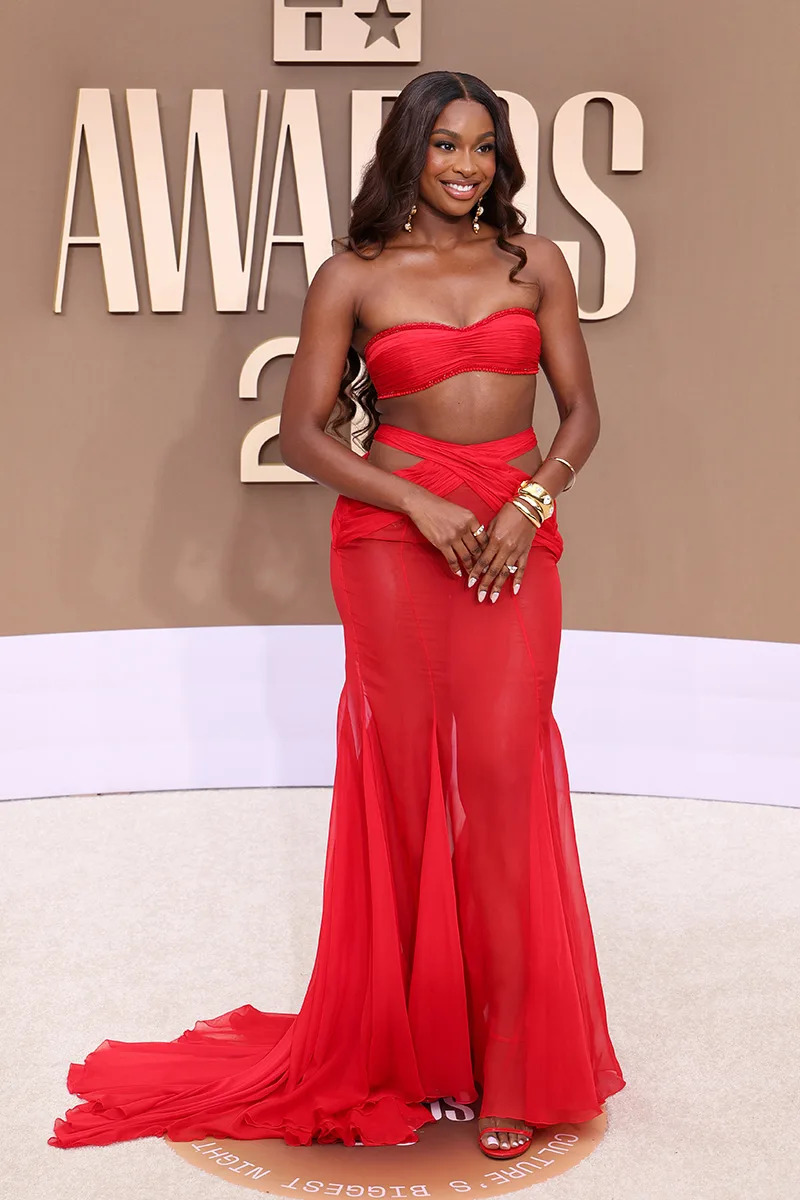
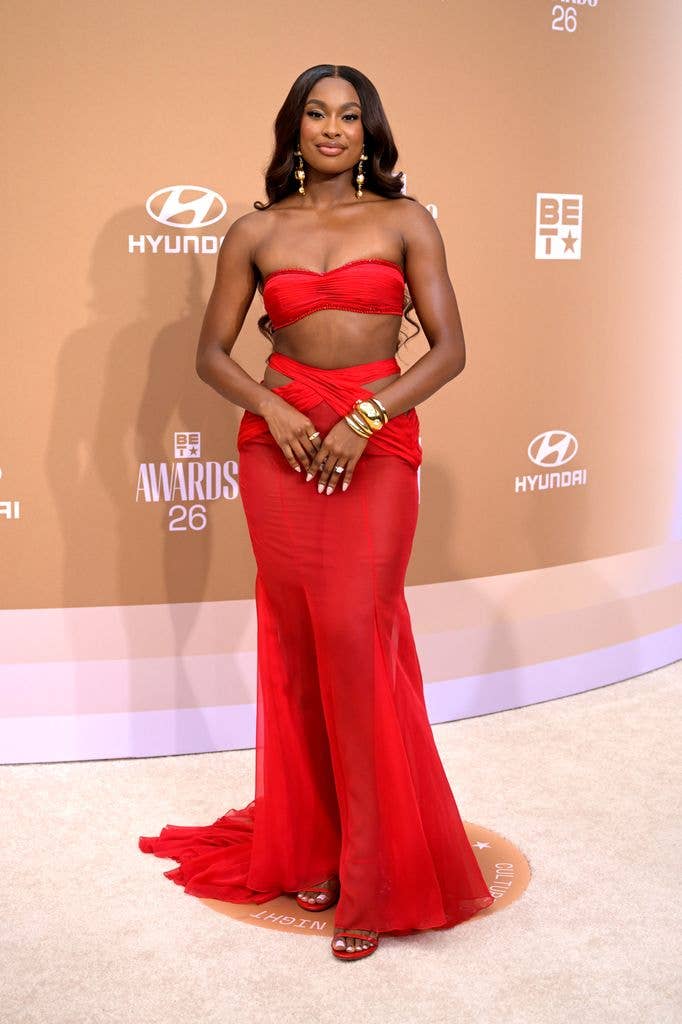
    Coco Jones understood the assignment in a fiery red two-piece, a fitted bandeau-style top paired with a flowing skirt cut with bold side openings. Red on a BET carpet is almost a tradition at this point, and for good reason. It photographs like a heartbeat and it refuses to be ignored.

    Here is the thing curvy women are rarely told – a monochrome red look is one of the most flattering choices you can make, because a single unbroken color creates a long, uninterrupted line from shoulder to hem. The eye travels the whole shape instead of stopping at a contrasting waistband. Whether you go for a two-piece like Coco’s or a single red gown, the lesson is the same. Commit to the color completely.

    Lane Bryant and Torrid both keep strong red occasion options in steady rotation, from wrap dresses that define the waist to slip silhouettes that skim. Fashion Nova Curve is worth a look if you want the cutout, two-piece energy specifically, since their going-out range leans into exactly that kind of skin-and-fabric play and tends to land in the more affordable range, often well under sixty dollars. Pair any of them with a gold or nude heel rather than a black one, so nothing breaks that gorgeous red line.

    The Crystal Moment

    The Crystal Moment

    Keke Palmer sparkled in a one-shoulder, crystal-covered gown that hugged her frame before opening into a high slit, and it was a master class in how to wear shine on purpose. Embellishment is having a real moment, and curvy women should not sit this one out over the old myth that sequins “add bulk.” They do not. What they add is light, and light is your friend.

    The smarter way to think about embellishment is placement. An all-over crystal or sequin gown like Keke’s creates shimmer across the whole silhouette, which actually softens and unifies the line. If a fully beaded gown feels like a lot for your first try, start with a strategically embellished piece – sparkle concentrated at the shoulder, the bodice, or down one seam.

    ASOS Curve carries a deep bench of sequin and embellished occasion dresses, often in midi and maxi lengths, and they refresh the range constantly around event season. Eloquii does beautifully beaded cocktail numbers when you want the shine without the full red-carpet length. Torrid is reliable for sequin separates, a sparkling top with a sleek skirt, which lets you wear the trend twice in different combinations. Budget anywhere from forty dollars for a separates piece up to around a hundred and fifty for a fully embellished gown.

    Cutouts, Done With Confidence

    Cutouts, Done With Confidence

    Several of the boldest looks on the carpet played with negative space. Coco’s side openings, the architectural cutouts threaded through other gowns, the strategic peekaboo of a caged accent – cutouts were everywhere, and they read as power rather than provocation. For a long time, cutout dresses were marketed almost exclusively to straight sizes, as if curves and openings could not coexist. That gatekeeping is over.

    The key to a cutout that flatters is choosing where the opening sits. A waist cutout draws the eye to the narrowest part of your torso and works on nearly everyone. A single shoulder or back opening adds drama without exposing more than you want to. Side cutouts, like the ones that defined Coco’s skirt, elongate the line of the leg and hip. The fabric around the opening matters too. You want something with a bit of structure and stretch so the dress stays put and frames the cutout cleanly instead of gaping.

    Fashion Nova Curve and ASOS Curve both stock cutout dresses across their party ranges in extended sizing. Torrid has leaned into tasteful waist and shoulder cutouts in recent collections, often with built-in support that makes them genuinely wearable for a full evening. Eloquii is worth a scroll too, since their cutout pieces tend to be cut with a slightly higher neckline that balances the openness lower down. Start with one cutout, not five, and let it be the single bold note in an otherwise clean look. When you try it on, sit down, raise your arms, and walk a few steps before you commit. A cutout that looks perfect standing still in the mirror but pulls or gaps the moment you move is not the dress for a long night, no matter how pretty the photo. The right one stays exactly where you put it and lets you forget it is there.

    The Old-Hollywood Slip and Soft Glam

    The Old-Hollywood Slip and Soft Glam

    Not every standout look screamed. Some of the most quietly confident moments came from women who chose restraint. Nia Long paired a brown slip dress with an extra-long ponytail, red nails, and fine jewelry, proving that a simple silhouette in the right fabric can hold its own against the loudest gown in the building. Lizzo took the soft-glamour route in a sheer brown gown with delicate ruching and a wash of subtle sparkle, the kind of look that glows rather than shouts.

    This is the lane for curvy women who want to feel polished without the production. A bias-cut slip dress is one of the most universally flattering shapes in existence, because it skims the body and follows your natural line instead of fighting it. The ruching Lizzo wore is a curvy woman’s secret weapon – gathered fabric drapes softly over the midsection and catches the light in a way that flatters every shape underneath.

    Universal Standard makes some of the best slip and column dresses in the size-inclusive market, cut from substantial fabrics that fall cleanly. Lane Bryant carries satin slip styles in deep jewel tones and warm neutrals that photograph like a dream. For the ruched effect specifically, look to Torrid and Eloquii, both of which build gathering into their occasion bodices on purpose. Keep the accessories minimal, let the fabric do the work, and add one long earring or a sleek high ponytail to finish the Old-Hollywood feeling. Expect to spend somewhere in the eighty to one hundred and fifty dollar range for a slip dress in a quality fabric that drapes the way you want.

    Texture, Volume, and the Joy of More

    Then there were the looks that simply refused to apologize for taking up space. Queen Latifah arrived in a pouffy textured coat with a braided updo and a red lip, treating volume like the luxury it is. Doechii turned heads in a dark, intricately knit gown that was as much sculpture as clothing. Janet Jackson layered a Tupac tribute tee under tailoring with a veiled hat, a reminder that confidence and personality always outdress a “safe” choice.

    For curvy women, this is maybe the most liberating takeaway of the whole night. The instinct so many of us absorbed was to shrink, to choose the streamlined option, to never add a single inch. The BET carpet says the opposite. Texture and volume are joyful. A dramatic coat thrown over a simple dress, a knit with real dimension, a bold print or a graphic statement piece – these read as taste and self-assurance, not as a problem to solve.

    If you want to play with volume, anchor it. Pair a dramatic textured topper or a voluminous sleeve with a fitted base so the proportions stay intentional. Torrid and Lane Bryant both do statement outerwear and textured pieces in extended sizing, and a great structured coat will outlast a dozen trendy dresses. Eloquii is your source for a sharp blazer or tailored piece if you want to channel Janet’s mix of menswear and glamour. The point is permission. You are allowed to be the most interesting person in the room.

    The Finishing Touches That Sell the Whole Look

    A red-carpet outfit is never just the dress, and the 2026 carpet drove that home. Eva Marcille went tonal from head to toe, matching her hair, brows, and lip to a single skin-near palette so the lime-green dress read as one clean statement. Nia Long let an extra-long ponytail and a swipe of red nail polish carry her slip dress into glamour territory. Queen Latifah’s red lip did half the work of her entire look. The lesson for curvy women is that finishing touches are not afterthoughts, they are the difference between wearing a nice dress and arriving.

    Start with a great heel in a color that lengthens rather than chops your leg line – nude to your skin tone, metallic gold, or a tone that matches your hemline. A block heel or a platform gives you the height without the all-night ache, and there is no glamour in limping to the car. From there, pick one hero accessory and let it lead. A long, sculptural earring draws the eye up and frames your face. A bold cuff or a stack of bangles, the way several stars styled their wrists, adds movement every time you gesture. A single statement ring photographs better than a fistful of small ones.

    For hair and beauty, the carpet’s range gives you permission to do whatever suits you, from a sleek high ponytail to braids to a voluminous updo. The only real rule is intention. A confident red lip, a clean wash of color, or a tonal moment all work, as long as you chose it on purpose rather than leaving it to chance. The women who looked most pulled-together were the ones whose beauty and accessories felt like part of one decision, not three separate ones thrown together at the last minute.

    Your Carpet Is Wherever You Decide It Is

    The women who owned the 2026 BET Awards carpet did not share a single body type, color palette, or silhouette, and that is exactly the point. What they shared was a decision, made somewhere between the fitting and the front door, that they were going to be fully seen. That decision is available to every curvy woman reading this, and it does not require a stylist or a couture budget. It requires picking the bold thing, getting it in your actual size from a brand that respects your body, and walking out the door like the cameras are already flashing. Brands like Torrid, Eloquii, Universal Standard, Lane Bryant, Fashion Nova Curve, and ASOS Curve have made the steal genuinely possible, in real sizes, at real prices. The red lip is up to you, but the confidence comes standard.

  • Jessica Alba’s Beauty and Wellness Secrets – Clean Skin, Confident Style, and the Routines Behind Her Glow

    The bathroom counter tells a quieter story than the red carpet does. No army of jars promising miracles, no fragrance-heavy serums lined up like trophies. Just a handful of products chosen because they actually agree with skin that has never been easy to please. That counter belongs to a woman who built one of the most recognizable clean-beauty companies in the world, and the reason it looks so pared-back is the same reason the company exists in the first place. Her skin forced her to pay attention.

    Jessica Alba has spent more than a decade talking openly about reactive skin, allergies to ingredients most of us never think twice about, and the long search for products that were both gentle and effective. Along the way she founded The Honest Company, launched Honest Beauty, raised three kids, and kept showing up on set for the kind of twelve-hour days that test any skincare routine. What makes her approach worth borrowing is not the celebrity budget or the glam team. It is the logic underneath it, which translates surprisingly well to real life, real bodies, and real bathrooms that do not have a personal facialist on call.

    This is a look at what she has actually said about her routines, where her clean-beauty convictions come from, and how a body-positive reader of any size or budget can lift the useful parts without buying into the myth that glow belongs only to people with stylists.

    The Sensitive-Skin Origin Story Behind Honest Beauty

    The Sensitive-Skin Origin Story Behind Honest Beauty

    Most beauty empires start with ambition. Hers started with irritation, in the most literal sense. Alba has described having reactive, sensitive skin since birth, and over the years she identified specific triggers, including petroleum-based ingredients and synthetic fragrances, that left her skin unhappy. When you react to the very things hidden in a huge swath of mainstream products, reading labels stops being a hobby and becomes a survival skill.

    That sensitivity collided with a bigger turning point when she became a mother. After the 2008 birth of her first daughter, Honor, Alba went looking for baby products free of the petrochemicals and synthetic fragrances she already knew her own skin couldn’t tolerate, and found the options frustratingly thin. The frustration became a business plan. The Honest Company launched in 2012 built around clean, safer, effective everyday products, and the name itself came straight from her daughter Honor, the person who had set the whole search in motion.

    Three years later, in 2015, she extended that thinking into Honest Beauty. By her own account, she had been a clean-beauty consumer for years and kept running into the same gap: products that were genuinely clean often underperformed, while products that performed often relied on the ingredients she was trying to avoid. As someone whose face had to hold up under studio lights for half a day at a time, she wanted both. That tension, clean and high-performing rather than clean instead of high-performing, became the brand’s reason for being.

    The takeaway for the rest of us has nothing to do with launching a company. It is that paying attention to how your skin actually responds, rather than chasing whatever is trending, is the single most useful beauty habit there is. Sensitive, reactive, oily, dry, combination, none of these are flaws to fix. They are information. Alba turned that information into a routine, and so can anyone.

    A Skincare Philosophy Built on the “Clean Canvas”

    A Skincare Philosophy Built on the

    Ask Alba about her routine and the through-line is preparation, not concealment. She has long favored what she calls a clean canvas, the idea that healthy, well-prepped skin makes everything else easier, including makeup. The point is not to spackle over your face. It is to give it what it needs so that less product does more work.

    In practice, that has meant a strong commitment to cleansing properly. Alba is a fan of double cleansing, especially on days she has worn heavier makeup, starting with an oil-based or balm cleanser to break everything down and following with a gentler water-based cleanser to actually clean the skin. The logic is gentle but thorough: you want the makeup, sunscreen, and grime gone without stripping your skin raw in the process. She has been clear about preferring cleansers that do not leave skin tight and squeaky, because that tight feeling is usually a sign you have stripped away more than you meant to.

    From there, her routine leans on the familiar building blocks of hydration: a serum to target specific concerns, then a moisturizer to seal it in. She has talked about layering a hydrating serum under a richer moisturizer so the skin stays supple rather than just briefly slick. Brands like Honest Beauty sit naturally in this kind of routine, but so do plenty of accessible drugstore lines. The structure matters more than the logo on the bottle.

    You do not need a ten-step regimen to honor this philosophy. A real cleanse, a hydrating layer, a moisturizer, and protection on top is a complete routine. Everything beyond that is personal preference, not obligation. For readers who have felt priced out or overwhelmed by beauty content, that is genuinely freeing news.

    Why SPF Is the Non-Negotiable

    Why SPF Is the Non-Negotiable

    If there is one habit Alba returns to again and again, it is sunscreen. She has said she applies broad-spectrum SPF daily, regardless of the weather, to protect against both UVA and UVB rays. Not just on beach days. Not just in summer. Every day, as a baseline.

    This is the least glamorous and most effective tip in any celebrity beauty feature, which is exactly why it deserves the spotlight. Daily sun protection does more for the long-term health and appearance of skin than almost any serum, and dermatologists have been saying so for decades. The reason it rarely gets the dramatic before-and-after treatment is that its benefits are quiet and cumulative. You do not see what the sun didn’t do.

    The good news for every reader is that effective SPF is one of the most democratic products in the entire beauty world. A well-formulated broad-spectrum sunscreen at the drugstore protects your skin on the same principles as a luxury one. Mineral formulas with zinc oxide tend to suit sensitive and reactive skin, the kind Alba has talked about living with, while lightweight chemical formulas layer easily under makeup. Tinted SPF moisturizers fold protection into a single morning step, which is a gift for anyone who finds long routines unrealistic.

    Whatever your skin tone, finding a formula that does not leave a chalky cast is worth the small effort of testing a few. Brands have gotten dramatically better at this across deeper complexions in recent years, and many drugstore options now blend cleanly on dark skin. The product that works is the one you will actually wear every single day, prices ranging anywhere from a budget drugstore tube to a higher-end estimate of forty dollars or more depending on the brand.

    The No-Makeup Makeup Approach to Confidence

    The No-Makeup Makeup Approach to Confidence

    Alba’s makeup philosophy is essentially the opposite of the heavily contoured, full-coverage looks that dominate so much of social media. She has openly favored a natural, minimalist approach designed to enhance her features rather than mask them, often reaching for a tinted moisturizer or light foundation, softly groomed brows, and natural-looking lashes instead of heavy liner and shadow.

    She has been candid that this was not always her instinct. By her own account, she wore too much makeup as a teenager and did not discover the no-makeup makeup look until her twenties, and she has summed up the lesson plainly: you don’t always need a full face of makeup. That progression, from over-application to confident minimalism, is one a lot of us recognize from our own teenage years, and it lands differently coming from someone whose face is photographed for a living.

    The body-positive thread here is worth pulling. A minimalist look only works if the goal is enhancement rather than erasure, and that shift in goal is really a shift in self-talk. You are not covering up a problem. You are highlighting what is already there. Tinted moisturizer instead of full foundation, a swipe of cream blush for warmth, a tug of brow gel, a coat of mascara, and a balm on the lips is a five-minute routine that reads as polished without demanding that you hide. Affordable lines deliver every one of those products beautifully, and none of them care what size you wear or how your face is shaped.

    For readers who have ever felt that beauty content is quietly asking them to become someone else, the reframe is the whole point. The most flattering look is usually the one that lets you still look like yourself.

    Wellness Habits That Have Nothing to Do With Punishment

    Wellness Habits That Have Nothing to Do With Punishment

    Beauty is downstream of how you live, and Alba has been refreshingly normal about the unglamorous parts. On nutrition, she has worked with wellness consultant Kelly Leveque, whose Fab Four framework emphasizes building meals around protein, healthy fat, fiber, and greens to stay fuller and more balanced. When she is trying to slim down for a role, she has said her diet matters more than her workouts, leaning toward lean protein, vegetables, and lower sugar, but the underlying principle, balanced plates rather than deprivation, is one anybody can borrow without a nutritionist on retainer.

    On movement, she is almost comically relatable. She has said outright that working out sucks, which is why she builds accountability into it. Group classes keep her motivated because she is surrounded by other people, and her rotation has included hot yoga, cycling, dance, and strength training. She aims for around four sessions a week and has made peace with the weeks she only manages two or three. That last detail is the most useful one in the whole feature: the goal is consistency over time, not perfection on any given week.

    Then there is the part that rarely makes the fitness roundups. Alba has talked about holding onto a crystal and doing breathing exercises, trying to focus on energy she describes as love, kindness, and calm. Whether or not crystals are your thing, the underlying habit, deliberately taking a few breaths to regulate your nervous system, is free, evidence-friendly, and available to everyone. Stress shows up on skin and in posture and in mood. Managing it is a beauty practice as much as a mental-health one.

    None of this is about shrinking yourself or earning the right to exist. It is hydration, balanced meals you enjoy, movement that fits your real schedule, and a few minutes of calm. That is a wellness philosophy that scales to any body and any budget.

    What Motherhood Taught Her About Comfort in Her Own Skin

    The most quietly powerful thing Alba has shared is not a product or a workout. It is a shift in how she relates to herself. She told Cosmopolitan UK that becoming a mother helped her feel more confident, that having a child just made her feel differently about it all. She has been open that ease in her own skin was not always there, that comfort arrived over time rather than at birth.

    That honesty matters because the glossy version of celebrity beauty implies confidence is a starting condition, something the lucky few are issued along with good genes. Her version is the opposite. The comfort came later, shaped by life and motherhood and the slow accumulation of caring less about the wrong opinions. Confidence, in other words, is built, not gifted.

    For a body-positive readership, that is the heart of the whole thing. Every routine in this piece, the clean canvas, the daily SPF, the no-makeup makeup, the balanced plate, the breathing, works better when it sits on top of a basic willingness to be on your own side. The products are tools. The self-regard is the foundation. Alba’s most repeatable secret is not a serum at all. It is the decision, made and remade over years, to treat her own skin and her own body as worth caring for rather than worth fixing. That decision costs nothing, fits every size, and is the one glow no bottle can sell you.

  • Phoebe Bridgers’ Aesthetic – How to Dress Dark Feminine and Ethereal at Any Size

    Phoebe Bridgers’ Aesthetic – How to Dress Dark Feminine and Ethereal at Any Size

    A single bare bulb swings over a stage somewhere in the rain. The crowd is hushed, half of them already crying, and out walks a woman in a skeleton suit, white bones painted across black fabric, hair pale as moonlight, looking less like a pop star and more like a ghost who decided to pick up a guitar. That image has become one of the most recognizable in modern indie music, and it belongs to Phoebe Bridgers. The skeleton became her uniform, her armor, her inside joke with an audience that understood exactly what it meant to feel haunted and still show up anyway.

    What makes her look so magnetic is that it never reads as a costume, even when it literally is one. It is a whole mood built from a handful of repeatable choices: ink-dark layers that move like smoke, the occasional whisper of ghostly white, tailoring borrowed from menswear, and a streak of gothic mischief that keeps the sadness from tipping into self-seriousness. The good news for the rest of us is that none of it depends on being six feet tall or sample-size. Dark feminine dressing is one of the most forgiving aesthetics there is, and it was practically built for curves. Here is how to wear it, whatever your size, and make it feel like yours.

    The Bones of the Look – What Makes It Dark Feminine and Ethereal

    The Bones of the Look - What Makes It Dark Feminine and Ethereal

    Before you buy a single thing, it helps to understand what you are actually reaching for, because “goth” is too blunt a word for what Bridgers does. Her aesthetic lives in the soft, melancholic corner of dark dressing, more séance than mosh pit. Think faded black instead of harsh jet, fabrics that drape and float rather than cling and shine, and a palette that almost never strays past black, gray, bone white, and the occasional bruise of deep wine or forest green.

    The “ethereal” half of the equation is what separates this from straightforward gothic style. Ethereal means a little otherworldly, a little angelic, a little like you might dissolve into mist. It shows up in sheer overlays, long trailing hems, lace that looks like cobwebs, and silver jewelry that catches light the way frost does. Bridgers has leaned into this directly on red carpets, from the shimmering, see-through Rodarte look that earned her the nickname “emo princess” to the embellished skeleton gown by Thom Browne she wore to the 2021 Grammys, which turned her stage costume into actual couture.

    The “dark feminine” half brings in power and a touch of edge. This is where the skeleton motif lives, where oversized suiting comes in, where a sharp black blazer says you are not here to be small or sweet. Put the two halves together and you get the whole effect: romantic and a little spooky, strong and a little sad, polished and a little undone. The trick to wearing it at any size is to keep that balance. Too much floaty fabric reads costume. Too much hard tailoring reads corporate. The magic is in the mix.

    Flowing Dark Layers That Move With You, Not Against You

    Flowing Dark Layers That Move With You, Not Against You

    The cornerstone of this aesthetic is the layer that drifts. A long duster cardigan, a maxi dress with a handkerchief hem, a sheer mesh top floating over a fitted base, a black slip dress under an open kimono-style robe. These pieces are romantic precisely because they have movement, and movement is your friend on a fuller frame. Fabric that skims past the hip and keeps going draws the eye down the full length of your body, which reads as elegant and intentional rather than chopping you in half at the widest point.

    This is also where size-inclusive shopping has genuinely caught up. Torrid is one of the strongest sources for the dark, witchy end of this look, with longline dusters, lace-trim slip dresses, and floaty black maxis cut specifically for sizes 10 through 30. Universal Standard, which carries an enormous range from roughly 4XS to 4XL, is where to go for the more minimalist, ethereal pieces: a clean black column dress, a draped jersey gown, a featherweight black turtleneck that becomes the base of a dozen outfits. ASOS Curve is reliable for the trendier, moodier slips and mesh layers, often at lower price points, usually somewhere in the 40 to 70 dollar range, though treat any figure as a moving estimate.

    The styling principle that holds all of it together is layering with intention. A long, lean line down the front of the body is the most flattering shape this aesthetic offers. Reach for an open duster or unbuttoned long cardigan over a fitted black base, and you create two vertical columns of fabric that lengthen everything. Let one element float and keep one element close to the body so you do not disappear inside the volume. A sheer black overlay over a smooth bodysuit, a flowing skirt with a tucked-in fitted top, a billowing sleeve balanced by a defined waist. Float plus structure, every single time.

    Oversized Suiting, Cut for Curves

    Oversized Suiting, Cut for Curves

    Few things telegraph the Bridgers attitude faster than an oversized suit. She has worn sharp tailoring from the likes of Dsquared2 and the boxy, signature silhouettes of Thom Browne, and the appeal is obvious: a suit is the most disarming way to be soft and powerful at the same time. On a curvy body, a well-chosen suit is also one of the most genuinely flattering things you can wear, as long as “oversized” means relaxed and deliberate rather than simply too big.

    The distinction matters. Truly oversized menswear-style tailoring can swallow a fuller figure and add visible bulk. What you want instead is a blazer with structured shoulders that sits clean across the back, then drapes long and loose through the body. The shoulder is the anchor. Get that line right and the rest can relax. Eloquii is a standout here, built around polished, fashion-forward plus tailoring, and their longline blazers and wide-leg trouser suits hit the elongated, slightly slouchy proportion this look depends on. Lane Bryant is the dependable workhorse for suiting basics, with well-cut black blazers and tailored trousers in extended sizes that take the dark-feminine look straight into real life, including the office.

    For trousers, wide-leg and straight-leg are your shapes. A high-waisted wide-leg trouser in matte black, falling long over a chunky boot or a pointed flat, gives you that floor-grazing, slightly mysterious line without a single inch of skin showing. Pair the trousers with a fine-gauge black knit or a sheer blouse instead of the matching jacket and you have a softer version of the suit that still carries all the quiet authority. The whole point of dark feminine tailoring is that it never tries too hard. It just stands there, all in black, and lets everyone else lean in.

    The Skeleton Motif and the Gothic Edge

    The Skeleton Motif and the Gothic Edge

    You cannot write about this aesthetic and skip the bones. The skeleton suit is Bridgers’ signature for a reason: it is theatrical, a little funny, deeply sincere, and instantly readable. You do not have to wear a head-to-toe skeleton onesie to borrow its spirit, though if you want to, a black-and-white skeleton print is genuinely fun and surprisingly wearable as a base layer under an open coat. The broader idea is to let a little bone-deep gothic whimsy into your wardrobe.

    This is where the dedicated alternative brands earn their place. Killstar is the obvious anchor for the explicitly gothic edge, with a meaningful plus range that runs well into extended sizing across skeleton-print leggings, occult-detailed maxi dresses, pentagram and moon-phase prints, and the long, dramatic coats that make a whole outfit feel like a ritual. The trick with overtly gothic brands at a fuller size is restraint: let one statement piece do the talking and keep everything around it quiet. A skeleton-print legging under a long plain black tunic. A moon-phase pendant against an otherwise minimal black dress. A single dramatic velvet coat over jeans and a tee.

    Silver jewelry is the most affordable way into this world and the easiest to scale up or down. Think thin stacking rings, a chunky chain with a small charm, drop earrings shaped like daggers or crescent moons, a delicate choker. Cool-toned metals read more ethereal and gothic than gold, which leans warm and sunny. ASOS carries broad, inexpensive ranges of exactly this kind of cool-toned costume jewelry, usually for not much money at all. Layer a few pieces, let them tarnish a little, and let the slight imperfection be part of the charm. Polished and perfect is not the goal. Hauntingly worn-in is.

    Ethereal Whites and the Power of the Pale Palette

    Ethereal Whites and the Power of the Pale Palette

    For all the black, the most striking moments in this aesthetic often come from a flash of white. A bone-white slip dress, a sheer ivory blouse, a pale blazer, hair lightened to a ghostly platinum. White is the ethereal lever, the thing that pushes the look from dark into otherworldly, and there is a tired old myth that fuller bodies should avoid it. Ignore that completely. White looks luminous on every size; it simply rewards a little structure.

    The way to wear ethereal white at any size is to choose substantial fabric over flimsy. A heavier crepe, a structured cotton, a lined slip, a knit with some weight to it, all of these hold their shape and skim the body cleanly, while paper-thin white can cling where you would rather it didn’t. Universal Standard is again a strong source here, with crisp white shirting and clean column dresses designed across their full size range. A floor-length ivory dress with a built-in lining will give you that drifting, candlelit-spirit effect without any of the worry.

    You can also borrow Bridgers’ actual formula, which is rarely all-white and rarely all-black but most often the two together. A white blouse under a black suit. A black slip with a sheer white overlayer. White boots peeking out from under wide black trousers. The contrast is the whole point: light and dark held in the same outfit, the way her music holds grief and humor in the same line. If you only own black, adding a single ethereal white piece is the fastest way to make your wardrobe feel less like a uniform and more like a haunting.

    Building Your Own Haunted Wardrobe, One Piece at a Time

    You do not have to overhaul anything in a weekend, and you certainly do not need to spend a fortune. This aesthetic is built on repetition and restraint, which means a small, well-chosen set of pieces stretches astonishingly far. Start with a foundation you already half-own: a good black base layer, a fitted long-sleeve or a smooth bodysuit, in matte black, no logos. From there, add one floaty layer (a duster, a sheer top, a long cardigan), one piece of structure (a relaxed black blazer or a pair of wide trousers), one flash of ethereal white, and one gothic accent (the jewelry, the skeleton print, the dramatic coat). That is a complete capsule, and almost every outfit in this world is a recombination of those four roles.

    When you shop, work the size-inclusive sources deliberately rather than chasing whatever is trending. Torrid and Killstar for the witchy, gothic, romantic-dark pieces. Universal Standard and Eloquii for the minimalist and tailored end. Lane Bryant for the everyday backbone, the blazers and trousers you will actually wear to work. ASOS and ASOS Curve for inexpensive trend pieces and jewelry you can experiment with before committing. Buy in black and bone first; let color be a rare event. Choose fabric with weight and movement over anything stiff or thin. And remember that the most Bridgers-coded thing you can do is wear it like you are not trying, because the whole appeal of the dark-feminine ethereal look is that it feels found, lived-in, and a little melancholy rather than styled to within an inch of its life.

    The deepest lesson of her aesthetic is permission. A woman in a skeleton suit, crying on stage, draped in black with platinum hair, is not hiding and is not apologizing. She has simply decided that soft and strange and sad and powerful can all live in the same outfit, on the same body, at the same time. That decision is available to you at every size. Pull on the long black layer, clip on the silver moon, let the hem drift around your boots, and walk out like the loveliest ghost in the room.

  • The Curvy Girl’s Guide to Walmart Fashion Finds Worth the Cart

    The Curvy Girl’s Guide to Walmart Fashion Finds Worth the Cart

    Somewhere between the cereal aisle and the garden center, there is a rack of dresses that has no business being as good as it is. You walked in for paper towels and a phone charger, and now you are standing in front of a tiered midi in a color you did not know you wanted, holding it up against your body in the middle of the apparel section, doing the math on whether it will work for the wedding, the cookout, and a random Tuesday all at once. This is the quiet thrill of shopping at Walmart for clothes, and for curvy women especially, it has become one of the most underrated places to build a wardrobe that actually fits, actually flatters, and actually leaves money in your account.

    For years, the conventional wisdom said real style lived elsewhere – boutiques, department stores, the kind of brands with a markup baked into the logo. But the retailer has quietly built out a roster of in-house lines that take size inclusivity seriously, with extended ranges, thoughtful cuts, and trend-aware design that does not treat plus sizes like an afterthought. The trick is knowing which labels to look for and where the real gems hide. Consider this your map.

    The Labels Worth Knowing by Name

    The Labels Worth Knowing by Name

    Walmart’s apparel is organized around a handful of private brands, and once you learn their personalities, shopping gets a whole lot faster. Each one has a lane, and most of them carry extended sizing either in store or online, which is where the deeper size runs usually live.

    Scoop is the one fashion editors keep pointing to, and for good reason. It is the elevated, trend-forward line – think structured blazers, satin slip skirts, faux-leather pieces, and dresses with the kind of detailing you would expect at three times the price. Scoop reads contemporary and a little fashion-girl, and it is the place to look when you want something that does not feel basic at all.

    Free Assembly is the quiet luxury corner of the store. It leans into clean lines, neutral palettes, and that modern-minimalist look – relaxed trousers, tailored shirting, easy knit dresses, and elevated basics in better fabrics. If your taste runs toward the pared-back, considered end of fashion but your budget does not, this is your aisle.

    Time and Tru is the workhorse of the women’s department, and probably the line you will reach for most. It covers the everyday middle ground – casual dresses, denim, tops, cardigans, and weekend pieces – at prices that make it easy to refresh a wardrobe without a second thought. It is broad, dependable, and surprisingly current.

    Terra & Sky is Walmart’s dedicated plus-size line, designed from the start for sizes that typically run from the high teens up through the larger end of the range. Because it is built for curvy bodies rather than graded up from a straight-size sample, the proportions tend to land better – sleeves that fit the upper arm, dresses with room through the bust and hip, and necklines that sit where you want them.

    Sofia Jeans by Sofia Vergara brings the curve-conscious denim and the va-va-voom energy. The line is built around flattering the hourglass and fuller figures, with high rises, contoured waistbands, and silhouettes designed to hug and hold. Beyond jeans, the collection branches into dresses and tops with that same confident, feminine point of view.

    No Boundaries is the juniors-leaning, trend-chasing line – the place for the of-the-moment stuff, graphic tees, casual basics, and Y2K-flavored pieces at the lowest price points in the building. It skews younger but is a goldmine for low-stakes trend experiments.

    And keep an eye out for ELOQUII Elements, the Walmart-exclusive offshoot of the plus-focused brand ELOQUII. It brings a more polished, designed-for-curves sensibility to the assortment, with pieces that feel a notch dressier and more intentional. Availability varies, but when you spot it, it is worth a closer look.

    Where the Dresses Earn Their Keep

    Where the Dresses Earn Their Keep

    If there is one category where Walmart consistently overdelivers, it is dresses. The sheer variety is the headline – tiered cotton midis for daytime, slinky knit bodycons for night, smocked sundresses for the heat, wrap styles that do flattering work without trying, and the occasional satin or faux-wrap number that looks far more expensive than it is.

    For curvy shoppers, a few cuts tend to be the most reliable. Wrap and faux-wrap dresses define the waist and adjust to your shape, which makes them forgiving across a range of bodies. Tiered and A-line midis skim over the hip and thigh while keeping things breezy. Smocked-bodice styles stretch to fit through the bust and ribcage, which solves the classic problem of a dress that fits the body but gapes at the chest. Scoop is the place to look for the dressier, more design-led options, while Time and Tru and Terra & Sky carry the easy, wear-it-everywhere casual styles.

    Price-wise, casual dresses tend to land in the affordable range you would expect from the store, often in the low-to-mid twenties, with dressier Scoop pieces climbing a bit higher but rarely into territory that makes you wince. The value is real: it is entirely possible to walk out with two or three dresses for what a single one would cost elsewhere.

    A word on fabric, because it matters most here. Read the content tag. A little stretch – a few percent of spandex or elastane blended into cotton or a knit – is what separates a dress that moves with you from one that fights you all day. The better Walmart dresses almost always have it.

    Denim That Actually Understands Curves

    Denim That Actually Understands Curves

    Denim is the make-or-break category for a lot of curvy women, because the gap at the back waist, the squeeze at the thigh, and the too-short rise are all real, recurring problems. This is exactly where Sofia Jeans by Sofia Vergara does its best work. The line was built around contouring the waist and flattering fuller hips and thighs, and the high-rise styles in particular tend to sit where you want them, with waistbands designed to minimize that frustrating back gap.

    Look across the silhouette range before you commit. High-rise skinny and straight cuts give a clean, pulled-together line. The wide-leg and bootcut options balance a fuller hip and read more current right now. And if you run into the classic curvy-girl issue of needing a smaller waist relative to your hip, prioritize styles described as curvy-fit or contoured, which are graded with that proportion in mind.

    Time and Tru also carries a solid denim program at lower price points, useful for the more basic everyday pairs, and Terra & Sky covers the plus range with cuts built for the body rather than scaled up. Across the board, Walmart denim is one of the genuinely strong value plays in the store, with jeans frequently sitting in the affordable mid-range rather than the premium-denim stratosphere.

    Fit tip worth its weight: buy for the largest part of you and tailor the rest. A pair of jeans that fits your hips and thighs but is a touch loose at the waist is an easy, cheap alteration. A pair that fits the waist but strains everywhere else is a lost cause. And do not be afraid to size up into a more relaxed cut – the comfort dividend is enormous, and a slightly roomier wide-leg often looks more intentional than a too-tight skinny.

    Basics, Layers, and the Building Blocks of Everything

    Basics, Layers, and the Building Blocks of Everything

    The unglamorous truth of a good wardrobe is that it lives and dies on basics – the tees, tanks, cardigans, and knit tops you reach for without thinking. This is where buying in volume at Walmart prices genuinely changes the game, because you can build a deep, mix-and-match foundation for the cost of a couple of fancier pieces.

    Free Assembly is your upgrade pick here. Its tees and knit tops come in better fabrics with a more considered cut, the kind of elevated basic that does not look like a basic. Time and Tru covers the broad, dependable middle – ribbed tanks, scoop-neck tees, button-downs, and cardigans in a wide color run. And Terra & Sky delivers the plus-specific basics with longer hems and proportions that actually cover what you want covered, which is no small thing when so many straight-size tees ride up.

    A few smart moves for curvy basics. Hunt for longer-length tees and tanks that fully cover the hip and tuck cleanly – the short-and-rides-up problem is the number-one basic-tee complaint, and length solves it. Lean on ribbed knits, which stretch to your shape and lie smooth. And stock up on layering pieces like open cardigans and lightweight dusters, which add structure and a vertical line without adding bulk. When the price is this gentle, buy your favorites in two or three colors. You will wear them out before you tire of them.

    Activewear and Swim, the Categories That Punch Above Their Price

    Activewear and Swim, the Categories That Punch Above Their Price

    Two areas deserve their own spotlight, because they tend to be expensive everywhere else and surprisingly capable here. Walmart’s activewear has come a long way, with leggings, sports bras, bike shorts, and matching sets that handle the gym, the walk, the errands, and the lounging in between. The leggings in particular are a quiet standout – high-rise, wide-waistband styles with enough compression to feel supportive and enough give to be comfortable, in plus-inclusive size runs and at a fraction of the cost of the boutique-athleisure names.

    When you shop activewear, prioritize the wide, high-rise waistband – it stays put, smooths the midsection, and does not dig in or roll down mid-movement. Do a quick squat test in the fitting room or at home; the good styles pass without going sheer. And buy the matching set when you find a color you love, because the head-to-toe coordinated look reads polished for almost no effort.

    Swim is the other pleasant surprise. The assortment spans one-pieces with real tummy support and ruching, high-waisted bikini bottoms, tankinis with adjustable coverage, and styles cut for fuller busts. For curvy bodies, the most flattering options tend to be one-pieces with ruching or side shirring that work with your shape rather than against it, high-waisted bottoms that offer coverage and sit comfortably, and adjustable straps with underwire or molded cups that provide actual support up top. Swim is notoriously overpriced in the wider market, which makes finding a genuinely flattering suit at Walmart prices feel like getting away with something.

    How to Shop It Like You Mean It

    A handful of habits turn a hit-or-miss Walmart clothing run into a reliable one. None of them are complicated, but together they are the difference between a cart full of regrets and a wardrobe you actually wear.

    Shop online for the deep size runs. The store shelves carry a curated slice of each line, but the full size range, the extended colors, and the plus-exclusive cuts often live online. If a piece runs out of your size in store, check the website before giving up – the inventory is frequently broader there.

    Read the reviews for fit intel. Walmart’s product reviews are a genuinely useful, free resource. Curvy shoppers are generous with detail, noting whether something runs small, where it gapes, how the length lands, and whether to size up. A two-minute scroll saves a wasted purchase.

    Always check the fabric content. This is the single best predictor of whether a piece will flatter and last. A touch of stretch built into the weave is what makes denim, dresses, and basics move with a curvy body instead of fighting it. Stiff, zero-stretch fabric in a fitted cut is the most common reason something disappoints.

    Budget for the occasional tailor. When a garment costs a fraction of the usual price, spending a little to hem a dress, take in a waistband, or shorten a strap is money exceptionally well spent. It turns an affordable find into something that looks made for you, and the combined cost still lands well under retail.

    Buy your wins in multiples. When a cut works – a particular dress silhouette, a tee length, a denim rise – the gentle pricing means you can grab it in more than one color without guilt. Repeatable, reliable pieces are the backbone of a wardrobe that always has something to wear.

    The real lesson in all of this is that great style was never about the size of the price tag. It was about knowing your body, knowing which cuts honor it, and shopping with intention wherever you happen to be. Walmart, with its growing roster of curve-inclusive lines and its refreshingly low stakes, makes that easier than almost anywhere. So the next time you wander into the apparel section between the groceries and the checkout, slow down at the rack. There is a good chance your new favorite dress is hanging right there, waiting for you to do the math and decide, yes, this one is coming home.

  • How to Plan a Stress-Free Disneyland Paris Trip – The Curvy Traveler’s Complete Guide

    How to Plan a Stress-Free Disneyland Paris Trip – The Curvy Traveler’s Complete Guide

    The first time the castle comes into view, framed by a wide cobblestone esplanade and the smell of warm sugar drifting from a churro cart, something in your shoulders drops. You came here to feel wonder, not to spend the day scanning lap bars and bench widths, doing quiet math about whether the next ride will fit. That second worry is real, and pretending it is not helps no one. The good news is that almost all of it can be planned away before you ever board the train to Marne-la-Vallee, the town about 20 miles east of central Paris where the resort lives. A little homework up front buys you a lot of ease once you are there, and ease is the whole point.

    This guide walks through the practical, body-aware parts of a Disneyland Paris trip: when to go, what to wear, which rides tend to be generous and which tend to be tight, how to eat well, where to save, and how to keep your head in a good place. Treat every specific number here as a starting estimate and confirm it with the official park accessibility pages or a cast member on the day, because details shift between seasons and refurbishments.

    Getting the Lay of the Land Before You Book

    Getting the Lay of the Land Before You Book

    Disneyland Paris is two parks sitting side by side, sharing one entrance plaza. The first, Disneyland Park, opened in 1992 and is the classic one: Sleeping Beauty Castle at the heart, five themed lands radiating outward, parades and fireworks and the rides most people picture when they imagine Disney. The second park spent years as Walt Disney Studios Park and was reimagined and renamed Disney Adventure World in spring 2026, gaining a Frozen-themed area built around Arendelle along with a new promenade of attractions. Most visitors split their time across both, and a multi-day ticket that lets you hop between them is the relaxed way to do it.

    Booking tickets online in advance is almost always cheaper than buying at the gate, and on busy days the park can sell out entirely, so a pre-booked ticket also guarantees you get in. The resort uses dynamic pricing now, which works in your favor as a planning signal: lower ticket prices usually line up with quieter days, while the steepest prices flag the most crowded dates. If your goal is calm over chaos, follow the cheaper dates.

    On timing, the quieter stretches tend to be the low-season window roughly from early November through March, setting aside the Halloween tail and the Christmas holidays, which draw big crowds despite the cold. Mid-January, early February, and midweek days in September are reliably gentle. Tuesdays and Thursdays generally run lighter than weekends. Quieter days mean shorter queues, which matters more than you might think when you are plus-size: less time standing on hard pavement, fewer narrow turnstiles to negotiate in a hurry, and more breathing room to ask a cast member a question without a line building behind you.

    Packing and Dressing for a Long, Comfortable Day

    Packing and Dressing for a Long, Comfortable Day

    A Disneyland Paris day is a walking day. People routinely clock the equivalent of a long hike across the two parks without noticing until their feet stage a protest at dinner. The single best thing you can do for your body here is sort out your shoes weeks ahead. Choose genuinely broken-in, supportive walking shoes or trainers, the pair you already trust on long days, not a fresh box of cute sandals bought for the trip. Pack a spare pair of socks in your day bag so you can swap to dry feet after an afternoon rain shower or a splashy boat ride.

    Chafing is the other quiet saboteur of a good day, and the fix is simple. Anti-chafing shorts worn under dresses and skirts, or a glide balm on the inner thigh and underarm, will keep a hot, humid afternoon from turning into a sore evening. Pack them even if you are not sure you need them, because the parks are warm in summer and you will be moving constantly.

    Dress in layers you can shed and stash. Paris weather swings, mornings can be cool and afternoons warm, and indoor queues can get stuffy. A packable layer or light jacket that crushes into your bag covers all of that without committing you to carrying a coat all day. Build your outfit around forgiving, breathable fabrics with a bit of stretch, the kind that move when you sit, climb into a ride vehicle, and bend over a stroller. A small crossbody or backpack keeps your hands free for the turnstiles and ride bars, and many attractions ask you to secure loose items anyway. Round it out with a refillable water bottle, sunscreen, any medication you need on a schedule, and a portable charger for the app you will lean on all day.

    Rides, Restraints, and Honest Seating Talk

    Rides, Restraints, and Honest Seating Talk

    Here is the part that gets whispered about and rarely written plainly, so let us be plain. Disneyland Paris does not publish official weight limits on its rides. What varies is the seat width, the leg room, and crucially the restraint design, and those vary a lot from attraction to attraction. None of this is a verdict on your body. It is engineering, and engineering can be scouted in advance.

    In general terms, gentler dark rides and boat-style attractions tend to be the most accommodating, with bench seats, generous leg room, and simple lap belts or no individual restraint at all. Anything described as a boat ride, a slow indoor tour, or a wide-bench experience is usually a comfortable bet. Rides built around individual bucket seats with a single seatbelt also tend to work well across a range of body types, because a belt has more give than a rigid bar.

    The tighter fits, by widespread first-hand accounts, are the faster coasters with low lap bars or restraints that come down across the stomach and lock to a fixed position. Restraints that sit low across the midsection are the ones most likely to be snug, because there is no adjustment once they reach their stop. A few of the resort’s signature thrill coasters fall into this category. This does not automatically mean they will not fit you, only that they are worth scouting before you commit to a 40-minute queue.

    Scouting is the whole strategy, and it is easy. Before you join any line you are unsure about, find a cast member at the entrance and ask plainly whether you can see a sample restraint or test seat. Many attractions keep a test vehicle or a sample lap bar right at the front for exactly this purpose, and using it is completely routine. Cast members are trained to handle this discreetly and kindly, and they would far rather help you check at the entrance than have you reach the front and turn back. If a ride does not work out, ask whether there is an alternate boarding option or accommodation. The exact mechanics of restraints, the location of test seats, and any accessibility arrangements change with refurbishments, so treat all of the above as a guide and confirm the current setup with the park’s accessibility information and the cast member in front of you.

    One more practical note: the queue turnstiles themselves are narrow at several attractions, narrower than the ride seats in some cases. There is almost always an accessible gate beside them, and a cast member will open it for you without fuss. You do not need to justify it. Just ask.

    Eating Well Without the Stress or the Splurge

    Eating Well Without the Stress or the Splurge

    Food at a destination resort is priced like a destination resort, and that is the honest truth. Counter-service meals, table-service restaurants, and the snack carts all carry a premium over what you would pay in the city. Budget for it as part of the trip rather than being surprised by it, and treat the exact prices as estimates that move with the season and the venue.

    A few habits keep both your wallet and your comfort in good shape. If you are staying in or near Paris and commuting in, eating a proper breakfast before you arrive and saving the bigger, nicer meal for the city in the evening can meaningfully cut your in-park spend. Inside the parks, table-service restaurants are worth at least one booking on your trip, not only for the food but for the chair. Sit-down dining gives you a real seat, a break from the pavement, and a half-hour of air conditioning or shade, which is restorative in the middle of a long day. If you want a specific restaurant, reserve it in advance, because the popular ones fill up.

    Carry a few snacks and that refillable water bottle. Hydration and a steady blood-sugar level do more for your mood and stamina than any single attraction, and they keep you from making a tired, expensive decision at the nearest cart at the exact moment you are most worn down. Look for seating with a bit of space and standard chairs rather than fixed booths when you can, and do not hesitate to ask a host to seat you somewhere that suits you. That is a normal request.

    Spending Smart on Tickets and Line-Skipping

    Spending Smart on Tickets and Line-Skipping

    Beyond booking tickets early and chasing the cheaper dynamic-pricing dates, the biggest spend question is the resort’s paid line-skip service, Premier Access. It lets you reserve a shorter-queue slot at popular attractions through the app, and it comes in two broad shapes: buying access to a single ride at a time, and buying a daily bundle that covers the headline attractions. As an estimate, single-ride access tends to land somewhere in the single-digit to high-teens euros per person per ride, while the all-in daily bundle runs much higher, into the triple digits per person on busy days. Confirm current pricing in the app on the day, because it moves with demand.

    Whether it is worth it depends entirely on your day. On a quiet off-season Tuesday, you may never need it. On a packed summer or holiday date, or if you only have a single day to see everything, paying to skip the longest queues can be the difference between a frantic day and a pleasant one. For most people the smart play is to skip the pricey daily bundle and instead buy single-ride access only for the two or three attractions you most want to do when their standby lines get ugly. Buying as you go, rather than committing up front, keeps you flexible.

    There is a comfort angle here too. Standing in a long, slow-moving outdoor queue is the least pleasant part of any park day for a curvy traveler, hard on the feet, the back, and the patience. Spending a little to shorten the worst lines is partly a money decision and partly a kindness to your body. Weigh it that way.

    Carrying Your Confidence Through the Gates

    The logistics matter, but the mindset matters just as much, so do not skip this part. You belong in these parks exactly as you are, and the overwhelming majority of cast members are genuinely warm and quick to help when you ask. The handful of moments that might sting, a snug restraint, a turnstile that needs the side gate, a chair that is not quite right, are problems with the furniture and the engineering, not with you. Plan for them, solve them matter-of-factly, and let them go.

    Build your day so your body is set up to win. Arrive early before the crowds and the heat, around 45 minutes before the official opening if you can manage it, and do the must-do rides first while the lines are short and your energy is high. Plan deliberate sit-down breaks across the day, a table-service lunch, a shaded bench during a parade, a quiet indoor show, so you are pacing a marathon rather than sprinting until you crash. Wear the comfortable shoes, pack the anti-chafing shorts, carry the water, and keep that packable layer in the bag. Take the photos in front of the castle without ducking out of frame, because you came a long way to be here.

    Disneyland Paris rewards the traveler who scouts ahead and asks for what they need. Do that quiet preparation, and what is left is the part you actually came for: the castle catching the late light, the first drop of a ride you were brave enough to check and board, and a churro that tastes better than it has any right to.

    Sources: Disneyland Paris (Wikipedia), Walt Disney Studios Park / Disney Adventure World (Wikipedia), Plus Size Disneyland Paris guide (First Step Europe), Is Disneyland Paris Plus Size Friendly? (Most Magical Guides), Disneyland Paris Premier Access 2026 (KKday), When to Visit Disneyland Paris (DLP Tips)