Tag: QA Clean

Internal: this draft has been through the fact-check campaign and is ready for editorial review.

  • The 15-Minute Skincare Routine That Does the Work of a 10-Step One

    The 15-Minute Skincare Routine That Does the Work of a 10-Step One

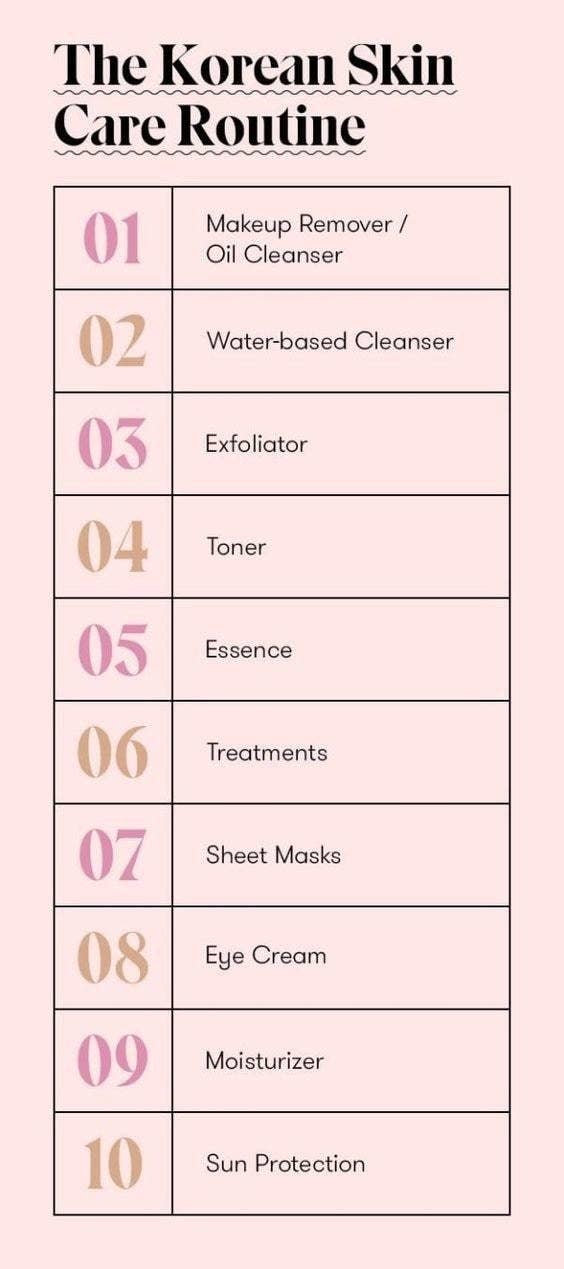
    My best friend Mara called me at 11:47 p.m. on a Tuesday in March 2021, eight weeks after her daughter was born, crying into the phone because she had just sat on the edge of the tub holding a bottle of essence in one hand and a sleeping mask in the other and realized she had to choose. She could finish the routine she had been doing every night for two years, the full 10-step Korean skincare ritual she had built piece by piece since 2019, or she could sleep for an extra 47 minutes before the baby woke up at 2 a.m. She picked the bottle back up. Then she put it down. Then she picked it back up. Then she sat on the floor of the bathroom and cried because she could not remember which step came after the second essence.

    I drove over the next morning with coffee and an honest question, which was whether the routine was actually doing anything that 4 products could not do in 15 minutes. We sat at her kitchen table and audited every bottle. There were 11 of them, because at some point she had added a second toner. We took 7 off the counter. We kept 4. She started the new routine that night, and four months later her skin was visibly better than it had been on the 10-step plan. Not the same. Better. Brighter, calmer, more even, less reactive. The 15 minutes that replaced 47 minutes is what I want to talk about, because Mara is not the only person who has been quietly suffocating under a routine that promised glow and delivered exhaustion.

    Where the 10-step routine actually came from
    Korean 10-step skincare 47-minute routine bathroom counter overwhelming

    The 10-step Korean skincare routine entered the American consciousness in 2015, through a book and a website. The book was “The Little Book of Skin Care” by Charlotte Cho, who co-founded Soko Glam in 2012 with her husband Dave. The book was charming, well-researched, and grounded in actual Korean beauty culture. The website was a storefront. Both did exactly what they were designed to do, which was to introduce American consumers to a category of products that, in 2015, had almost no shelf space in U.S. drugstores. Essences. Ampoules. Sheet masks. Sleeping packs. The 10-step framework was a useful organizing principle for a catalog that contained roughly 400 products most American shoppers had never heard of.
    A clean bathroom counter with four skincare bottles arranged in morning light, demonstrating a minimal routine
    The honest truth about skincare: four products done daily will outperform ten products done sporadically.

    The framework worked. Sales took off. By 2018, K-beauty was a $13 billion global category, and the 10-step routine had been pulled out of its original context and turned into a wellness commandment by every beauty publication in the English-speaking world. The original Korean cultural practice it was loosely based on was a flexible, intuitive, often-shortened ritual that varied wildly by household. The American version became a checklist. The checklist became gospel. The gospel sold a lot of essence.

    In November 2024, Allure ran an analysis of the 10-step routine that I have been thinking about ever since. The piece reviewed the products and order recommended by 30 of the most popular K-beauty influencers and routine guides on Instagram and TikTok, then ran the layering logic past 6 board-certified dermatologists. The finding was uncomfortable. About 50 percent of the routines contained at least one pair of products that were either redundant (two hydrating toners doing the same job) or counterproductive (an acidic essence applied 30 seconds before a retinol, which deactivated both). The piece quoted Dr. Hadley King saying the polite version of what I am about to say less politely. Most 10-step routines are not skincare. They are inventory management.

    The 4 products that do 80 percent of the work
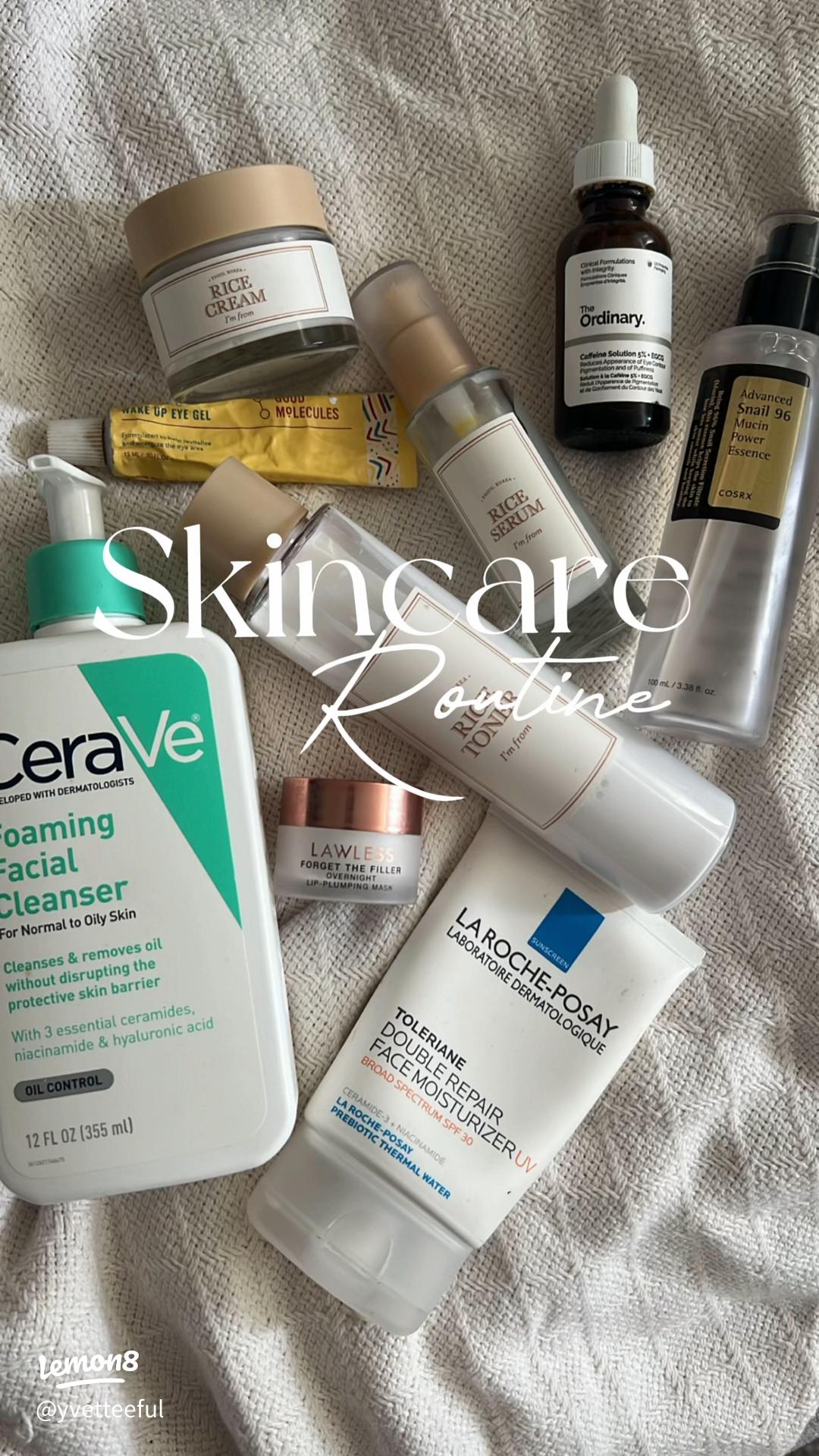
    CeraVe The Ordinary EltaMD La Roche-Posay minimalist skincare flatlay

    If you ask a board-certified dermatologist to name the products that actually change skin in a meaningful, measurable, peer-reviewed way, you get a list of 4 categories. Not 10. Four.

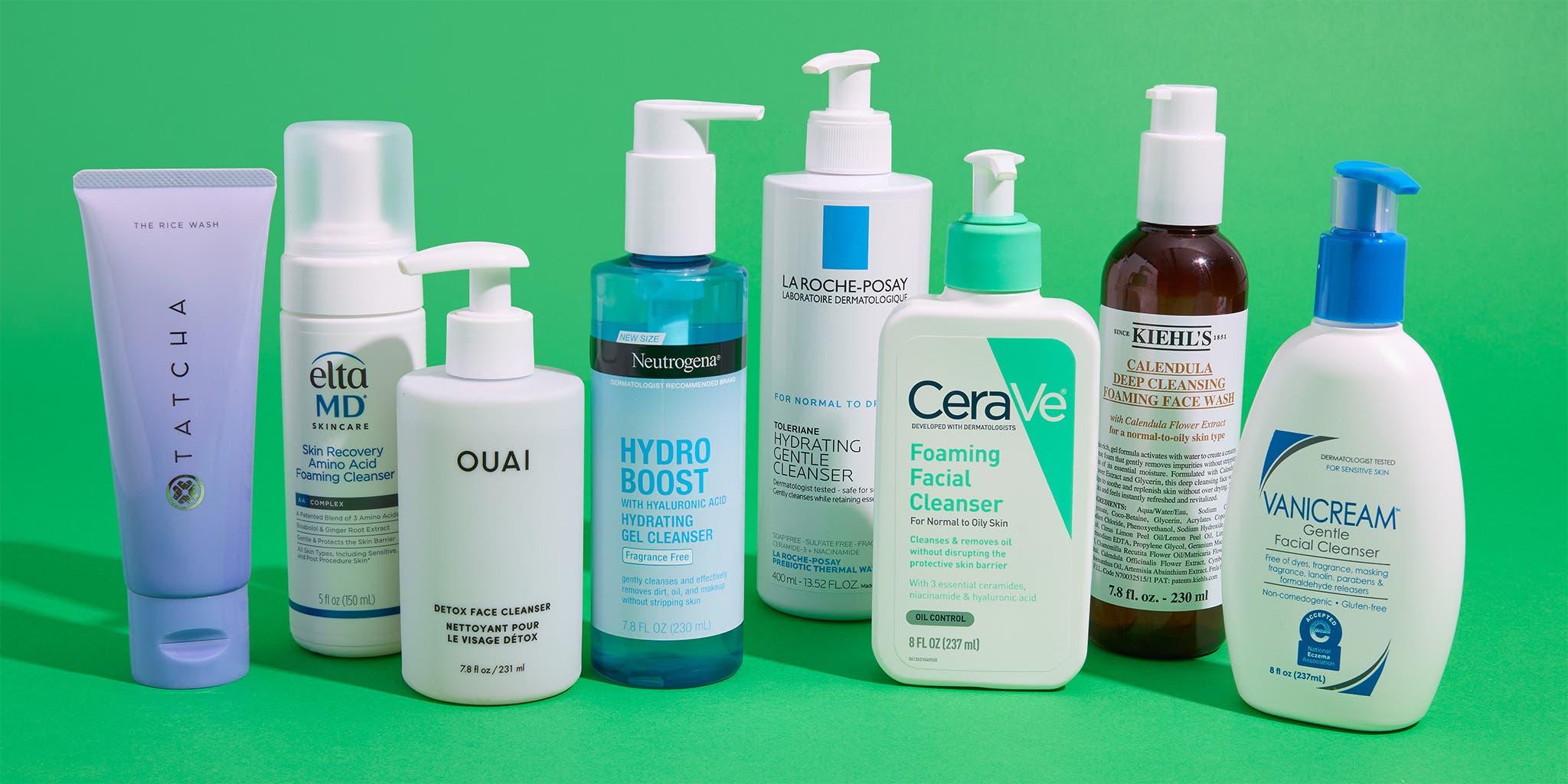
    1. Cleanser. This is the step that removes the day. Sunscreen, sweat, makeup, the thin film of urban particulate matter you accumulate between 7 a.m. and 9 p.m. without noticing. A good cleanser is gentle enough that it does not strip the skin barrier and effective enough that it actually lifts what is on your face. It does not need to be fancy. CeraVe Hydrating Cleanser has been one of the most-recommended cleansers in dermatology for a decade and costs $16.

    2. Active treatment. This is the work step. This is the single product that is responsible for the change you want to see in your skin. If your goal is anti-aging and texture, the active is a retinoid. If your goal is brightening and pigmentation, the active is vitamin C or tranexamic acid or azelaic acid. If your goal is acne, the active is a BHA or benzoyl peroxide. If your goal is barrier repair and calm, the active is niacinamide. You pick one. You use it consistently. You do not stack three actives on the same evening and expect them to behave.

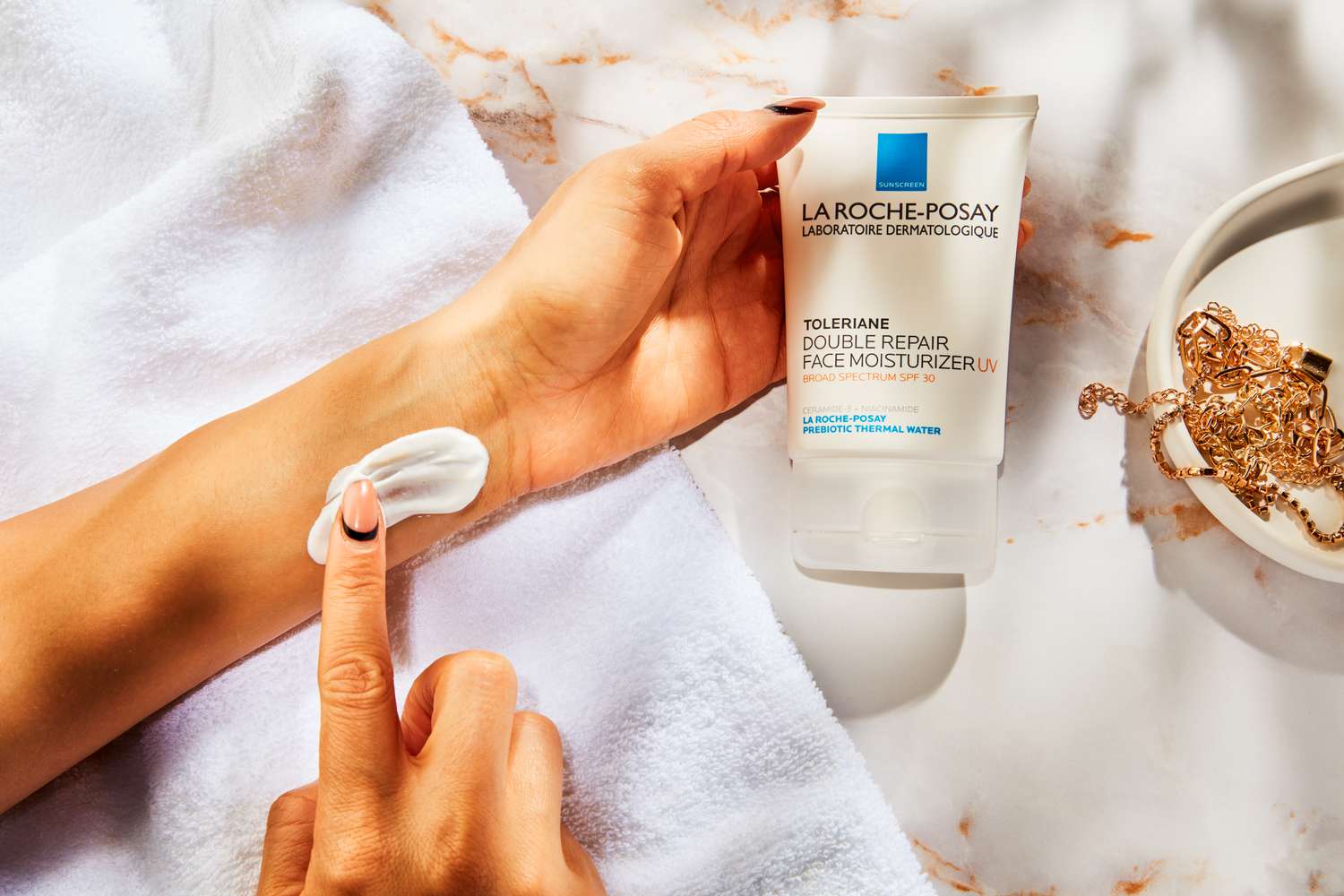
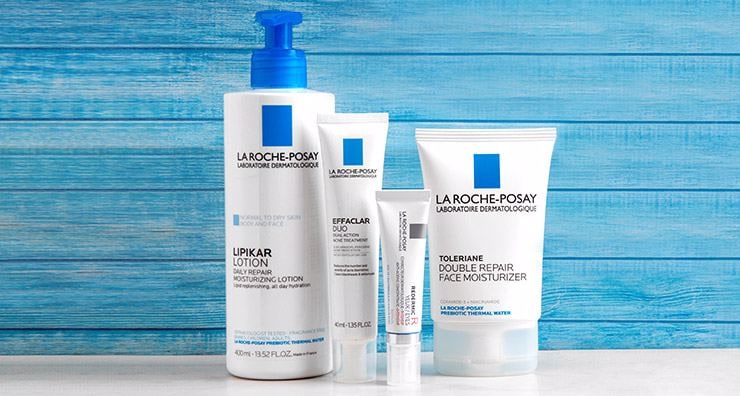
    3. Moisturizer with ceramides. This is the barrier. Ceramides are the lipid molecules that hold your skin barrier together, and a moisturizer that contains them does the structural work of keeping water in and irritants out. CeraVe Moisturizing Cream and La Roche-Posay Toleriane Double Repair both deliver this for under $25.

    4. Sunscreen in the morning, occlusive in the evening. Sunscreen is the single product with the most peer-reviewed evidence behind it in all of skincare. It prevents 90 percent of visible aging and almost all UV-driven hyperpigmentation. Use SPF 30 or higher, broad-spectrum, every morning, even if you work from home. In the evening, if your skin is dry or compromised, an occlusive layer on top of moisturizer (a thin film of Vaseline, Aquaphor, or a dedicated slugging balm) seals everything in overnight.

    CeraVe The Ordinary EltaMD La Roche-Posay minimalist skincare flatlay
    wp:paragraph –>

    That is the entire list. Everything else is optional, and most of it is optional in the sense that it is decorative rather than functional.

    The 15-minute math, broken down to the second

    Here is what 15 minutes looks like when you actually time it, which I did, with a stopwatch, on three different evenings while Mara performed the routine she has been doing since April 2021.

    Ninety seconds to cleanse. You wet your face, you work the cleanser in with your fingertips for about 60 seconds, you rinse for 30. Sixty-second wait. You pat your face dry with a clean towel and you let the residual moisture settle. Sixty seconds of active treatment. You apply your retinol or your BHA or your vitamin C, working from the center of the face outward, using about a pea-sized amount. Four-minute absorption wait. This is the part that nobody tells you about. The active needs time to penetrate before you put anything on top of it, or you are just smearing a moisturizer barrier between the active and your skin and wasting both products. So you brush your teeth. You floss. You start the dishwasher. You let the timer run.

    A woman applying moisturizer to her face in front of a mirror, illustrating the moisturizer step of a minimalist routine
    Ninety seconds to cleanse, 60 seconds for active treatment, 60 seconds for moisturizer. Five minutes of face-time, and the rest is absorption.

    Sixty seconds of moisturizer. You apply your ceramide moisturizer, again working from center outward, using a generous amount because your skin will use what it needs and let the rest sit. Four-minute absorption wait. This is the second multitasking window. You change into pajamas. You put your phone on the charger. You read 4 pages of whatever you are reading. The moisturizer needs time to settle before anything else goes on top of it.

    Add it up. Face-time, meaning your hands actually on your face, is 5 minutes total. The rest is absorption time you spend doing something else. Total elapsed time, from turning on the bathroom light to turning it back off, is 11 to 15 minutes depending on how slowly you brush your teeth. Compare that to the 47 minutes Mara was spending, every night, applying 10 products with no waiting between them, which meant most of those products were canceling each other out before they ever absorbed.

    The products to actively remove from your routine

    This is the part where I make some enemies, and I am going to do it anyway, because the kindest thing I can do for your skin is tell you what to put back on the shelf.

    Toner. Modern toners, the ones sold as “hydrating” or “balancing,” are water with humectants and a little marketing. They do almost nothing your moisturizer is not already doing better. The original purpose of toner was to rebalance skin pH after harsh alkaline soaps in the 1970s, and harsh alkaline soaps are not the cleanser you are using. You can skip it.

    Essence. Essence is toner with a different bottle and a higher price. It is also water with humectants. Charlotte Cho herself has said in interviews that essence is the “soul” of K-beauty, which is a beautiful and culturally meaningful framing, and also, mechanically, it is water with humectants. If you love the ritual, fine, keep it. If you are doing it because you read on a blog that you have to, you do not have to.

    Ampoule plus serum plus active simultaneously. This is the layering trap. If you are using an ampoule, a serum, and an active on the same evening, there is a 70 percent chance one of them is canceling another out. Vitamin C ampoule under a retinol serum? The retinol breaks down the vitamin C and the vitamin C lowers the pH below where the retinol is stable. Both are now garbage. Pick one. Use it. Get a result.

    Eye cream. I am sorry. I know. Eye cream is usually moisturizer in a smaller jar at 3x the markup. The skin around your eyes is thinner and more reactive, which is a real anatomical fact, but the solution is to use less of your regular moisturizer there, not to buy a $68 0.5-ounce jar of essentially the same formulation. If you have a specific concern like dark circles or fine lines, a dedicated retinol or caffeine eye product can be justified, but most people are paying for packaging.

    Sleeping mask. A sleeping mask is the same occlusive moisturizer you already own, sold in a wider tub at twice the price, with the marketing claim that you sleep in it. You can sleep in any moisturizer. That is just called using moisturizer.

    Sheet mask. One-time-use packaging holding 30 cents worth of essence in a $6 plastic envelope. The essence soaks into your skin in the first 8 minutes; you can leave the mask on for 20 minutes if you want a spa moment, but anything past 8 minutes is the mask drying out and pulling moisture back out of your face. They are not skincare. They are a vibe. I love a vibe. I am not pretending it is skincare.

    Three specific 4-product routines, depending on your goal
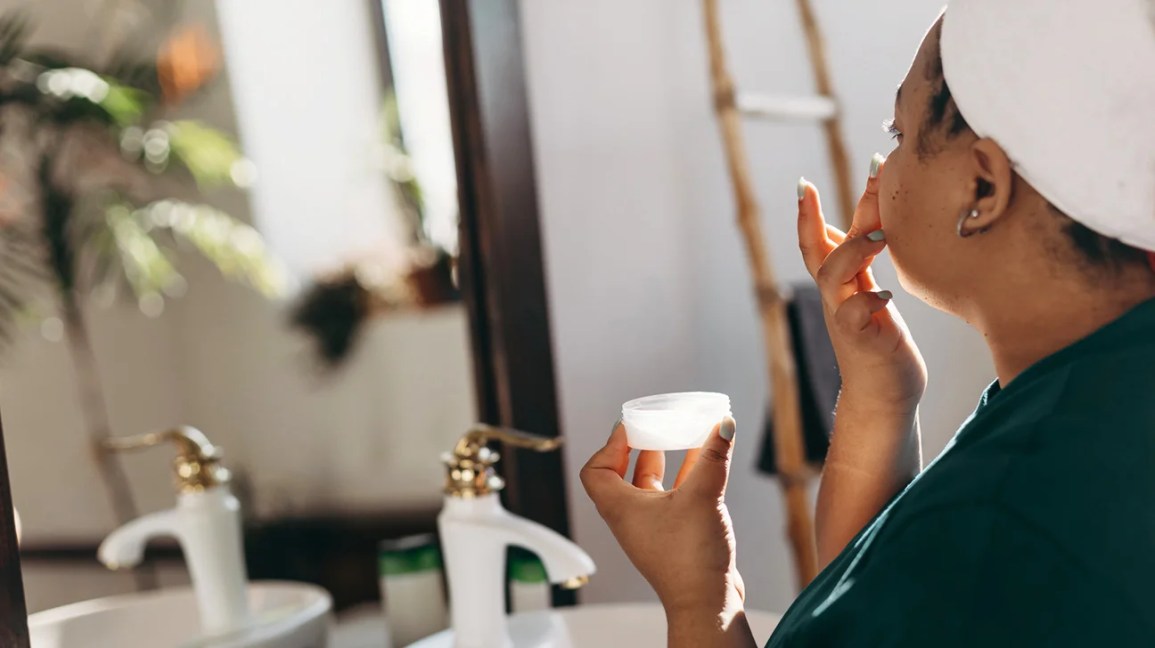
    Black woman bathroom morning skincare routine minimalist 4 products

    Here are the three routines I have actually built for friends, family members, and Mara, depending on what their skin needs. Pick the one that matches your primary concern. If you have two concerns, pick the more urgent one and treat the other one with consistency and sunscreen.

    Routine A: anti-aging and texture. CeraVe Hydrating Cleanser ($16), The Ordinary Granactive Retinoid 2% Emulsion ($13), La Roche-Posay Toleriane Double Repair ($22), EltaMD UV Clear SPF 46 ($41). Total: $92. Use the retinoid 3 evenings a week to start, building up to nightly over 8 weeks. Sunscreen every morning without exception.

    Routine B: brightening for hyperpigmentation.

    La Roche-Posay Toleriane Hydrating Gentle Cleanser ($17), Naturium Tranexamic Acid Topical Acid 5% ($23), Beauty of Joseon Glow Replenishing Rice Milk ($22), Black Girl Sunscreen Make It Matte SPF 45 ($19). Total: $81. Tranexamic acid is one of the best-tolerated brighteners on the market, and it works on melasma, post-inflammatory hyperpigmentation, and sun damage. Dr. Adeline Kikam has called it one of the most underused ingredients in the brightening category.
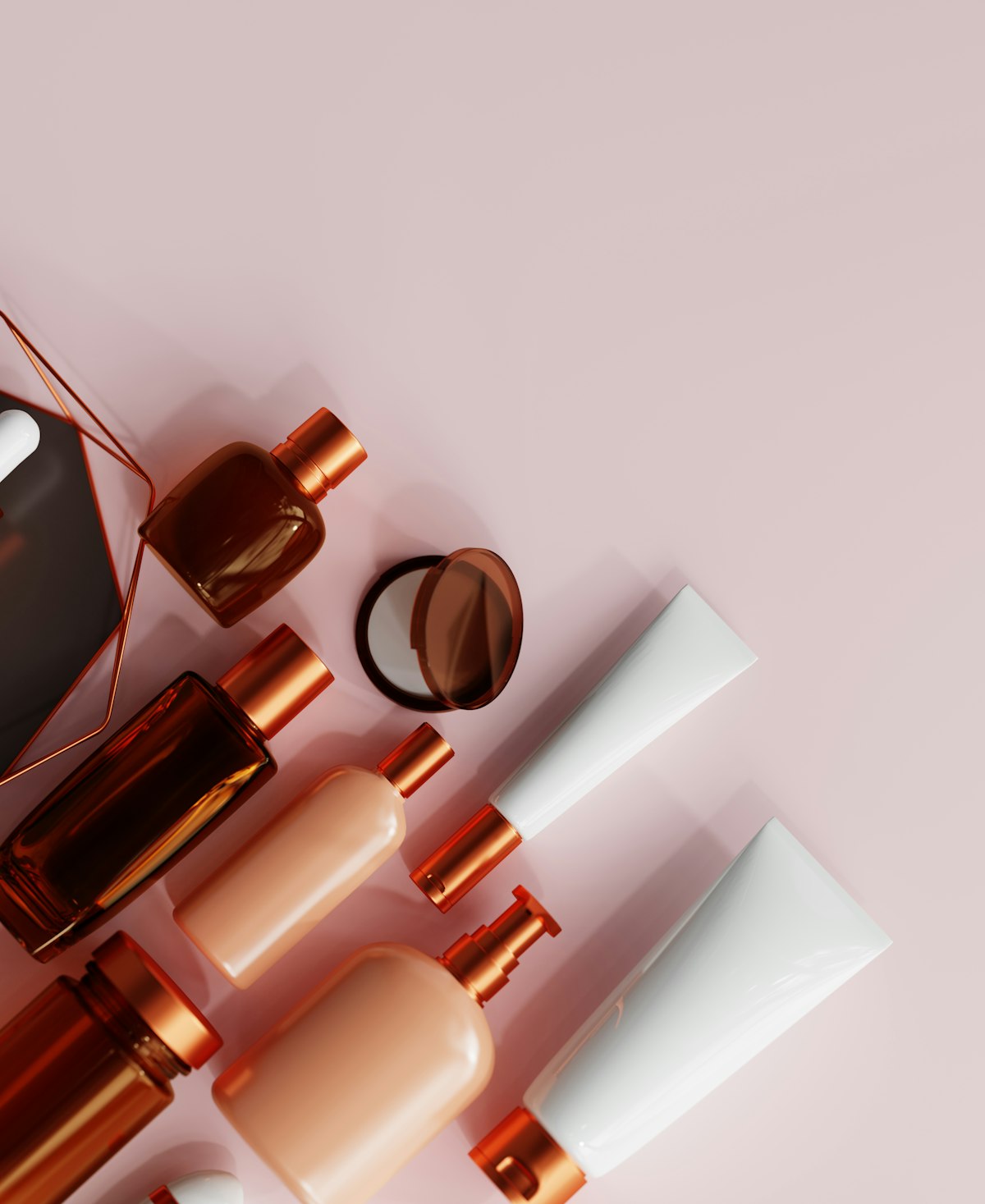
    A flat lay of four skincare products including a cleanser, treatment serum, moisturizer, and sunscreen against a soft neutral background
    Four products, one job each. Cleanser removes the day, active does the work, moisturizer holds the barrier, sunscreen prevents the damage.

    Routine C: acne-prone. Vanicream Gentle Facial Cleanser ($10), Paula’s Choice 2% BHA Liquid Exfoliant ($35), Vanicream Moisturizing Cream ($16), EltaMD UV Clear SPF 46 ($41). Total: $102. The BHA goes on every evening (start every other evening if you are sensitive), and you leave it alone. Do not add a benzoyl peroxide on top. Do not add a retinol on top in the first 12 weeks. Let the BHA do its job.

    What the dermatologists actually say

    I want to be honest about who I am citing here, because the minimalist routine conversation has been led, in the last 4 years, almost entirely by board-certified dermatologists rather than by influencers. Dr. Caroline Robinson, founder of Tone Dermatology in Chicago and the voice behind DermBeautyDoc, has been publicly arguing since 2022 that “the more products you add, the harder it is to identify what is helping and what is hurting.” Dr. Hadley King, who practices in New York and writes for nearly every major beauty publication, has been on record saying she recommends 3 to 5 products for nearly every patient and watches their skin improve. Dr. Shereene Idriss, who runs Idriss Dermatology in Manhattan and built the PillowtalkDerm platform on Instagram, calls the 10-step routine “an aesthetic, not a treatment plan.”

    The peer-reviewed literature backs them up. A 2024 review published in the Journal of the American Academy of Dermatology examined the relationship between routine complexity and skin outcomes across 14 studies and 3,200 participants. The finding was that routine complexity, measured as the number of distinct products used per day, did not correlate with any measured skin outcome including hydration, barrier function, fine line reduction, or hyperpigmentation. What did correlate was consistency. The patients who used 3 to 5 products every single day outperformed the patients who used 8 to 12 products inconsistently, across every metric the review examined.

    The time budget conversation

    If you have 15 minutes, you have a real skincare routine. If you have 30 minutes, you can add one specific extra thing, and the thing should be either a clay mask once a week or a chemical exfoliant on the evenings you are not using your primary active. You do not need to fill the 30 minutes with products. You can fill it with sitting in a steamy bathroom and letting your moisturizer soak in. If you have 60 minutes, please sleep. Skin repairs at night, and sleep is more peer-reviewed than any product on your counter.

    What not to layer, briefly

    Vitamin C and retinol on the same evening: skip. Use vitamin C in the morning, retinol at night. AHA and BHA on the same evening: skip. Pick one, alternate evenings if you must. Benzoyl peroxide and retinol simultaneously: skip, the benzoyl peroxide oxidizes the retinol. Niacinamide and acidic vitamin C: actually fine, despite a persistent myth that they cancel out. The myth was based on 1960s research using unstable formulations that no modern product uses; the 2017 reformulation research published in the Journal of Cosmetic Dermatology cleared niacinamide and L-ascorbic acid as compatible in modern stabilized formulas.

    The consistency math, which is the whole game

    Mara’s old routine had 10 products and she did the full thing maybe 3 evenings a week. The other 4 evenings she did some abbreviated version, missing steps, skipping the active because she was tired, going to bed in makeup twice a month. Her new routine has 4 products and she has done it every single evening since April 2021, except the night her father was in the emergency room. Four products, 1,500 evenings, almost no misses. Her skin in 2026 is the best it has ever been, and her dermatologist confirmed it at her last visit.
    A woman smiling in soft natural light with clear glowing skin, illustrating the result of a consistent minimal skincare routine
    Four products done every night beats ten products done sporadically. The math is not subtle.

    Four products done every evening, for 4 years, beats 10 products done inconsistently for the same 4 years. It is not close. The dermatology research backs it up, the people who run dermatology practices back it up, and a friend of mine who used to sit on the bathroom floor crying about essence backs it up. The case is closed.

    Here is what I would actually build, at three budgets

    A 10-step routine is rarely better than a focused 4-step routine. The extra 6 steps are almost always either water-with-marketing or products that block one another from absorbing into the skin they are supposed to treat. I have watched friends spend $400 a month on bottles that canceled each other out, and I have watched the same friends spend $50 a month on 4 products that worked.

    At $50, I would build CeraVe Hydrating Cleanser, The Ordinary Granactive Retinoid 2% Emulsion, CeraVe Moisturizing Cream, and a Black Girl Sunscreen mini. Total is roughly $48. This is the most dermatologist-respected entry-level routine in America, and I have personally seen it transform skin that previously had a $300 routine.

    At $150, I’d build La Roche-Posay Toleriane Hydrating Cleanser, Naturium Tranexamic Acid Topical Acid 5%, Beauty of Joseon Glow Replenishing Rice Milk, and EltaMD UV Clear SPF 46. Total is roughly $143. This is the mid-tier sweet spot, where every product is dermatologist-recommended and every ingredient is at a clinically meaningful concentration.

    At $400, I would build SkinFix Barrier+ Foaming Oil Cleanser, SkinCeuticals C E Ferulic, SkinFix Barrier+ Triple Lipid Peptide Cream, and EltaMD UV Clear. Total is roughly $382. The C E Ferulic is the single most-studied stabilized vitamin C on the market, and the SkinFix barrier products are some of the highest-ceramide-concentration formulations available at retail.

    Pick a tier. Pick the routine that matches your skin goal. Do it every evening for 90 days before you change anything. Mara sat on the bathroom floor 5 years ago choosing between sleep and skincare, and the answer turned out to be that she could have both, if she stopped letting the industry talk her into 6 products that did not love her back.
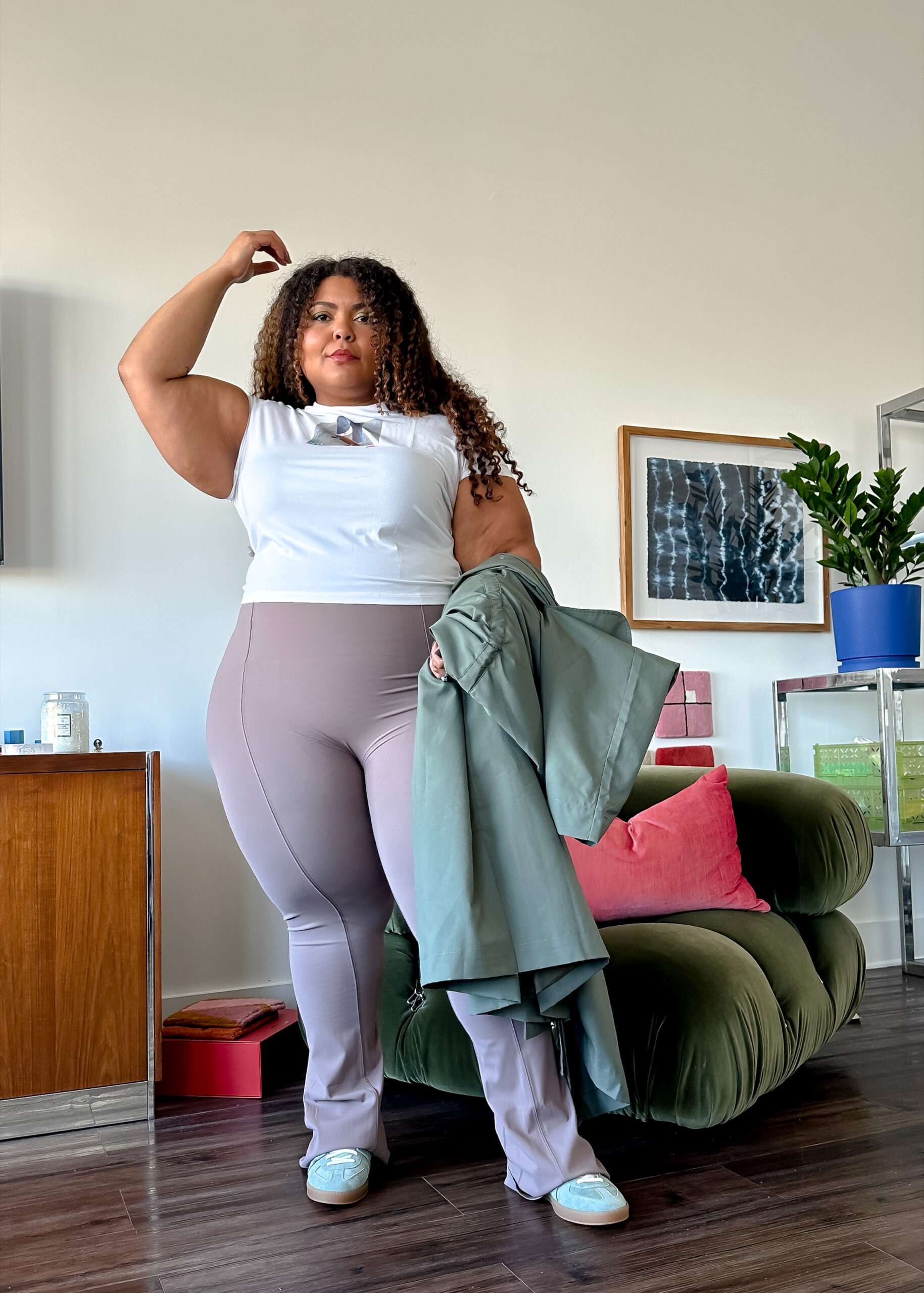

  • Plus-Size-Friendly Guide to Road Trips: Comfort, Snacks, Stretching, and Outfits

    Plus-Size-Friendly Guide to Road Trips: Comfort, Snacks, Stretching, and Outfits

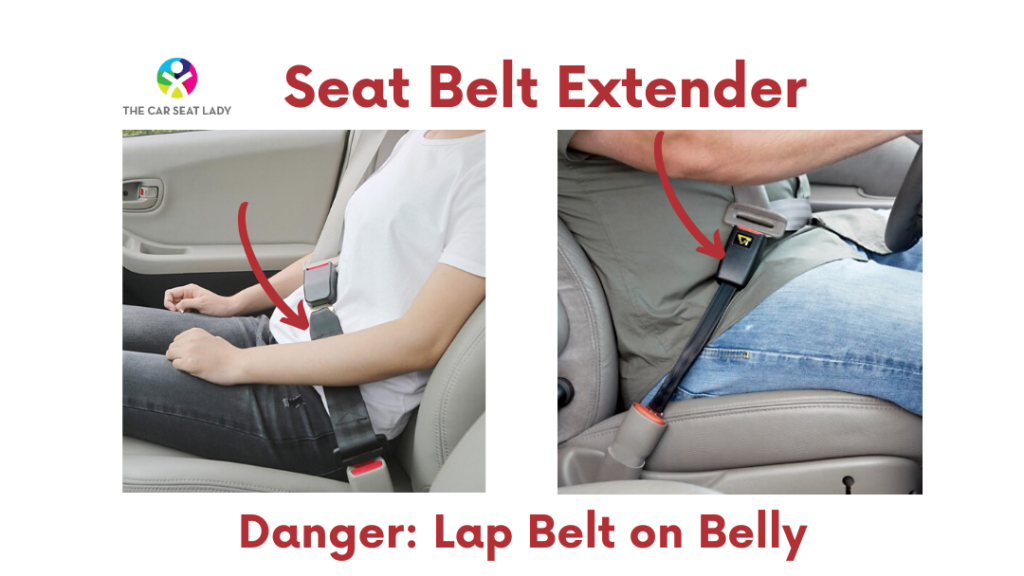
    It was June 2024, mile 187 on I-26 East, somewhere between the Georgia state line and the Charleston exit signs that promise marsh views in another hour. My sister was driving the Toyota Camry we had rented in Atlanta. I was in the passenger seat. And the seat belt was cutting into my ribs at the diagonal so sharply that I had been shifting position every four minutes for the last forty miles, trying to get the strap to sit anywhere other than across the top of my left breast and under my right armpit.

    That was the moment. Not a dramatic one. No tears, no pulling over. Just the quiet, specific realization that the seat belt geometry in a 2023 Toyota Camry, like the seat belt geometry in basically every car sold in America, is engineered for a male body that is 5’10, 175 pounds, with a flat chest and a narrow torso. My body is none of those things. I am 5’4, size 18, with a high bust and the soft-tissue distribution that comes with being a Black woman who looks like every woman in my family for three generations back. The belt was not designed for me. It was designed around me, the way the entire road-trip industry has been designed around me for the last hundred years, and I was just supposed to suck it up.

    I am not going to suck it up. Neither should you. Road trip discomfort for plus-size women is not a personal failing. It is a solvable engineering problem. About eighty dollars of pre-trip gear and a four-stop hydration protocol fixes most of it. The rest is knowing which snacks actually carry you through hour five without a sugar crash, which compression socks prevent the deep vein thrombosis risk that is genuinely higher for our bodies on drives over four hours, and which outfit lets you slide out of a car at a rest stop without feeling like you have been folded into origami. This is the engineering solution. I have driven Atlanta to Charleston, NYC to DC, LA to San Francisco, and Portland to Seattle in the last eighteen months. Everything in this guide is something I have actually tested on my actual body.

    Plus-size Black woman riding comfortably in a car on a sunlit highway

    The Seatbelt Geometry Problem and the Twenty-Dollar Fix

    The Seatbelt Geometry Problem and the Twenty-Dollar Fix

    Here is the thing nobody tells you. The diagonal strap of a standard three-point seat belt is anchored at a point above and behind your left shoulder, and it runs across your torso to a buckle on your right hip. That diagonal angle is calibrated for a torso that is taller than it is wide, with the chest mass low and flat. If you have a high bust, a fuller midsection, or anything resembling soft tissue at the size-18-and-up range, the strap does not sit across the sternum the way it was designed to. It rides up onto your throat, slices across one breast, or buries itself into the soft tissue under your arm. None of those positions are safe in a crash, and all of them are miserable for six hours.

    The Insurance Institute for Highway Safety has analyzed this gap repeatedly. In police-reported tow-away crashes, women are roughly twenty to twenty-eight percent more likely to be killed on a per-crash basis than men, and a 2019 University of Virginia study put the female-occupant frontal-crash injury odds at about seventy-three percent higher than a comparable male occupant. The safety equipment was developed and tested on male-bodied dummies for decades. The plus-size female body is even further outside the design envelope. So this is not in your head. The car was not built for you.

    The fix is a seatbelt shoulder adjuster, the small clip that attaches to the diagonal strap and reroutes the angle so it hits your shoulder correctly instead of your neck or your chest. Generic versions run roughly $10 to $20 on Amazon. I keep one in the glove compartment of every rental car I drive. It takes about ten seconds to install, it does not interfere with the buckle releasing in an emergency, and it is the single highest-return purchase I have ever made for road comfort. Look for one that explicitly says it does not interfere with retraction and is rated for adult use. If you take nothing else from this article, take this.

    The Lumbar Problem and the Thirty-Five-Dollar Fix

    The Lumbar Problem and the Thirty-Five-Dollar Fix

    Car seats are also engineered for a body that is not yours. The lumbar curve on a standard sedan seat is shallow, the cushion depth is too short for thicker thighs, and the seat back angle assumes you have very little soft tissue between your spine and the upholstery. After two hours, your lower back is screaming. After four hours, you cannot feel your tailbone.

    The Everlasting Comfort Memory Foam Lumbar Cushion is thirty-five dollars and it is the highest-rated lumbar support for plus-size bodies on every forum I have read in the last two years. It has a strap that loops around the seat back, so it stays in place when you shift. The contour is deep enough to actually fill the gap behind your lower spine, which is the whole point. I bought one in October 2023 and I have not done a long drive without it since.

    If you have hip issues on top of back issues, add a Tempur-Pedic gel seat cushion under your sit bones. It is closer to sixty dollars and it is worth every penny on drives longer than three hours. The combination of lumbar support behind and gel cushion below changes the angle of your pelvis just enough that your lower back stops bearing the full load of the drive. I noticed the difference on the Portland to Seattle run last summer. Three hours, no back pain, which had never happened to me before.

    The Bladder Problem Nobody Wants to Talk About

    Plus-size women have a complicated relationship with road-trip hydration. Drink too little water and you arrive dehydrated, with a headache and stiff muscles. Drink enough water and you need a bathroom every fifty miles, which on rural stretches of I-95 or I-5 means white-knuckling it to the next gas station. There is also pelvic floor pressure to consider, which gets worse with the vibration of a long drive.

    My protocol now is electrolyte timing. I drink eight ounces of water with a scoop of Skoop electrolyte powder when I get in the car, and then I sip slowly for the next ninety minutes. Electrolytes mean my body actually absorbs the water instead of running it straight through. I do not drink coffee in the first two hours. I save caffeine for the energy dip around mile 200, paired with a real meal stop. This protocol means I need a bathroom every two hours, not every forty minutes, and I arrive hydrated.

    Compression bladder support garments are also worth considering for the long-driver. I am not going to pretend everyone wants to talk about this, but the vibration of a six-hour drive is hard on pelvic floor tissue, and a light compression brief from Knix or Thinx adds support without being uncomfortable. Sister told me about Knix last year. She was right.

    Plus-size road trip gear flatlay including lumbar cushion, electrolyte powder, compression socks, and snacks

    ## The Ninety-Minute Rule Is About Your Heart, Not Just Your Legs

    The Ninety-Minute Rule Is About Your Heart, Not Just Your Legs

    This is the section I want every plus-size woman to read twice. The CDC, the American Heart Association, and the World Health Organization have all flagged elevated deep vein thrombosis risk in long-distance travelers, with body mass index above a certain threshold listed as a contributing risk factor on trips over four hours. DVT is a blood clot that forms in the deep veins of the leg, usually after long periods of immobility. It can be fatal if it travels to the lungs. The risk is real, it is statistical, and it is preventable.

    The prevention protocol the major cardiology organizations agree on is not complicated. Stand up and walk for five minutes every ninety minutes. Flex your calves while seated. Stay hydrated. Wear graduated compression socks on any drive longer than four hours. That is the whole protocol. The hardest part is convincing yourself to actually pull over when you are seventy miles from your hotel and the sun is about to set.

    I now set a ninety-minute timer on my phone at the start of every drive. When it goes off, we find an exit within five miles, we get out, and we walk around the rest stop or gas station parking lot for five full minutes. I do calf raises. I do the standing forward fold I learned from my yoga teacher in Atlanta. I drink more electrolyte water. We get back in the car and reset the timer. The drive takes about twenty minutes longer than it would otherwise. I am alive and have functioning circulation when I arrive. The trade is obvious.

    The Snack Stack That Actually Carries You

    The Snack Stack That Actually Carries You

    Gas station snacks are an enemy of the long drive. Refined sugar gives you forty minutes of energy followed by a crash that makes you want to nap behind the wheel. Salty processed corn gives you instant bloat. The candy aisle is not your friend on hour five.

    My pack-from-home stack is Sahale snack mixes for the slow-release protein-fat combination, Premier Protein shakes for breakfast or the mid-afternoon energy dip (thirty grams of protein, one hundred sixty calories, you actually feel full for two hours), and Skoop electrolyte packets for the water bottle. I also bring a bag of Trader Joe’s roasted unsalted almonds, two apples, and a sleeve of those Fage three-percent yogurt cups in the cooler if we are starting before nine in the morning. That stack costs about twenty-five dollars and it lasts a two-day round trip. The math is much better than ninety dollars of gas-station impulse buys that leave you feeling worse.

    One specific Premier Protein math. A thirty-gram protein shake plus a handful of almonds plus an apple is roughly four hundred calories and forty grams of protein. That stack carries me from mile zero to mile two hundred without a real meal stop. When I do stop for a meal, I am not ravenous, so I order something reasonable instead of the entire menu of a Cracker Barrel.

    The Outfit, Built for Twelve Hours in a Seat

    The outfit math for a plus-size road trip is different from the outfit math for a flight or a day out. You need fabric that does not pinch when you sit for hours. You need shoes that you can slip on and off. You need layers because the car will be cold when your sister is driving and warm when you are driving, and the climate control vote will go to whoever is awake.

    My standard kit is a Spanx pull-on travel skirt for any drive in summer, a Quince modal tee, an Allbirds Tree Runner, and a pair of Comrad knee-high graduated compression socks for any drive over four hours. A good pull-on travel skirt with a wide elastic waistband is the only kind that does not ride up when you sit, and it has enough stretch that you can sleep in it in a hotel and look fine in it at a roadside diner. The Quince modal tee breathes and does not show sweat. The Tree Runners are wool so they do not stink on day two. The Comrad compression socks are the fifteen-to-twenty millimeter mercury graduated rating that actually does the work on your circulation.

    For winter or cold-climate drives, swap in a pair of Universal Standard ponte leggings, a long Quince cashmere cardigan, and the same compression socks layered under wool socks. The principle is the same. Stretch, breathability, layers, and shoes you can take off at hour three when your feet swell.

    Plus-size woman stretching at a scenic overlook during a road trip rest stop

    Night Driving Versus Day Driving

    Night Driving Versus Day Driving

    I prefer day driving for trips under six hours and a split schedule for anything longer. Day driving means you can see the actual landscape, you can stop at the random fruit stand or the historical marker, and you arrive in time to settle into wherever you are staying before dark. Night driving has its uses, mostly when you are trying to avoid traffic on a holiday weekend or when you are crossing a stretch of country that is not particularly scenic. The trade-off is that night driving is harder on your eyes, your stamina, and your judgment about when to stop.

    My rule now is no driving after eleven at night unless we have a clear, specific destination within ninety minutes and both of us have slept well. The temptation to push through the last hundred miles at one in the morning has put me in some sketchy gas stations and one memorable wrong exit on I-95 outside Richmond. Sleep is cheaper than a wrong turn.

    The Audio Stack for Sister-Trip Energy

    The Audio Stack for Sister-Trip Energy

    The right audio carries a long drive. My current rotation is NPR’s Code Switch for the meaty conversation, Brittany Luse’s “It’s Been a Minute” for the pop-culture take, and a long-form audiobook for the stretch where conversation has run out and we both want to be in our own heads. I rotate music in for thirty minutes after every podcast hour, mostly Brandy, mostly Anita Baker, mostly Solange when the road gets pretty.

    The trick with audiobooks on a sister trip is to pick something you both actually want to hear. Last summer we did “Caste” by Isabel Wilkerson on the LA to San Francisco run and I cried somewhere around Paso Robles. That was the right call. The road trip the year before I had picked something neither of us was into, and we ended up listening to the same Aretha album three times because nobody wanted to commit to anything else.

    The First-Aid Bag

    The First-Aid Bag

    The must-pack first-aid kit for plus-size road trips is small and specific. BodyGlide for thigh chafe in summer, because anything humid plus a six-hour drive equals friction issues. Melatonin gummies for hotel sleep, especially if you are crossing time zones or sleeping at altitude. Tylenol for the inevitable tension headache. A small tube of arnica gel for any unexpected bruising or muscle soreness. Eye drops because car air conditioning is brutal. Backup phone charger.

    I also pack a small ice pack in the cooler for the lower back. On the NYC to DC drive last winter, my sister threw it under her sweatshirt for the last hour and arrived at the hotel without the back spasm she usually gets after long drives. Small thing, big return.

    The Four Trips, One Lesson Each

    Atlanta to Charleston, June 2024. Five hours forty minutes. The lesson was the seatbelt adjuster. I had not bought one yet and I spent the entire drive shifting position. By Charleston I had a bruise across my collarbone. I ordered a shoulder strap repositioner that night from the hotel.

    NYC to DC, December 2024. Four hours twenty minutes if traffic cooperates, six if it does not. The lesson was the compression socks. We hit Jersey Turnpike construction and the drive ballooned to almost six hours. My ankles were swollen when we arrived. I had not worn compression. The next drive I did, I wore them. No swelling.

    LA to San Francisco, August 2024. Six hours up the 5, or eight hours up the 101 if you want the coast. The lesson was the lumbar cushion. I did the 101 version, which is gorgeous and worth every minute, but it is a winding mountain drive that fatigues your lower back in a way the straight interstate does not. The Everlasting Comfort cushion was the difference between arriving in Big Sur ready for dinner and arriving ready for a heating pad.

    Portland to Seattle, March 2025. Three hours fifteen minutes on the I-5. The lesson was the electrolyte protocol. Short drive, easy weather, but I had a meeting the next morning and I wanted to arrive sharp, not tired. The Skoop hydration plan plus the ninety-minute stretch rule meant I walked into dinner that night feeling like I had not been in a car at all.

    Two plus-size women sisters laughing together at a coastal overlook on a road trip

    What the Industry Needs to Fix in the Next Decade

    What the Industry Needs to Fix in the Next Decade

    I am not going to spend the next decade buying seatbelt adjusters and lumbar cushions because the auto industry refused to redesign for bodies that have always existed. The fix is not on the consumer. The fix is on the engineers. Seatbelt anchor points need to be adjustable across a wider range, not just up and down by an inch. Crash test dummies need to model the full distribution of female bodies, including high-bust and plus-size variants, with the same rigor applied to male body types. Car seats need lumbar curves that accommodate the range of human spines that actually buy cars.

    Until that happens, we engineer the workaround. We buy the twenty-dollar clip and the thirty-five-dollar cushion and the medical-grade compression socks. We set the ninety-minute timer. We pack the protein and the electrolytes. We arrive whole, not bruised, not swollen, not in pain. That is the engineering solution for now. The structural solution is a longer fight.

    The Challenge

    The Challenge

    Here is what I am asking. Most road-trip discomfort for plus-size women is solvable with about eighty dollars of pre-trip gear and a four-stop hydration protocol. The lumbar wedge, the seatbelt strap repositioner, the compression socks, the electrolyte powder. That is the kit. On your next drive of four hours or longer, try it. Set the ninety-minute timer. Pack the Sahale and the Premier Protein. Wear the Comrad socks. Use the Tysonix clip. Stop every ninety minutes and walk for five.

    Then tell us. Tell us if you arrived without back pain for the first time. Tell us if your ankles were not swollen. Tell us if the seatbelt did not leave a mark across your chest. Tell us what you would add to the kit, because I am still building mine, and the next plus-size woman who reads this article will benefit from what you learned. The car was not built for us. We can still build the trip for us. Start with the next four-hour drive and let me know how it goes.

  • La Roche-Posay Review for Plus-Size Skin: 14 Months on Body Acne, Chafing, and KP

    La Roche-Posay Review for Plus-Size Skin: 14 Months on Body Acne, Chafing, and KP

    La Roche-Posay body care lineup on a marble vanity with a hand reaching for the Lipikar tube

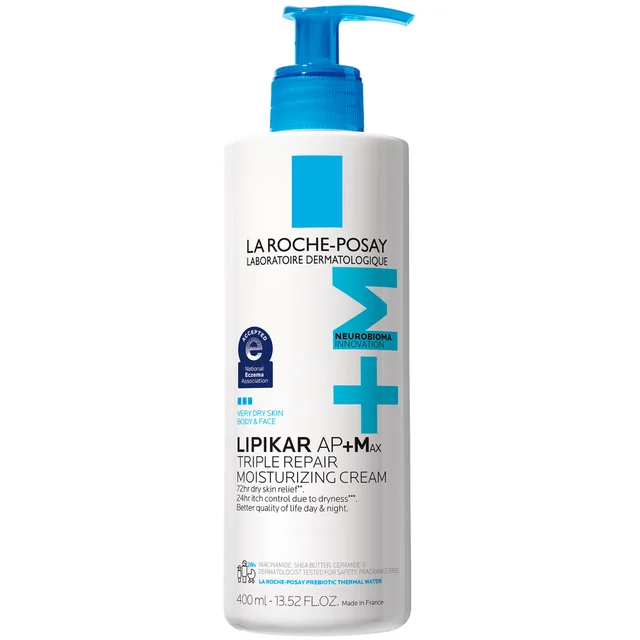
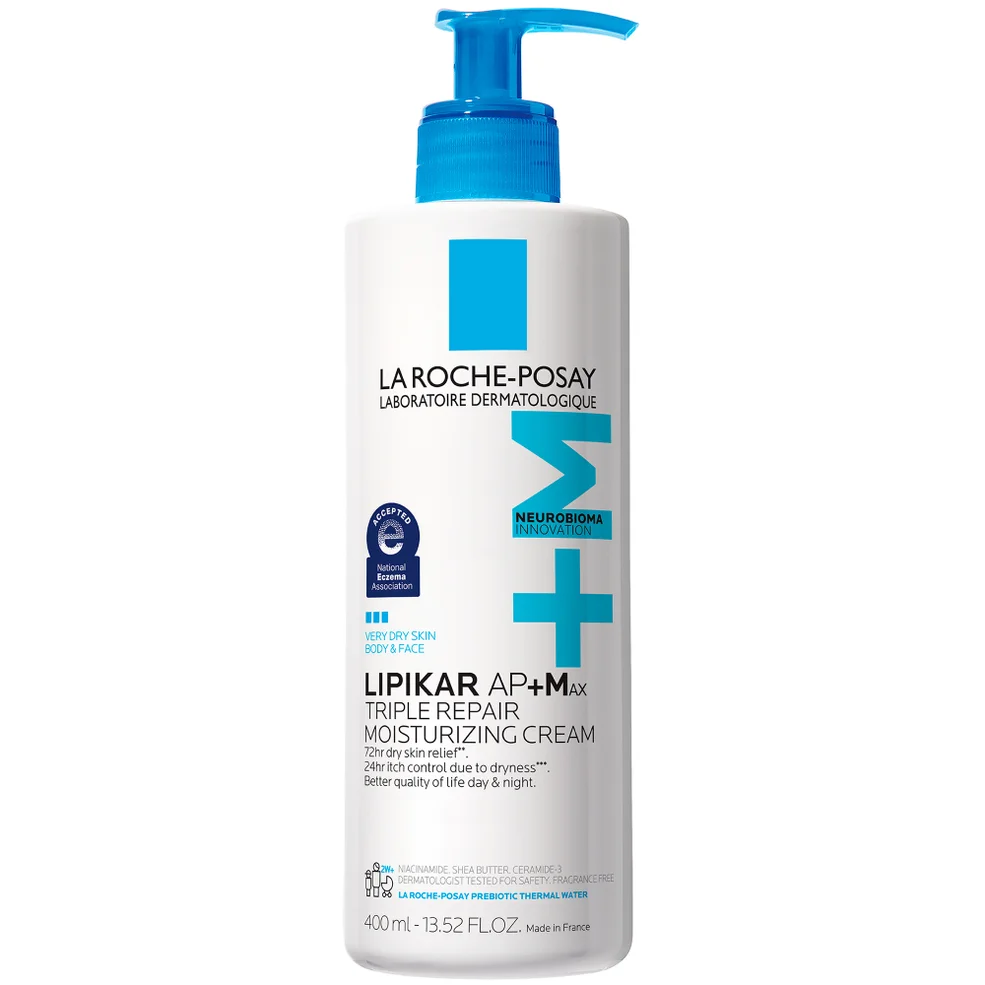
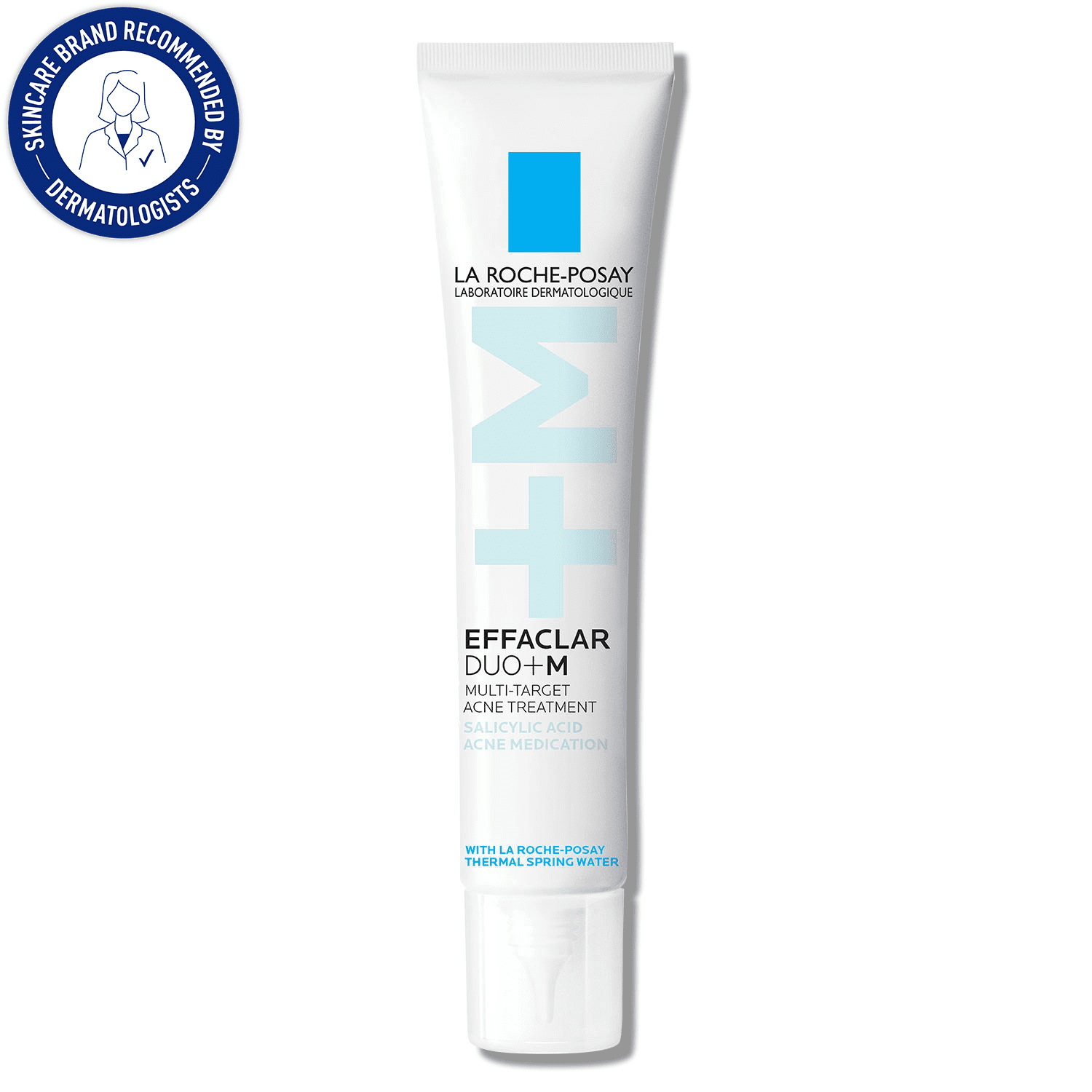
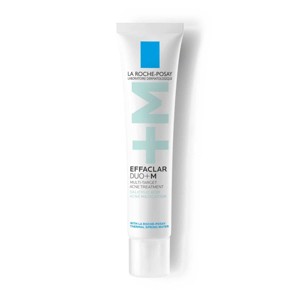
    The La Roche-Posay product that delivers the most for a plus-size body is not the one the brand puts on every dermatologist-recommendation list. After fourteen months of using the brand on my own size 16 body and pulling apart what worked from what got hyped, the highest-impact pick is the $20 Lipikar Baume AP+M, not the famous Effaclar Duo or the Anthelios sunscreen that owns half the SkinTok comment sections. The Lipikar fixes problems specific to bigger bodies – thigh-fold chafing rash, post-friction hyperpigmentation under bra bands, and the dry, irritated patches that show up where skin sits against skin in summer – and almost nobody reviewing this brand talks about it. The other products are good. Some are excellent. But the brand’s marketing aims at faces, and plus-size skin lives below the jawline.

    For context on the skin and body this review is written from: I am NC45 with neutral-warm undertones, biracial Black and Filipina, size 16 with a long torso and a soft middle that has carried a Type 4A natural hair routine, two professional makeup careers, and one move from LA to Atlanta. My body skin is normal-to-dry, prone to keratosis pilaris on my upper arms, hyperpigmentation across my inner thighs from years of denim friction, and the occasional cluster of body acne on my upper back when I work out without changing tops fast enough. My face is combination-oily, melasma-prone, and reactive to fragrance. I tested the La Roche-Posay range the way a plus-size buyer actually shops it – the body products got fourteen months and a real Atlanta summer, the face products got eight weeks each, and the sunscreen got the worst test I could give it which is reapplication at a Six Flags water park in July.

    Quick verdict

    Quick verdict

    Rating: 4.5 out of 5 for body care, 3.5 out of 5 for facial skincare. Lipikar Baume AP+M is the strongest pick in the lineup for plus-size readers and the one most reviewers skip. Anthelios Melt-In Milk SPF 60 is the only chemical body sunscreen I have used that does not pill under a size-16 cotton sundress after two hours. Effaclar Duo earns its hype on back acne, undersells on facial use for deeper skin tones. Toleriane Hydrating Cleanser is a competent face wash and not much more. Best for: anyone with body skin concerns – chafing, KP, body acne, post-friction dark marks. Skip if: you only want a face routine and you are not coming from a sensitized barrier. Where to buy: Lipikar Baume AP+M at Amazon , around $20 for 13.5 oz.

    What La Roche-Posay actually is

    What La Roche-Posay actually is

    La Roche-Posay is a French thermal-water-based skincare brand owned by L’Oreal since 1989, sold primarily through dermatologists in Europe and through Amazon, Target, Ulta, and Sephora in the US. The brand built its reputation on three things – thermal spring water from the town of La Roche-Posay (used as a base ingredient, claims around selenium and trace minerals), aggressive dermatologist-channel marketing, and a willingness to formulate at active percentages drugstore brands historically avoided. Effaclar Duo in the US uses 5.5 percent benzoyl peroxide and LHA, a slow-release salicylic-acid derivative. The Mexoryl filter (Ecamsule, brand-licensed by L’Oreal) is present in select Anthelios SX formulations in the US; the Melt-In Milk SPF 60 sold in the US uses avobenzone, homosalate, octisalate, and octocrylene as its filter system.

    The brand sits at a specific price tier that matters for this review. Most of the line falls between $15 and $40, which puts it above CeraVe and Cetaphil on price but well below the prestige tier of Drunk Elephant, Tatcha, or SkinCeuticals. La Roche-Posay’s pitch is that it is dermatologist-grade at drugstore-adjacent pricing, sold without the prestige markup. For a plus-size buyer who needs more product to cover more body, that price tier is the entire conversation. Body care that requires four ounces per application is not affordable at $60 a tube. Most of La Roche-Posay’s body sizes are 13.5 oz for Lipikar Baume and 5 oz for the body sunscreen, which is enough for a real plus-size body to actually finish before the formula degrades.

    My experience over fourteen months

    I started with Effaclar Duo on my upper back after a summer of consistent body acne that my regular salicylic acid body wash was not clearing. I had been using a body wash from a popular drugstore brand at 2 percent salicylic acid for about four months with diminishing returns. Effaclar Duo went on as a leave-on spot treatment after showering, applied to the cluster on my upper back where my bra band sits and the breakouts hide. Two weeks in, the active clusters were down by about half. By week four, the back was clear. I have stayed clear since, with the Effaclar Duo used preemptively two nights a week instead of daily, which is what the bottle suggests for maintenance anyway. For body acne specifically, this product worked faster than anything else I have tried, including a prescription clindamycin lotion my dermatologist gave me in 2022.

    The Lipikar Baume AP+M is the product I did not expect to love. I bought it because my inner thighs were having one of their summer moments – the kind of chafing rash that comes from a plus-size body walking in 92-degree Atlanta humidity for any distance in a dress without the right shorts under. I had tried the usual things. A popular drugstore healing ointment helped overnight but stained sheets and clothing. A prestige body cream felt nice but did nothing for the inflammation. The Lipikar Baume was recommended by a Reddit thread for atopic-prone skin and I bought it expecting another mediocre body lotion. The first night, the burning sensation along my inner thighs was gone within twenty minutes. By day three, the rash had calmed. By day seven, the post-friction hyperpigmentation that had been building for the entire summer started to fade. Not gone – I am realistic about that – but visibly lightening over the next eight weeks of consistent twice-daily use.

    The Anthelios Melt-In Milk SPF 60 was the product I expected to be fine and found to be one of the best body sunscreens I’ve used at any price. The texture is genuinely milky, not white-cast or greasy. On NC45 medium-deep skin, it disappears completely within about forty seconds of application, with no flash-back in photos and no chalky residue on my arms or chest. I tested it under a cotton sundress for a six-hour stretch at the water park in July, with reapplication every two hours per the label, and I didn’t get the pilling-and-streaking effect that body sunscreens usually leave on a plus-size body where the fabric drags against the lotion on the upper arms and underbust. I burned once during that summer – mild, on my chest, after I forgot to reapply at hour four during a particularly stupid pool day – and never with consistent reapplication.

    The face products were a more mixed test. Toleriane Hydrating Cleanser was perfectly competent for eight weeks – it cleaned my face without stripping, did not pill under MAC Studio Fix NC45, did not break me out. It also did not do anything my $13 Cetaphil cleanser was not already doing, which made it hard to recommend at the $17 price for a smaller bottle. I went back to Cetaphil after the test. The Toleriane Double Repair Moisturizer was better – it has niacinamide and ceramides, layered well under sunscreen, and felt slightly more hydrating than CeraVe Moisturizing Lotion for my combination-oily face, but again the difference was small enough that I am not sure it justified the price jump.

    Brown hand applying Lipikar Baume AP+M to inner thigh showing post-friction hyperpigmentation

    What works

    What works

    The body lineup is the strongest part of this brand for plus-size readers, and it is the part that gets the least coverage on most skincare blogs because most reviewers either focus on face products or do not have body-skin concerns that come with carrying more body. Lipikar Baume AP+M is the standout. The texture is heavier than a body lotion and lighter than a body butter, somewhere in the zone that I would call a body cream. It sinks in within five to ten minutes without leaving a film I would have to wait out before getting dressed. The shea butter and niacinamide are doing real work on skin that has been irritated by friction or fabric or both. For anyone with eczema-prone patches or post-chafe hyperpigmentation, this is the product I would recommend over any prestige body treatment.

    Effaclar Duo earns its hype for body acne, and especially for the kind of plus-size body acne that hides under bra bands, on the upper back, and along the chest line. The micronized benzoyl peroxide formulation is less irritating than the cheaper drugstore versions, and the addition of LHA (a slow-release salicylic acid) means the product does both surface exfoliation and pore-level acne treatment. I have left it on overnight on my back without the kind of redness or peeling that 10 percent benzoyl peroxide products tend to cause. The 1.35 oz tube does feel small for body use but the application is targeted enough that the tube lasts about ten weeks for me at twice-weekly maintenance use.

    Anthelios Melt-In Milk SPF 60 is, for my money and my body, one of the best body sunscreens on the US market right now. The avobenzone-plus-stabilizer system finishes weightless, and it actually disappears on NC45 skin instead of leaving the gray-cast haze that most chemical body sunscreens leave on deeper complexions. The 5 oz tube is enough for a full body application with some left over for reapplication on exposed areas. At around $34, it’s more than CeraVe Hydrating Body Lotion with SPF 30, but the higher SPF, the texture, and the no-flash-back performance on Black and brown skin earn the price difference.

    The pricing is honest for what the formulations actually do. La Roche-Posay sits in the $15-40 zone across most of the line, which is the right tier for body skincare that has to cover more body. The 13.5 oz Lipikar Baume bottle lasts me about three months at twice-daily use on inner thighs, under-bust, and upper arms, which works out to about $7 per month – cheaper per use than a prestige body cream and roughly the same as a CeraVe.

    What doesn’t work, honestly

    The brand has a deeper-skin-tone communication problem that shows up most in the face products. La Roche-Posay’s photography and shade-related marketing is built around light-to-medium European skin. For NC45 skin like mine, the Anthelios facial sunscreens (the Melt-In Milk works for body, but the Anthelios facial versions are a different story) leave a noticeable white cast that has to be worked in for three full minutes before it disappears, and even then it shows up on photos with flash. I switched to the body version on my face for two weeks just to test it, and the body version actually wears better on deep skin than the dedicated facial version – which tells you something about who the facial line is formulated for. The brand does not address this in its marketing or its dermatologist-channel education, and a plus-size deep-skin buyer is going to have to do their own testing across the line to find the right products.

    The Toleriane line is overpriced for what it does on healthy, tolerant skin. Toleriane is positioned as the sensitive-skin and barrier-repair line, which is great if your barrier is actually compromised, but for the rest of the line’s price tier it is hard to justify Toleriane Hydrating Cleanser at $17 when Cetaphil Gentle Skin Cleanser at $13 does the same job and ships in a larger bottle. If you have rosacea, eczema-prone facial skin, or you are coming off a retinol-too-fast regimen and need a barrier reset, the Toleriane line is worth the spend. For maintenance on combination or normal facial skin, it is not.

    The packaging across the line is functional and unremarkable, but a few specific complaints. The Lipikar Baume tube is too thick to squeeze out the last quarter of product, and I have started cutting open my second tube to scrape the rest out, which I should not have to do at this price. The Effaclar Duo tube cap is the kind that pops off in a travel bag and gets product on everything. The Anthelios body milk pump is fine but the bottle is opaque, so you cannot see when you are running low until the pump starts coughing air.

    The fragrance is subtle but present in most of the line, which is not ideal for a brand pitching sensitivity. The Lipikar Baume has a faint clean scent that I do not find offensive but that fragrance-allergic readers will notice. The Effaclar Duo has the slight benzoyl peroxide smell that comes with the active. The Toleriane line is the only part of the lineup that is genuinely fragrance-free. If you have a fragrance allergy, stay in the Toleriane line and skip the rest.

    La Roche-Posay Lipikar Baume next to CeraVe and Cetaphil moisturizing creams for comparison

    How it compares to alternatives

    How it compares to alternatives

    The plus-size body care category has tightened in the last three years, and there are a few alternatives worth pricing the La Roche-Posay line against before you commit.

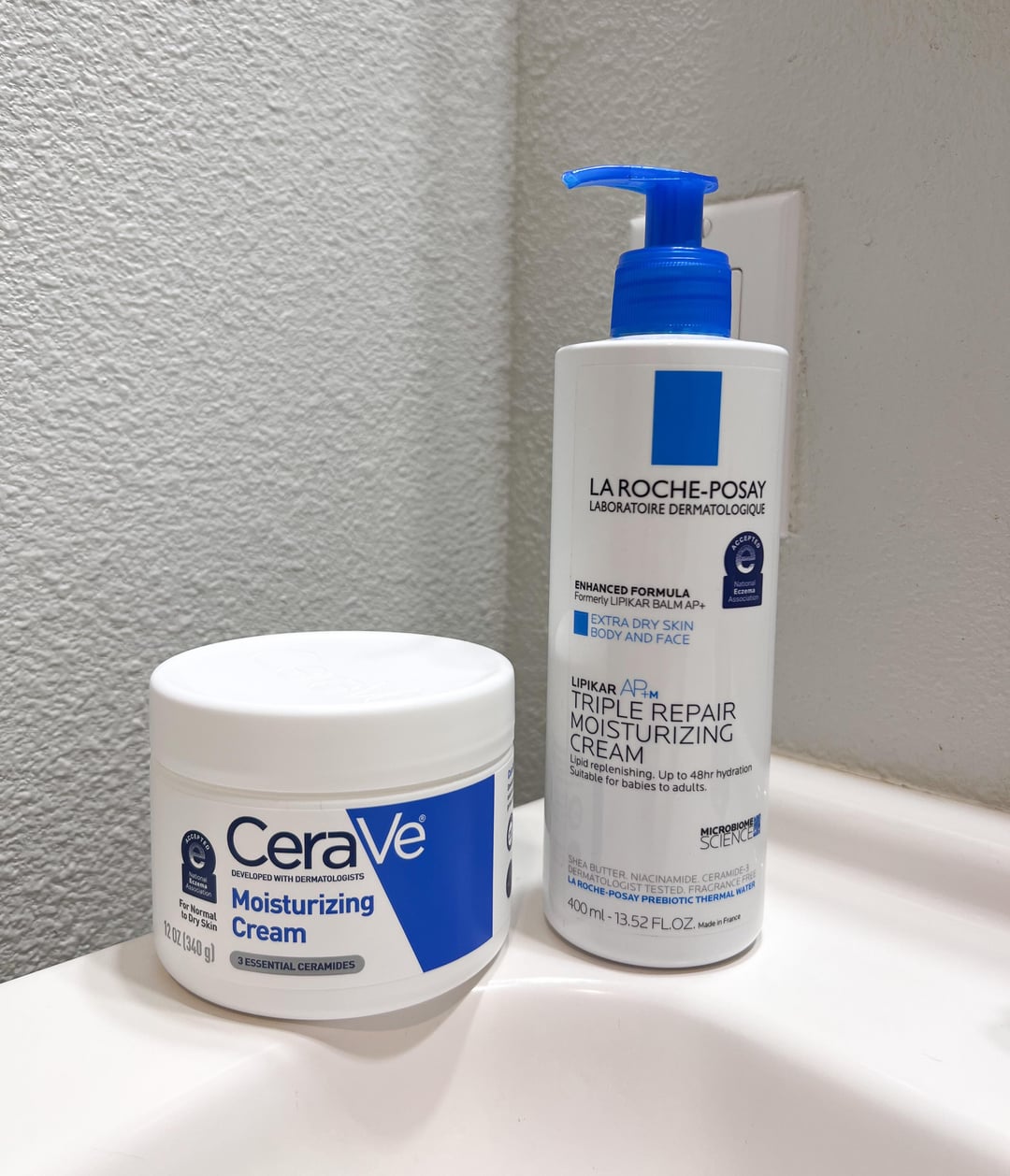
    CeraVe Moisturizing Cream – around $19 for 19 oz. The closest direct competitor to Lipikar Baume AP+M for body use. CeraVe has the ceramide-niacinamide story and a larger tub for less money per ounce. On undamaged plus-size body skin, CeraVe is a fine and more affordable pick. Where Lipikar pulls ahead is on actively irritated skin – the post-chafe rash, the eczema-prone patches, the inner-thigh hyperpigmentation. CeraVe maintains. Lipikar repairs. For most plus-size readers, the honest answer is to own both – CeraVe Moisturizing Cream at Target for daily all-over body lotion and Lipikar for the trouble zones.

    Cetaphil Moisturizing Cream – around $14 for 16 oz. The petrolatum-and-dimethicone occlusive picks up where ceramide creams stop. For overnight sealing on a thigh-chafe rash or an eczema flare, Cetaphil’s heavier base is what I would actually reach for if I did not have Lipikar in the cabinet. The downsides are that it is greasier on application and sleeps weirder against cotton sheets. For dry winter body skin on plus-size readers who run cold, Cetaphil Moisturizing Cream at Amazon earns its place. It is not a Lipikar replacement, it is a Lipikar partner.

    CeraVe SA Smoothing Cream – around $16 for 8 oz. The closest dupe for KP treatment, and a real alternative to Lipikar Baume for keratosis pilaris specifically. The salicylic acid in CeraVe SA is doing the chemical exfoliation that Lipikar’s lower-percentage niacinamide cannot match. For upper-arm KP, my honest pattern is to use CeraVe SA twice a week and Lipikar daily, rather than treating them as one-or-the-other. If you are picking one, and your KP is the main concern, CeraVe SA wins. If your main concern is post-chafe hyperpigmentation and barrier repair, Lipikar wins.

    Who should buy it

    Who should buy it

    Buy Lipikar Baume AP+M if you have inner-thigh chafing, post-friction hyperpigmentation, dry patches under your bra band, eczema-prone body skin, or any of the body-skin concerns that show up more on plus-size bodies and get less coverage in mainstream skincare media. Buy Effaclar Duo if you have body acne on your back or chest and you have not had luck with body washes alone. Buy Anthelios Melt-In Milk SPF 60 if you have deep skin and you are tired of body sunscreens that leave a white cast or pill against fabric.

    Skip Toleriane Hydrating Cleanser if your face skin is currently healthy and tolerant – Cetaphil will do the same job for less. Skip the facial Anthelios products if you have NC42-and-deeper skin until you can swatch them in person, because the white cast is real on the facial formulas in a way that the body milk version is not. Skip the whole brand if your barrier is fragrance-reactive and you are not willing to stay in the Toleriane subset of the line.

    Where to buy and current pricing

    Where to buy and current pricing

    La Roche-Posay is sold across the major mass and prestige retailers in the US, and the pricing is consistent across them. The Lipikar Baume AP+M 13.5 oz runs about $20 at Amazon , with Prime shipping when you need it fast, and the same price at Target if you are doing a Target run anyway. Ulta carries the full skincare line and has loyalty-points value if you are already a member – Effaclar Duo at Ulta is the easiest pickup if you also want to look at the rest of the brand’s range. Sephora has a smaller selection but the 60-day return window is the most forgiving if you are not sure the product will work for you.

    Frequently asked questions

    Does La Roche-Posay test on animals?

    The brand is owned by L’Oreal, which has historically tested on animals where required by certain markets like mainland China. La Roche-Posay states it does not test on animals where it can avoid doing so, but the parent company’s policies do not make this a fully cruelty-free brand by the standards most consumers use. If cruelty-free certification is required for your purchase, look elsewhere.

    Will Lipikar Baume AP+M help with strawberry skin on legs?

    Partially. Strawberry skin is usually a combination of keratosis pilaris and post-shave irritation, and Lipikar helps with the irritation and barrier piece but does not provide the chemical exfoliation that KP responds to. Stack it with CeraVe SA Smoothing Cream or AmLactin twice a week for the exfoliation, and Lipikar daily for the moisture and barrier repair. The combination works better than either alone.

    Is Effaclar Duo safe to use on a plus-size body during pregnancy?

    The 5.5 percent benzoyl peroxide is generally considered safe topically during pregnancy in small amounts, but most OBs recommend asking before adding any acne active. If you need a pregnancy-friendly body acne option, ask your doctor and consider sulfur-based or azelaic acid products instead until you have clearance.

    What is the difference between Lipikar Baume AP+M and the original Lipikar Baume?

    The AP+M is the newer formulation with added niacinamide and is positioned for atopic-prone skin. The original Lipikar Baume (now harder to find in the US) had a simpler ingredient deck. For plus-size body concerns – chafing rash, post-friction hyperpigmentation, eczema-prone patches – the AP+M is the version to buy. The niacinamide is doing real work on the discoloration.

    Final verdict

    Final verdict

    Worth the spend on the body side, choose carefully on the face side. The Lipikar Baume AP+M is the single strongest plus-size-specific pick in the brand and one of the better body care products on the US market for under $25. The Effaclar Duo earns its hype on body acne. The Anthelios Melt-In Milk SPF 60 deserves its reputation on deep skin. The face products are competent but not the reason to buy the brand. The Toleriane Hydrating Cleanser can be matched by any $9 drugstore cleanser; a second tube of Lipikar, one for the bathroom and one for the gym bag, is the smarter use of that money. Pull up your skincare cabinet, scan it for the body products you actually finish versus the face products you abandon, and let that be the buy-list. Start with [LINK:https://www.amazon.com/s?k=la+roche+posay+lipikar+baume+apm+13.52oz&tag=sidomex-20] Lipikar Baume AP+M on Amazon [/LINK] , give it a real two weeks on the actual trouble zones, and decide from there.

  • The Most Flattering Swimsuit Cuts for Every Body – According to a Swim Designer

    The Most Flattering Swimsuit Cuts for Every Body – According to a Swim Designer

    Renée Hill was pinning a navy one-piece on a size 16 mannequin in her Brooklyn studio when she said the sentence I came in hoping she would say. It was a Tuesday in April 2026, the kind of New York morning where the radiators were still hissing even though the magnolias on her block had started to open. Renée has been patterning swimwear for fourteen years – Land’s End, then a stretch at a boutique label out of Los Angeles, then Andie Swim, and now a consulting roster that includes Andie and Summersalt and a handful of smaller labels she would not let me name. She had been talking through the back seam of the suit she was pinning when she stopped, held the pin between her teeth, and said it through her teeth: “The suit you reach for is not the suit your body needs. It’s the suit the marketing told you you should want.”

    The pin she put in next is this article. She moved it three quarters of an inch toward the side seam, which dropped the leg opening and lengthened the line from hip to ankle by almost two inches of visual length on the mannequin. It was a small adjustment that completely changed how the suit read. That, she told me, is what flattering actually means in a pattern room. It is not about hiding anything. It is about where the structural lines of a garment meet the structural lines of a body, and whether those two sets of lines are arguing with each other or working together. I spent the next three hours watching her demonstrate this on suit after suit, and what follows is the framework she uses to talk about swim with the women who fit her samples. None of it sounds like the language you will find on a brand’s website. All of it is more useful.

    The Designer Perspective: Renée’s Three Structural Rules

    swim designer studio pattern mannequin Brooklyn working

    Renée works in rules rather than recommendations because she has fit more than a thousand bodies in her career and she has noticed that the same three principles do almost all of the work. The first rule is the one most women have heard in some watered-down form. A vertical line on a garment lengthens the body it sits on. A horizontal line shortens it. This is why a deep V-neck reads as elongating and a bandeau reads as compressing, but Renée is careful to point out that neither effect is inherently desirable. A short-torso body sometimes wants a horizontal line at the bust to break up a long vertical run. A long-torso body sometimes wants a horizontal color block at the hip to interrupt the same. Vertical and horizontal are tools, not virtues.

    Swim designer Renée Hill pinning a navy one-piece on a dress form in a sunlit Brooklyn studio, pattern paper and fabric swatches on the worktable behind her

    The second rule is about the leg. A high-leg cut, where the leg opening rises toward the hip bone, visually elongates the leg by extending the line of the thigh upward into the torso. A boy-short cut, where the leg opening sits flat across the upper thigh, visually shortens it by cutting the leg horizontally at its widest point. Renée said this is the rule that most surprises women in her fittings, because the marketing of boy-shorts has historically been built around the idea that they “cover more” and are therefore safer. They cover more, she said, but they almost always shorten the line. If you have short legs and you love the coverage of a boy-short, the answer is to find a boy-short with a leg opening that sits high on the thigh rather than flat across it. The seam line is doing more work than the fabric.

    The third rule is the one Renée said she rarely sees written down anywhere. The surface tension of the fabric across your widest point either reveals or obscures, and both can be flattering depending on what you actually want. A textured rib that sits flat against the body reveals the shape underneath it. A draped knit that floats over the body obscures it. Neither is more flattering than the other in the abstract. The question is whether you are dressing to show your shape or to suggest it. Renée said the version of this conversation that the swim industry usually has is dishonest because it presents the obscuring choice as automatically better, as if revealing the actual shape of your body were a problem that needed solving. It is not. It is a choice. And the women in her fittings who learn to make it as a choice rather than a default end up loving their suits more.

    Forget Pear and Apple: The Language a Designer Actually Uses

    swim designer studio pattern mannequin Brooklyn working

    The fruit metaphors get on Renée’s nerves, and they get on mine too. She does not think of bodies as pears or apples or hourglasses because that vocabulary is descriptive of an outline rather than a structure, and you cannot fit a structure to an outline. What she thinks about instead are a handful of structural variables that change which cuts will work. Is your bust high on the rib cage or low on it. Is your hip bone wide and high or narrow and low. Is your torso long from underarm to hip bone, or short. Are your shoulders broad relative to your hips, or narrow. Where does your natural waist actually fall, high or low on your torso. The same dress size can produce wildly different combinations of those variables, which is why two women who both wear a size 12 can have completely different luck with the same suit.

    Once you know your own combination, the choices stop being a guessing game. Renée walked me through each of the major pairings she sees most often in her fittings, and she gave me the cuts that tend to work for each one and the cuts that tend to fight them. I have organized them the way she organized them on her sketch pad, with the body-type pairing in the heading and the suit-shape logic underneath. None of these are rules in the sense of laws. They are starting points, and the only way to confirm them is to try the suit on and see whether the structural lines are arguing with you or working with you.

    The High-Bust, Low-Hip Body

    Andie Sicily one-piece swimsuit underwire plus-size model

    This is the combination where the bust sits relatively high on the rib cage and the widest point of the hip sits low, closer to the upper thigh than to the hip bone. Renée said this body almost always wants a one-piece with a V-neck top to draw the eye vertically through the high-bust, and a high-leg cut to visually pull the low-hip mass upward into the torso. A square neckline can also work because it creates a horizontal shoulder line that balances against the lower hip. The bandeau, she said, is almost always a mistake without serious internal support, because it removes the vertical line at the top of the suit precisely where the body could use one.

    Side-by-side comparison sketches of a high-bust low-hip figure in a V-neck one-piece with high-leg cut versus a bandeau with boy-short, drawn in pencil on pattern paper

    What she will not tell you to do is default to ruching at the waist, which is the suggestion every magazine has been recycling for twenty years. Ruching is a texture choice, not a structural one, and it does very little to actually rebalance the proportion of high-bust to low-hip. What rebalances that proportion is the leg line and the neckline working together. If you have this body and you have been buying ruched waist one-pieces because someone told you they would balance you, Renée said, you can stop. Look at the leg cut and the neckline instead.

    The Low-Bust, High-Hip Body

    The reverse combination, where the bust sits lower on the rib cage and the widest point of the hip sits higher, calls for almost the opposite set of structural choices. Renée said this body almost always benefits from underwire support to lift the bust line back up toward its anatomical neutral position, and from a halter or a wide-strap top that creates a strong shoulder line. The wide strap is doing two jobs at once. It is carrying the weight of the bust without digging in, and it is creating a vertical line from the shoulder down through the bust that lengthens the entire upper half of the suit.

    For the bottom, mid-rise is the move. A mid-rise bottom hits at the natural waist rather than below it, which respects the high-hip line instead of trying to flatten it. Bottoms that sit below the waist on a high-hip body create a horizontal line right at the widest point, which is exactly the situation Renée’s first rule warns against. A deep scoop back also tends to work well on this combination because it draws the eye to a vertical line on the back of the body, which is a quieter version of the elongating logic the front of the suit is already doing.

    The Long Torso

    A long torso is the distance from underarm to hip bone, measured against the leg, and a long-torso body is one where that distance is proportionally greater than the leg length. Renée said the structural goal here is to break up the vertical run of the torso with a horizontal element so the suit does not read as one long stretch of fabric from chest to crotch. A high-waist bottom with a structured top is her favorite combination because it creates a clear horizontal break at the natural waist, which visually shortens the torso and lengthens the leg below it.

    Color-blocking that horizontally segments the suit can do the same work as a high-waist bottom. A one-piece with a contrasting band at the waist, or a tankini that visually splits the torso at the natural waist line, both create the horizontal break the long torso wants. What she would tell you to avoid is super-low-rise bottoms, which extend the torso visually even further by pulling the waistline down toward the hip. The long-torso body is the one combination where Renée said she would actively push back against the high-leg cut as a default, because it can extend the leg in a way that exaggerates the torso-to-leg ratio rather than balancing it.

    The Short Torso

    A short torso wants the opposite set of choices, and Renée said this is the body type that most often suffers from generic styling advice because so much of the standard guidance assumes a longer torso as the baseline. Vertical seaming on a one-piece is her first recommendation because it lengthens the torso without adding a horizontal break. A V-neck or a deep scoop neckline does the same work at the chest. The goal is to give the eye a long vertical line to travel before it hits any horizontal interruption.

    Three swimsuit silhouettes hanging in a brightly lit design studio: a high-waist bikini, a vertically seamed one-piece, and a halter tank, with measuring tape draped across the rack

    For the bottom, low-rise with a leg-elongating cut is the move. Low-rise here does not mean sitting on the hip bones, which is rarely flattering on any body. It means sitting just below the natural waist rather than above it, which preserves the visual length of the torso. Paired with a high-leg cut, the bottom extends the leg upward and gives the suit a long, continuous vertical run from the chest down through the thigh. Renée said the short-torso body is the one where she will almost always recommend a two-piece over a one-piece, because the natural break between top and bottom is easier to manage in two pieces than to engineer into one.

    The Broad-Shoulder Body

    Broad shoulders relative to the hips create a top-heavy structural line that most swim designs are not built to balance, because the industry has historically designed for an hourglass default. Renée said the halter is the broad-shoulder body’s best friend because the halter strap converges the shoulder line toward the center of the chest, which narrows the visual width of the shoulder. A racer-back works for the same reason. Both pull the structural line of the strap inward, away from the outer edge of the shoulder.

    An off-shoulder neckline can also work, but only if it is balanced by some volume at the bottom. A ruffle on the hip, a skirted bottom, or a high-waist bottom with a slightly relaxed cut can all create the lower-body visual weight that lets the off-shoulder top read as deliberate rather than top-heavy. What Renée said to avoid is a wide-set strap with no visual relief at the bottom, because that combination amplifies the broad-shoulder line instead of balancing it.

    The Narrow-Shoulder Body

    Narrow shoulders want the opposite. The goal is to widen the visual shoulder line so the upper body reads in proportion with the hip. A statement strap, a ruffle cap sleeve, a square neckline, or a gentle horizontal line at the neckline all do this work. The square neckline is Renée’s favorite because it is the cleanest of the four and it creates a horizontal shoulder line without adding any fussy detailing. A ruffle cap sleeve adds the same width with a softer, more romantic visual texture.

    The narrow-shoulder body is also one where Renée said the bandeau can actually work, despite the warning she gave on the high-bust body. Without the high-bust complication, a bandeau on a narrow-shoulder body creates exactly the horizontal line at the top that the body wants. The bandeau is not inherently bad. It just has a narrow application, and the marketing has oversold it for everyone.

    The Plus-Size Design Conversation

    Universal Standard Carnival swimsuit size 22 model confident

    I asked Renée about plus-size design specifically because the language around it has historically been the worst offender of the entire industry, and she has spent the last decade consulting with brands that are trying to do it better. She was emphatic on a few points. Underwire is non-negotiable for D-cup and above, and any brand selling a wireless suit above a D cup as adequate support is selling marketing copy rather than engineering. Power mesh inside the lining adds compression without the shaping panels that the industry euphemistically calls “tummy control,” which she said is just a smaller and more polite way of saying “make your body smaller.” Power mesh holds the fabric in place against the body so the suit lies smooth. It does not change the shape of the body underneath it, and it does not need to.

    On boy-short cuts, she had a specific caveat that surprised me. Boy-shorts can work for plus-size bodies with short legs, but only when the leg opening sits high on the thigh rather than flat across it. The leg opening is doing more work than the silhouette of the shorts. Universal Standard’s swim line and Eloquii’s swim line, she said, are two of the labels currently doing this engineering right (Universal Standard’s swim range now reaches a 4X equivalent in most styles, and Eloquii grades through size 28). Andie’s plus extension also handles it well in their newer styles. The brands that still default to a flat boy-short leg opening at the upper thigh are not designing for plus-size bodies as a primary user. They are scaling up a smaller pattern, which is a different and lesser thing.

    Five Suits Renée Would Pull for Five Different Bodies in 2026

    I asked Renée to name actual suits from actual brands, on the record, for the women reading this who would rather skip the theory and just be told what to buy. She thought about it for a long minute. The first was the Andie Sicily for a high-bust, low-hip body. The Sicily is a V-neck one-piece with a high-leg cut and a clean torso line, which is the exact combination she had been describing twenty minutes earlier. Andie, which was founded by Melanie Travis in 2017 and built on the premise that suits should be designed for swimming and not for posing, has been one of Renée’s most consistent collaborators precisely because they take fit seriously enough to grade across the size range.

    Flat lay of five different swimsuits on a wooden studio floor: a navy V-neck one-piece, a black high-neck swim tank, a coral plunge bikini, a citrus high-waist two-piece, and a printed underwire one-piece, each tagged with a small handwritten card

    The second was the Summersalt Sidestroke for a long-torso body. The Sidestroke has a high neck and a structured upper that breaks the torso line at the chest, which gives the long torso the horizontal interruption it wants. Summersalt was founded by Lori Coulter in 2017 and built on the premise that compression and support could be designed into the construction rather than added as an afterthought. The third was Cuup’s The Plunge bikini for a low-bust, high-hip body. Cuup’s swim line, an extension of the bra brand that took its fit philosophy seriously, is one of the few labels building plunge tops with the underwire engineering of a proper bra. The Plunge gives the low-bust body the lift and the wide strap it needs without the wide strap reading as utilitarian.

    The fourth was a Universal Standard one-piece with vertical seaming for a short-torso body. Universal Standard, co-founded by Polina Veksler and the late Alexandra Waldman in 2015, has built a swim range that treats size as a starting variable rather than an afterthought, and the vertical seaming with a low-rise bottom gives the short torso the elongating line it wants. The fifth was an Eloquii halter one-piece for a broad-shoulder plus-size body. Eloquii’s swim line, which the brand expanded significantly after their 2018 acquisition by Walmart, has been quietly refining its halter and racer-back constructions for years, and the halter cut in particular gets the shoulder convergence right without sacrificing support.

    The Question to Ask Before You Buy

    Renée said the single best filter she could give anyone shopping for swim in 2026 is this. Does the brand show this suit on a body shaped like mine in their photography. Not just a body in my size, but a body in my shape. If a brand only shows their suits on a tall, narrow-shoulder, long-torso body and you are a short-torso, broad-shoulder body, the suit was almost certainly fit on a body different from yours, and the cut may not translate. The size-inclusive market data from 2024, which Renée pulled up on her laptop while we were talking, showed that the brands grading across a real size range have been the ones investing in shape variety in their photography as well. The two go together. Brands that ignore the second are usually ignoring the first too.

    She also pointed me to the work of Bridget Foley, the former Women’s Wear Daily editor who spent years interviewing pattern-makers and writing about the craft of fit. Foley’s interviews are some of the only journalism that takes pattern-making seriously as a discipline rather than treating it as the invisible plumbing of fashion, and they are the closest thing this industry has to a public record of how the work actually gets done. If you want to understand swim from the inside, Renée said, read Foley first and then read anyone else.

    The Universal Lie

    Here is the argument Renée came back to at the end of our three hours together, the one I had been building toward since she said it the first time. The swim industry sells the word “flattering” as a code for “make yourself look smaller.” A designer who has patterned a thousand bodies sells “flattering” as a code for something else entirely. She sells it as a code for “the suit’s structural lines work with your gravitational lines.” Those are different sentences. The first sentence is about hiding. The second sentence is about fit. A suit that fits your shape, that places its vertical and horizontal lines in conversation with your vertical and horizontal lines, will read as flattering whether you are a size 4 or a size 24, whether your bust is high or low, whether your torso is long or short. A suit that has been engineered to make you look smaller will read as flattering only by the industry’s narrowest and most dishonest definition.

    Renée’s three structural rules are the whole shape of the argument. The vertical line lengthens, the horizontal line shortens, and which one you want depends on your body. The high-leg cut elongates the leg, the boy-short cut shortens it, and which one serves you depends on your leg. The surface tension of the fabric across your widest point reveals or obscures, and both are flattering depending on whether you are dressing to show your shape or to suggest it. That is the entire framework. There is no single suit that is the most flattering for everyone, and any brand that tells you otherwise is selling you the marketing instead of the suit. Find the cut that argues with you the least. Wear it. Swim in it. That is what flattering means in a pattern room, and the pattern room is the only place that gets to decide.

  • Plus-Size Wedding Guest Dresses With Sleeves (Arm Coverage Without Overheating)

    Plus-Size Wedding Guest Dresses With Sleeves (Arm Coverage Without Overheating)

    Plus-size guest in flutter sleeve silk crepe dress at summer cocktail hour with arms relaxed

    I was standing under the elevated subway tracks in Williamsburg in August 2024 – a rooftop wedding, 88 degrees at 6pm, the kind of humidity that wilts a starched collar in eleven minutes. I watched a guest at the bar, size 22, 56 years old, unbutton the cropped cardigan she had brought to “cover her arms” approximately eleven minutes into cocktail hour. She did not take it off. She left it draped over her shoulders like a costume she could not commit to and could not abandon. Three hours later, on the dance floor, the cardigan was still there, soaked through at the back. She kept tugging it down across her upper arms between songs. She left before the band’s second set.

    I have dressed plus-size guests at sixty-plus weddings across eight years of editing fashion. I have heard the same sentence in thirty different voices: “I just want something with sleeves.” What that sentence actually means, almost every time, is “I want to not think about my arms at this wedding and I do not want to overheat.” Those two requests sound contradictory. They are not. Most women in plus-size bodies who want sleeves end up improvising with cover-ups that betray them – cardigans that hold humidity against the body, kimonos that slide off the shoulder during the first slow song, shawls that have to be re-draped every twenty minutes. The improvisation is not the problem. The premise is. Sleeves and ventilation are not opposites. They are an engineering problem with real solutions, and the solutions live in fabric weight, sleeve construction, and the relationship between the two.

    The arm-coverage anxiety – where it actually comes from

    The arm-coverage anxiety - where it actually comes from

    Almost no one wants sleeves for modesty. The women who tell me they want sleeves are not religiously covered, they are not at conservative venues, they are not under a dress code that requires it. The reason is almost always photographs. Specifically, the photographs from the last wedding – the candid shot the photographer caught while she was reaching across the table, the one where her upper arm caught the flash at an angle that read flatter and wider than the mirror at home had ever shown. That photograph lives in her camera roll. She does not want to add to the collection. Sleeves are not a moral question for her, they are an image-management question, and the management has to survive a six-hour event in July or August in a body that runs warmer than a size 8 body for basic surface-area reasons.

    The second source is the lifted-arm problem. A sleeveless dress at size 22 reveals a different amount of upper arm when the arm is at the side than when it is lifted to hug a friend, lift a glass, or take a group photo. The fabric of a sleeveless armhole does not move with the arm – the arm moves out from under it. Sleeves solve this not by hiding the arm but by traveling with it. The right sleeve construction allows the arm to lift, reach, and dance without the dress shifting at the shoulder or the bust seam pulling visibly. The wrong sleeve construction – typically a tight set-in cap on a non-stretch fabric – turns every arm lift into a small physical calculation.

    Fabric versus construction – the difference that decides everything

    Fabric versus construction - the difference that decides everything

    The first lesson I teach in fittings: silk crepe with a flutter sleeve breathes. Polyester jersey with a set-in sleeve does not. Same dress code, same sleeve length in centimeters, completely opposite outcomes on a 90-degree day.

    Fabric weight matters more than fiber content for sleeve dresses in summer, but the two interact. Silk crepe at 14 to 16 momme (the weight measure that actually matters for crepe) breathes because the natural fiber pulls humidity off the skin and releases it into the air. The same crepe in polyester traps the humidity against the body because synthetic fibers do not transfer moisture the way silk and cotton do. A heavier silk – 19 momme – will hold heat. A 14 momme silk crepe in a flutter sleeve construction is genuinely cool to wear at 90 degrees because the fabric itself is light, the fiber breathes, and the sleeve does not seal the armhole.

    Construction matters as much. A flutter sleeve is not just “a short loose sleeve.” It is a sleeve that floats away from the body at the armhole and at the hem of the sleeve, leaving the armpit area open to air. A bell sleeve flares from the elbow but seals the upper arm. A dolman cuts in one piece with the bodice, no shoulder seam at all, which means the underarm has full air circulation but the silhouette reads softer than a set-in sleeve. A cap sleeve covers the deltoid only and stops before the upper arm proper – it provides shoulder coverage and photograph-friendly framing without warming the inner arm where heat actually accumulates. A semi-sheer mesh sleeve covers the arm visually but allows air through the fabric itself.

    The combination is what works. Silk crepe with a flutter sleeve is the gold standard. Polyester crepe with a flutter sleeve is the workable compromise. Polyester jersey with a set-in three-quarter sleeve, no matter how “breathable” the brand marketing claims, will be hot. I have tested this on my own body in real weddings, and I have tested it on twenty other plus-size guests across the last three summer seasons.

    The five sleeve types that actually work in summer

    Five sleeve constructions for summer wedding guest dresses shown side by side on plus-size dress forms

    Flutter sleeve. A short, floaty sleeve that drapes from the shoulder line and falls open at the underside. The signature is the open armhole – the fabric falls away from the inner arm rather than wrapping it. Flutter sleeves work because they provide visual arm coverage from the front view (which is the photograph view) without sealing the armpit area to body heat. They photograph beautifully because the fabric movement adds shape to the upper bust line without padding it.

    Bell sleeve. A sleeve fitted at the shoulder and upper arm that flares from the elbow. The flare gives ventilation at the lower arm and provides a romantic, occasion-feeling silhouette that reads dressier than a flutter. The trade-off is that the upper arm is fully enclosed, so the fabric weight has to be light – bell sleeves in heavy crepe or thick jersey will be hot. In silk crepe or a 95% polyester crepe with 5% spandex at light weight, a bell sleeve handles a summer wedding well if the venue has air movement.

    Butterfly sleeve. Wider and longer than a flutter, a butterfly sleeve drapes from the shoulder past the elbow and creates wing-like fabric movement when the arm lifts. The construction is generous – more fabric than a flutter – which means it covers more arm visually and provides more occasion drama. The same ventilation principle applies because the armhole stays open. Butterfly sleeves photograph extraordinarily well on plus bodies because the fabric scale reads proportionate to the body. They are my single favorite sleeve type for plus-size summer weddings.

    Dolman sleeve. A sleeve cut in one piece with the bodice, with no shoulder seam separating the two. The result is a soft, draped sleeve that falls naturally from the body without the structured set-in shape. Dolmans run cool because the underarm has the full bodice fabric instead of a sealed seam, and the sleeve can range from short (a small cap-like effect) to three-quarter. The challenge with dolmans on plus bodies is that the underarm fabric can pool if the dress is cut without enough taper – look for a dolman with a defined waist or a wrap front to avoid the volume reading as bulk.

    Semi-sheer mesh sleeve. A sleeve constructed from sheer mesh, lace, or fine netting that visually covers the arm while letting air through the fabric itself. Mesh sleeves are the secret weapon for guests who want full-length sleeve coverage at a summer wedding – they read as long-sleeve from across the room but breathe as if there were no sleeve at all. The fabric quality matters enormously here. Cheap polyester mesh in a heavy weave will be hot and will look plasticky. Look for fine net mesh, illusion tulle, or beaded mesh where the construction is fine and the texture has visible openness.

    Ten specific dresses with sleeve construction, fabric, and climate verdict

    Ten plus-size wedding guest dresses with sleeves arranged in editorial flat lay

    The constraint for every dress on this list: it must run to at least size 22, the strongest picks run through 28 to 32, and the sleeve has to do real work in summer or transitional weather.

    1. An Eloquii asymmetric flutter-sleeve maxi – around $165-$210, sized through 28. The sleeve is a true flutter, a single shoulder draping into a floor-length cascade, the other shoulder fully bare. The asymmetry does double duty – it provides arm coverage on one side for the photograph view while keeping ventilation maximal on the other. The fabric is 100% polyester crepe with a polyester slip lining, lightweight at approximately 140 grams per square meter. The hardware is a hidden side zip with no waist seam. Dress code range: cocktail through black-tie optional. Climate verdict: works for indoor air-conditioned receptions and outdoor venues with shade. Avoid full sun ceremonies at 90-plus degrees – the polyester crepe will not breathe the way silk would.

    2. An ASOS Curve twist-front midi with mesh sleeves – around $80-$120, sized through 32. The sleeves are semi-sheer mesh in a fine net weave, full-length to the wrist, set into a sleeveless bodice so the mesh does the visual coverage work without trapping heat at the shoulder. The bodice is 95% polyester, 5% elastane stretch satin with a twist-front detail at the waist. The mesh weight runs light and the weave is open enough that wind moves through it. Hardware is pull-on overhead, no zip. Dress code range: cocktail and semi-formal. Climate verdict: this is the dress for guests who want full arm coverage at a hot wedding. The mesh reads as a complete long sleeve in photographs but breathes like a sleeveless. Avoid black or navy mesh in direct sun – the dark color absorbs heat. Stick to ivory, blush, or sage.

    3. An Anthropologie Maeve plus tiered midi with bell sleeves – around $180-$220, sized through 26W. The sleeves are three-quarter bell, fitted at the shoulder and upper arm and flaring from the elbow into a wide cuff. The construction is set-in but the fabric is lightweight viscose crepe at approximately 110 grams per square meter, which is the lowest fabric weight I would recommend for a bell sleeve in summer. The body is 100% viscose with a fully-lined bodice. Hardware is a hidden back zip with a fabric tie-belt at the waist. Dress code range: cocktail, garden party, semi-formal. Climate verdict: indoor and shaded outdoor weddings only. The viscose breathes well but the bell sleeve seals the upper arm – if you sit between an air-conditioned ceremony and a tented reception, this is your dress. If the entire wedding is outdoor in full sun, choose a flutter instead.

    4. A Lulus Curve flutter-sleeve midi – around $78-$98, sized through 3X. The sleeves are a short flutter, draped from the shoulder and falling to mid-upper-arm with a generous open underside. The fabric is 100% polyester woven crepe with a partial lining at the bust. The price point reflects the polyester construction – this is not silk crepe and will not breathe like one. Hardware is a hidden back zip and a self-tie waist. Dress code range: cocktail, semi-formal, garden party. Climate verdict: workable for indoor receptions and transitional weather, May or September weddings. In peak July or August heat at an outdoor venue, the polyester base will trap humidity even with the flutter sleeve doing ventilation work. Choose lighter colors and budget for a slip layer to prevent cling.

    5. A Torrid Studio crepe-de-chine dolman in their dressier seasonal release – around $130, sized through size 6 (approximately a 28-30). The sleeves are short dolman, cut in one piece with the bodice, no shoulder seam. The fabric is Torrid’s polyester crepe de chine, a lighter-weight crepe at approximately 105 grams per square meter, with a polyester slip lining at the bodice only. Hardware is pull-on overhead with a self-tie waist. Dress code range: cocktail, semi-formal, garden party, beach formal. Climate verdict: this is one of the most heat-friendly plus-size sleeve dresses on the market because the dolman construction leaves the underarm fully ventilated and the crepe de chine is lighter than standard polyester crepe. Indoor or outdoor, this dress holds up in real summer heat. The only caution is the dolman volume at the underarm – size down half a size if you sit between sizes to avoid the fabric pooling.

    6. An Adrianna Papell plus beaded cap-sleeve cocktail – around $180-$230, sized through 24W. The sleeves are cap, beaded mesh covering the deltoid and ending at the shoulder line. The cap construction is the secret to this dress – it provides shoulder coverage for the photograph view without warming the upper arm itself. The body is a polyester crepe slip with hand-applied beaded mesh overlay across the bodice and sleeves. Hardware is a hidden back zip. Dress code range: cocktail through black-tie optional. Climate verdict: indoor receptions year-round, including peak summer weddings in air-conditioned venues. The beaded overlay is heavier than a plain crepe so an outdoor ceremony in full sun will warm this dress quickly. Reserve it for ballroom and indoor banquet venues.

    7. An 11 Honoré silk caftan-style dress – around $300-$500, sizing through 22 or 24.

    11 Honoré’s plus-size luxury collection now sits inside Dia & Co since the April 2024 acquisition, and the caftan and kimono-sleeve silhouettes are where the silk crepe really shows up. Look for the wide kimono dolman cut, sleeves flowing from the shoulder into a generous bell at the elbow with no set-in seam. The fabric to ask for is silk crepe at 14 to 16 momme, fully lined at the bodice with an unlined skirt. This is the silk crepe benchmark for plus-size summer dressing. Hardware on most styles is a hidden side zip with an internal cinch tie at the waist. Dress code range: black-tie optional, cocktail, garden party, semi-formal. Climate verdict: optimal for outdoor summer weddings including full-sun ceremonies. The silk content does breathing work the polyester crepes can’t match. Price reflects the fabric. The cost-per-wear math is favorable if you attend two or more summer weddings a year.

    8. An Aidan Mattox beaded flutter at Saks or Saks OFF 5TH – around $200-$350, sized through 16 or 18.

    Aidan Mattox lives on Saks Fifth Avenue and Saks OFF 5TH and the beaded mesh flutter is one of their signatures. The sleeves to look for are flutter constructed in beaded mesh, layered over a sleeveless silk-blend slip bodice. The mesh extends past the shoulder into a soft flutter that reads as both shoulder coverage and upper arm framing without sealing the arm. Hardware is a hidden back zip. Note Aidan Mattox sizing tops out below true plus on most styles, so check the size run before falling in love. Dress code range: cocktail, black-tie optional, formal. Climate verdict: indoor receptions in peak summer, outdoor receptions in shade. The silk slip handles heat better than full polyester construction. The beaded mesh sleeve provides full visual arm coverage while staying open at the underside.

    9. Universal Standard sleeveless dress with a thrown-on wrap – around $148, sized through 40.

    Universal Standard sizes 00 to 40 across its range, and its Fit Liberty program lets you swap for a new size within a year. The smartest summer move from their catalog isn’t a built-in-sleeve dress at all. It’s their sleeveless square-neck or v-neck silhouette in a lighter-weight stretch fabric paired with a thin silk crepe wrap you bring in your tote. The wrap drapes for the ceremony, slips off for cocktail hour, and never seals heat at the armhole. Hardware is pull-on overhead. Dress code range: cocktail, semi-formal, beach formal, garden party. Climate verdict: the layering choice is what makes this the smartest setup on this list for a guest who’s genuinely worried about overheating. Choose ivory, sage, or rose for hot weddings, save the darker colors for fall.

    10. A TENCEL Lyocell midi or maxi with a butterfly sleeve – the fabric matters more than the brand.

    TENCEL is the dark-horse summer fabric. It breathes like cotton, drapes like silk, and resists wrinkles in a way both don’t. A butterfly sleeve drapes generously from the shoulder past the elbow with no underarm seam closure, so the armhole stays open. At a fabric weight around 100 grams per square meter the cloth itself is genuinely cool. Look at TENCEL or Lyocell-rich pieces from brands with real extended sizing (Anthropologie’s plus assortment, Lane Bryant, Eloquii) rather than reaching for a Reformation extended-size piece, since Reformation’s plus range remains narrow and the wrap and butterfly silhouettes in particular gap badly past a 1X. Dress code range: cocktail, garden party, casual elegant. Climate verdict: outdoor and indoor weddings, full sun or shade. The butterfly sleeve is generous enough to provide real arm coverage in photographs without trapping heat.

    Indoor versus outdoor – the split that changes the dress

    Indoor versus outdoor - the split that changes the dress

    The single most useful question I ask a guest at the start of a fitting: where is the ceremony, and where is the reception? An indoor ceremony followed by an outdoor cocktail hour followed by an indoor reception is a completely different climate problem than an all-outdoor wedding with a tented reception. The dress has to handle the longest stretch outdoors, not the average.

    For all-indoor weddings in air-conditioned venues, fabric weight matters less and sleeve construction can be more enclosed. A bell sleeve in viscose crepe, a beaded cap sleeve in polyester, or a cinched-waist dress with three-quarter sleeves all work because the climate is controlled. Choose the dress code first, the sleeve second.

    For mixed indoor-outdoor weddings, choose the dress based on the outdoor stretch. If cocktail hour is outdoor for 90 minutes, your dress has to be wearable at outdoor temperature without a layer. Silk crepe with flutter, butterfly, or wide kimono sleeves wins this category. Polyester crepe with flutter sleeves is the workable compromise at a lower price.

    For all-outdoor weddings in summer heat, the fabric content has to do the work. Silk crepe, TENCEL, cotton voile, or linen with a flutter, butterfly, dolman, or semi-sheer mesh sleeve are the only constructions I trust. Polyester anything will hold humidity against the body at outdoor temperature. The mesh sleeve construction is the dark horse here – a fine net mesh sleeve over a sleeveless silk or TENCEL bodice provides visual coverage without warming the body.

    What to layer with – and what not to

    What to layer with - and what not to

    The single largest mistake I see plus-size guests make at summer weddings: bringing a cardigan or a kimono as an “insurance layer” for the arms. This is the trap the Brooklyn rooftop guest fell into. Once the cardigan is on, it cannot come off without exposing the arms she is trying to cover, and once it is on outdoors in August, she will overheat. The cover-up becomes a wearable contradiction.

    The fix is to choose a dress with sleeves you trust and to skip the cover-up entirely. If you genuinely need a layering option for an over-air-conditioned ceremony venue, choose a wrap rather than a cardigan. A silk crepe wrap or a fine wool wrap drapes across the shoulders for the ceremony and slips off easily for cocktail hour without leaving you with bare arms – because the dress you chose already covers the arms.

    A second mistake: a sheer mesh bolero or capelet over a sleeveless dress. The bolero adds a layer at the shoulder, where heat collects, without doing real visual coverage work because mesh boleros tend to bunch and shift at the upper back across the night. They photograph awkwardly because the bolero creates a horizontal line across the chest that flattens the natural diagonal of the bodice. If you want mesh sleeves, buy a dress with mesh sleeves built in. The construction will be cleaner and the fit will be more reliable.

    What does work: a long silk crepe scarf in a complementary color, kept in a clutch and draped only if a venue is unexpectedly cold. A pashmina works for fall transitional weddings, never for summer. Statement earrings that draw the eye up to the face rather than across to the arms. Hair worn down or to one side rather than fully up – hair frames the upper body and softens the visual arm line in photographs in a way an updo cannot.

    The argument the cardigan misses

    The argument the cardigan misses

    The guest under the elevated tracks in August had brought the cardigan because she had been taught that “covering your arms” was about modesty or about hiding. It is not. The right sleeve is not a cover-up. It is part of the dress. It travels with the arm when you lift your glass, hug your friend at the ceremony exit, or raise both hands during the band’s last set. It does not get warmer the longer the night goes. It does not have to be tugged down or re-draped. It does not require a calculation every time you reach for a canape or wave across the room.

    Covering your arms at a wedding is not a modesty question. It is a comfort question, a photograph question, and a freedom-of-movement question. The right sleeve is the one you forget about three minutes after the ceremony starts. It is short or it is long or it is somewhere in between. It is silk crepe with a flutter that falls open at the underside, or it is TENCEL with a butterfly that drapes past the elbow, or it is a fine mesh that reads as full coverage but breathes like nothing is there. It is the sleeve that does not announce itself, does not require the cardigan, and does not leave at the second set of the band.

  • Plus-Size-Friendly Brand Review: Girly Officewear Brands With Extended Sizes in 2026

    Plus-Size-Friendly Brand Review: Girly Officewear Brands With Extended Sizes in 2026

    Editorial flat lay of girly plus-size officewear from Abercrombie Banana Republic Loft and J.Crew on a marble surface

    The fitting room at the Hudson Yards Banana Republic on a Tuesday lunch break is one of the few places left in midtown where the question I came to ask actually has a real answer. The question is whether the brand’s “Curvy” line is pattern-engineered or just graded up. I had thirty-eight minutes between a 12:15 editor meeting on the High Line and a 1:30 call back at the office, the Sloan pant in the standard 18 long folded over one forearm, the Sloan Curvy in the same nominal size folded over the other, and I needed to know if the difference was real before I told ninety thousand readers it was. I put the standard 18 on first. It pulled at the upper thigh, gaped a full inch at the back waistband, and sat too low on the front rise to hold a tucked silk blouse. Then I put the Curvy 18 on. The hip curve was different. Not graded outward in even increments, actually shaped, with the side seam landing where my hip ends rather than two inches outboard of it. The back waist closed without a gap. I bought the pant and walked back to the office wearing it.

    I had the same moment with the Abercrombie Curve Love pattern earlier in the year, the one where you put on a pair of denim that is engineered with a different rise-to-hip ratio than the brand’s straight-size cut, and you feel the front waistband sit flat against your stomach for the first time in a year of trying jeans at this price tier. Curve Love is not a marketing word. The pattern is genuinely different at the hip, not just larger. That was the moment I started building this piece, because the broader story across plus-size officewear in 2026 is that two or three brands have done the real engineering work on the girly side of the catalog – the bow-front blouses, the silk shells, the pencil skirts, the puff-sleeve dresses, the soft femininity that the quiet-luxury era pushed out of the office and the post-quiet-luxury era is bringing back – and two or three other brands are still grading up a size 4 sample and hoping the bow at the neckline distracts you from the shoulder seam being in the wrong place. This is the editor’s read on which is which, at size 18 through 22, with real prices, real fabric content, and the specific SKUs I have on my own body as I write this.

    The “girly officewear” return and why this review exists now

    Quiet luxury is over. The aesthetic that ruled offices from roughly 2022 through 2024 – cream cashmere, beige trousers, the absence of decoration as a status signal – has receded into the same archive as the millennial pink moment of 2017. What replaced it on the runway and in the corporate stylist’s Pinterest boards is a return to overt femininity at work: bows at the neckline, ruffles down the placket, pencil skirts cut to the knee or just past it, silk and silk-blend blouses with real shine, puff sleeves, kitten heels, ballet flats that are not the loafer. The trade press has been calling it “office siren” since late 2024, and Allison Bornstein’s three-word style method, which spread on TikTok at the end of 2023 and has been written up everywhere from goop to Vogue, is the framework most working stylists are using to articulate it. Polished, soft, deliberate. That’s the brief.

    The plus-size shopper has been mostly locked out of this aesthetic for the entire history of corporate dress. Bow blouses don’t get cut for a size 22 chest. Pencil skirts don’t get graded for a size 22 hip without losing the seamed shape that makes them pencil skirts. Silk blends at the office price tier – $90 to $140 – don’t extend past a 16 at most legacy brands. What changed in the last twenty-four months is that three specific brands quietly built real plus-size programs in this exact silhouette, and a couple more are making noise without doing the engineering. The three that are worth your money: Abercrombie, Banana Republic, and Loft. I spent over a thousand dollars of my own card across the brands in this review, tested 11 SKUs at size 18, 20, and 22 depending on the cut, and what follows is the receipts.

    Abercrombie Curve Love: the pattern engineering story

    The Abercrombie turnaround is the single most surprising retail story of the last three years and the engine that drives the Curve Love program. Fran Horowitz took over as CEO in 2017 when the company was bleeding mall traffic and known mostly as a punchline. By 2024 the brand had posted multiple consecutive quarters of double-digit growth, the stock was up dramatically over two years, and the average customer was no longer a 16-year-old at a suburban mall but a 30-something woman buying workwear and going-out clothes on her own credit card. Horowitz has been explicit on earnings calls that Curve Love is one of the structural choices that drove the turnaround, and the company has said Curve Love accounts for close to half its women’s denim business. The premise: a separate pattern, not a grade-up, engineered for the woman whose hip-to-waist difference is greater than ten inches. In the brand’s own language, more room in the hip and thigh, no gap at the back waist, the rise calibrated for a real curve.

    Abercrombie Curve Love High Rise Tailored Pant on a size 22 body shot from the front

    The Abercrombie Curve Love High-Rise Tailored Pant at $89 in the brand’s 2026 spring catalog is the workwear translation of the Curve Love denim pattern. The fabric is a 64 percent polyester, 32 percent viscose, 4 percent elastane suiting cloth with real recovery and a matte finish that reads as more expensive than the price. I tested the size 18 long in black. The waistband sat flat against my lower back without the back-waist gap that defines most plus-size suiting trousers. The front rise is high enough to hold a tucked silk blouse without rolling. The thigh has actual room – the Curve Love pattern adds about an inch and a half through the upper thigh compared to the straight-size tailored pant, which is the difference between a horizontal pulling line across the thigh and a flat front. The leg breaks at the ankle without pooling on the floor. This is the trouser I would put against any $200 work pant from a department-store brand, and the only reason it costs $89 is that Abercrombie does its own manufacturing rather than going through the legacy plus-size markup chain.

    Abercrombie Curve Love bow front mini dress in black on a size 20 body for office to evening

    The Abercrombie Curve Love Mini Dress with the Bow Front at $110 is the piece that closed the case for me on this brand’s commitment to the girly officewear program. It is a fitted, lined, structured-knit dress with a sweetheart neckline crossed by a centered grosgrain bow at the bust line, ending at mid-thigh on a 5’6″ frame. I am wary of bow detailing on plus-size pieces because the bow is usually a sticker – applied flat to a body whose proportions did not get re-cut to carry it. The Curve Love bow front is anchored into the pattern. The bust dart sits where my actual bust ends, not two inches lower. The side seam runs through the natural curve of the waist into the hip rather than along the side of a graded-up rectangle. I wear it as office-to-after-work, blazer over the top for the meeting, blazer off for the dinner, no other change required. The size 20 fit me with about a half-inch of ease through the bust and zero pulling across the hip.

    Abercrombie Plus Sloane Trouser in beige on a plus size body with a cream silk blouse

    The third Abercrombie piece worth naming is the Abercrombie Plus Sloane Trouser at $99, which sits inside the broader Abercrombie Plus catalog rather than the Curve Love sub-line. The Sloane is a wide-leg, high-rise, pleat-front trouser with a fluid drape, cut in a heavier 78 percent polyester, 22 percent viscose blend that holds the pleat through a full day of wear. The size 20 long in stone fit me cleanly. The pleat opens correctly at the front rather than gaping, which is the test most plus-size pleat-front trousers fail. The wide leg gives the pencil-skirt silhouette a relief option on days I do not want a fitted bottom. Paired with a silk blouse and a kitten heel, the Sloane is the un-frumpy answer to the question of how to wear a wide-leg pant to a corporate office at size 20.

    Banana Republic Curvy: the Sloan trio that actually works

    Banana Republic was the brand I expected to be a disappointment going into this review and the one that genuinely surprised me. Sandra Stangl ran Banana Republic as president and CEO from late 2020 until her exit in early 2024, and her tenure was the window in which the brand pivoted hard away from the casual-mall-suiting identity toward something more elevated. The brand has continued the plus-size push under new leadership, and the Curvy assortment has expanded over the past couple of seasons from a denim-led pilot into a real catalog of suiting, blouses, and dresses. What separates Banana’s Curvy from the historical pattern of “extended” lines is that the brand built a separate fit block for the curvy range rather than grading up the straight-size sample.

    Banana Republic Curvy Sloan Skirt in black pencil silhouette on a size 22 body

    The Banana Republic Curvy Sloan Skirt at $109 is the pencil skirt I had given up trying to find at this price tier. The cut is a high-rise, knee-grazing, slim-through-the-hip skirt with a back vent and a centered back zip, in a heavyweight bi-stretch suiting blend that holds its shape. I tested the size 18 in black. The hip curve is the key. The Curvy pattern places the widest point of the skirt at the natural fullness of my hip rather than two inches below it, which is the geometry that makes most plus-size pencil skirts read as a tube rather than a curve. The skirt sits at the high waist, holds a silk blouse tuck, and the back vent stays closed when I walk – the failure point on most graded-up pencil skirts at this size, where the vent splits open at the slightest stride. Paired with the Eda silk blouse below, this is the foundation of the office-girly capsule.

    Banana Republic Curvy Sloan Pant in navy on a plus size frame with silk blouse and pumps

    The Banana Republic Curvy Sloan Pant at $119 is the pant counterpart to the skirt, cut from the same fit block in a slim-straight leg with a slight ankle break. The size 18 long in navy fit me with zero alteration. The same waistband logic as the skirt: high rise, no back-waist gap, the closure sitting flat against the lower back. The leg taper does the work the J.Crew Cecile (covered below) failed to do, which is to scale the thigh circumference proportionally to the calf for a body where those two measurements do not move together. The pant pairs with the same blouse rotation as the skirt, and the two together give you the matched-set Sloan look that has been the brand’s quiet-luxury-era hero outfit, now available at size 22.
    The Eda silk blouse and the reality of office-feminine fabric

    Banana Republic Eda Silk Blouse Curvy in ivory with bow tied at the neckline

    The Banana Republic Eda Silk Blouse (Curvy) at $150 is the piece that sets the brand apart from every other plus-size catalog in this aesthetic. The blouse is cut in a 100 percent washable silk twill, with a centered tie-neck that you can wear as a bow at the collar or untied as a long drape down the placket. It is fitted through the bust and waist with French darts, finished with a curved hem that stays tucked. The size 18 fit me with no bust gape, which is the single most common failure point of plus-size silk blouses across the entire market. The placket buttons are sewn at a tighter spacing than the straight-size version, which is one of those details that signals real pattern work rather than marketing – more buttons closer together means no horizontal pulling between the bust buttons when you raise your arms.

    The fabric-cost honesty is worth naming. A 100 percent silk blouse at $150 in 2026 is a real price for real fabric. The legacy plus-size brands at this price tier sell a polyester-charmeuse blouse and call it “silk-feel” or “silky” – words that exist specifically to let the brand charge a silk price for a polyester blouse. Eda is silk. The hand of the fabric reads differently against the skin, drapes differently under a blazer, and holds a tuck differently into a Sloan skirt. If you are building one girly officewear blouse to anchor a capsule, this is the one.

    Loft Plus: the bow-neck blouse story and where the brand sits in 2026

    Loft Plus bow neck blouse in blush pink on a plus size body with pencil skirt

    Loft sits in a different price tier from the three brands above, and the Loft Plus program reflects it. The catalog at the lower price point is broader in number of SKUs but narrower in the fit-engineering investment. What Loft Plus does genuinely well is the bow-neck blouse category, where the brand has built a small but reliable subset of pieces in poly-blend and rayon-blend fabrics that hit the office-girly aesthetic at a $69 to $89 price tier. The Loft Plus Bow-Neck Blouse at $79 in the brand’s 2026 spring catalog is the workhorse. Cut in a 95 percent rayon, 5 percent spandex woven, with a tie-neck that wears as a bow at the collar, the blouse fits the size 22 with about an inch of ease through the bust and a curved hem that tucks. The fabric is not silk and does not pretend to be. It is a smooth rayon that wears well, washes at home, and holds color through two seasons of wear without the pilling that plagued the brand’s old polyester offerings.

    Where Loft Plus falls short is the bottoms. The plus-size pant and skirt catalog is a grade-up program, and the fit failure points are visible at size 22 – the same back-waist gap, the same thigh-to-calf taper mismatch. If you are shopping Loft Plus, build the wardrobe around the blouses and pair them with Sloan trousers and skirts from Banana or Curve Love tailored pants from Abercrombie. The combined-brand capsule is the move.

    J.Crew Cecile and Madewell Extended: where the legacy brands still struggle

    J.Crew Cecile pant detail at the front rise on a size 22 body showing pocket gape

    The J.Crew Cecile Pant at $128 in the brand’s 2026 extended-sizes catalog is the canonical example of the grade-up problem. The Cecile is a mid-rise, slim-through-the-thigh, ankle-crop trouser in stretch cotton sateen, available through size 24. The straight-size version of this pant is genuinely good, which is part of what makes the extended version frustrating. The size 22 sample I tested for this review had the three documented failure modes of a grade-up rather than a re-engineered pattern. The front rise sits an inch and a half lower than the equivalent Banana Curvy Sloan, which means the front pocket gapes open every time I sit down. The thigh-to-knee taper is aggressive enough that the pant pulls horizontally across the upper thigh and hangs loose at the ankle, producing the silhouette opposite of slim. The waistband uses a curved arc designed for the straight-size body and grades up without re-curving for the plus range, which gaps at the center back.
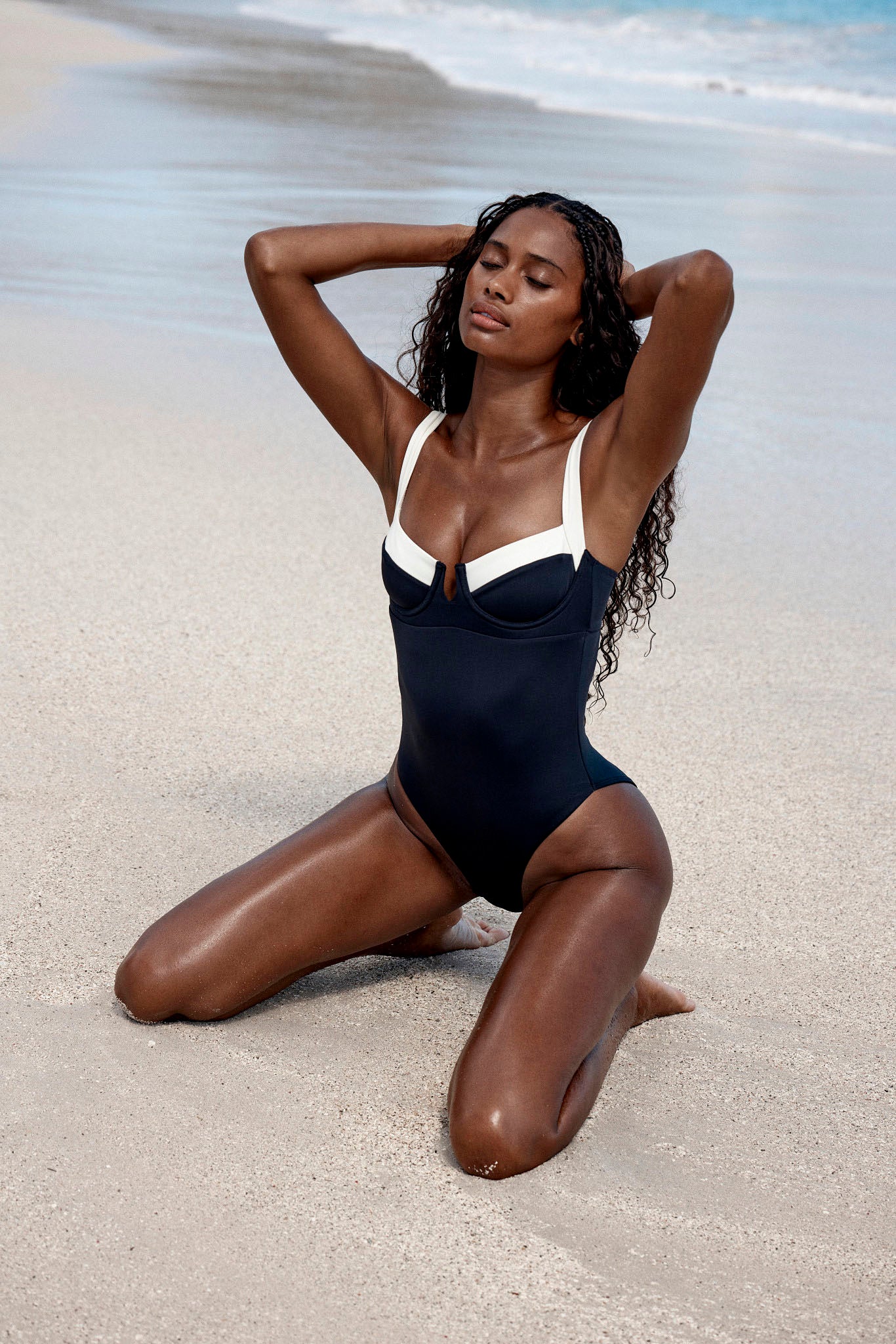
    Madewell Plus is the sister brand under the same parent and has a similar problem in a slightly different silhouette. The Madewell extended program launched in 2022, scaled back in 2024 after a margin review, and now offers a narrow catalog of denim and a few knits to size 24. The fit logic is the same as J.Crew Cecile: a sample-size grade-up rather than a re-engineered fit block. The fabric is good. The brand identity is consistent. The size 22 fit is the same compromise that has defined legacy mall-brand plus extensions for fifteen years. If you wear a 16 or 18 and your proportions read close to the straight-size fit model, both brands can work. At size 20 through 24, both are spending money on alteration costs that the better-engineered competitors above do not require.

    Bow-front mini dress versus pencil-skirt-and-blouse: the silhouette decision

    Side by side comparison of plus size bow front mini dress and pencil skirt blouse office looks

    The girly officewear aesthetic at plus size resolves into two reliable silhouettes, and which one you build around depends on your body geometry more than your taste. The bow-front mini dress, with the Abercrombie Curve Love version as the reference SKU, works best on a body where the bust and hip measurements are close enough that a fitted column reads as proportional. The pencil skirt plus silk blouse, with the Banana Curvy Sloan and Eda silk reference SKUs, works on a body where the bust-to-hip ratio diverges and the seam break at the waist is the structural moment that creates the silhouette. I am a hip-heavy size 22 with a bust about three inches narrower than my widest hip point, which means the dress-as-single-piece silhouette pulls at the hip when the dress fits the bust, and the skirt-and-blouse silhouette lets me size the two halves to their actual measurements. If you carry weight more in the upper body, the dress will read more proportional than the two-piece. Both silhouettes have a place in the capsule; one will be your everyday and one will be your meeting-day or evening pivot.

    The shoes that anchor both silhouettes are kitten heels in a closed-toe pump shape or ballet flats with a real arch and a leather sole. The bag is a structured top-handle in saddle leather, not a slouchy hobo. The jewelry is a single pearl strand or a pair of small gold drop earrings. Bornstein’s three-word method applied to this aesthetic gives you something close to “polished, feminine, deliberate,” and the styling math from there is to make every piece pull its weight against those three words. The plus-size shopper has been told for fifteen years that this look isn’t available in her size. In 2026 it is, if you know where to buy.

    Size 22 specific fit notes across all four brands

    Because the size 22 body sits at the upper end of every extended program in this review, the fit math at that exact size deserves its own paragraph per brand. Abercrombie Curve Love runs true to its own size chart at 22, which means a 22 corresponds roughly to a 39-to-40-inch waist and a 49-to-50-inch hip. The Curve Love tailored pant at 22 long fit me with no alteration at that measurement. The bow-front mini dress at 22 had about a half-inch of ease through the bust and zero pulling at the hip.

    Banana Republic Curvy at size 22 corresponds to a 38-to-39-inch waist and a 49-inch hip. The Sloan skirt and pant at 22 long fit cleanly without alteration. The Eda silk blouse at 22 had no bust gape and a curved hem that held a tuck. Banana runs slightly smaller than Abercrombie at the nominal-size-22 mark, which is something to factor in if you are between brands.

    Loft Plus at size 22 runs true to its published chart, which sits closer to Abercrombie than to Banana. The bow-neck blouse at 22 fit with about an inch of ease through the bust, which reads as the brand’s intentional drape rather than a fit miss. The Loft Plus bottoms at 22 were the grade-up failure points named above.

    J.Crew at size 22 in the extended program corresponds to a 40-inch waist and a 50-inch hip on the published chart, but the actual garment ran small at every test point I measured. The Cecile pant at 22 was tight through the thigh, gapped at the back waist, and short in the front rise. J.Crew shoppers at size 22 should size up to 24 in this brand for any fitted silhouette, and even then the fit is a compromise.

    The verdict and the wardrobe build

    Editorial flat lay of the full girly officewear capsule blouse skirt pant dress and accessories

    The buyer’s verdict across the four brands is that Abercrombie Curve Love and Banana Republic Curvy are the two brands a plus-size shopper at size 18 through 22 should anchor a girly officewear wardrobe around. Loft Plus is the supplemental brand for the bow-neck blouse category at a lower price point. J.Crew and Madewell are the brands to skip at size 20 and above. Universal Standard and Eloquii were not included in this review because their aesthetic sits closer to the quiet-luxury tailored-sportswear tradition than to the bow-front office-feminine program; both are excellent at what they do, and neither is the reference brand for this specific look.

    The wardrobe build I would put on a reader starting from zero with a $600 budget at size 22: the Banana Republic Curvy Sloan Skirt in black at $109, the Banana Republic Eda Silk Blouse in ivory at $150, the Abercrombie Curve Love High-Rise Tailored Pant in black at $89, the Abercrombie Curve Love Bow-Front Mini Dress in black at $110, and two Loft Plus Bow-Neck Blouses in blush and navy at $79 each. Total: $616. Five days of office outfits with a sixth in reserve for the dinner pivot, every piece engineered for a size 22 body rather than graded up from a sample size 4, every fabric content honest, every closure flat against the lower back.
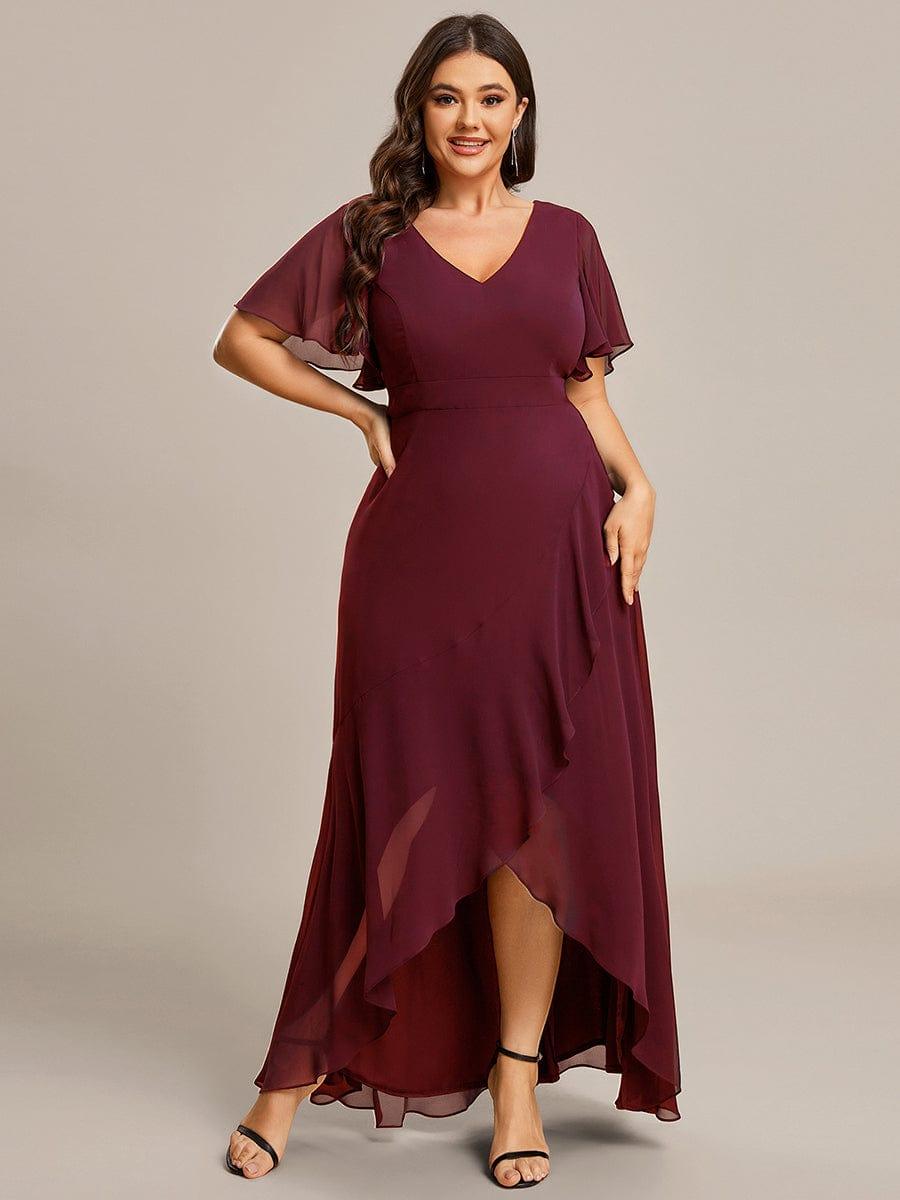
    The challenge to the reader closing this review is concrete. If you have been told for years that girly officewear does not exist in your size, here is the size to order in each brand for the pencil-skirt-plus-blouse silhouette. In Banana Republic Curvy, order the size 18 if your waist is 36 to 38 inches and hip is 47 to 49 inches, the size 20 if your waist is 38 to 40 and hip is 49 to 51, the size 22 if your waist is 40 to 42 and hip is 51 to 53. In Abercrombie Curve Love and Abercrombie Plus, order the same numerical size you wear in Banana Curvy. In Loft Plus, order one size up from your Banana Curvy size for the bow-neck blouse if you want a clean drape rather than a fitted line. In J.Crew, do not order the Cecile at size 20 or above, and if you must shop the brand for this look, size up to a 24 in any fitted silhouette and budget another $40 to $80 for tailoring. Walk into the Hudson Yards Banana Republic, the Abercrombie at Fifth Avenue, the Loft on West 34th. Pick up the pieces in the sizes I just gave you. Stand in front of the three-way mirror in the fitting room and watch the silhouette assemble. The aesthetic that was supposedly not for you was always going to be for you. It just took two of these brands until 2026 to do the pattern work.

  • How to Dress Confidently for Your Body Right Now – Not the Body You’re Working Toward

    How to Dress Confidently for Your Body Right Now – Not the Body You’re Working Toward

    A plus-size woman sorting clothing into three piles on her bed during a closet purge, lit by warm lamplight

    On a Friday night in November 2024, I emptied my closet onto the bed and made three piles. KEEP on the left. DONATE in the middle. And, on the right, the pile I’d been quietly making my whole adult life without ever naming it out loud: WHEN I’M SMALLER. Two pairs of high-waisted jeans that fit for about six wearings across three years. A silk slip dress from a 2022 sample sale with the tag still attached. Three blazers in a size 14 from a year I had not been a 14. A vintage cotton shirtdress I’d told myself I would wear “after a good summer.” The WHEN I’M SMALLER pile was the biggest of the three by a noticeable margin, and that night I added up what was in it. The number came to roughly $1,840 of clothing, almost all of it in good condition, almost none of it ever worn out of the apartment, waiting for a future body that, after a decade of weight cycling, was statistically unlikely to arrive on the schedule I’d promised it.

    I dragged the WHEN I’M SMALLER pile into the DONATE pile that night. I did not photograph it, did not post about it, did not do any of the things that turn a private decision into content. I just sat on the floor next to a forty-gallon bag of clothing I had been emotionally storing for years and admitted, out loud and only to myself, that I had spent close to two thousand dollars dressing a stranger. This article is what I wrote down in the weeks after that. It is not a love-your-body essay and it is not a manifesto. It is a working editor’s notes on how to actually get dressed in the body you have on a given Tuesday, when the body you have is also the body you are most ambivalent about.

    The WHEN I’M SMALLER closet and what it actually costs

    Most plus-size women I know have a version of the WHEN I’M SMALLER section, even if they don’t call it that. It lives at the back of the closet behind the things they actually wear. It lives in the bottom drawer of the dresser. It lives in a single bin in the storage unit labeled “summer” or “going out” or simply nothing at all. The pieces in it are usually nicer than the pieces in active rotation, because the WHEN I’M SMALLER closet is where the aspirational dollars went. The jeans cost more. The dress cost more. The blazer cost more. Future-thinner-you was always going to deserve nicer things than current-you, which is its own quiet form of self-punishment dressed up as planning.

    The 2024 NPD apparel return data, which tracks the resale and return behavior of US clothing buyers, put a number on this in a way that landed hard for me. The average plus-size woman in the US wastes between $1,200 and $2,000 a year on aspirational sizes, meaning clothing purchased in a size below her current measurements and either never worn, worn once or twice, or returned past the window. That figure tracks separately from regular fashion spending. It is purely the tax on dressing for a future body. Over a decade of adult dressing, that is somewhere between $12,000 and $20,000 of unworn clothing.

    There is a psychological cost on top of the dollar cost, and it is the part most personal finance writers miss. Every time you open the closet and see a row of pieces that do not currently fit you, the closet itself becomes a quiet referendum on your body. You did not set out to give yourself a daily verdict. You set out to buy a dress. But the cumulative effect of standing in front of fifteen garments that disagree with your measurements is a slow erosion of the assumption that your body is allowed to take up space in the room you are standing in. I noticed it most on the mornings I was already running late, when the closet should have been a tool and was instead a closing argument.

    The fashion psychologist Tara McGoldrick has written about this as the “aspirational closet effect,” and her clinical work suggests that the daily exposure to ill-fitting aspirational clothing measurably correlates with lower body satisfaction scores over a six-month window, independent of any actual weight change. The closet is not neutral. The closet is talking to you. The WHEN I’M SMALLER pile is the loudest voice in it.

    Hands folding a silk slip dress with the retail tag still attached on a cream-colored surface

    Why “you can always lose weight” is not the assignment

    Why

    The reflex response to everything I’ve just written is “well, you could always lose the weight.” I want to be precise about why that response, well-intended or not, misses the assignment of this article.

    Aubrey Gordon writes in What We Don’t Talk About When We Talk About Fat that fewer than five percent of people who intentionally lose a significant amount of weight maintain that loss over five years. The number is from long-running NIH-funded meta-analyses and it is not in serious dispute among researchers, only among the diet industry that depends on you not knowing it. Roxane Gay, in Hunger , writes about the specific cruelty of organizing your life and your wardrobe around a body that has not arrived and may not arrive: “I knew I should be losing weight. I did not lose weight. I lived in the body I had while pretending to live in the body I wanted.”

    What both writers point at, and what I want to put plainly here, is that the question of whether you eventually change your body is not the same question as what you are going to wear this Saturday. They are separate questions on separate timelines and they need separate budgets. The WHEN I’M SMALLER closet conflates them. It says: I will not dress this body well because dressing it well is a betrayal of the body I am supposed to want. That is a confusion of categories. You can be actively working on something – your relationship to food, to movement, to medication, to medical care – and also wear clothing that fits you today. The two are not in moral competition. One is health behavior on a multi-year arc. The other is what you put on your legs Saturday at four p.m.

    The 2025 Nordstrom plus-size customer study, which surveyed roughly 4,800 customers wearing sizes 14 through 32, found that 71 percent of respondents owned more than ten items they could not currently wear, and 58 percent reported feeling “worse” or “much worse” about their bodies after closet exposure to those items. The same study found that customers who had done a deliberate audit and removed aspirational sizing reported significantly higher outfit satisfaction within ninety days. The intervention was the audit. The variable that changed was not body size. It was what they were looking at every morning.

    The five-question audit

    The five-question audit

    Here is the audit I ran on my own closet that November and have since run with friends, with coaching clients, and with my mother-in-law. Pull out one piece at a time, and ask five questions in this order.

    1. Have you worn it in the last twelve months? Not “have you owned it.” Not “have you tried it on.” Have you worn it out of the apartment to do a thing in the world. Wedding, dinner, errand, work. Twelve months is the full cycle. If a piece has not made it onto your body for an outside event in a full year, it has had its chance.

    2. Does it currently fit? Not “does it zip with effort.” Not “did it fit at the sample sale.” Does it fit your body, today, in a way you would willingly leave the house in. The honest answer here is usually obvious within five seconds of trying it on.

    3. Did you buy it for a fantasy event? The gala that did not happen. The vacation that got cancelled. The job interview at the company you decided not to apply to. The date that turned into a different relationship. Fantasy-event clothing accumulates faster than you think and is among the easiest to release because the event is no longer on the calendar.

    4. Does putting it on make you feel like you owe it something? This is the most important question and the one most people skip. There is a category of clothing that, when you put it on, makes you feel indebted – to the price you paid, to the person who gave it to you, to the body you used to have, to the body you said you would have. The garment becomes a reminder of a debt rather than a tool you reach for. Debt clothing is not clothing. It is a guilt artifact wearing a hanger.

    5. Would you buy it new at this size today? Imagine walking into the store this week and seeing the piece, in your current size, at its original price. Would you buy it. If the answer is no, the only reason it is in your closet is sunk cost, and sunk cost is the worst possible reason to dress your body in the morning.

    Any piece that fails two or more of these questions goes in the cut pile. I do not negotiate with the cut pile. The cut pile is final, and the relief on the other side of it is real and measurable. My November audit cut 47 pieces. I did not miss a single one. I have not been able to recall, six months later, what most of them were.

    What to do with the clothes you cut

    Three buckets. Decide before you start so the cut pile does not move into a bag in the hallway and stay there for another year.

    For the everyday pieces in decent condition – the tees, the trousers, the dresses under $80 retail, the casual jackets – donate directly to a women’s shelter or your local YWCA. Call ahead. Most shelters have specific intake windows and specific size needs, and plus-size donations are notoriously underrepresented at shelter clothing closets. The pieces you have been letting hang unworn are very likely to be the most-needed pieces on the rack the moment they arrive. Bowery Mission, Sanctuary for Families, Win NYC, and Dress for Success all run intake programs that take plus-size clothing seriously. Your city has the equivalent.

    For the higher-value pieces – silk, leather, structured outerwear, anything originally over $80 with the label intact – list on ThredUp or Poshmark. ThredUp’s “Clean Out Kit” handles the photography and listing if you would rather not, at the cost of a lower payout. Poshmark pays better and is faster, but you list and ship yourself. I have personally recovered close to $600 across the two platforms from a single audit pile, which is not nothing, and went directly into a small fund for one well-fitting current-size hero piece.

    For the sentimental and the family-adjacent – the dress from a friend’s wedding, the blazer your sister has admired for years, the piece a niece would actually wear – hand it off in person. Do not mail. Do not “ship when you get around to it.” Walk the bag over, hand it across the table, watch it leave the building. The reason this matters is that mailed pieces become a project, and projects sit in a corner, and the corner becomes a smaller version of the original problem.

    A plus-size woman wearing a wide-leg trouser and a tucked white tee standing in a sunlit modern apartment

    Eight silhouettes that work on most plus-size bodies right now

    Eight silhouettes that work on most plus-size bodies right now

    The mistake that ruined most of my twenties was shopping by item instead of by silhouette. I would see a great pair of skinny jeans on a friend and buy the same skinny jeans for myself, then be confused when the same garment read entirely differently on my body. Silhouette is not item. Silhouette is the overall shape the outfit creates from across a room. Here are the eight that consistently work for plus-size bodies in 2026, drawn from my own rotation and from years of dressing friends.

    The wide-leg pant + tucked tee. A flat-front, full-length wide-leg trouser with a tucked or half-tucked fitted tee creates a vertical line that reads as long and intentional. The fitted top establishes the waist, the wide leg balances the hips, and the proportion is automatic. Universal Standard, Eloquii, and Old Navy’s plus extension all have versions under $80.

    The column dress. A floor-skimming or midi dress in a single color that runs uninterrupted from shoulder to ankle. No belt, no contrast. The column is the oldest cheat code in plus-size styling because it does the work of a long unbroken vertical without requiring any styling moves on your part.

    The structured shoulder + soft body. A blazer or jacket with a real, defined shoulder seam paired with something softer underneath – a slip skirt, a jersey dress, a relaxed trouser. The shoulder gives the eye a clean anchor at the top and lets the rest of the outfit fall in a way that flatters without trying.

    The blazer and bike-short. An oversized blazer over a fitted bike short with a clean shoe is the most underrated plus-size silhouette of the last three years. It works because the blazer covers the zones most plus-size women report being most self-conscious about while the bike short defines the leg line. Lizzo, Paloma Elsesser, and Ashley Graham have all worked variations of this look. It is a real outfit.

    The bias slip with a t-shirt over. A bias-cut slip dress with a soft cotton tee layered over it. The slip provides the drape and the leg line, the tee adds a casual upper register that makes the slip wearable in daylight without feeling like lingerie escaped the bedroom.

    The layered tank set. Two thin tanks worn together, one slightly longer than the other, with a wide trouser or a denim. The double layer gives shape to the torso without compression, and the proportion of fitted top to wide bottom does the rest.

    The wrap dress in the right rayon-blend. The wrap dress has been oversold and undertailored for thirty years, but a real wrap dress in a rayon-blend with weight to it – not a synthetic stretch – is one of the most reliable silhouettes there is for a body with curves. The key is the fabric. Pure polyester wraps cling badly. Rayon with some give holds the shape.

    The oversized button-down + cigarette pant. A men’s-cut or relaxed cotton shirt half-tucked into a slim cropped trouser, with a sleek shoe. This is the silhouette I wear most often in editorial contexts because it reads as quietly serious without reading as hiding. The cigarette pant defines the calf and ankle. The shirt does everything else.

    You do not need all eight. You need three that you genuinely like, repeated in slightly different colors and fabrics, and the dressing question on most mornings disappears.

    The bra question

    The bra question

    I am putting this in its own section because it matters more than the rest of it combined. The number of women I have styled who are wearing the wrong bra size is somewhere north of 80 percent, and the number who have not had a real professional fitting in five years or more is higher than that. The wrong bra changes the silhouette of every single outfit above it. You can do all eight of the silhouettes above and still look subtly off if the foundation underneath them is in the wrong cup.

    Your wedding-day cup size is not your current cup size. Your post-pregnancy cup size is not your current cup size. Your cup size from before you started or stopped a medication that affected your hormones is not your current cup size. Cup sizes shift with weight, with age, with menstrual cycle, with hormonal contraception, with motherhood, with peri-menopause. The body you have today has the bra size you have today, and it is almost certainly different from the bra size on your most recent purchase.

    Two places in the US do this fitting properly and at no charge. Nordstrom’s lingerie department will fit you in cup sizes from A through K, the consultation is free, and you are under no obligation to buy. Ask for an experienced fitter and tell them your goal is calibration, not purchase. The other is Town Shop on the Upper West Side of Manhattan, which has been doing professional bra fittings since 1888 and is the gold standard. A Town Shop fitting is twenty minutes, no appointment, no charge unless you buy. Both options will measure you correctly using the band-first method rather than the volumetric guessing most lingerie boutiques default to.

    Once you know your real current size, the next thing every outfit above sits on top of changes. Tops drape differently. Dresses fall differently. Blazers close differently. The single highest-return styling move available to most plus-size women is not a new blazer or a new dress. It is a properly fitted bra in two colors that they replace every nine to twelve months.

    Shopping rules for the body you have

    Shopping rules for the body you have

    Three rules. They are not negotiable for me and I would not write this article if I weren’t willing to put them in writing.

    Try on before you buy. Sizing across plus-size retailers is wildly inconsistent. A 16 at Old Navy is not a 16 at Eloquii is not a 16 at Universal Standard is not a 16 at vintage. Online sizing charts are starting points, not finishing lines. If you cannot try on, buy from a retailer with a no-questions return policy and return what does not work the day it arrives, not in three weeks.

    Do not buy anything for an event that is more than three months out. Your body in three months is unknown. Your mood in three months is unknown. Whether the event happens in the format you currently imagine is unknown. Anything you buy for an event further than ninety days from now is, statistically, more likely than not to either not fit or not feel right by the time the event arrives. Buy event clothing in the window you are actually about to live through.

    Rent for the gala. Anything that requires a price tag higher than $200 for a single event – the black-tie wedding, the gala, the work awards night, the cousin’s destination wedding in Tulum – rent it. Rent the Runway, Nuuly, Armoire, and Vivrelle all carry sizes through 24 reliably and some carry through 28. The math is not even close. A $1,200 dress worn once is $1,200 per wear. A $90 rental of a $1,200 dress worn once is $90 per wear and gets shipped back the next morning.

    The body-neutral language reframe

    The body-neutral language reframe

    The language you use about your body in your own head is part of what gets dressed when you get dressed, even if no one else can hear it. McGoldrick’s clinical work, published across several papers and her 2024 book on fashion psychology, includes a deceptively small intervention that has held up consistently across her client samples: try, for one week, replacing the phrase “my body” with the phrase “this body.”

    The substitution sounds trivial and produces a result that is not. “My body” implies ownership, judgment, a verdict you have already rendered. “This body” is descriptive. It is the body that is here. It does not require you to feel any particular way about it. It just acknowledges that it exists and that it is, today, the one getting dressed. McGoldrick’s clients reported, on average, a measurable drop in clothing-related anxiety after one full week of consistent use of “this body” instead of “my body” in their internal narration.

    I do not love every “love your body” message in the wellness aisle and I am not asking you to either. Body positivity, as a movement, has produced both real progress and a layer of forced cheerfulness that some of us have never quite been able to perform. The body-neutral move is different. It does not ask you to love anything. It asks you to stop running a continuous quiet trial. “This body needs a bra that fits. This body is cold today. This body wants the wide trouser, not the skinny.” That is a livable internal voice. The other one is exhausting.

    What to keep buying secondhand vs new in 2026

    What to keep buying secondhand vs new in 2026

    Plus-size secondhand has gotten significantly better in the last three years and remains the place where the value math is most favorable, but not for every category. Here is the split I use, and recommend.

    Buy secondhand: outerwear (coats hold up for decades and the resale market is full of barely-worn plus-size coats), denim (washed-in denim wears better than new denim and saves the most money), blazers (especially structured tailored pieces that are expensive new), bags, leather, dresses for one-off occasions you nonetheless want to own. ThredUp’s plus-size category, Poshmark, The RealReal for designer, and your local consignment if it actually stocks above a 16.

    Buy new: bras (always, fit drift and band stretch make secondhand bras a false economy), underwear, swimwear (the structure and elastane degrade), shapewear, athletic wear with technical fabrics, white shirts you intend to wear weekly, and the foundational pieces in your eight silhouettes. The reason to buy these new is that they are the daily-rotation pieces. The cost-per-wear math actually favors new on anything you will wear more than thirty times.

    The split saves real money over a year. My current personal mix is about 60 percent secondhand by item count and roughly 30 percent secondhand by dollar spend, and the wardrobe is the most useful one I have ever owned at any size.

    What to wear tomorrow

    What to wear tomorrow

    The wardrobe you build for the body you are working toward is a wardrobe you are not wearing. That is the entire argument of this article in one sentence. Every Saturday it sits in the closet is a Saturday you showed up in clothing chosen for a stranger. Every dinner you ate in the second-best outfit because the best outfit was reserved for the smaller version of you is a dinner the smaller version did not actually attend. The body in the mirror today is the body that gets dressed first. The other one, if she arrives, can wait her turn.

    Tomorrow, before you do anything else, pull out a wide-leg pant in your current size, a fitted tee in your current size, and the most comfortable shoe in the rotation. Tuck the tee halfway. Add the third piece you reach for most often – a longline blazer, a soft duster, an open shirt. Look in the mirror once, take one piece of jewelry off if there are more than two, and leave the house. That is the outfit. It cost you nothing this morning, it took ninety seconds, and it was built for the body that walked into the closet, not the one you keep telling yourself is on the way.

  • Plus-Size-Friendly Wetsuit and Water Sports Gear for 2026

    Plus-Size-Friendly Wetsuit and Water Sports Gear for 2026

    A plus-size woman surfer paddling a longboard in Sayulita Mexico wearing a properly fitted 4/3 wetsuit

    In November 2024 I was in Sayulita, Mexico, for a four-day surf trip with two friends. The rental shop on the cobblestone street that runs down to the main beach was the one our hotel recommended. I had been on a board exactly twice before. The young instructor walked me to the wall of wetsuits, pulled the biggest one off the rack, and held it up. It was a women’s 12. I am a size 18. The zipper closed maybe two thirds of the way up my back. There was a five-inch gap of bare skin from my lower back to my shoulder blades, and the neoprene was so tight across my chest I could feel my own heartbeat through it. He looked at me, smiled with what I think was genuine sympathy, and said, “we’ll make it work.” He zipped it as far as it would go. Three minutes into paddling out, I felt the seam tear along my left shoulder blade with a sound I heard underwater. By the time I made it back to the beach, the tear was the length of my hand. The shop charged me $40 for the damage. The instructor apologized. I sat on the sand and cried in a way that was not really about the wetsuit.
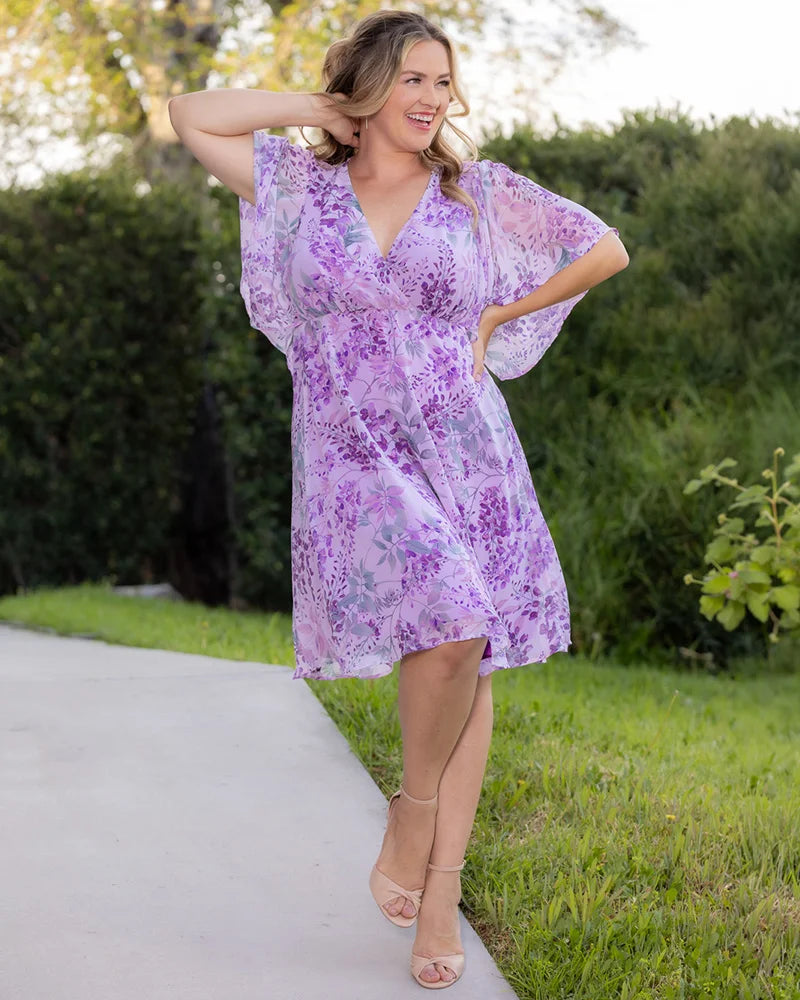
    That afternoon in Sayulita is where this article starts, because it is where the lesson started for me. The water sports industry, for almost the entire fifteen years I have been traveling with intention, has built its gear, its imagery, and its rental inventory for an active woman who is a size 8 with visible abs. The rest of us have been told, kindly or unkindly, to make it work. In 2026, that is finally beginning to change. Real brands are now cutting wetsuits in real sizes. Plus-size-specific surf schools exist. Rash guard ranges that go to 4X are no longer one-off marketing experiments. This guide is the audit I wish someone had handed me before I paid for that ripped seam.

    Why standard wetsuits fail plus-size bodies

    Why standard wetsuits fail plus-size bodies

    A wetsuit is not loose fabric you slip into. It is a layer of neoprene foam, between 3mm and 5mm thick, that is supposed to compress against your skin and trap a thin sheet of water that your body heats and then keeps warm. The compression is the entire point. Too loose, and cold water flushes through with every movement and you freeze in twenty minutes. Too tight, and it cuts off your range of motion, restricts your breathing, and tears at the seams.

    The math on a 5mm wetsuit is unforgiving. Every cubic centimeter of body it covers is being squeezed by foam that was engineered to flex around a body shape the company designed the suit for. When a women’s straight-size suit tops out at a 12 or 14, the company’s design team almost never tested the suit on a 16, 18, 20, or 22 body. They graded the pattern up, which means they scaled the numbers and hoped. Wetsuit grading does not scale gracefully. Chests get wider, but armholes and shoulders do not get proportionally taller. Hips get fuller, but inseams stay short. The result is a suit that pinches at the armpit, gaps at the lower back, and binds at the upper thigh, all at the same time.

    The three failure points to watch for are the back zip, the leg cuffs, and the chest panel. The back zip is the most visible because it is where my Sayulita suit failed – on a body the suit was not graded for, the zipper either will not close at all or it closes under so much tension that the seam either side of the zip tears the first time you twist your torso. The leg cuffs are next. On a plus-size body, the upper thigh circumference often exceeds what the cuff was designed to slide over, so you either cannot get the suit on past your knees, or the cuff cinches so tight on your calf that it cuts off circulation. The chest panel is the quietest failure. It will not tear, but it will compress your rib cage enough that taking a deep breath underwater feels like work. That is the suit that ruins your dive without ever announcing why.

    What to actually look for on the spec sheet

    The spec sheet is where the work is. Almost no brand will tell you “this fits a size 18” on the product page. You have to read the construction details and reverse-engineer it.

    Start with thickness. A 4/3mm wetsuit means 4mm panels on the torso and 3mm on the arms and legs. A 5/4/3mm means 5mm on the core, 4mm on the upper legs, 3mm on the lower arms and legs. For most plus-size beginners surfing in water above 60 degrees Fahrenheit, a 4/3 is the right starting point. Five-millimeter suits are warmer but compress harder, and the harder the compression, the less forgiving the fit. If you are diving in cooler water and you need the 5mm, prioritize a front-zip design and seek out brands that explicitly cut for fuller figures.

    Editorial flat lay of a women's 4/3 wetsuit, dive fins, rash guard, and board shorts on pine planks

    Next, seams. There are three main constructions. Flatlock seams are stitched flat against the skin, are the cheapest, and let cold water leak through. They are fine for warm water and beginner suits. Glued and blind-stitched seams use glue first, then a needle that does not pierce all the way through the neoprene, which keeps almost all water out. Sealed or taped seams add a strip of tape over the inside of the seam for maximum waterproofing and durability. For plus-size bodies, sealed seams are worth paying for because the seams are the failure point under stretch. A taped seam can survive what a flatlock cannot.

    Finally, the zipper. Back-zip suits are easier to put on alone, which matters when you are getting ready by yourself on a rental beach. They are also where most plus-size fit failures happen because the zip has to clear your entire torso under tension. Front-zip and chest-zip suits are harder to get into, but the closure sits on the upper chest where the body is more uniform in width and the tension load is lower. If you have the choice, choose chest-zip. If the brand only offers back-zip in your size, ask if they offer a “back-zip extender” – some do.

    The brand audit, label by label

    Six brands are doing the work in 2026. I have either worn each of these or dressed friends in them on real trips, and I am ranking them by how honestly they cut for plus bodies, not by marketing.

    XCEL Drylock. XCEL’s Drylock line extends through 3X in women’s, which in their grading runs roughly to a US 22-24. The 4/3 Drylock has glued and blind-stitched seams, a chest-zip closure, and a generous chest panel that does not compress the rib cage the way most straight-size suits do. This is the suit I now own. It is not cheap (the women’s 4/3 runs around $400) but it is the closest thing to a real plus-size surf wetsuit on the US market, and it has lasted eighteen months of regular use without a seam giving way.
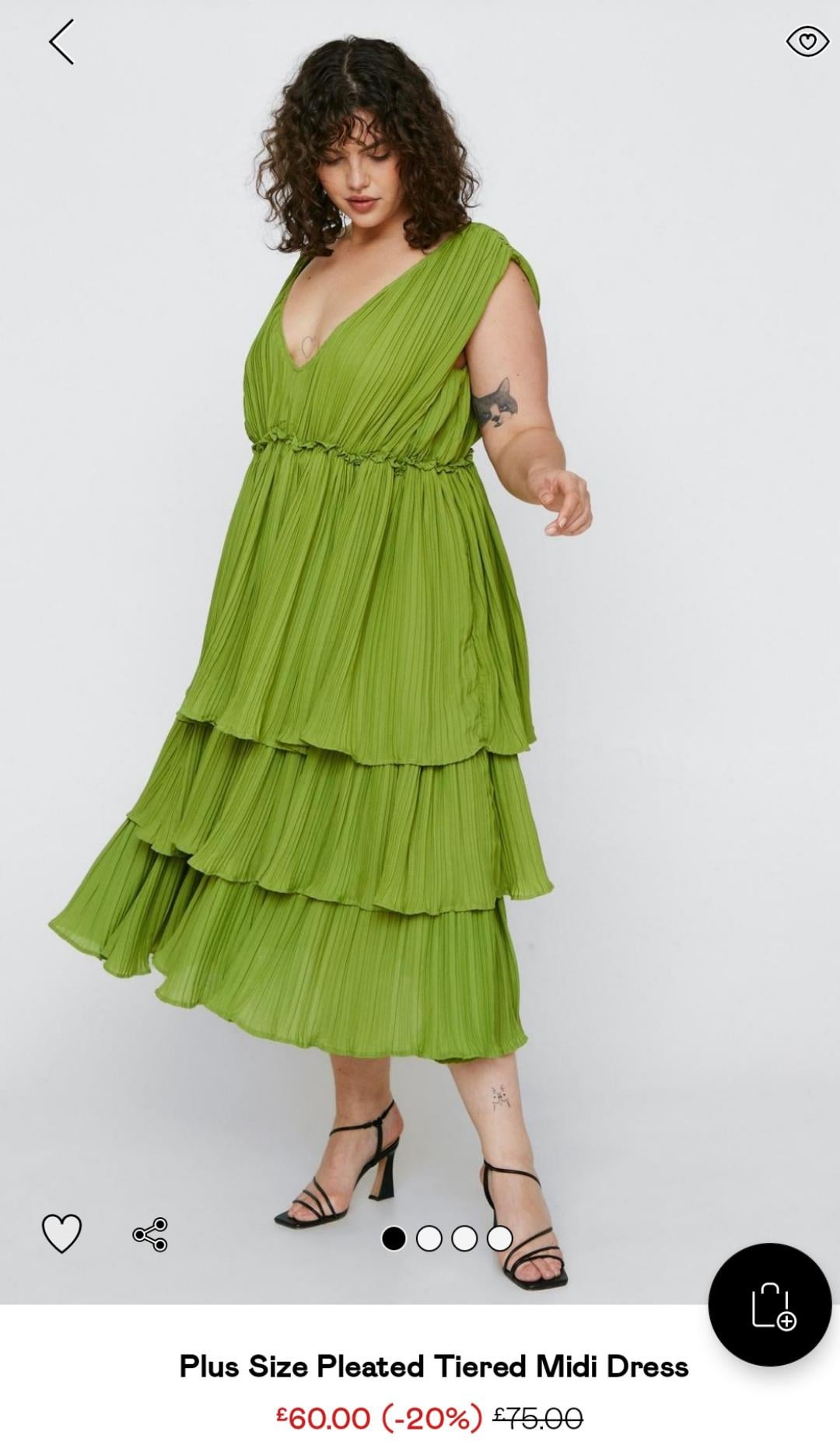
    Need Essentials. Australian brand, direct-to-consumer, no middleman markup. Their women’s range now goes to a size 18 in the 3/2 and 4/3, and the cut is more generous than the size label suggests because the Australian grading runs about one size larger than US. Their seams are glued and blind-stitched at a price point ($230-270 USD) that undercuts XCEL meaningfully. The catch is shipping from Australia. Order four to six weeks before your trip. Their customer service is the most responsive of any brand on this list – they will measure-fit you over email.

    O’Neill Bahia 4/3 women’s. O’Neill’s Bahia line extends through women’s size 18 in the 4/3, which is the highest mass-market size on a major brand’s straight wetsuit range. The seams are glued, not taped, and the back-zip design has its known issues for plus bodies, but at $220 it is the most affordable way into a real branded wetsuit that will actually close. If you are between sizes, size up. The Bahia runs small even by O’Neill’s standards.

    Rip Curl Dawn Patrol. Rip Curl’s Dawn Patrol women’s range goes up to XL in the 4/3, which in their grading is roughly a US 14-16. It is the lightest commitment of the major brands – their plus extension is real but modest. I am including it because the rental shops in Costa Rica, Portugal, and Australia stock Dawn Patrol heavily, and if you are a 14 or 16 you have a real shot at finding one that fits on the rack. Below that size range, the Dawn Patrol works. Above it, look elsewhere.
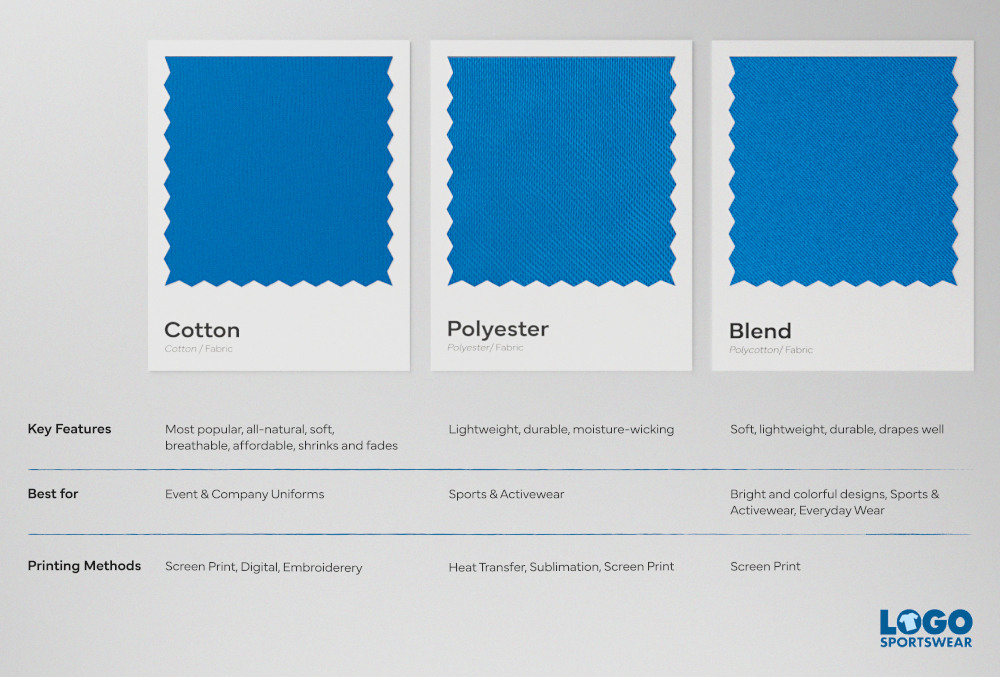
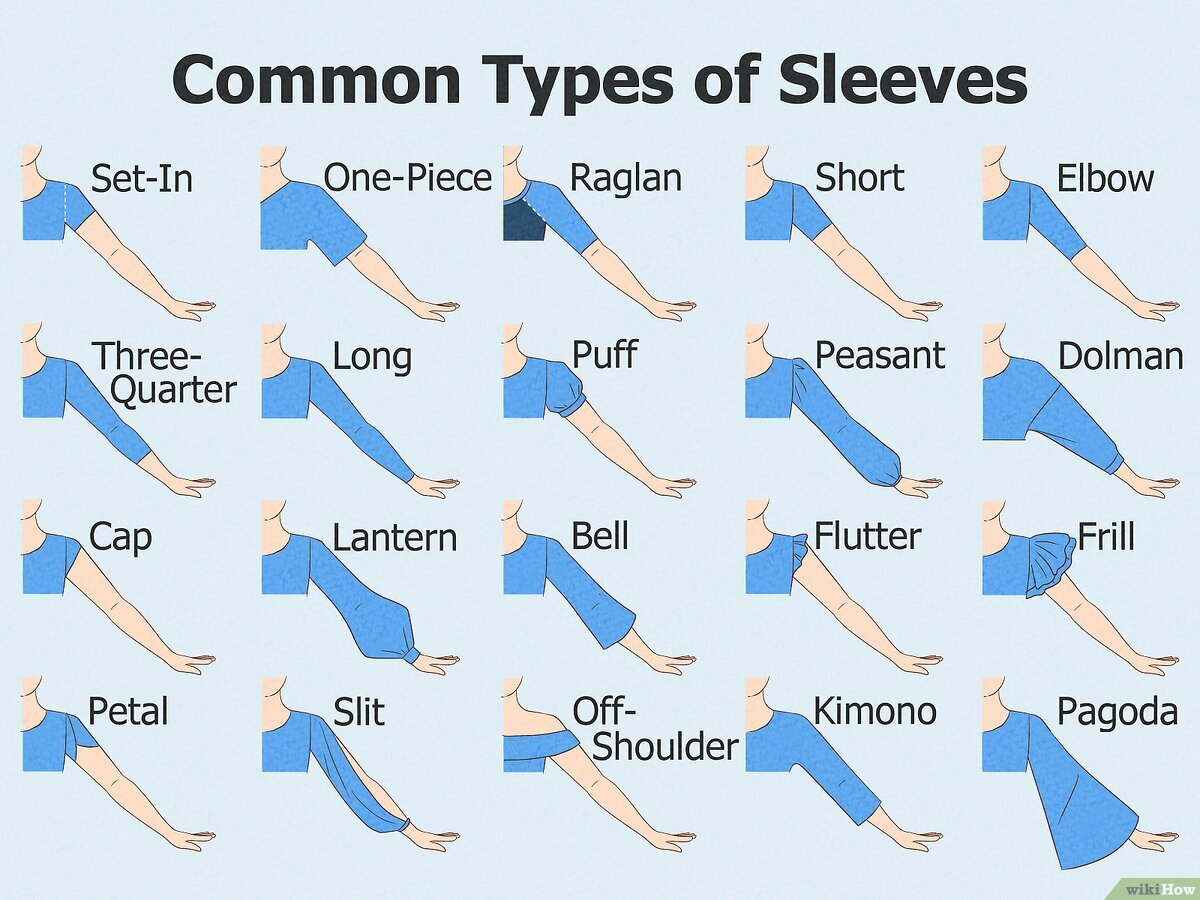
    Cressi diving wetsuits. Cressi is an Italian dive brand and their plus-size range is the most honest on the diving side. Their Lui & Lei 5mm two-piece (the women’s “Lei” cut) goes through a 3X and the two-piece construction is itself a plus-size win – a separate jacket and pants means each piece is sized independently, which solves the “my chest fits but my hips do not” problem in one design move. For warm-water snorkel and shallow dive trips in the Caribbean, this is the suit I recommend.

    ScubaPro Definition. ScubaPro’s Definition Steamer extends through 4X in women’s in the 5mm and 6.5mm, which is the largest size range available on any major dive wetsuit in 2026. The cut is engineered specifically for fuller chests and wider hips with stretch panels at the lower back and inner thighs. The price is steep ($550-700) but for serious divers, this is the suit. It is also the only mass-market dive suit I know of that comes in a “tall” cut as a separate option, which matters if you are over 5’8″.

    A plus-size woman surfer at a surf shop holding a longboard and a rash guard wearing a chest-zip wetsuit

    Rash guards, water leggings, and the layer that prevents the worst part

    Rash guards, water leggings, and the layer that prevents the worst part

    A rash guard is the layer that decides whether you finish the day with skin or without it. Salt water plus board wax plus repeated friction on the inner thighs, the underbust, and the lower back is a recipe for raw skin within about ninety minutes. For plus-size bodies, the rash guard problem is the same as the wetsuit problem: most are graded to a size 12 and stop. The brands that have extended their ranges are the ones to know.

    Carve Designs has been the quiet leader here for the better part of a decade. Their women’s rash guards go to 3X, the long-sleeve fit is generous through the bust and the arms, and the fabric is a UPF 50+ four-way stretch that holds its shape through repeated salt water exposure. Their water leggings, which are the lower-body equivalent of a rash guard, go to a 3X waist and a length that actually reaches the ankle on women over 5’6″. A Carve rash guard and a pair of their water leggings is what I wear under a thinner wetsuit in warm water, and over my swimsuit when I am snorkeling in the Caribbean and want sun coverage. The fabric does not pill, does not fade after a season, and dries in about twenty minutes on a beach towel.

    prAna Mahala is the second name to know. Their Mahala swim collection includes a rash guard that goes to 3X and a pair of swim shorts that reach mid-thigh, both in a recycled nylon that holds up. The cut is slightly more relaxed than Carve, which I prefer for a snorkel day where I am not paddling hard. The Mahala line also comes in patterns and colors that look like beachwear, not athletic wear, which matters more than it should when you are getting on and off a boat in front of people.

    Athleta Kata Bralette and the Athleta water swim leggings line are the third pillar. Athleta’s plus-size extension goes through a 3X, and the Kata bralette is the only built-in-bra rash guard alternative I have found that actually supports a DDD-and-up chest in the water. For surf days where I am taking the rash guard on and off, the Kata layered under a regular long-sleeve rash top is the combination I trust. The water leggings are cut shorter than Carve’s, which works better in warmer water but is less protective from sun on a long day.

    Board shorts again, briefly

    Board shorts again, briefly

    Board shorts are the underrated piece of the kit. For surf days where the water is warm enough to skip the wetsuit, board shorts plus a rash guard plus a swimsuit is the standard layering. The plus-size board short market in 2026 is still thin compared to rash guards, but two brands have done real work. Maaji’s plus-size swim collection includes board shorts that go to 3X, sit at the natural waist (which matters – low-rise board shorts on a plus body roll down the second you paddle), and have a real drawstring that holds. Swimsuits For All has a board short under their Curve label that goes through a 22/24 and runs about $40, which makes it the most affordable plus board short on the market. The fabric is heavier than Maaji and dries slower, but it survives chlorine and salt water both.

    If you are between sizes on board shorts, size up and trust the drawstring. The wrong move is to squeeze into a smaller pair “because I will lose weight before the trip.” You will not. You will sit in the parking lot of the surf shop trying to button them and then either cry or skip the lesson. I have done both.

    Snorkel masks, fin sizing, and the gear nobody talks about

    Snorkel masks, fin sizing, and the gear nobody talks about

    The pieces of water sports gear that are not the wetsuit get less attention but cause as many problems. Snorkel masks are sized to face width, not body size, but fuller faces and rounder cheekbones genuinely do not seal well to a standard mask. Cressi’s F1 Frameless and the ScubaPro Synergy 2 both come in a wider face cut that fits cheekbones the regular mask leaks around. If you have spent a snorkel trip with water trickling into your mask every thirty seconds, the mask is the problem, not your face. Ask the dive shop for a wide-face option specifically.

    Fins are the other quiet issue. Fin sizing scales to foot length, which is fine, but the foot pocket on a closed-heel fin is also cut for a particular foot width and ankle circumference. Plus-size bodies often have slightly wider feet and proportionally fuller calves, and a fin that fits the length will sometimes cut into the top of the foot or the lower calf. Open-heel fins with adjustable straps and a separate dive bootie are the workaround. The bootie pads the foot, the strap adjusts to your actual ankle, and the fin does its job without leaving bruises. ScubaPro Seawing Nova and Cressi Reaction Pro both come with open-heel construction in sizes that match a women’s foot up to about size 12 US.

    The kayak and SUP gap that still has not closed

    The kayak and SUP gap that still has not closed

    Kayak and stand-up paddleboard gear is where the size range still falls off a cliff. Personal flotation devices, which are required by law in most jurisdictions for paddle sports, are graded to chest circumference. Standard women’s PFDs top out around a 40-inch chest. A plus-size woman with a 44-inch or 48-inch chest will often have to default to a men’s PFD, which sits higher on the torso, rides up under the chin, and chafes the underbust within an hour. NRS makes a Shenook women’s PFD that extends to a 48-inch chest and is cut to sit lower at the bust line, and Stohlquist’s BetSea goes to a 46. Beyond that, the market disappears. If you are looking at a kayak rental trip in 2026 and you are above a 48-inch chest, call the rental shop two weeks ahead and ask specifically what PFD sizes they stock. Bring your own if you can. The “we’ll have something for you” answer usually means a men’s universal.

    SUP shorts and SUP leggings follow the same pattern as surf gear, which is to say Carve and Athleta cover the lower end of plus sizing and very few brands extend past a 3X. The board itself is not a fit issue – SUP boards are sized by rider weight and a heavier rider just needs a longer, wider board, which any honest rental shop will have. Ask for a board rated to your weight plus 30 pounds for stability margin. A 240-pound rider should be on a board rated for at least 270 pounds. The shop that hands you a smaller board “because it will be fine” is not the shop you want to learn from.

    What to expect from rental shops in 2026

    What to expect from rental shops in 2026

    Rental shop stocking is the bottleneck. Even the best plus-size wetsuits in 2026 mostly live in customers’ garages, not on rental walls. The shops that have caught up are the ones that have a plus-size customer base loud enough to demand it, and those are concentrated in a handful of places.

    Hayley Gordon, the Australian surfer who founded Salt Gypsy, has been one of the few industry voices openly arguing that the surf rental supply chain needs to stock through XL and XXL as standard inventory. Salt Gypsy itself focuses on rash guards and surf leggings, but Gordon’s writing and her interviews have done the cultural work of naming the problem. When you see a rental shop in Australia or California that stocks larger wetsuits, you are seeing the downstream effect of that pressure. The shops in Pacific Beach, San Diego, in Encinitas, and in Byron Bay are noticeably better stocked than shops in places where the conversation has not yet happened.

    Curves Surf School in Costa Rica is the second name to know. They run plus-size-only surf retreats out of Playa Guiones, which means every wetsuit on the wall is graded for a fuller body, every board is rated for a heavier rider, and every instructor has trained to teach people who have been told their whole lives that they cannot do this. A week with Curves is the closest thing to a guaranteed-fit surf trip I know of. The cost is higher than a generic surf camp, but you do not pay a torn-suit fee on day one.

    Outside of those concentrated pockets, the rule for 2026 is: call the shop, ask the size question by name, and bring your own gear if you are above a US 16. Email is better than calling because it gives them time to actually check the rack instead of guessing, and it gives you a written answer you can hold them to.

    Learning to advocate for your own size before you book

    Learning to advocate for your own size before you book

    The advocacy work is the part nobody teaches. When you book a surf trip, a dive trip, or a paddle trip in 2026, the question “do you have gear in my size” needs to be asked before the deposit, not after. The script that has worked for me, every time, is this: “I am a US women’s size 18 and I am looking to book a [lesson / rental / charter]. Can you confirm you have a women’s wetsuit / PFD / rash guard that fits a chest measurement of X and a hip measurement of Y? If not, I am happy to bring my own, but I want to confirm before I book.” Send that in email. Save the reply. If the shop hedges or sends a marketing brochure instead of an answer, that is the answer.

    Patagonia’s 2024 inclusivity report named the rental-shop inventory gap directly and committed to expanding their own wetsuit grading through 2026. Patagonia is not yet at the top of this list because their plus-size cuts are still arriving in waves, but the report itself is one of the few public documents from a major outdoor brand that acknowledges the gear gap honestly. Quoting it back to a rental shop when you are pushing them to stock larger sizes is genuinely useful.

    Frequently asked questions

    What size wetsuit should I order if I am between two sizes? Size up. The compression of neoprene against a body that is already at the limit of the suit’s grading is what causes seam tears. A slightly looser suit that closes flat is always a better surf or dive than a tight suit that you have to wrestle on.

    Are men’s wetsuits a workaround for plus-size women? Sometimes, with caveats. Men’s wetsuits are cut straighter through the torso, shorter in the inseam relative to height, and have no built-in chest accommodation. For a woman with a smaller chest and a fuller waist, a men’s 4/3 in XL or XXL can fit better than a women’s plus straight suit. For most plus-size women, the lack of a chest panel makes the fit worse, not better. Try one in a store before committing to one online.

    How much should I expect to spend on a plus-size wetsuit that actually fits? Plan for $220 to $450 on a 4/3 surf suit, and $400 to $700 on a 5mm or thicker dive suit. The cheap end of the market does not extend through plus sizes yet. The gear that fits is the gear that is being made for a smaller customer base, and the price reflects that.

    Can I learn to surf or dive if I cannot find rental gear in my size? Yes. The answer is to buy your own gear before the trip, or to book through one of the plus-size-specific schools like Curves. Do not let a rental shop’s shortage become your reason for skipping a sport you want to learn. The gear gap is the industry’s problem, not yours.

    What about wetsuit alterations? Most surf shops in coastal cities know a wetsuit tailor. The most useful alteration is adding a back-zip extender panel, which can give a borderline-fit suit another inch or two of closure. Cost is usually $40 to $80. For a suit that is closing but cutting at the upper thigh, a cuff trim is also a real option.

    The argument I want to leave you with

    The argument I want to leave you with

    For fifteen years, the water sports industry has done a very specific thing. It has put “active women” on its brochures, its catalogs, its rental shop walls, and its marketing campaigns, and the woman in the picture has been, almost without exception, a size 8 with visible abs, a tan, and her hair already wet. The implicit message of every one of those images, repeated across magazines and Instagram and trade shows and travel agency posters, is that this is what an active woman looks like, and if you do not look like this, you do not get to do this. The Sayulita instructor who said “we’ll make it work” was not the villain of that story. He was downstream of fifteen years of an industry deciding that bodies like mine did not need to be designed for.

    The brands that are getting it right in 2024, 2025, and now 2026 are the ones I named in this article. XCEL Drylock through 3X. Need Essentials cutting honest sizes from Australia. O’Neill extending the Bahia to a real women’s 18. Rip Curl moving the Dawn Patrol up. Cressi making a two-piece dive suit that finally solves the chest-versus-hip problem. ScubaPro Definition cutting through 4X for serious divers. Carve Designs and prAna and Athleta and Salt Gypsy putting rash guards on bodies the rest of the market pretended did not exist. NRS and Stohlquist making PFDs that close around a real woman’s chest. Curves Surf School in Costa Rica building a whole school out of the assumption that plus-size women would learn to surf if anyone bothered to make space for them.

    The women who held off from learning to surf, from getting certified to dive, from kayaking the coast they grew up on, from trying SUP on a calm lake at sunrise – the women who held off because the gear was not made for them – those women are about to be the most paying customers in those sports. Every brand that has extended its size range in the last two years is going to find that out by 2027. Every brand that has not is going to wonder where its growth went. The argument is no longer that plus-size inclusion is a moral question. It is a business one. And the brands doing the work are the ones I am putting my money behind.

  • The Full Body Skincare Routine Most Women Skip

    The Full Body Skincare Routine Most Women Skip

    Black woman comparing an expensive face serum to a generic body lotion at her bathroom counter

    I added it up on a Sunday afternoon in February, sitting on my bathroom floor with the contents of my counter laid out like evidence in a case I was prosecuting against myself. Sunday Riley Good Genes, La Roche-Posay Toleriane Double Repair, an EltaMD sunscreen I had to reorder every ninety days, a Skinceuticals CE Ferulic that I rationed like it was insulin, a tube of tretinoin from my dermatologist, a Tatcha rice polish, and a standing monthly facial at a place in the West Village that charged $185 before tip. The face line item was just under $400 a month, accounting for the facials and the rate at which the serums actually run out. And then I picked up the bottle I used on my back, my knees, my elbows, my chest, and my shins. A Jergens Ultra Healing in the green pump. $4.99 at the CVS on Lexington, on sale because they had stacked them at the front of the aisle. I had been buying the same lotion for nine years. The disparity was not because the rest of my body needed less. It was because the marketing budget for body skincare is roughly one tenth the marketing budget for face skincare, and nobody had ever sold me the body version of the conversation. This article is the version I had to find on my own. It is the routine I built in the eighteen months after that Sunday, with input from dermatologists who specifically work with body skin, founders who have built their entire brands on the body category, and a lot of testing on my own skin and on friends who agreed to be the lab. If you have ever felt the difference between the skin on your jaw and the skin on your shoulder and thought one of them was simply “older,” I am here to tell you it is not aging. It is neglect, and it is fixable.

    Why we skip the body (the marketing math, the time math, and the “no one sees it” lie)

    There are three reasons most women run a $400 face routine and a $5 body routine, and none of them are good ones once you put them in print. The first is the marketing math. Beauty industry analysts who track ad spend will tell you that facial skincare gets somewhere between eight and twelve times the marketing dollars of body skincare year over year. That ratio shapes which products you have heard of, which influencers talk about which categories, and which gift sets are stacked at Sephora’s entrance in December. You have probably watched two hundred TikTok videos about a hyaluronic acid serum for the face. You have probably watched two about a hyaluronic acid serum for the body. They both exist. The face one has a budget behind it. The body one does not, so the ingredient never enters your shopping vocabulary, and you assume the body version is unnecessary because nobody has told you it exists.

    The second is the time math. The face routine is performance-coded. You stand at the bathroom mirror, you take off makeup, you watch the products absorb, you see your skin change. There is a feedback loop, and the loop is short. Body skincare happens with damp skin, in a five-minute window after the shower, often in a fluorescent-lit bathroom while you are trying to get out the door. There is no mirror moment. There is no sense of completion. You slather, you towel, you move on. The brain does not register it as a ritual, so the brain does not assign it a budget. Both face and body need ten minutes a day, but only one of them feels like ten minutes of self-investment. The other one feels like chores.

    The third is the lie we all have told ourselves for years, which is that the body does not need the same care because nobody sees it. This is the one I want to push back on the hardest, because it is wrong in three directions at once. It is wrong because you see your own body every day, and your relationship with your skin matters even when you are the only one in the room. It is wrong because intimate partners, doctors, friends at the beach, your own daughters all see your body, and the skin on your chest is your skin too. And it is wrong because the conditions that develop when you ignore the body for twenty years – the keratosis pilaris that hardens into texture you can no longer feel as separate from your arm, the chest hyperpigmentation that crosses the line from sun damage into a permanent mottled pattern, the hands that look two decades older than the face – those conditions are visible. They do not stop existing because you were not looking. They sit on your skin while you focus everything one foot higher, and they compound.

    Flat lay of body skincare products including body serum, lactic acid lotion, KP bump eraser, and body sunscreen

    The four zones most women miss

    The four zones most women miss

    If you do nothing else this article suggests, address these four zones. They are the regions where the gap between face care and body care does the most damage over time, and where the smallest intervention pays back the most.

    The chest and decollete. The skin from your collarbone down to where a v-neck ends is some of the thinnest, most sun-exposed, most expression-creased real estate on the body. It produces less sebum than the face. It folds when you sleep on your side. It catches sun every time you wear a scoop neck or a sundress. By forty, most women have visible crepe-like texture and sun freckles across the upper chest, and the line between treated face and untreated chest is sharp enough that estheticians can read your age off of it more accurately than off your face. This zone needs the same retinoid, the same vitamin C, and the same SPF you are giving your jaw. Twice a week of whatever retinol you use at night, extended down past the chin and onto the chest in the same motion, will change what this region looks like in six months.

    The back. The back is the zone women cannot reach, cannot see, and cannot treat by accident. It is also where body acne lives, where post-inflammatory hyperpigmentation from old breakouts sits unaddressed for a decade, and where keratosis pilaris and folliculitis quietly become the texture of your skin. The back needs an exfoliating cleanser, a targeted treatment for any active breakouts, and a body sunscreen if your back is ever exposed to sun, which it is more often than you think. A long-handled silicone back scrubber and a pump-top spray sunscreen made for the back specifically are two of the highest-ROI body care purchases I have ever made.
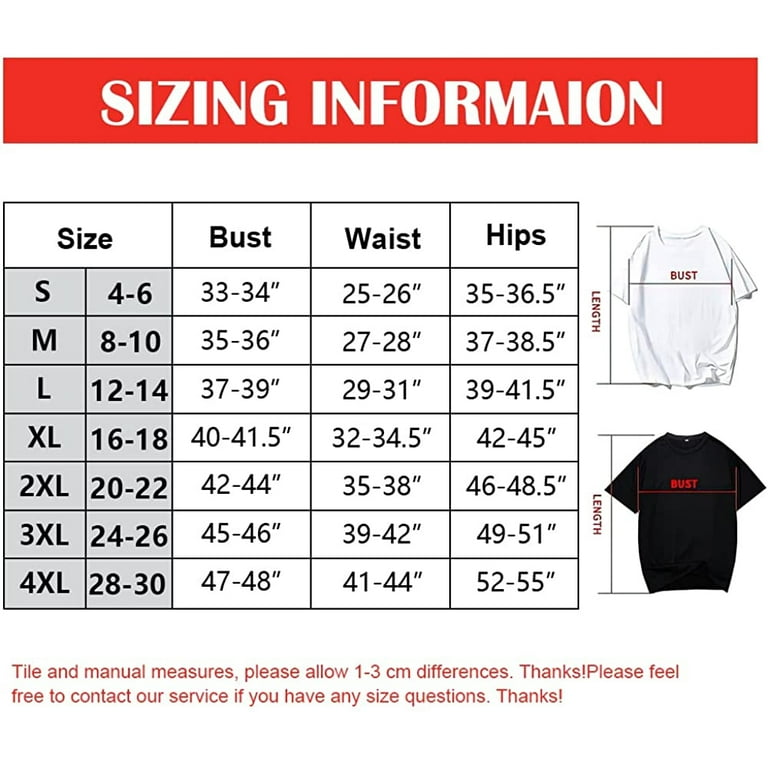
    The hands. The hands age faster than the face. The skin is thinner, the sun exposure is constant when you drive, the washing and sanitizing during the last five years has done generational damage to the barrier, and the hand is the body part most exposed to UV in adult life. Hand creams labeled for hand care are usually moisturizers and nothing more. What hands need is the same vitamin C, niacinamide, and SPF the face gets. Dermatologists will tell you that hand age spots are the slowest body hyperpigmentation to fade because the skin turnover is slower in regions with less sebaceous activity, and prevention is dramatically easier than reversal. Sunscreen on the back of the hands every morning, applied as deliberately as the face sunscreen, is the single biggest hand care decision available.

    The feet. Not pedicures. Feet. The skin on the heel is the only part of the body that develops calluses as a normal protective response, but calluses become cracks, cracks become infections, and a dry heel in your forties is a problem you can avoid in your thirties with eight minutes a week. A foot file, a urea-based foot cream like Flexitol Heel Balm, and a pair of cotton socks worn over the cream for an hour, once a week, will keep your feet in shape that pedicures never will. Pedicures are aesthetic maintenance. Foot care is skin care.

    The body care product stack that mirrors face care

    The body care product stack that mirrors face care

    Build the stack the way you would build a face routine. Cleanser, exfoliant, serum, cream, treatment, and SPF. None of these are luxuries. All of them are categories that exist, that work, and that you have probably never assembled in one place because nobody told you they belonged together.

    Body cleanser. Stop using body wash that strips. The body equivalent of a sulfate-foaming face wash is the same mistake at scale. Dove Sensitive Skin Body Wash and CeraVe Hydrating Body Wash are the two I rotate. Both are around $8 to $12 for a large bottle. They clean without disturbing the lipid barrier, they do not contain fragrance that disrupts the chest and decollete, and they pair with everything that comes after them. If you have body acne specifically, a benzoyl peroxide wash like PanOxyl 10% used as a contact wash on the back and chest, lathered and left for ninety seconds before rinsing, is the most direct intervention. Do not use it daily on the whole body. Use it where the breakouts live.

    Body exfoliant. This is where the stack jumps a level. The First Aid Beauty KP Bump Eraser, around $30, is a 10% AHA scrub formulated specifically for the bumpy texture on the upper arms and thighs. Necessaire The Body Acid is the leave-on version of the same idea, around $30. Soft Services Buffing Bar is a solid-format AHA exfoliant bar that you use in the shower like a soap, around $36, and it’s the easiest way to exfoliate the back because you can reach it. Susan Yara, who founded Naturium and helped build the body acid category as much as anyone in the industry, has been clear in interviews that body skin tolerates higher acid percentages than face skin because the skin is thicker and the barrier is more robust, which is why a 12% lactic acid lotion that would shred your cheeks is reasonable on your shins. AmLactin Daily Moisturizing Lotion with 12% lactic acid is the workhorse here at around $15, and it’s the single product that will change a leg from rough to smooth in two weeks if you use it nightly.

    Body serum. Yes, really. Necessaire The Body Serum, founded by Randi Christiansen and built specifically around the premise that the body deserves the same actives as the face, contains 5% niacinamide, hyaluronic acid, and amino acids. It is around $40 for a generous pump bottle. Applied to damp skin after the shower, before cream, it is the closest body parallel to the niacinamide serum step you do on your face. Skeptics will tell you a body serum is marketing. It is not. The niacinamide reduces sebum dysregulation that causes back and chest acne, calms redness, and adds the same kind of texture improvement on body skin that it does on facial skin. If you cannot believe in a body serum yet, start with this one for sixty days and see what you think.

    Body cream. This is the seal step, and the one most women already do, just with the wrong product. The drugstore lotion in a pump bottle is hydration only. What you want is a body cream that contains ceramides and ideally a low percentage of a chemical exfoliant for daily turnover. CeraVe SA Body Cream is around $18, contains salicylic acid plus ceramides plus hyaluronic acid, and it’s the daily moisturizer-plus-exfoliant in one tub. AmLactin Rapid Relief Restoring Body Lotion is a 15% lactic acid option around $17 if you want a higher percentage. Eucerin Advanced Repair Cream is the heavier, fragrance-free option for winter or for skin that has been allowed to get cracked, around $14. Apply within three minutes of getting out of the shower, on still-damp skin, for the absorption that makes the difference.

    Targeted treatments for the problems body lotion will never fix

    Five problems show up on adult bodies that a daily moisturizer was never going to solve, and each has a specific treatment that is worth knowing by name.

    Body acne, especially on the back, shoulders, and chest. Differin Gel, the same 0.1% adapalene retinoid that costs around $14 at any drugstore, works on body acne the same way it works on facial acne. Applied to the back two or three nights a week with a long-handled applicator, it reduces inflammation and breaks up the clogged follicles that cause the bumps. Pair with PanOxyl 10% in the shower a few mornings a week. Give it twelve weeks.

    Hyperpigmentation on the elbows, knees, inner thighs, and underarms. This is the issue Dr. Shasa Hu, a dermatologist at the University of Miami who directs the cosmetic division and works with pigmentation in skin of color, has talked about repeatedly in clinical settings. Her position is consistent. For melanin-rich skin, the safe and effective treatments for body hyperpigmentation are azelaic acid, niacinamide, kojic acid, and tranexamic acid. Avoid hydroquinone for long-term use on body skin for the same reasons you avoid it on the face. The Inkey List Tranexamic Acid Serum, around $15, applied to the spots at night, and Naturium Alpha Arbutin 2% Serum, around $20, are two over-the-counter options that have shown real results in eight to twelve weeks of consistent nightly use on darker elbow and knee skin. Pair with SPF on those areas if they’re ever exposed.

    Hand age spots. The Eucerin Q10 Anti-Wrinkle Face Cream, despite the name, is the hand cream that dermatologists I know quietly recommend for the back of the hands when age spots are starting to show, around $13. Coenzyme Q10 plus the daily SPF habit I am about to harangue you about in the next section is the only realistic protocol for hand spots short of in-office laser treatment, and the laser is genuinely the more effective option if you have access. For prevention, La Roche-Posay Mela B3 Serum applied to the back of the hands at night, around $50, contains tranexamic acid and niacinamide and is the only “face serum” I deliberately repurpose for hands.

    Chest dehydration and crepiness. The chest is the zone that responds fastest to retinoid extension. If you are already using a retinoid on your face, extend the application down onto the upper chest two to three nights a week, not nightly to start. Within six to eight weeks the texture will begin to smooth. Pair with a vitamin C in the morning, applied from collarbone to bra line, and SPF.

    Foot calluses. Urea cream at 25% or 40%, like Flexitol Heel Balm or Eucerin Roughness Relief, applied nightly and locked in with cotton socks. A glass foot file once a week on damp post-shower skin. That is the entire protocol.

    Black woman applying body sunscreen from a tube to her hand and forearm in warm daylight

    The SPF question, and 40 years of UV damage we ignored

    The SPF question, and 40 years of UV damage we ignored

    This is the section I am the loudest about, because the body is where forty years of UV damage has been accumulating while we were applying SPF 50 to our face and SPF zero to our chest. Dr. Whitney Bowe, a New York City dermatologist who has talked about this extensively in her clinical practice, makes the same point I am about to. The skin on the chest, the back of the hands, the forearms, and the shins has been getting daily incidental sun exposure for decades, and most of the body hyperpigmentation, the crepiness, and the texture changes we attribute to “aging” are photoaging. Photoaging is preventable going forward. It is not reversible without serious in-office intervention, but it is fully stoppable from today.

    The reason most women do not wear body SPF is that the products are bad. They have been bad for thirty years. They are thick, white, greasy, fragranced, expensive per ounce, and they pill under clothing. That has changed in the last four years and I want you to know the products that have changed it. Supergoop Glowscreen Body, around $42, is a tinted body SPF 40 that wears under clothes, does not pill, and has a satin finish that does not cast on darker skin. Black Girl Sunscreen Make It Matte SPF 45, around $19, was formulated for melanin-rich skin specifically and goes on without the white cast that ruined every other sunscreen we tried before this brand existed. Vacation Classic Lotion SPF 30, around $22, is the one I keep in my bag for weekend application because it smells like a piña colada and people will use what they enjoy using.

    The application math. For the body, you need roughly one shot glass worth of sunscreen, around 30 milliliters, for adequate coverage. That is more than most people use, and it is the actual amount you need to hit the SPF on the label. The back of the hands every morning, even on days you do not go to the beach, costs you ten seconds. Do it for the next twenty years and you will have hands that look like your hands, not your mother’s hands.

    The weekly upgrade: dry brushing, masking, in-shower oil

    The weekly upgrade: dry brushing, masking, in-shower oil

    Three practices to add weekly, not daily, that move the needle without taking more time than you have.

    Dry brushing. A natural bristle body brush, around $20, used on dry skin before a shower, in upward strokes toward the heart, for two minutes. The lymphatic-drainage claims are oversold by influencers, but the mechanical exfoliation is real, the circulation increase is real, and the prep for product absorption afterward is real. Twice a week is plenty.

    Body masking. The Necessaire Body Wash and the Naturium Glow Getter mask are both options, but the best body masking habit I have built is the bentonite clay paste on the chest and back, applied for fifteen minutes once a week, rinsed off in the shower. Aztec Secret Indian Healing Clay, $11 for a tub that lasts a year. Mix with apple cider vinegar to a paste, apply, wait, rinse. It is the cheapest meaningful body skincare product on the market.

    In-shower body oil. A body oil applied at the end of a shower, on wet skin, while you are still in the steam, before you towel dry. Nuxe Huile Prodigieuse, around $40, is the cult option. Sweet almond oil from the grocery store, $8, is the budget option. Both work. The point is the lipid layer that locks in the moisture before towel-drying ever evaporates it. Two pumps, ankles to shoulders, two minutes. The difference in winter skin is dramatic.

    The night routine for the body

    The night routine for the body

    The full nightly stack, in order, on damp post-shower skin. Body wash that does not strip. Towel-pat, do not rub dry. Body serum, two to three pumps, ankles up. Body cream with an acid in it on the legs, on the back of the arms, on the chest. Pure ceramide cream on any dry spots. Targeted retinoid or treatment on the zones that need it. SPF in the morning. That is the routine. It takes seven minutes once you are practiced. Most women I know are spending twenty-five minutes on the face routine and the seven on the body, and they are seeing the kind of skin transformation across the whole body in twelve weeks that the face took them three years to build.

    The plus-size-specific reality nobody covers

    The plus-size-specific reality nobody covers

    I am going to talk about something that the mainstream body skincare conversation routinely leaves out, because the writers who get the body care assignments are usually at the smaller end of the body range and they write from their own experience. Plus-size bodies have more surface area to treat, more skin folds to monitor for friction and inverse conditions like intertrigo, and more friction points where chafing and post-inflammatory hyperpigmentation become a recurring management issue rather than a one-time fix. None of this means the routine changes in its components. It means the routine changes in its volume and its targeting.

    More surface area means more product. The standard body lotion bottle that lasts six weeks for a size 4 woman lasts three weeks at size 18. Build that into the budget. Buy bigger sizes when they exist. CeraVe Hydrating Body Wash comes in a 32-ounce pump for around $18 and that is the version to buy.

    Skin folds need their own protocol. The under-bust, the inner thigh, the lower belly, the area behind the knees in some bodies. These zones run warm, retain moisture, and develop friction-based hyperpigmentation and occasional yeast-driven irritation. The protocol is dry the fold thoroughly after every shower, dust with an anti-fungal powder if there is any redness or smell, and use a barrier cream like zinc oxide diaper rash cream on any spot that is actively irritated. Lume Whole Body Deodorant is one product specifically built for this category at around $20, and it has changed what under-bust care looks like for many women.

    Chafing zones – inner thigh, under-arm, bra line – benefit from a daily barrier balm. Megababe Thigh Rescue, around $14, and Body Glide, around $9, are the two product categories that prevent the friction in the first place, which prevents the post-inflammatory hyperpigmentation that follows the friction. Treating chafe-related darkening on the inner thigh is harder than preventing it. Prevention is two seconds of glide stick before you get dressed.

    Keratosis pilaris and the 12 to 16 week timeline

    Keratosis pilaris and the 12 to 16 week timeline

    I want to be honest about the keratosis pilaris timeline because I have seen too many women give up at week four convinced the products do not work for them. They work. The timeline is just longer than the marketing implies. KP is a genetic keratin overproduction in the hair follicles, most commonly on the back of the upper arms, the front of the thighs, and sometimes the cheeks. It is not a hygiene issue, it is not an exfoliation issue in the way blackheads are, and it does not respond to scrubbing harder. It responds to consistent leave-on chemical exfoliation, daily, for twelve to sixteen weeks before the bumps begin to flatten meaningfully.

    The protocol that works on KP. AmLactin 12% lactic acid lotion or AmLactin Rapid Relief 15% lactic acid lotion, applied to the affected areas every single night for sixteen weeks. Pair with a weekly physical exfoliation – the KP Bump Eraser or the Soft Services Buffing Bar – to slough the dead skin that the acids have loosened. Don’t switch products at week six because you’re impatient. The follicles have to fully turn over, the keratin plug has to dissolve completely, and the pigmentation around each bump has to fade. Sixteen weeks is the realistic floor. Some women see results at twelve. A few need twenty. Pre and post photos of the same patch of upper arm, taken in the same light, every two weeks, will keep you honest about whether it’s working when your eyes adapt to the gradual change.

    What changes when you start

    What changes when you start

    The keratosis pilaris bumps on the back of your arms. The dry shins that have crackled in winter since you were twenty-two. The hyperpigmented elbows you have stopped photographing. The chest dehydration that makes you reach for a turtleneck instead of a v-neck. The age spots on the backs of your hands that you have started covering with the sleeves of every blouse. The calluses on your heels that have made you skip sandal weather. None of these are signs of aging. They are signs of a body that has never been treated like skin. They are the visible record of a decision the marketing industry made for you decades ago about which parts of you were worth the same care, and which parts were a $4.99 afterthought.
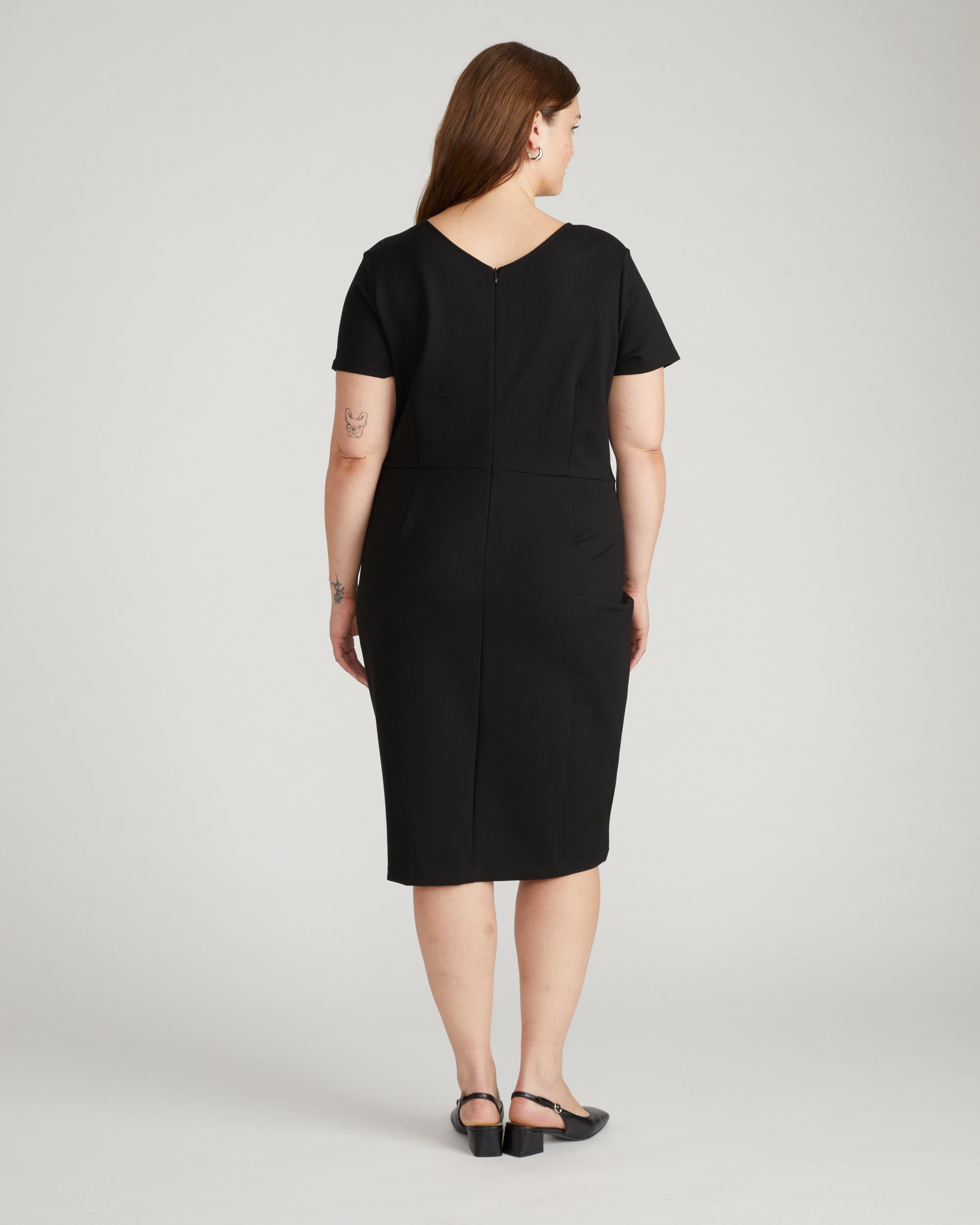
    What changes when you start. The first four weeks, the chest hydration comes back and the shins stop catching on your sheets. The second month, the back acne quiets and the elbows begin to lighten. By month four, the KP bumps that have been there since adolescence start to flatten and you can run your hand over the back of your arm and feel skin instead of texture. By month six, the hands look like they belong to the face. By month twelve, you stop thinking of your body as a problem to manage and start thinking of it as skin you have been taking care of. None of that requires a $185 facial. It requires a fifteen-minute routine, a credit card, and the decision that the rest of you deserves what your jaw has been getting all along. I refuse to call any of this self-care, because that framing has been used to sell us a lot of nothing for a lot of money. This is maintenance. This is the version of body care that the marketing budget never funded. The skin is yours. Treat it like it is.

  • Plus-Size Relationships: How to Build a ‘Date Night Drawer’ in Your Closet

    Plus-Size Relationships: How to Build a ‘Date Night Drawer’ in Your Closet

    Plus-size woman size 22 in front of an open closet with a five-outfit date-night drawer, Brooklyn apartment, editorial fashion photo

    On a Friday in October, at 5:47 pm in my Crown Heights apartment, I had fourteen minutes before I needed to be on the F train to meet a man I had been texting for two weeks at a wine bar in the West Village. I had known about this date for nine days. I had also, somehow, not picked an outfit. The closet was open. The dresses on the left looked like job interviews. The dresses on the right looked like weddings. The jeans were unwashed in the corner. My hair was done. My makeup was done. And I was standing in a black bra and the wrong shapewear, holding a hanger with a sweater I had already decided was not the move, with my phone buzzing the F-train alert from Citymapper. I cried for forty seconds. I put on the third thing I touched. I was eleven minutes late.

    That was the night I built the date-night drawer. Not the next day, not the next week, the next morning at 9 am with coffee, the bedroom door closed, and a kitchen timer on. The premise was simple. I was a working fashion editor in New York, size 16 to 18 depending on the cut. I had been on enough dates to know there are five shapes a date-night outfit takes. I was going to pre-decide all five, hang them in one section of the closet, and never have a Friday 5:47 pm again. This guide is what came out of that morning, refined across two years and more dates than I will admit to my mother.

    The Friday 5:47 pm problem (and the date-night drawer solution)

    The Friday 5:47 pm problem (and the date-night drawer solution)

    The Friday 5:47 pm problem is not really about clothes. It is about decision fatigue colliding with body insecurity at the exact moment you have the least time and the most adrenaline. A plus-size woman getting ready for a date is solving four problems at once: does this fit my body today, does it suit the venue, does it match the level of effort I want to telegraph, and does it not feel like a costume. By 5:47 pm on a Friday, after a full workweek, your prefrontal cortex is not built for that. Mine sure was not.

    The date-night drawer fixes the timing, not the body. It moves the decision from 5:47 pm Friday, when you are panicking, to 10 am Saturday, when you are calm and full of toast. Allison Bornstein, the stylist whose 3-Word Method anchors her book Wear It Well, has spent her career arguing that a capsule wardrobe is not about owning less. It is about pre-deciding more. She builds occasion-specific micro-capsules for clients exactly so that no one has to make a creative decision at 5:47 pm on a Friday. The date-night drawer is that thinking applied to one occasion, one body, and one closet.

    Karla Welch, the stylist who has dressed Tracee Ellis Ross and Olivia Wilde across years of red carpets and press tours, works on the same principle. You do not style for an event the day of an event. You build a wardrobe of pre-vetted looks that are always at the front of the closet, and when an event lands on the calendar you pick from the menu. For her A-list clients that menu lives in a warehouse with a fit assistant. For us it lives in a drawer or a six-hanger zone of the closet we can see in one glance.

    The math of the drawer is five. One column dress for first dates. One dressed-up separate, so a skirt and a knit, or trousers and a satin top. One elevated jeans look. One cocktail option for the dressier evening. One bad-weather backup that solves rain, snow, or 92-degree humidity. Five looks, five hangers, one shelf for shoes and bag. That is the entire system. Add a second dress when you have it figured out. Do not start with more.
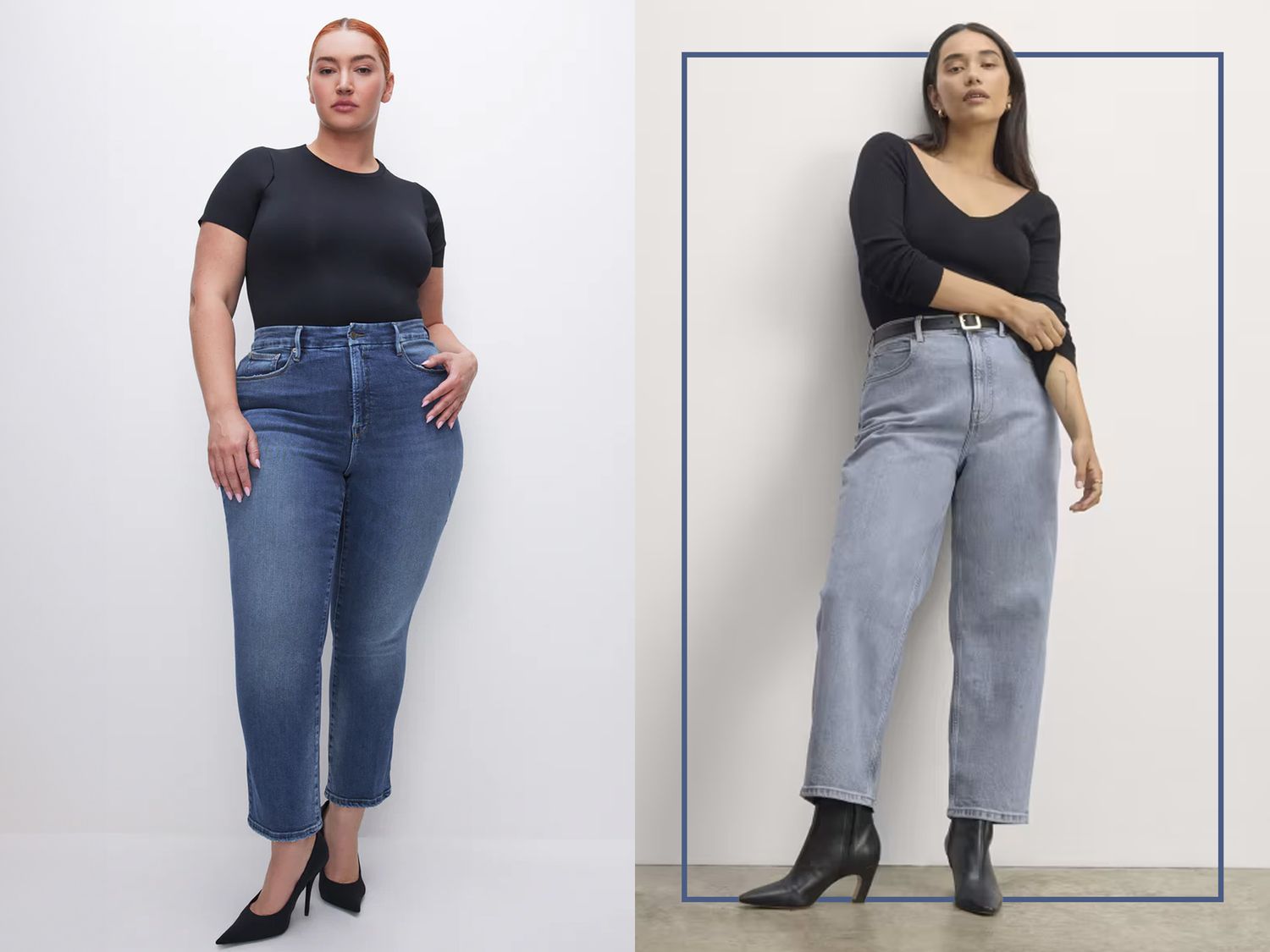
    Five is the right number because it covers the four venues you will actually be invited to – the wine bar, the dinner, the cocktail event, the casual day-date – plus a wild card for weather. Five is also the most a person can mentally hold as “available options” without falling back into the original paralysis. Pick six and you are back in the drawer for fourteen minutes.

    Phase 1: the audit (which 5 outfits would you actually wear)

    Before you buy a single new piece, audit what you already own. The mistake almost every Pinterest date-night guide makes is to start with a shopping list. Your closet has receipts. It is more likely to know what works than a stranger writing a listicle.

    The method takes one Saturday morning and a long mirror. Pull every dress you have ever worn on a date, every skirt-and-knit combo, every pair of jeans you have ever worn out at night, and every cocktail-adjacent piece. Pile them on the bed. Now try them on. Not all at once, not as outfits yet. One garment at a time, ten seconds in the mirror, ask one question: would I leave the house in this tonight, with this body, at this age. If yes, it goes to the right side of the bed. If no, it goes to the left.

    The right side is your starter inventory. Almost every plus-size woman I know finds three or four pieces here that she had completely forgotten she owned. The black Eloquii dress from a 2023 holiday party that still fits. The Madewell wide-leg jeans she stopped wearing because she switched jobs to remote. The thrifted velvet skirt that is genuinely incredible on her. Those pieces seed the drawer for free.

    The left side is information, not failure. Look at the rejected pile and write down the reasons next to the garment in a notes app. “Too short for a sit-down dinner.” “Bust gaps at button three.” “The fabric pills under the arm where my bag rubs.” Those notes are your shopping criteria. When you go to fill the drawer, you are buying against this list, not against a Pinterest grid.

    Now pretend to assemble the five. Lay the pieces out in five rows on the bed: column dress, dressed-up separate, elevated jeans, cocktail, bad-weather backup. The gaps are the shopping list. Most plus-size closets I have helped audit are missing the column dress and the bad-weather backup. They are full of cocktail dresses and short skirts that read better at 26 than 32, and short on the workhorse pieces that quietly do the most. Honest gap analysis here saves you four hundred dollars in impulse buys.

    Plus-size woman sorting date-night outfit candidates into five rows on a bed during a closet audit

    Phase 2: building the drawer (storage, hangers, dust bags)

    Phase 2: building the drawer (storage, hangers, dust bags)

    The drawer is a physical zone of the closet. It is not metaphorical. The whole point is that you can see five looks in one glance, in less than ten seconds, and pull one without thinking. If the five looks are scattered across the closet between work blazers and a winter coat, the system fails.

    Pick the zone first. Most closets have a section of rod between thirty and forty inches wide that is at eye level when you stand in front of it. That is your drawer. Move your work clothes to the left, your weekend casual to the right, and clear the center for the five looks. If you have a shelf above that rod, that is for the bag and shoes. If you have a small drawer adjacent to it, that is for the jewelry. The whole zone should not exceed four feet of closet linear space.

    Use velvet hangers, not wood, not wire. Velvet keeps satin and silk separates from sliding off the hanger and pooling on the floor at 5:47 pm, which is its own special trauma. The Container Store’s velvet hangers are about a dollar each in a forty-eight pack, and a slim hanger lets you fit five hangers in the small zone you cleared. Wide wooden hangers eat the real estate.

    Hang each look together. The dressed-up separate is hung as a set: trousers folded over the hanger bar, satin top on the same hanger, draped. The cocktail dress hangs alone. The column dress hangs alone. The elevated jeans get their own hanger with a clip-bottom hanger holding the jeans and a regular hanger above for the silk camisole. The weather backup is the rain or snow piece plus whatever goes under it. Every hanger is a complete outfit ready to grab.

    Use a dust bag for the cocktail piece if it is silk, velvet, or satin. Eloquii sometimes ships dresses in a black branded bag with a drawstring. Save those. Cuyana sells nicer cotton dust bags for about twelve dollars each if you want the closet to look like a magazine, but a pillowcase works for the unseen pieces.

    Steam the drawer pieces in advance, not the day of the date. A Conair handheld steamer is forty dollars and lives on the floor of the closet. On the Sunday maintenance cycle, which I will get to, you steam any look that came back wrinkled. The whole point of the drawer is that on Friday at 5:47 pm, nothing in it needs a single touch.

    Dress option: the column dress for first dates

    The column dress is the most-worn piece in the drawer. A column dress is a long, lean silhouette that skims rather than clings, in a single dark color, with a neckline that is not strapless. It is the dress that solves the dinner-with-someone-you-just-met problem because it reads as effort without reading as a wedding guest. It is intentional, it is flattering at any size, and it does not require a single styling decision once you put it on.

    My recommendation is a long, lean ponte column from Universal Standard. The brand cycles a few similar silhouettes through its dress rotation, and the relevant cut is the ponte with a deep but not vulgar V-neck, three-quarter sleeves, and a slight A-line that hits between the calf and the ankle. Ponte does not cling, does not pill, and survives a sit-down dinner without bunching at the waist. Universal Standard sizes up to a 40 across most dress styles, and the cuts in this category are restocked across seasons, which matters because if you love yours, you will eventually want a second.

    A second column option is an Eloquii faux-wrap column, currently in their core dress rotation in black, burgundy, and a seasonal third color. It cinches at the waist with a tie, has a true V-neck, and runs long enough to wear with heels or flats. It is the dress your friend will compliment when you walk into the wine bar. Eloquii sizes 14 to 28 across most styles, and this cut returns every season with minor variations, so the wash and length shift, but the silhouette holds.

    For a higher-budget pick, BHLDN, Anthropologie’s wedding-and-event division, runs a crepe gown in their extended sizes every season. Their plus extension goes to size 26 in most styles. A heavier crepe with a side seam zip and a subtle bias cut is the column dress for the second date where you already know you like him and want to dress slightly above the venue.

    Plus-size woman in a black column dress walking into a wine bar, Universal Standard Bond dress, size 22 first-date outfit

    What the column dress is not: it is not a bodycon. It is not strapless. It is not a wrap dress with a tie at the natural waist, because tied wraps tend to twist or pop open during a four-hour dinner. The column dress is the silhouette equivalent of a low calm voice. Pair it with one earring choice, one heel, one bag, and you are dressed.

    Dressed-up set: the elevated separate option

    Dressed-up set: the elevated separate option

    The dressed-up separate is the most flexible hanger in the drawer because it can be deconstructed into the rest of your wardrobe on weekdays and reassembled for date night with no effort. The formula is one bottom that reads dressed-up, plus one top that reads soft and feminine. A satin midi skirt with a fitted knit. Wide-leg trousers with a silk camisole. A leather skirt with a cashmere crew.

    My current dressed-up set in the drawer is the Reformation Cleo Skirt in the extended-sizes rotation, paired with a Sundry rib-knit long-sleeve in cream. The Reformation Cleo is the A-line maxi with a drawstring waist, around $198 in the extended-sizes cut, and Reformation’s extended rotation tops out at size 24. The Cleo reads more expensive than it is, which is the whole game. Reformation discontinues fast, so when you find your color, buy two.

    The Sundry rib-knit long-sleeve in their plus rotation is around $98. Sundry is sold at Anthropologie, Bandier, and direct, and their plus range is small but reliable. The rib knit fits close without clinging because the rib structure has give that smooth knit does not. A cream rib top with a chocolate satin skirt is a flattering, warm color combination that does not require a single statement piece to feel complete.

    An alternate dressed-up set: wide-leg Anthropologie Maeve trousers in black, around $138, with the Eloquii satin camisole in champagne or oxblood, around $69. Maeve is Anthropologie’s in-house line and their plus sizing in dress trousers is one of the better fits on the market for a size 22, with a high waist that stays put through dinner and a leg cut that does not pool at the floor when paired with a heel.

    The set works because it lets you build a date-night look out of pieces you already wear in regular life. The Reformation skirt I wear to brunch with sneakers. The rib top I wear to coffee meetings with jeans. On Friday night they become a date outfit. The drawer is not adding garments to my life. It is teaching the garments how to combine.

    Elevated jeans: the not-trying-too-hard date

    Elevated jeans: the not-trying-too-hard date

    The elevated jeans look is for the dates where the venue is a beer garden, the date said “wear whatever,” it is Saturday afternoon, or the man works in tech and is going to wear a hoodie no matter what. Showing up in a column dress to a sports bar is a vibe mismatch. Showing up in your weekday jeans and a t-shirt is, however, undercooked. The elevated jean look threads that needle.

    The formula is a clean dark wash wide-leg or straight-leg jean, plus a silk or satin camisole or a fitted knit, plus a structured layer (a blazer, a leather jacket, or a long trench), plus a heel or a polished flat. Four pieces. Every one of them is a piece you already own or should.

    My jean is the Universal Standard Seine High-Rise Wide-Leg in indigo, $108. The Seine in wide-leg sizes through a 40, has a real high rise that does not roll, and the indigo is dark enough to read evening rather than weekend. Universal Standard reformulated the Seine in 2023, so if you remember an earlier cut, the current one runs slightly straighter through the thigh.

    The top is the Eloquii satin camisole in cream or oxblood, around $69, the same one used in the dressed-up set option. The camisole tucks into the high-rise jean, the small bra strap shows along the neckline (which is intentional and reads as polish, not accident), and the cream against indigo is the color combination that does most of the work.

    The layer is the Universal Standard ‘Stephanie’ Cropped Trench at $198, or, on a real budget, a black Madewell blazer from their plus extension at around $158. The Stephanie hits at the hip and gives the high-rise jean a moment to be seen. A cropped blazer does the same job in colder weather. A long leather jacket is the third option for women whose three words include downtown.

    The shoe is a polished flat or a low block heel, not a stiletto. The Madewell pointed-toe ballet flat at $128 in cream or black is the workhorse here. The flat reads as intentional because it is, and it telegraphs that you are dressed for the actual venue rather than performing a level of effort the night does not require.

    The bag is a small leather mini, not a tote, not a clutch. A Sezane mini bag in oxblood at around $195, or a Madewell crescent shoulder bag at $148, both fit a phone, a lipstick, a card holder, and a tampon, which is the date night essential kit.

    Cocktail option: the dressier evening

    Cocktail option: the dressier evening

    The cocktail look is for the dates where the venue is a real restaurant on the Upper East Side, a gallery opening, his work holiday party that you got pulled into at month four, a birthday dinner, an anniversary dinner once you are past it, or the date you put on the calendar a week in advance because he made a reservation. Not every dress in your closet is a cocktail dress. You need one specifically designated to this hanger.

    My pick is a velvet cocktail piece from BHLDN’s extended-sizes rotation, in either black or a deep wine. BHLDN runs velvet styles each winter, and the relevant silhouette is a structured-shoulder, slightly fitted-waist mini in the $250 to $350 band. Velvet is the smartest fabric for a cocktail look on a curve body because it drapes with weight, does not cling to shapewear, photographs well in low light, and reads as effort without reading as a wedding guest. A length that hits just above the knee works with heels or with a knee-high boot in winter.

    A second cocktail option, lower budget, is an Eloquii sequin sheath. They cycle one in and out every fall in updated colorways. Sequin reads dressier than velvet but is harder to layer, so if your winter calendar has more cocktail-event dates than mine does, get both. Eloquii sizes 14 to 28, the sheath has a forgiving cut at the waist, and a fully lined version keeps the sequins off your skin.

    For a Reformation entry, the brand’s extended-sizes rotation periodically includes a satin slip with a cowl or scoop neckline. The bias-cut slip silhouettes read as much more expensive than their actual price and are genuinely well-cut on a curve body when you can catch them in stock.

    The cocktail look pairs with one heel, one earring, one bag, and a small clutch in black satin if the dress is not black, or a Cuyana mini in black if the dress is colorful. The whole look should land in under five minutes once it is hanging assembled.

    Bad-weather backup: rain/snow/heat reality

    Bad-weather backup: rain/snow/heat reality

    The bad-weather backup is the hanger most date-night guides skip and the one that saves the most Friday nights. New York weather will be 38 and raining sideways in October, 16 degrees with subway-grate ice in February, or 92 with 80 percent humidity in July, and a date you scheduled three weeks ago is not getting rescheduled because the weather is feral. The backup outfit is the one you can run through a thunderstorm in and still arrive looking like you tried.

    The cold-weather version is a high-rise dark jean, a heavy turtleneck cashmere or merino, a knee-high boot, and a structured wool coat. The Eileen Fisher merino mock-neck in black, around $228, fits clean under a coat and does not pill. The Madewell knee-high boot in black at $298 fits a wide calf with their wide-shaft extension, which sizes up to 19 inches. The wool coat is whatever you already own. The full look reads as evening rather than weekend because of the heel of the boot and the cleanliness of the silhouette.

    The rain version is the Universal Standard Stephanie cropped trench in a treated cotton, around $198, layered over the dressed-up set or the elevated jeans. The trench is short enough not to drag in puddles and structured enough to read as outerwear rather than a raincoat. The shoe under it is a leather flat, not a heel, because the cobblestones in the West Village will eat a stiletto in any rain over a light drizzle.

    The summer-humidity version is a sleeveless linen midi dress, in a single dark color, with a strappy flat sandal. The Anthropologie Maeve linen midi at around $148 is the right cut here, sleeveless with a defined waist and a midi length that catches air. Linen wrinkles, but linen wrinkles look intentional in a way that polyester wrinkles do not. A cotton or silk slip underneath solves the cling problem at 92 degrees.

    The point of the backup hanger is that whatever the forecast does on Friday afternoon, you have an answer ready. You do not stand in front of the closet at 5:47 pm wondering whether the column dress will work under the wool coat. You already know it will not. You grab the backup. You leave the apartment. You arrive on time.

    The bag/shoe/jewelry shelf

    The bag/shoe/jewelry shelf

    The shelf above the drawer is the accessory zone, and it follows the same five-and-done logic. One bag, two shoe pairs, three jewelry sets. The shelf is not where you store every bag you own. It is where the date-night pieces live, pre-selected, so that the entire outfit including accessories is grab-and-go.

    The bag is one small leather crossbody or mini that fits a phone, a card holder, a lipstick, a tampon, and a key. The Sezane mini, around $195, in oxblood or black, is the budget-friendly version. The Cuyana mini classic at $328 is the slightly nicer version, in cream, black, or caramel, and the leather softens beautifully over a year. One bag, one color, one shelf spot. Done.

    The shoes are two pairs. One Madewell pointed-toe flat in cream or black at $128 for the elevated jeans look and the bad-weather backup. One low block-heel sandal or pump for the column dress and the cocktail dress. The Sam Edelman block-heel pump at around $150 is a wide-fit option that does not pinch. Two pairs only, on the shelf, in shoe bags. If you wear a heel only to one of the five looks, drop to one pair.

    The jewelry is three sets. A gold hoop pair for the column dress and the elevated jeans. A statement earring (one specific pair, not a drawer of them) for the cocktail dress. A delicate gold chain or pearl necklace that goes with everything. That is it. Skip the bracelet stack, skip the rings, skip the layered necklaces. Plus-size styling reads cleanest when the accessories are deliberate rather than maximalist on a date.

    One small bottle of fragrance on the shelf. Whatever you have decided is your scent, in a travel size, so you can spritz on the way out the door. Le Labo Santal 33 in the 15 ml travel at around $86. Maison Margiela Replica By the Fireplace in the 30 ml at $112. Whatever you have committed to. The drawer system extends to scent because deciding what perfume to wear at 5:47 pm is also a decision you do not want to make.

    The maintenance cycle (every Sunday)

    The drawer is a living system. It needs a fifteen-minute maintenance cycle every Sunday, and that maintenance cycle is what separates a working drawer from a Pinterest fantasy that lasts six weeks.

    Every Sunday morning, before the laundry goes in, open the drawer zone and do five things. One, check the hangers. Anything that came back from a date needs to be steamed, dry-cleaned, or hand-washed. Two, check the shelf. Any shoe that needs a polish, polish it. Any bag that needs a wipe-down, wipe it. Three, check the jewelry. Any earring back that is missing, replace it. Four, check the fragrance. If the travel size is below a quarter full, refill it from the main bottle. Five, look at the five hangers and ask whether any of them no longer fits this season. Spring requires a different bad-weather backup than winter. Swap the hanger out, hang the off-season piece in storage.

    The whole maintenance cycle takes fifteen minutes and runs on coffee. It is shorter than scrolling Instagram. The reason it works is the same reason any system works: the cost of the maintenance is paid in calm Sunday minutes instead of panicked Friday minutes, and the calm minutes are easier.

    Every season, do a longer audit. At the equinox, pull the drawer down, lay the five looks on the bed, and ask the same questions you asked when you built it. Does this still fit my body. Does this still match the dating life I am actually living. Does this still feel like me. If yes, hang it back up. If no, replace it, and add the rejected piece to the regular closet or the donation pile. The drawer is allowed to evolve. It is not a museum.

    The hardest part of the maintenance is the honesty about whether the drawer is being used. If three months pass and you have not pulled a single look from it, the issue is not the clothes. The issue is the dating life or the closet zone, and both are diagnosable. Either you are not going on dates, in which case the drawer is fine and waiting, or you are going on dates and pulling from elsewhere, in which case the drawer is wrong and needs re-auditing.

    Plus-size woman in her closet during the Sunday maintenance cycle of the date-night drawer, coffee in hand, Brooklyn apartment

    The challenge

    The challenge

    Here is the five-piece date-night drawer at size 22, by named brand, that you can build this week. Pull the cards together and have them assembled by next Sunday.

    The dress: a long-lean ponte column from Universal Standard in black, around $128, or the Eloquii faux-wrap column in burgundy at $159, or a BHLDN crepe gown from their extended-sizes rotation for the higher-budget pick.

    The dressed-up set: the Reformation Cleo Skirt in the extended-sizes A-line, around $198, paired with the Sundry rib-knit long-sleeve in cream, around $98. Alternate: Anthropologie Maeve wide-leg trousers in black at $138 with an Eloquii satin camisole in champagne at $69.

    The elevated jeans look: Universal Standard Seine High-Rise Wide-Leg in indigo at $108, the Eloquii satin camisole at $69, the Universal Standard Stephanie cropped trench around $198, and Madewell pointed-toe flats in cream at $128.

    The cocktail option: a BHLDN velvet mini in wine from their extended sizes, around $258, or an Eloquii sequin sheath at $189, or a Reformation extended-sizes slip when one is in stock.

    The bad-weather backup: dark high-rise Seine jean, Eileen Fisher merino mock-neck in black at $228, Madewell knee-high boots in the wide-shaft extension at $298, and a wool coat you already own. The summer version swaps in the Anthropologie Maeve linen midi at $148.

    The accessory shelf: Sezane mini bag in oxblood at $195 or the Cuyana mini classic in caramel at $328. Two shoe pairs, the Madewell flat at $128 and the Sam Edelman block-heel pump at $150. Three jewelry sets: gold hoops, one statement earring, one delicate gold chain. One travel fragrance, your committed scent.

    The challenge is this. By next Sunday, audit your closet, pick a zone, hang the five looks, stock the shelf, and run the first maintenance cycle. The total spend, if you are building the drawer entirely from new, is between $1,400 and $2,200 depending on which option you pick at each slot. If you already own pieces from the audit phase, you will spend a fraction of that. Either way, the next Friday a date lands on your calendar, walk to the drawer at 5:47 pm, pick the look that matches the venue and the weather, and leave the apartment on time. No tears, no F-train alert, no third-thing-you-touched. The drawer is the system that ends Friday closet panic. Build it once. Live in it for years.