Category: Fashion

  • How Betsie Larkin Built Honeylove Into the Third Name in Shapewear

    How Betsie Larkin Built Honeylove Into the Third Name in Shapewear

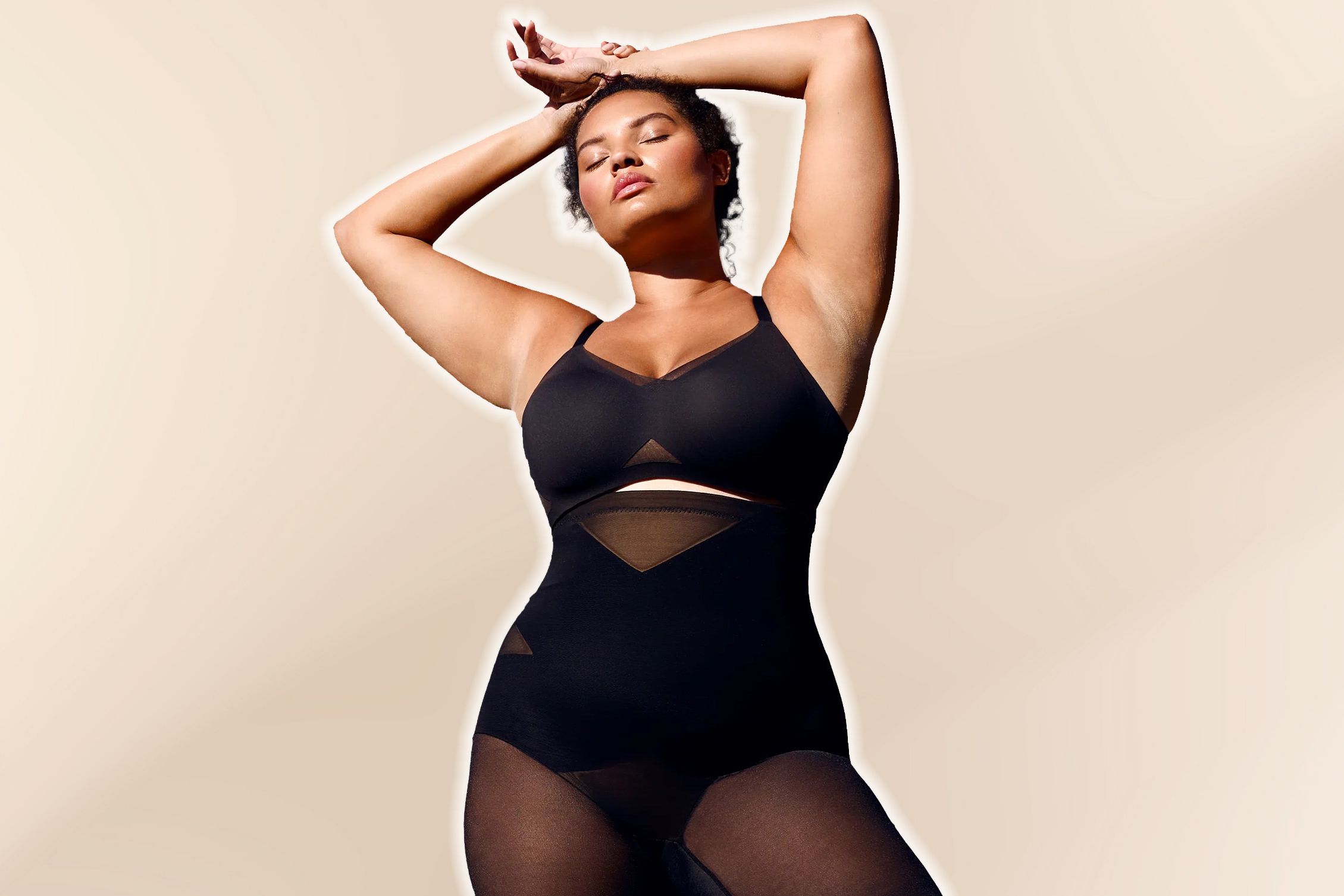
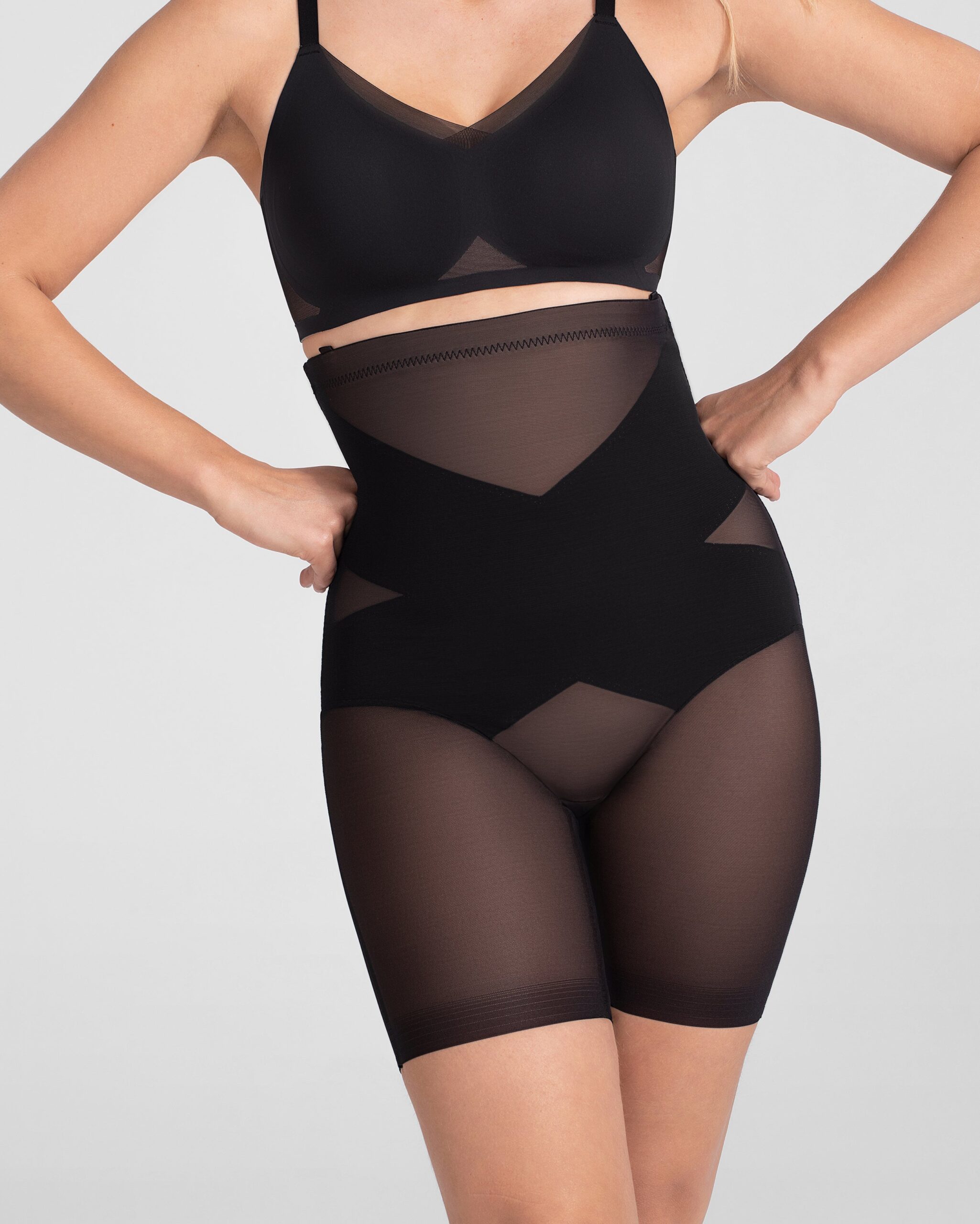
    Honeylove SuperPower shorts and sculpting bodysuit in nude and black on a cream backdrop

    Walk into any Nordstrom intimates floor in 2026 and the shapewear wall used to be a two-name conversation. Spanx on one end, Skims on the other, and a scatter of smaller labels in between that nobody asked the associate about. That has shifted. The Honeylove section now sits at eye level between the two giants in most full-line stores, the packaging in the soft cream-and-black palette that the brand has held since launch, and the associates have actually been trained on the difference between a SuperPower short and a Skims Sculpting one. Eight years after Betsie Larkin started prototyping the first piece in her apartment, Honeylove has become the third name customers walk in asking for by brand.

    This piece is about how that happened. What Larkin built, what the brand executes better than its bigger competitors, where it still falls short, and why it is worth paying attention to as a plus-size customer specifically. The shapewear category had calcified around two brands with very different theories of compression – Spanx tight enough to redistribute, Skims smoother and softer with less hold – and Honeylove arrived with a third theory. Structural, engineering-led, designed not to roll. The proposition is narrow. The execution has been disciplined. The brand has held that focus across nearly every product launch since 2018.

    The founder who could not find a piece that stayed put

    Betsie Larkin is not a celebrity founder. She does not have a styling rolodex, did not come out of a Calabasas product-development pipeline, did not have her name on a fashion-house letterhead before she launched. She was a singer-songwriter in the electronic-dance space in the mid-2010s, performing in fitted stage outfits regularly, and her actual founding story is the one shapewear customers know in their bodies. The pieces rolled down. The waistbands cut. The bodysuits dug into the shoulders. The compression that promised to smooth was actually creating a different silhouette problem two inches above the original one. She tried everything in the category that existed at the time, and the gap she experienced was the gap a lot of women experienced and accepted as the cost of wearing shapewear at all.

    Larkin spent her own savings working with a patternmaker and a small contract factory to prototype a short that would not roll. The breakthrough was a bonded silicone-and-fabric waistband construction that the brand calls the Liftwear waistband – a wide, structured band that grips against the skin without the elastic memory that causes rollover. The first product launched on the Honeylove site in 2018 with no traditional retail partner, no PR push, and a marketing budget that consisted of Instagram ads and a single founder-led story. The product sold out within weeks of the early influencer pickup and the brand has been chasing its own production capacity for most of the years since.

    The reason the founding story matters for the brand identity is the same reason it matters for the product: Larkin was solving a problem she had personally lived inside, and the discipline of that problem-solving shows up in every product the brand has launched since. Honeylove does not chase trend-of-the-moment ingredients or fabrics. The brand has stayed inside a narrow product corpus – shaping shorts, bodysuits, briefs, leggings, bras – and refined that corpus across iterations rather than sprawling into adjacent categories. That is unusual restraint in a venture-backed direct-to-consumer brand, and the restraint is the founder’s fingerprint.
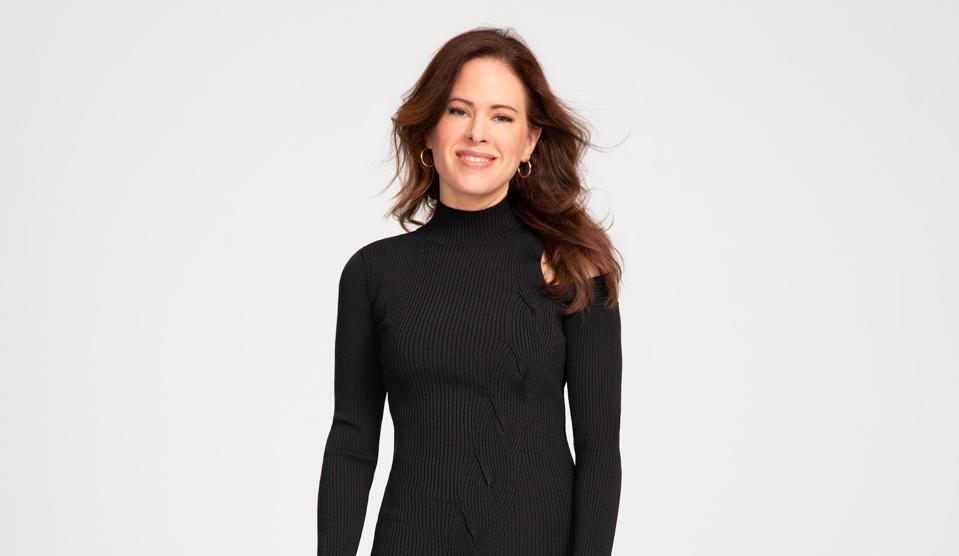
    Betsie Larkin, founder of Honeylove shapewear

    What the brand actually sells

    Honeylove sits squarely in the shaping category. The brand does not make outerwear, lounge, swim, or sleep. The product range is built around a core idea of structured shaping that does not roll, and every silhouette in the line is engineered around the same waistband and panel construction. The hero categories: shaping shorts and briefs, sculpting bodysuits, shaping leggings, shaping bras, and a small set of slip dresses and tank pieces.

    The sizing range goes from XS through 3XL across most of the core line, which lands at roughly a US size 22 to 24 depending on the cut. That is wider than where Skims started in 2019 but narrower than Universal Standard’s full range. For plus-size customers above a 24, the brand still has work to do, and I want to flag that upfront because the marketing language sometimes implies a broader range than the actual product grading delivers. The price tier sits between Spanx and Skims for direct comparison pieces – shaping shorts at roughly $70 to $80, bodysuits at $90 to $130, the leggings at $90, the bras at $60 to $80. Distribution today: honeylove.com direct, Nordstrom in-store and online, Amazon for a curated set of styles, and Macy’s at select doors.

    Where the brand gets it right

    The first thing Honeylove got right is the waistband problem they originally set out to solve. The Liftwear band on the SuperPower short and the Crossover short genuinely does not roll on most body shapes through most of a wearing day. I have worn the SuperPower in a size 2X under a fitted knit dress for a six-hour event and the band sat where I put it at the start of the night. Spanx Suit Yourself in the same wearing scenario migrates downward by about an inch over the same window, in my experience, and Skims Sculpting Shorts sit lower to begin with and ride up at the thigh. The waistband is the thing the brand built itself around, and it works.

    The second is the panel construction across the bodysuits. The brand uses what they call a Sculptlace or patterned-mesh panel through the torso of the sculpting bodysuits, which compresses without creating the smooth-but-stiff feeling of older-generation Spanx, and without the slipperier, softer compression of Skims that smooths more than it shapes. The panel is structured. It holds. For a plus-size body where the goal is genuine redistribution rather than just smoothing, the Honeylove construction does more actual work. The trade-off is breathability, which I will get to in the cons section.

    The third is the discipline around the product line. Honeylove launches roughly three to five new silhouettes per year, with each launch building on the existing engineering rather than chasing a new fabric trend. The 2022 leggings extension, the 2023 bra range, the 2024 slip dresses – all sit inside the same construction philosophy as the original shorts. The brand has not done a beauty extension, a swim extension, or an athleisure extension despite the obvious commercial pull to do so. That focus is rare for a venture-backed DTC label past year five.

    The fourth is the customer-experience layer that often gets overlooked. Honeylove offers a 100-day return window on most pieces – longer than Spanx, longer than Skims, comparable to Universal Standard’s 60-day window. The pieces are returnable worn, which matters in shapewear because the actual question is whether the silhouette works under your actual clothes, which you cannot test in the dressing room with the tags still on. The return policy is the kind of thing that signals real confidence in the product, and the brand has held it across all of its retail expansion.

    Where the brand has room

    Honest critique. The price ceiling is a real friction point. At $130 for the V-Neck Shaping Bodysuit, Honeylove is the most expensive of the three names in the standard shapewear conversation. Spanx Suit Yourself at $98 and Skims Sculpting at $78 both do related work for materially less money. The Honeylove construction is better-engineered, but “better-engineered at 30 to 60 percent more” is a math each customer has to do for herself. I think the bodysuits earn it for the right occasion. I am less convinced the basic shaping shorts earn it when the Spanx and Skims options are within a few percentage points of the same outcome.

    The breathability is the structural trade-off I mentioned earlier. The Sculptlace and patterned-mesh panels that deliver the structured compression also retain heat more than the lighter Skims fabrications. In a sit-down setting that is fine. For a long event in a warm room or any kind of summer wedding in the South, the bodysuit gets noticeable. This is the cost of the structured panel doing real work, but it is a cost worth naming.

    The sizing range above a 22 or 24 is the third gap. The brand markets itself as size-inclusive and the language sometimes implies a wider range than the grading delivers. Pieces in the 3XL grade do not always sit cleanly on bodies above a 24, and the bra range has a narrower band-and-cup matrix than specialty fit brands like Elomi or Cuup. For customers above a 26, the brand is not quite there yet, and that is worth knowing before you place an order.

    How it lines up against the rest of the category

    Honeylove does not exist in a vacuum. The shapewear category has three serious contenders in 2026, and the choice between them is not arbitrary.

    Spanx is the original. Founded by Sara Blakely in 2000, the brand still owns the institutional retail relationships and the broader product range that Honeylove does not have. Spanx Suit Yourself is the bodysuit most associates will hand you first. The fit is consistent. The compression is firm. The cut runs slightly small through the bust on most bodies, and the leg openings can leave a visible line under thinner fabrics. Spanx is the safe choice for the customer who wants the brand the rest of her wardrobe is already paired with. The trade-off is that the product engineering has not moved as far in the last five years as the newer brands have.

    Skims is the second name and the softer-feeling option. Founded by Kim Kardashian in 2019 and now sized through the broadest commercial color range in the category, Skims Sculpting and Skims Fits Everybody are the right choice for the customer whose priority is smoothing and a barely-there feel rather than structural redistribution. The pricing sits below Honeylove on most direct comparison pieces. The compression is genuinely softer. Plus-size customers above a 22 will find the Skims range more reliable than the Honeylove grading, which is the trade-off in the other direction.

    The honest read: if your priority is the bodysuit that will not roll and will actually hold under a fitted dress, Honeylove is the pick. If your priority is the smoother, softer, lower-compression smoothing layer for a casual lean, Skims wins on price and feel. If your priority is buying inside an institutional brand with the widest retail footprint, Spanx is still the default. Three different problems, three different right answers.
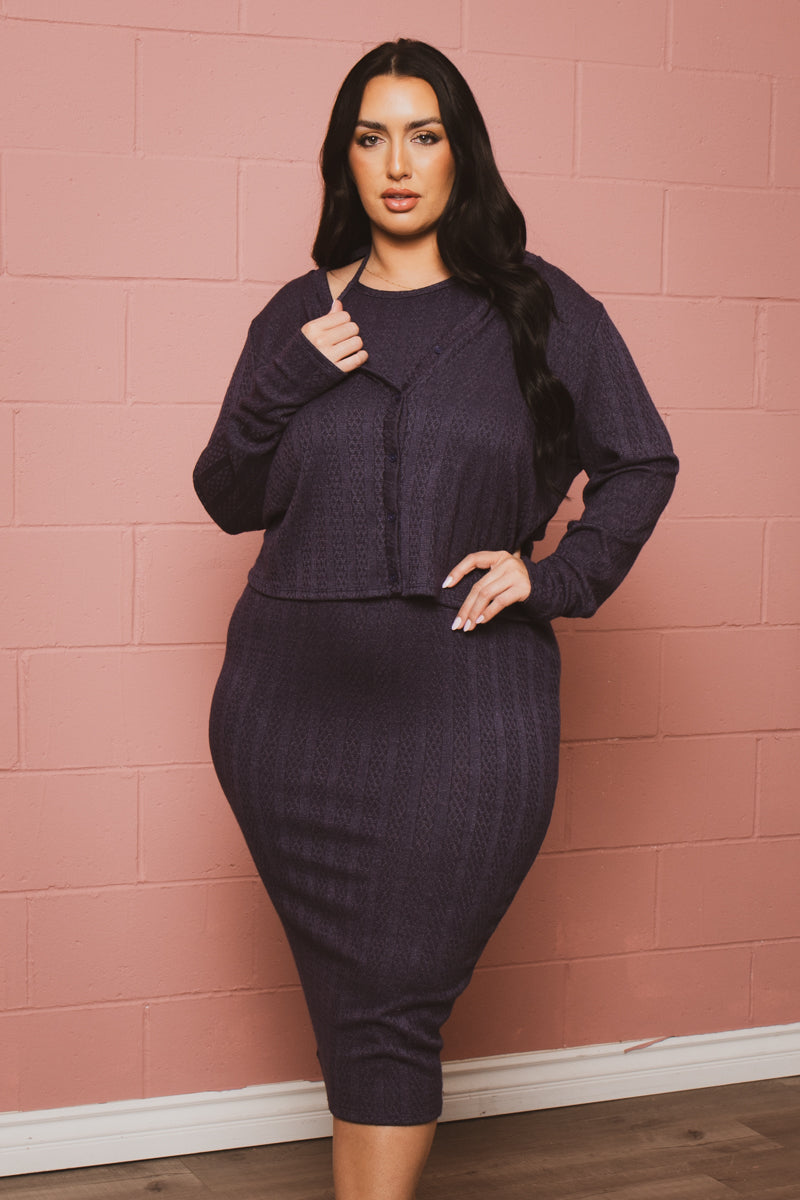
    Plus-size woman in fitted knit midi dress with smooth held silhouette in editorial lifestyle photography

    What to buy from them

    If you are buying Honeylove for the first time, do not buy the full system. The smart move is to test the brand on one piece that matches the silhouette problem you are actually trying to solve. The pieces I would put on a first order, in priority order:

    The Honeylove SuperPower Short at around $72 is the foundation piece and the one I would buy first. The Liftwear waistband holds through a wearing day in a 2X, the leg openings sit at mid-thigh without rolling up, and the compression is firm without bruising. This is the piece that earned the brand its reputation and it remains the strongest item in the lineup.

    The V-Neck Shaping Bodysuit at around $128 is the bodysuit I would recommend for a fitted-dress occasion specifically. Run it under a knit midi or a silk slip and the silhouette holds without the typical bodysuit migration at the shoulder seam. Worth the price point if you have a real wear occasion. Probably not worth it as a daily basic.

    The Crossover Short at around $68 is the lower-waist alternative to the SuperPower for outfits that need a piece sitting below the natural waist. The construction is the same Liftwear band in a different cut. This is the right pick for high-rise pants or skirts that sit at the hip rather than the waist.

    The Silhouette Bra at around $78 is the brand’s strongest bra and works as a layering piece under bodysuits or as a smoothing layer in its own right. The band runs true to size, the cup grading is consistent up through the larger sizes the line carries, and the construction is more structured than the Skims Fits Everybody bras at a similar price point.

    The Shaping Legging at around $90 is the piece I am most mixed on but the one I keep returning to in colder months. The compression sits through the leg without bunching at the knee, which is the failure most shaping leggings hit, and the waistband holds the way the brand’s shorts do. Buy this one if leggings are a real part of your rotation. Skip if not.
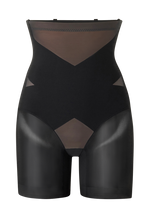
    Detail of Honeylove Liftwear silicone waistband and Sculptlace panel on a shaping short

    Why this brand matters in the broader shapewear conversation

    Honeylove is worth paying attention to because of what it proved about the shapewear category. The accepted wisdom in 2018 was that the category was mature, that Spanx owned the institutional buyer and Skims would take the next-generation customer, and that there was no room for a third name to mean anything. Larkin’s brand is the counter-evidence. By holding to a narrow product corpus, solving a specific engineering problem, and refusing to sprawl into adjacent categories, Honeylove built a third position in a category that was supposed to be a two-brand race.

    For the plus-size customer in particular, this matters because the rise of a third name with structural compression as its core proposition opens up a meaningful option that did not exist seven years ago. Plus-size bodies often need redistribution more than smoothing, and the brand that built its waistband around that distinction is doing real work the older two brands had not prioritized. Honeylove is not perfect, and the price ceiling and the sizing gap above 24 are both real. But the brand has earned its shelf space at Nordstrom. I am wearing the SuperPower short in a 2X under a Christopher John Rogers knit dress to a wedding in two weeks. The link is below.
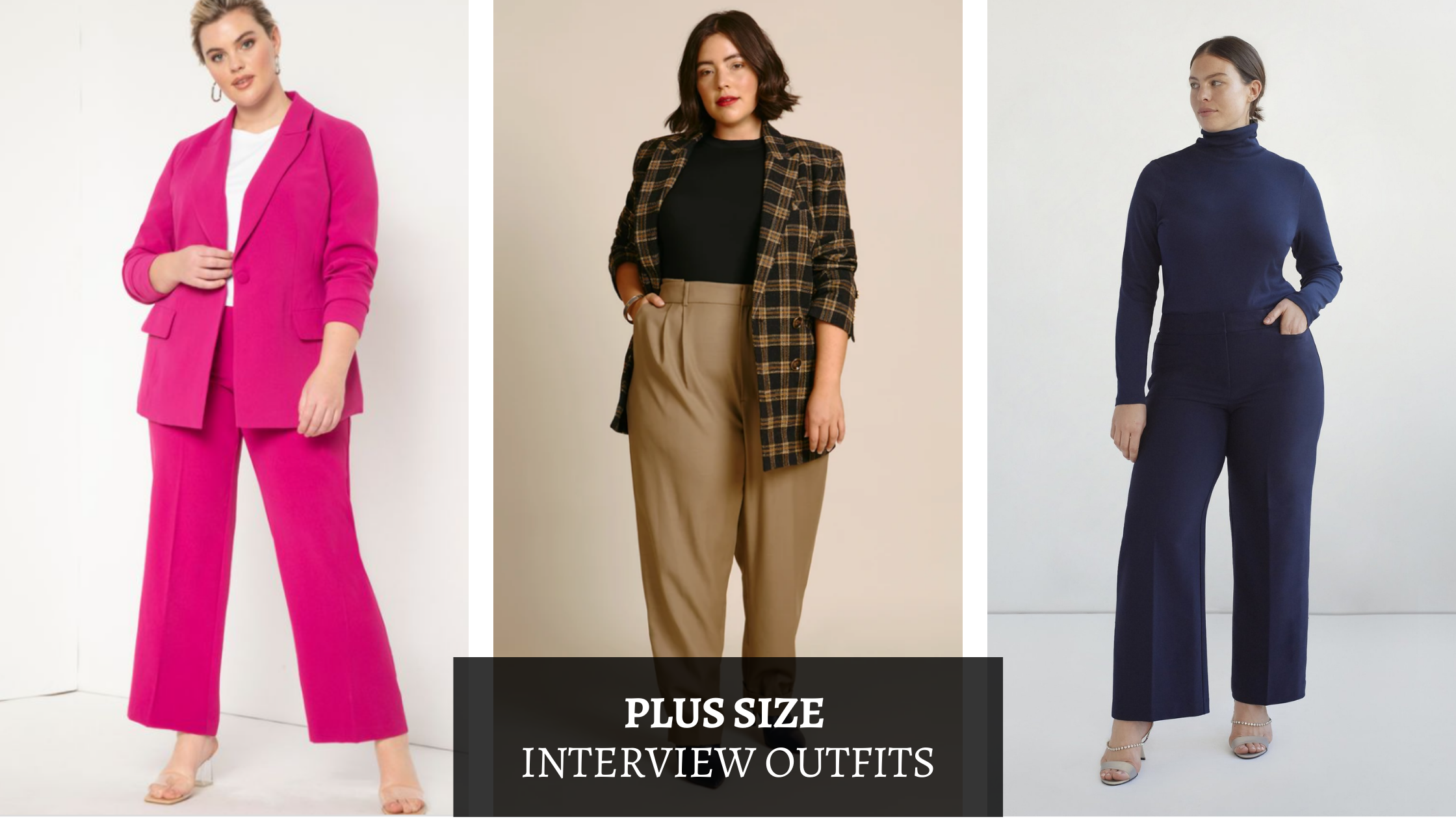
  • What to Wear for an Interview Plus-Size: 7 Outfits by Format

    What to Wear for an Interview Plus-Size: 7 Outfits by Format

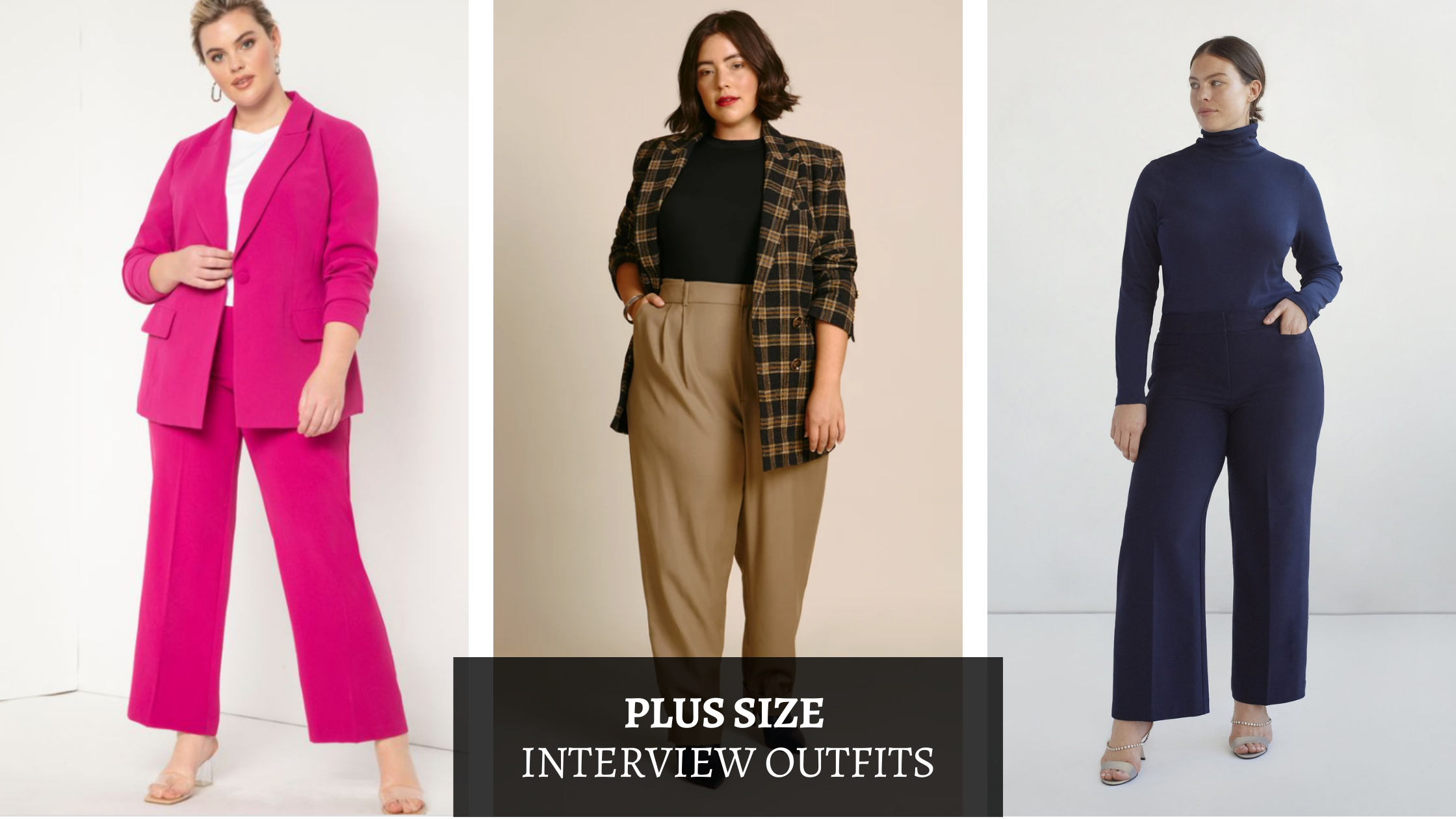
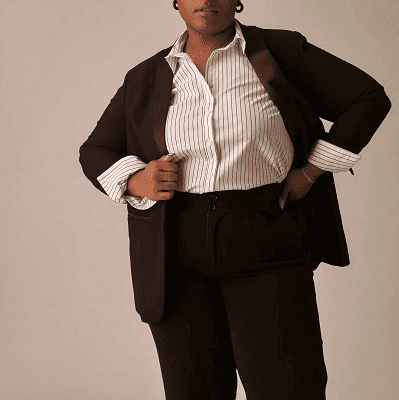
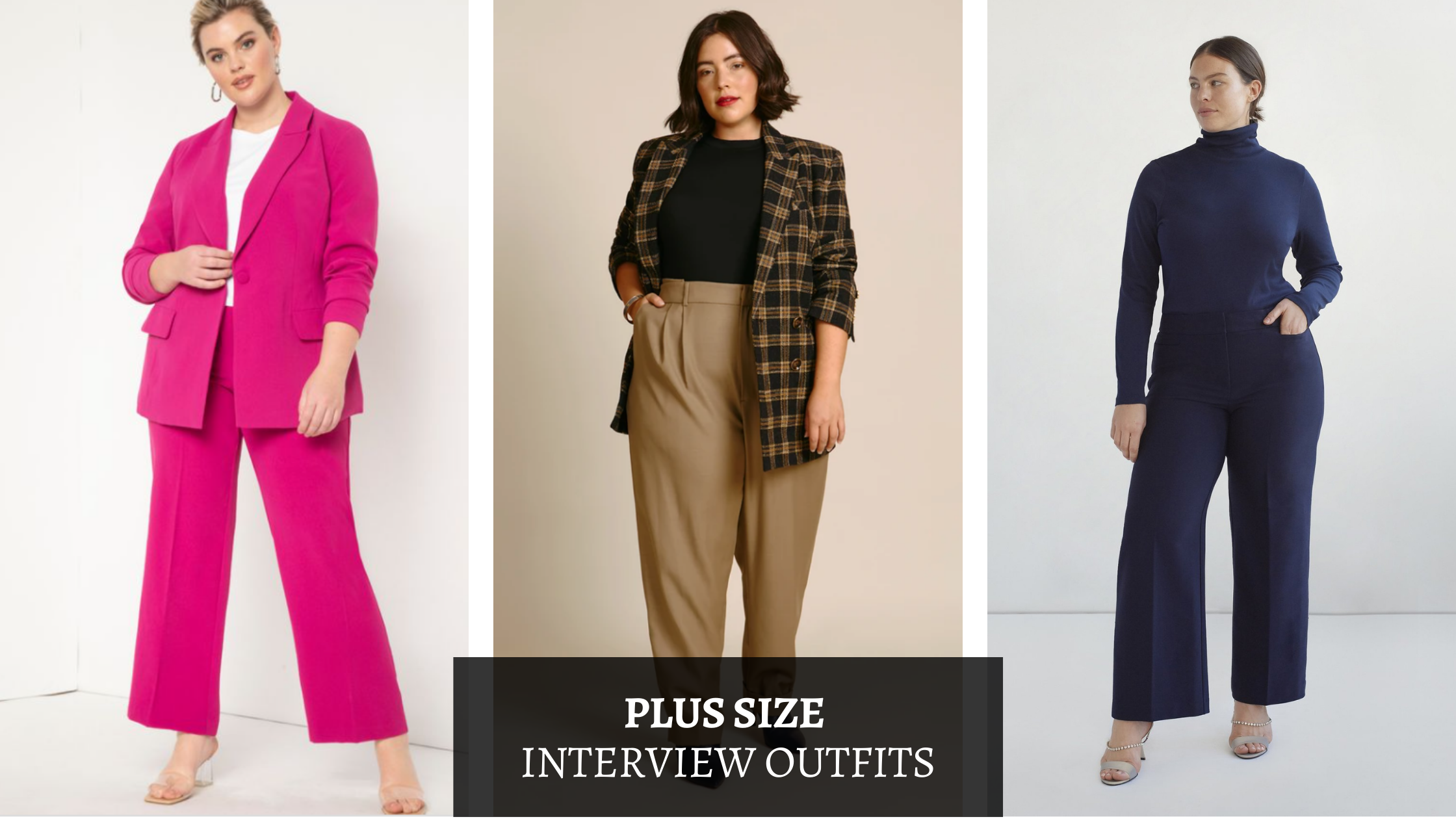
    Four plus-size women styled for different interview formats including Zoom, in-office, lunch, and executive

    After three years of covering interview dressing for plus-size readers – and a separate decade in editorial rooms watching how candidates get read in the hallway before they open their mouths – the question I get most is not “what should I wear” but “what should I wear for this specific format.” A Zoom first-round and a four-hour onsite panel are not the same outfit problem. Neither is the lunch interview, the second-round team meeting, or the final-round conversation with a CEO who has already decided you can do the job and is checking whether you read as someone they want at the table. Industry helps, but format dictates fabric, fit, and which pieces actually do the work.

    This breakdown moves through seven interview formats you will plausibly encounter between now and end of year. Each section names an anchor outfit, the specific pieces by retailer and price tier, and the styling note that separates a candidate who dressed for the format from one who dressed for “an interview, generally.” Prices are mid-2026 retail.

    What to consider before the format conversation

    Three variables sit above format and shape every outfit decision after them. The first is the visible self-presentation of the people already in the role. Pull the company’s LinkedIn, find three current employees at your target level, and look at the team page or any public talk footage. A team that shows up in soft knits and clean denim wants a different read than a team in structured suiting. Match the room, then add one degree of polish above it.

    The second is duration. A 30-minute Zoom needs to nail the camera frame from sternum up. A six-hour onsite panel needs to hold shape through three conference rooms, a building tour, and a coffee that gets spilled by hour four. Silk crepe and structured ponte both photograph well, but only one survives a full day in a fluorescent-lit room without bagging at the seat.

    The third is the camera test. Most plus-size interview dressing fails the camera test, not the in-person one. A pattern that reads subtle in the mirror photographs as visual noise under flat office light. A pastel that looks soft in daylight goes washed-out under fluorescents. Jewel tones and saturated darks photograph cleanly across lighting conditions. Photograph the outfit under your home overhead light before you wear it anywhere that matters.

    1. Phone screen – the comfort outfit that primes your voice

    Phone screens are the only interview format where what you wear does not directly affect the outcome. What it does affect is your posture, your breath, and the tone of voice that comes out of you. I have done phone screens in pajamas and they were worse interviews than the ones I did in tailored separates I did not need to wear. Get dressed for the call. Not formal, but deliberately.

    The anchor outfit: a fitted ponte knit top and a wide-leg trouser in a fabric with structure. The Universal Standard fitted ponte crewneck in black, around $98, paired with the Eloquii High-Rise Wide-Leg Trouser in charcoal, around $129, sized through 28. Sit at a desk, feet on the floor, both hands free for notes. The ponte does not constrict the diaphragm the way a stiff button-down does, which is the actual reason phone-screen outfits matter for plus-size candidates with full busts. Constriction at the rib cage shortens your breath, which compresses your speaking range. Wear something that lets you breathe deep enough to sound calm.

    2. Zoom or video first round – the sternum-up outfit

    The video interview is the format where plus-size candidates are most often misadvised. The standard advice is “dress as you would in person from the waist up,” which ignores the camera framing entirely. The camera sees from mid-chest to the top of your head. Everything from the bust up needs to photograph cleanly under whatever room light you have, and nothing below the rib cage matters except your posture.

    The anchor piece: the Universal Standard silk-blend blouse in sapphire or emerald, around $148, sized 00-40. A saturated jewel tone in a fabric with subtle sheen photographs as polished without picking up patterns or shadows that flatten under webcam compression. Pair with a fine gold chain that sits at the collarbone and small gold studs. Skip statement earrings on Zoom – they pull focus from your face. For the bottom half, wear whatever you can sit comfortably in for 45 minutes. Nobody is going to see it, but a too-tight waistband will make you shift, and the camera reads shifting as nervous.

    Plus-size candidate in sapphire silk blouse styled for a Zoom video interview

    3. In-office single first round – the polished one-piece

    The 45-minute in-office first round is the most-common interview format in 2026, and it rewards the one-piece outfit decision. A dress carries the look on its own, removes the question of whether your separates read as cohesive, and lets you focus on the conversation instead of adjusting a tucked shell every time you sit down. For plus-size bodies, the right fabric is the entire game – a ponte knit or a structured crepe will sit cleanly through a 45-minute conversation, while a thin jersey will start to ride and bag almost immediately.

    The anchor piece: the Eloquii Ponte Knit Sheath Dress in burgundy or deep teal, around $109, sized through 28. The ponte fabric has a memory that holds shape across sitting, standing, and the building walk to the conference room. Layer with an unstructured blazer in cream or camel if the season calls for it. Pair with a closed-toe block-heel pump from Naturalizer in wide width , around $110, and a structured shoulder tote in black or cognac leather. The dress does the heavy lifting; the accessories stay quiet.

    Plus-size candidate in burgundy ponte sheath and camel blazer for in-office first round interview

    4. Full panel day – the all-day endurance outfit

    The four-to-six hour onsite panel is the format where most interview outfits fail. The fabric does not hold, the shoes start to ache by the second conference room, the layers that looked sharp in the morning go limp by lunch. The panel outfit is an engineering problem first and a styling problem second. Choose pieces that perform across temperature swings, three different rooms, the building tour, and the inevitable spilled water.

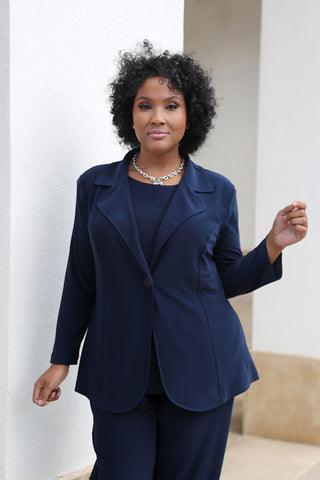
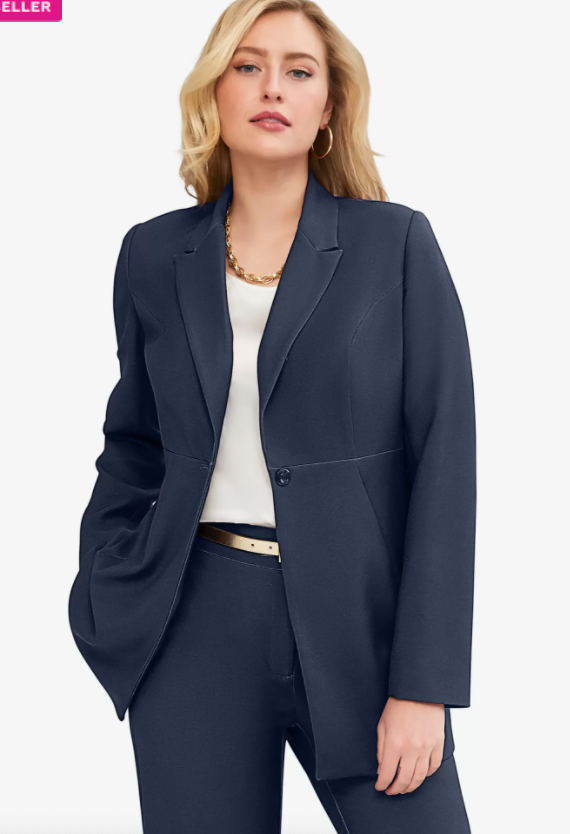
    The anchor pieces: the Universal Standard Stephanie Blazer in navy, around $180, paired with a matching wide-leg trouser around $128, both sized through 40. The shoulder construction sits cleanly without padding bulk, and the ponte-adjacent fabric handles a full day without going wrinkled at the elbow. Shell underneath: a fitted silk-blend in cream or pale blue, no pattern. Shoes: a low block-heel from Cole Haan in wide width , around $150, broken in over at least four short wears before the panel. Bag: a structured leather tote large enough for a laptop, water, a backup pair of tights, and a snack you will absolutely need by hour three. The whole look is built for stamina.

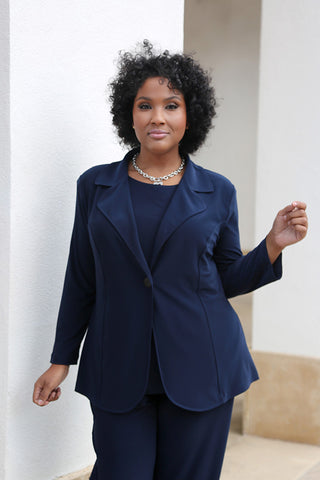
    Plus-size candidate in navy blazer and trousers for full panel day interview

    5. Lunch interview – the dress that handles a fork

    The lunch interview is the most-underrated trap in the format menu. You are eating in front of strangers who are evaluating you, often at a restaurant they chose specifically because the dining room is loud and you will need to lean in to be heard. The outfit needs to read polished, survive a soup spoon, and let you reach across a table without your blouse pulling at the bust. The wrong fabric here is any silk shell with a delicate hem and any white or cream piece anywhere within reach of marinara.

    The anchor piece: a knit twinset, which is the most-undervalued plus-size workwear piece of the last five years. The Universal Standard merino shell and cardigan set in oxblood or charcoal, around $200 for the pair, sized 00-40. The fine-gauge merino reads polished, sits cleanly across the bust without gaping, and forgives small spills in a way silk does not. Pair with a wide-leg trouser in dark wash from Eloquii in black , around $129. Shoes: closed-toe loafers from Cole Haan in wide width , around $160. Avoid open-toe styles at lunch – they read too casual against the formality of the meal itself.

    Plus-size candidate in oxblood merino twinset and black loafers for a lunch interview

    6. Second-round team meeting – the considered separates

    By the second round you have been told you can do the job and are being evaluated for fit with the team. The outfit should read as one degree more personal than your first-round outfit – still polished, but with a piece that suggests you have taste outside of the interview-uniform conversation. The room will often be more casual than the first round, especially if the team meeting is in their normal working space rather than a conference room. The move is tailored separates with one piece that does the personality work.

    The anchor pieces: the Eloquii High-Rise Wide-Leg Trouser in cream or oxblood , around $129, paired with a fine-gauge merino crewneck from Universal Standard in black , around $98. Add one considered outerwear piece – an unstructured trench in olive or camel for a daylight meeting, or a tailored ponte blazer for an indoor afternoon session. Shoes: a leather loafer or a low block-heel mule. Jewelry: one chunky gold ring, gold hoops no larger than a quarter, nothing on the neck. This is the outfit where you can wear something that signals you read fashion editorial, the way Karla Welch or Law Roach style their clients – not as costume, just as evidence that you have a point of view.

    7. Final-round executive interview – the quiet statement

    The final round with an executive is the only interview format where the outfit should explicitly announce that you understand the level of the conversation. The CEO or SVP across the table is meeting candidates who have already cleared the bar; the meeting is about whether they see you at their table. The dress code is one notch above the rest of the company’s daily uniform, and the silhouette should read as someone comfortable in their authority rather than reaching for it. For a plus-size body, the answer is a column-shaped dress or a tailored sheath in a saturated dark, with deliberate jewelry and the shoes you wear when you know you will be photographed.

    The anchor piece: a column sheath in a deep saturated tone – oxblood, sapphire, or charcoal. The Adrianna Papell tailored sheath in deep navy or oxblood, around $189, sized through 24W. Layer with a structured single-breasted blazer in the same color family or a contrasting cream. Shoes: a closed-toe pointed pump from Naturalizer in wide width , around $110. Jewelry: a single statement earring or one substantial cocktail ring, never both. Bag: a small structured top-handle in black or burgundy leather, no laptop tote at this stage. The look reads as decided.

    Plus-size candidate in navy sheath and cream blazer for a final-round executive interview

    Styling moves that apply across every format

    Three rules hold regardless of the format you are dressing for. First, wear actual shapewear under any unlined dress or close-cut trouser. The Honeylove SuperPower Bodysuit at $98 or the Spanx Suit Yourself at $88 will both change how a sheath or a knit dress hangs across the torso. The investment is one piece that improves every interview outfit you own.

    Second, take the time to tailor at least the hem and the bust on any dress or jacket that will see more than one wear. A $25 to $40 alteration on a $129 trouser separates a look that reads like ready-to-wear from one that reads like off-the-rack. Find an alterations specialist who has worked with plus-size garments – the difference in how they handle a bust dart versus a generalist tailor is real.

    Third, break in any new shoe for at least four short wears before an interview day. The fastest way to undo a carefully built outfit is shoe pain in hour two that has you shifting your weight in every chair you sit in. Wear the shoes around your apartment, around the block, to a coffee shop. Save the interview for the fifth wear minimum.

    What to avoid in any interview format

    Anything brand-new at the bust. A fitted top you have never worn will pull, gape, or shift in ways you will not anticipate, and you will spend the interview adjusting instead of answering. Wear the top once before the day.

    Fragrance strong enough to register at three feet. Office interviews increasingly happen in small rooms with poor ventilation, and a fragrance the interviewer notices is a fragrance they will associate with you. Skip it or use a fraction of what you normally wear.

    Patterns that read as visual noise on camera. Small repeating geometric prints, busy florals, and any fine pinstripe go to moire under flat office light or webcam compression. Solid jewel tones and saturated darks photograph more cleanly across every interview setting.

    Shoes you are still breaking in. Any shoe with hot spots on day one will have you sitting wrong by the third room of a panel day. Break it in or wear something else.

    Shop the looks

    The pieces in this guide cluster around three retailers – Universal Standard, Eloquii, and Nordstrom – because those are the brands carrying the strongest plus-size workwear runs in 2026. Universal Standard sizes 00 to 40 and runs the cleanest tailored separates; Eloquii sizes through 28 and runs the strongest dress and trouser construction; Nordstrom carries the third-party pieces (Naturalizer, Cole Haan, Adrianna Papell) that round out the shoe and dress assortment. If you are building an interview rotation, start with a navy blazer and trouser from Universal Standard, a burgundy ponte sheath from Eloquii, and a pointed pump from Naturalizer in wide width. Three pieces handle five of the seven formats above.

    Frequently asked questions

    Can I wear the same outfit to first and second round at the same company?

    Better not. The team often compares notes between rounds and the outfit gets remembered. Switch at least the shell, the jewelry, and the shoes between rounds. A burgundy sheath at first round becomes a cream wide-leg trouser plus knit shell for the second-round team meeting, and the look will read as a different point of view without requiring a second full outfit.

    What if my interview spans two days – panel day one, executive day two?

    Wear the navy suiting on panel day and the column sheath on executive day. The two looks read as a deliberate range without overlapping. If you can only bring one outfit, default to the navy blazer and trouser – it scales up with a sharper shell and pump for the executive meeting, down with a knit crewneck for the panel.

    Are tights mandatory in 2026?

    No, but they read more polished than bare legs in any in-office interview between October and April. Choose a sheer black or nude tight that matches your skin tone, not a heavy opaque, and bring a backup pair. A run in the first room with no replacement is the fastest interview-day disaster.

  • Adwoa Beauty’s Founder Story: How Julian Addo Built the Prestige Curl Brand

    Adwoa Beauty’s Founder Story: How Julian Addo Built the Prestige Curl Brand

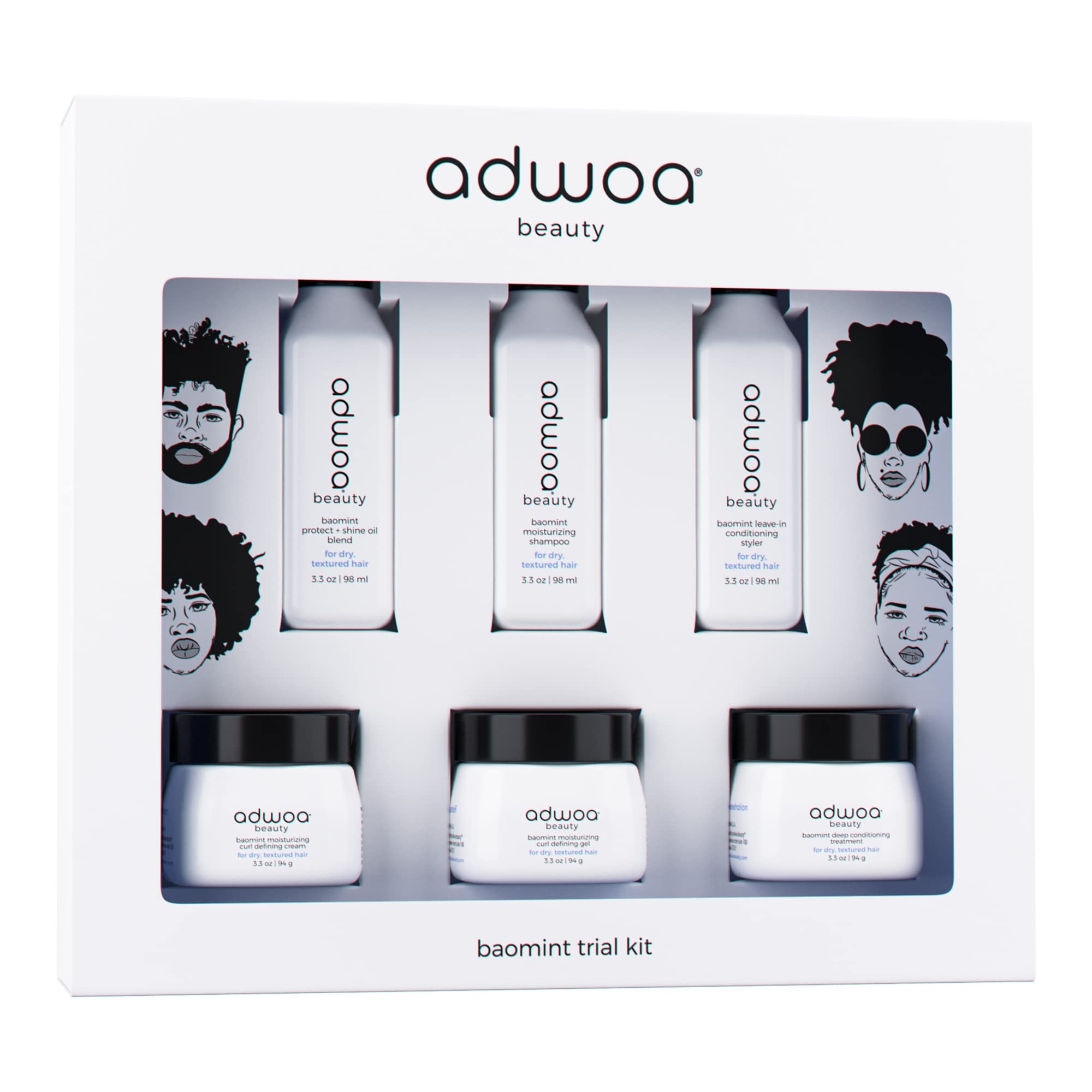
    Adwoa Beauty Baomint product lineup in editorial product photography

    Adwoa Beauty occupies a specific kind of shelf real estate at Sephora that most Black-founded hair brands have not historically reached. Walk into any flagship Sephora in 2026 and the brand sits in the curl-care wall, not in a partitioned multicultural section, with the signature minimalist packaging running at eye level alongside Briogeo, Bread, and Olaplex. That positioning is the point. Founded by Julian Addo in 2017, Adwoa Beauty arrived at the prestige tier from day one and refused to compete on price – a strategy that almost no other small Black-founded hair brand has been able to execute and survive. The fact that the brand is still on that shelf nine years later, in a category where most independent launches fold within three, is the story worth understanding.

    This piece is about how Addo built that. The founder background that produced the brand, the product range that has held the prestige positioning, where the brand earns the placement, and where there is still room. The textured-hair category right now has a small number of brands operating at the price tier above Cantu and below the dermatology-clinic skincare brands, and Adwoa is the brand most often cited as the prestige-tier reference point alongside Pattern. Worth knowing why.

    The founder before the brand

    Julian Addo is Ghanaian-American. She grew up in the DC area, went to the University of Maryland, and worked in finance and tech before pivoting into beauty. The professional background matters because Adwoa Beauty does not read like a brand built by someone who fell sideways into entrepreneurship – the pricing architecture, the retail-readiness, the formulation patience, all of it has the discipline of someone who spent a decade in operating roles before launching her own thing. Addo named the brand after her own first name in Ghanaian Twi tradition, where Adwoa is the name given to a girl born on a Monday.

    The origin story is the one a lot of Black-founded hair brands share but Addo’s version has a different texture. She had her own hair frustrations through her twenties, tried the mainstream natural-hair brands that existed in the mid-2010s, found the formulations either too heavy, too coating, or too generic for her specific texture, and started researching what actual ingredient-forward formulation would require. The version of the story she has told in press interviews emphasizes the years she spent working with chemists before launching – not the moment of inspiration, the slow back-end work of getting the formulations right.

    She launched the brand in 2017, direct-to-consumer first, then expanded into Sephora in 2018. That Sephora launch was the inflection point. At the time, the textured-hair shelf at Sephora was thin, and most of the credible Black-founded brands were sitting at Ulta or at mass retailers. Adwoa walking into Sephora at a $24-and-up price tier in 2018 was a positioning decision that signaled the brand was not going to play the volume game. Nine years on, that decision is still paying off.

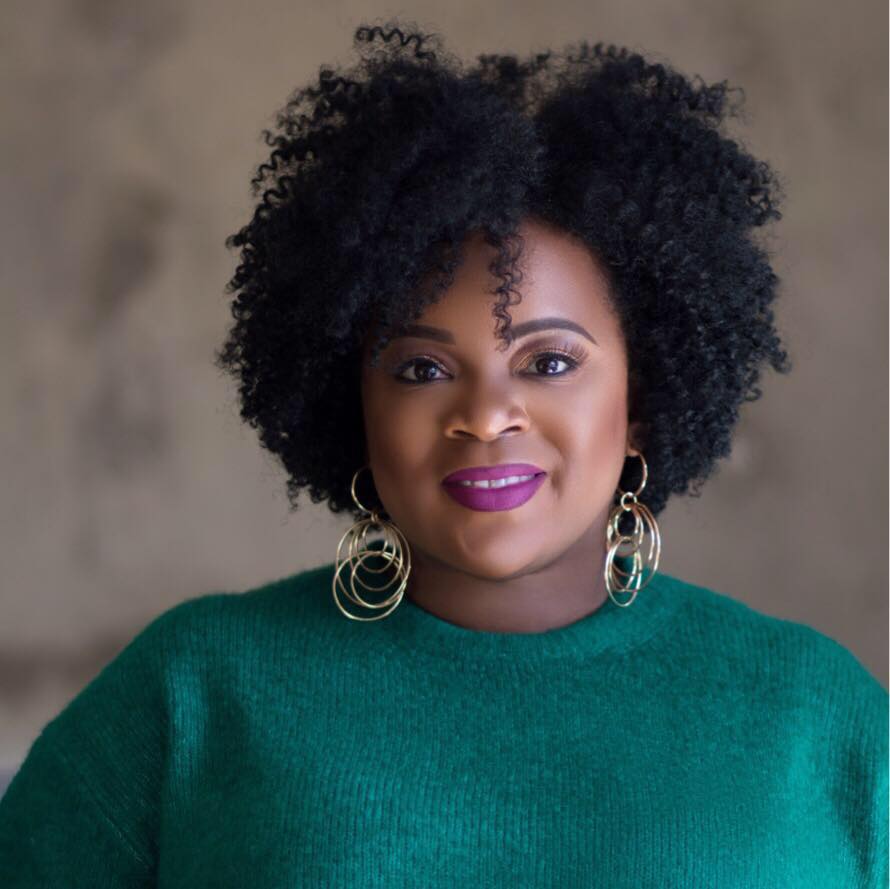
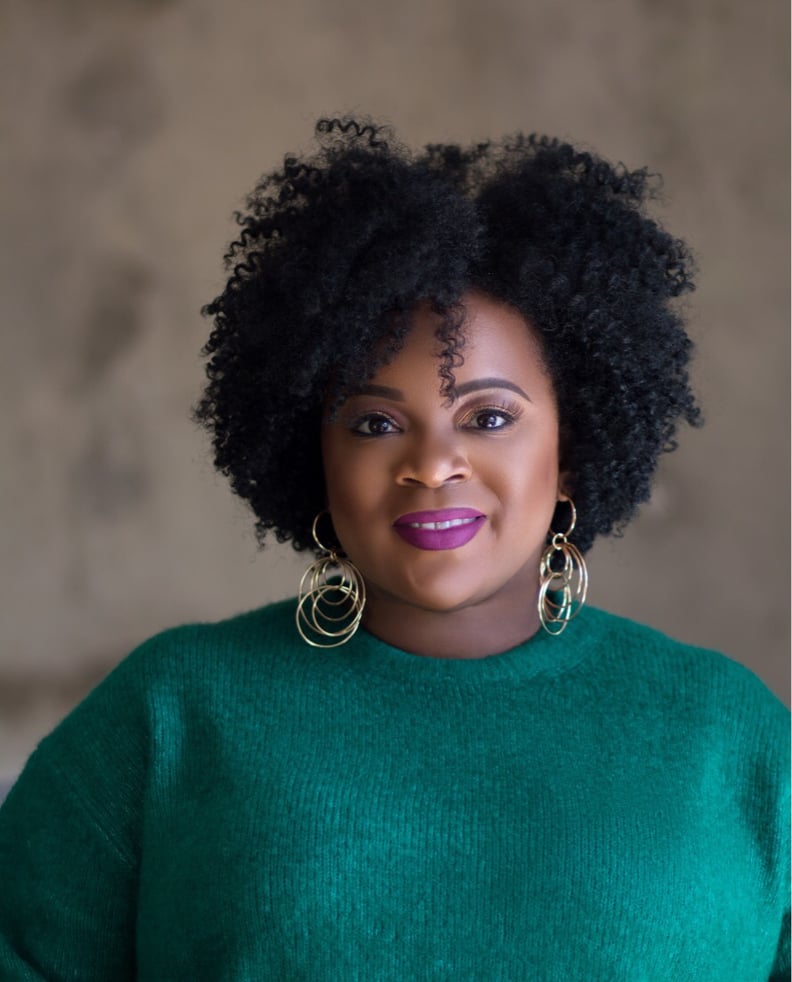
    Julian Addo, founder of Adwoa Beauty, in editorial portrait photography

    What the brand actually does

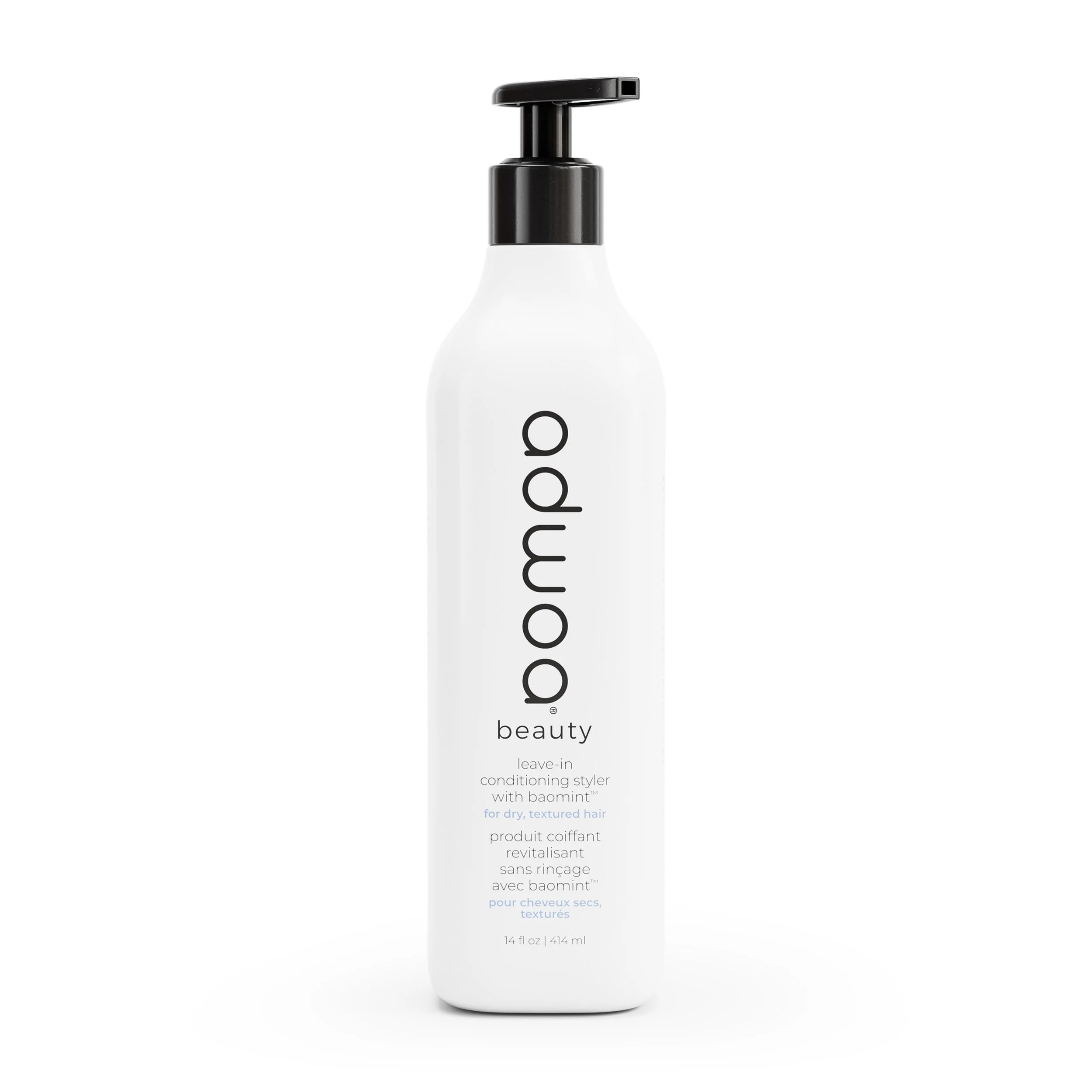
    Adwoa Beauty makes hair care for Type 3 and Type 4 curl patterns, with a particular concentration on the wash-day-and-refresh part of the routine. The core line is anchored by the Baomint family – leave-in conditioner, deep conditioner, clay-refresh spray, scalp cleanser – all built around a baobab and peppermint base. There are additional product families around protein treatment, styling cream, and oil, but Baomint is the line the brand is known for and the products most reviewers cite first.

    The price tier sits at $24 to $38 for most core products, which is at or slightly above Pattern Beauty and meaningfully above the mass-retailer Black-founded brands. SKU count is intentionally smaller than the major textured-hair brands – roughly fifteen products across the active lineup, versus Pattern’s thirty-plus. That smaller footprint is a strategic choice. Addo has said in interviews that the brand prioritizes formulation depth over line breadth, which translates into a more curated catalog and a longer lead time between new product launches.

    Distribution today: Sephora as the anchor retailer (in-store and Sephora.com), adwoabeauty.com direct, and a handful of independent specialty retailers. Not at Ulta, not at Target, not at any mass-grocery. That retail discipline is the operational version of the price discipline and it has kept the brand sitting in the prestige slot rather than getting absorbed into the general curl-care category.

    Where the brand gets it right

    The first thing Adwoa got right is the Baomint formulation itself. The Baomint Moisturizing Leave-In is the product that built the brand. The texture is lightweight enough to layer under a styler without piling, the slip is enough to detangle on damp hair, and the scent is the specific peppermint-forward note that has become the brand’s olfactory signature. Reviewers who try the leave-in and stay with the brand are usually staying because that one product earned its repurchase, and the rest of the line is built around the credibility of that single SKU.

    The second is the visual identity. The packaging is the cleanest in the category. Matte white tubes and bottles, sage-green accent type, no clutter, no oversold marketing copy on the front of the bottle. Most natural-hair brand packaging defaults to busy color-coding and aggressive front-of-label promises. Adwoa’s packaging looks like a Cuup bra box looks – confident enough not to shout. That matters at the prestige tier. When the product is sitting on a Sephora shelf next to a Briogeo bottle and a Bread Beauty Supply tube, the visual restraint reads as expensive and the brand earns the placement.

    The third is the founder presence without the founder dependency. Addo is centered in the brand’s narrative without being the entire face of every campaign. She does press, she does interviews, she shows up at Sephora events, but the brand does not require her in every photograph to feel coherent. That balance is structurally healthier than the celebrity-founded brands that collapse the moment the celebrity loses interest, and it is the reason Adwoa has the runway to keep growing without a personality-cult vulnerability.

    The fourth is the pace. Adwoa has launched roughly two to three new products per year over its nine-year run, which is well below the industry average and well below what most retailers pressure brands to do. The discipline of resisting the launch-something-every-quarter pressure has kept the line tight and the formulations meaningful rather than performative. The 2021 Blue Tansy Clay-Refresh Spray and the 2023 protein treatment are the two most-cited additions, and both filled real gaps rather than chasing trend ingredients.

    Where there is room

    Honest critique. The price is the price. At $26 for an 8 oz Baomint Leave-In, Adwoa is genuinely expensive for what is functionally a leave-in conditioner, and the value-per-ounce conversation is real. Cantu’s Sulfate-Free Cleansing Cream at $7 does not do the same thing the Adwoa Cleanser does, but the Mielle leave-in at $12 does most of what the Baomint leave-in does for shoppers who are not chasing the specific texture and scent profile. Adwoa’s argument is that the formulation difference is worth the premium, and for a lot of shoppers that argument lands. For others, the math does not.

    Distribution is the other open question. The Sephora-only retail strategy is what made the brand prestige, but it also means that shoppers in markets without a Sephora flagship are functionally locked out of in-store availability. The brand has not expanded into Ulta or any second mass-prestige retailer, and the direct-to-consumer site has had reported shipping and stock-out frustrations in peak seasons. For a brand asking $26 a bottle, the fulfillment experience needs to be consistent and it has not always been.

    And the line is still thinner than the routines of some Type 4 shoppers require. Adwoa skews toward the lighter end of the texture spectrum – the formulations are tuned more toward Type 3 and the looser end of Type 4 than toward the densest 4C textures. The Heavy or Extra-Rich category that Pattern has built out does not have a clear Adwoa equivalent, and Type 4C shoppers who try the brand sometimes leave because the products are not heavy enough for their density. The brand could go further into that part of the texture spectrum and has not yet.

    Adwoa Beauty Baomint Moisturizing Leave-In product hero photograph

    How Adwoa fits in the category

    Adwoa does not exist in isolation, and the brand’s positioning makes more sense in contrast to the rest of the textured-hair prestige tier. Three reference points worth knowing.

    Pattern Beauty is the most direct comparison. Founded by Tracee Ellis Ross and launched at Ulta in 2019, Pattern occupies the same mid-to-prestige price tier with a broader SKU count and a wider distribution footprint. Pattern sits at Ulta and Sephora; Adwoa sits at Sephora only. Pattern has more than thirty products; Adwoa has roughly fifteen. The trade-off: Pattern is the brand to choose if you want a full system from a single line and the security of mass retail availability. Adwoa is the brand to choose if you want a curated, formulation-forward shorter list and you prioritize the specific Baomint texture profile.

    Bread Beauty Supply is the other prestige comparison. Founded by Maeva Heim in Australia and launched at Sephora in 2020, Bread sits at a similar price tier and a similar minimalist visual identity. The product range is narrower than Adwoa’s and the formulations are more focused on the wash-and-condition core of the routine. The trade-off: Bread is arguably the cleaner brand experience for shoppers who want a tight three-or-four-product routine. Adwoa is the more developed line if you want refresh products and treatments alongside the core wash.

    Mielle Organics is the volume comparison. Founded by Monique Rodriguez in 2014, Mielle sits at the mass-retail tier with broader distribution at Target, Walmart, and Sally Beauty. Most Mielle products are $11 to $18 – meaningfully below Adwoa. The trade-off: Mielle is the cost-effective choice with formulations that work for many shoppers. Adwoa is the precision choice for shoppers who want the formulation discipline and are willing to pay for it.

    What to buy from them

    If you are coming to Adwoa Beauty for the first time, the move is not to buy the full system. The line is curated enough that one or two pieces will give you a real read on whether the brand is going to fit your routine. Four products worth knowing about.

    The Adwoa Baomint Moisturizing Leave-In Conditioner at around $26 for 8 oz is the entry point. This is the product that built the brand and the product most shoppers stay for. Layers under a curl cream without piling, slip is real, and the peppermint-forward scent is the brand signature. If you only buy one Adwoa product, this is the one.

    The Adwoa Baomint Deep Conditioner at around $32 for 8 oz is the wash-day treatment. Heavier than the leave-in, slip is strong enough to detangle Type 3 and the looser Type 4 textures, and the deposit is meaningful without coating low-porosity strands. Worth the price if you do a weekly deep treatment as part of your routine.

    The Adwoa Blue Tansy Clay-Refresh Spray at around $30 is the day-two and day-three refresh product, and it is the brand’s most distinctive formulation. The clay base reactivates curl pattern without the dampness that water-only refresh sprays leave behind. Niche but loved by the shoppers who use it.

    The Adwoa Baomint Curl Defining Gel at around $26 is the styler that holds a wash-and-go without crunch on Types 3A through 4A. For denser 4B and 4C textures the gel reads as too light, but for the texture range it is designed for, the hold is consistent and the second-day pattern stays defined.

    And the Adwoa Baomint Scalp Cleanser at around $32 rounds out the wash routine. Cleans without stripping, the peppermint base reads as cooling on the scalp without being aggressive, and the formulation pairs well with the rest of the Baomint family. The fifth purchase if you have already committed to the system.

    Why this brand matters

    Adwoa Beauty is the case study for what a Black-founded hair brand at the prestige tier can look like when the operator has the patience to build slowly and the discipline to resist the volume-and-discount pressure that the category has historically forced on these brands. The textured-hair shelf at Sephora in 2017 was thin. The textured-hair shelf at Sephora in 2026 is not, and Adwoa is part of the reason. The category opened up because brands like Adwoa, Pattern, and Bread proved that the prestige tier could hold Black-founded hair, and the retailers expanded the shelf to make room.

    The lesson for the broader category is structural and worth naming. The brands that will keep winning in textured hair from here forward will not be the ones that try to be everything to every texture at every price point. They will be the ones that pick a position, hold it, build the formulation discipline to earn it, and refuse the pressure to dilute. Julian Addo picked a position in 2017 and has held it for nine years. The receipts are on the Sephora shelf. The Baomint Leave-In, 8 oz, around $26, and the only place it ships from with consistency is Sephora.

  • What to Wear During a Job Interview: 6 Plus-Size Outfits by Industry

    What to Wear During a Job Interview: 6 Plus-Size Outfits by Industry

    Three plus-size women styled in different job interview outfits for different industries, editorial spread

    I bought my first real interview blazer in 2014 for an editorial assistant role I did not get, and it cost $312 at a sample sale that started at 7am on a Saturday in a SoHo loft with no air conditioning. The blazer was a size 18 navy single-breasted from a designer I will not name because the brand has since changed its sizing in ways that make it irrelevant. I wore it to six interviews over two years before I figured out something obvious – the blazer was doing about 30% of the work I thought it was doing, and the trouser, the shoes, the bag, and the choice not to wear a statement necklace were doing the other 70%. I have since interviewed for editor roles at five publications, sat on the hiring side for two of them, and helped enough friends piece together first-round outfits that I have a clear sense of what reads as “ready” in 2026 versus what reads as “tried.”

    This is the breakdown by industry, because the corporate-finance interview outfit that gets you taken seriously at a midtown bank is the same outfit that gets you read as overdressed at a creative agency in Brooklyn. Six industries, one anchor outfit each, with the pieces that actually do the work.

    What to consider before you pick the outfit

    Three things matter before fit, fabric, or color. The first is the company’s visible dress code. Pull up the company’s LinkedIn, find three employees at your level, and look at how they show up in their profile photos and in any team photos on the company site. If the head of marketing is in a soft cardigan and the engineering lead is in a hoodie, a wool suit will read as misread-the-room. If the people in the team photo are in tailored separates with structured shoulders, your knit dress will read as underdressed.

    The second is the format. A four-hour panel with five interviewers in conference rooms is a different physical experience than a 45-minute first-round in a single office. The panel outfit needs to handle sitting in three rooms, walking between them, and getting water spilled by hour three. The first-round outfit can prioritize one-impression polish over endurance.

    The third is the photograph. Most companies will photograph you at offer-day onboarding in whatever you wore to the final round, and many will put a candidate photo into a Slack channel before final-round decisions. The outfit you wear should photograph as cleanly in a fluorescent-lit conference room as it does in the mirror at home. Solid jewel tones, structured shoulders, and saturated darks photograph better than fussy patterns or pastels in flat office lighting.

    1. Corporate finance, law, or consulting – the tailored suit alternative

    Big-firm finance, law, and consulting still default to a matched suit in navy or charcoal for in-office interviews above analyst level. The plus-size version of this dress code is hardest to source because matched suiting in extended sizes is still thin on the ground in 2026, and the most-flattering version is almost never a literal matched two-piece. The move is a structured single-breasted blazer with a tailored wide-leg trouser in the same neutral but not necessarily the same exact fabric weight.

    The anchor piece: the Universal Standard Stephanie Blazer in navy , around $180, sized 00-40. The shoulder construction sits cleanly without padding bulk, and the single-button closure reads more updated than a two-button. Pair with the Universal Standard wide-leg trouser in matching navy , around $128, and a closed-toe pointed pump from Naturalizer in wide width , around $110. Shell underneath: a fitted silk or silk-blend in cream or pale blue, no pattern. Bag: a structured shoulder tote in black leather, large enough for a laptop.

    Plus-size candidate in navy tailored suit alternative for corporate finance interview

    2. Creative agency, editorial, or fashion – the considered separates

    Creative-industry interviews want to see taste, not compliance. Showing up in a matched corporate suit at a creative agency reads as not understanding the room. The move is tailored separates that read as considered without reading as costume – a structured trouser in an unexpected color or fabric, a silk shell or fine-knit top, a sculptural shoe, and one piece of jewelry that suggests you have personal style without competing with your face for the interviewer’s attention.

    The anchor piece: the Eloquii High-Rise Wide-Leg Trouser in cream or oxblood , around $129, sized through 28. Paired with a fine-gauge merino crewneck from Universal Standard in black , around $98. Shoes: a low block-heel mule or a leather loafer rather than a pump. Bag: a soft-structure shoulder bag, ideally in cognac or a deep oxblood. Jewelry: one chunky gold ring, gold hoops no larger than a quarter, nothing on the neck. The whole look reads as someone who knows what Karla Welch puts on her clients without trying to dress like a Karla Welch client.

    Plus-size candidate in oxblood trousers and black knit for creative agency interview

    3. Tech / product / engineering – the structured-casual outfit

    Tech interviews have one of the most-misread dress codes in 2026. The default at most major tech companies remains business casual, but the spread between Google headquarters and a Series B startup is wide, and the wrong read in either direction reads as not knowing the industry. The safe baseline is what I call structured-casual – a tailored piece on top, a relaxed piece on bottom, or vice versa, with one clearly considered element that signals intentionality.

    The anchor piece: a fitted ponte knit blazer in black or navy from Universal Standard , around $148, paired with a dark-wash straight-leg jean in a clean rinse from Universal Standard’s Seine line , around $98, sized through 40. Underneath: a fitted cotton tee in white or cream, no graphic. Shoes: white leather sneakers in good condition (not running shoes) or a low ankle boot. Bag: a soft leather backpack or a structured tote. The blazer plus dark denim is the formula that reads “I take this seriously” without reading “I do not understand that you wear hoodies here.”

    Plus-size candidate in ponte blazer and dark denim for tech interview

    4. Healthcare administration, education, or nonprofit – the knit dress

    Healthcare administration, school district leadership, and large nonprofit interviews share a dress-code lane that is more formal than tech but less corporate than finance. The anchor outfit is a knit sheath or fit-and-flare dress in a solid color, layered with a cardigan or unstructured blazer, with closed-toe heels and minimal jewelry. The format is forgiving across a long day of panels and reads as professional without reading as Wall Street.

    The anchor piece: the Eloquii Ponte Knit Sheath Dress in burgundy or deep teal , around $109, sized through 28. The ponte fabric holds shape through a full interview day without bagging at the seat after hour three. Layer with an unstructured cardigan in cream or camel from Universal Standard , around $128. Shoes: a closed-toe block-heel pump in nude or black, not pointed-toe, not stiletto. Jewelry: small pearl or gold studs, a thin chain, no statement pieces. Bag: a structured leather tote in black or cognac.

    Plus-size candidate in burgundy ponte sheath and camel cardigan for healthcare admin interview

    5. Series A or seed-stage startup – the polished founder-coded look

    Early-stage startup interviews sit in their own category. The hiring team has probably worked together in a kitchen for the last eight months and the office is somebody’s apartment in Williamsburg. Showing up in a suit reads as misunderstanding the stage of the company. Showing up in athleisure reads as not respecting the interview. The move is the founder-coded look – clean basics, one investment piece, immaculate grooming, nothing precious.

    The anchor piece: a high-rise straight-leg trouser in a soft fabric like crepe or wool-blend twill from Eloquii in black , around $109, paired with a fitted ribbed mock-neck in cream or rust from Abercrombie’s Curve Love line , around $50. Shoes: a clean low ankle boot or a leather loafer. Layer: a tailored wool coat or a long cardigan, depending on the season. Bag: a soft leather shoulder bag, not a backpack and not a tote. One leather watch, no other jewelry. The look reads as a person who would be comfortable in a pitch meeting with a partner at Sequoia or in a kitchen interview with the founder’s dog underfoot.

    Plus-size candidate in mock-neck and crepe trousers for early stage startup interview

    6. Remote / virtual first round – the on-camera outfit

    Virtual interviews changed the dressing math because the camera only sees from the chest up, but the rest of you matters for how you sit, how you move, and how you feel for the 45 minutes you are on Zoom. The mistake is dressing only the top half and showing up in pajama bottoms – it changes your posture, your energy, and your read on the camera in ways that are visible to a trained interviewer.

    The anchor piece on camera: a fitted silk or silk-blend blouse in a saturated solid color from Universal Standard in emerald or oxblood , around $98. Saturated jewel tones photograph better than pastels on most webcams and read as more confident in low-quality video compression. Underneath the desk: a pull-on ponte pant in the same color family, around $98, or a wide-leg trouser if you have one. Earrings: small gold or pearl studs that catch light without being noisy on a 720p webcam. Hair: pulled back if your hair has more visual texture than your face, down and styled if it does not. Background: solid wall behind you, no kitchen, no bedroom.

    Plus-size candidate in emerald silk shell for virtual job interview on Zoom

    Styling tips that apply across every interview type

    Three rules hold regardless of industry. The first: tailor everything. A $30 alteration on the blazer sleeves, the trouser hem, or the dress bodice will separate a $150 outfit from one that reads as $400. Find an alterations specialist with plus-size experience before you have an interview scheduled, not after. The good ones get busy and a same-week appointment is hard.

    The second: wear actual shapewear under any unlined piece. The Spanx Suit Yourself bodysuit at around $88 or the Honeylove SuperPower at around $98 will transform how a knit dress or a fitted shell hangs across a four-hour panel. Skip the cheap drugstore versions – they roll, bind, and read through the fabric in ways that distract more than they help. This is a one-time investment that improves every interview outfit you own.

    The third: break in the shoes. Do not wear new pumps to an interview. Even the Naturalizer wide-width pumps, which run kinder than most, need four to six short wears before they handle a full day. I learned this at an interview at a magazine I will not name when I limped into the fifth-floor walkup in shoes I had bought the day before. I did not get that job, and the shoes were part of the reason.

    What to avoid regardless of industry

    Anything labeled bodycon, anything in a fabric that wrinkles on contact (linen, low-grade silk, unstructured rayon), and any color that photographs as white in fluorescent office light – which includes pale blush, oyster, ivory, and cream-adjacent yellows. Test by photographing the outfit under your phone’s flash in a windowless bathroom.

    Statement jewelry that competes with your face. One pair of small studs, one ring, one watch. That is the upper limit. The interviewer needs to focus on your eyes, your mouth, and your hands. Anything else in their field of vision is friction.

    Perfume that announces you before you walk in. Skip it. The interviewer two doors down has migraine triggers and the HR coordinator who walks you out has allergies. Deodorant and clean hair are the right baseline. Save the perfume for the second-round dinner if there is one.

    Shop the looks

    The pieces in this guide cluster around three retailers – Universal Standard, Eloquii, and Nordstrom – because those carry the strongest size runs and the most reliable fit for plus-size professional wear in 2026. If you are building an interview rotation rather than dressing for a single role, start with one structured blazer and one pair of tailored trousers in a neutral, then build outward with knit dresses, shells, and shoes that work across multiple outfit combinations. The blazer is the highest-leverage purchase in the closet and the one most worth tailoring properly.

    Frequently asked questions

    What is the safest single outfit if I do not know the industry?

    A navy or charcoal single-breasted blazer over a fitted shell in cream or pale blue, paired with a matching or near-matching tailored trouser, a closed-toe pump in black or nude, and minimal jewelry. This reads as competent in finance, professional in healthcare, and acceptable in tech. It will read as slightly overdressed at a creative agency, but slightly overdressed is a safer error than slightly underdressed in any interview context.

    Can I wear pants instead of a dress to a corporate interview?

    Yes, and a tailored wide-leg or straight-leg trouser in a solid neutral often photographs better than a dress for plus-size bodies in conference-room lighting. The pant suit lost its “men’s clothing” connotation about fifteen years ago and currently reads as more updated than a sheath dress in most corporate environments. The exception is healthcare administration, where knit dresses still slightly dominate the dress code.

    How do I dress for a four-hour panel without looking wilted by hour three?

    Fabric choice does most of the work. A ponte knit, a wool-blend crepe, or a heavier silk-blend will hold shape through a full day. Avoid pure linen, low-grade rayon, and unlined cotton. Wear shapewear under unlined pieces. Bring a small spare item in your bag – a fresh pair of sheer hosiery, a roll-on antiperspirant, a lipstick – and use the bathroom between rooms two and three for a 90-second reset.

  • How to Find Your Bra Size – A Working Calculator That Fits Plus-Size Bodies

    How to Find Your Bra Size – A Working Calculator That Fits Plus-Size Bodies

    Plus-size woman being fitted for a bra in front of a mirror with a soft measuring tape, editorial fit-guide reference

    After three years of covering this category and watching every major lingerie brand build, buy, or buy out its own bra-size calculator, I can tell you that most of them give you a size that sells at their price point rather than a size that fits your body. The calculators at Victoria’s Secret, Aerie, and the budget Amazon-brand pages will round you into the band-and-cup combination they have the most inventory of, usually a 34B through 38DD, regardless of what the math says. The Curvy Couture, Cuup, and Bare Necessities calculators are the three I send people to first because they are built around the math, not the warehouse.

    This guide is the version of the conversation I have had with maybe forty friends and one patient bra fitter in a Brooklyn lingerie shop who told me my measuring technique was the problem, not my chest. Two numbers, one subtraction, one chart. By the end you will know your real band, your real cup, the sister sizes when one of those is off, and which retailers cut for the size the math gives you. Plus-size bras run 32 to 50 in the band and A to N in the cup at brands like Curvy Couture, Elomi, and Glamorise.

    The bra-size math that actually works (and the version that lies)

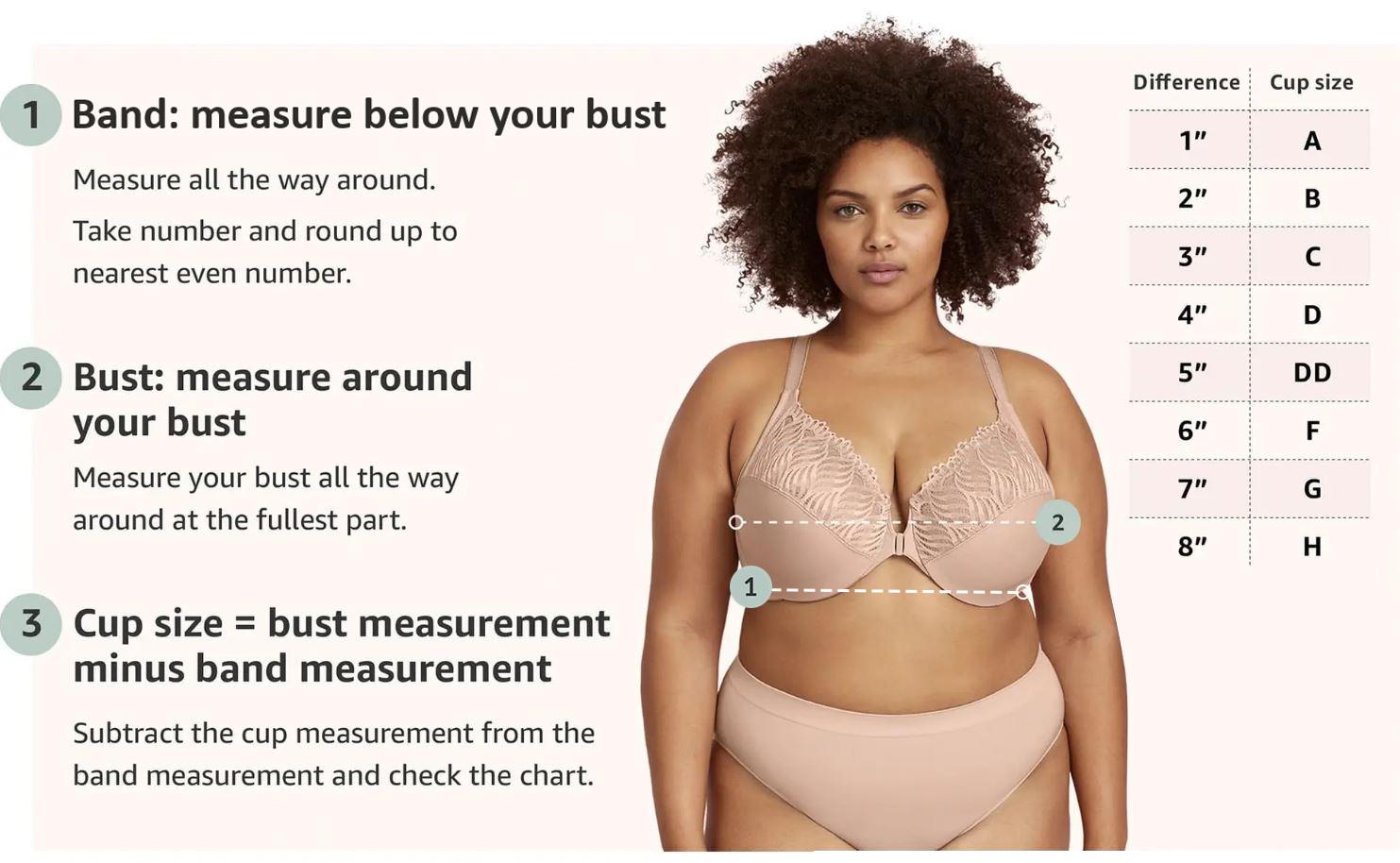
    The size on a bra tag is two pieces of information stitched together. The number is your band size, which is the circumference of your ribcage right under the bust. The letter is your cup size, which is the difference between your bust measurement at the fullest point and your band measurement. Every working calculator on the internet uses some version of this. The problem is that older calculators add four or five inches to the underbust measurement to “get to” the band size, and that math came from a 1930s sizing convention that assumed stiff, non-stretch fabric. The +4 rule is the single biggest reason most women are wearing a band two or three sizes too big and a cup two or three sizes too small.

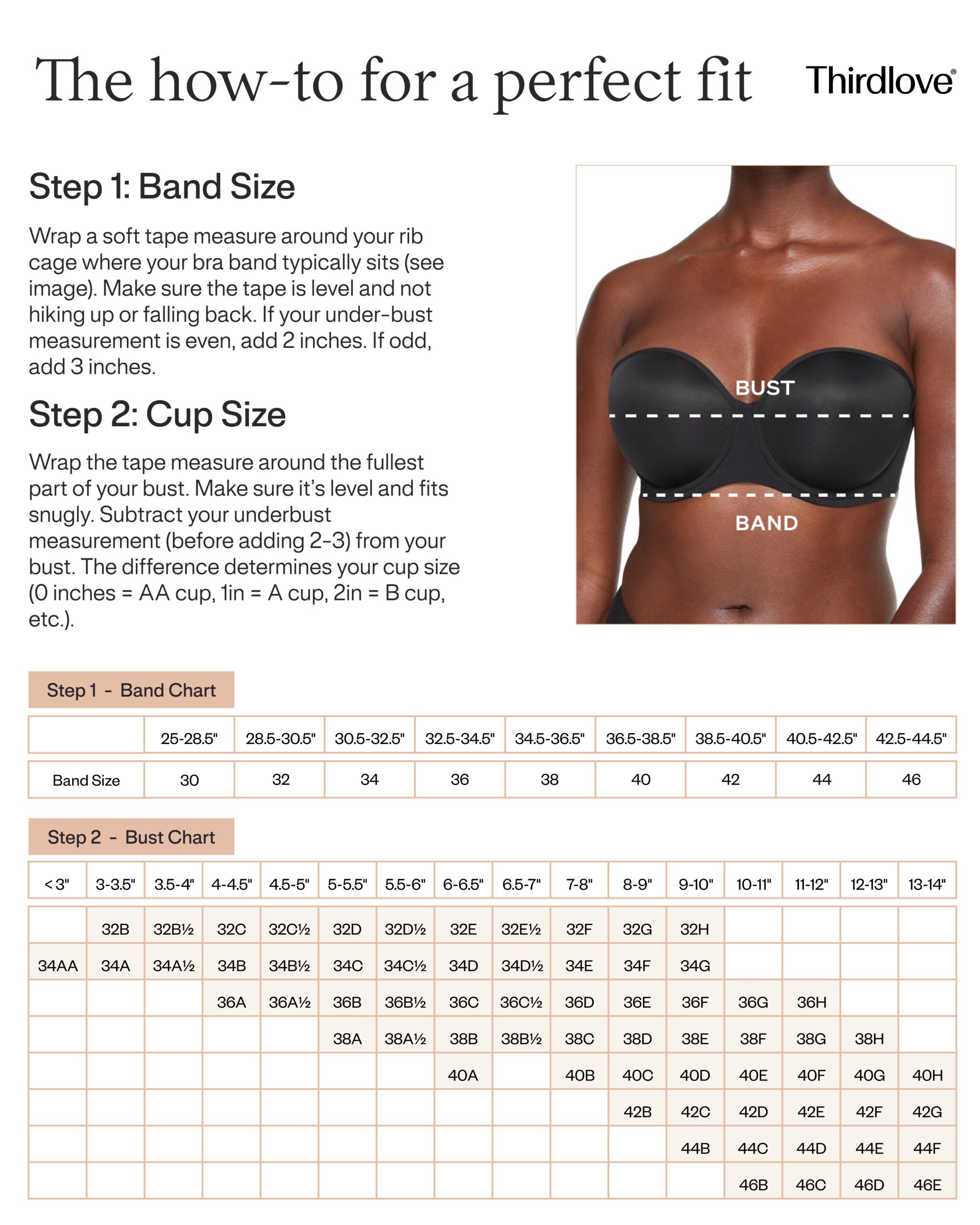
    The version that works in 2026: measure your underbust, round to the nearest whole number, and that is your band size. No additions. Then measure your bust at the fullest point, subtract the band number, and use the differential to find your cup. One inch is A, two is B, three is C, four is D, five is DD, six is DDD, seven is G, eight is H, nine is I. The chart continues through K and beyond in specialty brands.

    This matters more for plus-size shoppers because the +4 rule produces especially bad results on bigger bodies. If your underbust is 40 inches and you add four, the calculator hands you a 44 band that sits low on the ribs and lets the weight of the bust fall onto the straps. A real 40 band is snug on the first hook, supportive without the straps, and the cups can grow into a 40H or 40I without crossing into specialty territory.

    How to take your two measurements without faking the numbers

    You need a soft cloth measuring tape. The hard contractor’s tape gives you garbage data because it does not curve around a body. A basic sewing tape works and costs under five dollars. Take measurements first thing in the morning before food and water bloat the numbers, while wearing an unpadded, non-push-up bra in roughly the correct band. If you do not own one, take the bust measurement braless. The band measurement does not need a bra.

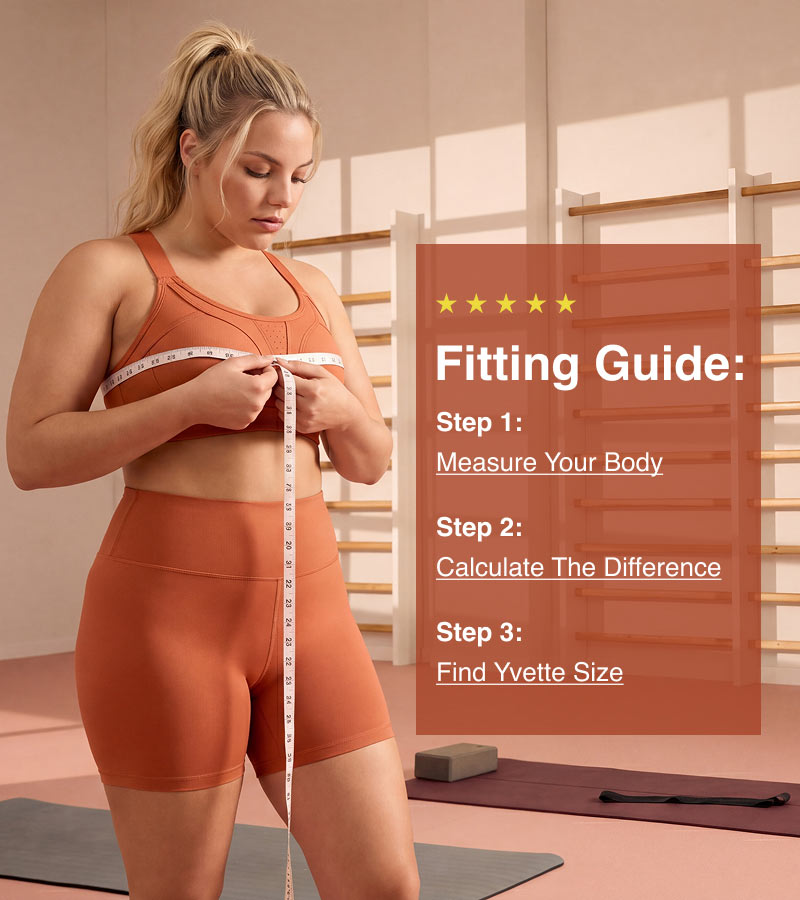
    The underbust measurement is taken directly under the bust where a bra band would sit on your ribcage. Pull the tape level all the way around your back. Keep it parallel to the floor, not slanted up at the back or down at the front. Pull it firm but not tight, the tape should feel like a snug hug, not a corset. Exhale fully before you read the number. Most women hold their breath while measuring, which inflates the rib cage by an inch or more and produces a band size that is too big.

    The bust measurement is taken at the fullest point, usually right across the nipple line. Keep the tape parallel to the floor and stand straight without arching forward or hunching back. Wear a thin, lightly-lined T-shirt bra, not a push-up and not nothing. A push-up adds half a cup of false inches. Braless underestimates by a cup on most plus-size chests because the tissue settles toward the band when unsupported. Take both measurements three times and use the middle number, not the smallest. Write them down with the date and recheck every six months.

    Correct underbust measurement technique with a soft cloth tape parallel to the floor on a plus-size body

    Finding your true band size, and why the +4 rule is broken

    Take your underbust number and round to the nearest even number. Bra bands are sized in even numbers: 32, 34, 36, 38, 40, 42, 44, 46, 48, 50. If your underbust is 37, round up to 38. If it is 41, round up to 42. Some specialty brands carry odd-number bands (Curvy Couture in select styles, Cuup through their app fitting tool), but the vast majority of mainstream and plus-size lingerie is sized even.

    The +4 rule came from an era when bra bands were inelastic, and the four extra inches were structural compensation for the lack of stretch. Modern bras have a power-mesh elastic band that stretches three to four inches on its own, so adding four to the underbust measurement makes the band wildly oversized and forces the wearer to fasten on the tightest hook on day one. That is backward. A bra should fasten on the loosest hook when new and migrate inward to the middle and tight hooks as the elastic relaxes over six to twelve months of wear.

    If you have been wearing a 38C for years and the math says your band is a 36, do the test. Try the size up and the size down from the calculator result and judge by feel. The correct band sits flat across your back parallel to the floor, does not ride up when you raise your arms, and supports the weight of the bust without help from the straps. Two fingers should fit under the band, snug, with no real give beyond that. If you can slide four fingers under easily, the band is too big.

    Side-profile reference of a correctly fitted bra band sitting parallel to the floor on a plus-size body

    Finding your cup size with the bust-band differential

    Once your band is locked in, the cup is straightforward subtraction. Take your bust measurement and subtract your band measurement. The differential, in inches, maps directly to a cup letter. One inch is A, two is B, three is C, four is D, five is DD (also written E in UK sizing), six is DDD or F, seven is G, eight is H, nine is I, ten is J, eleven is K, twelve is L. The chart continues to N in specialty brands like Elomi and Curvy Couture.

    The cup letter is paired with the band number to make your full size. A four-inch differential on a 36 band is a 36D. A seven-inch differential on a 40 band is a 40G. The cup volume is keyed to the band: a 36D and a 38D are not the same cup volume because the 38D cup is cut wider to fit across a larger band. “I’m a D cup” is a meaningless statement without the band number attached.

    Differentials shift slightly between US and UK sizing. UK brands like Bravissimo, Panache, Curvy Kate, Freya, and Elomi use letters that go A, B, C, D, DD, E, F, FF, G, GG, H, HH, J, JJ, K – a doubled-letter pattern that US brands collapse. A US 36G is roughly equivalent to a UK 36F. The fitting calculators at Curvy Couture, ThirdLove, and Bare Necessities convert this when you input your differential. If your differential lands at exactly 4.5 inches, round up. A too-small cup overflows at the top and sides in a way that is uncomfortable and visible under clothing.

    Bra size differential chart mapping band and cup measurements to size, instructional illustration

    Sister sizes – how to swap when the band or cup is wrong

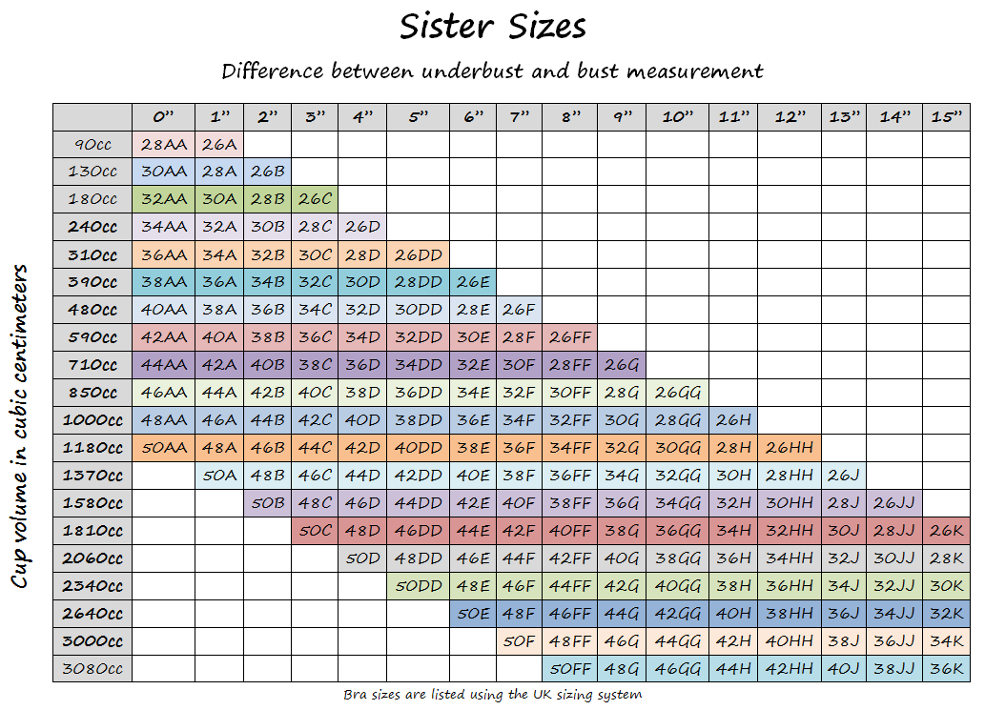
    Sister sizes are the most useful piece of bra knowledge most women have never been told. A sister size is a different band-and-cup combination with the same cup volume as your starting size. If your calculator result is a 38D but the 38 band feels too big, you can go down to a 36 band, but the 36D cup is too small for your bust, so you compensate by going up one cup letter to a 36DD. Same volume, different distribution.

    The pattern works both ways. If the calculator gives you a 36DD and the band is too tight, go up to a 38 band and down one cup letter to a 38D. Same volume, looser band. This matters because when a specific style only cuts certain sizes, sister-sizing lets you find a version that fits. Some Cuup styles run small in the band and large in the cup. Some Curvy Couture styles run the opposite. Knowing two adjacent sister sizes for your true size doubles the inventory you can actually shop.

    The limit is that you cannot move more than one band step in either direction without the cup width feeling off. A 36D and a 38C share cup volume in theory, but the 38C cup is wider and shallower, so the fit on the chest wall changes. If you have to move more than one band, you are in a different size altogether. Retailers that publish a clear sister-size chart on the product page – Bare Necessities through Amazon being the broadest example – are the ones worth shopping if you are between sizes.

    Sister size chart showing equivalent cup volumes across adjacent band sizes

    Five fitting-room mistakes that mean the size is wrong

    The fitting-room mirror catches every bra-size problem in under sixty seconds if you know what to look for. The same five mistakes tell you whether you need a band swap, a cup swap, or a sister-size adjustment.

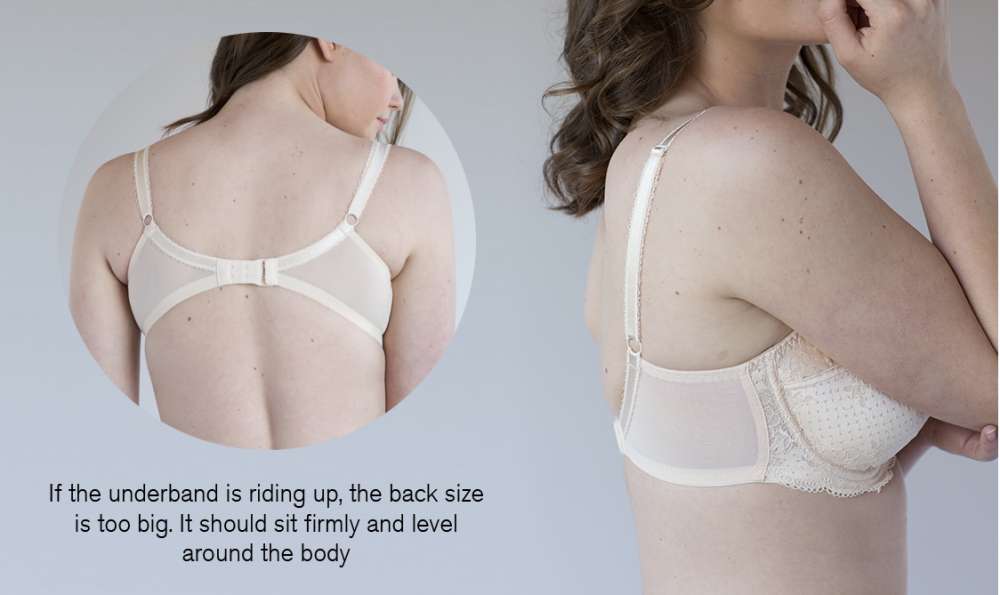
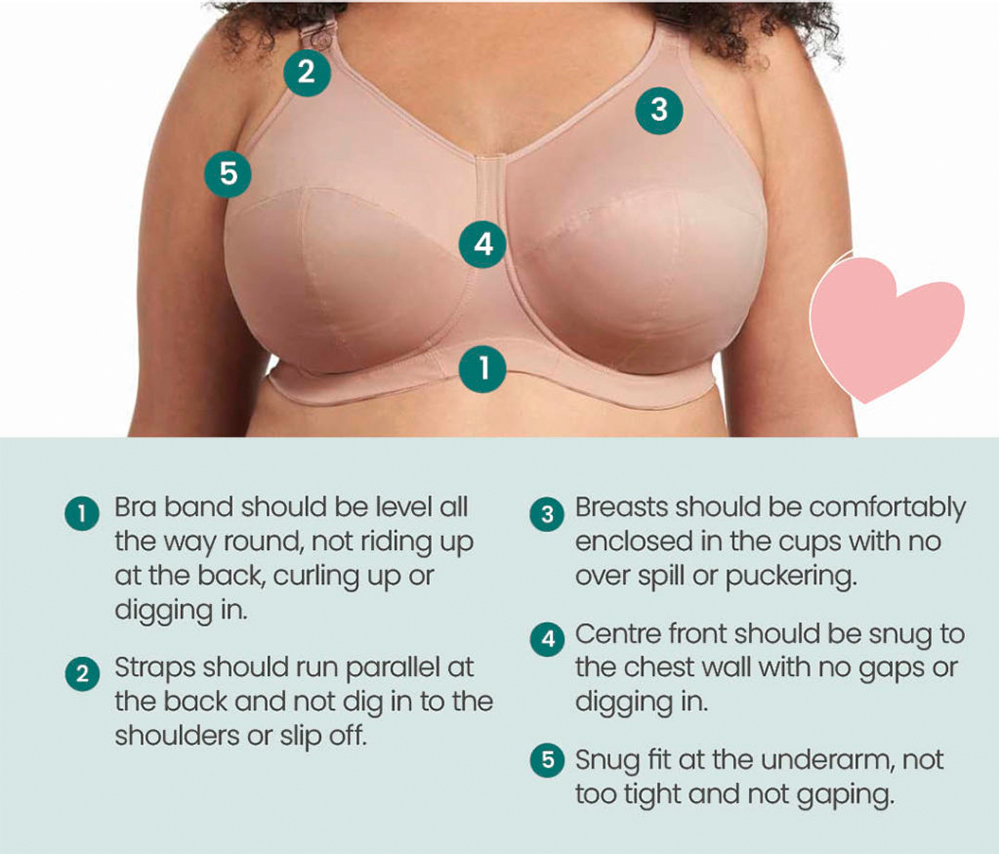
    First, the back-band ride-up. Raise both arms overhead and lower them. If the band has migrated up your back, the band is too big. The band should stay parallel to the floor on the same plane as the underbust. Drop one band size and go up one cup.

    Second, the underwire dig or float. The wire should sit flat against your sternum in the center and follow the natural crease where the breast meets the ribcage on the sides. Wire digging into breast tissue at the side means the cup is too small. Wire floating away from the body in the front gore is the same diagnosis.

    Third, the cup overflow. A correctly fitted cup encloses the breast smoothly without spillover at the top, side, or bottom. The “quad-boob” look at the top is the classic too-small-cup signal. Spillover at the underarm is the same problem. Go up one cup letter, hold the band where it is, and check again.

    Fourth, the gore lift-off. The center gore between the cups should sit flat against your sternum, flush with the body. If it floats forward, the cup is too small for the projection of your bust and the gore is being pushed away. Try a larger cup or a deeper-cup brand. UK brands like Elomi cut deeper cups than most US brands and solve this for many shoppers.

    Fifth, the strap dig. If you are constantly adjusting the straps or they leave red marks on your shoulders, the band is doing none of the supportive work. The straps should carry roughly twenty percent of the support; the band the other eighty. Strap pain almost always means the band is too big. Tighter band, larger cup, straps relax.

    Close-up reference of cup overflow from a too-small bra size on a plus-size body

    What you actually need – tape, brands, return windows

    The tools list is short. A soft cloth measuring tape from Amazon for under five dollars. A notepad or Notes app entry where you keep your two measurements, your calculator result, and your actual size in each brand. A 38DDD in Curvy Couture might be a 38G in Elomi and a 38DD in Cuup – same volume, different sizing conventions.

    For plus-size shoppers, the brands worth knowing first are Curvy Couture (32 to 46, cups A to K, US sizing), Elomi (32 to 46, DD to N, UK sizing with deep cups for full-on-bottom shape), Glamorise (32 to 50, wireless and front-close options), Cuup (30 to 42, A to H, app-based fitting), and Wacoal (32 to 44, A to H, broadly available at Nordstrom). Curvy Couture at Nordstrom is the broadest starting point because Nordstrom takes returns on worn intimates within reason. Cuup and ThirdLove accept first-bra returns even on worn merchandise as part of their fit-guarantee programs.

    Frequently asked questions

    The calculator says I’m a band size two sizes smaller than I’ve been wearing. Is that right?

    Almost certainly yes. The +4 rule has been giving women too-big bands for thirty years. A correct band sits parallel to the floor across the back, does not ride up when you raise your arms, and supports the bust without the straps. If the new calculator size passes those tests, it is right and your old size was wrong. Going from a 40B to a 36DDD feels dramatic on paper but produces the same cup volume in a band that works.

    Should I trust the in-app fitting tools at Cuup, ThirdLove, and Aerie?

    Cuup’s is the most accurate because it uses the modern math and asks follow-ups about breast shape and projection. ThirdLove’s is decent but conservative on cup size. Aerie’s pushes you toward a smaller cup and larger band because their inventory is concentrated in the 32A through 38DD range. Above a 38D in the calculator, ignore Aerie and shop specialty instead.

    I’m between two cup sizes. Which way should I round?

    Always round up. A too-small cup overflows and looks wrong under clothing; a slightly-too-big cup wrinkles at the apex but is wearable. The right cup is the smallest size that fully contains the breast without spillover at the top, side, or bottom. At 4.5 inches of differential, round to a DD, not a D.

    How often should I remeasure?

    Every six months as a baseline, and after any weight shift of ten pounds or more, after pregnancy, after surgery, and any time a bra that used to fit suddenly does not. The remeasure takes five minutes and saves you from buying three bras in the wrong size.

    Final word

    Most bra-fit problems are not body problems, they are calculator problems and brand problems. Once you know your real underbust, your honest differential, and the brands that cut for that size, you stop buying six bras a year hoping one fits. You buy two or three from brands you have already calibrated against and wear them for two years. Once the math is done honestly, the shopping is easy.

  • The Best Plus-Size Dress for a Wedding Guest in 2026

    The Best Plus-Size Dress for a Wedding Guest in 2026

    Seven plus-size wedding guest dresses arranged on a studio rack with accessories

    After three years of covering this category for plus-size readers, I can tell you that the best plus-size wedding guest dress is not one dress. It is a small, deliberate roster of seven silhouettes that cover every dress code you will see on a real 2026 invitation, in sizes that run honestly through 28, from brands with the construction and return policies to back the price. I have written about wedding-guest dressing every spring since I started this beat and tracked which silhouettes the plus-size editors I respect actually keep wearing past one season. The list below is the result.

    The ranking is built on three criteria. First, the dress has to fit a real plus-size body – a defined waist seam at the actual waist, a hem at true midi or maxi without a six-inch alteration, a bodice cut for chest measurements above 38. Second, it has to photograph cleanly in mixed wedding lighting, which favors saturated jewel tones and matte fabrics over bright pastels and high-shine satin. Third, it has to come from a brand that will take it back if the fit is wrong. Universal Standard‘s 60-day return, Eloquii’s 60 days with free returns over $50, and Nordstrom’s open-ended policy carry this list.

    1. The column gown for black-tie – Eloquii’s asymmetric shoulder gown in oxblood

    Black-tie is the dress code where most plus-size guests default to a safe black sheath and end up indistinguishable from every other guest in the room. The best black-tie plus-size dress is the column silhouette in a saturated jewel tone, full stop. A column reads dressier than an A-line at floor length because the unbroken vertical line is what evening dressing has been built on since the Halston era, and a jewel tone photographs more interestingly than black under the ballroom lighting most black-tie weddings run.

    The dress: the Eloquii asymmetric shoulder column gown in oxblood, around $185, sized through 28. The one-shoulder cut elongates the torso and the structured shoulder reads dressier than strapless in photographs where flash is involved. The crepe is heavy enough to skim the body without clinging. Pair with a closed-toe pointed pump from Naturalizer in wide width at around $110, a small structured clutch, one statement earring, and a thin gold cuff. Skip the necklace – the neckline does the work.

    Plus-size guest in oxblood asymmetric column gown for black-tie wedding

    2. The beaded midi for formal – Adrianna Papell’s beaded cocktail midi in navy

    Formal or black-tie optional is the dress code that trips up plus-size guests more than any other on the list. A floor-length gown works but is not required. A structured midi in a fabric that registers as evening – beading, silk satin, or heavy crepe – is the most flexible choice and reads more deliberate than reaching for the same column gown you wore to last month’s black-tie.

    The dress: the Adrianna Papell beaded midi cocktail dress in navy or deep emerald, around $260, sized through 24W. Adrianna Papell has been making properly-beaded evening pieces for plus-size figures since well before the current inclusivity wave, and the bead density is the actual difference between a $260 dress and a $90 ASOS Curve version. The beadwork catches light in mixed indoor settings – hotel ballrooms, venues with chandelier-and-uplight combinations – in a way that flat fabrics do not. Pair with metallic strappy sandals from Sam Edelman at around $130, a small beaded clutch, and a single cocktail ring rather than a full jewelry stack.

    Plus-size guest in navy beaded midi dress for formal wedding

    3. The cocktail midi – Universal Standard‘s Geneva midi in burgundy

    Cocktail is where the plus-size dress market has matured the most in the last five years. The available silhouettes used to default to wrap dresses and shift cuts, both of which solve different problems than what a plus-size body actually needs at a four-hour reception. The current best cocktail dress for plus-size guests is a stretch-crepe midi with a defined waist seam that does not constrict, and the version that delivers on both ends is the one Universal Standard has been refining for the better part of a decade.

    The dress: the Universal Standard Geneva midi dress in burgundy or black, around $148, sized 00-40. The Geneva runs honest – a 16-18 fits a 16-18 – and the stretch crepe holds shape through dinner and dancing without bagging at the waist or pulling at the hip. The hem hits at a true midi length on most heights between 5’4″ and 5’9″. Pair with the Cole Haan Go-To block heel pump in wide width at around $150 because cocktail hour involves standing for two hours straight and your stilettos will betray you by hour three.

    Plus-size guest in burgundy midi dress for cocktail wedding

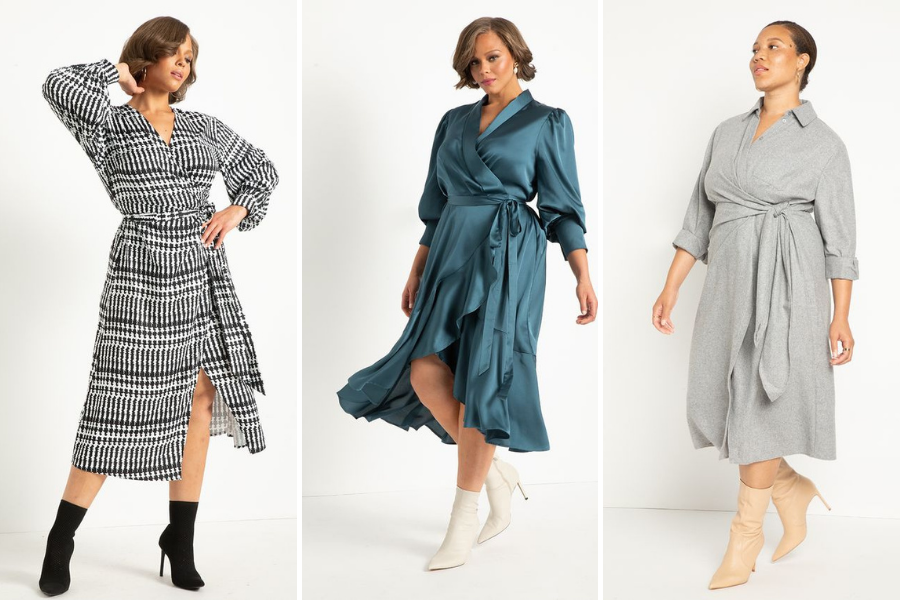
    4. The wrap dress reconsidered – Torrid’s surplice midi for daytime cocktail

    I have been skeptical of wrap dresses on plus-size figures for most of my editing career – the surplice neckline gaps, the tie cinches in the wrong place, the skirt opens at the front when you sit. The 2026 generation of plus-size wrap dressing has fixed enough of these problems that it has earned a slot on this list, specifically for daytime or earlier-evening receptions where the polish-without-stiffness balance is the goal.

    The dress: the Torrid surplice midi wrap dress in deep teal or burnt mustard, around $99, sized through 30. The current Torrid surplice has a snap closure at the bust to prevent the gap and a deeper crossover than older wrap constructions, which together solve the two problems that historically made wraps unwearable for larger busts. Pair with nude block-heel sandals or low pointed pumps, a small leather crossbody, and gold drop earrings. This is the dress that travels well to garden ceremonies, daytime receptions, and rehearsal dinners without reading wrong at any of them.

    Plus-size guest in deep teal wrap midi dress for daytime wedding

    5. The floral midi for garden weddings – Hutch’s tie-shoulder midi

    Garden and outdoor daytime weddings ask for lighter fabric, more pattern, and shoes that survive grass. Most plus-size floral dresses fail one of these tests – the prints are scaled too small to register from across a lawn, or the fabric is so light it shows every shapewear line, or the cut runs short in the hem. The Hutch tie-shoulder midi is the version that gets all three right, and it has been the dress I recommend to plus-size readers prepping for spring and summer wedding season for three years running.

    The dress: the Hutch floral tie-shoulder midi dress in their seasonal print, around $258, sized through 22. Hutch’s prints are large-scale enough to register as garden-appropriate without crossing into bridesmaid-floral territory, and the construction is closer to what you would find at Reformation than at H&M. The tie-shoulder construction lets you adjust the bodice tension which is the make-or-break detail for chest sizes above a D cup. Pair with woven flats or low block-heel sandals – skip stilettos because grass and stilettos do not coexist – a woven raffia clutch, and a delicate gold chain.

    Plus-size guest in floral tie-shoulder midi dress for garden wedding

    6. The velvet long-sleeve for winter – Eloquii’s velvet midi in deep teal

    Winter weddings invite heavier fabrics, deeper colors, and long sleeves that the warmer-weather codes either prohibit or de-emphasize. Velvet is the canonical winter wedding fabric and the reason is that it catches indoor lighting in a way that adds dimension to a plus-size body without horizontal seam lines or hard pattern boundaries. A velvet long-sleeve midi reads occasion-appropriate from arrival through reception without requiring a separate coat or jacket layer, which simplifies the cold-weather styling problem to one piece.

    The dress: the Eloquii velvet long-sleeve midi dress in deep teal or burgundy, around $169, sized through 28. The construction is stretch velvet with a defined waist seam, the sleeves are full-length rather than three-quarter, and the midi length pairs cleanly with closed-toe boots or pumps when the venue has a coat check. Pair with pearl drop earrings, a structured velvet or satin clutch, and either suede heeled boots from Clarks or closed-toe pumps depending on whether the ceremony involves walking on outdoor stone.

    Plus-size guest in deep teal velvet long-sleeve midi dress for winter wedding

    7. The polished sundress for casual – City Chic’s tie-waist sundress

    Casual weddings are rare on actual paper invitations but increasingly common in practice – backyard ceremonies, courthouse celebrations, small destination elopements. The dress code asks for something dressier than what you would wear to brunch but less formal than a cocktail dress. A polished sundress in a non-floral solid – dusty rose, sage, deep navy, cognac brown – is the answer, and the construction details that separate a polished sundress from a basic one are the same details that make a dress photograph well: a defined waist, a hem that hits below the knee, and a fabric weight that drapes rather than crinkles.

    The dress: the City Chic tie-waist sundress in dusty rose or sage, around $99, sized through 24. City Chic has built a reputation on flattering plus-size summer pieces and the tie-waist construction is forgiving across body shapes – cinch tighter for hourglass emphasis or leave looser for a relaxed line. Pair with woven slide sandals or low block-heel mules from Naturalizer at around $85, a small soft-leather crossbody, and minimal jewelry. Add a structured straw tote if the venue is outdoor.

    Plus-size guest in dusty rose tie-waist sundress for casual wedding

    Styling tips that apply across every dress on this list

    Three rules carry every dress above. First, wear shapewear under any dress that is not fully lined and structured. The Honeylove SuperPower bodysuit at around $98 or the Spanx Suit Yourself at around $88 will change how every dress on this list hangs. The Skims Sculpting bodysuit is the third option worth considering if the dress neckline is low and you need a smoother bust-line transition.

    Second, tailor the dress before the wedding. A $30 bodice or hem alteration is the line between a dress that looks like it cost what you paid and a dress that looks like it cost three times that. Plus-size tailoring specialists are scarce in some markets but worth finding – call ahead to plus-size boutiques in your city and ask which alterations shop they refer to. A take-in or hem is $30. A full bodice rebuild is $200 and rarely works.

    Third, do not wear new shoes to a wedding. Four short wears around the house before the day is the minimum. The fastest way to sabotage a carefully-built outfit is shoe pain at hour three that leaves you sitting through the toasts and the dancing.

    What to avoid when you are dress-shopping

    White, ivory, cream, blush, or any color that photographs as white in indoor flash. The rule is “do not look like the bride,” and the test is to photograph the dress under your phone’s flash before the day and check how it reads. Some couples now explicitly invite white-adjacent outfits, but the default assumption stands: unless the invitation specifies, assume no.

    Bodycon constructions for a six-plus hour event. A dress you cannot sit comfortably through dinner in is a dress you will spend the second half of the wedding pulling down. The defined-waist midi silhouette gives you the cinched look without the all-day compression.

    Brands whose return policy does not back you. Plus-size sizing varies more between labels than straight sizing does. The brands on this list – Universal Standard, Eloquii, Torrid, Nordstrom’s plus department, City Chic – all run real returns. The fast-fashion plus-size retailers I have left off mostly do not.

    Shop the looks at a glance

    The seven dresses on this list cluster around four retailers – Universal Standard, Eloquii, Torrid, and Nordstrom – because those are the four carrying the strongest size runs and the most reliable fit for plus-size formalwear in 2026. Start with the dress code you are most often invited to and build out from there.

    The fastest two-dress starter rotation: the Universal Standard Geneva midi in burgundy and the Eloquii column gown in oxblood. Between the two you have cocktail, formal, semi-formal, and black-tie covered. Add a floral midi for garden season and you have a four-dress rotation that handles a full year of weddings at around $700 total spend, before alterations, before shoes.

    Frequently asked questions

    If I can only buy one plus-size wedding guest dress, which one should it be?

    The Universal Standard Geneva midi in burgundy or black. It covers cocktail and semi-formal weddings cleanly, which together account for the majority of dress codes you will see. It is the most flexible dress on this list and the one whose construction will survive ten-plus wears without losing shape. At around $148 it is also the price point that justifies the cost-per-wear math.

    What size should I order if I am between two sizes on the same dress?

    For wedding occasions order the larger size and tailor down. A wedding dress is one you will sit, stand, walk, dance, and eat in across six hours, and the smaller size will betray you in the seated position by the time the toasts start. A bodice take-in is a $30 alteration. Trying to survive a too-tight dress for a full reception is a six-hour problem you do not need.

    Can I rewear the same plus-size wedding guest dress to multiple weddings?

    Yes, and most wedding photographers will tell you to. The cost-per-wear math on a $200 dress only works at three-plus wears. Switch out the shoes, jewelry, and clutch between weddings, and the same dress photographs differently enough that it reads as a different look. Just check the guest lists if the weddings are close in time and the same people will be at both.

    The shortest version: the best plus-size dress for a wedding guest in 2026 is the Universal Standard Geneva midi in burgundy, size 18, around $148, on universalstandard.com. The link is above. Add the Eloquii oxblood column gown when you graduate to black-tie. Build the rest of the rotation over the next two wedding seasons.

  • 20 Affordable Plus-Size Clothing Stores Where Everything Is Under $40

    20 Affordable Plus-Size Clothing Stores Where Everything Is Under $40

    Happy plus size woman with multiple shopping bags in bright shopping district

    Stylish Plus Size Fashion Does Not Require a Big Budget

    Stylish Plus Size Fashion Does Not Require a Big Budget

    Let us address the elephant in the room: plus size clothing has historically been more expensive than straight-size clothing, and that markup often comes with less style, less variety, and lower quality. It is a frustrating reality that plus size women have dealt with for decades, paying more for less while being told to be grateful for whatever the fashion industry deigned to offer.

    But the budget plus size fashion landscape has transformed in recent years. A new generation of retailers, both online and in-store, now offers trendy, well-made plus size clothing at prices that do not require a second mortgage. We have scoured the market to find 20 stores where you can fill your cart without a single item exceeding $40. Some stores on this list have entire inventories under that threshold, while others require strategic shopping in their sale and budget sections. Either way, every store listed here makes it genuinely possible to build a stylish plus size wardrobe on a tight budget.

    Online Stores Where Everything Is Under $40

    Online Stores Where Everything Is Under $40

    1. BloomChic ($15-$40)

    Sizes: 10-30

    BloomChic is an online women’s apparel brand sizes 10-30 with most everything priced under $40. Their inventory includes casual tops and shorts, patterned sundresses and wedding guest dresses, supportive swimwear and cute coverups. The brand designs specifically for plus size bodies rather than scaling up straight-size patterns, which shows in the flattering cuts and thoughtful design details. Quality is solid for the price point, and the style variety keeps the collection feeling fresh and fashion-forward.

    Shop BloomChic

    2. SHEIN Curve ($3-$30)

    2. SHEIN Curve ($3-$30)

    Sizes: L-4XL

    SHEIN offers some of the lowest prices in plus size fashion with many items under $15. The selection is massive with thousands of styles updated constantly. Quality is inconsistent at these extreme price points, so read reviews carefully and check fabric content before purchasing. Best used for trendy pieces you want to wear for a season rather than wardrobe staples. Always check the size chart as sizing can run small.

    Shop SHEIN Curve

    3. Rainbow ($5-$30)

    Sizes: 14-28

    Rainbow offers women’s plus size clothing at everyday low prices with new affordable styles added daily. Most items fall well under $20, making this one of the most budget-friendly options for trendy plus size fashion. The selection includes casual basics, dresses, denim, and going-out pieces. Quality is basic but acceptable for the price, and the rapid style turnover means there is always something new to discover.

    4. Rue 21 ($8-$35)

    4. Rue 21 ($8-$35)

    Sizes: 1X-4X

    Most of Rue 21’s plus size clothing falls under $40, with frequent sales bringing prices even lower. The brand targets a youthful demographic with trendy, fashion-forward pieces including graphic tees, bodycon dresses, and casual separates. The online selection is broader than most stores, and the style aesthetic is fun and playful.

    5. Forever 21 Plus ($5-$35)

    5. Forever 21 Plus ($5-$35)

    Sizes: 0X-3X

    Forever 21 has prices as low as five dollars with a giant colorful selection covering every trend you see on social media. The brand’s plus size section has expanded significantly, offering bodycon dresses, graphic tees, crop tops, matching sets, and occasion wear all under $40. Quality is fast-fashion basic, but the variety and prices make it ideal for experimentation and trend-testing.

    Shop Forever 21 Plus

    6. Cato Plus ($12-$35)

    6. Cato Plus ($12-$35)

    Sizes: 14-28

    Cato offers stylish plus size apparel in sizes 14-28 at prices that rarely exceed $35. The brand strikes a balance between trendy and classic, making it suitable for both work and casual settings. The online store provides a wider selection than most physical locations, though in-store shopping is available at their numerous locations across the South and Midwest.

    7. Amazon Essentials ($8-$35)

    7. Amazon Essentials ($8-$35)

    Sizes: XS-6X

    Amazon’s in-house basics line offers reliable staples at budget-friendly prices with Prime shipping. T-shirts, leggings, basic dresses, tank tops, and loungewear are all available in extended sizes well under $40. The quality is consistent and appropriate for everyday basics that form the foundation of any wardrobe.

    Shop Amazon Essentials

    8. Boohoo Plus ($8-$35)

    8. Boohoo Plus ($8-$35)

    Sizes: 12-26

    Boohoo’s plus size line offers trend-forward fashion at ultra-affordable prices. The brand is known for party dresses, going-out tops, and casual basics that mirror current Instagram and TikTok trends. Frequent sales bring prices even lower, and the variety is impressive for the price point. Quality is fast-fashion standard, so set expectations accordingly.

    Colorful collage of affordable plus size outfits with price tags under 40 dollars

    9. Pretty Little Thing Plus ($8-$38)

    9. Pretty Little Thing Plus ($8-$38)

    Sizes: 12-26

    Pretty Little Thing offers fast-fashion trend pieces at very accessible prices. Their plus size section covers everything from loungewear to party dresses. Frequent promotional codes bring prices down even further. The style aesthetic is young and bold, making it ideal for going-out outfits and social media-worthy looks.

    10. Fashion Nova Curve ($10-$40)

    10. Fashion Nova Curve ($10-$40)

    Sizes: 1X-3X

    Fashion Nova built their empire on affordable, body-hugging fashion, and their Curve collection extends that aesthetic to plus sizes. Bodycon dresses, curve-hugging jeans, crop tops, and matching sets dominate the collection. Most items fall under $40, with many under $25. The brand is best known for pieces that celebrate and accentuate curves. Quality varies by item, so read reviews before purchasing.

    Shop Fashion Nova Curve

    In-Store Options Under $40

    In-Store Options Under $40

    11. Target – Ava and Viv ($8-$38)

    11. Target - Ava and Viv ($8-$38)

    Sizes: 14-30W

    Target’s Ava and Viv line is one of the easiest places to pick up something stylish in plus sizes with prices consistently under $40. The rotating designer collaborations and seasonal collections keep the selection fresh. In-store shopping means you can try on before buying, eliminating sizing surprises.

    Shop Ava and Viv at Target

    12. Walmart – Free Assembly and Time and Tru ($5-$35)

    Sizes: 0X-5X

    Walmart has become a strong option for affordable fashion through their in-house brands. Free Assembly offers modern basics with a slightly elevated aesthetic while Time and Tru covers classic casual style. Both lines offer plus sizes under $40 with surprisingly good quality for the price point. Walmart’s massive physical presence means in-store shopping is available in nearly every community.

    Shop Walmart Plus Size Fashion

    13. Old Navy ($10-$39)

    Sizes: XS-4X

    Old Navy offers every single style in sizes 0 through 30 at the same price, with most items under $40 and frequent sales bringing prices even lower. The in-store selection covers basics, denim, activewear, and seasonal pieces. The Bodequality initiative means you never encounter the frustration of finding a style you love that does not come in your size.

    14. Ross Dress for Less ($5-$30)

    14. Ross Dress for Less ($5-$30)

    Sizes: Varies by availability

    Ross offers name-brand clothing at significant discounts, and their plus size section can yield incredible finds from brands that normally price above $40. The selection varies by store and changes frequently, so this is a treasure-hunting experience rather than a targeted shopping trip. For patient shoppers who enjoy the thrill of the hunt, Ross can deliver designer-level plus size finds at budget prices.

    15. TJ Maxx and Marshalls ($10-$35)

    15. TJ Maxx and Marshalls ($10-$35)

    Sizes: Varies by availability

    Similar to Ross, TJ Maxx and Marshalls offer discounted name-brand clothing with rotating inventory. The plus size sections have grown in many locations, and you can find pieces from brands like Calvin Klein, Nike, and other premium labels at 40 to 60 percent off retail. The in-store experience requires patience and frequent visits, but the potential savings are substantial.

    Thrift and Resale Options

    Thrift and Resale Options

    16. ThredUp ($5-$35)

    The largest online consignment store offers secondhand plus size clothing at a fraction of retail prices. You can find premium brands for under $40 that would normally cost $100 or more new.

    17. Poshmark (Prices Vary)

    17. Poshmark (Prices Vary)

    Poshmark’s peer-to-peer resale platform offers plus size clothing from every brand imaginable. Search by your size and price range to find deals on everything from everyday basics to special occasion pieces.

    18. Goodwill and Local Thrift Stores ($3-$15)

    18. Goodwill and Local Thrift Stores ($3-$15)

    Local thrift stores offer the lowest prices for secondhand clothing, and many communities have thrift stores with growing plus size sections. The selection depends entirely on your local market, but the prices cannot be beaten.

    19. Depop ($5-$30)

    Depop specializes in vintage and trendy secondhand clothing with a younger, more fashion-forward user base. The plus size selection is growing, and you can find unique vintage pieces and current trends at discounted prices.

    20. Facebook Marketplace and Buy Nothing Groups (Free-$20)

    20. Facebook Marketplace and Buy Nothing Groups (Free-$20)

    Local Facebook Marketplace listings and Buy Nothing community groups can yield free or very cheap plus size clothing from community members. These hyper-local options are the most budget-friendly way to expand your wardrobe, and they build community connections in the process.

    Well-organized plus size wardrobe closet with affordable outfits on hangers

    Tips for Maximizing Your Fashion Budget

    Tips for Maximizing Your Fashion Budget

    Shop End-of-Season Sales

    Shop End-of-Season Sales

    The deepest discounts happen when retailers clear seasonal inventory. Shop summer clothes in late August through September and winter clothes in February through March for 50 to 75 percent off. This strategy works at nearly every retailer on this list.

    Sign Up for Email Lists and Apps

    Sign Up for Email Lists and Apps

    Nearly every retailer offers a first-purchase discount of 10 to 20 percent for joining their email list. Download store apps for exclusive deals and digital coupons. Stack multiple discounts whenever possible for maximum savings.

    Use Cashback Apps

    Use Cashback Apps

    Apps like Rakuten, Ibotta, and Honey automatically apply coupon codes and earn cashback on purchases from many of the stores on this list. The savings are small per purchase but add up significantly over time.

    Build Around Basics

    Build Around Basics

    Invest your budget in versatile basics that create multiple outfits rather than single-occasion statement pieces. A quality pair of black leggings, three basic tees, and a denim jacket under $40 each gives you more outfit variety than one $120 dress.

    Know Your Measurements

    Know Your Measurements

    When shopping budget brands, especially online, sizing can be inconsistent. Knowing your exact bust, waist, hip, and inseam measurements helps you choose the right size from any brand’s size chart, reducing the need for returns and exchanges.

    Key Takeaways

    • BloomChic, Rainbow, and Forever 21 Plus offer the widest selection of trendy plus size clothing with nearly everything under $40.
    • Target, Walmart, and Old Navy provide the best in-store budget shopping experiences with consistent quality and inclusive size ranges.
    • Secondhand platforms like ThredUp, Poshmark, and local thrift stores offer the most aggressive savings, often delivering premium brands at under $20.
    • Shopping end-of-season sales can reduce prices by 50 to 75 percent at almost every retailer, stretching your budget significantly further.
    • Building a wardrobe around affordable basics and supplementing with trend pieces provides the most outfit variety for the least money.

    Frequently Asked Questions

    What is the cheapest store for plus size clothes?

    What is the cheapest store for plus size clothes?

    SHEIN Curve offers the lowest new-clothing prices with items starting at $3 to $5, though quality is inconsistent. Rainbow and Forever 21 Plus offer many items under $15 with somewhat better quality. For secondhand clothing, local thrift stores and Buy Nothing groups offer the lowest prices, often free or under $5 per item. Among brick-and-mortar retailers, Walmart and Target offer the most affordable new plus size clothing with reliable quality.

    Is it possible to build a complete plus size wardrobe for under $500?

    Absolutely. With strategic shopping at the stores on this list, $500 can easily cover a 25-to-30-piece wardrobe including basics, workwear, casual pieces, and a few special occasion items. The key is prioritizing versatile pieces that create multiple outfits, shopping sales and clearance sections, and mixing a few quality investments with budget pieces. Adding secondhand shopping to your strategy stretches the budget even further.

    Are budget plus size clothes lower quality than regular-priced options?

    Are budget plus size clothes lower quality than regular-priced options?

    At the lowest price points under $15, quality is generally basic and some pieces will not last more than a season of regular wear. However, stores like Target, Old Navy, and Walmart offer budget-friendly plus size clothing with quality that holds up reasonably well through regular wearing and washing. The quality gap between budget and premium brands is real, but it is not as large as it used to be. For basics and everyday casual wear, budget options often deliver acceptable quality. For work clothing and pieces you plan to keep for years, investing a bit more in quality pays off.

    How can I avoid wasting money on budget plus size clothes that do not fit?

    The biggest money-waster when shopping budget plus size clothing is ordering the wrong size and paying for returns, or worse, keeping items that do not fit properly because the return process feels like too much hassle. Start by taking your measurements and comparing them to each store’s specific size chart, since sizing varies widely between budget retailers. Read reviews for fit guidance, focusing on reviewers who share their measurements rather than just their size. When trying a new brand for the first time, order just one or two pieces to test the fit before buying a full haul. Choose stores with free return shipping or easy in-store returns to reduce the financial risk of fit misses.

  • Abercrombie Curve Love Jeans Review – Are They Really the Best for Curvy Women?

    Abercrombie Curve Love Jeans Review – Are They Really the Best for Curvy Women?

    The Abercrombie Curve Love Hype – Is It Deserved?

    The Abercrombie Curve Love Hype - Is It Deserved?

    If you spend any time on fashion TikTok or Instagram, you have almost certainly seen someone raving about Abercrombie’s Curve Love jeans. The brand that many of us avoided in our teenage years for its exclusionary sizing has undergone a remarkable transformation, and the Curve Love line has become one of the most talked-about denim collections in the curvy fashion space. Influencers swear by them. Editors recommend them. Your coworker probably just ordered her third pair.

    But does the reality match the hype? We put Curve Love jeans through a comprehensive real-world test to find out. We wore them to the office, out to dinner, grocery shopping, on road trips, and everywhere else that jeans go in daily life. We squatted, sat, walked for miles, and washed them repeatedly. This review covers everything you need to know before investing in a pair.

    What Exactly Is the Curve Love Fit?

    What Exactly Is the Curve Love Fit?

    The Curve Love fit is Abercrombie’s solution to the most common denim frustration for curvy women: the waist-to-hip gap problem. Standard jeans are designed with a relatively uniform ratio between waist and hip measurements. When your hips are significantly wider than your waist, standard jeans either fit in the hips but gap at the waist, or fit at the waist but are impossibly tight in the hips.

    The Curve Love line features an extra 2 inches in the hip and thigh measurements compared to Abercrombie’s regular fit jeans. Crucially, this extra room is added only in the hip and thigh area while the waist stays true to size. This means the jeans accommodate fuller hips and thighs without requiring you to size up and deal with a waistband that is too large. The result is jeans designed to hug your waist while still accommodating your curves, eliminating the frustrating gap that plagues curvy women in standard denim.

    The Curve Love fit is available across nearly all of Abercrombie’s jean styles, including their popular 90s Straight, Ultra High Rise, Dad Jean, Vintage Flare, and Wide Leg silhouettes. This means you are not limited to one or two styles but can find the Curve Love fit in whatever silhouette you prefer.

    Detailed Fit Review

    Detailed Fit Review

    Waist Fit

    Waist Fit

    The waist fit is where Curve Love jeans truly shine. The waistband sits snugly against the natural waist without the dreaded back gap that occurs with standard jeans on curvy bodies. When you sit down, the waistband stays in place rather than pulling away from your lower back. This single feature is the reason Curve Love jeans have earned such a devoted following. For women who have spent years tugging at gaping waistbands, putting on a pair of jeans that actually sits flat against your waist is genuinely emotional.

    Hip and Thigh Fit

    Hip and Thigh Fit

    The extra 2 inches in the hip and thigh area provides comfortable room without creating excess fabric. The fit is smooth through the hip and thigh without pulling, stretching, or creating the horizontal stress lines that indicate jeans are too tight. There is enough room to move freely through your full range of motion, including squatting, sitting cross-legged, and climbing stairs, without feeling restricted.

    Rear Fit

    Rear Fit

    Curve Love jeans are designed to accommodate a fuller rear while maintaining a flattering fit. The back yoke (the seam construction below the waistband) is shaped to follow the natural curve of a fuller backside rather than pulling flat across it. The result is jeans that hug your curves without restricting movement or creating uncomfortable tightness.

    Leg Fit

    Leg Fit

    Below the thigh, the Curve Love fit transitions into whatever leg silhouette you have chosen, whether that is a straight leg, wide leg, bootcut, or skinny. The curvy modifications are concentrated in the waist, hip, and thigh areas, so the lower leg fit matches the standard version of each style.

    Styles We Tested

    Styles We Tested

    90s Straight Curve Love

    90s Straight Curve Love

    The most popular Curve Love style and our top pick. The relaxed straight leg sits below the knee with a slight room that is universally flattering. The ultra-high rise provides excellent waist coverage and a smooth front panel. This is the most versatile style, working with everything from sneakers to heeled boots. The denim has a slightly rigid feel with enough stretch for comfort, and it holds its shape impressively throughout the day.

    Shop 90s Straight Curve Love

    Ultra High Rise Skinny Curve Love

    Ultra High Rise Skinny Curve Love

    For skinny jean lovers, the Curve Love version provides all the benefits of the curvy fit in a close-to-the-body silhouette. The high rise smooths the tummy area and the curvy hip construction prevents the uncomfortable squeezing through the thighs that standard skinny jeans cause on curvy bodies. The stretch content is higher in this style, providing a more flexible, comfortable fit for all-day wear.

    Vintage Flare Curve Love

    Vintage Flare Curve Love

    The flared leg creates a stunning retro silhouette that is particularly flattering on curvy bodies. The fitted hip that opens into a dramatic flare below the knee balances proportions beautifully. Pair with platform shoes or heels for the most elongating effect. The denim in this style has a slightly heavier weight that gives the flare beautiful movement.

    Wide Leg Curve Love

    Wide Leg Curve Love

    The wide-leg version is the most on-trend style for 2026. The fitted waist and hip area that opens into a sweeping wide leg creates an elegant, effortless silhouette. The high rise provides structure and coverage while the wide leg balances curves with volume. This style requires a bit of length, so petite women may need hemming.

    Dad Jean Curve Love

    Dad Jean Curve Love

    The relaxed, slightly baggy Dad Jean silhouette looks intentionally oversized through the leg while the Curve Love waist fit keeps the top of the jeans structured and fitted. This is the most casual style, perfect for weekends with sneakers and an oversized tee. The looser fit through the thigh makes this the most comfortable Curve Love option for all-day wear.

    Sizing Guide and Tips

    Sizing Guide and Tips

    Abercrombie Curve Love jeans run fairly true to size in the waist, though there are important nuances to consider.

    Waist Sizing

    Waist Sizing

    The waist sizing is true to Abercrombie’s size chart. If you know your waist measurement in inches, use that as your starting point. Available in waist sizes 24 to 37, the range covers a broad spectrum of curvy bodies.

    Rigid vs. Stretch Denim

    Rigid vs. Stretch Denim

    For rigid denim styles like the 90s Straight, consider sizing up if you are between sizes. Rigid denim has less give and the initial fit will be snugger than the worn-in fit. For stretch styles like the Ultra High Rise Skinny, true-to-size is usually accurate because the fabric has more give.

    Inseam Options

    Inseam Options

    The brand offers four different inseam lengths: Short (approximately 27 inches), Regular (approximately 29 inches), Long (approximately 31 inches), and Extra Long (approximately 33 inches). This range accommodates women from 5 feet to over 6 feet tall, which is more inclusive than many curvy denim brands.

    Shop All Curve Love Styles

    Quality and Construction Assessment

    Quality and Construction Assessment

    Denim Quality

    Denim Quality

    The denim quality is excellent for the price point. Most Curve Love jeans use rigid or comfort stretch denim with a soft, lived-in feel that gets better with each wear. The fabric has substantial weight that feels premium without being heavy, and the denim holds its color well through multiple washes.

    Construction

    Construction

    Stitching is clean and consistent, rivets are secure, and zippers function smoothly. The hardware quality matches what you would expect from brands charging $150 or more. The back pockets are proportionally sized and well-placed, which seems like a minor detail but is actually important for how the jeans look from behind.

    Durability

    Durability

    After multiple wears and washes, the Curve Love jeans maintained their shape, color, and construction. No pilling in the inner thigh area, no loosening of the waistband, and no premature wear at stress points. These are jeans that will last for years with regular wear and proper care.

    Pricing and Value

    Pricing and Value

    Curve Love jeans range from $80 to $100, which places them in the mid-range of the denim market. This is more expensive than fast-fashion options from brands like Old Navy and Target but significantly less than premium curvy denim from Good American ($149) and NYDJ ($119+). When you factor in the specialized curvy fit, quality denim, and excellent construction, the value proposition is strong. Abercrombie also runs periodic sales that bring prices down to $60 to $75 per pair, making them even more accessible.

    Pros and Cons

    Pros and Cons

    Pros

    Pros

    Exceptional curvy fit: The extra 2 inches in the hip and thigh with a true waist eliminates the gap problem that plagues curvy women in standard jeans.

    Wide style variety: Curve Love is available in virtually every silhouette Abercrombie offers, from skinny to wide leg.

    Four inseam lengths: Options for petite through extra tall ensure the right length for every height.

    Quality construction: Premium denim quality and construction that exceeds expectations for the price point.

    Reasonable pricing: At $80-$100, these compete well against more expensive curvy denim brands.

    Cons

    Cons

    Limited plus size range: Waist sizes top out at 37, which does not extend into the full plus size range. Women who need sizes above approximately 20/22 will not be served by Curve Love.

    Online-only for most sizes: While Abercrombie has physical stores, in-store availability of Curve Love in extended sizes can be limited. Online ordering with returns may be necessary.

    Some styles sell out quickly: Popular styles in popular sizes can sell out and may take time to restock.

    How Curve Love Compares to Competitors

    Curve Love vs. Good American Good Curve ($149)

    Curve Love vs. Good American Good Curve ($149)

    Good American offers a broader size range (00-32) and more advanced stretch technology. The quality is marginally better, but the price is significantly higher. For curvy women within Abercrombie’s size range, Curve Love offers 90 percent of the Good American experience at 60 percent of the price.

    Curve Love vs. American Eagle Curvy ($49-$59)

    Curve Love vs. American Eagle Curvy ($49-$59)

    American Eagle’s curvy line is more affordable but uses more stretch fabric that tends to bag out faster. For everyday casual jeans, AE curvy is a solid budget option. For jeans that maintain their shape and look more polished, Curve Love is worth the premium.

    Shop Good American for Comparison

    Curve Love vs. Levi’s Curvy ($59-$80)

    Curve Love vs. Levi's Curvy ($59-$80)

    Levi’s offers the heritage denim brand credibility and a slightly lower price point. The curvy fit is good but not as precisely engineered as Curve Love. Abercrombie wins on fit precision and style variety, while Levi’s wins on brand heritage and slightly lower pricing.

    Who Should Buy Curve Love Jeans

    Who Should Buy Curve Love Jeans

    Definitely buy if: You have a significant difference between your waist and hip measurements (10+ inches), you are frustrated by waist gapping in standard jeans, your size falls within the 24-37 waist range, and you value quality denim at a reasonable price.

    Consider alternatives if: You need sizes above a 37 waist (try Good American), you want ultra-budget options (try American Eagle curvy), or you prefer a very loose, relaxed fit without any waist definition.

    Key Takeaways

    • Abercrombie Curve Love jeans add 2 extra inches in the hip and thigh while keeping the waist true to size, effectively solving the waist-gap problem for curvy bodies.
    • The 90s Straight Curve Love is the most versatile and universally flattering style, making it the best starting point for new Curve Love buyers.
    • At $80-$100, Curve Love offers excellent value compared to premium curvy denim brands while delivering superior fit to budget alternatives.
    • Four inseam lengths from Short to Extra Long accommodate women of virtually every height.
    • The main limitation is the size range topping out at waist 37, which excludes women in higher plus sizes who would benefit from the curvy fit.

    Frequently Asked Questions

    Do Abercrombie Curve Love jeans run true to size?

    Do Abercrombie Curve Love jeans run true to size?

    Yes, Curve Love jeans run fairly true to size in the waist. The curvy modifications are in the hip and thigh area, not the waist, so your standard waist size should be accurate. For rigid denim styles, consider sizing up one if you are between sizes. For stretch styles, true to size works well. Always check the size chart and use your measured waist size rather than your size from other brands.

    What is the difference between Curve Love and regular Abercrombie jeans?

    The Curve Love fit adds approximately 2 extra inches in the hip and thigh measurements compared to Abercrombie’s regular fit, while keeping the waist measurement the same. This means Curve Love jeans accommodate a larger difference between waist and hip sizes. If you have an hourglass, pear, or curvy body shape with hips significantly wider than your waist, Curve Love will fit better than the regular cut.

    Are Curve Love jeans worth $80 to $100?

    Are Curve Love jeans worth $80 to $100?

    For curvy women who have struggled to find well-fitting jeans, absolutely yes. The specialized curvy fit, quality denim, multiple inseam options, and wide style variety make Curve Love a strong value at this price point. When you compare to premium curvy brands like Good American at $149, the value becomes even clearer. Shopping during Abercrombie sales can bring the price down to $60-$75, making them an exceptional deal.

    Do Curve Love jeans work for plus size women?

    Do Curve Love jeans work for plus size women?

    Curve Love jeans work for plus size women within their size range of waist sizes 24-37, which approximately corresponds to sizes 0-20. For women who need sizes above 20, the size range may not be sufficient, and brands like Good American (up to size 32) or Universal Standard (up to size 40) offer curvy and plus size options in broader size ranges. If you fall within the Curve Love size range, they are one of the best options available regardless of whether you identify as plus size, mid-size, or curvy.

  • Why an A-Line Wedding Dress Is the Most Flattering Choice for Plus Size Brides

    Why an A-Line Wedding Dress Is the Most Flattering Choice for Plus Size Brides

    The A-Line Silhouette and Why It Works for Curvy Bodies

    Shopping for a plus size wedding dress should be one of the most joyful experiences of your engagement. The reality, unfortunately, does not always match that ideal. Limited size ranges, sample sizes that barely zip, and sales associates who steer you toward “flattering” options while implying your body is the problem – these are challenges that plus size brides know all too well. But here is the good news: the A-line wedding dress exists, and it is practically designed to make curvy brides look and feel absolutely breathtaking.

    The A-line silhouette gets its name from the shape it creates – fitted at the bodice and gradually widening from the waist to the hem, forming the shape of the letter A. This deceptively simple construction is the reason bridal consultants, fashion designers, and curvy brides themselves consistently name it the most universally flattering wedding dress silhouette. It works with curves rather than against them, celebrating your shape in the most elegant way possible.

    Here is why the A-line works so beautifully for plus size bodies. The fitted bodice hugs the bust and defines the waist at the narrowest point of the torso. From there, the skirt flares gently and gradually, flowing over the hips and thighs without clinging. This creates a clean, continuous line from waist to floor that is inherently flattering because it lets your natural silhouette do the talking while providing just enough structure and support to make you feel secure and beautiful.

    Unlike mermaid or trumpet dresses that cling tightly through the hips, or ball gowns that add maximum volume at the bottom, the A-line hits the sweet spot – enough structure to shape, enough flow to flatter, enough simplicity to let you be the star. It is the Goldilocks of wedding dress silhouettes, and for curvy brides, it is very often “just right.”

    Types of A-Line Wedding Dresses

    Types of A-Line Wedding Dresses

    Classic A-Line

    Classic A-Line

    The classic A-line features a fitted bodice with a skirt that begins flaring at the natural waist and falls in a smooth, gradual line to the floor. This is the most traditional version and works beautifully for ceremonies ranging from grand cathedrals to intimate garden weddings. The simplicity of the classic A-line makes it a perfect canvas for customization through accessories, veils, and jewelry.

    Modified A-Line

    Modified A-Line

    The modified A-line fits more closely through the hips before flaring, creating a slightly more body-conscious look than the classic version. This style is excellent for plus size brides who want to show off their curves while still enjoying the comfort and movement of a flared skirt. The closer fit through the hip gives a more contemporary, fashion-forward feel while maintaining the essential flattery of the A-line shape.

    A-Line Ball Gown Hybrid

    A-Line Ball Gown Hybrid

    This style features more volume in the skirt than a traditional A-line – not quite a full ball gown, but more dramatic than a standard A-line. It is perfect for brides who want that fairy-tale princess feeling with the comfort and wearability of an A-line silhouette. The additional volume in the skirt creates a stunning entrance and photographs beautifully from every angle.

    A-Line With a Chapel or Cathedral Train

    A-Line With a Chapel or Cathedral Train

    Adding a train to an A-line wedding dress transforms it from beautiful to breathtaking. A chapel train extends 3-4 feet beyond the dress, while a cathedral train extends 6-8 feet for maximum drama. The train adds grandeur to the ceremony and creates stunning photographs. Most trains are bustlable, meaning they can be pinned up for the reception so you can dance and move freely.

    A-Line Slip Dress

    A-Line Slip Dress

    For the minimalist bride, the A-line slip dress – a simple, clean-lined gown in satin or crepe with minimal embellishment – is understated elegance at its finest. This style relies entirely on fit and fabric quality, making tailoring essential. On a curvy body, a well-fitted satin A-line slip dress creates a sleek, sophisticated silhouette that is timelessly modern.

    Choosing the Right Neckline

    Choosing the Right Neckline

    The neckline of your A-line wedding dress frames your face and shoulders and has a significant impact on the overall look. Here are the most flattering options for plus size brides.

    V-Neckline

    V-Neckline

    The V-neckline is one of the most flattering options for busty and curvy brides. It creates a vertical line that elongates the torso and draws the eye to the face. The depth of the V can be customized to your comfort level – from a modest shallow V to a dramatic plunging neckline. Many designers offer a sheer mesh insert (called an illusion panel) at the center of the V for brides who want the visual effect of a deep V with more coverage.

    Sweetheart Neckline

    Sweetheart Neckline

    The sweetheart neckline – shaped like the top of a heart – is the most popular neckline for plus size wedding dresses. It highlights the collarbone and decolletage beautifully while providing enough structure to support a larger bust. Paired with an A-line skirt, the sweetheart neckline creates a classic bridal silhouette that is romantic and timeless.

    Off-the-Shoulder

    Off-the-Shoulder

    Off-the-shoulder necklines showcase the collarbone, shoulders, and upper chest – areas that most curvy women feel confident about. The sleeve that sits below the shoulder creates a beautiful frame for the face and adds a touch of drama and romance. Make sure the off-shoulder sleeve feels secure and does not slide – you do not want to spend your ceremony tugging at your dress.

    Illusion Neckline

    Illusion Neckline

    An illusion neckline uses sheer mesh or tulle – often embellished with lace or beading – to create the appearance of a higher neckline while showing skin underneath. This is a beautiful option for brides who want coverage on top while maintaining an elegant, open look. Illusion necklines can be paired with virtually any dress structure underneath.

    Square Neckline

    Square Neckline

    The square neckline is clean, structured, and modern. It frames the bust with straight horizontal and vertical lines that look particularly striking on larger busts. This neckline has a slightly vintage feel that pairs beautifully with classic A-line silhouettes and looks stunning in photographs.

    Fabric and Detail Considerations

    Fabric and Detail Considerations

    Best Fabrics for Plus Size A-Line Dresses

    Best Fabrics for Plus Size A-Line Dresses

    The fabric of your wedding dress affects how it drapes, moves, and photographs. For plus size brides, medium to heavier weight fabrics tend to drape most beautifully because they have enough body to skim over curves without clinging. Mikado (a structured satin), crepe, organza over a structured lining, and stretch satin are all excellent choices. Very thin, unlined fabrics can cling to the body and show every line underneath, so look for dresses with quality lining and structure.

    Lace Details

    Lace is a perennial favorite for wedding dresses, and it looks beautiful on curvy bodies when applied thoughtfully. All-over lace A-line dresses create romantic, vintage-inspired looks. Strategic lace placement – on the bodice, along the hemline, or as an overlay on the skirt – adds visual interest without overwhelming the silhouette. Large-scale lace motifs can look particularly stunning because they create proportion with a curvy frame.

    Beading and Embellishment

    Beading and Embellishment

    Beading adds sparkle and dimension to your dress. Scattered beading across the bodice draws the eye to your upper body and face. Beaded belts or waist details define the narrowest part of your torso. Heavy all-over beading can add visual weight to the dress, so if you prefer a lighter, more flowing feel, opt for concentrated beading on the bodice with a cleaner skirt.

    Sleeves and Straps

    Sleeves and Straps

    If you want sleeve coverage, the A-line silhouette pairs beautifully with cap sleeves, three-quarter sleeves, or full-length sleeves. Sheer or lace sleeves provide coverage without visual weight. Wider straps offer more support for larger busts and can be more comfortable than thin spaghetti straps. Built-in support – internal boning, hidden bra cups, or structured bodices – reduces the need for complex undergarments.

    Color Options

    Color Options

    While white and ivory remain the most popular choices, modern brides are embracing color. Champagne and blush A-line dresses look absolutely gorgeous on curvy bodies and complement a wide range of skin tones. If you want to incorporate color more boldly, a light blue, soft lavender, or rose gold wedding dress creates a stunning and memorable bridal look. Your wedding dress should reflect you, not tradition’s expectations.

    Shopping for Your Plus Size A-Line Wedding Dress

    Shopping for Your Plus Size A-Line Wedding Dress

    Where to Shop

    Finding bridal shops that carry plus size samples has gotten significantly easier in recent years, though there is still work to be done. Shops like David’s Bridal carry samples up to size 30 and offer a wide range of A-line styles at multiple price points. Online retailers like Amazon’s bridal section offer budget-friendly options that can be tried on at home. BHLDN, ASOS Bridal, and Torrid’s occasion line also offer plus size options worth exploring.

    For designer gowns, many bridal designers now offer extended size ranges. Maggie Sottero, Stella York, Essense of Australia, and Allure Bridals all include plus size options in their A-line collections. Call ahead to any bridal salon you plan to visit to confirm they carry plus size samples – trying on a dress in or near your actual size provides a much better experience than clipping into a size 10 sample and trying to imagine.

    What to Expect at Your Appointment

    What to Expect at Your Appointment

    Bring a supportive friend or family member, wear nude undergarments, and come with an open mind. Try on at least one A-line dress even if you think you want a different silhouette – many brides are surprised by how much they love a style they did not originally consider. Communicate your budget clearly at the beginning of the appointment so the consultant pulls dresses within your range.

    Budget Considerations

    Budget Considerations

    Plus size wedding dresses sometimes carry a surcharge from certain designers, which is a frustrating industry practice that is slowly being phased out. Ask about any size-related upcharges before you fall in love with a gown. Budget-conscious brides should also consider sample sales, pre-owned bridal sites like Still White, and department store bridal sections for beautiful A-line dresses at lower price points.

    Online Shopping Tips

    Online Shopping Tips

    If you shop online, know your exact measurements – bust, waist, hips, and shoulder to floor length. Compare your measurements to each brand’s specific size chart rather than going by your usual clothing size. Read reviews from other plus size brides for honest fit feedback. And check the return policy before purchasing – most bridal gowns have specific return windows and conditions.

    A soft body measuring tape is essential for accurate measurements. Have someone else measure you for the most reliable numbers, and measure in your undergarments for accuracy.

    Undergarments and Support for Your Wedding Day

    Undergarments and Support for Your Wedding Day

    The right undergarments can make a significant difference in how your A-line wedding dress looks and feels. Here is what to consider.

    Bridal Bras and Bustiers

    Bridal Bras and Bustiers

    Many A-line wedding dresses have built-in cups or boning that provide some support, but most plus size brides benefit from additional support underneath. A bridal bustier or longline bra provides lift and shaping while smoothing the torso line. Strapless bras in plus sizes can be tricky – test yours by wearing it for several hours before the wedding to make sure it stays in place without constant adjustment.

    Shapewear Considerations

    Shapewear Considerations

    Shapewear under your wedding dress is a personal choice. If it makes you feel more confident and comfortable, wear it. If it makes you feel restricted and uncomfortable, skip it. If you do choose shapewear, wear it during your dress fitting so the seamstress can account for it in the alterations. Choose breathable, comfortable shapewear that you can wear for 8-12 hours without discomfort – your wedding day is not the day to sacrifice comfort.

    Smoothing Slips

    Smoothing Slips

    A smoothing slip under your A-line dress creates a seamless base that helps the dress drape smoothly. This is especially helpful if your dress fabric is on the thinner side. A slip also prevents the dress from sticking to your body or undergarments in warm weather. Choose a slip in a shade that matches your skin tone or the dress color for invisibility.

    Comfort Essentials

    Comfort Essentials

    Bring comfortable shoes for the reception – dancing in heels for hours is optional, and your feet will thank you. Anti-chafing balm applied to your inner thighs, under your bra line, and anywhere your dress might rub prevents discomfort during a long day. A small emergency kit with fashion tape, safety pins, and stain remover covers any surprises.

    Alterations and Getting the Perfect Fit

    Alterations and Getting the Perfect Fit

    Even the most beautiful wedding dress needs alterations to fit perfectly. Here is what to expect from the alteration process for your plus size A-line gown.

    Timeline

    Timeline

    Plan for two to three fittings spread over six to eight weeks before your wedding. The first fitting addresses major adjustments – taking in or letting out the bodice, adjusting the neckline, and setting the hemline. The second fitting fine-tunes the details. A third fitting confirms everything is perfect. Start the alteration process at least two months before your wedding date to allow time for any unexpected adjustments.

    Common A-Line Alterations

    Common A-Line Alterations

    The most common alterations for plus size A-line dresses include taking in the bodice for a closer fit, adjusting the bust cups or adding cups, hemming to the correct length for your shoes, adding a bustle for the train, and adjusting the straps or neckline. A-line dresses are generally easier and less expensive to alter than more complex silhouettes like mermaid or ball gown dresses because the flowing skirt requires minimal adjustment.

    Finding the Right Seamstress

    Finding the Right Seamstress

    Look for a seamstress or tailor with specific experience in bridal alterations and comfort working with plus size garments. Ask for references from other plus size brides, and check reviews specifically mentioning extended sizes. A good bridal seamstress will make you feel comfortable and confident throughout the process – if anyone makes you feel self-conscious about your body, find someone else. Your wedding dress experience should be joyful, period.

    Cost Expectations

    Cost Expectations

    Bridal alterations typically cost $200-600 depending on the complexity. Plus size alterations may cost slightly more because they require more fabric and time. Budget for alterations separately from your dress purchase so you are not caught off guard. The investment is absolutely worth it because even small fit adjustments make a dramatic difference in how the dress looks and how you feel wearing it.

    Real Brides Share Their A-Line Stories

    Real Brides Share Their A-Line Stories

    The most compelling evidence for A-line wedding dresses comes from the plus size brides who have worn them. Here are the reasons they consistently share for choosing this silhouette.

    Comfort is the reason that comes up most frequently. Brides describe being able to dance, sit, walk, and hug guests all day without feeling restricted or worrying about their dress shifting. The flowing skirt allows freedom of movement that more structured silhouettes simply cannot match, and on a day as long and physically demanding as a wedding, that comfort is invaluable.

    Confidence is a close second. Plus size brides repeatedly describe the moment they tried on an A-line dress as the moment they felt like a bride. The silhouette celebrates curves without clinging, provides structure without rigidity, and creates a shape that looks beautiful from every angle. Many brides who were nervous about dress shopping describe the A-line as the style that made them cry happy tears in the dressing room.

    Versatility is another major factor. The A-line silhouette works for every wedding style – formal cathedral ceremonies, rustic barn weddings, beachside celebrations, and intimate courthouse ceremonies. It works with every neckline, every fabric, and every level of embellishment. Whether your bridal vision is minimal and modern or romantic and traditional, there is an A-line dress that matches it perfectly.

    Finally, brides love that the A-line is timeless. Unlike trends that look dated within a few years, the A-line silhouette has been a bridal staple for decades and will continue to be. Your wedding photos will look classic and beautiful for the rest of your life, never suffering from the “what was I thinking” effect that very trendy silhouettes can sometimes produce.

    Key Takeaways

    • The A-line silhouette is widely considered the most universally flattering wedding dress shape for plus size brides because it fits the bodice, defines the waist, and flows over the hips without clinging.
    • V-necklines, sweetheart necklines, and off-the-shoulder styles are the most flattering neckline options for curvy brides wearing A-line dresses.
    • Medium to heavy weight fabrics like mikado, crepe, and structured satin drape most beautifully on curvy bodies and maintain the A-line shape.
    • Call ahead to bridal salons to confirm they carry plus size samples – trying on a dress near your actual size provides a much better shopping experience.
    • Budget separately for alterations ($200-600) because even the best off-the-rack dress needs customization to fit perfectly.
    • Your wedding dress should make you feel beautiful and joyful – do not settle for a dress that makes you feel anything less than spectacular.

    Frequently Asked Questions

    What size should I order for my wedding dress?

    Bridal sizing runs small compared to regular clothing sizes – a bride who wears a size 16 in everyday clothes might need a size 18 or 20 in bridal. Always go by your actual measurements rather than your usual size number. Order the size that fits your largest measurement (usually hips for plus size women) and have the dress taken in elsewhere during alterations. It is always easier to take in a dress than let it out.

    Can plus size brides wear a fitted A-line or does it need to be loose?

    Plus size brides can absolutely wear a more fitted A-line (modified A-line) that hugs the body through the hips before flaring. The A-line does not need to be loose or tent-like to be flattering. A closer fit through the torso and hips that gradually releases into a flare at mid-thigh or knee creates a stunning, body-celebrating silhouette that many plus size brides prefer.

    How much does a plus size A-line wedding dress cost?

    How much does a plus size A-line wedding dress cost?

    Plus size A-line wedding dresses range from under $200 for budget-friendly online options to $5,000 or more for designer gowns. The average price falls between $800 and $2,000. David’s Bridal offers beautiful A-line dresses in plus sizes starting around $400-800. Online retailers offer even more affordable options, though you sacrifice the ability to try before you buy.

    Should I wear a veil with an A-line wedding dress?

    A veil pairs beautifully with an A-line dress. A fingertip veil (reaching your fingertips) is the most versatile length and works with virtually any A-line style. A cathedral veil adds drama for formal ceremonies. A simple birdcage or blusher veil creates a vintage feel. You can also skip the veil entirely and wear a hair accessory, fresh flowers, or nothing at all. There are no rules – only your preference.

    What if I want to wear a different silhouette?

    What if I want to wear a different silhouette?

    The A-line is a popular recommendation for plus size brides, but it is not the only option. Mermaid dresses, ball gowns, sheath dresses, and tea-length dresses all look beautiful on curvy bodies when the fit is right. Try on multiple silhouettes at your bridal appointment and let your body and your reaction in the mirror guide your choice. The best wedding dress is the one that makes you feel like the most beautiful version of yourself.

  • A-Line Dresses for Plus Size Professionals – Flattering Silhouettes for Every Office

    A-Line Dresses for Plus Size Professionals – Flattering Silhouettes for Every Office

    Why the A-Line Is the Plus-Size Power Silhouette

    Why the A-Line Is the Plus-Size Power Silhouette

    If there is one dress silhouette that every plus-size professional should have in her wardrobe, it is the A-line. Named for its shape, which resembles the letter A, fitted at the bodice and gradually widening from the waist to the hem, this silhouette has been a fashion staple since Christian Dior popularized it in the 1950s. And for good reason: it is one of the most universally flattering shapes in fashion, working beautifully on every body type and particularly stunning on plus-size figures.

    The genius of the A-line dress is its engineering. The fitted bodice creates shape and definition through the bust and waist, highlighting the narrowest part of your torso. The gradually widening skirt then flows outward, skimming over hips and thighs rather than clinging to them. This creates a smooth, balanced silhouette that feels both structured and effortless. You look polished, professional, and confident without feeling like your outfit is fighting against your body.

    For professional settings, the A-line dress offers an additional advantage: it requires minimal styling decisions. A well-chosen A-line dress with the right shoes and a simple accessory is a complete, professional outfit. No coordinating separates, no tucking decisions, no wondering if your blouse and pants are creating the right silhouette. You put on one piece, and you are ready for whatever the workday brings. That simplicity is powerfully efficient for busy professionals.

    We have put together a comprehensive guide to finding, styling, and building a wardrobe of A-line dresses that work for every professional context. Whether your office is buttoned-up corporate, creative casual, or somewhere in between, there is an A-line dress that belongs in your closet.

    What Makes an A-Line Dress an A-Line

    What Makes an A-Line Dress an A-Line

    Understanding the structural elements of an A-line dress helps you identify the best versions and avoid styles that are labeled A-line but do not deliver the flattering effect the silhouette promises.

    A true A-line dress has a fitted bodice that follows the natural lines of your body through the bust and waist. The fitting does not mean tight or constricting; it means the fabric follows your shape rather than floating away from it. The waist is usually defined, either through the dress’s construction, a seam, or a belt, creating a clear transition point between the fitted upper portion and the flared lower portion.

    From the waist, the skirt expands gradually and evenly, creating a gentle triangle shape that is wider at the hem than at the waist. The key word is gradually. An A-line dress is not a ballgown or a circle skirt with dramatic volume. The flare is subtle and controlled, creating a smooth line from waist to hem that skims the body without puffing outward excessively or clinging to curves.

    The hemline of a professional A-line dress typically falls at or just below the knee, which is the most universally appropriate length for office environments. However, midi-length A-line dresses that fall to the calf are increasingly popular in professional settings and can be equally appropriate depending on your workplace culture. Above-the-knee A-line dresses work in casual offices but may not be suitable for more conservative environments.

    How A-Line Dresses Flatter Different Plus-Size Body Types

    How A-Line Dresses Flatter Different Plus-Size Body Types

    Apple Body Type. If you carry weight primarily in your midsection, an A-line dress with an empire waist, positioned just below the bust rather than at the natural waist, creates a long, flowing line from the narrowest part of your torso to the hem. This bypasses the midsection entirely and creates an elongated, elegant silhouette. Avoid A-line dresses with tightly fitted natural waists, which can create an uncomfortable and unflattering compression effect on apple shapes.

    Pear Body Type. If your hips and thighs are wider than your bust and shoulders, the A-line is your ideal silhouette. The fitted bodice highlights your narrower upper body, and the flared skirt flows over your wider hips without clinging, creating perfect visual balance. V-necklines and statement collars draw attention upward, while the skirt does its work effortlessly below.
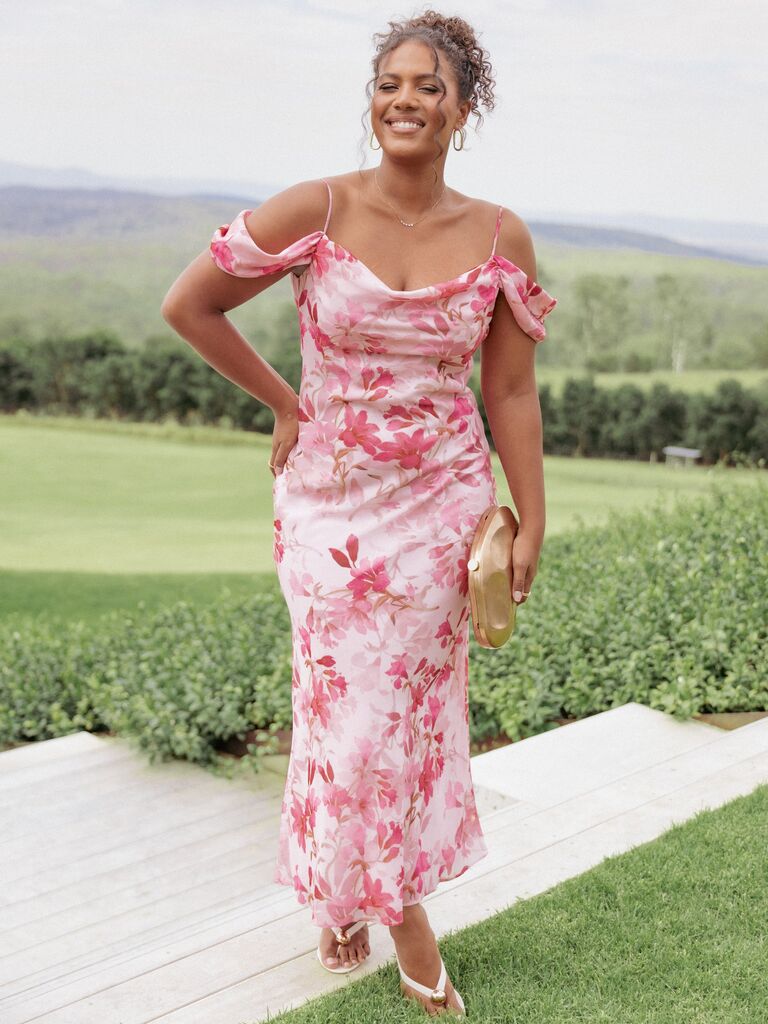
    Hourglass Body Type. If your bust and hips are similar in width with a defined waist, an A-line dress with a clearly defined natural waist celebrates your proportions beautifully. A belt or structured waist seam emphasizes your curves at their most dramatic point, and the A-line skirt provides just enough flow to move comfortably while maintaining the balanced silhouette that hourglasses are known for.
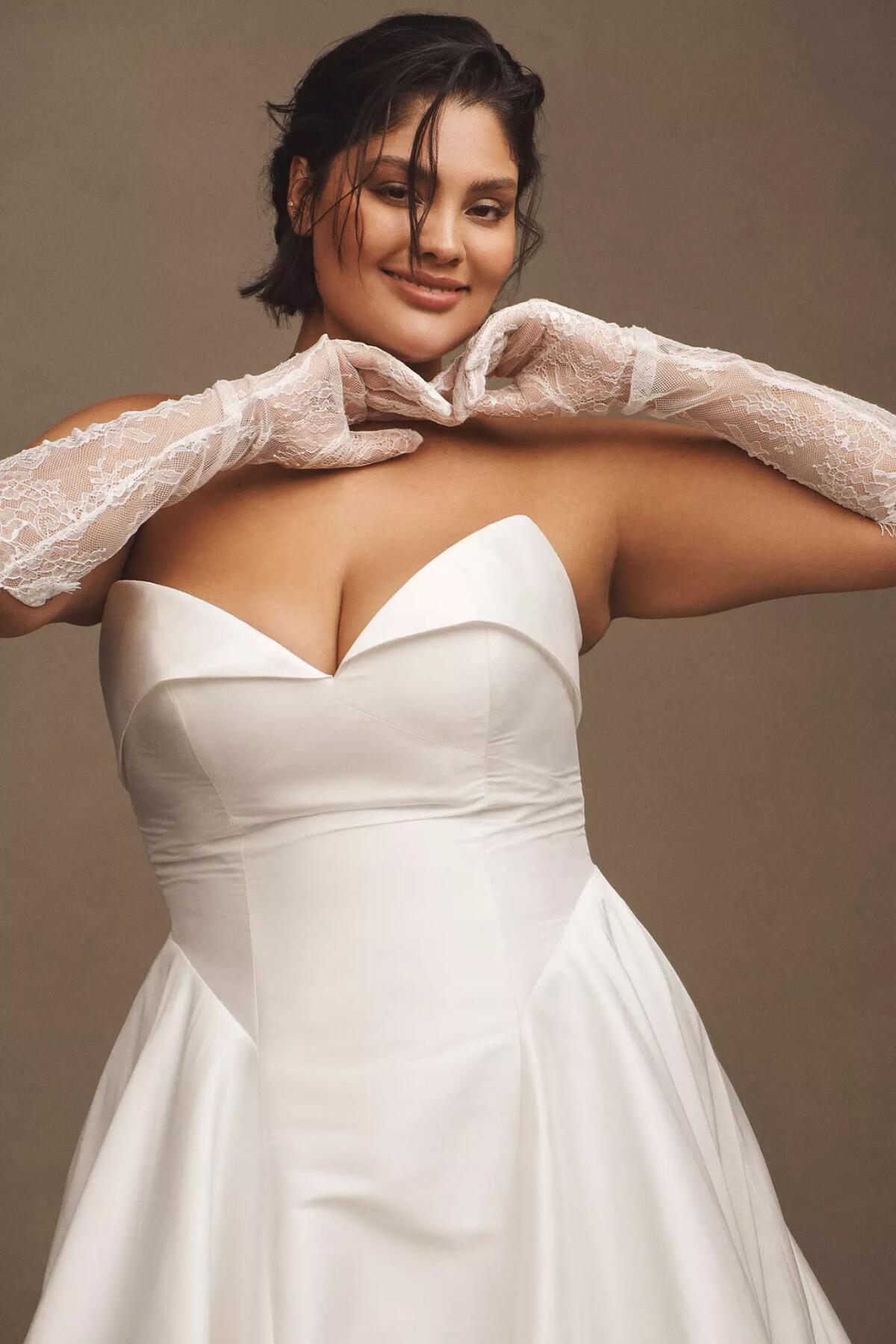
    Rectangle Body Type. If your bust, waist, and hips are similar in width, an A-line dress creates the appearance of a defined waist and balanced proportions. Look for dresses with structured bodices, princess seams, and defined waistlines that add shape where your body is naturally straighter. A belt in a contrasting color or material is particularly effective at creating waist definition on rectangle shapes.

    Best Fabrics for Professional A-Line Dresses

    Best Fabrics for Professional A-Line Dresses

    Ponte. Ponte is the gold standard for plus-size professional dresses. This double-knit fabric provides enough structure to maintain the A-line shape without being stiff, enough stretch to accommodate your body comfortably, and enough weight to drape smoothly without clinging. Ponte A-line dresses resist wrinkles, hold their shape through long workdays, and look polished season after season.

    Crepe. Professional crepe fabric has a subtle, slightly textured surface that reads as sophisticated and high-quality. It drapes beautifully in A-line silhouettes, providing enough weight to hang smoothly while maintaining movement. Crepe is particularly effective in solid, dark colors where the subtle texture adds visual interest to an otherwise simple design.

    Structured Jersey. A heavy-weight jersey or double-knit jersey provides comfort and stretch with a polished appearance that works in most professional environments. The key is choosing a jersey with enough weight and structure to avoid the casual look of lighter jersey fabrics. A structured jersey A-line dress is comfortable enough for all-day sitting and standing without looking like loungewear.

    Cotton Sateen. For warmer months, cotton sateen provides a polished, slightly lustrous appearance with the breathability of cotton. The subtle sheen elevates cotton beyond casual and into professional territory. Cotton sateen A-line dresses in navy, black, or dark jewel tones are particularly effective for spring and summer professional wear.

    Classic A-Line Styles for Conservative Offices

    Classic A-Line Styles for Conservative Offices

    The Sheath-A-Line Hybrid. For the most conservative professional environments, a dress that is fitted like a sheath through the bodice and upper hip, then transitions into a subtle A-line flare below the hip, provides a corporate-appropriate silhouette that is more comfortable than a straight sheath. This style looks structured and tailored while providing the ease of movement and comfort that makes A-line dresses superior for all-day professional wear.

    The Cap-Sleeve Knee-Length A-Line. A cap-sleeve, knee-length A-line dress in a solid, professional color is the most versatile professional dress you can own. It works under blazers for formal meetings, on its own for regular office days, and with a cardigan for a softer look. In navy, black, or charcoal, this dress is the professional equivalent of a blank canvas that you can style in dozens of different ways.

    The Long-Sleeve Ponte A-Line. When your office requires covered arms or the weather demands long sleeves, a long-sleeve A-line dress in ponte fabric is the solution. The sleeves should fit comfortably without constriction, and the overall dress should maintain the A-line flare from the waist for the most flattering effect. The Eliza J A-line dresses at Nordstrom are consistently well-reviewed for their professional polish and plus-size fit.

    Modern A-Line Styles for Creative Workplaces

    Modern A-Line Styles for Creative Workplaces

    The Printed A-Line Midi. A midi-length A-line dress in a bold, artistic print makes a creative statement while maintaining professional appropriateness. Geometric patterns, abstract florals, and color-block designs all work beautifully in A-line midi formats. Pair with ankle boots and a structured bag for a look that says creative professional rather than corporate clone.

    The Asymmetrical A-Line. An A-line dress with an asymmetrical hemline, higher on one side and lower on the other, adds modern edge to the classic silhouette. This detail creates visual interest and movement without compromising the fundamental flattering effect of the A-line shape. Choose a subtle asymmetry for more conservative creative environments or a dramatic one for fashion-forward workplaces.

    The Color-Block A-Line. Strategic color blocking in an A-line dress can create additional visual flattery beyond what the silhouette alone provides. A darker color through the center with lighter or brighter panels on the sides creates a visual narrowing effect that flatters every body type. This is not about hiding your body; it is about using the principles of design to highlight your silhouette in the most effective way.

    Styling A-Line Dresses for Every Season

    Styling A-Line Dresses for Every Season

    Spring: Pair a short-sleeve A-line dress with a light trench coat or blazer. Choose fabrics like cotton sateen or lightweight ponte. Colors can be brighter: coral, periwinkle, or soft pink read as professional and seasonal.

    Summer: Cap-sleeve or sleeveless A-line dresses in breathable fabrics. Keep a cardigan at the office for aggressive air conditioning. Sandals are appropriate in most offices when they are polished and well-maintained.

    Fall: Layer A-line dresses with blazers, structured cardigans, and ankle boots. Richer colors like burgundy, emerald, and mustard are seasonally appropriate and look stunning in ponte and crepe fabrics.

    Winter: Long-sleeve A-line dresses in ponte or heavy jersey paired with tights, knee-high boots, and a structured coat. Dark colors and rich textures create a powerful winter professional look.

    Accessorizing Your A-Line Work Dress

    Accessorizing Your A-Line Work Dress

    Belts. A belt at the natural waist is the single most effective accessory for an A-line dress. It emphasizes the waist definition that makes the silhouette so flattering and adds a styling element that takes the dress from basic to polished. Choose a belt that is one to two inches wide for the most flattering proportion. A quality leather belt in a complementary color is both professional and versatile.

    Shoes. Closed-toe pumps in a nude or neutral tone that matches your skin tone create the longest possible leg line with an A-line dress. Block heels provide height and polish without the discomfort of stilettos. For more casual office environments, pointed-toe flats and ankle boots are excellent alternatives. A pair of comfortable block-heel pumps from Nordstrom elevates any A-line dress instantly.

    Jewelry. A-line dresses with simple necklines are perfect canvases for statement necklaces or earrings. As a general rule, choose one statement piece rather than multiple competing accessories. A bold necklace with simple stud earrings, or statement earrings with no necklace, creates a polished, intentional look.

    Bags. A structured tote or satchel in leather or high-quality vegan leather complements the polished lines of an A-line dress. Choose a bag that is proportional to your body, oversized bags can overwhelm, while tiny bags can create an unbalanced visual.

    Fit Guide for Plus-Size A-Line Dresses

    Fit Guide for Plus-Size A-Line Dresses

    Bodice Fit. The bodice should follow your natural bust and waist lines without pulling, gapping, or compressing. You should be able to sit and raise your arms without the bodice riding up or restricting movement. Princess seams and bust darts provide the most flattering bodice fit for larger busts.

    Waist Placement. The waist of the dress should sit at your natural waist, the narrowest point of your torso, unless the dress is specifically designed with an empire waist (higher) or dropped waist (lower). A dress where the waist hits at the wrong point on your body will not create the flattering A-line effect regardless of how well the rest of the dress fits.

    Skirt Length. The hem should hit at or just below the knee for the most professional and universally flattering length. When trying on, check the length from both front and back, as some A-line dresses are shorter in the back due to the way the flare distributes fabric.

    Overall Movement. You should be able to sit, stand, walk, and bend without the dress restricting you or hiking up. Walk around in the fitting room and sit down for several minutes to check that the dress is comfortable for real-world professional activities.

    Where to Shop Plus-Size A-Line Work Dresses

    Eloquii. Bold colors, beautiful prints, and excellent plus-size proportions. Eloquii’s A-line dresses are consistently well-designed for curvy bodies with thoughtful details like bust darts and comfortable stretch. Sizes 14-28.

    Universal Standard. Premium quality basics with a focus on timeless design and exceptional fabric. Their A-line dresses are investment pieces that last for years. Sizes 00-40.

    Talbots. Classic, conservative professional dresses with reliable quality and consistent sizing. Talbots excels at the kind of understated, polished A-line dresses that work in corporate environments. Plus sizes available.

    Nordstrom. Wide selection of plus-size professional dresses across multiple brands and price points, including Calvin Klein, Eliza J, Vince Camuto, and Halogen. The ability to try different brands in one shopping trip makes Nordstrom valuable for finding your perfect fit.

    Amazon. Budget-friendly options from brands like DKNY and Calvin Klein (often discounted from retail), plus affordable options from Amazon’s own labels. The wide selection and easy returns make it a good place to experiment with different styles and fits.

    Building an A-Line Dress Work Wardrobe

    Building an A-Line Dress Work Wardrobe

    Start with three A-line dresses that cover your most common professional needs. One in black for the most formal occasions and as your reliable go-to when you are not sure what to wear. One in navy or dark teal for a slightly softer alternative to black that is equally professional. One in a print or rich jewel tone for days when you want to express personality and stand out.

    From this foundation, add dresses as your budget allows and your wardrobe needs dictate. A lighter color for spring and summer, a long-sleeve option for winter, and a more creative or trendy option for casual environments round out a comprehensive A-line dress collection.

    Key Takeaways

    • The A-line silhouette is the most universally flattering dress shape for plus-size professionals, working beautifully across all body types.
    • Ponte fabric is the gold standard for plus-size A-line work dresses, offering structure, stretch, comfort, and wrinkle resistance.
    • A belt at the natural waist is the single most effective accessory for maximizing the flattering effect of an A-line dress.
    • Three strategically chosen A-line dresses (black, navy, and a print or jewel tone) cover virtually every professional scenario.
    • Empire waists work best for apple body types, defined natural waists for hourglasses, and the standard A-line flatters pear and rectangle shapes beautifully.
    • Eloquii, Universal Standard, and Nordstrom offer the best selection of plus-size A-line work dresses at various price points.
    • An A-line dress eliminates morning outfit decisions while providing a polished, professional look that requires minimal styling.

    Frequently Asked Questions

    Are A-line dresses appropriate for all office environments?

    Are A-line dresses appropriate for all office environments?

    Yes, with the right styling. In conservative corporate environments, choose knee-length A-line dresses in solid, dark colors with classic accessories. In creative or casual workplaces, printed, colorful, and midi-length A-line dresses are perfectly appropriate. The A-line silhouette itself is inherently professional and appropriate across virtually all office dress codes.

    How do I know if an A-line dress fits correctly?

    The bodice should follow your natural shape without pulling or gapping. The waist should sit at or near your natural waistline. The skirt should flare gradually from the waist without bunching or hanging unevenly. You should be able to sit, stand, and move freely without the dress riding up or restricting you. When in doubt, size up rather than down; a slightly loose A-line dress is more flattering than one that pulls.

    Can I wear an A-line dress to a job interview?

    Absolutely. An A-line dress is one of the best choices for a job interview because it is professional, polished, and eliminates the stress of coordinating separate pieces. Choose a solid color in navy, black, or a deep jewel tone, add a blazer for the most formal impression, and pair with closed-toe shoes and minimal, professional accessories.

    What undergarments work best under A-line dresses?

    What undergarments work best under A-line dresses?

    A smooth, seamless bra in a nude shade that matches your skin tone is essential for a clean silhouette under the fitted bodice. For the skirt portion, seamless underwear prevents visible panty lines. A slip is generally not necessary with quality fabrics like ponte and crepe, but can be helpful with lighter fabrics to prevent static cling and ensure opacity.