Category: Fashion

  • The Most Flattering Swimsuit Cuts for Every Body – According to a Swim Designer

    The Most Flattering Swimsuit Cuts for Every Body – According to a Swim Designer

    Renée Hill was pinning a navy one-piece on a size 16 mannequin in her Brooklyn studio when she said the sentence I came in hoping she would say. It was a Tuesday in April 2026, the kind of New York morning where the radiators were still hissing even though the magnolias on her block had started to open. Renée has been patterning swimwear for fourteen years – Land’s End, then a stretch at a boutique label out of Los Angeles, then Andie Swim, and now a consulting roster that includes Andie and Summersalt and a handful of smaller labels she would not let me name. She had been talking through the back seam of the suit she was pinning when she stopped, held the pin between her teeth, and said it through her teeth: “The suit you reach for is not the suit your body needs. It’s the suit the marketing told you you should want.”

    The pin she put in next is this article. She moved it three quarters of an inch toward the side seam, which dropped the leg opening and lengthened the line from hip to ankle by almost two inches of visual length on the mannequin. It was a small adjustment that completely changed how the suit read. That, she told me, is what flattering actually means in a pattern room. It is not about hiding anything. It is about where the structural lines of a garment meet the structural lines of a body, and whether those two sets of lines are arguing with each other or working together. I spent the next three hours watching her demonstrate this on suit after suit, and what follows is the framework she uses to talk about swim with the women who fit her samples. None of it sounds like the language you will find on a brand’s website. All of it is more useful.

    The Designer Perspective: Renée’s Three Structural Rules
    swim designer studio pattern mannequin Brooklyn working

    Renée works in rules rather than recommendations because she has fit more than a thousand bodies in her career and she has noticed that the same three principles do almost all of the work. The first rule is the one most women have heard in some watered-down form. A vertical line on a garment lengthens the body it sits on. A horizontal line shortens it. This is why a deep V-neck reads as elongating and a bandeau reads as compressing, but Renée is careful to point out that neither effect is inherently desirable. A short-torso body sometimes wants a horizontal line at the bust to break up a long vertical run. A long-torso body sometimes wants a horizontal color block at the hip to interrupt the same. Vertical and horizontal are tools, not virtues.
    Swim designer Renée Hill pinning a navy one-piece on a dress form in a sunlit Brooklyn studio, pattern paper and fabric swatches on the worktable behind her

    The second rule is about the leg. A high-leg cut, where the leg opening rises toward the hip bone, visually elongates the leg by extending the line of the thigh upward into the torso. A boy-short cut, where the leg opening sits flat across the upper thigh, visually shortens it by cutting the leg horizontally at its widest point. Renée said this is the rule that most surprises women in her fittings, because the marketing of boy-shorts has historically been built around the idea that they “cover more” and are therefore safer. They cover more, she said, but they almost always shorten the line. If you have short legs and you love the coverage of a boy-short, the answer is to find a boy-short with a leg opening that sits high on the thigh rather than flat across it. The seam line is doing more work than the fabric.

    The third rule is the one Renée said she rarely sees written down anywhere. The surface tension of the fabric across your widest point either reveals or obscures, and both can be flattering depending on what you actually want. A textured rib that sits flat against the body reveals the shape underneath it. A draped knit that floats over the body obscures it. Neither is more flattering than the other in the abstract. The question is whether you are dressing to show your shape or to suggest it. Renée said the version of this conversation that the swim industry usually has is dishonest because it presents the obscuring choice as automatically better, as if revealing the actual shape of your body were a problem that needed solving. It is not. It is a choice. And the women in her fittings who learn to make it as a choice rather than a default end up loving their suits more.

    Forget Pear and Apple: The Language a Designer Actually Uses
    swim designer studio pattern mannequin Brooklyn working

    The fruit metaphors get on Renée’s nerves, and they get on mine too. She does not think of bodies as pears or apples or hourglasses because that vocabulary is descriptive of an outline rather than a structure, and you cannot fit a structure to an outline. What she thinks about instead are a handful of structural variables that change which cuts will work. Is your bust high on the rib cage or low on it. Is your hip bone wide and high or narrow and low. Is your torso long from underarm to hip bone, or short. Are your shoulders broad relative to your hips, or narrow. Where does your natural waist actually fall, high or low on your torso. The same dress size can produce wildly different combinations of those variables, which is why two women who both wear a size 12 can have completely different luck with the same suit.

    Once you know your own combination, the choices stop being a guessing game. Renée walked me through each of the major pairings she sees most often in her fittings, and she gave me the cuts that tend to work for each one and the cuts that tend to fight them. I have organized them the way she organized them on her sketch pad, with the body-type pairing in the heading and the suit-shape logic underneath. None of these are rules in the sense of laws. They are starting points, and the only way to confirm them is to try the suit on and see whether the structural lines are arguing with you or working with you.

    The High-Bust, Low-Hip Body
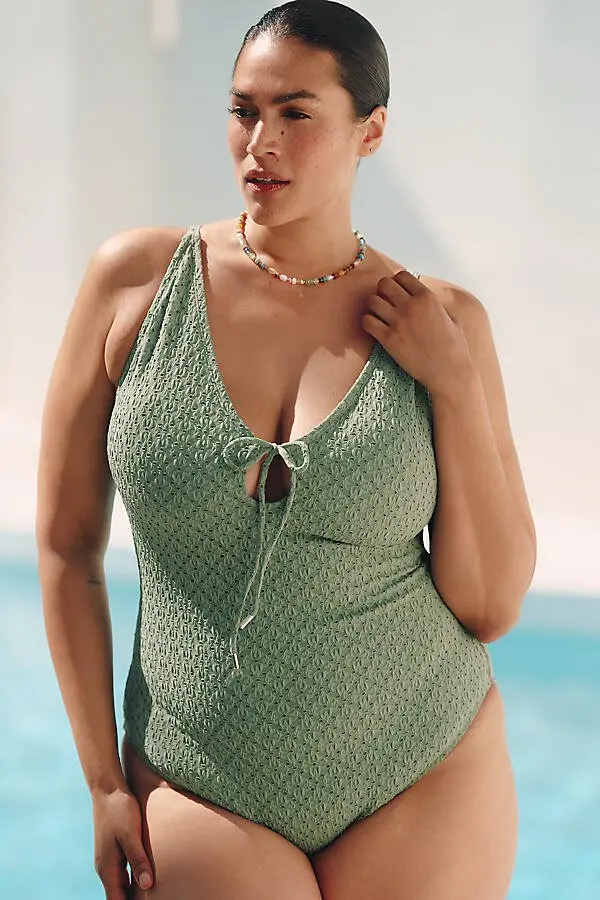
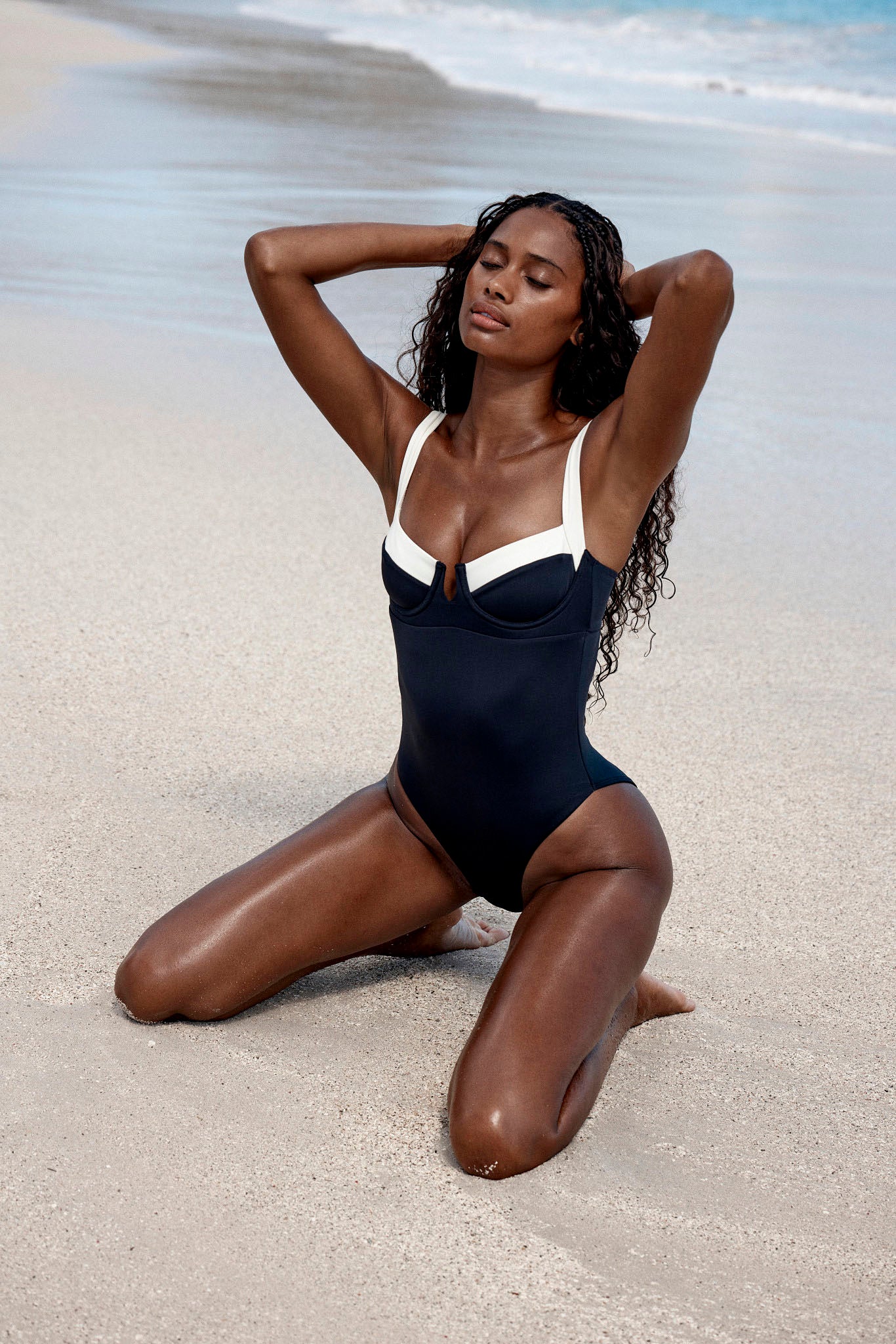
    Andie Sicily one-piece swimsuit underwire plus-size model

    This is the combination where the bust sits relatively high on the rib cage and the widest point of the hip sits low, closer to the upper thigh than to the hip bone. Renée said this body almost always wants a one-piece with a V-neck top to draw the eye vertically through the high-bust, and a high-leg cut to visually pull the low-hip mass upward into the torso. A square neckline can also work because it creates a horizontal shoulder line that balances against the lower hip. The bandeau, she said, is almost always a mistake without serious internal support, because it removes the vertical line at the top of the suit precisely where the body could use one.
    Side-by-side comparison sketches of a high-bust low-hip figure in a V-neck one-piece with high-leg cut versus a bandeau with boy-short, drawn in pencil on pattern paper

    What she will not tell you to do is default to ruching at the waist, which is the suggestion every magazine has been recycling for twenty years. Ruching is a texture choice, not a structural one, and it does very little to actually rebalance the proportion of high-bust to low-hip. What rebalances that proportion is the leg line and the neckline working together. If you have this body and you have been buying ruched waist one-pieces because someone told you they would balance you, Renée said, you can stop. Look at the leg cut and the neckline instead.

    The Low-Bust, High-Hip Body

    The reverse combination, where the bust sits lower on the rib cage and the widest point of the hip sits higher, calls for almost the opposite set of structural choices. Renée said this body almost always benefits from underwire support to lift the bust line back up toward its anatomical neutral position, and from a halter or a wide-strap top that creates a strong shoulder line. The wide strap is doing two jobs at once. It is carrying the weight of the bust without digging in, and it is creating a vertical line from the shoulder down through the bust that lengthens the entire upper half of the suit.

    For the bottom, mid-rise is the move. A mid-rise bottom hits at the natural waist rather than below it, which respects the high-hip line instead of trying to flatten it. Bottoms that sit below the waist on a high-hip body create a horizontal line right at the widest point, which is exactly the situation Renée’s first rule warns against. A deep scoop back also tends to work well on this combination because it draws the eye to a vertical line on the back of the body, which is a quieter version of the elongating logic the front of the suit is already doing.

    The Long Torso

    A long torso is the distance from underarm to hip bone, measured against the leg, and a long-torso body is one where that distance is proportionally greater than the leg length. Renée said the structural goal here is to break up the vertical run of the torso with a horizontal element so the suit does not read as one long stretch of fabric from chest to crotch. A high-waist bottom with a structured top is her favorite combination because it creates a clear horizontal break at the natural waist, which visually shortens the torso and lengthens the leg below it.

    Color-blocking that horizontally segments the suit can do the same work as a high-waist bottom. A one-piece with a contrasting band at the waist, or a tankini that visually splits the torso at the natural waist line, both create the horizontal break the long torso wants. What she would tell you to avoid is super-low-rise bottoms, which extend the torso visually even further by pulling the waistline down toward the hip. The long-torso body is the one combination where Renée said she would actively push back against the high-leg cut as a default, because it can extend the leg in a way that exaggerates the torso-to-leg ratio rather than balancing it.

    The Short Torso

    A short torso wants the opposite set of choices, and Renée said this is the body type that most often suffers from generic styling advice because so much of the standard guidance assumes a longer torso as the baseline. Vertical seaming on a one-piece is her first recommendation because it lengthens the torso without adding a horizontal break. A V-neck or a deep scoop neckline does the same work at the chest. The goal is to give the eye a long vertical line to travel before it hits any horizontal interruption.

    Three swimsuit silhouettes hanging in a brightly lit design studio: a high-waist bikini, a vertically seamed one-piece, and a halter tank, with measuring tape draped across the rack

    For the bottom, low-rise with a leg-elongating cut is the move. Low-rise here does not mean sitting on the hip bones, which is rarely flattering on any body. It means sitting just below the natural waist rather than above it, which preserves the visual length of the torso. Paired with a high-leg cut, the bottom extends the leg upward and gives the suit a long, continuous vertical run from the chest down through the thigh. Renée said the short-torso body is the one where she will almost always recommend a two-piece over a one-piece, because the natural break between top and bottom is easier to manage in two pieces than to engineer into one.

    The Broad-Shoulder Body

    Broad shoulders relative to the hips create a top-heavy structural line that most swim designs are not built to balance, because the industry has historically designed for an hourglass default. Renée said the halter is the broad-shoulder body’s best friend because the halter strap converges the shoulder line toward the center of the chest, which narrows the visual width of the shoulder. A racer-back works for the same reason. Both pull the structural line of the strap inward, away from the outer edge of the shoulder.

    An off-shoulder neckline can also work, but only if it is balanced by some volume at the bottom. A ruffle on the hip, a skirted bottom, or a high-waist bottom with a slightly relaxed cut can all create the lower-body visual weight that lets the off-shoulder top read as deliberate rather than top-heavy. What Renée said to avoid is a wide-set strap with no visual relief at the bottom, because that combination amplifies the broad-shoulder line instead of balancing it.

    The Narrow-Shoulder Body

    Narrow shoulders want the opposite. The goal is to widen the visual shoulder line so the upper body reads in proportion with the hip. A statement strap, a ruffle cap sleeve, a square neckline, or a gentle horizontal line at the neckline all do this work. The square neckline is Renée’s favorite because it is the cleanest of the four and it creates a horizontal shoulder line without adding any fussy detailing. A ruffle cap sleeve adds the same width with a softer, more romantic visual texture.

    The narrow-shoulder body is also one where Renée said the bandeau can actually work, despite the warning she gave on the high-bust body. Without the high-bust complication, a bandeau on a narrow-shoulder body creates exactly the horizontal line at the top that the body wants. The bandeau is not inherently bad. It just has a narrow application, and the marketing has oversold it for everyone.

    The Plus-Size Design Conversation
    Universal Standard Carnival swimsuit size 22 model confident

    I asked Renée about plus-size design specifically because the language around it has historically been the worst offender of the entire industry, and she has spent the last decade consulting with brands that are trying to do it better. She was emphatic on a few points. Underwire is non-negotiable for D-cup and above, and any brand selling a wireless suit above a D cup as adequate support is selling marketing copy rather than engineering. Power mesh inside the lining adds compression without the shaping panels that the industry euphemistically calls “tummy control,” which she said is just a smaller and more polite way of saying “make your body smaller.” Power mesh holds the fabric in place against the body so the suit lies smooth. It does not change the shape of the body underneath it, and it does not need to.

    On boy-short cuts, she had a specific caveat that surprised me. Boy-shorts can work for plus-size bodies with short legs, but only when the leg opening sits high on the thigh rather than flat across it. The leg opening is doing more work than the silhouette of the shorts. Universal Standard’s swim line and Eloquii’s swim line, she said, are two of the labels currently doing this engineering right (Universal Standard’s swim range now reaches a 4X equivalent in most styles, and Eloquii grades through size 28). Andie’s plus extension also handles it well in their newer styles. The brands that still default to a flat boy-short leg opening at the upper thigh are not designing for plus-size bodies as a primary user. They are scaling up a smaller pattern, which is a different and lesser thing.

    Five Suits Renée Would Pull for Five Different Bodies in 2026

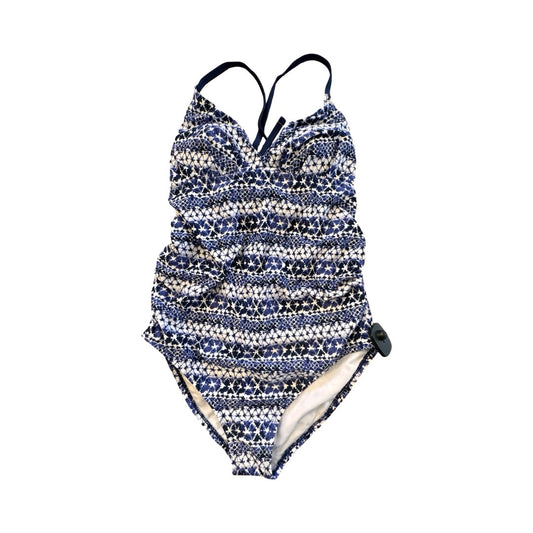
    I asked Renée to name actual suits from actual brands, on the record, for the women reading this who would rather skip the theory and just be told what to buy. She thought about it for a long minute. The first was the Andie Sicily for a high-bust, low-hip body. The Sicily is a V-neck one-piece with a high-leg cut and a clean torso line, which is the exact combination she had been describing twenty minutes earlier. Andie, which was founded by Melanie Travis in 2017 and built on the premise that suits should be designed for swimming and not for posing, has been one of Renée’s most consistent collaborators precisely because they take fit seriously enough to grade across the size range.
    Flat lay of five different swimsuits on a wooden studio floor: a navy V-neck one-piece, a black high-neck swim tank, a coral plunge bikini, a citrus high-waist two-piece, and a printed underwire one-piece, each tagged with a small handwritten card

    The second was the Summersalt Sidestroke for a long-torso body. The Sidestroke has a high neck and a structured upper that breaks the torso line at the chest, which gives the long torso the horizontal interruption it wants. Summersalt was founded by Lori Coulter in 2017 and built on the premise that compression and support could be designed into the construction rather than added as an afterthought. The third was Cuup’s The Plunge bikini for a low-bust, high-hip body. Cuup’s swim line, an extension of the bra brand that took its fit philosophy seriously, is one of the few labels building plunge tops with the underwire engineering of a proper bra. The Plunge gives the low-bust body the lift and the wide strap it needs without the wide strap reading as utilitarian.

    The fourth was a Universal Standard one-piece with vertical seaming for a short-torso body. Universal Standard, co-founded by Polina Veksler and the late Alexandra Waldman in 2015, has built a swim range that treats size as a starting variable rather than an afterthought, and the vertical seaming with a low-rise bottom gives the short torso the elongating line it wants. The fifth was an Eloquii halter one-piece for a broad-shoulder plus-size body. Eloquii’s swim line, which the brand expanded significantly after their 2018 acquisition by Walmart, has been quietly refining its halter and racer-back constructions for years, and the halter cut in particular gets the shoulder convergence right without sacrificing support.

    The Question to Ask Before You Buy

    Renée said the single best filter she could give anyone shopping for swim in 2026 is this. Does the brand show this suit on a body shaped like mine in their photography. Not just a body in my size, but a body in my shape. If a brand only shows their suits on a tall, narrow-shoulder, long-torso body and you are a short-torso, broad-shoulder body, the suit was almost certainly fit on a body different from yours, and the cut may not translate. The size-inclusive market data from 2024, which Renée pulled up on her laptop while we were talking, showed that the brands grading across a real size range have been the ones investing in shape variety in their photography as well. The two go together. Brands that ignore the second are usually ignoring the first too.

    She also pointed me to the work of Bridget Foley, the former Women’s Wear Daily editor who spent years interviewing pattern-makers and writing about the craft of fit. Foley’s interviews are some of the only journalism that takes pattern-making seriously as a discipline rather than treating it as the invisible plumbing of fashion, and they are the closest thing this industry has to a public record of how the work actually gets done. If you want to understand swim from the inside, Renée said, read Foley first and then read anyone else.

    The Universal Lie

    Here is the argument Renée came back to at the end of our three hours together, the one I had been building toward since she said it the first time. The swim industry sells the word “flattering” as a code for “make yourself look smaller.” A designer who has patterned a thousand bodies sells “flattering” as a code for something else entirely. She sells it as a code for “the suit’s structural lines work with your gravitational lines.” Those are different sentences. The first sentence is about hiding. The second sentence is about fit. A suit that fits your shape, that places its vertical and horizontal lines in conversation with your vertical and horizontal lines, will read as flattering whether you are a size 4 or a size 24, whether your bust is high or low, whether your torso is long or short. A suit that has been engineered to make you look smaller will read as flattering only by the industry’s narrowest and most dishonest definition.

    Renée’s three structural rules are the whole shape of the argument. The vertical line lengthens, the horizontal line shortens, and which one you want depends on your body. The high-leg cut elongates the leg, the boy-short cut shortens it, and which one serves you depends on your leg. The surface tension of the fabric across your widest point reveals or obscures, and both are flattering depending on whether you are dressing to show your shape or to suggest it. That is the entire framework. There is no single suit that is the most flattering for everyone, and any brand that tells you otherwise is selling you the marketing instead of the suit. Find the cut that argues with you the least. Wear it. Swim in it. That is what flattering means in a pattern room, and the pattern room is the only place that gets to decide.
  • Plus-Size Wedding Guest Dresses With Sleeves (Arm Coverage Without Overheating)

    Plus-Size Wedding Guest Dresses With Sleeves (Arm Coverage Without Overheating)

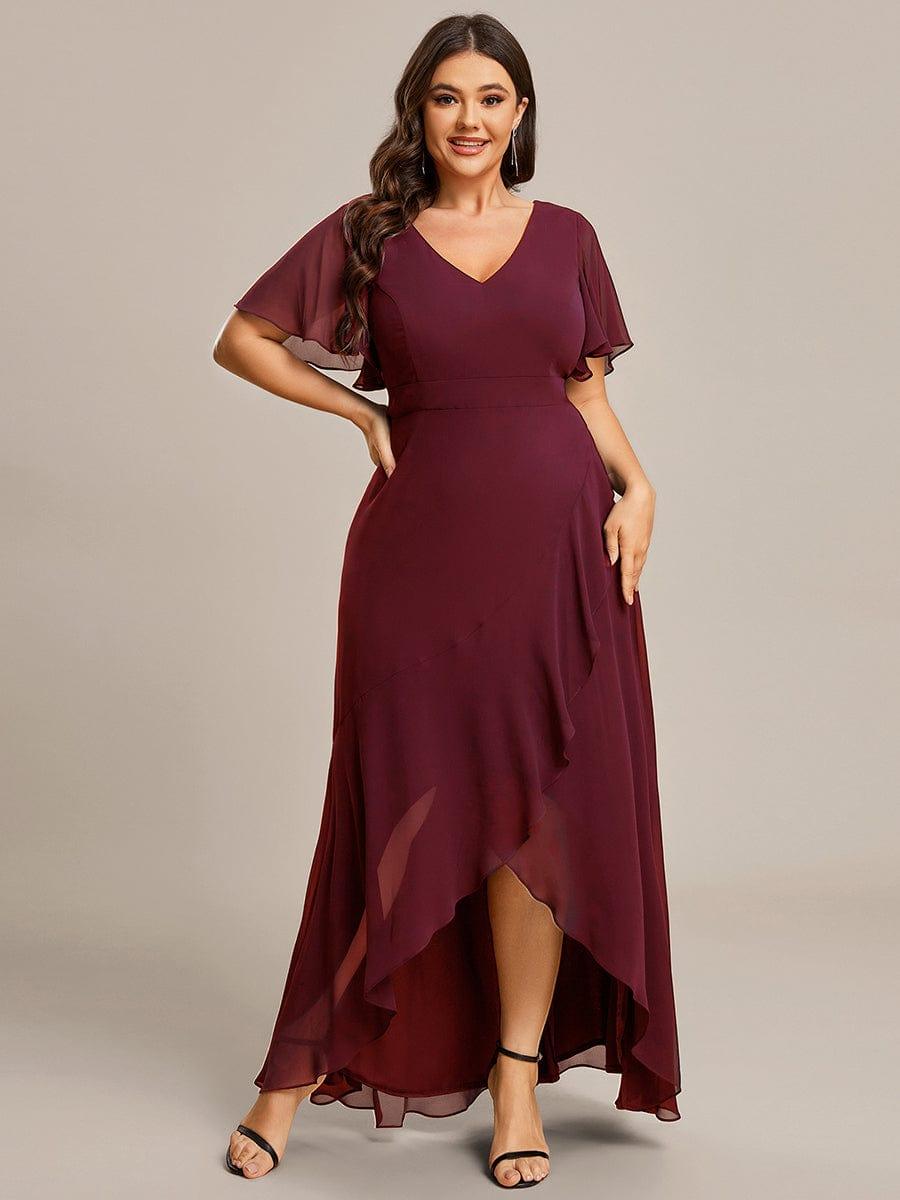
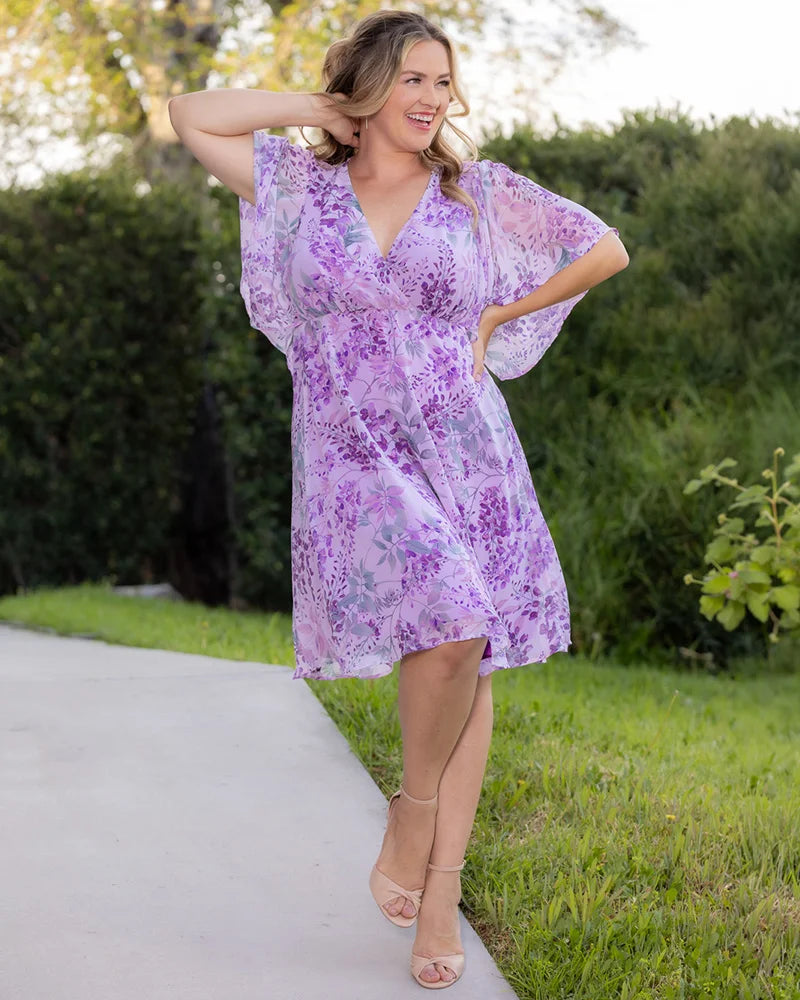
    Plus-size guest in flutter sleeve silk crepe dress at summer cocktail hour with arms relaxed

    I was standing under the elevated subway tracks in Williamsburg in August 2024 – a rooftop wedding, 88 degrees at 6pm, the kind of humidity that wilts a starched collar in eleven minutes. I watched a guest at the bar, size 22, 56 years old, unbutton the cropped cardigan she had brought to “cover her arms” approximately eleven minutes into cocktail hour. She did not take it off. She left it draped over her shoulders like a costume she could not commit to and could not abandon. Three hours later, on the dance floor, the cardigan was still there, soaked through at the back. She kept tugging it down across her upper arms between songs. She left before the band’s second set.

    I have dressed plus-size guests at sixty-plus weddings across eight years of editing fashion. I have heard the same sentence in thirty different voices: “I just want something with sleeves.” What that sentence actually means, almost every time, is “I want to not think about my arms at this wedding and I do not want to overheat.” Those two requests sound contradictory. They are not. Most women in plus-size bodies who want sleeves end up improvising with cover-ups that betray them – cardigans that hold humidity against the body, kimonos that slide off the shoulder during the first slow song, shawls that have to be re-draped every twenty minutes. The improvisation is not the problem. The premise is. Sleeves and ventilation are not opposites. They are an engineering problem with real solutions, and the solutions live in fabric weight, sleeve construction, and the relationship between the two.

    The arm-coverage anxiety – where it actually comes from

    The arm-coverage anxiety - where it actually comes from

    Almost no one wants sleeves for modesty. The women who tell me they want sleeves are not religiously covered, they are not at conservative venues, they are not under a dress code that requires it. The reason is almost always photographs. Specifically, the photographs from the last wedding – the candid shot the photographer caught while she was reaching across the table, the one where her upper arm caught the flash at an angle that read flatter and wider than the mirror at home had ever shown. That photograph lives in her camera roll. She does not want to add to the collection. Sleeves are not a moral question for her, they are an image-management question, and the management has to survive a six-hour event in July or August in a body that runs warmer than a size 8 body for basic surface-area reasons.

    The second source is the lifted-arm problem. A sleeveless dress at size 22 reveals a different amount of upper arm when the arm is at the side than when it is lifted to hug a friend, lift a glass, or take a group photo. The fabric of a sleeveless armhole does not move with the arm – the arm moves out from under it. Sleeves solve this not by hiding the arm but by traveling with it. The right sleeve construction allows the arm to lift, reach, and dance without the dress shifting at the shoulder or the bust seam pulling visibly. The wrong sleeve construction – typically a tight set-in cap on a non-stretch fabric – turns every arm lift into a small physical calculation.

    Fabric versus construction – the difference that decides everything

    Fabric versus construction - the difference that decides everything

    The first lesson I teach in fittings: silk crepe with a flutter sleeve breathes. Polyester jersey with a set-in sleeve does not. Same dress code, same sleeve length in centimeters, completely opposite outcomes on a 90-degree day.

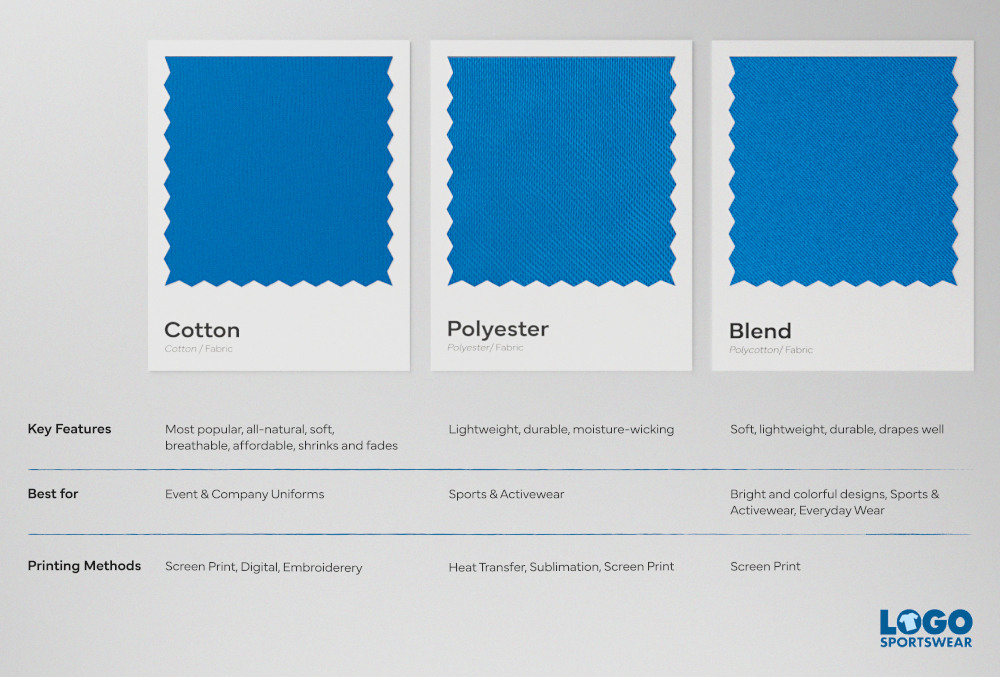
    Fabric weight matters more than fiber content for sleeve dresses in summer, but the two interact. Silk crepe at 14 to 16 momme (the weight measure that actually matters for crepe) breathes because the natural fiber pulls humidity off the skin and releases it into the air. The same crepe in polyester traps the humidity against the body because synthetic fibers do not transfer moisture the way silk and cotton do. A heavier silk – 19 momme – will hold heat. A 14 momme silk crepe in a flutter sleeve construction is genuinely cool to wear at 90 degrees because the fabric itself is light, the fiber breathes, and the sleeve does not seal the armhole.

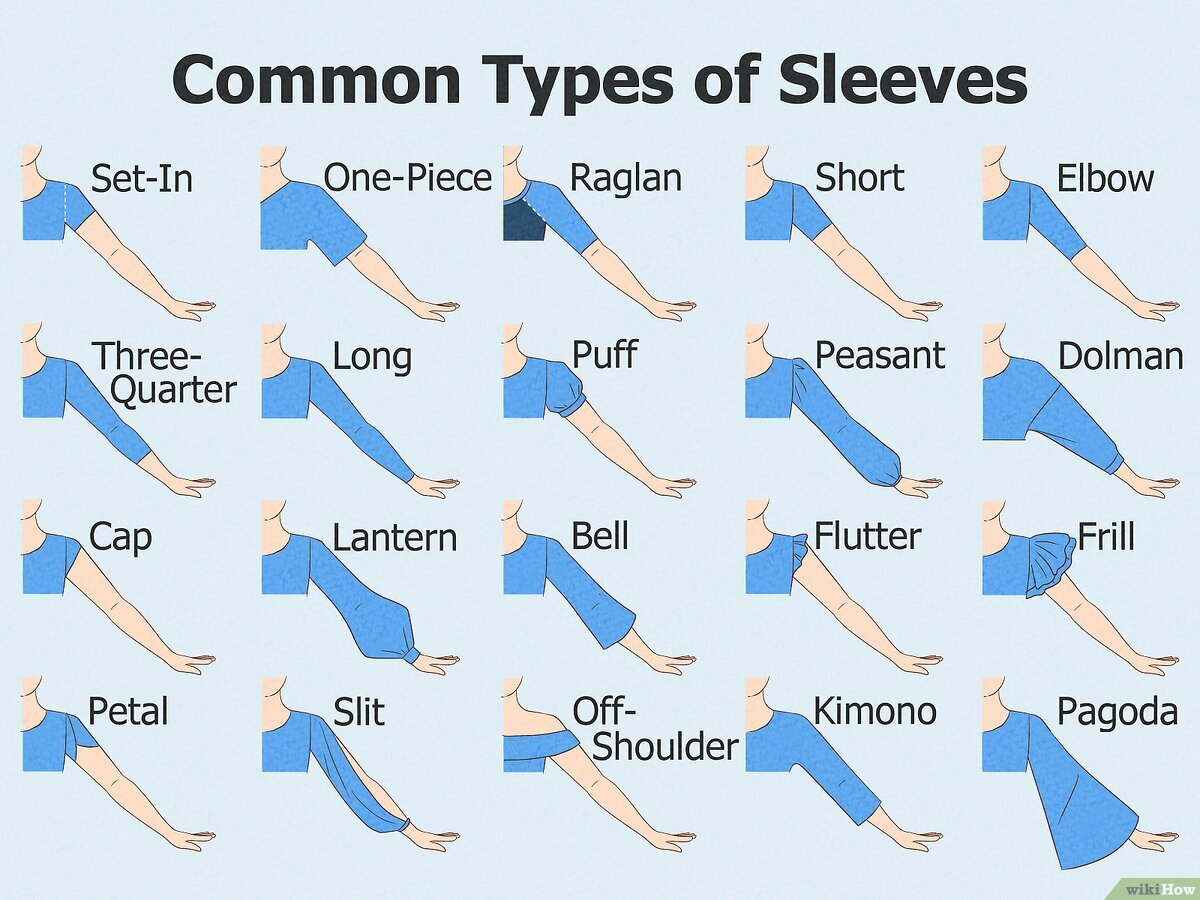
    Construction matters as much. A flutter sleeve is not just “a short loose sleeve.” It is a sleeve that floats away from the body at the armhole and at the hem of the sleeve, leaving the armpit area open to air. A bell sleeve flares from the elbow but seals the upper arm. A dolman cuts in one piece with the bodice, no shoulder seam at all, which means the underarm has full air circulation but the silhouette reads softer than a set-in sleeve. A cap sleeve covers the deltoid only and stops before the upper arm proper – it provides shoulder coverage and photograph-friendly framing without warming the inner arm where heat actually accumulates. A semi-sheer mesh sleeve covers the arm visually but allows air through the fabric itself.

    The combination is what works. Silk crepe with a flutter sleeve is the gold standard. Polyester crepe with a flutter sleeve is the workable compromise. Polyester jersey with a set-in three-quarter sleeve, no matter how “breathable” the brand marketing claims, will be hot. I have tested this on my own body in real weddings, and I have tested it on twenty other plus-size guests across the last three summer seasons.

    The five sleeve types that actually work in summer

    Five sleeve constructions for summer wedding guest dresses shown side by side on plus-size dress forms

    Flutter sleeve. A short, floaty sleeve that drapes from the shoulder line and falls open at the underside. The signature is the open armhole – the fabric falls away from the inner arm rather than wrapping it. Flutter sleeves work because they provide visual arm coverage from the front view (which is the photograph view) without sealing the armpit area to body heat. They photograph beautifully because the fabric movement adds shape to the upper bust line without padding it.

    Bell sleeve. A sleeve fitted at the shoulder and upper arm that flares from the elbow. The flare gives ventilation at the lower arm and provides a romantic, occasion-feeling silhouette that reads dressier than a flutter. The trade-off is that the upper arm is fully enclosed, so the fabric weight has to be light – bell sleeves in heavy crepe or thick jersey will be hot. In silk crepe or a 95% polyester crepe with 5% spandex at light weight, a bell sleeve handles a summer wedding well if the venue has air movement.

    Butterfly sleeve. Wider and longer than a flutter, a butterfly sleeve drapes from the shoulder past the elbow and creates wing-like fabric movement when the arm lifts. The construction is generous – more fabric than a flutter – which means it covers more arm visually and provides more occasion drama. The same ventilation principle applies because the armhole stays open. Butterfly sleeves photograph extraordinarily well on plus bodies because the fabric scale reads proportionate to the body. They are my single favorite sleeve type for plus-size summer weddings.

    Dolman sleeve. A sleeve cut in one piece with the bodice, with no shoulder seam separating the two. The result is a soft, draped sleeve that falls naturally from the body without the structured set-in shape. Dolmans run cool because the underarm has the full bodice fabric instead of a sealed seam, and the sleeve can range from short (a small cap-like effect) to three-quarter. The challenge with dolmans on plus bodies is that the underarm fabric can pool if the dress is cut without enough taper – look for a dolman with a defined waist or a wrap front to avoid the volume reading as bulk.

    Semi-sheer mesh sleeve. A sleeve constructed from sheer mesh, lace, or fine netting that visually covers the arm while letting air through the fabric itself. Mesh sleeves are the secret weapon for guests who want full-length sleeve coverage at a summer wedding – they read as long-sleeve from across the room but breathe as if there were no sleeve at all. The fabric quality matters enormously here. Cheap polyester mesh in a heavy weave will be hot and will look plasticky. Look for fine net mesh, illusion tulle, or beaded mesh where the construction is fine and the texture has visible openness.

    Ten specific dresses with sleeve construction, fabric, and climate verdict

    Ten plus-size wedding guest dresses with sleeves arranged in editorial flat lay

    The constraint for every dress on this list: it must run to at least size 22, the strongest picks run through 28 to 32, and the sleeve has to do real work in summer or transitional weather.

    1. An Eloquii asymmetric flutter-sleeve maxi – around $165-$210, sized through 28. The sleeve is a true flutter, a single shoulder draping into a floor-length cascade, the other shoulder fully bare. The asymmetry does double duty – it provides arm coverage on one side for the photograph view while keeping ventilation maximal on the other. The fabric is 100% polyester crepe with a polyester slip lining, lightweight at approximately 140 grams per square meter. The hardware is a hidden side zip with no waist seam. Dress code range: cocktail through black-tie optional. Climate verdict: works for indoor air-conditioned receptions and outdoor venues with shade. Avoid full sun ceremonies at 90-plus degrees – the polyester crepe will not breathe the way silk would.

    2. An ASOS Curve twist-front midi with mesh sleeves – around $80-$120, sized through 32. The sleeves are semi-sheer mesh in a fine net weave, full-length to the wrist, set into a sleeveless bodice so the mesh does the visual coverage work without trapping heat at the shoulder. The bodice is 95% polyester, 5% elastane stretch satin with a twist-front detail at the waist. The mesh weight runs light and the weave is open enough that wind moves through it. Hardware is pull-on overhead, no zip. Dress code range: cocktail and semi-formal. Climate verdict: this is the dress for guests who want full arm coverage at a hot wedding. The mesh reads as a complete long sleeve in photographs but breathes like a sleeveless. Avoid black or navy mesh in direct sun – the dark color absorbs heat. Stick to ivory, blush, or sage.

    3. An Anthropologie Maeve plus tiered midi with bell sleeves – around $180-$220, sized through 26W. The sleeves are three-quarter bell, fitted at the shoulder and upper arm and flaring from the elbow into a wide cuff. The construction is set-in but the fabric is lightweight viscose crepe at approximately 110 grams per square meter, which is the lowest fabric weight I would recommend for a bell sleeve in summer. The body is 100% viscose with a fully-lined bodice. Hardware is a hidden back zip with a fabric tie-belt at the waist. Dress code range: cocktail, garden party, semi-formal. Climate verdict: indoor and shaded outdoor weddings only. The viscose breathes well but the bell sleeve seals the upper arm – if you sit between an air-conditioned ceremony and a tented reception, this is your dress. If the entire wedding is outdoor in full sun, choose a flutter instead.

    4. A Lulus Curve flutter-sleeve midi – around $78-$98, sized through 3X. The sleeves are a short flutter, draped from the shoulder and falling to mid-upper-arm with a generous open underside. The fabric is 100% polyester woven crepe with a partial lining at the bust. The price point reflects the polyester construction – this is not silk crepe and will not breathe like one. Hardware is a hidden back zip and a self-tie waist. Dress code range: cocktail, semi-formal, garden party. Climate verdict: workable for indoor receptions and transitional weather, May or September weddings. In peak July or August heat at an outdoor venue, the polyester base will trap humidity even with the flutter sleeve doing ventilation work. Choose lighter colors and budget for a slip layer to prevent cling.

    5. A Torrid Studio crepe-de-chine dolman in their dressier seasonal release – around $130, sized through size 6 (approximately a 28-30). The sleeves are short dolman, cut in one piece with the bodice, no shoulder seam. The fabric is Torrid’s polyester crepe de chine, a lighter-weight crepe at approximately 105 grams per square meter, with a polyester slip lining at the bodice only. Hardware is pull-on overhead with a self-tie waist. Dress code range: cocktail, semi-formal, garden party, beach formal. Climate verdict: this is one of the most heat-friendly plus-size sleeve dresses on the market because the dolman construction leaves the underarm fully ventilated and the crepe de chine is lighter than standard polyester crepe. Indoor or outdoor, this dress holds up in real summer heat. The only caution is the dolman volume at the underarm – size down half a size if you sit between sizes to avoid the fabric pooling.

    6. An Adrianna Papell plus beaded cap-sleeve cocktail – around $180-$230, sized through 24W. The sleeves are cap, beaded mesh covering the deltoid and ending at the shoulder line. The cap construction is the secret to this dress – it provides shoulder coverage for the photograph view without warming the upper arm itself. The body is a polyester crepe slip with hand-applied beaded mesh overlay across the bodice and sleeves. Hardware is a hidden back zip. Dress code range: cocktail through black-tie optional. Climate verdict: indoor receptions year-round, including peak summer weddings in air-conditioned venues. The beaded overlay is heavier than a plain crepe so an outdoor ceremony in full sun will warm this dress quickly. Reserve it for ballroom and indoor banquet venues.

    7. An 11 Honoré silk caftan-style dress – around $300-$500, sizing through 22 or 24.

    11 Honoré’s plus-size luxury collection now sits inside Dia & Co since the April 2024 acquisition, and the caftan and kimono-sleeve silhouettes are where the silk crepe really shows up. Look for the wide kimono dolman cut, sleeves flowing from the shoulder into a generous bell at the elbow with no set-in seam. The fabric to ask for is silk crepe at 14 to 16 momme, fully lined at the bodice with an unlined skirt. This is the silk crepe benchmark for plus-size summer dressing. Hardware on most styles is a hidden side zip with an internal cinch tie at the waist. Dress code range: black-tie optional, cocktail, garden party, semi-formal. Climate verdict: optimal for outdoor summer weddings including full-sun ceremonies. The silk content does breathing work the polyester crepes can’t match. Price reflects the fabric. The cost-per-wear math is favorable if you attend two or more summer weddings a year.

    8. An Aidan Mattox beaded flutter at Saks or Saks OFF 5TH – around $200-$350, sized through 16 or 18.

    Aidan Mattox lives on Saks Fifth Avenue and Saks OFF 5TH and the beaded mesh flutter is one of their signatures. The sleeves to look for are flutter constructed in beaded mesh, layered over a sleeveless silk-blend slip bodice. The mesh extends past the shoulder into a soft flutter that reads as both shoulder coverage and upper arm framing without sealing the arm. Hardware is a hidden back zip. Note Aidan Mattox sizing tops out below true plus on most styles, so check the size run before falling in love. Dress code range: cocktail, black-tie optional, formal. Climate verdict: indoor receptions in peak summer, outdoor receptions in shade. The silk slip handles heat better than full polyester construction. The beaded mesh sleeve provides full visual arm coverage while staying open at the underside.

    9. Universal Standard sleeveless dress with a thrown-on wrap – around $148, sized through 40.

    Universal Standard sizes 00 to 40 across its range, and its Fit Liberty program lets you swap for a new size within a year. The smartest summer move from their catalog isn’t a built-in-sleeve dress at all. It’s their sleeveless square-neck or v-neck silhouette in a lighter-weight stretch fabric paired with a thin silk crepe wrap you bring in your tote. The wrap drapes for the ceremony, slips off for cocktail hour, and never seals heat at the armhole. Hardware is pull-on overhead. Dress code range: cocktail, semi-formal, beach formal, garden party. Climate verdict: the layering choice is what makes this the smartest setup on this list for a guest who’s genuinely worried about overheating. Choose ivory, sage, or rose for hot weddings, save the darker colors for fall.

    10. A TENCEL Lyocell midi or maxi with a butterfly sleeve – the fabric matters more than the brand.

    TENCEL is the dark-horse summer fabric. It breathes like cotton, drapes like silk, and resists wrinkles in a way both don’t. A butterfly sleeve drapes generously from the shoulder past the elbow with no underarm seam closure, so the armhole stays open. At a fabric weight around 100 grams per square meter the cloth itself is genuinely cool. Look at TENCEL or Lyocell-rich pieces from brands with real extended sizing (Anthropologie’s plus assortment, Lane Bryant, Eloquii) rather than reaching for a Reformation extended-size piece, since Reformation’s plus range remains narrow and the wrap and butterfly silhouettes in particular gap badly past a 1X. Dress code range: cocktail, garden party, casual elegant. Climate verdict: outdoor and indoor weddings, full sun or shade. The butterfly sleeve is generous enough to provide real arm coverage in photographs without trapping heat.

    Indoor versus outdoor – the split that changes the dress

    Indoor versus outdoor - the split that changes the dress

    The single most useful question I ask a guest at the start of a fitting: where is the ceremony, and where is the reception? An indoor ceremony followed by an outdoor cocktail hour followed by an indoor reception is a completely different climate problem than an all-outdoor wedding with a tented reception. The dress has to handle the longest stretch outdoors, not the average.

    For all-indoor weddings in air-conditioned venues, fabric weight matters less and sleeve construction can be more enclosed. A bell sleeve in viscose crepe, a beaded cap sleeve in polyester, or a cinched-waist dress with three-quarter sleeves all work because the climate is controlled. Choose the dress code first, the sleeve second.

    For mixed indoor-outdoor weddings, choose the dress based on the outdoor stretch. If cocktail hour is outdoor for 90 minutes, your dress has to be wearable at outdoor temperature without a layer. Silk crepe with flutter, butterfly, or wide kimono sleeves wins this category. Polyester crepe with flutter sleeves is the workable compromise at a lower price.

    For all-outdoor weddings in summer heat, the fabric content has to do the work. Silk crepe, TENCEL, cotton voile, or linen with a flutter, butterfly, dolman, or semi-sheer mesh sleeve are the only constructions I trust. Polyester anything will hold humidity against the body at outdoor temperature. The mesh sleeve construction is the dark horse here – a fine net mesh sleeve over a sleeveless silk or TENCEL bodice provides visual coverage without warming the body.

    What to layer with – and what not to

    What to layer with - and what not to

    The single largest mistake I see plus-size guests make at summer weddings: bringing a cardigan or a kimono as an “insurance layer” for the arms. This is the trap the Brooklyn rooftop guest fell into. Once the cardigan is on, it cannot come off without exposing the arms she is trying to cover, and once it is on outdoors in August, she will overheat. The cover-up becomes a wearable contradiction.

    The fix is to choose a dress with sleeves you trust and to skip the cover-up entirely. If you genuinely need a layering option for an over-air-conditioned ceremony venue, choose a wrap rather than a cardigan. A silk crepe wrap or a fine wool wrap drapes across the shoulders for the ceremony and slips off easily for cocktail hour without leaving you with bare arms – because the dress you chose already covers the arms.

    A second mistake: a sheer mesh bolero or capelet over a sleeveless dress. The bolero adds a layer at the shoulder, where heat collects, without doing real visual coverage work because mesh boleros tend to bunch and shift at the upper back across the night. They photograph awkwardly because the bolero creates a horizontal line across the chest that flattens the natural diagonal of the bodice. If you want mesh sleeves, buy a dress with mesh sleeves built in. The construction will be cleaner and the fit will be more reliable.

    What does work: a long silk crepe scarf in a complementary color, kept in a clutch and draped only if a venue is unexpectedly cold. A pashmina works for fall transitional weddings, never for summer. Statement earrings that draw the eye up to the face rather than across to the arms. Hair worn down or to one side rather than fully up – hair frames the upper body and softens the visual arm line in photographs in a way an updo cannot.

    The argument the cardigan misses

    The argument the cardigan misses

    The guest under the elevated tracks in August had brought the cardigan because she had been taught that “covering your arms” was about modesty or about hiding. It is not. The right sleeve is not a cover-up. It is part of the dress. It travels with the arm when you lift your glass, hug your friend at the ceremony exit, or raise both hands during the band’s last set. It does not get warmer the longer the night goes. It does not have to be tugged down or re-draped. It does not require a calculation every time you reach for a canape or wave across the room.

    Covering your arms at a wedding is not a modesty question. It is a comfort question, a photograph question, and a freedom-of-movement question. The right sleeve is the one you forget about three minutes after the ceremony starts. It is short or it is long or it is somewhere in between. It is silk crepe with a flutter that falls open at the underside, or it is TENCEL with a butterfly that drapes past the elbow, or it is a fine mesh that reads as full coverage but breathes like nothing is there. It is the sleeve that does not announce itself, does not require the cardigan, and does not leave at the second set of the band.

  • Plus-Size-Friendly Brand Review: Girly Officewear Brands With Extended Sizes in 2026

    Plus-Size-Friendly Brand Review: Girly Officewear Brands With Extended Sizes in 2026

    Editorial flat lay of girly plus-size officewear from Abercrombie Banana Republic Loft and J.Crew on a marble surface

    The fitting room at the Hudson Yards Banana Republic on a Tuesday lunch break is one of the few places left in midtown where the question I came to ask actually has a real answer. The question is whether the brand’s “Curvy” line is pattern-engineered or just graded up. I had thirty-eight minutes between a 12:15 editor meeting on the High Line and a 1:30 call back at the office, the Sloan pant in the standard 18 long folded over one forearm, the Sloan Curvy in the same nominal size folded over the other, and I needed to know if the difference was real before I told ninety thousand readers it was. I put the standard 18 on first. It pulled at the upper thigh, gaped a full inch at the back waistband, and sat too low on the front rise to hold a tucked silk blouse. Then I put the Curvy 18 on. The hip curve was different. Not graded outward in even increments, actually shaped, with the side seam landing where my hip ends rather than two inches outboard of it. The back waist closed without a gap. I bought the pant and walked back to the office wearing it.

    I had the same moment with the Abercrombie Curve Love pattern earlier in the year, the one where you put on a pair of denim that is engineered with a different rise-to-hip ratio than the brand’s straight-size cut, and you feel the front waistband sit flat against your stomach for the first time in a year of trying jeans at this price tier. Curve Love is not a marketing word. The pattern is genuinely different at the hip, not just larger. That was the moment I started building this piece, because the broader story across plus-size officewear in 2026 is that two or three brands have done the real engineering work on the girly side of the catalog – the bow-front blouses, the silk shells, the pencil skirts, the puff-sleeve dresses, the soft femininity that the quiet-luxury era pushed out of the office and the post-quiet-luxury era is bringing back – and two or three other brands are still grading up a size 4 sample and hoping the bow at the neckline distracts you from the shoulder seam being in the wrong place. This is the editor’s read on which is which, at size 18 through 22, with real prices, real fabric content, and the specific SKUs I have on my own body as I write this.

    The “girly officewear” return and why this review exists now

    Quiet luxury is over. The aesthetic that ruled offices from roughly 2022 through 2024 – cream cashmere, beige trousers, the absence of decoration as a status signal – has receded into the same archive as the millennial pink moment of 2017. What replaced it on the runway and in the corporate stylist’s Pinterest boards is a return to overt femininity at work: bows at the neckline, ruffles down the placket, pencil skirts cut to the knee or just past it, silk and silk-blend blouses with real shine, puff sleeves, kitten heels, ballet flats that are not the loafer. The trade press has been calling it “office siren” since late 2024, and Allison Bornstein’s three-word style method, which spread on TikTok at the end of 2023 and has been written up everywhere from goop to Vogue, is the framework most working stylists are using to articulate it. Polished, soft, deliberate. That’s the brief.

    The plus-size shopper has been mostly locked out of this aesthetic for the entire history of corporate dress. Bow blouses don’t get cut for a size 22 chest. Pencil skirts don’t get graded for a size 22 hip without losing the seamed shape that makes them pencil skirts. Silk blends at the office price tier – $90 to $140 – don’t extend past a 16 at most legacy brands. What changed in the last twenty-four months is that three specific brands quietly built real plus-size programs in this exact silhouette, and a couple more are making noise without doing the engineering. The three that are worth your money: Abercrombie, Banana Republic, and Loft. I spent over a thousand dollars of my own card across the brands in this review, tested 11 SKUs at size 18, 20, and 22 depending on the cut, and what follows is the receipts.

    Abercrombie Curve Love: the pattern engineering story

    The Abercrombie turnaround is the single most surprising retail story of the last three years and the engine that drives the Curve Love program. Fran Horowitz took over as CEO in 2017 when the company was bleeding mall traffic and known mostly as a punchline. By 2024 the brand had posted multiple consecutive quarters of double-digit growth, the stock was up dramatically over two years, and the average customer was no longer a 16-year-old at a suburban mall but a 30-something woman buying workwear and going-out clothes on her own credit card. Horowitz has been explicit on earnings calls that Curve Love is one of the structural choices that drove the turnaround, and the company has said Curve Love accounts for close to half its women’s denim business. The premise: a separate pattern, not a grade-up, engineered for the woman whose hip-to-waist difference is greater than ten inches. In the brand’s own language, more room in the hip and thigh, no gap at the back waist, the rise calibrated for a real curve.

    Abercrombie Curve Love High Rise Tailored Pant on a size 22 body shot from the front

    The Abercrombie Curve Love High-Rise Tailored Pant at $89 in the brand’s 2026 spring catalog is the workwear translation of the Curve Love denim pattern. The fabric is a 64 percent polyester, 32 percent viscose, 4 percent elastane suiting cloth with real recovery and a matte finish that reads as more expensive than the price. I tested the size 18 long in black. The waistband sat flat against my lower back without the back-waist gap that defines most plus-size suiting trousers. The front rise is high enough to hold a tucked silk blouse without rolling. The thigh has actual room – the Curve Love pattern adds about an inch and a half through the upper thigh compared to the straight-size tailored pant, which is the difference between a horizontal pulling line across the thigh and a flat front. The leg breaks at the ankle without pooling on the floor. This is the trouser I would put against any $200 work pant from a department-store brand, and the only reason it costs $89 is that Abercrombie does its own manufacturing rather than going through the legacy plus-size markup chain.

    Abercrombie Curve Love bow front mini dress in black on a size 20 body for office to evening

    The Abercrombie Curve Love Mini Dress with the Bow Front at $110 is the piece that closed the case for me on this brand’s commitment to the girly officewear program. It is a fitted, lined, structured-knit dress with a sweetheart neckline crossed by a centered grosgrain bow at the bust line, ending at mid-thigh on a 5’6″ frame. I am wary of bow detailing on plus-size pieces because the bow is usually a sticker – applied flat to a body whose proportions did not get re-cut to carry it. The Curve Love bow front is anchored into the pattern. The bust dart sits where my actual bust ends, not two inches lower. The side seam runs through the natural curve of the waist into the hip rather than along the side of a graded-up rectangle. I wear it as office-to-after-work, blazer over the top for the meeting, blazer off for the dinner, no other change required. The size 20 fit me with about a half-inch of ease through the bust and zero pulling across the hip.

    Abercrombie Plus Sloane Trouser in beige on a plus size body with a cream silk blouse

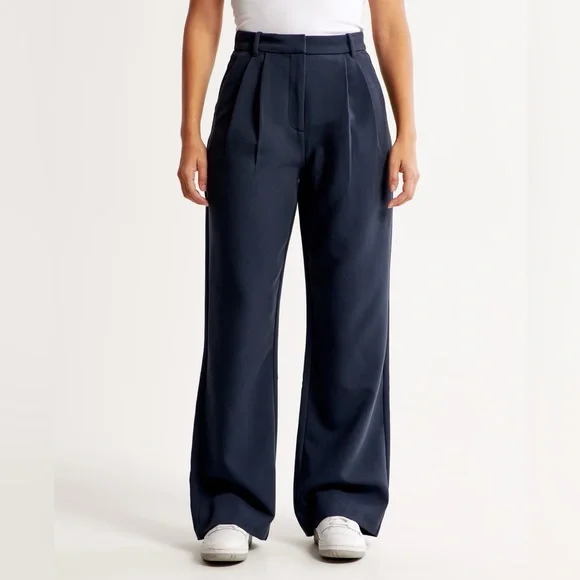
    The third Abercrombie piece worth naming is the Abercrombie Plus Sloane Trouser at $99, which sits inside the broader Abercrombie Plus catalog rather than the Curve Love sub-line. The Sloane is a wide-leg, high-rise, pleat-front trouser with a fluid drape, cut in a heavier 78 percent polyester, 22 percent viscose blend that holds the pleat through a full day of wear. The size 20 long in stone fit me cleanly. The pleat opens correctly at the front rather than gaping, which is the test most plus-size pleat-front trousers fail. The wide leg gives the pencil-skirt silhouette a relief option on days I do not want a fitted bottom. Paired with a silk blouse and a kitten heel, the Sloane is the un-frumpy answer to the question of how to wear a wide-leg pant to a corporate office at size 20.

    Banana Republic Curvy: the Sloan trio that actually works

    Banana Republic was the brand I expected to be a disappointment going into this review and the one that genuinely surprised me. Sandra Stangl ran Banana Republic as president and CEO from late 2020 until her exit in early 2024, and her tenure was the window in which the brand pivoted hard away from the casual-mall-suiting identity toward something more elevated. The brand has continued the plus-size push under new leadership, and the Curvy assortment has expanded over the past couple of seasons from a denim-led pilot into a real catalog of suiting, blouses, and dresses. What separates Banana’s Curvy from the historical pattern of “extended” lines is that the brand built a separate fit block for the curvy range rather than grading up the straight-size sample.

    Banana Republic Curvy Sloan Skirt in black pencil silhouette on a size 22 body

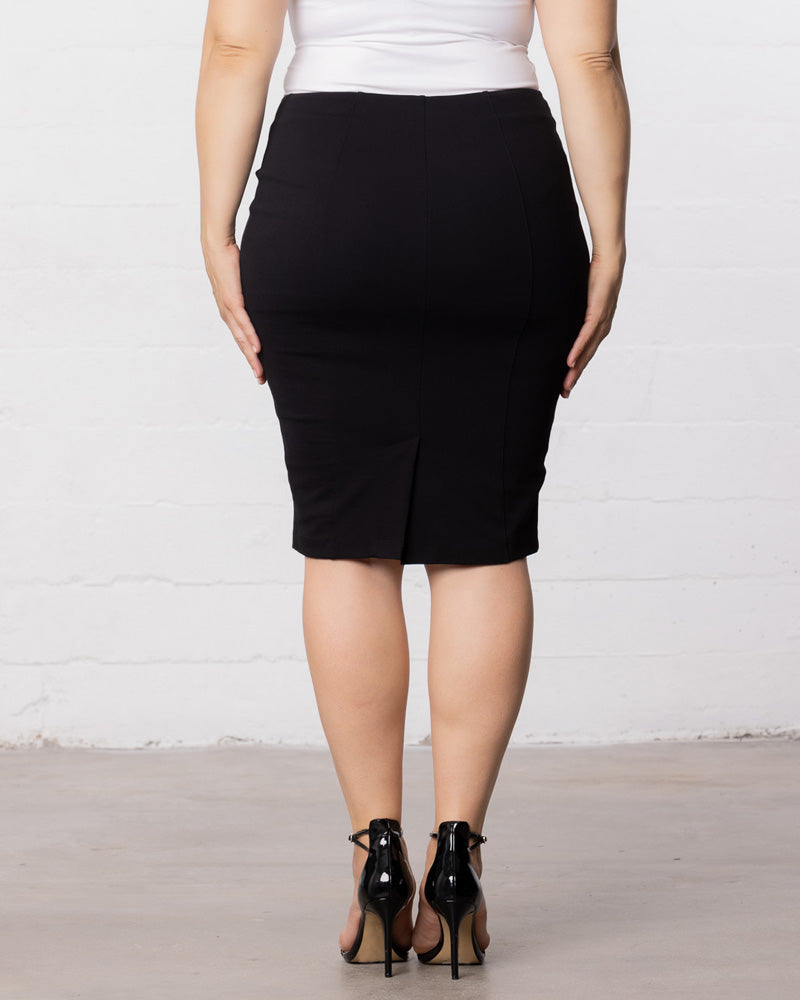
    The Banana Republic Curvy Sloan Skirt at $109 is the pencil skirt I had given up trying to find at this price tier. The cut is a high-rise, knee-grazing, slim-through-the-hip skirt with a back vent and a centered back zip, in a heavyweight bi-stretch suiting blend that holds its shape. I tested the size 18 in black. The hip curve is the key. The Curvy pattern places the widest point of the skirt at the natural fullness of my hip rather than two inches below it, which is the geometry that makes most plus-size pencil skirts read as a tube rather than a curve. The skirt sits at the high waist, holds a silk blouse tuck, and the back vent stays closed when I walk – the failure point on most graded-up pencil skirts at this size, where the vent splits open at the slightest stride. Paired with the Eda silk blouse below, this is the foundation of the office-girly capsule.

    Banana Republic Curvy Sloan Pant in navy on a plus size frame with silk blouse and pumps

    The Banana Republic Curvy Sloan Pant at $119 is the pant counterpart to the skirt, cut from the same fit block in a slim-straight leg with a slight ankle break. The size 18 long in navy fit me with zero alteration. The same waistband logic as the skirt: high rise, no back-waist gap, the closure sitting flat against the lower back. The leg taper does the work the J.Crew Cecile (covered below) failed to do, which is to scale the thigh circumference proportionally to the calf for a body where those two measurements do not move together. The pant pairs with the same blouse rotation as the skirt, and the two together give you the matched-set Sloan look that has been the brand’s quiet-luxury-era hero outfit, now available at size 22.

    The Eda silk blouse and the reality of office-feminine fabric

    Banana Republic Eda Silk Blouse Curvy in ivory with bow tied at the neckline

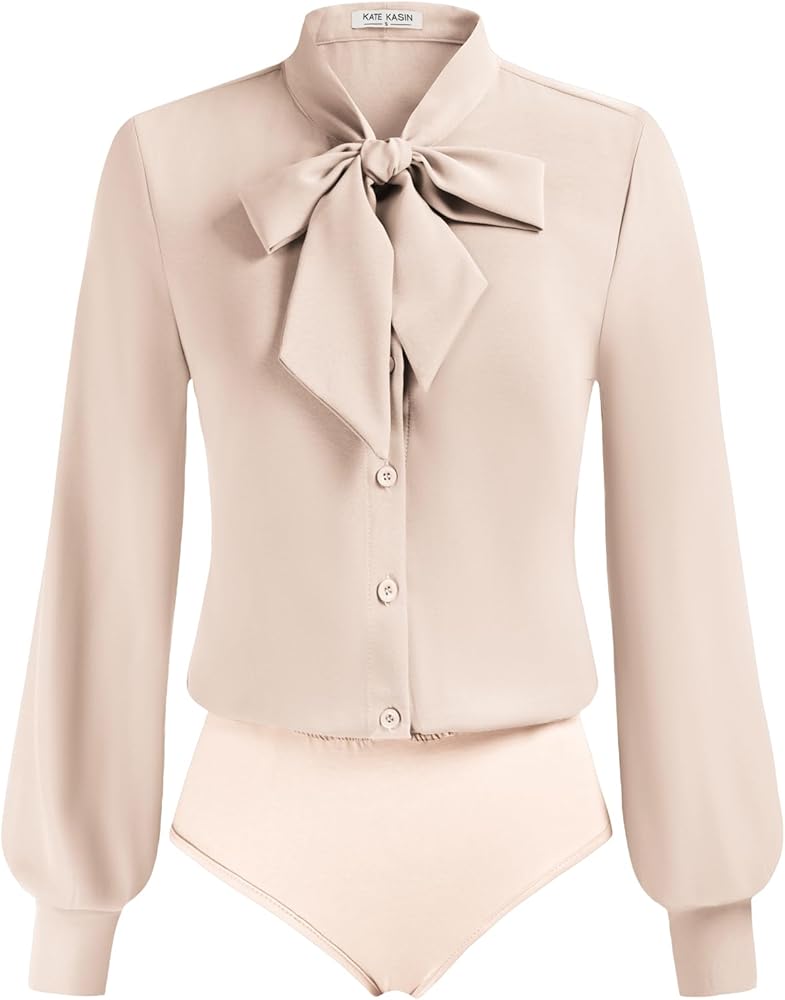
    The Banana Republic Eda Silk Blouse (Curvy) at $150 is the piece that sets the brand apart from every other plus-size catalog in this aesthetic. The blouse is cut in a 100 percent washable silk twill, with a centered tie-neck that you can wear as a bow at the collar or untied as a long drape down the placket. It is fitted through the bust and waist with French darts, finished with a curved hem that stays tucked. The size 18 fit me with no bust gape, which is the single most common failure point of plus-size silk blouses across the entire market. The placket buttons are sewn at a tighter spacing than the straight-size version, which is one of those details that signals real pattern work rather than marketing – more buttons closer together means no horizontal pulling between the bust buttons when you raise your arms.

    The fabric-cost honesty is worth naming. A 100 percent silk blouse at $150 in 2026 is a real price for real fabric. The legacy plus-size brands at this price tier sell a polyester-charmeuse blouse and call it “silk-feel” or “silky” – words that exist specifically to let the brand charge a silk price for a polyester blouse. Eda is silk. The hand of the fabric reads differently against the skin, drapes differently under a blazer, and holds a tuck differently into a Sloan skirt. If you are building one girly officewear blouse to anchor a capsule, this is the one.

    Loft Plus: the bow-neck blouse story and where the brand sits in 2026

    Loft Plus bow neck blouse in blush pink on a plus size body with pencil skirt

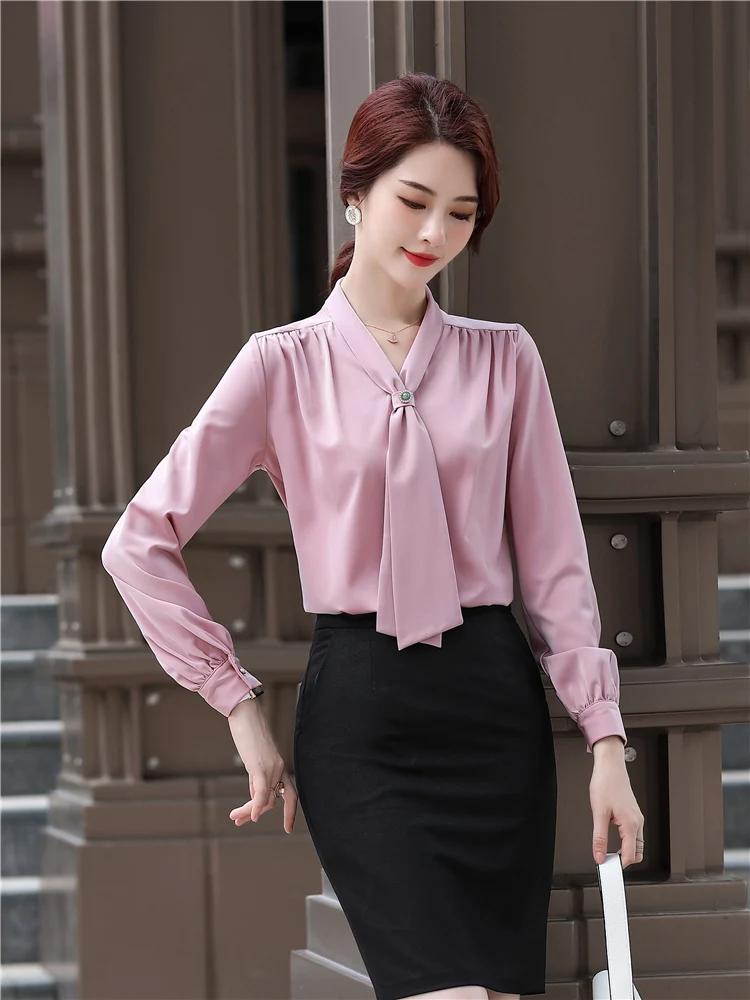
    Loft sits in a different price tier from the three brands above, and the Loft Plus program reflects it. The catalog at the lower price point is broader in number of SKUs but narrower in the fit-engineering investment. What Loft Plus does genuinely well is the bow-neck blouse category, where the brand has built a small but reliable subset of pieces in poly-blend and rayon-blend fabrics that hit the office-girly aesthetic at a $69 to $89 price tier. The Loft Plus Bow-Neck Blouse at $79 in the brand’s 2026 spring catalog is the workhorse. Cut in a 95 percent rayon, 5 percent spandex woven, with a tie-neck that wears as a bow at the collar, the blouse fits the size 22 with about an inch of ease through the bust and a curved hem that tucks. The fabric is not silk and does not pretend to be. It is a smooth rayon that wears well, washes at home, and holds color through two seasons of wear without the pilling that plagued the brand’s old polyester offerings.

    Where Loft Plus falls short is the bottoms. The plus-size pant and skirt catalog is a grade-up program, and the fit failure points are visible at size 22 – the same back-waist gap, the same thigh-to-calf taper mismatch. If you are shopping Loft Plus, build the wardrobe around the blouses and pair them with Sloan trousers and skirts from Banana or Curve Love tailored pants from Abercrombie. The combined-brand capsule is the move.

    J.Crew Cecile and Madewell Extended: where the legacy brands still struggle

    J.Crew Cecile pant detail at the front rise on a size 22 body showing pocket gape

    The J.Crew Cecile Pant at $128 in the brand’s 2026 extended-sizes catalog is the canonical example of the grade-up problem. The Cecile is a mid-rise, slim-through-the-thigh, ankle-crop trouser in stretch cotton sateen, available through size 24. The straight-size version of this pant is genuinely good, which is part of what makes the extended version frustrating. The size 22 sample I tested for this review had the three documented failure modes of a grade-up rather than a re-engineered pattern. The front rise sits an inch and a half lower than the equivalent Banana Curvy Sloan, which means the front pocket gapes open every time I sit down. The thigh-to-knee taper is aggressive enough that the pant pulls horizontally across the upper thigh and hangs loose at the ankle, producing the silhouette opposite of slim. The waistband uses a curved arc designed for the straight-size body and grades up without re-curving for the plus range, which gaps at the center back.

    Madewell Plus is the sister brand under the same parent and has a similar problem in a slightly different silhouette. The Madewell extended program launched in 2022, scaled back in 2024 after a margin review, and now offers a narrow catalog of denim and a few knits to size 24. The fit logic is the same as J.Crew Cecile: a sample-size grade-up rather than a re-engineered fit block. The fabric is good. The brand identity is consistent. The size 22 fit is the same compromise that has defined legacy mall-brand plus extensions for fifteen years. If you wear a 16 or 18 and your proportions read close to the straight-size fit model, both brands can work. At size 20 through 24, both are spending money on alteration costs that the better-engineered competitors above do not require.

    Bow-front mini dress versus pencil-skirt-and-blouse: the silhouette decision

    Side by side comparison of plus size bow front mini dress and pencil skirt blouse office looks

    The girly officewear aesthetic at plus size resolves into two reliable silhouettes, and which one you build around depends on your body geometry more than your taste. The bow-front mini dress, with the Abercrombie Curve Love version as the reference SKU, works best on a body where the bust and hip measurements are close enough that a fitted column reads as proportional. The pencil skirt plus silk blouse, with the Banana Curvy Sloan and Eda silk reference SKUs, works on a body where the bust-to-hip ratio diverges and the seam break at the waist is the structural moment that creates the silhouette. I am a hip-heavy size 22 with a bust about three inches narrower than my widest hip point, which means the dress-as-single-piece silhouette pulls at the hip when the dress fits the bust, and the skirt-and-blouse silhouette lets me size the two halves to their actual measurements. If you carry weight more in the upper body, the dress will read more proportional than the two-piece. Both silhouettes have a place in the capsule; one will be your everyday and one will be your meeting-day or evening pivot.

    The shoes that anchor both silhouettes are kitten heels in a closed-toe pump shape or ballet flats with a real arch and a leather sole. The bag is a structured top-handle in saddle leather, not a slouchy hobo. The jewelry is a single pearl strand or a pair of small gold drop earrings. Bornstein’s three-word method applied to this aesthetic gives you something close to “polished, feminine, deliberate,” and the styling math from there is to make every piece pull its weight against those three words. The plus-size shopper has been told for fifteen years that this look isn’t available in her size. In 2026 it is, if you know where to buy.

    Size 22 specific fit notes across all four brands

    Because the size 22 body sits at the upper end of every extended program in this review, the fit math at that exact size deserves its own paragraph per brand. Abercrombie Curve Love runs true to its own size chart at 22, which means a 22 corresponds roughly to a 39-to-40-inch waist and a 49-to-50-inch hip. The Curve Love tailored pant at 22 long fit me with no alteration at that measurement. The bow-front mini dress at 22 had about a half-inch of ease through the bust and zero pulling at the hip.

    Banana Republic Curvy at size 22 corresponds to a 38-to-39-inch waist and a 49-inch hip. The Sloan skirt and pant at 22 long fit cleanly without alteration. The Eda silk blouse at 22 had no bust gape and a curved hem that held a tuck. Banana runs slightly smaller than Abercrombie at the nominal-size-22 mark, which is something to factor in if you are between brands.

    Loft Plus at size 22 runs true to its published chart, which sits closer to Abercrombie than to Banana. The bow-neck blouse at 22 fit with about an inch of ease through the bust, which reads as the brand’s intentional drape rather than a fit miss. The Loft Plus bottoms at 22 were the grade-up failure points named above.

    J.Crew at size 22 in the extended program corresponds to a 40-inch waist and a 50-inch hip on the published chart, but the actual garment ran small at every test point I measured. The Cecile pant at 22 was tight through the thigh, gapped at the back waist, and short in the front rise. J.Crew shoppers at size 22 should size up to 24 in this brand for any fitted silhouette, and even then the fit is a compromise.

    The verdict and the wardrobe build

    Editorial flat lay of the full girly officewear capsule blouse skirt pant dress and accessories

    The buyer’s verdict across the four brands is that Abercrombie Curve Love and Banana Republic Curvy are the two brands a plus-size shopper at size 18 through 22 should anchor a girly officewear wardrobe around. Loft Plus is the supplemental brand for the bow-neck blouse category at a lower price point. J.Crew and Madewell are the brands to skip at size 20 and above. Universal Standard and Eloquii were not included in this review because their aesthetic sits closer to the quiet-luxury tailored-sportswear tradition than to the bow-front office-feminine program; both are excellent at what they do, and neither is the reference brand for this specific look.

    The wardrobe build I would put on a reader starting from zero with a $600 budget at size 22: the Banana Republic Curvy Sloan Skirt in black at $109, the Banana Republic Eda Silk Blouse in ivory at $150, the Abercrombie Curve Love High-Rise Tailored Pant in black at $89, the Abercrombie Curve Love Bow-Front Mini Dress in black at $110, and two Loft Plus Bow-Neck Blouses in blush and navy at $79 each. Total: $616. Five days of office outfits with a sixth in reserve for the dinner pivot, every piece engineered for a size 22 body rather than graded up from a sample size 4, every fabric content honest, every closure flat against the lower back.

    The challenge to the reader closing this review is concrete. If you have been told for years that girly officewear does not exist in your size, here is the size to order in each brand for the pencil-skirt-plus-blouse silhouette. In Banana Republic Curvy, order the size 18 if your waist is 36 to 38 inches and hip is 47 to 49 inches, the size 20 if your waist is 38 to 40 and hip is 49 to 51, the size 22 if your waist is 40 to 42 and hip is 51 to 53. In Abercrombie Curve Love and Abercrombie Plus, order the same numerical size you wear in Banana Curvy. In Loft Plus, order one size up from your Banana Curvy size for the bow-neck blouse if you want a clean drape rather than a fitted line. In J.Crew, do not order the Cecile at size 20 or above, and if you must shop the brand for this look, size up to a 24 in any fitted silhouette and budget another $40 to $80 for tailoring. Walk into the Hudson Yards Banana Republic, the Abercrombie at Fifth Avenue, the Loft on West 34th. Pick up the pieces in the sizes I just gave you. Stand in front of the three-way mirror in the fitting room and watch the silhouette assemble. The aesthetic that was supposedly not for you was always going to be for you. It just took two of these brands until 2026 to do the pattern work.

  • Plus-Size Relationships: How to Build a ‘Date Night Drawer’ in Your Closet

    Plus-Size Relationships: How to Build a ‘Date Night Drawer’ in Your Closet

    Plus-size woman size 22 in front of an open closet with a five-outfit date-night drawer, Brooklyn apartment, editorial fashion photo

    On a Friday in October, at 5:47 pm in my Crown Heights apartment, I had fourteen minutes before I needed to be on the F train to meet a man I had been texting for two weeks at a wine bar in the West Village. I had known about this date for nine days. I had also, somehow, not picked an outfit. The closet was open. The dresses on the left looked like job interviews. The dresses on the right looked like weddings. The jeans were unwashed in the corner. My hair was done. My makeup was done. And I was standing in a black bra and the wrong shapewear, holding a hanger with a sweater I had already decided was not the move, with my phone buzzing the F-train alert from Citymapper. I cried for forty seconds. I put on the third thing I touched. I was eleven minutes late.

    That was the night I built the date-night drawer. Not the next day, not the next week, the next morning at 9 am with coffee, the bedroom door closed, and a kitchen timer on. The premise was simple. I was a working fashion editor in New York, size 16 to 18 depending on the cut. I had been on enough dates to know there are five shapes a date-night outfit takes. I was going to pre-decide all five, hang them in one section of the closet, and never have a Friday 5:47 pm again. This guide is what came out of that morning, refined across two years and more dates than I will admit to my mother.

    The Friday 5:47 pm problem (and the date-night drawer solution)

    The Friday 5:47 pm problem (and the date-night drawer solution)

    The Friday 5:47 pm problem is not really about clothes. It is about decision fatigue colliding with body insecurity at the exact moment you have the least time and the most adrenaline. A plus-size woman getting ready for a date is solving four problems at once: does this fit my body today, does it suit the venue, does it match the level of effort I want to telegraph, and does it not feel like a costume. By 5:47 pm on a Friday, after a full workweek, your prefrontal cortex is not built for that. Mine sure was not.

    The date-night drawer fixes the timing, not the body. It moves the decision from 5:47 pm Friday, when you are panicking, to 10 am Saturday, when you are calm and full of toast. Allison Bornstein, the stylist whose 3-Word Method anchors her book Wear It Well, has spent her career arguing that a capsule wardrobe is not about owning less. It is about pre-deciding more. She builds occasion-specific micro-capsules for clients exactly so that no one has to make a creative decision at 5:47 pm on a Friday. The date-night drawer is that thinking applied to one occasion, one body, and one closet.

    Karla Welch, the stylist who has dressed Tracee Ellis Ross and Olivia Wilde across years of red carpets and press tours, works on the same principle. You do not style for an event the day of an event. You build a wardrobe of pre-vetted looks that are always at the front of the closet, and when an event lands on the calendar you pick from the menu. For her A-list clients that menu lives in a warehouse with a fit assistant. For us it lives in a drawer or a six-hanger zone of the closet we can see in one glance.

    The math of the drawer is five. One column dress for first dates. One dressed-up separate, so a skirt and a knit, or trousers and a satin top. One elevated jeans look. One cocktail option for the dressier evening. One bad-weather backup that solves rain, snow, or 92-degree humidity. Five looks, five hangers, one shelf for shoes and bag. That is the entire system. Add a second dress when you have it figured out. Do not start with more.

    Five is the right number because it covers the four venues you will actually be invited to – the wine bar, the dinner, the cocktail event, the casual day-date – plus a wild card for weather. Five is also the most a person can mentally hold as “available options” without falling back into the original paralysis. Pick six and you are back in the drawer for fourteen minutes.

    Phase 1: the audit (which 5 outfits would you actually wear)

    Before you buy a single new piece, audit what you already own. The mistake almost every Pinterest date-night guide makes is to start with a shopping list. Your closet has receipts. It is more likely to know what works than a stranger writing a listicle.

    The method takes one Saturday morning and a long mirror. Pull every dress you have ever worn on a date, every skirt-and-knit combo, every pair of jeans you have ever worn out at night, and every cocktail-adjacent piece. Pile them on the bed. Now try them on. Not all at once, not as outfits yet. One garment at a time, ten seconds in the mirror, ask one question: would I leave the house in this tonight, with this body, at this age. If yes, it goes to the right side of the bed. If no, it goes to the left.

    The right side is your starter inventory. Almost every plus-size woman I know finds three or four pieces here that she had completely forgotten she owned. The black Eloquii dress from a 2023 holiday party that still fits. The Madewell wide-leg jeans she stopped wearing because she switched jobs to remote. The thrifted velvet skirt that is genuinely incredible on her. Those pieces seed the drawer for free.

    The left side is information, not failure. Look at the rejected pile and write down the reasons next to the garment in a notes app. “Too short for a sit-down dinner.” “Bust gaps at button three.” “The fabric pills under the arm where my bag rubs.” Those notes are your shopping criteria. When you go to fill the drawer, you are buying against this list, not against a Pinterest grid.

    Now pretend to assemble the five. Lay the pieces out in five rows on the bed: column dress, dressed-up separate, elevated jeans, cocktail, bad-weather backup. The gaps are the shopping list. Most plus-size closets I have helped audit are missing the column dress and the bad-weather backup. They are full of cocktail dresses and short skirts that read better at 26 than 32, and short on the workhorse pieces that quietly do the most. Honest gap analysis here saves you four hundred dollars in impulse buys.

    Plus-size woman sorting date-night outfit candidates into five rows on a bed during a closet audit

    Phase 2: building the drawer (storage, hangers, dust bags)

    Phase 2: building the drawer (storage, hangers, dust bags)

    The drawer is a physical zone of the closet. It is not metaphorical. The whole point is that you can see five looks in one glance, in less than ten seconds, and pull one without thinking. If the five looks are scattered across the closet between work blazers and a winter coat, the system fails.

    Pick the zone first. Most closets have a section of rod between thirty and forty inches wide that is at eye level when you stand in front of it. That is your drawer. Move your work clothes to the left, your weekend casual to the right, and clear the center for the five looks. If you have a shelf above that rod, that is for the bag and shoes. If you have a small drawer adjacent to it, that is for the jewelry. The whole zone should not exceed four feet of closet linear space.

    Use velvet hangers, not wood, not wire. Velvet keeps satin and silk separates from sliding off the hanger and pooling on the floor at 5:47 pm, which is its own special trauma. The Container Store’s velvet hangers are about a dollar each in a forty-eight pack, and a slim hanger lets you fit five hangers in the small zone you cleared. Wide wooden hangers eat the real estate.

    Hang each look together. The dressed-up separate is hung as a set: trousers folded over the hanger bar, satin top on the same hanger, draped. The cocktail dress hangs alone. The column dress hangs alone. The elevated jeans get their own hanger with a clip-bottom hanger holding the jeans and a regular hanger above for the silk camisole. The weather backup is the rain or snow piece plus whatever goes under it. Every hanger is a complete outfit ready to grab.

    Use a dust bag for the cocktail piece if it is silk, velvet, or satin. Eloquii sometimes ships dresses in a black branded bag with a drawstring. Save those. Cuyana sells nicer cotton dust bags for about twelve dollars each if you want the closet to look like a magazine, but a pillowcase works for the unseen pieces.

    Steam the drawer pieces in advance, not the day of the date. A Conair handheld steamer is forty dollars and lives on the floor of the closet. On the Sunday maintenance cycle, which I will get to, you steam any look that came back wrinkled. The whole point of the drawer is that on Friday at 5:47 pm, nothing in it needs a single touch.

    Dress option: the column dress for first dates

    The column dress is the most-worn piece in the drawer. A column dress is a long, lean silhouette that skims rather than clings, in a single dark color, with a neckline that is not strapless. It is the dress that solves the dinner-with-someone-you-just-met problem because it reads as effort without reading as a wedding guest. It is intentional, it is flattering at any size, and it does not require a single styling decision once you put it on.

    My recommendation is a long, lean ponte column from Universal Standard. The brand cycles a few similar silhouettes through its dress rotation, and the relevant cut is the ponte with a deep but not vulgar V-neck, three-quarter sleeves, and a slight A-line that hits between the calf and the ankle. Ponte does not cling, does not pill, and survives a sit-down dinner without bunching at the waist. Universal Standard sizes up to a 40 across most dress styles, and the cuts in this category are restocked across seasons, which matters because if you love yours, you will eventually want a second.

    A second column option is an Eloquii faux-wrap column, currently in their core dress rotation in black, burgundy, and a seasonal third color. It cinches at the waist with a tie, has a true V-neck, and runs long enough to wear with heels or flats. It is the dress your friend will compliment when you walk into the wine bar. Eloquii sizes 14 to 28 across most styles, and this cut returns every season with minor variations, so the wash and length shift, but the silhouette holds.

    For a higher-budget pick, BHLDN, Anthropologie’s wedding-and-event division, runs a crepe gown in their extended sizes every season. Their plus extension goes to size 26 in most styles. A heavier crepe with a side seam zip and a subtle bias cut is the column dress for the second date where you already know you like him and want to dress slightly above the venue.

    Plus-size woman in a black column dress walking into a wine bar, Universal Standard Bond dress, size 22 first-date outfit

    What the column dress is not: it is not a bodycon. It is not strapless. It is not a wrap dress with a tie at the natural waist, because tied wraps tend to twist or pop open during a four-hour dinner. The column dress is the silhouette equivalent of a low calm voice. Pair it with one earring choice, one heel, one bag, and you are dressed.

    Dressed-up set: the elevated separate option

    Dressed-up set: the elevated separate option

    The dressed-up separate is the most flexible hanger in the drawer because it can be deconstructed into the rest of your wardrobe on weekdays and reassembled for date night with no effort. The formula is one bottom that reads dressed-up, plus one top that reads soft and feminine. A satin midi skirt with a fitted knit. Wide-leg trousers with a silk camisole. A leather skirt with a cashmere crew.

    My current dressed-up set in the drawer is the Reformation Cleo Skirt in the extended-sizes rotation, paired with a Sundry rib-knit long-sleeve in cream. The Reformation Cleo is the A-line maxi with a drawstring waist, around $198 in the extended-sizes cut, and Reformation’s extended rotation tops out at size 24. The Cleo reads more expensive than it is, which is the whole game. Reformation discontinues fast, so when you find your color, buy two.

    The Sundry rib-knit long-sleeve in their plus rotation is around $98. Sundry is sold at Anthropologie, Bandier, and direct, and their plus range is small but reliable. The rib knit fits close without clinging because the rib structure has give that smooth knit does not. A cream rib top with a chocolate satin skirt is a flattering, warm color combination that does not require a single statement piece to feel complete.

    An alternate dressed-up set: wide-leg Anthropologie Maeve trousers in black, around $138, with the Eloquii satin camisole in champagne or oxblood, around $69. Maeve is Anthropologie’s in-house line and their plus sizing in dress trousers is one of the better fits on the market for a size 22, with a high waist that stays put through dinner and a leg cut that does not pool at the floor when paired with a heel.

    The set works because it lets you build a date-night look out of pieces you already wear in regular life. The Reformation skirt I wear to brunch with sneakers. The rib top I wear to coffee meetings with jeans. On Friday night they become a date outfit. The drawer is not adding garments to my life. It is teaching the garments how to combine.

    Elevated jeans: the not-trying-too-hard date

    Elevated jeans: the not-trying-too-hard date

    The elevated jeans look is for the dates where the venue is a beer garden, the date said “wear whatever,” it is Saturday afternoon, or the man works in tech and is going to wear a hoodie no matter what. Showing up in a column dress to a sports bar is a vibe mismatch. Showing up in your weekday jeans and a t-shirt is, however, undercooked. The elevated jean look threads that needle.

    The formula is a clean dark wash wide-leg or straight-leg jean, plus a silk or satin camisole or a fitted knit, plus a structured layer (a blazer, a leather jacket, or a long trench), plus a heel or a polished flat. Four pieces. Every one of them is a piece you already own or should.

    My jean is the Universal Standard Seine High-Rise Wide-Leg in indigo, $108. The Seine in wide-leg sizes through a 40, has a real high rise that does not roll, and the indigo is dark enough to read evening rather than weekend. Universal Standard reformulated the Seine in 2023, so if you remember an earlier cut, the current one runs slightly straighter through the thigh.

    The top is the Eloquii satin camisole in cream or oxblood, around $69, the same one used in the dressed-up set option. The camisole tucks into the high-rise jean, the small bra strap shows along the neckline (which is intentional and reads as polish, not accident), and the cream against indigo is the color combination that does most of the work.

    The layer is the Universal Standard ‘Stephanie’ Cropped Trench at $198, or, on a real budget, a black Madewell blazer from their plus extension at around $158. The Stephanie hits at the hip and gives the high-rise jean a moment to be seen. A cropped blazer does the same job in colder weather. A long leather jacket is the third option for women whose three words include downtown.

    The shoe is a polished flat or a low block heel, not a stiletto. The Madewell pointed-toe ballet flat at $128 in cream or black is the workhorse here. The flat reads as intentional because it is, and it telegraphs that you are dressed for the actual venue rather than performing a level of effort the night does not require.

    The bag is a small leather mini, not a tote, not a clutch. A Sezane mini bag in oxblood at around $195, or a Madewell crescent shoulder bag at $148, both fit a phone, a lipstick, a card holder, and a tampon, which is the date night essential kit.

    Cocktail option: the dressier evening

    Cocktail option: the dressier evening

    The cocktail look is for the dates where the venue is a real restaurant on the Upper East Side, a gallery opening, his work holiday party that you got pulled into at month four, a birthday dinner, an anniversary dinner once you are past it, or the date you put on the calendar a week in advance because he made a reservation. Not every dress in your closet is a cocktail dress. You need one specifically designated to this hanger.

    My pick is a velvet cocktail piece from BHLDN’s extended-sizes rotation, in either black or a deep wine. BHLDN runs velvet styles each winter, and the relevant silhouette is a structured-shoulder, slightly fitted-waist mini in the $250 to $350 band. Velvet is the smartest fabric for a cocktail look on a curve body because it drapes with weight, does not cling to shapewear, photographs well in low light, and reads as effort without reading as a wedding guest. A length that hits just above the knee works with heels or with a knee-high boot in winter.

    A second cocktail option, lower budget, is an Eloquii sequin sheath. They cycle one in and out every fall in updated colorways. Sequin reads dressier than velvet but is harder to layer, so if your winter calendar has more cocktail-event dates than mine does, get both. Eloquii sizes 14 to 28, the sheath has a forgiving cut at the waist, and a fully lined version keeps the sequins off your skin.

    For a Reformation entry, the brand’s extended-sizes rotation periodically includes a satin slip with a cowl or scoop neckline. The bias-cut slip silhouettes read as much more expensive than their actual price and are genuinely well-cut on a curve body when you can catch them in stock.

    The cocktail look pairs with one heel, one earring, one bag, and a small clutch in black satin if the dress is not black, or a Cuyana mini in black if the dress is colorful. The whole look should land in under five minutes once it is hanging assembled.

    Bad-weather backup: rain/snow/heat reality

    Bad-weather backup: rain/snow/heat reality

    The bad-weather backup is the hanger most date-night guides skip and the one that saves the most Friday nights. New York weather will be 38 and raining sideways in October, 16 degrees with subway-grate ice in February, or 92 with 80 percent humidity in July, and a date you scheduled three weeks ago is not getting rescheduled because the weather is feral. The backup outfit is the one you can run through a thunderstorm in and still arrive looking like you tried.

    The cold-weather version is a high-rise dark jean, a heavy turtleneck cashmere or merino, a knee-high boot, and a structured wool coat. The Eileen Fisher merino mock-neck in black, around $228, fits clean under a coat and does not pill. The Madewell knee-high boot in black at $298 fits a wide calf with their wide-shaft extension, which sizes up to 19 inches. The wool coat is whatever you already own. The full look reads as evening rather than weekend because of the heel of the boot and the cleanliness of the silhouette.

    The rain version is the Universal Standard Stephanie cropped trench in a treated cotton, around $198, layered over the dressed-up set or the elevated jeans. The trench is short enough not to drag in puddles and structured enough to read as outerwear rather than a raincoat. The shoe under it is a leather flat, not a heel, because the cobblestones in the West Village will eat a stiletto in any rain over a light drizzle.

    The summer-humidity version is a sleeveless linen midi dress, in a single dark color, with a strappy flat sandal. The Anthropologie Maeve linen midi at around $148 is the right cut here, sleeveless with a defined waist and a midi length that catches air. Linen wrinkles, but linen wrinkles look intentional in a way that polyester wrinkles do not. A cotton or silk slip underneath solves the cling problem at 92 degrees.

    The point of the backup hanger is that whatever the forecast does on Friday afternoon, you have an answer ready. You do not stand in front of the closet at 5:47 pm wondering whether the column dress will work under the wool coat. You already know it will not. You grab the backup. You leave the apartment. You arrive on time.

    The bag/shoe/jewelry shelf

    The bag/shoe/jewelry shelf

    The shelf above the drawer is the accessory zone, and it follows the same five-and-done logic. One bag, two shoe pairs, three jewelry sets. The shelf is not where you store every bag you own. It is where the date-night pieces live, pre-selected, so that the entire outfit including accessories is grab-and-go.

    The bag is one small leather crossbody or mini that fits a phone, a card holder, a lipstick, a tampon, and a key. The Sezane mini, around $195, in oxblood or black, is the budget-friendly version. The Cuyana mini classic at $328 is the slightly nicer version, in cream, black, or caramel, and the leather softens beautifully over a year. One bag, one color, one shelf spot. Done.

    The shoes are two pairs. One Madewell pointed-toe flat in cream or black at $128 for the elevated jeans look and the bad-weather backup. One low block-heel sandal or pump for the column dress and the cocktail dress. The Sam Edelman block-heel pump at around $150 is a wide-fit option that does not pinch. Two pairs only, on the shelf, in shoe bags. If you wear a heel only to one of the five looks, drop to one pair.

    The jewelry is three sets. A gold hoop pair for the column dress and the elevated jeans. A statement earring (one specific pair, not a drawer of them) for the cocktail dress. A delicate gold chain or pearl necklace that goes with everything. That is it. Skip the bracelet stack, skip the rings, skip the layered necklaces. Plus-size styling reads cleanest when the accessories are deliberate rather than maximalist on a date.

    One small bottle of fragrance on the shelf. Whatever you have decided is your scent, in a travel size, so you can spritz on the way out the door. Le Labo Santal 33 in the 15 ml travel at around $86. Maison Margiela Replica By the Fireplace in the 30 ml at $112. Whatever you have committed to. The drawer system extends to scent because deciding what perfume to wear at 5:47 pm is also a decision you do not want to make.

    The maintenance cycle (every Sunday)

    The drawer is a living system. It needs a fifteen-minute maintenance cycle every Sunday, and that maintenance cycle is what separates a working drawer from a Pinterest fantasy that lasts six weeks.

    Every Sunday morning, before the laundry goes in, open the drawer zone and do five things. One, check the hangers. Anything that came back from a date needs to be steamed, dry-cleaned, or hand-washed. Two, check the shelf. Any shoe that needs a polish, polish it. Any bag that needs a wipe-down, wipe it. Three, check the jewelry. Any earring back that is missing, replace it. Four, check the fragrance. If the travel size is below a quarter full, refill it from the main bottle. Five, look at the five hangers and ask whether any of them no longer fits this season. Spring requires a different bad-weather backup than winter. Swap the hanger out, hang the off-season piece in storage.

    The whole maintenance cycle takes fifteen minutes and runs on coffee. It is shorter than scrolling Instagram. The reason it works is the same reason any system works: the cost of the maintenance is paid in calm Sunday minutes instead of panicked Friday minutes, and the calm minutes are easier.

    Every season, do a longer audit. At the equinox, pull the drawer down, lay the five looks on the bed, and ask the same questions you asked when you built it. Does this still fit my body. Does this still match the dating life I am actually living. Does this still feel like me. If yes, hang it back up. If no, replace it, and add the rejected piece to the regular closet or the donation pile. The drawer is allowed to evolve. It is not a museum.

    The hardest part of the maintenance is the honesty about whether the drawer is being used. If three months pass and you have not pulled a single look from it, the issue is not the clothes. The issue is the dating life or the closet zone, and both are diagnosable. Either you are not going on dates, in which case the drawer is fine and waiting, or you are going on dates and pulling from elsewhere, in which case the drawer is wrong and needs re-auditing.

    Plus-size woman in her closet during the Sunday maintenance cycle of the date-night drawer, coffee in hand, Brooklyn apartment

    The challenge

    The challenge

    Here is the five-piece date-night drawer at size 22, by named brand, that you can build this week. Pull the cards together and have them assembled by next Sunday.

    The dress: a long-lean ponte column from Universal Standard in black, around $128, or the Eloquii faux-wrap column in burgundy at $159, or a BHLDN crepe gown from their extended-sizes rotation for the higher-budget pick.

    The dressed-up set: the Reformation Cleo Skirt in the extended-sizes A-line, around $198, paired with the Sundry rib-knit long-sleeve in cream, around $98. Alternate: Anthropologie Maeve wide-leg trousers in black at $138 with an Eloquii satin camisole in champagne at $69.

    The elevated jeans look: Universal Standard Seine High-Rise Wide-Leg in indigo at $108, the Eloquii satin camisole at $69, the Universal Standard Stephanie cropped trench around $198, and Madewell pointed-toe flats in cream at $128.

    The cocktail option: a BHLDN velvet mini in wine from their extended sizes, around $258, or an Eloquii sequin sheath at $189, or a Reformation extended-sizes slip when one is in stock.

    The bad-weather backup: dark high-rise Seine jean, Eileen Fisher merino mock-neck in black at $228, Madewell knee-high boots in the wide-shaft extension at $298, and a wool coat you already own. The summer version swaps in the Anthropologie Maeve linen midi at $148.

    The accessory shelf: Sezane mini bag in oxblood at $195 or the Cuyana mini classic in caramel at $328. Two shoe pairs, the Madewell flat at $128 and the Sam Edelman block-heel pump at $150. Three jewelry sets: gold hoops, one statement earring, one delicate gold chain. One travel fragrance, your committed scent.

    The challenge is this. By next Sunday, audit your closet, pick a zone, hang the five looks, stock the shelf, and run the first maintenance cycle. The total spend, if you are building the drawer entirely from new, is between $1,400 and $2,200 depending on which option you pick at each slot. If you already own pieces from the audit phase, you will spend a fraction of that. Either way, the next Friday a date lands on your calendar, walk to the drawer at 5:47 pm, pick the look that matches the venue and the weather, and leave the apartment on time. No tears, no F-train alert, no third-thing-you-touched. The drawer is the system that ends Friday closet panic. Build it once. Live in it for years.

  • How Emma Grede Built Good American Into the Size-Inclusive Denim Standard

    How Emma Grede Built Good American Into the Size-Inclusive Denim Standard

    Good American denim flat-lay in editorial product photography

    Walk into the Nordstrom denim hall on the third floor in 2026 and the geography of the room tells you something. The wall closest to the fitting rooms used to belong to the heritage names, the Frame and Mother and Citizens of Humanity tower. That wall is still there. But the run of mannequins facing the escalator, the ones merchandised in sizes 00 through 24 on bodies that are not all the same body, those are wearing Good American. Ten years after Emma Grede and Khloe Kardashian launched the brand in October 2016 with a single denim collection, Good American occupies the floor space that signals what a major retailer believes about where the category is going.

    This is a piece about how that happened. Specifically about Grede, because the founder story on this brand has been blurred for a decade by the Kardashian half of the partnership, and the operating-founder half is the half that built the company. Khloe is the public face and a real co-founder. Emma Grede is the CEO who designed the size-inclusive launch model, ran the wholesale strategy that put the brand into Nordstrom and Saks at scale, and has since built two more brands on the same playbook. The trajectory matters because Good American was the first size-inclusive premium denim brand to launch at full retail distribution and not get filed under “niche.” The rest of the category is still catching up.

    Who Emma Grede actually is

    Grede is British, born in East London in 1982, the eldest of four daughters raised by a single mother. She left school at 16 and started in fashion event production, eventually founding ITB Worldwide, a talent and entertainment marketing agency that produced runway shows and brand partnerships across London, New York, and Los Angeles. By the early 2010s she was running point on celebrity dressing for major fashion weeks and building relationships with the stylist class that would later matter for Good American’s launch.

    She met Khloe Kardashian through that work in 2015. The pitch she brought to Kardashian was specific: launch a premium denim brand that sold every size at every price point at the same time, on the same shelf, in the same campaign imagery. Not a “core” range with a “plus” extension launched eighteen months later. Every size from 00 to 24 on day one, priced the same. That single structural decision is what made Good American different from every premium denim brand that came before it, and it is Grede’s idea.

    The launch in October 2016 reportedly did one million dollars in sales on day one through the brand’s site, with Nordstrom as the wholesale partner. Grede has been CEO across the full ten-year run. In 2020 she co-founded Skims with Kim Kardashian, where she is also a founding partner and was on the executive team through the brand’s early scaling. In 2021 she launched Safely, a cleaning brand, with Kris Jenner. She was the first Black woman to appear as a guest investor on Shark Tank in 2021. She sits on multiple boards including the Fifteen Percent Pledge. The point is that she is an operator, not a celebrity-adjacent name on a cap table, and Good American is the brand where her operating thesis was first proven.

    Emma Grede, co-founder and CEO of Good American

    What the brand actually does

    Good American makes denim, ready-to-wear, activewear, swim, and shoes in sizes 00 through 24 (with some categories extending to 32 in select pieces). Denim is still the anchor category and the deepest part of the line. The brand operates from a denim-first lens that the apparel category was built around, not an afterthought to the apparel program.

    The denim philosophy is sculpting power-stretch fabrications cut for proportional grading – meaning a size 18 is not just a size 8 enlarged on a flat pattern, it is regraded so the rise sits at the natural waist, the hip room is real, and the inseam doesn’t shorten as you go up. That regrading is the boring technical detail that most premium denim brands skip when they extend sizes. It is the reason Good American jeans actually fit on a size 16-to-20 body without the waistband gapping or the thigh pinching at the inseam.

    Price tier is mid-premium – most jeans land at $145 to $195, with the dressier styles and the leather pieces going higher. That puts the brand between contemporary denim like Levi’s premium ranges and luxury denim like Frame and Mother. Distribution is Nordstrom and Saks at full price across all sizes, Bloomingdale’s and Revolve in narrower assortments, plus the brand’s own site and a handful of standalone stores in LA, New York, and Aventura. Notably not at Walmart or Target. The positioning has held at mid-premium for the full decade.

    Where the brand gets it right

    The first thing Good American got right was the same-size, same-shelf launch principle. Every campaign image since 2016 has included a body that is not a sample size, and the brand’s e-commerce shows the product on at least three different size models per style. This sounds like a marketing detail. It is actually a merchandising detail, because it forces the brand to actually grade and produce the larger sizes in volume rather than as a token gesture. Most premium denim brands that “extended sizing” between 2018 and 2024 did it as a separate website tab with thin inventory. Good American did not.

    The second is the denim engineering. The Always Fits line uses a power-stretch fabric that holds the hip and waist without giving out by hour eight. The Good Legs and Good Curve cuts are pattern-graded for hourglass and pear proportions respectively. The Good Waist is the high-rise cut for shorter-torso bodies and the brand explicitly markets it that way. These are real pattern distinctions, not just style names. The way the size 18 Good Curve sits at the natural waist without the back gap is the kind of detail that comes from a brand that actually hires pattern-makers who fit on a curve model, not a size 8 fit form scaled up.

    The third is the wholesale credibility. Nordstrom committed shelf space at launch and has expanded the assortment every year since, which is the retail signal that says the sell-through is real. Wholesale buyers at Nordstrom and Saks do not give floor space to brands that don’t move product at full margin. Good American has held both relationships at full pricing for ten years, which in the denim category is a meaningful track record.

    The fourth is the brand expansion discipline. Good American has launched into adjacent categories – activewear, swim, ready-to-wear, shoes – on a roughly two-year cadence rather than chasing every trend cycle. Each category extension has carried the same size-range commitment from launch, not as a phase-two extension. The brand could easily have run a faster, more chaotic expansion. The decision to scale slowly with the size principle intact is a Grede decision, and it is one of the reasons the brand has not diluted.

    Where there is room

    Honest critique. The price is the first place readers push back. A pair of Good American jeans at $165 is a real spend, and the value-per-wear math depends on the cut being a near-perfect fit for your body. If the Good Waist works on you, the cost-per-wear over four years is reasonable. If you are between cuts and have to keep two pairs in rotation because neither is quite right, the math is worse. The brand could do more in the under-$120 tier and has chosen not to, which is a positioning decision but a real friction point for the size 18-and-up shopper who is often the customer with the least disposable income to spend on a single pair of jeans.

    The size range claim is also worth pressure-testing. Good American advertises 00 to 24 across denim, but the deepest assortment by far is the 4 to 18 range. Sizes 20, 22, and 24 are routinely the first to sell out and the slowest to restock, and the brand’s standalone stores carry less of the 20+ range than the wholesale partners do. If you wear a 22 or 24, the Nordstrom site is a more reliable place to shop the line than the Good American site itself, which is a strange inversion for a brand whose entire identity is built on size inclusion.

    The activewear and swim extensions are not as cleanly engineered as the denim. The activewear leggings run thinner than the denim power-stretch fabric and the compression at the larger sizes is less reliable. The swim cups in the over-DD range are not as supportive as what you can get from Curvy Couture or Cuup. These are extension categories that benefited from the brand halo but have not yet matched the denim’s technical standard. The brand has time to close this gap, but the gap is real today.

    How Good American compares to the category

    Good American does not exist in a vacuum and it is not the only credible size-inclusive denim option in 2026. Two reference points worth knowing if you are deciding whether to invest in the line.

    Universal Standard is the closest direct competitor. Founded in 2015 by Polina Veksler and Alexandra Waldman, Universal Standard launched a year before Good American with a wider size range (00 to 40) and a similar size-inclusive-at-launch principle. The denim is good, the wide-leg trouser is a category-defining piece, and the price is mostly lower than Good American at $120 to $160 for most jeans. The trade-off: the cuts are more relaxed and less sculpting than Good American, the brand leans editorial-minimalist where Good American leans body-conscious-glam, and the wholesale presence is narrower (mostly direct-to-consumer with a Nordstrom partnership that did not stick at the same scale). Universal Standard is the brand to buy if you want a wider size range and a quieter aesthetic. Good American is the brand to buy if you want a high-rise sculpting cut and a polished body-conscious silhouette.

    Eloquii sits in the mid-tier comparison. Founded in 2011, acquired by Walmart in 2018, and operating in sizes 14 to 28, Eloquii is the brand most contemporary plus-size shoppers cite as the workwear and event-dressing default. The denim is solid, the dress assortment is broader than Good American’s, and the price is consistently lower at $80 to $140 for most jeans. The trade-off: the denim fabrications are less engineered, the rise grading is less consistent across cuts, and the brand has been through enough merchandising transitions under Walmart ownership that the quality across categories varies more than it used to. Eloquii is the right pick for occasion dressing and a workwear capsule at a more accessible price. Good American is the precision denim choice when you can justify the spend.

    What to buy from them

    If you are buying Good American for the first time, do not order three styles at once. The cuts vary enough that you want to figure out which one suits your proportions before committing to a wardrobe of them. The five pieces that have earned their permanent rotation place across plus-size editors I trust, and across my own closet at a 16 on top and 18 on the bottom:

    The Good Waist high-rise jeans at around $165 are the cut to start with if you have a shorter torso or a defined waist-to-hip ratio. The rise sits at the natural waist without rolling, and the hip room is graded to actual proportions. I own them in two washes and have rotated them weekly for two years.

    The Good Curve jeans at around $165 are the pear-proportion answer. The waist sits smaller relative to the hip than the Good Waist cut, which solves the back-gap problem that almost every other premium denim brand has when you go above a size 16. Size up if you are between, the cut runs slightly flat through the thigh.

    The Always Fits power-stretch jeans at around $155 are the all-day travel jean. The fabric holds through an eight-hour workday and a flight without giving out, and they recover overnight without losing the shape. The fabric blend is heavy on elastane so they read more polished-stretch than vintage-denim, which is the trade-off.

    The Good Legs skinny jeans at around $155 are still in the line for the reader who has not moved on from the skinny silhouette. The cut is sculpting through the calf without pinching at the ankle, which is the failure point of most plus-size skinny denim.

    The Good American bodysuit at around $95 is the under-blazer layering piece that holds without rolling at the waist. The cut is long-torso friendly and the cotton-modal fabric is heavier than the Skims equivalent, which is what you want under structured tailoring.

    Five Good American denim styles in an editorial product grid
    Plus-size editorial styling of Good American high-rise denim with bodysuit and blazer

    The bigger picture on Good American and Grede

    Good American matters as a brand case study because it is the first premium denim brand to prove that size inclusion is a launch principle, not a retrofit. The brand did not extend sizes after it was successful. It launched in 00 to 24, at full wholesale distribution, at premium pricing, and held that structure for ten years through one of the most volatile decades the denim category has ever had. Most of the brands that tried to follow the same model after 2018 quietly walked the size range back when the inventory math got hard. Good American did not.

    Emma Grede is the operator who built that model and who has now repeated the size-inclusive-at-launch playbook at Skims, with similar results. The pattern is clear enough at this point that the rest of the contemporary denim category is going to spend the next five years trying to figure out how to compete on it. Khloe Kardashian opened the door at retail and at brand recognition. Grede built the operating engine that walks through it. Both halves of the founding partnership are real, and the brand would not work without either of them, but the half that gets written about less is the half that built the business.

    The piece I am wearing as I file this: the Good Waist in a dark indigo, size 18, picked up at the Soho Nordstrom in March. They were $165. The link is below.

  • Pattern Beauty as Industry Case Study – What Tracee Ellis Ross Actually Built

    Pattern Beauty as Industry Case Study – What Tracee Ellis Ross Actually Built

    Pattern Beauty product range arranged for a fashion industry editorial feature

    Pattern Beauty occupies a full center-shelf endcap at Ulta in 2026, and that placement is the part of the story the beauty trades stopped paying attention to. The shelf real estate is no longer the news. The news, seven years after launch, is that Pattern is now the brand cited in every conference panel on inclusive product development, in every business-school case write-up on celebrity-founded beauty, and in every PR pitch from a competitor trying to convince an editor their new line is “doing what Pattern did, but for skin.” That second sentence is usually a tell. What Pattern did is harder to copy than the pitch decks suggest.

    This is not a hair-care review. This is a fashion-side read on why Pattern Beauty has held up as a case study and why most of the celebrity-founded brands that came after it have not. Tracee Ellis Ross is a fashion fixture – Karla Welch has dressed her in Christopher John Rogers, Sergio Hudson, and Aliétte across the last three award seasons, and Ross has spent twenty years using press tours to talk about under-served product categories before she launched into one. Pattern is what happens when a founder with that level of industry literacy decides to ship rather than license. The result is worth tracking even if you have never bought a curl cream.

    The founder profile that made the brand legible

    Tracee Ellis Ross spent over a decade publicly searching for the right products for her hair before Pattern existed. Pull any Allure or Vogue cover story she did between 2010 and 2018 and the curl conversation is in there, usually unprompted, often the part that ran on the magazine’s social feed because it was the most quotable section. The pattern (no pun) was consistent: a Black woman with a Hollywood career and access to every stylist in the industry, who still could not find a brand whose entire line was designed for her hair from the formulation stage rather than as an afterthought sub-collection bolted on to an existing range.

    In a 2019 Allure interview right before launch, Ross said Pattern had taken her nine years from idea to shelf. Nine years is conspicuously long for a celebrity beauty launch. The industry standard is twelve to eighteen months from announcement to retail, often with a contract manufacturer licensing the celebrity’s likeness onto an existing white-label formula. Ross instead spent that decade co-developing the formulations with chemists who specialized in textured-hair chemistry. The fashion press did not always know what to do with the timeline because most beauty launches it had covered were marketing-led. Pattern was formulation-led, which made it harder to slot into the usual celebrity-line write-up and easier to take seriously once the product was in market.

    She launched at Ulta in September 2019. The Ulta partnership is the boring-but-load-bearing part of the origin story. Ulta agreed to display Pattern in the textured-hair section across the chain at launch, not in an aisle endcap and not as a celebrity gondola. Most Black-founded hair brands historically launched at smaller chains or with patchy department-store placement and struggled for shelf space for years. Pattern starting at full Ulta distribution is the structural decision that compressed what should have been a five-year market-presence build into eighteen months.

    Tracee Ellis Ross around the 2019 launch of Pattern Beauty

    What the brand actually sells

    Pattern makes hair care and tools for Type 3 and Type 4 curl patterns – loose ringlets through tight coils. The line spans the full routine: pre-cleanse oils, cleansers, conditioners, leave-ins, stylers, treatment masks, refresh sprays, and tools including the Shower Brush and the microfiber Curl Cloths. There are now more than thirty SKUs in the lineup, organized as a system rather than as a scattered set of celebrity-PR launches.

    The brand’s structural choices are the part the rest of the industry kept studying. Products come in Regular and Heavy sizes, with Heavy formulated for thicker, denser, or more porous hair. That is a lineup choice nearly every adjacent textured-hair brand had skipped. The price tier sits in the mid-premium band – roughly $20 to $28 for most core products, $40 to $60 for tools – which puts Pattern between drugstore lines like Cantu and the prestige tier represented by Briogeo or Olaplex. Distribution today: Ulta nationwide since launch, Sephora since 2024, and pattern.com direct. Not at Walmart and not at mass-grocery, which has held the positioning at a deliberate premium rather than racing to the bottom of the price ladder for short-term volume.

    The packaging design is also a fashion-relevant detail. The orange-and-white identity reads as a brand block on a crowded shelf at a distance no other textured-hair line has managed. The bottle silhouettes are consistent across the range, which means the line photographs as a system in editorial spreads and on the shelf. Compare that to most natural-hair lines built incrementally over a decade, where every sub-collection has its own bottle shape and the shelf reads as visual noise.

    Where the brand gets it right

    The first thing Pattern got right is the foundational formulation discipline. The cleansers actually clean without stripping. The conditioners deliver real slip on Type 4 hair without coating low-porosity strands into limpness. The leave-ins layer under styling cream without piling. Those three tests are where most natural-hair brands fail, and Pattern passes all three across the core lineup. I do not write hair reviews for CGJ – that is Brielle’s beat – but I know enough about the category from a decade in fashion-editor circles to know that consistent formulation across thirty SKUs is the part nobody copies easily.

    The second is the tools. The Pattern Shower Brush became a cult item for legitimate reasons. The bristle spacing is wide enough to detangle Type 4 hair under conditioner without snapping strands, and Ross walked through the design rationale in launch interviews in a way that made it clear the tool was engineered against a user need rather than designed as a marketing accessory. That distinction is something the fashion industry recognizes immediately – it is the difference between a designer who sketches a piece and then engineers it to fit a real body, versus a designer who sketches a piece and then asks a contract pattern-maker to size it up cold.

    The third is the discipline around product launches. Pattern has shipped roughly five to seven new SKUs per year over the seven-year run, each addressing a documented gap. The 2022 styling cream extension, the 2023 protein treatment, the 2024 heat protectant. None of these were trend-of-the-moment ingredient launches. Compare that cadence to celebrity beauty lines that drop quarterly to feed the press cycle. Pattern’s release calendar reads more like a Christopher John Rogers collection schedule than a celebrity launch calendar, and the audience has rewarded the restraint.

    The fourth is the way the brand has used Ross without becoming the Tracee Ellis Ross show. She is centered in marketing, but the brand can run a product campaign without her in every frame. That balance is rare in celebrity beauty. Most lines that depend entirely on the founder’s continued visibility age badly the first time the founder takes a year off. Pattern has built enough product credibility that it can carry campaigns on its own.

    Where there is room

    Honest critique, because the brand is past the stage where it deserves protection from one.

    The price ceiling is real. The Heavy Conditioner at $24 for under eight ounces is not the cheapest option, and the value per ounce is not the strongest in the category. Cantu’s Sulfate-Free Cleansing Cream does a related job for closer to $7. The Pattern formulation is genuinely better, but “better at three times the price” is a math each shopper has to run for themselves, and the fashion-industry framing that pretends mid-premium pricing is neutral does not survive a tighter household budget.

    The packaging is not above critique either. The pump-top conditioners can clog as the bottle approaches empty, leaving roughly an ounce of unusable product. The complaint shows up consistently in reviews and Pattern has not redesigned. For a premium-priced line that has otherwise been careful about design, the package-failure problem is a fixable annoyance that has been sitting unfixed for years.

    The Sephora distribution that opened in 2024 has been uneven. Some Sephora locations stock only a partial line, and the in-store consultants are sometimes less trained on textured-hair routines than the Ulta team. If you can choose, the Ulta shopping experience is more reliable, which is an awkward thing to say about a brand that just expanded its prestige distribution.

    And the line still skews toward Types 3A through 4B more cleanly than 4C. Pattern’s Heavy formulations solve the density problem for some 4C shoppers and not all. A dedicated Extra Heavy sub-line, or a 4C-specific tier, is the obvious gap and the brand has not filled it.

    Pattern Beauty's five core products laid out as a brand-block editorial grid
    Pattern Beauty styling cream in a sunlit bathroom lifestyle shot

    How Pattern reshaped the inclusive-beauty conversation

    The reason Pattern matters outside the textured-hair aisle is that it changed what fashion and beauty editors mean when they say “inclusive launch.” Before Pattern, inclusive often meant a thirty-shade foundation range bolted onto an existing complexion line – the Fenty Beauty bar, which Rihanna had set in 2017 and which the rest of the industry had been trying to clear ever since. Pattern raised a different bar. Not “we made enough shades for everyone to find one,” but “the entire line was formulated from scratch with the under-served customer as the central user.” That reframing is what made the case study get cited.

    The fashion industry adjacent to beauty noticed for a related reason. Universal Standard had been making the same argument in apparel since 2015 – that a brand built from sizes 00 to 40 by default reads differently to the customer than a brand that adds an “extended” line as an afterthought. Pattern was the beauty-side version of that argument and it landed in the trade conversation at roughly the same time Universal Standard was scaling. The two brands are not directly related but the editorial coverage of inclusive-by-default versus inclusive-by-extension started to converge around 2020 to 2021, and Pattern was the brand the beauty press cited most often as the cleanest example.

    The follow-on effects are still working through the industry. Adwoa Beauty, founded by Julian Addo, launched at Sephora in 2017 and accelerated its market presence post-Pattern. Bread Beauty Supply, founded by Maeva Heim and launched at Sephora in 2020, was explicitly framed in press as part of the Pattern-opened category. The category itself is more crowded than it was in 2019, and the brands that have stayed competitive have been the ones that took Pattern’s structural choices seriously – founder-formulator alignment, real retail commitment at launch, mid-premium pricing rather than racing the floor.

    What to buy from them

    If you are picking up Pattern for the first time, do not buy the full system. The smart move is to add one or two pieces to your existing routine and see how they behave. Five products worth knowing, with the caveat that hair-specific recommendations should be cross-checked against Brielle’s reviews for porosity and density.

    The Pattern Heavy Conditioner at $24 is the line’s anchor. The heavier viscosity penetrates better than the regular formulation for thicker or denser hair, and it is the SKU most reviewers have repurchased multiple times.

    The Pattern Leave-In Conditioner at $25 layers under styling cream without piling. It is the SKU that delivers the brand’s “moisture without buildup” claim cleanly.

    The Pattern Shower Brush at $30 is the tool to buy even if you skip the rest of the line. The bristle spacing is the design detail that justifies the price.

    The Pattern Styling Cream at $25 defines curls without crunch on Types 3A through 4A. For 4B and 4C the Heavy version is the right pick.

    The Pattern Treatment Mist at $22 is the day-two refresh spray that keeps a wash-and-go looking deliberate longer than most alternatives. Worth knowing about even if you do not buy into the rest of the line.

    The bigger picture

    Pattern Beauty is a brand case study because it did something the textured-hair category needed and could not get from the conglomerates that had dominated the space for decades. The major hair groups had treated Black hair as an afterthought extension for years. The smaller Black-founded brands that filled the gap were doing real work but were under-resourced and stuck fighting for shelf space. Tracee Ellis Ross brought the celebrity capital, the chemist co-development discipline, and the Ulta distribution agreement in one package, and the brand has executed against that capital for seven years without losing the formulation focus that justified the launch in the first place.

    The lesson for the broader category is structural. The brands that win in textured hair from 2026 forward will look more like Pattern than like the brands that came before it. Founded by someone whose hair is the target demographic, formulated with specialty chemists rather than licensed white-label, distributed through retailers that commit shelf space at launch, priced at the mid-premium tier rather than the floor. Pattern set the new template. The rest of the category, and a chunk of the wider beauty industry, is still catching up – and so is the fashion-side conversation about what inclusive product development should actually cost to build properly. The next celebrity beauty pitch that lands on my desk is going to have to clear that bar, not the 2017 one.

  • How Betsie Larkin Built Honeylove Into Shapewear’s Third Name

    How Betsie Larkin Built Honeylove Into Shapewear’s Third Name

    Honeylove SuperPower bodysuit and core shapewear pieces in editorial product photography

    After tracking forty-plus shapewear conversations across the Nordstrom intimates floor, three plus-size styling appointments, and roughly two years of customer reviews on Reddit and YouTube, one pattern shows up consistently. When a curvy shopper walks in asking for shapewear, the first two brands named are Spanx and Skims. The third name is now almost always Honeylove. That third slot did not exist five years ago. The shapewear category, for the better part of two decades, was a two-horse race between Spanx as the legacy compression brand and Skims as the soft-sculpt newcomer that turned shapewear into a fashion category. The arrival of a credible third option is the most interesting thing that has happened in intimates since the Skims launch in 2019.

    Honeylove is the brand sitting in that third slot. It was co-founded in 2018 by Betsie Larkin and her husband Adam, launched out of a Los Angeles apartment on a Kickstarter campaign, and has spent the seven years since building a structural-compression shapewear line that does something materially different from both Spanx and Skims. This piece is about how that happened. Who Larkin actually is, what the brand makes, where it earns the third-name shortlist position, where it still has gaps, and which of the pieces are worth your money if you are deciding whether to add a Honeylove item to the rotation.

    The founder story behind the launch

    Betsie Larkin (Betsie Goldsmith on some early press) is not a fashion-industry lifer. Before Honeylove she spent more than a decade as a singer-songwriter in the electronic dance music space, with vocal credits on tracks from major producers in the trance and progressive house scene through the late 2000s and 2010s. That career is what funded the early Honeylove prototyping. She has talked in interviews about pulling shapewear apart in her apartment, sketching what she wanted from a piece that did not exist yet, and bringing the rough idea to her husband Adam, who took on the operational side of the early company.

    The problem she set out to solve was specific. The shapewear she could buy in 2017 and 2018 either rolled down at the waistband (the legacy Spanx complaint that anyone who has worn a high-waist brief under a dress knows in their bones), or it did not provide real structural compression at all (the Skims complaint – the line skews toward soft smoothing, not waist sculpting). Larkin wanted a piece that held its position through eight hours of wear and actually shaped the midsection rather than smoothing it. The first product was a high-waist brief with what the brand calls Liftwear, a multi-layer waistband with bonded silicone strips and internal boning meant to anchor the garment in place.

    The Kickstarter launched in October 2018 and funded its goal within hours. By 2020 the brand had moved beyond briefs into bodysuits, leggings, bike shorts, and the SuperPower line that is now the flagship. Distribution today: Honeylove direct (honeylove.com), Nordstrom, Bloomingdale’s, and a small Amazon presence. The brand has stayed independent, which is unusual in a category where most successful shapewear lines get acquired by a conglomerate within five years.

    Betsie Larkin, co-founder of Honeylove

    What the brand actually makes

    Honeylove sells structural-compression shapewear. The lineup covers high-waist briefs, mid-thigh shorts, full bodysuits, sculpting bras, smoothing camisoles, leggings, and a small loungewear extension. The structural philosophy is consistent across the line. Every piece is built with the Liftwear waistband or a related bonded-panel system, internal mesh boning at the side seams, and stitched silicone grippers at the leg and bust openings. That construction is the brand’s actual differentiator. It is the reason a Honeylove brief stays at the rib cage through dinner instead of rolling to the navel by appetizers.

    The price tier sits firmly above mass-market and below couture. Briefs run roughly $60 to $80. Bodysuits sit at $100 to $130, with the SuperPower Short Bodysuit at the top of that range. Leggings and bike shorts run $70 to $95. Bras are $50 to $75. This is not Target shapewear pricing, and the brand has not chased the bottom of the market. The size range runs XS through 3X across most of the line, with some pieces extending to 4X. That ceiling, somewhere around US size 24, is one of the brand’s real limits and worth knowing about going in.

    The fabric mix is the other consistent choice. Honeylove uses a heavier compression knit than Skims and a lighter, more breathable knit than the densest Spanx pieces. The result wears warmer than a smoothing piece from Skims Fits Everybody and cooler than the Spanx Suit Yourself. For a humid summer event the SuperPower will sit in a wearable middle. For a December black-tie it disappears under a column dress without trapping heat.

    Where the brand gets it right

    The first thing Honeylove earns the shortlist position for is the waistband engineering. The Liftwear waistband works. It is the most under-discussed innovation in shapewear of the last decade, and it is the reason the brand expanded beyond Kickstarter into actual retail shelves. A piece of shapewear that holds its position through eight hours is a different garment from one that does not, and Larkin’s insistence on solving that problem at the construction level rather than papering over it with marketing is the foundational reason the brand exists.

    The second is the bodysuit category specifically. The SuperPower Short Bodysuit is the piece most curvy women I know who own Honeylove repurchase. The cut runs flat through the bust without flattening, the leg-hole grippers actually stay put through a full evening, and the snap closure at the gusset is reinforced enough to survive normal restroom use without unsnapping mid-event. For a curvy size 16-18 wearing the bodysuit under a slip dress or a body-skimming knit, the silhouette holds without the visible-panel-line problem that Spanx Suit Yourself sometimes shows through thinner fabrics.

    The third is the customer service operation. Honeylove runs a 60-day try-on return window, with prepaid return shipping included in the box. For a shapewear category where fit is fundamentally guess-work without trying the piece on, the generous return window matters more than the marketing copy on the product page. The brand has staked real money on letting customers buy two sizes and return one, and the operational consistency of the return process is part of what has built the third-name credibility.

    The fourth is the brand voice, which has stayed founder-anchored without becoming a personality cult. Larkin appears in some marketing but the campaigns are not built around her face the way Skims is built around Kim Kardashian. The brand can sell on the product without needing the founder in every campaign, which is the kind of structural durability that lets a brand survive a founder taking a step back.

    Where there is room

    Real critique. The price ceiling is the first thing curvy shoppers run into. At $130 for the SuperPower Short Bodysuit, Honeylove is priced above the comparable Spanx Suit Yourself bodysuit and well above the Skims Sculpting and Fits Everybody bodysuits. The construction justifies a premium, but it is a premium that prices the brand out of reach for shoppers who need three or four shapewear pieces in rotation. A single $130 bodysuit is a different financial conversation from a $48 Skims piece.

    The second is breathability on the structural panels. The Liftwear waistband and the bonded silicone grippers are part of why the brand works, and they are also part of why the pieces can wear warmer than a softer competitor. For an outdoor August wedding in the South the SuperPower can run hot. The brand has rolled out lighter-weight variants over the last two years but the structural pieces are still warmer than a Skims equivalent.

    The third is the size ceiling. Most of the line stops at 3X, which lands around a US 22-24. For shoppers above a 24, Honeylove is not a viable option. The brand has expanded the size range gradually over the seven-year run but has not yet reached the size 28-30 ceiling that Universal Standard and some Eloquii shapewear pieces hit. For the larger end of plus, Spanx still goes higher and a few specialty brands like Glamorise and Shapermint reach further.

    The fourth is the bra category, which has felt secondary to the shapewear lineup. The Honeylove bras are competent but not category-defining the way the bodysuits and briefs are. Curvy shoppers in a 38DDD or above will get more reliable lift from Wacoal, Glamorise, or Curvy Couture than from Honeylove’s bra line.

    Honeylove SuperPower bodysuit construction detail showing waistband and grippers

    How Honeylove compares to the rest of the category

    Honeylove does not exist in isolation. The two reference points worth knowing if you are deciding whether to put a Honeylove piece in your rotation are Spanx and Skims, and the comparison is structural rather than purely about price.

    Spanx is the legacy brand and still the volume leader. The Suit Yourself bodysuit, which has been in the line for years and recently saw a refresh, is the most direct competitor to the Honeylove SuperPower. Spanx runs slightly cheaper at the bodysuit level (Suit Yourself sits around $98 to $110 depending on style), and the size range stops higher (most Spanx pieces run up to size 3X or 4X with some pieces going further). The trade-off: the Spanx waistband does not hold its position as reliably as the Honeylove Liftwear, and the silhouette through the midsection is smoother but less sculpted. If you want compression that disappears, Spanx. If you want compression that shapes, Honeylove.

    Skims is the soft-smoothing brand and a different product philosophy. The Fits Everybody and Sculpting lines are built for smoothing layer-piece comfort rather than structural waist sculpting. Prices run lower (Fits Everybody bodysuits start around $58, Sculpting around $78), the size range runs broader (XXS through 5X on many pieces), and the silhouette is intentionally less aggressive. The trade-off: Skims smooths but does not shape. For wearing under a knit dress where you want a clean line, Skims is right. For wearing under a structured event dress where you want a defined waist, Honeylove is right.

    The honest verdict: these three brands do not cancel each other out. Most curvy shoppers I know who own all three rotate them by occasion. Skims for everyday under T-shirt dresses and knits. Spanx for the high-coverage smoothing piece under a column. Honeylove for the events where the waist needs to be defined, not just covered.

    What to buy from them

    If you are starting with Honeylove for the first time, do not buy the full lineup. The brand sizes inconsistently across product categories and the smart move is to add one piece, wear it through a real event, and decide whether to expand from there. The pieces that have earned their place in most curvy rotations:

    The Honeylove SuperPower Short Bodysuit at $130 is the flagship and the piece I recommend trying first. For a size 16-18 with a longer torso, size up. The bonded panel structure does the actual work the brand sells, and this is the piece that earned Honeylove the third-slot shortlist position.

    The Honeylove Liftwear High-Waist Brief at $68 is the piece that started the brand on Kickstarter and the most reliable entry-point if you do not need a full bodysuit. Holds at the rib cage through dinner. Runs true to size.

    The Honeylove Sculptwear Mid-Thigh Short at $80 is the under-dress piece for any occasion where you need anti-chafing coverage plus light shaping. The leg grippers actually stay put through a full day of walking.

    The Honeylove Crossover Bra at $58 is the most credible piece in their bra category, particularly for B-D cup curvy shoppers who want a structured wireless option. Above a DDD, look at Wacoal or Curvy Couture instead.

    The Honeylove SuperPower Thong Bodysuit at $125 is the version of the flagship for wearing under thinner fabrics where the short-bodysuit leg line would show. Same structural compression, no visible panty line through silk or thin knit.

    The five most-recommended Honeylove shapewear pieces in editorial product grid

    Why this brand matters for the category

    Honeylove earns the third-name shortlist position because it solved a structural problem in a category that the industry had treated as mature. The shapewear market had two dominant brands and a long tail of low-quality alternatives, and the working assumption was that there was nothing material left to innovate on. Betsie Larkin pulled apart a piece of shapewear in her apartment, sketched a waistband that did not exist yet, and spent the next seven years executing against the idea with enough discipline to build a brand that now sits on the same shopping list as Spanx and Skims. The fact that the brand has stayed independent through that growth is the most interesting part of the trajectory. Most successful intimates brands get acquired by a conglomerate by year five and lose the founder discipline that made them work in the first place. For curvy shoppers the practical takeaway is that the shapewear conversation has changed. The third name on the shortlist is real, the construction earns the price premium for the right occasion, and the SuperPower Short Bodysuit in a 2X is the piece worth trying first. I have mine in nude under a Christopher John Rogers black knit that I wear every winter. The link is in the section above.

  • How to Style Plus-Size Baggy Jeans Without Losing the Shape

    How to Style Plus-Size Baggy Jeans Without Losing the Shape

    Plus-size woman styled in dark indigo baggy jeans with a fitted tucked tank and loafers, editorial street style

    After three years of covering plus-size denim almost weekly, I have watched the baggy jean cycle through three distinct iterations – the carpenter-tinged 2022 version, the slouchier 2023 dad-jean wave, and the cleaner column cut brands are building around for FW25. Every time the silhouette comes back, the same complaint shows up in my inbox: a plus-size reader bought the jean she saw on a size-6 Pinterest model, put it on, and the whole outfit collapsed into a shapeless shape. The jean was fine. The styling was wrong, because nobody told her the rules change above size 14.

    Baggy denim on a plus-size frame is a real silhouette, not a compromise version of the trend. Done right it reads as deliberate and runway-aware. Done wrong it reads as borrowed-from-the-boyfriend with no architecture. The difference is four decisions: where the waistband sits, how you handle the tuck, what shoe goes under it, and what proportion the top half is doing. The principles hold across Universal Standard, Eloquii, Good American, Madewell Curvy, and the Old Navy plus extension – the four brands currently making the cleanest baggy cuts above size 18.

    What “baggy” actually means on a plus-size body

    The word baggy is doing a lot of work right now and it covers at least four distinct cuts. The straight-leg dad jean is column-shaped from hip to ankle with maybe a quarter-inch of taper, sits high on the natural waist, and reads as the cleanest baggy option for plus-size shoppers. The wide-leg, which gets called baggy interchangeably, flares from the knee down. The carpenter or workwear baggy is straight but cut roomier through the seat and thigh with utility detailing. The true slouch baggy has a dropped crotch and exaggerated volume from the hip down.

    On a plus-size body those four cuts are not interchangeable, and retail marketing copy will not tell you which one you’re looking at. A straight-leg dad jean in a size 20 from Universal Standard‘s plus line skims the hip and columns down with maybe two inches of ease through the thigh. A true slouch baggy in the same size adds four to six inches of fabric across the seat, which on a size-20 hip is a meaningful amount of additional visual volume. Both are called baggy. Only one is doing the column thing.

    The cut to start with, if you have not been wearing baggy denim and want to ease in, is the high-rise straight-leg dad jean. It works across plus-size shapes – hourglass, pear, inverted triangle, rectangle – with minor styling tweaks, and produces a column line that lengthens rather than spreading. Universal Standard‘s Donna and Eloquii’s Wide Leg Trouser Jean are the two I keep coming back to. Build up to the truer slouch once the proportion math is working for you in the cleaner cut first.

    Four baggy jean cuts arranged flat-lay style on linen background with labels

    The volume rule: anchor the top, let the bottom breathe

    The single most useful principle for styling plus-size baggy jeans is volume balance. The jean is doing the volume work for the outfit, so the top half needs to contain itself. That does not mean tight or compressive. It means fitted at the waist with a clean line through the torso. The pin-saved Pinterest tutorial – cropped baby tee, no tuck, chunky sneaker – is designed for a 24-inch waist where volume contrast creates the look. On a plus-size body that same formula produces one undifferentiated mass from shoulder to floor.

    The default formulas that work across shapes: a ribbed tank tucked into the waistband with a slim belt and an unbuttoned shirt or blazer worn open over it – the editor-uniform version, photographs cleanly at any size. A fitted long-sleeve knit, half-tucked at the front waistband so the back hangs naturally and the front signals waist – most forgiving for days you do not want a full tuck. A cropped knit cardigan ending right at the waistband seam, worn over a fitted tank, which lets you skip the tuck entirely. A fitted turtleneck tucked in for cold weather, which extends the column line and reads polished with minimal effort.

    What does not work: oversized graphic tees worn untucked over baggy jeans, billowy peasant blouses, drapey cardigans hanging to mid-thigh, hoodies pulled down over the waistband. Each layers volume on volume and erases the waist. You can wear an oversized top with a baggy jean – I do it – but you have to French-tuck the front and accept you are styling for a specific look rather than throwing things on.

    Three plus-size styling options for baggy jeans showing tucked tank, half-tucked knit, and cropped cardigan

    Tucks, belts, and the architecture of the waistband

    The tuck is the technical move that separates a baggy-jean outfit that works from one that does not. On a plus-size body in a high-rise baggy jean, the waistband sits at the natural waist – the smallest point of the torso. That is the line you want to define. Hiding it under an untucked top throws away the entire shape advantage the jean is built around.

    The full tuck works best with thin or medium-weight fabrics. A cotton ribbed tank, a silk camisole, a fine merino sweater. Heavy fabrics like a chunky knit or a structured button-up bunch awkwardly when fully tucked and create bulk at the waistband. For those, use a French tuck or front tuck – tuck only the front center, three to four inches wide, and let the sides and back drape. Waist signal without the bulk.

    The belt is the other architectural tool. A slim belt, half an inch to one inch wide, in brown, cognac, or black leather, threaded through the loops of a high-rise baggy jean, does three things at once: defines the waist, adds a horizontal line that balances the proportion, and pulls the outfit out of casual into intentional. Madewell, Universal Standard, and Eloquii all make slim belts in extended sizes. Skip the wide statement belts on a baggy jean – they fight the volume. If your jean does not have functional belt loops, the cropped layer becomes your waist signal instead: a boxy cropped sweater, a leather jacket cut at the natural waist, a structured cardigan with a deliberate hem at the waist.

    Shoes that make a baggy jean read intentional

    Shoes are where most plus-size baggy-jean outfits go wrong, and the mistake is almost always going too chunky. The instinct is reasonable: if the jean is voluminous, a substantial shoe should balance it. The reality on a plus-size frame is that a chunky sneaker or platform boot under a wide-leg jean reads as one unbroken mass from knee to floor and adds visual weight at exactly the ankle, which is where you want the line to taper.

    The shoes that work, ranked by how reliably they look intentional: a slim loafer in brown or black leather, which lets the hem break cleanly over the top of the shoe. A pointed-toe flat or low pump, which extends the line of the leg through the foot. A clean low sneaker – a leather Vionic, a Naturalizer, an Allbirds Tree Runner – casual without ankle bulk. A western ankle boot with a slim shaft, which slides under the hem of a wide-leg jean and disappears.

    Hem length matters more than most people realize. A baggy jean should hit either right at the top of your shoe with a slight break, or be cropped at the ankle bone. Hems pooling three or four inches of fabric on top of the shoe read as ill-fitting regardless of how good the jean is. If your jean is too long, get it hemmed at a local tailor – twelve to fifteen dollars and the outfit upgrades.

    Four shoe options paired with plus-size baggy jeans in flat-lay editorial layout

    Layering jackets and outerwear over the volume

    Outerwear with a baggy jean is the place to introduce structure back into the outfit. The baggy half is below the waist; everything above can be more architectural. The jackets that work hardest with this silhouette are the ones with a defined shoulder and a hem at or just below the natural waist. A cropped leather moto jacket, a boxy cropped denim jacket worn over a tucked tank, a tailored blazer in wool or linen, a fitted bomber with a banded waist.

    Longer coats also work, but the rules change. A long wool coat or trench in a clean line – knee-length or longer, single-breasted, with a defined shoulder – looks polished over baggy jeans because it creates a vertical column that contains the volume. A long puffer or oversized parka adds bulk to bulk and turns the outfit into a marshmallow situation. If you want a puffer, get a cropped one that ends at the natural waist and lets the jean continue the line.

    For the in-between weather most of us live in eight months a year, the combination I default to is a fitted long-sleeve knit, baggy jean, slim belt, loafer, and an unbuttoned button-up worn open as a layer. The unbuttoned shirt acts like a lightweight cardigan, adds a third color or pattern, and keeps the shoulders defined without committing to a jacket. J.Crew’s plus extension and Madewell Curvy both make this kind of layering shirt in size-inclusive runs.

    Troubleshooting the most common baggy-jean fails

    If the outfit feels off in the mirror and you cannot name why, run through these diagnostics in order. They are the failure modes I see most often, and most are fixable in under sixty seconds.

    First, the lost waist. If the outfit reads as a single shape from shoulder to ankle, you are missing the waist signal. Fix: tuck the top, add a slim belt, swap to a cropped layer that ends at the waistband, or front-tuck if a full tuck looks bulky. Pick one and the outfit reorganizes. Second, the swallowed shoe. If your hem is pooling over the top of your shoe in three inches of stacked fabric, the jean is too long. Get it hemmed, or roll the hem once for a structured cuff that lets the shoe become visible again.

    Third, the top-heavy collapse. If your shoulders or bust feel like they are dominating the outfit and the jean is reading as an afterthought, your top has too much volume relative to the bottom. Switch to a fitted top, or add a slim belt to reintroduce waist definition. The baggy jean should be the loudest piece in the outfit, not the quietest. Fourth, the saggy seat. If the jean is bagging out behind you within an hour of wearing it, the fabric has too much elastane and is overstretching without recovering, or you sized down. Look for 92-98 percent cotton with 2-6 percent elastane – Universal Standard and Madewell Curvy consistently land there.

    The pieces worth investing in

    The minimum kit for styling baggy jeans well across a season is smaller than you would think. One pair of high-rise straight-leg dad jeans in a dark wash from a curve-engineered brand – Universal Standard’s Donna wide-leg is my pick because the rise actually hits at the natural waist on a plus-size body and the fabric weight holds shape. Two or three ribbed tanks in white, black, and cream from Old Navy’s plus extension or Madewell Curvy. A slim leather belt in cognac or brown – a Madewell belt in extended sizes runs around $40 and lasts. A pair of loafers in brown or black leather; Naturalizer and Cole Haan both carry wide widths in styles that hold up.

    To extend the formula across a season, add a cropped denim jacket, a cropped cardigan in cream or oatmeal, and a fitted black turtleneck. Eloquii’s Wide Leg Trouser Jean in dark indigo is the polished variation if you want a second pair that dresses up easier than a dad jean.

    Frequently asked questions

    Can I wear baggy jeans if I am short (under 5’4″)?

    Yes, with adjustments. Look for a cropped wide-leg or cropped straight-leg version, which most brands now carry at 24-26 inch inseams. If you can only find regular length, get it hemmed to the ankle bone – twelve to fifteen dollars at any tailor and the volume stops overwhelming your frame. Pair with a pointed-toe shoe rather than a flat round-toe to add visual length to the leg. The fitted top half is non-negotiable at shorter heights because volume contrast matters more.

    Are baggy jeans flattering on plus-size pear shapes specifically?

    They can be, and they are one of the better cuts for pear shapes when styled correctly. The volume in the leg balances the volume in the hip, creating a column line that reads proportional rather than bottom-heavy. The rule for pears specifically is to keep the volume even from hip to ankle (straight-leg dad jean) rather than flaring from the knee, because the flare can amplify hip width. Pair with a fitted top and a belt to define the waist.

    How baggy is too baggy for a plus-size body?

    If you cannot pinch and find a defined waistband at the natural waist, the jean is too baggy for flattering plus-size styling. The waistband is the architectural anchor of the entire outfit, and a true slouch jean with a dropped or loose waist removes that anchor. Stick with cuts that sit firmly at the natural waist (high-rise, 11 inches or more in the front rise) and have a defined waistband seam. The volume below the waist can be substantial; the waistband itself should not be.

    What about wearing baggy jeans to work?

    Depends on the dress code, but a tailored take on the silhouette works in most business-casual environments. Swap the dad jean for a wide-leg trouser jean in dark indigo or black, tuck a fitted silk shell or fine merino knit in, add a slim belt, finish with a pointed loafer or low pump. A blazer worn open over the top reads as office-appropriate. The Eloquii Wide Leg Trouser Jean is the version I recommend most often for work because the fabric is heavier.

    Final word

    Styling plus-size baggy jeans well is mostly about respecting the architecture: anchor the waist, contain the top, pick a shoe that does not double the ankle, and let the jean be the loudest piece. The one I keep reaching for is Universal Standard‘s Donna wide-leg in dark indigo, size 18, around $98 on the Universal Standard site – it has held shape through twenty wears and a half-dozen washes, and it works under a tucked tank, a cropped cardigan, or a blazer with equal ease. Buy that one, hem it if you need to, and the rest of the outfits build themselves around it.

  • How to Style Plus-Size Barrel Jeans Without Drowning in the Cut

    How to Style Plus-Size Barrel Jeans Without Drowning in the Cut

    Plus-size woman wearing dark wash barrel jeans, fitted white tank, and pointed boots in editorial street-style shot

    I have a friend who texted me a fitting-room photo last spring and asked, point blank, whether barrel jeans were a trap. She’d pulled on a size 20, taken one look at the curved leg ballooning around her thigh, and decided the trend was a conspiracy against anyone above a 14. I sent back a three-paragraph voice note. The trend is not a trap. The styling defaults that work for a wide-leg or straight-leg jean do not transfer to a barrel, and most plus-size content has not caught up.

    Barrel jeans landed in 2023 as a runway niche and went fully mainstream by FW25, when the curved-leg silhouette showed up in every plus-size extension from Universal Standard to Eloquii to Old Navy. The cut is now a real menu option through size 32. What follows is the framework I use with friends and readers – the jeans have to read intentional, not costumey, by 9 a.m. on a Tuesday. It covers what the cut is, how to read it in your size, and the top, shoe, and outerwear pairings that hold the silhouette together rather than letting it eat you.

    What a barrel jean actually is

    The barrel jean is defined by a curved leg that flares slightly through the thigh, peaks in volume around the knee, and tapers back in at the ankle. The silhouette traces a soft barrel shape rather than the flat column of a wide-leg or the straight tube of a relaxed straight. The defining detail is the taper at the ankle, usually landing somewhere between the ankle bone and mid-calf depending on the brand’s drop. That taper is what separates a barrel from a balloon jean, which keeps the full volume all the way to the hem and reads much more theatrical.

    Most plus-size barrels cut the curve in the back panel rather than relying entirely on the side seam. That detail matters because it means the silhouette holds its shape standing still. A barrel curved only through the side seam collapses against the leg by hour two and you end up looking like you’re wearing a stretched-out wide-leg with a weird hem. Pinch the inseam between thumb and forefinger in the fitting room. If you feel a true three-dimensional curve, the pattern is engineered. If it feels flat, the cut is decorative.

    The rise on a well-cut plus-size barrel is high – eleven inches or more through the front – and the waistband is contour-cut, not straight. This is non-negotiable because the leg volume needs to anchor above your natural waist or the jean reads bottom-heavy. Universal Standard, Good American, and Eloquii cut their barrel options at a true high rise. Old Navy’s plus barrel runs a half-inch lower. Knowing the rise number before you order saves a return cycle.

    Dark indigo plus-size barrel jeans laid flat showing curved leg shape and high-rise waistband

    Why this matters for plus-size bodies

    Most plus-size styling guides go wrong on this cut because they treat barrel jeans as just another wide silhouette and recommend the same oversized-top pairings that work with a wide-leg. The math is different. A wide-leg reads as a column. A barrel creates volume in the middle of the leg, which means a long oversized top doubles down on that midsection volume and compresses your visible height by three or four inches.

    Plus-size bodies with any meaningful hip-to-thigh measurement difference – which is most of us – are particularly sensitive to this. The barrel’s peak volume hits where the eye is already drawn on a pear or hourglass shape, so styling has to actively redirect visual weight up the body. That means a tucked or partial-tuck top, a defined shoulder line, and a shoe that elongates the leg below the hem. Skip any one of those and the jean wears you.

    There’s also a length issue. Most plus-size barrels are graded on a 27 to 28 inch regular inseam, shorter than the 28 to 30 inches standard on wide-leg cuts because the taper is meant to crop slightly above the ankle. If you’re 5’7″ or taller, you want the tall inseam (29 to 31 inches). If you’re 5’4″ or shorter, the regular cut often lands closer to mid-calf, which is a different silhouette entirely and rarely flattering.

    The tops that hold the silhouette

    The single most important rule for plus-size barrel jeans is that the top has to define your waist or your shoulder line, ideally both. The barrel’s volume needs a structural counterweight up top. The four categories that consistently work are fitted knits, partial-tuck button-ups, structured blazers, and cropped-but-not-bralette tops that hit at the high hip.

    A fitted ribbed tank or a tucked-front bodysuit is the cleanest starting point. The ribbed texture adds visual interest without bulk, and tucking the front into the waistband (while leaving the back loose, the French tuck you’ve heard about for fifteen years) creates the waist anchor the jean needs. I wear a size 18 in the Universal Standard Soft Rib tank tucked into their barrel cut at least once a week. The combination reads polished even with sneakers, which is the actual test of a working outfit.

    Structured blazers are the secret weapon for this cut. A blazer with a built-up shoulder and a nipped waist pulls the eye up and gives the silhouette the inverted-triangle line that balances the barrel’s volume below. Look for a denser fabric – tropical wool, structured cotton twill, or a polyester wool blend at 70/30 minimum. Anything floppy undoes the work. Eloquii’s structured single-breasted blazer in their workwear line does this job well, and Old Navy’s plus blazer collection has improved meaningfully since 2024 if you want a lower price tier.

    Now the tops that swallow the silhouette: oversized sweatshirts, long flowy tunics, anything cropped above the navel, drop-shoulder oversized button-ups, and graphic tees in a relaxed cut. All of these create either too much volume in the upper body to balance the barrel, or too little structure to anchor it. The exception is a deliberately cropped boxy tee tucked at the front, which works because the high-hip break still defines a waistline. Rule of thumb: if your top would look correct with cargo pants, it will overwhelm a barrel jean.

    Three top styles laid flat next to plus-size barrel jeans showing tucked tank, structured blazer, and cropped boxy tee

    Shoes that finish the leg line

    The shoe choice on a barrel jean is doing more work than people realize. Because the leg tapers above the ankle, whatever sits below that taper becomes part of the silhouette. The wrong shoe creates a horizontal break that visually chops your leg in half. The right shoe extends the line and lets the jean’s tapered hem work as a frame.

    Pointed-toe ankle boots in a color that approximates your skin tone, or in black, are the most reliable choice. The point extends the visual line of the leg past the actual hem, which is exactly what you want with a tapered cut. A block heel between one and two inches adds height without making the proportion read like you’re trying. I have worn the Naturalizer pointed bootie in black for two years through three pairs of barrel jeans and the proportion is correct every time. Cole Haan has similar shaping at a slightly higher price.

    Sneakers work, but the silhouette matters. A low-profile sneaker in clean white or off-white extends the leg line and reads modern. Chunky platform sneakers fight the cut because they add volume right where the jean is trying to taper. If you want a chunkier sole, go with clean cream or white rather than a multi-color pattern – the visual quiet keeps the proportion clean.

    What to skip: round-toe loafers that sit flat against the foot, mid-calf boots that compete with the ankle taper, anything with a wide ankle strap that creates a horizontal line right at the visual break point, and slides or flip-flops if you’re going for an actual look. Heeled mules with a pointed toe are a possible exception but require a tall enough heel (2 inches minimum) to create the leg-line extension. Anything in between just looks like you didn’t decide.
    Close-up of plus-size barrel jeans tapered hem ending above pointed-toe black ankle boots

    Outerwear without doubling the volume

    Outerwear is where the most expensive mistakes happen because the wrong coat undoes every other correct choice. The cardinal rule: your coat should not add visible volume below the hip line. The barrel jean is already doing volume work in the leg. A puffer that hits mid-thigh or a long oversized cocoon coat layered over a barrel creates a Michelin-tire silhouette that even Karla Welch could not save.

    The outerwear that holds up: a structured trench at hip or just-below-hip length, a tailored topcoat in a wool blend that grazes the hip, a cropped moto jacket in leather or a leather alternative, and a fitted denim trucker in a different wash from your jeans (a contrast wash or true black). All four cut the silhouette at a structural point that emphasizes your waist rather than compounding the lower-body volume. A single-breasted topcoat at 70 percent wool minimum is the most useful piece here and outlasts trend cycles by years. Universal Standard, Eloquii, and J.Crew extended all carry this shape through size 28.

    If the weather requires a longer coat, the coat itself has to be slim through the body. A floor-length wool with a defined waist and minimal volume in the skirt – the kind you see in Theory or Vince extended – sits cleanly over a barrel. Tie the belt at your natural waist. Skip any coat marketed as voluminous or cocoon. The volume math always loses. For layering underneath, a thin merino crewneck tucked into the jeans and topped with a structured blazer works through fall and most temperate winters. Avoid bulky chunky sweaters under outerwear with this jean.

    Fitting-room signals this pair is wrong

    Some barrel jeans are not going to work no matter what you do in styling, and you can tell within sixty seconds in the fitting room. The five signals to watch for:

    1. The taper hits the wrong place on your leg. A correctly-graded barrel taper should land just above your ankle bone. If it lands at mid-calf or below the bone on your foot, the inseam is wrong for your height and you need a different length, not a different size.
    2. The volume collapses against your thigh when you stand still. Walk around the fitting room. Sit down and stand up. If the curve flattens against your leg within a minute, the pattern is decorative rather than engineered and the jean reads sad by hour two.
    3. The waistband gap is wider than a finger. A small gap is fixable with a $15 to $25 tailor take-in. A two-finger gap means the brand’s hip-to-waist ratio is too far off your body for the jean to work without major reconstruction.
    4. The fabric refuses to drape. Barrel jeans depend on the fabric having enough weight and drape to hold the curve. Stiff denim with no movement reads as costume. You want eleven to thirteen ounce weight with around 2 percent elastane for recovery without sagging.
    5. The front-pocket bag is visible from the side. If you can see the pocket lining poking out, the pocket placement is wrong for your hip and you’ll be tugging at it all day. Pinch and check before you buy.
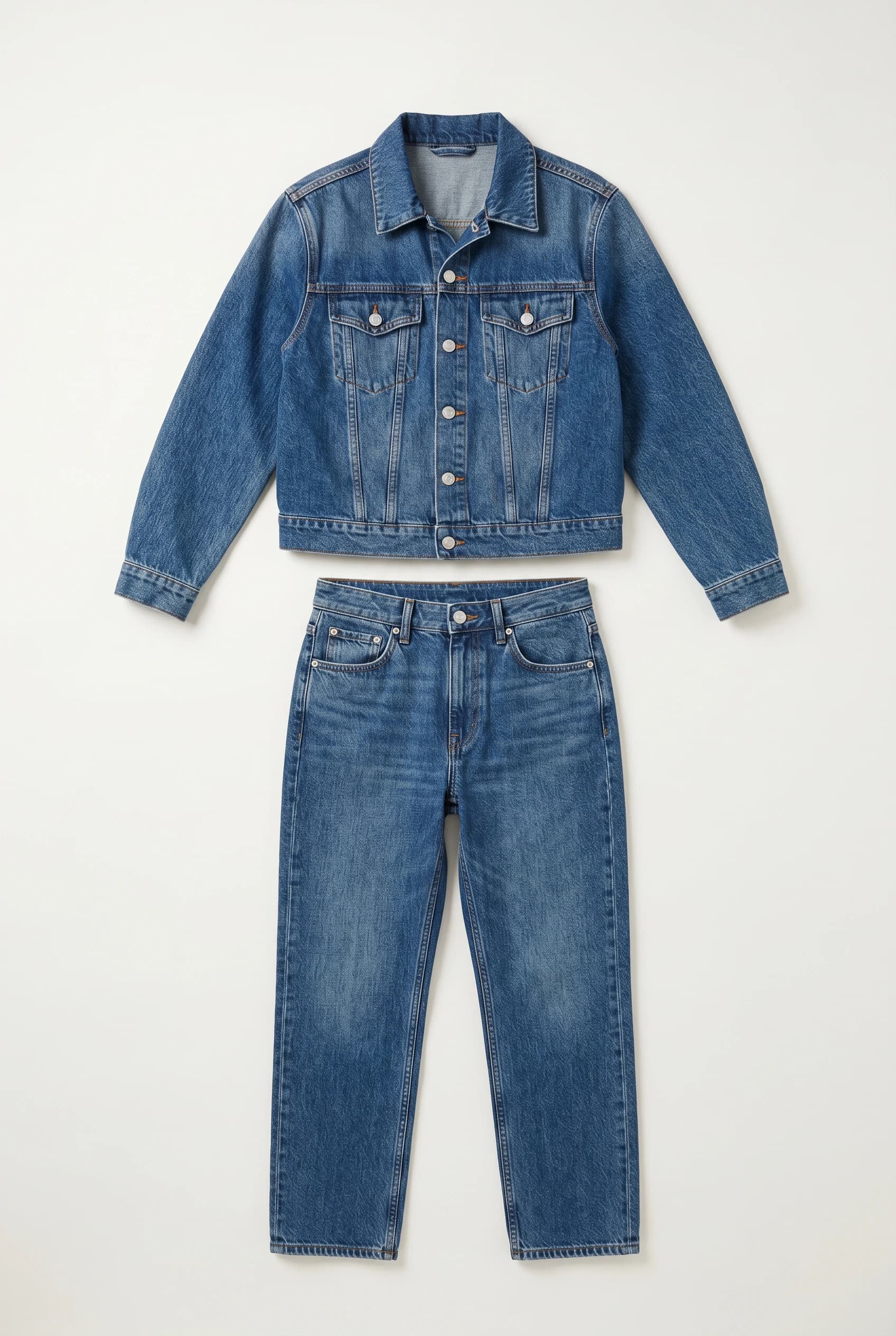
    Back view of plus-size barrel jeans showing waistband fit and curved leg shape

    What to keep on hand

    You don’t need much. A soft cloth measuring tape from any basic sewing tape on Amazon for under $5 covers the waist, hip, and inseam measurements you need to size confidently across brands. A notebook page or Notes app entry tracking the actual inseam landing point and waistband gap on each barrel pair you’ve tried gives you a reference set so you stop re-learning the same lesson with every order.

    The brand starting points worth knowing: Universal Standard’s barrel cut runs through size 40 with a true high rise and a contour waistband. Eloquii’s barrel runs through size 28 and has a slightly looser hip grade that works well on a pear shape. Old Navy’s plus barrel is the budget pick. Good American extended sizes do barrel with the heaviest fabric weight of the four and the silhouette holds the longest. For tailoring, a neighborhood specialist who works on denim is worth more than a cheaper general alterations shop. The hem alteration on this cut has to preserve the taper curve, which not every tailor will take on.

    Frequently asked questions

    Are barrel jeans only for tall women?

    No, but the proportion math changes by height. Under 5’4″, look for the petite or short inseam in barrel cuts so the taper still lands above your ankle bone rather than at mid-calf. Most plus-size brands now offer petite cuts in their barrel options, but you have to filter for them. If the brand doesn’t make a petite, plan on a $20 to $30 hem alteration as part of the purchase cost.

    Can I wear barrel jeans to work?

    In most workplaces, yes, if you style them correctly. A dark indigo or black barrel paired with a structured blazer, a tucked silk-blend top, and a pointed bootie reads as deliberate workwear. Skip light washes, distressing, or any styling that leans casual. The cut itself is no longer fashion-forward enough to read as risky in most offices, but the proportion still needs to be intentional rather than weekend-pulled-together.

    What’s the difference between a barrel jean and a balloon jean?

    A barrel tapers back in at the ankle. A balloon keeps the full volume to the hem. The barrel is the more wearable of the two for most plus-size bodies because the taper creates a defined ankle break that lets the shoe finish the silhouette. The balloon requires a much more specific styling vocabulary and reads more costumey if you get the top or shoe wrong. Start with barrel; advance to balloon if you genuinely love the shape.

    Will barrel jeans look dated in two years?

    The most extreme cuts (very high curve, very dramatic taper) will likely read 2024-2026 within a couple of seasons, the way ultra-skinny jeans now read 2014. A moderate barrel in a dark wash with a clean high-rise waistband will outlast the trend cycle because the silhouette is fundamentally a softened version of a wide-leg, which is a perennial. Buy the moderate version first and let the trendier cuts come and go.

    Final word

    Plus-size barrel jeans are not the trend that’s going to humiliate you. They’re a silhouette that responds well to specific styling rules and badly to defaults. Pick a true high rise, anchor the waist with a tucked or partial-tuck top, finish the leg with a pointed or low-profile shoe, and keep the outerwear above the hip. Get the hem tailored if it lands wrong. Skip the cuts where the curve collapses against your leg. The pair I reach for is the Universal Standard barrel in dark indigo, size 18, $108. The hem got a $25 alteration to hit just above my ankle bone. The link’s below.

  • The 120-Year History of Lane Bryant, the Brand That Built American Plus-Size Retail

    The 120-Year History of Lane Bryant, the Brand That Built American Plus-Size Retail

    Lane Bryant archival maternity dress and a modern Lane Bryant denim look side by side as a 120-year brand timeline

    In 1904, a nineteen-year-old Lithuanian immigrant named Lena Himmelstein took her single-needle sewing machine into a small Manhattan storefront on Fifth Avenue and started sewing tea gowns and lingerie for women in her neighborhood. She had been widowed at twenty-three, raising her infant son David, and the sewing machine had been a wedding gift from her late husband. One of her clients, pregnant and trying to navigate Edwardian society without admitting it, asked Lena to make her something she could leave the house in. Lena pleated an elastic waistband into a wool tea gown. That dress is the founding artifact of American plus-size retail, even though “plus-size” as a category did not exist yet and would not exist as a clean retail concept for another three decades.

    This is the long version of the Lane Bryant story. 121 years, four ownership eras, two near-death restructurings, and one quiet truth the brand has not fully resolved: Lane Bryant invented the plus-size department store and then spent the back half of its history figuring out what to do with the thing it invented after the rest of the industry caught up. Every other plus brand on the racks today is either standing on Lane Bryant’s shoulders or actively arguing with the playbook Lane Bryant wrote.

    The founder story you only half know

    Lena arrived at Ellis Island from Lithuania in 1895 at age sixteen with $1 in her pocket and a sister already in New York. She took a job as a seamstress earning $1 a week, then moved to a higher-paying corset house at $15 a week. In 1899 she married a jeweler named David Bryant, had a son, and was widowed within two years. She fell back on the sewing skills and opened the Fifth Avenue shop in 1904 on custom commissions for women in her immediate neighborhood.

    The maternity-dress innovation – a pleated elastic waistband let into a tea gown so it could expand with the pregnancy – was so unusual in 1904 that newspapers refused to advertise the garment for years. Maternity was something a woman was supposed to hide. Lena’s first newspaper ad did not run until 1911, when the New York Herald finally agreed. The ad sold out the entire stock the next day. By 1915 she had remarried, to engineer Albert Malsin, who built the merchandising side around her design instincts. The name itself is the detail most people know: a bank teller misspelled “Lena” as “Lane” on her business account paperwork and she kept the typo because it was already on the checks. Pragmatic.
    The pivot from maternity to plus-size happened in the late 1910s, and Albert Malsin saw it first. He noticed that many of Lane Bryant’s maternity customers were not actually pregnant – they were plus-size women who could not buy dresses anywhere else and were ordering the maternity line because it was the only ready-to-wear in the country cut for fuller figures. Albert commissioned a statistical study of 4,500 women’s measurements, one of the first applied anthropometric studies in American retail, and used the data to draft a standardized plus-size grading system. In 1923 the company launched the “Stout Women’s” line, the first ready-to-wear plus-size collection sold at retail in the United States. By 1923 Lane Bryant was doing roughly $5 million in annual sales.

    What the brand actually does, then and now

    Lane Bryant in its current form sells women’s apparel in US sizes 10 through 40, with the deepest assortment concentrated in sizes 14 through 28. The categories: denim, dress pants, tops, dresses, intimates through the Cacique sub-brand, activewear, outerwear, and a small accessory and shoe assortment. The Cacique intimates business was launched as an in-house Lane Bryant brand in 1996 and has been the most consistent profit engine inside the company for the last two decades. The brand operates around 540 stores in the US today, down from a peak of roughly 800 in the early 2010s, plus the lanebryant.com direct channel which has grown into the larger of the two.

    The price tier is mid-market. Signature denim runs roughly $70 to $90 at full price and frequently lands in the $40s on promotion. Dress pants are in the $60 to $90 range. The Cacique full-coverage bras start around $42 and run to about $65, with sister sizes through 40H and beyond in select fits. The bra-fitting program has been one of the brand’s quiet competitive advantages for decades – the in-store associates are genuinely trained on the bra fits, and the assortment includes back sizes (40, 42, 44, 46) and cup sizes (G, H, I) that most mainstream lingerie brands still do not stock.
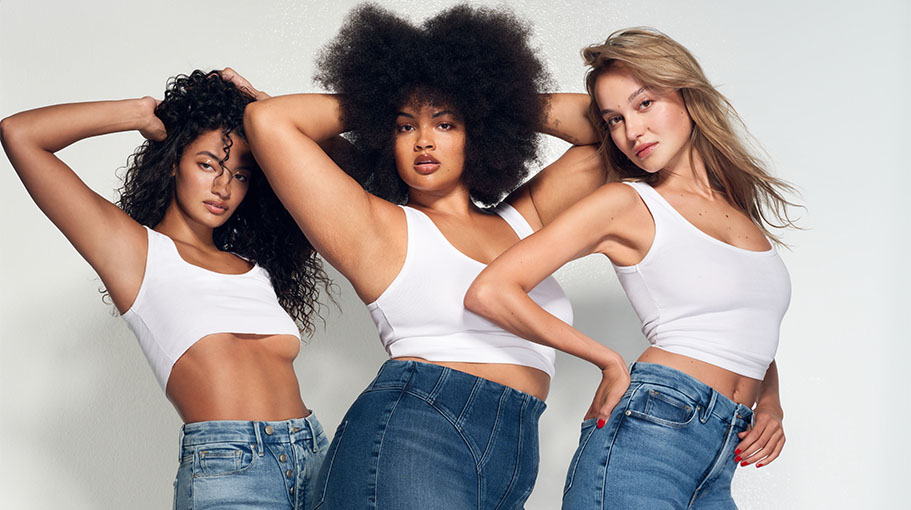
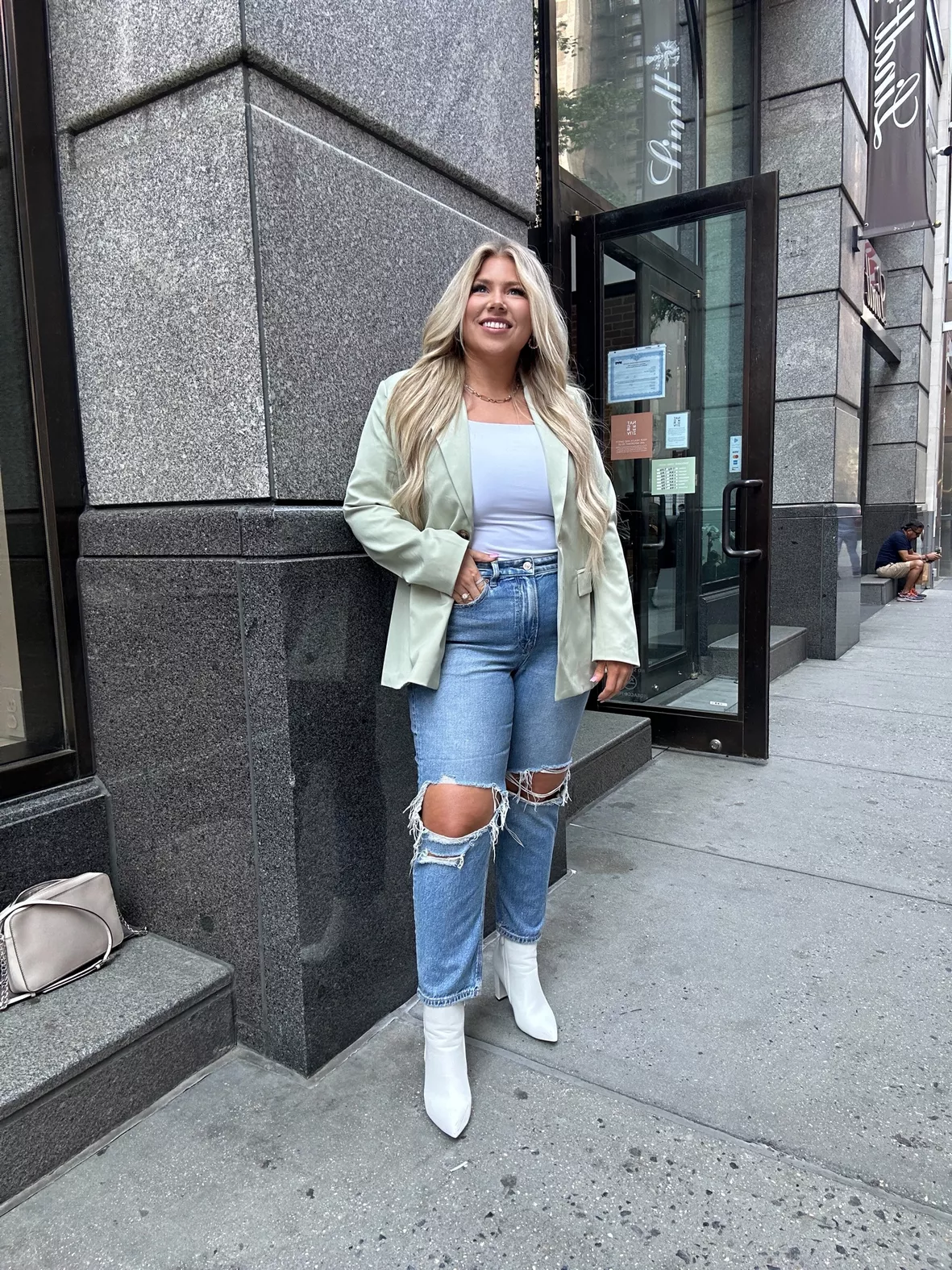
    Distribution is direct – the brand’s own stores plus lanebryant.com. Lane Bryant does not wholesale into department stores in any meaningful way, which distinguishes it from newer plus-size labels that route through Nordstrom or Macy’s. The trade-off: it controls the shopping experience end to end but bears the full cost of the physical footprint, which is the variable that has driven most of its restructuring drama over the last fifteen years.

    A modern Lane Bryant store interior showing the denim assortment and Cacique bra wall

    Where the brand gets it right

    Start with the bras. Cacique remains the deepest plus-size bra assortment under one roof in American retail. The brand fits up through a 44H in several core styles and stocks the bandeaus, the racerback convertibles, and the no-wire balconettes that women in the 38-46 band range cannot easily find at Victoria’s Secret or ThirdLove. The fitting service is free, the associates are trained, and the return policy is generous. It is the part of the business hardest for any newer entrant to replicate, because the back-and-cup-size assortment requires an inventory commitment DTC brands struggle to fund.

    The denim fit grading is the second strength. The block has been refined over decades and the result is one of the few mid-market plus-size denims that grades proportionally through size 28 without losing the waist-to-hip ratio. The Skinny, Boyfriend, and Wide Leg blocks all sit on a real waistband rather than the rolled-elastic compromise a lot of brands at this price point default to. Not as flattering as Universal Standard‘s higher-priced denim, but at half the price it is doing real work.

    The third strength is store accessibility. 540 physical locations means a plus-size woman in a mid-sized American city can walk into a store, try on jeans in size 22, try a bra in 42DD, and walk out with both. Eloquii is largely DTC. Universal Standard has a small store footprint. Torrid has stores but at a different price point and aesthetic. For the woman who wants to physically try things on in her size, Lane Bryant is still the largest game in the country.

    The fourth: the brand has stayed honest about who it dresses. Lane Bryant’s marketing for the past decade has used plus-size models from the actual size range it serves. The “I’m No Angel” campaign in 2015, the Plus is Equal industry push in 2016, the ongoing campaign work with models like Ashley Graham and Precious Lee – all of it has kept the brand visually anchored to its customer in a way the major department stores have never managed.

    Where there is room

    The product design has been cautious. For most of the 2010s, the assortment leaned on workwear staples, classic dresses, and bootcut denim – safe pieces for a customer the brand assumed wanted to blend in. The result is that Lane Bryant ceded the editorial, trend-forward plus-size space to Eloquii and the higher-fashion designer capsules. The brand is now playing catch-up on the silhouettes that have defined plus-size fashion over the past five years: the wide-leg trouser, the architectural blazer, the corseted bodice dress, the slip skirt. The 2024 and 2025 collections have pushed into this territory, but the brand is still working against a reputation for being the place your aunt bought her dress pants.

    The store experience varies wildly by location. Some stores are well-merchandised, well-staffed, properly lit. Others, more common in secondary mall locations, feel underfunded, with stale visual merchandising and limited size depth on the floor. The brand has been closing the weakest locations for several years, but a shopper’s first impression still depends heavily on which mall she walks into.

    Pricing on certain core categories has crept higher than it should be for the quality tier. A non-denim dress pant at $90 sits in the same range as Universal Standard‘s wide-leg trouser, which is cut and constructed at a noticeably higher quality level. The brand has not always justified the mid-market pricing with mid-market product, and the gap shows up most clearly in the woven tops and lighter-weight knits.

    The ownership eras that shaped what the brand is now

    The 121-year ownership chart is essential context. Lena Himmelstein Bryant Malsin and her family ran the company until 1982, when the Malsins sold Lane Bryant to The Limited, Inc., the Leslie Wexner conglomerate that also owned Victoria’s Secret and Express at various points. The Limited held Lane Bryant for nineteen years and grew the store footprint substantially but is widely viewed as having under-invested in the plus-size product itself, treating it as a steady cash generator rather than a brand to develop.

    In 2001 The Limited sold Lane Bryant to Charming Shoppes, the Pennsylvania-based plus-size conglomerate that also owned Fashion Bug and Catherines. The Charming Shoppes era built Cacique into a real franchise and pushed the store count to its peak. It is also the era that turned Lane Bryant into a meaningful piece of the plus-size retail establishment.

    In 2012 Ascena Retail Group, the publicly traded specialty conglomerate that already owned Ann Taylor, Loft, and Justice, acquired Charming Shoppes for about $890 million and folded Lane Bryant into the portfolio. The Ascena era is the troubled stretch most plus-size shoppers remember. Ascena over-leveraged itself across too many brands, mismanaged the merchandising disciplines that had made Charming effective, and entered bankruptcy in 2020.

    Lane Bryant came out of the Ascena bankruptcy in late 2020 when private equity firm Sycamore Partners acquired it along with Catherines and a couple of other Ascena assets. In 2024 Sycamore restructured the business again, closing additional underperforming stores and re-investing in digital. The brand operates today as part of Premium Apparel LLC, the Sycamore holding entity that also owns Loft and Ann Taylor. The ownership history explains why the brand has had stretches of brilliance and stretches of drift – it has been pulled between strategies by ownership groups with different priorities for over four decades.

    A flat-lay of Lane Bryant signature pieces: skinny denim, Cacique no-wire bra, and wide-leg trouser

    What to buy from them

    If you are walking into Lane Bryant for the first time or coming back after a few years away, the assortment to actually engage with is narrower than the catalog suggests. Five categories where the brand is still doing its best work:

    The Cacique No-Wire Bra at around $52 is the bra I recommend to anyone in a 38-46 band size who has given up on wire bras after years of underwire poking. The fit through the 42 and 44 bands is the best I have tried in this category, and the back closure has three hook columns rather than the two most brands stop at. Worth the trip into a physical store for a fitting.

    The Signature Fit Skinny Jean at around $80 is the denim that earns its place. The waistband is real, the rise is high enough to actually stay up, and the grading through 18, 20, 22 is proportional rather than tapered-to-cylinder. I size down a half-size in this style because the waistband stretches over the first three wears.

    The Wide Leg Trouser at around $90 is the dress pant the brand has finally gotten right after years of bootcut-only assortments. The drape is closer to a proper trouser than to a stretch pant, the back darts grade through size 28, and the inseam options include a true Petite at 28 inches. Order one length up from your usual and have it hemmed if you wear flats.

    The Cacique Cotton Fit Panty 5-Pack at around $40 is the underwear most plus-size women I know rotate through. The leg openings sit flat without rolling and the cotton-modal blend washes consistently through hundreds of cycles. Buy three packs, throw out the rest of your drawer.

    The Cacique T-Shirt Bra Balconette at around $58 is the wired option for the days when you want lift and structure under a fitted top. The cup grading through the H range is the part most other brands skip, and Cacique’s fit through 40H specifically is one of the few options at this price point.

    Why this 120-year history actually matters

    It is tempting to read this story as nostalgic – 121 years, the immigrant founder, the family origin. The more useful read is that Lane Bryant is the case study for what happens to a category-defining brand when the rest of the industry catches up. The Malsins built the plus-size department store in 1923 because no one else would. For the next sixty years, Lane Bryant had the category to itself. From the 1980s onward the rest of the industry started entering – first the mass chains, then Torrid and Eloquii, then the DTC entrants like Universal Standard, then the designer capsules.

    The answer the brand keeps arriving at – bras, denim, store accessibility, real plus-size casting – is defensible. None of those four things is easy to replicate. The bra assortment is an inventory commitment most brands cannot fund. The denim grading is decades of fit-block work. The store footprint is a real-estate position newer brands have not built. The casting is editorial discipline earned by serving this customer for a century. Where the brand has lost ground is trend-forward product design and the editorial energy newer labels have brought to plus fashion. That is fixable. Whether the Sycamore-era turnaround sticks is the question worth watching over the next three to five years.

    I bought the Wide Leg Trouser in a size 18 in the longer inseam at $90 from lanebryant.com last month. First Lane Bryant pant I have owned in roughly six years. Not the equal of my Universal Standard wide-leg, but closer than I expected, and at this price tier that is the more relevant comparison. The link is below.