Author: Tanya Fields

  • Every Brand That Cut Plus Sizes Since 2020: The Receipts, With Dates

    Every Brand That Cut Plus Sizes Since 2020: The Receipts, With Dates

    Every brand in this record threw a party when it added plus sizes. A press release, a campaign with a genuinely diverse model lineup, a founder quote about how style has no size. Not one of them threw a party on the way out. The retreats happened in Instagram comment replies, in quietly edited size charts, in racks that migrated to the back wall of the store and then were not there at all. Reddit noticed every single time. The business press noticed some of the time. Nobody kept the list.

    So this is the list. Every documented plus-size cut since 2020, with dates, because the dates are the story. I spent six years inside a fashion publication watching how these launches get engineered, and I can tell you the press release for the expansion goes through four rounds of approvals. The retreat goes through legal and nobody else. If the brands won’t write the second press release, fine. I’ll write it for them, with receipts.

    Three honesty rules before the table, because a tracker is only worth keeping if you can trust every row. Confirmed cut means the brand said it or the business press documented it. Measured shrinkage means retail data or a live check of the brand’s own site shows the range contracting, announcement or not. Community-reported means the running record lives in Reddit threads and TikToks and has not been confirmed anywhere I’d cite, and I say so instead of rounding up. This page is a living record. When the next brand slides out the side door, and there will be a next one, it gets a row with a date next to it.

    The Master List: Every Documented Cut, Dated

    Sparse plus size clothing rack with clearance signage in a department store

    Brand What happened When Source type Status now (July 2026)
    Loft Ended extended sizing (had launched Feb 2018); announced only in an Instagram comment citing “business challenges”; size chart returned to 00-18 by fall March 2021 (effective fall 2021) Confirmed cut (brand statement + press) “Plus Shop All” page still live on loft.com with zero products (live check, July 2026)
    Old Navy BODEQUALITY launched Aug 20, 2021 (sizes 0-30, every style, every store, price parity); Gap Inc scaled it back in stores under a year later, keeping the range online May 2022 Confirmed cut (Gap Inc statements, Glossy, Fast Company) Plus assortment still shrinking: down 12% year over year (EDITED data via CNN, Apr 2026)
    Target No announcement ever; extended sizes on Target.com fell 37% in the year to March 2026 (30% of it in the final six months); individual stores removed plus sections entirely, one on camera Feb 2025 Measured Mar 2025 to Mar 2026 Measured shrinkage (EDITED retail data via CNN; viral store video) Ava & Viv alive online; in-store plus space varies by market; company line: “adjusts offerings to meet consumer demand”
    For Love & Lemons Launched extended sizing Aug 2019 (six styles, 1X-2X); range quietly disappeared with no statement Launch Aug 2019; gone by 2026 (no dated announcement exists) Measured shrinkage (dated launch + live site check) Brand’s own “curve styles” collection page returns zero products (live check, July 2026)
    Eloquii Walmart bought the plus-size leader in 2018 (reported ~$100M), then sold it to FullBeauty Brands for an undisclosed sum April 2023 Confirmed (CNBC, Fox Business) Still operating under FullBeauty; co-founder Julie Carnevale retained
    City Chic / Evans City Chic Collective sold the century-old UK plus brand Evans to AK Retail for GBP 8M (paid GBP 23.1M in 2020); Navabi ceased trading August 3, 2023 Confirmed (ASX announcement, trade press) Evans continues under AK Retail (UK); City Chic refocused on Australia, NZ, US
    City Chic / Avenue City Chic sold US plus brand Avenue to FullBeauty for USD 12M (paid AUD 24.4M in 2019) June 2024 (completed July 2024) Confirmed (company announcement, trade press) Avenue continues under FullBeauty
    Forever 21 Plus-size Instagram account deactivated summer 2024 (spotted by one of its own plus models); US operator filed Chapter 11 on March 17, 2025 and wound down all 354 remaining US stores Summer 2024; March 2025 Confirmed (CNN, Axios, NPR); IG deactivation observed US stores gone; brand name licensed on, online presence continues under new arrangements
    Torrid Announced up to 180 store closures, roughly 30% of its fleet, in a digital-first pivot; closed 151 locations by fiscal year end, ~30 more through mid-2026 June 2025 Confirmed (SEC filings, Retail Dive, Fashion Dive) Size range 10-30 unchanged; this is a store-count cut, not a size cut – filed here so the record is complete
    Athleta Joined extended sizing in 2019; shoppers report thinning options since Launch 2019; shrinkage reported 2025 Community-reported (launch is press-sourced; thinning is shopper reports) Extended sizes still sold online; depth disputed by shoppers
    Dolls Kill Customer petition in 2020 after best-sellers were discontinued in larger sizes; no policy statement ever made 2020 onward Community-reported (petition + social record only) Plus category still live on dollskill.com; range depth is the complaint, not existence
    Anthropologie (APlus) Launched March 15, 2019 (~120 styles, 16W-26W); industry reporting groups it with the rolled-back class of 2019 Launch March 2019; on watch Not filed as a cut – line verified live APlus still online at 16W-26W; watching assortment depth

    One brand you might expect here is missing on purpose. I went looking for evidence that Nordstrom cut its plus buying and could not source it to anything current, so it stays off the list. That’s the deal with this tracker: if I can’t date it and source it, it doesn’t get a row.

    Champagne on the Way In, a Side Door on the Way Out

    Fashion brand launch event with step and repeat backdrop and empty chairs

    Read the table top to bottom and one shape repeats. The launches were loud and the exits were procedural. Loft announced its expansion with lookbooks and influencer seeding; it announced the end in a comment reply, the retail equivalent of breaking up by text. Old Navy bought TV airtime for its launch; the retreat was a line item in an investor update. Target never even bothered with the second half. The rack just got smaller until a shopper filmed it.

    The industry-wide picture matches the anecdotes. Vogue Business, which audits runway size representation every season, counted plus-size looks at under half a percent of recent runways, roughly a third of what it measured just two seasons earlier. The retreat is not a rumor plus-size shoppers invented. It’s measurable everywhere anyone bothers to measure.

    Loft: An Era That Ended in an Instagram Comment
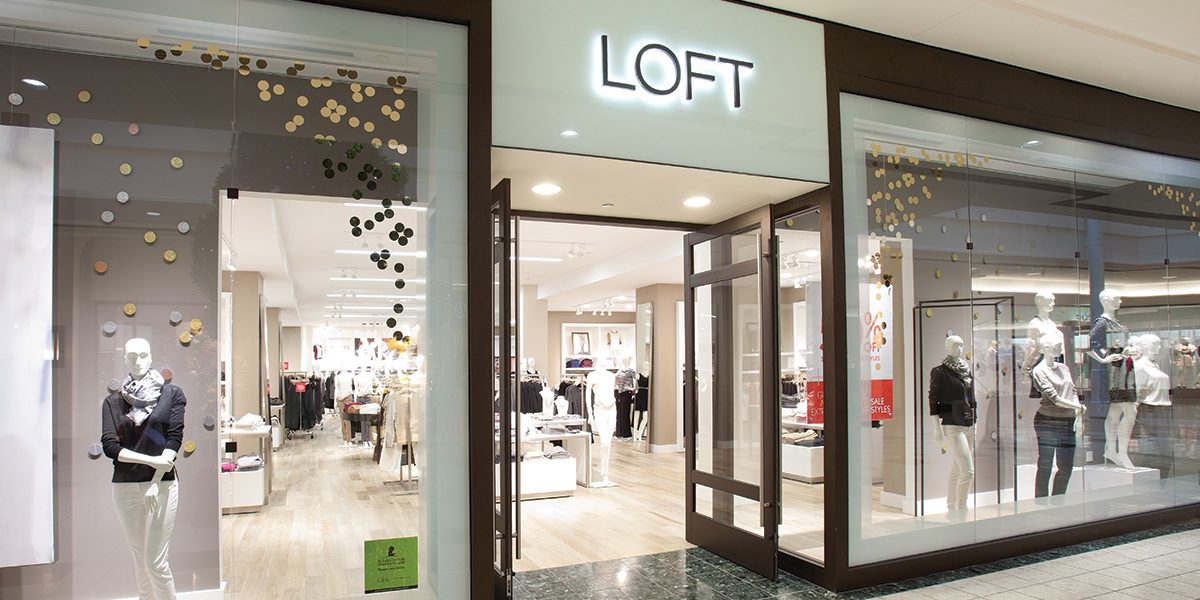
    Loft store front

    Loft launched plus sizes in February 2018 to real excitement, because Loft is exactly the kind of accessible workwear brand the plus market had been begging for. Barely three years later, shoppers noticed the extended sizes dwindling online and asked what was going on. The answer arrived not in a press release but in the brand’s Instagram comments: “Due to continued business challenges from the last year, we have had to make some very difficult decisions, which has impacted our go-forward sizing.”

    That was it. That was the whole announcement. By fall the size chart stopped at an 18. CeCe Olisa, co-founder of theCURVYcon, called it “an unexpected rejection from a new friend,” which is the politest possible way to describe getting dumped in a comments section. Sarah Chiwaya, who started the #PlusSizePlease movement, pointed out the sharper problem: Loft never gave plus a real chance, stocking it in only a handful of stores and then citing weak performance from a range most customers never physically saw.

    Here’s the detail that made me put my coffee down while building this record. Loft.com still has a “Plus Shop All” page. I pulled it the first week of July 2026. The marketing copy is fully intact, including the line “Smile, we’ve got your size.” The number of products on that page is zero. Somebody decommissioned the inventory and nobody ever bothered to take down the sign.

    Old Navy: The Loudest Launch, the Fastest Walk-Back
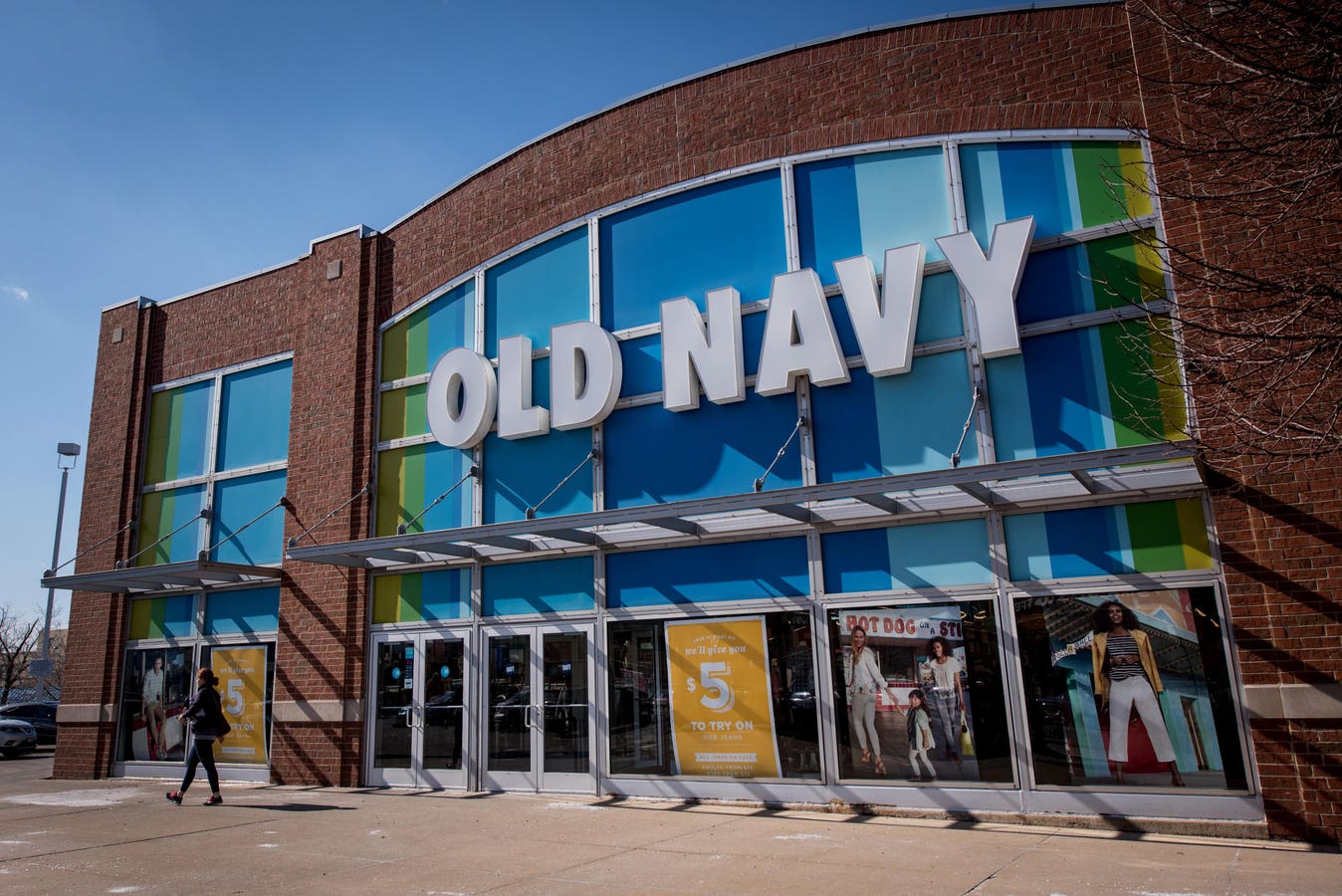
    Old Navy store front
    Old Navy store interior with integrated size range on display racks

    I want to be fair to BODEQUALITY, because it was the biggest size-integration swing any mass retailer has ever taken and the design of it was genuinely right. Every women’s style in every size, merchandised together, at the same price, in every store, with mannequins in a range of bodies on the floor and Aidy Bryant fronting the campaign. Old Navy body-scanned hundreds of real women to rebuild its fit blocks instead of grading up a sample size and hoping. This was not a capsule collection with a hashtag. It was the whole store.

    It lasted under a year on the floor. In May 2022, Gap Inc told investors it had overplanned larger sizes, and the program was scaled back in stores while the full range stayed online. The CEO’s language was that they launched “too broadly and too quickly.” Translation from earnings-call to English: they stocked a decade’s worth of trust-building inventory into quarter one and panicked when a customer base they had ignored for years didn’t materialize in ninety days.

    The saddest part is the aftermath, because it validates every cynic. Retail data tracked Old Navy’s plus assortment still shrinking year over year as of spring 2026. The boldest experiment in the category didn’t just end. It’s still ending, quietly, four years later.

    Target: No Statement, Just a Measured Disappearance

    Target store front

    Target belongs in this record precisely because it never announced anything, which makes it the purest example of the retreat-in-silence pattern. Everything we know comes from outside the building. In February 2025, a store associate confirmed on camera, in a video that went massively viral, that her location had discontinued plus sizes altogether. Threads and Reddit filled with shoppers reporting the same shrinkage at their own stores, and the replies never settled anything because no two stores matched.

    Then the data arrived and settled it. Retail intelligence firm EDITED, in reporting CNN published in April 2026, measured extended sizes on Target’s site falling by more than a third in a single year, with the decline accelerating in the back half. Target’s entire public response is that it “adjusts offerings to meet consumer demand.” I did a full audit of what’s actually left of Ava & Viv, Target’s house plus brand, and the honest answer is the brand is alive online while the in-store experience dies market by market. No press release will ever tell you which your store is. The rack will.

    The Quiet Ones: For Love & Lemons, Dolls Kill, Athleta

    Laptop showing an online clothing collection page with no products found message

    For Love & Lemons is the cleanest small-brand case study I found, because both ends of it are verifiable. The launch is dated: extended sizing arrived in August 2019, a small handful of styles in the first two extended sizes, covered warmly by the style press. The end is checkable: the brand’s own curve collection page, still live on its site, returns no products at all as of my pull in July 2026. Between those two facts there is no statement, no interview, nothing. The lingerie brand that got a wave of “my plus-size heart is bursting” coverage on the way in never said a word on the way out. TikTok comments asking them to “produce plus sizes again” are the only public record.

    Dolls Kill I’m filing exactly as strongly as the evidence allows, which is: community-reported. There was a customer petition back in 2020 after best-selling pieces were discontinued in larger sizes, the brand made no policy change and no statement, and the complaint that persists across social media is depth of range, not existence, since a plus category is still live on their site today. If harder evidence surfaces, this entry gets upgraded and dated. That’s how a tracker should work.

    Athleta sits in the same tier. The 2019 launch of extended sizing is press-sourced. The thinning since is shopper testimony, including a running subreddit record, and I won’t dress testimony up as data. But when the same complaint shows up independently across a brand’s most loyal customers for over a year, it has earned a row with an honest label.

    And Anthropologie’s APlus, for the record, is not filed as a cut, because I checked and the line is still live in its original size range. Industry reporting groups it with the rolled-back class of 2019, so it’s on watch here. On watch is not guilty. The whole point of keeping receipts is knowing the difference.

    The Ownership Hot Potato: Eloquii, Avenue, Evans
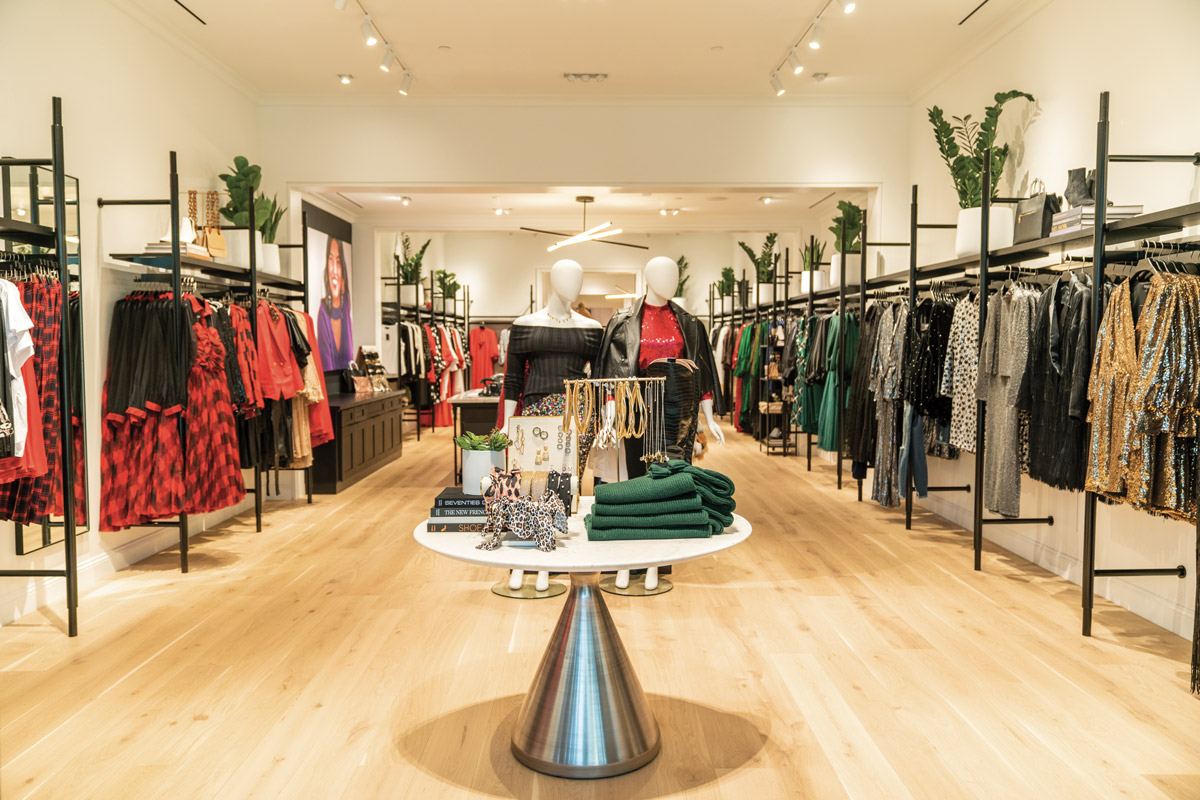
    Eloquii plus size clothing display

    Not every retreat looks like a shrinking rack. Some look like a term sheet. Walmart bought Eloquii in 2018 for a reported nine figures, back when every mass retailer wanted a piece of the plus market, and sold it in April 2023 for a price nobody would say out loud, which in M&A language tells you everything. Eloquii was the third direct-to-consumer brand Walmart offloaded that year. The strategy that acquired it had left the building.

    The Australian group City Chic Collective spent the same stretch unwinding its own empire. It sold Evans, the century-old British plus institution, in 2023 for roughly a third of what it had paid three years earlier, and shut down its Navabi operation along the way. Avenue, its American brand, went in 2024, also at a loss. Every one of those transactions was a generalist or a struggling conglomerate deciding plus wasn’t worth the balance-sheet space.

    Here’s the twist worth sitting with: the buyer, twice, was FullBeauty Brands, a company that does nothing but plus. Eloquii, Avenue, Catherines, Swimsuits For All, all under one roof now. You can read that as the market abandoning plus-size fashion, or you can read it as plus-size fashion consolidating into the hands of operators who actually want it. Both readings are true at once, and neither one required a press release.

    Torrid and Forever 21: Two Different Ways to Close a Door
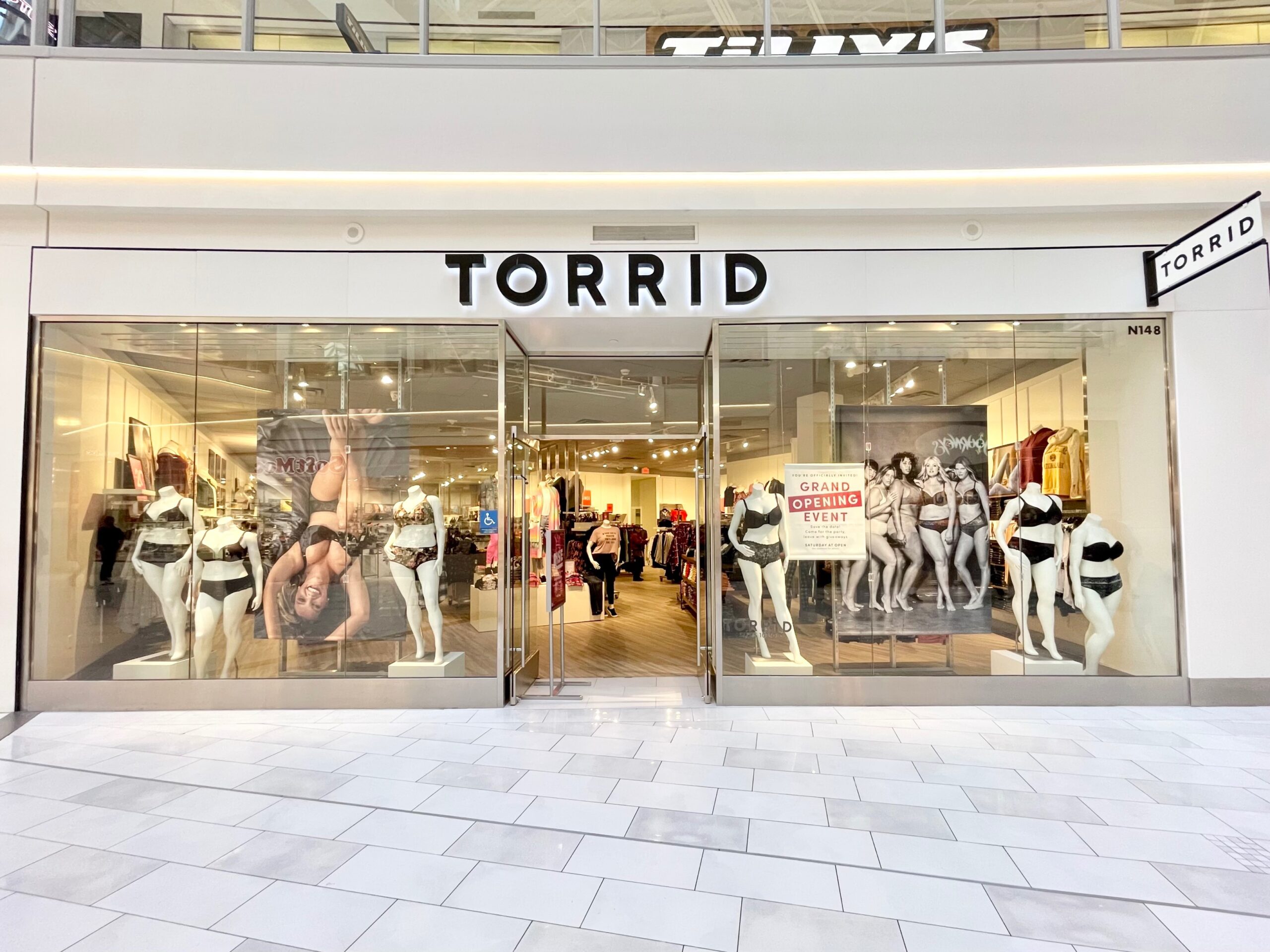
    Torrid store front at a mall

    Torrid is in the table because leaving it out would make this record look cooked, but it needs a precise label. In June 2025 the company announced it would close as many as a third of its stores, and by the end of its fiscal year it had shuttered more than a hundred and fifty locations, with a final batch closing through the following summer. That is a real contraction and it genuinely hurt shoppers in the towns where the mall Torrid was the only place to try on clothes in their size. But it is a lease story, not a size story. The size range survived intact and the business went digital-first. File it accurately or don’t file it at all.

    Forever 21 is the opposite case: total collapse that took the plus line down with everything else. The tell came early, though, and it’s the most on-pattern detail in this entire record. The brand’s dedicated plus-size Instagram account went dark in the summer of 2024, noticed not by the press but by a model who had worked those campaigns herself. The bankruptcy filing came the following March, and every remaining US store wound down. The plus account went quiet before the company did. Remember that sequencing. It’s the canary.

    Why Inclusivity Was First on the Chopping Block

    Line up the dates and the logic exposes itself. The launches cluster in the boom years of the body positivity movement, when brands were terrified of being the last one without a size-inclusive press release. The retreats begin the moment the pandemic’s supply chain chaos and the inventory glut that followed gave finance departments cover to cut anything labeled “test.” Plus lines were the newest lines, so they had the shortest sales history, so they were the easiest rows to delete in a spreadsheet. Nobody had to say the quiet part.

    The excuses come in three flavors and the experts have dismantled each one. “It didn’t sell” usually meant it wasn’t marketed: fashion consultant Megan Ixim, who is often the only plus-size person in the rooms where these calls get made, put it plainly: “Brands launched plus-size lines without investing in fit or marketing. Then they said, ‘It didn’t sell.’” “It costs more to make” ignores that you grade costs across the whole size run, the same way a shoe brand doesn’t charge by foot length. And the newest excuse, the GLP-1 wave, assumes a demographic is simply going to vanish. Comedian and activist Lauren Hope Krass has the cleanest rebuttal on record: “You don’t fix a bias by removing a demographic of people.”

    Because the demand never left. The majority of American women wear a size 14 or above, and the average American waistline corresponds to roughly a size 16. The customer these brands walked away from is not a niche. She is the statistical center of the market. That’s what makes this record read less like business strategy and more like an industry-wide flinch.

    The Brands Still Showing Up
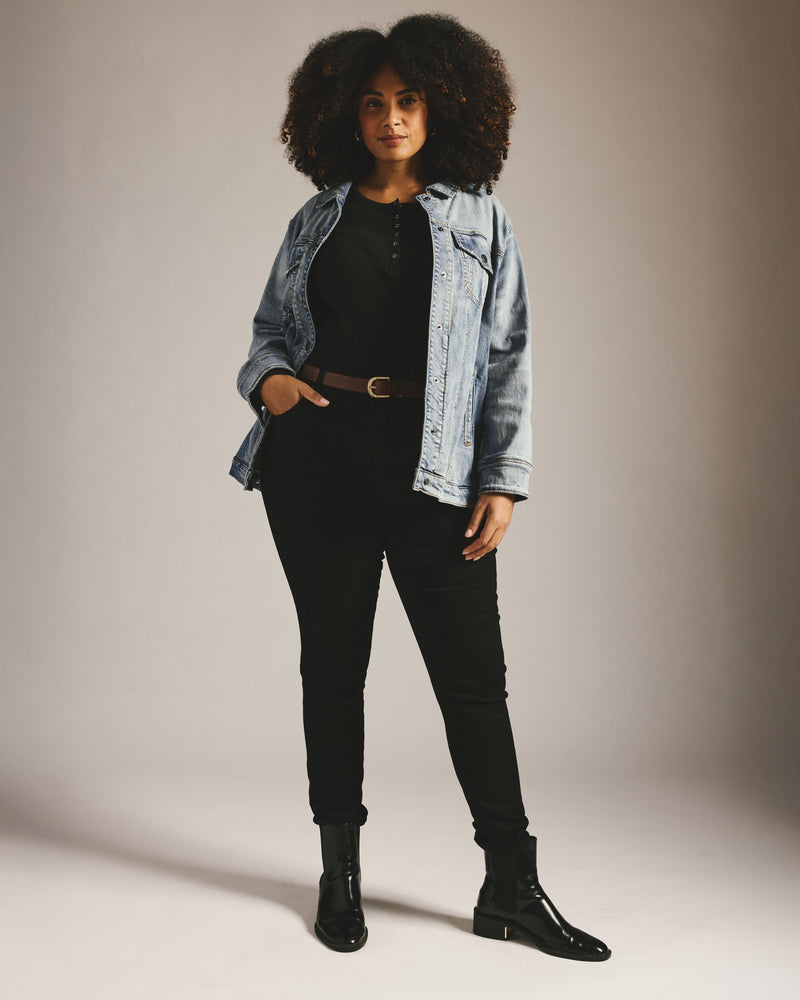
    Universal Standard plus size clothing
    Plus size woman browsing a fully stocked clothing boutique rack

    A tracker that only keeps receipts on the guilty is just a grudge. These are the brands whose receipts run the other direction, dated the same way, and if you’re deciding where your money goes after reading all of the above, this is my shortlist.

    Brand The commitment, dated Status now
    Universal Standard Took its entire brand to sizes 00-40 in 2019 and never retreated Expanding: entered 20 Nordstrom stores in 2025 plus wholesale with Macy’s, Anthropologie, Nuuly
    Torrid (the clothing line) Sizes 10-30 through every phase of the store closures Digital-first; size run untouched
    Lane Bryant Extended Cacique bras to 50 bands and K cups; expanded sleep and lounge sizing; pushing into swim Expanding: entering Canada through 320 Walmart stores
    Ulla Popken Plus-size specialist by design, never a side project; US operation since 1993 Part of a group running roughly 600 stores worldwide
    Superfit Hero Went the opposite direction from everyone: dropped its smaller sizes entirely in November 2020 to serve L-7X only Still the only activewear brand built exclusively for plus athletes

    Universal Standard is the one I recommend most often and the one whose showroom I’ve actually stood in, and their whole thesis, that a size 36 deserves the same shopping experience as a size 6, has survived every industry mood swing since they said it. Torrid’s denim wall is still the widest fit range in mall-brand America even with fewer malls involved. Lane Bryant’s Cacique bras in the extended bands are solving a problem almost nobody else will touch. And on the specialist end, Ulla Popken has been quietly doing this since before inclusivity was a marketing word, while Superfit Hero’s leggings come from the only brand in this entire article that cut its straight sizes to serve us better. Reward the ones who stayed. It’s the only vote that gets counted.

    How to Spot the Next Retreat Before the Brand Admits It

    Every confirmed cut in this record telegraphed itself the same way, so consider this the early-warning checklist. The plus range goes online-only “based on customer demand,” which is how Old Navy’s floor retreat was framed. New drops start skipping the extended run while core sizes get everything, the For Love & Lemons pattern. The brand’s dedicated plus social account goes quiet, the Forever 21 canary. The size chart gets edited without a changelog, Loft’s move. And the clearance section starts overrepresenting extended sizes, which is what liquidating a size range looks like in real time. Two or more of those at your favorite brand? Screenshot the size chart. Apparently they’re historical documents now.

    The Empty “Plus Shop All” Page Says It All

    If this whole record had to shrink to a single image, it’s that Loft page: the banner still promising “Smile, we’ve got your size” above a shelf holding nothing. That’s the plus-size shopper’s experience of the last five years in one screenshot. The promise stayed up. The clothes left.

    This page doesn’t leave. New cuts get added with dates and sources as they’re confirmed, upgrades and corrections included, because the entire problem this article exists to fix is that nobody was writing the retreats down. The brands are betting on our short memory. Bookmark this and prove them wrong.
  • Wedding Guest Dresses That Actually Come in a Size 26 and Up: Real Options by Dress Code

    Wedding Guest Dresses That Actually Come in a Size 26 and Up: Real Options by Dress Code

    I’ve read every major magazine’s version of the best plus size wedding guest dresses list, and I can tell you the exact paragraph where each one gives up. It’s never the writing. It’s the size run. The headline says plus, the model is beautiful, and then you tap through to the retailer and the selector stops at 3X, which most American brands cut as a 24. As if invitations stop arriving above that. As if nobody’s sister gets married, nobody’s college roommate throws a black tie reception, nobody above a certain measurement ever needs to stand in a garden holding a champagne flute looking better than the groom’s ex.

    The Knot’s roundup is the tidiest example of the pattern, so let’s name it. Of the picks with a published size range, more than half stop at a 24 or below, and several of the dresses on a plus size list are straight-size lines wearing a plus headline. PureWow plays the same game and at least has the decency to admit its Reformation picks cap at 3X. I used to sit in the meetings where these lists get assembled, and I can tell you exactly how it happens: the affiliate feed spits out whatever the mainstream retailers stock, nobody checks the selector, and the reader the list claimed to serve finds out at checkout. That’s not a service. That’s a slideshow.

    So this is the list those lists refuse to be. Every dress below was verified on the actual product page, at the size selector level, at the time I researched this. If a dress stopped where the magazines stop, it got cut, no matter how good the pleating was. I’ll also be straight with you about my own body, because that’s the house style here: I’m a 16 on top and an 18 on the bottom, so I haven’t worn these sizes. What I did instead is the thing the magazines won’t: I pulled the variant data, read the size charts against the brands’ own measurement tables, and threw out everything that flunked. One warning before we shop: extended sizes sell from the top of the chart down. If you see your size, move.

    First, the Decoder Ring: What Each Brand’s Ceiling Actually Means

    First, the Decoder Ring: What Each Brand's Ceiling Actually Means
    Torrid special occasion gown in extended plus sizes

    Extended sizing is a mess of letter systems that don’t agree with each other, and half the frustration in those Reddit threads is women comparing a 4X from one brand to a 4X from another as if they’re the same garment. They’re not. Here’s the translation table for every brand that made this list, plus the one that famously didn’t.

    Brand Their sizing language Verified ceiling (US numeric) Notes
    Kiyonna 0X through 5X 30/32 (5X) Essentially the whole dress line, not select styles
    Torrid Sizes 00 to 6 (also shown as 10 to 30) 30 (size 6) Special occasion line consistently cut to 30
    Lane Bryant Numeric 12-28 plus doubled 10/12 to 38/40 38/40 on knits Woven occasion pieces mostly stop at 26/28
    Ulla Popken US US numeric, all sizes same price 32/34 in occasionwear Brand goes higher in basics than in gowns
    Eloquii Numeric 14-28 28 core, 32 on select styles Check each selector; the 30/32 extension is item by item
    Yours Clothing US US numeric (their US size = UK size minus 4) 28-32 practical in occasionwear Some sub-lines quietly stop at 20; verify per dress
    Ever-Pretty US numeric 26 in practice Banner says 16-30; sampled wedding styles all capped at 26
    POSESHE (Amazon) Letter plus sizes to 6X Roughly a 30 (6X) Deepest Amazon range found
    City Chic XS to XXL 24 (XXL). Excluded. Reputation says inclusive; the chart says 12-24, full stop

    Yes, City Chic is out. I know the brand reads as a plus destination, and its dresses are genuinely pretty, but the size chart is the size chart: XXL converts to a flat 24W. A brand whose entire identity is curves drawing its line exactly where this article begins is the whole problem in miniature, and I’m not padding a list with a dress you can’t zip.

    Black Tie: Floor Length, Lined, and Cut Past a 30

    Black Tie: Floor Length, Lined, and Cut Past a 30
    Ulla Popken floor length evening gown in plus size

    Formal is where the drought gets worst, because gowns are expensive to grade up and most brands don’t bother. Three houses did bother. Start with Ulla Popken’s Draped Silhouette Evening Gown, $179.95 in a mossy green or a proper red. The body is a poly blend with elastane so it moves like jersey rather than fighting you like taffeta, it’s fully lined, and the draped sash with jeweled clasps at the shoulder and waist does the work a stylist would charge you for. Short bell sleeves mean no shrug required. Ulla Popken’s occasion category filters run to a US 32/34, the deepest formal bench on this list, and every size costs the same, which should be unremarkable and somehow isn’t.

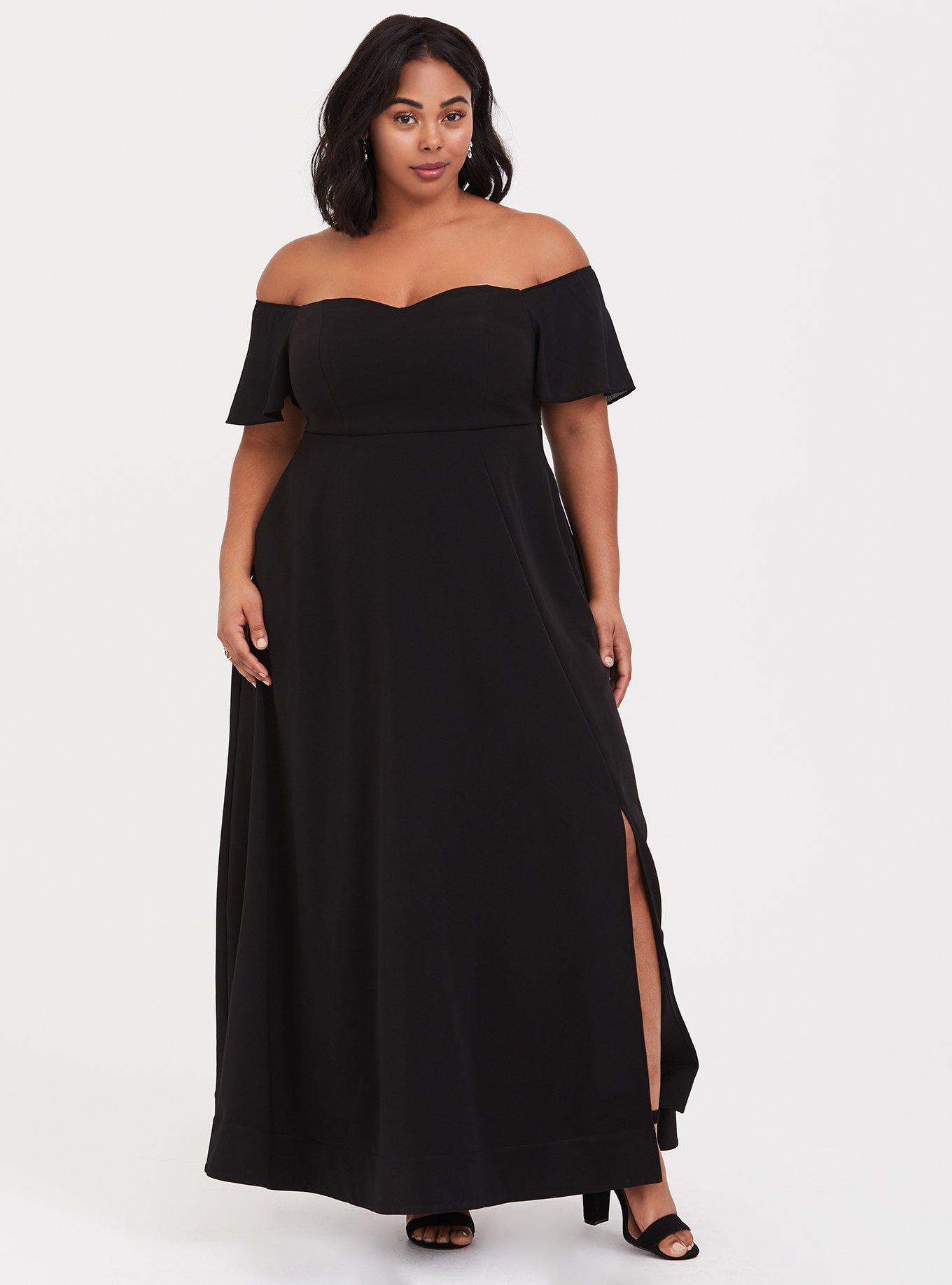
    If you want drama with a slit, Torrid’s Special Occasion line is cut from 10 to 30 across the board, and the Black Satin Off Shoulder Gown is the one I’d wear to an evening ceremony: off-the-shoulder sweetheart neckline, chiffon flutter at the arm, front slit, floor length. Satin is unforgiving of clingy underlayers, so plan your smoothing situation before the day, not in the hotel bathroom. One honesty note: Torrid’s site fought my verification tools, so the size run comes from their own listings rather than a live selector. Confirm your size is in stock before you commit shoes to it.

    The splurge is Kiyonna’s Luminous Sequin Lace Long Gown, $248, and here’s why it earns the price: Kiyonna cuts virtually its entire dress line to the top of its chart, which means the gown was patterned for a 30/32 body from the first sketch instead of stretched up from a sample size. Their sequin lace sits on a stretch base, so the gown pulls on and moves at a seated dinner. That’s the difference between a brand that grades up and a brand that designs for you.

    And because black tie shouldn’t require a payment plan, IN’VOLAND’s sequin V-neck dress on Amazon runs to a 26 in plus sizing at $29.99, and it’s fully lined, which at this price is nearly unheard of. Medium stretch, long sleeves, hits above the knee, so it reads black tie optional rather than gala. Reviewers call the fit true to size. For a winter evening reception where you want shine without babysitting a hem, this is the cheapest correct answer in the article.

    Cocktail: The Deepest Bench, If You Know Where the Selectors Go

    Cocktail: The Deepest Bench, If You Know Where the Selectors Go
    Kiyonna sequin lace cocktail dress in plus size

    Cocktail is where I’d send almost everyone, and it’s where the best-designed dress on this list lives. Kiyonna’s Mademoiselle Lace Cocktail Dress, $168, is their bestseller for a reason. The lace is a nylon-spandex stretch knit over a stretch lining, so the whole dress pulls on with no zipper to wrestle behind your back, and the scalloped edges finish the three-quarter sleeves and hem so it looks tailored, not stretchy. It comes in six colors, and I verified the selector myself: every size on the brand’s chart, all the way to the 5X top, sitting there like it’s normal. It should be normal.

    Eloquii is the interesting one, because its reputation says the line stops short of this article’s upper range, and that’s mostly true. Mostly. The Flutter-Sleeve Tulle Midi showed a live selector running all the way to a 32 when I checked, at $199.95 list with promos that regularly knock it down hard. Nylon tulle, fully lined, sweetheart neckline, tiered skirt, back zipper. It photographs like something Law Roach would put on a client and then deny was attainable.

    The catch is that Eloquii’s extension past its core range is item by item, so treat every Eloquii selector as a fact-check, not a promise. Their One-Shoulder Chiffon Ruffled Dress is the woven counterpoint: polyester chiffon, lined, a single puff sleeve with an elastic cuff, calf-length, and a selector confirmed through the top of their core chart at a 28. One-shoulder plus a side zipper means fit is less forgiving than knit, so measure against their chart rather than guessing off your usual number.

    Two more, opposite ends of the money spectrum. Nemidor’s long-sleeve ruched wrap dress on Amazon runs to a 26W on the dropdown, and ruching is the most underrated construction detail in occasionwear: the gathered fabric is doing intentional texture, so it never reads as cling. Poly knit, above the knee, usually lands under $50 depending on the color and the day.

    Meanwhile Yours Clothing’s magenta lace crochet midi, $110, was verified on their US site in a 26, and the crochet lace has more body than the flat stretch lace you see everywhere, so it holds an A-line without crumpling in a car seat.

    The quiet overachiever is Lane Bryant’s Sleeveless V-Neck Cutout Maxi, which I caught on sale at $65.98. Rayon-spandex jersey, lined through the front bodice, adjustable straps, and a selector that runs all the way to a 38/40. When I checked, only the very top size had sold out, which proves my earlier point about the chart selling from the top down. This is the single highest ceiling in the entire article, and it’s at the mall brand everyone forgot to check.

    Garden and Daytime: Chiffon, Prints, and Nothing That Traps Heat

    Garden and Daytime: Chiffon, Prints, and Nothing That Traps Heat
    Lane Bryant floral maxi dress for a garden wedding

    Daytime weddings want movement and airflow, and this is where the wrap dress earns its keep. Kiyonna’s Vienna Maxi, $138, is the one their own site markets as a wedding guest dress, and for once the marketing is right. Stretch jersey, V-neck, empire waist with an A-line skirt and side slits, flutter at the sleeve, full maxi length. The page states the range plainly, all the way to a 32. Empire waists are the friendliest silhouette in the garden category because the fit happens above the belly entirely and the skirt just falls.

    If the invitation says garden party and you want chiffon that behaves, Ever-Pretty’s FAYE pleated chiffon midi is $78.99 with a pleated bodice, flutter sleeves, and a high-low hem that keeps grass off the back of the dress. Full disclosure on the brand, though, because this is where I got annoyed during research: Ever-Pretty’s banner advertises higher, but every wedding-guest style I pulled variant data on stopped at a 26. If that’s your exact size, they’re a genuinely good budget source. If you’re above it, the banner is writing checks the selectors don’t cash. Keep scrolling.

    Yours Clothing is the opposite story: a UK import whose US site quietly carries one of the deepest daytime benches anywhere, and both picks below were verified in a 26 on the live selectors. The green floral pleated maxi, $85, is exactly what a summer garden wedding wants on a body that runs hot: pleats give the skirt structure without lining layers.

    And the black polka dot wrap maxi was showing markdowns from its $95 list when I looked, in a poly-elastane stretch with a proper V-neck wrap front. One caution on this brand: a couple of their sequin sub-lines stopped at a US 20 despite the plus branding, so check the selector on anything I haven’t named by name.

    POSESHE’s empire-waist flowy midi is the daytime steal: $19.98 on Amazon, rayon-spandex knit, crew neck, long sleeves, pockets, and a size run that goes to 6X, the deepest I found anywhere on the platform. In the black or the darker florals it dresses up cleanly with metallic sandals and real earrings. It’s not trying to be a showpiece. It’s trying to be the dress you’re comfortable in from ceremony through cake, and at this price you can buy it in two colors and still spend less than one department store markdown.

    Beach and Destination: Pack It, Steam It Never

    Beach and Destination: Pack It, Steam It Never
    Ever-Pretty chiffon dress in plus size for a beach wedding

    Destination weddings punish structured dresses. Whatever you bring has to survive a suitcase, salt air, and a dance floor with sand on it, which means knits and crinkle-resistant chiffon only. POSESHE’s short-sleeve ruched wrap midi runs S through 5XL and Amazon literally titles it a wedding guest cocktail dress. Poly-spandex knit, V-neck, ruched through the body, midi length. It rolls into a packing cube and comes out wearable, which no woven dress on this list will do. It comes in a pile of colors; skip the white one, obviously, unless you’re the bride, in which case congratulations and buy two.

    For something with more sweep, Torrid’s chiffon high-low maxi has a surplice neckline and a gathered hem that stays out of the surf in front while keeping maxi drama in back. Same 10-to-30 cut as the rest of their occasion line, same caveat as their gown: verify your size in a browser, because their site wouldn’t let me read the selector directly. Surplice necklines are the beach move regardless of brand, by the way. They flatter without strapless hardware, and strapless plus humidity plus dancing is a physics experiment nobody should run at someone else’s wedding.

    Every Verified Dress, One Table

    Dress Dress code Price at research Verified size ceiling Construction notes
    Ulla Popken Draped Silhouette Evening Gown Black tie $179.95 Category to US 32/34 Poly-elastane, fully lined, bell sleeves, draped sash
    Torrid Black Satin Off Shoulder Gown Black tie Check listing Cut to 30 (size 6) Satin, off-shoulder, front slit, floor length
    Kiyonna Luminous Sequin Lace Long Gown Black tie $248 Line cut 0X-5X (30/32) Stretch sequin lace, pull-on
    IN’VOLAND Sequin V-Neck Dress Black tie optional $29.99 26 (plus sizing) Fully lined, medium stretch, long sleeve, above knee
    Kiyonna Mademoiselle Lace Cocktail Dress Cocktail $168 5X (30/32), selector verified Stretch lace + stretch lining, no zip, 3/4 sleeve
    Eloquii Flutter-Sleeve Tulle Midi Cocktail / formal $199.95 list, promos common 32, selector verified Nylon tulle, lined, back zip, sweetheart neck
    Eloquii One-Shoulder Chiffon Ruffled Dress Cocktail Not captured 28, selector verified Woven chiffon, lined, side zip, calf length
    Nemidor Ruched Wrap Dress Cocktail $25-50 typical 26W, dropdown verified Poly knit, long sleeve, ruched, above knee
    Yours London Lace Crochet Midi Cocktail $110 US 26 verified Structured crochet lace, A-line
    Lane Bryant V-Neck Cutout Maxi Cocktail / summer formal $65.98 sale 38/40, selector verified Rayon-spandex jersey, lined bodice, adjustable straps
    Kiyonna Vienna Maxi Garden / daytime $138 5X (12-32), stated on page Stretch jersey, empire waist, side slits, pull-on
    Ever-Pretty FAYE Pleated Chiffon Midi Garden / daytime $78.99 26 (variant data) Chiffon, lined, flutter sleeve, high-low hem
    Yours London Green Floral Pleated Maxi Garden / daytime $85 US 26 verified Pleated skirt, unlined airflow
    Yours London Polka Dot Wrap Maxi Garden / daytime $95 list, sale seen US 26-28, selector verified Poly-elastane stretch, wrap V-neck
    POSESHE Empire-Waist Flowy Midi Garden / daytime $19.98 6X, dropdown verified Rayon-spandex knit, pockets, long sleeve
    POSESHE Ruched Wrap Midi Beach / destination Check listing 5XL, dropdown verified Poly-spandex knit, packs without wrinkling
    Torrid Chiffon High-Low Maxi Beach / destination Check listing Cut to 30 (size 6) Surplice neck, gathered high-low hem

    The Ones That Flunked, Because You Deserve the Receipts

    Cutting brands is more useful than adding them, so here’s who failed the selector test and how. City Chic, as covered: a plus-branded house with a hard stop at a 24. Hanna Nikole sells a ruffled chiffon dress on Amazon that’s marketed by name as a wedding guest dress, and its dropdown ends at a 22 in plus sizing. That listing is the entire industry pattern in one product page: the words say you’re invited, the inventory says you’re not. Yours Clothing’s sequin sub-lines, as noted, stop well short of the rest of their own site. And Lane Bryant’s mesh occasion maxi, which would otherwise have made the formal section easily, had its largest size sold out in the colorway I checked, which is its own lesson: even when a brand cuts your size, it cuts fewer of them, and they go first.

    Notice what the failures have in common. None of them are honest failures of design; sequins and chiffon grade up the same way jersey does. They’re inventory decisions, made by people betting you won’t show up to buy. The brands in the table above took the other side of that bet, and the way this gets fixed is embarrassingly simple: the money goes where the sizes are.

    Where the Size Run Ends Is a Choice Someone Made

    Here’s what I want you to take from all of this, beyond the links. Every size chart is an editorial decision. When a magazine’s plus list stops at 3X, an editor chose the affiliate feed over the reader. When a curve brand stops its chart exactly where the need begins, a merchandiser chose a spreadsheet over a customer standing in front of a mirror with an invitation on the counter. And when Kiyonna patterns a gown to a 32 from the first sketch, or Lane Bryant grades a jersey maxi to the top of its chart and lets it sell out from the top down, those are choices too. Better ones.

    If you buy one dress from this article, make it the Mademoiselle in your size and the color that makes you feel like the best-dressed guest at the table, $168, pull-on, no zipper politics. If you buy two, add the POSESHE midi for twenty dollars and pockets. Everything above existed in a 26 or beyond on the day I checked, and the top sizes move first, so don’t sleep on it. The links are above.

  • The Best Tummy Control Swimsuits for a Plus-Size Body

    The Best Tummy Control Swimsuits for a Plus-Size Body

    Most tummy control swimsuits are sold on a promise borrowed from shapewear, which is that squeezing harder gives you a smoother stomach. In swimwear that logic mostly falls apart, and it falls apart the moment the fabric gets wet. Water changes how a suit behaves. Cheap fabric relaxes, thin linings go transparent and cling to every ripple, and a suit that looked smoothing in the changing room turns into something you are tugging at all afternoon. The suits that genuinely work do it through construction rather than compression, and once you can spot that construction, the whole category gets much easier to shop.

    What follows is a plus-size-first look at what actually creates a smooth midsection in a swimsuit, then the styles worth buying depending on what you are doing in the water. None of it is about hiding, and none of it assumes you owe anyone a flatter stomach. A swimsuit exists so you can get in the water. The best tummy control suit is simply the one you stop thinking about once you are in it, which is a much more useful standard than whatever the packaging claims. Judge every suit below on that: does it let you forget about it, or does it make you manage it all day?

    What creates tummy control in a swimsuit

    Four things do the real work, and a suit that has three of them will beat a suit that just calls itself slimming. The first is a full front lining, ideally power mesh, running the whole torso rather than a token panel behind the belly. The second is fabric weight, because a heavier knit with a high elastane content holds its shape wet, while a thin one surrenders. The third is ruching, which sounds decorative but is structural: gathered fabric across the midsection breaks up the light and disguises contour far more effectively than flat fabric pulled tight. The fourth is seam placement, specifically princess seams or side panels that shape the suit to a curve instead of relying on stretch alone.

    A plus-size woman in a ruched one-piece swimsuit standing confidently by a pool
    Ruching across the midsection disguises contour far more effectively than flat fabric pulled tight

    Notice what is missing from that list: aggressive compression. A swimsuit that relies on squeezing is the one that rolls at the leg opening, digs at the shoulder, and leaves you adjusting. Compression also fights you in water, where you want to move. If you want the fuller explanation of fit, coverage and cut across every swimsuit style, we walk through it in our guide on how to choose a plus-size swimsuit you feel good in. For this roundup, those four construction features are the checklist that separates the picks below from the disappointments.

    Best overall: the ruched one-piece

    If you buy one tummy control swimsuit, buy a ruched one-piece with a lined front. It is the most reliable performer in the category and it is not close. The ruching does the visual smoothing, the full lining does the physical smoothing, and because it is a single garment there is no waistband sitting on the softest part of your stomach waiting to roll. A well-made ruched tummy-control one-piece from a brand that actually cuts for plus sizes will fit at the bust, the torso and the hip together, which is the part cheap suits get wrong.
    The detail worth paying for here is torso length. Plus-size bodies are often longer through the torso, and a one-piece that is too short pulls down at the shoulders and up at the leg, which creates exactly the horizontal line across the stomach you were trying to avoid. Brands that offer a long-torso option are telling you they understand the fit problem. If you have ever felt like a one-piece was trying to fold you in half, torso length was almost certainly the culprit rather than your size.

    Best for actually swimming

    There is a real difference between a suit designed for photographs and a suit designed for swimming, and most tummy control marketing is aimed squarely at the former. If you plan to swim laps, play with your kids, or spend hours in and out of water, prioritise a heavier fabric, a racerback or wide-strap shoulder, and a lining that stays opaque when wet. Thin decorative straps fail under the weight of wet fabric, and that failure is what drags a neckline down.

    A plus-size woman swimming in a supportive dark one-piece swimsuit
    For real swimming, wide straps and a heavier fabric matter more than any slimming claim on the label

    An active tummy-control one-piece with wide straps gives you smoothing that survives movement, which is the only kind that matters if you are genuinely using the pool rather than sitting beside it. The trade is real and worth naming: you give up a little of the dramatic smoothing a heavily ruched suit delivers, and in exchange you get something that does not need rearranging every time you climb out of the water. For anyone who swims regularly that is not a compromise at all, because a suit you constantly adjust is a suit you eventually stop wearing. Comfort in motion is what determines whether it earns its place in the drawer.

    Best two-piece option: the tankini

    Plenty of people want the bathroom convenience and the mix-and-match sizing of a two-piece without giving up midsection coverage, and that is exactly what a tankini is for. The catch is that a badly cut tankini rides up and creates a gap, which defeats the point entirely. The fix is length and grip: look for a top long enough to overlap the bottom by several inches even when you raise your arms, and a bottom with a wide, bonded waistband rather than a thin elastic edge.

    A plus-size woman wearing a long-line tankini top and swim bottoms
    A tankini only works if the top is long enough to overlap the bottom even when you raise your arms

    A long-line tankini with a lined front panel gives you close to one-piece smoothing with two-piece practicality, which is a genuinely good trade for a lot of people. The quiet advantage is split sizing. If your bust and your hips want different numbers, no single garment can serve both without compromising somewhere, and a tankini simply removes that problem instead of asking you to live with it. That alone sinks a lot of otherwise decent one-pieces, and it is the reason plenty of people who assumed they needed a one-piece end up preferring this.

    Best high-waisted set

    The high-waisted two-piece has earned its popularity because it works on exactly the principle that makes tummy control effective anywhere: it starts below the fullest part of the stomach and extends well above the navel, so it cradles the whole area rather than cutting across the middle of it. A high-waisted bottom in a substantial fabric with a wide waistband smooths about as much as many one-pieces do, and it does it without inheriting any of the torso-length problems that make one-pieces so hit and miss. It is also the most forgiving style to shop for, because you are only judging fit on one half of your body at a time.

    A plus-size woman in a high-waisted two-piece swimsuit on a beach
    A high-waisted bottom starts below the fullest part of the stomach and extends above the navel, so it cradles instead of cutting

    Where people go wrong is buying a high-waisted bottom in a flimsy fabric, which folds over at the top edge the first time they sit down. Weight and waistband width are what prevent that, not a smaller size, and reaching for a smaller size is the instinct that makes it worse. A high-waisted swim bottom with a wide bonded waistband paired with whatever top you like gives you a genuinely flexible setup. It is also usually cheaper than replacing an entire one-piece when only half of it stopped working, which over a few seasons adds up to a real difference in what you spend.

    Comparing the styles at a glance

    Each of these does something the others cannot, so the honest answer to which one is best depends entirely on what you plan to do while wearing it. Anyone who tells you a single style wins outright is selling that style. Here is how they compare on the things that actually decide whether you keep wearing a suit or quietly retire it after one holiday.

    Style Smoothing Holds up while swimming Best for
    Ruched one-piece Highest Good All-round, most bodies
    Active one-piece Moderate Excellent Laps, kids, long days
    Long tankini Good Moderate Split sizing, bathroom ease
    High-waisted set Good Good Mixing sizes and tops

    Sizing it right, and what to skip

    Size to your largest measurement and adjust from there, because a suit that is too small stops smoothing and starts sectioning. This is the mistake that ruins more tummy control suits than any design flaw. Overstretched fabric goes thin and semi-transparent exactly where you wanted it dense, the leg openings cut in, and the lining loses its grip on the fabric above it. Going up a size very often looks smoother than going down one, which feels counterintuitive until you have seen it happen.

    Two things worth skipping. First, any suit whose only tummy control claim is a small tummy panel with no full lining, since that panel is doing almost nothing once the surrounding fabric relaxes in water. Second, thin ties at the shoulder or hip on a suit you intend to swim in, because wet fabric is heavy and those ties will not hold it. Do the honest test at home: put the suit on, sit down, raise both arms, and bend forward. If it stays put through all three, it will stay put at the pool.

    Quick answers to the questions everyone asks

    Do tummy control swimsuits actually work? Yes, when the control comes from a full power-mesh lining, ruching, a substantial fabric and shaped seams rather than from tight elastic. Suits relying on compression alone tend to roll and dig once wet. Construction is what holds up in water, not squeeze.

    What is the best tummy control swimsuit? For most plus-size bodies a ruched one-piece with a full front lining is the strongest all-round choice, because it smooths visually and physically with no waistband to roll. For swimming, choose an active one-piece with wide straps. For two-piece convenience, a long-line tankini.

    Is a one-piece or a two-piece better for tummy control? A one-piece usually smooths more because it has no horizontal break at the stomach. A high-waisted two-piece comes close and lets you buy your top and bottom in different sizes, which fits many bodies better than any single garment can.

    What size tummy control swimsuit should I buy? Buy for your largest measurement using the brand’s chart, then check torso length if you are choosing a one-piece. Sizing down to squeeze harder backfires: the fabric thins, the lining loses grip and the leg openings cut in. Sizing up usually looks smoother.

    Why does my swimsuit roll down at the waist? Almost always a thin waistband, a fabric too light to hold its shape, or a suit that is a size too small. A wide bonded waistband in a heavier knit solves it. On a one-piece, rolling at the leg is usually a torso-length problem rather than a width problem.

    Choosing yours without the guesswork

    Work backwards from what you will actually do in the suit. If it is mostly pools, holidays and photographs, the ruched one-piece is the safest money you can spend. If you swim properly, take the active suit and accept marginally less drama in exchange for something that never needs adjusting. If your bust and hips want different sizes, go two-piece and stop trying to force one number to fit both. Then check the four construction points, buy your measured size rather than a smaller one, and run the sit-reach-bend test at home before the tags come off. That is the whole method, and it turns a category built on vague promises into a straightforward purchase.

  • How to Choose a Plus-Size Swimsuit You Feel Good In

    How to Choose a Plus-Size Swimsuit You Feel Good In

    For a lot of us, nothing triggers the wardrobe dread quite like swimsuit shopping. The harsh fitting-room light, the tiny hangers, the sense that the whole category was designed for someone else’s body. So we put it off, wear the same tired suit for another summer, or skip the pool entirely and miss the fun. I want to flip that script, because the truth is simpler and kinder than the anxiety suggests. A swimsuit’s job is to work for your body, not to force your body into working for it. Once you know which construction details actually do that work, you can shop for a suit you genuinely feel good in, and spend your summer in the water instead of in a cover-up on the sidelines.

    This is a guide to the features that matter, written for real plus-size bodies. Forget the lookbooks and the styling rules about what you are supposedly allowed to wear. We are going to talk about how a swimsuit is built, because that is what decides whether it holds you, supports you, and lets you move without a single nervous adjustment.

    Fit and construction beat silhouette every time

    Here is the reframe that changes everything, so I am putting it first. The most flattering plus-size swimsuit is not about a magic neckline or a slimming print, it is about how the suit is constructed. A well-built one-piece with a supportive lining and real bust structure will do more for your comfort and confidence than any clever pattern, because it holds you where you want to be held and moves with you everywhere else. When you stop shopping for a shape and start shopping for construction, the whole thing gets easier and the results get better.

    That means when you look at a suit, your first questions are about the inside, not the outside. Is there a supportive lining? How are the cups built? How wide are the straps and how much does the back cover? Those answers predict how you will feel wearing it far better than whether it has a ruffle or a wrap front. Style is the fun part and it comes last. Get the construction right and almost any silhouette you love becomes wearable.

    Tummy control, and what actually creates it

    Tummy control is one of the most searched features in plus-size swimwear, and it is worth knowing that it comes from three real construction elements rather than marketing language. The foundation is a power-mesh lining, a net-like inner layer sewn behind the front panel that gently compresses and supports your midsection while still stretching with your body. On top of that, ruching or shirring, which is gathered fabric across the front, skims over the tummy and disguises any lines while giving you room to breathe and move.

    Close-up of ruching and power-mesh lining on the front of a plus-size swimsuit
    Power-mesh lining plus ruching across the front is what actually delivers tummy control, not the print

    The third element is structured side panels, which shape and hold the sides of your torso so the whole midsection reads smooth rather than squeezed into one spot. When a suit combines all three, power mesh, ruching, and side structure, you get genuine, comfortable control that lasts all day at the beach. A suit that just calls itself slimming without any of these features is relying on the print, and the print alone will not hold anything. Read the description and look for those words specifically.

    Real support for a fuller bust

    If you are a D cup or above, bust support is not a nice extra, it is the difference between a suit you trust and one you spend the day tugging. Look for built-in structure, which means either underwire or molded cups. Underwire lifts and separates the way a good bra does, giving you shape and holding weight off your midsection. Molded cups give a smooth, supported shape and prevent show-through in cold water. Either is far better than a flat shelf bra, which offers almost nothing once you are actually swimming.

    A plus-size woman in a supportive underwire swimsuit with wide straps
    Underwire or molded cups plus wide straps and a full-coverage back distribute the weight instead of digging in

    Just as important is how the weight is carried. Wide straps, at least an inch, spread the load across your shoulders instead of concentrating it into thin lines that dig in and leave marks by the end of the day. A fuller-coverage back does the same job, anchoring the suit and stopping it riding up. For a larger bust these are non-negotiable, and the good news is that plenty of plus-size brands now build them in as standard, so you no longer have to choose between support and something you actually want to wear.

    Chafing and ride-up, the comfort details nobody mentions

    Two small miseries can ruin an otherwise great suit, and both are preventable. The first is a suit that rides up at the leg or the seat, which usually comes down to a cut that is too small or a leg opening with no grip, so sizing up or choosing a style with a fuller back solves it. The second is thigh chafing, that hot, raw rub you get when your thighs touch and you are walking around a pool deck all day, which has nothing to do with your suit choice and everything to do with skin against skin in the heat.

    If chafing is your reality, and for a lot of curvy women it is, a high-waisted two-piece with longer bottoms or a swim short adds coverage and a barrier between your thighs. It is the same principle we cover in depth in our guide on how to stop inner-thigh chafing, and the fixes there work just as well under a swimsuit. Do not let a solvable comfort issue keep you out of the water. A little planning around coverage and a barrier balm means you can walk the length of the beach without a second thought.

    Choosing your style by the coverage you want

    Now for the fun part, because once the construction is sorted, the silhouette is genuinely up to you and your comfort. A one-piece with power mesh and structured cups is the workhorse, the most supportive and secure option, and it comes in every neckline you could want. A tankini gives you one-piece coverage with the practicality of separate pieces, which is a gift if you want easy bathroom trips or a different size on top and bottom. A high-waisted two-piece offers tummy coverage with a fun, current look and pairs a supportive top with bottoms that sit where you want them.

    Three plus-size swimsuit styles side by side: one-piece, tankini, and high-waisted two-piece
    Once the construction is right, the silhouette is yours to choose based on the coverage you actually want

    Whatever style calls to you, buy it from a brand that builds these bodies in rather than grading a straight-size suit up a few sizes. Swimsuits For All and Torrid both design genuinely supportive plus-size swimwear, and a tummy-control one-piece with underwire from a brand that understands a fuller bust fits at the cup and the torso together. If you want the mix-and-match freedom, a supportive underwire tankini is endlessly practical, and for the current high-waisted look a high-waisted swim set gives you coverage and support in a two-piece you will actually reach for.

    Quick answers to the questions everyone asks

    What’s the best plus-size swimsuit for tummy control? One built with three things together: a power-mesh inner lining, ruching or shirring across the front, and structured side panels. Those create real, comfortable control that lasts all day. A suit that only calls itself slimming without those construction features is relying on the print, which holds nothing.

    What swimsuit works for a big bust? One with built-in underwire or molded cups for lift and shape, wide straps of at least an inch to spread the weight, and a fuller-coverage back to anchor it. Those features carry the weight properly instead of digging into your shoulders, and they matter far more than the neckline for a D cup or above.

    How do I stop a swimsuit chafing and riding up? For riding up, size up or choose a fuller-back cut with grippier leg openings. For thigh chafing, add a barrier with a high-waisted bottom, a swim short, or an anti-chafe balm, since the rub is skin on skin in the heat rather than a fault in the suit. Both are easily preventable with a little planning.

    Tankini, one-piece, or two-piece for a plus-size body? All three work, so choose by the coverage and convenience you want. A one-piece is the most supportive and secure, a tankini gives coverage plus easy bathroom trips and mixed sizing, and a high-waisted two-piece offers tummy coverage with a current look. Prioritize the construction first, then pick the silhouette you love.

    Are underwire swimsuits worth it? For a fuller bust, yes. Underwire lifts and supports the way a good bra does, holds weight off your midsection, and keeps its shape in the water. If you are smaller busted you may be perfectly comfortable in molded cups instead, but above a D cup, underwire or firm molded structure makes a real difference to your comfort and confidence.

    Your simple starting point

    This summer, shop the inside of the suit first. Before you fall for a color or a neckline, check for a power-mesh lining, real cup structure, wide straps, and a back that covers enough to stay put. Get those four things right and the silhouette is pure freedom, whatever makes you happy. Then plan around chafing if you need to, grab your barrier balm, and go get in the water. The suit is supposed to serve your day at the beach, and once it is built right, it quietly does exactly that while you forget you are even wearing it.

  • How to Stop Inner-Thigh Chafing as a Plus-Size Woman (What Actually Works)

    How to Stop Inner-Thigh Chafing as a Plus-Size Woman (What Actually Works)

    If you have ever peeled your thighs apart after a summer walk and felt that hot, raw sting, you already know what chub rub is. You also already know it has nothing to do with your worth, your size, or how “in shape” you are. Thighs that touch are normal. Most women’s thighs touch. The friction is just physics: skin plus movement plus a little sweat. The good news is that it is one of the most fixable body annoyances there is, and you do not have to give up dresses, walk like you are being timed, or spend a fortune to make it stop. Here is exactly what works, in the order I would actually try it.

    A plus-size woman walking comfortably outdoors on a warm day
    A plus-size woman walking comfortably outdoors on a warm day

    Why it happens (the 20-second version so the fixes make sense)

    Chafing is friction plus moisture plus heat. Skin rubs against skin, sweat softens the surface, and the repeated rubbing wears it raw. That is the whole story, and it is why every real fix does one of three things: reduces the friction, keeps the area dry, or puts a barrier between skin and skin. Once you see it that way, you can mix and match the solutions below to fit your day: a balm for a quick errand, shorts for a long one, bands for a dress.

    The fastest fix: an anti-chafe balm or stick

    If you need relief today, this is where to start. An anti-chafe stick glides on like deodorant and leaves a thin, invisible layer that lets your thighs slide past each other instead of dragging. The dermatologist-favorite is Megababe Thigh Rescue, which uses aloe and grapeseed oil to hydrate while it protects and lasts most of a day. If you want the sportier, sweat-proof option that runners swear by, Body Glide Anti-Chafe Balm is the classic.

    How to use it well: apply to clean, dry skin before you get dressed, cover the whole area that touches (usually higher up than you think), and reapply if you are out for more than a few hours or sweating hard. A stick lives in your bag; a smaller one lives in your car. That is the entire routine.

    An anti-chafe balm stick, the fastest thigh-chafing fix
    An anti-chafe balm stick, the fastest thigh-chafing fix

    No-slip thigh bands for dresses and skirts

    When you want to wear a dress and skip shorts entirely, thigh bands are the move. They are soft bands that sit around each thigh with a strip of silicone to keep them from rolling down, so your thighs never actually touch. The best-known are Bandelettes Thigh Bands, and the reason they matter for us specifically is sizing: they run up to 3XL, they come in lace styles that look intentional if they peek out, and the stay-up silicone genuinely holds through a full day of walking. They are lighter and cooler than shorts, which makes them the summer-wedding, hot-day answer.

    Lace thigh bands that prevent chafing under dresses
    Lace thigh bands that prevent chafing under dresses

    Slip shorts and bike shorts: the invisible barrier

    If bands are not your thing, a thin pair of shorts under your dress does the same job and doubles as smoothing. Look for a slip short with at least a 7-inch inseam so it actually covers where you rub, in a breathable, moisture-wicking fabric rather than thick shapewear that traps heat. Thigh Society Slip Shorts are the plus-size favorite here because they are cut long, cut wide, and made to disappear under clothes without digging in. For leggings-weather, a pair of bike shorts under a longer top does the same thing.

    Slip shorts give a smooth, invisible barrier under dresses
    Slip shorts give a smooth, invisible barrier under dresses

    Powder and the right fabrics (the free-ish fixes)

    Two habits cost almost nothing and quietly prevent a lot of chafing. First, keep the area dry: a talc-free body powder or a moisture-absorbing product like Gold Bond Friction Defense cuts the sweat that softens skin. Second, choose what touches your legs carefully. Moisture-wicking, quick-dry fabrics pull sweat away, while cotton soaks it up and holds it against you. If you sit for long stretches, try not to cross your legs, which traps heat and moisture right where you do not want it.

    A talc-free body powder keeps the area dry to prevent chafing
    A talc-free body powder keeps the area dry to prevent chafing

    Already chafed? Here is how to calm it down fast

    If you are reading this because you are already raw, stop the friction first and let it heal. Rinse the area with warm water and a gentle, non-stripping cleanser (a mild Dove-type bar is fine), pat it dry, and smooth on a barrier ointment a few times a day. Dermatologists reach for A&D ointment or plain petroleum jelly to seal in moisture and protect the skin while it recovers. Give it a couple of days in loose, breathable clothing before you go back to your prevention routine. If the skin blisters, oozes, or does not start improving in a few days, that is your cue to see a doctor rather than push through it, because broken skin can get infected.

    A barrier ointment soothes and protects already-chafed skin
    A barrier ointment soothes and protects already-chafed skin

    The dark patches chafing can leave behind (and how to fade them)

    If the skin high on your inner thighs has gone darker than the rest of your leg, that is post-inflammatory hyperpigmentation, and it is one of the most common things women go looking for after they have dealt with the chafing itself. Repeated friction and low-grade irritation tell the skin to make extra melanin, so the fix has two parts. First, stop the rubbing using everything above, because nothing will fade while the friction is still happening. Then, once the skin is calm and unbroken, help it turn over: a gentle niacinamide serum like The Ordinary Niacinamide 10% + Zinc, or an ingredient like azelaic or kojic acid used a few nights a week, will even the tone over weeks rather than days. Moisturize daily so the barrier stays healthy, and use sunscreen on the area if it ever sees sun, since UV deepens the very marks you are trying to fade. Be patient and be kind to yourself here. Darker inner thighs are extremely normal, they are not a hygiene problem, and they fade fastest when you stop chasing quick fixes and just stay consistent.

    Fading dark inner-thigh patches with a gentle niacinamide serum
    Fading dark inner-thigh patches with a gentle niacinamide serum

    Chafing at the gym, on a run, or on a long walk

    Workout chafing is its own beast, because you add heavy sweat and hundreds of repeated strides to the mix, so a light morning balm often will not last. Two things solve it. Apply a sweat-proof balm like Body Glide Anti-Chafe Balm generously before you change, not after you are already damp, and reapply at the halfway point of anything long. Then let your clothing do half the work: a pair of moisture-wicking bike shorts with a long inseam under your dress, skirt, or running shorts keeps skin off skin the whole time. Baleaf Plus-Size Bike Shorts are a favorite because they are cut long and wide, they wick instead of trap, and they do not roll down mid-stride. Rinse and dry the area soon after you finish, since sitting in salty, damp fabric is what turns a warm patch into a raw one.

    Moisture-wicking bike shorts prevent chafing during workouts
    Moisture-wicking bike shorts prevent chafing during workouts

    Quick answers to the questions everyone asks

    Does Vaseline help thigh chafing? For healing, yes. A layer of petroleum jelly seals and protects raw skin overnight. For preventing chafe during a long, sweaty day it is not ideal, because it is heavy, traps heat, and rubs off. Use a proper anti-chafe balm to prevent, and save the Vaseline for calming skin that is already sore.

    Why do my thighs chafe when I am not overweight? Because chafing is about your thighs touching and moving, not about fat. Plenty of slim women and elite runners chafe. If your thighs make contact when you walk, which is true for most bodies, friction can happen. It is normal, and it is not a sign of anything being wrong with you.

    How do I stop chafing right now, today? Smooth an anti-chafe balm onto clean, dry skin before you head out. No balm in the house? A thin layer of a barrier ointment works in a pinch, or pull on a pair of long-inseam bike shorts under what you are already wearing.

    What stops it for good? Not one single product, but a small system: balm on ordinary days, bands or slip shorts under dresses, powder and wicking fabrics in the heat, and a barrier ointment on standby.

    Your simple everyday routine

    Pulling it together, this is the whole system: balm on a normal day, bands or slip shorts under dresses, a sweat-proof balm plus bike shorts for workouts, powder and smart fabrics when it is hot, and a barrier ointment on standby for the days you get caught out. If chafing has already left darker patches, calm the friction first and fade them slowly with a gentle niacinamide routine. You do not need all of it at once. Start with the balm, add the piece that fits your wardrobe, and chub rub stops being a thing you plan your outfits around. Your thighs touching was never the problem, and now the sting is not either.

    Curvy Girl Journal only recommends products we would use ourselves. Some links are affiliate links, which means we may earn a small commission at no extra cost to you. It helps keep the guides free.

  • Faith Hill’s Ageless Style Evolution – How to Dress With Her Effortless Country-Glam Confidence at Any Size

    Faith Hill’s Ageless Style Evolution – How to Dress With Her Effortless Country-Glam Confidence at Any Size

    Picture a stage washed in warm light, a slow country ballad building, and a woman in a floor-length gown stepping to the microphone with the ease of someone who has never once questioned whether she belongs there. That is the Faith Hill effect. For three decades she has moved between two worlds that rarely coexist so gracefully – the dusty, honest heart of country music and the polished shimmer of a Hollywood red carpet – and made both look like home. She has worn beaded gowns to the Grammys and a wool prairie vest on the plains of a television Western, and somehow the through-line is always the same: unshakable, warm, grown-woman confidence.

    That confidence is the real style lesson here, and it happens to translate beautifully for curvy women who love a polished, feminine look but want it to feel lived-in rather than fussy. You do not need a stylist or a stadium tour to borrow it. You need a handful of pieces that fit your actual body, a point of view about what makes you feel like yourself, and permission to take up space in the room. Faith Hill built a signature out of exactly those three things. So can you.

    The Two Faces of Faith Hill’s Style, and Why Both Matter

    The Two Faces of Faith Hill's Style, and Why Both Matter

    Faith Hill’s fashion has evolved right alongside her music, and tracing it is a small masterclass in growing into your own taste. In the mid-1990s, when she was breaking through, her look leaned covered and countrified – vintage-inspired prints, softer silhouettes, the kind of easy Nashville wardrobe that reads warm and approachable. Then came the crossover era. Her albums Faith in 1998 and Breathe in 1999 turned her into a genuine pop star, with “This Kiss” climbing the charts and the title track “Breathe” reaching number two on the Billboard Hot 100. As her audience widened, so did her wardrobe. The prints gave way to glamorous, figure-conscious gowns, beadwork, sheer panels, and a growing love of black that has become one of her signatures.

    By the early 2000s she was one of country’s most reliable red-carpet stars, drawn to glitzy dresses with intricate detail and unafraid of a bold neckline. Her dress at the 2000 Grammy Awards remains one of her most talked-about, daring looks. She has worn white and black in equal measure, then broken the pattern with a vivid red or a cool aqua when the moment called for color.

    What is worth noting for the rest of us is that neither version of Faith Hill cancels the other out. The barefaced, jeans-and-vintage-print Faith and the beaded-gown-on-the-carpet Faith are the same woman, and both are authentically hers. That is the permission slip. You are allowed to own a range. You can be the person in the effortless denim on Saturday and the person in the column gown at the winter gala, and neither is a costume if both feel like you.

    Country-Glam, Defined – The Signatures Worth Stealing

    Country-Glam, Defined - The Signatures Worth Stealing

    Before we get to the shopping, it helps to name the ingredients. Faith Hill’s country-glam formula, distilled, comes down to a few recurring signatures that you can dial up or down for your own life.

    First, the polished foundation. Even her most casual looks read intentional. A clean line, a good fabric, nothing sloppy. Second, a love of long, uninterrupted silhouettes – the floor-skimming gown, the tailored trouser, the maxi dress – that draw the eye up and down rather than chopping the body into segments. Third, strategic shine. Beadwork, satin, a metallic thread, a sequin, used as a focal point rather than head to toe. Fourth, a disciplined color story built on black, white, and rich neutrals, with the occasional decisive pop of color. And fifth, that famous hair – soft, full, blown-out waves that frame the face and add an instant dose of glamour to even the simplest outfit.

    Every one of those signatures is size-friendly. A long line flatters a fuller figure. A focal point of shine lets you decide exactly where the eye lands. A grounded neutral palette is endlessly repeatable and easy to shop for at every size. And great hair costs you nothing but a round brush and ten minutes. The genius of this aesthetic is that it was never about being a sample size. It was about proportion, polish, and knowing your own angles.

    Recreate the Red-Carpet Gown Moment at Any Size

    Recreate the Red-Carpet Gown Moment at Any Size

    Let us start with the showstopper, because it is the look people assume is off-limits and it absolutely is not. Faith Hill’s gown moments are all about a long, clean column that skims the body, a considered neckline, and one point of drama – beading at the shoulder, a thoughtful cutout, or a sweep of satin that catches the light.

    To build your own version, begin with silhouette rather than size. A column or slightly A-line gown in a fluid fabric does the heavy lifting for a curvy frame because it moves with you instead of fighting you. Torrid has become a reliable destination for occasion dresses cut specifically for plus bodies, with gowns that account for bust, hips, and length in a way straight-size formalwear rarely does. Eloquii is the place to look when you want the fashion-forward detail – a dramatic sleeve, an interesting drape, a bit of that red-carpet edge Faith Hill favors. Lane Bryant rounds out the trio with polished, wear-it-again evening pieces and the foundation garments that make everything sit cleanly.

    For the neckline, take a page from her book and choose one focal area. A deep-but-supported V, an off-the-shoulder line, or a keyhole draws the eye exactly where you want it while keeping the rest simple. If you love the idea of a bold neckline but want reassurance, a wide-set strap or a built-in structured bodice gives you the drama with the security. Estimate spending somewhere in the range of a nice-restaurant dinner for two for a well-made occasion gown from these brands, more if you want heavy beading, though prices shift constantly and sales are frequent, so treat any number as a ballpark rather than a promise.

    One thing worth borrowing from her fittings mindset: think in terms of structure before decoration. A gown with a built-in bodice, a bit of internal boning, or a supportive lining will always sit more beautifully on a curvy frame than a flimsier one, no matter how pretty the fabric. Shapewear is optional and entirely your call, but the right undergarments in a smooth, seam-free style can make even a snug column dress feel effortless to move in. Faith Hill’s gowns always look like they were made for standing under hot lights for hours, and that ease is not an accident. It is engineering, and you can shop for it on purpose by reading product descriptions for words like lined, structured, and stretch.

    Finish with the Faith Hill flourishes: a single statement earring set, a metallic or nude heel to lengthen the line, and hair with genuine volume. The gown is only half the look. The posture and the blowout are the other half.

    The Everyday Country-Casual Formula – Denim Done With Polish

    The Everyday Country-Casual Formula - Denim Done With Polish

    Not every day is a gala, and this is where Faith Hill’s early, more grounded style earns its keep. The country-casual side of her look is denim and knits worn with just enough intention to never read as thrown-together. The trick is fit and finish rather than fanciness.

    Start with the jeans, the anchor of the whole thing. A dark-wash, high-rise, well-constructed pair does more for a polished silhouette than almost anything else in the closet, because a high rise smooths the midsection and a dark wash reads dressier than a faded one. Universal Standard has built its reputation on denim engineered for curves with a genuinely wide size range, and it is a strong starting point if you want a jean that holds its shape all day. Old Navy is the value pick, with a deep bench of curvy-fit and high-rise styles that let you experiment with cut without a big commitment. ASOS Curve is worth a scroll when you want something a little more of-the-moment – a wide leg, a trouser jean, a fresh silhouette to update the formula.

    From there, build the country-glam ease on top. A crisp white button-down worn slightly undone, a fine-gauge knit in cream or camel, or a soft western-inspired shirt tucked into that high waist. Layer a tailored blazer or a suede-look jacket for the polish that separates her from ordinary casual. Add a pointed boot or a clean heeled bootie, a leather belt, and one warm-metal piece of jewelry. The whole outfit should feel like it took five minutes and looks like it took thirty. That gap is the entire aesthetic.

    Channeling Margaret Dutton – The Prairie-Glam Chapter

    Channeling Margaret Dutton - The Prairie-Glam Chapter

    Faith Hill’s turn as Margaret Dutton in the Western drama 1883, opposite her real-life husband Tim McGraw as James Dutton, added a whole new texture to her style story. The costumes, designed by Emmy-winning costume designer Janie Bryant, dressed her in dusty period fabrics, structured vests, and long coats that were built for a hard journey yet carried a quiet, weathered elegance. Bryant even sourced a dusty pink fabric in England for the character, the kind of detail that gives a costume real soul.

    You do not have to live on the frontier to borrow the mood, and honestly it is one of the most forgiving looks in the whole Faith Hill catalog because it is built on layers and structure. Think of it as prairie-glam: a long, unstructured duster or maxi coat over a simple base, a fitted vest that nips the waist, earthy tones like rust, sand, cream, and faded rose, and natural fabrics that drape rather than cling.

    For curvy bodies, this chapter is a gift. A vest is a stealth tailoring tool, drawing a vertical line down the center and defining the waist without a single restrictive seam. A long coat left open creates that same flattering column the red-carpet gowns rely on, just in daytime clothing. Build it with a maxi skirt or a wide trouser from Universal Standard or ASOS Curve, a soft prairie blouse or a simple knit, and a vest or duster layered over the top. Ground it with a heeled ankle boot and a wide-brim hat if you are feeling brave. It is the rare trend that looks expensive, covers exactly as much as you want covered, and photographs beautifully.

    The Confidence Is the Real Wardrobe

    Here is the part no store can sell you. Watch Faith Hill in any era, in a gown or a duster or a plain white tee, and the constant is not the clothing. It is the way she wears it. Shoulders back, chin level, a settled sense that the outfit is serving her rather than the other way around. Style people call it presence. It reads as confidence, and confidence is the one accessory that makes everything else look more expensive.

    The practical version of that lesson for curvy women is this. Buy for the body you have today, not the one a vanity size tag wants you to squeeze into, because clothing that actually fits is the fastest route to looking and feeling polished. Tailor the pieces you love, since a small nip at the waist or a hemmed length turns a good dress into your dress. Pick your focal point on purpose and let the rest go quiet. Invest in the blowout, the posture, and the two or three foundation pieces you reach for constantly. And treat getting dressed as an act of self-respect rather than self-criticism, which is the shift that changes how a whole outfit lands.

    It also helps to build a small uniform, the way she clearly has. Notice how often the same ingredients reappear across her looks: the long line, the neutral base, the single glamorous detail, the voluminous hair. A personal uniform is not boring, it is efficient, and it is how stylish people get dressed quickly and still look intentional every time. Decide on your own three or four non-negotiables, the pieces and finishing touches that make you feel most like yourself, and let those become your signature. When getting dressed is a variation on a theme you already trust rather than a blank slate every morning, confidence stops being a performance and starts being a habit.

    Faith Hill did not become a style figure by chasing every trend or shrinking herself into a narrower silhouette. She figured out what made her feel like the fullest version of herself – the long clean line, the well-placed shine, the great hair, the black gown, the honest denim – and she wore it like she meant it, decade after decade. That is a formula with no size limit written anywhere on it. Pick your favorite chapter of her style story, translate it into pieces cut for your actual body from brands that were built for it, and walk into the room the way she walks onto the stage. The clothes will follow your lead.

  • Love Island Fashion 2026 – How to Get the Islanders’ Best Looks in Plus Sizes

    Love Island Fashion 2026 – How to Get the Islanders’ Best Looks in Plus Sizes

    Picture the moment the sun dips behind the villa and the string lights flicker on. Somebody is reapplying gloss by the firepit. Somebody else is sliding into a slip dress that catches the last of the gold light. The whole aesthetic of the show lives in that hour – skin warm from the day, drinks sweating in hands, everyone dressed like the night could turn into anything. That energy is the real export of the series. Not the drama, not the recoupling, but the feeling that getting dressed should be a little reckless, a little glittery, and entirely yours.

    Here is the thing nobody tells you when you fall for those looks on screen: almost every one of them is buildable in a size 16, 22, or 28. The silhouettes that read as “Love Island” – the slinky going-out dress, the cutout one-piece, the citrus-bright two-piece, the strappy heel that means business – are not the property of a single body type. They are just shapes and colors and confidence. And confidence happens to be the one accessory that comes in every size for free.

    So let’s translate the villa wardrobe into a closet that actually fits your life, your curves, and your budget. Real brands, real shapes, no gatekeeping.

    What the Villa Aesthetic Is Actually Made Of

    What the Villa Aesthetic Is Actually Made Of

    Before you shop, it helps to name the formula. The on-screen style is deceptively simple once you break it down, and that simplicity is exactly why it scales so beautifully to fuller figures.

    Daytime in the villa is all about the swim moment. Think high-cut one-pieces, ring-detail bikinis, sarongs knotted at the hip, and slides you could chase someone across the lawn in. Evening flips the switch to glamour: body-skimming mini dresses, satin slips, cutout midis, and bold monochrome separates. The color story leans into what looks good against a tan and reads loud on camera – tangerine, hot pink, lime, cobalt, buttery yellow, and the occasional all-white reset.

    There is also a sustainability thread running through the recent UK seasons worth knowing about. eBay UK has been the show’s headline fashion sponsor across several series, with a Pre-Loved Style Director curating a shared villa wardrobe that blends luxury pieces with high-street finds. Searches for pre-loved fashion reportedly surged more than 400 percent on the platform after the summer 2024 season, and Gen Z has led the secondhand charge. The takeaway for curvy shoppers is genuinely useful: you do not have to buy everything new to nail this look. Resale and pre-loved racks are part of the official aesthetic now, which means a vintage slip or a barely-worn designer cutout dress is fair game and often the most flattering option on the rack.

    Once you see the formula – sun-warm color, body-confident silhouette, a touch of shine – you can recreate any islander’s best night without copying a single specific outfit.

    The Going-Out Mini Dress, Built for Curves

    The Going-Out Mini Dress, Built for Curves

    The mini dress is the heartbeat of villa evening style, and it is also where a lot of plus-size shoppers get nervous. They shouldn’t. A short hem on a fuller figure reads as legs-for-days, not exposure, when the fit is right through the bust and waist.

    Look for a few specific things. A ruched bodycon in a stretchy ponte or scuba fabric holds its shape and skims rather than clings to every ripple – Fashion Nova Curve and PrettyLittleThing Curve both do this category well, usually in the rough range of 20 to 45 dollars, so you can experiment without guilt. If you want something with more structure, Torrid‘s going-out dresses tend to have built-in support and slightly heavier fabric that does the smoothing for you. For a more elevated take, ASOS Curve carries cowl-neck satin minis and ruched mesh styles that photograph exactly like the villa firepit moments.

    The styling move that makes a mini feel intentional rather than just short: pair it with a strappy block heel instead of a stiletto. You get the leg-lengthening line without the wobble across grass or a sticky club floor. Add small hoop earrings, a couple of stacked rings, and let the dress do the talking. Resist the urge to add a jacket that covers the silhouette you came to show.

    If a true mini feels like too much leg for your comfort, a fitted mid-thigh length in the same fabric gives you ninety percent of the effect with twice the ease. The goal is feeling like the most magnetic person at the firepit, and you cannot do that while tugging at a hem all night.

    Cutouts and Cleverness, Without the Anxiety

    Cutouts and Cleverness, Without the Anxiety

    Cutouts are everywhere in villa fashion – a slice at the waist, a keyhole at the bust, a strappy back that turns a basic dress into a moment. They tend to scare people in larger sizes, and the fear is almost always misplaced. A well-placed cutout is one of the most flattering tricks in the book because it draws the eye exactly where you want it.

    The principle is to place the opening at your narrowest or most confident point. A single waist cutout on a column dress carves out a defined middle and elongates the whole torso. An underbust or side-waist slice does similar work. Universal Standard, which builds genuinely thoughtful pieces across an enormous size range, often nails these proportions because the cutouts are engineered for fuller figures rather than scaled up from a sample size. Lane Bryant has leaned into the trend too, with cutout maxi and midi dresses that feel dressy without tipping into costume.

    A practical note that saves outfits: any cutout near the bust or waist needs the right understructure. Fashion tape is your best friend, and a longline bralette in a matching tone can turn a too-revealing keyhole into a deliberate layered look. Many curve-focused brands now build in light support, so check the product description before assuming you need to add your own.

    If a dramatic cutout still feels like a lot, start with a back detail. A low strappy back or a single shoulder cutout gives you the trend energy from behind while keeping the front clean and comfortable. It is the gateway cutout, and it converts skeptics fast.

    Beachwear That Earns the Day Pass

    Beachwear That Earns the Day Pass

    The swim moment is non-negotiable in villa style, and curvy women have more genuinely good options now than at any point in memory. The trick is choosing pieces designed for your shape rather than enlarged from a straight-size pattern, because the difference shows up the second you move.

    A high-leg one-piece is the workhorse. It elongates the leg, defines the waist, and reads every bit as glamorous as the two-pieces on screen. Torrid and Lane Bryant both carry one-pieces with underwire and adjustable straps, which matters enormously past a D cup – you want lift and security, not a swimsuit you are constantly adjusting. Estimate somewhere in the 40 to 70 dollar range for a well-built one, which is money well spent on something you will actually relax in.

    If you want the two-piece look, a high-waisted bikini bottom paired with a supportive underwire top gives you that villa-lounger silhouette with coverage exactly where you want it. Ring details, tie sides, and bold tropical prints keep it firmly on-trend. ASOS Curve runs a deep swim range each season with the louder colors and cutout one-pieces that mirror the screen aesthetic closely.

    Then comes the part that makes beachwear feel like fashion rather than function: the cover-up. A sheer sarong knotted low on the hip, an oversized linen shirt left open, or a crochet midi thrown over your suit transforms a poolside look into an outfit. This is where you play. The cover-up is also where pre-loved shopping shines, since a vintage kaftan or secondhand resort shirt often beats anything on the new rack for character and drape.

    The Color Story That Photographs Like a Dream

    The Color Story That Photographs Like a Dream

    Villa style is loud, and that loudness is a gift to curvy women who have spent years being told to hide in black. The bright, saturated palette of the show is not just camera-friendly; it is genuinely flattering, and leaning into it is one of the fastest ways to capture the aesthetic.

    Tangerine, hot pink, lime, and cobalt all read as confident and sun-soaked. The instinct to fear bold color on a fuller body is a holdover from outdated advice, and it deserves to be ignored. A monochrome look – a single bright shade head to toe – actually creates a long, uninterrupted line that flatters more than a busy print ever could. A lime co-ord set or an all-tangerine slip dress will turn heads precisely because it commits.

    If full saturation feels like a leap, start with one hero piece. A cobalt cutout dress with neutral sandals, or a hot-pink bikini under a white sarong, lets the color be the statement while the rest stays grounded. Fashion Nova Curve and PrettyLittleThing Curve stock the brightest end of the spectrum at the lowest prices, so a bold experiment costs less than a lunch out. For something with a more refined finish, Universal Standard and ASOS Curve carry the same energy in better fabrics.

    The all-white villa look deserves its own mention. White on a curvy frame is endlessly chic and reads expensive even when it isn’t, but it lives and dies by the lining. Check that any white piece is fully lined before you buy, hold it up to the light if you can, and you will get that crisp, fresh, just-stepped-out-of-the-pool finish every time.

    Shoes, Glow, and the Finishing Touches

    The outfit is the canvas, but the villa look is finished in the details, and these are the most size-neutral elements of the entire aesthetic. Everyone, regardless of dress size, can borrow these moves wholesale.

    Footwear leans toward strappy heels for evening and slides for day. For curvy women who want comfort that lasts a full night, a block heel or a wedge gives you height and stability without the ankle strain of a thin stiletto. A nude or tan strappy sandal lengthens the leg visually, which is a small trick that pays off in every photo. For daytime, embellished slides or simple gold sandals keep things effortless.

    Then there is the glow, which is arguably the most defining villa signature of all. The look is dewy, sun-kissed, and warm – a bronzed cheek, a glossy lip, beachy waves or a slicked-back bun. None of this requires a particular body. A good gradual tan or bronzing drops, a highlighter on the high points, and a clear or tinted gloss recreate the lit-from-within finish that ties every villa look together.

    Jewelry stays delicate and stacked. Thin gold hoops, layered necklaces, and a few rings read as expensive and put-together without competing with a bold dress. The overall principle is restraint in the accessories so the silhouette and color can sing. Get the glow and the gold right, and even a simple slip dress starts to look like prime-time television.

    Your Villa-Ready Starter Edit

    If you want to build this from scratch, here is the short list that covers ninety percent of the aesthetic without overspending. One ruched going-out mini in a bold shade from Fashion Nova Curve or PrettyLittleThing Curve. One waist-cutout midi from Universal Standard or Lane Bryant for the elevated nights. A high-leg supportive one-piece from Torrid plus a sheer sarong to layer. A bright monochrome co-ord from ASOS Curve for daytime swagger. A pair of nude block-heel sandals and a set of thin gold hoops to finish everything.

    That edit travels. It works for a real holiday, a rooftop birthday, a date that might go somewhere good, or simply a Tuesday when you want to feel like the main character. None of it asks you to be a different size, hide a single curve, or wait until some future version of your body shows up. The villa aesthetic was never about a body. It was about walking into the warm light like the night was made for you, and that is something you can do this weekend, in the size you are right now, with a gloss in your bag and your favorite bright thing on.

  • How to Dress for Extreme Heat This Summer – The Best Breathable, Stylish Outfits for Plus-Size Women

    How to Dress for Extreme Heat This Summer – The Best Breathable, Stylish Outfits for Plus-Size Women

    The thermometer on the bank sign read triple digits before nine in the morning, and the asphalt parking lot already shimmered like a mirage. A woman stepped out of her car in a flowing linen dress the color of fresh cream, sunglasses pushed up into her hair, and walked toward the farmers market looking like she had all the time in the world. No tugging at fabric stuck to her back. No darting for shade. Just ease, movement, and a hemline catching the hot breeze. That kind of comfort in a heat wave is not luck or genetics. It is a set of choices anyone can make, and the women who look unbothered when everyone else is wilting have simply learned which fabrics, cuts, and small tricks keep a fuller body cool and confident when the air turns to soup.

    Heat is a particular kind of challenge when you carry more curves. Skin meets skin in more places. Fabric clings where it would rather not. The synthetic dresses that photographed beautifully in spring suddenly feel like a sauna suit. But the answer is never to hide in oversized tunics or sweat through the season in misery. The answer is smarter clothing, built around how heat actually moves through cloth and how a real body actually lives in summer. What follows is a practical, lived-in guide to staying genuinely comfortable and looking like the most pulled-together person at the cookout.

    Why Fabric Is the Whole Game

    Why Fabric Is the Whole Game

    Before silhouette, before color, before any styling trick, there is fiber. The single biggest decision you make when getting dressed for a heat wave is what your clothes are made of, and it is the one most people get wrong by reaching for whatever is cute on the rack.

    Natural and semi-natural fibers win because they let your skin breathe and they pull moisture away instead of trapping it. Linen is the undisputed champion of hot weather. It is woven loosely, dries fast, and actually feels cooler against skin as the day heats up. Yes, it wrinkles, and that is the point. Those soft creases are the look now, not a flaw to iron out. Cotton, especially lightweight cotton lawn, voile, or gauze, breathes beautifully and feels soft against areas prone to irritation. Modal and rayon, made from plant cellulose, drape gorgeously over curves and wick moisture better than most people expect, which is why so many comfortable summer dresses are cut from them. Bamboo-derived viscose has a similar cool, fluid hand.

    The fibers to treat with suspicion are the slick synthetics: polyester and nylon in tight weaves trap heat against the body and hold onto odor. There is one important exception, and it matters for fuller figures: purpose-built moisture-wicking athletic fabric. The technical knits used in performance shorts and activewear are engineered specifically to move sweat off the skin and dry quickly, which makes them excellent for the layers worn underneath dresses to prevent chafing, even though you would not want a full outfit cut from them in July.

    Old Navy is a reliable, budget-friendly place to find linen-blend dresses and cotton-gauze separates in extended sizing, often for well under fifty dollars. Universal Standard builds much of its range around soft, structured fabrics that hold their shape without clinging, and its sizing runs genuinely inclusive, from very small to 4X and beyond. When you shop, flip the garment and read the content tag before you fall for the print. The label tells you more about how an outfit will feel at noon than any photo ever could.

    The Anti-Chafing Strategy Nobody Talks About Enough

    The Anti-Chafing Strategy Nobody Talks About Enough

    Let us name the thing that ruins more summer days than any heat index: chafing. Thighs that touch, which is most thighs, rub together when you walk, and in heat with sweat that friction turns into raw, stinging skin within a few blocks. No outfit is stylish if you are walking like a cowboy by lunchtime. The good news is that this is completely solvable, and once you solve it, your whole relationship with summer dresses changes.

    The most popular fix is a pair of slip shorts worn under dresses and skirts. Thigh Society makes anti-chafing shorts in a wide size range that are beloved specifically because they are long enough to actually cover where thighs meet, breathable, and they stay put without rolling up – the rolling-up problem being the reason cheaper bike shorts fail. They run somewhere in the twenty-five to forty dollar range depending on style, and most women who try them buy several. Bandelettes take a different approach: lacy thigh bands that wrap just the upper thigh, leaving the rest bare, which is ideal under shorter dresses when you do not want a full short. They come in skin tones and have a silicone strip to keep them from sliding.

    If you prefer to skip dedicated products, a swipe of an anti-chafe balm or even plain unscented deodorant along the inner thigh creates a slick barrier that buys you hours. The key insight is to address chafing before you leave the house, not after you feel the burn. Build it into getting dressed the way you build in deodorant. Do this once and the panic of “can I wear this dress if I have to walk anywhere” disappears for good.

    Loose Silhouettes That Flatter Instead of Drown

    Loose Silhouettes That Flatter Instead of Drown

    There is a stubborn myth that the way to dress a bigger body in heat is to drape it in the largest, most shapeless thing available. The opposite is true. Tents make you look bigger and, worse, they trap a column of hot air against your torso. The goal in heat is a silhouette that skims rather than clings and that lets air circulate, while still showing you have a shape.

    The A-line dress is the workhorse here. Fitted or defined through the bust and shoulders, then released into a skirt that flows away from the hips and thighs, it keeps fabric off the parts of the body that sweat most and reads as intentional and elegant. A defined waist matters more than you might think; a tie, a smocked panel, or a wrap closure at the smallest part of your midsection gives the eye a place to land and keeps a roomy dress from looking like a sack. Wrap dresses do this automatically, which is part of why they are so universally flattering, and a linen or modal wrap is a heat-wave hero.

    Wide-leg pants and palazzo styles in linen or rayon are the trouser answer. They keep your legs covered for sun protection and modesty while letting air move freely up each leg, and they pair with a simple fitted tank for an outfit that looks composed in any temperature. For tops, look for relaxed cuts with structure: a boxy linen camp shirt left open over a tank, a flutter sleeve that covers the upper arm without hugging it, a square neckline that sits away from the chest. Torrid and Lane Bryant both specialize in this territory, cutting flowy dresses and breezy tops specifically for curvier proportions, so the armholes, bust darts, and hip room are placed where they actually need to be rather than scaled up from a straight-size pattern. ASOS Curve is a strong source for trend-forward versions of all of this – tiered linen midis, wide-leg sets, cutout maxis – usually at an accessible price.

    Color, Sun, and Skin That Stays Covered Without Cooking

    Color, Sun, and Skin That Stays Covered Without Cooking

    What you wear matters for staying cool, but so does protecting the skin underneath, and the two goals can work together. Lighter colors reflect sunlight rather than absorbing it, so whites, creams, soft pastels, and warm neutrals genuinely run a few degrees cooler in direct sun than black or deep navy. That does not mean you have to abandon dark clothes you love; it means that on the hottest, sunniest days, reaching for the pale linen over the black one is a small physical advantage.

    Counterintuitively, covering up can keep you cooler and safer than baring it all. A loose long-sleeve linen shirt or a flowing duster over a tank shades your skin from direct sun while still letting air pass through, which is exactly the logic behind the robes worn in the world’s hottest climates. The cover-up to avoid is anything tight or synthetic; the cover-up that works is loose, woven, and breathable. Many brands now make pieces rated with a UPF number, which tells you how much UV the fabric blocks, and a UPF top is worth seeking out for long days outdoors. A wide-brimmed hat does more than finish a look – it shades your face, neck, and shoulders, the spots that burn first. Pair it with real sunglasses and a non-greasy sunscreen on any exposed skin, reapplied through the day, and you have genuine protection rather than the illusion of it.

    Breathable does not have to mean boring, either. A flowing kaftan in a bold print, a linen jumpsuit in a sunset orange, a gauzy maxi with a slit that shows movement when you walk – these read as confident and stylish precisely because they are made for the weather instead of fighting it.

    Shoes, Underthings, and the Details That Decide Your Day

    Shoes, Underthings, and the Details That Decide Your Day

    The outfit can be perfect and the day can still fall apart at the extremities, so the small choices deserve real attention. Feet swell in heat, so closed, stiff shoes that fit at breakfast can feel like a vice by afternoon. Leather or cork footbeds that mold to your foot, like classic slide sandals, and styles with a little adjustability across the top of the foot keep you comfortable as the day stretches on. A slight platform or a cushioned footbed beats a flat with no support if you will be on your feet, and a back strap stops the constant gripping with your toes that flip-flops demand.

    Underneath, the right bra changes everything in heat. A soft, breathable bra in cotton or a moisture-managing fabric, ideally without a thick foam-molded cup that holds heat and sweat against the skin, makes a long hot day bearable. Many curvier women find a supportive bralette or a lightly lined style far more comfortable in summer than their heavily structured everyday bra, and it is worth keeping a dedicated hot-weather option in the rotation. The same logic applies to undies: cotton gussets breathe; full synthetic does not.

    Then there are the tiny conveniences that compound. A packable folding fan in your bag is not a quaint gesture, it genuinely cools you in a line or on a hot platform. A small cooling towel that activates with water draped around the neck cools the blood passing through the major vessels there, which lowers how hot your whole body feels. Keeping a refillable water bottle on you matters more than any garment, because a dehydrated body cannot cool itself no matter how breathable the dress. And a thin, crushable layer in your bag – a linen overshirt, a light scarf – rescues you when you walk from a hundred-degree street into an over-air-conditioned restaurant where you suddenly feel like you are in a meat locker.

    Building a Heat-Wave Capsule You Can Actually Reach For

    The fastest way to stop dreading hot mornings is to make a small set of pieces that all work together, so getting dressed in the heat takes thirty seconds and never goes wrong. You do not need a huge wardrobe. You need a handful of right ones.
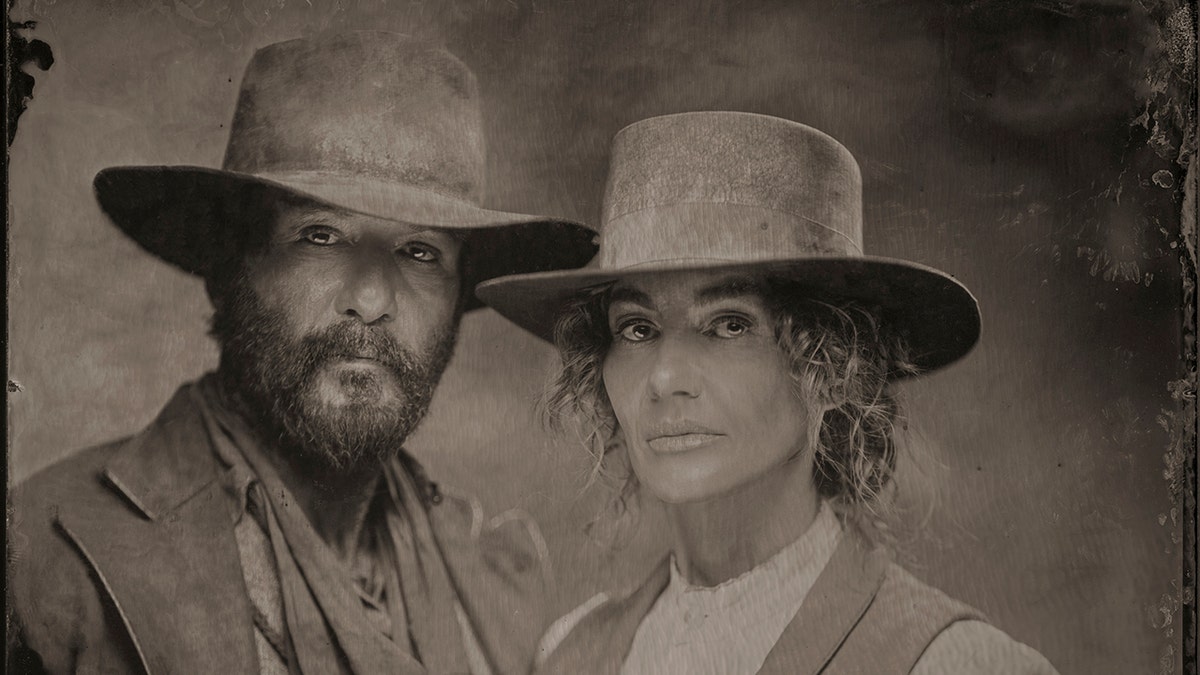
    Start with two or three breathable dresses you trust completely: perhaps a linen A-line for errands and work, a wrap dress in modal that dresses up or down, and one flowing maxi for the days you want drama with zero effort. Add wide-leg linen pants and a couple of relaxed tank tops and camp shirts that mix with them. Keep one good cover-up – a long linen shirt or a duster – that goes over any of it for sun or air conditioning. Stock the supporting cast: a few pairs of anti-chafing shorts so a clean pair is always ready, a soft summer bra, two reliable pairs of sandals, a hat, sunglasses, the folding fan, the water bottle. That is a complete heat-wave system, and most of it can be sourced affordably across Old Navy, Torrid, Lane Bryant, Universal Standard, and ASOS Curve depending on your budget and taste.

    The quiet truth underneath all of this is that comfort and style were never opponents. The woman crossing that blazing parking lot in her cream linen dress was not sacrificing one for the other. She had simply built a wardrobe around how heat behaves and how her body lives, and the result looked effortless because the effort happened earlier, at the rack and in the drawer. Make those choices once, lay the pieces out the night before a scorcher, and you get to spend the hottest days of the year being fully present at the market, the party, the long walk by the water – cool, covered where it counts, and dressed like you mean it.

  • Who Is Katseye? Meet the Girl Group Rewriting the Rules of Beauty and Global Pop

    Who Is Katseye? Meet the Girl Group Rewriting the Rules of Beauty and Global Pop

    Picture a stage in Los Angeles washed in violet light, six women stepping into formation, and a crowd that has flown in from Manila, Mumbai, Lagos, London, and Seoul, all singing the same hook back word for word. No single accent leads the chant. No single face gets to be the “standard” one. That scene, repeated in arena after arena through 2025, is the clearest way to understand a group that has become one of the most talked-about acts in pop. Six voices, six passports, one sound – and a room full of people who finally see some version of themselves at the center of the frame.

    The group is Katseye, and the reason they keep coming up in conversations about representation is not marketing spin. It is baked into how they were built, who got picked, and what the members have chosen to say out loud once the spotlight found them. For a magazine like this one, which cares less about whether a woman fits the mold and more about whether the mold ever deserved that much power, Katseye is a story worth slowing down for.

    From a Global Casting Experiment to a Real Group

    From a Global Casting Experiment to a Real Group

    Katseye did not form the way most Western pop groups do. They were assembled through a large-scale audition project called The Debut: Dream Academy, a collaboration between the South Korean company HYBE (the label home of BTS) and Geffen Records in the United States. The idea was ambitious on paper and risky in practice: run a worldwide search, bring in trainees from different countries, put them through the intense, months-long development process associated with K-pop, and let a global group emerge from the other side.

    Thousands auditioned. A pool of trainees was narrowed down through rounds of evaluation, performance missions, and eliminations, and the final lineup was revealed at the end of the competition. The whole arc was later documented in the Netflix docuseries Pop Star Academy: Katseye, which pulled back the curtain on the sweat, the self-doubt, and the goodbyes that came with the process. It is not always a comfortable watch. The series shows young women being ranked, cut, and rebuilt, which is exactly why the group’s eventual message about self-worth lands with more weight. They came out of a system that measures people constantly and still arrived at something that reads as genuinely celebratory.

    Based in Los Angeles, Katseye debuted in June 2024 with a single fittingly titled “Debut,” followed by the song that first made a lot of people stop scrolling: “Touch.” Their first EP, SIS (Soft Is Strong), arrived later that year, and the title alone signals the tone the group wanted to set. Softness, warmth, and vulnerability treated not as weaknesses to hide but as a form of strength worth naming.

    Six Members, Six Backgrounds, One Lineup

    Six Members, Six Backgrounds, One Lineup

    What makes Katseye feel different the moment you look at them is the lineup itself. The six members come from a genuinely wide spread of heritages and hometowns, and the group is regularly described as a global girl group for good reason.

    The members are Sophia Laforteza, Daniela Avanzini, Lara Raj, Manon Bannerman, Megan Skiendiel, and Yoonchae Jeung. Sophia Laforteza is Filipino-American, born in New York and raised in Manila, and she has often carried the emotional weight of representing Filipino fans who rarely see themselves at this level of global pop. Daniela Avanzini brings Cuban and Venezuelan roots and grew up steeped in Latin music and dance. Lara Raj is Indian-American, and her presence has meant a great deal to South Asian listeners who almost never get a mainstream pop idol to point to. Manon Bannerman is of Swiss and Ghanaian heritage, folding both European and West African identity into the group. Megan Skiendiel has Chinese-Singaporean background, and Yoonchae Jeung is South Korean, the member who most directly links the group back to the K-pop training tradition it grew out of.

    That is not a token spread designed for a photo. It shows up in the way they perform, the languages that surface in interviews, and the range of fans who show up to shows. When a group’s own members trace back to the Philippines, Cuba, Venezuela, India, Ghana, Switzerland, Singapore, China, South Korea, and the United States, “diversity” stops being a press-release word and starts being the actual shape of the thing.

    It is worth noting that the lineup has not always been at full strength in the way a fixed roster implies. Members have taken time to prioritize health and wellbeing, and reporting through 2025 and into 2026 indicated at least one temporary hiatus within the group. Rather than pretending the pressure of this level of fame is nothing, the group and its team have at times chosen rest, which is its own quiet statement in an industry that historically pushed young performers past their limits.

    The Sound That Broke Through

    The Sound That Broke Through

    A meaningful backstory only carries a group so far. The music had to work, and by 2025 it clearly did. After the early momentum of “Touch,” Katseye escalated fast. In April 2025 they released “Gnarly,” a deliberately strange, sharp-edged single that served as the lead track for their second EP. It split opinion in the best possible way, the kind of song people argue about precisely because it refuses to sound like everything else on the radio. What was striking was how the group treated that risk as a feature rather than a fear. A year into a career, most new acts play it safe and chase the sound that already worked. Katseye did the opposite, betting that a distinctive, slightly chaotic single would say more about who they were than a polished retread of “Touch” ever could. That instinct to trust their own strangeness has become part of the group’s identity, and it maps neatly onto the wider point they keep making about beauty: the thing that makes you stand out is rarely the thing you should sand down.

    That EP, Beautiful Chaos, arrived on June 27, 2025, and it marked a real commercial leap. The project debuted at number four on the Billboard 200, reported as the group’s highest-charting release to that point. For an act that had existed publicly for barely a year, cracking the top five of the American albums chart was a serious signal that Katseye was not a novelty built on a TV format but a group with staying power.

    Then came “Gabriela.” Co-written by Charli XCX and widely described as a modern, twisty reimagining of the emotional territory of Dolly Parton’s “Jolene,” the song reached into the top 40 of the Billboard Hot 100 and became the group’s most decorated moment to date. It earned a Grammy nomination for Best Pop Duo/Group Performance, and Katseye also picked up a nomination for Best New Artist at the 2026 Grammys, where they performed. Two Grammy nominations inside their first couple of years is the kind of validation that turns industry skeptics into believers.

    The throughline across these releases is confidence. Katseye’s catalogue is not built on shrinking or apologizing. It leans into desire, attitude, softness, and swagger, sometimes within the same song, which mirrors the way the members present themselves off the record.

    Why the Beauty Conversation Follows Them Everywhere

    Why the Beauty Conversation Follows Them Everywhere

    Here is where Katseye becomes more than a chart story. Global pop, and K-pop-adjacent pop in particular, has long carried a narrow and demanding beauty template: a specific body type, a specific set of features, a specific idea of what a “visual” is supposed to look like. Katseye keeps colliding with that template simply by existing as they are, and several members have decided not to stay quiet about it.

    Lara Raj, in particular, has spoken directly against body-shaming. Reporting in early 2026 covered a message she posted responding to cruel commentary about her body during touring, in which she pushed back on the fixation with ultra-thin ideals and defended what a healthy woman’s body actually looks like in motion. The specifics matter less than the posture. A young woman at the peak of her visibility chose to name the shaming out loud instead of absorbing it silently, and she did it while fully embracing her own body rather than promising to change it.

    That is body positivity in its truest, least sanitized form. Not a brand campaign, not a slogan on a tote bag, but a person under a spotlight refusing to accept that her worth is up for public debate. For readers who have ever been told their stomach, their curves, or their frame was a problem to be solved, that refusal reads as permission. Permission to take up space, to move, to perform, to be seen, without first shrinking to fit someone else’s comfort.

    What gives the moment staying power is that it did not come wrapped in a careful publicist’s statement. It read as a real person reaching a limit and saying so plainly, which is why it traveled so far and why so many fans quoted it back to one another. In a corner of pop culture where performers are often coached into a permanent, unbothered smile, a flash of honest frustration about being picked apart felt less like a scandal and more like relief. It confirmed something readers of this magazine already believe, which is that the people we admire on stage are dealing with the exact same commentary the rest of us hear in everyday life, only louder and in public.

    The members have also stretched the definition of representation beyond body image. Reporting has noted that members of the group have spoken openly about their queer identities, and the group has used performance moments to signal support for transgender visibility, including through wardrobe choices and casting decisions in their visuals. Whatever a given fan’s own identity, the message is consistent: there is room here, and the door is being held open on purpose.

    What a Curvy, Global, Unbothered Fanbase Actually Looks Like

    What a Curvy, Global, Unbothered Fanbase Actually Looks Like

    Spend any time in Katseye’s online communities and you notice the tone quickly. It is protective, it is celebratory, and it is startlingly diverse. There are South Asian fans posting about finally having a pop idol who shares their heritage. There are Filipino fans treating Sophia’s every milestone like a national event. There are Black fans, Latina fans, plus-size fans, and queer fans who talk about the group less like distant stars and more like proof of something they had stopped expecting to see.

    That kind of fan energy is not an accident. It is the natural return on a group that was built to look like the actual world rather than a single narrow slice of it. When six women on a stage represent that many origins and that many body types and that many ways of being a woman, the fanbase reorganizes itself around belonging instead of exclusion. People do not have to perform a version of themselves to feel welcome. They show up as they are because the group models exactly that.

    There is also something quietly radical in how ordinary the members make it all feel. They are not framing their diversity as a heroic burden or a marketing hook to be constantly explained. They dance, they joke, they release strange and catchy songs, they get nominated for Grammys, and their range of backgrounds is simply the texture of the group rather than its gimmick. Representation stops feeling like a lesson and starts feeling like the default, which is arguably the point representation was always driving toward.

    Katseye as a Mirror, Not a Mold

    The most useful way to hold Katseye is not as a group that happens to be diverse, but as a working argument against the idea that pop stardom requires a single approved face and a single approved body. Every part of their story pushes against that idea. A worldwide casting net instead of a narrow one. A lineup that spans continents instead of flattening into sameness. Members who protect their health instead of grinding themselves down, and who answer body-shaming with self-possession instead of silence. Music confident enough to be weird, and a fanbase that finally feels reflected.

    None of this means the pressure has vanished. The commentary Lara Raj answered proves the old beauty policing is still very much alive, and no single group dismantles decades of it. But Katseye keeps offering the same steady counter-message with every release and every red carpet: you were never the one who needed fixing. The frame was always too small. Six women from opposite ends of the map made a habit of standing in the center of it anyway, and in doing so they handed a whole generation of listeners a simpler, kinder instruction. Take up the space. It was always meant for you too.

  • Pink Footwear Is Having a Major Moment – How to Style Bold Pink Shoes for Every Body Type

    Pink Footwear Is Having a Major Moment – How to Style Bold Pink Shoes for Every Body Type

    The first thing you notice walking into any shoe department this season is the wash of color spilling out of the usual sea of black and tan. Soft blush ballet flats sit beside electric fuchsia sneakers, and a row of bubblegum boots catches the overhead light like candy in a jar. Pink has quietly elbowed its way out of the “occasion only” corner and planted itself at the center of everyday dressing. For a long time, bold footwear felt like a privilege reserved for sample-size feet and editorial shoots. That gatekeeping is over. The shade that used to whisper now speaks at full volume, and it looks good on every leg, every ankle, and every body that decides to wear it.

    What makes pink so interesting right now is its range. This is not one color but a whole spectrum, from the palest petal to a saturated magenta that practically hums. Each tone behaves differently against skin, against an outfit, and against the proportions of the wearer. Learning how to read those differences is the difference between shoes that feel like an afterthought and shoes that pull a whole look together. Below is a warm, practical guide to wearing the trend with confidence, no matter your height, your shoe width, or the part of your body you most want a great pair of shoes to celebrate.

    Why Pink Earned Its Spot in the Rotation

    Why Pink Earned Its Spot in the Rotation

    Color trends usually arrive and leave on a tight schedule, but pink footwear has shown unusual staying power, and the reason is simple. It is the rare bold color that reads as both playful and grounded. A blush tone sits close enough to nude that it behaves like a neutral, lengthening the leg and slipping under almost any palette. A hot pink, by contrast, functions like jewelry for the feet, turning a plain outfit into a deliberate one with zero extra effort.

    There is also a quiet body-positive thread running through the trend. For years, the advice handed to women in larger sizes was to disappear: dark colors, low contrast, nothing that draws the eye. Pink shoes do the opposite. They invite attention to the body and reframe it as something worth noticing rather than something to minimize. Choosing a loud shoe is a small act of taking up space on purpose, and a lot of women have decided they are done shrinking.

    The market has caught up, too. Size-inclusive footwear used to mean a sad handful of styles in muddy colors. Now brands that build for wider feet and fuller calves are producing pink in real variety. Torrid carries bold flats and heels in wide and extra-wide widths. Universal Standard has leaned into clean, modern shoe shapes designed to flatter a range of bodies. Naturalizer and Clarks both offer genuine wide-width options with the arch support that makes a colorful shoe wearable for a full day, not just a photo. The trend stopped being aspirational and became something you can actually buy in your size.

    Finding Your Shade Across the Pink Spectrum

    Finding Your Shade Across the Pink Spectrum

    Pink is not a single decision, and treating it like one is where most people go wrong. The first move is figuring out which family of pink loves your skin and your wardrobe back.
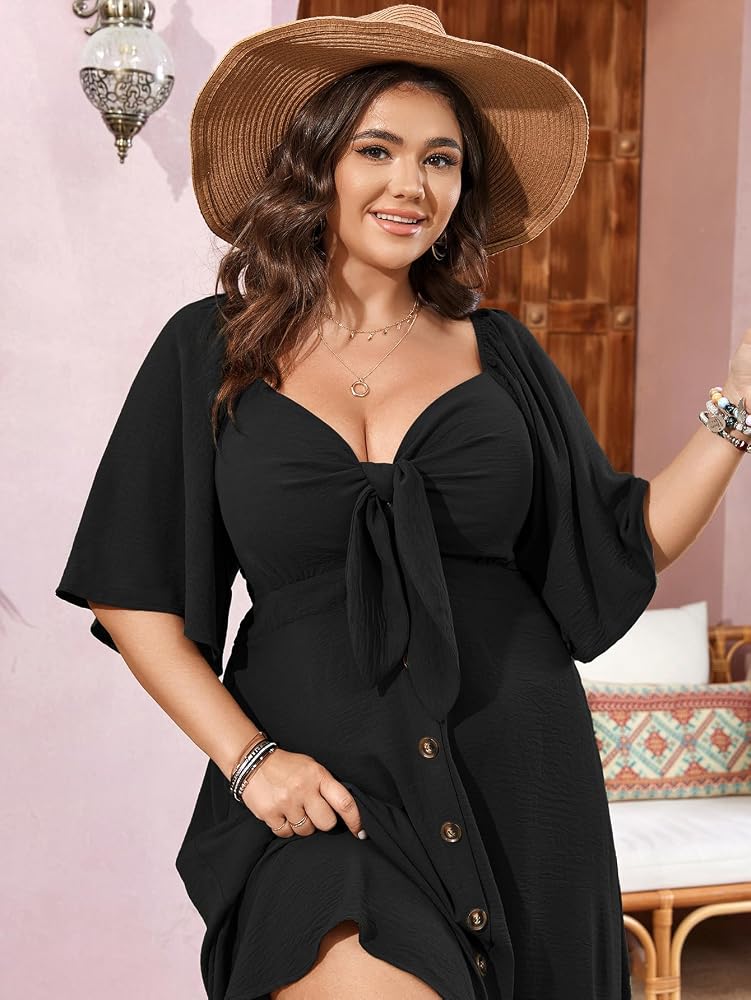
    Soft blush and ballet pink lean warm and powdery. They flatter most skin tones because they sit so close to neutral, and they are the easiest entry point if loud shoes feel intimidating. A blush flat or a dusty-rose mule reads almost like a nude from across the room, then reveals its color up close. These are the workhorses, the pair you can wear three times a week without anyone noticing they are the same shoes.

    Mid-tone rose and coral-pink bring more energy. They have enough warmth to play beautifully against denim, olive, camel, and chocolate brown. If you have a warm or golden undertone, this is often your sweet spot, the range where the color looks intentional but never costume-y.

    Then there is the loud end of the spectrum, the fuchsia, magenta, and true hot pink. These are confidence colors. They look stunning against deep skin, where the contrast is electric, and equally striking against fair skin when paired with crisp black or white. Cool undertones tend to carry the blue-leaning pinks like magenta especially well. The key with this end of the range is commitment. A hot pink shoe is the loudest thing in the outfit by design, so let it lead and keep everything else quiet.

    A quick honesty check helps here. Hold the shoe up near your face in natural light. If your skin looks brighter and more awake, the shade is working. If you look tired or washed out, slide one step along the spectrum and try again. Your eyes will tell you faster than any rule.

    Styling Pink Shoes for Your Proportions

    Styling Pink Shoes for Your Proportions

    Proportion is where pink footwear becomes a genuine styling tool rather than just a fun purchase, and the good news is that the same principles work whether you are five foot two or five foot ten.

    If you want to elongate the leg, reach for a pink that lives close to your skin tone and choose a low-cut shape. A blush pointed flat or a nude-pink pump creates an unbroken line from leg to toe, and that uninterrupted line reads as length. Pairing the shoe with a hem in a similar tone, or going bare-legged in warm weather, intensifies the effect. This is the oldest trick in the styling book and it works on every height.

    If you love the idea of a bold contrast and are not chasing extra length, a saturated pink against a dark hem becomes a deliberate punctuation mark. Hot pink sneakers under cropped wide-leg trousers, or fuchsia boots peeking out beneath a midi skirt, draw the eye downward and add rhythm to an outfit. For petite frames, keep the shoe sleek so the color does the talking without visually shortening the leg. For taller frames, you have room to play with chunkier silhouettes like a lug-sole boot or a platform sandal.

    Ankle treatment matters more than people realize, particularly for anyone with fuller calves. A shoe that cuts straight across the narrowest part of the ankle and leaves the leg open will always look more flattering than one with a thick strap sitting high on the calf. Look for low vamps, slender ankle straps that sit at the true ankle, and boots with a bit of stretch through the shaft. Brands like Naturalizer and Clarks build wide-calf and stretch options precisely for this, so the boot hugs without strangling.

    Balance is the last proportion principle. A loud shoe wants a calmer canvas. If your trousers are voluminous, let the shoe be the accent. If your shoe is a statement platform, keep the leg line clean above it. The outfit should feel like a conversation, not a shouting match.

    Comfort, Width, and Real Support

    Comfort, Width, and Real Support

    A beautiful shoe you cannot walk in is a decoration, not footwear, and there is no reason to suffer for a color this fun. The trend has matured enough that comfort and boldness no longer sit on opposite sides of the room.

    Start with width, because nothing ruins a shoe faster than a too-narrow toe box squeezing your foot into a shape it was never meant to take. If you have ever bought your “normal” size and spent the day in quiet pain, you may simply need a wide or extra-wide fit. Naturalizer, Clarks, and Torrid all run genuine wide widths, and Vionic builds support directly into the footbed. A wide-width pink flat with a cushioned insole feels completely different from a flimsy one, even in the same color.

    Arch support and a stable base do the heavy lifting for all-day wear. A block heel distributes weight far better than a stiletto, and a kitten heel offers a little lift with almost none of the strain. If you adore the look of a higher heel, a platform under the toe shortens the actual angle your foot sits at, which is why a two-inch platform with a four-inch heel feels gentler than a flat three-inch pump. Sneakers, of course, are the easiest win of all. A pink leather court sneaker from a brand like Sam Edelman, or a soft pink running-inspired silhouette, gives you the color with zero compromise on cushioning.

    Material is worth a thought too. Soft suede and supple leather give as your foot swells across the day, while stiff synthetics tend to rub. For boots, a touch of stretch through the shaft means the difference between a pair you reach for and a pair that lives in the box. And whatever the style, the back-of-the-heel rub test in the store still beats any online promise. Walk a few steps. Your feet will be honest with you.

    Pairing Pink With Neutrals and With Color

    Pairing Pink With Neutrals and With Color

    Once the fit is sorted, the fun begins, and pink is one of the most cooperative colors in the wardrobe. It plays two very different games depending on what you put beside it.

    The neutral route is the most foolproof and the most versatile. Pink and crisp white feel fresh and clean, ideal for warm months and a great way to let a blush sandal breathe. Pink against black is sharper and a little bolder, the contrast giving even a soft shade some edge. Beige, camel, and tan wrap pink in warmth and make it feel grown-up and considered, which is why a blush flat under camel trousers reads so effortlessly expensive. Denim sits in its own category as the universal partner; almost any pink, from petal to fuchsia, looks right peeking out from under a hem of blue jeans. If you are nervous about color, start here. A neutral outfit with a pink shoe is nearly impossible to get wrong.
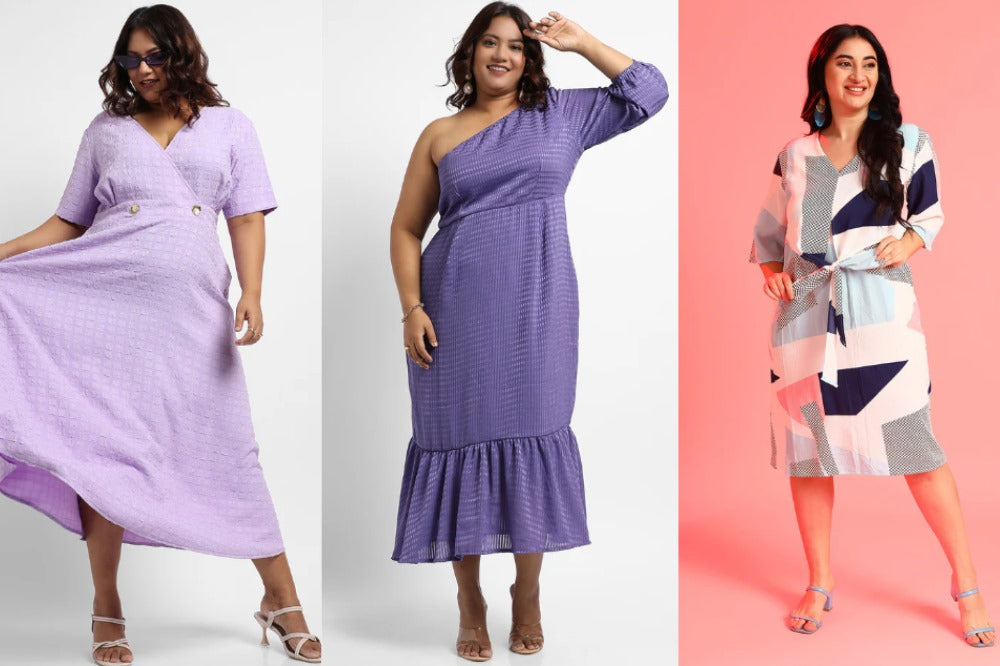
    When you are ready to bring in more color, a few pairings reward the risk. Pink and red, once considered a clash, now read as confident and modern, especially in tonal warm shades. Pink and olive green is a quietly sophisticated combination that flatters most complexions. Pink with navy feels polished and a touch preppy. And for the truly committed, pink with another bright like cobalt or marigold turns the outfit into a deliberate color story, the kind of look that needs no jewelry and no explanation.
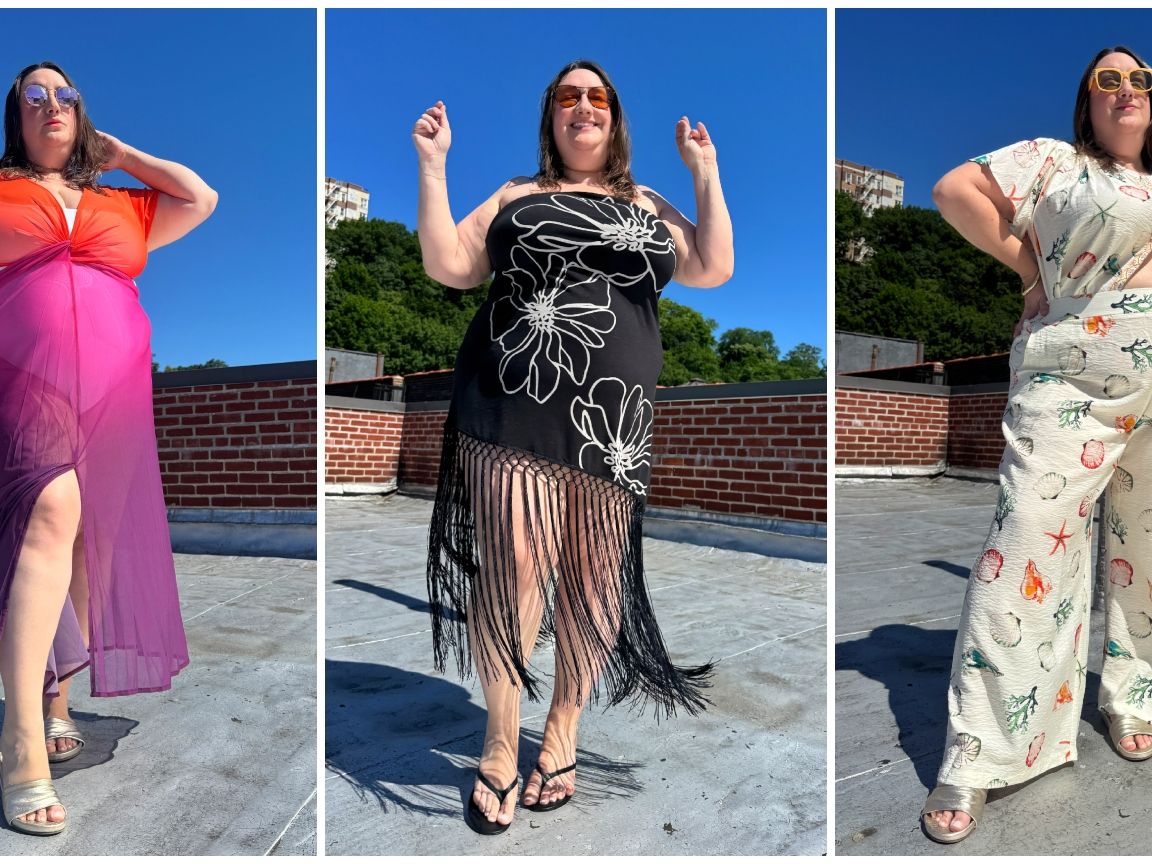
    One steadying rule keeps all of this from tipping over. Let the pink be either the loudest note or part of a tonal whole, but not a random third voice. Either build the rest of the outfit quiet so the shoe sings, or commit fully to color and make the pink belong to a larger palette. The outfits that feel off are usually the ones where the shoe is fighting two other competing brights with no plan.

    Building a Three-Pair Pink Wardrobe That Actually Works

    If you want pink footwear to earn its place rather than gather dust, think in terms of a small, deliberate set instead of one impulse buy. Three pairs, chosen to do different jobs, will carry you through nearly every occasion.

    The first is the everyday neutral-adjacent pair. A blush ballet flat or a low rose mule, ideally in a wide width if you need one, in a soft cushioned style from somewhere like Torrid or Naturalizer. This is the pair that quietly replaces your nude shoes and goes with everything from jeans to a work dress. It does the most invisible work and you will reach for it constantly.

    The second is the comfortable statement pair, and this is where a pink sneaker shines. A clean leather court style in a mid-rose or a punchy coral gives you color and all-day support in one move, perfect for long days on your feet, weekend errands, or any outfit that needs a lift without a heel. Sam Edelman and similar brands make sneakers that read polished rather than purely athletic.

    The third is the occasion pair, the one that exists to be noticed. A fuchsia block heel, a magenta strappy sandal, or a hot pink boot, depending on your climate and your taste. You will wear it less often, so prioritize a color and shape you genuinely love over versatility, and lean on the block heel or platform so the occasion does not end with aching feet. Paired against black, white, or denim, this is the shoe that turns a plain outfit into an event.

    Three pairs, three jobs, every body type welcome. That is the whole secret. Pink footwear stopped being a dare and became a wardrobe staple the moment brands started building it in real sizes, real widths, and real support. The shade is here, it is generous, and it has been waiting for you to put your foot down.