Tag: self-worth

  • Reese Witherspoon’s Relationship Era: What Her Dating Life Teaches Us About Love, Self-Worth, and Starting Over

    Reese Witherspoon’s Relationship Era: What Her Dating Life Teaches Us About Love, Self-Worth, and Starting Over

    Picture a woman who has spent decades being told exactly who she is. America’s sweetheart. The girl-next-door with the Southern drawl. The one who plays the underestimated heroine so well because, for a long stretch, the world quietly underestimated her too. Now picture that same woman at 50, building a company worth hundreds of millions, raising three children across two chapters of her life, and stepping into a new relationship on her own terms, with nobody’s permission but her own. That is the version of Reese Witherspoon worth paying attention to, and not because her love life is anyone’s business to dissect. It is because the way she has moved through love, loss, and reinvention offers a quiet blueprint for any woman who has ever wondered whether the next chapter could be better than the last.

    The headlines tend to flatten her into either a romance or a divorce. The fuller story is more useful, and far more encouraging.

    A Love Story That Started Young

    A Love Story That Started Young

    Reese Witherspoon’s first great public love began when she was barely out of her teens. She met actor Ryan Phillippe in the late 1990s, around the time they filmed “Cruel Intentions” together, and the two married in 1999 when she was just 23. They went on to have two children, daughter Ava and son Deacon, and for years they were one of Hollywood’s recognizable young couples, building careers and a family at the same time.

    That marriage ended. The pair announced their separation in 2006 and divorced in the years that followed, after roughly seven years together. What is striking, looking back across two decades, is not the breakup itself but what came after it. Witherspoon and Phillippe found a way to keep co-parenting their children with steadiness. Their grown kids have appeared at family milestones with both parents present and warm. A marriage that did not last for life still produced something durable, which is a quietly radical idea: a relationship can end and still be considered a success if the people in it grow and the children are loved well.

    For any woman reading this who carries the private ache of a divorce, especially one that happened young, that detail matters. Ending a marriage is not the same as failing at love. Sometimes it is the beginning of learning what love actually requires.

    The Second Marriage, and the Public Grace of Letting Go

    A few years later, in March 2011, Witherspoon married talent agent Jim Toth. They welcomed a son, Tennessee, and built a life together for over a decade. By most outward measures, it looked settled and steady, the kind of marriage that reads as a happy ending in a magazine profile.

    In March 2023, after nearly twelve years together, the couple announced they were divorcing. The way they did it is the part worth holding onto. In a joint statement, they described the choice as a difficult one made with care, and said they were moving forward with deep love, kindness, and mutual respect for everything they had built. They named their son and their family as the priority and asked, simply, for privacy. The divorce was settled within months, handled with the same restraint it began with.

    There were no public accusations, no airing of grievances, no scramble to assign blame. That kind of composure is not coldness. It is a form of self-respect. It is possible to honor years you shared with someone and still know, clearly, that the relationship has run its course. Letting go without bitterness is one of the hardest emotional skills there is, and Witherspoon modeled it on one of the most-watched stages in the world.

    It would have been easy, and maybe even expected by a public hungry for drama, to turn the ending into a spectacle. She chose the harder path of dignity instead. For a woman who has built so much of her work around telling honest stories about other women, there is something fitting about the way she protected the truth of her own. Not every chapter needs to be narrated for an audience. Some of the strongest things a person does are the things she keeps quietly, between herself and the people she loves.

    The lesson lands gently. You can grieve a relationship and protect your peace at the same time. You can speak about someone you once loved with grace, not because you owe the public a polished story, but because how you leave a chapter says as much about you as how you entered it.

    Knowing Your Worth Means Refusing to Shrink
    Knowing Your Worth Means Refusing to Shrink

    Somewhere in the conversation about Witherspoon’s relationships, an easy assumption hides: that a woman in her late 40s navigating a second divorce might dim, retreat, or settle. The opposite happened. The years around her marriages were also the years she became one of the most powerful figures in her industry, and that is not a coincidence. A woman who knows her worth does not measure it by whether a relationship lasts.

    This is the part of her story that speaks loudest to readers who have ever made themselves smaller to keep a relationship comfortable. There is a temptation, especially for women, to soften our ambitions, mute our opinions, or fold ourselves into the shape someone else prefers. Witherspoon’s life is a counterargument. Her self-worth was never on loan from a partner. It came from somewhere she built herself.

    That distinction changes everything about how a person dates and loves. When your sense of value is rooted in your own work, your own friendships, your own children, your own faith in yourself, you stop auditioning for approval. You can choose a partner from a place of fullness rather than need. And you can walk away from one without losing your sense of who you are, because you never outsourced that to begin with.

    Building an Empire as an Act of Self-Belief

    The clearest evidence of that inner foundation is what she built. Frustrated by an industry that offered women too few rich, complicated roles, Witherspoon founded the production company Hello Sunshine in 2016 with a mission centered on women’s stories. She did not wait for permission. She backed projects that put complicated female characters at the center, championed books written by and about women through her wildly popular book club, and turned overlooked stories into acclaimed series.

    In 2021, that bet paid off in spectacular fashion. Hello Sunshine sold for a reported figure north of 900 million dollars to a media company backed by a major investment firm, with Witherspoon staying on to help lead it. She had taken a problem nobody was rushing to fix and turned it into one of the most significant business stories an actor has ever authored.

    Here is why that belongs in an article about love and self-worth. Witherspoon’s empire is not separate from her sense of self. It is an expression of it. She proved that a woman can be ambitious, financially independent, and creatively bold, and that none of those things make her less worthy of tenderness or partnership. Independence is not the opposite of love. It is the strongest possible ground to stand on while you choose it.

    For women who have been quietly told that success makes them intimidating, or that being too capable will scare off connection, her trajectory offers a different truth. The right person is not threatened by your fullness. The right person is drawn to it.

    Starting Over With Confidence, at Any Age

    Then comes the part the headlines fixate on, and it deserves to be handled with care rather than gossip. In the period after her second divorce, Witherspoon has been publicly reported to be in a new relationship, dating businessman Oliver Haarmann. The couple have been seen together and made a public appearance as a pair, and reporting from established outlets has framed it as a steady, joyful chapter rather than a fleeting one. She has spoken, in the broad sense, about enjoying this season of her life.

    The specifics of someone else’s romance are not the point, and they are not ours to mine. The point is the posture. A woman in her 50s, after two marriages and a very public divorce, choosing to open herself to love again is not a footnote. It is an act of courage. So much of the cultural script tells women that their romantic story has a shelf life, that starting over after 40 or 50 is something to apologize for or rush past quietly. Watching a high-profile woman simply live it, without shame and without performance, rewrites that script in real time.

    Starting over does not require a fresh start to look impressive from the outside. It only requires the willingness to believe that you are still worthy of joy, connection, and being chosen, no matter what has come before. Age does not close that door. Divorce does not close it. The number of chapters already written does not close it. The door stays open as long as you decide it does.

    How to Carry These Lessons Into Your Own Life

    How to Carry These Lessons Into Your Own Life

    It is easy to admire a famous woman’s resilience from a distance and harder to translate it into an ordinary Tuesday. So let these lessons come down to earth.

    Start by separating your worth from your relationship status. Whether you are single, dating, married, or rebuilding after a split, your value is not pending anyone’s verdict. Write down the things that make you you, the work you are proud of, the people who love you, the ways you show up, and read that list on the days you feel small. Witherspoon did not wait to be told she mattered. She built a life that reflected back what she already knew.

    When a relationship ends, give yourself permission to grieve it without declaring yourself a failure. You can honor what was real, keep your dignity intact, and speak about a former partner with grace. That grace is not for them. It is for you, and for any children watching how you handle hard things. The way you carry a loss becomes part of what you pass on, and there is real power in showing the people around you that endings can be met with steadiness rather than scorched earth.

    Refuse to shrink. If you have been muting your ambitions or your opinions to keep the peace, notice it. The person who is right for you will not need you smaller. Pour into the things that are genuinely yours, a project, a skill, a community, a long-postponed dream, because that fullness is what lets you love from strength instead of fear.

    And if you are standing at the edge of starting over, at 30 or 45 or 60 or beyond, let the size of the canvas stop intimidating you. A new beginning does not have to be dramatic to be real. It can be one honest conversation, one boundary you finally hold, one yes to something that scares and excites you in equal measure. You are allowed to want more. You are allowed to begin again.

    The Real Takeaway

    The Real Takeaway

    Reese Witherspoon’s story works as more than celebrity narrative because, underneath the fame, it is profoundly ordinary in the best way. She loved young and lost. She loved again and let go with grace. She built something that nobody handed her, and she did it while raising children and surviving the kind of public scrutiny most of us will never know. Through all of it, the thread that holds is the same thread available to any woman: a refusal to let circumstance decide her worth.

    So if you are reading this between chapters of your own, hold onto the part that has nothing to do with red carpets. Your value was never up for negotiation. Your capacity to begin again was never spent. Today, with whatever is in front of you, you get to decide that you are still worthy of love, still capable of building, and still allowed to walk into the next room with your head up. That decision is yours, and it always has been.
  • Jada Pinkett Smith’s Most Powerful Quotes on Self-Worth, Body Image, and Loving Yourself Unapologetically

    Jada Pinkett Smith’s Most Powerful Quotes on Self-Worth, Body Image, and Loving Yourself Unapologetically

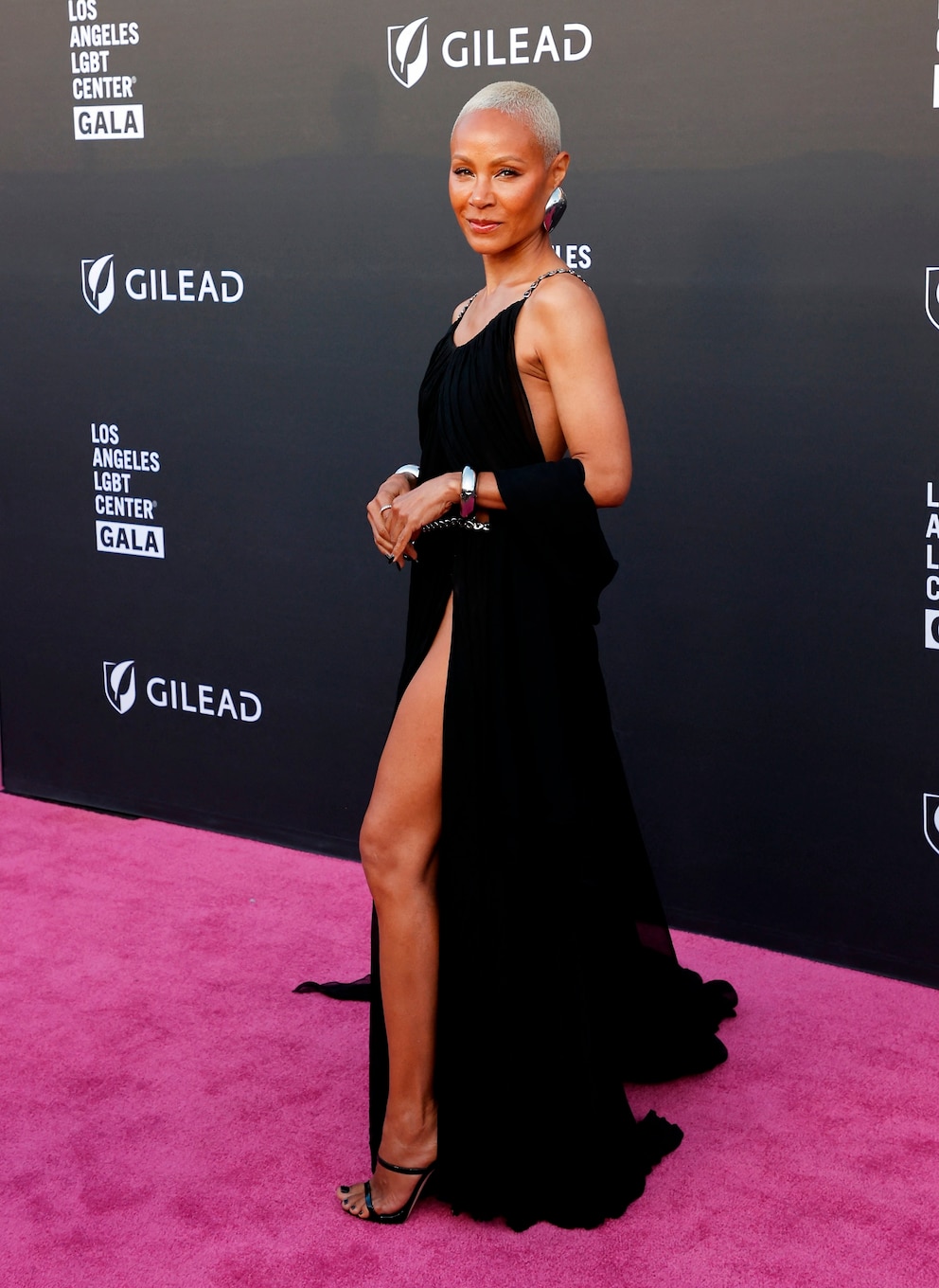
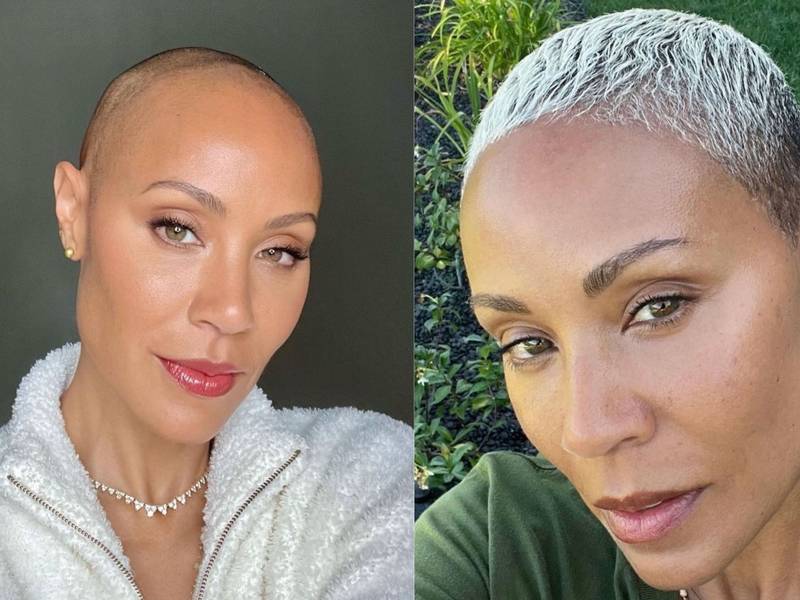
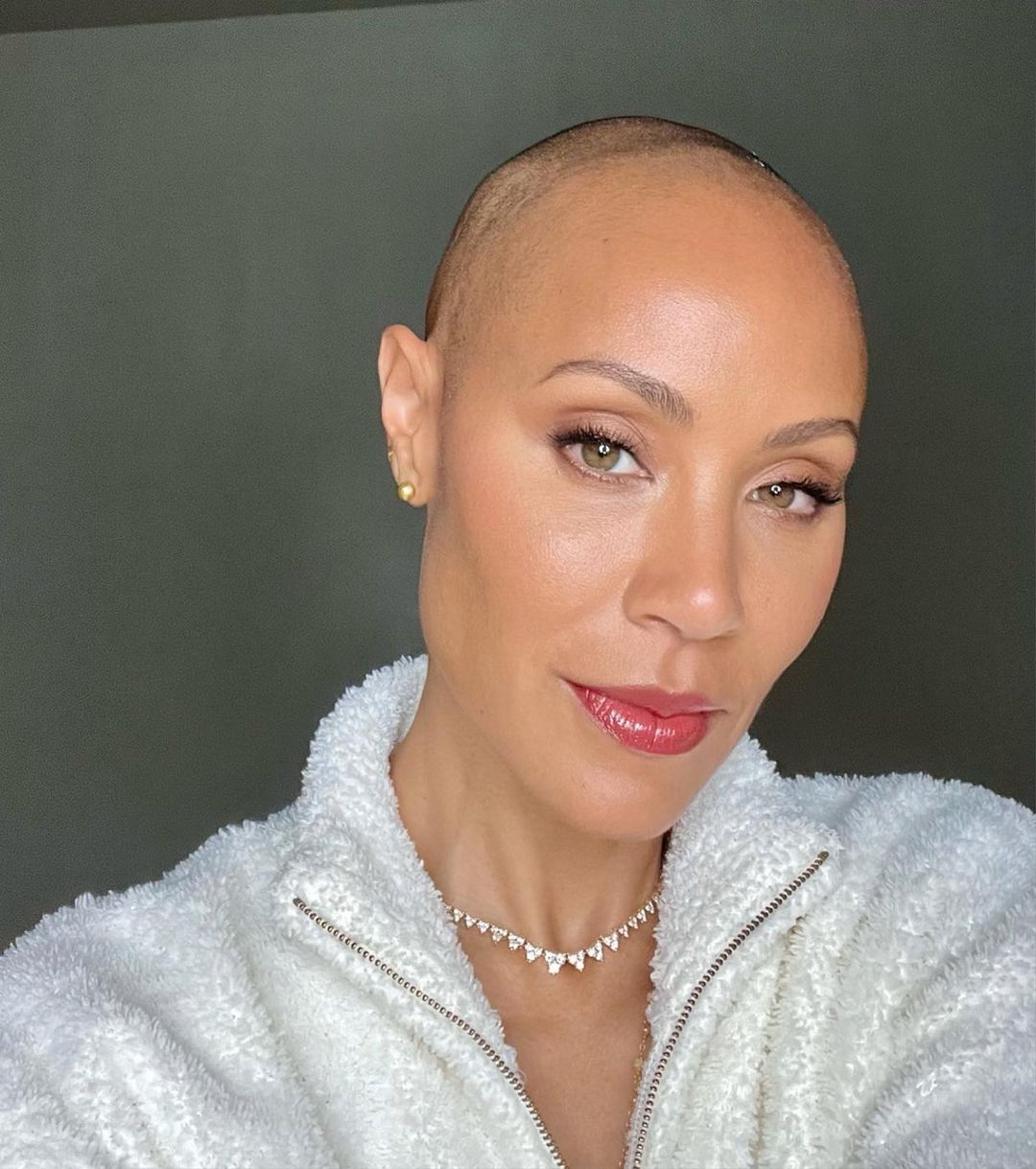
    “Me and this alopecia are going to be friends … period!” That was the line Jada Pinkett Smith chose in late 2021, recording herself on Instagram, fingers tracing the bald patches along her scalp, laughing instead of hiding. It is a small sentence that carries an enormous amount of weight. Here was a woman who had spent years grieving her hair, shaking with fear in the shower as it came out in handfuls, deciding out loud that she would stop fighting her own body and start befriending it. That pivot, from fear to friendship, is the heart of everything she has shared about worthiness. And it is exactly the kind of permission so many of us are still waiting to give ourselves.

    Who She Is and Why Her Voice on Self-Worth Lands So Hard

    Who She Is and Why Her Voice on Self-Worth Lands So Hard

    Jada Pinkett Smith has been famous since the early 1990s, an actress from Baltimore who built a career, a family, and eventually one of the most candid talk shows on the internet. Through “Red Table Talk,” she sat across from her daughter Willow and her mother Adrienne and turned her own living room into a space where Black women, in particular, could say the unsayable about pain, marriage, mental health, and bodies that do not behave the way we are told they should.

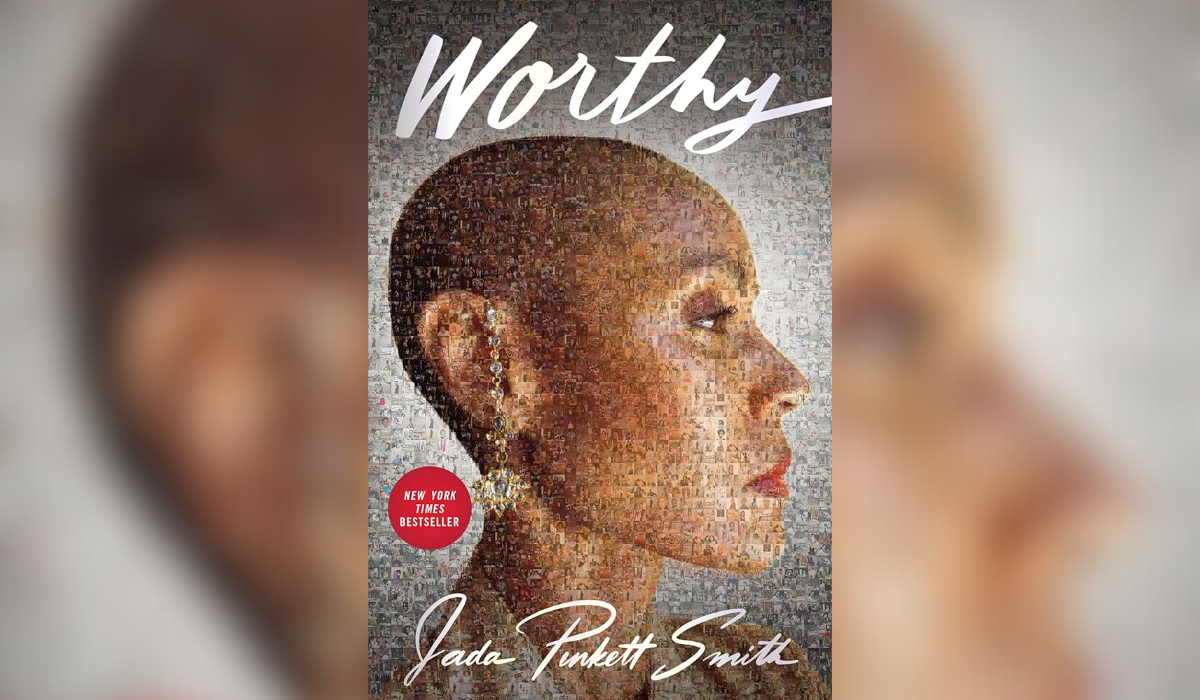
    What makes her words on self-worth resonate is that she did not arrive at them from a place of ease. In her 2023 memoir “Worthy,” she writes openly about a period before her 40th birthday when she contemplated suicide, about complex trauma she had never named, about a marriage that reached a breaking point. She titled the book “Worthy” precisely because worthiness was the thing she had to fight to believe about herself. When a woman who has lived through that much tells you that you are enough, it does not sound like a slogan. It sounds like a report from someone who walked the whole road.

    For curvy and plus-size women especially, that journey translates. The condition Jada lives with, alopecia, changed her appearance in a way she could not control and could not hide. She knows what it is to look in the mirror and meet a body that the world did not prepare you to love. Her wisdom is not about having the “right” body. It is about belonging to yourself no matter what your body does.

    On Self-Worth and Worthiness

    On Self-Worth and Worthiness

    The center of Jada’s message is deceptively simple: your worth is not negotiable, and it is not earned by performance or by being adored.

    In interviews around the release of her memoir, she has been honest that this was a hard-won lesson rather than a natural gift. Reflecting on her younger self, she has said, “I did not have a level of self love about me, so that was the thing that needed to be healed.” That admission matters. So many of us assume the confident women we admire were simply born sure of themselves. Jada is telling you the opposite. Self-love was a wound she had to tend, not a trait she inherited. If you have spent decades waiting to “feel” worthy before you treat yourself well, her story flips the order. You tend the wound first. The feeling follows.

    She has also been clear that self-worth is the foundation everything else is built on. Writing in “Worthy” about the strain in her marriage, she reflected, “As much as I wanted him to love me, that would never happen if I didn’t love myself.” Read that slowly. She is not saying love is conditional. She is saying that no amount of love from another person can fill a hole where your own self-regard should be. For anyone who has ever tried to shrink, fix, or apologize for her body in hopes of finally deserving love, this is a gentle and necessary correction. The love you are chasing on the outside has to first take root on the inside.

    And on the practical work of self-worth, she has named the saboteur directly. “Women need to attack those negative voices they have in their head,” she has said. Notice the verb. Not “manage,” not “tolerate.” Attack. The cruel inner commentary about your stomach, your arms, your reflection in a dressing room mirror is not the truth. It is a voice to be confronted. Jada gives you permission to stop treating that voice as a fair witness.

    On Body Image and the Alopecia Journey

    On Body Image and the Alopecia Journey

    Jada’s relationship with her hair, and then her scalp, is one of the most public body-image journeys any celebrity has shared. It did not start with acceptance. It started with grief.

    When she first opened up on “Red Table Talk,” she described hair as something deeply tied to her sense of self, and she did not pretend the loss was easy. For a long time, wrapping her head became the way she reclaimed dignity from the condition. “When my hair is wrapped, I feel like a queen,” she said. There is something worth holding onto in that line. She did not wait until she felt fully healed to feel beautiful. She found a ritual, a turban, a wrap, that let her meet herself as royalty in the middle of the struggle. You are allowed to build small rituals that make you feel regal right now, in the body and the circumstances you currently have, without waiting for some finished version of yourself to arrive.

    The turning point came in stages. In July 2021, she shaved her head, crediting her daughter for the nudge. “Willow made me do it because it was time to let go,” she wrote, adding that her fifties were “’bout to be Divinely lit with this shed.” Letting go is its own kind of strength. So much of body-image pain comes from clinging to an image of ourselves we think we are supposed to maintain. Jada chose release, and she framed it not as defeat but as something divine.

    Then came that 2021 video and its declaration of friendship with the very thing she once feared. She has spoken about decorating her bare scalp, joking about adding rhinestones and making herself a little crown, turning the site of her loss into something she could play with and adorn. That is alchemy. She took the part of her body the world might pity and decided to bedazzle it.

    Underneath all of it sits a principle she stated years earlier about refusing to let her appearance set the terms of her worth: “If you can’t love me with short hair, and you telling me I got to have long hair to be loved, guess what, I ain’t the one for you.” Swap “short hair” for “soft belly,” “fuller arms,” “stretch marks,” or “a size that isn’t sample size,” and the line holds. Anyone who requires you to alter your body to qualify for love is telling you they are not for you. Believe them, and keep your peace.

    On Healing and Self-Love

    On Healing and Self-Love

    Jada draws a careful line between self-love and the pretty, painless version of “self-care” that gets sold to us. For her, loving yourself is the hard internal work, the willingness to look at your shadow as well as your light.

    Speaking about the most public and painful season of her life, she reframed even crisis as curriculum. As she put it, “this is your lesson, this is where you have to learn how to love yourself and love Will in the light and in the shadow.” Loving yourself in the light is easy. Loving yourself in the shadow, on the days the photos disappoint you, on the days the scale or the mirror tries to ruin you, is the real practice. Jada is not promising you a self-love that only shows up when you feel great. She is describing one sturdy enough to stay when you do not.

    Her memoir’s larger argument is that healing is possible even from the lowest places. She has been open that she once described her despair as a kind of “hellfire,” a walk along “the plank of doom,” language that does not sugarcoat how dark it got. And yet the book exists because she came back. The very fact that “Worthy” was written by someone who once doubted whether she wanted to be here is the most encouraging part of all. If worthiness can be rebuilt from that foundation, it can be rebuilt from yours.

    She has also modeled rest as part of healing rather than a reward for productivity. “When I’m tired, I rest. I say, ‘I can’t be a superwoman today,’” she has said. For women, and especially for women who have made caretaking their whole identity, that permission is radical. Resting your body, feeding it, being gentle with it, is not laziness. It is part of how you tell yourself you are worth caring for.

    On Women Supporting Women

    On Women Supporting Women

    Jada’s vision of worthiness has never been just personal. She consistently turns it outward, toward how women treat one another and how we make room for each other to be whole.

    One of her most quoted reflections names the impossible bind women are placed in: “We have to nurture our young women and understand the beauty and the strength of being a woman. It’s kind of a catch-22: Strength in women isn’t appreciated, and vulnerability in women isn’t appreciated. It’s like, ‘What the hell do you do?’ What you do is you don’t allow anyone to dictate who you are.” That last instruction is the whole philosophy in one breath. The culture will criticize you for being too much and for being too soft, for taking up space and for hiding. Since you cannot win the approval game, you stop playing it and define yourself instead.

    She extends the same grace to other women’s choices. “I just think, as women, we have to give ourselves room to be individuals,” she has said. “So when a woman makes a decision for herself, we as women shouldn’t set those hardcore boundaries for another woman. Just like we don’t want men setting hardcore boundaries for us.” Body acceptance gets so much easier in community. When you stop policing other women’s bodies and choices, you quietly loosen the grip of judgment on your own. The kindness you extend outward tends to find its way back home.

    And on the ultimate measuring stick, Jada keeps returning to one private, unglamorous question. “At the end of the day, all that matters is: Do you love what you see when you look in the mirror? That is it, baby.” Not whether the world approves. Not whether the comments are kind. Whether you can stand in front of your own reflection and feel love. That is the only scoreboard that counts.

    How to Apply It in Your Own Life

    Jada’s words are warm, but they are also usable. A few ways to carry them into an ordinary week:

    Start a “queen” ritual. She felt like royalty in a head wrap before she felt healed. Find your version. A lipstick, a robe, a piece of jewelry, a song you play while you get dressed. Let it be a small, repeatable act that meets you as worthy now, not after some goal.

    Befriend the part you have been fighting. She made friends with her alopecia. Pick the one feature you have warred with longest and try a single day of treating it as a companion rather than an enemy. Speak to it the way you would speak to a friend’s body, which is to say, with mercy.

    Catch and confront the voice. When the inner critic starts narrating your reflection, do what she said and challenge it directly. Name it as a voice, not a verdict. Ask whether you would ever say those words to a daughter or a friend.

    Lead with self-love, not after it. Stop waiting to feel worthy before you act worthy. Feed yourself well, rest when you are tired, wear the thing you have been “saving.” Worthiness is built by treating yourself as worthy, not by finally believing it one distant day.

    Make your circle a soft place. Stop critiquing other women’s bodies out loud, even casually. The standard you stop enforcing on them is the standard that stops haunting you.

    A Closing Worth Keeping

    Jada Pinkett Smith stood in front of a camera, ran her hand over a bald scalp the world had mocked, and laughed. She wrapped her head and called herself a queen. She wrote an entire book to argue that she, and by extension you, were worthy all along. None of that required a different body. It required a different relationship with the one she has.

    So tonight, when you pass a mirror, borrow her question and answer it honestly: do you love what you see? If the answer is not yet a full yes, let that be the starting line, not a failure. Wrap your head, soften your voice, rest your body, and treat yourself like the treasure you already are. The friendship Jada made with her own reflection is available to you too, starting with the next time you look.