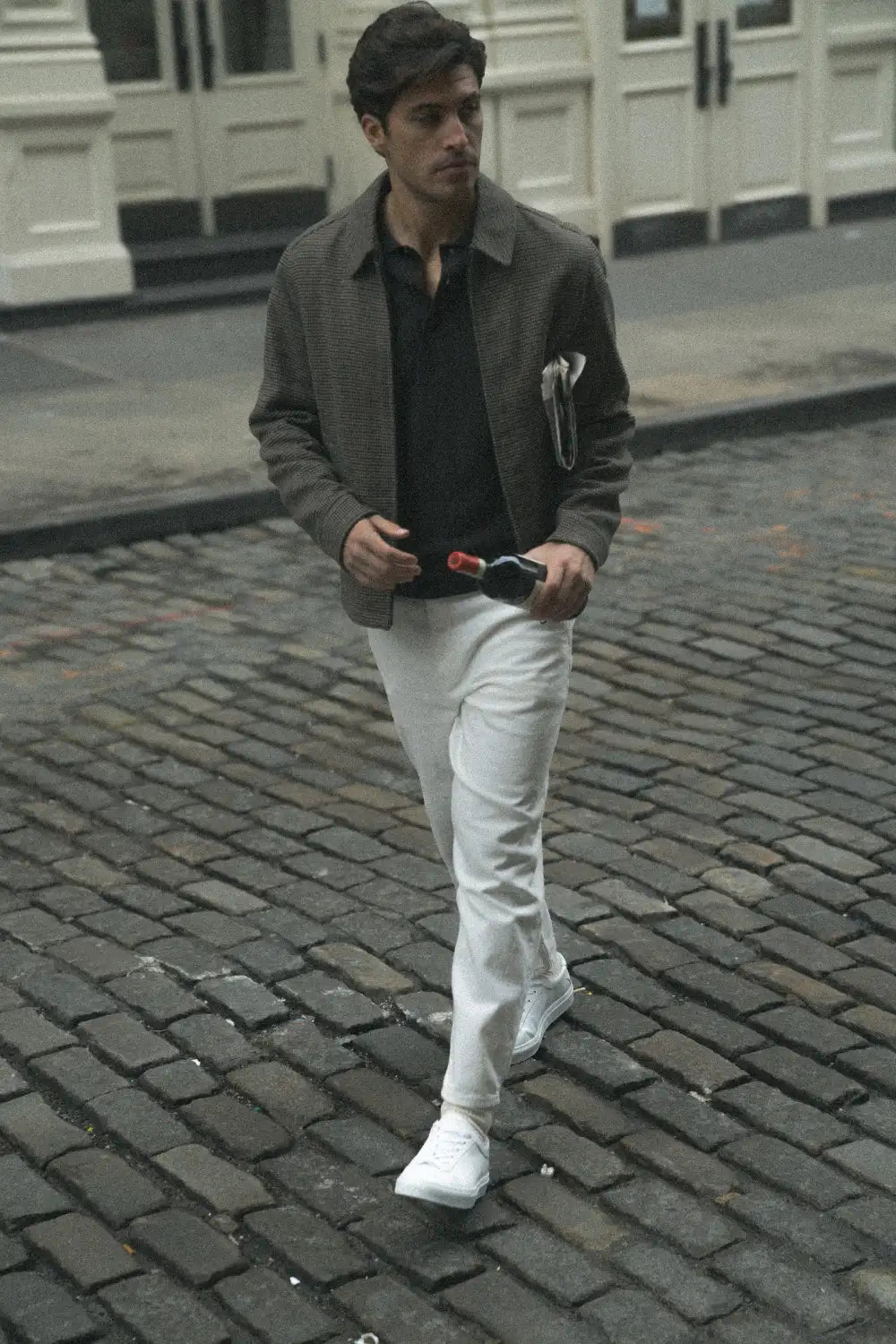
Scroll far enough on any given evening and you will meet him. He is standing in a grocery aisle in a faded ball cap, one hand steering a cart, the other loosely holding a phone. He is wearing a plain crewneck that has clearly been washed a hundred times, jeans that fit without trying too hard, and a pair of slightly chunky sneakers that your teenage self would have called deeply uncool. The caption is three words, sometimes fewer. The comment section is thousands of people losing their composure over a man buying oat milk.
This is the hot dad. Not necessarily a literal father, though he might be. More a whole vibe, a category of appeal that has quietly taken over social feeds and refused to leave. He is relaxed. He is confident in a way that has nothing to prove. He looks like he sleeps well and returns his shopping cart. And the internet, particularly the corners of it run by and for women, cannot get enough of him.
It would be easy to file this under “silly seasonal trend” and move on. But the hot dad is worth pausing on, because trends like this one are rarely just about the specific thing everyone is fawning over. They are a window into what people actually want, underneath all the marketing and the airbrushing and the years of being told what desirable is supposed to look like. And what this particular window shows is genuinely lovely news for the rest of us.
Where This Whole Thing Came From
The hot dad did not appear out of nowhere. He is the natural endpoint of a few things converging at once.
For years, the dominant male ideal online leaned hard into a very specific look: chiseled, gym-optimized, filtered to within an inch of its life, usually shirtless, usually flexing. It was aspirational in the way a billboard is aspirational, which is to say slightly exhausting and not especially warm. You admired it the way you admire a sports car you will never drive. Around the same time, women were being sold their own relentless version of that same pressure, and a lot of people, understandably, got tired.
Then came the pushback, which usually looks like people simply gravitating toward something that feels better. The “dad” look started as a bit of gentle self-deprecating humor. Dad sneakers, those deliberately unglamorous chunky trainers that New Balance rode straight back into fashion, went from punchline to genuine style flex. The dad hat, low and soft and unbothered, became a staple. Then the joke curdled into something sincere. People realized they were not laughing at the aesthetic. They actually liked it.
By 2026, “dad style” has settled into a recognizable set of signals: comfortable clothes that fit properly rather than tightly, natural fabrics, muted colors, an overall impression of a man who dresses for his own comfort and not for anyone’s approval. The look reads as lived-in, capable, and calm. Fashion writers describe it as quietly confident and not trend-led, which is funny, because it absolutely became a trend. But the reason it caught fire is not the New Balances. It is what the New Balances are standing in for.
It Was Never Really About the Sneakers
Here is the part that matters. When thousands of people react to a video of an ordinary-looking man doing an ordinary thing, they are not responding to a jawline. They are responding to a feeling the man gives off.
Watch the videos and read what people actually say in the comments, and a pattern emerges that has almost nothing to do with physical perfection. The words that come up are things like “he seems so calm,” “the way he looks at her,” “you can tell he is a good person,” “the energy is just safe.” Nobody is analyzing his body fat percentage. They are picking up on something much harder to fake: he seems settled. He seems like he would be easy to be around. He seems like a person who has done some living and made peace with himself.
That is the whole engine of the hot dad phenomenon. It is a mass, semi-anonymous vote for warmth over intensity, for security over spectacle, for a person who is comfortable in their own skin over a person who is performing an ideal. The aesthetic details, the cap and the crewneck and the shoes, are just the visual shorthand for an internal quality. They signal a man who has stopped auditioning.
And once you see that clearly, the whole trend flips. The hot dad is not a new beauty standard sneaking in through the side door. He is the opposite. He is people quietly admitting that the old beauty standard was never the thing they actually wanted in the first place.
What Women Are Actually Signaling Here
There is a version of this conversation that gets a little condescending, where people act surprised that women could possibly be attracted to something other than abs. Let us not do that version. Women have always known this. What is new is not the preference. What is new is that the preference is finally the loud one, out in the open, getting millions of likes instead of being treated as the sensible-but-boring option.
For a long time the cultural script insisted that attraction ran on a narrow set of visual metrics, and that anyone who claimed otherwise was either lying or settling. The hot dad trend is a very public rejection of that script. It says, out loud and at scale, that the qualities that make someone genuinely magnetic are things like ease, kindness, steadiness, presence, and the particular confidence that only comes from no longer needing to impress a room.
Think about what actually draws you to a person once you are in the room with them. It is rarely a measurement. It is the way they listen. Whether they make you feel relaxed or slightly on edge. Whether they seem to like their own life. Whether their attention feels generous or performative. None of that shows up in a photo. All of it shows up in about ninety seconds of being near someone. The hot dad trend is the internet finally catching up to what your own nervous system has always known: safety and warmth are deeply, deeply attractive, and no amount of sculpting substitutes for them.
There is also something quietly revolutionary in celebrating a body that has aged, softened, and lived. The hot dad often has a bit of a belly, some grey, some lines around the eyes. The trend does not ask him to fix any of it. It finds the lived-in-ness charming precisely because it reads as honesty. A body that has been somewhere. A face that has felt things. That is a very different value system from the one that treats every human feature as a problem to be corrected.
The Part That Is Actually About You
Now for the turn, because this trend is not just a fun thing to observe from the outside. It is a mirror, and it is holding up something worth looking at.
If you have spent years absorbing the idea that you will be desirable once you shrink, tone, tighten, or otherwise fix yourself into an acceptable shape, the hot dad is quietly dismantling that idea in real time, using the exact same logic, just pointed the other direction. Because the thing everyone finds so attractive about him is not that he achieved a look. It is that he stopped fighting himself. He wears clothes that fit the body he has. He moves like he is allowed to take up space. He is not sucking anything in. And that ease, that permission he has clearly given himself, is the single most magnetic thing about him.
You are allowed to have that too. In fact, you already have access to the exact quality that makes the whole aesthetic work, and it costs nothing and requires no particular body.
Consider how much of “hot dad energy” is really just self-acceptance made visible. The relaxed posture. The clothes chosen for comfort and fit rather than for hiding. The absence of apology. The willingness to be photographed doing a boring errand without panic. These are not physical traits. They are a relationship with yourself, and it is one you can build regardless of your size, your age, or how many things a magazine once told you to change.
The women flooding those comment sections are, whether they realize it or not, telling on themselves in the best way. They are announcing that the thing they find irresistible is a person at peace in their own body. Which means the most attractive move available to you was never to become someone else. It was always to become more comfortably, more unapologetically yourself. Confidence is not a reward you earn after the transformation. It reads as attractive because it is the transformation.
How to Borrow the Energy for Yourself
None of this is abstract. You can take the actual mechanics of what makes the hot dad work and apply them to your own life this week, no makeover required.
Start with the clothes, because it is the easiest lever. The hot dad wears things that fit the body he has right now, today, not the body he keeps promising himself. That is the whole secret. Nothing ages a person or shrinks their presence faster than clothes chosen to hide. Well-fitting clothes in fabrics that feel good against your skin do something almost magical: they let you forget your body and get on with your day, which is exactly the ease everyone finds so appealing. Buy for the size you are. Give away anything that only fits the hypothetical you.
Then borrow the posture, and not in a rigid, shoulders-back way. The relaxed openness is the point. He is not braced for judgment. Practicing taking up your full space, in a chair, in a doorway, in a photo, retrains your body out of the flinch that years of self-criticism installed. It feels strange at first and then it feels like relief.
Borrow the pace, too. Part of what reads as attractive in these videos is unhurriedness, a person who is not frantic, not performing, not scanning for approval. You can practice that. Move through your day like someone who is allowed to be there, because you are.
And borrow, most of all, the permission. The hot dad is not waiting until he looks a certain way to enjoy his life, dress well, be photographed, or believe he is worth someone’s full attention. He simply decided he already was. You get to make that same decision, and you do not have to earn it first. That is not a consolation prize for people who cannot achieve the “real” ideal. Increasingly, and the whole internet is voting on it, it is the real ideal.
A Man in a Ball Cap Buying Oat Milk, One Last Time
Go back to that grocery aisle where this started. Look at what is actually happening in the frame. A person who likes their life, comfortable in their body, present in the moment, doing something small and ordinary without a shred of self-consciousness. That is it. That is the entire recipe, and there is not one ingredient in it you cannot have.
The hot dad became a phenomenon because he accidentally proved something the beauty industry spent decades trying to make you forget: that the most attractive quality a human can have is being at home in themselves. He did not diet his way there. He did not filter his way there. He just stopped treating his own body as a problem and let himself be a whole person out loud.
So the next time one of those videos crosses your feed and you feel that little pull of “why is this so appealing,” take the answer seriously and then turn it around. What you are responding to is self-acceptance. What you are watching is what confidence actually looks like from the outside. And every bit of it, the ease, the warmth, the unbothered presence that makes a stranger buying oat milk suddenly captivating, is available to you exactly as you are, at exactly the size you are, starting the moment you decide, like he clearly did, that you were never the thing that needed fixing.
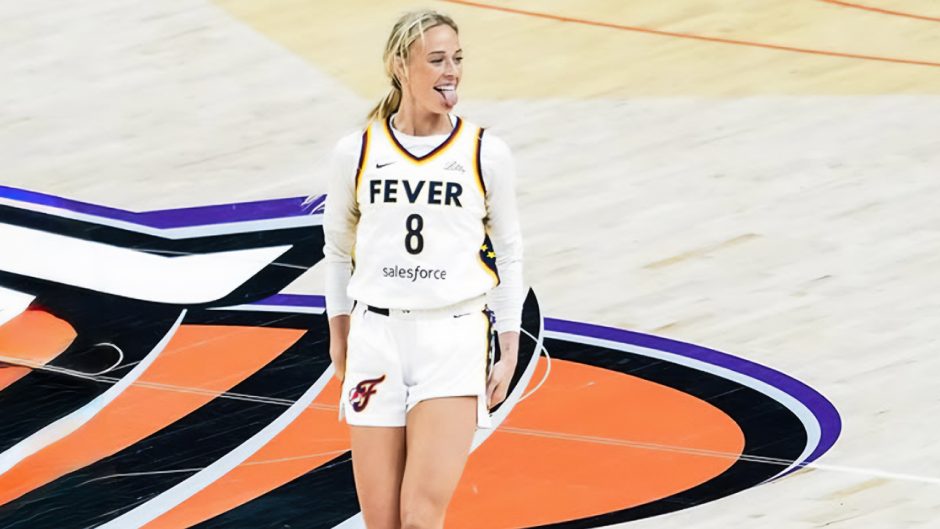
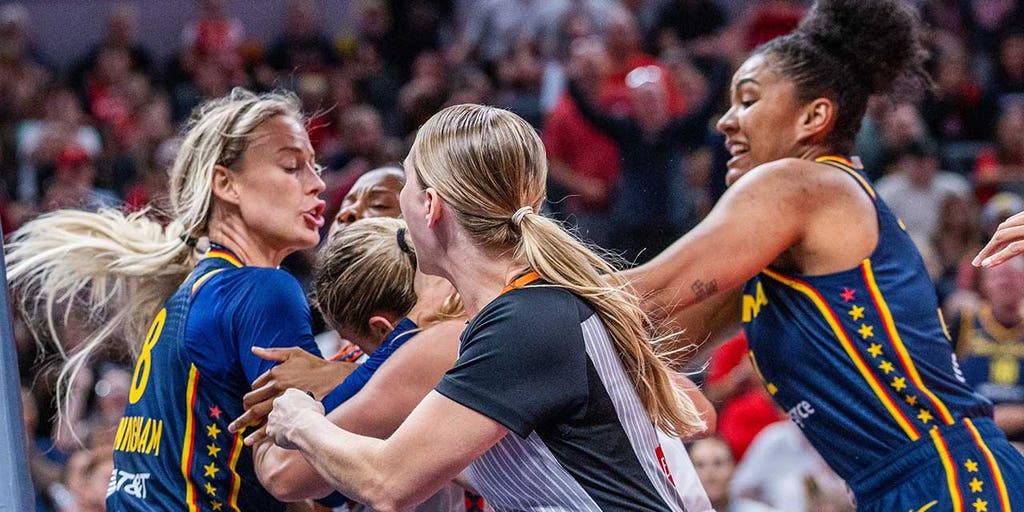
Twenty-two seconds is not a long time. It is barely the length of a held breath, a song’s bridge, the gap between a free throw and the next play. But when a Phoenix arena camera locked onto a Fever guard standing dead still, finger raised, gaze fixed across the court at a former teammate, those twenty-two seconds turned into one of the most replayed moments of the 2025 WNBA season. The internet did what the internet does. The clip looped, captions multiplied, and a player already known for her edge became, almost overnight, a meme that millions of people recognized on sight.
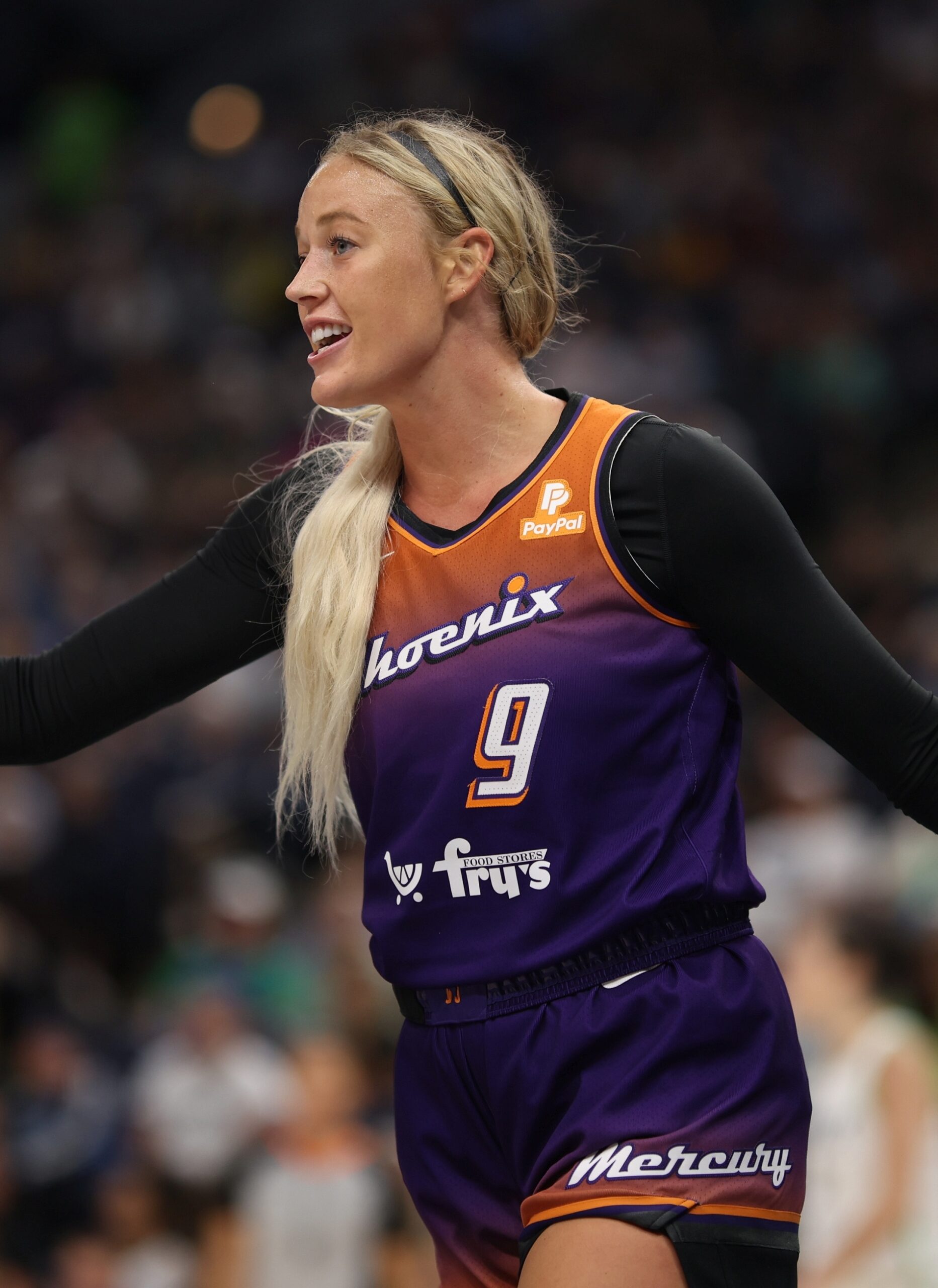
The woman at the center of all that noise is Sophie Cunningham, and the more interesting story is not the staredown itself. It is what she has done with the attention since: turned a reputation for fearlessness on the court into a broader, louder conversation about presence, self-expression, and what it looks like when a woman in sport decides she has nothing to shrink for.
The staredown, aimed at her former Phoenix teammate DeWanna Bonner, was not even the first time Cunningham had become a viral character that season. By the time the clip spread, she had already been crowned an unlikely folk hero by a swelling fan base, the kind of player whose name trends for reasons that have little to do with a stat line. That is a strange and telling thing to happen to a role player. It usually happens to scorers and superstars. It happened to her because of who she is, not what she averages, and the distinction is the whole point of her story.
A Black Belt at Six and a Football Helmet by Sixteen
Cunningham was born in Columbia, Missouri, in August 1996, into a family that took athletics seriously enough that both her parents had been student athletes at the University of Missouri. The competitiveness was not a phase she grew into. It was the water she swam in from the start.
The detail that captures her best comes from childhood. By the age of six, she had earned a black belt in taekwondo, trained by her own parents, who reportedly first gave her lessons as something of a joke. The joke did not last. By high school at Rock Bridge in Columbia, she was starring in basketball and volleyball, and when the football team lost its kicker to a torn ACL, she pulled on a helmet and went two for four on field goal attempts. A girl kicking field goals for the boys’ varsity squad in the mid-2010s was not a stunt. It was simply Cunningham seeing a gap and stepping into it.
That instinct, the willingness to occupy a space nobody had reserved for her, is the throughline of everything that came later. It is also why “confidence” is the wrong word for what she has. Confidence implies a performance, a posture you put on. What Cunningham seems to carry is something steadier and older, the assumption that she belongs wherever she stands.
From Missouri’s All-Time Scorer to the League’s Most Talked-About Role Player
The numbers from her college years are not small. Across 129 career starts for the Missouri Tigers, Cunningham averaged 17.0 points, 5.4 rebounds, and 3.0 assists a game, finishing as a cornerstone of the program and a three-time first-team All-SEC selection. When the 2019 WNBA Draft arrived, the Phoenix Mercury selected her with the 13th overall pick, the first choice of the second round, making her the highest-drafted player in Missouri program history at the time.
For six seasons in Phoenix, she built a reputation as a tough, capable guard with a reliable outside shot and a refusal to back down from anyone. Her best statistical year came in 2022, when she averaged 12.6 points across 28 games. Then, on the last day of January 2025, a four-team trade sent her to the Indiana Fever, the franchise that had become the center of gravity for the entire league. Landing in Indiana put her on the brightest stage women’s basketball had to offer, alongside a young roster the whole country was suddenly watching, and she did not waste the spotlight by playing small.
Her first season in Indiana was, by the raw numbers, a solid supporting role. Through 30 regular-season games she averaged 8.6 points, 3.5 rebounds, and a steal a night while shooting better than 43 percent from three-point range. The season ended early and painfully. In mid-August, a tangle in the paint left her with a torn MCL in her right knee, and the Fever ruled her out for the rest of the campaign. She confirmed the injury herself, on her own podcast, with the flat honesty that has become her signature. The Fever still captured the 2025 Commissioner’s Cup, and in April 2026 the franchise re-signed her, a vote of confidence in a player whose value to the locker room had outgrown her box score.
Why “Enforcer” Became a Compliment
The label that follows Cunningham now is “enforcer,” and it stuck for a reason. During a June 2025 game against the Connecticut Sun, she was ejected after grabbing an opposing player and pulling her to the ground, retaliation for a poke to the eye that her teammate Caitlin Clark had absorbed earlier in the game. The clip went everywhere. To one set of fans, she was a hothead. To a far larger set, she was the teammate everyone wants, the one who notices when you are being targeted and decides, without a meeting or a memo, to do something about it.
She has been candid about the frustration underneath it, arguing publicly that officials do too little to protect star players from rough treatment. You can debate the on-court ethics of how she expresses that. What is harder to argue with is the conviction. She is not performing toughness for a camera. She is reacting, in real time, to a sense of fairness she clearly takes personally.
For a body-positive lens, the enforcer reputation matters more than it might seem. Women in sport are constantly managed into smallness, told to be gracious, to absorb, to not make a scene. Cunningham makes scenes. She takes up room, physically and emotionally, and the audience that has rallied around her is responding to permission as much as to basketball. Watching a woman refuse to be diminished, and watching the world reward her for it instead of punishing her, is its own quiet form of liberation.
And the world did reward her. In the weeks after the viral incidents, her following climbed, her name attached itself to brand deals, and her podcast became a destination rather than a side project. There is something worth sitting with there. A woman was loudest and most unapologetic, took up the most space and gave the least ground, and the result was not exile but expansion. The market that so often tells women to soften themselves looked at Cunningham doing the opposite and leaned in. That feedback loop, where boldness is met with belonging rather than backlash, is exactly the kind of shift body-positive culture has been arguing for, playing out in real time on a very public court.
The Same Athlete in a Swimsuit Spread and a Broadcast Booth
Here is where Cunningham’s story gets genuinely useful for anyone thinking about self-image. The woman who throws her body into a scrum to protect a teammate is the same woman who, in 2026, made her Sports Illustrated Swimsuit debut, photographed at a Florida resort as one of a small group of athletes featured that year. She announced the shoot, by her own account, on the same day she revealed she was stepping into a WNBA broadcasting role.
Think about how much that single day carried. A swimsuit feature, long coded as the most traditionally objectifying corner of sports media, and a broadcasting job, which is about authority and voice, announced together by the same person without apology or contradiction. Cunningham did not present one as the “real” her and the other as a compromise. She let both be true at once.
That refusal to split herself is the body-positive heart of the whole thing. The old script said a woman athlete had to choose a single legible identity. Be the serious competitor or be the glamour figure. Be respected or be desired. Cunningham, with a 6-foot-1 frame built for boxing out under the rim and a comfort in front of a camera that comes from years of analyst work, simply declines the choice. Her body is a tool on the court, a canvas in a photo shoot, and a non-issue in the booth, and she treats all three contexts as equally hers to occupy.
What keeps this from reading as mere brand management is the consistency of the person underneath. The same woman who credits her steadiness to her faith, who earned a black belt before she could spell taekwondo, who kicked field goals because the team needed a kicker, is the one stepping in front of a swimsuit camera. There is no rebrand, no reinvention, no careful repositioning. It is one continuous self, comfortable in a sports bra under the rim and comfortable in front of a lens, because the comfort was never about the outfit. It was about a relationship with her own body that she appears to have settled a long time ago.
What the WNBA’s Boom Is Really Selling
None of this is happening in a vacuum. The league around Cunningham has been on a tear. The 2025 WNBA season was the most-viewed full season ever on ESPN networks, averaging 1.2 million viewers, while attendance jumped roughly 34 percent year over year to more than three million fans. Those numbers are not just about wins and losses. They reflect a cultural shift in what audiences want from women’s sports, which is to say, more of the whole person.
For decades, the visibility problem for women’s basketball was framed as a marketing failure. The newer, truer read is that the league was being asked to apologize for the very things that make it compelling. Players have bodies that do extraordinary things and personalities that do not fit neatly into a highlight package. The current boom has coincided, not accidentally, with athletes being allowed to be loud, stylish, funny, opinionated, and physically imposing all at once.
Cunningham is a near-perfect case study because she is not the league’s leading scorer or its biggest name. She is a role player who became a phenomenon through sheer force of personality, more than 1.5 million Instagram followers, a co-hosted podcast called “Show Me Something,” endorsement deals, and a willingness to be fully visible. The lesson for any reader who has ever been told to tone it down is hard to miss. You do not have to be the best in the room to be the most yourself in it, and being the most yourself is frequently what people remember.
What Watching Her Actually Teaches the Rest of Us
Strip away the memes and the swimsuit headlines, and what is left is a fairly radical model of self-acceptance, demonstrated rather than preached. Cunningham, who is openly Christian and has credited her on-court confidence to her faith, does not talk in the polished language of a body-positivity campaign. She just lives in a way that quietly dismantles the rules so many women absorb without ever agreeing to them.
The rules say: make yourself smaller so others feel comfortable. She makes herself bigger when a teammate needs protecting. The rules say: pick a lane, athlete or beauty, serious or fun. She drives down the middle of all of them. The rules say: a woman’s body in a competitive sport should be efficient and invisible, while a woman’s body in a magazine should be decorative and silent. She lets her body be powerful in one frame and celebrated in the next and refuses to rank the two.
What women’s basketball is teaching, through players like her, is that confidence in a body is not a feeling you wait to arrive. It is a set of choices you make about how much space to take, how loudly to speak, and how many versions of yourself you are willing to show on the same afternoon. Cunningham keeps choosing the bolder option, and a growing audience keeps choosing to watch. The next time you catch yourself shrinking out of habit, picture twenty-two seconds, a raised finger, and a woman who decided the moment was hers. Then borrow a little of that, and stand exactly where you are.
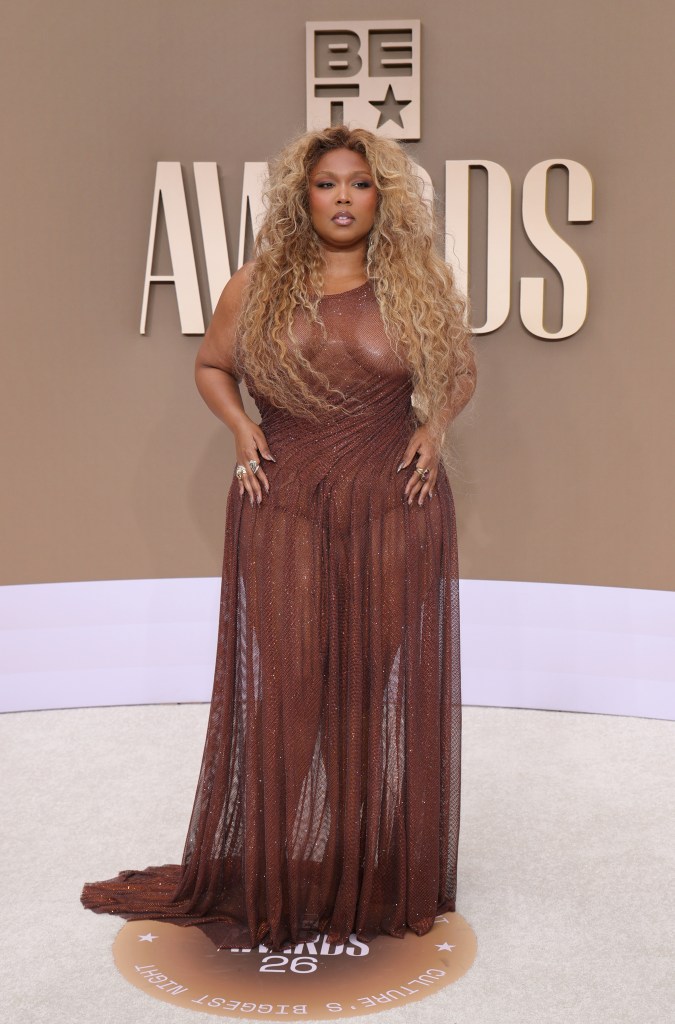
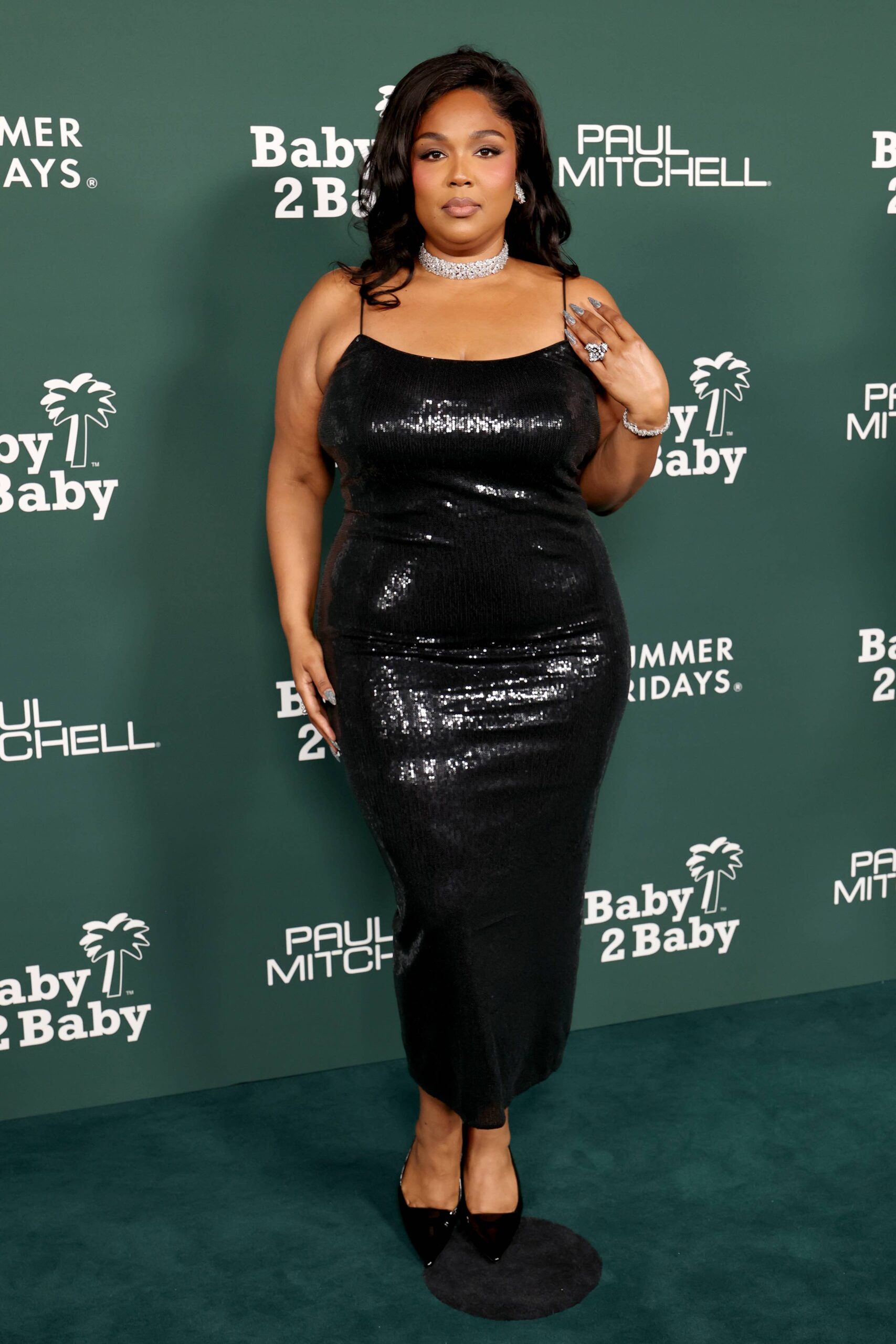
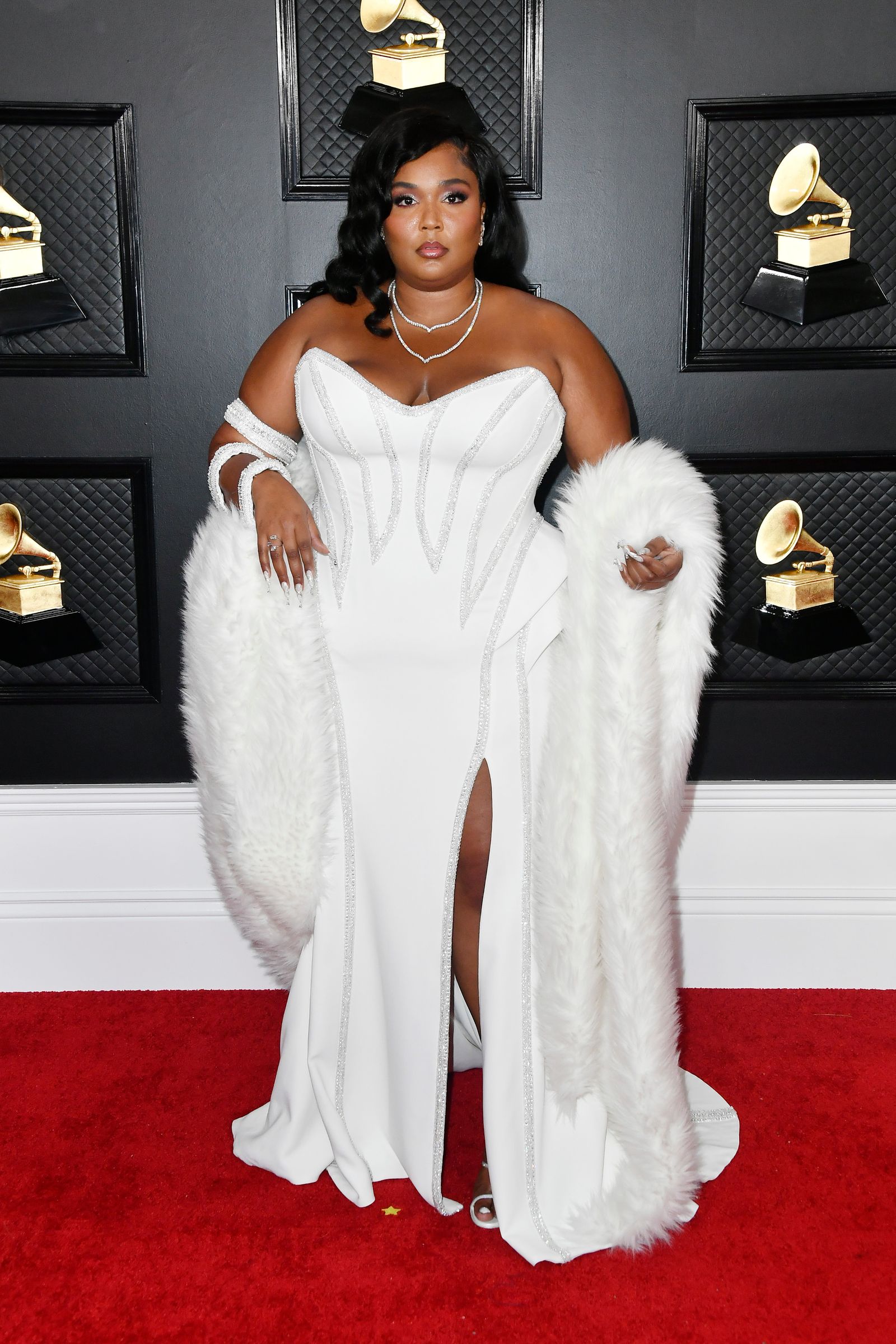
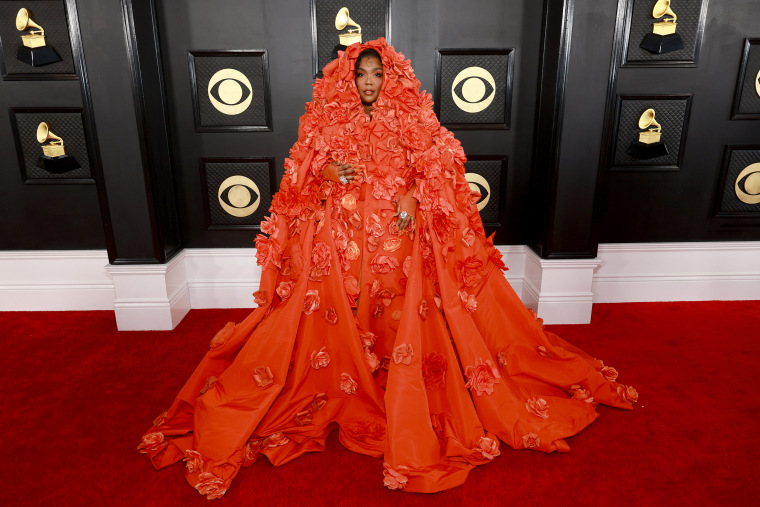
The flashbulbs were already firing when she stepped onto the carpet at the Peacock Theater, and something shifted in the crowd. Photographers leaned in. Reporters stopped mid-sentence. For a few seconds, the noise of a packed Los Angeles awards night narrowed down to one woman, one shimmering brown gown, and a smile that said she knew exactly where she stood. Lizzo did not walk that carpet hoping to be noticed. She walked it knowing she would be, and that quiet certainty is the part worth studying long after the photos stop trending.
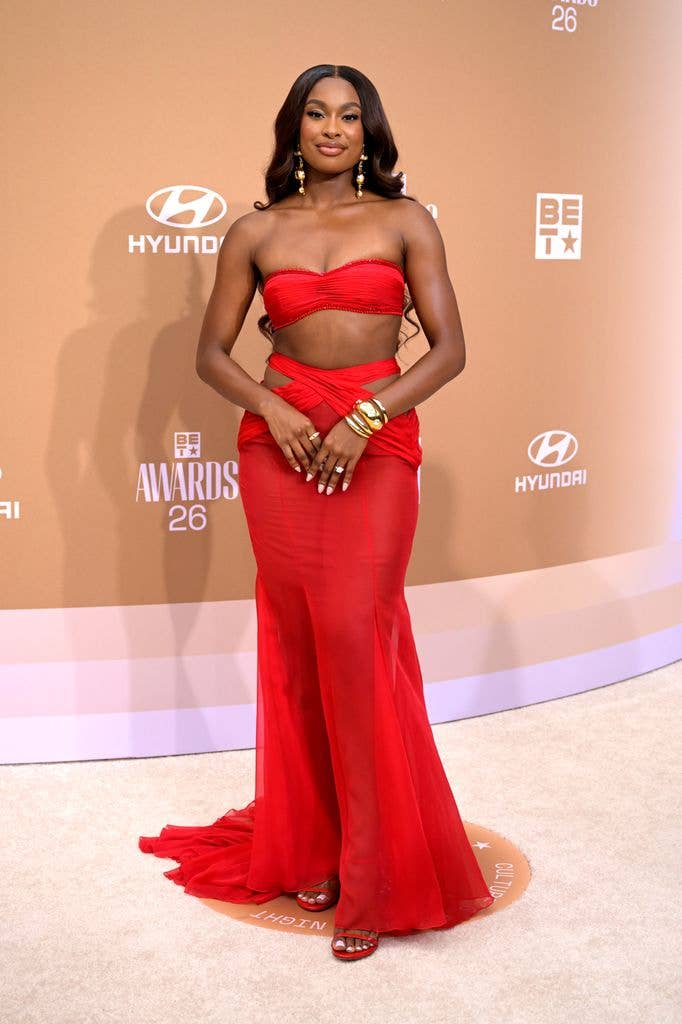
The 2026 BET Awards gave us no shortage of fashion to talk about. Teyana Taylor swept in fresh off her Icon of the Year honor, Janet Jackson traded the gown for tailored cool, and Coco Jones brought a jolt of scarlet to the proceedings. But Lizzo’s appearance stood apart, not because the dress was louder than anyone else’s, but because of how completely she inhabited it. There is a lesson in that for every curvy woman who has ever stood in front of a closet wondering whether she has the right to take up space in a room. Spoiler: you always did. Let’s break down how she does it, and how you can borrow the blueprint for your own life.
What Lizzo Actually Wore on the Carpet
Let’s start with the facts, because the look itself is worth lingering on. Lizzo arrived in a shimmering brown gown built from sheer panels that skimmed all the way to the floor. The fabric caught the light with a subtle sparkle, the kind that reads as expensive rather than flashy, and the silhouette hugged her frame closely while ruched, gathered detailing gave the whole thing a sculptural texture. She kept the rest deliberately uncluttered: closed-toe heels, statement earrings that grazed her shoulders, and a stack of sparkling rings doing the heavy lifting on accessories.
Her beauty look matched the energy. Think smoky eyes, glowing skin, and a soft nude lip, with her signature curls worn loose and voluminous around her shoulders in a honey-blonde wave. Nothing fought for attention. Every element pointed in the same direction.
A quick, honest note on attribution. Several outlets covered the look the morning after, and reporting on the exact designer was not fully consistent across sources, so we are choosing to celebrate the gown itself rather than stake a claim on a name that was not uniformly confirmed. What matters more than the label on the inside seam is the thinking behind the styling, and that is the part you can actually take home and use.
The Confidence Comes First, the Clothes Come Second
Here is the thing most red-carpet breakdowns get backwards. They treat the outfit as the source of the confidence, as if the right gown could be poured over anyone and produce that same glow. It does not work that way, and Lizzo is living proof. A sheer gown is not a forgiving garment. It does not hide, it does not distract, it does not offer you a comfortable place to fold your arms and disappear. To wear it the way she wore it, you have to decide first that you are allowed to be seen.
That decision is the real outfit. The fabric is just the delivery system.
Lizzo has spent her entire public life making that decision out loud, often when it was the least convenient thing to do. She built a career on the idea that joy is not something you earn by shrinking, and that a body is not a problem to be solved before the fun is allowed to start. So when she steps onto a carpet, the posture, the eye contact with the cameras, the way she lets a hip rest into the pose rather than bracing against it, all of that telegraphs ownership. The gown is gorgeous. But you would still feel the gravity of her presence if the lights cut out.
For the rest of us, the takeaway is freeing. You do not have to wait for the perfect dress, the perfect mood, or the perfect anything before you let yourself walk into a room like you belong there. The order of operations is the opposite of what the magazines sold us. You walk in owning it first, and the clothes simply get to come along for the ride.
Why Sheer and Sculptural Works on a Curvy Frame
Sheer dressing tends to make people nervous, and curvy women are often told, in a hundred polite and not-so-polite ways, that it is not for them. That advice is wrong, and Lizzo’s gown is a clean demonstration of why. The reason her look landed has less to do with daring and more to do with construction. Understanding that construction is how you translate a celebrity moment into something wearable for a Tuesday.
Notice three things working together. First, the ruching. Gathered fabric does something genuinely useful for curves: it adds visual texture and movement, and it follows the body’s lines instead of fighting them. Ruched panels at the waist and neckline draw the eye along the natural shape rather than flattening everything into a smooth, unforgiving sheath. If you have ever felt that a plain bodycon dress reads as too clingy, ruching is often the fix you were missing.
Second, the strategic placement of sheer against opaque. A well-built sheer gown is rarely transparent everywhere. It places the see-through panels where they create drama and keeps structure where the body wants support. That balance is what separates a look that feels intentional from one that feels like a dare.
Third, the tonal styling. A single warm brown, repeated from gown to skin to accessories, creates one long unbroken line. That continuity is quietly flattering and, more importantly, quietly powerful, because it reads as a complete thought rather than a collection of pieces. You can recreate that monochrome effect at any size and any budget, and it works every single time.
Build the Look in Your Own Closet, at Your Own Price
You will not be borrowing a custom gown from a stylist’s rack, and you do not need to. The size-inclusive market in 2026 is the strongest it has ever been, and the elements that made Lizzo’s look sing are all available to you. Here is how to assemble the spirit of it without pretending you are headed to the Peacock Theater.
Start with the silhouette. For a ruched, body-skimming dress in the same family, Torrid and Eloquii both carry occasion pieces with gathered detailing through the waist, and they cut them for real curves rather than grading up a straight-size pattern and hoping. Fashion Nova Curve is your friend when you want the drama of a sheer or mesh-paneled gown without committing serious money, and it leans into exactly the kind of bold, going-out energy this look lives in. Expect those trend-forward pieces to land at the more affordable end, often in the rough neighborhood of a nice dinner out, though prices shift constantly and you should treat any figure as a moving estimate rather than gospel.
For something more elevated and built to last, Universal Standard specializes in clean, sculptural lines and genuinely inclusive sizing, and its pieces photograph beautifully because the construction is doing real work. Lane Bryant rounds out the lineup as the dependable place for a structured occasion dress that holds its shape all night.
Then there is the foundation, and this is where it gets fun, because Lizzo built a whole brand on it. Her shapewear line Yitty makes pieces designed to smooth and support without the medieval discomfort of older shapewear, and the philosophy behind it is exactly the one we are talking about: support that helps you feel like yourself, not support that punishes you into a different shape. If a sheer or close-fitting gown makes you want a little extra confidence underneath, this is a body-positive place to start.
Finish the way she did. Let the dress be the headline, then add shoulder-grazing earrings and a few rings with some shine, and stop there. The discipline of stopping is half the elegance.
The Posture Lesson Nobody Sells You
You can buy the dress. You cannot buy the way she stands in it, but you can absolutely practice it, and that practice is more transformative than any wardrobe upgrade.
Watch how confident women carry themselves on a carpet and you will notice a handful of repeatable habits. The shoulders drop back and down rather than creeping up toward the ears. The chin stays level, neither tucked in apology nor jutted in defense. The weight settles into the hips and lets the body take a relaxed, slightly asymmetrical line instead of standing at rigid attention. And crucially, the eyes meet the lens. They do not scan the floor for an exit.
None of that requires a stylist. It requires a mirror and a little stubbornness. Try it the next time you are dressed up with somewhere to be. Roll the shoulders back, breathe out, let one hip carry your weight, and look straight ahead. It feels theatrical for about four seconds, and then it starts to feel like simply standing up in your own life. The reason it works is that posture and feeling run on a two-way street. Standing like you own the room actually makes you feel more like you do, which makes the next room easier, and the one after that easier still.
Lizzo did not arrive at the BET Awards having figured this out overnight. She arrived having practiced taking up space for years, in front of crowds far less friendly than a room full of people who came to celebrate her. The carpet is just the highlight reel. The work happened in a thousand ordinary moments where she decided not to make herself smaller.
Make It Yours, Not a Costume
There is a trap in celebrity style inspiration, and it is worth naming so you can step around it. The trap is treating a famous look as a costume to copy detail for detail, then feeling like a fraud because you are not Lizzo and your Tuesday is not a televised awards show. That is the wrong assignment entirely.
The point was never to become her. The point is to notice what she understands and apply it to a life that is fully yours. She understands that a curvy body is not a thing to be styled around or apologized for, but the whole gorgeous foundation the outfit gets to sit on. She understands that the boldest accessory in any room is a woman who has decided she is not going to dim herself. She understands that confidence is a practice, not a personality trait you are either born with or stuck without.
So take the parts that fit your real life. Maybe that means finally buying the close-fitting dress you have been admiring from a safe distance, in a fabric and a brand cut for your actual body. Maybe it means a single tonal outfit in a color that makes you feel expensive. Maybe it is nothing more than walking into your next gathering with your shoulders back and your chin level, wearing whatever you already own, having quietly decided beforehand that you get to be seen tonight. Any of those is the assignment done correctly.
Walking In Like the Room Was Built for You
The thing about a red carpet is that it is mostly an agreement. Everyone in the room has agreed to treat that strip of fabric as a place where presence matters, where you are allowed to be looked at, where showing up fully is the entire point. There is no rule that says the agreement only applies in Los Angeles in front of cameras. You can make that agreement with yourself in a grocery store parking lot, at a friend’s birthday dinner, at your own front door on a slow Sunday.
Lizzo’s gown at the 2026 BET Awards will fade from the news cycle the way every carpet look eventually does. What will not fade, if you let it land, is the reminder underneath it: the woman makes the dress glow, not the other way around. You already have the only thing that cannot be bought, ordered, or shipped, and that is the right to walk into your life like you were always meant to be there. The dress is optional. Buy it if you want it. But the room was yours the second you decided it was.
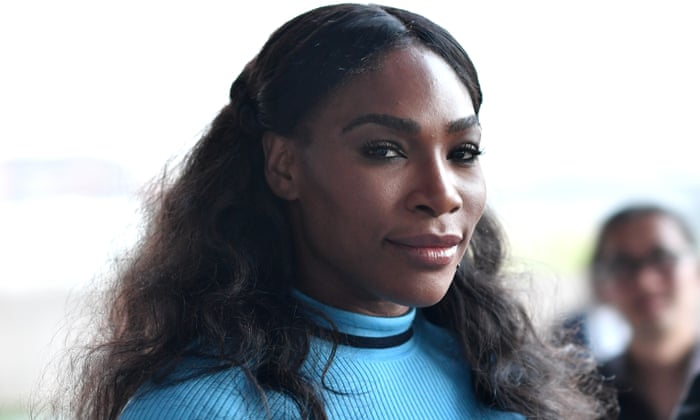
Picture a teenager stepping onto a tennis court in front of cameras that had already decided what a champion was supposed to look like. The crowd expected a certain silhouette. What arrived instead was a young Black girl with a powerful frame, a small waist, and shoulders built for greatness. Decades later, that same woman would hold 23 Grand Slam singles titles and a far rarer trophy: the unshakable peace of someone who finally stopped asking permission to live in her own body. Her path from being picked apart to being fully at home in her skin is one of the most quietly radical stories in modern sport, and it has lessons for every woman who has ever stood in front of a mirror and heard someone else’s voice instead of her own.
The Body That Refused to Apologize
From the earliest days of her career, the conversation around Serena Williams was rarely just about her serve or her footwork. It drifted, again and again, to her physique. She was told she was too muscular. She was told she was too strong. She was compared, cruelly, to men. In her own blunt recollection of those years, she described the strange logic of the criticism: “The general consensus was that I was a big fat cow. They were used to seeing women that didn’t have a figure, and I was a black woman with a figure, and that doesn’t make you bad. It just makes you a girl with a butt and a small waist.”
Read that again, because the matter-of-factness is the point. She was not describing a flaw. She was describing a body that simply did not fit the narrow template the world had prepared. The problem was never her curves. The problem was a culture that had decided strength and softness could not live in the same woman at once.
What makes her story resonate on a body-positive site like this one is that the scrutiny she faced was not abstract. It was constant, public, and tangled up with race and gender in ways that made it sharper. Yet she kept showing up. She kept winning. And slowly, she began to do something far harder than winning a final: she started to talk back, on her own terms, in her own voice.
That refusal to shrink is worth dwelling on, because most of us never get to practice it under floodlights. The pressure to make our bodies smaller, quieter, or more conventional usually plays out in private, in the clothes we avoid and the photos we delete. Serena had no such privacy. Her negotiation with her own image happened in front of millions, which means the confidence she eventually wore was tested in public and held up anyway.
When Strength Becomes the Insult
There is a particular sting in being mocked for the very thing that makes you exceptional. Serena’s body was not a liability she overcame. It was the engine of her dominance. The same power that drew sneers was the power that flattened opponents and rewrote the record books. Naming that contradiction out loud became part of how she reclaimed her image.
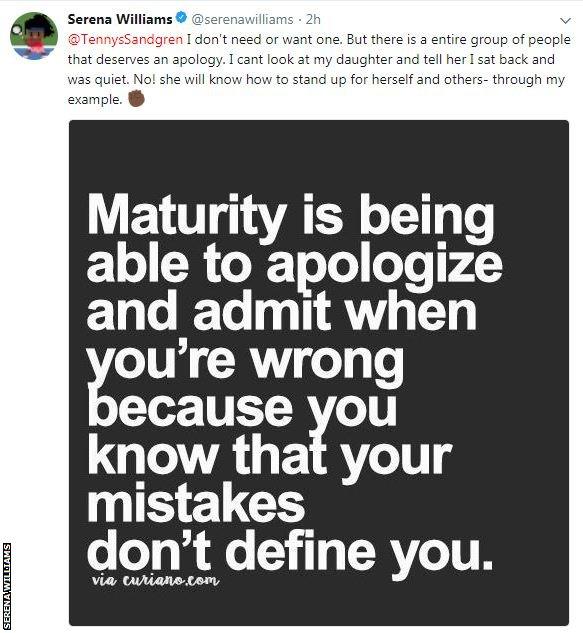
In an open letter she shared publicly, written to her own mother and posted online in 2017 shortly after she became a mother herself, she addressed the years of insults directly. “I’ve been called man because I appeared outwardly strong,” she wrote. She went on to confront the ugliest accusations head-on, including the suggestion that she did not belong in women’s sport. Her answer cut through all of it: “No, I just work hard and I was born with this badass body and proud of it.”
That line deserves a moment. “Born with this badass body and proud of it.” There is no hedging in it, no request for approval, no quiet hope that the critics might come around. It is a woman claiming her physical self as a fact and a gift in the same breath. For readers who have spent years apologizing for taking up space, for being curvier or stronger or simply more visible than the world prefers, that sentence is a small revolution you can carry in your pocket.
She wrote that letter to thank her mother for modeling grace under fire. But she also turned it outward, into a statement about every body that gets policed for not matching a magazine cover.
A Letter That Became a Mirror for Millions
The letter to her mother did something a trophy never could. It moved the conversation from individual achievement to collective belonging. Serena used her own scrutinized body as proof that womanhood comes in more than one shape, and she said so plainly: “I am proud we were able to show them what some women look like. We don’t all look the same. We are curvy, strong, muscular, tall, small, just to name a few, and all the same: we are women and proud!”
That is the heart of body positivity stated by one of the most recognizable athletes alive. Not a single ideal to chase, but a roster of real forms, all equally valid, all equally women. When she lists curvy and strong and muscular alongside tall and small, she is dismantling the idea that there is one correct way to occupy a female body. She is the proof and the messenger at once.
What is striking is who she was writing for. She was not only defending herself. She was thinking about the next girl. In a separate interview, she made that mission explicit: “I’m not asking you to like my body. I’m just asking you to let me be me. Because I’m going to influence a girl who does look like me, and I want her to feel good about herself.”
There is enormous generosity in that framing. She was not chasing universal approval, which is a trap that never closes. She was protecting the confidence of a younger version of herself, the one watching from a couch somewhere, wondering if a body like hers could ever be celebrated. The answer she modeled was yes, loudly and without conditions.
Choosing Self-Love as a Daily Practice
It would be easy to assume that someone with Serena’s accolades arrived at confidence automatically, as if trophies inoculate you against doubt. Her own words suggest otherwise. The peace she found was a choice she made repeatedly, an inward turn she had to practice rather than a gift she was handed.
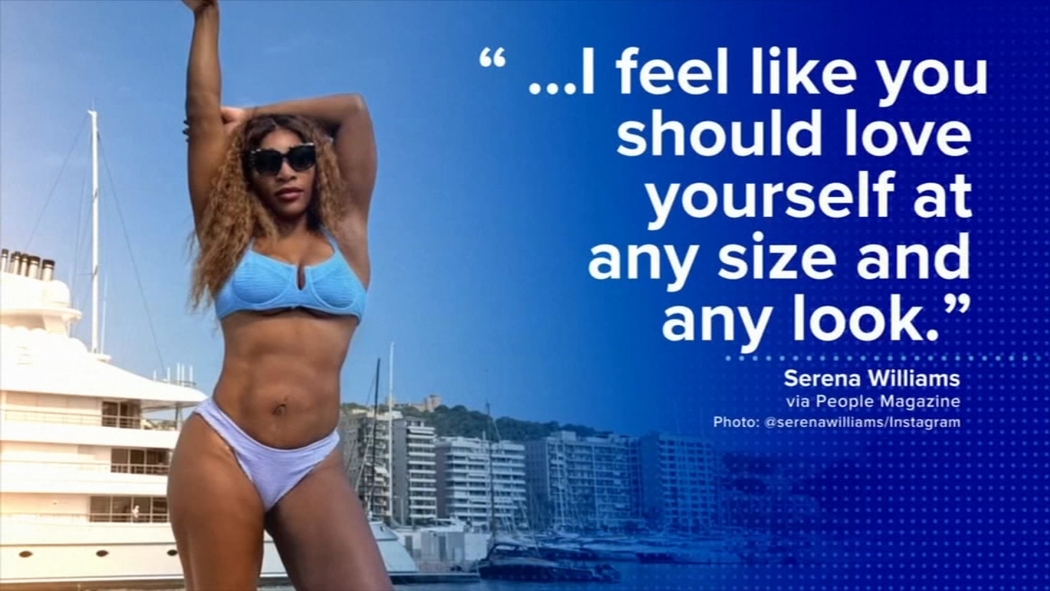
Reflecting on the years of negative noise, she described the shift in clear terms: she was “constantly told I was too muscular, or I wasn’t pretty enough to be a tennis player,” and she “learned to ignore the negativity and look inwards to truly love myself.” The key word there is learned. Self-love, in her telling, is a skill, not a personality trait you either have or lack. She continued: “I realized I was in control of my feelings and focused on rising above the negative chatter and the unrealistic societal ideals placed on me. I love who I am. I love my body, my skin, my confidence and I fully embrace everything about me.”
For anyone who has ever felt that loving their body is a destination they keep failing to reach, her framing offers relief. She did not wake up immune to criticism. She decided, again and again, where to place her attention. She located the control she actually had, which was over her own response, and she let the rest fall away.
That sense of agency runs through another of her reflections. People had been talking about her body, she noted, for a very long time, but she refused to let their verdict become her own. “What matters most is how I feel about me,” she said, “because that’s what’s going to permeate the room I’m sitting in.” It is a beautifully practical idea. The energy you bring into a space starts with the relationship you have with yourself, not with the opinions trailing behind you.
There is also something freeing in how she defines beauty for herself rather than borrowing the definition. Asked over the years to soften her look or her game, she kept returning to a simple position of ownership. In one widely shared reflection she summed it up with almost defiant ease: “I am who I am. I love who I am.” Five short words, repeated, doing the work of a thousand affirmations. It is not a claim that she is better than anyone else. It is a refusal to be measured against a yardstick she never agreed to.
The Power of Showing Up Unretouched
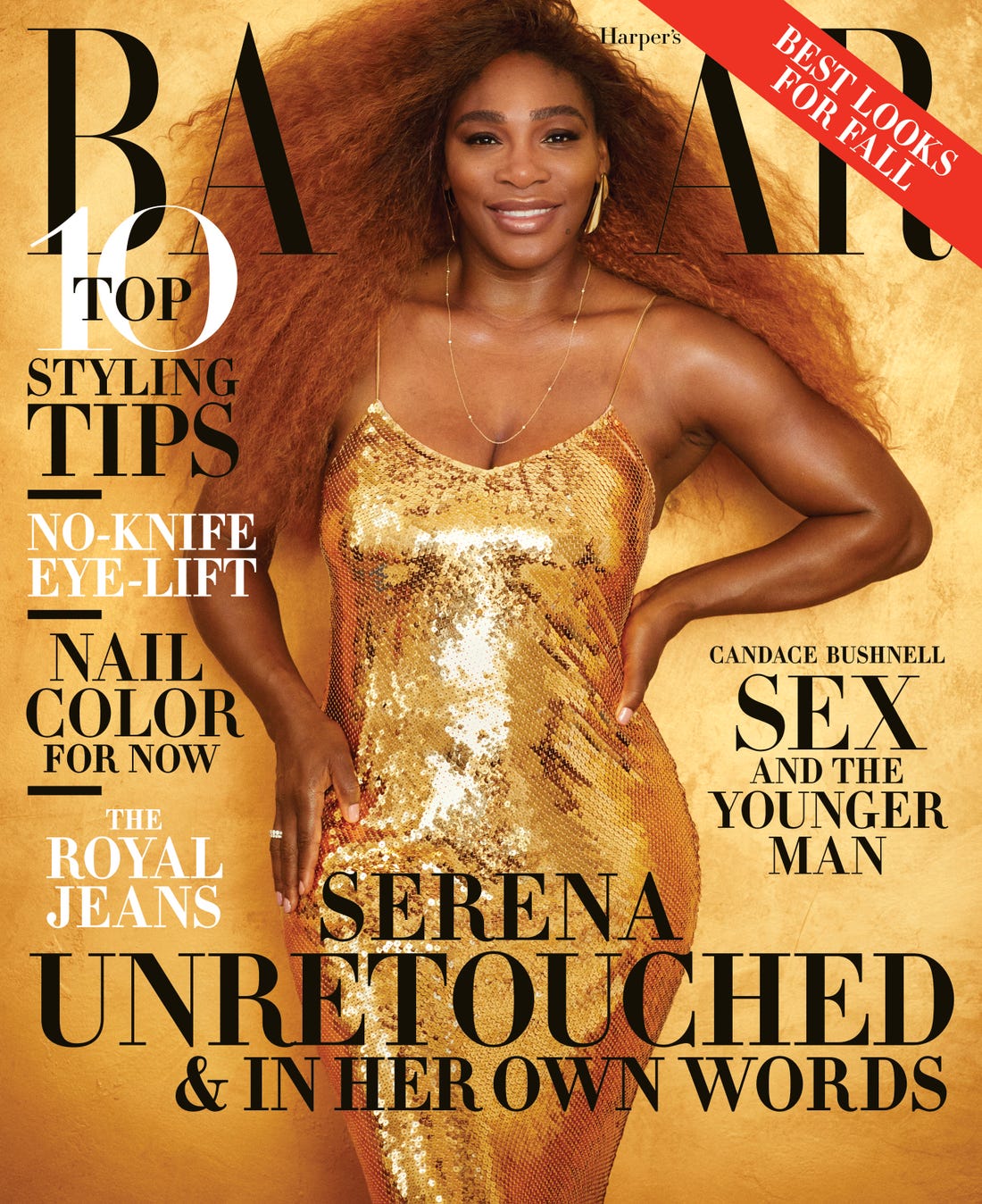
Confidence that stays private is one thing. Serena took hers public in deliberate ways, and few moments captured that better than her 2019 Harper’s Bazaar cover. She appeared in unretouched photographs, her muscular frame on full display, for an issue built around celebrating women in their most authentic state. The choice to go unedited, at the height of filtered, airbrushed perfection, was its own quiet argument: this body, exactly as it is, is worthy of the cover.
That willingness to be seen completely is part of why she became such a meaningful figure beyond tennis. She did not present a softened, more palatable version of herself to make the world comfortable. She offered the real thing, the strong arms and the curves and the visible muscle, and let the celebration follow. For readers who have hidden in oversized clothes or untagged themselves from photos, the image of a global icon posing proudly without retouching lands as both permission and dare.
Her self-love also never lived in isolation from her circumstances. She has been candid that the road was steeper because of who she is, acknowledging that she had “been treated unfairly,” had been “disrespected by my male colleagues,” and had at the most painful moments “been the subject of racist remarks on and off the tennis court.” Naming that does not contradict the celebration. It deepens it. The confidence she built was hard-won precisely because she built it against real resistance, which is what makes it usable for the rest of us. She is not telling anyone that the world will be fair. She is showing that you can love yourself fiercely even when it is not.
Carrying Her Lessons Off the Court
When Serena announced in 2022 that she was stepping away from professional tennis, she framed it not as an ending but as a turn toward other things that mattered to her, including her family and her venture firm, Serena Ventures. Through that firm she has poured energy into backing companies led by women and people of color, the same communities so often overlooked, after learning how little venture funding reaches women founders. The throughline is hard to miss. The woman who insisted there is more than one way to be a champion now invests in the founders who get told they do not fit the mold.
That is the most useful thing about her body confidence journey: it was never only about a body. It was about authority over your own story. The lessons translate cleanly off the court and into ordinary life. Loving your body can be a learned practice rather than a lucky accident. The strength that draws criticism is often the very thing worth protecting. The girl who looks like you is watching, which is reason enough to speak kindly about yourself out loud. And the way you feel about yourself really does permeate every room you enter, long before anyone hears your resume.
Serena Williams did not wait for the world to declare her beautiful before she decided she was. She claimed her curves, her muscle, her skin, and her confidence as her own, then handed the blueprint to anyone willing to use it. The next time a mirror tries to speak in a borrowed, critical voice, borrow hers instead. Born with this body. Proud of it. Let that be the first and last word.
Boarding a plane should feel like the start of something good – a beach, a reunion, a city you have been dreaming about. For a lot of curvy women, though, the airport carries a low hum of dread that has nothing to do with turbulence and everything to do with armrests, seatbelts, and the fear of a side-eye from a stranger in 14B. That dread is not yours to carry. The seats are too narrow, the policies are inconsistent, and the industry has been slow to catch up to the bodies it actually serves. None of that is a personal failing. With the right information and a little planning, you can walk through that jet bridge knowing exactly what to expect, what your rights are, and how to make the whole experience genuinely comfortable.
What follows is the practical, dignity-first playbook: real airline policies, verified as of mid-2026, with the caveat that these rules shift often, so always confirm before you book.
The seatbelt extender question (and the FAA rule)
Let’s clear up the single most misunderstood part of plus-size flying first, because it trips up even seasoned travelers. You cannot bring your own seatbelt extender onto a U.S. commercial flight. People buy them online all the time, see the “FAA approved” label, and assume they are set. They are not. The Federal Aviation Administration treats a seatbelt extender as part of the aircraft seat itself, which means it has to be inspected and maintained under the airline’s FAA-accepted Continuous Airworthiness Maintenance Program. A personal extender, no matter what its packaging claims, has never been inspected under that program, so crew are instructed not to allow it.
Here is the good news that the worry usually drowns out: airlines are required to provide extenders free of charge, and they keep them stocked. You do not pay for one, you do not pre-order one in most cases, and you do not owe anyone an explanation. When you board, quietly tell the flight attendant at the door, “I’d like a seatbelt extender, please.” That is the entire transaction. They hand it to you, often folded discreetly, and you buckle in like everyone else. Cabin crew handle this request constantly and think nothing of it.
A couple of practical notes. Different aircraft use slightly different extenders, so the one you used on your outbound flight may not be the one offered on the way home, and an extender you kept from a previous trip will not be accepted. Ask fresh each time. If you would rather not flag down a busy attendant in the aisle, mention it as you step through the cabin door, when crew are stationed right there and the moment is private. Owning the request, calmly and early, takes all the heat out of it.
Choosing your seat strategically
Where you sit shapes the entire flight, and a few smart choices make a real difference. The window seat is the quiet favorite for many curvy travelers. You get a wall to lean into instead of an aisle full of passing carts and elbows, you control the shade, and you are not the one being climbed over. The trade-off is asking to get up for the restroom, so weigh that against your own comfort. The aisle seat suits anyone who wants to stand, stretch, or move freely without disturbing a seatmate, and it gives one hip a few extra inches of breathing room into the aisle, though watch for the beverage cart.
The middle seat is the one to avoid when you can, and most of the time you can. Bulkhead rows (the front row of a cabin section) sometimes offer a touch more room and no seat reclining into your knees, but the armrests there are often fixed because the tray tables fold into them, which can mean less width, so read seat maps carefully. Exit rows promise extra legroom, but crew may relocate anyone who cannot fasten the standard belt without an extender, since exit-row passengers must meet specific safety requirements. Legroom is not the same as seat width, so do not let the legroom hype override the fit question.
A tool worth bookmarking is SeatGuru, which maps the actual seat dimensions and quirks of specific aircraft. Seat width varies more than people realize, often between 17 and 18.5 inches in economy, and a single inch is the difference between a tense flight and an easy one. Book your seat assignment as early as you can, ideally the moment you purchase the ticket. If two of you are traveling together, booking the window and aisle of a three-seat row is a known trick: middle seats fill last, so you may end up with an empty buffer between you, and even if someone takes it, you are flanking them rather than being flanked.
The airline ‘customer of size’ policies, compared (verified)
This is where careful research pays off, because no two airlines handle plus-size passengers the same way, and several changed their rules within the past year. Confirm directly with the carrier before you book, since these policies move quickly.
Southwest remains the most generous of the major U.S. carriers, and that matters because the airline briefly tightened its rules in early 2026 before reversing course. As of late May 2026, a customer who needs extra space is not required to buy a second seat in advance. You can request a complimentary additional seat at the gate when space allows, or buy one ahead and apply for a refund afterward. That refund still stands under specific conditions: the flight cannot be sold out, the seats must be in the same fare class, and you must request the refund within 90 days of travel. One catch worth knowing – if any leg of your trip is flown by a partner airline rather than Southwest itself, the extra seat is non-refundable. If no additional seat is available on your flight, Southwest works to move you to a later one with room.
Alaska Airlines has a clear, fair policy. If you cannot comfortably lower both armrests around you, you purchase a second seat at the same fare as your first. The reassuring part is the refund: if every leg of your journey departs with at least one empty seat on board, you get the cost of that second seat back. You contact the airline shortly after you fly to request it. The refund is reserved for passengers who genuinely need the space, not for anyone simply wanting an empty seat next to them.
American Airlines asks passengers who need a seatbelt extension plus extra space beyond a single seat to buy an additional seat. You book it by calling Reservations rather than online, and the agent secures two adjacent seats at the same fare. If they can only seat you in a higher class of service, you may owe the fare difference. American does not advertise the same automatic post-trip refund that Southwest and Alaska offer, so treat the second seat as a planned cost and confirm any reimbursement options with the airline directly when you call.
Delta takes a notably relaxed stance. Delta does not require you to buy an extra seat for needing a seatbelt extender, provided two things are true: the airline’s extender lets you buckle in safely, and you can keep both armrests down for the flight. The airline’s stated concern is safety and not significantly encroaching on a neighbor’s space. If a genuine space conflict arises onboard, crew may move you to a roomier spot or, in some cases, ask you to take a later flight with more open seats. Delta has no formal customer-of-size refund program because it generally does not require the second purchase in the first place.
United Airlines requires an extra seat for any economy passenger who cannot fit in a single seat with the armrests down, or who needs more than one seatbelt extender. You can buy the second seat in advance, and if you do not, you may be asked to purchase it on the day of departure at that day’s fare, which is often higher. United also offers an alternative many travelers overlook: instead of a second economy seat, you can book or upgrade to a premium cabin, where the seats are wider. For some itineraries the math on a single wider seat works out better than two narrow ones.
The honest summary: Delta is the most forgiving if an extender and both armrests work for you, Southwest and Alaska are the friendliest on refunds, and American and United expect more advance planning. Verify on the carrier’s own site before paying.
What to wear to fly comfortable
Clothing is your first comfort tool, and the cabin gives you two competing problems to dress for: long stretches of sitting and a temperature that swings from stuffy at the gate to chilly at altitude. Layering solves both. A soft, breathable base layer under a cardigan, zip hoodie, or wrap means you can adjust without packing a suitcase of options. Natural fibers and good stretch blends move with you and breathe better than stiff synthetics that trap heat.
Reach for fabrics with give. A ponte knit dress, wide-leg trousers with an elastic or drawstring waist, or your most trusted leggings paired with a longer tunic all let you settle in without a waistband digging in after hour two. Avoid anything with hardware that presses against you when you sit, like thick belts, stiff zippers along the hip, or rigid seams across the belly. Slip-on shoes or sneakers you can loosen are kinder than anything you have to wrestle with at security, and feet swell at altitude, so a half-size of breathing room helps. Bring a pair of grippy socks for padding around the cabin if you like to slip your shoes off. A large, soft scarf doubles as a blanket, a pillow, or a privacy layer, and weighs almost nothing. Dressing for the body you have on the day you fly, in pieces that already feel good, is the whole strategy.
What to pack
Pack for comfort first and you will thank yourself somewhere over the ocean. Hydration is the quiet hero of any flight, since cabin air is famously dry, so bring an empty refillable bottle through security and fill it at a fountain past the checkpoint. Snacks you actually enjoy and that travel well, like nuts, protein bars, or fruit, spare you from depending on a cart that may never reach the back rows or stock anything you want.
Compression socks are worth considering for any flight over a couple of hours, since sitting still raises the risk of swelling and circulation issues for everyone, not just plus-size flyers. They are optional and a personal call, not a requirement, so choose what feels right for your body. A small comfort kit earns its space in your carry-on: lip balm and hand lotion for the dry air, any medications in their original packaging, a phone charger and a battery pack, noise-cancelling headphones or earplugs, an eye mask, and a neck pillow if you sleep upright. Keep a light wrap or shawl on top for the inevitable cabin chill. Stash a refresh pouch with wipes, deodorant, and a toothbrush for long-haul mornings. If you use any personal comfort items for sitting, a seat cushion or a small lumbar support, those are entirely allowed and nobody’s business but yours. Packing with intention turns a cramped few hours into a manageable, even pleasant, stretch of your trip.
Navigating the airport with confidence
The terminal can feel like an obstacle course, so give yourself the gift of time. Arriving early erases the frantic, sweaty dash that makes everything harder, and it means you can move at your own pace through check-in, security, and the long walk to the gate. Wear or pack those slip-on shoes for the security line, where you will move faster and with less fuss. Consider TSA PreCheck if you fly even a few times a year, since it lets you keep your shoes on and skip the most cramped part of the screening process.
Airports are large, and gates can be a serious walk apart. There is zero shame in using the moving walkways, requesting wheelchair or cart assistance if a long concourse is hard on your body, or pausing on a bench to catch your breath. Assistance is a service the airport provides on purpose, and using it is smart, not weak. Once through security, find a comfortable spot to settle rather than hovering in the crush. When boarding opens, you are entitled to ask the gate agent about your seat or confirm an empty adjacent seat. Approach the desk with a calm, matter-of-fact tone, because you belong there as much as anyone holding a boarding pass.
If anxiety creeps in, name it for what it is – a response to an environment built without your comfort in mind, not a verdict on you. Slow your breath, ground yourself with a familiar playlist queued up before you board, and remember that most fellow passengers are absorbed in their own travel and not watching you at all. Should you ever encounter rudeness, you owe no one a performance of apology for the space your body occupies. A neutral “excuse me” and a steady posture handle nearly every awkward moment, and a quiet word with a flight attendant resolves most discomforts faster than you would expect.
Booking your next trip with your shoulders down
Comfort in the air comes down to a handful of moves you now have in hand: ask for the free extender at the door, book your window or aisle seat the moment you buy the ticket, check the seat width on SeatGuru before you commit, and read the customer-of-size policy of whichever airline you are flying. Pack the water bottle, the snacks, the soft layers, and arrive with time to spare. Pick the carrier whose rules fit your needs – Delta if an extender and armrests work for you, Southwest or Alaska if you want a second seat with a real shot at a refund. Save this list to your phone and pull it up the next time you book. The window seat is yours, the snacks are packed, and the destination is waiting.
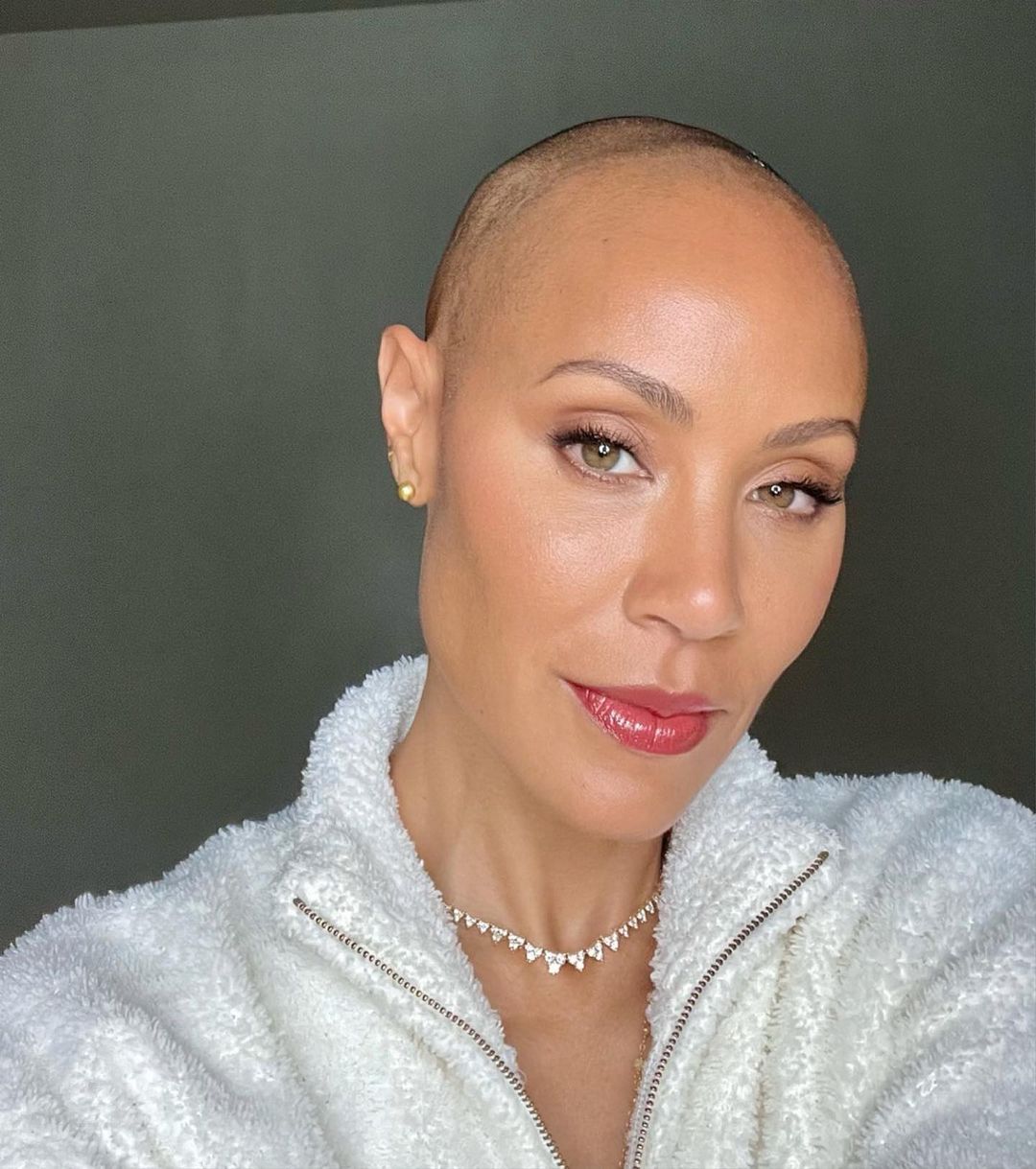
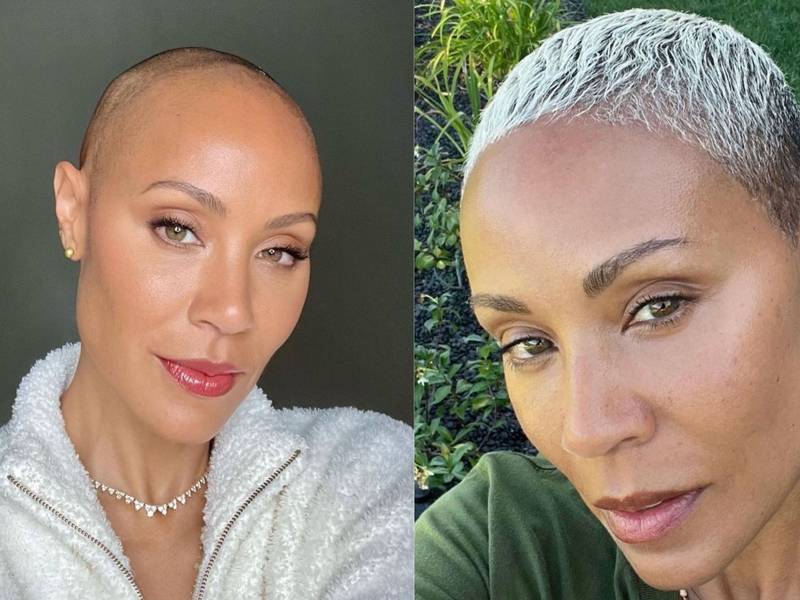
“Me and this alopecia are going to be friends … period!” That was the line Jada Pinkett Smith chose in late 2021, recording herself on Instagram, fingers tracing the bald patches along her scalp, laughing instead of hiding. It is a small sentence that carries an enormous amount of weight. Here was a woman who had spent years grieving her hair, shaking with fear in the shower as it came out in handfuls, deciding out loud that she would stop fighting her own body and start befriending it. That pivot, from fear to friendship, is the heart of everything she has shared about worthiness. And it is exactly the kind of permission so many of us are still waiting to give ourselves.
Who She Is and Why Her Voice on Self-Worth Lands So Hard
Jada Pinkett Smith has been famous since the early 1990s, an actress from Baltimore who built a career, a family, and eventually one of the most candid talk shows on the internet. Through “Red Table Talk,” she sat across from her daughter Willow and her mother Adrienne and turned her own living room into a space where Black women, in particular, could say the unsayable about pain, marriage, mental health, and bodies that do not behave the way we are told they should.
What makes her words on self-worth resonate is that she did not arrive at them from a place of ease. In her 2023 memoir “Worthy,” she writes openly about a period before her 40th birthday when she contemplated suicide, about complex trauma she had never named, about a marriage that reached a breaking point. She titled the book “Worthy” precisely because worthiness was the thing she had to fight to believe about herself. When a woman who has lived through that much tells you that you are enough, it does not sound like a slogan. It sounds like a report from someone who walked the whole road.
For curvy and plus-size women especially, that journey translates. The condition Jada lives with, alopecia, changed her appearance in a way she could not control and could not hide. She knows what it is to look in the mirror and meet a body that the world did not prepare you to love. Her wisdom is not about having the “right” body. It is about belonging to yourself no matter what your body does.
On Self-Worth and Worthiness
The center of Jada’s message is deceptively simple: your worth is not negotiable, and it is not earned by performance or by being adored.
In interviews around the release of her memoir, she has been honest that this was a hard-won lesson rather than a natural gift. Reflecting on her younger self, she has said, “I did not have a level of self love about me, so that was the thing that needed to be healed.” That admission matters. So many of us assume the confident women we admire were simply born sure of themselves. Jada is telling you the opposite. Self-love was a wound she had to tend, not a trait she inherited. If you have spent decades waiting to “feel” worthy before you treat yourself well, her story flips the order. You tend the wound first. The feeling follows.
She has also been clear that self-worth is the foundation everything else is built on. Writing in “Worthy” about the strain in her marriage, she reflected, “As much as I wanted him to love me, that would never happen if I didn’t love myself.” Read that slowly. She is not saying love is conditional. She is saying that no amount of love from another person can fill a hole where your own self-regard should be. For anyone who has ever tried to shrink, fix, or apologize for her body in hopes of finally deserving love, this is a gentle and necessary correction. The love you are chasing on the outside has to first take root on the inside.
And on the practical work of self-worth, she has named the saboteur directly. “Women need to attack those negative voices they have in their head,” she has said. Notice the verb. Not “manage,” not “tolerate.” Attack. The cruel inner commentary about your stomach, your arms, your reflection in a dressing room mirror is not the truth. It is a voice to be confronted. Jada gives you permission to stop treating that voice as a fair witness.
On Body Image and the Alopecia Journey
Jada’s relationship with her hair, and then her scalp, is one of the most public body-image journeys any celebrity has shared. It did not start with acceptance. It started with grief.
When she first opened up on “Red Table Talk,” she described hair as something deeply tied to her sense of self, and she did not pretend the loss was easy. For a long time, wrapping her head became the way she reclaimed dignity from the condition. “When my hair is wrapped, I feel like a queen,” she said. There is something worth holding onto in that line. She did not wait until she felt fully healed to feel beautiful. She found a ritual, a turban, a wrap, that let her meet herself as royalty in the middle of the struggle. You are allowed to build small rituals that make you feel regal right now, in the body and the circumstances you currently have, without waiting for some finished version of yourself to arrive.
The turning point came in stages. In July 2021, she shaved her head, crediting her daughter for the nudge. “Willow made me do it because it was time to let go,” she wrote, adding that her fifties were “’bout to be Divinely lit with this shed.” Letting go is its own kind of strength. So much of body-image pain comes from clinging to an image of ourselves we think we are supposed to maintain. Jada chose release, and she framed it not as defeat but as something divine.
Then came that 2021 video and its declaration of friendship with the very thing she once feared. She has spoken about decorating her bare scalp, joking about adding rhinestones and making herself a little crown, turning the site of her loss into something she could play with and adorn. That is alchemy. She took the part of her body the world might pity and decided to bedazzle it.
Underneath all of it sits a principle she stated years earlier about refusing to let her appearance set the terms of her worth: “If you can’t love me with short hair, and you telling me I got to have long hair to be loved, guess what, I ain’t the one for you.” Swap “short hair” for “soft belly,” “fuller arms,” “stretch marks,” or “a size that isn’t sample size,” and the line holds. Anyone who requires you to alter your body to qualify for love is telling you they are not for you. Believe them, and keep your peace.
On Healing and Self-Love
Jada draws a careful line between self-love and the pretty, painless version of “self-care” that gets sold to us. For her, loving yourself is the hard internal work, the willingness to look at your shadow as well as your light.
Speaking about the most public and painful season of her life, she reframed even crisis as curriculum. As she put it, “this is your lesson, this is where you have to learn how to love yourself and love Will in the light and in the shadow.” Loving yourself in the light is easy. Loving yourself in the shadow, on the days the photos disappoint you, on the days the scale or the mirror tries to ruin you, is the real practice. Jada is not promising you a self-love that only shows up when you feel great. She is describing one sturdy enough to stay when you do not.
Her memoir’s larger argument is that healing is possible even from the lowest places. She has been open that she once described her despair as a kind of “hellfire,” a walk along “the plank of doom,” language that does not sugarcoat how dark it got. And yet the book exists because she came back. The very fact that “Worthy” was written by someone who once doubted whether she wanted to be here is the most encouraging part of all. If worthiness can be rebuilt from that foundation, it can be rebuilt from yours.
She has also modeled rest as part of healing rather than a reward for productivity. “When I’m tired, I rest. I say, ‘I can’t be a superwoman today,’” she has said. For women, and especially for women who have made caretaking their whole identity, that permission is radical. Resting your body, feeding it, being gentle with it, is not laziness. It is part of how you tell yourself you are worth caring for.
On Women Supporting Women
Jada’s vision of worthiness has never been just personal. She consistently turns it outward, toward how women treat one another and how we make room for each other to be whole.
One of her most quoted reflections names the impossible bind women are placed in: “We have to nurture our young women and understand the beauty and the strength of being a woman. It’s kind of a catch-22: Strength in women isn’t appreciated, and vulnerability in women isn’t appreciated. It’s like, ‘What the hell do you do?’ What you do is you don’t allow anyone to dictate who you are.” That last instruction is the whole philosophy in one breath. The culture will criticize you for being too much and for being too soft, for taking up space and for hiding. Since you cannot win the approval game, you stop playing it and define yourself instead.
She extends the same grace to other women’s choices. “I just think, as women, we have to give ourselves room to be individuals,” she has said. “So when a woman makes a decision for herself, we as women shouldn’t set those hardcore boundaries for another woman. Just like we don’t want men setting hardcore boundaries for us.” Body acceptance gets so much easier in community. When you stop policing other women’s bodies and choices, you quietly loosen the grip of judgment on your own. The kindness you extend outward tends to find its way back home.
And on the ultimate measuring stick, Jada keeps returning to one private, unglamorous question. “At the end of the day, all that matters is: Do you love what you see when you look in the mirror? That is it, baby.” Not whether the world approves. Not whether the comments are kind. Whether you can stand in front of your own reflection and feel love. That is the only scoreboard that counts.
How to Apply It in Your Own Life
Jada’s words are warm, but they are also usable. A few ways to carry them into an ordinary week:
Start a “queen” ritual. She felt like royalty in a head wrap before she felt healed. Find your version. A lipstick, a robe, a piece of jewelry, a song you play while you get dressed. Let it be a small, repeatable act that meets you as worthy now, not after some goal.
Befriend the part you have been fighting. She made friends with her alopecia. Pick the one feature you have warred with longest and try a single day of treating it as a companion rather than an enemy. Speak to it the way you would speak to a friend’s body, which is to say, with mercy.
Catch and confront the voice. When the inner critic starts narrating your reflection, do what she said and challenge it directly. Name it as a voice, not a verdict. Ask whether you would ever say those words to a daughter or a friend.
Lead with self-love, not after it. Stop waiting to feel worthy before you act worthy. Feed yourself well, rest when you are tired, wear the thing you have been “saving.” Worthiness is built by treating yourself as worthy, not by finally believing it one distant day.
Make your circle a soft place. Stop critiquing other women’s bodies out loud, even casually. The standard you stop enforcing on them is the standard that stops haunting you.
A Closing Worth Keeping
Jada Pinkett Smith stood in front of a camera, ran her hand over a bald scalp the world had mocked, and laughed. She wrapped her head and called herself a queen. She wrote an entire book to argue that she, and by extension you, were worthy all along. None of that required a different body. It required a different relationship with the one she has.
So tonight, when you pass a mirror, borrow her question and answer it honestly: do you love what you see? If the answer is not yet a full yes, let that be the starting line, not a failure. Wrap your head, soften your voice, rest your body, and treat yourself like the treasure you already are. The friendship Jada made with her own reflection is available to you too, starting with the next time you look.
Standing in front of a poorly lit dressing room mirror, tugging at a suit that gaps at the bust and digs into the hips, is a rite of passage almost every curvy woman knows too well. The good news for 2026 is that the swimwear world has finally caught up. Brands that once stopped at a size 14 now cut suits through a size 30 and beyond, with real underwire support, longer torsos, and fabric that holds you without flattening you into something you are not. A swimsuit that fits well does not hide anything. It simply moves with you, stays put when you dive, and lets you think about the water instead of your waistband.
So let’s talk honestly about the word in that title. “Flatter” gets thrown around in swim marketing as code for “make you look smaller,” and that framing deserves to go in the bin. Here, flatter means a suit that fits your actual proportions, supports the parts of you that want support, and feels good enough that you forget you are wearing it. A great suit is not about correction. It is about fit, comfort, and the kind of quiet confidence that comes from clothing that was built for your body in the first place.
How to shop swim for your body, not against it
The single biggest upgrade you can make is to stop shopping by dress size alone and start shopping by your three real measurements: bust, waist, and torso length. Plus-size bodies vary enormously, and two women who both wear a size 22 in jeans can need completely different swimsuits. Pull out a soft tape measure, write your numbers down, and check them against each brand’s size chart rather than guessing. Lands’ End, Andie, Cupshe, and Hanna Nikole all publish detailed charts with bust, waist, and hip measurements, and using them saves you the return-shipping shuffle.
Support is where the right suit earns its keep. If you carry a fuller bust, look for genuine underwire, molded cups, adjustable and wide-set straps, and a band that anchors under the bust rather than relying on the neck to hold everything up. A thin string halter will leave you sore by mid-afternoon. Brands like Swimsuits For All and its GabiFresh collaborations build underwire suits in cup sizes running from D/DD up through G/H, which is a different universe from the one-size-fits-most padding you find in cheaper suits.
Torso length is the quietly important measurement nobody mentions. If you are tall or long-waisted, a standard one-piece will ride up and pull down on your shoulders all day, and no amount of strap adjustment fixes it. Lands’ End makes a dedicated long-torso plus range, and Andie cuts several styles with added length for exactly this reason. If you are petite or short-waisted, the opposite applies, and you want a suit that does not bag at the middle. Coverage is a personal call, not a rule. Some days you want a high neck and full back, other days a plunge and a cheeky cut feel right, and both are completely valid.
The best one-pieces for curves
The one-piece is the workhorse of a curvy swim wardrobe, and the category has grown up. A well-built maillot gives you a smooth line, often a hidden shelf bra or underwire, and the freedom to actually swim rather than constantly readjust. Lands’ End is the reliable anchor here. Its plus one-pieces run from roughly a 16W up through a 26W, with soft-cup or underwire support, adjustable straps, and optional tummy-control panels for anyone who wants a firmer hold around the middle. Prices generally sit in the $70 to $100 range, and the construction earns it.
Andie Swim has become a favorite for women who want a modern, minimalist suit that still holds up. Its plus range reaches up to a 3X, with styles like the Mykonos built to support a fuller bust and a longer body. Expect to pay somewhere around $100 to $130, and expect a suit that lasts more than one season. For a livelier, color-forward one-piece, Swimsuits For All offers a deep bench of underwire maillots, often in the $50 to $90 range, frequently discounted. If you swim laps or chase kids in the pool, Speedo and Nike both run dedicated plus one-pieces built for athletic use, with compressive, chlorine-resistant fabric and racer or wide-strap backs that stay put through real movement.
Tankinis and separates that let you mix sizes
Separates are the unsung heroes of plus-size swim, and the reason is simple: your top and bottom rarely wear the same number. Buying a tankini or a two-piece set as separate pieces means you can size your top for your bust and your bottom for your hips without compromise. Torrid built much of its swim reputation on this, sizing tops and bottoms individually from a 14 up to a 30, with side boning, wire-free and underwire options, and bottoms in everything from briefs to high-waisted to skirted. Most pieces land in the $40 to $60 range.
Tankinis themselves get an unfair reputation as the “safe” option, but a good one is genuinely practical. It gives you the coverage and support of a one-piece with the bathroom convenience of a two-piece, and a longer tankini top paired with a high-waisted bottom covers the midsection without a hint of compromise on comfort. Lands’ End and Hanna Nikole both make strong tankinis with built-in bust support and adjustable lengths. Cupshe, which sizes its plus range from roughly a 0X to a 4X, offers budget-friendly sets and separates in the $30 to $45 range, which makes it an easy place to experiment with a print or a silhouette before committing more money elsewhere.
High-waisted and bikini options for curvy bodies
Anyone who still believes curvy women cannot wear bikinis has not been paying attention. The high-waisted bikini is, for many, the perfect bridge: it sits at the natural waist, gives genuine core comfort and coverage, and pairs beautifully with an underwire top that actually supports a fuller chest. Swimsuits For All and the GabiFresh collaborations practically pioneered this look for the plus market, building bold, cut-out and color-blocked sets with underwire tops in cup sizes through G/H and bottoms that hold their shape. Sets typically run $60 to $100.
If you want a more classic bikini, the key is buying the top and bottom as separates, which most plus-focused brands now allow. Torrid and Cupshe both shine here. Look for tops with underwire or thick supportive bands, wide adjustable straps, and back closures rather than tie-only necks if you carry weight up top. For bottoms, high-waisted and mid-rise cuts give the most all-day comfort, while a classic brief or a cheeky cut works well when you want less coverage. The fabric matters as much as the cut: a thicker, double-lined fabric with good spandex content keeps its shape in and out of the water, and it is worth paying a little more for. Aerie carries a fun, youthful bikini selection with mix-and-match separates, with extended swim running up to roughly a size 20 on most one-pieces and a 22 on some separates, at friendly prices around $30 to $50 per piece.
Swimdresses and extra coverage that feel good
A swimdress is not a consolation prize. It is a genuinely comfortable, breezy option that gives you a soft skirted layer over the hips and thighs while keeping the built-in support of a one-piece underneath. On a long beach day, or for anyone who simply prefers more coverage, a good swimdress feels closer to wearing a favorite sundress than a swimsuit. Hanna Nikole specializes in exactly this, with one-piece swimdresses, skirted suits, and keyhole styles sized through the plus range, typically in the $35 to $55 band and widely available, which makes it a low-risk place to start.
Lands’ End makes some of the most durable swimdresses on the market, with real bust support, longer skirts, and the same tummy-control fabric option found across its line, usually around $80 to $110. For more coverage without going full swimdress, look at high-neck one-pieces, longer-line tankinis, rash guards and swim leggings, and board shorts. Brands like Speedo and Lands’ End both offer swim tops with sleeves and longer bottoms for anyone who wants more sun protection or simply prefers their shoulders and legs covered. Coverage is a comfort preference, full stop, and there is no version of it that needs justifying.
The brands that genuinely size-include
A quick honest map of who actually serves curvy bodies in 2026, because not every brand that says “inclusive” means it. Torrid is the plus-size specialist, sizing swim from a 14 to a 30 with separates you can mix. Swimsuits For All, and its GabiFresh collaborations, runs roughly a size 10 to 26 with serious underwire support up to G/H cups. Hanna Nikole focuses on affordable plus swimdresses and one-pieces, widely available online. Cupshe sizes its plus collection from about 0X to 4X at budget prices. Lands’ End is the quality classic, with plus running into the mid-20W range plus dedicated long-torso and tummy-control lines. Andie offers modern minimalist suits up to a 3X.
Aerie brings a younger, body-positive sensibility with swim extending to around a size 20 to 22, though its very largest sizes are less consistent across the catalog, so check the specific piece. Speedo and Nike both run dedicated plus ranges for swimmers who want athletic, chlorine-ready performance suits rather than fashion pieces. The pattern worth noticing: the brands built around curves from the start, like Torrid, Swimsuits For All, and Hanna Nikole, tend to offer the most consistent fit and the widest true size range, while mainstream brands like Aerie and Nike are expanding but still cap out lower. When in doubt, the brand’s own size chart is the only source that matters.
Confidence and the ‘beach body’ myth
Here is the truth the magazines spent decades hiding: a beach body is a body that is at the beach. There is no qualifying round, no before photo, no waiting until some future version of yourself earns the right to wear a swimsuit in public. The pool does not check your dress size at the gate. The ocean has never once asked anyone to suck it in. The entire concept of getting a body “ready” for summer was invented to sell things, and you are allowed to opt out of it completely.
What actually changes how you feel in a suit is not shrinking yourself. It is wearing something that fits, that supports you where you want support, and that you genuinely like the look of. Confidence at the beach is far more about the right straps and a band that stays put than it is about any number on a tag. The women who look most at ease in the water are rarely the smallest ones. They are the ones who stopped performing for the shoreline and started enjoying it. Buy the bright print. Wear the cut-out if it makes you grin. Your job at the beach is to have a good time, not to apologize for taking up space in a chair.
Where to start this week
Pull out a tape measure and write down your bust, waist, and torso length, because every smart swim decision flows from those three numbers. Then pick one brand that matches your priority. If support for a fuller bust is the goal, start with Swimsuits For All or the GabiFresh underwire styles. If you want to mix a top and bottom in different sizes, go straight to Torrid. If you are long-waisted, Lands’ End and Andie are built for you. If you want to test a swimdress without spending much, Hanna Nikole and Cupshe make that easy and cheap.
Order two sizes of the style that catches your eye, try them on at home in good light with the door closed and nobody rushing you, and keep the one that lets you raise your arms, twist, and sit without a single adjustment. Send the other one back. That is the whole method. A suit that passes that test is the one that will be balled up in your beach bag all summer, and the moment you stop noticing what you are wearing in the water is the moment the right suit has done its job.
Let us be honest for a moment. How do you feel when you catch your reflection? If your first instinct is to look away, to zero in on the parts of your body you have been taught to dislike, or to avoid mirrors altogether, you are not alone. So many of us have spent years absorbing messages that told us our bodies were problems to be solved. But what if you could rewire that response? What if, in just 30 days, you could build a mirror confidence challenge practice that helps you see yourself with kindness instead of criticism?
This is not about forcing yourself to love every inch of your body overnight. That kind of pressure is just another form of perfectionism dressed up in self-help language. Instead, this 30-day mirror confidence challenge is about building a slow, steady, and sustainable path toward body acceptance. It is about replacing the automatic negativity with something gentler, something truer, and something that actually serves you.
Whether you are a size 14 or a size 34, whether you have always struggled with your reflection or are just going through a rough patch, this challenge meets you exactly where you are. No toxic positivity. No before-and-after photos. Just you, your mirror, and a daily practice that thousands of women have used to shift their mindset in ways they never thought possible.
Why a Mirror Confidence Challenge Can Transform Your Relationship With Your Body
The mirror confidence challenge is not some trendy internet dare. It is rooted in actual psychological principles. Exposure therapy, one of the most well-researched techniques in cognitive behavioral therapy, works by gradually and repeatedly exposing someone to something they avoid or fear. For many plus-size women, mirrors have become a source of anxiety, and this challenge uses a similar principle to gently desensitize that response.
Research published in the journal Body Image found that mirror exposure exercises – where participants spent structured time looking at their bodies with guided neutral or positive commentary – significantly reduced body dissatisfaction over time. Participants reported feeling less anxious around mirrors, less preoccupied with perceived flaws, and more able to appreciate their bodies as they are.
But here is the part that research alone cannot capture: the feeling of looking at yourself and not flinching. The quiet power of being able to get dressed in the morning without a wave of self-criticism. The freedom of walking past a store window and not automatically sucking in your stomach. These shifts are subtle, but they change the texture of your entire day.
This mirror confidence challenge works because it is progressive. You are not being asked to stand naked in front of a full-length mirror on Day 1 and recite affirmations. Instead, you are building up to it, layer by layer, at a pace that respects your emotional bandwidth.
Before You Begin – Setting Yourself Up for Success
Before you start your 30-day mirror confidence challenge, take a few minutes to set yourself up for the best possible experience. This is not about perfection – it is about intention.
Choose Your Mirror
Pick a mirror that you will use consistently throughout the challenge. Ideally, this should be a full-length mirror in a private space where you feel safe and uninterrupted. If you do not own a full-length mirror, a bathroom mirror works perfectly fine for the first two weeks. You can always upgrade later.
If you want to invest in a good mirror for this challenge, a
full-length floor mirror with a sturdy frame
is a great option. Look for one with good lighting – avoid mirrors in dim corners or ones that distort your image. You deserve to see yourself clearly.
Set Your Time
Each daily exercise takes between 3 and 10 minutes. Choose a consistent time – maybe after your morning shower, during your skincare routine, or right before bed. Consistency is more important than duration. Three minutes every day beats twenty minutes once a week.
Get a Journal
You will want somewhere to jot down your thoughts after each session. This does not need to be fancy. A simple notebook, the notes app on your phone, or a
guided self-love journal
all work beautifully. The act of writing helps solidify the shifts you are making internally.
Tell Someone You Trust
Accountability matters. Tell a friend, a partner, a therapist, or an online community that you are doing this. You do not have to share details – just the fact that you are working on something meaningful for yourself. Having someone check in on you can make the difference between finishing and fading out around Day 12.
Week One – Days 1 Through 7 – The Foundation Phase
The first week of the mirror confidence challenge is gentle by design. You are simply building the habit of spending intentional time with your reflection. No big emotional asks. Just showing up.
Day 1 – The Neutral Gaze
Stand in front of your mirror for three minutes. You can be fully clothed – whatever makes you comfortable. Your only goal is to look at your face. Not to evaluate it, not to pick it apart, just to look. Notice your eye color, the shape of your brows, the curve of your lips. If critical thoughts come up, acknowledge them and let them pass. You are practicing neutral observation.
Day 2 – Three Nice Things About Your Face
Same position as yesterday, but today, name three things about your face that you appreciate. These do not have to be things you love – just things you can acknowledge. Maybe it is that your eyes crinkle when you smile. Maybe it is the freckles across your nose. Write them down afterward.
Day 3 – Smile at Yourself
This sounds silly, and that is exactly the point. Stand in front of your mirror and genuinely smile at yourself for one full minute. Not a forced grin – try to think of something that makes you happy and let it reach your face. Notice how your reflection changes. Most of us never see ourselves smiling naturally. It can be surprisingly emotional.
Day 4 – Hands and Arms Appreciation
Expand your gaze to include your hands and arms. Look at them in the mirror. Think about everything they do for you – the meals they prepare, the people they hug, the work they accomplish. Say out loud: “These hands carry me through my life.” Write down any feelings that come up.
Day 5 – The Outfit Check
Put on an outfit you feel good in. Stand in front of the mirror and take in the full picture – not just the parts you usually fixate on, but the whole image. Notice colors, textures, how the fabric moves. If you need outfit inspiration that makes you feel amazing, the
Torrid Studio Knit collection
is designed to drape beautifully on curves.
Day 6 – Gratitude for Function
Today, stand in front of the mirror and focus on what your body does rather than how it looks. Your legs carry you. Your lungs breathe without you asking. Your heart has been beating since before you were born. Spend three minutes thanking your body for its function. Write down five things your body did for you today.
Day 7 – Weekly Check-In
Take ten minutes to journal about your first week. What felt easy? What felt hard? Did any emotions surprise you? Rate your comfort level with the mirror from 1 to 10 – this is your baseline. You will check in again at the end of each week.
Week Two – Days 8 Through 14 – The Observation Phase
Now that you have built the habit, Week Two introduces deeper observation. You are learning to see your body as a whole rather than a collection of problem areas.
Day 8 – Full Body Scan With Neutrality
Wearing something comfortable – leggings and a tank top, a soft robe, whatever feels right – stand in front of the mirror and slowly scan your body from head to toe. Your goal is neutral description, like a painter studying their subject. “I have round shoulders. My stomach is soft. My thighs are strong.” No judgment words – just observation.
Day 9 – The Posture Experiment
Stand in front of the mirror and try three different postures: shoulders hunched, neutral standing, and shoulders back with chin slightly lifted. Notice how each posture changes not just how you look but how you feel. Body confidence lives in your posture as much as in your thoughts. For extra support during the day, a
plus-size posture corrector
can be a helpful reminder to stand tall.
Day 10 – Soft Belly Day
This is often the hardest day of the challenge, and it is placed early in Week Two intentionally. Stand in front of the mirror, place your hands on your belly, and breathe. Do not suck in. Do not tense up. Let your belly be soft. Spend three minutes with your hands there, breathing normally. If tears come, let them. This is where so much of our body shame lives, and giving it gentleness instead of tension is a radical act.
Day 11 – Movement in the Mirror
Put on your favorite song and move in front of the mirror. Dance, sway, stretch – whatever feels natural. Watch your body in motion. Bodies in motion look different from bodies standing still, and there is something beautiful about seeing yourself move freely. Let it be fun. Let it be silly. Let it be whatever it wants to be.
Day 12 – The Touch Exercise
While looking in the mirror, gently touch different parts of your body with kindness. Run your hands down your arms, across your shoulders, over your hips. Touch your body the way you would comfort a friend. This exercise builds a connection between physical sensation and visual input, rewiring the way your brain processes your reflection.
Day 13 – Wearing Something You Have Been Avoiding
Pull out that piece of clothing you bought but never wore. The sleeveless top. The bodycon dress. The shorts. Put it on and stand in front of the mirror for five minutes. You do not have to love how it looks. You just have to see yourself in it and sit with whatever comes up. If the item does not fit comfortably, that is information about the clothing, not about your body.
Day 14 – Weekly Check-In
Journal again. Rate your comfort level from 1 to 10. Compare it to last week. Write about any shifts you have noticed – in front of the mirror and outside of it. Many women report that by this point, they are catching themselves being less critical throughout the day, not just during the challenge.
Week Three – Days 15 Through 21 – The Affirmation Phase
Week Three is where you start actively replacing critical self-talk with affirmations. By now, you have built enough comfort with the mirror that adding positive language will feel more natural than it would have on Day 1.
Day 15 – Your First Mirror Affirmation
Look into your own eyes in the mirror and say: “I am allowed to take up space.” Say it three times. The first time might feel awkward. The second time might feel forced. The third time, something might shift. Write about the experience afterward.
Day 16 – Body Part Affirmations
Choose three body parts – including one you struggle with – and give each one a compliment out loud. “My arms are strong and capable.” “My thighs carry me through every adventure.” “My belly is soft, and that is perfectly fine.” Specificity matters here. Generic affirmations slide off. Specific ones stick.
Day 17 – The Letter to Your Body
Write a short letter to your body as if it were a friend you had been neglecting. Apologize for the harsh words. Acknowledge what it has been through. Promise to try harder. Then read the letter out loud to your reflection. This exercise is borrowed from therapeutic practice and is one of the most powerful days of the entire challenge.
Day 18 – Affirmations in Your Skincare Routine
Today, combine your mirror time with your skincare routine. As you apply each product, say something kind to the skin you are caring for. When you apply moisturizer to your face, say “I am taking care of you.” When you apply body lotion, say “You deserve softness.” A nourishing body cream like
Sol de Janeiro Brazilian Bum Bum Cream
turns this into a sensory experience that reinforces the positive message.
Day 19 – The Power Pose
Social psychologist Amy Cuddy popularized the idea of power posing – standing in an expansive, confident posture to shift your internal state. Today, try three power poses in front of the mirror: hands on hips (the Wonder Woman), arms raised in a V (the victory pose), and hands clasped behind your head with elbows wide. Hold each for two minutes. Notice how your reflection looks powerful and commanding. That is you. That has always been you.
Day 20 – Affirmations for Your Younger Self
Look at your reflection and imagine your younger self standing beside you – the little girl who first learned to feel bad about her body. What would you say to her? Speak those words out loud to the mirror. Many women find this exercise deeply healing because it connects the dots between old wounds and current self-perception.
Day 21 – Weekly Check-In
Rate your comfort level again. By Week Three, most women report a 3 to 5 point increase from their baseline. Journal about the affirmation exercises. Which ones felt powerful? Which felt difficult? What surprised you about hearing your own voice say kind things about your body?
Week Four – Days 22 Through 30 – The Celebration Phase
The final phase is about anchoring everything you have built. These exercises are designed to be joyful, celebratory, and deeply affirming. You have done the hard work. Now it is time to enjoy the results.
Day 22 – The Photo Shoot
Set up your phone on a timer or prop it against the mirror and take photos of yourself. Not for social media – for you. Try different poses, different angles, different expressions. Look at the photos afterward and pick three that make you smile. Save them somewhere you can easily access them on hard days.
Day 23 – Dress Up Day
Put together your most confident outfit. Do your hair. Do your makeup if that is your thing. Put on jewelry. Go all out. Then stand in front of the mirror and take yourself in. This is you at your most put-together, and the goal is to see the full picture with appreciation. A statement accessory like a
chunky gold chain necklace
can add that extra boost of confidence to your look.
Day 24 – Bare Skin Day
If you are ready – and only if you are ready – spend time in front of the mirror in minimal clothing. Underwear, a bralette, whatever your comfort level allows. This is not about being brave or pushing past your limits. It is about meeting your body without the armor of clothing and offering it the same kindness you have been practicing all month.
Day 25 – The Compliment Collection
Write down every compliment you can remember receiving about your appearance, your energy, your presence – anything. Then read them to your reflection. Sometimes we dismiss compliments the moment we hear them. Today, you are going to let them land.
Day 26 – Mirror Dancing – The Full Version
Remember Day 11? Today, you are doing it again, but bigger. Create a playlist of songs that make you feel unstoppable. Dance in front of the mirror for at least three songs. Watch yourself move. Let yourself be mesmerized by your own body in motion. This is freedom.
Day 27 – Share Your Journey
If it feels right, share something about your experience. Post on social media, tell a friend, write a blog post, or simply text someone you love and tell them about this challenge. Vulnerability shared becomes strength multiplied.
Day 28 – Create Your Personal Affirmation
Using everything you have learned about yourself over the past 27 days, write one personal affirmation that resonates deeply with you. Not something generic from the internet – something that speaks directly to your journey. Write it on a sticky note and put it on your mirror. This is your anchor.
Day 29 – The Forgiveness Exercise
Look in the mirror and say: “I forgive myself for every unkind thing I have ever thought about you.” Say it as many times as you need to. Some women say it once and feel complete. Others need to repeat it for five minutes before it starts to sink in. There is no right way. There is only your way.
Day 30 – The Celebration
You did it. Stand in front of your mirror one final time – for now – and simply say “Thank you.” Thank your body for carrying you through this challenge. Thank yourself for showing up every day. Thank the mirror for being a tool for healing instead of harm. Then do something wonderful for yourself. Take a bath, buy yourself flowers, order that
gorgeous satin robe set from Savage X Fenty
you have been eyeing, or simply sit with the quiet pride of having completed something meaningful.
How to Handle Difficult Days During the Challenge
Let us be real – not every day of this mirror confidence challenge will feel good. Some days you will stand in front of the mirror and the old critical voice will be louder than anything else. Some days you will cry. Some days you will want to skip. Here is what to do when that happens.
Lower the Bar, Do Not Drop It
If a day’s exercise feels too intense, scale it back. Instead of a full body scan, just look at your hands. Instead of saying affirmations out loud, whisper them. Instead of five minutes, do one. The goal is not to complete each exercise perfectly – it is to maintain the habit of showing up. A scaled-back practice still counts.
Name the Voice
When critical thoughts come up, it helps to externalize them. Some women name their inner critic – “Oh, there goes Karen again, telling me my thighs are too big.” This creates distance between you and the thought. You are not your inner critic. You are the person who is brave enough to challenge it.
Write It Out
If a session brings up big emotions, write them down immediately. Do not try to analyze or fix them. Just get them out of your body and onto paper. This is one reason the journal component of this challenge is so important. It gives your feelings somewhere to go besides back into your body as tension and shame.
Reach Out
If a day feels particularly heavy, text the person you told about this challenge. You do not have to explain everything – just say “Today was hard” and let someone hold that with you. Body acceptance work can surface deep stuff, and you do not have to carry it alone.
Remember Why You Started
On the hardest days, come back to your why. Maybe you started because you are tired of dreading getting dressed. Maybe you started because you want your daughter to see a woman who likes her reflection. Maybe you started because you deserve peace with your body after decades of war. Whatever your reason, it is enough. It is more than enough.
What Happens After the 30 Days Are Over
The mirror confidence challenge does not end on Day 30. It simply shifts from a structured program to a sustainable practice. Here is how to maintain the gains you have made.
Keep the Mirror Time
Continue spending at least one minute per day in intentional mirror time. This can be during your skincare routine, while getting dressed, or as a standalone practice. The key word is intentional – you are choosing to look at yourself with presence rather than rushing past your reflection on autopilot.
Update Your Affirmation
Every few weeks, check in with your personal affirmation. Does it still resonate? Does it need updating? As you grow, your affirmation should grow with you. Some women keep a running list and rotate through them.
Build a Body-Positive Environment
Your mirror work is most effective when supported by a body-positive environment. Curate your social media feeds to include diverse body types. Follow plus-size creators who celebrate their bodies without apology. Read books like “The Body Is Not an Apology” by Sonya Renee Taylor or
body-positive book collections available on Amazon
. Surround yourself with images and messages that reinforce what you are building in front of the mirror.
Dress for Joy, Not Hiding
One of the most practical outcomes of this challenge is a shift in how you get dressed. Many women report that after 30 days, they start reaching for clothes that make them feel good rather than clothes that hide their bodies. If your wardrobe needs a refresh to match your new mindset, brands like
Universal Standard
and
Eloquii
offer beautiful, well-made pieces designed for curvy bodies.
Consider Professional Support
If this challenge surfaced deep-seated body image issues, trauma around your appearance, or symptoms of disordered eating, please consider working with a therapist who specializes in body image. This challenge is a wonderful starting point, but it is not a substitute for professional support when you need it. Organizations like the National Eating Disorders Association (NEDA) offer free resources and referrals.
The 30-day mirror confidence challenge is not magic. It will not erase years of internalized fatphobia overnight. But it will crack the door open. It will show you that another way of seeing yourself is possible. And once that door is open, even just a crack, the light that comes through can change everything.
You deserve to look at your reflection and feel peace. Not perfection. Not forced positivity. Just peace. And that starts with 30 days, a mirror, and the willingness to try.
Key Takeaways
The 30-day mirror confidence challenge uses principles from exposure therapy to gradually build a healthier relationship with your reflection, moving through foundation, observation, affirmation, and celebration phases.
Starting with neutral observation rather than forced positivity makes the practice sustainable and prevents the challenge from feeling overwhelming or fake.
Difficult days are normal and expected – scaling back the exercise is always better than skipping it entirely.
Combining mirror work with journaling, supportive community, and a body-positive environment amplifies the results beyond what mirror time alone can achieve.
The real goal is not to love every part of your body but to reach a place of peace and acceptance where your reflection no longer triggers shame or avoidance.
Frequently Asked Questions
Do I have to do the mirror confidence challenge every single day without missing one?
No. Life happens, and missing a day does not erase your progress. If you miss a day, simply pick up where you left off the next day. What matters most is the overall pattern of showing up, not achieving a perfect streak. Some women take 35 or 40 days to complete the 30 exercises, and the results are just as meaningful.
What if I start crying during one of the exercises?
Tears are a completely normal and healthy response during this challenge, especially during exercises like the soft belly day or the letter to your body. Crying means something is moving through you. Let it happen, write about it afterward, and be extra gentle with yourself for the rest of the day. If the emotions feel overwhelming or unmanageable, consider reaching out to a therapist for additional support.
Can I do this challenge with a friend or partner?
Absolutely. Many women find it helpful to do the challenge alongside a friend, checking in daily or weekly to share their experiences. However, the actual mirror exercises should be done privately. Body image work is deeply personal, and you need the freedom to be vulnerable without an audience. Share your reflections afterward, but keep the mirror time just for you.
I have a history of eating disorders. Is this challenge safe for me?
Mirror exposure can be powerful, and for individuals with a history of eating disorders, it should ideally be done under the guidance of a therapist who specializes in body image and eating disorders. This challenge is designed for general body acceptance work, not clinical treatment. If you have an active eating disorder or are in early recovery, please consult with your treatment team before starting.
Will this challenge help me lose weight?
This challenge is not about weight loss. It is about changing your relationship with your body as it is right now. Many women find that when they stop fighting their bodies and start caring for them, their overall health behaviors naturally improve – but weight loss is not the goal, the metric, or the measure of success here. The measure of success is how you feel when you look in the mirror on Day 30 compared to Day 1.