Tag: Approved Queue

  • The Best Shapewear for Tummy Control That Actually Stays Put

    The Best Shapewear for Tummy Control That Actually Stays Put

    If you have ever bought shapewear that promised a smooth tummy and then spent the whole evening feeling it roll down under your dress, you already know the problem. Tummy control is the single most requested thing from shapewear, and it is also the thing the cheap stuff fails at most. The good news is that the pieces that genuinely hold your midsection smooth and stay put do exist, and once you know what separates them from the disappointments, choosing gets a lot easier. This is a plus-size-first roundup of the ones worth your money, plus exactly why each works.

    A quick promise before the picks: none of this is about squeezing yourself smaller or apologizing for your body. Tummy-control shapewear is a tool for a smooth line under a specific outfit when you want one, nothing more. It should make you forget you are wearing it, not count the minutes until you can take it off. Every piece below is chosen on that standard.

    What actually gives you tummy control

    Before the products, the thirty-second version of how this works, because it is what tells a good piece from a useless one. Real tummy control comes from three things working together. First, a firm front panel, often a double layer or a built-in power-mesh lining, that compresses the midsection evenly instead of just holding a thin band tight. Second, a high rise that comes up well above your belly button, so the smoothing starts below the softest part of your stomach and extends over it rather than cutting across the middle and creating a fresh ledge. Third, something that keeps the whole thing anchored, a mid-thigh short leg or a full bodysuit, so it cannot roll down the moment you sit.

    A piece that has all three smooths comfortably and lasts all day. A piece missing any of them, especially a low-cut brief with a thin waistband, will dig, roll, and disappoint no matter what the label claims. If you want the deeper breakdown of why shapewear rolls and how to stop it, we cover it in full in our guide on how to choose shapewear that stays put. For now, keep those three features in mind as you read the picks, because that is exactly what earned each one its place.

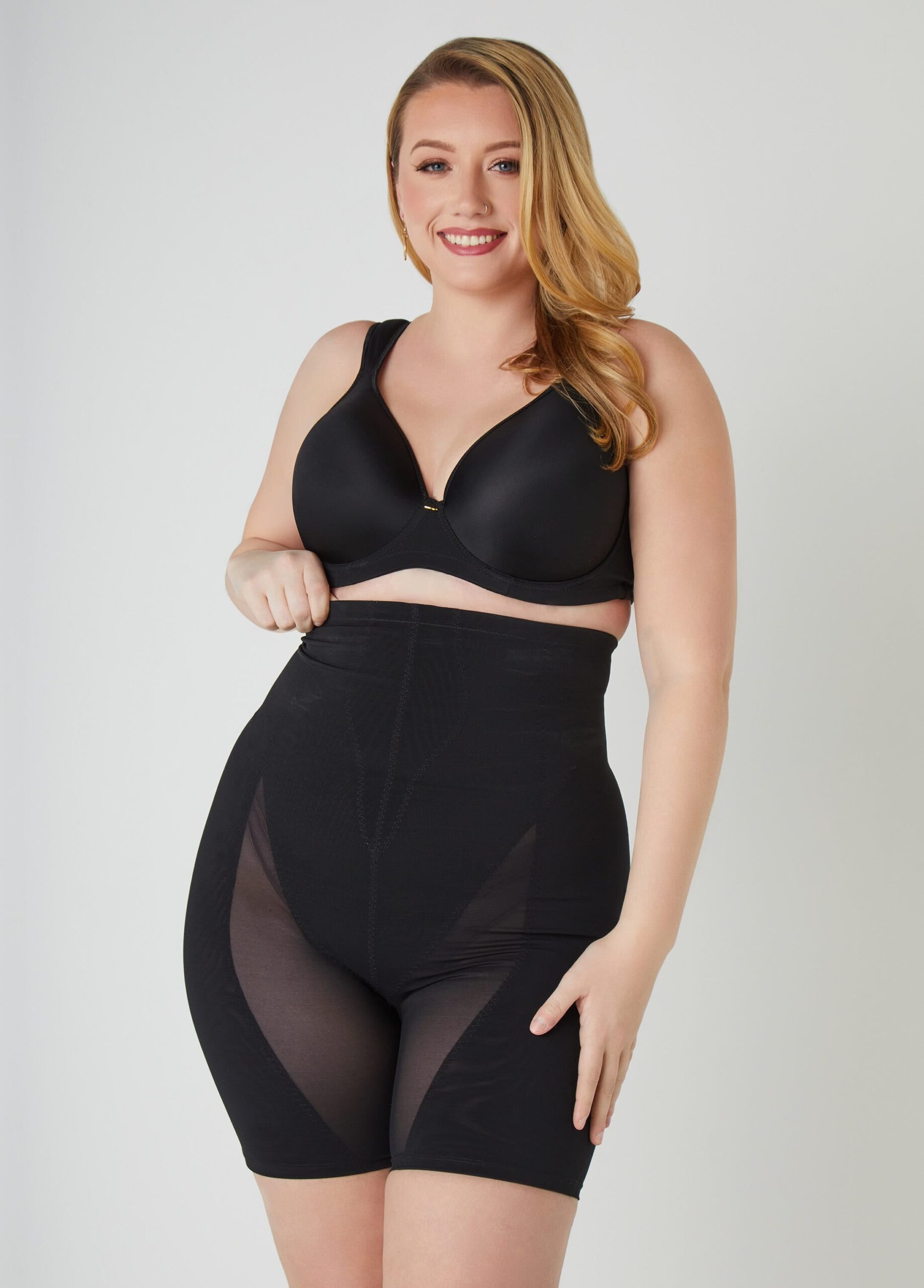
    A plus-size woman in high-waisted tummy-control shaping shorts looking comfortable
    The pieces that actually control the tummy share three features: a firm front panel, a high rise, and a leg or bodysuit that anchors them

    Best overall: high-waisted shaping shorts

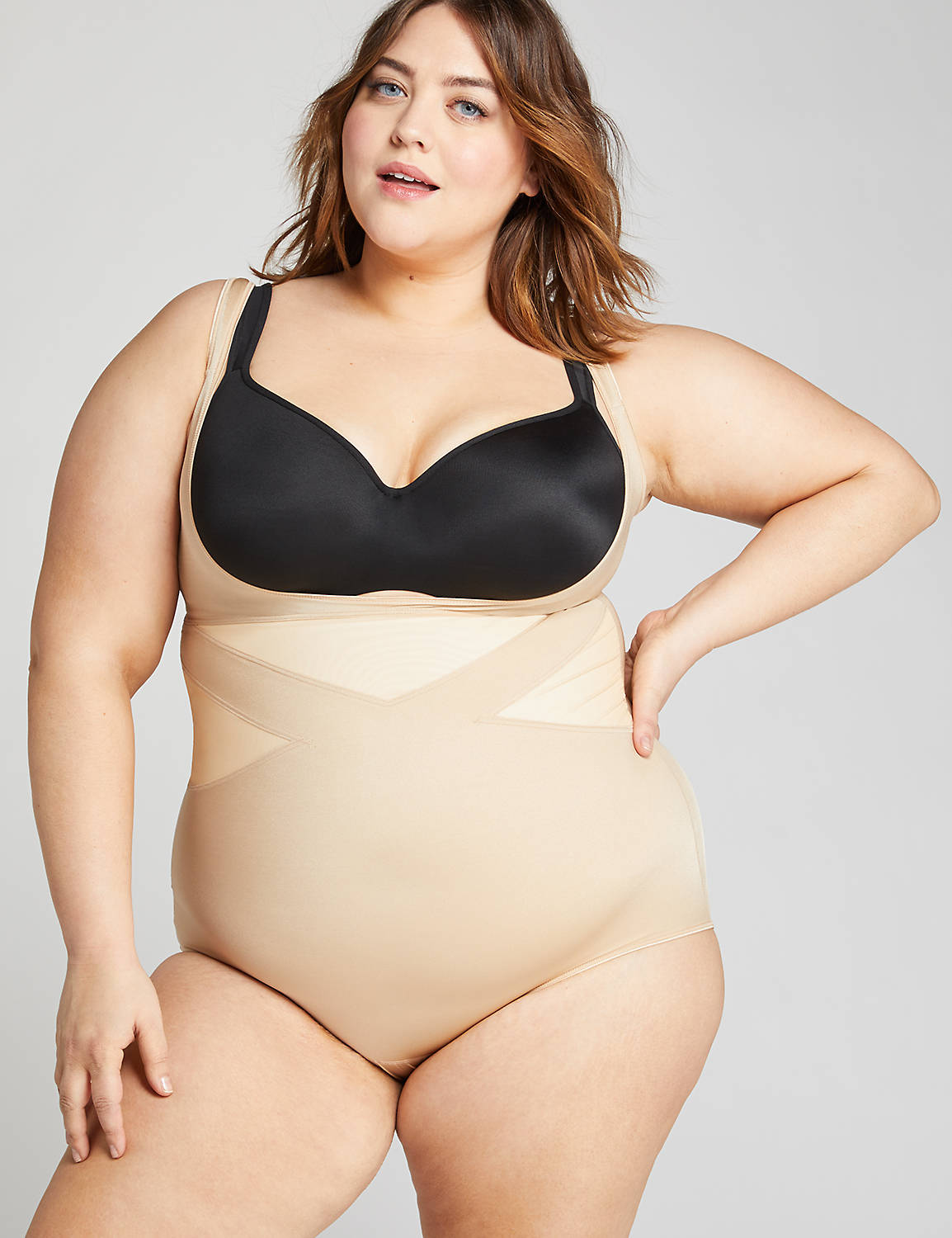
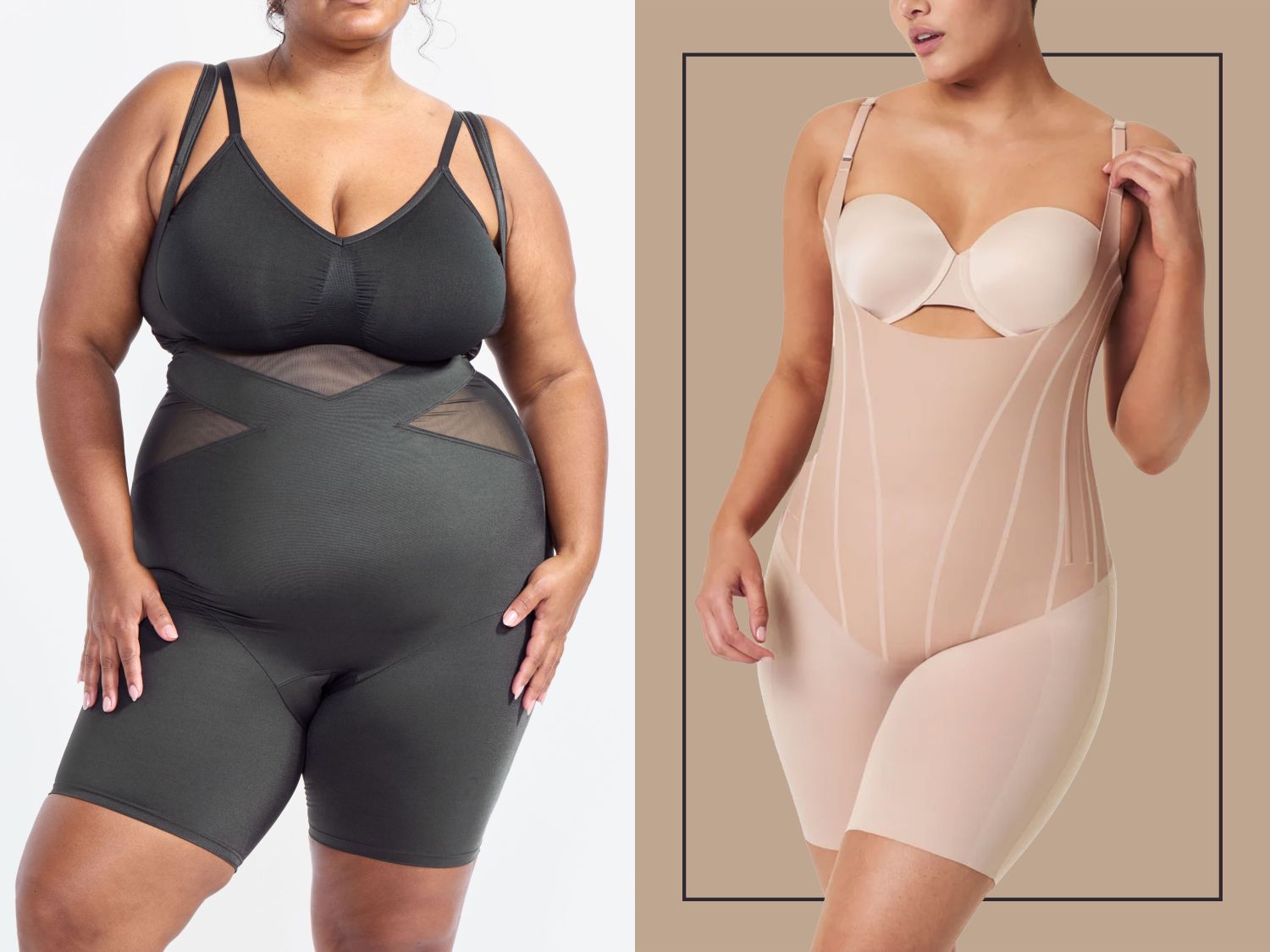
    For most plus-size bodies, most of the time, a high-waisted shaping short is the answer, and it is where I tell people to start. The short leg is the secret to why it stays put, because it grips a long stretch of your thighs and gives the whole garment real anchor points below your midsection, so there is nothing to roll. Paired with a firm high-waisted front, you get smooth, even control from your ribs to mid-thigh with none of the sausage-roll effect that briefs are famous for. Torrid makes a genuinely well-cut high-waisted tummy-control short in extended sizes that sits smooth under almost anything, and it is the piece I reach for first under a fitted dress or a clingy skirt.

    The reason this style wins as an everyday pick is comfort. Because the compression is spread across a large surface rather than concentrated in one tight band, it holds firmly without cutting in, so you can actually wear it through a full workday or a long event. If you only buy one tummy-control piece, make it a high-waisted short in your true size, and you will reach for it far more than any other shaper you own.

    Best for a smooth line under a dress: a shaping bodysuit

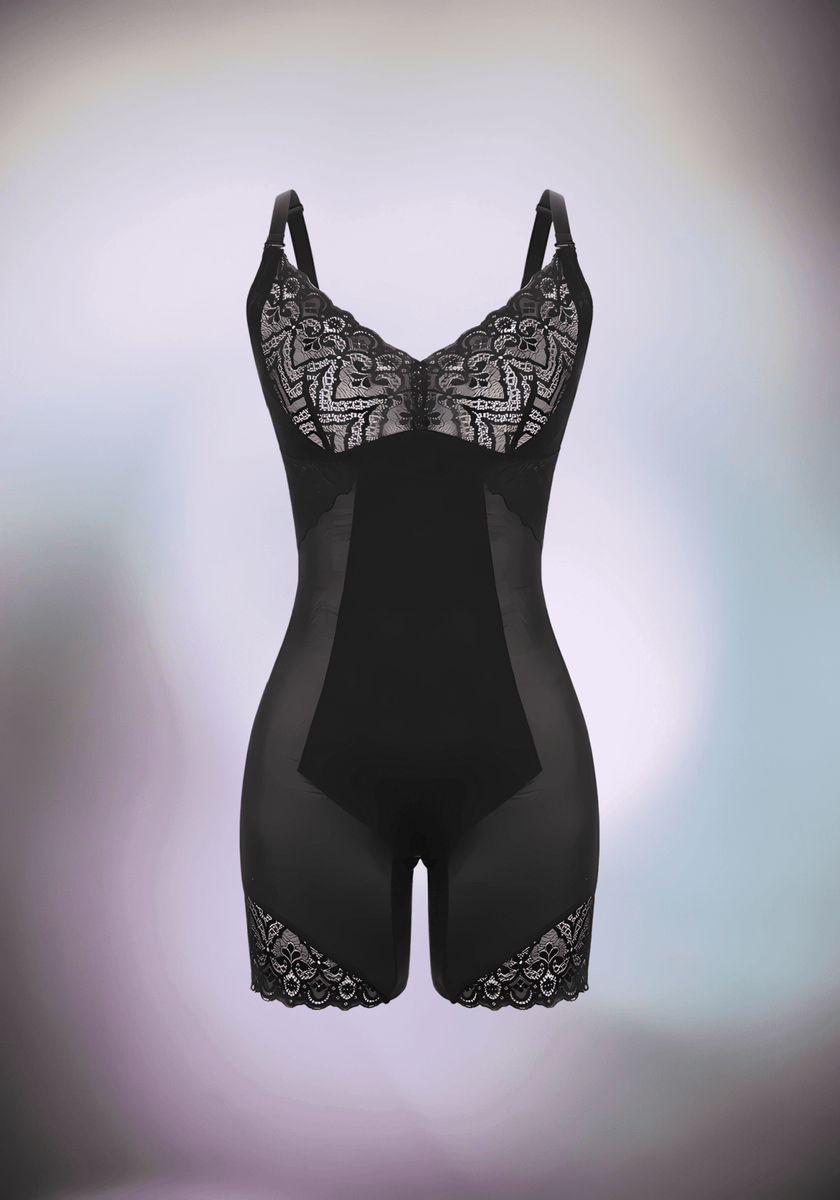
    When you want the smoothest possible line under a bodycon dress or a slip, a one-piece shaping bodysuit is unbeatable, because it physically cannot separate into two pieces that migrate. There is no waistband to roll, since the tummy control is built into a single continuous garment that runs from bust to hip. That makes it the most reliable choice for the outfits where you cannot risk a single adjustment, like a wedding or a photo-heavy event.

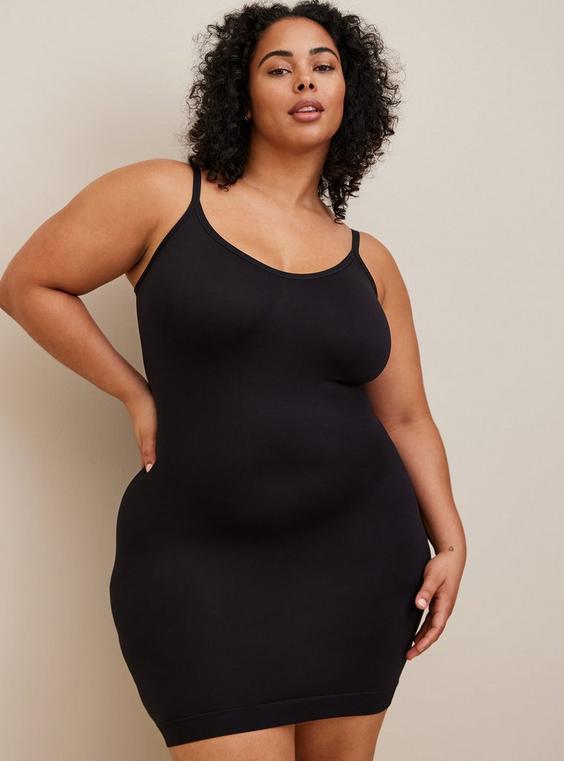
    A plus-size woman smoothing a dress over a shaping bodysuit, looking confident
    A one-piece bodysuit gives the smoothest line under a dress because it has no waistband to roll

    Look for a bodysuit with a firm front panel and adjustable straps, and a gusset closure so you are not undressing completely for a bathroom trip. A well-made plus-size shaping bodysuit from a brand that designs for fuller busts and hips, rather than grading a straight-size pattern up, fits at the shoulder, the tummy, and the hip all at once, which is the difference between a bodysuit you love and one that pulls or digs. Spend a little more here, because the fit of a bodysuit is what makes or breaks it.

    Best for a lower-belly pooch: a high-rise brief with a silicone band

    If your main concern is specifically the lower belly, the fix is rise plus grip. You want a high-rise brief or short whose panel starts below the pooch and extends well above your belly button, cradling the whole area instead of pressing on the middle of it. The piece that fails here is the low-cut brief that sits right on the fullest part and rolls immediately. To keep a high-rise piece from sliding, look for a silicone grip strip along the inner waistband, which holds gently to your skin and is the single most effective anti-roll feature there is.

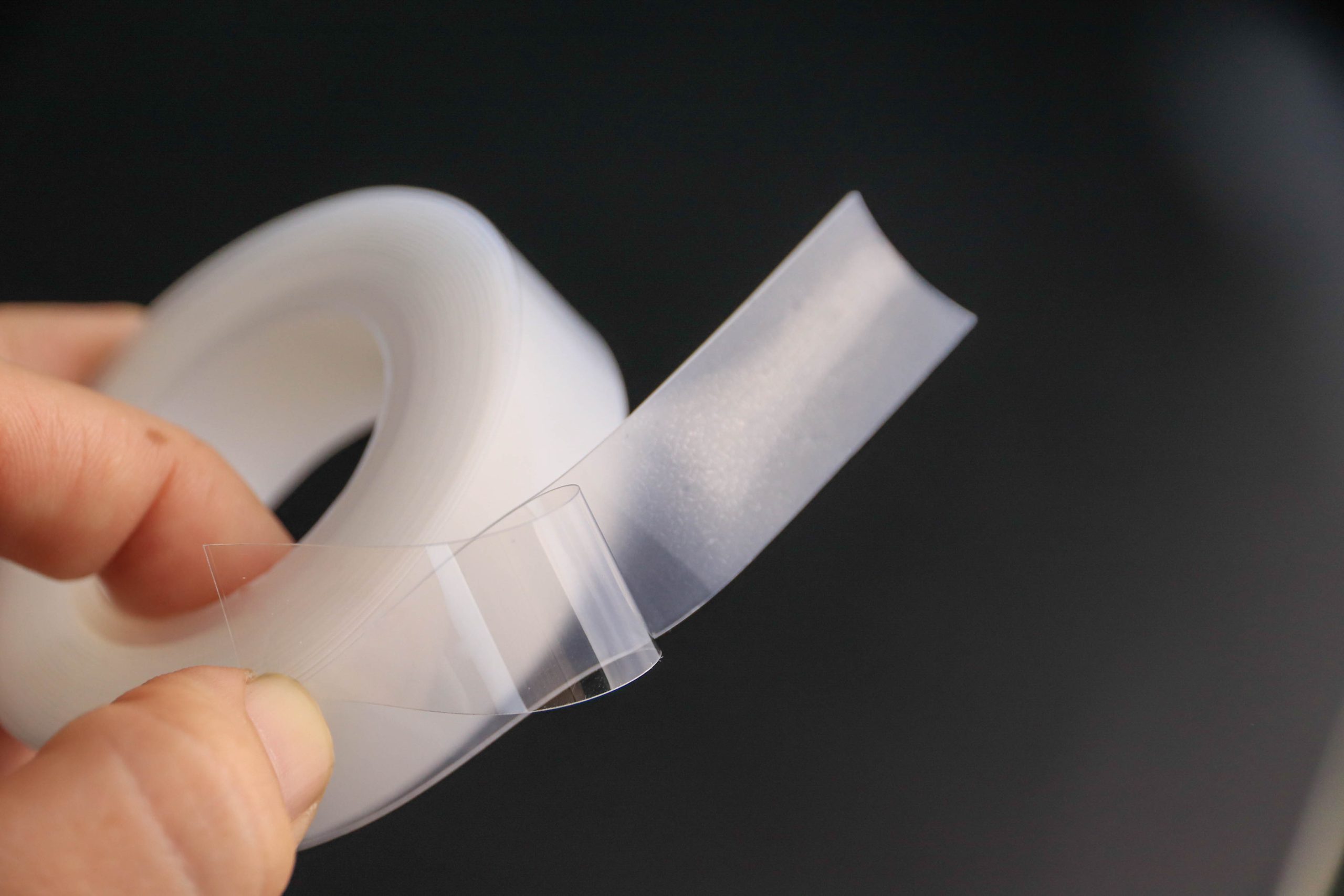
    Close-up of a silicone grip strip on the inside of a high-waisted shaper waistband
    A silicone grip strip along the inner waistband is what keeps a high-rise shaper from sliding down over the lower belly

    A high-waisted shaper with a silicone band targets the lower belly better than almost anything, because it combines the height that smooths the area with the grip that keeps it there. If you have tried tummy shapers before and given up because they always rolled down, this combination is very likely what you were missing.

    Best firm control for a special occasion

    Sometimes you want maximum smoothing for a few hours, and that is a legitimate want. For those occasions, a firm-control high-waisted piece with a reinforced double-layer front panel gives the most dramatic smooth without crossing into painful, as long as you buy your correct size rather than sizing down. Firm control should still pass the comfort test: an even, all-over hug you forget about, not a vice that makes it hard to breathe. If it is pinching or leaving deep marks, it is too small and will actually roll and dig more, not less.

    A firm-control high-waisted shaper in your true size is the move for an event where you want the most polished line and know you will be mostly standing and sitting rather than, say, dancing all night. For all-day everyday wear, step back down to the comfortable high-waisted short from the top of this list.

    A plus-size woman checking the fit of firm-control shapewear in a mirror
    Firm control should still feel like an even hug, not a vice. If it pinches or leaves deep marks, it is the wrong size

    How to choose and size yours

    With the styles sorted, the last thing that decides whether tummy-control shapewear works for you is size, and this is where most people go wrong. The instinct when a piece rolls or digs is to size down and squeeze harder. That makes both problems worse, because a too-small piece has less fabric touching your skin, so its edges bite in, and its overstretched waistband gives up and rolls faster. Buy for your actual measurements using the brand’s own size chart, not your dress size, and if you are between sizes, size up for better hold and comfort.

    Give a new piece an honest ten minutes on before you judge it. Good tummy-control shapewear feels like a firm, even, all-over hug that fades from your attention after a few minutes. If after ten minutes it is still pinching, riding up, or making you hold your breath, it is the wrong size or the wrong style for your body, and that is fixable information, not a verdict on you. Match the style to the outfit, the size to your measurements, and you will finally have shapewear that smooths and stays exactly where you put it.

    Quick answers to the questions everyone asks

    What is the best shapewear for tummy control? For most plus-size bodies, a high-waisted shaping short is the best all-around choice, because the short leg anchors it so it will not roll while a firm high-rise front smooths the whole midsection. For the smoothest line under a dress, a one-piece bodysuit wins. For a lower-belly pooch specifically, a high-rise brief with a silicone waistband.

    How do I stop tummy-control shapewear from rolling down? Choose a high-waisted style that sits well above your belly button, look for a silicone grip strip and a wide bonded waistband, and pick a short or bodysuit rather than a low brief. Most importantly, wear your true size, since a too-small piece rolls faster, not slower.

    Does tummy-control shapewear actually work? Yes, when it has a firm front panel, a genuine high rise, and an anchoring leg or bodysuit. It smooths and holds your midsection for a cleaner line under clothes. What it does not do is permanently change your shape, and it should never hurt. If a piece is not smoothing, it is almost always the wrong size or a style missing one of those three features.

    Is firmer shapewear better for tummy control? Not necessarily. Firmer control gives a more dramatic smooth for a few hours, which suits a special occasion, but for everyday wear a comfortable medium-control high-waisted short you can forget about all day is the better choice. Firmer is only better if it still passes the comfort test in your correct size.

    What size tummy-control shapewear should I buy? Buy to your actual waist and hip measurements using the brand’s size chart, not your clothing size, and size up if you are in between. Sizing down to squeeze harder backfires: it bites at the edges and rolls faster. The goal is smooth, even compression across a broad surface, which comes from the right size, not the smallest one.

    The short version

    If you want one everyday piece, get a high-waisted shaping short in your true size. If you want the smoothest line under a dress, get a bodysuit. If your worry is the lower belly, get a high-rise piece with a silicone band. In every case, check for a firm front panel, a real high rise, and something that anchors it, buy your measured size rather than sizing down, and give it ten honest minutes on. Do that, and tummy-control shapewear stops being a frustrating gamble and becomes a piece you actually trust.
  • How to Choose Shapewear That Doesn’t Roll Down or Dig In

    How to Choose Shapewear That Doesn’t Roll Down or Dig In

    You know the moment. You are at a wedding, the speeches are running long, and you can feel the top of your shapewear slowly surrendering, folding itself into a tight little sausage roll just under your ribs. So you excuse yourself, find the bathroom, and do the discreet reach-and-yank that every woman who has ever worn shaping underwear knows by heart. It is annoying, it is uncomfortable, and it quietly ruins the confidence the shapewear was supposed to give you in the first place.

    Here is the good news, and I mean this as someone who has thrown more than one rolled-down piece in the donate pile out of pure frustration. Shapewear that stays put exists, and getting it is almost entirely about knowing what to look for before you buy. The rolling, the digging, the riding up, none of that is a tax you have to pay for a smooth line. It is a fit and design problem, and fit and design problems have solutions.

    Why shapewear rolls down and digs in

    Almost every time a piece rolls at the waist or bites into your thigh, the culprit is one of two things: the wrong style for your body, or the wrong size. It is rarely you, and it is definitely not a sign that you need to size down into something punishing. When a waistband sits on the widest part of your midsection with nothing above it to hold it in place, your own movement pushes it down. Sit, bend, laugh at the toast, and physics does the rest. The band has nowhere to anchor, so it migrates to the path of least resistance, which is down and under the curve of your belly.

    Digging is the same story from the other direction. A piece that is too small does not shape you more, it just concentrates all its pressure into a couple of thin lines that carve into your skin and leave marks. Real shaping comes from smooth, distributed compression across a wide surface, not from a tight elastic edge trying to hold back everything on its own. Once you understand those two failure points, the features that fix them stop looking like marketing and start looking like the actual answers they are.

    Plus-size shaping shorts next to a shaping brief, showing the difference in leg coverage
    Shorts extend the compression down the thigh, which is what stops the roll-down that briefs are prone to

    Shorts anchor, briefs roll

    If you take one thing from this whole guide, take this. Shaping shorts stay put far better than shaping briefs, and the reason is simple leverage. A short extends its compression down onto your thighs, so the garment grips a long stretch of your body and has real anchor points below your midsection. A brief stops at the top of your legs with nothing holding its lower edge, so it rides up and its waistband rolls down, meeting in the worst possible place around your lower belly. For most plus-size bodies, a mid-thigh short is the single most reliable style there is.

    Torrid makes a genuinely good high-waisted shaping short in extended sizes, and it is the style I steer people toward first when they tell me nothing ever stays up. If you prefer full coverage that cannot separate into two migrating pieces at all, a one-and-done shaping bodysuit solves the problem by design, because a bodysuit has nowhere to roll to. Both cost more upfront than a bargain brief, and both earn it the first time you get through an entire evening without a single trip to the bathroom to fix yourself.

    High-waisted is not optional

    The rise is the other half of the anchor. A high-waisted piece that comes up well past your belly button distributes light pressure across your whole midsection instead of squeezing one narrow band low on your stomach. That height gives the garment something to hold onto above the fullest part of you, which is exactly what stops the downward slide. When the top edge sits at your natural waist, the narrowest point, it has a natural shelf to rest against. When it sits lower, on the widest curve, gravity and movement win every time.

    A plus-size woman in high-waisted shapewear that comes up to her natural waist
    Height above the belly button is what gives shapewear a place to stay anchored all day

    This is also why the tiny, low-cut shaping briefs you see marketed as invisible are so often the ones that fail you. They are trying to smooth the exact part of the body they have no leverage over. If your main concern is a lower-belly pooch, height matters even more, because you want the panel to start below the pooch and extend well above it, cradling the whole area rather than cutting across the middle of it and creating a fresh ledge.

    The features that actually hold

    Once you are looking at high-waisted shorts or a bodysuit, a few specific details separate the pieces that stay put from the ones that disappoint. The first is a silicone grip strip along the inside of the waistband. That thin band of tacky silicone holds gently to your skin and stops the top edge from creeping down, and it is the single most effective anti-roll feature you can look for. The second is a wide, bonded waistband rather than a thin elastic one, because width spreads the hold over more skin so it grips without carving in.

    Close-up of a silicone grip strip on the inside of a shapewear waistband
    A silicone grip strip along the inner waistband is the most reliable anti-roll feature to look for

    Brands have caught on to this, and the better ones build these features in as standard now. Leonisa and Honeylove both make high-waisted pieces with bonded waistbands and silicone lining, and a well-made high-waisted shaper with a silicone band is worth the small premium over a basic version without one. When you are shopping, read the product description for the words bonded, silicone, or stay-put, and be a little skeptical of any piece that stays quiet about how it plans to hold itself up.

    Getting the size right, which usually means not sizing down

    This is where so many of us go wrong, myself included for years. When shapewear rolls or digs, the instinct is to blame our bodies and buy a smaller size to squeeze harder. That almost always makes both problems worse. A too-small piece has less fabric touching your skin, so its edges bite in, and its overstretched waistband gives up and rolls faster. The goal is firm, smooth, sustained compression across a broad surface, and you get that from the correct size, sometimes even a size up, not from the smallest one you can wriggle into.

    Use a simple test. When it is on, the compression should feel like a firm, even hug that you forget about after a few minutes. If the fabric is carving lines into your skin, pinching, or making it hard to take a full breath, it is too small, full stop. If you can pull the waistband a couple of inches away from your body with no resistance, it is too big and will slide. Buy for the measurement, follow the brand’s own size chart rather than your dress size, and give a new piece an honest ten minutes on before you judge it.

    The anchor trick that costs nothing

    Here is a small styling move that makes even good shapewear behave better. When you can, wear a skirt or trousers that sit at your natural waist over the top of it. The waistband of your outer layer presses gently against the top of your shapewear and gives it a second thing to hold onto, so the two work together instead of the shaping layer fighting gravity alone. It is the same anchoring logic as the shorts and the high rise, just borrowed from your actual outfit, and it is free.

    A plus-size woman smoothing a dress over shapewear, looking relaxed and confident
    A natural-waist skirt or trouser over the top gives your shapewear a second anchor point

    What to buy for your specific concern

    If your main worry is a lower-belly pooch, prioritize rise above everything and choose a high-waisted short or a bodysuit whose panel clearly extends above the belly button. If you are getting dressed for a long event and cannot risk any adjustment, a full bodysuit removes the roll problem entirely because it is one continuous piece. For everyday wear under work clothes, a comfortable, breathable high-waisted short in your true size will carry you from morning to evening. Torrid and Lane Bryant both cut their shaping pieces for plus-size proportions rather than grading up a straight-size pattern, and a plus-size shaping bodysuit from a brand that actually designs for our bodies fits at the hip and thigh in a way that generic shapewear rarely does.

    Whatever you choose, remember that the piece is there to serve you for a few hours and then come off. It should make you forget you are wearing it, not count down the minutes until you can take it off. If a piece fails that test, it is the piece that is wrong, not you.

    Quick answers to the questions everyone asks

    How do I stop shapewear rolling down at the waist? Choose a high-waisted style that sits well above your belly button, look for a silicone grip strip and a wide bonded waistband, and make sure you are in the correct size rather than one that is too small. Shorts roll far less than briefs because the thigh compression anchors them.

    What is the best shapewear for a lower-belly pooch? A high-waisted shaping short or bodysuit whose front panel starts below the pooch and extends above the belly button. Height is what smooths that area, because a low-cut piece just cuts across the middle of it and creates a new ledge. Firm, wide compression beats a tight low band every time.

    What shapewear stays put under a dress? A one-piece shaping bodysuit is the most reliable choice under a dress, because it cannot separate into two pieces that migrate. If you prefer separates, a high-waisted short with a silicone waistband and a natural-waist fit will hold, especially if the dress itself nips in at the waist to help anchor it.

    Shorts or briefs for tummy control? Shorts, almost always. Briefs stop at the top of the thigh with nothing to hold their lower edge, so they ride up and roll down. Shorts extend the compression onto the thighs, giving the whole garment real anchor points, which is why they stay smooth and put for far longer.

    Is it normal for shapewear to feel tight? Firm, yes. Painful, no. Good shapewear feels like an even, all-over hug that you stop noticing within a few minutes. If it is pinching, leaving deep marks, or making it hard to breathe, it is too small and will actually perform worse, not better. Size for smooth compression, not maximum squeeze.

    Your simple shopping checklist

    Next time you shop, keep it to five questions. Is it high-waisted, coming up past the belly button? Is it a short or a bodysuit rather than a brief? Does it have a silicone grip strip and a wide bonded waistband? Are you buying your true measured size instead of sizing down? And can you anchor it with a natural-waist skirt or trouser on top? Get four or five yeses and you have found a piece that will stay exactly where you put it, quietly doing its job while you forget it is even there. That is what shapewear is supposed to feel like.

  • How to Stop Inner-Thigh Chafing as a Plus-Size Woman (What Actually Works)

    How to Stop Inner-Thigh Chafing as a Plus-Size Woman (What Actually Works)

    If you have ever peeled your thighs apart after a summer walk and felt that hot, raw sting, you already know what chub rub is. You also already know it has nothing to do with your worth, your size, or how “in shape” you are. Thighs that touch are normal. Most women’s thighs touch. The friction is just physics: skin plus movement plus a little sweat. The good news is that it is one of the most fixable body annoyances there is, and you do not have to give up dresses, walk like you are being timed, or spend a fortune to make it stop. Here is exactly what works, in the order I would actually try it.

    A plus-size woman walking comfortably outdoors on a warm day
    A plus-size woman walking comfortably outdoors on a warm day

    Why it happens (the 20-second version so the fixes make sense)

    Chafing is friction plus moisture plus heat. Skin rubs against skin, sweat softens the surface, and the repeated rubbing wears it raw. That is the whole story, and it is why every real fix does one of three things: reduces the friction, keeps the area dry, or puts a barrier between skin and skin. Once you see it that way, you can mix and match the solutions below to fit your day: a balm for a quick errand, shorts for a long one, bands for a dress.

    The fastest fix: an anti-chafe balm or stick

    If you need relief today, this is where to start. An anti-chafe stick glides on like deodorant and leaves a thin, invisible layer that lets your thighs slide past each other instead of dragging. The dermatologist-favorite is Megababe Thigh Rescue, which uses aloe and grapeseed oil to hydrate while it protects and lasts most of a day. If you want the sportier, sweat-proof option that runners swear by, Body Glide Anti-Chafe Balm is the classic.

    How to use it well: apply to clean, dry skin before you get dressed, cover the whole area that touches (usually higher up than you think), and reapply if you are out for more than a few hours or sweating hard. A stick lives in your bag; a smaller one lives in your car. That is the entire routine.

    An anti-chafe balm stick, the fastest thigh-chafing fix
    An anti-chafe balm stick, the fastest thigh-chafing fix

    No-slip thigh bands for dresses and skirts

    When you want to wear a dress and skip shorts entirely, thigh bands are the move. They are soft bands that sit around each thigh with a strip of silicone to keep them from rolling down, so your thighs never actually touch. The best-known are Bandelettes Thigh Bands, and the reason they matter for us specifically is sizing: they run up to 3XL, they come in lace styles that look intentional if they peek out, and the stay-up silicone genuinely holds through a full day of walking. They are lighter and cooler than shorts, which makes them the summer-wedding, hot-day answer.

    Lace thigh bands that prevent chafing under dresses
    Lace thigh bands that prevent chafing under dresses

    Slip shorts and bike shorts: the invisible barrier

    If bands are not your thing, a thin pair of shorts under your dress does the same job and doubles as smoothing. Look for a slip short with at least a 7-inch inseam so it actually covers where you rub, in a breathable, moisture-wicking fabric rather than thick shapewear that traps heat. Thigh Society Slip Shorts are the plus-size favorite here because they are cut long, cut wide, and made to disappear under clothes without digging in. For leggings-weather, a pair of bike shorts under a longer top does the same thing.

    Slip shorts give a smooth, invisible barrier under dresses
    Slip shorts give a smooth, invisible barrier under dresses

    Powder and the right fabrics (the free-ish fixes)

    Two habits cost almost nothing and quietly prevent a lot of chafing. First, keep the area dry: a talc-free body powder or a moisture-absorbing product like Gold Bond Friction Defense cuts the sweat that softens skin. Second, choose what touches your legs carefully. Moisture-wicking, quick-dry fabrics pull sweat away, while cotton soaks it up and holds it against you. If you sit for long stretches, try not to cross your legs, which traps heat and moisture right where you do not want it.

    A talc-free body powder keeps the area dry to prevent chafing
    A talc-free body powder keeps the area dry to prevent chafing

    Already chafed? Here is how to calm it down fast

    If you are reading this because you are already raw, stop the friction first and let it heal. Rinse the area with warm water and a gentle, non-stripping cleanser (a mild Dove-type bar is fine), pat it dry, and smooth on a barrier ointment a few times a day. Dermatologists reach for A&D ointment or plain petroleum jelly to seal in moisture and protect the skin while it recovers. Give it a couple of days in loose, breathable clothing before you go back to your prevention routine. If the skin blisters, oozes, or does not start improving in a few days, that is your cue to see a doctor rather than push through it, because broken skin can get infected.

    A barrier ointment soothes and protects already-chafed skin
    A barrier ointment soothes and protects already-chafed skin

    The dark patches chafing can leave behind (and how to fade them)

    If the skin high on your inner thighs has gone darker than the rest of your leg, that is post-inflammatory hyperpigmentation, and it is one of the most common things women go looking for after they have dealt with the chafing itself. Repeated friction and low-grade irritation tell the skin to make extra melanin, so the fix has two parts. First, stop the rubbing using everything above, because nothing will fade while the friction is still happening. Then, once the skin is calm and unbroken, help it turn over: a gentle niacinamide serum like The Ordinary Niacinamide 10% + Zinc, or an ingredient like azelaic or kojic acid used a few nights a week, will even the tone over weeks rather than days. Moisturize daily so the barrier stays healthy, and use sunscreen on the area if it ever sees sun, since UV deepens the very marks you are trying to fade. Be patient and be kind to yourself here. Darker inner thighs are extremely normal, they are not a hygiene problem, and they fade fastest when you stop chasing quick fixes and just stay consistent.

    Fading dark inner-thigh patches with a gentle niacinamide serum
    Fading dark inner-thigh patches with a gentle niacinamide serum

    Chafing at the gym, on a run, or on a long walk

    Workout chafing is its own beast, because you add heavy sweat and hundreds of repeated strides to the mix, so a light morning balm often will not last. Two things solve it. Apply a sweat-proof balm like Body Glide Anti-Chafe Balm generously before you change, not after you are already damp, and reapply at the halfway point of anything long. Then let your clothing do half the work: a pair of moisture-wicking bike shorts with a long inseam under your dress, skirt, or running shorts keeps skin off skin the whole time. Baleaf Plus-Size Bike Shorts are a favorite because they are cut long and wide, they wick instead of trap, and they do not roll down mid-stride. Rinse and dry the area soon after you finish, since sitting in salty, damp fabric is what turns a warm patch into a raw one.

    Moisture-wicking bike shorts prevent chafing during workouts
    Moisture-wicking bike shorts prevent chafing during workouts

    Quick answers to the questions everyone asks

    Does Vaseline help thigh chafing? For healing, yes. A layer of petroleum jelly seals and protects raw skin overnight. For preventing chafe during a long, sweaty day it is not ideal, because it is heavy, traps heat, and rubs off. Use a proper anti-chafe balm to prevent, and save the Vaseline for calming skin that is already sore.

    Why do my thighs chafe when I am not overweight? Because chafing is about your thighs touching and moving, not about fat. Plenty of slim women and elite runners chafe. If your thighs make contact when you walk, which is true for most bodies, friction can happen. It is normal, and it is not a sign of anything being wrong with you.

    How do I stop chafing right now, today? Smooth an anti-chafe balm onto clean, dry skin before you head out. No balm in the house? A thin layer of a barrier ointment works in a pinch, or pull on a pair of long-inseam bike shorts under what you are already wearing.

    What stops it for good? Not one single product, but a small system: balm on ordinary days, bands or slip shorts under dresses, powder and wicking fabrics in the heat, and a barrier ointment on standby.

    Your simple everyday routine

    Pulling it together, this is the whole system: balm on a normal day, bands or slip shorts under dresses, a sweat-proof balm plus bike shorts for workouts, powder and smart fabrics when it is hot, and a barrier ointment on standby for the days you get caught out. If chafing has already left darker patches, calm the friction first and fade them slowly with a gentle niacinamide routine. You do not need all of it at once. Start with the balm, add the piece that fits your wardrobe, and chub rub stops being a thing you plan your outfits around. Your thighs touching was never the problem, and now the sting is not either.

    Curvy Girl Journal only recommends products we would use ourselves. Some links are affiliate links, which means we may earn a small commission at no extra cost to you. It helps keep the guides free.