Category: Uncategorized

  • What Your Gut Is Trying to Tell You: The Signals Past IBS

    What Your Gut Is Trying to Tell You: The Signals Past IBS

    By 3 p.m. her jeans wouldn’t button. She’d eaten a salad with grilled chicken at 12:30, drunk a glass of sparkling water, taken one bite of a coworker’s birthday cake out of politeness, and now the waistband she’d snapped shut at breakfast was leaving a red welt across her stomach. She was 38, healthy by every external measure, and quietly furious that nobody could tell her why her gut had decided, at some point in the last two years, that food was the enemy. Her gastroenterologist had ordered the usual panel, told her the labs were fine, and suggested she try to manage her stress. She left the office wondering if “fine” was just the medical word for “we didn’t look hard enough.”

    Her story is one of the most common stories in women’s health, and it almost never gets named correctly. The gut isn’t just a digestive tube. It’s an endocrine organ, an immune organ, and a neurological organ, with more nerve endings than the spinal cord and a microbial population that outweighs the human cells it lives among. When that system goes sideways, the signals can show up almost anywhere in the body except where most clinicians are looking. The list below is the one a smart functional gastroenterologist would walk through. None of these signals are normal. All of them are treatable.

    The Bristol Stool Chart Belongs in Every Bathroom
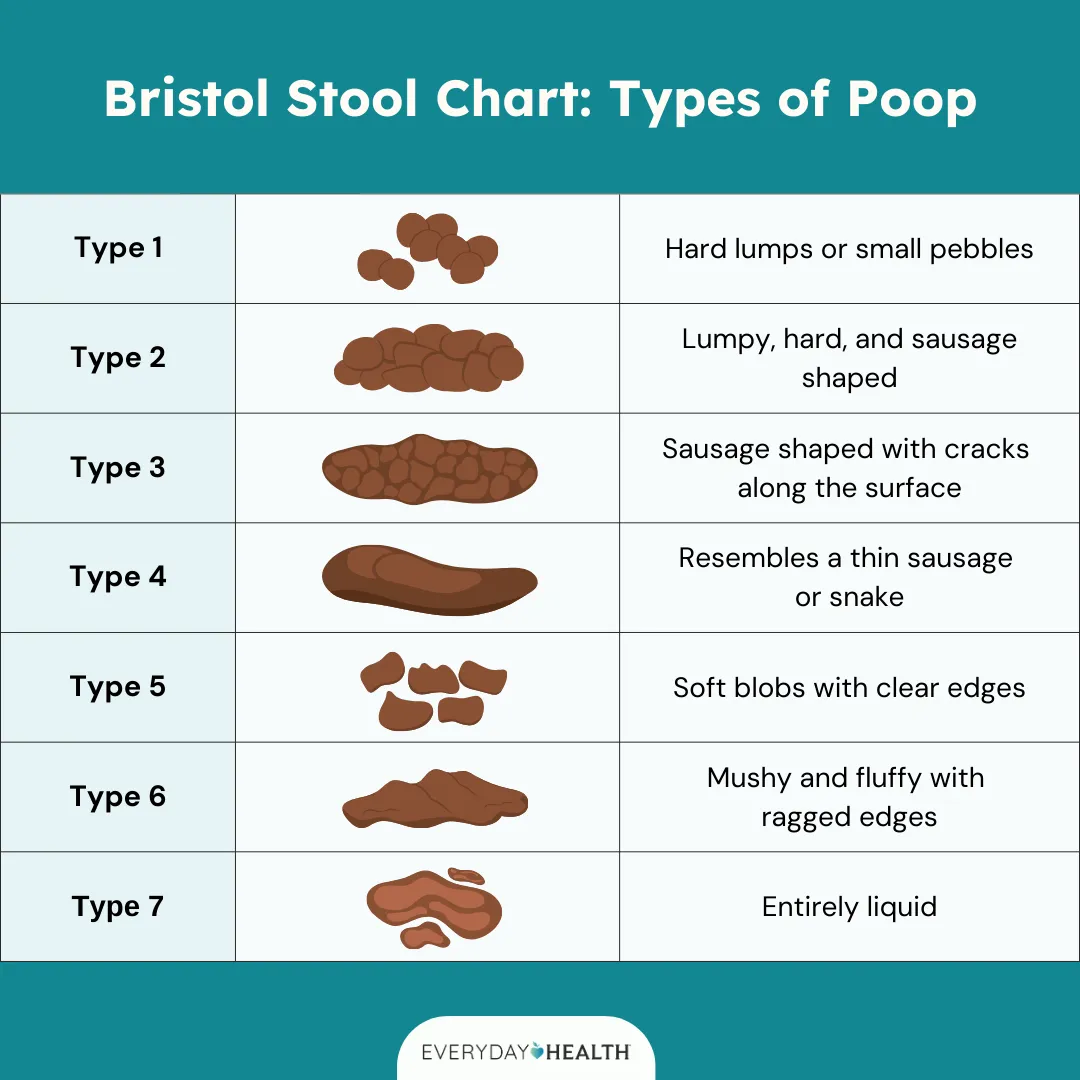
    The Bristol Stool Chart Belongs in Every Bathroom

    Before the symptoms get exotic, the single most useful gut diagnostic in the world is something a woman can do, alone, in 90 seconds, every morning. The Bristol Stool Chart, developed at the Bristol Royal Infirmary in 1997 and now used in clinical research across the globe, classifies stool into seven types. Type 1 is hard pebbles. Type 2 is a lumpy sausage. Type 3 is a sausage with cracks. Type 4 is a smooth, soft sausage. Type 5 is soft blobs with clear edges. Type 6 is mushy with ragged edges. Type 7 is liquid.

    Healthy stool, the kind that signals a well-fed microbiome and an unhurried transit time, sits at Type 3 or Type 4. Type 1 and Type 2 mean constipation, slow transit, and often not enough fiber or water. Type 5 through 7 mean inflammation, food intolerance, dysbiosis, or in some cases an infection that nobody has thought to look for. Dr. Robynne Chutkan, an integrative gastroenterologist and author of Gutbliss , has spent two decades arguing that the chart belongs on the back of every bathroom door. The data she has on her own patients is striking. Women who track their type for two weeks come back with a clearer picture of what is wrong than most lab panels can produce.

    Chronic Bloating Is Not a Personality Trait
    Chronic Bloating Is Not a Personality Trait

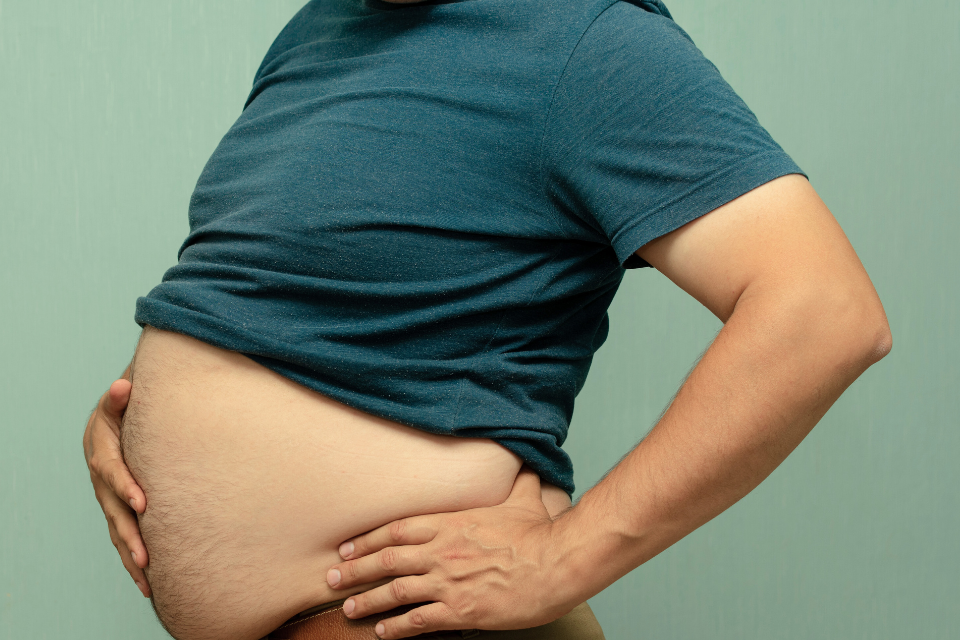
    Bloating that arrives within an hour of eating, sits like a balloon under the ribs, and resolves overnight only to come back the next afternoon is one of the most under-investigated symptoms in primary care. Women hear, again and again, that bloating is just a normal part of being a woman, especially after 35. It is not. Chronic daily bloating points to one of three things in most cases: a bacterial overgrowth in the small intestine called SIBO, a yeast overgrowth in the gut, or a food intolerance the body has not been screened for.

    The perimenopause overlap is the part that gets missed. Falling progesterone slows gut motility, which lets bacteria sit longer in the small intestine, which feeds the overgrowth that drives the bloat. Estrogen volatility further inflames the gut lining. A woman who never had digestive trouble in her twenties can find herself, at 40, bloated every afternoon and unable to figure out which food triggered it because all of them seem to. Dr. Mary Claire Haver has flagged this perimenopausal gut shift as one of the most consistent patterns she sees in clinic, and it is almost never on a standard gastroenterology workup.

    Morning Fatigue Versus Afternoon Fatigue

    Morning Fatigue Versus Afternoon Fatigue

    Where the fatigue lives on the clock is a clue. Fatigue that is heaviest in the morning, the kind that makes a 7 a.m. alarm feel cruel even after eight hours in bed, tends to point upstream of the gut, toward the adrenals, the thyroid, or sleep architecture. Fatigue that lands like a brick at 2 or 3 in the afternoon, the kind that arrives an hour or two after lunch and feels almost narcotic, points downstream into digestion. The food is not being processed cleanly. The blood sugar is spiking and crashing, or the gut is mounting an inflammatory response to something on the plate.

    The pattern matters because the fix is different. Morning fatigue responds to cortisol support and a protein-rich breakfast within an hour of waking. Afternoon fatigue responds to a structured elimination diet, a fiber audit, and in some cases a SIBO workup. Dr. Will Bulsiewicz, a board-certified gastroenterologist and author of Fiber Fueled , frames the afternoon crash as the most reliable gut signal a woman can track without any equipment. If lunch consistently produces a slump within two hours, the gut is the system to examine.

    Brain Fog After Eating
    Brain Fog After Eating

    The gut-brain axis is no longer a wellness slogan. It is a documented neurological reality, with the vagus nerve running a direct line between the two organs and the gut microbiome producing roughly 90 percent of the body’s serotonin and a meaningful share of its dopamine. When the gut is inflamed, the brain hears about it within minutes. The clinical name is postprandial cognitive impairment, and it shows up as the kind of foggy, slow, slightly disoriented feeling that arrives 30 to 90 minutes after a meal and makes it hard to write a coherent email.

    Dr. Mark Hyman, founder of the Cleveland Clinic Center for Functional Medicine, has spent years arguing that brain fog after meals is one of the clearest signals of food intolerance and gut inflammation that a woman can self-track. The mechanism is straightforward. Inflammatory cytokines released in the gut cross into circulation, the blood-brain barrier becomes more permeable under inflammation, and the brain registers the chemical noise as a slow, muddy cognition. The food driving it is almost always gluten, dairy, eggs, soy, corn, or sugar, and almost always one a woman is eating daily without thinking.

    Sudden Food Intolerances After Years of Tolerance
    Sudden Food Intolerances After Years of Tolerance

    The gut a woman has at 25 is not the gut she has at 40. Foods that produced no symptoms for a decade can begin, seemingly overnight, to produce bloating, fatigue, congestion, or skin reactions. This is not a sign that the body has become “weak.” It is a sign that the gut lining has lost some of its integrity, that the immune system at the gut wall has become reactive, or that the microbial population has shifted in a way that no longer tolerates what it used to tolerate.

    The most common late-onset intolerances are dairy, gluten, and eggs, in that order. Dr. Robynne Chutkan describes a typical case as a woman in her late thirties who can no longer drink her morning coffee with cream without feeling congested, foggy, and bloated by noon. The fix is rarely permanent abstention. It is a 30-day elimination, a strategic reintroduction, and a parallel effort to repair the gut lining so that tolerance can be rebuilt. Skipping the repair step is the part that turns a temporary sensitivity into a lifelong restriction.

    Recurring Adult Acne That Tracks With the Gut
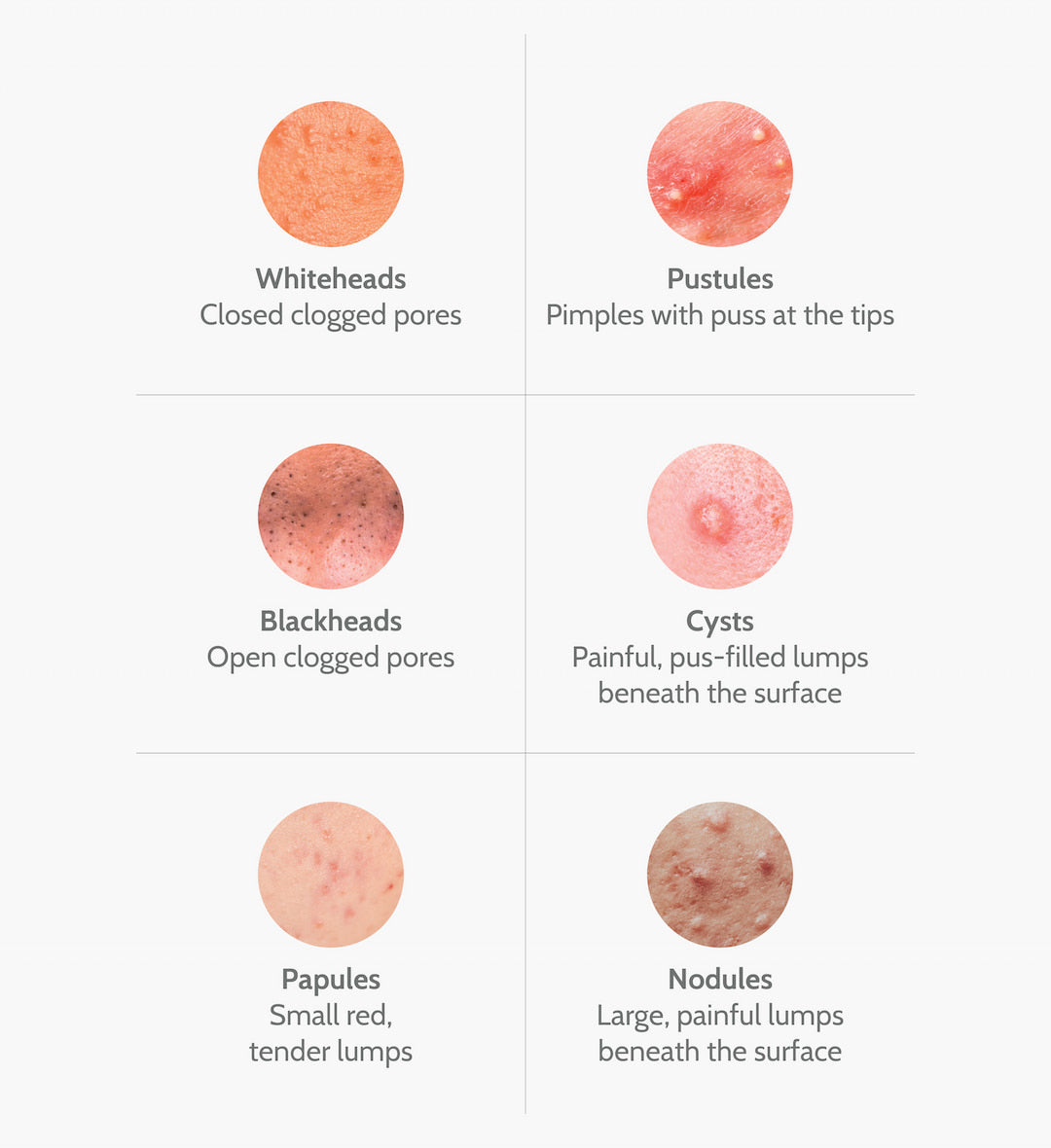
    Recurring Adult Acne That Tracks With the Gut

    Acne in the thirties and forties is almost never a skincare problem. The face is a mirror of the gut, and adult acne, especially around the jawline and chin, correlates tightly with three gut-driven inputs: dysbiosis in the gut microbiome, food intolerances that drive systemic inflammation, and hormonal shifts that the liver and gut are no longer clearing efficiently. Dermatologists who treat with topicals alone often fail their adult patients for exactly this reason. The trigger is two organs away from the breakout.

    The pattern to watch for is acne that flares 24 to 72 hours after a specific food, that clusters around the cycle, or that improves dramatically during a structured elimination diet. Dairy is the most frequent culprit, with studies in the Journal of the American Academy of Dermatology consistently linking dairy consumption to adult acne severity. Sugar and refined carbohydrates spike insulin, which drives androgens, which drives sebum production. A 30-day elimination of dairy and added sugar is, for many women, more effective than a topical retinoid prescription.

    The 30-Day Elimination Protocol
    The 30-Day Elimination Protocol

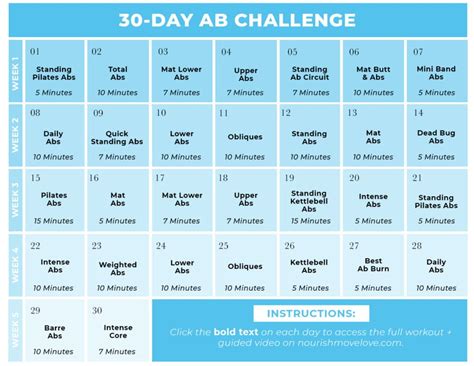
    The single most powerful diagnostic tool a woman can run on her own gut is a structured elimination diet. The protocol is unglamorous and works. For 30 days, remove dairy, gluten, and eggs completely. Read every label. Watch for hidden gluten in soy sauce and salad dressing, and hidden dairy in protein bars and processed foods. At the end of 30 days, reintroduce one food at a time, in larger-than-normal amounts for two consecutive days, and then return to the elimination diet for 72 hours while tracking symptoms.

    The reintroduction is the diagnostic part. A clean reintroduction means no return of bloating, fatigue, brain fog, congestion, joint pain, or acne. A reactive reintroduction means symptoms surface within 72 hours, and the food can be filed as a known trigger. Many women discover that one of the three is fine and another is the entire problem. The clarity from a single 30-day cycle is often greater than the clarity from a year of guessing. A simple tracking journal, even something like a basic food and symptom journal , makes the pattern visible in a way memory alone cannot.

    The Fiber Audit, 30 Grams a Day From Real Food
    The Fiber Audit, 30 Grams a Day From Real Food

    The average American adult eats 15 grams of fiber a day. The figure the gut microbiome actually needs to thrive sits at 30 grams or higher, and Dr. Will Bulsiewicz has built a career on the data showing that fiber diversity matters as much as fiber quantity. His American Gut Project research, published in mSystems , found that people who ate 30 or more different plant foods a week had a measurably more diverse and resilient microbiome than people who ate 10 or fewer, regardless of whether they identified as vegetarian or omnivore.

    A fiber audit is a one-week exercise. Track every plant food eaten, by name, for seven days. Count beans, lentils, nuts, seeds, whole grains, vegetables, fruits, herbs, and spices. The number that comes back is usually startling. Most women land between 12 and 18. The fix is to add, not subtract: a daily smoothie with three plants, a soup with five plants, a salad with seven plants, a stir-fry with six plants. Fiber from real food, not from a powdered supplement, is the input that feeds beneficial bacteria and produces the short-chain fatty acids that heal the gut lining.

    Fermented Foods Earn Their Place
    Fermented Foods Earn Their Place

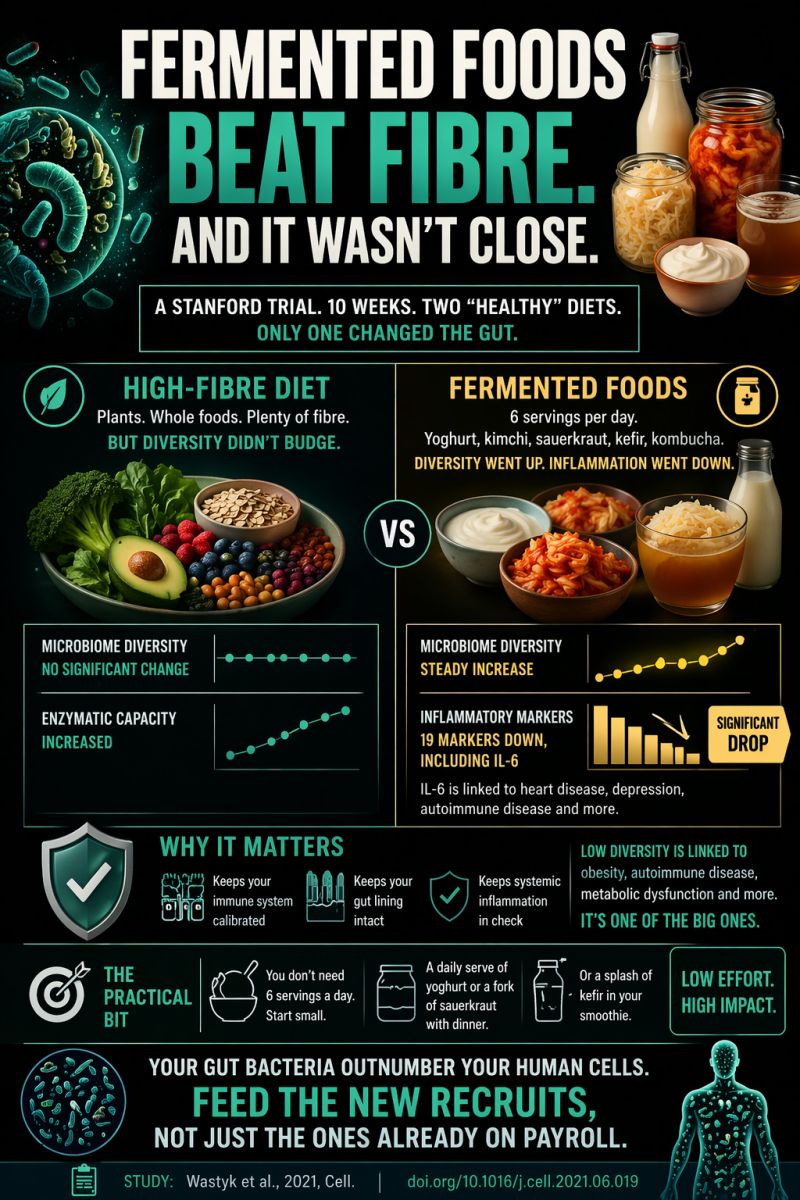
    A daily serving of fermented food is one of the most evidence-backed gut interventions in nutritional science. A Stanford study published in Cell in 2021 followed two groups of adults for ten weeks, one eating six servings of fermented food a day and one eating a high-fiber diet. The fermented food group showed a significant increase in microbial diversity and a measurable decrease in 19 inflammatory markers. The high-fiber group showed benefits too, but the speed and breadth of the fermented food group surprised the researchers.

    The fermented foods that matter are the ones with live cultures: kimchi, sauerkraut, kefir, yogurt with live active cultures, miso, and tempeh. Kombucha is fine but lower in beneficial bacteria than the others. A reasonable daily target is two tablespoons of kimchi or sauerkraut at lunch and a small glass of plain kefir in the morning. The fermented food has to be refrigerated and unpasteurized, which means the shelf-stable jar of “sauerkraut” in the canned goods aisle does almost nothing. The refrigerated section is the only one that counts.

    Probiotic Strain Matters More Than Brand

    Probiotic Strain Matters More Than Brand

    The probiotic aisle is a marketing landscape, not a clinical one. Brand names and CFU counts dominate the labels, while the actual strain, which is the part that determines what the probiotic does, is buried in small print. A probiotic is only as useful as the strain inside it, and the strain has to match the condition being treated.

    For irritable bowel symptoms with bloating and altered stool, the evidence points to Lactobacillus rhamnosus GG and Bifidobacterium infantis 35624, the latter studied extensively in the American Journal of Gastroenterology . For traveler’s diarrhea and antibiotic-associated diarrhea, Saccharomyces boulardii has the strongest data and is technically a beneficial yeast rather than a bacterium. For women with recurrent yeast or urinary tract infections, Lactobacillus reuteri RC-14 and Lactobacillus rhamnosus GR-1 have specific clinical research behind them. Generic “multi-strain” probiotics with 50 billion CFU and no named strains are usually a waste of money. A strain-specific option like Florastor with Saccharomyces boulardii is one example of a clinically targeted product. The principle holds across the category: read for the strain, not the marketing.

    Bone Broth and the Gut Lining
    Bone Broth and the Gut Lining

    The gut lining is a single layer of cells, one cell thick, with tight junctions holding them together. When those junctions loosen, a condition increasingly recognized in research literature as increased intestinal permeability, partially digested food and bacterial byproducts cross into circulation and drive the systemic inflammation that shows up as fatigue, brain fog, joint pain, and skin issues. Repairing the lining is not optional. It is the foundation of any gut protocol.

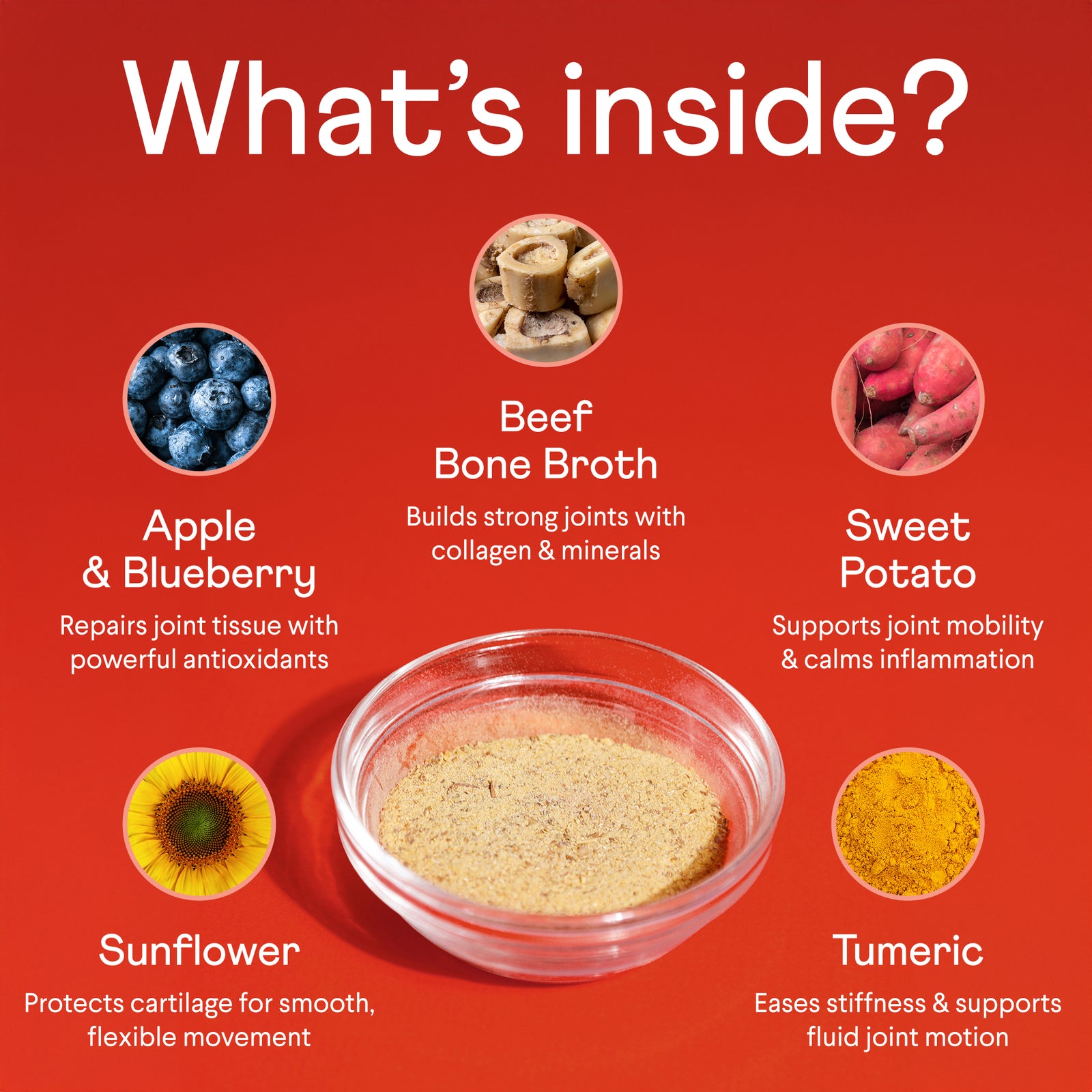
    Bone broth, made from bones simmered for 12 to 24 hours, delivers collagen, glutamine, glycine, and proline, the building blocks the gut lining uses to repair itself. A daily cup, taken in the morning or as a between-meal sip, supports that repair. Glutamine in particular is the preferred fuel for the cells that line the small intestine. For women who do not have time to simmer a stockpot for 24 hours, a clean powdered version such as a grass-fed bone broth protein powder delivers the same amino acid profile. The repair window is six to twelve weeks of consistent intake, paired with the elimination of the foods that were inflaming the lining in the first place.

    When to Push for a SIBO Breath Test or a GI-MAP
    When to Push for a SIBO Breath Test or a GI-MAP

    If a 30-day elimination, a fiber audit, daily fermented foods, a targeted probiotic, and a gut-lining repair protocol have not resolved the symptoms after three months, the next step is testing. The two tests worth knowing about by name are the SIBO lactulose breath test and the GI-MAP stool test, neither of which is part of a standard gastroenterology workup.

    The SIBO breath test measures hydrogen and methane gases produced by bacteria in the small intestine after a sugar challenge. Elevated hydrogen at 90 minutes points to bacterial overgrowth that drives bloating, while elevated methane points to a slower-transit variant linked to constipation. The GI-MAP is a DNA-based stool test that maps the gut microbiome, screens for pathogens like H. pylori and parasites, and measures markers of inflammation and digestive function. A standard gastroenterologist will rarely order either one. A functional medicine practitioner, a naturopath with gastrointestinal training, or an integrative GI like Dr. Chutkan will. The cost is real, often between 300 and 500 dollars out of pocket, and the diagnostic clarity is often worth it after months of guesswork.

    The Bigger Picture
    The Bigger Picture

    The gut is the system that connects everything else. It feeds the immune system, regulates the brain, processes the hormones, and decides which nutrients the rest of the body gets to use. When it goes sideways, the symptoms scatter so widely that no single specialist sees the pattern. The dermatologist treats the acne. The neurologist looks at the brain fog. The endocrinologist looks at the fatigue. The gastroenterologist looks at the bloating. Nobody adds it up.

    The woman who couldn’t button her jeans at 3 p.m. eventually ran the protocol. Thirty days off dairy, gluten, and eggs. A daily fiber count that climbed from 14 grams to 32. A small jar of kimchi in the fridge that she dipped into at lunch. A strain-specific probiotic with Bifidobacterium infantis. A cup of bone broth in the morning. By week three, the afternoon bloat had thinned. By week six, the brain fog was gone. By week ten, she reintroduced eggs cleanly, found dairy was the entire problem, and rebuilt her routine around that single piece of information. None of it required a prescription. All of it required a clinician, even a self-appointed one, willing to ask the right questions of a system that had been quietly trying to communicate for years. That kind of clinician sometimes shows up in a white coat, and sometimes shows up in your own bathroom on a Tuesday morning with a notebook.

  • The Supplement Stack Doctors Actually Recommend for Women in Their 30s and 40s

    The Supplement Stack Doctors Actually Recommend for Women in Their 30s and 40s

    The Costco supplement aisle is 84 feet long. I measured it. It starts with collagen at hip height and ends with a magnesium pyramid taller than I am, with a “Women’s Wellness” section in the middle full of biotin gummies, sea moss powder, and a $48 “hormonal balance” tincture with no clinical research behind it. I was 37, my energy had been off for six months, and I walked out with $211 in supplements and almost none of what my doctor would later tell me I actually needed.

    This list is the corrective. It is what three credentialed women’s-health physicians, Dr. Stacy Sims, Dr. Mary Claire Haver, and Dr. Casey Means, point women between 30 and 49 toward for the standard complaints of this decade: tired in the afternoon, not sleeping well, slower recovery, a body composition that has stopped bouncing back. Nobody takes all eight at once. The point is matching what you take to what you are actually short on.

    What to look for before you buy a single bottle

    What to look for before you buy a single bottle

    The FDA does not verify that what is on the label is in the capsule. The marks that mean something are USP Verified, NSF Certified for Sport, and ConsumerLab tested. “Doctor-formulated,” “clean,” and “natural” mean nothing. Form matters too. Magnesium oxide absorbs at four percent. Glycinate at 40 percent. Iron sulfate causes stomach pain in a third of users. Iron bisglycinate in five. Iron and vitamin D both have ceilings above which they harm, and the only way to dose them right is bloodwork first.

    1. Vitamin D3 with K2, the foundational hormone

    1. Vitamin D3 with K2, the foundational hormone

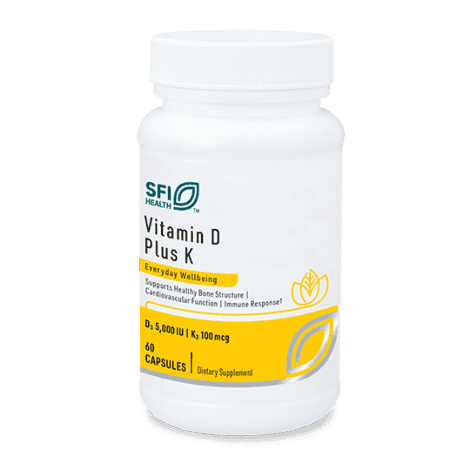
    Vitamin D is a steroid hormone, not a vitamin, and almost every cell has a receptor for it. The Endocrine Society estimates 41 percent of American adults are deficient, with rates closer to 80 percent in Black women, who synthesize it more slowly because melanin filters the UVB rays involved. Above the 37th parallel, which runs through northern California, Virginia, and Kentucky, the sun is too low from October through March for skin to make any meaningful amount. Low vitamin D correlates with depression, worse insulin sensitivity, weaker immune response, and accelerated bone loss in perimenopause. Dr. Stacy Sims has been emphatic that vitamin D is the supplement she would never have a female athlete skip.

    The research-supported dose is 1,000 to 4,000 IU daily, with the right number determined by a 25-hydroxyvitamin D blood test. The target range most functional practitioners use is 50 to 70 ng/mL. K2 directs the calcium D pulls into circulation toward bones rather than soft tissue. Nordic Naturals Vitamin D3 + K2 covers both at a dose adjustable to bloodwork. Around $20 for three months.

    2. Magnesium glycinate, the sleep and anxiety lever

    2. Magnesium glycinate, the sleep and anxiety lever

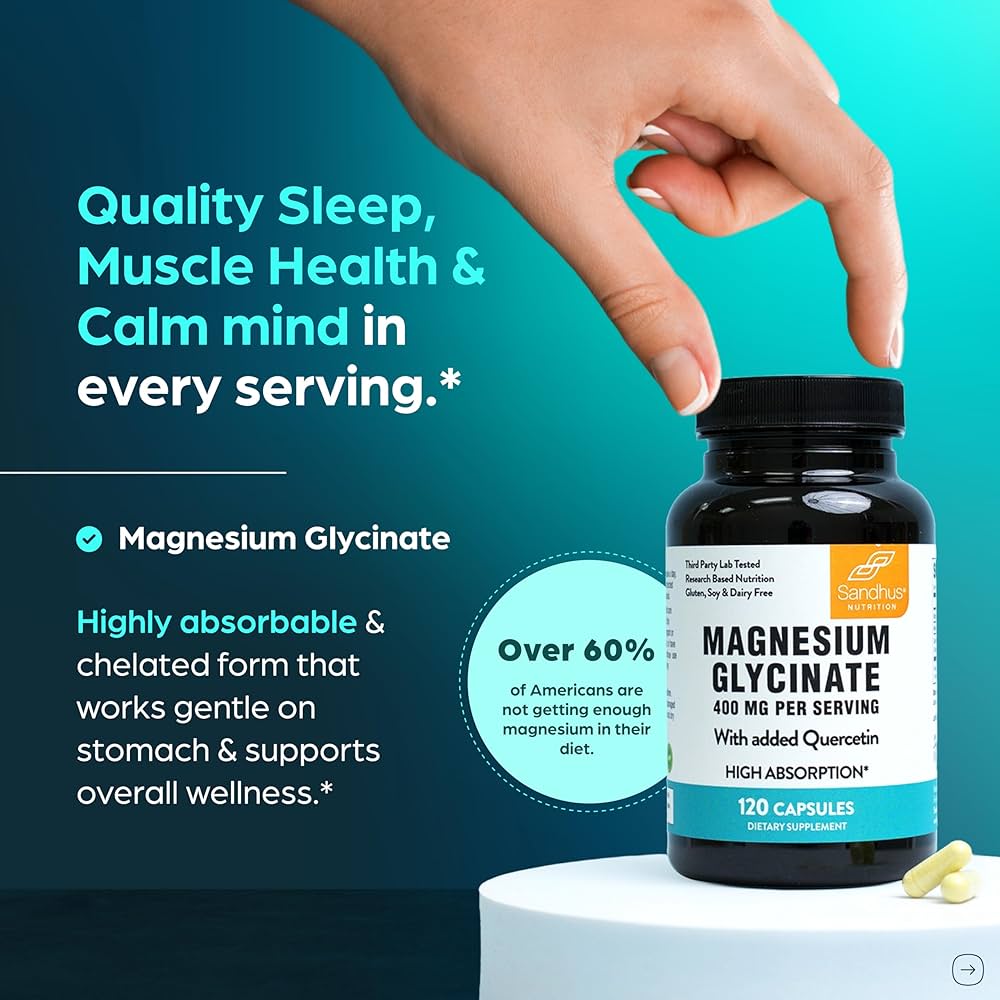
    Magnesium is involved in over 300 enzymatic reactions, including GABA production, which calms the nervous system before sleep. NHANES data shows 48 percent of Americans fall short of the daily intake, and the gap widens in women over 30 because caffeine, alcohol, and chronic stress all accelerate excretion. Symptoms of deficiency overlap exactly with the perimenopausal short list: poor sleep, night cramps, afternoon anxiety, worsening PMS. Dr. Mary Claire Haver lists magnesium glycinate as one of the three supplements she takes herself and recommends to almost every patient in the 35 to 55 window.

    Form matters more here than in any other category. Oxide is poorly absorbed and acts as a laxative. Citrate is better but loose-stool prone. Glycinate, the chelated form bound to glycine, absorbs well and crosses into the brain. Standard dose is 400 mg of elemental magnesium, taken about an hour before bed. Pure Encapsulations Magnesium Glycinate is third-party tested. Sleep improves within five to seven nights. Anxiety relief, particularly the late-afternoon chest-tightening kind, takes two to three weeks.

    3. Omega-3 EPA and DHA, the inflammation governor

    3. Omega-3 EPA and DHA, the inflammation governor

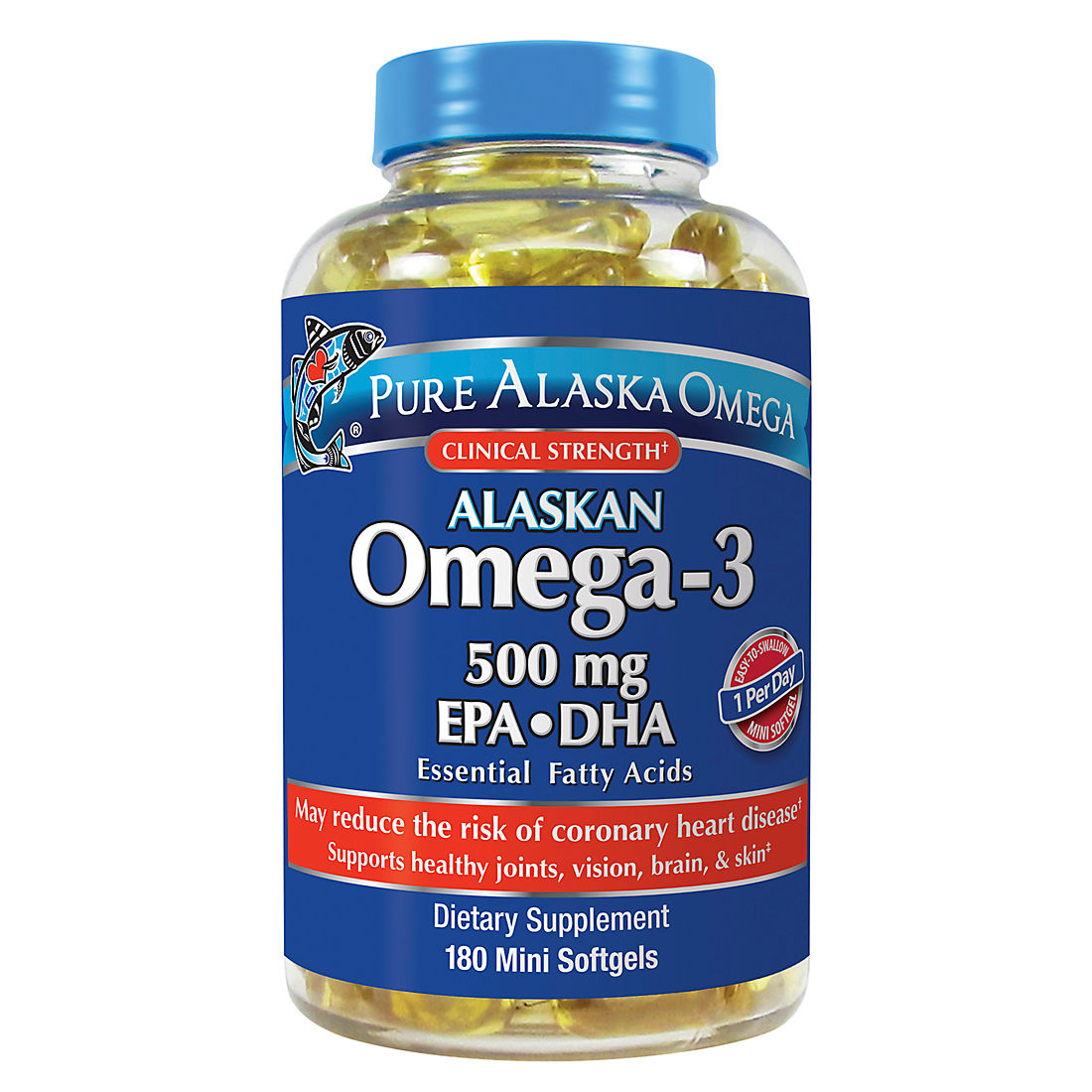
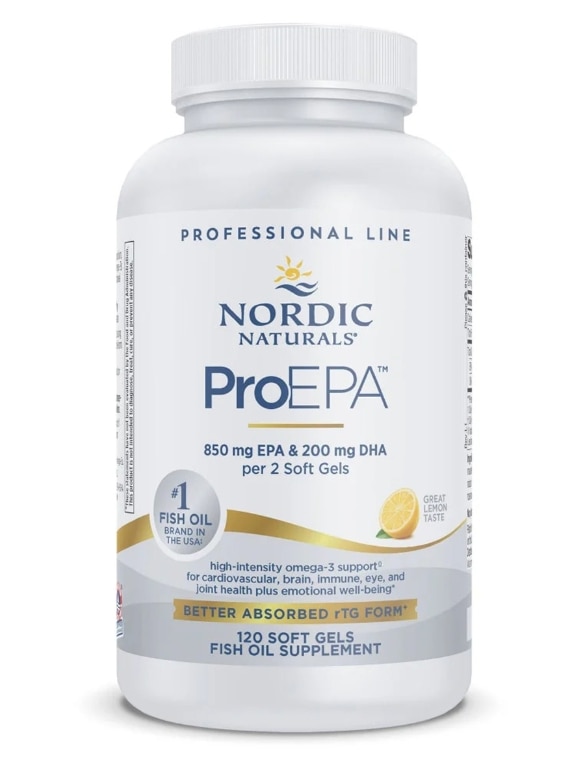
    Omega-3s are the strongest evidence-backed intervention for chronic inflammation, which underlies almost every age-related condition women in their 30s and 40s start hearing about. The Western diet, heavy on seed oils, runs an omega-6 to omega-3 ratio of roughly 20:1. The target is closer to 4:1. Clinical evidence covers cardiovascular outcomes, postpartum depression, perimenopausal mood, joint inflammation, and midlife cognitive function. Dr. Casey Means has written that omega-3 supplementation is the single intervention with the broadest documented benefit across the systems most likely to show strain in a woman’s late 30s.

    The dose that hits clinical threshold is 2,000 mg of combined EPA and DHA per day, meaningfully higher than what most generic fish oil capsules deliver. A “1,000 mg fish oil capsule” often contains only 300 mg of actual EPA plus DHA. Nordic Naturals Ultimate Omega publishes oxidation values, which matter because rancid fish oil is worse than no fish oil. The capsule should not smell fishy when you bite into it.

    4. Iron bisglycinate, only if your ferritin is low

    4. Iron bisglycinate, only if your ferritin is low

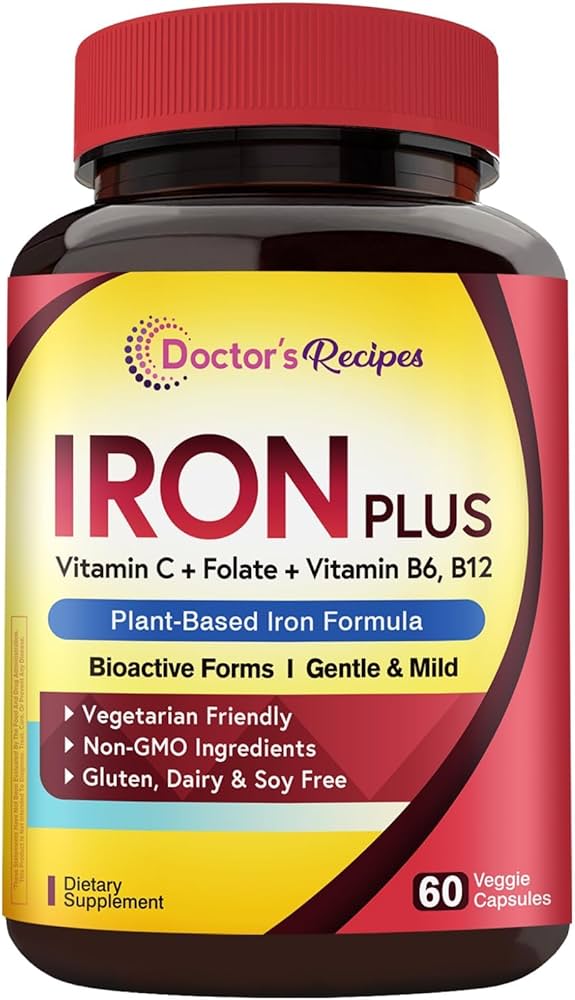
    Iron is the supplement most likely to be taken by women who do not need it and skipped by women who do. The standard hemoglobin test only catches iron deficiency once it has progressed to anemia. The earlier marker, ferritin, which measures stored iron, is the test that flags the problem in time. A ferritin level under 30 ng/mL is considered low even inside the “normal” reference range, and the symptoms overlap perfectly with the catch-all complaints of this decade: persistent fatigue, hair shedding, exercise intolerance, restless legs. Dr. Stacy Sims has pointed out that female athletes run ferritin deficient at four to five times the rate of male athletes, and the deficiency tanks performance long before it shows up on a standard panel.

    The rule: do not supplement iron without a ferritin test. Iron has a ceiling above which it contributes to oxidative stress and, in hemochromatosis carriers, organ damage. If the test shows ferritin under 30, the typical protocol is 25 to 50 mg of elemental iron in the bisglycinate form, on an empty stomach with vitamin C, no closer than two hours to coffee, tea, or calcium. Thorne Iron Bisglycinate causes a fraction of the stomach upset of the sulfate form. Recheck at three months.

    5. Methylated B-complex, especially for MTHFR carriers

    5. Methylated B-complex, especially for MTHFR carriers

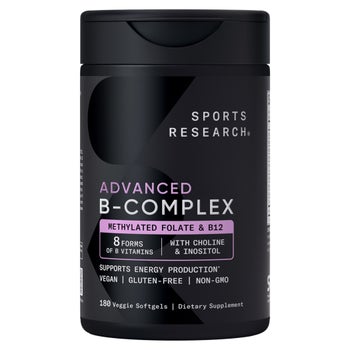
    Roughly 30 to 40 percent of the population carries a variant of the MTHFR gene that reduces the body’s ability to convert standard folic acid into the active form, methylfolate. The same enzyme system processes B12 into methylcobalamin and B6 into pyridoxal-5-phosphate. Carriers who supplement with the generic, unmethylated forms in almost every drugstore B-complex may absorb a fraction of what is on the label. Downstream effects include elevated homocysteine, lower mood, brain fog, and a higher pregnancy risk of neural-tube defects. Dr. Casey Means and a growing number of functional-medicine physicians now default to methylated forms across the board.

    The practical position: methylated forms are safe for non-carriers and meaningfully better for carriers, so defaulting to a methylated complex covers the bet. Thorne Basic B Complex uses the active forms of folate, B12, and B6 in clinically reasonable doses. Take it in the morning. The wired feeling at bedtime is common and resolves the moment the dose shifts to breakfast.

    6. Creatine, five grams a day, for women too

    6. Creatine, five grams a day, for women too

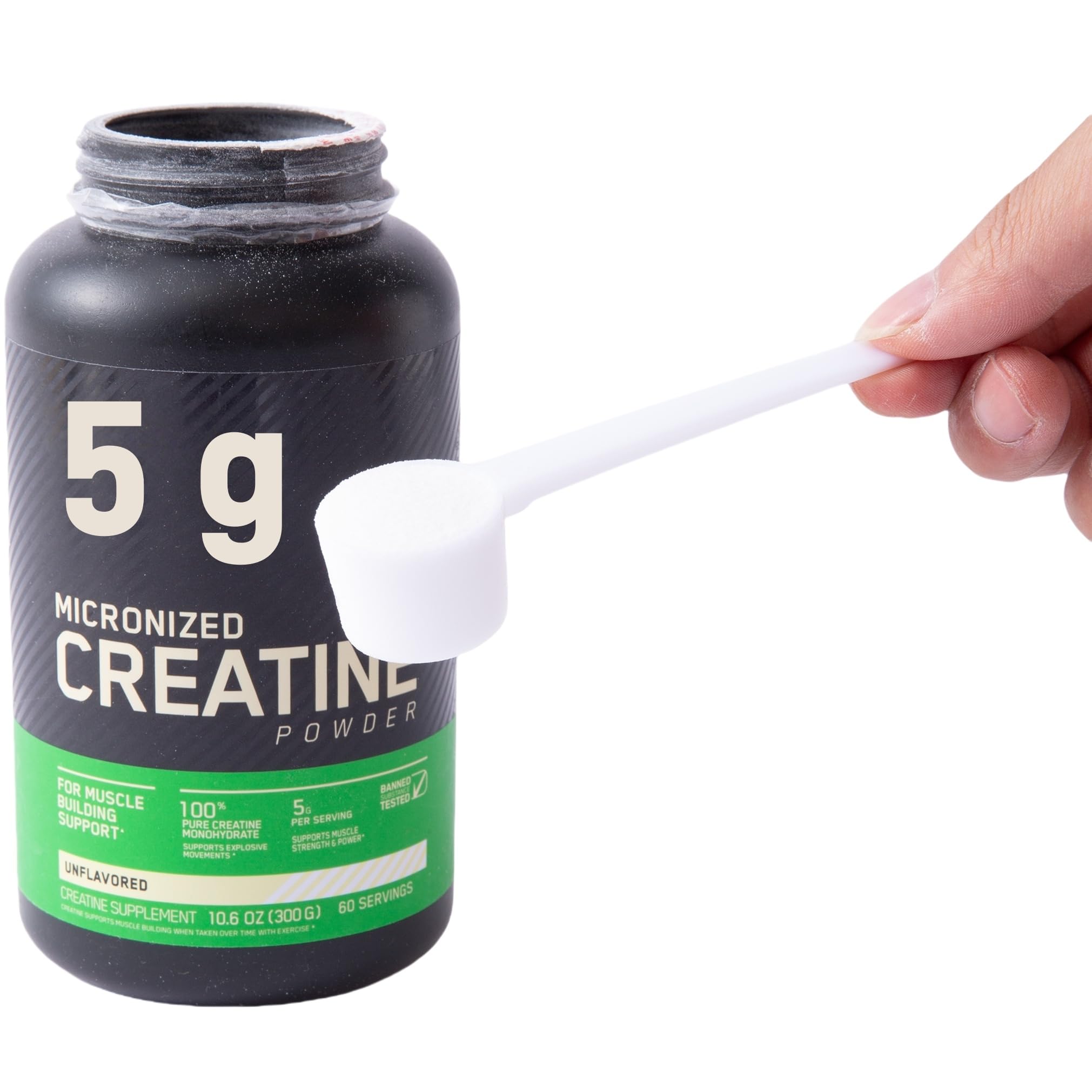
    Creatine is the most heavily researched performance supplement in existence, with more than 500 peer-reviewed studies, and for two decades the marketing made it sound like a substance only male bodybuilders should use. The research on women says something different. Five grams of creatine monohydrate per day improves lean muscle, strength, recovery, and, crucially, cognitive function, especially under sleep deprivation, which is the resting state of most mothers and women carrying a high workload.

    Dr. Stacy Sims has been one of the loudest voices repositioning creatine as a women’s-health supplement. Her argument is that women have lower baseline creatine stores than men and benefit more, not less, from supplementation. Studies on sleep-deprived adults show meaningful gains in working memory and reaction time. For a perimenopausal woman whose sleep architecture has stopped delivering the deep stages, creatine is closer to a nootropic than a gym supplement.

    Monohydrate is the form studied in essentially every trial. Thorne Creatine Monohydrate is third-party tested. Five grams per day, mixed in water or a smoothie. No loading, no cycling. The water-retention concern refers to intramuscular water, which is metabolically active and tied to muscle growth, not bloat.

    7. Protein, from food first, then whey if you need it

    7. Protein, from food first, then whey if you need it

    The current evidence on lean-mass maintenance in women over 30 supports an intake of roughly one gram of protein per pound of body weight per day, which for a 150-pound woman is 150 grams. The average American woman in this range eats closer to 60. The gap matters because lean muscle mass is the strongest single predictor of metabolic health and functional independence in the later decades. Dr. Mary Claire Haver and Dr. Stacy Sims have both argued that standard guidance has chronically under-recommended protein, leaving a generation of women dieting their way into sarcopenia.

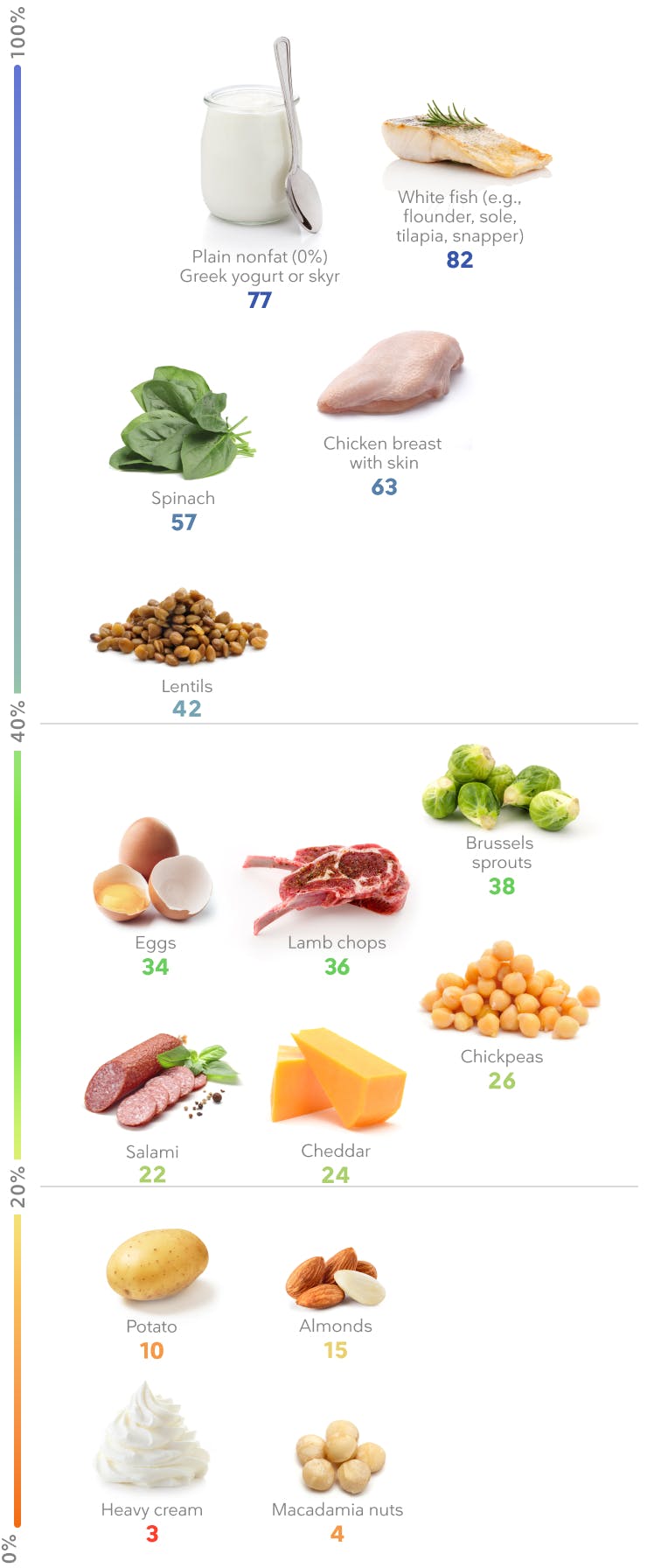
    Food first: eggs, chicken thighs, salmon, Greek yogurt, cottage cheese, lentils, tofu, and ground turkey before any powder. A scoop of whey isolate covers the gap when food cannot. Buy isolate, not concentrate, because the lactose is stripped and absorption is faster. Naked Whey Isolate is clean and additive-free.

    8. A real probiotic, with strains that have been studied

    8. A real probiotic, with strains that have been studied

    Most generic probiotics list “30 billion CFU” on the front of the bottle without naming the actual strains inside, and the strain is what determines whether the product does anything. Lactobacillus rhamnosus GG has the strongest evidence base in women. Lactobacillus reuteri RC-14 and Lactobacillus rhamnosus GR-1, the strain pair developed by Dr. Gregor Reid, have specific evidence for urinary tract and vaginal microbiome health, which becomes a more frequent concern in the perimenopausal years. Dr. Casey Means has written that the meaningful question is not whether to take a probiotic but which one, and the answer comes from the strain table on the back, not the marketing on the front.

    Klaire Labs Ther-Biotic Complete lists every strain on the label and is one of the few brands tested for CFU count at expiration rather than manufacture. One caution: a probiotic is not a substitute for fiber. The bacteria you take in capsules cannot colonize a gut starved of the fermentable fiber they feed on.

    The skip list: four supplements with weaker evidence than the marketing suggests

    The skip list: four supplements with weaker evidence than the marketing suggests

    Four product categories show up in almost every Instagram “wellness stack” and none carry the evidence the price tag implies. Collagen powder is the first. Studies show modest skin-elasticity gains at doses around 10 grams a day, but the body breaks collagen into the same amino acids it would extract from any complete protein. Hitting your protein target delivers the same building blocks at a fraction of the cost.

    Apple cider vinegar gummies are second. The original research was on liquid vinegar’s acetic acid content. The gummies contain too little to replicate the effect, and many brands add sugar that cancels what was left. Anything labeled “detox” is third. The liver and kidneys handle that continuously, and no over-the-counter supplement has been shown to enhance the process in a person with normally functioning organs. Megadose biotin is fourth. The 5,000 to 10,000 mcg doses in “hair, skin, and nails” gummies are far above what the body can use, and the excess interferes with thyroid panels and cardiac troponin assays, causing misdiagnoses every year. Hair loss is almost always tied to ferritin, thyroid, or stress, none of which biotin addresses.

    At a glance: who needs what

    At a glance: who needs what

    The foundational stack for a woman in her 30s eating a reasonably varied diet, strength training twice a week, and living above the 37th parallel is vitamin D3 with K2, magnesium glycinate, and omega-3 EPA and DHA. That is the floor. Add creatine if you train hard. Add a methylated B-complex if energy and mood feel off despite the basics. Add iron only if ferritin testing shows you below 30 ng/mL. Add whey if you cannot hit protein targets from food. Add a strain-specific probiotic during or after antibiotics, or if urogenital health is a concern.

    How to choose between them if you can only do three

    How to choose between them if you can only do three

    If the budget allows three, the answer for almost every woman in her 30s and 40s is vitamin D3 with K2, magnesium glycinate, and omega-3 EPA and DHA. Those three sit upstream of the systems most likely to show strain in this decade and are the supplements all three of the physicians cited would prioritize first. If the budget allows five, add creatine and a methylated B-complex.

    Frequently asked questions

    How long until I notice anything? Magnesium glycinate often improves sleep within five to seven nights. Omega-3s take six to eight weeks to shift the body’s fatty-acid ratio measurably. Vitamin D needs three months at the right dose to move blood levels. Iron, if you are deficient, can feel transformative within four to six weeks.

    Can I take all of these together? Mostly yes, but timing matters. Iron should not be taken within two hours of calcium, coffee, or tea. Methylated B vitamins are best in the morning. Magnesium is best in the evening. Vitamin D and omega-3s absorb best with a meal containing fat.

    What about a prenatal or general multivitamin instead? A high-quality women’s multivitamin is a reasonable shortcut for some B vitamins and trace minerals, but most under-dose vitamin D, contain the unmethylated forms, and skip magnesium entirely. Not wrong, just rarely complete.

    How do I know if I have MTHFR? A 23andMe panel reports it in the raw data. The practical answer is that you may not need to know. Methylated B vitamins are safe for non-carriers and better for carriers, so defaulting to the methylated forms covers both cases.

    The bottom line: build from bloodwork, not from a podcast

    The bottom line: build from bloodwork, not from a podcast

    If there is a single pick from the list above, it is vitamin D3 with K2. It sits upstream of bone, mood, immune, and metabolic systems in ways no other single supplement does, deficiency rates in this country are absurd, and the cost of the right dose is under $10 a month. Nordic Naturals Vitamin D3 + K2 , paired with a 25-hydroxyvitamin D blood test at the start and again at six months, is the closest thing to a no-regrets foundation in the supplement aisle.

    The broader point is that supplements are a tool, not an identity. The women I know with the most resilient health in this decade are not the ones with the most colorful pill organizers. They are the ones who ran their bloodwork, identified the two or three gaps that actually applied to them, and held the targeted protocol long enough to see results. Everyone else is buying Costco supplements and hoping. The aisle is 84 feet long for a reason. Most of it is not for you.

  • The Nap Dress Trend Is Not Going Away

    The Nap Dress Trend Is Not Going Away

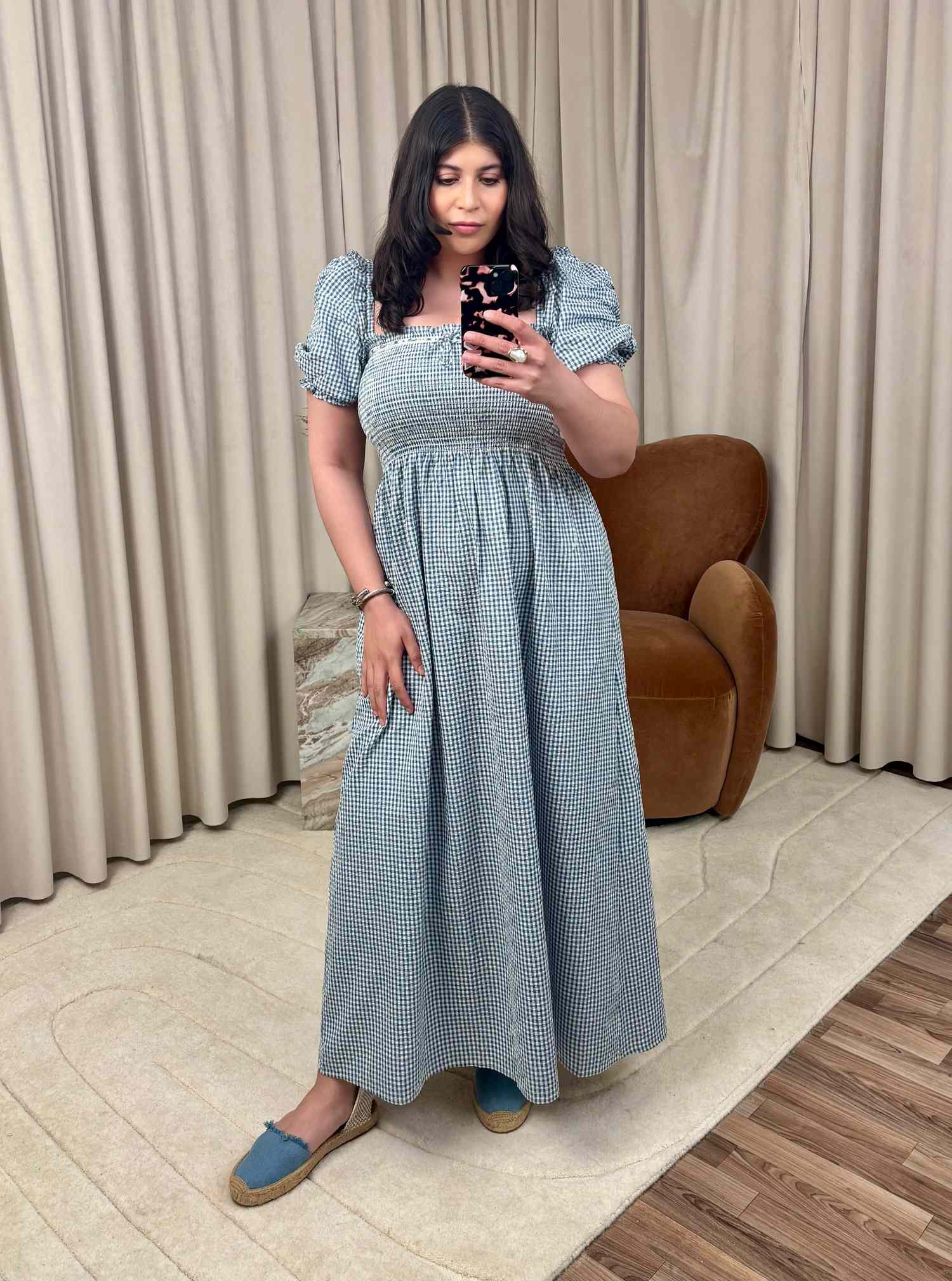
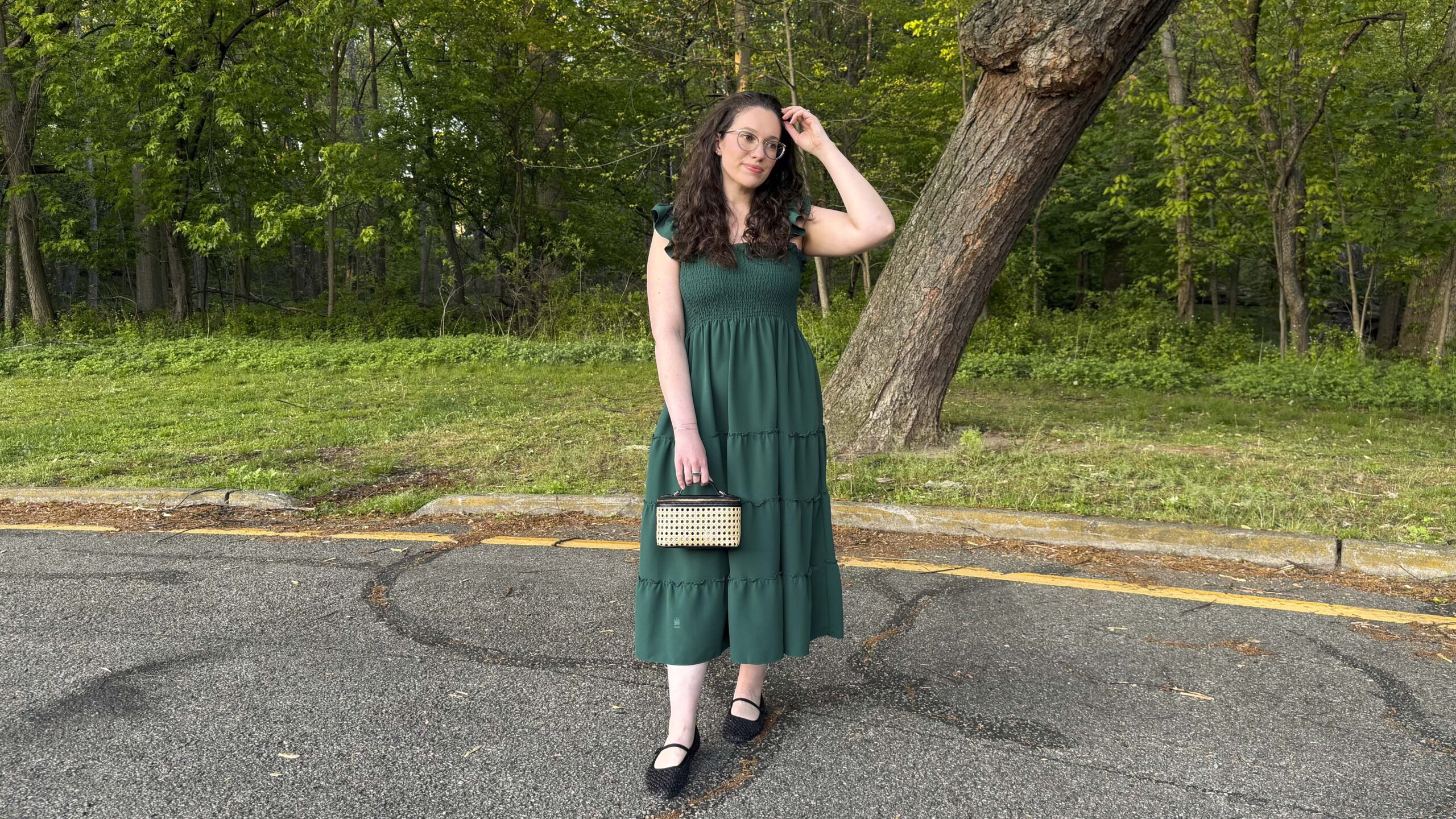
    Sunday brunch in Brooklyn, late April 2026, a café off Bedford that does the cardamom buns everyone has been arguing about online. I sat down with a coffee at 11:30 and within ten minutes I had counted four nap dresses at four different tables. One was the original Hill House Ellie in the cream-and-blue floral that has been in production since 2019. One was a Doen knockoff with the wrong shade of sage, the kind that looked right from across the room and wrong from two feet away. One was a Mango Sky Dress in dusty pink, $89.99 retail, photographed to death on TikTok last summer. The fourth, the one that surprised me, was the Target Universal Thread version in white eyelet. Forty-two dollars. The woman wearing it had paired it with cowboy boots and a vintage Coach saddle bag and looked, frankly, better than the woman two tables over in the $375 original.

    Four iterations of the same silhouette, four price tiers, one café, one morning. When that happens, the trend is no longer a trend. It has become an item of clothing.

    I have been a skeptic about most things this decade has tried to sell women. Cottagecore felt like a Pinterest board pretending to be a movement. Coastal grandmother was a marketing department’s idea of a personality. Quiet luxury was just expensive beige. But the nap dress, against my own initial verdict in 2020, has done something none of those other moments managed to do. It has survived two recessions, a pandemic, a TikTok backlash, the rise and fall of three or four competing aesthetics, and the arrival of dupes at every price point under $50. That is not a trend cycle. That is a garment finding its place in the lexicon.

    The Timeline: From May 2019 to Everywhere

    Hill House Home Ellie nap dress original cream blue floral 2019

    Hill House Home launched the Ellie nap dress in June 2019. The brand was founded by Nell Diamond, a former hedge fund analyst who had started Hill House in 2016 selling monogrammed bedding to women her age who wanted their grown-up apartments to look intentional. The dress was, in her own telling, almost an accidental product. She wanted something she could wear around the house that was comfortable enough to nap in but presentable enough to answer the door in. Smocked bodice, puff sleeves, tiered skirt that hit mid-calf, a print called Ellie that referenced English bedding florals. It retailed for $125.

    The first batch sold out in days. The waitlist hit five figures within a year. By the time the pandemic arrived in March 2020, the nap dress had already become the unofficial uniform of a certain kind of woman in her late twenties and thirties living in Brooklyn or Los Angeles or Austin, and within six weeks of lockdown it was the unofficial uniform of every woman trying to feel human while working from her kitchen table. Hill House raised over $20 million in a Series B in September 2022, per WWD’s reporting that fall. The brand’s sizing on the Ellie still tops out at XXL, which industry reviewers note fits up to roughly a US 22; plus-size shoppers above that range are pushed to the dupe market or to size-extended competitors.

    The dupes started arriving in earnest in 2021. Pink Lily, Amazon’s racks of identical smocked-bodice tiered-skirt knockoffs, the ASOS in-house version that became one of their best sellers two years running. Old Navy launched a $39.99 cotton version in spring 2022 that has been on rotation ever since. Mango introduced the Sky Dress in 2025, $89.99, and it is now in its third color way. Target’s Universal Thread line started doing recognizable nap dress dupes in spring 2024 at $39.99 to $44.99 depending on the fabric. By 2026, the nap dress is not a Hill House product. It is a silhouette. It is in every fast-fashion catalogue I can think of, sold in cuts and fabrics that didn’t exist five years ago, in colors Hill House has never made.

    That is the timeline of an item, not the timeline of a trend. Trends do not get knocked off at five price points and keep selling at the original price point. They get knocked off, the originator loses pricing power, and the silhouette either disappears or becomes a permanent cheap thing on Shein. The nap dress is one of the very few garments in the last decade that has been democratized down the price ladder without losing its position at the top of it. Hill House still sells out Ellie restocks. The drops still get camped. The brand is reportedly profitable.

    Why It Spread: The Four-Quadrant Fit

    nap dress brunch postpartum bride wedding guest collage

    I have a theory about why the nap dress survived when so many of its contemporaries didn’t, and it has nothing to do with cottagecore or pandemic loungewear or the Reformation-adjacent aesthetic that fashion press kept trying to attach to it. The nap dress survived because it fits into four life moments that women have historically had to buy four different dresses for.

    Quadrant one: bridal. Specifically, the bridesmaid market and the bridal shower / rehearsal dinner market. Hill House started doing all-white nap dresses around 2021, and they’ve become a default for the kind of bride who wants to look pretty but not “bridal” at her own pre-wedding events. The smocked bodice photographs well, the tiered skirt moves well, the cotton breathes well in August. There’s now a bridal section on the Hill House site, and Doen and Christy Dawn have followed with white pieces of their own.

    Quadrant two: brunch. The obvious one. The silhouette reads as effort without requiring effort. You can wear it with sneakers, with sandals, with cowboy boots. It survived the brunch dress wars of 2020 to 2023 and emerged as the default.

    Quadrant three: postpartum. This is the quadrant the fashion press has consistently underweighted because most of the people writing about the nap dress have not been postpartum. The smocked bodice expands. The empire waist sits above the part of the body that is doing the most changing in the first six months after birth. The fabric is washable. It accommodates a nursing bra. There is a reason the nap dress shows up in baby shower photos and in the photos women post of themselves at six weeks postpartum, looking presentable for the first time, and it is not that those women all happen to have the same taste. It is that the dress works for that body, in that moment, in a way that almost no other dress on the market does.

    Quadrant four: hot girl summer. This is the one that surprised me. The nap dress is, by any reasonable measure, the opposite of hot girl summer. It covers. It is not tight. It does not show cleavage in the conventional sense. And yet by 2022 it had become a hot girl summer staple, worn unbuttoned a little further than its makers intended, paired with gold hoops and a high ponytail and a bare leg, and it worked. Because the silhouette is flattering, and because the puff sleeves do something interesting to the shoulder line, and because a tiered skirt over a long bare leg is, it turns out, a look.

    Four life moments. One dress. That is the math, and the math is the reason it survived.

    The Plus-Size Question

    plus-size woman wearing Hill House nap dress 4X smiling outdoors

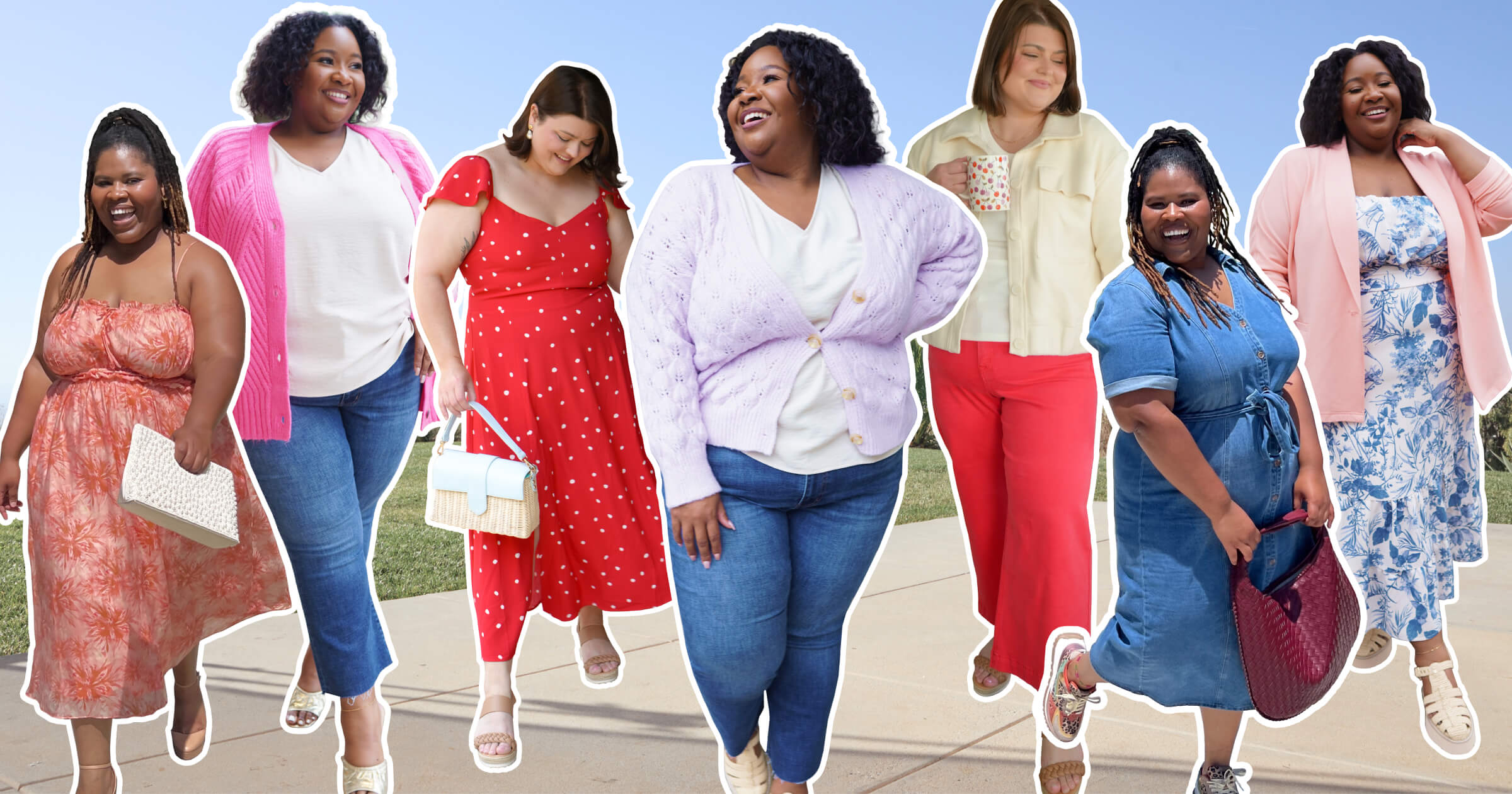
    Hill House’s own sizing on the Ellie still runs XXS to XXL, which most reviewers translate to roughly a US 22 ceiling. That sizing has been a recurring complaint from the plus-size readership the dress has otherwise won over. The brand has flirted with extended cuts on a handful of capsule pieces, but the core Ellie is not the inclusive object the marketing language implies. The bigger story has been Selkie at the wider end (0 through 6X across some styles) and Christy Dawn’s extended line capping at 3X, both of which have moved into the silhouette territory Hill House did not stretch to fill.

    The plus-size verdict on the nap dress, from someone who has put a lot of bodies into a lot of nap dresses for editorial pulls over the past four years, is this. The smocked bodice plus tiered skirt combination is one of the most forgiving silhouette structures available for hourglass and pear shapes. The smocking holds the bust without compressing it. The empire waist marks the narrowest part of the torso. The tiered skirt skims the hip without clinging. For an apple shape, the verdict is more complicated. The empire waist can ride up when there is more torso volume than bust volume, which makes the dress look like it is sitting wrong. A drop-waist tiered dress, or a fit-and-flare with the waist at the natural waist, will often work better on an apple shape than a true empire-waist nap dress.

    The cup-size note matters more than the size-on-the-tag note. Most nap dresses, including Hill House’s, have no built-in support. The smocked bodice is stretchy cotton, not structured cup-supportive fabric. For 36DD and up, a bralette layered underneath – the kind with wide bands and a little structure but no underwire – is the difference between the dress looking good and looking like it is being held up by hope. Bare Necessities and Cosabella both make cotton bralettes that work under the smocking without showing through. This is not a flaw in the dress; it is the trade-off of a dress that fits across four sizes of the same garment. The trade-off is that you bring the support yourself.

    The Under-$80 Alternatives

    The Under-$80 Alternatives

    You do not need to spend $125 to $195 on the original Hill House to get the silhouette. You probably know that already. But the under-$80 market is wide enough now that it is worth being specific about what is actually good.

    Pink Lily has the largest catalogue of nap-dress-adjacent options at the $50 to $70 range, and the quality has improved noticeably since 2023. The fabric is lighter than Hill House, so it reads more “vacation dress” than “everyday dress,” but for the price the construction is consistent. Old Navy’s smocked tiered dresses at $39.99 to $49.99 are the workhorse pick. They wash well, they hold their shape, they come in real cottons rather than the slippery polyester that defines the cheaper end of the dupe market.

    The Mango Sky Dress at $89.99 is the closest dupe to Hill House in fit and fabric weight. The silhouette is genuinely identical from across a room and not far off up close, and the dress comes in colors Hill House has never released. Target Universal Thread at $39.99 is the surprise of the category. The 2024 launch was, by my eye, too thin in the fabric. The 2025 reformulation is significantly better, and the white eyelet version is the one I keep recommending to women who want to test the silhouette before committing to a $175 version. ASOS Design’s smocked midi at around $65 rotates in and out of stock but is consistently one of the best-fitting dupes in the under-$80 range, particularly for taller bodies because the length runs longer than most.

    The Over-$200 Originals

    The Over-$200 Originals

    If you are going to spend over $200 on a dress in this silhouette, you should know what you are buying. The over-$200 market is not really competing with Hill House on the same product. They are competing on a different version of the same idea.

    Doen’s catalogue, which includes the Adrienne and Solena, runs in the “vintage prairie” silhouette that pre-dates the nap-dress label by several years. The brand has been quietly producing variations on this cut since its 2016 launch. The fabric is heavier than Hill House, the construction is more substantial, and the cut runs more European than American – longer, leaner, less smocking, more drape. Most Doen maxis retail between $278 and $428 depending on fabric, and the dresses are made in smaller batches and sell out quickly when they restock.

    Christy Dawn is the other serious option in the over-$200 category. The brand makes its dresses from deadstock and regenerative cotton, the price reflects the supply chain, and the silhouettes are closer in spirit to 1970s Laura Ashley than to a smocked Hill House. The Dawn dress, the brand’s signature, runs around $258, and the extended-sizing line caps at 3X. Saloni, the British label, makes nap-dress-adjacent silhouettes in printed silks and embroidered cottons at the $400 to $700 range. That’s wedding-guest territory rather than brunch territory, and the dresses are constructed to hold up at events rather than to nap in.

    The honest comparison is this. Hill House at $125 to $195 is the everyday version. Doen and Christy Dawn at $250 to $328 are the heirloom version. The over-$200 dresses will last longer, photograph better, and look noticeably more expensive in person. Whether that is worth the gap is a function of how often you will wear the dress and whether you care about the difference between a cotton that looks cheap-good and a cotton that looks expensive-good. Both are valid answers.

    How To Style It Past Brunch

    nap dress styled leather jacket boots structured bag city autumn

    The reason I keep coming back to the nap dress as an item rather than a trend is that I have, over the past four years, worn one to a work meeting, a flight, a wedding, a funeral, a baby shower, a first date, and a Tuesday at the grocery store. The styling does the work.

    For a work meeting, the formula is jacket plus boots. A structured blazer in navy, camel, or black, the kind with a real lapel and a real shoulder, transforms the nap dress from soft to deliberate. Ankle boots in leather, not suede, finish the silhouette. A slim belt over the blazer, optional, pulls the waist in further. This is the styling I have used for editorial meetings and pitch meetings, and nobody has ever read the dress as casual.

    For travel, loafers plus a structured bag. The nap dress is the closest thing to pajamas you can wear on a plane without looking like you wore pajamas on a plane. Penny loafers, oxblood or black, with a real leather tote that holds its shape, and the dress reads as European rather than rumpled. Add a cashmere cardigan and you have an outfit that survives a six-hour flight and a hotel check-in without changing.

    For a wedding as a guest, sandals plus heirloom jewelry. The dress already does the romantic work, so the jewelry should do the gravitas. Pearl studs, a thin gold chain that belonged to someone, a vintage cocktail ring. Strappy sandals in a metallic or a nude. The nap dress in a printed silk or a white eyelet is one of the few garments that works at a wedding without competing with the bride or looking like you tried too hard.

    What The Dress Actually Says

    What The Dress Actually Says

    The thing I keep coming back to, the reason I think this silhouette earned its closet space rather than rented it, is that the nap dress solved a problem the industry didn’t acknowledge. It is a dress that requires nothing of the body underneath it. No shapewear. No Spanx. No constructed bra. No thigh-gap calculation. No sucking in. The smocked bodice expands and contracts with breath and food and the slow weekly fluctuations of a body that is not, and has never been, a static object.

    Womenswear spent most of the 2010s building dresses that needed infrastructure underneath them to function. Bodycon needed Spanx. Slip dresses needed bralettes that disappeared and breasts that defied gravity unaided. Cocktail dresses needed strapless bras that worked. The implicit deal was that the dress would look good if the body underneath did the engineering. The nap dress reversed that deal. It said, the dress will do the engineering. You bring the body, in whatever state it happens to be in this week, and the dress will accommodate it.

    That is a small thing and a large thing at the same time. It is small in the sense that it is one silhouette, one cotton, one set of design choices made by one woman at one brand in 2019. It is large in the sense that it told the rest of the industry something the industry had refused to hear. Which is that there is a substantial market for clothing that does not punish the body wearing it. That women will pay $125, or $195, or $325, for a dress that lets them eat lunch without thinking about it. That comfort is not the opposite of style; it is, for a meaningful percentage of the buying public, a precondition for it.

    The dress is not going away because the problem it solved is not going away. The body keeps changing. The week keeps having Sundays. The wedding invitations keep arriving and the babies keep being born and the brunch keeps happening at 11:30 in cafés in Brooklyn and Austin and Lagos and London, and women keep needing one dress they can put on without thinking. The nap dress is the one. It earned that position over seven years, against considerable skepticism including mine, and the four-tables-four-dresses morning is the proof.

    Where womenswear goes next is, I think, the question of whether the rest of the category will learn from what this dress figured out. Whether pants, blazers, jeans, and structured workwear will start designing for the body that exists rather than the body that has been edited into shape underneath. The early signs are there. Elastic-waist trousers at Toteme. Soft tailoring at The Row. Bras with no underwire from CUUP. The nap dress was not the cause of any of that, but it was the loudest early signal that the deal had changed. That women had stopped agreeing to be the structure their clothes refused to provide. Seven years in, the deal looks like it is sticking.

  • Plus-Size-Friendly Guide to Pregnancy Fitness: What’s Safe and What Feels Good

    Plus-Size-Friendly Guide to Pregnancy Fitness: What’s Safe and What Feels Good

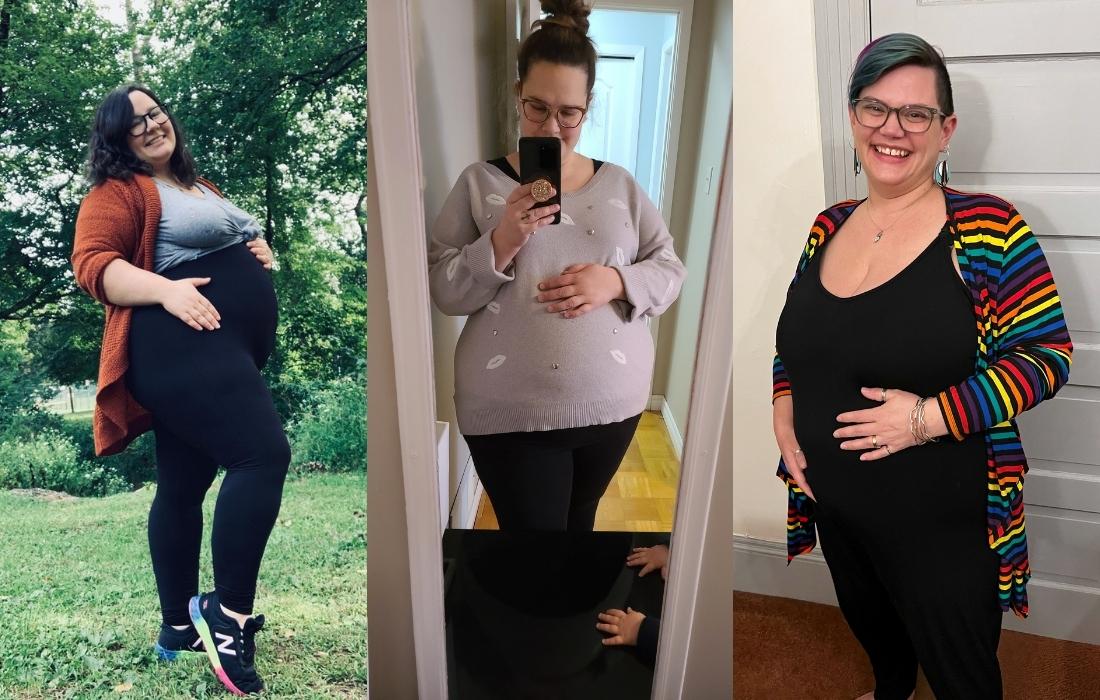
    A plus-size pregnant woman walking on a residential sidewalk in soft late-afternoon light, one hand resting under the belly

    Imani left her OB’s office in March 2025 with a printout that said “moderate exercise recommended” across the top in 12-point Arial, and not one other word of guidance underneath. She was 33, a size 22, 19 weeks along, and had never been to a gym in her life. The nurse who handed her the page smiled the way people smile when they have already moved on to the next chart. Imani sat in the parking lot trying to figure out what “moderate” was supposed to mean in a body that had spent thirty-three years not exercising. She typed “pregnancy workout plus size” into her phone and got six minutes of videos with size-6 women in Beyond Yoga sets. She put the phone face-down. This article is the version of the conversation her OB did not have time for.

    The harder question underneath Imani’s printout is not “what is moderate.” It is what does pregnancy fitness even look like in a plus-size body when the prenatal yoga class is full of women in their first pair of $108 leggings, when the only modifications the instructor knows are for a B cup, and when the medical advice you get assumes you already know how to read your own effort. The honest answer is that it looks different than what social media sells, and it is more doable than most plus-size women have been told.

    What ACOG actually says

    What ACOG actually says

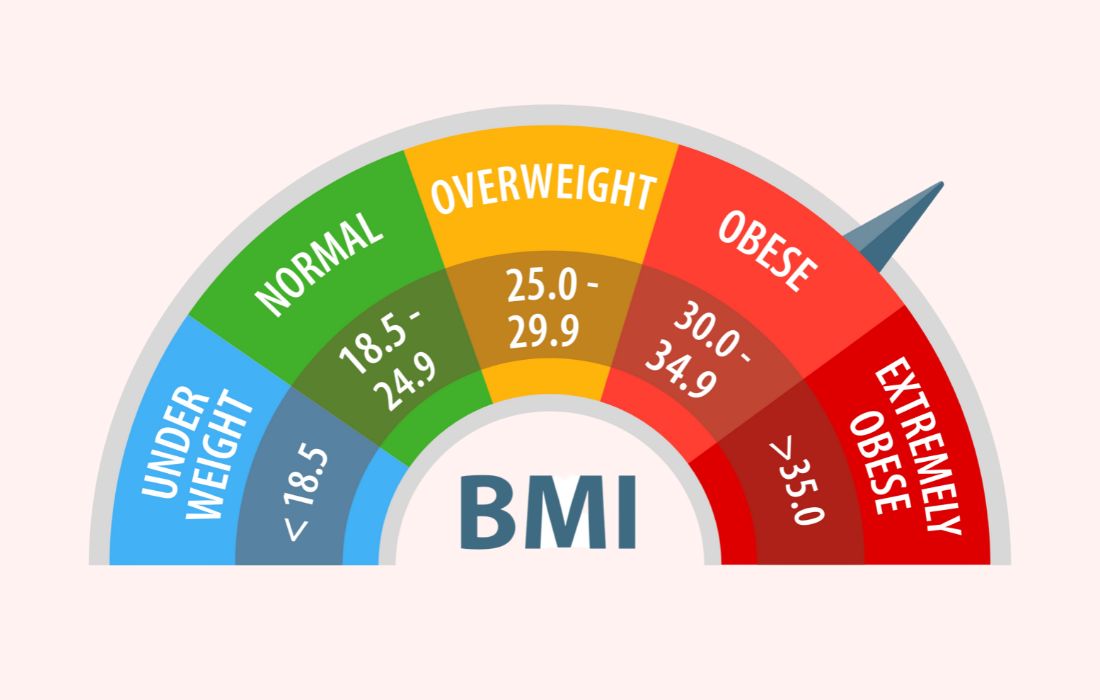
    The American College of Obstetricians and Gynecologists published Committee Opinion 804 in April 2020 and reaffirmed it in 2023. The recommendation is 150 minutes per week of moderate-intensity aerobic activity for healthy pregnancies, and it explicitly includes pregnancies categorized as obese by BMI. Exercise during pregnancy lowers the risk of gestational diabetes, hypertensive disorders, preterm birth, cesarean delivery, and excessive weight gain. The risks of not exercising are higher than the risks of exercising for almost every pregnant person without a specific contraindication.

    ACOG also clears light-to-moderate resistance training in the same document, and the same Committee Opinion confirms strength training with progressive load is safe for healthy pregnancies. Dr. Heather Irobunda, the NYC-based OB-GYN who serves as Peloton’s maternal health advisor, has made the point in interviews that the average pregnant patient gets less guidance about exercise than about car-seat installation.

    Practically, 150 minutes breaks down to 30 minutes five days a week, or 22 minutes seven days a week, or three 50-minute walks. Shape matters less than the total.

    The “moderate” question, and why heart rate is a bad answer

    For two decades the standard answer was “keep your heart rate under 140.” ACOG retired that guidance, and Committee Opinion 804 spells out why: pregnancy raises baseline resting heart rate by 10 to 20 beats per minute, and the elevation is not uniform across people or trimesters. A 140 cap is meaningless if your resting heart rate has already moved from 70 to 88. The number does not map to effort the way it does outside pregnancy.

    The two replacements ACOG recommends are the talk test and the Borg rating of perceived exertion. The talk test is simpler. Moderate intensity is the pace at which you can speak in full sentences but not sing. If you cannot finish a sentence without a breath, you have crossed into vigorous. If you can sing, you are below moderate. The Borg scale ACOG uses is 0-to-10, with moderate at 5 to 6. Five is “I notice I am breathing.” Six is “I notice I am working, but I could keep this up for a while.”

    Dr. Sarah Ellis Duvall, a physical therapist who founded Core Exercise Solutions, teaches the talk test as the single most useful tool a pregnant beginner has, because it self-calibrates to fitness level. A walk that feels moderate for a marathoner is a saunter; the same walk for a size-22 first-time exerciser at 19 weeks is a real workout. Both are correct.

    A plus-size pregnant woman walking on a treadmill in a community gym, water bottle on the console

    What’s safe: the actual list

    What's safe: the actual list

    ACOG’s safe list for healthy pregnancies, including patients with higher BMIs and patients new to exercise, is shorter than the internet suggests. Walking is the top of the list. Swimming and water aerobics are the gentlest on joints and the hardest to overheat in, both of which matter more at a higher weight. Stationary cycling is recommended specifically because it removes the fall risk that comes with center-of-gravity changes. Prenatal yoga and prenatal Pilates are cleared, with a note about avoiding any pose flat on the back after the first trimester. Light-to-moderate strength training is cleared. Low-impact aerobics including modified dance and step classes are cleared.

    What ACOG warns against: contact sports (basketball, soccer, ice hockey) because of abdominal trauma risk. High-fall-risk activities (downhill skiing, surfing, off-road cycling, gymnastics, horseback riding). Scuba diving at any depth, because the fetus is not protected against decompression sickness. Hot yoga and hot Pilates because of overheating risk, especially in the first trimester. Exercise at altitude above 6,000 feet if you are not acclimatized. And any supine exercise after about week 16, because the weight of the uterus on the inferior vena cava reduces blood return to the heart and can drop your blood pressure.

    A 2022 study in Obstetrics & Gynecology on exercise interventions in pregnancies categorized as obese found that supervised moderate exercise reduced gestational diabetes by roughly 30 percent versus no-intervention controls, with adverse events essentially identical between groups. The harm comes from inactivity, not activity.

    Trimester by trimester

    Trimester by trimester

    The first trimester, weeks 1 through 13, is the maintain-baseline window. If you were walking before pregnancy, keep walking. If you were not, start small and stay there, because first-trimester fatigue and nausea are not the time to launch a program. Twenty minutes of walking, three times a week, is an adequate floor. Hydration matters more than usual because plasma volume is expanding, and overheating is the biggest first-trimester risk, especially in the first six weeks when neural tube development is most temperature-sensitive.

    The second trimester, weeks 14 through 27, is the peak window. Energy returns. Nausea lifts. The belly is showing but has not yet redistributed the center of gravity enough to make most movement awkward. This is when the bulk of the 150 weekly minutes gets earned, and the window for adding light strength work. Brittany Robles, an OB-GYN who founded the Postpartum Trainer Academy, calls weeks 14 through 24 “the golden window,” and her clinical position is that women who use this window to build strength have measurably easier third trimesters and shorter labors.

    The third trimester, weeks 28 through delivery, is the focus-shifts window. Aerobic minutes do not go away, but they slow down. The work moves toward pelvic floor coordination, posture, and mechanical preparation for labor. Walking becomes shorter and more frequent, three 10-minute walks instead of one 30. Strength work moves to bodyweight or very light load with an emphasis on hip mobility and breath. Diastasis-recti screening becomes important, and any exercise that domes the abdomen forward is dropped. The third-trimester goal is not to add fitness. It is to preserve what you built in the second.

    Five prenatal-safe strength moves

    Five prenatal-safe strength moves

    These five are the ones Dr. Sarah Ellis Duvall and Brittany Robles teach across body sizes, and they require either no equipment or a resistance band and a pair of light dumbbells.

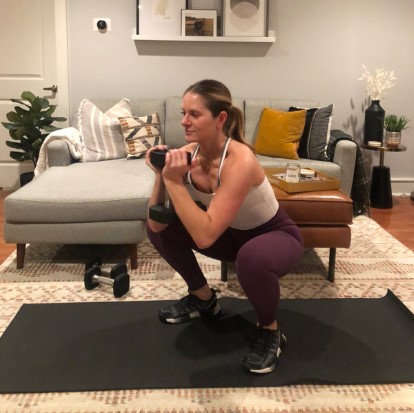
    Goblet squat to a chair. Stand in front of a sturdy chair, feet a little wider than shoulder width, toes turned slightly out. Hold a 5-to-10 pound dumbbell at chest height with both hands. Sit back to the chair as if you are about to land on it, tap the seat, and stand back up. Three sets of 8 to 10. This trains the mechanics of getting up and down from the toilet at 38 weeks, which is not a joke.

    Wall push-up. Stand an arm’s length from a wall, hands at shoulder height, slightly wider than the shoulders. Lower the chest in a controlled count of three, then press back. Three sets of 10. The wall version protects the abdomen and the wrists.

    Bird dog with breath. On hands and knees, hands under shoulders. Extend the right arm and the left leg, exhale as you reach, hold for two seconds, return. Switch sides. Three sets of 8 per side. You are training the deep core to coordinate with the diaphragm, the foundation of safe lifting later.

    Glute bridge. On your back, knees bent, feet flat. One of the few supine exercises that stays safe past week 16, because the duration is short and you can elevate the upper back on a pillow wedge. Press through the heels, lift the hips to a line from knees to shoulders, lower with control. Three sets of 12. Trains the posterior chain that carries a 30-to-40-pound load shift over nine months.

    Side-lying clamshell. Lie on one side, knees bent at 90 degrees, hips stacked. Keeping the feet together, open the top knee like a clamshell. Three sets of 15 per side. Targets the glute medius, the muscle that keeps the pelvis level when you walk and the one that gives out first when pregnancy hip pain starts.

    Four mobility flows that actually help

    Four mobility flows that actually help

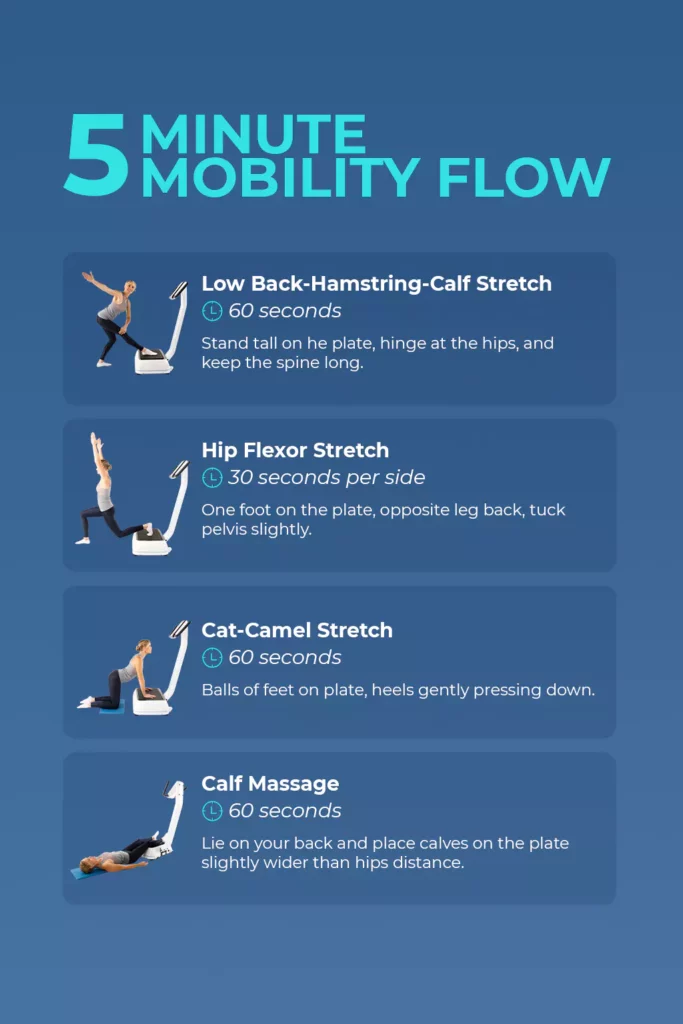
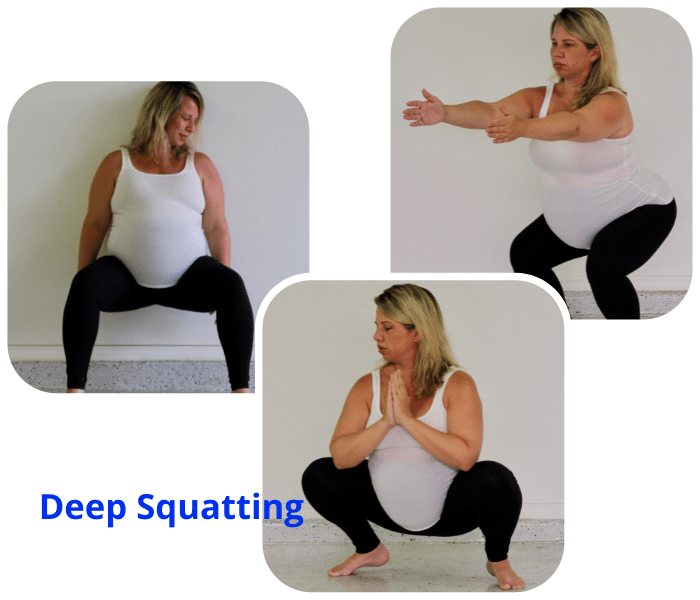
    Mobility is where prenatal yoga earns its place, and it does not require a $30 class. Cat-cow, five slow rounds twice a day, keeps the lumbar spine from locking up. Deep squat hold with hands in prayer at the chest, 30 seconds building to 90, opens the hips for the position the pelvis needs for delivery. Pigeon variation with the front leg low and the back leg straight, two minutes per side, counters the sciatic nerve compression that arrives in trimester three. Child’s pose with knees wide, 90 seconds at a time, decompresses the low back. Glo’s prenatal series teaches these in 10-minute blocks.

    The pelvic floor coordination piece nobody explains

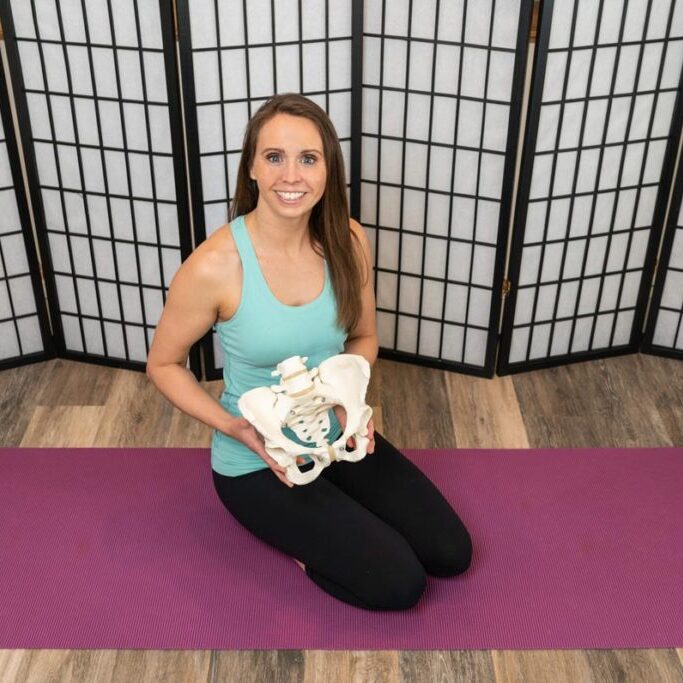
    The pelvic floor is a hammock of muscles from the pubic bone to the tailbone, and it is the part of pregnancy fitness that gets ignored or reduced to “do your Kegels.” The actual work is teaching the pelvic floor to coordinate with the diaphragm, not just to contract.

    The breath cue, in plain language: when you inhale, the diaphragm drops, the belly expands gently, and the pelvic floor releases downward. When you exhale, the diaphragm lifts, the belly draws gently in, and the pelvic floor lifts. Every breath is a small coordination rep. “Just do Kegels” is bad advice because it teaches the floor to contract but not to release, and a pelvic floor that cannot release does not push a baby out efficiently. The Bloom Method, founded by Brooke Cates, is the diastasis-friendly program built around this coordination piece.

    Homework: three rounds of five connected breaths, twice a day, with one hand on the belly and one hand low on the pelvis. Feel the rise on the inhale and the lift on the exhale. It is more useful than any single thing on this list.

    A plus-size pregnant woman in a deep squat hold on a yoga mat at home, sunlight through the window
    A plus-size pregnant woman doing a goblet squat to a chair at home, holding a small dumbbell

    Gear that actually fits

    Gear that actually fits

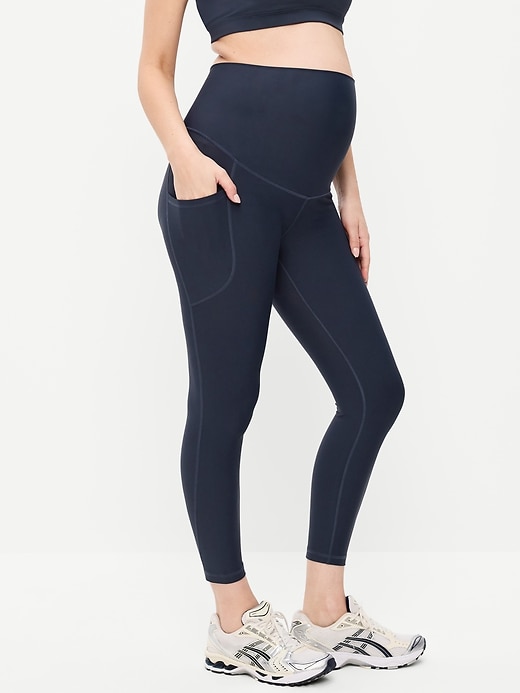
    The activewear problem at a size 22 is real. Most maternity activewear stops at XL, about a size 16. Old Navy Active Maternity goes to 4X and runs honest to size; the high-waist Powersoft maternity leggings are $35 and hold the belly without binding. Beyond Yoga Maternity Spacedye goes to 3X, the leggings are $99 and worth it for the second half because the fabric does not lose its recovery. Belly Bandit makes a belly support band that extends the comfortable walking window into the third trimester; the Upsie Belly model goes to 3X. Kindred Bravely makes maternity sports bras to 2X and a band size of 48, the only realistic option for women starting with a DDD or larger.

    Shoes matter more than they sound like they should. Foot width increases in pregnancy because relaxin loosens the ligaments of the feet too, and a shoe that fit at week 10 will not at week 30. A wide-toe-box walking shoe with real arch support is the most-used piece of equipment on this list; the Brooks Ghost in a wide width is the most-recommended option in plus-size prenatal forums.

    Apps and programs worth the money

    Apps and programs worth the money

    Expecting and Empowered,

    built by a perinatal-fitness team including a pelvic floor PT, costs about $20 a month and gives a week-by-week strength and cardio program. Plus-size modifications are not advertised but are built in, because the programming is based on stage of pregnancy rather than fitness level. The Bloom Method, mentioned above, is the diastasis-friendly choice. Glo has a prenatal yoga library with instructors who cue plus-size modifications, including Jacqui Bonwell, whose sequences are built for bodies that need wider stances and propped belly space. None of these will solve the fact that prenatal yoga in person is often a size-6 environment. They will let you do the work at home in a wide T-shirt that fits.

    Red flags to stop immediately

    Red flags to stop immediately

    Stop and call your provider today if any of these happen during or after exercise: vaginal bleeding, fluid leaking that is not urine, regular painful contractions before 37 weeks, dizziness or feeling like you are going to pass out, headache that does not lift, chest pain, calf pain or swelling on one side only, decreased fetal movement after 24 weeks, or muscle weakness that affects balance. These are ACOG’s listed warning signs from Committee Opinion 804. The list is short on purpose. Everything else – breathlessness, leg burn, the need to sit for five minutes – is information about pacing.

    Two more practical signals that come up consistently in prenatal-fitness PT and OB-GYN guidance: if your urine is darker than pale yellow during or after a workout, you’re underhydrated and need 16 ounces before the next session. If you’re losing weight in the second or third trimester while exercising, you’re doing too much or eating too little, and that needs a provider conversation.

    What this is actually for

    What this is actually for

    The conversation Imani’s OB did not have time for would not have ended with a heart-rate zone or a list of YouTube channels. It would have ended with the part buried under every prenatal article that uses the word “bounce back.” Fitness during pregnancy in a plus-size body is not about preventing weight gain. It is not about staying snatched. It is about giving your hips, your pelvic floor, and your low back the practice they need to carry a 30-to-40-pound load shift over nine months and then deliver a human being out of your body. The goal is a body that can walk for 30 minutes at 38 weeks without crying. A body that can squat to pick up a dropped pacifier at week 41. A pelvic floor that knows how to release when the work begins. That is the assignment. The 150 minutes a week is the math of how you get there.