Category: Travel

  • Airline Seatbelt Lengths, Compared: Will You Actually Need an Extender? (Every Major US Airline)

    Airline Seatbelt Lengths, Compared: Will You Actually Need an Extender? (Every Major US Airline)

    Your flight is a week out, and you’ve already boarded it a dozen times in your head. Not the takeoff – the ninety seconds before it. You’re in the window seat, bag stowed, and you reach for the two ends of the seatbelt and wait to find out what kind of flight this is going to be. Everyone around you is arguing about overhead bin space, and you’re doing quiet math with a strip of gray webbing. If that’s you, breathe. This is the article you’ve been trying to google at midnight, with the actual numbers in it.

    I fly for a living in a plus-size body, and I’ve buckled into more airline seats than I can honestly count. On some carriers the belt closes with webbing to spare. On others I ask for the extender before I’ve finished stowing my bag, because I already know. The difference isn’t my body changing between Tuesday and Friday – it’s that seatbelt length is one of the least standardized, least published specs in all of commercial aviation.

    So here’s the truth nobody puts at the top of these guides: not one major US airline publishes an official seatbelt length. Not one. Every length figure you’ve ever seen – including every figure in this article – is reported, compiled from flyers who measured, customer service agents who answered, and extender vendors who track this obsessively because it’s their whole business. What airlines DO publish is policy: whether extenders are free, where you can’t use one, and what happens if you need more room than one seat gives you. Those parts are official, and I’ve linked the receipts. Where a number is a report rather than a published spec, this article says so. That’s the deal.

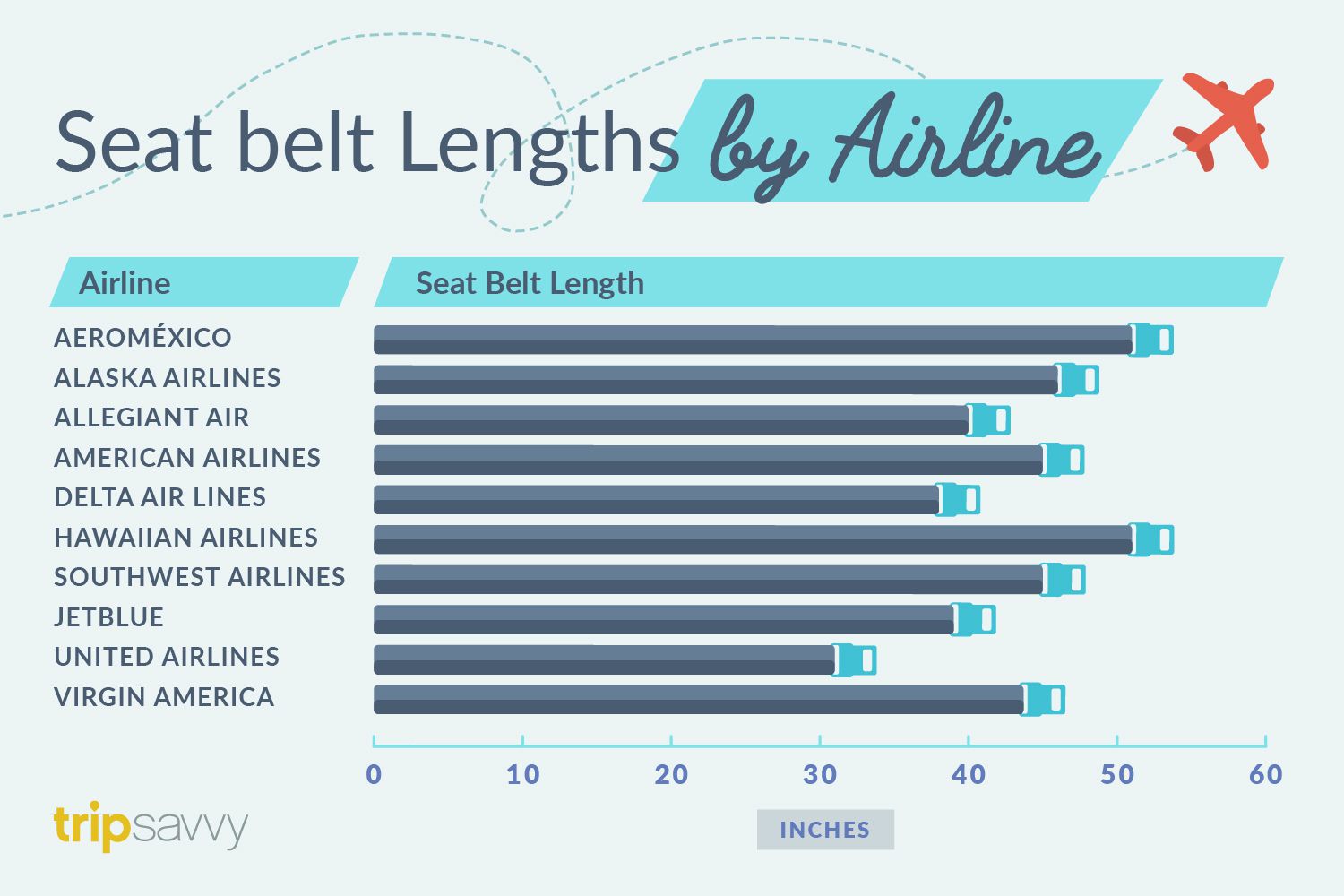
    The Master Table: Every Major US Airline at a Glance
    The Master Table: Every Major US Airline at a Glance

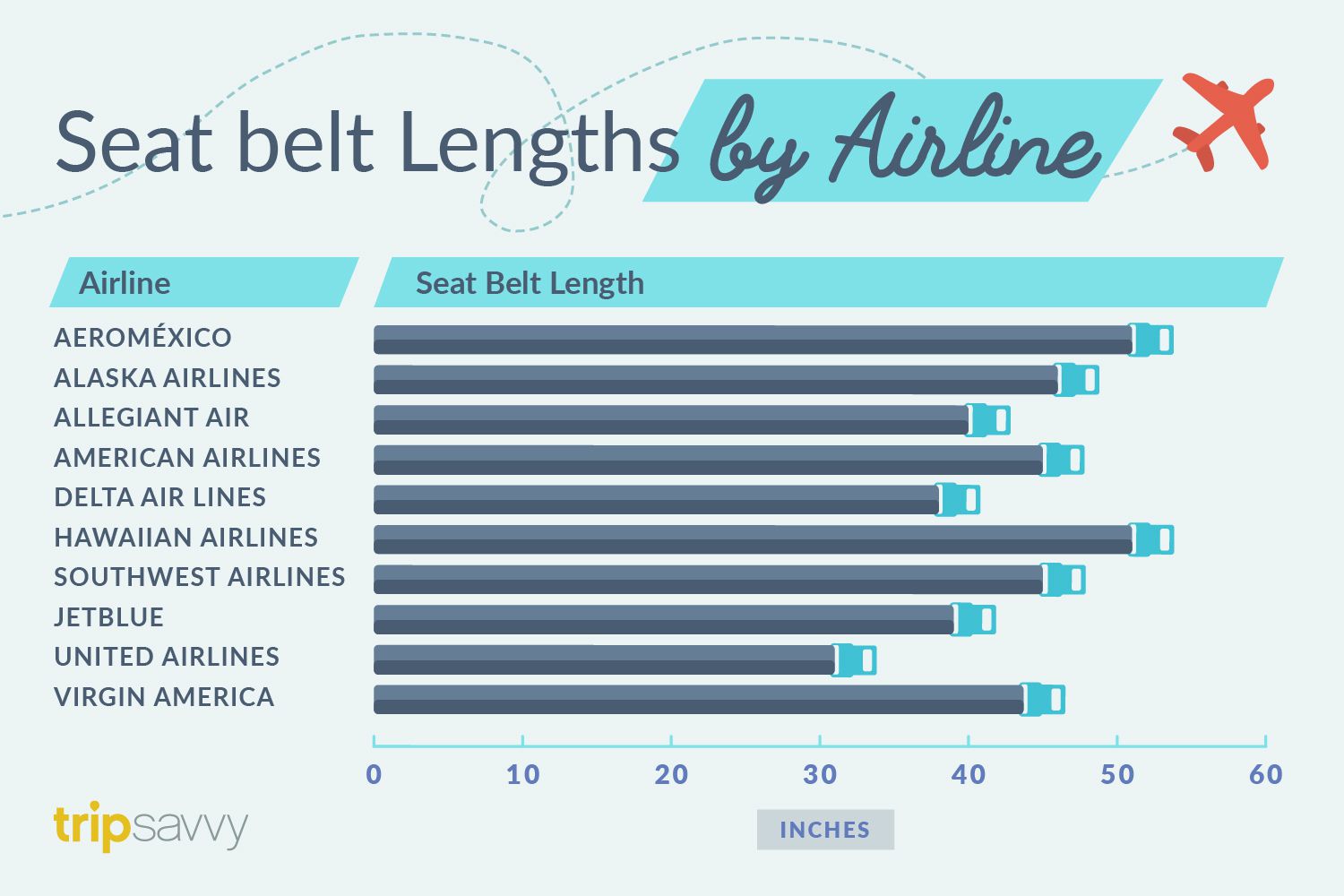
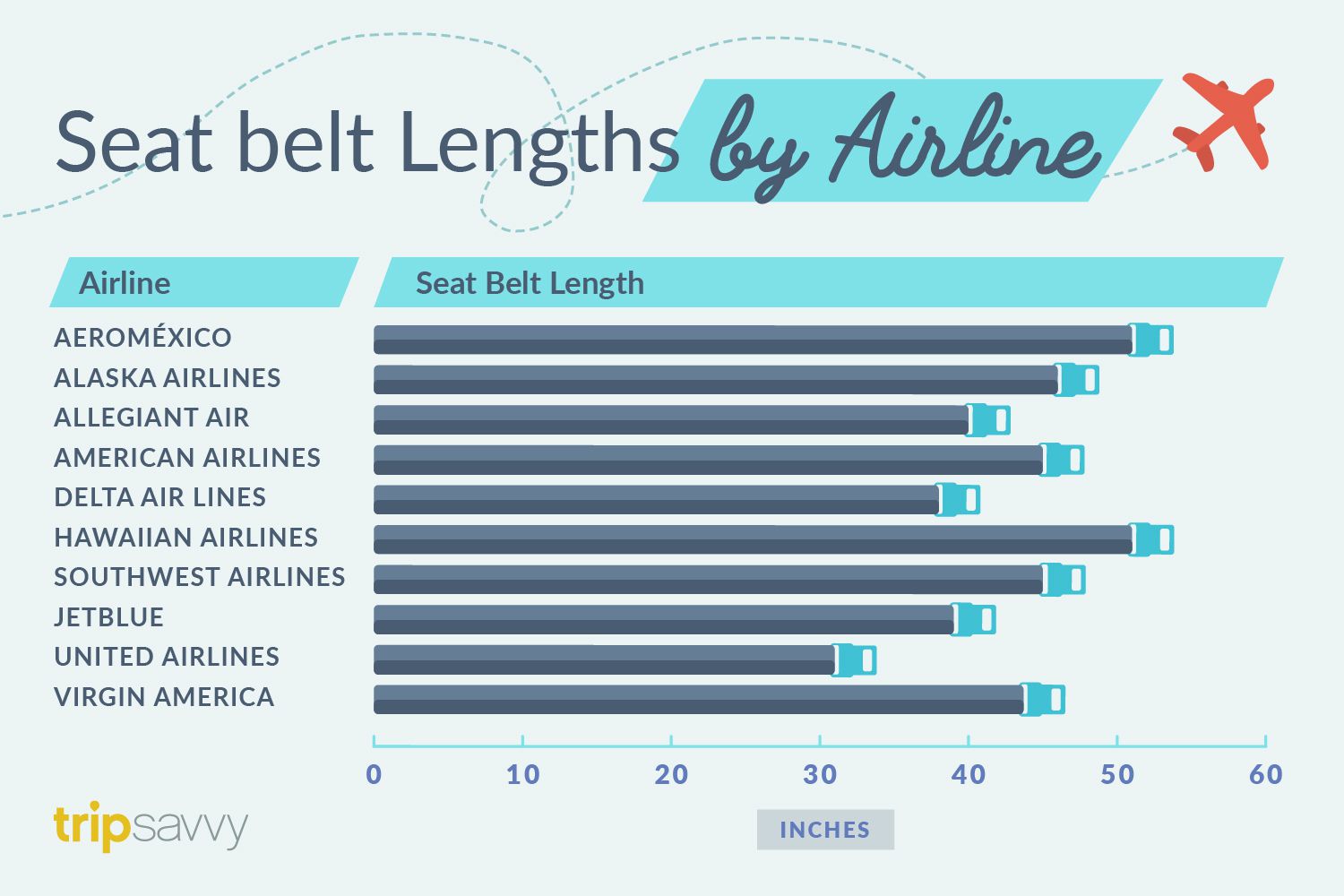
    This is the table I wish had existed the first time I stood at a gate rehearsing how to ask for an extender. Belt lengths are reported figures, not published specs, and belts genuinely vary within a single airline’s fleet depending on the aircraft, the seat position, and when the cabin was last refurbished. Treat the numbers as the center of a range, not a promise stitched into your specific seat.

    Airline Standard belt length (published/reported) Extender policy Seat width range (reported) Notes
    American ~45-47″ (reported, vendor-compiled; nothing official) Free onboard; AA states only its own extenders may be used (official) ~16.6-18.1″ Longest-reported belts of the big three
    Delta ~40-45″ (reported; varies Airbus vs Boeing) Free onboard; not permitted in exit rows (official) ~17.2-18.6″ A220 has the widest mainline economy seat in the US
    United ~39-43″ (reported; shortest-reported of the big three) Free onboard; official policy allows a maximum of one extender ~17-18″ Strictest written fit standard (see policy table)
    Southwest ~39″ (reported; vendor-compiled) Free onboard; unique buckle type on many aircraft ~17-17.8″ Only major with a second-seat refund AND free gate seats when space allows (as of mid-2026)
    Alaska ~46″ (reported) Free onboard, adds ~25″ per Alaska’s policy page; banned in exit rows (official) ~17-17.2″ (E175 regional jets ~18.25″) Second-seat refund if every flight departs with an open seat
    JetBlue ~45″ (reported) Free onboard; banned in exit rows (reported) ~17.8-18.6″ Widest average economy seats in the US
    Hawaiian ~51″ (reported; longest on this list) Free onboard; extender length reports conflict, so none stated here ~16.5-18″ Recommends pre-booking an extra seat by phone if needed
    Frontier ~39″ (vendor-reported; not published) Free onboard ~17.75-18″ Armrest position officially defines your seat’s space
    Allegiant ~33-40″ (reported; widest variation on this list) Free onboard; banned in exit rows (official) ~17.8″ Shortest reported belts here – assume you’ll want the extender
    Spirit ~42″ (reported, historical) Free onboard; extender users barred from inflatable-belt rows, including Big Front Seat rows (official, historical) ~17.75″ (Big Front Seat about 18.5″) Ceased operations May 2, 2026 – included for the record only

    Yes, Spirit is in the past tense. The airline shut down in May of 2026, which means every “flying Spirit as a plus-size passenger” thread you find is now a history document. I left the row in because people still search for it, and because its inflatable-belt rule – no extender users in the rows with airbag belts, which included the famous Big Front Seat – is a quirk worth remembering if a similar setup shows up elsewhere.

    How to Actually Read Those Numbers

    Two things before you screenshot that table and book anything.

    First: “reported” means reported. Flyers with soft tape measures, customer service agents on record, and extender vendors who compile compatibility charts are the sources here, because the airlines have collectively decided this is a spec you don’t get to know. The figures are consistent enough across sources that I trust them as a planning range – flyers consistently report United and Southwest on the short end and Hawaiian on the long end – but nobody can promise you the belt in your exact seat. A cabin refurbished last year and a cabin refurbished a decade ago can wear different belts on the same airline.

    Second: the belt is not the seat. A long belt in a narrow seat is a different flight from a short belt in a wide one. JetBlue runs both generous belts and the widest average economy cabins in the country, which is why it keeps winning the quiet word-of-mouth contest in plus-size travel groups. Alaska reportedly hands you a long belt in one of the narrowest seats on this list. Your hips and your waist are two separate negotiations, and the table’s last two columns exist so you can run both.

    Will YOU Need One? The Honest Rule of Thumb
    Will YOU Need One? The Honest Rule of Thumb

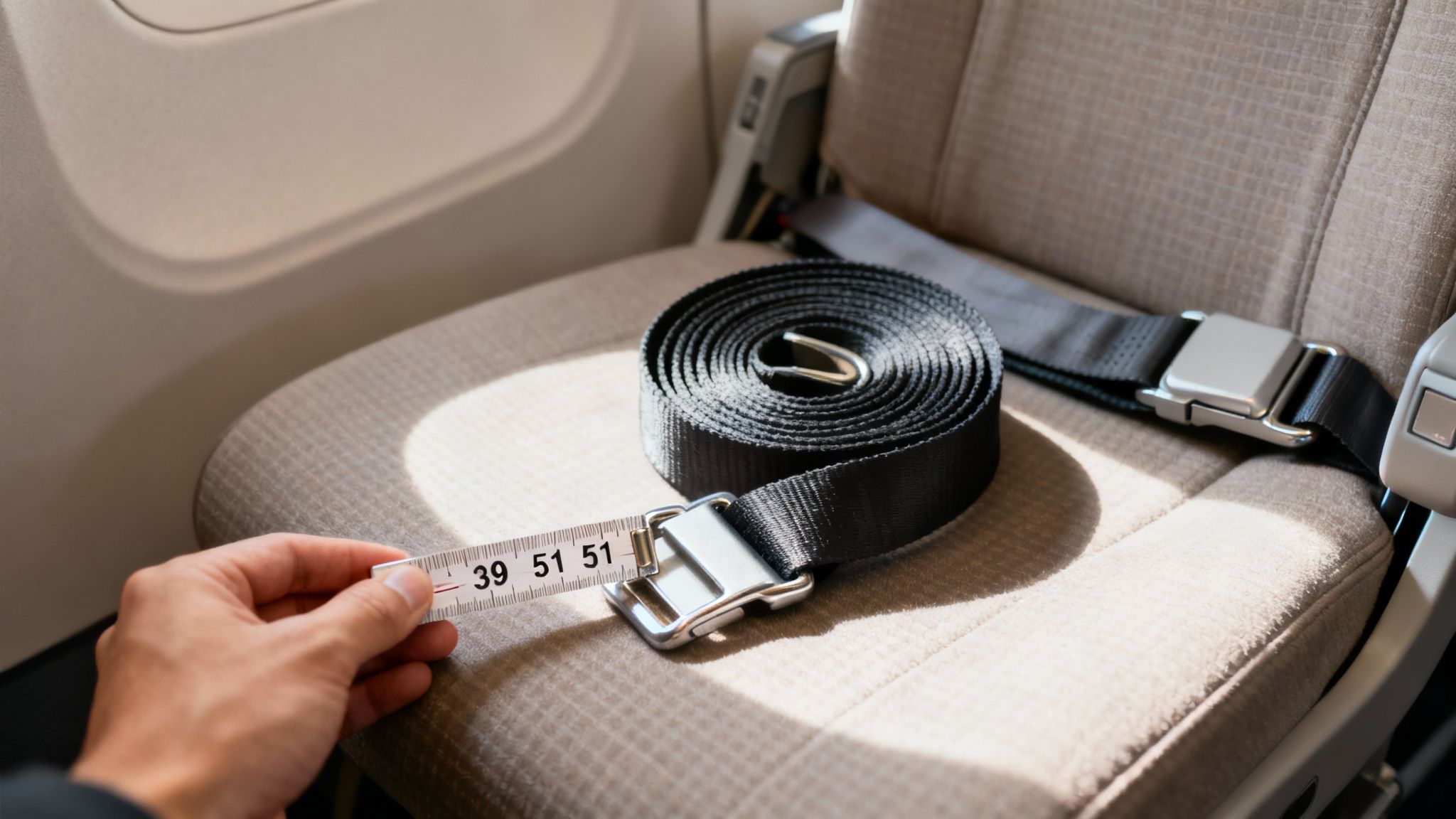
    Nobody can answer this from a table with perfect confidence, and anyone who claims otherwise is selling something. But here is the reading I give friends, based on the reported ranges and a lot of flights: the belt sits low, across your high hip and lower belly, not at your natural waist. So measure yourself seated – sitting down changes everything – with a soft tape measure across the widest point of your lap, roughly where a car’s lap belt lands.

    If that seated measurement comes in under about 40 inches, the reported figures say you’ll likely close the belt on every airline in the table, including the short-belt carriers. Between there and the mid-forties, you’re in the zone where it depends on the airline: probably fine on American, JetBlue, Alaska, or Hawaiian, and probably asking for the extender on United, Southwest, Frontier, and Allegiant. Above the longest reported belts, plan on the extender everywhere and let that be a logistics fact instead of a verdict on your body. The extender exists because airlines know their belts don’t fit everyone. Using one is not a failure. It’s equipment.

    And if you’re between sizes on the chart, do what I do: assume the shorter number. Being pleasantly surprised beats the alternative, and the ask costs you nothing.

    The Big Three: American, Delta, United
    The Big Three: American, Delta, United
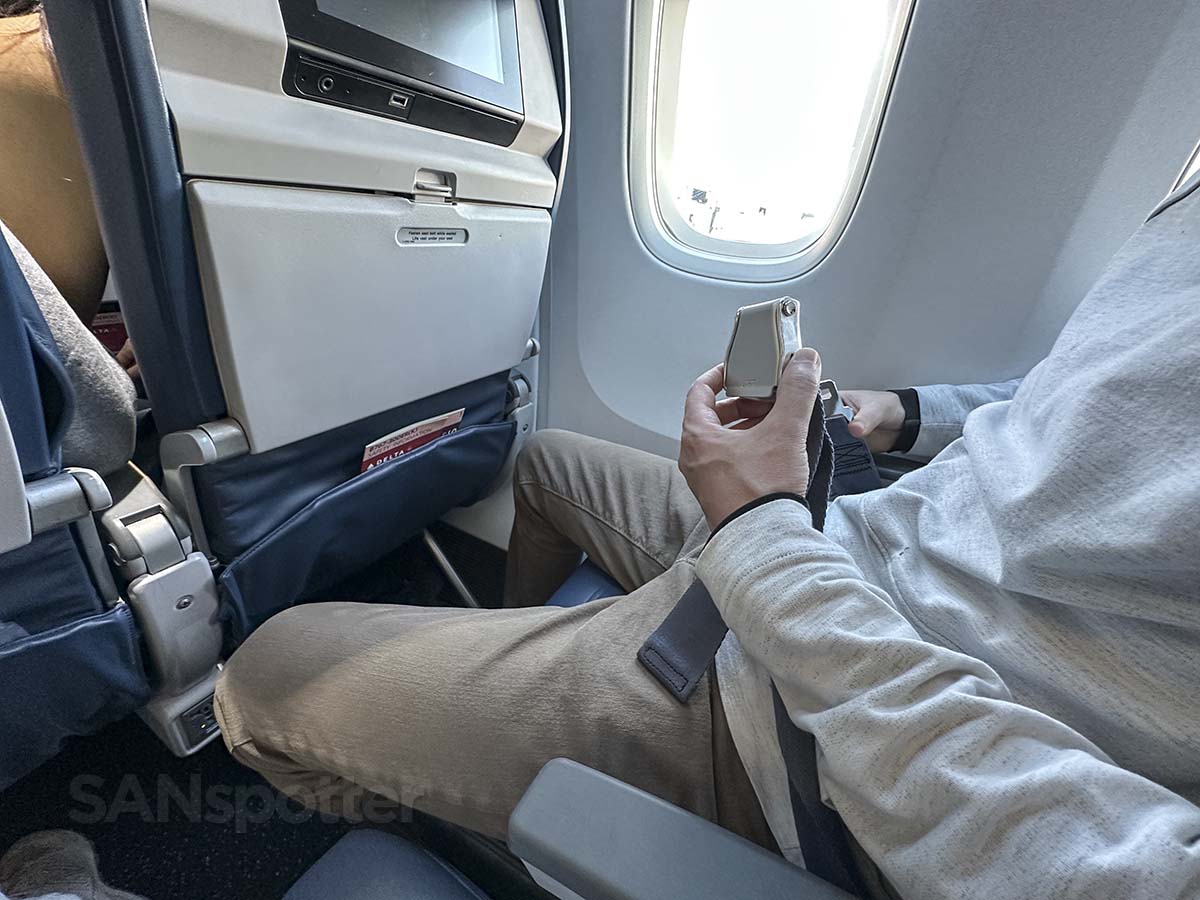
    Delta Airlines economy cabin seats with seatbelts visible

    American carries the longest-reported belts of the legacy carriers, and its official pages are refreshingly plain about the extender: ask a flight attendant or gate agent, and only American’s own extenders may be used. If you need more room than one seat, American wants you to call Reservations and book the extra seat in advance – they’ll guarantee two adjacent seats at the same fare. Show up without one and airport agents will look for two adjacent seats; if the flight can’t accommodate you, they’ll move you to one that can at your original price.

    Delta sits in the middle on reported belt length, and its fleet is where seat width gets interesting. The A220 is the widest mainline economy seat flying in the US right now, and Delta’s own aircraft pages publish the seat specs – one of the few places an airline hands you real numbers. Delta’s extra-seat policy is written softly: they “encourage” buying a second seat in advance if you’ll encroach on your neighbor or can’t keep the armrests down, and they reserve the right to reassign you or rebook you onto a later flight if the plane is full. The softness cuts both ways. It means flexibility on a half-empty flight and uncertainty on a packed one.

    United is the one to prepare for. Flyers consistently report its belts as the shortest of the big three, and its written policy is the strictest: you must be able to buckle with at most one extension, sit with the armrests down, and not significantly encroach on the seat next to you. Fail any of those and you’re buying a second seat or an upgrade, and their own policy language says they will not board you if you decline. I don’t say that to scare you – I say it so you book United with a plan instead of a hope. Ask for the extender early, or buy the second seat up front on the same reservation, where it prices at the same fare.

    Southwest: The Policy That Changed Twice in One Year
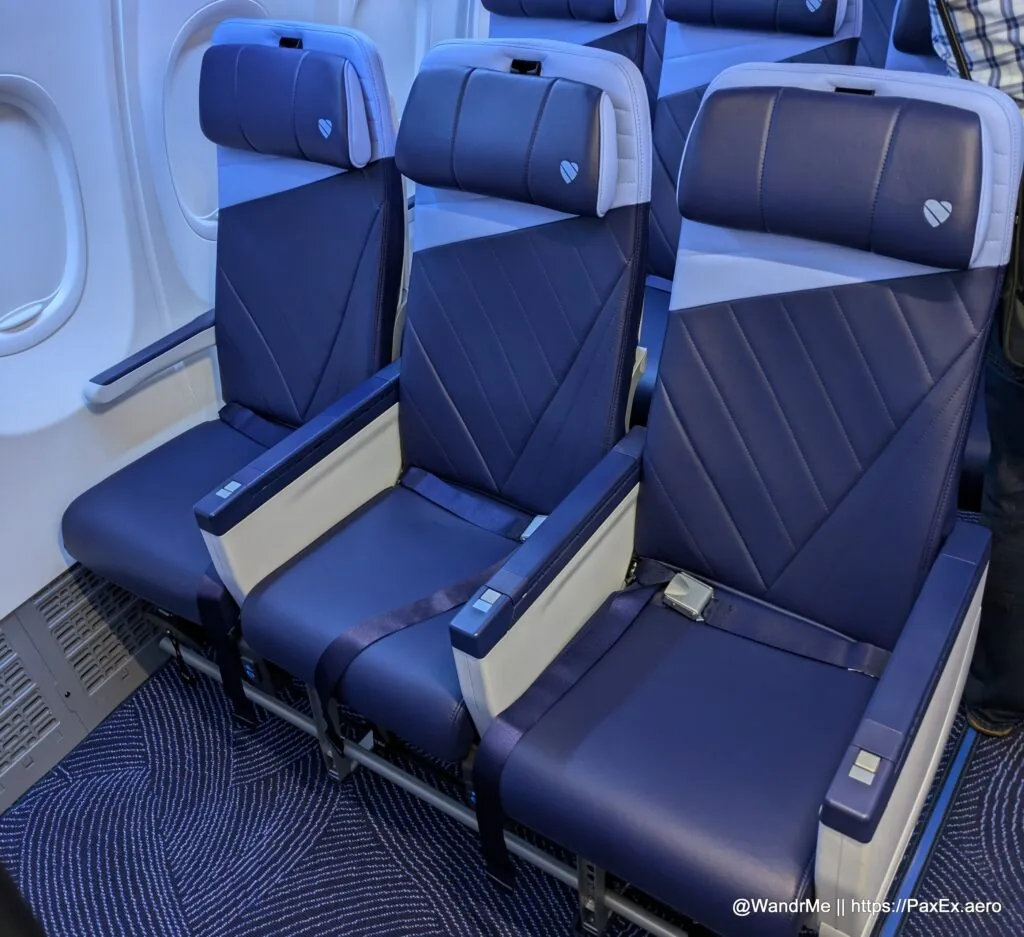
    Southwest Airlines aircraft cabin interior seats

    If you learned Southwest’s customer-of-size policy from an old blog post, unlearn it, because the ground moved twice recently. For years, Southwest was the gold standard: open seating, a free second seat arranged at the gate, no drama. When the airline switched to assigned seating at the end of January 2026, it tightened everything – you had to pre-purchase the second seat, and the refund came only after travel, only under conditions.

    Then came the partial walk-back. In May 2026, after sustained pushback, Southwest confirmed that gate agents can once again arrange a free second seat at the airport when two adjoining seats are available. If they aren’t available, you’re rebooked on a later flight. Pre-purchasing is still the airline’s strong preference, and the refund path still exists with its conditions attached – they’re in the policy table below, where conditions belong. As of this writing, that’s the live policy, and Southwest remains the only major US airline offering both a refund route and a free-at-the-gate route.

    One more Southwest quirk that matters if you’re thinking about extenders: many of its aircraft use a different buckle type than the rest of the US fleet, which is why “universal” extenders famously don’t fit there. More on that in the personal-extender section, because it’s exactly the kind of detail that Amazon listings bury.

    Alaska and Hawaiian: One Refund Policy, One Long Belt
    Alaska and Hawaiian: One Refund Policy, One Long Belt
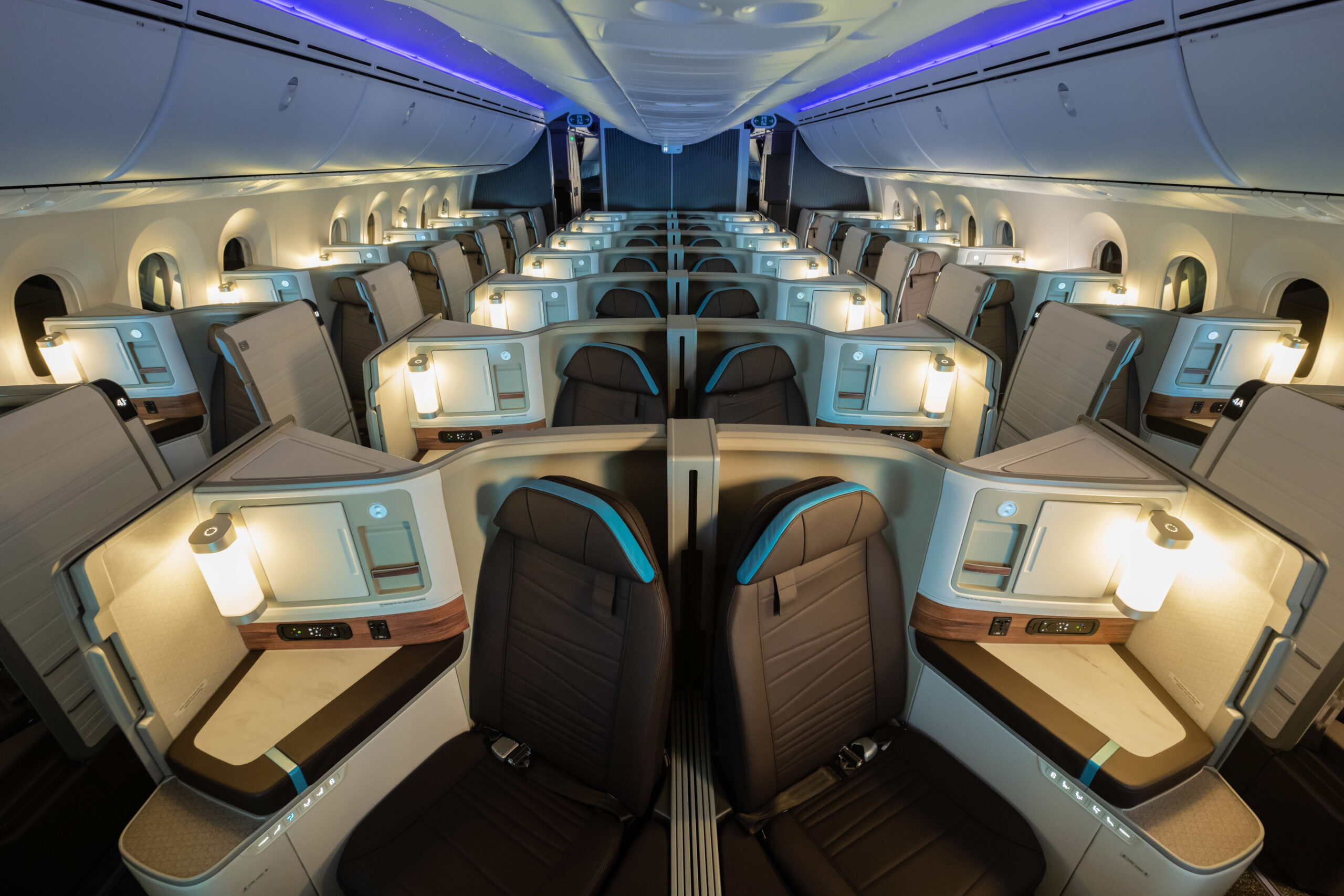
    Hawaiian Airlines cabin interior with rows of seats

    Alaska deserves more credit than it gets in plus-size travel threads. Its policy page is one of the clearest in the industry: extenders are free onboard, only carrier-provided ones may be used, they’re banned in exit rows, and – the headline – if you buy a second seat and every flight in your itinerary departs with at least one open seat, you get that second seat refunded. Alaska and Southwest are the only two majors offering a refund route. The trade-off is the hardware: Alaska’s mainline cabins are among the narrowest on this list, even though the belts themselves are reportedly generous.

    Hawaiian is the airline flyers consistently report as having the longest standard belts in the US sky – which makes a kind of sense for a carrier whose whole business is long flights where comfort complaints get loud. Its official guidance asks guests who need more room to pre-book an extra seat by phone, with each seat charged at the lowest available fare, and it does not offer a refund provision. One honesty note: reports on the length of Hawaiian’s onboard extender conflict with each other, so I’m not printing a number. And with Alaska and Hawaiian now under one corporate roof, I found no evidence the policies have merged as of this writing – treat them as separate airlines with separate rules until their pages say otherwise.

    JetBlue: The Width Play

    JetBlue Airways cabin showing wide economy seats

    JetBlue doesn’t publish a customer-of-size policy page the way Southwest and Alaska do, and the compiled reporting says the deal is simple: buy the second seat at booking if you need it, and don’t expect a refund. What JetBlue offers instead is hardware. Its cabins run the widest average economy seats in the country, its belts are reported at the generous end, and its Even More Space rows sell extra legroom if the seat itself isn’t your constraint. For a lot of plus-size flyers – me included, on the right aircraft – JetBlue is the flight where you don’t think about the belt at all, and that’s worth real money. If the fare difference is small, I book it on width alone.

    The Budget Carriers: Frontier and Allegiant, Eyes Open
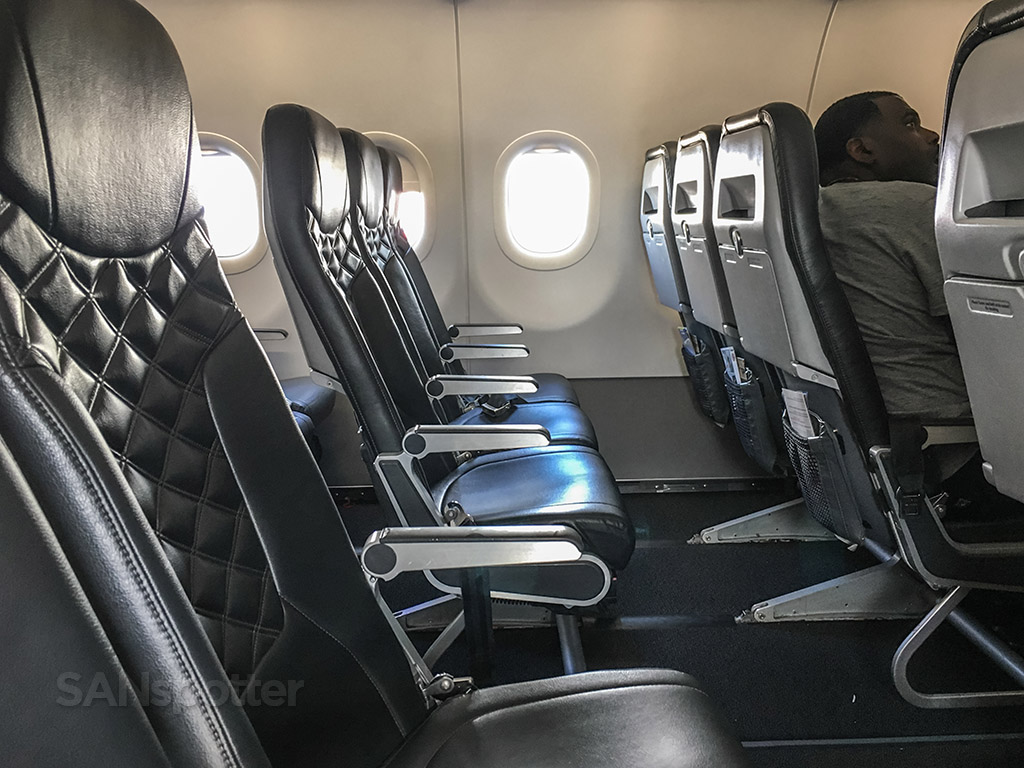
    Frontier Airlines slimline cabin seats

    Frontier’s official policy is armrest-based and blunt: the lowered armrest defines the space you’ve purchased, and if you can’t fully lower both, they ask you to book two seats before travel through their support chat. Extra seats follow standard refund rules – no special customer-of-size refund. The belts are vendor-reported at the short end, the seats are slimline, and the fares are cheap for a reason. Frontier also sells an option that guarantees an empty middle seat next to you, which is a genuinely useful product for this exact situation, priced below buying a whole second fare on many routes.

    Allegiant is the one that surprises people. Its reported belt lengths are the shortest and most variable on this list – the range is wide enough that I’d tell any plus-size friend to simply assume the extender and ask early. The policy itself is more reasonable than the hardware: officially, needing an extender alone does NOT trigger a second-seat requirement. The armrest is the test. If it lowers, you fly in one seat, extender and all. Extenders are banned in exit rows, as everywhere. On these tightly packed leisure routes I also wear wide-calf compression socks, because a narrow seat you can’t shift around in for three hours is a circulation problem wearing a fare-sale costume.

    Extra Seats and Refunds: The Policy Table

    Policies are where the airlines actually publish things, so this table is mostly official language condensed. This is the part to check before you book, not at the gate.

    Airline Second-seat rule Refund after travel? Key conditions
    American Book the extra seat in advance via Reservations; adjacent seat guaranteed at the same fare No refund provision Day-of, agents look for two adjacent seats; rebooking at original price if the flight can’t accommodate
    Delta “Encouraged” in advance if you’ll encroach or armrests can’t go down No refund provision May reassign seats or rebook you on full flights; Basic Economy can’t be used for the extra seat
    United Required if you can’t buckle with one extender, armrests down, no encroachment No Same fare if bought at booking, day-of fare otherwise; boarding denied if you decline when required
    Southwest Pre-purchase encouraged; gate agents may arrange a free second seat when two adjoining seats are open (restored May 2026) Yes Request within 90 days of travel; flight departed with at least one open seat; both seats in the same fare class
    Alaska Buy a second seat if you can’t fit with both armrests down Yes Every flight in the itinerary departed with at least one open seat
    JetBlue Buy at booking (reported; no branded policy page) No (reported) Even More Space rows sold as the extra-room alternative
    Hawaiian Pre-booking by phone strongly recommended No refund provision If no alternative seating exists on a full flight, you may not be transported on it
    Frontier Book two seats before travel if both armrests can’t fully lower Standard refund rules only The lowered armrest officially defines each seat’s space; empty-middle-seat product sold separately
    Allegiant Second seat required only if the armrest can’t lower – the extender alone doesn’t trigger it No refund provision No extenders in exit rows

    How to Ask for an Extender Without Making It a Moment
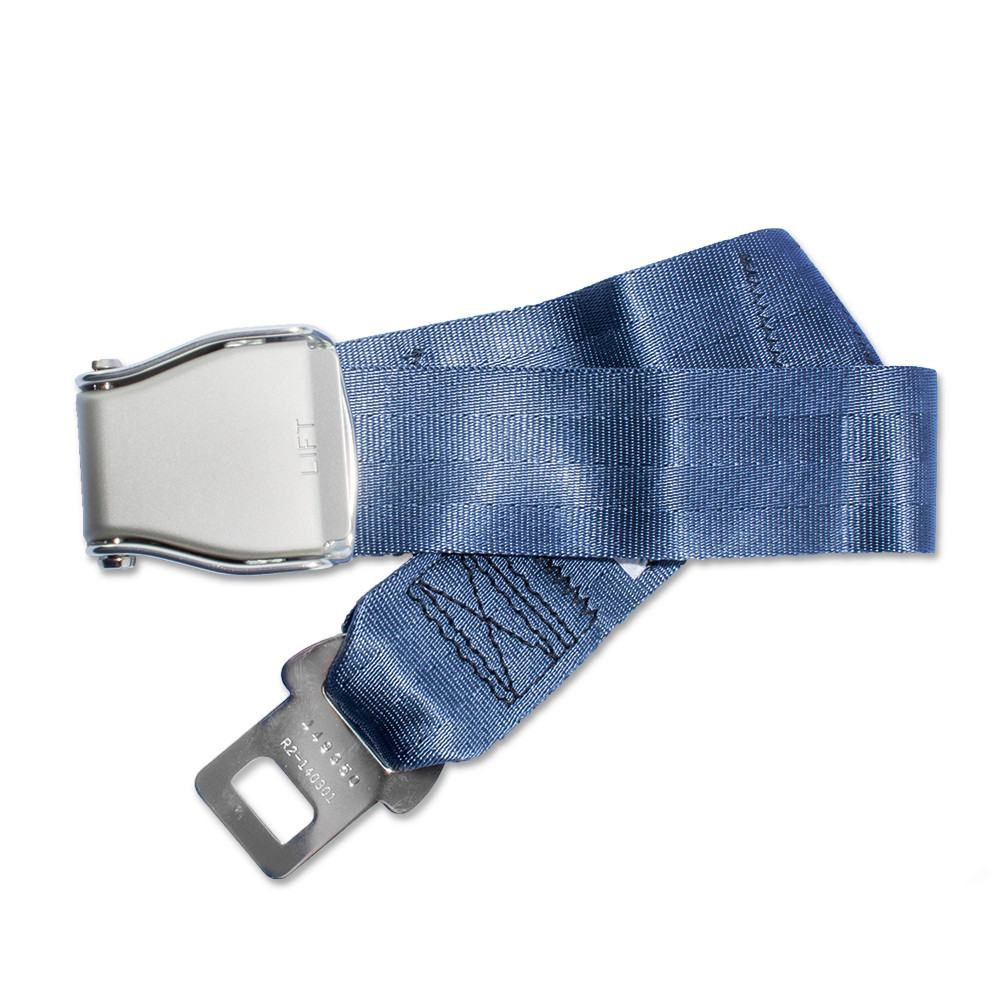
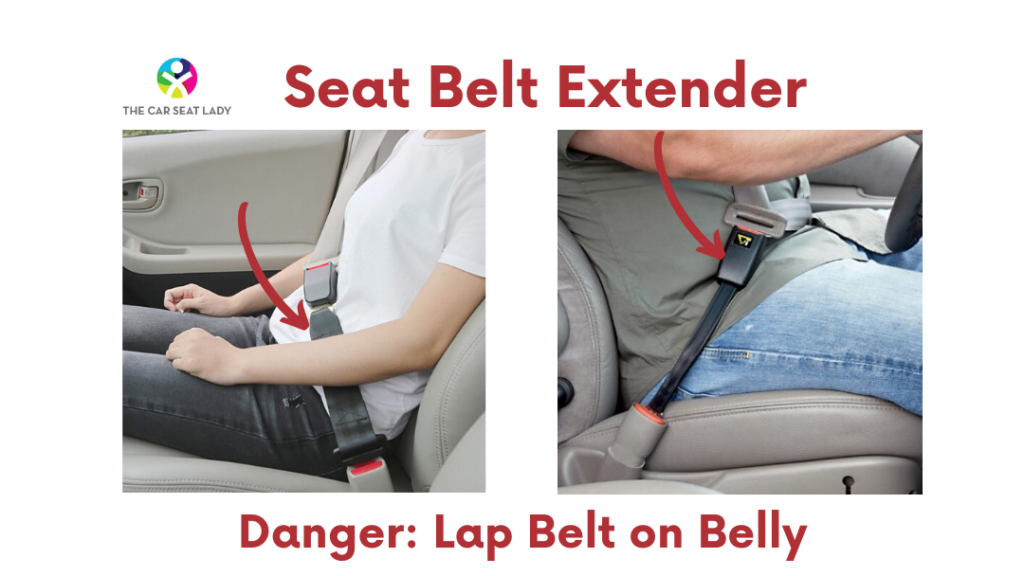
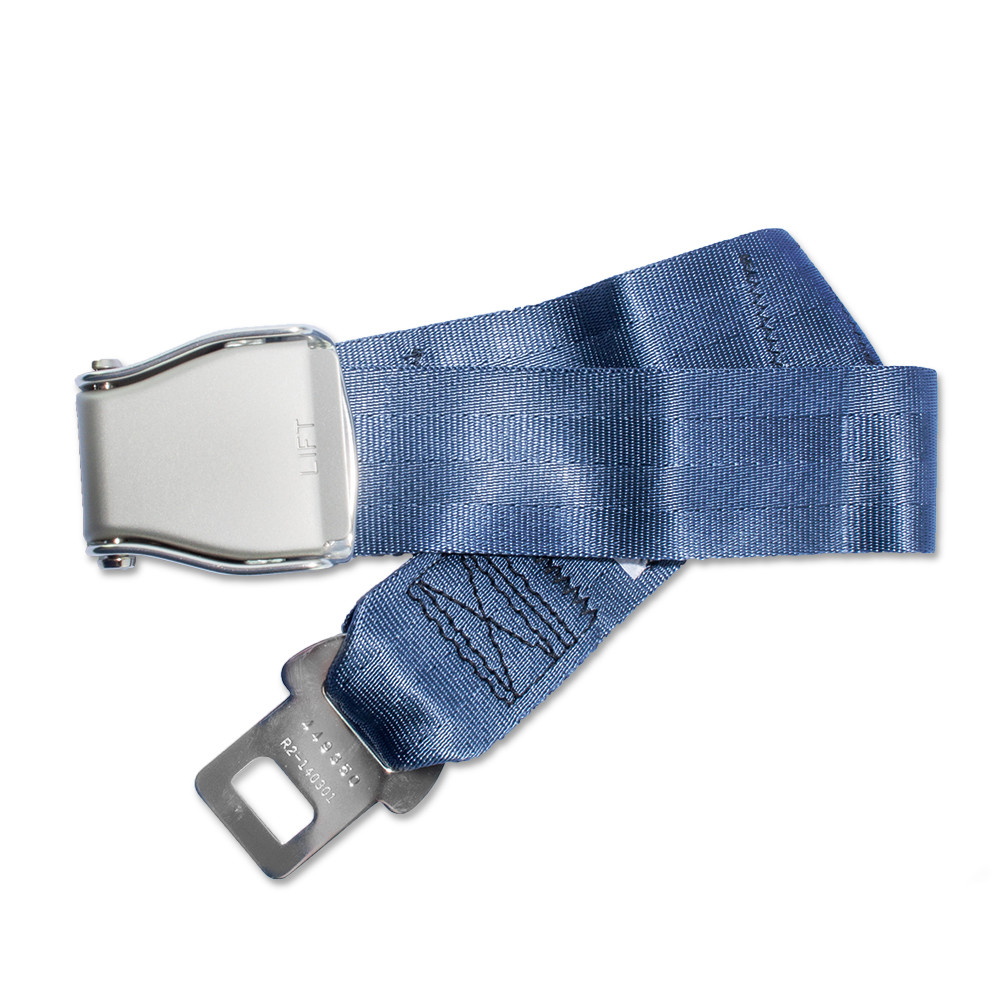
    Airplane seatbelt extender held next to a standard seatbelt buckle

    The ask is smaller than the dread. I promise. Here’s what actually works, from a lot of repetition: board, catch the eye of the flight attendant at the door or in the front galley, and say quietly, “Can I get a seatbelt extender at my seat? I’m in the window, row whatever.” That’s it. They hear this request every single day, multiple times a day, and the good ones – most of them – will bring it to you low and folded, without commentary, often before the aisle fills. Asking at the boarding door beats pressing the call button after everyone’s seated, purely because it’s more private, not because either is wrong.

    If even that feels like too much on a bad day, ask the gate agent before boarding and they’ll flag it to the crew. Some flyers hand the extender back before landing; you don’t have to – crews collect them after everyone deplanes. And if a flight attendant ever makes the ask feel heavy, that’s a them problem with an airline feedback form attached, not a you problem. You asked for standard safety equipment that exists because the airline’s own belt has limits. Full stop.

    Can You Just Bring Your Own? The FAA Answer, Honestly

    Here’s where I’m going to be straighter with you than the Amazon listings are. The FAA put out guidance to airlines – InFO 12012, back in 2012 – saying passenger-provided seatbelt extenders “should not be permitted for use,” even when the label claims FAA approval or cites the right technical standard. The reasoning isn’t that your extender is junk; it’s that airline belts and extenders are inspected and maintained under each carrier’s FAA-accepted maintenance program, and yours isn’t. American says outright that only its own extenders can be used, Alaska’s policy page says the same, and consistent reporting says every major US carrier takes the same position. Even the extender vendors’ own education pages now admit the FAA doesn’t approve extenders for passengers to bring aboard. A flight attendant can require you to swap yours for the airline’s at any point, including right before takeoff, and that’s the exact scene you were trying to avoid.

    So why does a personal airplane seatbelt extender still make sense for some flyers? Peace of mind with a plan B attached. Some people buckle their own the moment they sit, quietly, and never hear a word about it – that happens constantly, and I won’t pretend otherwise. But you carry it knowing the rule is against you, and the honest play is to treat it as a backup while you request the airline’s version, not a replacement for asking. One label warning while you shop: the “E4 certified” badge plastered on most listings is an automotive-restraint mark, not an FAA aviation sign-off, no matter how official the seller makes it sound.

    Compatibility is the other trap. Most US carriers use the common buckle style that a standard Type A extender fits. Southwest is the famous exception – much of its fleet historically used a different buckle entirely, which is why vendors sell a separate Southwest-specific Type B extender – and per those same vendor compatibility charts, Southwest’s newer aircraft have shifted to standard buckles, so even the Type B isn’t a sure thing across their fleet anymore. All of that is vendor-compiled, none of it airline-published, and all of it is one more argument for the free extender that’s already on the plane and guaranteed to fit it.

    The Seat Itself: Width Is the Other Half of the Fight

    The belt gets the dread, but the seat walls are what you feel for the whole flight. If your hips are the pressure point more than your lap, the width column of the master table matters more than the belt column, and the pattern is simple: Delta’s and JetBlue’s Airbus cabins run widest, and the all-Boeing fleets at Southwest and Alaska run narrowest, with the budget carriers close behind. When two fares are close, I pick the aircraft, not the airline – the same carrier can fly you in its widest seat one leg and its narrowest the next, and seat-map sites will tell you which plane is on your route before you pay.

    Two comfort notes from the road. Armrests that lower fully are your legal definition of fitting on several carriers, so claim the armrest calculus early and confidently. And a firm slim travel seat cushion can save your tailbone on a long haul in a hard slimline seat – just know it adds height, not width, so it helps the sit, not the squeeze. I don’t bring one on anything under three hours; I don’t board a transcon without it.

    Your Week-Before-the-Flight Checklist

    Back to you at the imaginary gate, a week out. Here’s what I’d do between now and boarding, in order. Measure seated, across the lap, once – then stop measuring, because re-measuring nightly is dread exercise, not data collection. Check the master table against your airline and assume the short end of the reported range. If you’re near the line on United, Southwest, Frontier, or Allegiant, decide now that you’ll ask at the boarding door, and rehearse the one sentence until it’s boring. If you need the second seat, buy it on the same reservation this week – same-fare pricing rewards booking it together on the carriers that guarantee it – and if you’re on Southwest or Alaska, calendar the refund request for the day you land, since the money comes back only if you ask.

    And book the hardware when you can. Delta’s or JetBlue’s widest Airbus cabins when the fare is close, JetBlue when width is the whole question, Southwest or Alaska when the refund policy is doing the math for you. The belt question has an answer, it took a table to give it to you, and now you have the table. Fly.


  • Plus Size at Cedar Point: The Ride-by-Ride Fit Guide Nobody Wrote

    Plus Size at Cedar Point: The Ride-by-Ride Fit Guide Nobody Wrote

    There’s a metal chair bolted to a concrete pad outside the entrance of Steel Vengeance, and it might be the most emotionally loaded piece of furniture in Ohio. It’s a test seat: one exact replica of the ride’s seat, restraint and all, sitting in the open where the whole midway can watch you try it. For a lot of plus-size riders, that chair is the scariest thing in a park full of 200-foot drops. Not because of what it does. Because of what it might say, in public, with an audience holding funnel cakes.

    I want to talk you out of that fear, because the test seat is not a judgment device. It’s the only honest piece of information Cedar Point will hand you all day. The park publishes no seat widths, no belt lengths, and no weight charts for its coasters. Its official line, straight from the accessibility page, is that “restrictions for guests of larger size (height or weight) are posted at certain rides,” and the ride pages for its newest coasters all carry the same sentence: due to the nature of the restraint, this ride may not accommodate guests of a larger size. That’s it. That’s the entire official spec. Everything else – which rides actually close, which rows have the longer belts, which restraint will pin your thighs – lives in forum threads, subreddit posts, and shaky phone videos, where plus-size riders have spent years quietly building the guide the park never wrote.

    So I did what I do for airline seatbelts: I compiled the record. PointBuzz threads that run four pages deep with people posting their exact stats and outcomes. CoasterBuzz’s crowdsourced map of the modified seats. The r/cedarpoint threads. The “Fat Guy Ride Testing” YouTube series that walks the park test seat by test seat. Where Cedar Point says something officially, I’ve marked it official. Where the source is a rider with a tape measure and a good memory, I’ve marked it rider-reported. Where the reports fight each other, I say so instead of picking a winner. I haven’t buckled into these trains myself; this is the community’s knowledge, organized so you can use it. One thing before the table: nobody, including the park, can promise you a yes or a no from a chart, because two people with identical stats carry weight differently and get different outcomes. What this guide can do is tell you where the fights happen, so nothing ambushes you on a platform.

    The Master Table: Every Coaster, One Honest Row

    The Master Table: Every Coaster, One Honest Row

    Verdicts come from the rider record, not from me and not from the park. “Try the test seat” is not a hedge; it’s the strategy the community itself converged on after years of platform heartbreak.

    Ride Test seat? Known tight points Rider-reported verdict
    Steel Vengeance Yes (rider-confirmed) Lap bar over thighs; belt catches if pulled fast; tightest restraint in the park by consensus Thigh-heavy bodies struggle most; some who fit report the test seat reading red anyway. Reports conflict at the same stats. Test seat, always.
    Millennium Force Yes (official) Short seatbelt across upper thighs and hips The classic heartbreaker. Belt fit depends on thighs, not waist. Riders reported newly shortened belts in spring 2026; treat all older “I fit” reports as suspect until that settles.
    Maverick Yes (official) Vest-style restraint; buckle can be blocked by a very large midsection; some report thigh stapling Repeatedly named the most plus-size-friendly big coaster. Riders denied everywhere else often ride Maverick.
    Top Thrill 2 Yes (official) Lap bar must firmly contact pelvis and thighs (official language) New trains since the Dragster era, so old TTD lore no longer applies. Thin record so far. Test seat.
    Valravn Ask at entrance Shoulder harness plus belt; chest and shoulders Modified seats with red belts reported in every row. Riders report getting “stapled” but riding. One of the friendlier inverting coasters.
    GateKeeper Yes (rider-confirmed) Shallow seat; thighs, chest, shoulders; regular-row belts run short Go straight to row 4, the marked larger seats with red belts. Regular rows described as “1-for-5” odds by one regular. The largest riders report row 4 can still say no.
    Raptor Yes (official) Shoulder harness; chest and shoulder width Larger seats with double belts reported in row 4. Chest-heavy riders get booted here more than anywhere except MF. Ride op effort genuinely matters.
    Rougarou Ask at entrance Bucket seat pinches hips and thighs; shoulder bar itself is roomy Hips are the whole question. Double-belt larger seats reported in row 4.
    Magnum XL-200 Ask at entrance Short seatbelt; fixed low lap bar cramps long legs Most fit; the belt is the only gate. Tall riders with long legs call it painful, not tight.
    Gemini Ask at entrance Belt only; bench seats Consistently reported friendly. A reliable yes for most.
    Iron Dragon Ask at entrance Pull-down chest restraint, generous fit The most comfortable seat in the park, per multiple riders. Start your day here if nerves are loud.
    Blue Streak Ask at entrance Divided seats; short belt that snags while buckling; dividers sit off-center on some rows The sleeper rejection. Riders who fit steel giants report failing this wooden classic on hips alone.
    Corkscrew Ask at entrance Over-shoulder harness; chest and belly Snug but doable for many; the very largest riders report the harness will not lock.
    Cedar Creek Mine Ride Ask at entrance One shared lap bar per bench; short belt; no room for wide thighs beside the bar The park’s most deceptive no. It’s a family coaster that rejects more plus-size riders than half the giants. Cross your ankles and angle your knees if you try.

    Wild Mouse Ask at entrance Individual over-thigh lap bar Seats molded wider than older spinners by design; some larger builds still report a tight thigh bar. Mostly a yes.
    Siren’s Curse Yes (official) Vest harness with between-the-legs belt; chest contact required Too new for a deep record. Official pages carry the larger-guest warning and a test seat sits at the entrance. Report back.

    How to Read That Table Without Spiraling

    First, notice what actually gates each ride. It’s almost never weight as a number. It’s geometry: where the belt crosses you, where the bar lands, whether your hips let you slide fully back in a bucket seat. The community record is full of pairs of people with near-identical stats and opposite outcomes, including two men of the same weight where one rode Steel Vengeance comfortably and the other was turned away at the test seat. Nobody on a forum can tell you your answer, and neither can I. What the record can tell you is which body part each ride interrogates, and that’s genuinely useful: if you carry weight in your thighs, your hard rides are the lap-bar giants; if you carry it in your chest and shoulders, your hard rides are the harness coasters; if it’s your hips, watch the divided and bucket seats.

    Second, understand what the test seat is and isn’t. Riders have long sworn the test-seat belts run slightly shorter than the belts on the actual trains, and more than one has quoted a Cedar Point height checker saying that if the metal touches, you’ll likely be fine onboard. That would make the test seat a worst-case scenario, which is exactly what you want it to be. But in spring 2026, Millennium Force riders started reporting the reverse: passing the test seat, waiting through the line, and being denied on the platform. Both patterns are rider-reported, and they can’t both describe a well-calibrated system, which tells you the calibration is not something to bet an hour of queueing on. Use the test seat as strong evidence, not a contract.

    Steel Vengeance and Millennium Force: The Two That Decide Your Day

    Steel Vengeance and Millennium Force: The Two That Decide Your Day
    Steel Vengeance roller coaster at Cedar Point

    These are the rides people lose sleep over before a trip, so let’s be precise about both.

    Steel Vengeance runs a lap bar with a shin restraint and a seatbelt, and the consensus across every thread is the same: it is the tightest restraint at the Point, and it interrogates your thighs. The station has a screen showing a green or red light for every seat, and the veterans’ choreography is well documented: slide your butt all the way back, buckle before you bring the bar down, get as much of your midsection above the bar as you can, and bring it down with momentum rather than a slow press. The belt likes to catch if you yank it. Riders describe punching the bar down the last inch for the green light, and ride ops will give a firm push if you ask. Here’s the honest part: at the same height and weight, one rider reports “no trouble whatsoever” and another reports being turned away at the test seat. Distribution decides, not the scale. If your weight lives in your gut and chest, your odds are decent. If it lives in your thighs, take the test seat verdict seriously.

    Millennium Force is a different machine with a simpler gate: a plain lap bar and a famously short seatbelt that crosses your upper thighs, not your waist. For two decades the community advice was consistent – it’s a thigh ride, thin fabric helps, and a women’s size 20 rider described the belt as “just barely” closing. Then came the 2026 season. Riders who had fit for years began posting that they were suddenly turned away, with one reporting a ride attendant confirmed the belts had been shortened, and aggregated complaints included people with waists in the mid-thirties struggling to buckle. Cedar Point hadn’t publicly explained the change when those reports circulated. I can’t tell you where that lands by the time you visit. I can tell you the only rational play: treat every earlier MF fit report, including your own past rides, as unreliable, use the test seat the morning you’re there, and don’t let this one ride carry your whole trip’s emotional weight. It has broken enough hearts on that platform already.

    The B&M Secret: Marked Seats With Longer Belts

    The B&M Secret: Marked Seats With Longer Belts
    Raptor inverted roller coaster at Cedar Point

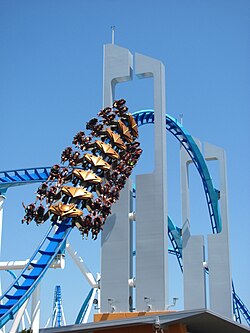
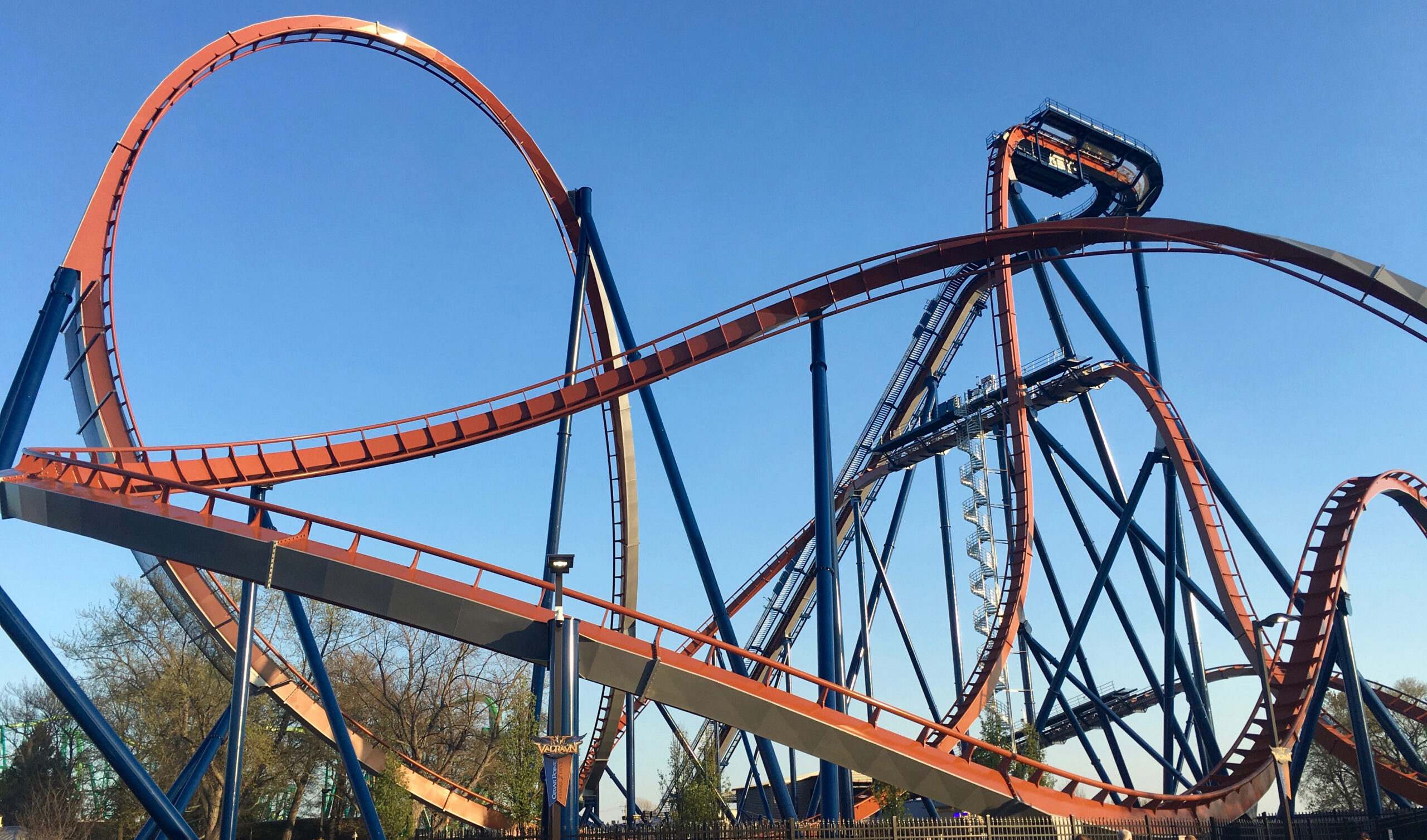
    Here’s the single most useful thing buried in the forums, the thing that should be on a sign at the front gate: the park’s four big inverting coasters from manufacturer B&M all have modified seats with longer belts, and the community has mapped them. Enthusiasts report double belts on row 4 of both Raptor and Rougarou, red belts on the same row of GateKeeper, and red-belt seats on Valravn spread across its rows. Riders say the accommodating rows are labeled on the station floor, and ride ops will point you to them if you ask. That one paragraph converts four intimidating coasters into four realistic ones.

    The nuance per ride: Valravn draws the warmest reports of the group, including from riders denied elsewhere who described being clamped in snugly but riding happily, twice. GateKeeper is the wild card; its regular seats sit shallow and its belts run short, and even the marked row has said no to riders at the biggest end of the record, so treat row 4 as a good chance rather than a promise. Raptor is where chest and shoulder width matters most, and the record is full of riders who fit one year and not the next, with outcomes that visibly depended on how hard the ride op was willing to work. Rougarou’s shoulder bar is roomy; its bucket seat is not, and wide hips are the sticking point. On all four, the ask is identical and painless: walk up, say “which row has the larger seats,” and let the crew seat you. They do this all day. You will not be the first, or the tenth.

    The Quiet Yeses

    The Quiet Yeses
    GateKeeper winged roller coaster at Cedar Point

    Maverick deserves its reputation as the plus-size ride of the park. Across years of threads, it’s the coaster that people who fit nothing else ride with room to spare, including a size 22/24 rider whose entire successful day was Maverick on repeat. Its vest restraint fits most bodies; the exceptions in the record are riders with very large midsections, where the buckle simply can’t reach around, and occasional complaints of the bar pinning thighs uncomfortably. It also has an official test seat, so you can confirm in thirty seconds.

    The old Arrow steel lineup is your comfort zone. Iron Dragon gets called the most comfortable seat at Cedar Point so consistently that I’d make it your first ride of the day on purpose: an easy, guaranteed win that resets your nervous system before you negotiate with the giants. Gemini’s bench seats and simple belts accommodate nearly everyone in the record. Magnum XL-200 fits most bodies through the belt, with one caveat that has nothing to do with width: its fixed lap bar sits low and close, and tall riders with long legs describe real pain rather than tightness, including one visitor who rode once and refused a second lap. Wild Mouse, the newer spinning coaster, was built with deliberately wider molded seats, though a few larger riders still report the individual thigh bar landing snug.

    The Sleeper Rejections

    The Sleeper Rejections
    Valravn dive coaster at Cedar Point

    Now the ambushes, because these hurt more than a Steel Vengeance no. Nobody cries over the park’s most extreme coaster turning them away; everybody remembers being rejected by the kiddie-adjacent one while their family watched.

    Blue Streak, the gentle wooden classic from 1964, fails plus-size riders constantly. The seats have dividers, the belts run short, and buckling requires a contortion where the belt snags mid-motion. Riders who cleared Millennium Force have failed Blue Streak on hip width alone. One regular’s tip from the record: the dividers aren’t mounted evenly, and on some trains the second-to-last row has an off-center divider that leaves one side noticeably wider. Cedar Creek Mine Ride is worse, because it looks like nothing. It’s a family mine train, and it runs one shared lap bar across each bench, which means the bar comes down to the largest rider and wide thighs have nowhere to go beside it. The record calls it “awful on the belly,” “hideously tight,” and a flat no for riders who fit half the big coasters. Riders who made it describe crossing their ankles and angling their knees to steal an inch. Corkscrew sits in between: an old-school shoulder harness that many plus-size riders squash into successfully and the largest riders report won’t click.

    The pattern is age and restraint design, not thrill level. Newer coasters were engineered with test seats and marked accommodations; the classics were built for 1969 bodies. Plan accordingly, and don’t let a wooden coaster’s rejection tell you anything about the steel ones.

    The New Generation: Top Thrill 2 and Siren’s Curse

    Top Thrill 2 launch coaster at Cedar Point

    Both of the park’s newest headliners carry the official larger-guest warning and an official test seat at the entrance, which is the modern template: no published dimensions, but at least an honest preview chair. Top Thrill 2 matters here for what it isn’t – it is not Top Thrill Dragster. The trains were replaced entirely when the ride was rebuilt, and the official language now requires the lap bar in firm contact with your pelvis and thighs. Every piece of Dragster fit lore, positive or negative, describes hardware that no longer exists. Siren’s Curse, the tilt coaster, uses a vest harness with a between-the-legs belt, and its plus-size record is still thin. If you ride either one, post your stats and outcome somewhere public afterward. That’s not a platitude; that community record is literally the only documentation that exists, and this article is built from people who bothered.

    How to Work the Day: Fabric, Timing, and Ride Ops

    Magnum XL-200 roller coaster at Cedar Point

    The community’s tactical consensus is remarkably consistent, so here it is as a plan rather than a scatter of tips.

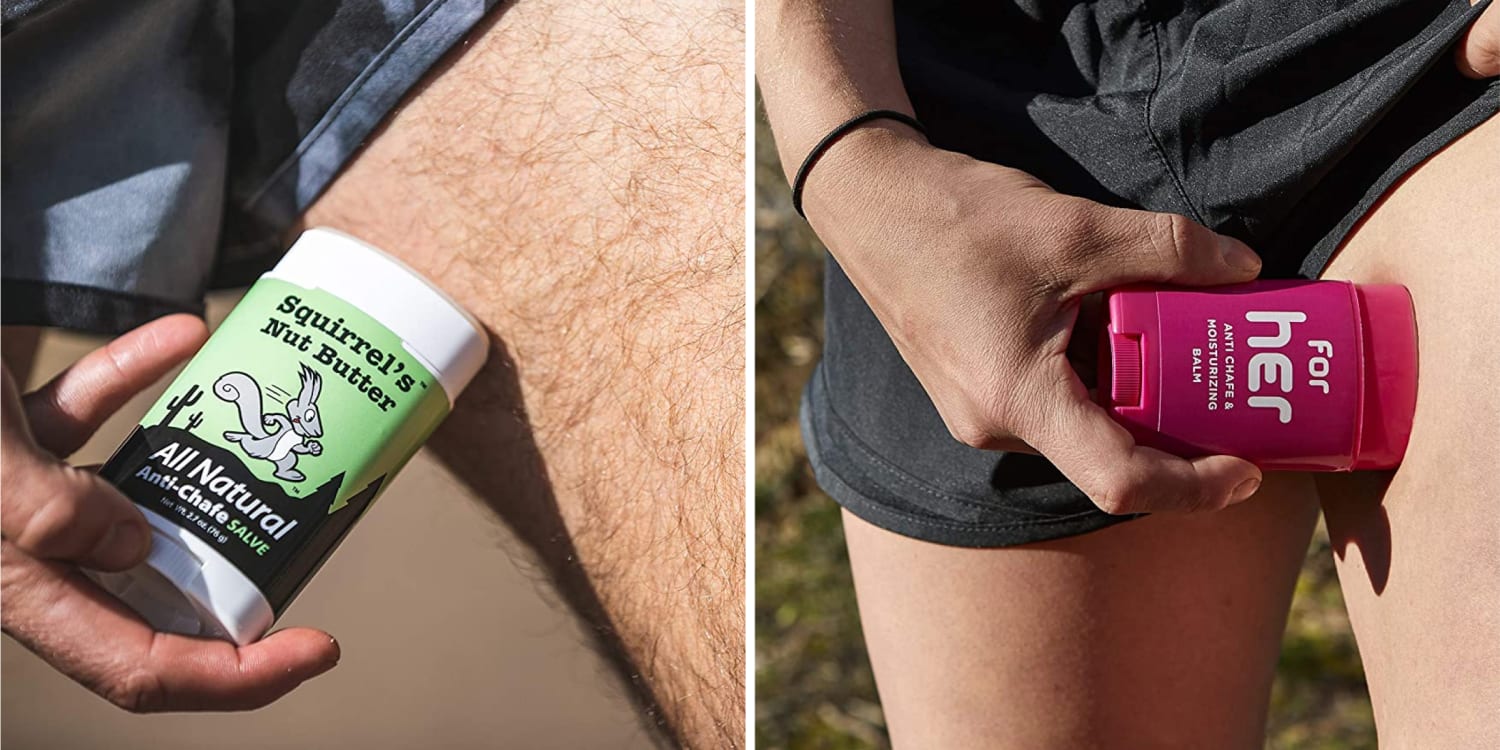
    Wear the thinnest, stretchiest bottoms you own. This is the single most repeated finding in the entire record: riders report clearing belts in thin athletic shorts that they couldn’t close in cargo shorts or jeans, because structured fabric holds bulk exactly where the belt needs it to move. Several riders go further and wear compression shorts a size down under thin shorts or leggings, which does double duty at Cedar Point specifically: the same layer that helps a belt close is the layer that stops your inner thighs from grinding through eight hours of walking the longest midways in the country. If you skip the compression layer, at least throw an anti-chafe stick in your bag, because the peninsula is humid and the queues are long. Empty your pockets before every test seat; keys and a phone add real bulk exactly where the bar lands.

    Do your test seats first thing in the morning. This is borrowed straight from a veteran of the plus-size threads: at opening, the midways are empty, and you can walk the park and sit in every test seat that matters to you with no audience at all. Fifteen quiet minutes converts the whole day from a series of public auditions into a checklist. You’ll know your yes rides, your maybe rides, and your skip rides before the crowds arrive, and you’ll spend the rest of the day riding instead of rehearsing. Morning also happens to be when your body is at its smallest; riders consistently report fits getting harder late in the day after meals and heat swelling, so put your borderline rides early. A portable neck fan earns its bag space in those afternoon queues, and cushioned walking shoes matter more at this park than almost any other, because it’s enormous and you will lap it.

    Finally, let the ride ops help. Read any of these threads and you’ll notice something tender underneath the logistics: rider after rider goes out of their way to thank a crew member by shift and seat number for genuinely trying, for the firm push on the bar, for the quiet “lift your arms” that made a harness click. Getting a push is not a scene; it’s a normal part of loading a train, and the crews that work these platforms do it dozens of times a day. If a seat says no, the record’s etiquette is worth adopting: no arguing, walk to the next ride, and remember it’s a hardware measurement, not a character reading. And know the geography of a no before it happens: on most coasters you exit the platform the normal way, nobody announces anything, and the moment is smaller in real life than it is in your head at 2 a.m.

    Cedar Point is the first regional park in this series, because the search records show thousands of people asking this exact question into a void every summer. CGJ will be building the same ride-by-ride record for other regional parks, mined from the same community sources.

    Sixteen Verdicts Beat One Fear

    Here’s your itinerary, in the Zoe tradition of endings you can execute. Arrive at opening. Walk the empty midway and run your test seats: Steel Vengeance, Millennium Force, Maverick, and whichever of the new pair you’re eyeing. Ride Iron Dragon first for the easy win, then spend your morning on your borderline rides while your body and the belts are on best terms. Ask every B&M crew for the marked rows: row 4 on Raptor, GateKeeper, and Rougarou, red belts on Valravn. Save Gemini and Magnum for the afternoon, skip Blue Streak and the Mine Ride unless the test sit says otherwise, and file a report in one of the threads on your way home, because the next terrified person planning this trip will find your post the way you found this article. The test seat was never the enemy. It’s the one chair in the park that works for you.

  • How to Plan a Stress-Free Disneyland Paris Trip – The Curvy Traveler’s Complete Guide

    How to Plan a Stress-Free Disneyland Paris Trip – The Curvy Traveler’s Complete Guide

    The first time the castle comes into view, framed by a wide cobblestone esplanade and the smell of warm sugar drifting from a churro cart, something in your shoulders drops. You came here to feel wonder, not to spend the day scanning lap bars and bench widths, doing quiet math about whether the next ride will fit. That second worry is real, and pretending it is not helps no one. The good news is that almost all of it can be planned away before you ever board the train to Marne-la-Vallee, the town about 20 miles east of central Paris where the resort lives. A little homework up front buys you a lot of ease once you are there, and ease is the whole point.

    This guide walks through the practical, body-aware parts of a Disneyland Paris trip: when to go, what to wear, which rides tend to be generous and which tend to be tight, how to eat well, where to save, and how to keep your head in a good place. Treat every specific number here as a starting estimate and confirm it with the official park accessibility pages or a cast member on the day, because details shift between seasons and refurbishments.

    Getting the Lay of the Land Before You Book

    Getting the Lay of the Land Before You Book

    Disneyland Paris is two parks sitting side by side, sharing one entrance plaza. The first, Disneyland Park, opened in 1992 and is the classic one: Sleeping Beauty Castle at the heart, five themed lands radiating outward, parades and fireworks and the rides most people picture when they imagine Disney. The second park spent years as Walt Disney Studios Park and was reimagined and renamed Disney Adventure World in spring 2026, gaining a Frozen-themed area built around Arendelle along with a new promenade of attractions. Most visitors split their time across both, and a multi-day ticket that lets you hop between them is the relaxed way to do it.

    Booking tickets online in advance is almost always cheaper than buying at the gate, and on busy days the park can sell out entirely, so a pre-booked ticket also guarantees you get in. The resort uses dynamic pricing now, which works in your favor as a planning signal: lower ticket prices usually line up with quieter days, while the steepest prices flag the most crowded dates. If your goal is calm over chaos, follow the cheaper dates.

    On timing, the quieter stretches tend to be the low-season window roughly from early November through March, setting aside the Halloween tail and the Christmas holidays, which draw big crowds despite the cold. Mid-January, early February, and midweek days in September are reliably gentle. Tuesdays and Thursdays generally run lighter than weekends. Quieter days mean shorter queues, which matters more than you might think when you are plus-size: less time standing on hard pavement, fewer narrow turnstiles to negotiate in a hurry, and more breathing room to ask a cast member a question without a line building behind you.

    Packing and Dressing for a Long, Comfortable Day

    Packing and Dressing for a Long, Comfortable Day

    A Disneyland Paris day is a walking day. People routinely clock the equivalent of a long hike across the two parks without noticing until their feet stage a protest at dinner. The single best thing you can do for your body here is sort out your shoes weeks ahead. Choose genuinely broken-in, supportive walking shoes or trainers, the pair you already trust on long days, not a fresh box of cute sandals bought for the trip. Pack a spare pair of socks in your day bag so you can swap to dry feet after an afternoon rain shower or a splashy boat ride.

    Chafing is the other quiet saboteur of a good day, and the fix is simple. Anti-chafing shorts worn under dresses and skirts, or a glide balm on the inner thigh and underarm, will keep a hot, humid afternoon from turning into a sore evening. Pack them even if you are not sure you need them, because the parks are warm in summer and you will be moving constantly.

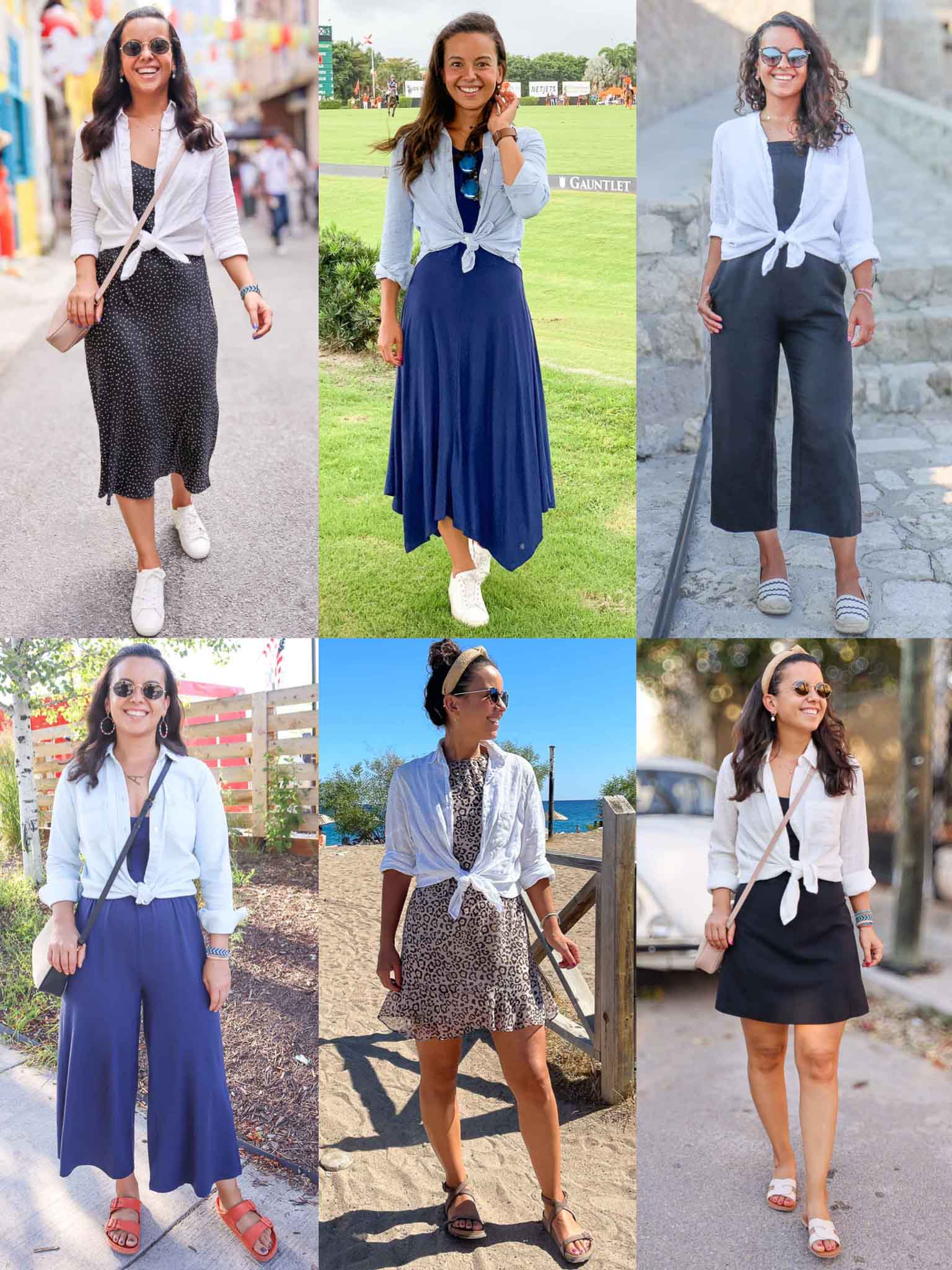
    Dress in layers you can shed and stash. Paris weather swings, mornings can be cool and afternoons warm, and indoor queues can get stuffy. A packable layer or light jacket that crushes into your bag covers all of that without committing you to carrying a coat all day. Build your outfit around forgiving, breathable fabrics with a bit of stretch, the kind that move when you sit, climb into a ride vehicle, and bend over a stroller. A small crossbody or backpack keeps your hands free for the turnstiles and ride bars, and many attractions ask you to secure loose items anyway. Round it out with a refillable water bottle, sunscreen, any medication you need on a schedule, and a portable charger for the app you will lean on all day.

    Rides, Restraints, and Honest Seating Talk

    Rides, Restraints, and Honest Seating Talk

    Here is the part that gets whispered about and rarely written plainly, so let us be plain. Disneyland Paris does not publish official weight limits on its rides. What varies is the seat width, the leg room, and crucially the restraint design, and those vary a lot from attraction to attraction. None of this is a verdict on your body. It is engineering, and engineering can be scouted in advance.

    In general terms, gentler dark rides and boat-style attractions tend to be the most accommodating, with bench seats, generous leg room, and simple lap belts or no individual restraint at all. Anything described as a boat ride, a slow indoor tour, or a wide-bench experience is usually a comfortable bet. Rides built around individual bucket seats with a single seatbelt also tend to work well across a range of body types, because a belt has more give than a rigid bar.

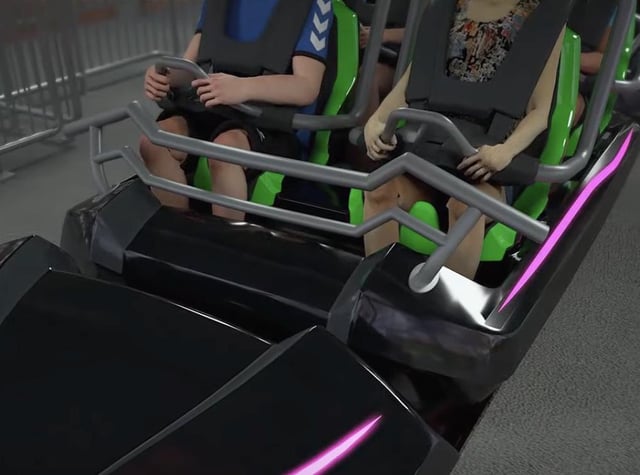
    The tighter fits, by widespread first-hand accounts, are the faster coasters with low lap bars or restraints that come down across the stomach and lock to a fixed position. Restraints that sit low across the midsection are the ones most likely to be snug, because there is no adjustment once they reach their stop. A few of the resort’s signature thrill coasters fall into this category. This does not automatically mean they will not fit you, only that they are worth scouting before you commit to a 40-minute queue.

    Scouting is the whole strategy, and it is easy. Before you join any line you are unsure about, find a cast member at the entrance and ask plainly whether you can see a sample restraint or test seat. Many attractions keep a test vehicle or a sample lap bar right at the front for exactly this purpose, and using it is completely routine. Cast members are trained to handle this discreetly and kindly, and they would far rather help you check at the entrance than have you reach the front and turn back. If a ride does not work out, ask whether there is an alternate boarding option or accommodation. The exact mechanics of restraints, the location of test seats, and any accessibility arrangements change with refurbishments, so treat all of the above as a guide and confirm the current setup with the park’s accessibility information and the cast member in front of you.

    One more practical note: the queue turnstiles themselves are narrow at several attractions, narrower than the ride seats in some cases. There is almost always an accessible gate beside them, and a cast member will open it for you without fuss. You do not need to justify it. Just ask.

    Eating Well Without the Stress or the Splurge

    Eating Well Without the Stress or the Splurge

    Food at a destination resort is priced like a destination resort, and that is the honest truth. Counter-service meals, table-service restaurants, and the snack carts all carry a premium over what you would pay in the city. Budget for it as part of the trip rather than being surprised by it, and treat the exact prices as estimates that move with the season and the venue.

    A few habits keep both your wallet and your comfort in good shape. If you are staying in or near Paris and commuting in, eating a proper breakfast before you arrive and saving the bigger, nicer meal for the city in the evening can meaningfully cut your in-park spend. Inside the parks, table-service restaurants are worth at least one booking on your trip, not only for the food but for the chair. Sit-down dining gives you a real seat, a break from the pavement, and a half-hour of air conditioning or shade, which is restorative in the middle of a long day. If you want a specific restaurant, reserve it in advance, because the popular ones fill up.

    Carry a few snacks and that refillable water bottle. Hydration and a steady blood-sugar level do more for your mood and stamina than any single attraction, and they keep you from making a tired, expensive decision at the nearest cart at the exact moment you are most worn down. Look for seating with a bit of space and standard chairs rather than fixed booths when you can, and do not hesitate to ask a host to seat you somewhere that suits you. That is a normal request.

    Spending Smart on Tickets and Line-Skipping

    Spending Smart on Tickets and Line-Skipping

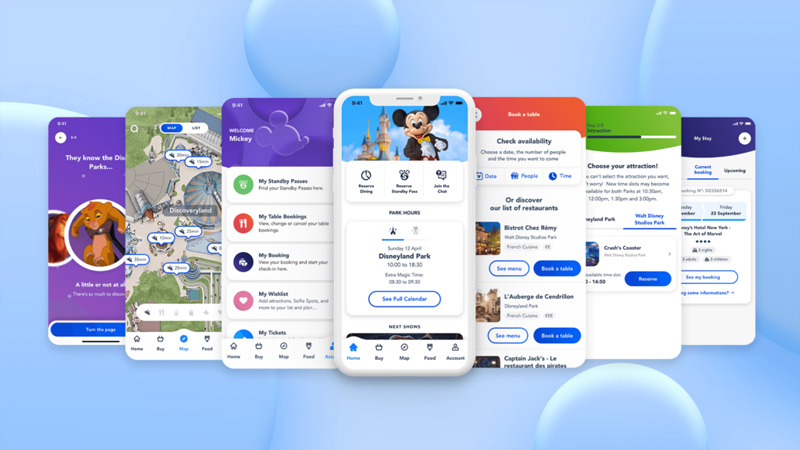
    Beyond booking tickets early and chasing the cheaper dynamic-pricing dates, the biggest spend question is the resort’s paid line-skip service, Premier Access. It lets you reserve a shorter-queue slot at popular attractions through the app, and it comes in two broad shapes: buying access to a single ride at a time, and buying a daily bundle that covers the headline attractions. As an estimate, single-ride access tends to land somewhere in the single-digit to high-teens euros per person per ride, while the all-in daily bundle runs much higher, into the triple digits per person on busy days. Confirm current pricing in the app on the day, because it moves with demand.

    Whether it is worth it depends entirely on your day. On a quiet off-season Tuesday, you may never need it. On a packed summer or holiday date, or if you only have a single day to see everything, paying to skip the longest queues can be the difference between a frantic day and a pleasant one. For most people the smart play is to skip the pricey daily bundle and instead buy single-ride access only for the two or three attractions you most want to do when their standby lines get ugly. Buying as you go, rather than committing up front, keeps you flexible.

    There is a comfort angle here too. Standing in a long, slow-moving outdoor queue is the least pleasant part of any park day for a curvy traveler, hard on the feet, the back, and the patience. Spending a little to shorten the worst lines is partly a money decision and partly a kindness to your body. Weigh it that way.

    Carrying Your Confidence Through the Gates

    The logistics matter, but the mindset matters just as much, so do not skip this part. You belong in these parks exactly as you are, and the overwhelming majority of cast members are genuinely warm and quick to help when you ask. The handful of moments that might sting, a snug restraint, a turnstile that needs the side gate, a chair that is not quite right, are problems with the furniture and the engineering, not with you. Plan for them, solve them matter-of-factly, and let them go.

    Build your day so your body is set up to win. Arrive early before the crowds and the heat, around 45 minutes before the official opening if you can manage it, and do the must-do rides first while the lines are short and your energy is high. Plan deliberate sit-down breaks across the day, a table-service lunch, a shaded bench during a parade, a quiet indoor show, so you are pacing a marathon rather than sprinting until you crash. Wear the comfortable shoes, pack the anti-chafing shorts, carry the water, and keep that packable layer in the bag. Take the photos in front of the castle without ducking out of frame, because you came a long way to be here.

    Disneyland Paris rewards the traveler who scouts ahead and asks for what they need. Do that quiet preparation, and what is left is the part you actually came for: the castle catching the late light, the first drop of a ride you were brave enough to check and board, and a churro that tastes better than it has any right to.

    Sources: Disneyland Paris (Wikipedia), Walt Disney Studios Park / Disney Adventure World (Wikipedia), Plus Size Disneyland Paris guide (First Step Europe), Is Disneyland Paris Plus Size Friendly? (Most Magical Guides), Disneyland Paris Premier Access 2026 (KKday), When to Visit Disneyland Paris (DLP Tips)

  • Flying While Curvy – The Complete Guide to Comfortable, Stress-Free Air Travel for Plus-Size Women

    Flying While Curvy – The Complete Guide to Comfortable, Stress-Free Air Travel for Plus-Size Women

    Boarding a plane should feel like the start of something good – a beach, a reunion, a city you have been dreaming about. For a lot of curvy women, though, the airport carries a low hum of dread that has nothing to do with turbulence and everything to do with armrests, seatbelts, and the fear of a side-eye from a stranger in 14B. That dread is not yours to carry. The seats are too narrow, the policies are inconsistent, and the industry has been slow to catch up to the bodies it actually serves. None of that is a personal failing. With the right information and a little planning, you can walk through that jet bridge knowing exactly what to expect, what your rights are, and how to make the whole experience genuinely comfortable.

    What follows is the practical, dignity-first playbook: real airline policies, verified as of mid-2026, with the caveat that these rules shift often, so always confirm before you book.

    The seatbelt extender question (and the FAA rule)

    Let’s clear up the single most misunderstood part of plus-size flying first, because it trips up even seasoned travelers. You cannot bring your own seatbelt extender onto a U.S. commercial flight. People buy them online all the time, see the “FAA approved” label, and assume they are set. They are not. The Federal Aviation Administration treats a seatbelt extender as part of the aircraft seat itself, which means it has to be inspected and maintained under the airline’s FAA-accepted Continuous Airworthiness Maintenance Program. A personal extender, no matter what its packaging claims, has never been inspected under that program, so crew are instructed not to allow it.

    Here is the good news that the worry usually drowns out: airlines are required to provide extenders free of charge, and they keep them stocked. You do not pay for one, you do not pre-order one in most cases, and you do not owe anyone an explanation. When you board, quietly tell the flight attendant at the door, “I’d like a seatbelt extender, please.” That is the entire transaction. They hand it to you, often folded discreetly, and you buckle in like everyone else. Cabin crew handle this request constantly and think nothing of it.

    A couple of practical notes. Different aircraft use slightly different extenders, so the one you used on your outbound flight may not be the one offered on the way home, and an extender you kept from a previous trip will not be accepted. Ask fresh each time. If you would rather not flag down a busy attendant in the aisle, mention it as you step through the cabin door, when crew are stationed right there and the moment is private. Owning the request, calmly and early, takes all the heat out of it.

    Choosing your seat strategically

    Choosing your seat strategically

    Where you sit shapes the entire flight, and a few smart choices make a real difference. The window seat is the quiet favorite for many curvy travelers. You get a wall to lean into instead of an aisle full of passing carts and elbows, you control the shade, and you are not the one being climbed over. The trade-off is asking to get up for the restroom, so weigh that against your own comfort. The aisle seat suits anyone who wants to stand, stretch, or move freely without disturbing a seatmate, and it gives one hip a few extra inches of breathing room into the aisle, though watch for the beverage cart.

    The middle seat is the one to avoid when you can, and most of the time you can. Bulkhead rows (the front row of a cabin section) sometimes offer a touch more room and no seat reclining into your knees, but the armrests there are often fixed because the tray tables fold into them, which can mean less width, so read seat maps carefully. Exit rows promise extra legroom, but crew may relocate anyone who cannot fasten the standard belt without an extender, since exit-row passengers must meet specific safety requirements. Legroom is not the same as seat width, so do not let the legroom hype override the fit question.

    A tool worth bookmarking is SeatGuru, which maps the actual seat dimensions and quirks of specific aircraft. Seat width varies more than people realize, often between 17 and 18.5 inches in economy, and a single inch is the difference between a tense flight and an easy one. Book your seat assignment as early as you can, ideally the moment you purchase the ticket. If two of you are traveling together, booking the window and aisle of a three-seat row is a known trick: middle seats fill last, so you may end up with an empty buffer between you, and even if someone takes it, you are flanking them rather than being flanked.

    The airline ‘customer of size’ policies, compared (verified)

    The airline 'customer of size' policies, compared (verified)

    This is where careful research pays off, because no two airlines handle plus-size passengers the same way, and several changed their rules within the past year. Confirm directly with the carrier before you book, since these policies move quickly.

    Southwest remains the most generous of the major U.S. carriers, and that matters because the airline briefly tightened its rules in early 2026 before reversing course. As of late May 2026, a customer who needs extra space is not required to buy a second seat in advance. You can request a complimentary additional seat at the gate when space allows, or buy one ahead and apply for a refund afterward. That refund still stands under specific conditions: the flight cannot be sold out, the seats must be in the same fare class, and you must request the refund within 90 days of travel. One catch worth knowing – if any leg of your trip is flown by a partner airline rather than Southwest itself, the extra seat is non-refundable. If no additional seat is available on your flight, Southwest works to move you to a later one with room.

    Alaska Airlines has a clear, fair policy. If you cannot comfortably lower both armrests around you, you purchase a second seat at the same fare as your first. The reassuring part is the refund: if every leg of your journey departs with at least one empty seat on board, you get the cost of that second seat back. You contact the airline shortly after you fly to request it. The refund is reserved for passengers who genuinely need the space, not for anyone simply wanting an empty seat next to them.

    American Airlines asks passengers who need a seatbelt extension plus extra space beyond a single seat to buy an additional seat. You book it by calling Reservations rather than online, and the agent secures two adjacent seats at the same fare. If they can only seat you in a higher class of service, you may owe the fare difference. American does not advertise the same automatic post-trip refund that Southwest and Alaska offer, so treat the second seat as a planned cost and confirm any reimbursement options with the airline directly when you call.

    Delta takes a notably relaxed stance. Delta does not require you to buy an extra seat for needing a seatbelt extender, provided two things are true: the airline’s extender lets you buckle in safely, and you can keep both armrests down for the flight. The airline’s stated concern is safety and not significantly encroaching on a neighbor’s space. If a genuine space conflict arises onboard, crew may move you to a roomier spot or, in some cases, ask you to take a later flight with more open seats. Delta has no formal customer-of-size refund program because it generally does not require the second purchase in the first place.

    United Airlines requires an extra seat for any economy passenger who cannot fit in a single seat with the armrests down, or who needs more than one seatbelt extender. You can buy the second seat in advance, and if you do not, you may be asked to purchase it on the day of departure at that day’s fare, which is often higher. United also offers an alternative many travelers overlook: instead of a second economy seat, you can book or upgrade to a premium cabin, where the seats are wider. For some itineraries the math on a single wider seat works out better than two narrow ones.

    The honest summary: Delta is the most forgiving if an extender and both armrests work for you, Southwest and Alaska are the friendliest on refunds, and American and United expect more advance planning. Verify on the carrier’s own site before paying.

    What to wear to fly comfortable

    What to wear to fly comfortable

    Clothing is your first comfort tool, and the cabin gives you two competing problems to dress for: long stretches of sitting and a temperature that swings from stuffy at the gate to chilly at altitude. Layering solves both. A soft, breathable base layer under a cardigan, zip hoodie, or wrap means you can adjust without packing a suitcase of options. Natural fibers and good stretch blends move with you and breathe better than stiff synthetics that trap heat.

    Reach for fabrics with give. A ponte knit dress, wide-leg trousers with an elastic or drawstring waist, or your most trusted leggings paired with a longer tunic all let you settle in without a waistband digging in after hour two. Avoid anything with hardware that presses against you when you sit, like thick belts, stiff zippers along the hip, or rigid seams across the belly. Slip-on shoes or sneakers you can loosen are kinder than anything you have to wrestle with at security, and feet swell at altitude, so a half-size of breathing room helps. Bring a pair of grippy socks for padding around the cabin if you like to slip your shoes off. A large, soft scarf doubles as a blanket, a pillow, or a privacy layer, and weighs almost nothing. Dressing for the body you have on the day you fly, in pieces that already feel good, is the whole strategy.

    What to pack

    What to pack

    Pack for comfort first and you will thank yourself somewhere over the ocean. Hydration is the quiet hero of any flight, since cabin air is famously dry, so bring an empty refillable bottle through security and fill it at a fountain past the checkpoint. Snacks you actually enjoy and that travel well, like nuts, protein bars, or fruit, spare you from depending on a cart that may never reach the back rows or stock anything you want.

    Compression socks are worth considering for any flight over a couple of hours, since sitting still raises the risk of swelling and circulation issues for everyone, not just plus-size flyers. They are optional and a personal call, not a requirement, so choose what feels right for your body. A small comfort kit earns its space in your carry-on: lip balm and hand lotion for the dry air, any medications in their original packaging, a phone charger and a battery pack, noise-cancelling headphones or earplugs, an eye mask, and a neck pillow if you sleep upright. Keep a light wrap or shawl on top for the inevitable cabin chill. Stash a refresh pouch with wipes, deodorant, and a toothbrush for long-haul mornings. If you use any personal comfort items for sitting, a seat cushion or a small lumbar support, those are entirely allowed and nobody’s business but yours. Packing with intention turns a cramped few hours into a manageable, even pleasant, stretch of your trip.

    Navigating the airport with confidence

    Navigating the airport with confidence

    The terminal can feel like an obstacle course, so give yourself the gift of time. Arriving early erases the frantic, sweaty dash that makes everything harder, and it means you can move at your own pace through check-in, security, and the long walk to the gate. Wear or pack those slip-on shoes for the security line, where you will move faster and with less fuss. Consider TSA PreCheck if you fly even a few times a year, since it lets you keep your shoes on and skip the most cramped part of the screening process.

    Airports are large, and gates can be a serious walk apart. There is zero shame in using the moving walkways, requesting wheelchair or cart assistance if a long concourse is hard on your body, or pausing on a bench to catch your breath. Assistance is a service the airport provides on purpose, and using it is smart, not weak. Once through security, find a comfortable spot to settle rather than hovering in the crush. When boarding opens, you are entitled to ask the gate agent about your seat or confirm an empty adjacent seat. Approach the desk with a calm, matter-of-fact tone, because you belong there as much as anyone holding a boarding pass.

    If anxiety creeps in, name it for what it is – a response to an environment built without your comfort in mind, not a verdict on you. Slow your breath, ground yourself with a familiar playlist queued up before you board, and remember that most fellow passengers are absorbed in their own travel and not watching you at all. Should you ever encounter rudeness, you owe no one a performance of apology for the space your body occupies. A neutral “excuse me” and a steady posture handle nearly every awkward moment, and a quiet word with a flight attendant resolves most discomforts faster than you would expect.

    Booking your next trip with your shoulders down

    Comfort in the air comes down to a handful of moves you now have in hand: ask for the free extender at the door, book your window or aisle seat the moment you buy the ticket, check the seat width on SeatGuru before you commit, and read the customer-of-size policy of whichever airline you are flying. Pack the water bottle, the snacks, the soft layers, and arrive with time to spare. Pick the carrier whose rules fit your needs – Delta if an extender and armrests work for you, Southwest or Alaska if you want a second seat with a real shot at a refund. Save this list to your phone and pull it up the next time you book. The window seat is yours, the snacks are packed, and the destination is waiting.

  • The Honest Breakdown of What a Passport and Travel Documentation Actually Cost in 2026

    The Honest Breakdown of What a Passport and Travel Documentation Actually Cost in 2026

    Black woman traveler at an international gate desk holding her passport open while a gate agent checks the expiration date

    The Frankfurt gate desk that taught me the six-month rule

    The Frankfurt gate desk that taught me the six-month rule

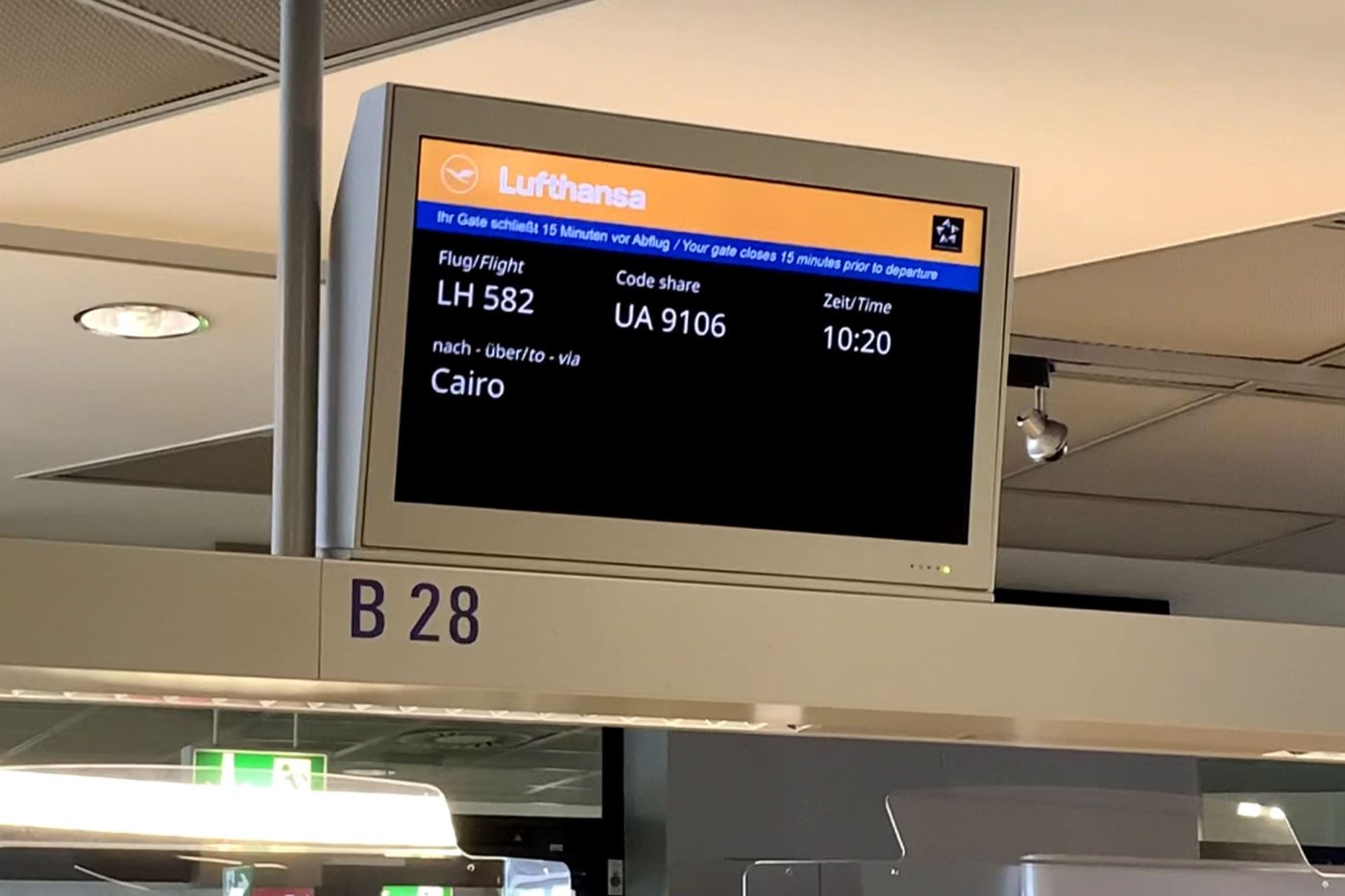
    The gate agent at Frankfurt slid my passport back across the counter and said, in the politest possible voice, that I would not be flying to Cairo that afternoon. My passport expired in four months and twenty-one days. Egypt requires six months of validity from the date of entry. I had four months and twenty-one days, which would have been plenty had I been going home, but I was not going home. I was going to Cairo for ten nights with a friend who was already in the air from JFK. I was standing in Terminal 1 with a boarding pass that no longer worked and a refund clock that did not care.

    I have been to forty-one countries and had never had a passport problem until that morning. The fix was a regional US embassy appointment, a $185 emergency replacement fee, and a redirected flight that cost me another $410. The trip got salvaged. The lesson got expensive. This is the article I wish I had read the week I booked Cairo, because travel documentation in 2026 is not just the sticker prices on the State Department site. It is the timing, the renewal rhythm, the panic-tax on expedited service, and the specific places where a $95 credit card pays you back $200. I pulled three years of receipts and cross-referenced State Department, CBP, and AAA pricing as of this writing.

    The US passport: book, card, first-time, renewal

    The US passport: book, card, first-time, renewal

    The number to anchor against is the first-time US passport book. In 2026, the all-in price is $165: $130 in fees to the State Department plus $35 in execution fees paid to whoever takes your application (post office, clerk of court, participating library). Photos are extra, $14 to $17 at most CVS or Walgreens. AAA members get them free at most branch offices. Total walk-out on a first-time book is $179 to $182 without AAA, $165 with it.

    Renewals are cheaper. If your existing passport was issued within the last fifteen years, after you turned sixteen, and is in your current name, you can renew by mail or online for $130 flat. No execution fee. No appointment. The online portal opened nationally in 2024 and processes in four to six weeks at standard speed.

    The passport card is a separate document, valid only for land and sea entry to Canada, Mexico, Bermuda, and the Caribbean. It costs $30 added to a book application, $65 standalone. I have one and have used it twice. If you live in a border state or cruise out of Florida regularly, it pays for itself. If you fly internationally, it does not.

    Expedited and same-day: the panic-tax pricing

    Black woman traveler at a federal passport agency window handing documents across to a uniformed clerk

    The cheapest passport is the one you renewed last year while you were not planning a trip. Every dollar above the $130 base is a panic tax, and the curve gets steep fast.

    Standard processing in 2026 runs four to six weeks. Expedited service costs an extra $60 on top of base fees and brings the timeline to two to three weeks. Add $20.32 for two-way priority mail. The mid-tier expedite is the right call if your trip is six to eight weeks out. Total: $215 to $235 for a first-time book, $190 for a renewal.

    Inside the two-week window, you can book in person at one of the 26 regional passport agencies (NYC, Atlanta, Miami, Houston, Chicago, LA, San Francisco, and others). Appointments are technically free but only available with proof of international travel within fourteen days. You walk out same day. All-in cost lands around $185 to $215. Slots release at 8 a.m. local time, three weeks ahead, and get taken by 8:02. Set a calendar reminder.

    Inside the seven-day window, you are in private-courier territory. RushMyPassport, ItsEasy, and Travel Visa Pro run your application through a regional agency for you. The 2026 pricing is brutal: $499 for five-business-day service, $699 for 48 hours, and $1,200 for a true same-day rush. That is on top of the standard $130 base fee. Total walk-out for a same-day rush is $1,330 to $1,400. I have paid this once, the Frankfurt-Cairo aftermath, and what made the bill bearable was the alternative of eating a $4,200 non-refundable trip. Build the buffer before you need it.

    Global Entry and TSA PreCheck

    Global Entry and TSA PreCheck

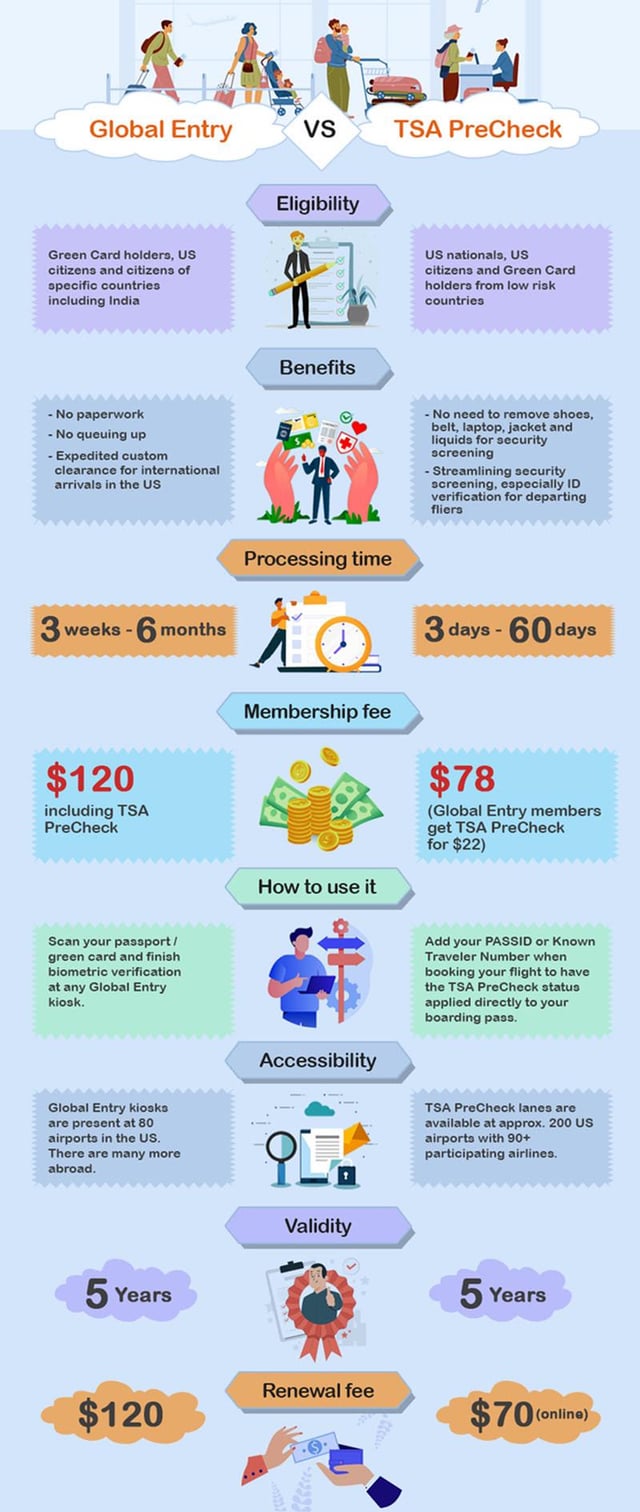
    If you fly more than three round trips a year, Global Entry is the single best paperwork investment you can make. The 2026 fee is $120, paid once, valid for five years. That works out to $24 a year for a service that pulls you out of every customs and immigration line at every major US airport, and bundles TSA PreCheck for domestic flights at no extra cost. PreCheck on its own is $78 for five years. Most travelers should buy Global Entry instead. The math is not close.

    The catch is the interview. Conditional approval after the online application takes four to eight weeks. The in-person interview used to be the bottleneck, but the program now offers Enrollment on Arrival, where you complete the interview at the customs desk when you re-enter the US from any international trip. It adds about ten minutes and saves you the trip to JFK at 6 a.m. on a Tuesday.

    The other programs are niche. NEXUS is $50 every five years, only worth it if you cross into Canada regularly. SENTRI is $122.25, for southern border crossings. CLEAR is a private biometric line at major airports for $189 a year, and the math only works if you fly out of a CLEAR hub more than twice a month. For most travelers, Global Entry alone is the right buy.

    Real ID and the international driving permit

    Real ID and the international driving permit

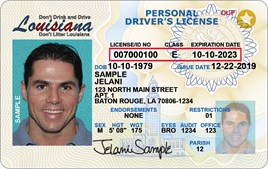
    Real ID enforcement at domestic TSA checkpoints took full effect on May 7, 2025. As of mid-2026, you cannot board a domestic flight with a non-Real ID driver’s license. If your license has a gold or black star in the upper corner, you are set. If it does not, you need to upgrade at your state DMV, and the cost is wildly state-dependent.

    Fees in 2026 land between $30 and $60 in most states. Texas charges $33, California $45, Florida $48, New York $30, Illinois $30, Georgia $35. The variance comes from whether the state charges a Real ID surcharge or bundles it in. This is a one-time line item at your next renewal. If your passport book is current you can technically skip Real ID, but a license fits in a wallet and a passport book in a jacket pocket gets forgotten the one morning you need it.

    The international driving permit is the most overlooked $20 in travel paperwork. AAA is one of two federally authorized issuers. The IDP costs $20, takes ten minutes with two passport photos and your current US license, and is valid for one year. You need it if you plan to drive in Italy, Greece, Croatia, Costa Rica, Japan, South Korea, Spain, or most of Eastern Europe. The traffic stop is where the absence matters. I have been pulled over twice in Italy in seven years and the IDP turned a potentially expensive afternoon into a thirty-second exchange both times.

    Visa fees by region, the wild variance

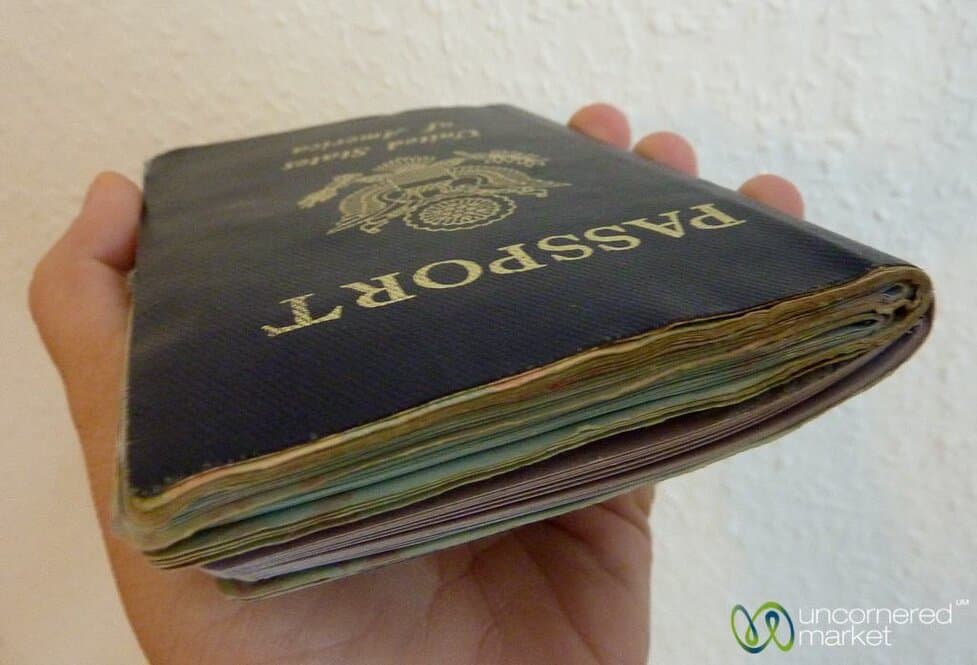
    A US passport open to a page of multiple country entry stamps next to a visa application and a printed flight itinerary on a wood desk

    Visas are the line item that will surprise you most. Prices vary from twenty dollars to two hundred depending on country, visa type, and whether you applied online or on arrival. Some countries cost US passport holders nothing. Some charge more for Americans as a reciprocity measure. Here is the 2026 lay of the land for the regions I get asked about most.

    Europe : Schengen-area visas for US passport holders are free for tourism under ninety days. ETIAS authorization is scheduled to begin in late 2026 (Q4 launch, with a transition period before it becomes mandatory in 2027) at roughly 20 euros per traveler, valid for three years. UK ETA is around $13 (10 pounds). Both are online forms, processed in days, not weeks. Confirm the current launch date on the official EU travel-europe.europa.eu site before you book.

    West Africa : Senegal is visa-free for Americans for ninety days. Ghana requires a single-entry e-visa at $60 to $150 depending on processing speed. Nigeria is $160 for the visa-on-arrival e-pass, with another $30 in airport processing.

    East and Southern Africa : Kenya is now e-visa only at $30, processed online in three to seven days. Tanzania is $100 multi-entry. South Africa is visa-free for ninety days for US passport holders. Morocco is visa-free for ninety days.

    Asia : Vietnam e-visa is $25 for thirty days, $50 for ninety. Cambodia visa on arrival is $30. Thailand is visa-free for sixty days. India e-visa is $40 for thirty days, $80 for one year, $100 for five years. Japan is visa-free for ninety days. South Korea requires K-ETA at $7, valid three years.

    South America : Brazil reinstated e-visas for US passport holders at $80.90 for ten-year multi-entry. Argentina, Chile, Peru, and Colombia are all visa-free. Bolivia is the regional standout at $160 visa on arrival, in crisp US bills, which the embassy site does not mention loudly enough.

    Middle East : UAE is visa-free for thirty days. Jordan is $56 on arrival, free if you book through the Jordan Pass at $70 which bundles entry to Petra. Egypt is $25 on arrival, payable in cash at the airport bank window before you reach immigration.

    The pattern: most online e-visa applications run $20 to $80, most visa-on-arrival programs run $25 to $100, and a handful of reciprocity countries (Bolivia, Nigeria, Chad, Eritrea) push past $150. Build a $100 visa line into any trip outside Europe and you will be right more often than wrong.

    Travel insurance: when to buy, what to pay

    Travel insurance: when to buy, what to pay

    Travel insurance is the line item travelers under-budget most. A single-trip policy runs $50 to $150 for a one-to-two-week international trip, scaling with age, trip cost, and coverage limits. For a $3,000 trip to Portugal, the right policy through World Nomads, Allianz, or Travel Guard runs $90 to $120 and covers cancellation, medical evacuation, and lost luggage.

    The honest test: would losing the cost of this trip ruin your year? If yes, buy. If the trip is $400 in points and a free hotel, skip. For longer or multi-country itineraries, an annual multi-trip policy runs $300 to $500 and pays for itself at three or more trips a year. I have an annual policy through Allianz at $380 a year that has paid out twice (a delayed flight, a stolen camera). Net positive.

    Your credit card matters here. The Chase Sapphire Preferred and Reserve both include trip cancellation, delay, lost luggage, and rental car coverage when you book on the card. The Reserve adds emergency medical evacuation. For most trips, the card coverage is enough. Where it is not: medical evacuation in remote regions, adventure activities (all policies exclude scuba past thirty feet, motorcycling, and rope sports), and trips over $10,000 non-refundable.

    The yearly total for an active traveler

    The yearly total for an active traveler

    Here is the math for someone taking three to four international trips a year. Passport renewal at $130 every ten years amortizes to $13 a year. Global Entry at $120 every five years is $24. Real ID one-time at $40 amortizes to $5. The IDP at $20 for travelers who drive abroad. Visas average $150 a year for two or three e-visa countries. Travel insurance at $50 to $150 per trip, or $380 a year for an annual policy. Realistic yearly documentation spend lands at $200 to $400, with $250 to $300 the median case.

    That is less than most travelers spend on baggage fees in a year, and less than the price of one nice dinner per international trip. The whole infrastructure of being able to leave the country runs you about a dollar a day.

    The honest cost-saving moves that actually work

    The honest cost-saving moves that actually work

    Three moves materially shift the math. The first and largest is the travel credit card statement credit. The [LINK:#affiliate] Chase Sapphire Preferred [/LINK] at $95 a year reimburses your Global Entry, TSA PreCheck, or NEXUS fee once every four years as a credit of up to $120 after the June 2026 refresh. The [LINK:#affiliate] Chase Sapphire Reserve [/LINK] at $795 a year does the same plus $300 a year in travel credit and a stack of other lifestyle credits. The [LINK:#affiliate] American Express Platinum [/LINK] at $895 a year includes the same reimbursement plus airline incidental credits. Apply for the card in the same quarter you renew Global Entry and the $120 fee posts to the card, the statement credit posts within a billing cycle, and you have effectively paid zero. I have done this twice in a decade. Both times the credit posted within forty-five days.

    The second move is AAA membership. At $69 to $89 a year, AAA pays for itself the first time you use it for free passport photos ($14 to $17 saved), the IDP ($20), and one roadside tow. I joined at twenty-three for a tow and it has paid for itself every year since on documentation alone.

    The third move is the public library. Some county and city libraries are designated passport acceptance agents and process applications during regular hours, no appointment needed. The execution fee is the same $35 the post office charges, but the line is shorter and a handful of branch libraries waive the execution fee entirely as a public service. Search “passport acceptance facility” on the State Department site for your zip code. I have processed two renewals this way and the second branch waived the fee.

    The single smartest move I made last year

    The single smartest move I made last year

    The smartest documentation move I made in the last twelve months was applying for the Chase Sapphire Preferred in February, three weeks before my Global Entry came up for renewal. I paid the $120 fee on the new card. The statement credit (up to $120 after the June 2026 refresh) hit my account on the next billing cycle. The sign-up bonus, earned after I put normal rent and groceries on the card for three months, landed in May. I used those points in October to book a $740 round-trip flight to Lisbon for $0 out of pocket.

    One card, one application, one fee paid in the right month: the Global Entry renewal became free, the flight to Lisbon became free, and the $95 annual fee on the card was a rounding error against the value. Total cost of that year’s travel paperwork after the credit landed was meaningfully negative. The system was doing the work while I was packing the carry-on.

  • What I Learned Wearing Plus Clothes From 10 Different Countries

    What I Learned Wearing Plus Clothes From 10 Different Countries

    On a Tuesday morning in November 2024, I dragged a suitcase out from under my bed in my Manhattan apartment and opened it on the rug. Seventeen garments came out. Ten countries. Four continents. Six years of buying clothes on the road at size 24, sometimes 26, depending on the country and the cut. I had not laid them out together before. When I did, the pile told a story I had been living inside of without seeing it. Some countries had cut for my body. Some had not. The pile knew which was which, even when I had spent years pretending otherwise.

    This is the story of those seventeen pieces. Where each came from. What each cost. What each taught me about the gap between American plus-size and the rest of the world. I am writing it because I am tired of the polite version, and because four of those seventeen pieces are still in my weekly rotation, and the reason all four survived is the same reason.

    The pile

    Lagos iro and buba custom plus-size Yoruba wedding aso-oke burgundy

    Here is what came out of the suitcase, in the order I pulled them. A custom iro-and-buba in indigo aso-oke from Lagos, 2018, around $340 with the commission. A green-and-gold kaftan from a souk tailor in Marrakech, 2019, roughly $85 after the haggle. A Yakampot cotton midi from a small atelier in Roma Norte, Mexico City, 2020, about $220. A custom blouse for my cousin’s wedding sewn in a Mumbai tailor’s shop in 2022, $48 including the cotton-silk. A Punyus oversize dress from the Marui Plus floor in Tokyo, 2023, near $130. A Maxhosa Africa knit poncho bought near the V&A Waterfront in Cape Town, 2023, around $310. A Marina Rinaldi linen blazer from the Selfridges reduction in London, 2024, $390 after the markdown. A vintage silk shirt from a Marais resale in Paris, 2024, $60. A Castaluna swing dress shipped to my Paris hotel, $95. A commissioned leather jacket from a Galata workshop in Istanbul, 2024, $260. A Carnival costume from Aura mas band in Trinidad, 2024, $1,900 with the bra recut.

    I am skipping a few, but those are the ones I want to talk about. The rest were filler. The ones I named are the lessons.

    Plus size traveler wardrobe flatlay

    Lagos, 2018

    The first piece I commissioned abroad was the indigo iro-and-buba. I was in Lagos for a wedding and my aunt walked me into a workshop in Ikoyi run by a woman who measured me with a soft tape and a expression that said she had done this a thousand times. The commission took six weeks. I flew home without it and it arrived in a DHL pouch a month and a half later. The fit was the first time in my adult life a garment held my back and my shoulders the way I had read about in magazines that did not feature women my size.

    What Lagos taught me was the commission cycle. Six weeks is normal. You go for the first measurement. You come back for a fitting if you can. If you cannot, you trust the seamstress and the courier. The garment is built to your body, not adapted to it. That distinction matters. Hawi Couture in Lagos and designers like Lisa Folawiyo work in this model, and so do thousands of unnamed workshops in every neighborhood. The Nige

    Marrakech souk plus-size woman custom kaftan tailor fitting
    rian fashion industry is set up to commission. The American industry is set up to push you into the next-closest size off a rack. Those are different industries doing different jobs.

    Marrakech, 2019

    A year later I sat on a low stool in a souk tailor’s shop near Bab Doukkala while a man in his sixties measured me with chalk on the fabric itself. The kaftan was green-and-gold, lined, with a deep V neckline I would not have picked in the US because I would not have been offered it. He told me to come back in four hours. I went and got a tagine and a mint tea and walked back at the time he said. The kaftan was finished. It fit. I paid the equivalent of $85 after a respectful haggle. I have worn that kaftan at

    Mumbai custom blouse Indian wedding sari plus-size measurement
    least sixty times since.

    Marrakech taught me that the speed of commissioning is a local variable. Lagos is six weeks. Marrakech can be four hours. Mumbai can be next-day. London is six weeks again, but the workflow is the same. The slow thing is not commissioning itself. The slow thing is finding an industry that knows how to do it for your body without flinching.

    Mexico City, 2020

    I was supposed to be on a Carnival cruise in March 2020. The world ended instead. The rebooking eventually deposited me in Mexico City for a long winter where I learned the difference between Latin American talla extra and US plus. Yakampot is a small Mexican atelier with a shop in Roma Norte, and they cut a cotton midi for me with a hand-embroidered yoke that I still wear to dinners. The price was $220, which felt right for the level of work.

    Talla extra in Mexico runs smaller than US plus, sometimes by two full sizes. A Mexica

    African beadwork dress Black woman Cape Town
    n XXL is closer to a US 14. This is not a critique of Mexican sizing. It is a statement of fact that affects what you can walk in and buy off a rack. Yakampot was willing to cut up. Most Roma Norte boutiques were not. The lesson was that brand intent matters more than country. A brand that wants to dress me will. A brand that doesn’t, won’t, regardless of the flag on the storefront.

    Mexican atelier embroidered dress

    Mumbai, 2022

    Mumbai was a cousin’s wedding and a tailor named Bhavin near Bandra West. I needed a blouse for a lehenga. He measured me at 11 in the morning. The blouse was ready by 9 the next night. It cost $48. I cried in the changing room, which embarrassed both of us. The lehenga itself was a problem because the shop I had ordered it from in advance had sized me using a chart that bore no resemblance to my body and the skirt would not zip. The blouse worked. The skirt did not. The lesson was Indian sizing math.

    The math is this. Indian ready-to-wear is built off a base that assumes a small frame. The numerical sizes you see online are not a translation of US sizing. They are a separate scale that runs short in the torso and tight in the chest. The Indian solution is to commission, which is also the South Asian American solution. Saree Sea and similar US-Indian shops will work with you. The big direct-to-consumer Indian sites mostly will not. If you are going to India and you are above a US 18, plan to be measured on arrival and commission everything that is not a sari.

    Tokyo, 2023

    Tokyo was the surprise. I had been told Japan was hostile to my body. I went anyway. Punyus, the plus-size label founded by comedian Naomi Watanabe, has a flagship inside Shibuya 109 and a second location at Lumine Est in Shinjuku, with sizes that go up to 6L. I bought an oversize dress with a graphic print for around $130. The dress fits me better than most American mid-tier brands at the same price.

    What Tokyo cost me was time. The Punyus floor at Shibuya 109 is not advertised in English. I went on a Tuesday afternoon with a translation app and a screenshot from a Japanese plus-size blog. The fitting room conversation was slow and warm. The salesperson was patient with my measurements and apologetic about the sizing scale, which still topped out below a US 26 in many cuts. The dress I wear now was at the upper edge of what they carried. The next size up did not exist. Japan made me, kind of. Japan also told me where the wall was.

    Cape Town, 2023

    Cape Town gave me the Maxhosa Africa knit poncho and a humbling at the same time. I went up to a small fabric house in Bo-Kaap to ask about a custom piece, and an elder seamstress who was at the cutting table looked at me, asked where I was from, then said something in Xhosa to a younger woman beside her. The younger woman laughed politely and translated. The elder had said I was asking for a “regular cut” when I clearly wanted an asoebi-quality cut, and that I should know the difference before I came back. I deserved the gentle scolding. I had been treating commissioning like ordering coffee.

    The Maxhosa Africa piece I bought ready-made near the V&A Waterfront was around $310. Laduma Ngxokolo’s brand cuts up to what most US shoppers would call a 22, which in their sizing was labeled differently. The fit was generous because the silhouette is meant to be. That is a design choice, not an accommodation, and I learned the difference there. South African designers like Maxhosa do not center plus-size customers, but they do not engineer us out of the cut either. The shape welcomes the body. That is its own kind of mercy.

    Maxhosa Africa knit poncho

    London, 2024

    London was the European luxury reality. Marina Rinaldi is the Max Mara plus-size line, and Selfridges runs a reduction on it twice a year. I bought a linen blazer for $390, marked down from over $700. The fit was the first ready-to-wear piece in years that did not need alterations through the shoulder, which is the place American plus brands tend to fail me. I also took the blazer to Atelier Notting Hill for a minor sleeve adjustment, because European luxury at this price point expects you to alter, and the alteration shop did not blink at my measurements.

    The European luxury reality is this. There are maybe four or five lines globally that cut to a US 24 with the same fabric and construction as their straight-size mainline. Marina Rinaldi is the household name. Elena Mirò is another. The prices reflect the construction. The reduction calendar matters more than the brand directory. If you are buying European plus luxury full price, you are buying it wrong.

    Paris, 2024

    Paris was a quieter chapter. I found a vintage silk shirt in a Marais resale for $60, which fit because vintage Paris sizing for older silk pieces runs generous through the body. I also ordered a Castaluna swing dress to my hotel. Castaluna is the La Redoute plus-size line, and the order arrived in two days for $95. Paris itself was not where I shopped well. Paris was where I learned that a hotel concierge will sign for plus-size online orders without commentary, which removed the most stressful step of the trip.

    Istanbul, 2024

    Galata had a leather workshop I had read about on a Turkish plus-size forum, and I walked in on a Thursday and walked out two days later with a black moto jacket built to my measurements for $260. The fabric house was off Galatasaray. The pattern maker drafted on butcher paper while I drank tea. The jacket has held up through two winters of subway commuting in Brooklyn. It is the single best price-to-fit garment I own.

    Istanbul taught me that the leather and fabric houses around Galata and Beyoğlu are the closest thing in Europe to the Lagos commission model. The infrastructure exists. The workshops are still operating. The wait times are short. The prices reflect a labor cost that has not yet been swallowed by tourism markup. If I had to choose one city to send a plus-size friend for a wardrobe overhaul, I would send her to Istanbul before I sent her anywhere else.

    Trinidad, 2024

    Trinidad was Carnival, and Carnival was its own discipline. I played mas with Aura, one of the bands that builds custom costumes for larger bodies without pretending it is a favor. The base costume was around $1,400. The bra recut took 18 hours of work over two visits and added another $500. The body math of a feathered backpack is real. The harness sits across your shoulders. The bra has to hold a chest plus the weight of a wire frame plus eight pounds of feathers. The fitter who recut my bra was the same age as my mother and worked silently while music played in the next room.

    Aura was the only band where I did not have to explain my body twice. The fitter knew what a 24 looked like on a Carnival stage because she had built for that body before. That is the asoebi-quality cut the Bo-Kaap seamstress had named. A cut for someone like you, made by someone who has done it for someone like you.

    Trinidad Carnival mas costume

    What the pile told me

    Here is the structural argument the suitcase made on my rug that morning. The American plus-size industry is set up for off-the-rack at modest quality. The rest of the world, in places where commissioning culture is alive, is set up to build to a body at whatever quality level you can pay for. Those are two different operating systems, and an American plus-size woman traveling abroad is mostly running into the second one without knowing what to do with it.

    The choice every plus-size US woman has, once she travels enough to see both systems, is which one she is going to organize her wardrobe around. You can keep accepting the off-the-rack mediocrity of mid-tier American brands and pretend the fit issue is your problem. Or you can learn the international commissioning model and treat your wardrobe like a build, not a shop. The commissioning model takes more time. It costs more in some cities and dramatically less in others. It produces clothes that fit. The shopping model produces clothes that you make peace with.

    I am not telling anyone to fly to Lagos to get a blouse. I am saying that once you have done it once, the off-the-rack experience back home stops feeling normal, and you start asking harder questions about why the brand you have been loyal to for ten years still cannot put a sleeve on you that does not strangle your upper arm.

    The four garments that stayed in the rotation

    Of the seventeen pieces on the rug that November morning, four are still in my weekly rotation eighteen months later. The Marrakech kaftan. The Lagos iro-and-buba. The Cape Town Maxhosa poncho. The Mumbai blouse. Three were commissioned outright. The fourth, the Maxhosa, was ready-made from a brand whose silhouette is generous by design. The Marina Rinaldi blazer is in the closet but only comes out for work travel. The Tokyo Punyus dress is folded on a shelf because the fit is good but the print is loud and I do not wear it often. The Trinidad costume is in a storage bin because Carnival costumes only have one job.

    Four out of seventeen. Three commissioned, one cut with intent. The American off-the-rack pieces I bought between trips, the ones I did not bother to lay out that morning because I knew where they would land, are mostly gone. Goodwill or the donation bin at the synagogue down the block. They wore out faster, fit worse, and never felt like mine the way the commissioned pieces do.

    I zipped the suitcase back up that afternoon with the survivors inside, and the donations went into a separate bag. The pile had said what it came to say. The countries that cut for my body had names: Nigeria, Morocco, South Africa, India, Turkey, Trinidad on a good week. The countries that politely could not had names too, and I will not list them, because the seamstresses in those countries are not the problem. The industries are. And the only thing the pile asked of me was to stop pretending I did not know the difference.

  • Plus-Size-Friendly Travel Outfit Formulas for Long Flights (Anti-Chafe, Anti-Swelling)

    Plus-Size-Friendly Travel Outfit Formulas for Long Flights (Anti-Chafe, Anti-Swelling)

    Somewhere over Greenland, on a Delta 767 from JFK to Rome, I was sitting in seat 27B in a navy wool-blend dress that had seemed so smart in the Uber at 4 a.m. By the time we hit cruising altitude over the North Atlantic, the dress was soaked through under both arms, my ankles had swollen up tight against the leather strap of my Birkenstock Madrids, and the cabin temperature had dropped what felt like 18 degrees off the ground temperature at JFK. I had the airline blanket folded in my lap because I had not packed a sweater, and I had four more hours to go before we started our descent into Fiumicino.

    That was the flight I decided long-haul outfits were not a question of what to wear. They were a system. A set of rules. Once I figured out the rules, I could stop reinventing the wheel every time I booked a long flight, stop landing in a new city looking and feeling like I had been wrung out and hung to dry. Below is the system – the chafe layer, the swelling layer, the temperature layer, plus three specific formulas I have actually worn on actual flights in three different bodies.

    The chafe problem (and why your favorite fabric is making it worse)

    BodyGlide anti-chafe stick thigh plus-size woman applying

    Thigh chafe on a plane is not a moral failing. It is friction plus moisture plus eight hours of not being able to get up and walk it off. The skin gets warm, the fabric grips, and somewhere between hour three and hour five you realize the inside of your thigh is on fire. Same goes for under-bust chafe, underarm chafe, and the line where a waistband sits if you have any belly softness at all.

    The fabrics that make it worse, in my experience after roughly forty long-haul flights: anything 100% cotton (it holds sweat against your skin and never dries in a pressurized cabin), denim of any kind (seams plus rigidity equals raw skin by hour two), wool blends that brush the inner thigh, and most synthetic activewear that has any kind of grippy interior, like a brushed liner. Lululemon’s Align fabric is wonderful for yoga but it will not save you on a 12-hour flight if your thighs touch, because the nylon-elastane mix gets sticky once it gets damp.

    What helps: smooth, fluid fabrics that move with you instead of clinging. Viscose, modal, Tencel lyocell, light merino, and the soft viscose-linen blends Eloquii has been doing for the last few years. They breathe, they release moisture instead of trapping it, and they do not develop that velcro feeling when they get damp.

    What also helps, and what I now will not fly without: a real anti-chafe product applied before I leave the house. The original BodyGlide stick (about $8 at any drugstore) is the gold standard. It is a solid balm in a deodorant-style tube, glides on dry, does not stain fabric, and lasts roughly six hours on me. Megababe Thigh Rescue (~$14, the green tube) is a creamier version with coconut oil and aloe in it, and it smells faintly of lavender, which is nice when you are crammed into 27B. For longer flights I also pack a small jar of Lush Silky Underwear in the talc-free version, which is essentially a cornstarch-based powder you tap on at the gate bathroom for a hard reset around hour six. None of these will fix a chafe situation that has already gone raw, so the rule is apply before, not after.

    The swelling problem (and the compression numbers that actually matter)

    Comrad compression socks 20-30 mmHg plus-size legs airplane

    Cabin pressure plus eight hours of not moving plus gravity equals ankles that look like someone else’s ankles. This is not a plus-size problem specifically, but it does interact with plus-size bodies in a particular way, because we tend to already retain water around the calves and ankles, and a long flight will compound it. The first time I landed in Bangkok after a 14-hour flight and could not get my shoes back on, I knew something had to change.

    The fix is graduated compression socks, and the numbers matter. Most cute “travel socks” sold at airport newsstands are around 8-15 mmHg, which is essentially a snug sock. For flights under four hours, that is fine. For anything over six hours, you want a minimum of 15-20 mmHg. For anything over ten hours, or if you have any history of swelling, varicose veins, or a body weight that puts more pressure on the venous system, I personally wear 20-30 mmHg, which is medical-grade and what most flight attendants I have talked to wear on long-hauls.

    The plus-size sock question is real. Most compression brands top out at a calf circumference that does not work past a US 14, and a sock that cuts into your calf is actually worse than no sock at all because it constricts blood flow above the compression zone. The three brands I have found that genuinely work on bigger calves:

    • Comrad has the most generous plus-size sizing of any compression brand I have tried. Their Large Wide Calf option fits roomy calves comfortably (their size chart kicks in past about 17 inches at the widest point) and they come in 15-20 and 20-30 mmHg. The CloudCotton blend is what I fly in.
    • Sockwell makes a merino-bamboo blend in 15-20 mmHg that is softer than Comrad but tops out at about an 18-inch calf. Good for shorter flights or smaller calves.
    • Vim & Vigr has the prettiest patterns and a moisture-wicking nylon version that is great if your feet sweat. Plus-size sizing goes up to about a 19-inch calf.

    Put them on before you leave the house, not on the plane. The reason is gravity: once your legs have been hanging down for two hours in an Uber and a TSA line, the swelling has already started, and trying to wrestle a 20-30 mmHg sock onto an already-swollen leg in an airplane lavatory is its own form of suffering.

    The cabin temperature problem (a 22-degree variance, in one outfit)

    The cabin temperature problem (a 22-degree variance, in one outfit)

    The jet bridge at JFK in August is 90 degrees. The cabin at 35,000 feet is somewhere between 65 and 72. Add or subtract for which airline (Delta runs warm, United runs cold, most European carriers run cold-to-frozen), where you are sitting (over the wing tends to be warmer, by a galley or exit row is colder), and how many bodies are around you (a full cabin is warmer than a half-empty one).

    You are dressing for a 22-degree variance, sometimes more, in the same outfit. The way to do that is layers that you can put on and take off without doing the whole get-up-and-go-to-the-bathroom routine, because in a packed economy cabin you cannot count on getting to the bathroom whenever you want. So the layering has to happen in your seat.

    My layer order, from skin out: smooth seamless underwear, then a soft tee in modal or viscose, then a pull-on stretch pant with no rigid waistband, then a cardigan or wrap I can drape across my chest like a blanket, then a packable jacket I can use as a pillow or pull on for the descent. The two pieces that change everything are the wrap and the jacket. They need to be lightweight enough to stuff in the personal item, warm enough to handle a cold cabin, and easy to take on and off while seated.

    Formula 1: Short-haul casual (under 4 hours)

    Formula 1: Short-haul casual (under 4 hours)

    This is your JFK to Miami, your Lagos to Accra, your Heathrow to Barcelona. The flight is short enough that the swelling and chafe risk is lower, but you still want to land looking like you have your life together.

    • Pant: Old Navy PowerSoft jogger (their high-waisted version in a dark heather) or Universal Standard’s Smart Signature ponte pant. Both have a smooth interior waistband, no zipper, and enough give that you can eat the entire snack box without unbuttoning anything.
    • Top: Quince modal-cotton tee in a darker color. The modal blend is breathable, does not show sweat at the underarms the way pure cotton does, and runs true to size up through 3X.
    • Sweater: Madewell Transport tote sweater, which is a coatigan-style cardigan that doubles as a blanket. Cotton-wool blend, so it breathes but holds heat.
    • Shoes: Clean white sneakers, ideally Veja Esplar in the extended sizing that goes up to a US 12 women’s. They are leather, so they wipe clean in an airport bathroom if you spill, and they look intentional with whatever you change into at your destination.
    • Compression: 15-20 mmHg Comrad ankle-high if you swell, or nothing if you do not.

    Formula 2: Long-haul economy (8-15 hours)

    plus-size traveler airport wide-leg pant cashmere wrap personal item

    This is the one that took me years to figure out. JFK to Rome, LAX to Tokyo, Lagos to Atlanta. You are going to be in this outfit for fifteen-plus hours door to door, you are going to sleep in it (badly), and you are going to land and need to function. Every piece has to do double duty.

    • Pant: Eloquii pull-on wide-leg pant in their viscose-linen blend. No waistband to dig in, the fabric breathes, and the wide leg means nothing is touching your thighs when you cross your legs in a tight seat. They wrinkle, but in a way that looks intentional, not like you slept in them. Which you did.
    • Top: A soft modal-spandex boatneck tee (the Spanx AirEssentials boatneck or the Lou & Grey signature soft tee both work) tucked loosely. The fabric holds shape through twelve hours of sitting without bagging at the elbows.
    • Wrap: Quince Mongolian cashmere wrap, the big one (the 100% cashmere travel wrap is about $90 and worth every cent because it doubles as a blanket, a pillow, and a cardigan). It packs down to the size of a paperback in your personal item.
    • Shoes: Allbirds Tree Runners in a half-size up from your normal. The eucalyptus fiber breathes, they slip on and off without bending over (which you cannot do in 27B anyway), and the cushioning holds up to a sprint through the Frankfurt connection.
    • Compression: Comrad 20-30 mmHg wide-calf, in merino, worn under a thin cotton crew sock so the compression sock does not show when I take my shoes off at the gate. This is non-negotiable on anything over eight hours.
    • Anti-chafe: BodyGlide on the inner thigh, under-bust line, and the back of the heel, applied before I leave the house. Megababe in the personal item for a top-up at the layover.

    Formula 3: Premium cabin (any duration)

    Formula 3: Premium cabin (any duration)

    If you are flying business or first, or if you are flying coach but on the way to something where the airport lounge or the arrivals photo matters, you want the formula that reads “put-together” without sacrificing any of the comfort. Honestly this is also what I wear when I am picking up a rental car at a small European airport and need to look like I belong there.

    • Pant: A ponte slim-straight with a wide soft waistband that does not bite (Universal Standard’s Smart Signature Ponte in the slim cut is the go-to) or Anthropologie Pilcro slim straight in stretch sateen. The Pilcro goes up to a 24W in some washes.
    • Top: Lou & Grey signature soft tee, long-sleeve crew, in a neutral. The fabric has enough drape that it reads dressier than a regular t-shirt, but it is still essentially pajamas.
    • Layer: Loft drapey blazer in a knit fabric. Not a real structured blazer, which will wrinkle, but a softer knit version that you can roll up and stuff in the seat-back pocket.
    • Overshirt: The Sleeper pajama-style overshirt (the linen one) doubles as a long cardigan in the cabin and a beach overshirt when you land. It is not cheap (around $290) but it has earned its keep for me on roughly twenty long-hauls.
    • Shoes: Vionic Joey loafer. The arch support is genuinely orthopedic, they read as actual shoes (not slippers), and they slip on and off at security without bending. Vionic goes up to a US 12.
    • Compression: Same Comrad 20-30 mmHg, in a black merino so they read as regular trouser socks.

    The underwear question (and why I changed my answer)

    The underwear question (and why I changed my answer)

    For years I flew in an underwire bra because I felt unsupported without one, and I would land in Rome with two perfect red welts under my breasts that took 48 hours to fade. I now will not fly in an underwire on anything over four hours. The cabin pressure plus the seated position pushes the wire into the under-bust crease in a way that creates pressure sores. Real pressure sores. Ask any flight attendant.

    What works for me now: a supportive wireless or soft-wire bra, not a thin lace bralette. The CUUP Plunge in the modal version (which scales up to an H cup in the larger band sizes), the Knix Catalyst wireless bra (supportive enough for a G cup, comes in plus sizing), or the Soma Embraceable wireless. All three give me enough shape that I do not feel naked under a tee, and none of them leave marks.

    Going without a bra entirely is also a real option, particularly under a wrap or blazer, and I have done it on red-eyes more times than I will admit. The point is not the specific answer, it is that an underwire is not a hill worth dying on for a fifteen-hour flight.

    For the bottom half: seamless boyshorts in a smooth microfiber, not lace. Anything with elastic at the leg opening will dig in once you sit for a few hours. The Knix leakproof boyshort is my flying default because it also handles a surprise period start, which has happened to me twice over the Atlantic and both times I was grateful.

    What goes in the personal item

    What goes in the personal item

    The personal item is not for stuff you might want. It is for stuff you will need within six minutes of feeling uncomfortable. Mine, every flight:

    • The Quince cashmere wrap (already out, on my lap before takeoff)
    • A second pair of socks, thick cotton, for when my feet get cold inside the compression socks
    • BodyGlide travel size and a small tin of Megababe
    • A change of underwear (one pair, sealed in a small ziplock)
    • A toothbrush, toothpaste, deodorant, face moisturizer (the Cerave travel size), and a lip balm
    • A reusable water bottle, filled after security
    • One snack you actually want to eat (almonds, a Larabar, dried mango), not whatever the airline is giving you
    • Phone charger plus a battery pack, because the seat outlet is broken on roughly half the flights I have been on
    • Glasses if you wear contacts (the cabin air will dry them out by hour three)

    The transit-ready rule

    plus-size woman exiting airplane Rome airport with carry-on confident

    Here is the test I run on every long-flight outfit before I leave the house. If the plane landed early and I had to walk straight from baggage claim to a meeting, or to a train, or to a hotel check-in with people behind a desk, could I do it without changing? Not look magazine-photo perfect. Just walk in, hand over an ID, and not feel like I had to apologize for my body or my clothes.

    That is the rule. Transit-ready. It rules out anything I would be embarrassed to be photographed in, anything that wrinkles into a topographic map, anything I cannot walk a mile in (because Heathrow and Atlanta and Frankfurt are functionally a mile each from gate to exit), and anything I am going to have to sneak into a bathroom to swap out before I face another human.

    The opposite of transit-ready is what I had on that Delta flight to Rome, in the wool-blend dress and the leather-strap sandals, when I landed at Fiumicino at 7 a.m. and had to ride a train into the city and could not bring myself to walk into the hotel until I had stopped at a cafe and splashed cold water on my face in the bathroom. I lost an hour of my first morning in Rome to recovering from my outfit. I will not lose another one.

    The goal of a long-flight outfit is not to look chic in the security-line selfie. It is to land in Rome, Lagos, Bangkok, or LAX and walk straight off the plane and into the city without first locking yourself in an arrivals-hall bathroom to change. What makes that possible is not luck and not genetics. It is the right fabric against your skin, real compression on your legs, a wrap you can put on without standing up, anti-chafe applied before you ever set foot on the jet bridge, and shoes you can run through a connection in. Build the system once. Then every long flight after that is just packing.

  • Plus-Size-Friendly Guide to Road Trips: Comfort, Snacks, Stretching, and Outfits

    Plus-Size-Friendly Guide to Road Trips: Comfort, Snacks, Stretching, and Outfits

    It was June 2024, mile 187 on I-26 East, somewhere between the Georgia state line and the Charleston exit signs that promise marsh views in another hour. My sister was driving the Toyota Camry we had rented in Atlanta. I was in the passenger seat. And the seat belt was cutting into my ribs at the diagonal so sharply that I had been shifting position every four minutes for the last forty miles, trying to get the strap to sit anywhere other than across the top of my left breast and under my right armpit.

    That was the moment. Not a dramatic one. No tears, no pulling over. Just the quiet, specific realization that the seat belt geometry in a 2023 Toyota Camry, like the seat belt geometry in basically every car sold in America, is engineered for a male body that is 5’10, 175 pounds, with a flat chest and a narrow torso. My body is none of those things. I am 5’4, size 18, with a high bust and the soft-tissue distribution that comes with being a Black woman who looks like every woman in my family for three generations back. The belt was not designed for me. It was designed around me, the way the entire road-trip industry has been designed around me for the last hundred years, and I was just supposed to suck it up.

    I am not going to suck it up. Neither should you. Road trip discomfort for plus-size women is not a personal failing. It is a solvable engineering problem. About eighty dollars of pre-trip gear and a four-stop hydration protocol fixes most of it. The rest is knowing which snacks actually carry you through hour five without a sugar crash, which compression socks prevent the deep vein thrombosis risk that is genuinely higher for our bodies on drives over four hours, and which outfit lets you slide out of a car at a rest stop without feeling like you have been folded into origami. This is the engineering solution. I have driven Atlanta to Charleston, NYC to DC, LA to San Francisco, and Portland to Seattle in the last eighteen months. Everything in this guide is something I have actually tested on my actual body.

    Plus-size Black woman riding comfortably in a car on a sunlit highway

    The Seatbelt Geometry Problem and the Twenty-Dollar Fix

    The Seatbelt Geometry Problem and the Twenty-Dollar Fix

    Here is the thing nobody tells you. The diagonal strap of a standard three-point seat belt is anchored at a point above and behind your left shoulder, and it runs across your torso to a buckle on your right hip. That diagonal angle is calibrated for a torso that is taller than it is wide, with the chest mass low and flat. If you have a high bust, a fuller midsection, or anything resembling soft tissue at the size-18-and-up range, the strap does not sit across the sternum the way it was designed to. It rides up onto your throat, slices across one breast, or buries itself into the soft tissue under your arm. None of those positions are safe in a crash, and all of them are miserable for six hours.

    The Insurance Institute for Highway Safety has analyzed this gap repeatedly. In police-reported tow-away crashes, women are roughly twenty to twenty-eight percent more likely to be killed on a per-crash basis than men, and a 2019 University of Virginia study put the female-occupant frontal-crash injury odds at about seventy-three percent higher than a comparable male occupant. The safety equipment was developed and tested on male-bodied dummies for decades. The plus-size female body is even further outside the design envelope. So this is not in your head. The car was not built for you.

    The fix is a seatbelt shoulder adjuster, the small clip that attaches to the diagonal strap and reroutes the angle so it hits your shoulder correctly instead of your neck or your chest. Generic versions run roughly $10 to $20 on Amazon. I keep one in the glove compartment of every rental car I drive. It takes about ten seconds to install, it does not interfere with the buckle releasing in an emergency, and it is the single highest-return purchase I have ever made for road comfort. Look for one that explicitly says it does not interfere with retraction and is rated for adult use. If you take nothing else from this article, take this.

    The Lumbar Problem and the Thirty-Five-Dollar Fix

    The Lumbar Problem and the Thirty-Five-Dollar Fix

    Car seats are also engineered for a body that is not yours. The lumbar curve on a standard sedan seat is shallow, the cushion depth is too short for thicker thighs, and the seat back angle assumes you have very little soft tissue between your spine and the upholstery. After two hours, your lower back is screaming. After four hours, you cannot feel your tailbone.

    The Everlasting Comfort Memory Foam Lumbar Cushion is thirty-five dollars and it is the highest-rated lumbar support for plus-size bodies on every forum I have read in the last two years. It has a strap that loops around the seat back, so it stays in place when you shift. The contour is deep enough to actually fill the gap behind your lower spine, which is the whole point. I bought one in October 2023 and I have not done a long drive without it since.

    If you have hip issues on top of back issues, add a Tempur-Pedic gel seat cushion under your sit bones. It is closer to sixty dollars and it is worth every penny on drives longer than three hours. The combination of lumbar support behind and gel cushion below changes the angle of your pelvis just enough that your lower back stops bearing the full load of the drive. I noticed the difference on the Portland to Seattle run last summer. Three hours, no back pain, which had never happened to me before.

    The Bladder Problem Nobody Wants to Talk About

    Plus-size women have a complicated relationship with road-trip hydration. Drink too little water and you arrive dehydrated, with a headache and stiff muscles. Drink enough water and you need a bathroom every fifty miles, which on rural stretches of I-95 or I-5 means white-knuckling it to the next gas station. There is also pelvic floor pressure to consider, which gets worse with the vibration of a long drive.

    My protocol now is electrolyte timing. I drink eight ounces of water with a scoop of Skoop electrolyte powder when I get in the car, and then I sip slowly for the next ninety minutes. Electrolytes mean my body actually absorbs the water instead of running it straight through. I do not drink coffee in the first two hours. I save caffeine for the energy dip around mile 200, paired with a real meal stop. This protocol means I need a bathroom every two hours, not every forty minutes, and I arrive hydrated.

    Compression bladder support garments are also worth considering for the long-driver. I am not going to pretend everyone wants to talk about this, but the vibration of a six-hour drive is hard on pelvic floor tissue, and a light compression brief from Knix or Thinx adds support without being uncomfortable. Sister told me about Knix last year. She was right.

    Plus-size road trip gear flatlay including lumbar cushion, electrolyte powder, compression socks, and snacks

    ## The Ninety-Minute Rule Is About Your Heart, Not Just Your Legs

    The Ninety-Minute Rule Is About Your Heart, Not Just Your Legs

    This is the section I want every plus-size woman to read twice. The CDC, the American Heart Association, and the World Health Organization have all flagged elevated deep vein thrombosis risk in long-distance travelers, with body mass index above a certain threshold listed as a contributing risk factor on trips over four hours. DVT is a blood clot that forms in the deep veins of the leg, usually after long periods of immobility. It can be fatal if it travels to the lungs. The risk is real, it is statistical, and it is preventable.

    The prevention protocol the major cardiology organizations agree on is not complicated. Stand up and walk for five minutes every ninety minutes. Flex your calves while seated. Stay hydrated. Wear graduated compression socks on any drive longer than four hours. That is the whole protocol. The hardest part is convincing yourself to actually pull over when you are seventy miles from your hotel and the sun is about to set.

    I now set a ninety-minute timer on my phone at the start of every drive. When it goes off, we find an exit within five miles, we get out, and we walk around the rest stop or gas station parking lot for five full minutes. I do calf raises. I do the standing forward fold I learned from my yoga teacher in Atlanta. I drink more electrolyte water. We get back in the car and reset the timer. The drive takes about twenty minutes longer than it would otherwise. I am alive and have functioning circulation when I arrive. The trade is obvious.

    The Snack Stack That Actually Carries You

    The Snack Stack That Actually Carries You

    Gas station snacks are an enemy of the long drive. Refined sugar gives you forty minutes of energy followed by a crash that makes you want to nap behind the wheel. Salty processed corn gives you instant bloat. The candy aisle is not your friend on hour five.

    My pack-from-home stack is Sahale snack mixes for the slow-release protein-fat combination, Premier Protein shakes for breakfast or the mid-afternoon energy dip (thirty grams of protein, one hundred sixty calories, you actually feel full for two hours), and Skoop electrolyte packets for the water bottle. I also bring a bag of Trader Joe’s roasted unsalted almonds, two apples, and a sleeve of those Fage three-percent yogurt cups in the cooler if we are starting before nine in the morning. That stack costs about twenty-five dollars and it lasts a two-day round trip. The math is much better than ninety dollars of gas-station impulse buys that leave you feeling worse.

    One specific Premier Protein math. A thirty-gram protein shake plus a handful of almonds plus an apple is roughly four hundred calories and forty grams of protein. That stack carries me from mile zero to mile two hundred without a real meal stop. When I do stop for a meal, I am not ravenous, so I order something reasonable instead of the entire menu of a Cracker Barrel.

    The Outfit, Built for Twelve Hours in a Seat

    The outfit math for a plus-size road trip is different from the outfit math for a flight or a day out. You need fabric that does not pinch when you sit for hours. You need shoes that you can slip on and off. You need layers because the car will be cold when your sister is driving and warm when you are driving, and the climate control vote will go to whoever is awake.

    My standard kit is a Spanx pull-on travel skirt for any drive in summer, a Quince modal tee, an Allbirds Tree Runner, and a pair of Comrad knee-high graduated compression socks for any drive over four hours. A good pull-on travel skirt with a wide elastic waistband is the only kind that does not ride up when you sit, and it has enough stretch that you can sleep in it in a hotel and look fine in it at a roadside diner. The Quince modal tee breathes and does not show sweat. The Tree Runners are wool so they do not stink on day two. The Comrad compression socks are the fifteen-to-twenty millimeter mercury graduated rating that actually does the work on your circulation.

    For winter or cold-climate drives, swap in a pair of Universal Standard ponte leggings, a long Quince cashmere cardigan, and the same compression socks layered under wool socks. The principle is the same. Stretch, breathability, layers, and shoes you can take off at hour three when your feet swell.

    Plus-size woman stretching at a scenic overlook during a road trip rest stop

    Night Driving Versus Day Driving

    Night Driving Versus Day Driving

    I prefer day driving for trips under six hours and a split schedule for anything longer. Day driving means you can see the actual landscape, you can stop at the random fruit stand or the historical marker, and you arrive in time to settle into wherever you are staying before dark. Night driving has its uses, mostly when you are trying to avoid traffic on a holiday weekend or when you are crossing a stretch of country that is not particularly scenic. The trade-off is that night driving is harder on your eyes, your stamina, and your judgment about when to stop.

    My rule now is no driving after eleven at night unless we have a clear, specific destination within ninety minutes and both of us have slept well. The temptation to push through the last hundred miles at one in the morning has put me in some sketchy gas stations and one memorable wrong exit on I-95 outside Richmond. Sleep is cheaper than a wrong turn.

    The Audio Stack for Sister-Trip Energy

    The Audio Stack for Sister-Trip Energy

    The right audio carries a long drive. My current rotation is NPR’s Code Switch for the meaty conversation, Brittany Luse’s “It’s Been a Minute” for the pop-culture take, and a long-form audiobook for the stretch where conversation has run out and we both want to be in our own heads. I rotate music in for thirty minutes after every podcast hour, mostly Brandy, mostly Anita Baker, mostly Solange when the road gets pretty.

    The trick with audiobooks on a sister trip is to pick something you both actually want to hear. Last summer we did “Caste” by Isabel Wilkerson on the LA to San Francisco run and I cried somewhere around Paso Robles. That was the right call. The road trip the year before I had picked something neither of us was into, and we ended up listening to the same Aretha album three times because nobody wanted to commit to anything else.

    The First-Aid Bag

    The First-Aid Bag

    The must-pack first-aid kit for plus-size road trips is small and specific. BodyGlide for thigh chafe in summer, because anything humid plus a six-hour drive equals friction issues. Melatonin gummies for hotel sleep, especially if you are crossing time zones or sleeping at altitude. Tylenol for the inevitable tension headache. A small tube of arnica gel for any unexpected bruising or muscle soreness. Eye drops because car air conditioning is brutal. Backup phone charger.

    I also pack a small ice pack in the cooler for the lower back. On the NYC to DC drive last winter, my sister threw it under her sweatshirt for the last hour and arrived at the hotel without the back spasm she usually gets after long drives. Small thing, big return.

    The Four Trips, One Lesson Each

    Atlanta to Charleston, June 2024. Five hours forty minutes. The lesson was the seatbelt adjuster. I had not bought one yet and I spent the entire drive shifting position. By Charleston I had a bruise across my collarbone. I ordered a shoulder strap repositioner that night from the hotel.

    NYC to DC, December 2024. Four hours twenty minutes if traffic cooperates, six if it does not. The lesson was the compression socks. We hit Jersey Turnpike construction and the drive ballooned to almost six hours. My ankles were swollen when we arrived. I had not worn compression. The next drive I did, I wore them. No swelling.

    LA to San Francisco, August 2024. Six hours up the 5, or eight hours up the 101 if you want the coast. The lesson was the lumbar cushion. I did the 101 version, which is gorgeous and worth every minute, but it is a winding mountain drive that fatigues your lower back in a way the straight interstate does not. The Everlasting Comfort cushion was the difference between arriving in Big Sur ready for dinner and arriving ready for a heating pad.

    Portland to Seattle, March 2025. Three hours fifteen minutes on the I-5. The lesson was the electrolyte protocol. Short drive, easy weather, but I had a meeting the next morning and I wanted to arrive sharp, not tired. The Skoop hydration plan plus the ninety-minute stretch rule meant I walked into dinner that night feeling like I had not been in a car at all.

    Two plus-size women sisters laughing together at a coastal overlook on a road trip

    What the Industry Needs to Fix in the Next Decade

    What the Industry Needs to Fix in the Next Decade

    I am not going to spend the next decade buying seatbelt adjusters and lumbar cushions because the auto industry refused to redesign for bodies that have always existed. The fix is not on the consumer. The fix is on the engineers. Seatbelt anchor points need to be adjustable across a wider range, not just up and down by an inch. Crash test dummies need to model the full distribution of female bodies, including high-bust and plus-size variants, with the same rigor applied to male body types. Car seats need lumbar curves that accommodate the range of human spines that actually buy cars.

    Until that happens, we engineer the workaround. We buy the twenty-dollar clip and the thirty-five-dollar cushion and the medical-grade compression socks. We set the ninety-minute timer. We pack the protein and the electrolytes. We arrive whole, not bruised, not swollen, not in pain. That is the engineering solution for now. The structural solution is a longer fight.

    The Challenge

    The Challenge

    Here is what I am asking. Most road-trip discomfort for plus-size women is solvable with about eighty dollars of pre-trip gear and a four-stop hydration protocol. The lumbar wedge, the seatbelt strap repositioner, the compression socks, the electrolyte powder. That is the kit. On your next drive of four hours or longer, try it. Set the ninety-minute timer. Pack the Sahale and the Premier Protein. Wear the Comrad socks. Use the Tysonix clip. Stop every ninety minutes and walk for five.

    Then tell us. Tell us if you arrived without back pain for the first time. Tell us if your ankles were not swollen. Tell us if the seatbelt did not leave a mark across your chest. Tell us what you would add to the kit, because I am still building mine, and the next plus-size woman who reads this article will benefit from what you learned. The car was not built for us. We can still build the trip for us. Start with the next four-hour drive and let me know how it goes.

  • Plus-Size-Friendly Wetsuit and Water Sports Gear for 2026

    Plus-Size-Friendly Wetsuit and Water Sports Gear for 2026

    A plus-size woman surfer paddling a longboard in Sayulita Mexico wearing a properly fitted 4/3 wetsuit

    In November 2024 I was in Sayulita, Mexico, for a four-day surf trip with two friends. The rental shop on the cobblestone street that runs down to the main beach was the one our hotel recommended. I had been on a board exactly twice before. The young instructor walked me to the wall of wetsuits, pulled the biggest one off the rack, and held it up. It was a women’s 12. I am a size 18. The zipper closed maybe two thirds of the way up my back. There was a five-inch gap of bare skin from my lower back to my shoulder blades, and the neoprene was so tight across my chest I could feel my own heartbeat through it. He looked at me, smiled with what I think was genuine sympathy, and said, “we’ll make it work.” He zipped it as far as it would go. Three minutes into paddling out, I felt the seam tear along my left shoulder blade with a sound I heard underwater. By the time I made it back to the beach, the tear was the length of my hand. The shop charged me $40 for the damage. The instructor apologized. I sat on the sand and cried in a way that was not really about the wetsuit.

    That afternoon in Sayulita is where this article starts, because it is where the lesson started for me. The water sports industry, for almost the entire fifteen years I have been traveling with intention, has built its gear, its imagery, and its rental inventory for an active woman who is a size 8 with visible abs. The rest of us have been told, kindly or unkindly, to make it work. In 2026, that is finally beginning to change. Real brands are now cutting wetsuits in real sizes. Plus-size-specific surf schools exist. Rash guard ranges that go to 4X are no longer one-off marketing experiments. This guide is the audit I wish someone had handed me before I paid for that ripped seam.

    Why standard wetsuits fail plus-size bodies

    Why standard wetsuits fail plus-size bodies

    A wetsuit is not loose fabric you slip into. It is a layer of neoprene foam, between 3mm and 5mm thick, that is supposed to compress against your skin and trap a thin sheet of water that your body heats and then keeps warm. The compression is the entire point. Too loose, and cold water flushes through with every movement and you freeze in twenty minutes. Too tight, and it cuts off your range of motion, restricts your breathing, and tears at the seams.

    The math on a 5mm wetsuit is unforgiving. Every cubic centimeter of body it covers is being squeezed by foam that was engineered to flex around a body shape the company designed the suit for. When a women’s straight-size suit tops out at a 12 or 14, the company’s design team almost never tested the suit on a 16, 18, 20, or 22 body. They graded the pattern up, which means they scaled the numbers and hoped. Wetsuit grading does not scale gracefully. Chests get wider, but armholes and shoulders do not get proportionally taller. Hips get fuller, but inseams stay short. The result is a suit that pinches at the armpit, gaps at the lower back, and binds at the upper thigh, all at the same time.

    The three failure points to watch for are the back zip, the leg cuffs, and the chest panel. The back zip is the most visible because it is where my Sayulita suit failed – on a body the suit was not graded for, the zipper either will not close at all or it closes under so much tension that the seam either side of the zip tears the first time you twist your torso. The leg cuffs are next. On a plus-size body, the upper thigh circumference often exceeds what the cuff was designed to slide over, so you either cannot get the suit on past your knees, or the cuff cinches so tight on your calf that it cuts off circulation. The chest panel is the quietest failure. It will not tear, but it will compress your rib cage enough that taking a deep breath underwater feels like work. That is the suit that ruins your dive without ever announcing why.

    What to actually look for on the spec sheet

    The spec sheet is where the work is. Almost no brand will tell you “this fits a size 18” on the product page. You have to read the construction details and reverse-engineer it.

    Start with thickness. A 4/3mm wetsuit means 4mm panels on the torso and 3mm on the arms and legs. A 5/4/3mm means 5mm on the core, 4mm on the upper legs, 3mm on the lower arms and legs. For most plus-size beginners surfing in water above 60 degrees Fahrenheit, a 4/3 is the right starting point. Five-millimeter suits are warmer but compress harder, and the harder the compression, the less forgiving the fit. If you are diving in cooler water and you need the 5mm, prioritize a front-zip design and seek out brands that explicitly cut for fuller figures.

    Editorial flat lay of a women's 4/3 wetsuit, dive fins, rash guard, and board shorts on pine planks

    Next, seams. There are three main constructions. Flatlock seams are stitched flat against the skin, are the cheapest, and let cold water leak through. They are fine for warm water and beginner suits. Glued and blind-stitched seams use glue first, then a needle that does not pierce all the way through the neoprene, which keeps almost all water out. Sealed or taped seams add a strip of tape over the inside of the seam for maximum waterproofing and durability. For plus-size bodies, sealed seams are worth paying for because the seams are the failure point under stretch. A taped seam can survive what a flatlock cannot.

    Finally, the zipper. Back-zip suits are easier to put on alone, which matters when you are getting ready by yourself on a rental beach. They are also where most plus-size fit failures happen because the zip has to clear your entire torso under tension. Front-zip and chest-zip suits are harder to get into, but the closure sits on the upper chest where the body is more uniform in width and the tension load is lower. If you have the choice, choose chest-zip. If the brand only offers back-zip in your size, ask if they offer a “back-zip extender” – some do.

    The brand audit, label by label

    Six brands are doing the work in 2026. I have either worn each of these or dressed friends in them on real trips, and I am ranking them by how honestly they cut for plus bodies, not by marketing.

    XCEL Drylock. XCEL’s Drylock line extends through 3X in women’s, which in their grading runs roughly to a US 22-24. The 4/3 Drylock has glued and blind-stitched seams, a chest-zip closure, and a generous chest panel that does not compress the rib cage the way most straight-size suits do. This is the suit I now own. It is not cheap (the women’s 4/3 runs around $400) but it is the closest thing to a real plus-size surf wetsuit on the US market, and it has lasted eighteen months of regular use without a seam giving way.

    Need Essentials. Australian brand, direct-to-consumer, no middleman markup. Their women’s range now goes to a size 18 in the 3/2 and 4/3, and the cut is more generous than the size label suggests because the Australian grading runs about one size larger than US. Their seams are glued and blind-stitched at a price point ($230-270 USD) that undercuts XCEL meaningfully. The catch is shipping from Australia. Order four to six weeks before your trip. Their customer service is the most responsive of any brand on this list – they will measure-fit you over email.

    O’Neill Bahia 4/3 women’s. O’Neill’s Bahia line extends through women’s size 18 in the 4/3, which is the highest mass-market size on a major brand’s straight wetsuit range. The seams are glued, not taped, and the back-zip design has its known issues for plus bodies, but at $220 it is the most affordable way into a real branded wetsuit that will actually close. If you are between sizes, size up. The Bahia runs small even by O’Neill’s standards.

    Rip Curl Dawn Patrol. Rip Curl’s Dawn Patrol women’s range goes up to XL in the 4/3, which in their grading is roughly a US 14-16. It is the lightest commitment of the major brands – their plus extension is real but modest. I am including it because the rental shops in Costa Rica, Portugal, and Australia stock Dawn Patrol heavily, and if you are a 14 or 16 you have a real shot at finding one that fits on the rack. Below that size range, the Dawn Patrol works. Above it, look elsewhere.

    Cressi diving wetsuits. Cressi is an Italian dive brand and their plus-size range is the most honest on the diving side. Their Lui & Lei 5mm two-piece (the women’s “Lei” cut) goes through a 3X and the two-piece construction is itself a plus-size win – a separate jacket and pants means each piece is sized independently, which solves the “my chest fits but my hips do not” problem in one design move. For warm-water snorkel and shallow dive trips in the Caribbean, this is the suit I recommend.

    ScubaPro Definition. ScubaPro’s Definition Steamer extends through 4X in women’s in the 5mm and 6.5mm, which is the largest size range available on any major dive wetsuit in 2026. The cut is engineered specifically for fuller chests and wider hips with stretch panels at the lower back and inner thighs. The price is steep ($550-700) but for serious divers, this is the suit. It is also the only mass-market dive suit I know of that comes in a “tall” cut as a separate option, which matters if you are over 5’8″.

    A plus-size woman surfer at a surf shop holding a longboard and a rash guard wearing a chest-zip wetsuit

    Rash guards, water leggings, and the layer that prevents the worst part

    Rash guards, water leggings, and the layer that prevents the worst part

    A rash guard is the layer that decides whether you finish the day with skin or without it. Salt water plus board wax plus repeated friction on the inner thighs, the underbust, and the lower back is a recipe for raw skin within about ninety minutes. For plus-size bodies, the rash guard problem is the same as the wetsuit problem: most are graded to a size 12 and stop. The brands that have extended their ranges are the ones to know.

    Carve Designs has been the quiet leader here for the better part of a decade. Their women’s rash guards go to 3X, the long-sleeve fit is generous through the bust and the arms, and the fabric is a UPF 50+ four-way stretch that holds its shape through repeated salt water exposure. Their water leggings, which are the lower-body equivalent of a rash guard, go to a 3X waist and a length that actually reaches the ankle on women over 5’6″. A Carve rash guard and a pair of their water leggings is what I wear under a thinner wetsuit in warm water, and over my swimsuit when I am snorkeling in the Caribbean and want sun coverage. The fabric does not pill, does not fade after a season, and dries in about twenty minutes on a beach towel.

    prAna Mahala is the second name to know. Their Mahala swim collection includes a rash guard that goes to 3X and a pair of swim shorts that reach mid-thigh, both in a recycled nylon that holds up. The cut is slightly more relaxed than Carve, which I prefer for a snorkel day where I am not paddling hard. The Mahala line also comes in patterns and colors that look like beachwear, not athletic wear, which matters more than it should when you are getting on and off a boat in front of people.

    Athleta Kata Bralette and the Athleta water swim leggings line are the third pillar. Athleta’s plus-size extension goes through a 3X, and the Kata bralette is the only built-in-bra rash guard alternative I have found that actually supports a DDD-and-up chest in the water. For surf days where I am taking the rash guard on and off, the Kata layered under a regular long-sleeve rash top is the combination I trust. The water leggings are cut shorter than Carve’s, which works better in warmer water but is less protective from sun on a long day.

    Board shorts again, briefly

    Board shorts again, briefly

    Board shorts are the underrated piece of the kit. For surf days where the water is warm enough to skip the wetsuit, board shorts plus a rash guard plus a swimsuit is the standard layering. The plus-size board short market in 2026 is still thin compared to rash guards, but two brands have done real work. Maaji’s plus-size swim collection includes board shorts that go to 3X, sit at the natural waist (which matters – low-rise board shorts on a plus body roll down the second you paddle), and have a real drawstring that holds. Swimsuits For All has a board short under their Curve label that goes through a 22/24 and runs about $40, which makes it the most affordable plus board short on the market. The fabric is heavier than Maaji and dries slower, but it survives chlorine and salt water both.

    If you are between sizes on board shorts, size up and trust the drawstring. The wrong move is to squeeze into a smaller pair “because I will lose weight before the trip.” You will not. You will sit in the parking lot of the surf shop trying to button them and then either cry or skip the lesson. I have done both.

    Snorkel masks, fin sizing, and the gear nobody talks about

    Snorkel masks, fin sizing, and the gear nobody talks about

    The pieces of water sports gear that are not the wetsuit get less attention but cause as many problems. Snorkel masks are sized to face width, not body size, but fuller faces and rounder cheekbones genuinely do not seal well to a standard mask. Cressi’s F1 Frameless and the ScubaPro Synergy 2 both come in a wider face cut that fits cheekbones the regular mask leaks around. If you have spent a snorkel trip with water trickling into your mask every thirty seconds, the mask is the problem, not your face. Ask the dive shop for a wide-face option specifically.

    Fins are the other quiet issue. Fin sizing scales to foot length, which is fine, but the foot pocket on a closed-heel fin is also cut for a particular foot width and ankle circumference. Plus-size bodies often have slightly wider feet and proportionally fuller calves, and a fin that fits the length will sometimes cut into the top of the foot or the lower calf. Open-heel fins with adjustable straps and a separate dive bootie are the workaround. The bootie pads the foot, the strap adjusts to your actual ankle, and the fin does its job without leaving bruises. ScubaPro Seawing Nova and Cressi Reaction Pro both come with open-heel construction in sizes that match a women’s foot up to about size 12 US.

    The kayak and SUP gap that still has not closed

    The kayak and SUP gap that still has not closed

    Kayak and stand-up paddleboard gear is where the size range still falls off a cliff. Personal flotation devices, which are required by law in most jurisdictions for paddle sports, are graded to chest circumference. Standard women’s PFDs top out around a 40-inch chest. A plus-size woman with a 44-inch or 48-inch chest will often have to default to a men’s PFD, which sits higher on the torso, rides up under the chin, and chafes the underbust within an hour. NRS makes a Shenook women’s PFD that extends to a 48-inch chest and is cut to sit lower at the bust line, and Stohlquist’s BetSea goes to a 46. Beyond that, the market disappears. If you are looking at a kayak rental trip in 2026 and you are above a 48-inch chest, call the rental shop two weeks ahead and ask specifically what PFD sizes they stock. Bring your own if you can. The “we’ll have something for you” answer usually means a men’s universal.

    SUP shorts and SUP leggings follow the same pattern as surf gear, which is to say Carve and Athleta cover the lower end of plus sizing and very few brands extend past a 3X. The board itself is not a fit issue – SUP boards are sized by rider weight and a heavier rider just needs a longer, wider board, which any honest rental shop will have. Ask for a board rated to your weight plus 30 pounds for stability margin. A 240-pound rider should be on a board rated for at least 270 pounds. The shop that hands you a smaller board “because it will be fine” is not the shop you want to learn from.

    What to expect from rental shops in 2026

    What to expect from rental shops in 2026

    Rental shop stocking is the bottleneck. Even the best plus-size wetsuits in 2026 mostly live in customers’ garages, not on rental walls. The shops that have caught up are the ones that have a plus-size customer base loud enough to demand it, and those are concentrated in a handful of places.

    Hayley Gordon, the Australian surfer who founded Salt Gypsy, has been one of the few industry voices openly arguing that the surf rental supply chain needs to stock through XL and XXL as standard inventory. Salt Gypsy itself focuses on rash guards and surf leggings, but Gordon’s writing and her interviews have done the cultural work of naming the problem. When you see a rental shop in Australia or California that stocks larger wetsuits, you are seeing the downstream effect of that pressure. The shops in Pacific Beach, San Diego, in Encinitas, and in Byron Bay are noticeably better stocked than shops in places where the conversation has not yet happened.

    Curves Surf School in Costa Rica is the second name to know. They run plus-size-only surf retreats out of Playa Guiones, which means every wetsuit on the wall is graded for a fuller body, every board is rated for a heavier rider, and every instructor has trained to teach people who have been told their whole lives that they cannot do this. A week with Curves is the closest thing to a guaranteed-fit surf trip I know of. The cost is higher than a generic surf camp, but you do not pay a torn-suit fee on day one.

    Outside of those concentrated pockets, the rule for 2026 is: call the shop, ask the size question by name, and bring your own gear if you are above a US 16. Email is better than calling because it gives them time to actually check the rack instead of guessing, and it gives you a written answer you can hold them to.

    Learning to advocate for your own size before you book

    Learning to advocate for your own size before you book

    The advocacy work is the part nobody teaches. When you book a surf trip, a dive trip, or a paddle trip in 2026, the question “do you have gear in my size” needs to be asked before the deposit, not after. The script that has worked for me, every time, is this: “I am a US women’s size 18 and I am looking to book a [lesson / rental / charter]. Can you confirm you have a women’s wetsuit / PFD / rash guard that fits a chest measurement of X and a hip measurement of Y? If not, I am happy to bring my own, but I want to confirm before I book.” Send that in email. Save the reply. If the shop hedges or sends a marketing brochure instead of an answer, that is the answer.

    Patagonia’s 2024 inclusivity report named the rental-shop inventory gap directly and committed to expanding their own wetsuit grading through 2026. Patagonia is not yet at the top of this list because their plus-size cuts are still arriving in waves, but the report itself is one of the few public documents from a major outdoor brand that acknowledges the gear gap honestly. Quoting it back to a rental shop when you are pushing them to stock larger sizes is genuinely useful.

    Frequently asked questions

    What size wetsuit should I order if I am between two sizes? Size up. The compression of neoprene against a body that is already at the limit of the suit’s grading is what causes seam tears. A slightly looser suit that closes flat is always a better surf or dive than a tight suit that you have to wrestle on.

    Are men’s wetsuits a workaround for plus-size women? Sometimes, with caveats. Men’s wetsuits are cut straighter through the torso, shorter in the inseam relative to height, and have no built-in chest accommodation. For a woman with a smaller chest and a fuller waist, a men’s 4/3 in XL or XXL can fit better than a women’s plus straight suit. For most plus-size women, the lack of a chest panel makes the fit worse, not better. Try one in a store before committing to one online.

    How much should I expect to spend on a plus-size wetsuit that actually fits? Plan for $220 to $450 on a 4/3 surf suit, and $400 to $700 on a 5mm or thicker dive suit. The cheap end of the market does not extend through plus sizes yet. The gear that fits is the gear that is being made for a smaller customer base, and the price reflects that.

    Can I learn to surf or dive if I cannot find rental gear in my size? Yes. The answer is to buy your own gear before the trip, or to book through one of the plus-size-specific schools like Curves. Do not let a rental shop’s shortage become your reason for skipping a sport you want to learn. The gear gap is the industry’s problem, not yours.

    What about wetsuit alterations? Most surf shops in coastal cities know a wetsuit tailor. The most useful alteration is adding a back-zip extender panel, which can give a borderline-fit suit another inch or two of closure. Cost is usually $40 to $80. For a suit that is closing but cutting at the upper thigh, a cuff trim is also a real option.

    The argument I want to leave you with

    The argument I want to leave you with

    For fifteen years, the water sports industry has done a very specific thing. It has put “active women” on its brochures, its catalogs, its rental shop walls, and its marketing campaigns, and the woman in the picture has been, almost without exception, a size 8 with visible abs, a tan, and her hair already wet. The implicit message of every one of those images, repeated across magazines and Instagram and trade shows and travel agency posters, is that this is what an active woman looks like, and if you do not look like this, you do not get to do this. The Sayulita instructor who said “we’ll make it work” was not the villain of that story. He was downstream of fifteen years of an industry deciding that bodies like mine did not need to be designed for.

    The brands that are getting it right in 2024, 2025, and now 2026 are the ones I named in this article. XCEL Drylock through 3X. Need Essentials cutting honest sizes from Australia. O’Neill extending the Bahia to a real women’s 18. Rip Curl moving the Dawn Patrol up. Cressi making a two-piece dive suit that finally solves the chest-versus-hip problem. ScubaPro Definition cutting through 4X for serious divers. Carve Designs and prAna and Athleta and Salt Gypsy putting rash guards on bodies the rest of the market pretended did not exist. NRS and Stohlquist making PFDs that close around a real woman’s chest. Curves Surf School in Costa Rica building a whole school out of the assumption that plus-size women would learn to surf if anyone bothered to make space for them.

    The women who held off from learning to surf, from getting certified to dive, from kayaking the coast they grew up on, from trying SUP on a calm lake at sunrise – the women who held off because the gear was not made for them – those women are about to be the most paying customers in those sports. Every brand that has extended its size range in the last two years is going to find that out by 2027. Every brand that has not is going to wonder where its growth went. The argument is no longer that plus-size inclusion is a moral question. It is a business one. And the brands doing the work are the ones I am putting my money behind.

  • Best All-Inclusive Resorts for Plus-Size Women – Caribbean and Mexico Edition

    Best All-Inclusive Resorts for Plus-Size Women – Caribbean and Mexico Edition

    Luxurious Caribbean all-inclusive resort with turquoise water and cabanas

    Why All-Inclusive Is Perfect for Plus-Size Travelers

    Why All-Inclusive Is Perfect for Plus-Size Travelers

    All-inclusive resorts eliminate one of the biggest stress factors of vacation planning: the constant mental calculation of whether something is going to cost extra, whether you are eating too much, or whether ordering another drink will blow your budget. When everything is included, from meals and drinks to activities and entertainment, you can truly relax and enjoy your vacation without the nagging anxiety of accumulating charges. For plus-size women, this freedom is particularly liberating.

    There is something deeply joyful about sitting at a resort restaurant, ordering whatever sounds delicious, and enjoying it without guilt, judgment, or a running mental tab. All-inclusive dining removes the transactional element from eating, transforming meals into pure enjoyment. You try the lobster because it sounds amazing. You order dessert because life is short and you are on vacation. You have a cocktail by the pool because the sun is shining and you are living your best life. No one is counting, no one is judging, and the only thing on your bill at the end is zero.

    Beyond the financial freedom, all-inclusive resorts in the Caribbean and Mexico offer logistical convenience that simplifies travel. You arrive, unpack, and everything you need is right there: restaurants, pools, beaches, entertainment, and activities. For plus-size travelers who might prefer to scope out a property’s accommodations before venturing off-site, having everything within walking distance provides both comfort and confidence.

    The Caribbean and Mexico are home to some of the world’s best all-inclusive resorts, spanning every budget from affordable to ultra-luxury. In 2026, the all-inclusive sector is experiencing explosive growth, with new properties opening across the region and existing resorts upgrading their offerings to compete for increasingly discerning travelers. This competition benefits us as consumers, driving improvements in food quality, room design, activity offerings, and, importantly, size inclusivity.

    What Makes a Resort Truly Size-Inclusive

    What Makes a Resort Truly Size-Inclusive

    We evaluate all-inclusive resorts for plus-size friendliness across several specific categories that mainstream travel reviewers typically overlook.

    Furniture Comfort. Pool loungers, beach chairs, restaurant seating, and room furniture should be comfortable and sturdy for guests of all sizes. We look for resorts that offer armless chairs, wide loungers, and table seating alternatives to booths. Weight capacity information is not always publicly available, but quality resorts will share this information when asked directly.

    Room and Bathroom Space. Standard resort rooms can feel cramped for plus-size guests, particularly bathrooms with narrow shower stalls or bathtub-only options. We prioritize resorts with spacious bathrooms, walk-in showers, and enough room to move comfortably. Upgrading to a suite or preferred room category often provides significantly more space and is frequently worth the additional investment.

    Dining Experience. Beyond food quality, we evaluate restaurant seating comfort, the availability of table seating versus restrictive booths, buffet accessibility with comfortable walking space, and the overall dining atmosphere. Resorts where staff treat every guest with equal warmth and attentiveness regardless of size score highest in our evaluations.

    Activity Accessibility. We check weight limits and size restrictions for all advertised activities, from water sports to excursions to fitness classes. Resorts that offer a wide range of activities accessible to all body types, including swimming, snorkeling, kayaking, yoga, and cultural experiences, provide the most inclusive vacation experience.

    Spa and Wellness. Massage table weight limits, robe sizes, and the overall spa experience for plus-size guests are important factors. The best resorts stock robes in extended sizes, have massage tables rated for higher weights, and employ therapists who are professional and experienced with diverse body types.

    Best All-Inclusive Resorts in Mexico for Plus-Size Women

    Best All-Inclusive Resorts in Mexico for Plus-Size Women

    Excellence Playa Mujeres, Cancun Area. This adults-only luxury property in the exclusive Playa Mujeres area north of Cancun consistently earns our top recommendation for plus-size travelers in Mexico. The rooms are spacious with large bathrooms, the pool areas feature wide cushioned loungers, and the multiple dining venues offer comfortable seating throughout. The staff is professional and welcoming, creating an atmosphere of relaxed luxury that extends to every guest. The location, slightly removed from the crowded Cancun hotel zone, provides a more peaceful, exclusive experience. Rates start around four hundred dollars per night for two adults, all-inclusive.

    Grand Velas Riviera Maya. For travelers who want the most luxurious all-inclusive experience Mexico offers, Grand Velas Riviera Maya delivers on every level. The suites are enormous with premium bathrooms, the gourmet dining rivals top standalone restaurants, and the SE Spa is one of the finest in the country. For plus-size guests, the spaciousness of everything, from rooms to restaurants to pool areas, creates an inherently comfortable experience. This is a premium-priced property, but the quality matches the investment. Rates start around six hundred dollars per night, all-inclusive.

    Hyatt Ziva Cancun. The Hyatt Ziva offers a more accessible price point while maintaining the quality and consistency of a major hotel brand. The beachfront location on a peninsula provides stunning views and access to both calm and active beaches. Rooms are modern and well-maintained, and the all-inclusive package includes multiple restaurants, unlimited drinks, and a range of activities. The Hyatt brand’s attention to accessibility translates to generally comfortable accommodations for plus-size guests. Rates start around three hundred dollars per night, all-inclusive.

    Hotel Xcaret Mexico, Riviera Maya. For nature-loving plus-size travelers, Hotel Xcaret offers a unique all-inclusive concept that includes unlimited access to all Xcaret parks and tours in the Riviera Maya. The property is stunning, carved into the natural landscape with rivers, cenotes, and lush vegetation throughout. The rooms are spacious with eco-luxury design, and the dining options span over ten restaurants. The inclusion of park access adds tremendous value and provides activities like snorkeling in cenotes, nature walks, and cultural experiences that are accessible to all body types.

    Elegant resort restaurant terrace with Caribbean ocean view at sunset

    Best All-Inclusive Resorts in Jamaica for Plus-Size Women

    Best All-Inclusive Resorts in Jamaica for Plus-Size Women

    Sandals Royal Plantation, Ocho Rios. This intimate, boutique-style Sandals property offers a more refined experience than larger all-inclusive resorts, with only sixty-four suites and a staff-to-guest ratio that ensures personalized attention. The smaller scale means less crowded pools, more personal dining experiences, and staff who genuinely get to know each guest. The suites are spacious and well-appointed, and the property’s location on a beautiful stretch of Jamaican coastline provides stunning views and easy beach access. The intimate atmosphere creates a level of comfort and personalization that larger resorts struggle to match.

    Sandals Dunn’s River, Ocho Rios. One of the newer Sandals properties, Dunn’s River offers modern design, expansive rooms, and the comprehensive Sandals all-inclusive experience. The newer construction means rooms and public spaces were designed with contemporary standards for accessibility and space. Multiple pools, including swim-up suites, provide plenty of water options, and the proximity to Dunn’s River Falls makes it an excellent base for exploring one of Jamaica’s most iconic attractions.

    Hyatt Zilara Rose Hall, Montego Bay. This adults-only property offers a polished, modern all-inclusive experience with the reliability of the Hyatt brand. The rooms are spacious and contemporary, with large bathrooms that include walk-in showers. The pool area features comfortable loungers with adequate spacing, and the dining options span multiple cuisines with comfortable seating throughout. The Montego Bay location provides easy access to shopping, off-property restaurants, and excursions.

    Hilton Rose Hall Resort and Spa. For budget-conscious plus-size travelers, the Hilton Rose Hall offers the best value all-inclusive experience in Jamaica. The rates are significantly lower than Sandals or Hyatt properties while still providing quality accommodations, good dining, and a range of activities. The waterpark is a particular highlight, and the beach is well-maintained with comfortable lounging options. The Hilton brand brings consistency and reliability that budget travelers can count on.

    Best All-Inclusive Resorts in the Dominican Republic

    Best All-Inclusive Resorts in the Dominican Republic

    Secrets Cap Cana Resort and Spa. This adults-only property in the exclusive Cap Cana development offers a romantic, sophisticated all-inclusive experience. The preferred club suites provide the best experience for plus-size guests, with larger rooms, upgraded bathrooms, and access to a more private pool area. The dining is excellent by all-inclusive standards, and the beach is stunning. The Cap Cana location is quieter and more exclusive than the Punta Cana hotel zone, providing a more relaxed atmosphere.

    Hyatt Zilara Cap Cana. The Hyatt brand brings its signature attention to quality and service to this adults-only Cap Cana property. Modern rooms with spacious bathrooms, comfortable pool and beach areas, and multiple dining options create a well-rounded all-inclusive experience. The swim-up suites are particularly appealing, and the overall design is contemporary and inviting. The Hyatt loyalty program integration adds value for frequent travelers.

    Casa de Campo Resort and Villas. For plus-size travelers who want a more active vacation, Casa de Campo offers a resort experience built around golf, horseback riding, tennis, and water sports. The property is massive, with villa-style accommodations that provide the most space of any resort on this list. The dining village, Altos de Chavon, is a recreated sixteenth-century Mediterranean village with multiple restaurants and shops. While not strictly all-inclusive, optional all-inclusive packages are available, and the villa accommodations provide privacy and space that traditional resort rooms cannot match.

    Other Caribbean Islands Worth Considering

    Other Caribbean Islands Worth Considering

    St. Lucia – The BodyHoliday. We have already featured The BodyHoliday in our body-positive resorts guide, but it deserves mention here as well. The all-inclusive model includes daily spa treatments, activities, and gourmet dining in a wellness-focused environment that celebrates health without diet culture. For plus-size travelers who want a Caribbean vacation centered on feeling good in their bodies, The BodyHoliday is unmatched.

    Antigua – Curtain Bluff. This intimate all-inclusive on a dramatic bluff with beaches on both sides provides a classic Caribbean vacation experience with personalized service. The all-inclusive rate covers everything including premium drinks, water sports, and tennis, with no hidden costs or tipping expectations. The intimate size of the resort, fewer than one hundred rooms, means attentive service and a relaxed atmosphere.

    Turks and Caicos – Beaches. For families, Beaches Turks and Caicos offers the most comprehensive all-inclusive family vacation in the Caribbean. The multiple pools, waterpark, kids’ programs, and family-friendly activities keep every family member entertained. The resort sits on Grace Bay Beach, one of the most beautiful beaches in the world, and the all-inclusive model means families can relax without worrying about accumulating costs.

    Barbados – Sandals Royal Barbados. The only Sandals property in Barbados offers a unique combination of resort luxury and easy access to the island’s vibrant culture, restaurants, and attractions. The location on the Maxwell Coast puts you within easy reach of Oistins Fish Fry, St. Lawrence Gap, and Bridgetown, making it ideal for travelers who want to explore beyond the resort grounds.

    New All-Inclusive Resorts Opening in 2026

    New All-Inclusive Resorts Opening in 2026

    The all-inclusive sector in the Caribbean and Mexico is booming in 2026, with several exciting new properties opening that plus-size travelers should have on their radar. The year is set to be a blockbuster for luxury all-inclusive travel, with major brands expanding their portfolios across the region.

    JW Marriott is debuting new properties in the Caribbean, bringing the brand’s signature luxury and attention to service to the all-inclusive market. Moon Palace and Royalton are expanding their established portfolios with new openings in popular destinations. These new properties benefit from modern construction standards that tend to include larger rooms, more spacious bathrooms, and wider public areas than older resort designs.

    New resort openings often represent the best value, as properties run introductory pricing and promotional offers to build their reputation and reviews. Booking a new resort within its first year of operation can save twenty to thirty percent compared to established properties at the same quality level. The tradeoff is that new resorts may still be working out operational details, so flexibility and patience are helpful.

    When considering new properties, check reviews from the first few months of operation for real guest experiences, and do not hesitate to contact the resort directly with specific questions about plus-size accommodations. New resorts are particularly motivated to provide excellent service and earn positive reviews, which can work in your favor when making special requests.

    Budget Tips for All-Inclusive Vacations

    Budget Tips for All-Inclusive Vacations

    All-inclusive vacations can range from surprisingly affordable to eye-wateringly expensive, and there are strategies for getting the best possible value regardless of your budget.

    Book during shoulder season. The Caribbean and Mexico offer the best all-inclusive rates during shoulder season, typically late April through mid-June and mid-November through mid-December. You will find rates thirty to fifty percent lower than peak winter season, with weather that is still excellent and crowds that are significantly reduced. The tradeoff is slightly higher humidity and occasional rain, which is a worthwhile exchange for the savings.

    Compare total cost, not nightly rate. When evaluating all-inclusive resorts, calculate the total cost of your stay including flights, transfers, and the nightly rate. A slightly more expensive resort that includes airport transfers saves you the cost of separate transportation. Some resorts also include excursions or spa credits in their all-inclusive package, which adds significant value.

    Use travel agent deals. All-inclusive resorts frequently offer exclusive rates through travel agents that are not available through direct booking or online travel agencies. A knowledgeable travel agent can also help negotiate room upgrades, resort credits, and special amenities that enhance your experience without increasing the base cost.

    Look for resort credit promotions. Many all-inclusive resorts run promotions that include resort credits, free room upgrades, or spa credits. These promotions are most common during shoulder season and can add hundreds of dollars in value to your booking. Sign up for resort email newsletters and follow them on social media to catch these offers when they launch.

    For your trip, pack smart with a quality Samsonite spinner suitcase that makes navigating airports comfortable, and bring a set of packing cubes to keep your resort wardrobe organized throughout your stay.

    What to Pack for Your All-Inclusive Vacation

    What to Pack for Your All-Inclusive Vacation

    Packing for an all-inclusive vacation is actually simpler than most trips because you know exactly what you will be doing: eating, drinking, swimming, lounging, and maybe some activities and excursions. Here is your essential packing list.

    Bring at least two swimsuits so you always have a dry option. A gorgeous Torrid one-piece and a fun ASOS Curve bikini give you variety and ensure you always have something dry to wear. Add two or three cover-ups for pool-to-restaurant transitions, three to four casual outfits for daytime, and two dressier outfits for evening dining.

    Do not forget the practical essentials: reef-safe sunscreen to protect both your skin and the ocean, anti-chafe products for warm weather comfort, a reusable water bottle for staying hydrated, and comfortable walking shoes for any excursions. A waterproof phone pouch is invaluable for pool and beach photos, and a small crossbody bag keeps your essentials accessible during the day.

    Pack light and plan to do laundry at the resort if your stay is longer than a week. Most all-inclusive resorts offer laundry service, and some include it in the all-inclusive rate. This allows you to pack a carry-on sized wardrobe even for extended stays, saving you checked bag fees and airport hassle.

    Booking Tips for the Best Experience

    Booking Tips for the Best Experience

    Book directly with the resort for special requests. While online travel agencies often have competitive rates, booking directly with the resort gives you a direct line of communication for special requests. You can ask about room locations, bathroom configurations, and plus-size accommodations more easily when your reservation is directly with the property.

    Request a specific room in advance. Once you have booked, contact the resort directly to request a room with a walk-in shower, ground floor or easy elevator access, and a room location that minimizes walking distance to pools and restaurants. These requests are not guaranteed, but properties will do their best to accommodate them, especially for direct bookings.

    Upgrade if your budget allows. At all-inclusive resorts, the difference between standard rooms and preferred or premium rooms is often significant in terms of space, bathroom size, and proximity to amenities. For plus-size guests, the additional space of an upgraded room category provides meaningfully more comfort. The upgrade often also includes additional perks like preferred restaurant reservations, a private pool area, and upgraded minibar selections.

    Read reviews from plus-size travelers. Search specifically for reviews from plus-size guests on TripAdvisor, Google, and travel blogs. These reviews will mention details about furniture comfort, bathroom space, and staff attitude that mainstream reviews overlook. Plus-size travel bloggers and Instagram creators are also excellent resources for firsthand experiences at specific properties.

    Plus-size woman enjoying tropical cocktail on beautiful resort beach

    Key Takeaways

    • All-inclusive resorts eliminate financial anxiety around food and drink, creating a more relaxed and joyful vacation experience for plus-size travelers.
    • Excellence Playa Mujeres and Grand Velas Riviera Maya are our top Mexico recommendations for combining luxury, space, and size inclusivity.
    • Sandals Royal Plantation in Jamaica offers the most personalized all-inclusive experience thanks to its intimate, sixty-four suite scale.
    • Hilton Rose Hall in Jamaica provides the best value for budget-conscious plus-size travelers seeking a reliable all-inclusive experience.
    • Shoulder season booking (late April to mid-June, mid-November to mid-December) saves thirty to fifty percent on rates with minimal weather compromise.
    • Upgrading to a preferred or premium room category is almost always worth the investment for plus-size guests who need additional space.
    • New resorts opening in 2026 offer introductory pricing and modern construction with more spacious rooms and public areas.

    Frequently Asked Questions

    Are all-inclusive resorts really worth it for plus-size travelers?

    Are all-inclusive resorts really worth it for plus-size travelers?

    Absolutely. The financial freedom of not counting meals, drinks, or activities removes a significant source of stress and self-consciousness. You can eat what you want, when you want, without anyone tallying charges. The convenience of having everything on-site also means you can scope out the property’s accommodations and find your most comfortable spots without needing to venture off-site until you are ready.

    Which Caribbean island is best for plus-size travelers?

    Which Caribbean island is best for plus-size travelers?

    Jamaica and Mexico’s Riviera Maya offer the widest selection of plus-size friendly all-inclusive resorts at various price points. Both destinations have strong competition among resorts, which drives improvements in service and accommodations. Jamaica in particular has a culturally welcoming attitude toward diverse body types that many plus-size travelers find refreshing and affirming.

    Should I upgrade to a suite at an all-inclusive resort?

    If your budget allows, yes. The difference in room and bathroom space between standard rooms and suites at all-inclusive resorts is often dramatic. Suites provide more comfortable bathroom space, larger furniture, and often include additional perks like preferred dining reservations and premium pool access. For a vacation focused on relaxation and comfort, the upgrade is one of the best investments you can make.

    Can I request specific room accommodations at an all-inclusive resort?

    Yes, and you should. Contact the resort directly after booking to request a room with a walk-in shower, comfortable furniture, and a convenient location. Ask about robe sizes, towel sizes, and any other specific needs. Quality resorts will note your requests and do their best to accommodate them. The earlier you make these requests, the better the chances they will be fulfilled.