Category: Comparisons and Versus

  • Madewell Curvy vs Regular: The Denim Fit Test That Settled It

    Madewell Curvy vs Regular: The Denim Fit Test That Settled It

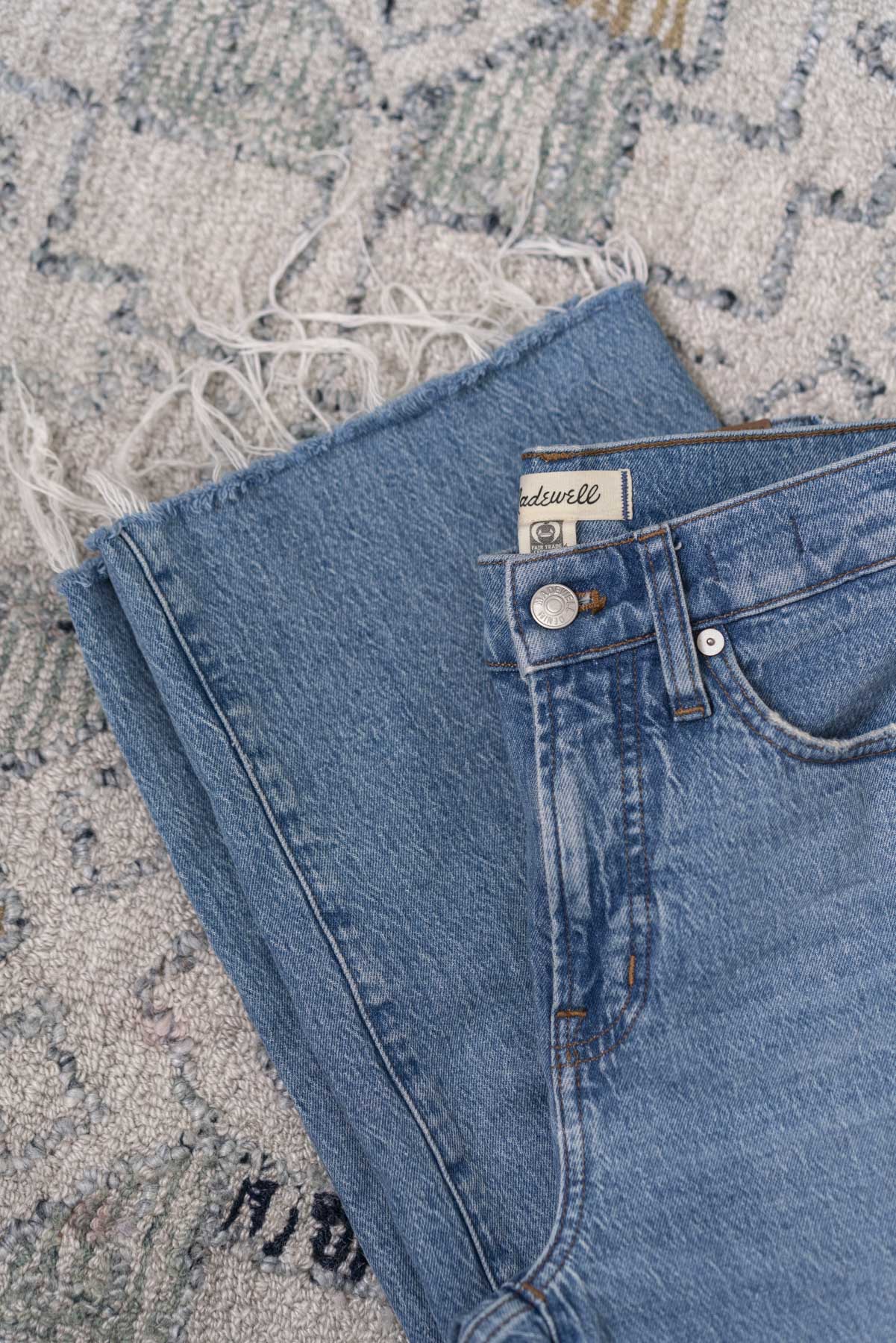
    Two pairs of Madewell jeans arranged side by side - Curvy fit and Regular fit

    After pulling forty-two return-window reviews off the Madewell site, tracking rise and inseam specs across six denim styles, and ordering both the Curvy and Regular versions of the same washes in my own size, the picture got clearer than the brand’s own marketing makes it. Madewell sells two different jeans under one brand name and the difference is not cosmetic. The Curvy line is built around a different waist-to-hip ratio, a different back-rise number, and a different stretch percentage in some washes. The Regular line is the brand’s original fit and was cut for a closer-to-straight torso. If you have a real hip-to-waist difference and you have been buying Madewell Regular because that is what the store carried in your size, you are almost certainly wearing the wrong pair. After six months of wearing both, here is what the test actually showed.

    Madewell launched the Curvy fit in 2018 because the brand’s denim was failing a meaningful percentage of customers at the back-waist gap. Universal Standard, Good American, and Eloquii were already building plus-size denim with a curvier block. Madewell added Curvy as a parallel fit inside the same denim styles – same washes, same inseams, same names (the Perfect Vintage, the Slim Demi-Boot, the Wide-Leg). I bought both in the same washes and the same nominal size and wore each through three contexts: work week under sweaters, weekend errands with a tucked tee, and one wedding-guest moment with heels.

    Quick verdict if you only have 30 seconds

    Madewell Curvy wins for any body with a four-inch or greater waist-to-hip difference. The back-waist sits flat, the hip room is real, and the rise stays put through a full day of sitting. Madewell Regular is the right pick only if you have a straighter torso, a smaller hip-to-waist gap, or you specifically want a looser fit through the seat. For plus-size readers in the size 18 to 24 range, Curvy is the answer most of the time. The Regular fit is not bad, it is just cut for a different shape. Full reasoning below.

    What they are and how Madewell positions them

    Madewell Regular is the original Madewell denim block, cut for what the brand calls a “more even ratio through the waist and hip.” In practice that means the back-waist is straighter, the hip room is moderate, and the rise (front and back) is the published number with no extra ease added at the back. The Regular line covers sizes 23 through 35 and includes Madewell’s flagship styles: the Perfect Vintage Jean, the Slim Demi-Boot, the Wide-Leg, and seasonal updates.

    Madewell Curvy is a different block built on a higher back-rise, a more contoured waistband, and approximately two inches more room through the hip relative to the waist in the same nominal size. The Curvy line covers most of the same Perfect Vintage styles, the Slim Demi-Boot, the Wide-Leg, and several of the high-rise options. Not every Madewell style comes in Curvy, which is one of the line’s real limitations. The Curvy fit goes from size 23 through 35 in core washes and from 14W through 28 in some plus-extended pieces. The brand uses both numeric and W-numeric sizing across the same line, which is part of why buyers end up with the wrong pair.

    The brand does not heavily market the Curvy line on its homepage. You have to filter for it. The product page for a Perfect Vintage in Regular will not surface the Curvy version unless you click through, which means a plus-size buyer who lands on the site via a Pinterest pin is likely to add the Regular to cart by default. This is a recurring complaint in the Madewell subreddit.

    Side-by-side comparison

    Feature Madewell Curvy (Perfect Vintage) Madewell Regular (Perfect Vintage)
    Price (full retail) Around $138 Around $128
    Size range 23 to 35 plus 14W to 28 23 to 35
    Back rise Higher, contoured Standard, straight
    Hip room vs waist Approximately 2″ extra through hip Even ratio waist to hip
    Fabric (core washes) Cotton blend with 2-3% elastane in most washes Cotton blend with 1-2% elastane in most washes
    Inseam options Petite, standard, tall in core styles Petite, standard, tall in core styles
    Return window 30 days unworn, tags attached 30 days unworn, tags attached

    The retail prices are close. The fit math is not. That two-inch hip-to-waist offset is the entire reason the Curvy line exists, and on a body with a measured hip-to-waist difference of nine inches or more, you can feel it within the first thirty seconds of trying both on.

    Madewell Curvy: the line built for the gap

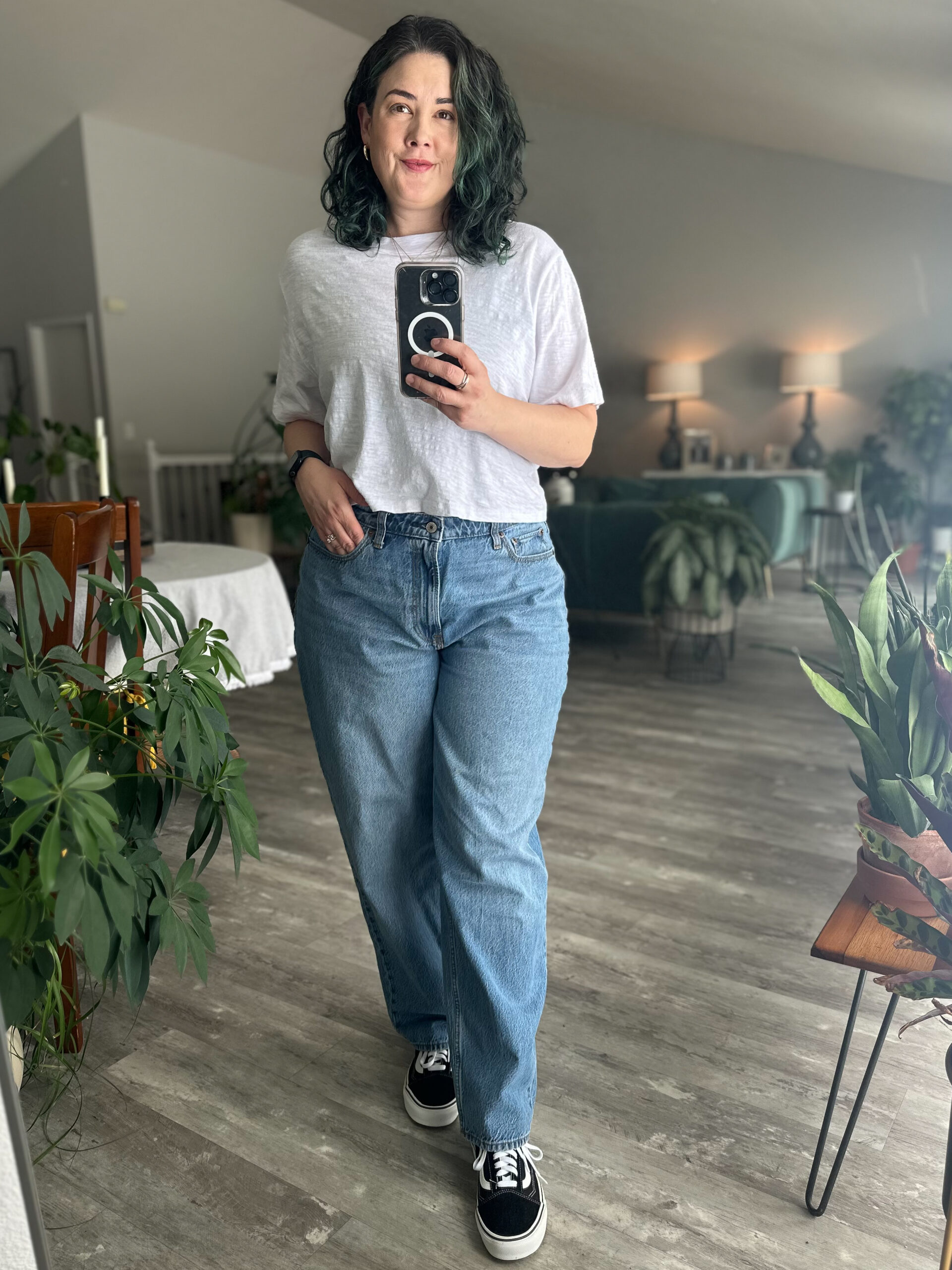
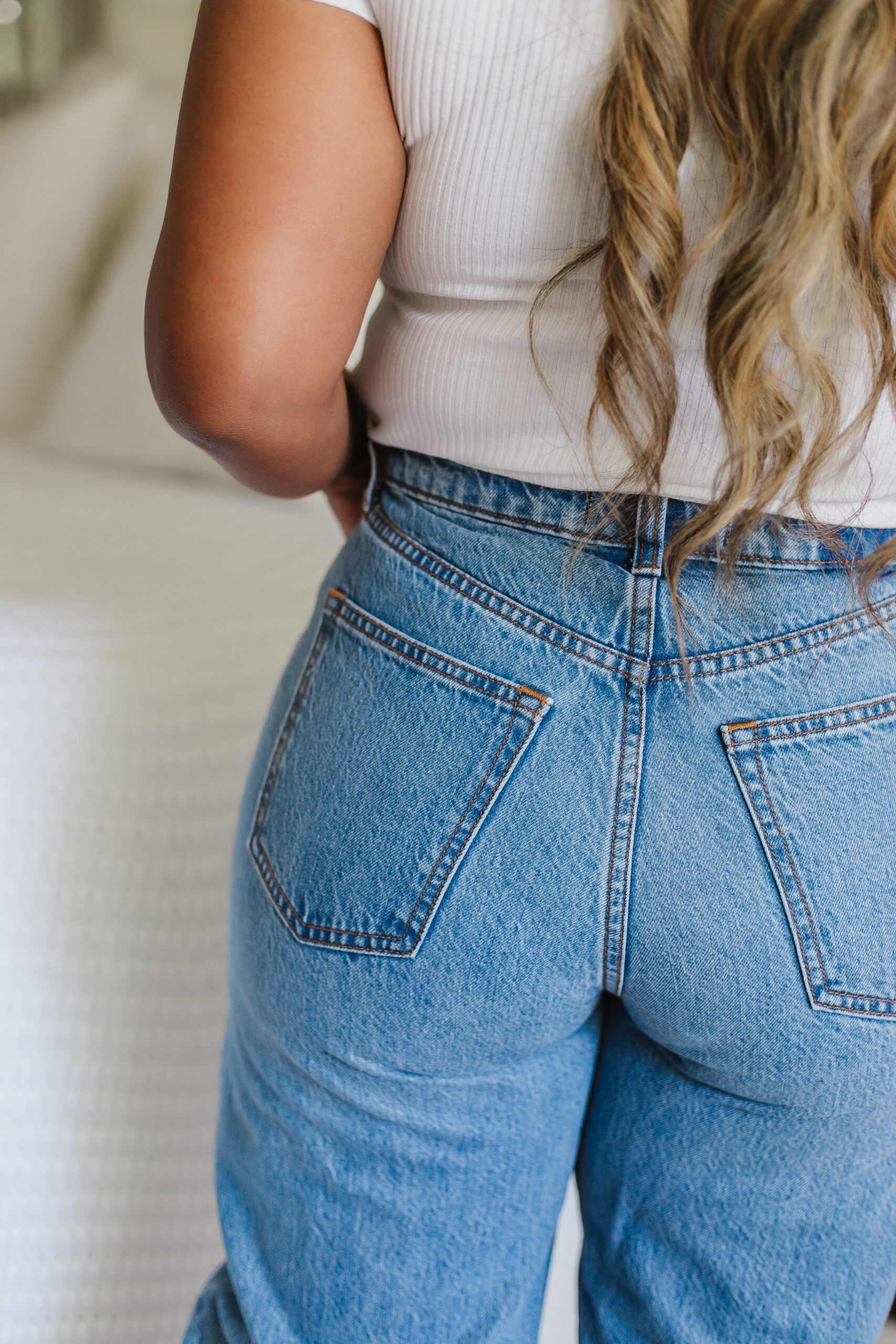
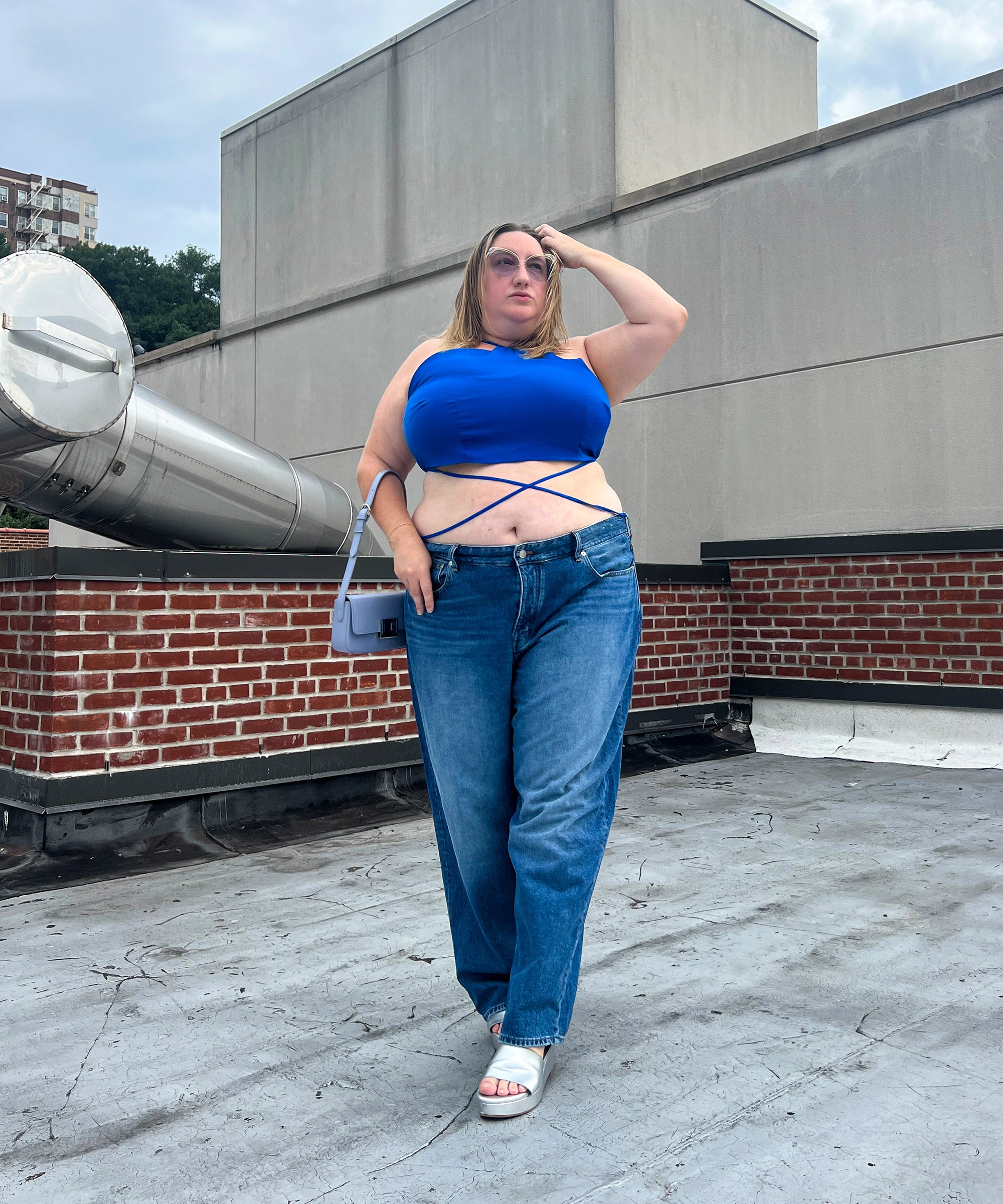
    I bought the Perfect Vintage Jean in Curvy in the Bellevue wash, size 33, standard inseam. The first thing that registered when I pulled them on was the back-waist behavior. No gap. The waistband sat flat against my lower back when I sat down, when I bent over, when I stood back up. The Regular pair in the same size and wash had a roughly inch-and-a-half gap at the back when I sat, which is the exact problem the Curvy line is supposed to solve. It solves it.

    The hip room is real but not exaggerated. The Curvy is not a stretchy compromise that adds elastane to fake the fit – the cotton content is still high and the structure of a real denim jean is preserved. I washed them cold and hung them dry and they came back to original size after each wash with no stretching out at the knee or seat through twelve wears.

    The rise is the second thing the Curvy gets right for a plus-size body. The back is cut taller, which means the waistband does not slide down when I sit. On the Regular, sitting at my desk for two hours produced the familiar slow descent toward the lower hip, then a discreet pull-up before standing. The Curvy did not do that. Over a full workday this matters more than any single feature.

    The fit through the thigh is the trade-off. The Curvy adds room through the hip and seat but the thigh in some washes runs slightly fitted by comparison, which on my size 18 lower body felt close but not tight. On a fuller thigh (size 22 plus), some Madewell subreddit reviews report the Curvy thigh still pulling.

    Buy the Curvy from Nordstrom for the more generous return window than the 30-day Madewell direct policy. Nordstrom takes back denim case-by-case without a hard cutoff, which on a $138 jean matters when the fit issue does not surface until wear three.
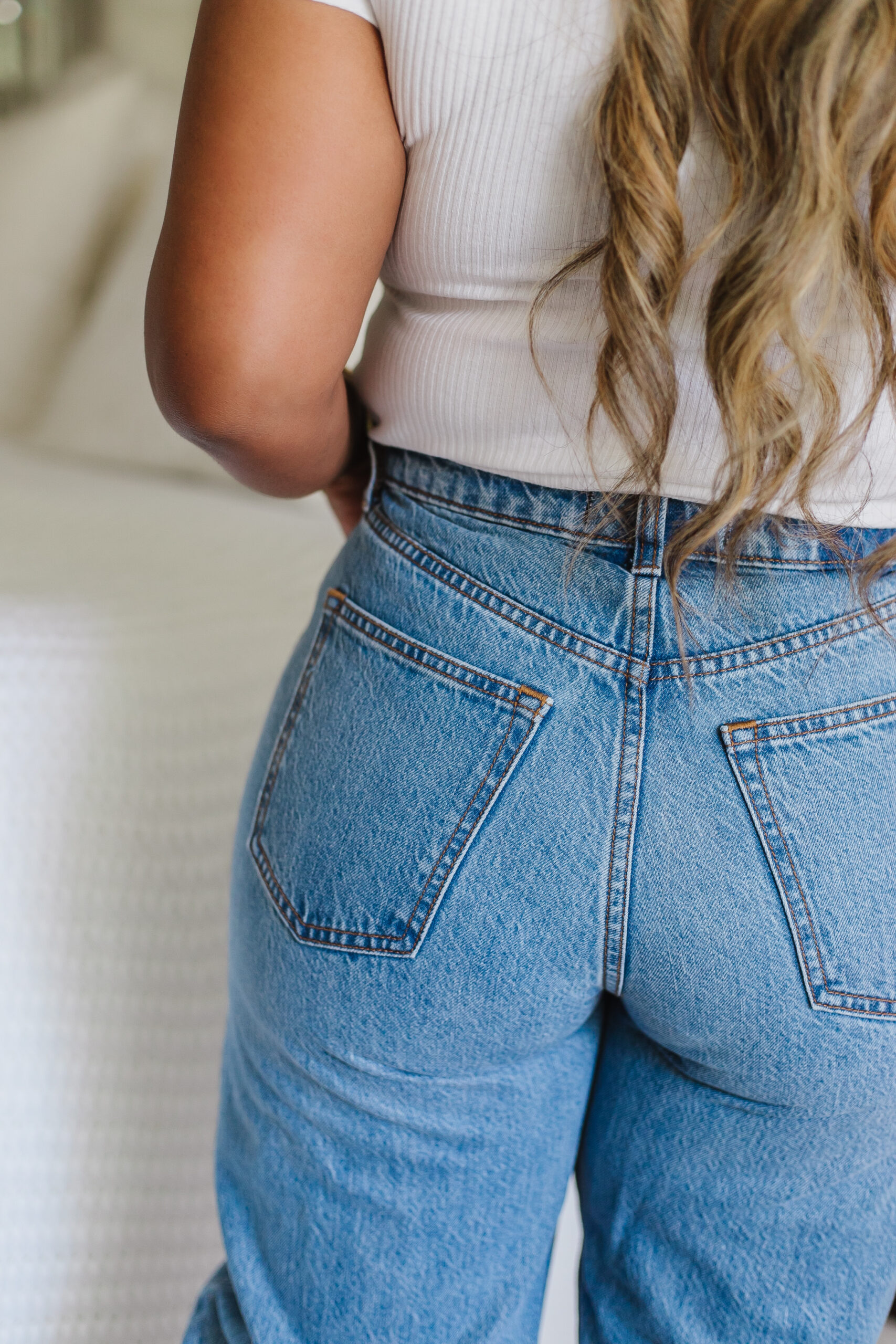
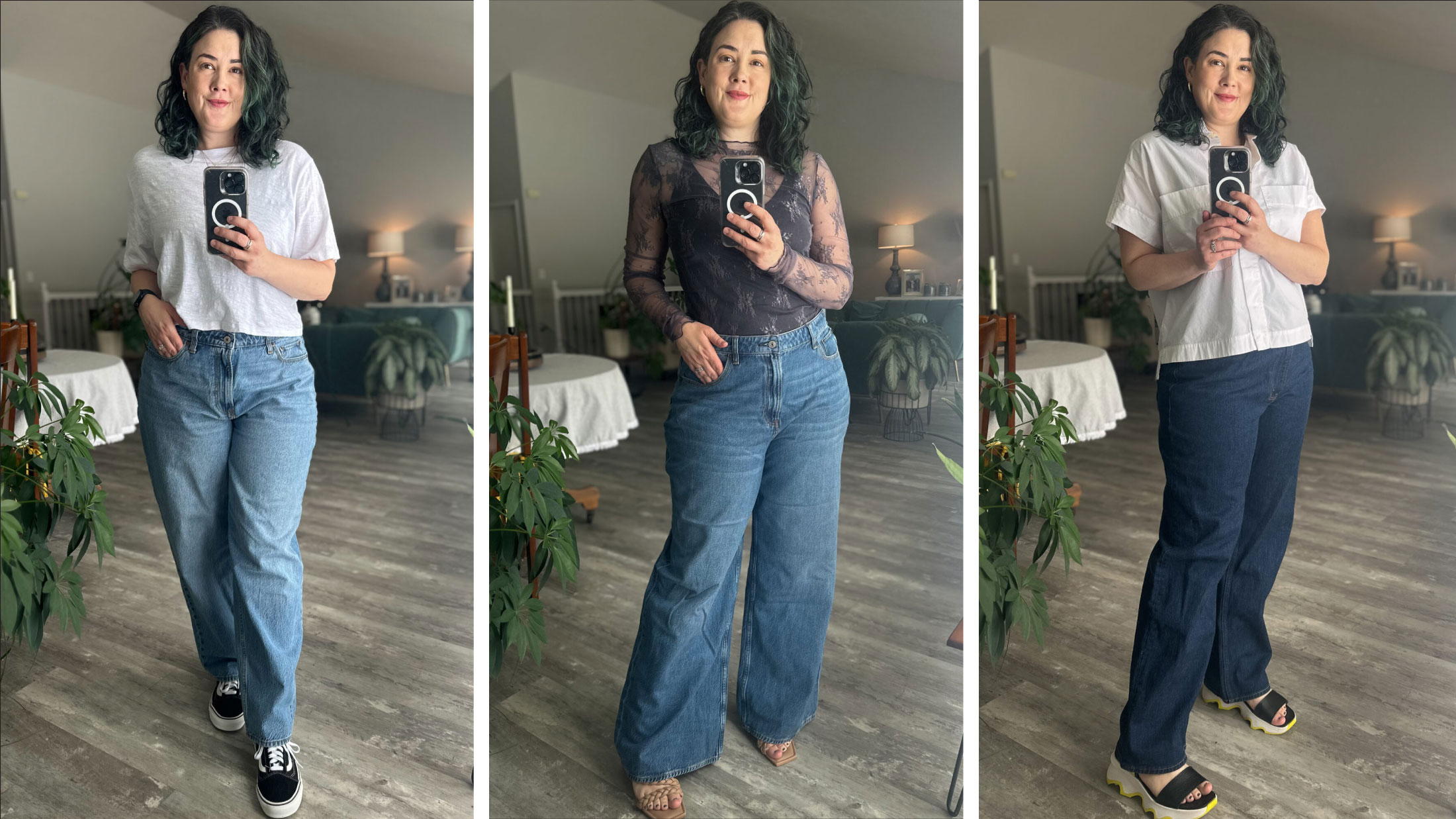
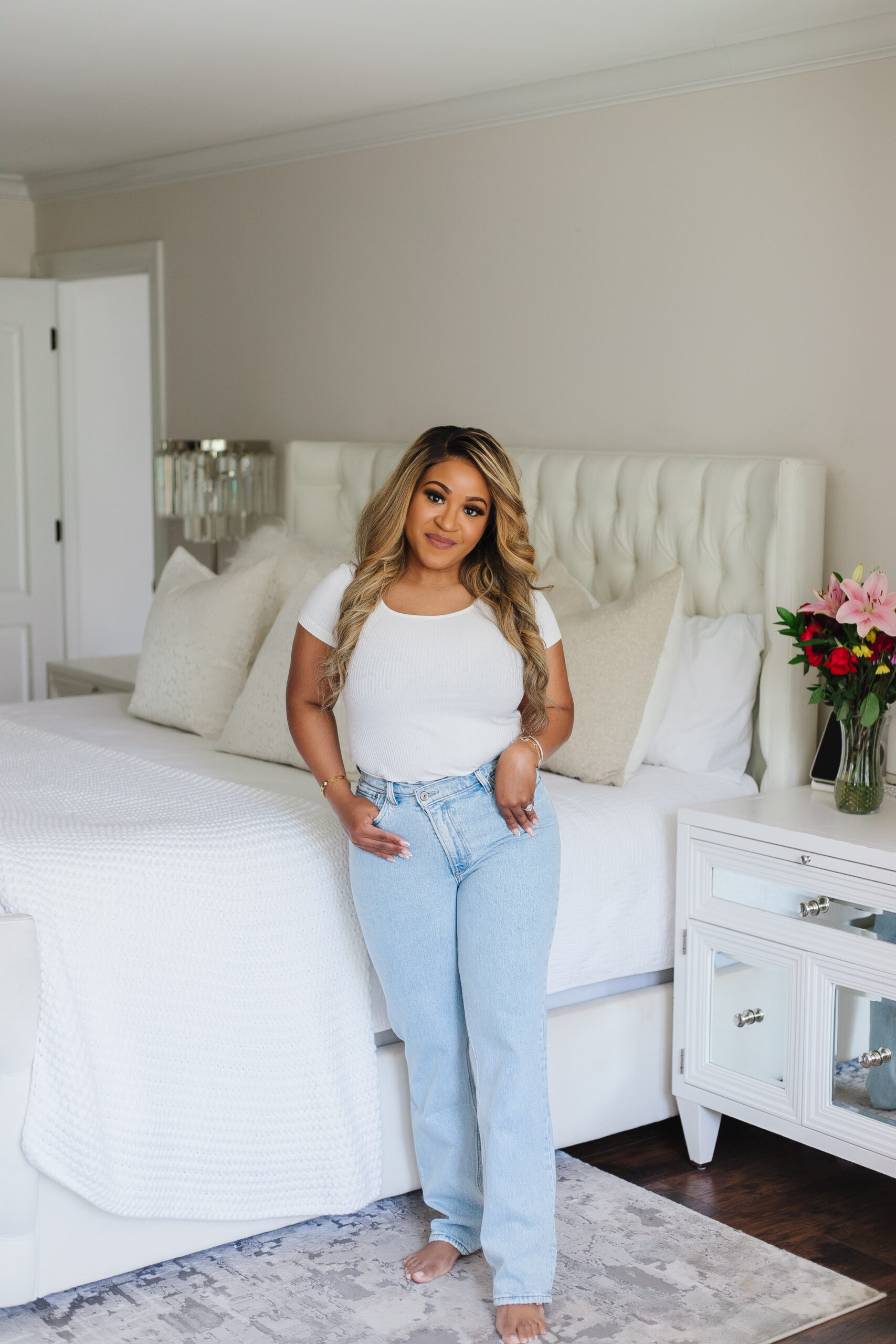
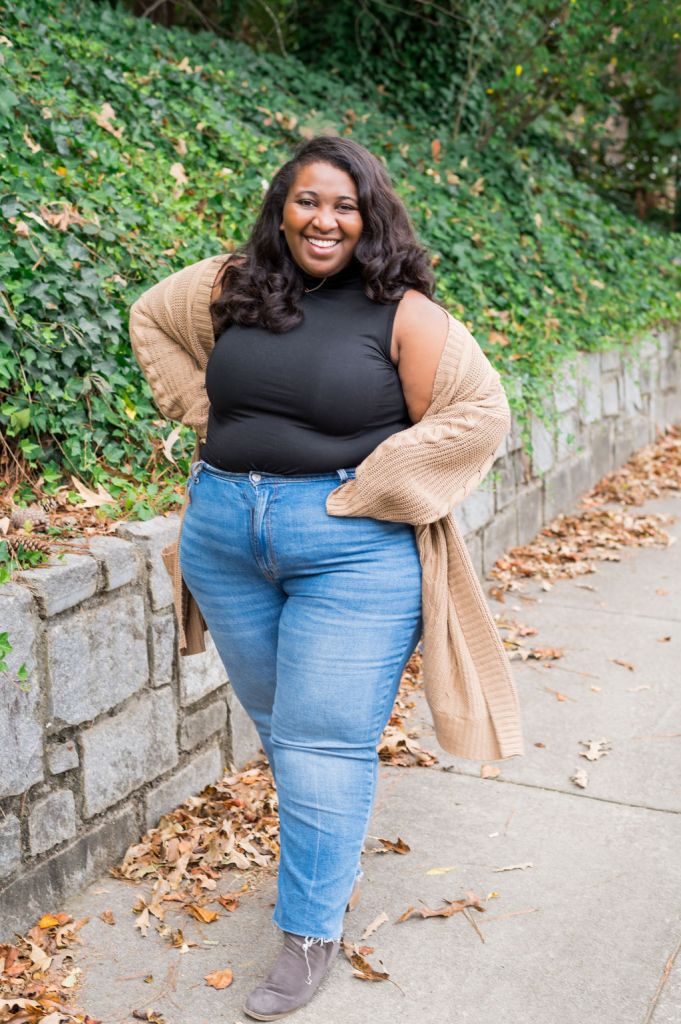
    Plus-size woman wearing Madewell Curvy Perfect Vintage jeans showing the flat back-waist fit

    Madewell Regular: the original block that fits a narrower shape

    The Regular Perfect Vintage in the same Bellevue wash, same size 33, same standard inseam. The fit story is the inverse of the Curvy. The waist sat on me with about an inch and a half of gap at the lower back. The hip room felt tighter through the seat and looser through the upper thigh, which is the signature of a block cut for a more even waist-to-hip ratio. On a body with a smaller hip-to-waist gap (the four-to-six-inch range), the Regular would fit cleanly. On my nine-inch gap, it did not.

    The Regular is not poorly made. The fabric is the same denim base, the stitching is the same Madewell quality, the wash holds up the same way. The construction is identical to the Curvy. The pattern is what differs. If you have been wearing Madewell Regular for years and you fit a straighter body type, there is no reason to switch. If the fit has always been “almost right but the waist gaps,” the Curvy block is what you actually want.

    One real strength of the Regular line: more washes and more styles. Madewell releases seasonal washes faster on the Regular block than on the Curvy. If you want a specific wash for a wedding-guest outfit and the Curvy is not yet cut in that wash, you may need to go to a competitor brand or wait. The second real strength: the Regular holds up well to alteration. A tailor can work with the Regular block more easily than the contoured Curvy waistband. For size 18 to 20 buyers who would rather pay $25 for a tailor than swap, the Regular plus alteration is a viable path.

    Buy the Regular from Nordstrom over Madewell direct for the same return-flexibility reason. The Madewell direct site offers 30 days from delivery and requires tags attached. Nordstrom is more forgiving on fit-based returns past day thirty.

    Madewell Regular Perfect Vintage jean dark wash flat lay product shot

    Where they overlap and where they differ

    Both lines use the same denim mills, the same Perfect Vintage name, the same five-pocket construction, and the same nominal sizing range from 23 to 35 in core styles. Both come in petite, standard, and tall inseams. Both are washed and finished the same way, which is why side-by-side they read as the same jean from across the room. The differences are structural and live in three places: the back rise (Curvy is taller and contoured), the hip-to-waist ratio (Curvy adds approximately two inches of hip room relative to the waist in the same size), and the stretch percentage (Curvy core washes carry slightly more elastane to accommodate the contoured fit without binding).

    Price-wise the Curvy runs around $10 higher per style than the equivalent Regular, which feels reasonable for the additional pattern work and the more contoured waistband. The size range overlaps from 23 to 35 in numeric sizes but the Curvy extends into the 14W to 28 W-numeric range in some plus-extended pieces. For sizes above 35 (roughly above a 24), Curvy is the only Madewell option in many styles. For sizes 23 to 28, both are available and the choice comes down to body shape alone.

    Which one for which person

    If your hip measurement is eight inches or more above your waist measurement and you have been frustrated by gap-at-the-back-waist on Madewell Regular, get the Madewell Curvy Perfect Vintage . This is the fit the line was built for. Order your usual Madewell number and the back-rise problem disappears. The hip-to-waist contour is the whole point.

    If your hip-to-waist difference is closer to four to six inches and the Regular has been fitting you reasonably well, stay with the Madewell Regular Perfect Vintage . The Curvy will gap at the hip on a straighter shape, which is the opposite of the problem it solves. Body shape, not body size, determines which line is right.

    If you wear size 24 or above, the Curvy is the practical answer because the Regular size range tops out below where you need it in most styles. Look at the W-numeric range on the Curvy side of the site. The Universal Standard Seine jean and the Good American Always Fits line are the cross-shop options if Madewell Curvy still does not sit right – both brands cut a denim block specifically for plus-size buyers and both offer longer return windows than Madewell direct.

    If you live in a market without a Madewell physical store, Nordstrom carries both lines in many washes and offers a longer fit-based return window than Madewell direct. Order both, try both at home, return the loser within Nordstrom’s window. This is the fastest way to settle the fit question without burning the Madewell 30-day clock.

    Frequently asked questions

    Is Madewell Curvy actually plus-size or is it a curvy-cut for straight sizes?

    It is both. The Curvy line covers 23 through 35 in numeric sizes (roughly 0 to 24) and extends into the W-numeric range (14W through 28) in some plus-extended pieces. It is not a dedicated plus-size line in the way that Torrid or Eloquii are, but it does carry sizes above where the Regular caps and the fit is built around a curvy hip-to-waist ratio that applies across the size range. A size 6 with a curvy block fits the Curvy line as well as a size 22.

    How does Madewell Curvy compare to Universal Standard or Good American for plus-size denim?

    Universal Standard Seine jeans run about $100, cover sizes 00 through 40, and offer a 60-day return window. The fit is comparable to Madewell Curvy through the hip but slightly less contoured at the back rise. Good American Always Fits jeans run $159 to $189 and use a high-stretch denim that holds its shape across two adjacent sizes. For sizes above 24, Universal Standard is the better cross-shop.

    If I have always worn Madewell Regular, do I need to size down in Curvy?

    No. Order your usual Madewell numeric size in Curvy. The Curvy adds room through the hip relative to the waist in the same size – it does not run larger overall. If you typically wear a 33 in Regular, order a 33 in Curvy. If the waist feels too loose after that, then size down. Most buyers do not need to.

    Do Madewell jeans shrink after washing?

    Cold wash and hang dry, no meaningful shrinkage in either line through twelve wears. Dryer heat will shrink the elastane in both Curvy and Regular by approximately a half-size within two cycles and will visibly distress the fabric. Both lines are washed and finished the same way, so the shrinkage risk is identical. Air dry or low-heat tumble if you must.

    Final pick

    Madewell Curvy Perfect Vintage. Worth the extra $10 over Regular for any body with a real hip-to-waist gap, and the only practical option in many styles above size 24. If you have always defaulted to Madewell Regular because that is what the homepage surfaces, swap to the Curvy and the back-waist gap disappears. If your body sits closer to an even waist-to-hip ratio, the Regular is still the right Madewell jean and you do not need to switch. Choose by shape, not by size. Buy the Curvy Perfect Vintage at Nordstrom for the more flexible return window, or via Amazon if you have Prime and want it inside two days. Worth it at $138, worth it more at sale.
  • Athleta vs Girlfriend Collective: The Plus-Size Activewear Showdown

    Athleta vs Girlfriend Collective: The Plus-Size Activewear Showdown

    Athleta and Girlfriend Collective plus-size leggings arranged side by side on a neutral background

    The plus-size activewear category in 2026 has narrowed to two real options once you cross size 20, and the louder brand on social media is not the one that fits a curvy body better off the rack. Lululemon has technically extended its Y size range, but the cuts still favor straight figures. Old Navy Active and Fabletics swing affordable but inconsistent. That leaves two retailers actually engineering for plus shapes: Athleta, with its quietly committed plus-size program through size 26, and Girlfriend Collective, the sustainability-first newer entrant that goes up to 6XL and built its size range in from launch rather than as an extension. Both deserve their reputations. Neither deserves to be picked sight-unseen.

    Athleta sits inside Gap Inc. and has been building a plus assortment seriously since around 2019, when it added “Athleta Plus” as a dedicated line with separate fit models. Girlfriend Collective launched in 2016 with a recycled-plastic-bottle fabric story and a flat sizing chart that ran XXS to 6XL from day one – no separate plus line, just the same styles cut across the full range. The price tiers overlap. The fits do not. To compare these fairly I bought one comparable item from each brand in three categories – a compressive legging, a sports bra, and a tank – and wore each through the same routines for three months. Same body, same wash protocol, same wear count. Here is what the test produced.

    Quick verdict if you only have 30 seconds

    Girlfriend Collective wins for daily wear, fit consistency across sizes, and the bottom of the price range. Athleta wins for technical fabric performance, retail experience, and the wider range of cuts. If you want one brand for daily leggings and bras and you wear above size 20, get Girlfriend Collective. If you want a full activewear wardrobe with variety in cut, fabric, and styling, get Athleta. Worth it at both price tiers, for different reasons.

    What the two brands actually are

    Athleta is the activewear arm of Gap Inc., positioned as the premium-but-accessible option in the mall-tier activewear space. It runs sizes XXS to 3X and 1X to 3X in the Athleta Plus line, with a separate “tall” range. Stores have fitting rooms with plus-size mannequins and the floor staff in the plus-friendly locations have actually been trained on the difference between the standard and plus fits. Price range runs roughly $40 to $138 for leggings and $40 to $80 for bras, with frequent sales that bring popular pieces to the 25 to 40 percent off range. Fabric is heavy on recycled nylon-spandex blends and proprietary Powervita and Salutation technical fabrics.

    Girlfriend Collective is independent, Seattle-based, and built its identity on three claims: recycled materials (each legging uses roughly 25 plastic bottles of post-consumer recycled polyester), a flat size range XXS to 6XL, and a more sustainable supply chain. Retail presence is limited – the brand sells primarily direct-to-consumer through girlfriend.com with a small selectivity of stockists. Price range runs roughly $38 to $88 for leggings and $38 to $68 for bras, with sales less frequent but more substantive when they happen. Fabric is almost entirely recycled-polyester-spandex blends, which behaves differently than nylon-spandex – more on that below.

    The pieces I tested:

    • Athleta Elation 7/8 Tight, $89, size 1X (Athleta Plus)
    • Girlfriend Collective Compressive High-Rise Legging 7/8, $78, size 3XL
    • Athleta Ultimate Bra, $59, size 38DD
    • Girlfriend Collective Topanga Bra, $42, size 3XL
    • Athleta Conscious Crop Tank, $44, size 1X
    • Girlfriend Collective Dylan Tank, $48, size 3XL

    Side-by-side comparison

    Feature Athleta Girlfriend Collective
    Legging price tested $89 (Elation 7/8) $78 (Compressive High-Rise)
    Plus-size range 1X to 3X (about size 14-26) XXS to 6XL (about size 0-32)
    Fabric (leggings) Recycled nylon / spandex blend 79% recycled polyester / 21% spandex
    Compression Medium Medium-firm
    Retail presence 200+ stores plus online Online direct, limited stockists
    Return policy 60 days, worn returns accepted at store 30 days, unworn only, $7 return label

    Athleta: the technical-fabric retailer with the fitting room advantage

    Athleta has the deepest bench in the comparison. The Elation 7/8 Tight is one of three legging silhouettes the brand cuts specifically for the plus-size fit model – the others are the Salutation and the Ultimate – and the difference between Elation and standard Athleta leggings is visible in the gusset placement and the waistband structure. The waistband is wider, the rise is genuinely high, and the seam at the back curves rather than running straight, which matters on a body with hip-to-waist ratio because a straight seam pulls down at the lower back.

    What worked: the fabric. The Powervita blend Athleta uses on the Elation has a soft hand that does not feel like compression at all when you put it on, but holds the silhouette through 90 minutes of Pilates. Through the wash test, the fabric retained its recovery better than the Girlfriend pair – no bagging at the knee after 20 wears, no loss of compression at the waistband. The Athleta Ultimate Bra also outperformed the Girlfriend Topanga on lift for my 38DD chest. The cup construction has actual underbust banding rather than a single elastic band, which means the support is distributed rather than concentrated at one line. I wore the Ultimate Bra for treadmill walks at 4.0 mph for 45 minutes and the bounce was minimal.

    What did not work: the price ladder. $89 for a single pair of leggings is real money, and Athleta runs sales but the plus sizes routinely sell out of popular pieces before the markdown cycle hits. The Elation in 1X showed up in the 30 percent off email twice in three months, both times sold out within an hour of the email landing. The sizing also runs about half a size small in plus – I am normally a 1X in mass-market activewear and the Elation 1X is snug; the 2X would have been a more honest fit. The Conscious Crop Tank was the weakest piece tested – the recycled cotton blend pilled within 8 wears, and the fit through the bust was tighter than the size chart suggested.

    Buy it from the Athleta listing on Amazon if you want Prime shipping , though selection of plus sizes is more reliable through athleta.com directly. Returns at a physical Athleta store with the receipt are the smoothest in the comparison – I returned an unworn piece in 6 minutes flat.

    Plus-size woman wearing Athleta Elation legging and Ultimate Bra in matching black

    Girlfriend Collective: the sustainability-first brand that actually fits

    Girlfriend Collective’s strongest argument is consistency across sizes. The Compressive High-Rise Legging is cut from the same pattern at every size from XXS to 6XL, just scaled – which sounds obvious but is not how most activewear brands operate. Athleta’s plus line is a re-engineered fit; Girlfriend’s plus line is the same fit. The result is that customer reviews from a size 8 buyer and a size 28 buyer describe the same piece the same way, which is rare in this category and useful when you are sorting through reviews to decide a purchase.

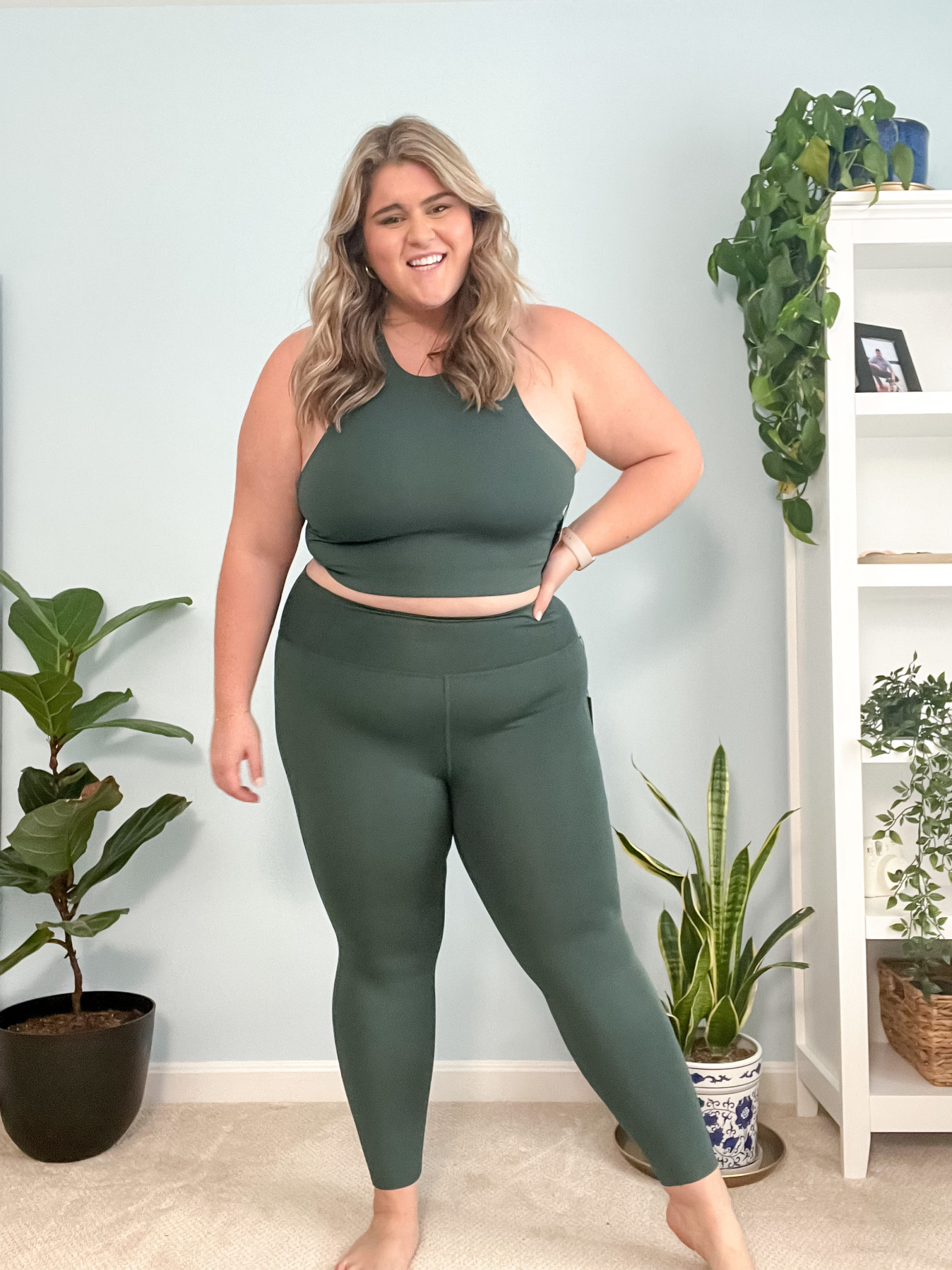
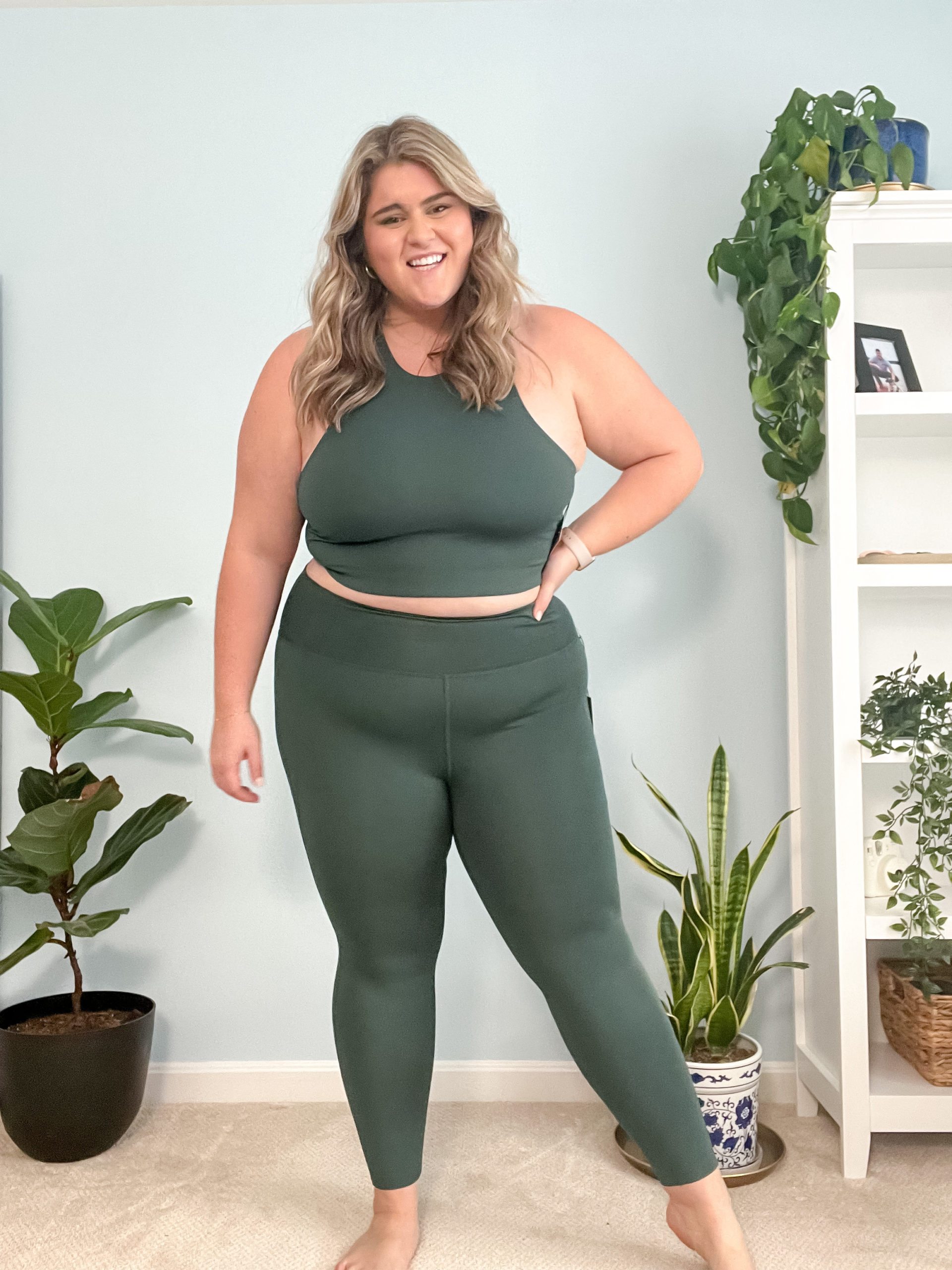
    What worked: the price-to-quality. The Compressive at $78 has firmer compression than the Athleta Elation at $89, particularly through the waistband – the rise sits genuinely above the navel and stays there through a full workout without rolling. The fabric is matte, not shiny, which I prefer for daytime wear. The color range is the strongest in the comparison: about 30 colorways at any given time, including a rotation of seasonal limited drops in muted earth tones that I have not found at this price tier anywhere else. The Topanga Bra at $42 is the best dollar-for-dollar value in the test – low-impact only, not for running, but for Pilates and weight-training it provides enough support and the racerback strap design does not dig at the trap muscle the way a lot of low-impact bras do.

    What did not work: the fabric is recycled polyester, which means it does not breathe the way nylon does. For a high-intensity workout in a warm room, the Compressive holds heat noticeably more than the Athleta. I wore both for the same 75-minute Pilates class in a 78-degree studio and finished the Girlfriend pair visibly sweatier through the waistband. Durability was also weaker than Athleta over the three-month test – the Compressive showed pilling at the inner thigh after 22 wears, and the Topanga bra elastic had lost about 10 percent of its tension by wash 15. Cold wash and hang dry, in both cases, per the brand’s own instructions.

    The 30-day unworn-only return policy is the other real downside. You cannot test these in a real workout and return them if they do not work – if you take the tag off, you own them. The $7 return shipping fee on the return label is also a quiet markup that makes a try-and-return cycle expensive. Girlfriend Collective at Nordstrom is the workaround – Nordstrom carries a rotating selection of Girlfriend pieces with their standard free 60-day return policy, which means you can actually test the fit. Stock is inconsistent in the plus sizes, but when it is in stock, this is the smarter way to buy.

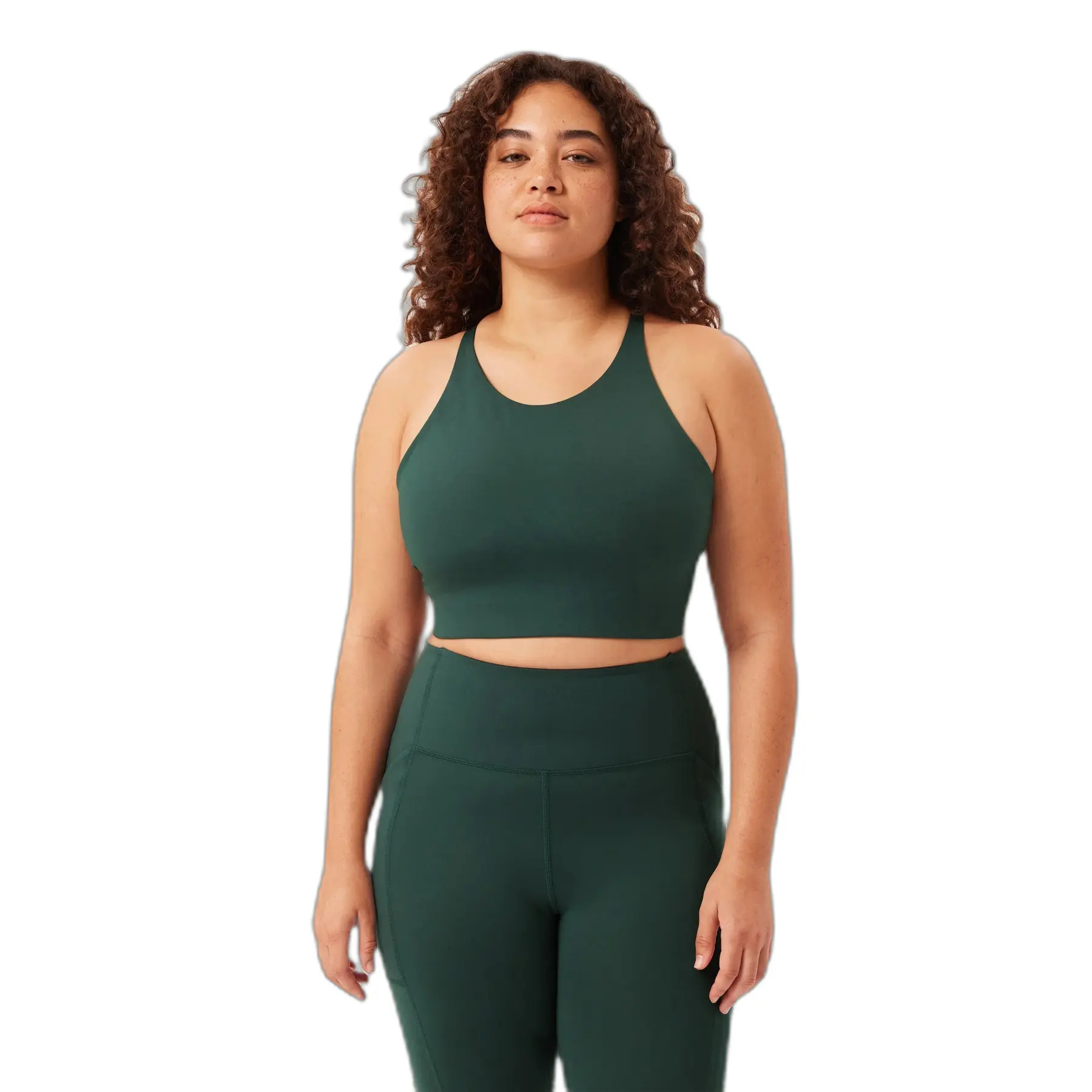
    Girlfriend Collective Compressive legging and Topanga Bra in moss green flat lay

    Where they overlap and where they differ

    Both brands solve the same core problem – activewear that fits a plus-size body without forcing a “tall and lean” silhouette onto a body that is not tall and lean. Both use the high waistband as a structural anchor. Both have committed to sustainability claims that hold up under scrutiny better than most of the category. Both run sales that make their price tier reasonable if you can wait for them.

    The differences land in three places. First, fabric philosophy. Athleta is nylon-spandex with proprietary technical blends, which breathes better and recovers shape better under wear. Girlfriend Collective is recycled polyester-spandex, which is the sustainability story but trades off breathability and long-term durability. Second, fit engineering. Athleta cuts a separate plus-size fit, which fits the curvier-than-average body well but means inconsistency between standard and plus lines. Girlfriend cuts one pattern across the range, which fits the plus-size body well if you fall within average proportional ratios and less well if you carry weight unusually (very narrow waist for hip size, for instance). Third, return policy. Athleta’s in-store return at 60 days with worn returns accepted is the most forgiving in the mainstream activewear category. Girlfriend’s 30-day unworn-only with a $7 fee is the most restrictive.

    Price is roughly comparable when you account for sales. The Athleta Elation hits $62 to $67 on sale (when in stock in plus). The Girlfriend Compressive hits $58 to $65 in the seasonal sales. Day one full price favors Girlfriend by about $11 a legging.

    Which one for which person

    If you wear above size 26, the choice is Girlfriend Collective by default – Athleta caps at 3X (roughly size 24-26). Girlfriend’s 6XL (roughly size 32) is the most genuinely inclusive size range in mainstream activewear in 2026, period. Get the Compressive High-Rise Legging as the daily piece and the Topanga Bra as the low-impact daily.

    If you do high-intensity workouts and breathability matters more than the sustainability claim, get Athleta. The Ultimate Bra for running or HIIT, the Elation or Salutation for the bottom half. Pay full price for the bra if you need the support and chase the legging on sale.

    If you want one brand for a full activewear wardrobe and you live near an Athleta store, Athleta is the easier shopping experience. Try in store, return in store, build a system. If you do not have an Athleta near you and are shopping online either way, Girlfriend’s flat-size-range consistency makes the online buy lower-risk on the legging side.

    If sustainability is a non-negotiable, Girlfriend is the more rigorous story. Recycled-bottle polyester, transparent supply chain reporting, B Corp certification since 2018. Athleta is also B Corp but the parent company Gap Inc. complicates the supply chain story.

    Skip both and go to a third option if: you wear above size 32 (look at Universal Standard’s activewear extensions or Torrid Activewear), you need a maximum-support running bra for a chest larger than 38DDD (Athleta and Girlfriend both top out below this support tier), or you want loungewear-leaning activewear at a lower price (Old Navy Active does this category better than either of these brands).

    Frequently asked questions

    Which brand has the better legging for everyday wear under tunics or longer tops?

    Girlfriend Collective Compressive High-Rise. The matte finish and the firmer compression hold a smoother silhouette through a full day of sitting and standing, and the waistband stays put without the rolling that hits some Athleta cuts after several hours.

    Do either of these work as athleisure for travel days?

    Both, but with different strengths. Athleta’s Elation pairs better with a structured top because the fabric reads more polished. Girlfriend’s Compressive in a neutral colorway looks more like a fashion legging than activewear, especially in the muted seasonal earth tones.

    How does sizing actually run between the two?

    Athleta runs about half a size small in plus – if you are between sizes, size up. Girlfriend Collective runs true to size at every size point through 6XL, which is unusual and verifiable across reviews. Their size chart is also the most accurate of the comparison to actual body measurements.

    Can you return Girlfriend Collective at Nordstrom if you bought it from Nordstrom?

    Yes, and this is the workaround. Nordstrom’s return policy applies to Girlfriend Collective pieces purchased through Nordstrom, which means free 60-day returns with worn returns accepted case-by-case. This is the cheat code for testing the brand without committing to the 30-day unworn-only direct policy.

    Final pick

    Girlfriend Collective for daily wear under size 26, Athleta for technical and full-support pieces, and the smart play is to own one Compressive High-Rise legging and one Ultimate Bra. The Girlfriend legging is the daily workhorse and outperforms the Athleta in compression at a lower price; the Athleta bra is the better engineered support garment and is worth the higher price for the high-impact context. Skip a full closet of either brand – the two together is the actual answer. Buy the Girlfriend Compressive through Nordstrom for the better return policy, and the Athleta Ultimate Bra on Amazon for fastest shipping. Worth it at both price tiers.

  • Birchbox vs COCOTIQUE – Best Beauty Subscription Box for Women of Color

    Birchbox vs COCOTIQUE – Best Beauty Subscription Box for Women of Color

    Finding beauty products that actually work for melanin-rich skin should not feel like a scavenger hunt, but for too many women of color, that is exactly what the beauty shopping experience has been. Products that look gorgeous on lighter skin tones fall flat on deeper complexions. Skincare formulas that ignore the unique needs of melanin-rich skin can cause more problems than they solve. And shade ranges that stop at medium leave millions of women feeling invisible.

    Beauty subscription boxes were supposed to solve the discovery problem, sending curated products to your door so you could try new things without the frustration of in-store shopping. But for women of color, the question has always been: will the products in this box actually work for me? Two subscription services have emerged as the top contenders for answering that question, Birchbox and COCOTIQUE, and they take very different approaches.

    We have subscribed to both boxes, tested their products over several months, and evaluated them through the lens of what matters most to women of color. Here is our honest, detailed comparison to help you decide which box deserves your subscription dollars.

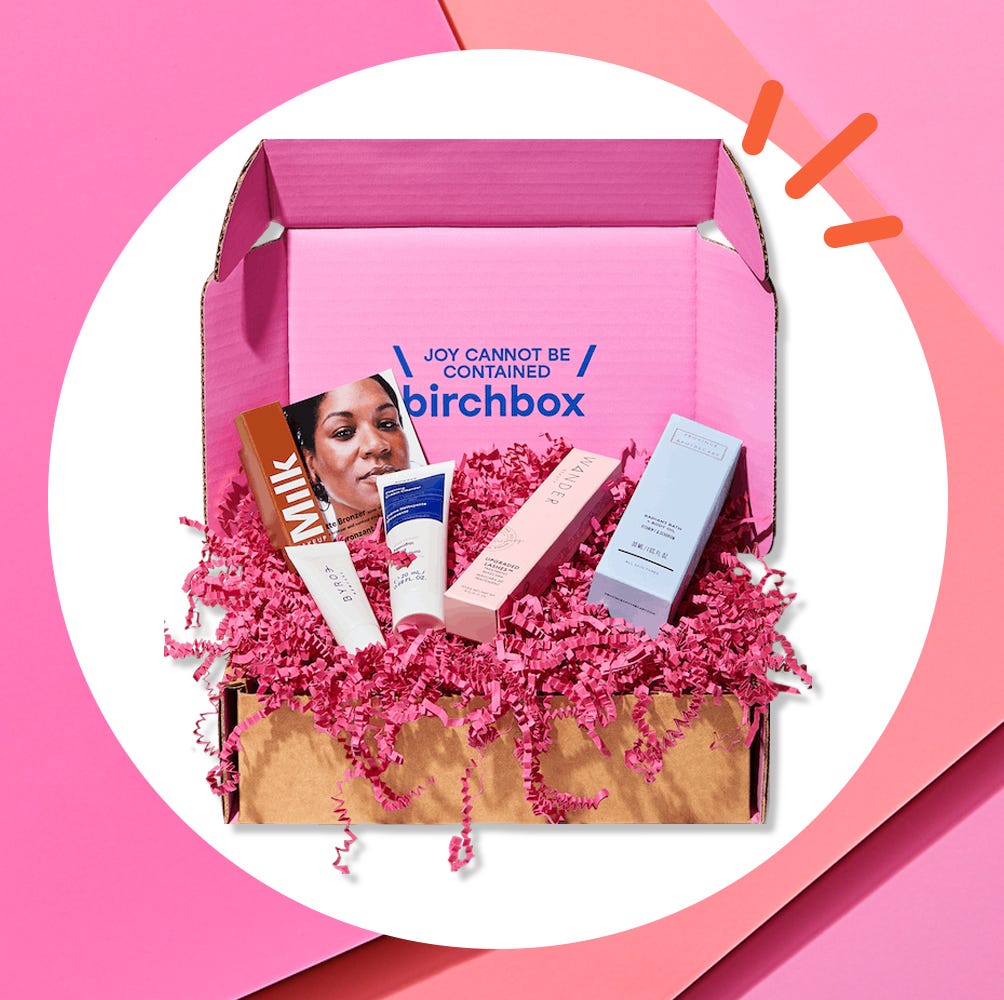
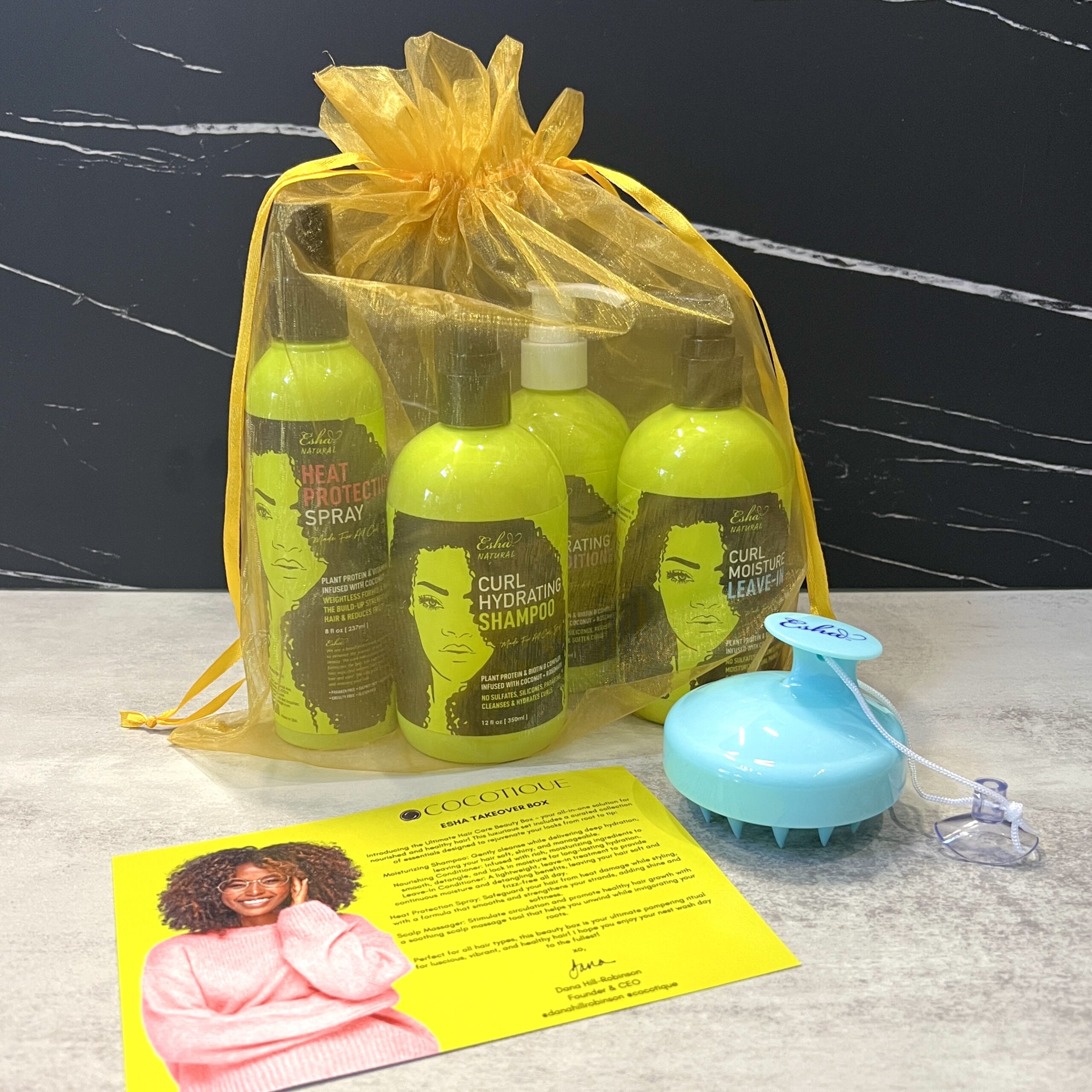
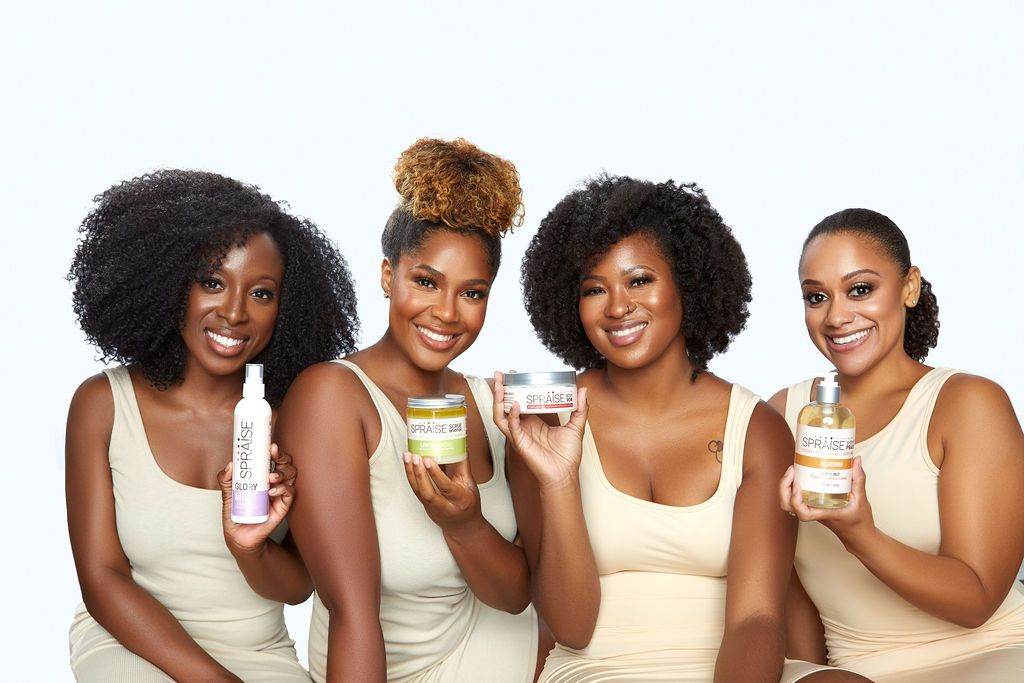
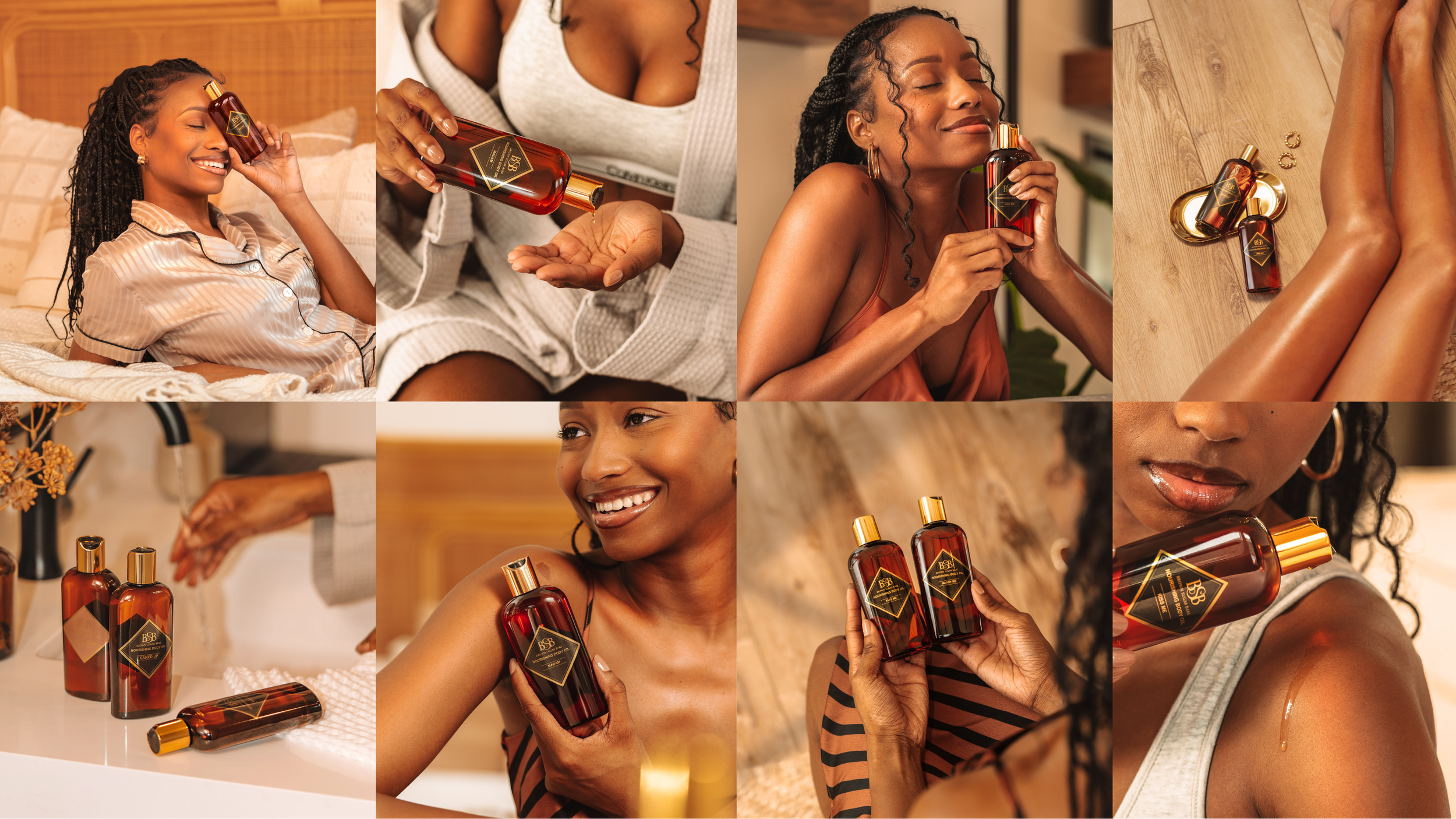
    Birchbox vs COCOTIQUE beauty subscription boxes compared side by side

    Why Representation in Beauty Boxes Matters

    Why Representation in Beauty Boxes Matters

    Before we compare the two boxes, let us talk about why this choice matters so much. For decades, the beauty industry treated women of color as an afterthought. Products were developed for lighter skin tones first, and deeper shades were added later, if at all. Skincare formulas were tested primarily on lighter skin, ignoring the specific concerns that melanin-rich skin faces, from hyperpigmentation to keloid scarring to the unique ways certain ingredients interact with higher melanin levels.

    A beauty subscription box that understands and prioritizes the needs of women of color is not just a nice-to-have. It is a statement that your beauty needs are not secondary, that you deserve products curated with your skin, hair, and beauty goals in mind from the very start. The difference between receiving a box of products designed for you versus a box of products where you might find something that works is the difference between feeling seen and feeling overlooked.

    Both Birchbox and COCOTIQUE recognize this need, but they approach it from fundamentally different angles. Understanding those differences is key to choosing the right subscription for your specific needs and preferences.

    COCOTIQUE Overview and What You Get

    COCOTIQUE Overview and What You Get

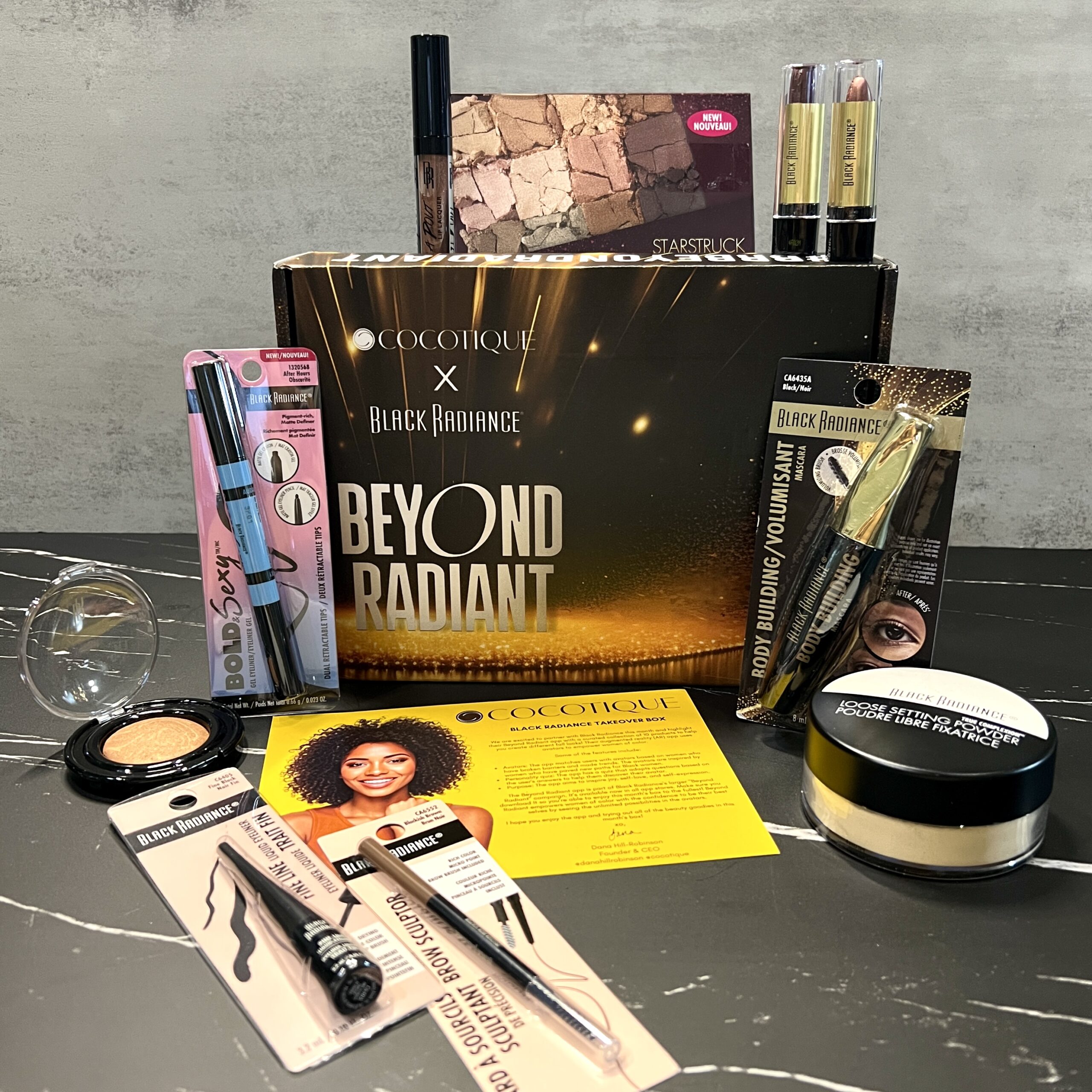
    COCOTIQUE was founded with a singular mission: to curate beauty boxes specifically for women of color. Every single product in every box is selected with melanin-rich skin and textured hair in mind. This is not a general beauty box that includes a few deeper shade options. It is a box built from the ground up for women of color, by people who understand the unique beauty needs of this community.

    What’s in the Box

    What's in the Box

    Each monthly COCOTIQUE box includes five to eight products that are a mix of full-sized and deluxe travel-sized items. This is a significant advantage over many competitors that only include sample sizes. Getting full-sized products means you can genuinely integrate them into your routine and evaluate them over weeks rather than days.

    The products span beauty, wellness, self-care, and lifestyle categories. You might receive a rich body butter formulated for melanin-rich skin, a hair mask designed for textured hair, a lipstick in a shade that actually flatters deeper skin tones, or a wellness product like a soothing candle or journal. The variety keeps each box feeling fresh and exciting.

    Brand Curation

    Brand Curation

    COCOTIQUE highlights established and emerging BIPOC-owned brands, giving subscribers the opportunity to discover incredible products from brands they might never encounter in mainstream retail. This commitment to supporting BIPOC entrepreneurs adds another layer of value to the subscription. Every box is an opportunity to discover a new favorite brand that genuinely understands and celebrates your beauty.

    Birchbox Overview and What You Get

    Birchbox Overview and What You Get

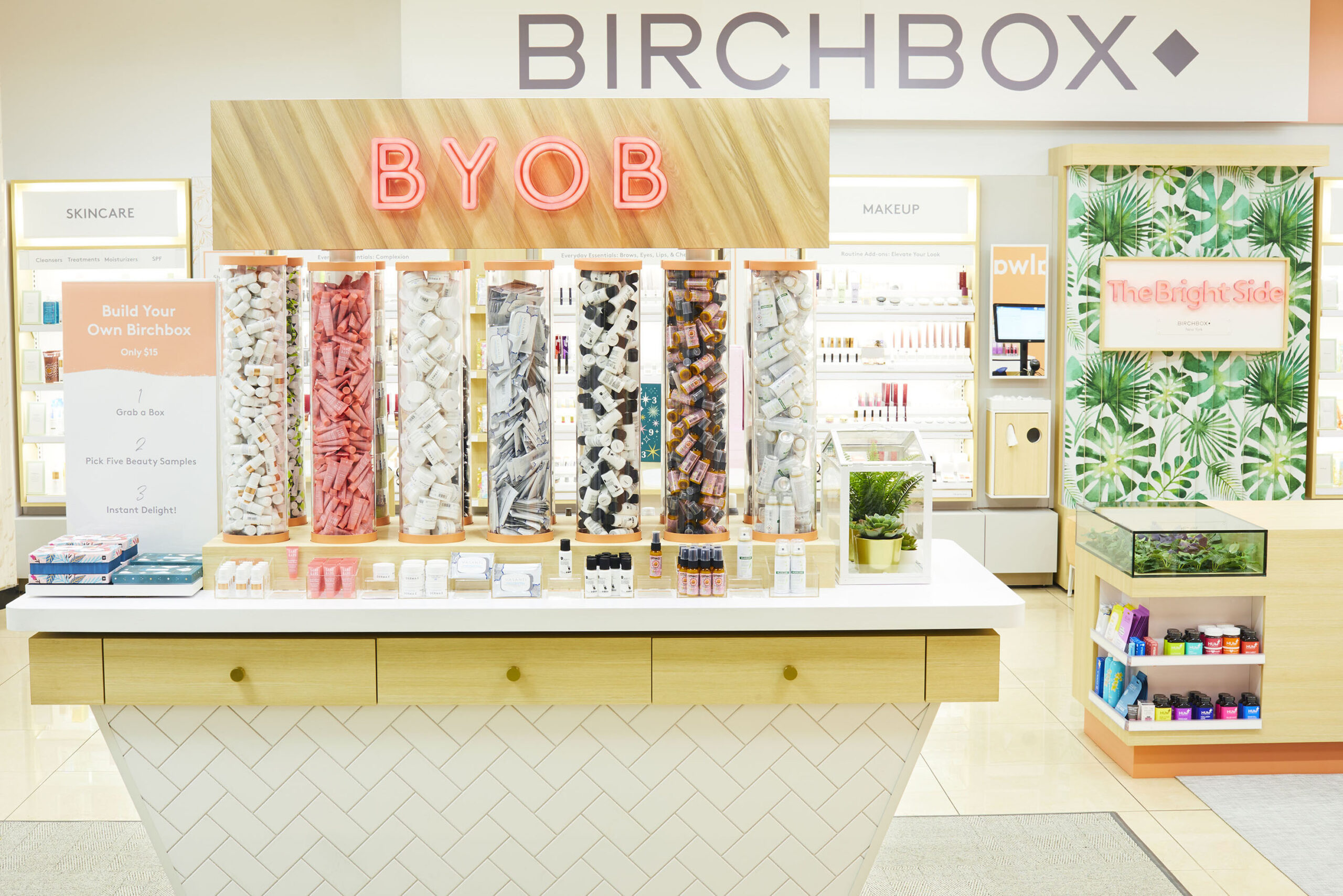
    Birchbox is one of the original beauty subscription box services, having pioneered the sample-box model that the entire industry now follows. It is a broader, more mainstream service that caters to all skin tones and types, with personalization features designed to ensure the products you receive are relevant to your individual profile.

    What’s in the Box

    What's in the Box

    Each monthly Birchbox includes four to six deluxe samples tailored to your beauty profile. The emphasis is on sample and deluxe sample sizes, which means you are getting smaller quantities of products compared to COCOTIQUE’s full-sized offerings. However, the upside is the breadth of brands you are exposed to, including many prestige and indie brands that you might not encounter otherwise.

    Personalization

    Personalization

    Birchbox’s strongest feature is its fully customizable beauty profile. When you sign up, you complete a detailed questionnaire about your skin type, hair type, skin tone, beauty preferences, and product priorities. The algorithm uses this information to curate a box that should match your specific needs. You can also update your profile over time as your preferences change.

    Brand Partnerships

    Brand Partnerships

    Birchbox intentionally partners with BIPOC-founded, owned, and run beauty brands, so subscribers of all backgrounds can find options that fit their needs. The platform’s size and reach mean it has partnerships with a wide variety of brands spanning from established luxury names to emerging indie labels.

    Pricing Comparison

    Pricing Comparison

    Understanding the cost and value proposition of each box helps you evaluate which one offers the best return on your investment.

    COCOTIQUE is priced at twenty-five dollars per month, with a special introductory rate of twenty dollars for your first box. Considering that you receive five to eight products including full-sized items, the per-product value is excellent. Many of the full-sized products alone would retail for more than the monthly subscription cost, which means you are getting genuine value beyond what you pay.

    Birchbox pricing has varied over the years and typically runs in the thirteen to sixteen dollar per month range, with discounts available for longer subscription commitments. You receive four to six samples, which means the per-product cost is lower, but the products are also significantly smaller. The value proposition is more about discovery and experimentation than receiving products you will use for weeks.

    When you calculate the retail value of what is in each box, COCOTIQUE typically provides a higher dollar value per box thanks to the full-sized products. Birchbox offers a lower monthly price point but with smaller product sizes. The question is whether you prefer spending a bit more for full-sized products you can truly evaluate, or spending less for a wider variety of sample-sized introductions.

    COCOTIQUE full-size products versus Birchbox sample sizes value comparison

    Product Quality and Brand Selection

    Product Quality and Brand Selection

    Both boxes deliver quality products, but the brand selection philosophies differ significantly.

    COCOTIQUE’s brand selection leans heavily toward BIPOC-owned businesses, which means you are discovering brands that were created by people who share your experiences and understand your beauty needs intimately. The products are formulated with melanin-rich skin and textured hair as the primary consideration, not as an afterthought. This results in products that tend to work beautifully right out of the box because they were designed for you from the start.

    Birchbox offers a broader brand mix that includes mainstream prestige brands, indie brands, and BIPOC-owned brands. The advantage is exposure to a wider variety of products and price points. The potential downside is that some products, despite the personalization algorithm, may not be the best fit for deeper skin tones or textured hair types. Foundations might be in shades that do not match, hair products might not address the specific needs of natural hair, and skincare formulations might not account for melanin-specific concerns.

    In terms of pure product quality, both boxes include well-formulated products from reputable brands. COCOTIQUE has a slight edge in relevance for women of color, while Birchbox has a slight edge in brand variety and exposure to mainstream prestige products.

    Customization and Personalization

    Customization and Personalization

    How well each box tailors its selection to your individual needs is a crucial factor in the value you receive.

    COCOTIQUE does not offer individual customization based on subscriber preferences. The box is curated by the COCOTIQUE team, and all subscribers in a given month receive the same selection of products. While this means you might occasionally receive a product that is not a perfect fit for your specific preferences, the overall curation is strong because the entire box is already filtered through the lens of what works for women of color.

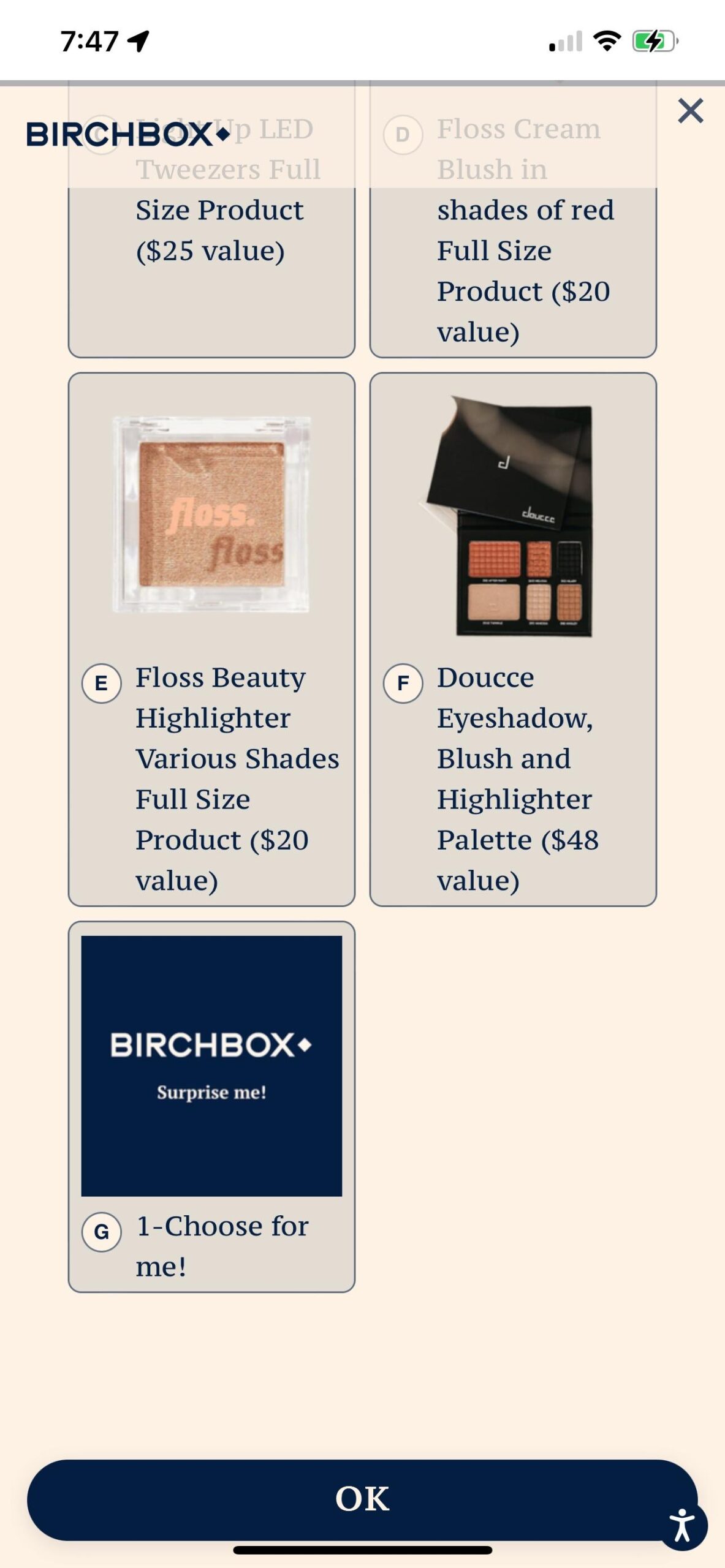
    Birchbox offers significantly more personalization through its beauty profile system. You can specify your skin type, skin tone, hair type, product preferences, and beauty goals, and the algorithm attempts to match products to your profile. You can also sometimes choose one product in your box, giving you a degree of control over what you receive. This personalization can result in more individually tailored selections.

    However, personalization is only as good as the algorithm and the product pool it draws from. If the available product pool does not include many options designed specifically for deeper skin tones, the algorithm cannot magically create them. This is where COCOTIQUE’s focused approach has an inherent advantage: when every product in the pool is designed for women of color, relevance is built into the foundation rather than dependent on an algorithm.

    Shade Range and Skin Tone Compatibility

    Shade Range and Skin Tone Compatibility

    This is arguably the most important factor for women of color considering a beauty subscription box. How often do you actually receive products in shades that work for your skin tone?

    COCOTIQUE excels here because every color cosmetic in the box is selected with melanin-rich skin in mind. Lipstick shades are chosen to flatter deeper skin tones. Foundation samples, when included, come in shades designed for medium to deep complexions. Skincare products are selected for their compatibility with melanin-rich skin, avoiding ingredients that can cause hyperpigmentation or leave unwanted white casts.

    Birchbox makes an effort through its personalization system, but the results can be inconsistent. Subscribers with deeper skin tones sometimes receive products that are not quite right for their complexion, whether it is a foundation sample in a shade too light, a highlighter that does not show up on deeper skin, or a skincare product that leaves a noticeable white cast. The personalization helps, but it cannot fully overcome the limitations of a product pool that was not designed exclusively for women of color.

    Who Should Choose Which Box

    Who Should Choose Which Box

    Choose COCOTIQUE If

    Choose COCOTIQUE If

    You want a box that is designed from the ground up for women of color, with no guesswork about whether the products will work for your skin tone and hair type. You want to discover and support BIPOC-owned beauty brands. You prefer full-sized products that you can genuinely integrate into your routine. You are willing to pay a slightly higher monthly price for products with guaranteed relevance. You value community and representation in the brands and products you use.

    COCOTIQUE’s subscription is the best choice for women of color who want a beauty box that truly understands and celebrates their unique beauty needs without compromise.

    Choose Birchbox If

    Choose Birchbox If

    You want exposure to a wide variety of mainstream and prestige beauty brands. You value individual customization and the ability to influence what products you receive. You prefer a lower monthly price point and do not mind sample sizes. You want to discover products across the broadest possible range of brands and categories. You enjoy the exploration aspect of receiving a curated selection based on your personal beauty profile.

    Birchbox is the better choice for women of color who want mainstream brand exposure with some personalization, understanding that occasional product mismatches may occur.

    Confident plus-size woman of color enjoying beauty subscription box products

    Can You Subscribe to Both?

    Can You Subscribe to Both?

    If your budget allows, subscribing to both boxes simultaneously is actually a fantastic strategy. COCOTIQUE gives you the guaranteed-relevant, BIPOC-focused products that you know will work for your skin tone and hair type. Birchbox gives you exposure to a wider world of beauty brands with the possibility of discovering mainstream products that you might never encounter otherwise. Together, they create a comprehensive beauty discovery experience that covers all your bases.

    At a combined cost of roughly thirty-eight to forty-one dollars per month, subscribing to both boxes is still significantly less expensive than shopping blindly at a beauty retailer and hoping products work for your skin tone. The curated approach of both boxes reduces waste and increases the likelihood that you will love what you receive.

    Key Takeaways

    • COCOTIQUE at twenty-five dollars per month is designed specifically for women of color, featuring five to eight full-sized and travel-sized products from BIPOC-owned brands
    • Birchbox at thirteen to sixteen dollars per month offers broader brand variety with personalization features, but product relevance for deeper skin tones can be inconsistent
    • COCOTIQUE provides better per-box retail value thanks to full-sized products, while Birchbox offers a lower entry price with sample sizes
    • For guaranteed shade compatibility and products designed for melanin-rich skin, COCOTIQUE is the clear winner
    • For maximum brand variety and individual customization, Birchbox has the edge
    • Both boxes support BIPOC-owned brands, but COCOTIQUE makes this a central pillar of their curation philosophy

    Frequently Asked Questions

    Is COCOTIQUE only for Black women?

    Is COCOTIQUE only for Black women?

    COCOTIQUE is designed for all women of color, including Black, Latina, South Asian, Middle Eastern, and other women with melanin-rich skin. The products are curated to work beautifully on deeper skin tones and textured hair types across the full spectrum of women of color. Anyone who feels underserved by mainstream beauty products will find value in COCOTIQUE’s thoughtful curation.

    Can I gift a beauty subscription box?

    Both COCOTIQUE and Birchbox offer gift subscription options. COCOTIQUE’s gift subscriptions are available in three, six, and twelve-month options. Birchbox also offers gift subscriptions and gift cards. A beauty subscription box is a particularly thoughtful gift for someone who loves discovering new products, and COCOTIQUE in particular makes a meaningful gift for women of color who may feel overlooked by mainstream beauty boxes.

    What if I receive a product I do not like?

    What if I receive a product I do not like?

    Neither box offers returns on individual products since the subscription model is based on discovery and trying new things. However, both services welcome feedback that helps improve future curation. COCOTIQUE encourages subscribers to share their preferences and feedback. Birchbox allows you to rate products and update your beauty profile, which helps the algorithm select better matches in future boxes.

    Are these subscription boxes worth the money compared to buying products individually?

    Both boxes typically provide products with a retail value that exceeds the subscription cost. COCOTIQUE in particular offers excellent value since many of the full-sized products would individually cost more than the twenty-five dollar monthly fee. Beyond pure dollar value, the discovery element saves you from the time and expense of shopping for, purchasing, and potentially returning products that do not work for your skin tone or hair type.

  • Acrylic Nails vs Gel Nails – Which Manicure Type Is Best for You?

    Acrylic Nails vs Gel Nails – Which Manicure Type Is Best for You?

    The Classic Nail Debate

    The Classic Nail Debate

    Acrylic nails and gel nails are the two most popular salon manicure options, and choosing between them is a decision that many nail lovers face regularly. Both can give you beautiful, long-lasting nails that make you feel put-together and polished. But they achieve these results through completely different methods, and the differences matter when it comes to your nails’ appearance, health, and your overall experience.

    Whether you are a nail salon regular trying to decide if it is time to switch, or a newcomer trying to figure out which type to try first, this comprehensive comparison will help you make the smartest choice for your specific needs. We are covering everything from how each type is applied to how it feels to wear, what it costs, how it comes off, and what it does to your natural nails over time.

    By the end of this guide, you will know exactly which manicure type aligns with your priorities – whether that is maximum strength, the most natural look, the easiest maintenance, or the gentlest option for your natural nails.

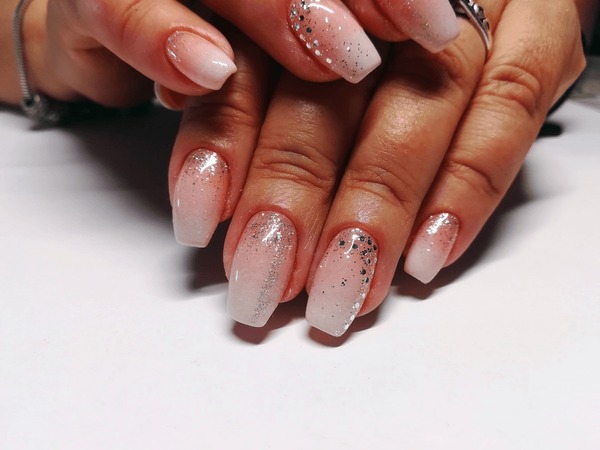
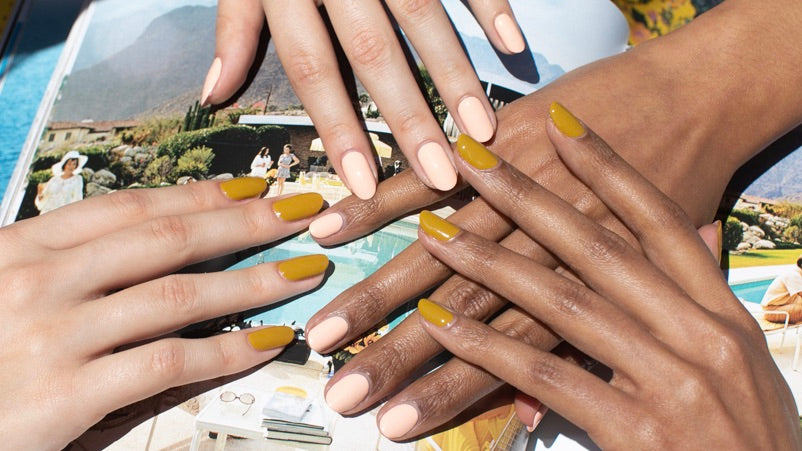
    Comparison of acrylic nails and gel nails showing different shapes and finishes

    How Acrylic Nails Work

    How Acrylic Nails Work

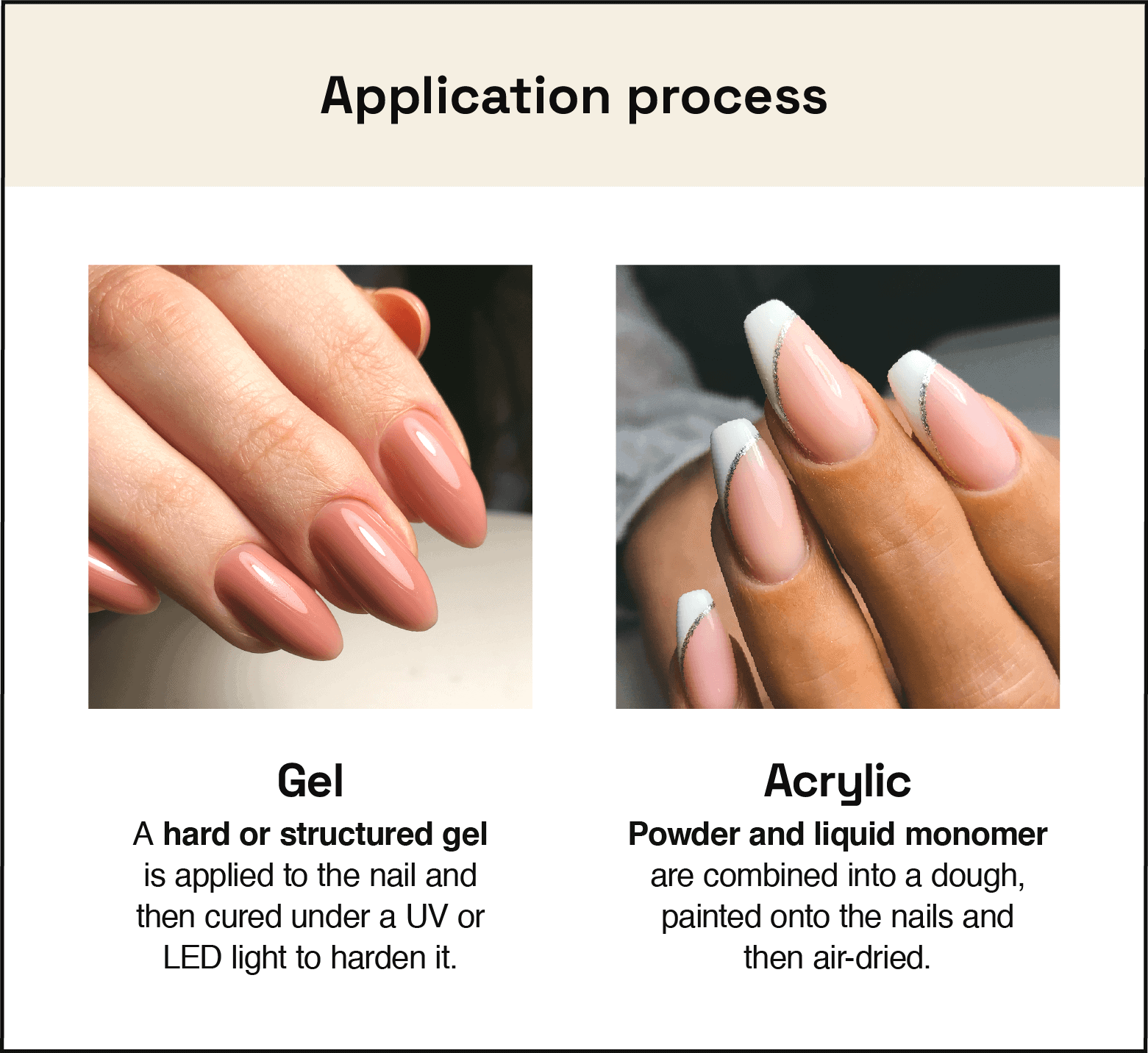
    Acrylic nails are created by combining a liquid monomer with a powder polymer to form a paste that is applied to the nail and shaped before it air-dries into a hard, durable surface. This mixture can be applied over your natural nail for added strength and length, or over a nail tip or form that extends beyond your natural nail for added length.

    The Application Process

    The Application Process

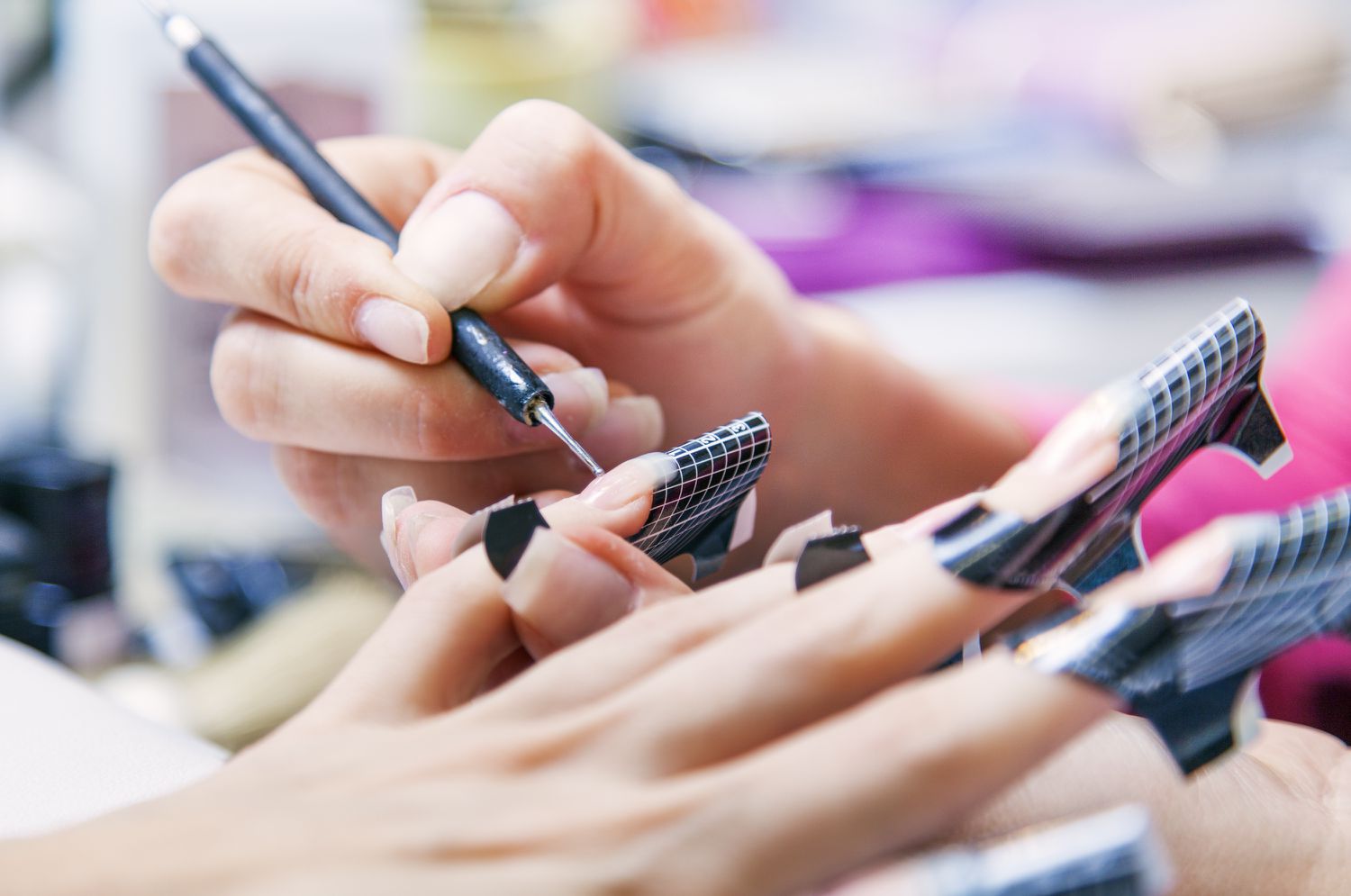
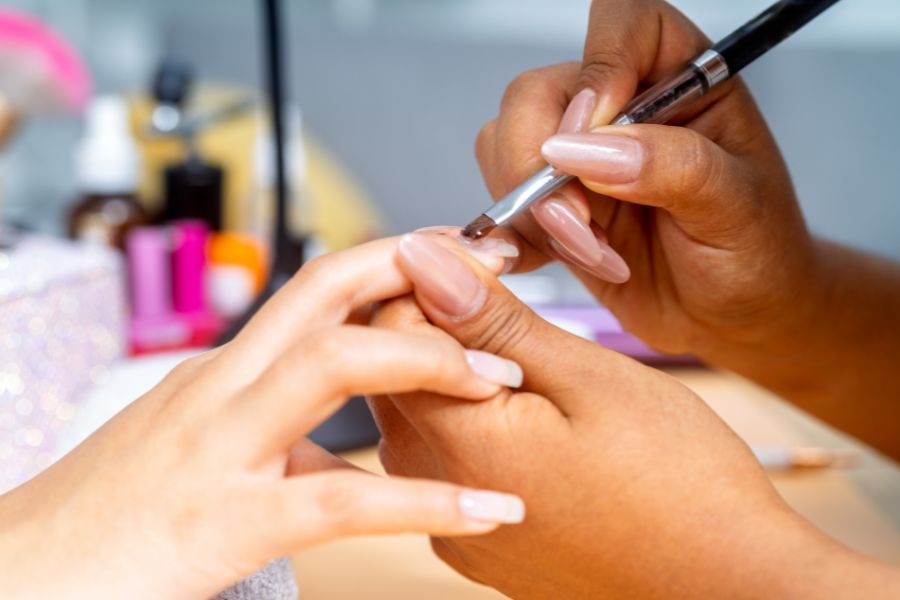
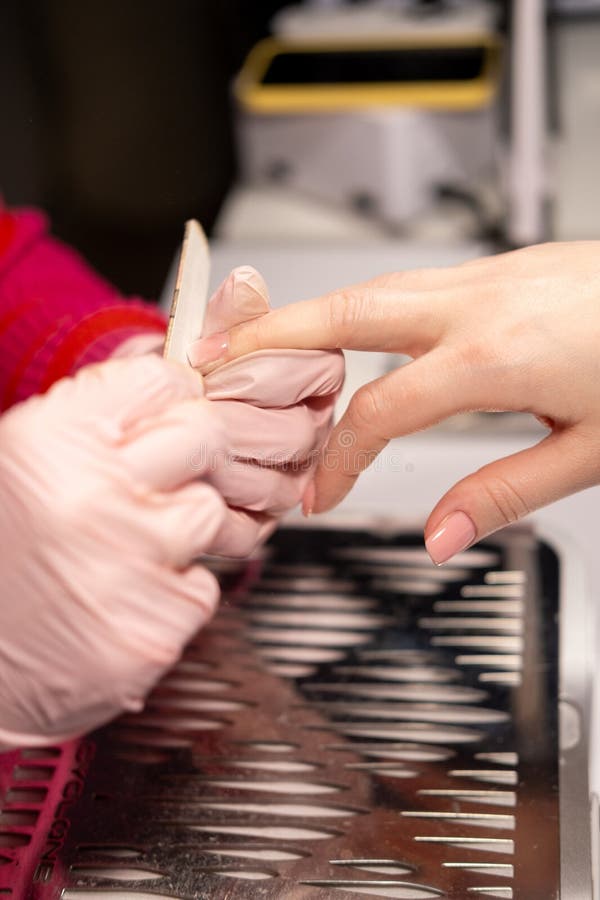
    The acrylic application process begins with nail prep – cuticle pushing, light filing of the natural nail surface, and application of a primer. If you want length, a plastic tip is glued to the end of your natural nail or a paper form is placed underneath it. The technician then dips a brush into the liquid monomer, picks up a bead of acrylic powder, and applies the resulting paste to each nail, sculpting it into the desired shape. The acrylic air-dries and hardens within minutes. The nails are then filed to the final shape, buffed smooth, and often finished with gel polish for color.

    The process typically takes sixty to ninety minutes for a full set and forty-five to sixty minutes for a fill, where new acrylic is added to the growth area at the base of the nail.

    Characteristics of Acrylics

    Characteristics of Acrylics

    Acrylic nails are notably hard and rigid. They provide significant structural strength that can extend nails to dramatic lengths without breaking. They are the thickest of the salon nail options, which gives them durability but can also make them feel heavy or less natural than thinner alternatives. Acrylics have a distinctive look – they can be filed into very precise shapes and provide an excellent canvas for nail art.

    How Gel Nails Work

    How Gel Nails Work

    Gel nails come in two forms – hard gel (also called builder gel) for structure and extension, and soft gel (regular gel polish) for color and finish. Hard gel is the direct competitor to acrylics, while soft gel polish is often applied over acrylics, natural nails, or hard gel. For this comparison, we are primarily discussing hard gel versus acrylics, though gel polish will be mentioned where relevant.

    The Application Process

    The Application Process

    Hard gel application is similar to acrylics in concept but different in execution. After nail prep, the gel is applied in thin layers directly from a pot or tube, with each layer being cured under a UV or LED lamp. This curing process hardens each layer before the next is applied, building up to the desired thickness and shape. Like acrylics, gel can be applied over natural nails for strength or over tips and forms for length.

    Gel polish application is simpler – thin layers of color gel are applied like regular polish and cured under the lamp between coats. This is the more common salon service and takes about forty-five to sixty minutes.

    Characteristics of Gels

    Characteristics of Gels

    Gel nails are more flexible than acrylics, which makes them feel more natural on the nail. They have a naturally glossy finish that many people find more attractive than the matte finish of bare acrylics. Gels tend to look more natural overall because they can be applied in thinner layers. However, this flexibility means they are not as strong as acrylics and are more prone to breaking at very long lengths.

    Appearance and Finish Comparison

    Appearance and Finish Comparison

    Which Looks More Natural

    Which Looks More Natural

    Gel nails win on natural appearance. Their thinner profile, inherent glossiness, and flexibility make them look and feel more like polished natural nails. This is especially true at shorter to medium lengths where the thinness of gel is most apparent. For women who want enhanced nails that do not look obviously artificial, gel is the better choice.

    Acrylics have a slightly thicker, more obvious appearance, especially at the cuticle area where the product meets the natural nail. However, a skilled technician can create acrylics that look very natural, especially with proper filing and a quality gel polish finish on top.

    Which Is Better for Nail Art

    Which Is Better for Nail Art

    Acrylics are the preferred canvas for elaborate nail art, especially 3D designs, intricate hand-painted work, and complex shapes. The rigid surface provides a stable base for detailed work, and the ability to build up acrylic in specific areas allows for sculptural designs that gel cannot easily achieve. If you love elaborate, dramatic nail art, acrylics are your best friend.

    Gel nails work well for simpler designs, including color blocking, glitter, foil, and hand-painted designs on a flat surface. Gel also offers some unique options like cat-eye effects and some shimmer finishes that are harder to achieve with acrylic alone. For trendy, modern nail art that does not require 3D elements, gel performs beautifully. The gel nail art design kits on Amazon include everything needed for creative at-home gel nail art.

    Durability and Strength

    Durability and Strength

    Acrylic Durability

    Acrylic Durability

    Acrylics are the strongest salon nail option. Their rigid structure resists bending, which means they can support very long nail lengths without breaking. For women who want dramatic length – stiletto, coffin, or long almond shapes – acrylics are the most reliable choice. They last two to three weeks before needing a fill, and the full set can last four to six weeks or longer with proper maintenance.

    The downside of acrylic rigidity is that when they do break, they tend to break dramatically rather than chipping gradually. An acrylic nail that catches on something can snap off, sometimes taking part of the natural nail with it. This is uncomfortable and can cause damage to the natural nail bed.

    Gel Durability

    Gel Durability

    Gel nails are durable but less structurally strong than acrylics. Their flexibility is actually an advantage in some ways – they are more likely to bend rather than snap, which can prevent the dramatic breaks that acrylics are prone to. However, this flexibility means they cannot support as much length as acrylics before they start bending, peeling, or breaking.

    Gel polish lasts two to three weeks, and hard gel extensions last about the same before needing maintenance. The maintenance schedule is similar to acrylics, but gels tend to peel at the edges more readily, especially if the nail was not properly prepped before application.

    The Durability Verdict

    The Durability Verdict

    For maximum strength and the ability to wear very long nails, acrylics win. For everyday durability at moderate lengths with more natural flex and less risk of dramatic breaks, gel wins. Your preferred nail length should be a key factor in this decision.

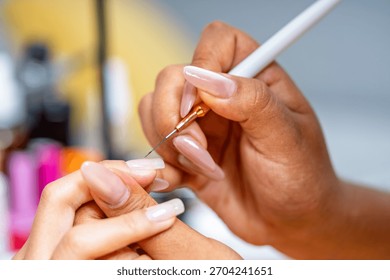
    Nail technician carefully applying acrylic nails in a bright salon

    Cost Breakdown

    Cost Breakdown

    Acrylic Costs

    Acrylic Costs

    A full set of acrylic nails typically costs forty to seventy dollars for basic acrylics with gel polish. Specialty designs, extra length, and nail art can increase this to one hundred dollars or more. Fills every two to three weeks cost thirty to fifty dollars. Over the course of a year with bi-weekly fills and occasional new full sets, acrylic nails cost approximately eight hundred to fifteen hundred dollars.

    Gel Costs

    Gel Costs

    A gel manicure on natural nails costs thirty-five to sixty dollars. Hard gel extensions cost similar to acrylics – forty-five to seventy-five dollars for a full set. Gel polish appointments every two to three weeks cost thirty-five to sixty dollars each. Annual costs for regular gel maintenance range from seven hundred to fourteen hundred dollars, roughly comparable to acrylics.

    The Cost Verdict

    The Cost Verdict

    The cost difference between acrylics and gel is minimal when compared at the same maintenance frequency. Gel polish without extensions is slightly cheaper than acrylics since there is no fill between appointments – you simply get a new gel polish application. But for extensions, the costs are nearly identical. The at-home gel manicure kits at Ulta offer a way to cut costs dramatically for gel polish applications between salon visits.

    Removal and Nail Health

    Removal and Nail Health

    Removing Acrylics

    Removing Acrylics

    Acrylic removal involves filing down the bulk of the acrylic and then soaking in acetone for twenty to thirty minutes to dissolve the remaining product. The process is time-consuming and the extended acetone exposure is harsh on both nails and surrounding skin. Improper removal – particularly pulling or prying acrylics off – can cause severe damage to the natural nail plate.

    Removing Gel

    Removing Gel

    Soft gel polish removal involves filing the top coat and soaking in acetone for ten to fifteen minutes – shorter than acrylics. Hard gel removal requires filing down rather than soaking, as hard gel does not dissolve in acetone. This filing process needs to be done carefully to avoid filing into the natural nail. Both removal methods are gentler than acrylic removal overall.

    Long-Term Nail Health Impact

    Long-Term Nail Health Impact

    Both acrylics and gel can damage natural nails over time through the repeated cycle of application and removal. Acrylics tend to cause more thinning of the natural nail due to heavier filing during application and longer acetone exposure during removal. Gel is generally considered gentler, but the UV lamp exposure during curing is a unique concern that acrylics do not share.

    For the healthiest natural nails, taking periodic breaks from both types of enhancement is recommended. During breaks, using a nail strengthening recovery treatment from Sephora can help restore your natural nails to their strongest condition.

    Which Is Right for Your Lifestyle

    Which Is Right for Your Lifestyle

    Choose Acrylics If

    Choose Acrylics If

    You want very long nails that need maximum structural support. You love elaborate 3D nail art and sculptural designs. You are hard on your nails and need the most durable option. You prefer a salon experience with a skilled technician who can create custom shapes and designs. You do not mind the maintenance schedule of bi-weekly fills.

    Choose Gel If

    Choose Gel If

    You want a more natural look and feel at shorter to medium lengths. You prefer a lighter, more flexible nail enhancement. You want to minimize damage to your natural nails. You want a glossy, high-shine finish without additional top coat. You are comfortable with UV or LED lamp exposure during curing. You want a slightly simpler removal process.

    The Bottom Line

    Acrylics are the power player – stronger, thicker, and better for dramatic lengths and elaborate art. Gel is the natural beauty – thinner, more flexible, and better for a polished, natural-looking enhancement. Neither is objectively better; the right choice depends entirely on your personal nail goals, lifestyle, and priorities. Many women switch between the two depending on the season, their mood, or upcoming events, and there is absolutely nothing wrong with that approach.

    Beautifully manicured hands resting on a bouquet of pink roses

    Key Takeaways

    • Acrylic nails are harder, stronger, and better for dramatic lengths and elaborate nail art, while gel nails are thinner, more flexible, and more natural-looking at moderate lengths.
    • Gel nails feel more natural and lightweight on the nail, while acrylics have a thicker, more substantial feel that some women prefer for its perceived durability.
    • Cost is comparable for both options, with annual expenses ranging from seven hundred to fifteen hundred dollars depending on maintenance frequency and complexity.
    • Gel removal is generally gentler and faster than acrylic removal, though both can damage natural nails if done improperly.
    • Your ideal choice depends on your preferred nail length, desired look, nail art preferences, and how important a natural appearance is to you.

    Frequently Asked Questions

    Can I get gel polish on top of acrylic nails?

    Yes, and this is actually very common. Many women get acrylic extensions for the structure and length, then have gel polish applied on top for color and shine. This combination gives you the strength of acrylics with the glossy finish and wide color range of gel polish. Most nail salons offer this as a standard option.

    Which is better for my nails if I type all day?

    Gel nails at a moderate length are generally better for frequent typists. Their flexibility allows them to absorb the repeated impact of typing without cracking, while acrylics may feel cumbersome on a keyboard and are more prone to lifting at the tips from the constant tapping. Keeping nails at a shorter length with either option also helps significantly with typing comfort.

    How do I know if my nail technician is applying them correctly?

    Signs of proper application include smooth, even product without lumps or uneven areas, clean cuticle lines with a small gap between the product and the skin, consistent thickness across the nail, and no burning sensation during application. After application, nails should feel secure but not overly tight or painful. If you experience persistent pain, lifting within days, or visible air bubbles, the application may not have been done correctly.

    Can I switch from acrylics to gel or vice versa?

    Yes, you can switch at any time. The old set will need to be fully removed first, and many nail professionals recommend giving your natural nails a brief rest period between types to recover. During this break, keep nails moisturized and use a strengthening treatment to prepare them for the new application type.

  • Abercrombie Curve Love Jeans Review – Are They Really the Best for Curvy Women?

    Abercrombie Curve Love Jeans Review – Are They Really the Best for Curvy Women?

    The Abercrombie Curve Love Hype – Is It Deserved?

    The Abercrombie Curve Love Hype - Is It Deserved?

    If you spend any time on fashion TikTok or Instagram, you have almost certainly seen someone raving about Abercrombie’s Curve Love jeans. The brand that many of us avoided in our teenage years for its exclusionary sizing has undergone a remarkable transformation, and the Curve Love line has become one of the most talked-about denim collections in the curvy fashion space. Influencers swear by them. Editors recommend them. Your coworker probably just ordered her third pair.

    But does the reality match the hype? We put Curve Love jeans through a comprehensive real-world test to find out. We wore them to the office, out to dinner, grocery shopping, on road trips, and everywhere else that jeans go in daily life. We squatted, sat, walked for miles, and washed them repeatedly. This review covers everything you need to know before investing in a pair.

    What Exactly Is the Curve Love Fit?

    What Exactly Is the Curve Love Fit?

    The Curve Love fit is Abercrombie’s solution to the most common denim frustration for curvy women: the waist-to-hip gap problem. Standard jeans are designed with a relatively uniform ratio between waist and hip measurements. When your hips are significantly wider than your waist, standard jeans either fit in the hips but gap at the waist, or fit at the waist but are impossibly tight in the hips.

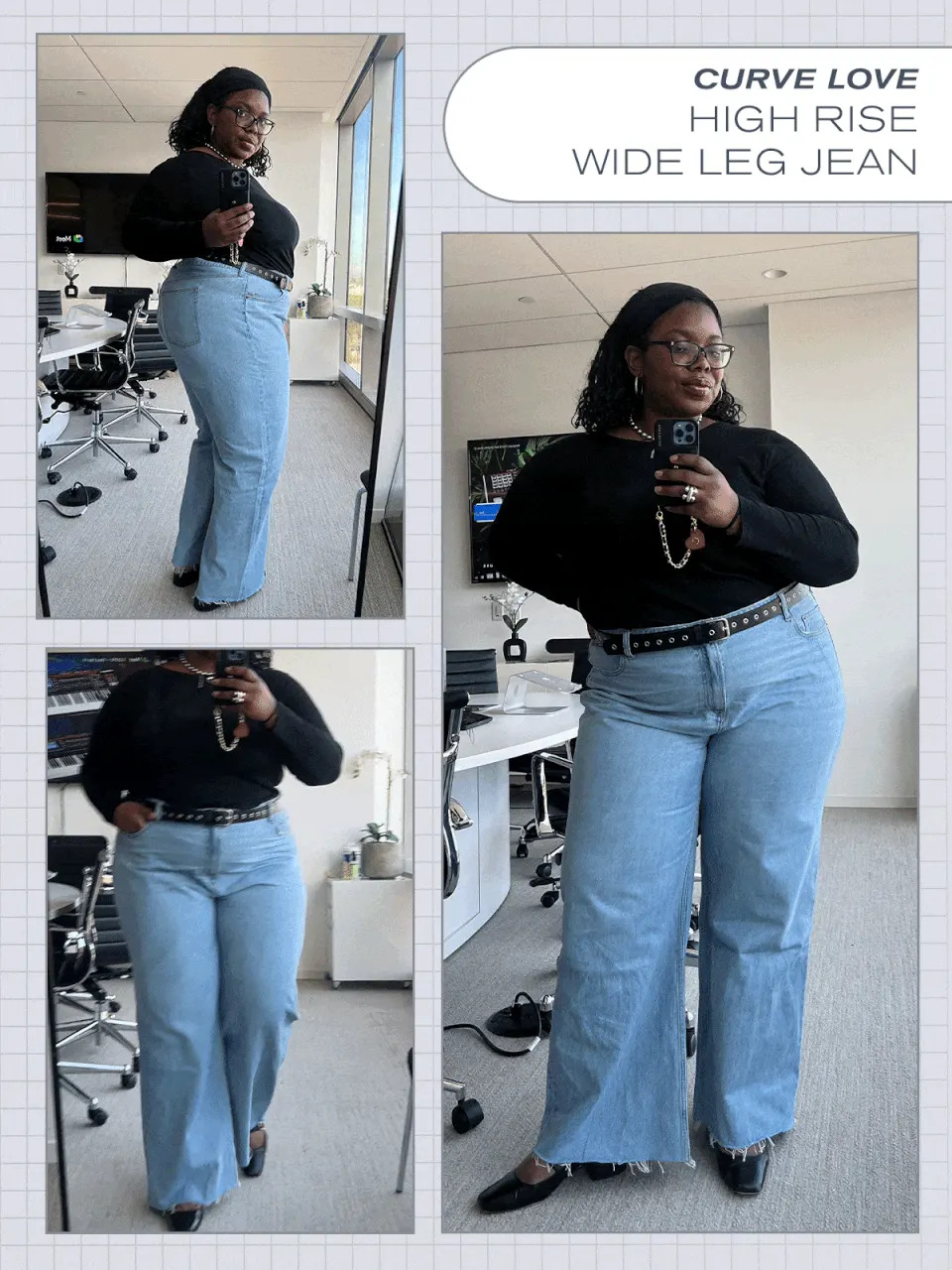
    The Curve Love line features an extra 2 inches in the hip and thigh measurements compared to Abercrombie’s regular fit jeans. Crucially, this extra room is added only in the hip and thigh area while the waist stays true to size. This means the jeans accommodate fuller hips and thighs without requiring you to size up and deal with a waistband that is too large. The result is jeans designed to hug your waist while still accommodating your curves, eliminating the frustrating gap that plagues curvy women in standard denim.

    The Curve Love fit is available across nearly all of Abercrombie’s jean styles, including their popular 90s Straight, Ultra High Rise, Dad Jean, Vintage Flare, and Wide Leg silhouettes. This means you are not limited to one or two styles but can find the Curve Love fit in whatever silhouette you prefer.

    Detailed Fit Review

    Detailed Fit Review

    Waist Fit

    Waist Fit

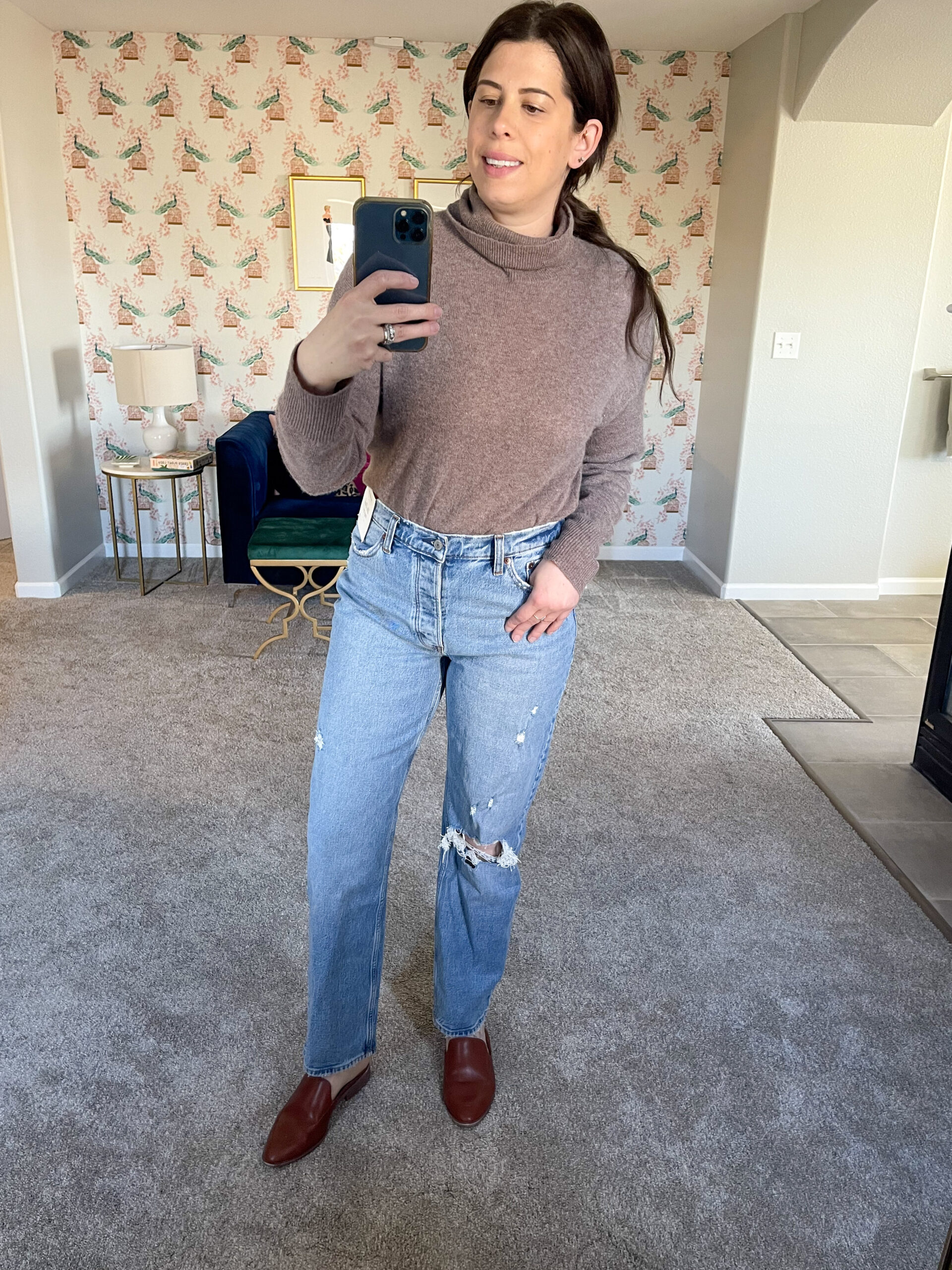
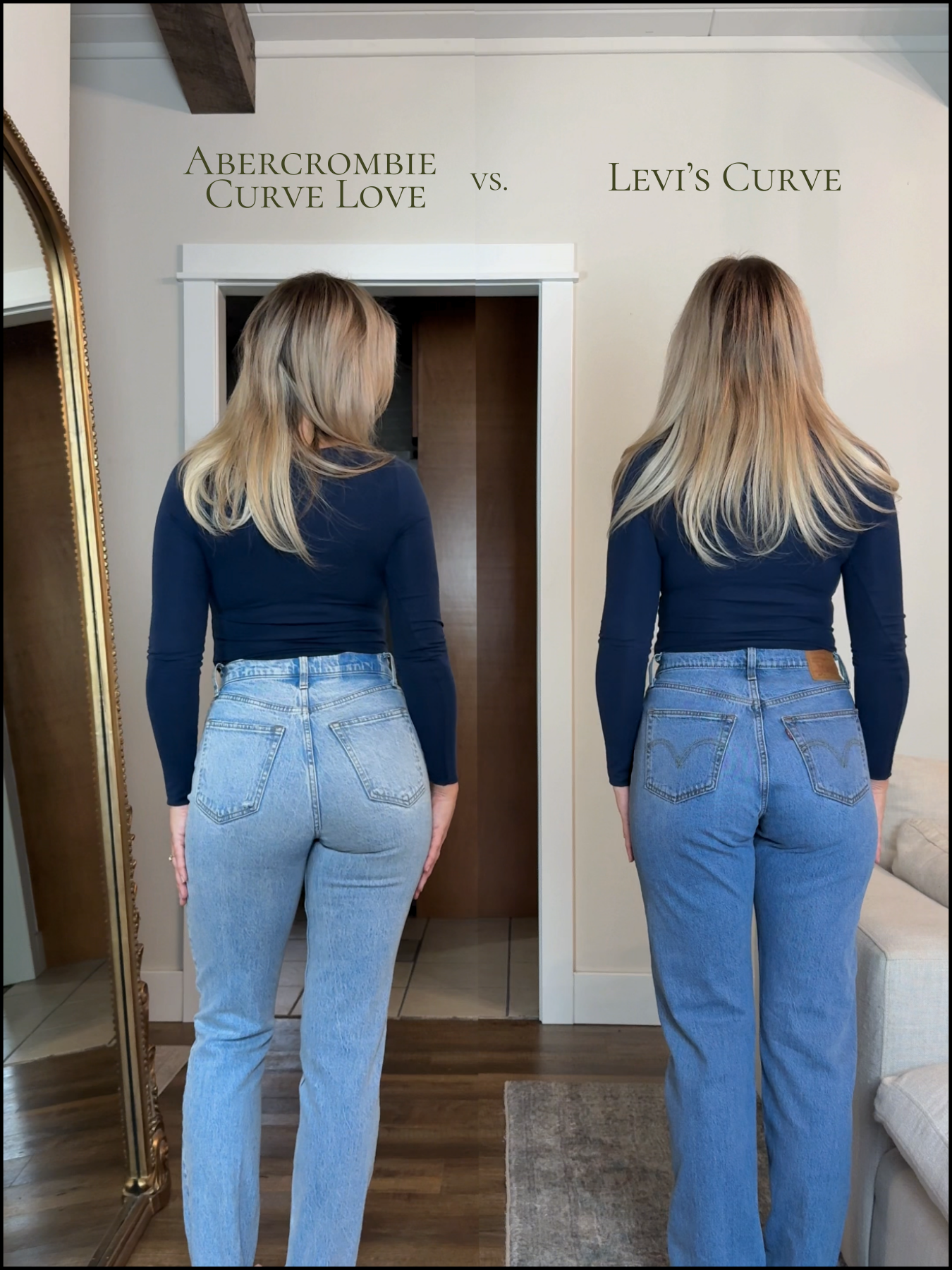
    The waist fit is where Curve Love jeans truly shine. The waistband sits snugly against the natural waist without the dreaded back gap that occurs with standard jeans on curvy bodies. When you sit down, the waistband stays in place rather than pulling away from your lower back. This single feature is the reason Curve Love jeans have earned such a devoted following. For women who have spent years tugging at gaping waistbands, putting on a pair of jeans that actually sits flat against your waist is genuinely emotional.

    Hip and Thigh Fit

    Hip and Thigh Fit

    The extra 2 inches in the hip and thigh area provides comfortable room without creating excess fabric. The fit is smooth through the hip and thigh without pulling, stretching, or creating the horizontal stress lines that indicate jeans are too tight. There is enough room to move freely through your full range of motion, including squatting, sitting cross-legged, and climbing stairs, without feeling restricted.

    Rear Fit

    Rear Fit

    Curve Love jeans are designed to accommodate a fuller rear while maintaining a flattering fit. The back yoke (the seam construction below the waistband) is shaped to follow the natural curve of a fuller backside rather than pulling flat across it. The result is jeans that hug your curves without restricting movement or creating uncomfortable tightness.

    Leg Fit

    Leg Fit

    Below the thigh, the Curve Love fit transitions into whatever leg silhouette you have chosen, whether that is a straight leg, wide leg, bootcut, or skinny. The curvy modifications are concentrated in the waist, hip, and thigh areas, so the lower leg fit matches the standard version of each style.

    Close-up of curvy jeans construction showing tailored waistband and hip fit

    Styles We Tested

    Styles We Tested

    90s Straight Curve Love

    90s Straight Curve Love

    The most popular Curve Love style and our top pick. The relaxed straight leg sits below the knee with a slight room that is universally flattering. The ultra-high rise provides excellent waist coverage and a smooth front panel. This is the most versatile style, working with everything from sneakers to heeled boots. The denim has a slightly rigid feel with enough stretch for comfort, and it holds its shape impressively throughout the day.

    Shop 90s Straight Curve Love

    Ultra High Rise Skinny Curve Love

    Ultra High Rise Skinny Curve Love

    For skinny jean lovers, the Curve Love version provides all the benefits of the curvy fit in a close-to-the-body silhouette. The high rise smooths the tummy area and the curvy hip construction prevents the uncomfortable squeezing through the thighs that standard skinny jeans cause on curvy bodies. The stretch content is higher in this style, providing a more flexible, comfortable fit for all-day wear.

    Vintage Flare Curve Love

    Vintage Flare Curve Love

    The flared leg creates a stunning retro silhouette that is particularly flattering on curvy bodies. The fitted hip that opens into a dramatic flare below the knee balances proportions beautifully. Pair with platform shoes or heels for the most elongating effect. The denim in this style has a slightly heavier weight that gives the flare beautiful movement.

    Wide Leg Curve Love

    Wide Leg Curve Love

    The wide-leg version is the most on-trend style for 2026. The fitted waist and hip area that opens into a sweeping wide leg creates an elegant, effortless silhouette. The high rise provides structure and coverage while the wide leg balances curves with volume. This style requires a bit of length, so petite women may need hemming.

    Dad Jean Curve Love

    Dad Jean Curve Love

    The relaxed, slightly baggy Dad Jean silhouette looks intentionally oversized through the leg while the Curve Love waist fit keeps the top of the jeans structured and fitted. This is the most casual style, perfect for weekends with sneakers and an oversized tee. The looser fit through the thigh makes this the most comfortable Curve Love option for all-day wear.

    Sizing Guide and Tips

    Sizing Guide and Tips

    Abercrombie Curve Love jeans run fairly true to size in the waist, though there are important nuances to consider.

    Waist Sizing

    Waist Sizing

    The waist sizing is true to Abercrombie’s size chart. If you know your waist measurement in inches, use that as your starting point. Available in waist sizes 24 to 37, the range covers a broad spectrum of curvy bodies.

    Rigid vs. Stretch Denim

    Rigid vs. Stretch Denim

    For rigid denim styles like the 90s Straight, consider sizing up if you are between sizes. Rigid denim has less give and the initial fit will be snugger than the worn-in fit. For stretch styles like the Ultra High Rise Skinny, true-to-size is usually accurate because the fabric has more give.

    Inseam Options

    Inseam Options

    The brand offers four different inseam lengths: Short (approximately 27 inches), Regular (approximately 29 inches), Long (approximately 31 inches), and Extra Long (approximately 33 inches). This range accommodates women from 5 feet to over 6 feet tall, which is more inclusive than many curvy denim brands.

    Shop All Curve Love Styles

    Quality and Construction Assessment

    Quality and Construction Assessment

    Denim Quality

    Denim Quality

    The denim quality is excellent for the price point. Most Curve Love jeans use rigid or comfort stretch denim with a soft, lived-in feel that gets better with each wear. The fabric has substantial weight that feels premium without being heavy, and the denim holds its color well through multiple washes.

    Construction

    Construction

    Stitching is clean and consistent, rivets are secure, and zippers function smoothly. The hardware quality matches what you would expect from brands charging $150 or more. The back pockets are proportionally sized and well-placed, which seems like a minor detail but is actually important for how the jeans look from behind.

    Durability

    Durability

    After multiple wears and washes, the Curve Love jeans maintained their shape, color, and construction. No pilling in the inner thigh area, no loosening of the waistband, and no premature wear at stress points. These are jeans that will last for years with regular wear and proper care.

    Pricing and Value

    Pricing and Value

    Curve Love jeans range from $80 to $100, which places them in the mid-range of the denim market. This is more expensive than fast-fashion options from brands like Old Navy and Target but significantly less than premium curvy denim from Good American ($149) and NYDJ ($119+). When you factor in the specialized curvy fit, quality denim, and excellent construction, the value proposition is strong. Abercrombie also runs periodic sales that bring prices down to $60 to $75 per pair, making them even more accessible.

    Pros and Cons

    Pros and Cons

    Pros

    Pros

    Exceptional curvy fit: The extra 2 inches in the hip and thigh with a true waist eliminates the gap problem that plagues curvy women in standard jeans.

    Wide style variety: Curve Love is available in virtually every silhouette Abercrombie offers, from skinny to wide leg.

    Four inseam lengths: Options for petite through extra tall ensure the right length for every height.

    Quality construction: Premium denim quality and construction that exceeds expectations for the price point.

    Reasonable pricing: At $80-$100, these compete well against more expensive curvy denim brands.

    Cons

    Cons

    Limited plus size range: Waist sizes top out at 37, which does not extend into the full plus size range. Women who need sizes above approximately 20/22 will not be served by Curve Love.

    Online-only for most sizes: While Abercrombie has physical stores, in-store availability of Curve Love in extended sizes can be limited. Online ordering with returns may be necessary.

    Some styles sell out quickly: Popular styles in popular sizes can sell out and may take time to restock.

    How Curve Love Compares to Competitors

    Curve Love vs. Good American Good Curve ($149)

    Curve Love vs. Good American Good Curve ($149)

    Good American offers a broader size range (00-32) and more advanced stretch technology. The quality is marginally better, but the price is significantly higher. For curvy women within Abercrombie’s size range, Curve Love offers 90 percent of the Good American experience at 60 percent of the price.

    Curve Love vs. American Eagle Curvy ($49-$59)

    Curve Love vs. American Eagle Curvy ($49-$59)

    American Eagle’s curvy line is more affordable but uses more stretch fabric that tends to bag out faster. For everyday casual jeans, AE curvy is a solid budget option. For jeans that maintain their shape and look more polished, Curve Love is worth the premium.

    Shop Good American for Comparison

    Curve Love vs. Levi’s Curvy ($59-$80)

    Curve Love vs. Levi's Curvy ($59-$80)

    Levi’s offers the heritage denim brand credibility and a slightly lower price point. The curvy fit is good but not as precisely engineered as Curve Love. Abercrombie wins on fit precision and style variety, while Levi’s wins on brand heritage and slightly lower pricing.

    Who Should Buy Curve Love Jeans

    Who Should Buy Curve Love Jeans

    Definitely buy if: You have a significant difference between your waist and hip measurements (10+ inches), you are frustrated by waist gapping in standard jeans, your size falls within the 24-37 waist range, and you value quality denim at a reasonable price.

    Consider alternatives if: You need sizes above a 37 waist (try Good American), you want ultra-budget options (try American Eagle curvy), or you prefer a very loose, relaxed fit without any waist definition.

    Before and after comparison of standard jeans gapping versus perfect curvy fit jeans

    Key Takeaways

    • Abercrombie Curve Love jeans add 2 extra inches in the hip and thigh while keeping the waist true to size, effectively solving the waist-gap problem for curvy bodies.
    • The 90s Straight Curve Love is the most versatile and universally flattering style, making it the best starting point for new Curve Love buyers.
    • At $80-$100, Curve Love offers excellent value compared to premium curvy denim brands while delivering superior fit to budget alternatives.
    • Four inseam lengths from Short to Extra Long accommodate women of virtually every height.
    • The main limitation is the size range topping out at waist 37, which excludes women in higher plus sizes who would benefit from the curvy fit.

    Frequently Asked Questions

    Do Abercrombie Curve Love jeans run true to size?

    Do Abercrombie Curve Love jeans run true to size?

    Yes, Curve Love jeans run fairly true to size in the waist. The curvy modifications are in the hip and thigh area, not the waist, so your standard waist size should be accurate. For rigid denim styles, consider sizing up one if you are between sizes. For stretch styles, true to size works well. Always check the size chart and use your measured waist size rather than your size from other brands.

    What is the difference between Curve Love and regular Abercrombie jeans?

    The Curve Love fit adds approximately 2 extra inches in the hip and thigh measurements compared to Abercrombie’s regular fit, while keeping the waist measurement the same. This means Curve Love jeans accommodate a larger difference between waist and hip sizes. If you have an hourglass, pear, or curvy body shape with hips significantly wider than your waist, Curve Love will fit better than the regular cut.

    Are Curve Love jeans worth $80 to $100?

    Are Curve Love jeans worth $80 to $100?

    For curvy women who have struggled to find well-fitting jeans, absolutely yes. The specialized curvy fit, quality denim, multiple inseam options, and wide style variety make Curve Love a strong value at this price point. When you compare to premium curvy brands like Good American at $149, the value becomes even clearer. Shopping during Abercrombie sales can bring the price down to $60-$75, making them an exceptional deal.

    Do Curve Love jeans work for plus size women?

    Do Curve Love jeans work for plus size women?

    Curve Love jeans work for plus size women within their size range of waist sizes 24-37, which approximately corresponds to sizes 0-20. For women who need sizes above 20, the size range may not be sufficient, and brands like Good American (up to size 32) or Universal Standard (up to size 40) offer curvy and plus size options in broader size ranges. If you fall within the Curve Love size range, they are one of the best options available regardless of whether you identify as plus size, mid-size, or curvy.