Category: Style Guides by Occasion

  • What to Wear for an Interview Plus-Size: 7 Outfits by Format

    What to Wear for an Interview Plus-Size: 7 Outfits by Format

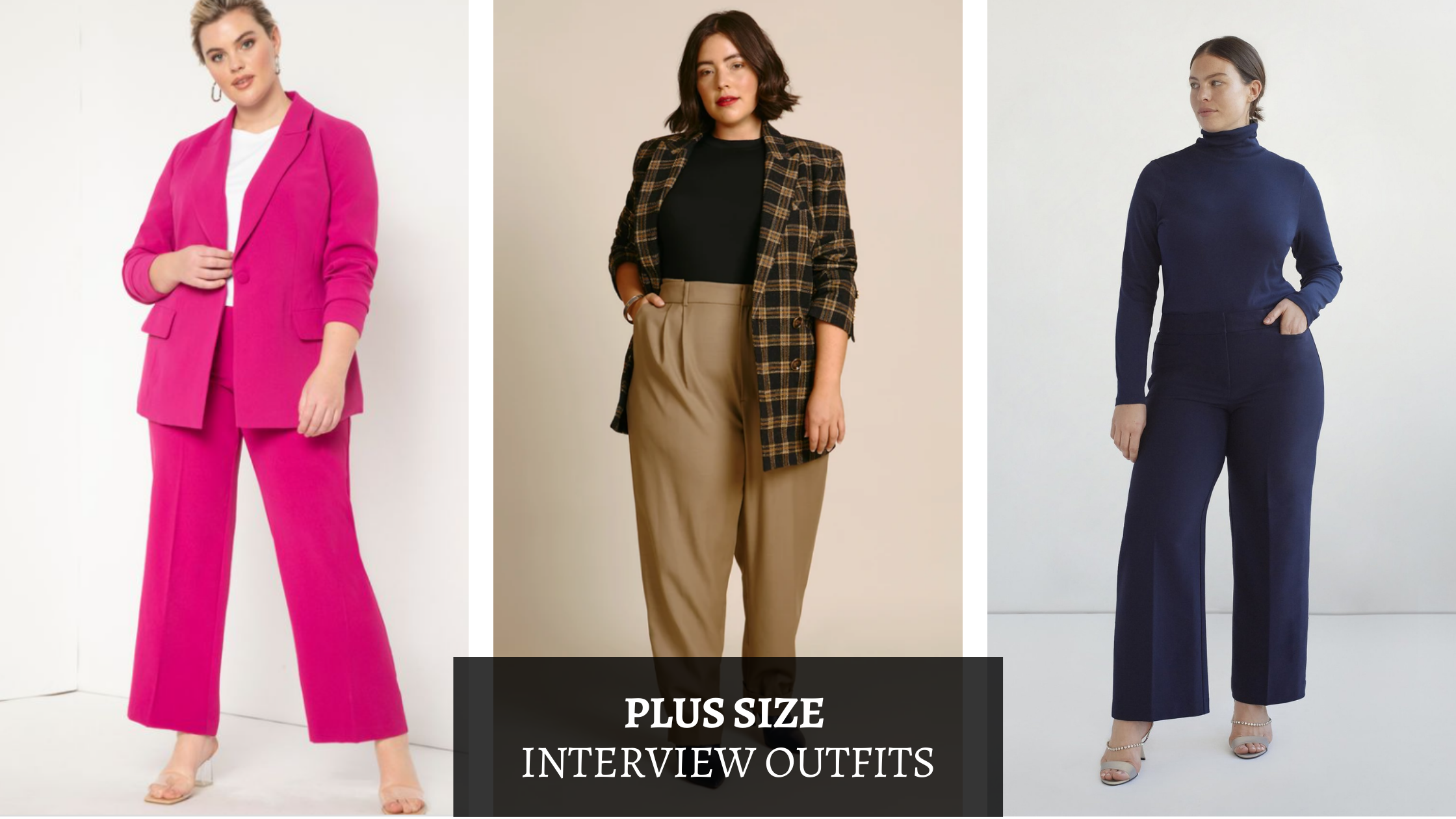
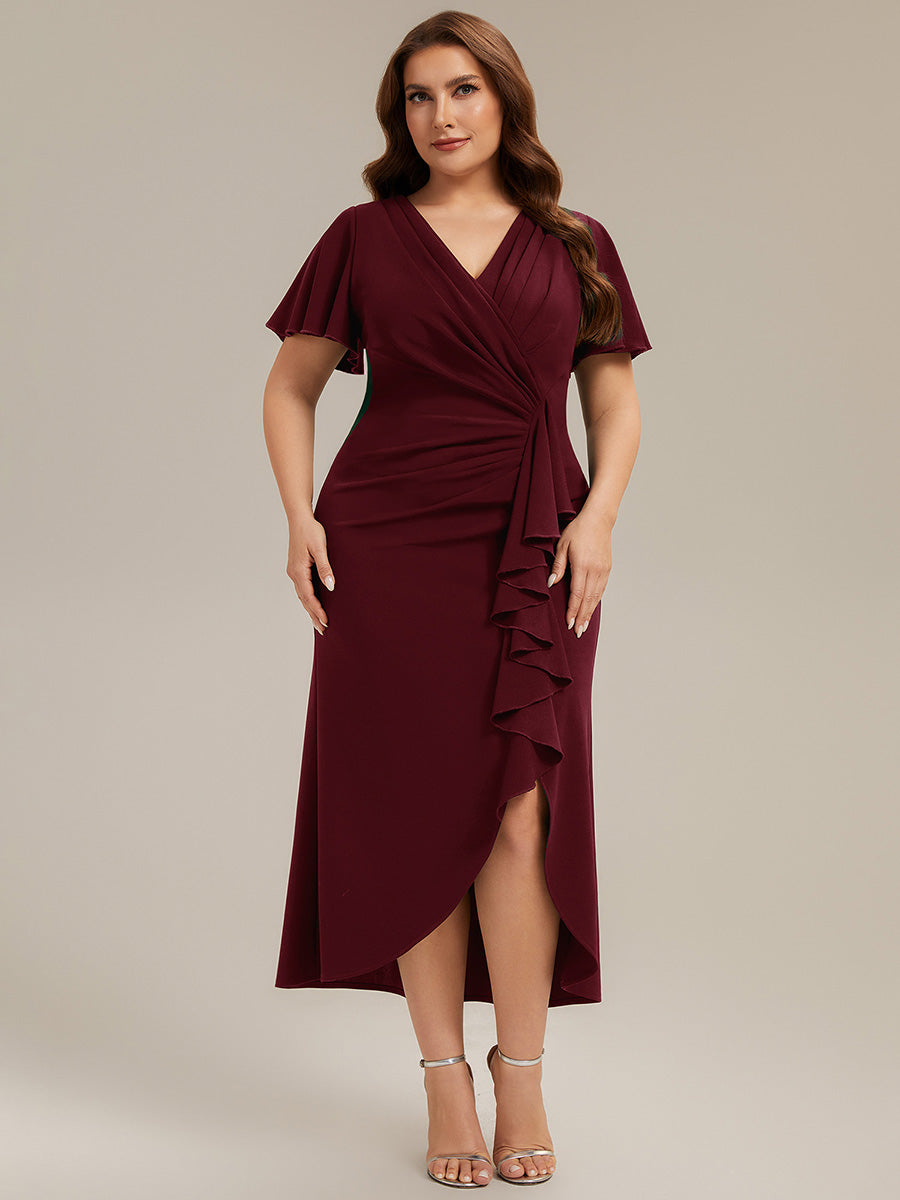
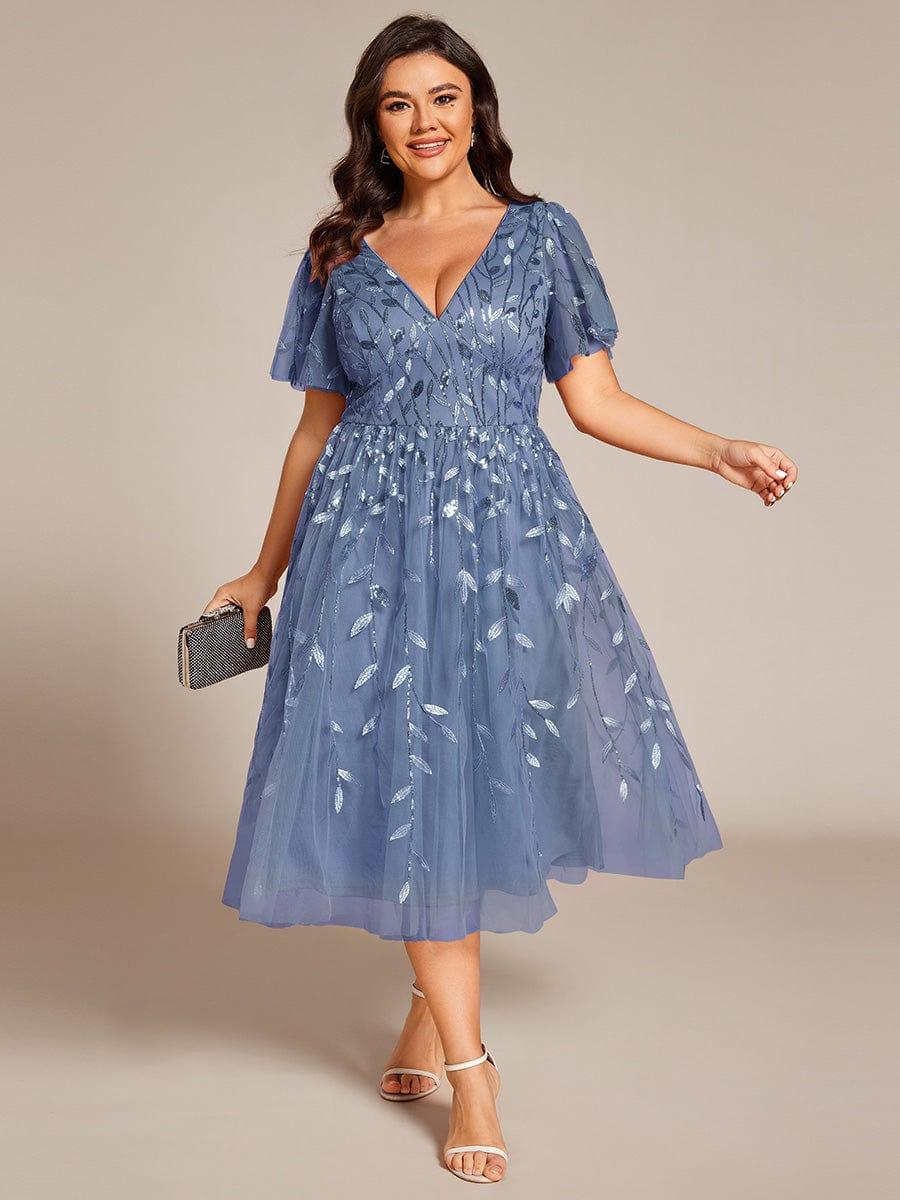
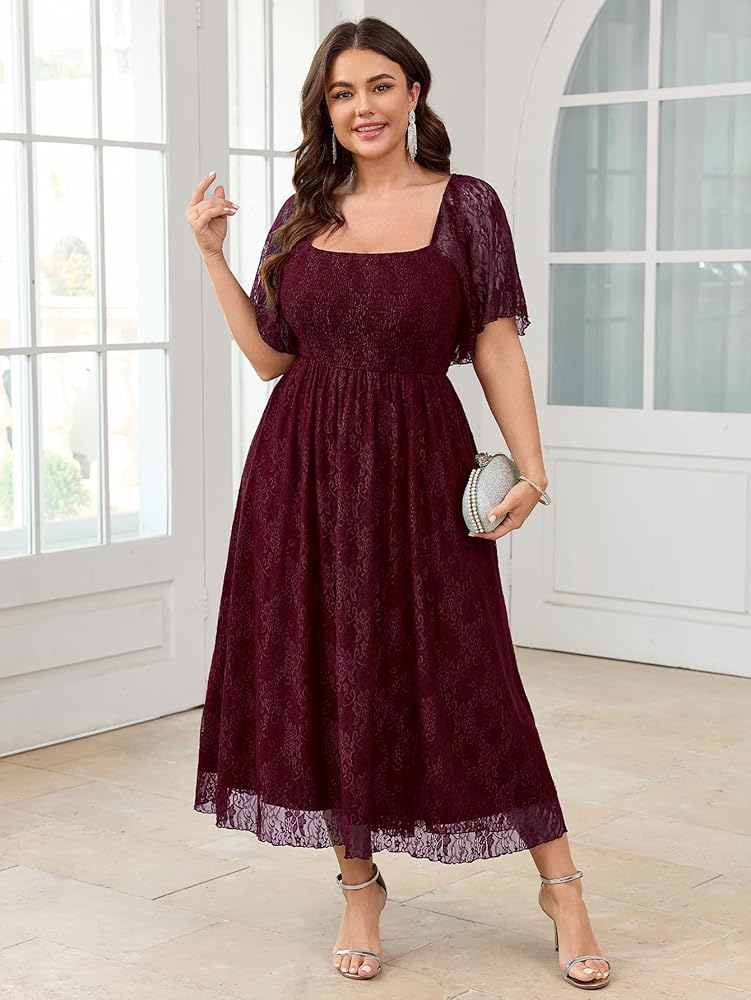
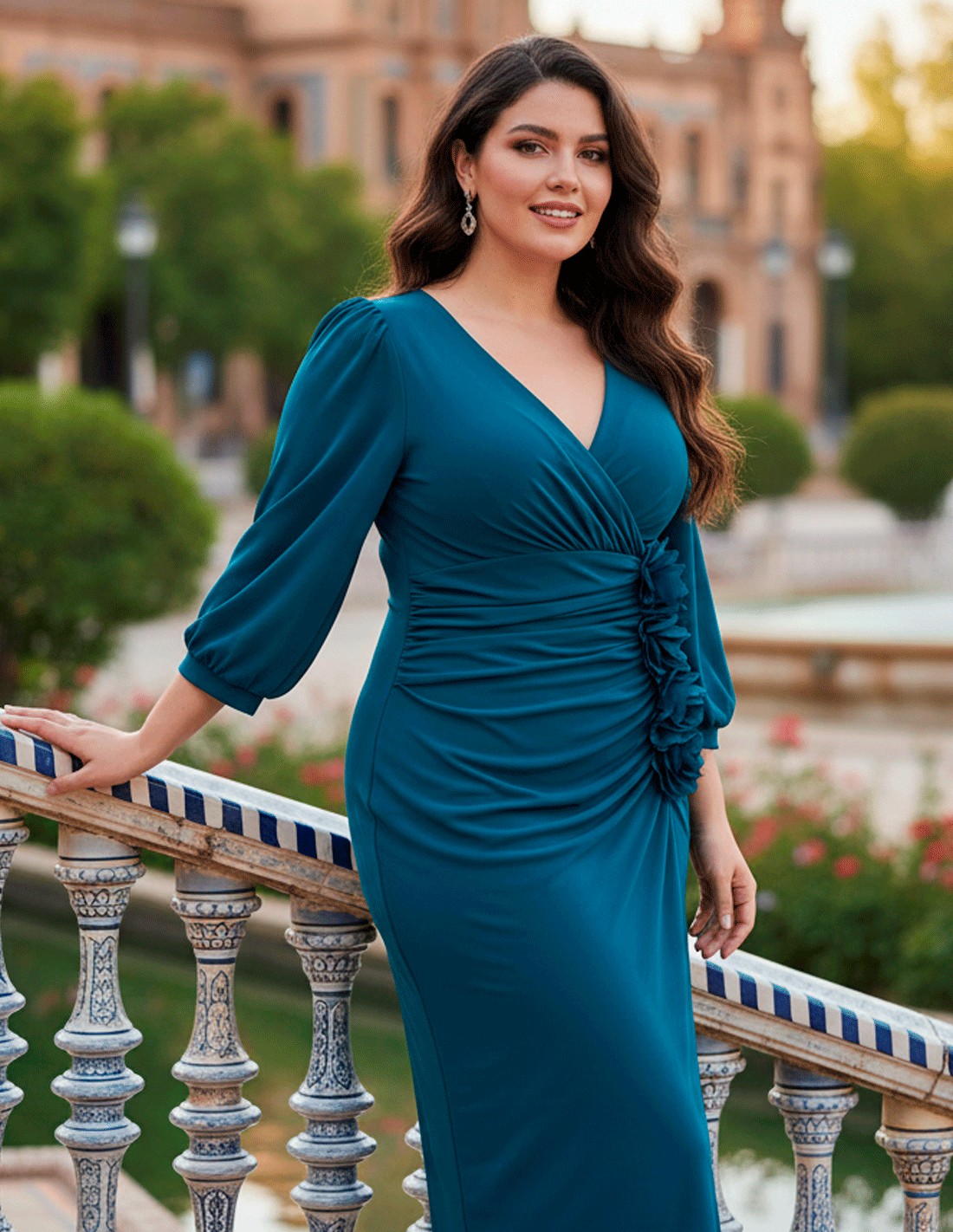
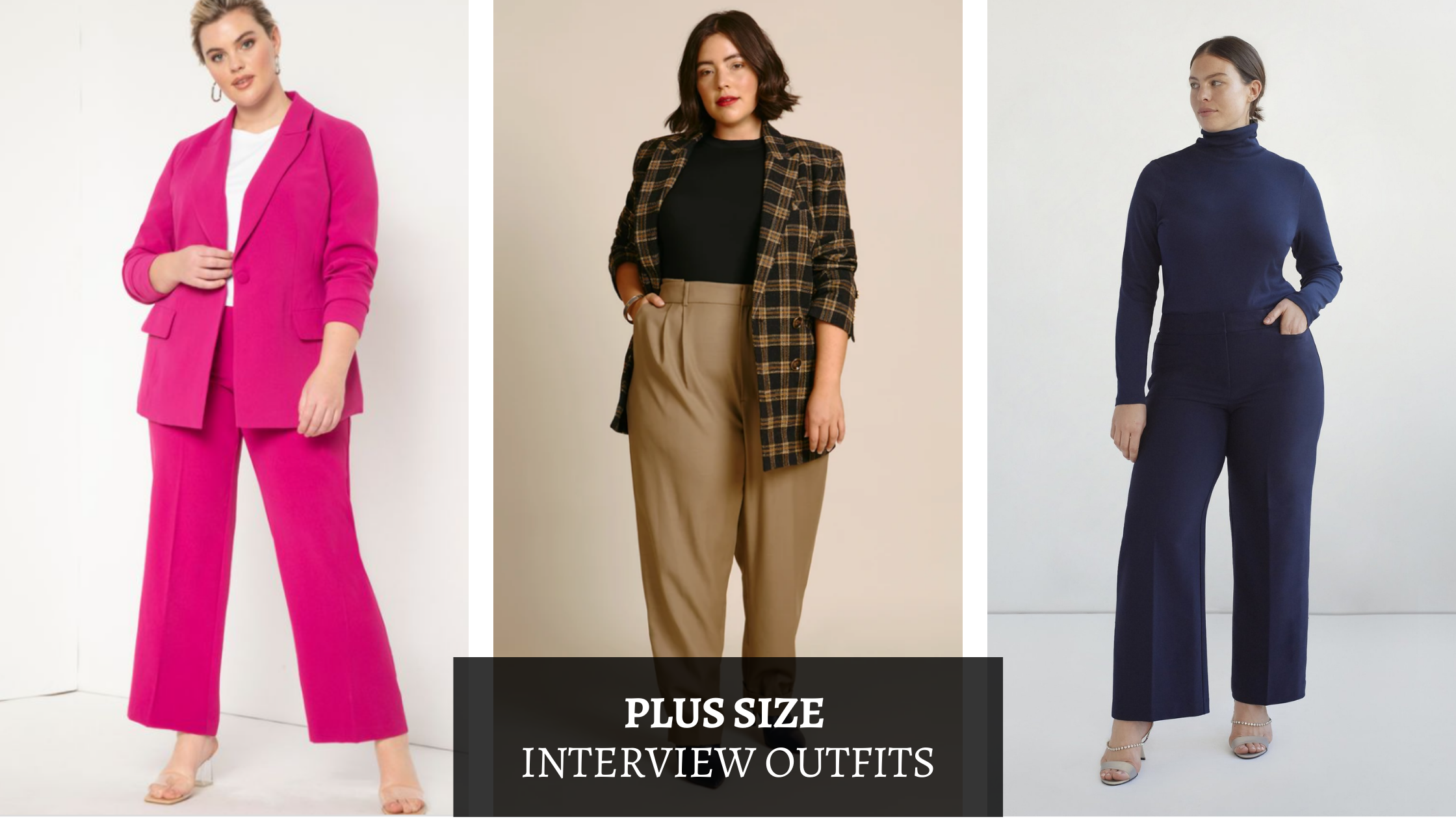
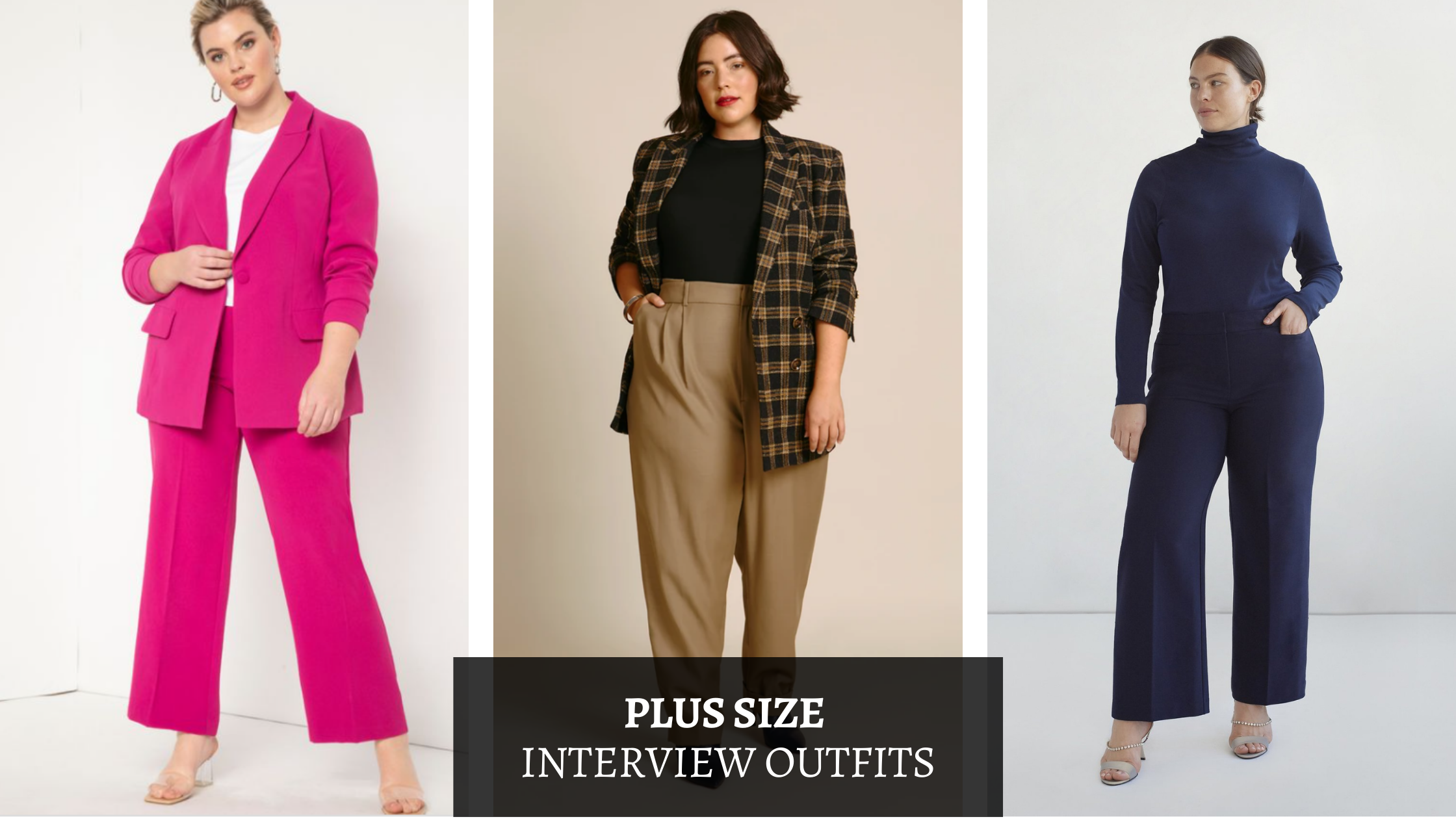
    Four plus-size women styled for different interview formats including Zoom, in-office, lunch, and executive

    After three years of covering interview dressing for plus-size readers – and a separate decade in editorial rooms watching how candidates get read in the hallway before they open their mouths – the question I get most is not “what should I wear” but “what should I wear for this specific format.” A Zoom first-round and a four-hour onsite panel are not the same outfit problem. Neither is the lunch interview, the second-round team meeting, or the final-round conversation with a CEO who has already decided you can do the job and is checking whether you read as someone they want at the table. Industry helps, but format dictates fabric, fit, and which pieces actually do the work.

    This breakdown moves through seven interview formats you will plausibly encounter between now and end of year. Each section names an anchor outfit, the specific pieces by retailer and price tier, and the styling note that separates a candidate who dressed for the format from one who dressed for “an interview, generally.” Prices are mid-2026 retail.

    What to consider before the format conversation

    Three variables sit above format and shape every outfit decision after them. The first is the visible self-presentation of the people already in the role. Pull the company’s LinkedIn, find three current employees at your target level, and look at the team page or any public talk footage. A team that shows up in soft knits and clean denim wants a different read than a team in structured suiting. Match the room, then add one degree of polish above it.

    The second is duration. A 30-minute Zoom needs to nail the camera frame from sternum up. A six-hour onsite panel needs to hold shape through three conference rooms, a building tour, and a coffee that gets spilled by hour four. Silk crepe and structured ponte both photograph well, but only one survives a full day in a fluorescent-lit room without bagging at the seat.

    The third is the camera test. Most plus-size interview dressing fails the camera test, not the in-person one. A pattern that reads subtle in the mirror photographs as visual noise under flat office light. A pastel that looks soft in daylight goes washed-out under fluorescents. Jewel tones and saturated darks photograph cleanly across lighting conditions. Photograph the outfit under your home overhead light before you wear it anywhere that matters.

    1. Phone screen – the comfort outfit that primes your voice

    Phone screens are the only interview format where what you wear does not directly affect the outcome. What it does affect is your posture, your breath, and the tone of voice that comes out of you. I have done phone screens in pajamas and they were worse interviews than the ones I did in tailored separates I did not need to wear. Get dressed for the call. Not formal, but deliberately.

    The anchor outfit: a fitted ponte knit top and a wide-leg trouser in a fabric with structure. The Universal Standard fitted ponte crewneck in black, around $98, paired with the Eloquii High-Rise Wide-Leg Trouser in charcoal, around $129, sized through 28. Sit at a desk, feet on the floor, both hands free for notes. The ponte does not constrict the diaphragm the way a stiff button-down does, which is the actual reason phone-screen outfits matter for plus-size candidates with full busts. Constriction at the rib cage shortens your breath, which compresses your speaking range. Wear something that lets you breathe deep enough to sound calm.

    2. Zoom or video first round – the sternum-up outfit

    The video interview is the format where plus-size candidates are most often misadvised. The standard advice is “dress as you would in person from the waist up,” which ignores the camera framing entirely. The camera sees from mid-chest to the top of your head. Everything from the bust up needs to photograph cleanly under whatever room light you have, and nothing below the rib cage matters except your posture.

    The anchor piece: the Universal Standard silk-blend blouse in sapphire or emerald, around $148, sized 00-40. A saturated jewel tone in a fabric with subtle sheen photographs as polished without picking up patterns or shadows that flatten under webcam compression. Pair with a fine gold chain that sits at the collarbone and small gold studs. Skip statement earrings on Zoom – they pull focus from your face. For the bottom half, wear whatever you can sit comfortably in for 45 minutes. Nobody is going to see it, but a too-tight waistband will make you shift, and the camera reads shifting as nervous.
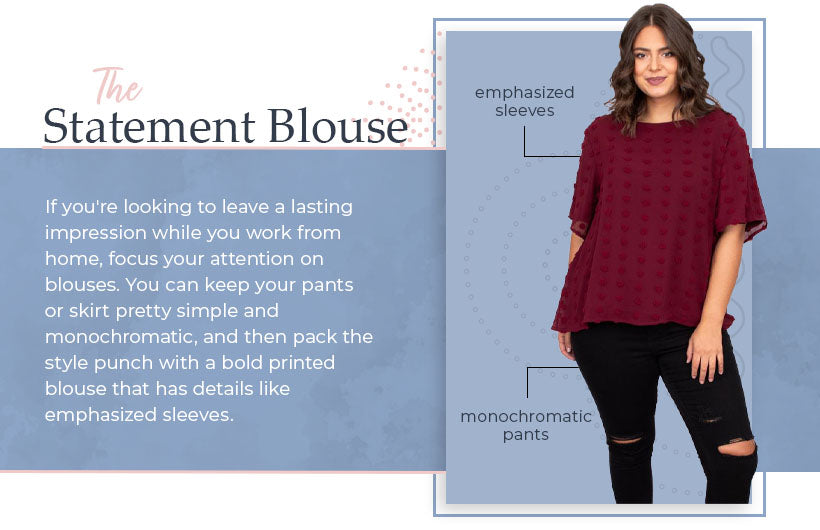
    Plus-size candidate in sapphire silk blouse styled for a Zoom video interview

    3. In-office single first round – the polished one-piece

    The 45-minute in-office first round is the most-common interview format in 2026, and it rewards the one-piece outfit decision. A dress carries the look on its own, removes the question of whether your separates read as cohesive, and lets you focus on the conversation instead of adjusting a tucked shell every time you sit down. For plus-size bodies, the right fabric is the entire game – a ponte knit or a structured crepe will sit cleanly through a 45-minute conversation, while a thin jersey will start to ride and bag almost immediately.

    The anchor piece: the Eloquii Ponte Knit Sheath Dress in burgundy or deep teal, around $109, sized through 28. The ponte fabric has a memory that holds shape across sitting, standing, and the building walk to the conference room. Layer with an unstructured blazer in cream or camel if the season calls for it. Pair with a closed-toe block-heel pump from Naturalizer in wide width , around $110, and a structured shoulder tote in black or cognac leather. The dress does the heavy lifting; the accessories stay quiet.
    Plus-size candidate in burgundy ponte sheath and camel blazer for in-office first round interview

    4. Full panel day – the all-day endurance outfit

    The four-to-six hour onsite panel is the format where most interview outfits fail. The fabric does not hold, the shoes start to ache by the second conference room, the layers that looked sharp in the morning go limp by lunch. The panel outfit is an engineering problem first and a styling problem second. Choose pieces that perform across temperature swings, three different rooms, the building tour, and the inevitable spilled water.

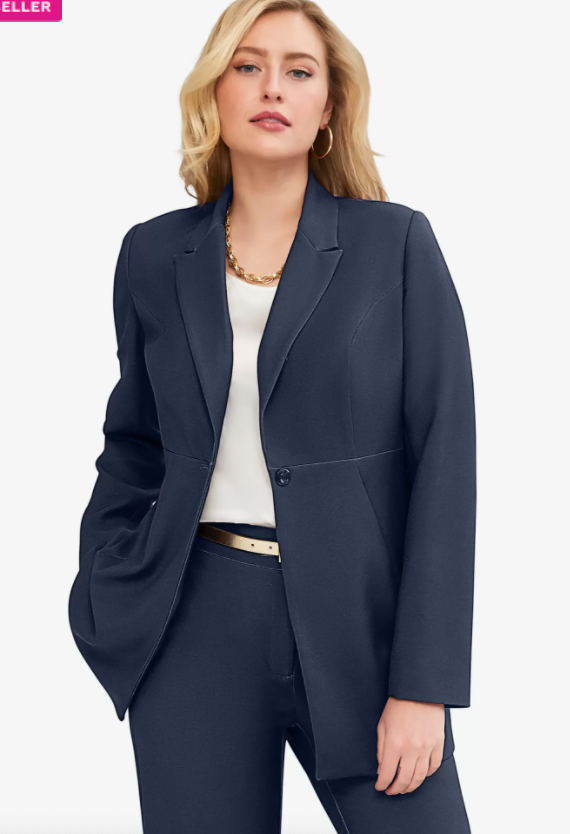
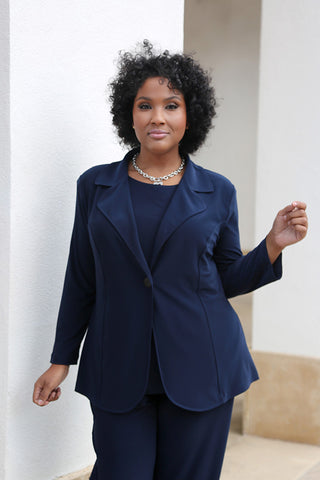
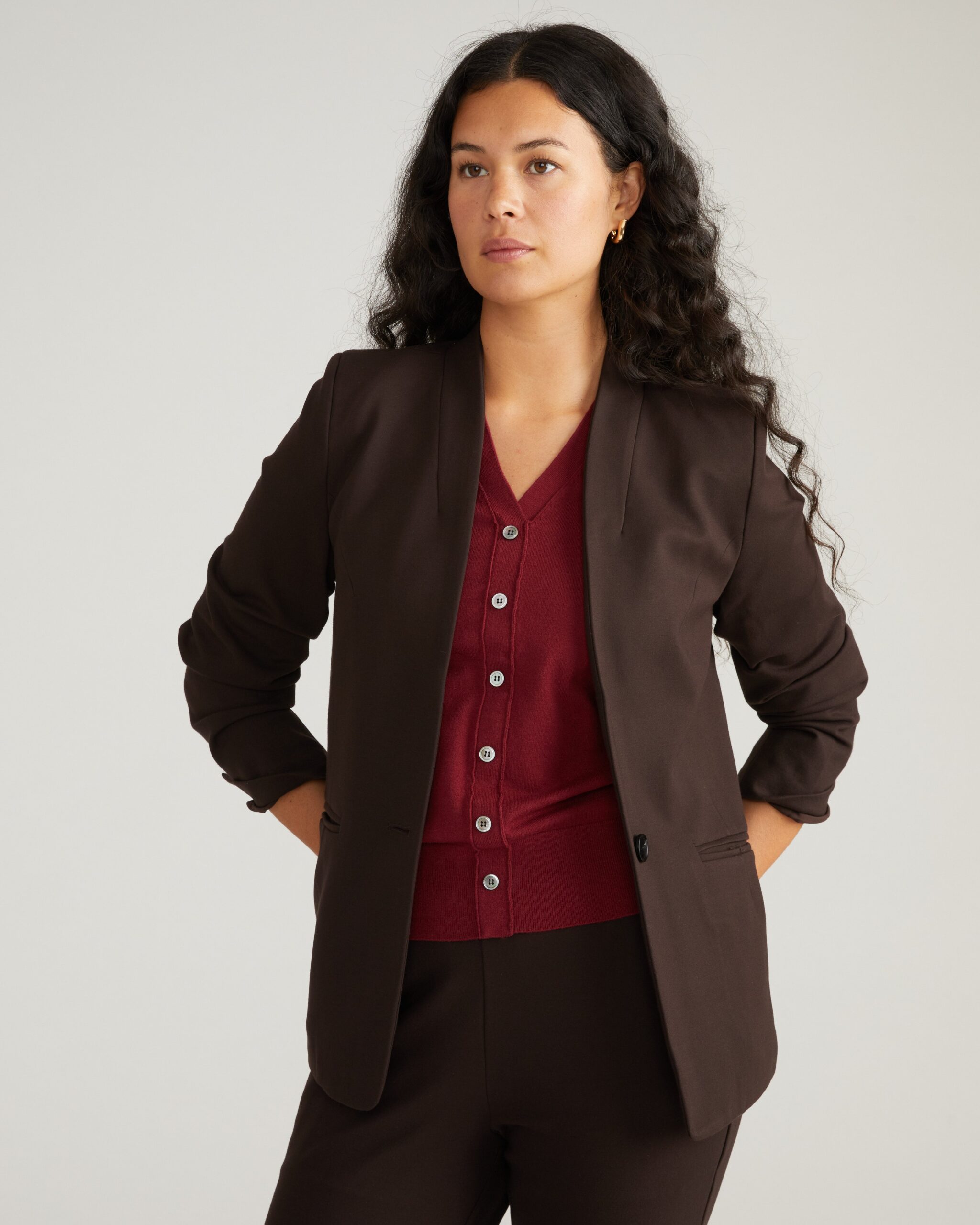
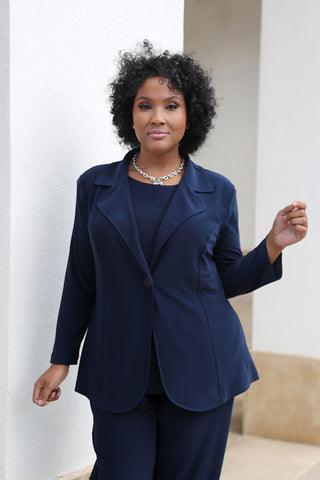
    The anchor pieces: the Universal Standard Stephanie Blazer in navy, around $180, paired with a matching wide-leg trouser around $128, both sized through 40. The shoulder construction sits cleanly without padding bulk, and the ponte-adjacent fabric handles a full day without going wrinkled at the elbow. Shell underneath: a fitted silk-blend in cream or pale blue, no pattern. Shoes: a low block-heel from Cole Haan in wide width , around $150, broken in over at least four short wears before the panel. Bag: a structured leather tote large enough for a laptop, water, a backup pair of tights, and a snack you will absolutely need by hour three. The whole look is built for stamina.
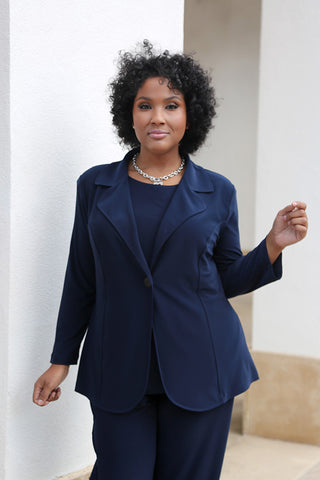
    Plus-size candidate in navy blazer and trousers for full panel day interview

    5. Lunch interview – the dress that handles a fork

    The lunch interview is the most-underrated trap in the format menu. You are eating in front of strangers who are evaluating you, often at a restaurant they chose specifically because the dining room is loud and you will need to lean in to be heard. The outfit needs to read polished, survive a soup spoon, and let you reach across a table without your blouse pulling at the bust. The wrong fabric here is any silk shell with a delicate hem and any white or cream piece anywhere within reach of marinara.

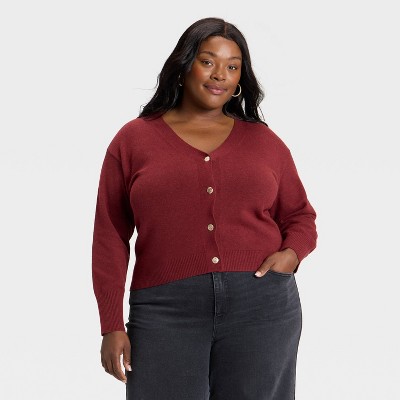
    The anchor piece: a knit twinset, which is the most-undervalued plus-size workwear piece of the last five years. The Universal Standard merino shell and cardigan set in oxblood or charcoal, around $200 for the pair, sized 00-40. The fine-gauge merino reads polished, sits cleanly across the bust without gaping, and forgives small spills in a way silk does not. Pair with a wide-leg trouser in dark wash from Eloquii in black , around $129. Shoes: closed-toe loafers from Cole Haan in wide width , around $160. Avoid open-toe styles at lunch – they read too casual against the formality of the meal itself.
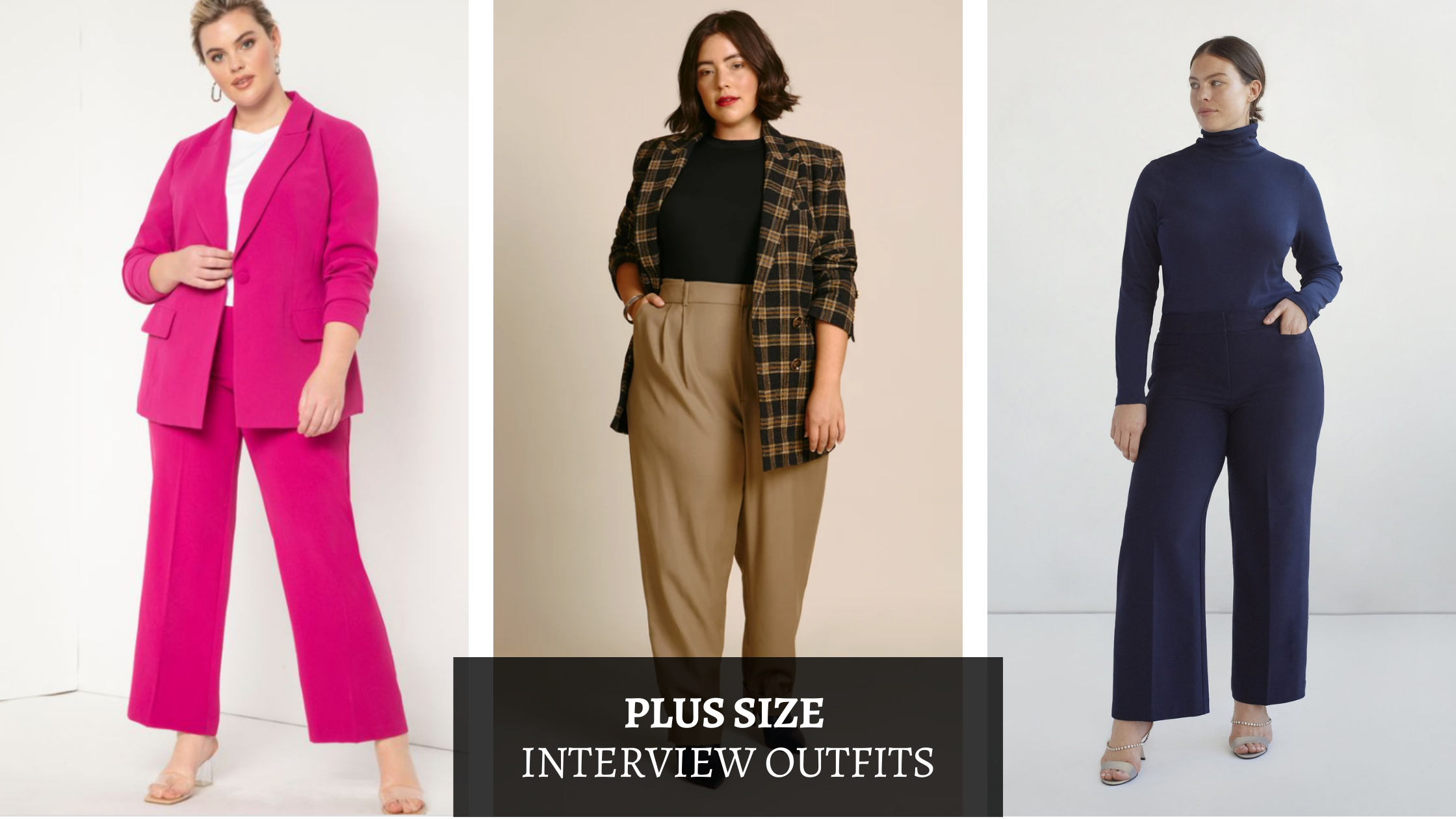
    Plus-size candidate in oxblood merino twinset and black loafers for a lunch interview

    6. Second-round team meeting – the considered separates

    By the second round you have been told you can do the job and are being evaluated for fit with the team. The outfit should read as one degree more personal than your first-round outfit – still polished, but with a piece that suggests you have taste outside of the interview-uniform conversation. The room will often be more casual than the first round, especially if the team meeting is in their normal working space rather than a conference room. The move is tailored separates with one piece that does the personality work.

    The anchor pieces: the Eloquii High-Rise Wide-Leg Trouser in cream or oxblood , around $129, paired with a fine-gauge merino crewneck from Universal Standard in black , around $98. Add one considered outerwear piece – an unstructured trench in olive or camel for a daylight meeting, or a tailored ponte blazer for an indoor afternoon session. Shoes: a leather loafer or a low block-heel mule. Jewelry: one chunky gold ring, gold hoops no larger than a quarter, nothing on the neck. This is the outfit where you can wear something that signals you read fashion editorial, the way Karla Welch or Law Roach style their clients – not as costume, just as evidence that you have a point of view.

    7. Final-round executive interview – the quiet statement

    The final round with an executive is the only interview format where the outfit should explicitly announce that you understand the level of the conversation. The CEO or SVP across the table is meeting candidates who have already cleared the bar; the meeting is about whether they see you at their table. The dress code is one notch above the rest of the company’s daily uniform, and the silhouette should read as someone comfortable in their authority rather than reaching for it. For a plus-size body, the answer is a column-shaped dress or a tailored sheath in a saturated dark, with deliberate jewelry and the shoes you wear when you know you will be photographed.

    The anchor piece: a column sheath in a deep saturated tone – oxblood, sapphire, or charcoal. The Adrianna Papell tailored sheath in deep navy or oxblood, around $189, sized through 24W. Layer with a structured single-breasted blazer in the same color family or a contrasting cream. Shoes: a closed-toe pointed pump from Naturalizer in wide width , around $110. Jewelry: a single statement earring or one substantial cocktail ring, never both. Bag: a small structured top-handle in black or burgundy leather, no laptop tote at this stage. The look reads as decided.
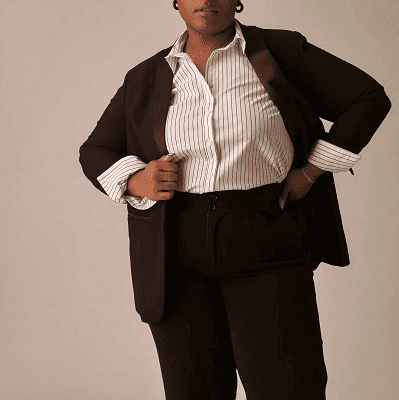
    Plus-size candidate in navy sheath and cream blazer for a final-round executive interview

    Styling moves that apply across every format

    Three rules hold regardless of the format you are dressing for. First, wear actual shapewear under any unlined dress or close-cut trouser. The Honeylove SuperPower Bodysuit at $98 or the Spanx Suit Yourself at $88 will both change how a sheath or a knit dress hangs across the torso. The investment is one piece that improves every interview outfit you own.

    Second, take the time to tailor at least the hem and the bust on any dress or jacket that will see more than one wear. A $25 to $40 alteration on a $129 trouser separates a look that reads like ready-to-wear from one that reads like off-the-rack. Find an alterations specialist who has worked with plus-size garments – the difference in how they handle a bust dart versus a generalist tailor is real.

    Third, break in any new shoe for at least four short wears before an interview day. The fastest way to undo a carefully built outfit is shoe pain in hour two that has you shifting your weight in every chair you sit in. Wear the shoes around your apartment, around the block, to a coffee shop. Save the interview for the fifth wear minimum.

    What to avoid in any interview format

    Anything brand-new at the bust. A fitted top you have never worn will pull, gape, or shift in ways you will not anticipate, and you will spend the interview adjusting instead of answering. Wear the top once before the day.

    Fragrance strong enough to register at three feet. Office interviews increasingly happen in small rooms with poor ventilation, and a fragrance the interviewer notices is a fragrance they will associate with you. Skip it or use a fraction of what you normally wear.

    Patterns that read as visual noise on camera. Small repeating geometric prints, busy florals, and any fine pinstripe go to moire under flat office light or webcam compression. Solid jewel tones and saturated darks photograph more cleanly across every interview setting.

    Shoes you are still breaking in. Any shoe with hot spots on day one will have you sitting wrong by the third room of a panel day. Break it in or wear something else.

    Shop the looks

    The pieces in this guide cluster around three retailers – Universal Standard, Eloquii, and Nordstrom – because those are the brands carrying the strongest plus-size workwear runs in 2026. Universal Standard sizes 00 to 40 and runs the cleanest tailored separates; Eloquii sizes through 28 and runs the strongest dress and trouser construction; Nordstrom carries the third-party pieces (Naturalizer, Cole Haan, Adrianna Papell) that round out the shoe and dress assortment. If you are building an interview rotation, start with a navy blazer and trouser from Universal Standard, a burgundy ponte sheath from Eloquii, and a pointed pump from Naturalizer in wide width. Three pieces handle five of the seven formats above.

    Frequently asked questions

    Can I wear the same outfit to first and second round at the same company?

    Better not. The team often compares notes between rounds and the outfit gets remembered. Switch at least the shell, the jewelry, and the shoes between rounds. A burgundy sheath at first round becomes a cream wide-leg trouser plus knit shell for the second-round team meeting, and the look will read as a different point of view without requiring a second full outfit.

    What if my interview spans two days – panel day one, executive day two?

    Wear the navy suiting on panel day and the column sheath on executive day. The two looks read as a deliberate range without overlapping. If you can only bring one outfit, default to the navy blazer and trouser – it scales up with a sharper shell and pump for the executive meeting, down with a knit crewneck for the panel.

    Are tights mandatory in 2026?

    No, but they read more polished than bare legs in any in-office interview between October and April. Choose a sheer black or nude tight that matches your skin tone, not a heavy opaque, and bring a backup pair. A run in the first room with no replacement is the fastest interview-day disaster.
  • What to Wear During a Job Interview: 6 Plus-Size Outfits by Industry

    What to Wear During a Job Interview: 6 Plus-Size Outfits by Industry

    Three plus-size women styled in different job interview outfits for different industries, editorial spread

    I bought my first real interview blazer in 2014 for an editorial assistant role I did not get, and it cost $312 at a sample sale that started at 7am on a Saturday in a SoHo loft with no air conditioning. The blazer was a size 18 navy single-breasted from a designer I will not name because the brand has since changed its sizing in ways that make it irrelevant. I wore it to six interviews over two years before I figured out something obvious – the blazer was doing about 30% of the work I thought it was doing, and the trouser, the shoes, the bag, and the choice not to wear a statement necklace were doing the other 70%. I have since interviewed for editor roles at five publications, sat on the hiring side for two of them, and helped enough friends piece together first-round outfits that I have a clear sense of what reads as “ready” in 2026 versus what reads as “tried.”

    This is the breakdown by industry, because the corporate-finance interview outfit that gets you taken seriously at a midtown bank is the same outfit that gets you read as overdressed at a creative agency in Brooklyn. Six industries, one anchor outfit each, with the pieces that actually do the work.

    What to consider before you pick the outfit

    Three things matter before fit, fabric, or color. The first is the company’s visible dress code. Pull up the company’s LinkedIn, find three employees at your level, and look at how they show up in their profile photos and in any team photos on the company site. If the head of marketing is in a soft cardigan and the engineering lead is in a hoodie, a wool suit will read as misread-the-room. If the people in the team photo are in tailored separates with structured shoulders, your knit dress will read as underdressed.

    The second is the format. A four-hour panel with five interviewers in conference rooms is a different physical experience than a 45-minute first-round in a single office. The panel outfit needs to handle sitting in three rooms, walking between them, and getting water spilled by hour three. The first-round outfit can prioritize one-impression polish over endurance.

    The third is the photograph. Most companies will photograph you at offer-day onboarding in whatever you wore to the final round, and many will put a candidate photo into a Slack channel before final-round decisions. The outfit you wear should photograph as cleanly in a fluorescent-lit conference room as it does in the mirror at home. Solid jewel tones, structured shoulders, and saturated darks photograph better than fussy patterns or pastels in flat office lighting.

    1. Corporate finance, law, or consulting – the tailored suit alternative

    Big-firm finance, law, and consulting still default to a matched suit in navy or charcoal for in-office interviews above analyst level. The plus-size version of this dress code is hardest to source because matched suiting in extended sizes is still thin on the ground in 2026, and the most-flattering version is almost never a literal matched two-piece. The move is a structured single-breasted blazer with a tailored wide-leg trouser in the same neutral but not necessarily the same exact fabric weight.

    The anchor piece: the Universal Standard Stephanie Blazer in navy , around $180, sized 00-40. The shoulder construction sits cleanly without padding bulk, and the single-button closure reads more updated than a two-button. Pair with the Universal Standard wide-leg trouser in matching navy , around $128, and a closed-toe pointed pump from Naturalizer in wide width , around $110. Shell underneath: a fitted silk or silk-blend in cream or pale blue, no pattern. Bag: a structured shoulder tote in black leather, large enough for a laptop.

    Plus-size candidate in navy tailored suit alternative for corporate finance interview

    2. Creative agency, editorial, or fashion – the considered separates

    Creative-industry interviews want to see taste, not compliance. Showing up in a matched corporate suit at a creative agency reads as not understanding the room. The move is tailored separates that read as considered without reading as costume – a structured trouser in an unexpected color or fabric, a silk shell or fine-knit top, a sculptural shoe, and one piece of jewelry that suggests you have personal style without competing with your face for the interviewer’s attention.

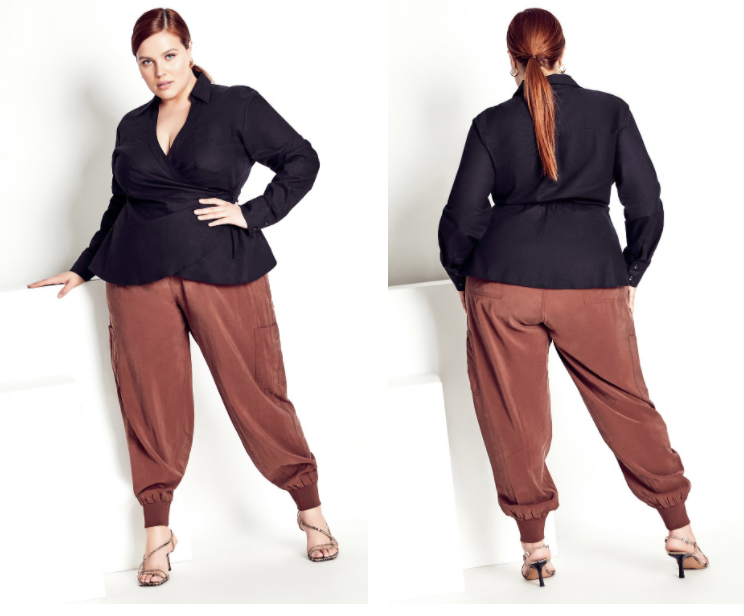
    The anchor piece: the Eloquii High-Rise Wide-Leg Trouser in cream or oxblood , around $129, sized through 28. Paired with a fine-gauge merino crewneck from Universal Standard in black , around $98. Shoes: a low block-heel mule or a leather loafer rather than a pump. Bag: a soft-structure shoulder bag, ideally in cognac or a deep oxblood. Jewelry: one chunky gold ring, gold hoops no larger than a quarter, nothing on the neck. The whole look reads as someone who knows what Karla Welch puts on her clients without trying to dress like a Karla Welch client.

    Plus-size candidate in oxblood trousers and black knit for creative agency interview

    3. Tech / product / engineering – the structured-casual outfit

    Tech interviews have one of the most-misread dress codes in 2026. The default at most major tech companies remains business casual, but the spread between Google headquarters and a Series B startup is wide, and the wrong read in either direction reads as not knowing the industry. The safe baseline is what I call structured-casual – a tailored piece on top, a relaxed piece on bottom, or vice versa, with one clearly considered element that signals intentionality.

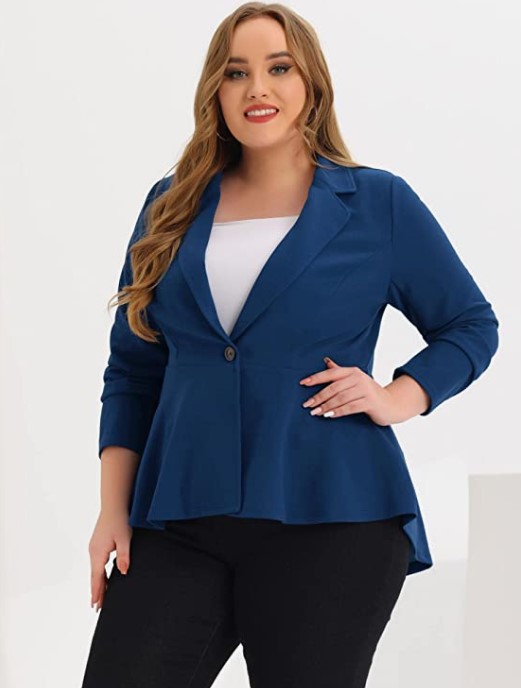
    The anchor piece: a fitted ponte knit blazer in black or navy from Universal Standard , around $148, paired with a dark-wash straight-leg jean in a clean rinse from Universal Standard’s Seine line , around $98, sized through 40. Underneath: a fitted cotton tee in white or cream, no graphic. Shoes: white leather sneakers in good condition (not running shoes) or a low ankle boot. Bag: a soft leather backpack or a structured tote. The blazer plus dark denim is the formula that reads “I take this seriously” without reading “I do not understand that you wear hoodies here.”

    Plus-size candidate in ponte blazer and dark denim for tech interview

    4. Healthcare administration, education, or nonprofit – the knit dress

    Healthcare administration, school district leadership, and large nonprofit interviews share a dress-code lane that is more formal than tech but less corporate than finance. The anchor outfit is a knit sheath or fit-and-flare dress in a solid color, layered with a cardigan or unstructured blazer, with closed-toe heels and minimal jewelry. The format is forgiving across a long day of panels and reads as professional without reading as Wall Street.

    The anchor piece: the Eloquii Ponte Knit Sheath Dress in burgundy or deep teal , around $109, sized through 28. The ponte fabric holds shape through a full interview day without bagging at the seat after hour three. Layer with an unstructured cardigan in cream or camel from Universal Standard , around $128. Shoes: a closed-toe block-heel pump in nude or black, not pointed-toe, not stiletto. Jewelry: small pearl or gold studs, a thin chain, no statement pieces. Bag: a structured leather tote in black or cognac.

    Plus-size candidate in burgundy ponte sheath and camel cardigan for healthcare admin interview

    5. Series A or seed-stage startup – the polished founder-coded look

    Early-stage startup interviews sit in their own category. The hiring team has probably worked together in a kitchen for the last eight months and the office is somebody’s apartment in Williamsburg. Showing up in a suit reads as misunderstanding the stage of the company. Showing up in athleisure reads as not respecting the interview. The move is the founder-coded look – clean basics, one investment piece, immaculate grooming, nothing precious.

    The anchor piece: a high-rise straight-leg trouser in a soft fabric like crepe or wool-blend twill from Eloquii in black , around $109, paired with a fitted ribbed mock-neck in cream or rust from Abercrombie’s Curve Love line , around $50. Shoes: a clean low ankle boot or a leather loafer. Layer: a tailored wool coat or a long cardigan, depending on the season. Bag: a soft leather shoulder bag, not a backpack and not a tote. One leather watch, no other jewelry. The look reads as a person who would be comfortable in a pitch meeting with a partner at Sequoia or in a kitchen interview with the founder’s dog underfoot.

    Plus-size candidate in mock-neck and crepe trousers for early stage startup interview

    6. Remote / virtual first round – the on-camera outfit

    Virtual interviews changed the dressing math because the camera only sees from the chest up, but the rest of you matters for how you sit, how you move, and how you feel for the 45 minutes you are on Zoom. The mistake is dressing only the top half and showing up in pajama bottoms – it changes your posture, your energy, and your read on the camera in ways that are visible to a trained interviewer.

    The anchor piece on camera: a fitted silk or silk-blend blouse in a saturated solid color from Universal Standard in emerald or oxblood , around $98. Saturated jewel tones photograph better than pastels on most webcams and read as more confident in low-quality video compression. Underneath the desk: a pull-on ponte pant in the same color family, around $98, or a wide-leg trouser if you have one. Earrings: small gold or pearl studs that catch light without being noisy on a 720p webcam. Hair: pulled back if your hair has more visual texture than your face, down and styled if it does not. Background: solid wall behind you, no kitchen, no bedroom.

    Plus-size candidate in emerald silk shell for virtual job interview on Zoom

    Styling tips that apply across every interview type

    Three rules hold regardless of industry. The first: tailor everything. A $30 alteration on the blazer sleeves, the trouser hem, or the dress bodice will separate a $150 outfit from one that reads as $400. Find an alterations specialist with plus-size experience before you have an interview scheduled, not after. The good ones get busy and a same-week appointment is hard.

    The second: wear actual shapewear under any unlined piece. The Spanx Suit Yourself bodysuit at around $88 or the Honeylove SuperPower at around $98 will transform how a knit dress or a fitted shell hangs across a four-hour panel. Skip the cheap drugstore versions – they roll, bind, and read through the fabric in ways that distract more than they help. This is a one-time investment that improves every interview outfit you own.

    The third: break in the shoes. Do not wear new pumps to an interview. Even the Naturalizer wide-width pumps, which run kinder than most, need four to six short wears before they handle a full day. I learned this at an interview at a magazine I will not name when I limped into the fifth-floor walkup in shoes I had bought the day before. I did not get that job, and the shoes were part of the reason.

    What to avoid regardless of industry

    Anything labeled bodycon, anything in a fabric that wrinkles on contact (linen, low-grade silk, unstructured rayon), and any color that photographs as white in fluorescent office light – which includes pale blush, oyster, ivory, and cream-adjacent yellows. Test by photographing the outfit under your phone’s flash in a windowless bathroom.

    Statement jewelry that competes with your face. One pair of small studs, one ring, one watch. That is the upper limit. The interviewer needs to focus on your eyes, your mouth, and your hands. Anything else in their field of vision is friction.

    Perfume that announces you before you walk in. Skip it. The interviewer two doors down has migraine triggers and the HR coordinator who walks you out has allergies. Deodorant and clean hair are the right baseline. Save the perfume for the second-round dinner if there is one.

    Shop the looks

    The pieces in this guide cluster around three retailers – Universal Standard, Eloquii, and Nordstrom – because those carry the strongest size runs and the most reliable fit for plus-size professional wear in 2026. If you are building an interview rotation rather than dressing for a single role, start with one structured blazer and one pair of tailored trousers in a neutral, then build outward with knit dresses, shells, and shoes that work across multiple outfit combinations. The blazer is the highest-leverage purchase in the closet and the one most worth tailoring properly.

    Frequently asked questions

    What is the safest single outfit if I do not know the industry?

    A navy or charcoal single-breasted blazer over a fitted shell in cream or pale blue, paired with a matching or near-matching tailored trouser, a closed-toe pump in black or nude, and minimal jewelry. This reads as competent in finance, professional in healthcare, and acceptable in tech. It will read as slightly overdressed at a creative agency, but slightly overdressed is a safer error than slightly underdressed in any interview context.

    Can I wear pants instead of a dress to a corporate interview?

    Yes, and a tailored wide-leg or straight-leg trouser in a solid neutral often photographs better than a dress for plus-size bodies in conference-room lighting. The pant suit lost its “men’s clothing” connotation about fifteen years ago and currently reads as more updated than a sheath dress in most corporate environments. The exception is healthcare administration, where knit dresses still slightly dominate the dress code.

    How do I dress for a four-hour panel without looking wilted by hour three?

    Fabric choice does most of the work. A ponte knit, a wool-blend crepe, or a heavier silk-blend will hold shape through a full day. Avoid pure linen, low-grade rayon, and unlined cotton. Wear shapewear under unlined pieces. Bring a small spare item in your bag – a fresh pair of sheer hosiery, a roll-on antiperspirant, a lipstick – and use the bathroom between rooms two and three for a 90-second reset.

  • The Best Plus-Size Dress for a Wedding Guest in 2026

    The Best Plus-Size Dress for a Wedding Guest in 2026

    Seven plus-size wedding guest dresses arranged on a studio rack with accessories

    After three years of covering this category for plus-size readers, I can tell you that the best plus-size wedding guest dress is not one dress. It is a small, deliberate roster of seven silhouettes that cover every dress code you will see on a real 2026 invitation, in sizes that run honestly through 28, from brands with the construction and return policies to back the price. I have written about wedding-guest dressing every spring since I started this beat and tracked which silhouettes the plus-size editors I respect actually keep wearing past one season. The list below is the result.

    The ranking is built on three criteria. First, the dress has to fit a real plus-size body – a defined waist seam at the actual waist, a hem at true midi or maxi without a six-inch alteration, a bodice cut for chest measurements above 38. Second, it has to photograph cleanly in mixed wedding lighting, which favors saturated jewel tones and matte fabrics over bright pastels and high-shine satin. Third, it has to come from a brand that will take it back if the fit is wrong. Universal Standard‘s 60-day return, Eloquii’s 60 days with free returns over $50, and Nordstrom’s open-ended policy carry this list.

    1. The column gown for black-tie – Eloquii’s asymmetric shoulder gown in oxblood

    Black-tie is the dress code where most plus-size guests default to a safe black sheath and end up indistinguishable from every other guest in the room. The best black-tie plus-size dress is the column silhouette in a saturated jewel tone, full stop. A column reads dressier than an A-line at floor length because the unbroken vertical line is what evening dressing has been built on since the Halston era, and a jewel tone photographs more interestingly than black under the ballroom lighting most black-tie weddings run.

    The dress: the Eloquii asymmetric shoulder column gown in oxblood, around $185, sized through 28. The one-shoulder cut elongates the torso and the structured shoulder reads dressier than strapless in photographs where flash is involved. The crepe is heavy enough to skim the body without clinging. Pair with a closed-toe pointed pump from Naturalizer in wide width at around $110, a small structured clutch, one statement earring, and a thin gold cuff. Skip the necklace – the neckline does the work.

    Plus-size guest in oxblood asymmetric column gown for black-tie wedding

    2. The beaded midi for formal – Adrianna Papell’s beaded cocktail midi in navy

    Formal or black-tie optional is the dress code that trips up plus-size guests more than any other on the list. A floor-length gown works but is not required. A structured midi in a fabric that registers as evening – beading, silk satin, or heavy crepe – is the most flexible choice and reads more deliberate than reaching for the same column gown you wore to last month’s black-tie.

    The dress: the Adrianna Papell beaded midi cocktail dress in navy or deep emerald, around $260, sized through 24W. Adrianna Papell has been making properly-beaded evening pieces for plus-size figures since well before the current inclusivity wave, and the bead density is the actual difference between a $260 dress and a $90 ASOS Curve version. The beadwork catches light in mixed indoor settings – hotel ballrooms, venues with chandelier-and-uplight combinations – in a way that flat fabrics do not. Pair with metallic strappy sandals from Sam Edelman at around $130, a small beaded clutch, and a single cocktail ring rather than a full jewelry stack.

    Plus-size guest in navy beaded midi dress for formal wedding

    3. The cocktail midi – Universal Standard‘s Geneva midi in burgundy

    Cocktail is where the plus-size dress market has matured the most in the last five years. The available silhouettes used to default to wrap dresses and shift cuts, both of which solve different problems than what a plus-size body actually needs at a four-hour reception. The current best cocktail dress for plus-size guests is a stretch-crepe midi with a defined waist seam that does not constrict, and the version that delivers on both ends is the one Universal Standard has been refining for the better part of a decade.

    The dress: the Universal Standard Geneva midi dress in burgundy or black, around $148, sized 00-40. The Geneva runs honest – a 16-18 fits a 16-18 – and the stretch crepe holds shape through dinner and dancing without bagging at the waist or pulling at the hip. The hem hits at a true midi length on most heights between 5’4″ and 5’9″. Pair with the Cole Haan Go-To block heel pump in wide width at around $150 because cocktail hour involves standing for two hours straight and your stilettos will betray you by hour three.

    Plus-size guest in burgundy midi dress for cocktail wedding

    4. The wrap dress reconsidered – Torrid’s surplice midi for daytime cocktail

    I have been skeptical of wrap dresses on plus-size figures for most of my editing career – the surplice neckline gaps, the tie cinches in the wrong place, the skirt opens at the front when you sit. The 2026 generation of plus-size wrap dressing has fixed enough of these problems that it has earned a slot on this list, specifically for daytime or earlier-evening receptions where the polish-without-stiffness balance is the goal.

    The dress: the Torrid surplice midi wrap dress in deep teal or burnt mustard, around $99, sized through 30. The current Torrid surplice has a snap closure at the bust to prevent the gap and a deeper crossover than older wrap constructions, which together solve the two problems that historically made wraps unwearable for larger busts. Pair with nude block-heel sandals or low pointed pumps, a small leather crossbody, and gold drop earrings. This is the dress that travels well to garden ceremonies, daytime receptions, and rehearsal dinners without reading wrong at any of them.

    Plus-size guest in deep teal wrap midi dress for daytime wedding

    5. The floral midi for garden weddings – Hutch’s tie-shoulder midi

    Garden and outdoor daytime weddings ask for lighter fabric, more pattern, and shoes that survive grass. Most plus-size floral dresses fail one of these tests – the prints are scaled too small to register from across a lawn, or the fabric is so light it shows every shapewear line, or the cut runs short in the hem. The Hutch tie-shoulder midi is the version that gets all three right, and it has been the dress I recommend to plus-size readers prepping for spring and summer wedding season for three years running.

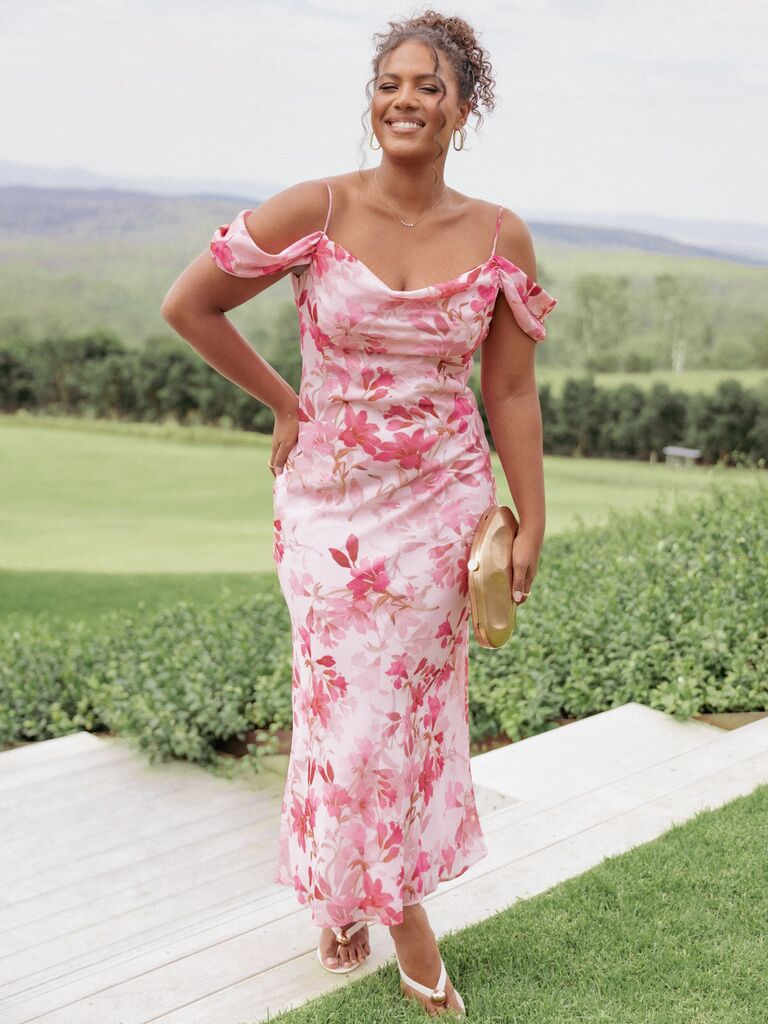
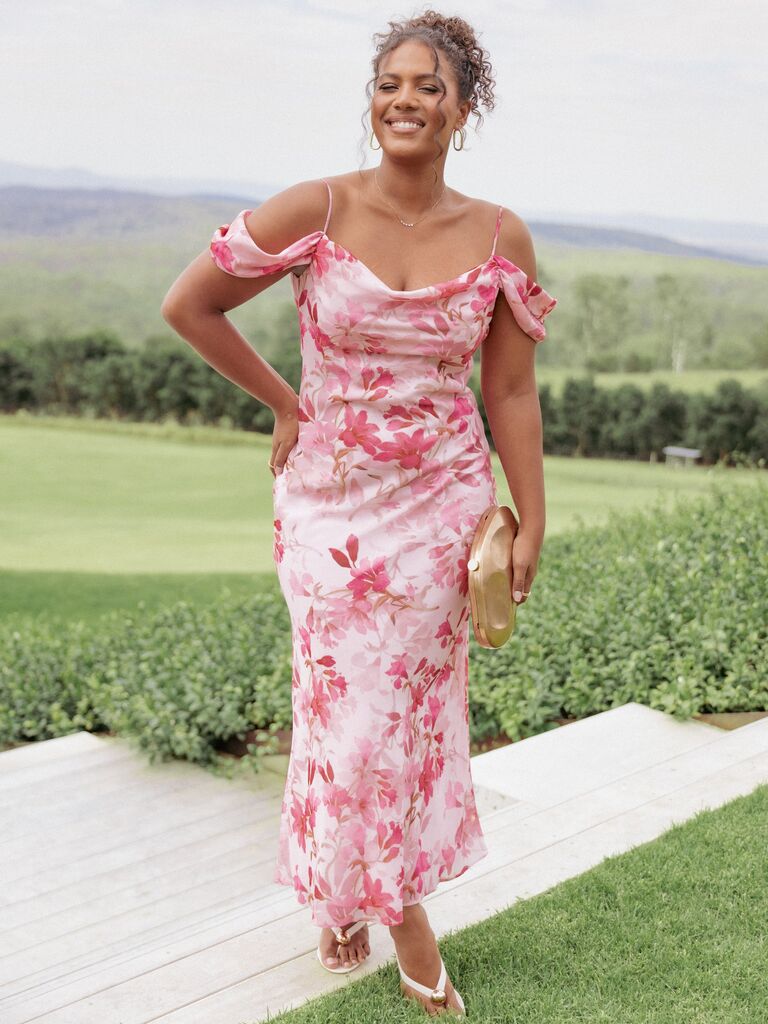
    The dress: the Hutch floral tie-shoulder midi dress in their seasonal print, around $258, sized through 22. Hutch’s prints are large-scale enough to register as garden-appropriate without crossing into bridesmaid-floral territory, and the construction is closer to what you would find at Reformation than at H&M. The tie-shoulder construction lets you adjust the bodice tension which is the make-or-break detail for chest sizes above a D cup. Pair with woven flats or low block-heel sandals – skip stilettos because grass and stilettos do not coexist – a woven raffia clutch, and a delicate gold chain.

    Plus-size guest in floral tie-shoulder midi dress for garden wedding

    6. The velvet long-sleeve for winter – Eloquii’s velvet midi in deep teal

    Winter weddings invite heavier fabrics, deeper colors, and long sleeves that the warmer-weather codes either prohibit or de-emphasize. Velvet is the canonical winter wedding fabric and the reason is that it catches indoor lighting in a way that adds dimension to a plus-size body without horizontal seam lines or hard pattern boundaries. A velvet long-sleeve midi reads occasion-appropriate from arrival through reception without requiring a separate coat or jacket layer, which simplifies the cold-weather styling problem to one piece.

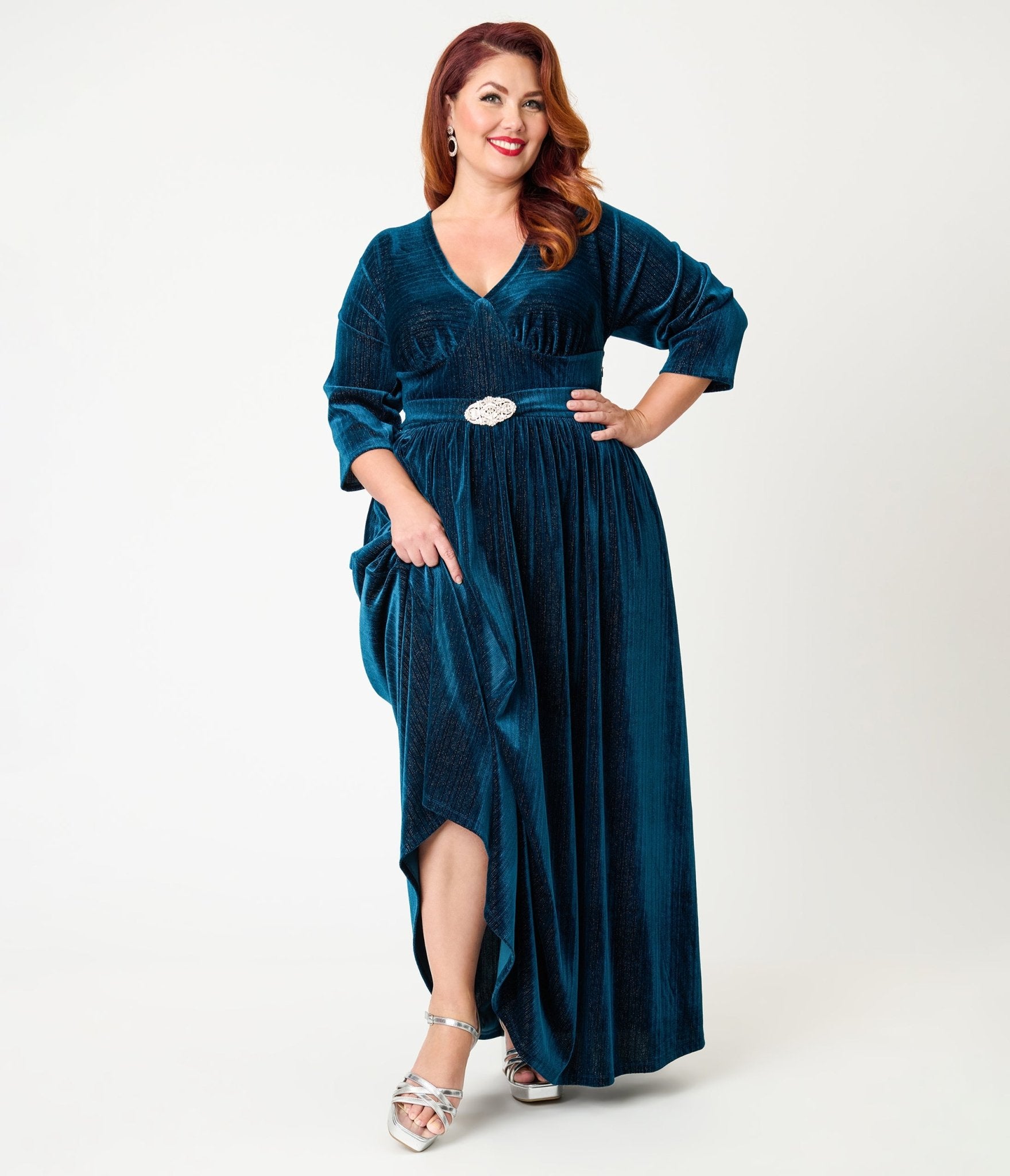
    The dress: the Eloquii velvet long-sleeve midi dress in deep teal or burgundy, around $169, sized through 28. The construction is stretch velvet with a defined waist seam, the sleeves are full-length rather than three-quarter, and the midi length pairs cleanly with closed-toe boots or pumps when the venue has a coat check. Pair with pearl drop earrings, a structured velvet or satin clutch, and either suede heeled boots from Clarks or closed-toe pumps depending on whether the ceremony involves walking on outdoor stone.

    Plus-size guest in deep teal velvet long-sleeve midi dress for winter wedding

    7. The polished sundress for casual – City Chic’s tie-waist sundress

    Casual weddings are rare on actual paper invitations but increasingly common in practice – backyard ceremonies, courthouse celebrations, small destination elopements. The dress code asks for something dressier than what you would wear to brunch but less formal than a cocktail dress. A polished sundress in a non-floral solid – dusty rose, sage, deep navy, cognac brown – is the answer, and the construction details that separate a polished sundress from a basic one are the same details that make a dress photograph well: a defined waist, a hem that hits below the knee, and a fabric weight that drapes rather than crinkles.

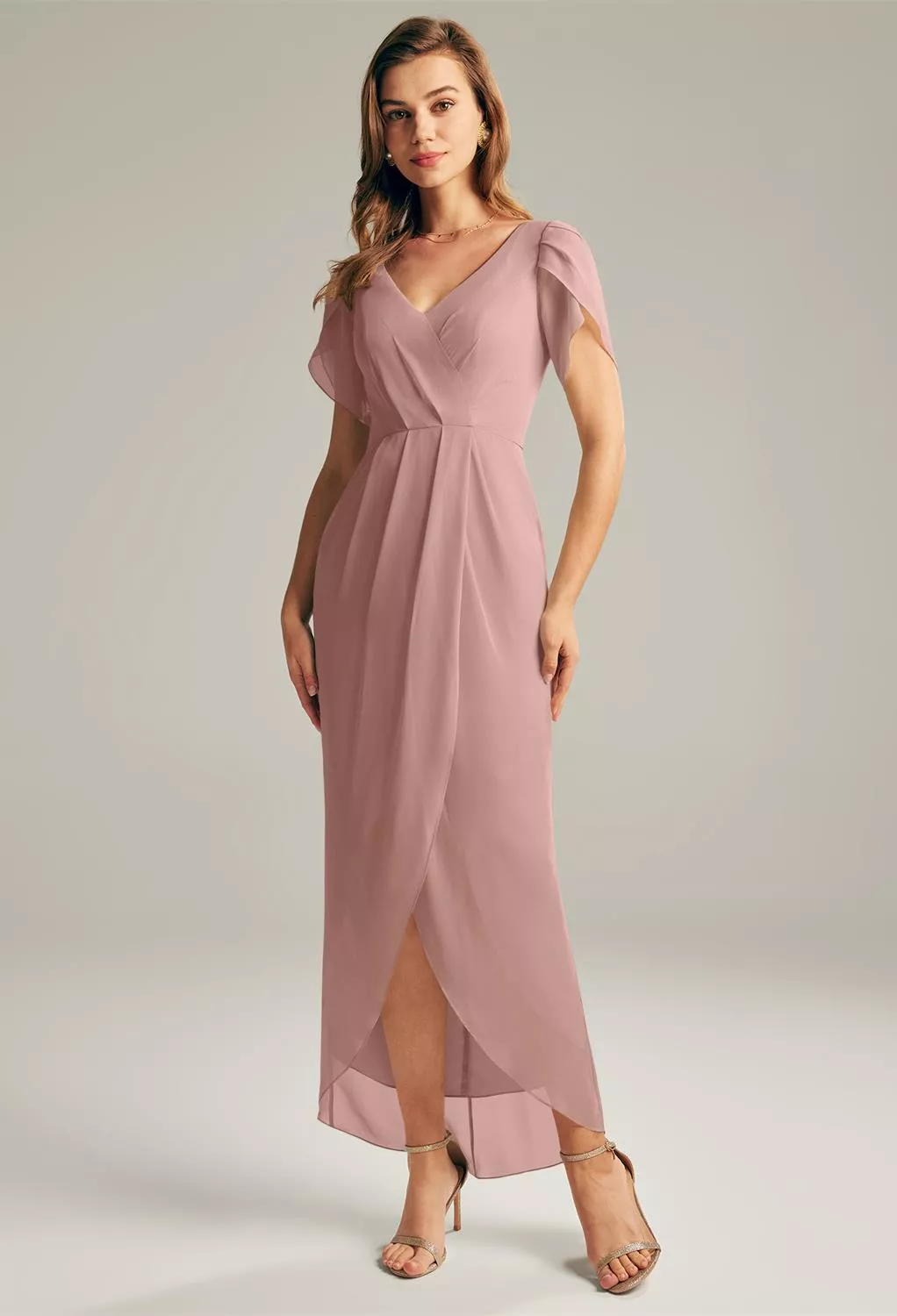
    The dress: the City Chic tie-waist sundress in dusty rose or sage, around $99, sized through 24. City Chic has built a reputation on flattering plus-size summer pieces and the tie-waist construction is forgiving across body shapes – cinch tighter for hourglass emphasis or leave looser for a relaxed line. Pair with woven slide sandals or low block-heel mules from Naturalizer at around $85, a small soft-leather crossbody, and minimal jewelry. Add a structured straw tote if the venue is outdoor.

    Plus-size guest in dusty rose tie-waist sundress for casual wedding

    Styling tips that apply across every dress on this list

    Three rules carry every dress above. First, wear shapewear under any dress that is not fully lined and structured. The Honeylove SuperPower bodysuit at around $98 or the Spanx Suit Yourself at around $88 will change how every dress on this list hangs. The Skims Sculpting bodysuit is the third option worth considering if the dress neckline is low and you need a smoother bust-line transition.

    Second, tailor the dress before the wedding. A $30 bodice or hem alteration is the line between a dress that looks like it cost what you paid and a dress that looks like it cost three times that. Plus-size tailoring specialists are scarce in some markets but worth finding – call ahead to plus-size boutiques in your city and ask which alterations shop they refer to. A take-in or hem is $30. A full bodice rebuild is $200 and rarely works.

    Third, do not wear new shoes to a wedding. Four short wears around the house before the day is the minimum. The fastest way to sabotage a carefully-built outfit is shoe pain at hour three that leaves you sitting through the toasts and the dancing.

    What to avoid when you are dress-shopping

    White, ivory, cream, blush, or any color that photographs as white in indoor flash. The rule is “do not look like the bride,” and the test is to photograph the dress under your phone’s flash before the day and check how it reads. Some couples now explicitly invite white-adjacent outfits, but the default assumption stands: unless the invitation specifies, assume no.

    Bodycon constructions for a six-plus hour event. A dress you cannot sit comfortably through dinner in is a dress you will spend the second half of the wedding pulling down. The defined-waist midi silhouette gives you the cinched look without the all-day compression.

    Brands whose return policy does not back you. Plus-size sizing varies more between labels than straight sizing does. The brands on this list – Universal Standard, Eloquii, Torrid, Nordstrom’s plus department, City Chic – all run real returns. The fast-fashion plus-size retailers I have left off mostly do not.

    Shop the looks at a glance

    The seven dresses on this list cluster around four retailers – Universal Standard, Eloquii, Torrid, and Nordstrom – because those are the four carrying the strongest size runs and the most reliable fit for plus-size formalwear in 2026. Start with the dress code you are most often invited to and build out from there.

    The fastest two-dress starter rotation: the Universal Standard Geneva midi in burgundy and the Eloquii column gown in oxblood. Between the two you have cocktail, formal, semi-formal, and black-tie covered. Add a floral midi for garden season and you have a four-dress rotation that handles a full year of weddings at around $700 total spend, before alterations, before shoes.

    Frequently asked questions

    If I can only buy one plus-size wedding guest dress, which one should it be?

    The Universal Standard Geneva midi in burgundy or black. It covers cocktail and semi-formal weddings cleanly, which together account for the majority of dress codes you will see. It is the most flexible dress on this list and the one whose construction will survive ten-plus wears without losing shape. At around $148 it is also the price point that justifies the cost-per-wear math.

    What size should I order if I am between two sizes on the same dress?

    For wedding occasions order the larger size and tailor down. A wedding dress is one you will sit, stand, walk, dance, and eat in across six hours, and the smaller size will betray you in the seated position by the time the toasts start. A bodice take-in is a $30 alteration. Trying to survive a too-tight dress for a full reception is a six-hour problem you do not need.

    Can I rewear the same plus-size wedding guest dress to multiple weddings?

    Yes, and most wedding photographers will tell you to. The cost-per-wear math on a $200 dress only works at three-plus wears. Switch out the shoes, jewelry, and clutch between weddings, and the same dress photographs differently enough that it reads as a different look. Just check the guest lists if the weddings are close in time and the same people will be at both.

    The shortest version: the best plus-size dress for a wedding guest in 2026 is the Universal Standard Geneva midi in burgundy, size 18, around $148, on universalstandard.com. The link is above. Add the Eloquii oxblood column gown when you graduate to black-tie. Build the rest of the rotation over the next two wedding seasons.